} Crítica Retrô: desenho

Tradutor / Translator / Traductor / Übersetzer / Traduttore / Traducteur / 翻訳者 / переводчик

Showing posts with label desenho. Show all posts

Friday, September 15, 2023

Disney’s Laugh-O-Grams

 Quando ele falava sobre seu Império, Walt Disney costumava dizer que “tudo começou com um camundongo”. Isto é mentira. Antes que Mickey Mouse aparecesse nas telas pela primeira vez em novembro de 1928, Walt Disney havia criado outro estúdio, o estúdio Laugh-O-Gram, em 1921, e fez onze curtas, que eram ou animações ou misturas de animação com live-action.


When talking about his Empire, Walt Disney used to say “It all started with a Mouse”. This is a lie. Before Mickey Mouse graced the screen for the first time in November 1928, Walt Disney had created another studio, the Laugh-O-Gram Studio, in 1921, and made eleven shorts, that were either animations or mixes of animation with live-action.


Localizado em Kansas City, Missouri, o estúdio Laugh-O-Gram foi fundado em 1921 e fechou as portas em 1923, quando Disney foi para Hollywood. Os curtas que Disney fez lá eram quase todos adaptações pouco fiéis de contos de fadas. Vamos olhar para estes curtas individualmente.


Located in Kansas City, Missouri, the Laugh-O-Gram Studio was founded in 1921 and closed in 1923, when Disney went to Hollywood. The short films Disney made there were almost all very loose adaptations of fairy tales. Let’s take an individualized look at them.

A primeiríssima animação que Disney fez foi “Newman Laugh-O-Grams”, uma série de desenhos a serem exibidos no Newman Theater, um negócio local. Primeiro vemos Disney em sua mesa e ele faz alguns desenhos, com a parte final sendo uma animação bem curtinha sobre uma delegacia de polícia. É relevante por ser o primeiro trabalho de Disney e eu fico feliz que ainda esteja disponível, mas não é nada extraordinário.


The very first animation Disney did was “Newman Laugh-O-Grams”, a series of cartoons to be exhibited at the local Newman Theater. We first see Disney on his desk and he goes on to do some drawings, with the last part being a very short animation about a police district. It’s relevant as Disney’s first work and I’m glad it’s still available, but it’s not extraordinary.

A seguir vem “Chapeuzinho Vermelho” (1922). O curta começa com um minuto de um gato usando uma arma para fazer buracos em rosquinhas. Depois de mais algumas estripulias felinas, somos apresentados à Chapeuzinho Vermelho, que vai entregar alguns donuts para a vovozinha. O vilão não é o lobo, mas um homem bem-vestido, e o herói não é um caçador, mas um menino com um avião. Chapeuzinho também tem a companhia de seu fiel cão aqui.  


Next up is “Little Red Riding Hood” (1922). It starts with one minute of a cat using a gun to make holes on donuts. After some more feline shenanigans, we’re introduced to Little Red Riding Hood, who will deliver some donuts to her grandma. The villain is not the wolf, but a well-dressed man, and the hero isn’t a hunter, but a boy with an airplane. Little Red also has the company of her faithful dog here.

Depois temos o que é descrito nos créditos principais como “uma versão modernizada do velho conto de fadas” “Os Quatro Músicos de Bremen” (1922). Os quatro músicos são um gato, um cão, um pássaro e um burro, e este curta é uma viagem. Há peixes que caminham e dançam, e também balas de canhão que atingem as paredes da casa onde estão nossos heróis e são catapultadas de volta.


Then we have what is described in the main title card as “A modernized version of that old fairy tale” “The Four Musicians of Bremen” (1922). The four musicians are a cat, a dog, a bird and a donkey, and this little film is a real trip. There are walking and dancing fish, as well as cannonballs that hit the walls of the house our heroes are in and bounce back.

Também de 1922 temos “Jack o Matador de Gigantes”. Acompanhado de um gato e um cão, um menino chamado Jack chega à terra dos gigantes e deve vencê-los para salvar uma menina chamada Susie. Com diversos animais selvagens fazendo coisas interessantes, esta é mais uma parte curiosa da série.


Also from 1922 we have “Jack the Giant Killer”. Accompanied by a cat and a dog, a boy named Jack arrives in the land of giants and must outsmart the giants to save a girl named Susie. With several jungle animals doing interesting things, this is another curious entry on the series.

O curta todo animado mais longo da série é “Gato de Botas” (1922) - e não tem nada a ver com o conto de fadas. No desenho, nossos velhos amigos Jack e Susie estão lá, assim como o gato preto, mas Susie é uma princesa cujo pai, o Rei, não deixa que Jack a visite. Para solucionar seu problema, Jack e o gato vão ver um filme de Rodolf Vaselino e o gato tem uma ideia: Jack compra para o felino um par de “botas da moda” e o gato ajuda Jack a demonstrar sua bravura numa tourada. Aqui, em vez de muitas cartelas de títulos, o diálogo é mostrado em balões, como nas tirinhas e quadrinhos.


The longest all-animated short of the series is “Puss in Boots” (1922) - and it has nothing to do with the fairy tale. In the cartoon, our old friends Jack and Susie are there, alongside the black cat, but Susie is a princess whose father, the King, doesn’t let Jack see her. To solve his problem, Jack and the cat go watch a movie with Rodolf Vaselino and the cat has an idea: Jack buys him a pair of “flapper boots” and the cat helps Jack showcase his bravery in a bullfight. Here, instead of many title cards, the dialogue is shown in balloons, like it happens in comic strips.

O curta seguinte é “Cinderella” (1922). Com duas irmãs más, mas nenhuma madrasta má, Susie é nossa Cinderella e Jack é o príncipe que também é caçador - algo mostrado numa sequência bem pesada. A história segue do jeito como todos conhecemos, e eles vivem felizes para sempre. Há também romance reservado para o gato de Susie.


The following short is “Cinderella” (1922). With two evil sisters but no evil stepmother in sight, Susie is our Cinderella and Jack is the prince who is also a hunter - something established in a rather dark sequence. The story follows as we all know, and they live happily ever after. There is romance also for Susie’s cat.

O último Laugh-O-Gram feito em 1922 foi “O Dente de Tommy Tucker”. Em sua quase totalidade um curta em live-action, ele conta a história dos amigos Jimmie Jones e Tommy Tucker. Jimmie, ao contrário de Tommy, não cuidou bem de seus dentes, por isso teve dor de dente e prejudicou sua saúde e até sua carreira por causa de seus maus hábitos de higiene. Este curta educativo foi encomendado por um dentista local chamado Thomas B. McCrum, que pagou 500 dólares a Disney pelo filme.


The final Laugh-O-Gram made in 1922 was “Tommy Tucker’s Tooth”. Mostly a live-action short, it tells the story of pals Jimmie Jones and Tommy Tucker. Jimmie, unlike Tommy, didn’t take proper care of his teeth, so he got a toothache and his health and even career were harmed because of his bad hygiene habits. This educational short was commissioned by a local dentist named Thomas B. McCrum, who paid Disney 500 dollars for the film.

Em 1923, à beira da falência, o estúdio Laugh-O-Gram fez um último filme: “Alice’s Wonderland”. Uma mistura de live-action e animação, é o piloto para a série sobre Alice que seria desenvolvida por Disney em Hollywood, e Virginia Davis, uma modelo mirim do Kansas, já interpreta o papel que lhe daria fama. Alice visita o estúdio de Disney e, naquela noite, sonha que está em Cartoonland, interagindo com todas aquelas criaturas animadas. 


In 1923, on the verge of bankruptcy, the Laugh-O-Gram Studios made one final film: “Alice’s Wonderland”. A mix of live-action and animation, it’s the pilot for the Alice series that would be developed by Disney in Hollywood, and Virginia Davis, a local Kansas child model, already plays the role that would make her famous. Alice visits Disney’s studio and that night, she dreams she is in Cartoonland, interacting with all those animated creatures.

O gato preto que aparece em muitos dos Laugh-O-Grams mais tarde seria batizado de Julius e se tornaria o fiel companheiro de Alice nas Alice Comedies - o que faz de Julius, não Mickey nem Osvaldo o Coelho Sortudo, o primeiro personagem animado recorrente de Disney.


The black cat that appears in many of the Laugh-O-Grams would later be named Julius the Cat and would become Alice’s faithful companion in the Alice Comedies - which makes Julius, not Mickey nor Oswald the Lucky Rabbit, the first re-occurring animation character from Disney.

Dos Laugh-O-Grams feitos, apenas um, “Martha” (1923), permanece perdido. Todos os outros estão em domínio público, mas apenas os mencionados aqui estão disponíveis para serem vistos na página da Wikipédia. Embora existam, “Jack e o Pé de Feijão” e “Cachinhos Dourados e os Três Ursos” não estão disponíveis online.


Out of the Laugh-O-Grams made, only one, “Martha” (1923), remains lost. All of the others are in the public domain, but only the ones mentioned here are available to be seen on the Wikipedia page. Although extant, “Jack and the Beanstalk” and “Goldie Locks and the Three Bears” are not available online.

Os Laugh-O-Grams de Disney não são obras-primas da animação. Algumas ideias e mesmo sequências são repetidas ao longo da série - como as nove vidas de um gato saindo do corpo do animal - e a animação e mesmo os traços são muito simples. Eles são, entretanto, artefatos históricos de interesse e, mais uma vez, fico feliz que tenham sobrevivido ao teste do tempo.


The Disney Laugh-O-Grams are not masterpieces of animation. Some ideas and even sequels are repeated throughout the series - like the cat’s nine lives leaving the animal’s body - and the animation and even drawing are very simple. They are, however, historical artifacts of interest and, once again, I’m glad they survived the test of time.


This is my contribution to the 100 Years of Disney blogathon, hosted by the girls Diana and Constance at Silver Scenes.


Saturday, March 19, 2022

Desenho Retrô: Plic, Ploc e Chuvisco


Retro Cartoon: Pixie and Dixie and Mr Jinks

Quando falamos sobre a mais famosa dupla criada por William Hanna e Joseph Barbera, logo pensamos em Tom e Jerry, muito embora haja outras duplas famosas no estúdio. A dupla de gato e rato estreou no cinema em 1940 e até ganhou alguns Oscars! Quase duas décadas mais tarde, Hanna e Barbera voltaram à premissa de gato e rato e criaram não outra dupla, mas um trio: os ratinhos Plic, Ploc e o gato Chuvisco.

When we talk about the most famous duo created by William Hanna and Joseph Barbera, we instantly think about Tom and Jerry, even though there are other famous duos in their studio. The cat and mouse duo made their screen debut in 1940 and went on to even win a few Oscars! Nearly two decades later, Hanna and Barbera went back to the cat and mouse premise and introduced not another duo, but a trio: “meeces” Pixie and Dixie and the cat Mr Jinks.

Chuvisco era um gato alaranjado com uma gravata-borboleta azul clara. Plic e Ploc eram dois ratos cinzas, Plic usava uma gravata-borboleta azul e Ploc, um colete vermelho. Os três em geral viviam na mesma casa, sem humanos por perto, mas às vezes eram encontrados em outros ambientes, como em um navio.

Mr Jinks was an orange cat with a light blue bow tie. Pixie and Dixie were two gray mice, Pixie wearing also a blue bow tie and Dixie a red vest. The three often lived in the same house, not surrounded by humans, but sometimes we’re found in different scenarios, such as a ship.

Ao contrário de Tom e Jerry, neste desenho o gato e os ratos eram até bem amigos. Claro, Chuvisco ainda persegue Plic e Ploc, em geral frisando como ele os odeia. Mas o objetivo dele não é eliminá-los: em um episódio, ele acredita que matou Ploc e fica bem perturbado, e em outro ele manda os ratos para o Polo Norte mas depois os traz de volta para casa porque sem os ratos seus serviços não seriam mais necessários.

Unlike in Tom and Jerry, in this cartoon the cat and the mice were quite friendly. Sure, Mr Jinks still chases Pixie and Dixie, often saying “I hate those meeces to pieces!”. But his goal is never to eliminate the two: in an episode, he thinks he killed Dixie and gets extremely disturbed, and in another episode he bans the mice to the North Pole and later takes them back home because without the mice his services wouldn’t be needed anymore.

O desenho de Plic, Ploc e Chuvisco era parte do Show do Dom Pixote e teve quatro temporadas, entre 1958 e 1962. Cada episódio tinha por volta de sete minutos de duração, e as histórias eram bem simples. Outros desenhos que eram parte do Show do Dom Pixote eram Zé Colmeia e, claro, Dom Pixote. Os personagens também participaram de outros programas de Hanna-Barbera, como Ho-Ho-Límpicos.

Their cartoon was part of The Huckleberry Hound Show and lasted four seasons, from 1958 to 1962. Each Pixie, Dixie and Mr Jinks cartoon was around seven minutes long, and the stories were quite simple. Other cartoons that were also part of The Huckleberry Hound Show were Yogi Bear and, of course, Huckleberry Hound. The characters also appeared in other Hanna-Barbera shows, such as Laff-A-Lympics.

Plic, Ploc e Chuvisco é exibido atualmente no Brasil pelo canal a cabo Tooncast. Um episódio que é frequentemente exibido é também um dos meus favoritos: “Chuvisco Jr”, da primeira temporada. Neste episódio, somos apresentados ao filho de Chuvisco, um gatinho alaranjado de camisa listrada. Chuvisco quer ensinar seu filhote a caçar ratos – mesmo que ele não saiba o porquê de gatos terem de caçar ratos, ele só sabe que é a lei da natureza – e Plic e Ploc até ajudam Chuvisco nesta empreitada, batendo no gato para que Chuvisco Jr fique bravo e passe a detestar ratos. Depois deste divertido episódio, Chuvisco Jr nunca mais foi visto ou mencionado.

Pixie and Dixie and Mr Jinks is currently shown in Brazil in the cable channel Tooncast. One episode that is often in the air is one of my favorites: “Jinks Junior”, from season one. In this episode, we are introduced to Mr Jinks’ son, a tiny orange cat with a stripped shirt. Mr Jinks wants to teach his kiddo how to hunt mice – even though he doesn’t know WHY cats must hunt mice, he just knows that nature is like this – and Pixie and Dixie even help Mr Jinks in this endeavor, hitting the cat so Jinks Junior gets mad at them and starts disliking mice. After this fun episode, Jinks Junior is never seen or mentioned again.

Plic, Ploc e Chuvisco eram mais pacíficos que Tom e Jerry, e muitas vezes também mais engraçados. Apesar disto, e apesar de suas participações em outros programas como o atual Jellystone, que ressuscita personagens de Hanna-Barbera, o trio é quase esquecido na atualidade. Nós sabemos que é difícil competir com Tom e Jerry, mas Plic, Ploc e Chuvisco merecem seu lugar na grande galeria de personagens de Hanna-Barbera.

Pixie and Dixie and Mr Jinks were more peaceful than Tom and Jerry, and often more humorous too. Despite that, and despite their appearances in other shows like the current Hanna-Barbera resurrection Jellystone, the trio is rather forgotten today. We know, it’s difficult to compete with Tom and Jerry, but Pixie and Dixie and Mr Jinks deserve their place in the huge gallery of Hanna-Barbera characters.

This is my contribution to the 8th Annual Favourite TV Show Episode blogathon, hosted by Terence at A Shroud of Thoughts.


Saturday, July 17, 2021

Desenho Retrô: Ho-Ho-Límpicos


Retro cartoon: Laff-A-Lympics

Quando o filme da “Liga da Justiça” estreou alguns anos atrás, foi dito que era “o crossover mais épico que todos os tempos”. Que bobagem! O crossover mais épico de todos os tempos foi feito há mais de 40 anos, quando a maioria dos personagens animados de Hanna-Barbera se juntaram para competir em uma espécie de olimpíada. O nome deste crossover que me encantou quando eu era criança é “Ho-Ho-Límpicos”.

When “Justice League” premiered a few years ago, it was advertised as “the most epic crossover ever”. Silly people! The most epic crossover ever had been made over 40 years ago, when most of the famous Hanna-Barbera cartoon characters were put together to compete in an Olympic-like tournament. The name of this crossover that amazed me as a child is “Laff-a-Lympics”.

O programa trazia 45 personagens de Hanna-Barbera divididos em três times: os Assombrados, com os grandes heróis e protagonistas, os Abelhudos, com os coadjuvantes animais e outros animais bonzinhos, e os Rabugentos, com os vilões. Os times competiam em diferentes países e os jogos eram apresentados por dois dos meus personagens favoritos, Leão da Montanha e o Lobo Bobo.

The show had 45 Hanna-Barbera characters divided in three teams: the Scooby Doobies, with the big heroes and lead characters, the Yogi Yahooeys, with the animal sidekicks and nicer animal characters, and the Really Rottens, with the villains. The teams competed in different countries and the games were hosted by two of my favorite characters, Snagglepuss and Mildew Wolf.

HQ / Comic book

Nem sempre os personagens competiam em esportes olímpicos. Como desenhos animados muitas vezes desafiam a lógica, era possível ter algo como uma corrida de camelo nas pirâmides do Egito ou corrida de barco em Acapulco, com os Rabugentos trapaceando para ganhar. O local era mais importante que o esporte, mas a parte mais importante de todas era a interação entre os personagens - afinal, não é rodovia que você vê Scooby Doo cooperando com o Capitão Caverna.

Not all sports in which they competed were Olympic sports. As cartoons often defy logic, you could have things like camel races in the pyramids in Egypt or speedboat races in Acapulco, with the Rottens cheating to win. The location was more important than the sport, but the most important part was the interaction between the characters - after all, it’s not every day that you see Scooby Doo cooperating with Captain Caveman.

Eu via os “Ho-Ho-Límpicos” em reprises quando eu tinha uns nove anos de idade. Além de ver todos os meus personagens favoritos juntos, o que eu mais gostava era que às vezes os vilões ganhavam. Eu sempre gostei de vilões, e quando eles ganhavam eu pensava em como o programa era maduro e realista, porque na vida real o bem nem sempre vence.

I watched “Laff-a-Lympics” in reruns when I was about nine years old. Besides seeing all my favorite retro characters together, what I liked the most about it was that sometimes the villains won. I always liked villains, and whenever they won I thought about how the show was mature and realistic, because in real life the good does not always persevere.

“Ho-Ho-Límpicos” teve duas temporadas em 1977 e 1978, com 24 episódios no total. O programa foi produzido entre dois Jogos Olímpicos: em 1976 as Olimpíadas foram sediadas em Montreal e em 1980 elas foram em Moscou. Eu vi o programa muitos anos depois - às vésperas das Olimpíadas de Atenas em 2004 -, mas para mim parecia que o programa havia sido feito hoje - e com um toque realista, às vezes até mais emocionante que os Jogos Olímpicos originais!

“Laff-a-Lympics” had two seasons in 1977 and 1978, with 24 episodes made. The show was produced in-between two Olympic Games: in 1976 the Games were hosted in Montreal and in 1980 they were in Moscow. I watched the show in reruns many years later - just before the 2004 Olympic Games in Athens -, but for my young self it was as fresh as if they had been made today - and it was very realistic as well, sometimes even more exciting than the original Olympic Games!

This is my contribution to the Olympic Dreams blogathon, hosted by Sally at 18 Cinema Lane. 

Saturday, December 16, 2017

Porky Pig’s Picture Album / O álbum de fotos do Gaguinho

Eu nasci em meados dos anos 1990, o que faz de mim uma representante da geração millennial – aquela que está estragando tudo o que um dia já houve de belo e puro na Terra. Eu cresci na frente da TV e me lembro bem de assistir aos Looney Tunes tanto na TV aberta quanto na TV a cabo. Anos depois, eu fiquei surpresa ao descobrir que aqueles desenhos que eu via repetidas vezes no começo dos anos 2000 tinham sido feitos nos anos 1950 ou mesmo antes – tudo neles parecia tão moderno! Mas minha maior surpresa foi descobrir que o porco Gaguinho, que eu via apenas como coadjuvante, foi a estrela de sua própria série de desenhos.

I was born in the mid-1990s, which makes me a millennial – one of those people who are destroying everything that was once good and pure on Earth. I grew up in front of the TV, and I remember, vividly, both on cable and on public television, watching Looney Tunes. Years later, I was shocked to learn that the cartoons I watched over and over in the beginning of the 2000s were actually made in the 1950s or even before – everything looked and sounded so up to date to them! But my biggest shock was to learn that Porky Pig, who I saw as a forever-sidekick, had actually had his own series of cartoons as a main character.
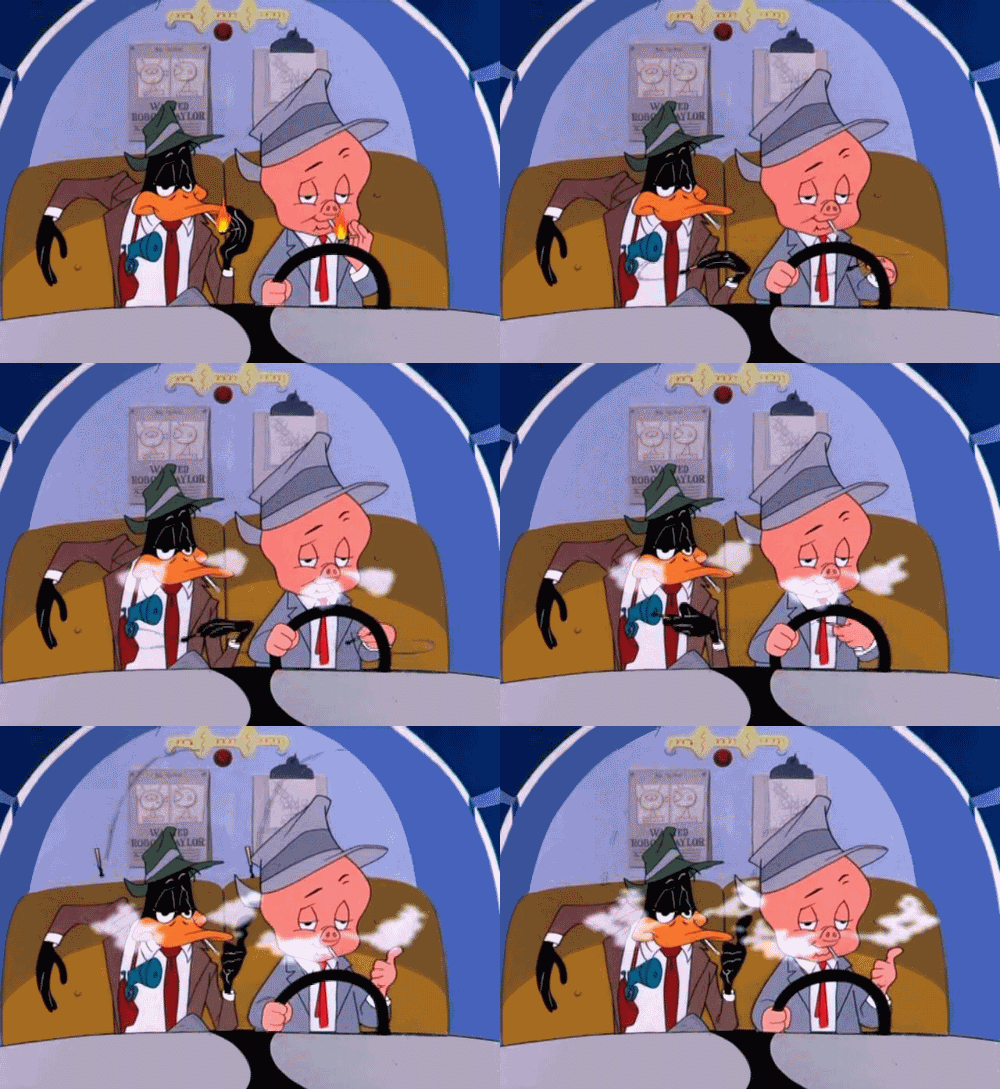
Eu estava acostumada a ver Gaguinho como o companheiro gago do estressado e prepotente Duck Dodgers. Ou como Friar Tuck, o fofo monge suíno em “Robin Hood Daffy” – um desenho que era exibido ao menos duas vezes ao mês na TV. Ou como o mentor do jovem e faminto Presuntinho em “Tiny Toons”.

I was used to seeing Porky Pig as the stuttering company to the distempered and unsympathetic Duck Dodgers. Or as Friar Tuck, the sweet religious swine in “Robin Hood Daffy” – a cartoon that was shown about twice a month on TV. Or as the mentor to young and hungry Hamton J. Pig in “Tiny Toon Adventures”.
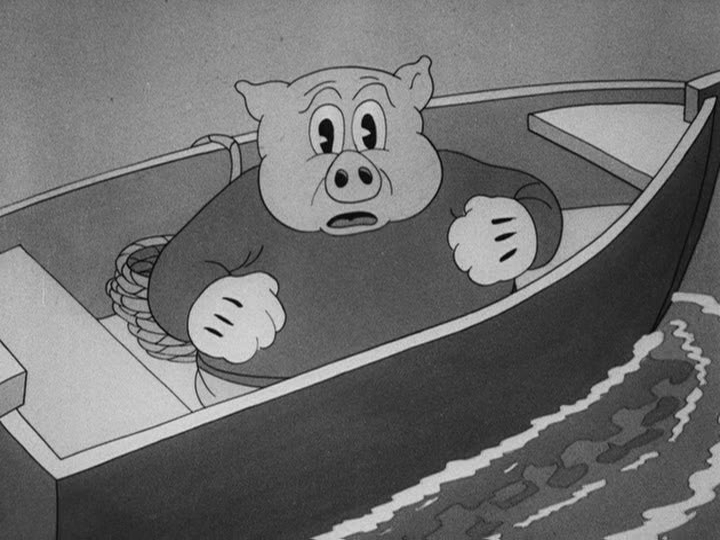
Na verdade, Gaguinho veio antes de todos eles: de Pernalonga, Patolino, Frajola e Piu-Piu, Hortelino Troca-Letras… Gaguinho fez sua estreia no cinema em 9 de março de 1935. Ele rapidamente se transformou na personagem mais popular da série de curtas chamada Looney Tunes – uma das duas séries de curtas-metragens animados produzidas pela Warner Brothers nos ano 30. A outra série, Merrie Melodies, era feita a cores, enquanto os Looney Tunes eram em preto e branco.

Actually, Porky Pig preceded them all: Bugs Bunny, Daffy Duck, Sylvester and Tweety, Elmer Fudd... Porky Pig debuted on the screen on March 9th, 1935. He quickly became the most popular animated character from the Looney Tunes short series - one of the two animated series produced by Warner Brothers in the 1930s. The other series, Merrie Melodies, had only short films in color.

Gaguinho foi concebido como um coadjuvante que apenas gaguejava porque seu dublador, o ator Joe Dougherty, também gaguejava. Joe dublou Gaguinho durante dois anos, até que o versátil Mel Blanc o substituísse em 1937. Foi neste mesmo ano que Gaguinho conheceu sua namorada Petúnia e seu grande amigo Patolino.

Porky was conceived as a supporting character, and one that stuttered because the actor who voiced him, Joe Dougherty, also stuttered. Joe voiced Porky Pig for two years, before versatile Mel Blanc took on the job in 1937. That same year, Porky Pig met his significant oinker other, Petunia Pig, and his closest pal, Daffy Duck.
A girl pig with an attitude
First meeting
Por causa de seu jeito bondoso, Gaguinho era ideal para o papel de um porco cara comum e sério, um contraponto perfeito para Patolino, o mais louco personagem já criado pela Warner Brothers. Em sua gênese, Patolino é o personagem de desenho animado que mais se aproxima da screwball comedy.

For his good nature, he became an ideal straight man - or rather pig - type to appear with Daffy Duck, the zaniest character created by Warner Brothers. The original Daffy is the closest thing we have from screwball in cartoons.
Mas para um suíno plácido e agradável, Gaguinho tem a honra curiosa: ele foi o primeiríssimo personagem a xingar em um filme. Bem, quase isso: ele pronunciou um xingamento em um desenho de 1938, que foi censurado pelos responsáveis pelo Código Hays e pôde estrear apenas 50 anos depois. Felizmente, hoje “Breakdowns of 1939” está disponível online:

But for a pacific straight pig, Porky had a curious and not so honorable honor: he was the first character ever to curse on film. Well, he almost was. He cursed in a 1938 cartoon, but it was censored by the Hays Office and could only be shown 50 years later. Luckily, nowadays “Breakdowns of 1939” is available online:
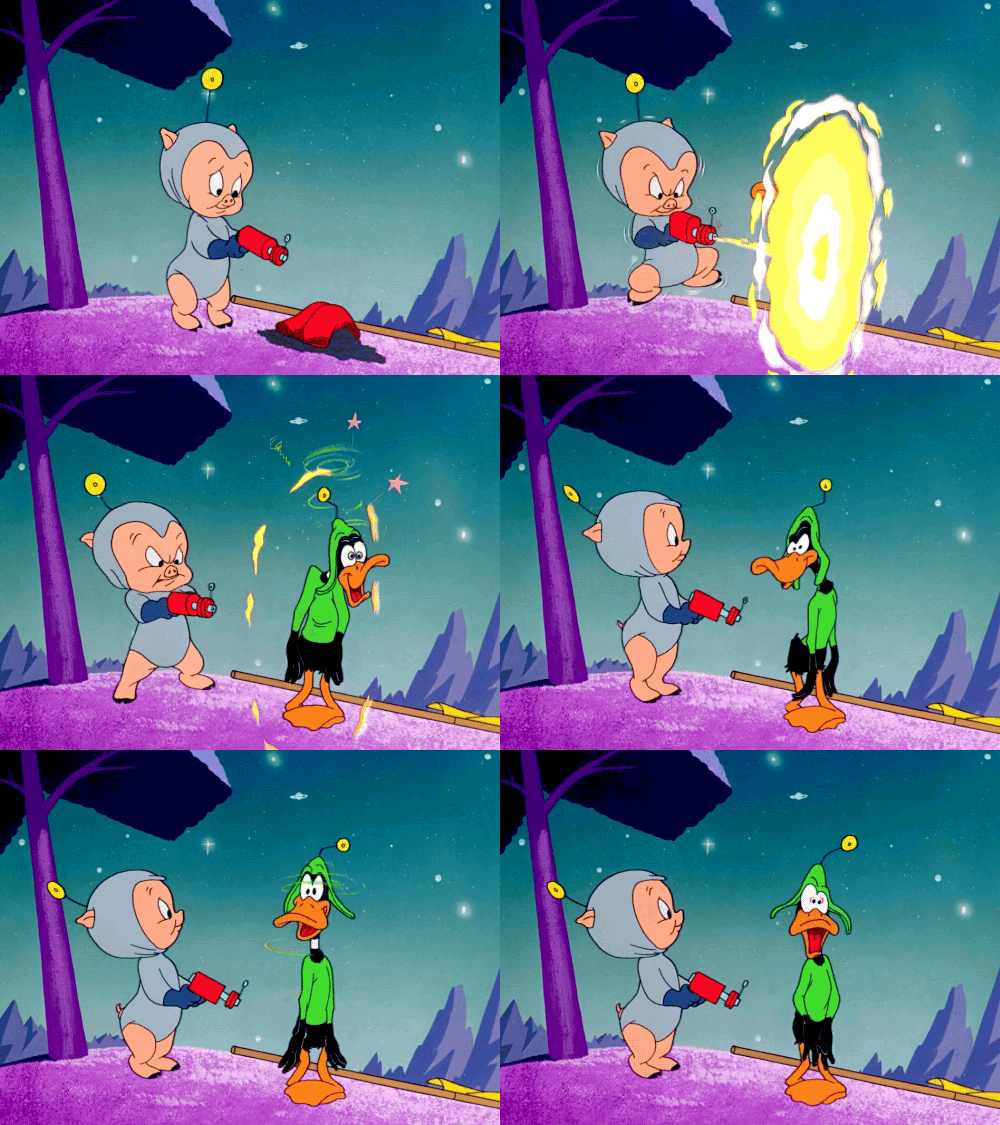
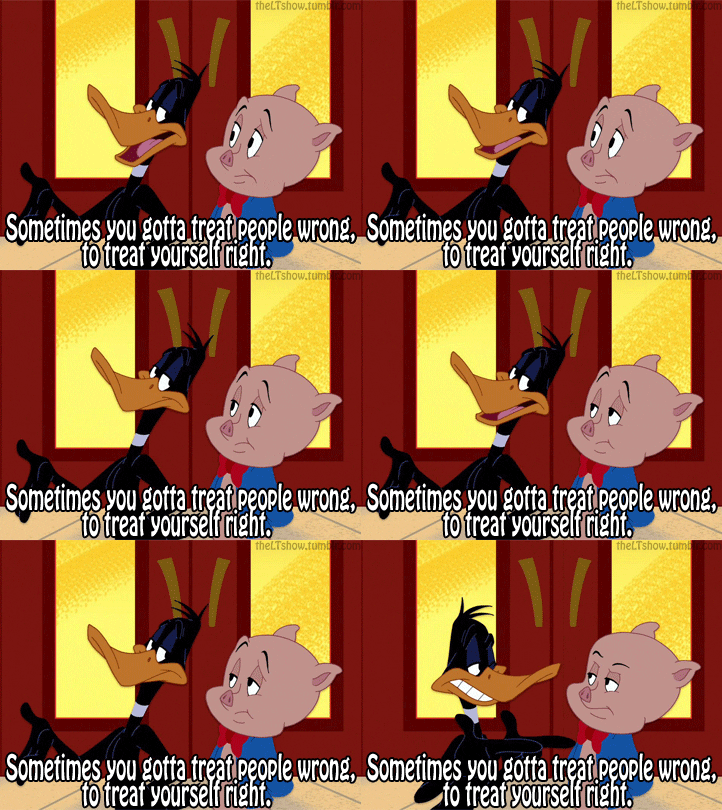
Gaguinho foi brevemente dono do gato Frajola, durante os anos 1940 e 50. Ele foi também o Jovem Cadete Espacial em “Duck Dodgers in the 24 ½th Century”, um curta-metragem de 1953 que originou uma série de TV 50 anos depois. O Jovem Cadete era um ajudante que em geral se mostrava bem mais esperto que seu chefe. Nos anos 50, Gaguinho teve sua própria revista em quadrinhos nos EUA, e nos anos 60 teve seu próprio programa, chamado “The Porky Pig Show”.

Porky was also briefly Sylvester’s owner, during the 1940s and 1950s. He was Space Cadet in “Duck Dodgers in the 24 ½th Century”, a 1953 cartoon that originated a whole series 50 years later. Space Cadet was a simple minion who was often smarter than his chief. In the 1950s, Porky even had his own comic book, and in the 1960s he had his own Saturday morning show, aptly called “The Porky Pig Show”.

Este foi o final da era de ouro dos Looney Tunes. Nos anos 70 e 80, Gaguinho fez breves aparições em filmes que eram na verdade coletâneas de curtas-metragens feitos nas décadas anteriores. Mas ele daria a volta por cima no século XXI.

This was the end of the Looney Tunes golden age. In the 1970s and 1980s, Porky appeared briefly in films that were actually compilations of shorts made in past decades. But he would return in the 21st century.
Noirish

Space Jam
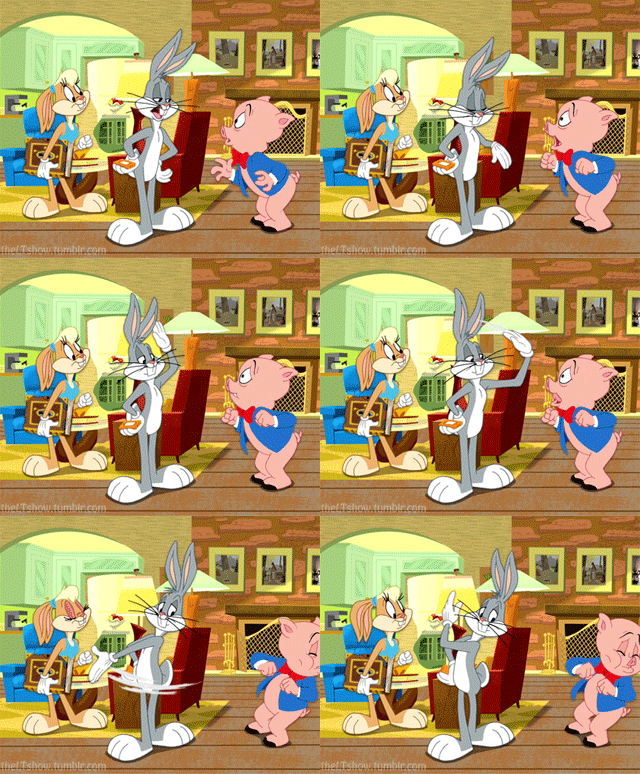
Gaguinho voltou como o cara comum zoado por sua ingenuidade em “O show dos Looney Tunes”, uma genial versão de 2012 que colocava os já popularizados personagens em situações semelhantes às de sitcoms. Foi nesta série que Gaguinho finalmente começou a interagir mais com Pernalonga, embora seu mais próximo “amigo” continue sendo Patolino.

Porky was the definitive straight man who was mocked by his naïveté in “The Looney Tunes Show”, a new iteration from 2012 that put the characters in sitcom-like situations. It was in this show that Porky finally started interacting more with Bugs Bunny, although Daffy Duck remains his closest frenemy.

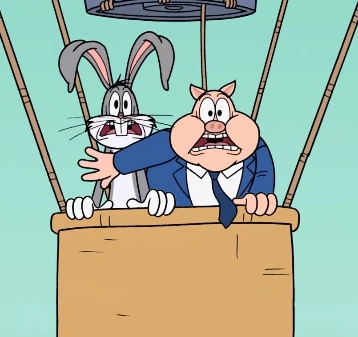
Seguindo a tendência de homenagear os traços mais antigos, os curtíssimos segmentos de “Wabbit” (também chamado de “Novos Looney Tunes”) trouxeram de volta um Pernalonga magérrimo, um Patolino amalucado e um Gaguinho imenso. Esta é a mais recente encarnação do personagem na TV.

Following a thread of paying tribute to old-style cartoons, the über-short segments of “Wabbit “(also called New Looney Tunes) brought back an extremely skinny Bugs, a slapstick-y Daffy and a rotund Porky Pig. This is the most recent way the character has been seen on TV.

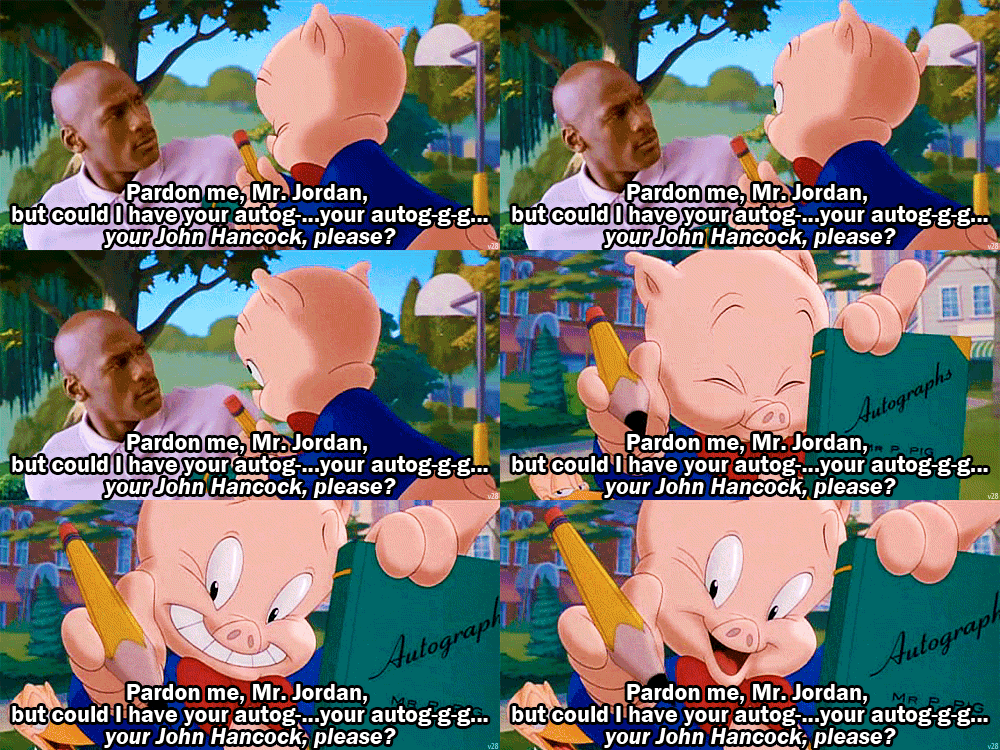
Assim como a maioria dos personagens dos Looney Tunes, Gaguinho se tornou popular, figurou em diversos produtos de merchandising e é agora parte da cultura pop – especialmente por causa de sua frase mais conhecida. Até hoje, apenas um curta-metragem dos Looney Tunes foi escolhido para ser preservado no National Film Registry: “Porky in Wackyland”, de 1938. Como você deve imaginar, a estrela do curta é o inesquecível e adorável Gaguinho – um suíno que, aos 82 anos, está cada vez mais popular.

Like many of the Looney Tunes characters, Porky Pig became a household name, appeared in a lot of merchandising and is now part of the pop culture – especially because of his catchphrase. So far, only one short form the Looney Tunes was inducted to the National Film Registry: “Porky in Wackyland”, from 1938. As you may have imagined, it starred the unforgettable and adorable Porky Pig – a swine still going strong at 82 years old.

This is my contribution to the 6th Annual What a Character! Blogathon, hosted by Aurora, Kellee and Paula at Once Upon a Screen, Outspocken & Freckled and Paula’s Cinema Club
Related Posts Plugin for WordPress, Blogger...