} Crítica Retrô: fashion

Tradutor / Translator / Traductor / Übersetzer / Traduttore / Traducteur / 翻訳者 / переводчик

Showing posts with label fashion. Show all posts

Friday, March 2, 2018

Figurinos do cinema clássico que eu usaria / Classic film outfits I’d wear


Em muitos filmes, temos um personagem silencioso, em contato constante com atores e atrizes, com destaque em diversas cenas e que pode dizer mais que mil palavras: o figurino. Há aqueles filmes, muitos deles da Era de Ouro de Hollywood, que nos impressionam pela beleza dos figurinos. Mas beleza não é suficiente para que uma pessoa como eu compre uma roupa: comodidade e estilo também contam.

In many movies, there is a silent character, constantly touching the actors and actresses, being a key piece in several scenes and worth more than a thousand words: the outfit. There are those films, many of them made during Hollywood’s Golden Age, that surprise us by how beautiful the outfits are. But beauty is not enough to make me buy clothes: they should also be comfortable and respect my style.
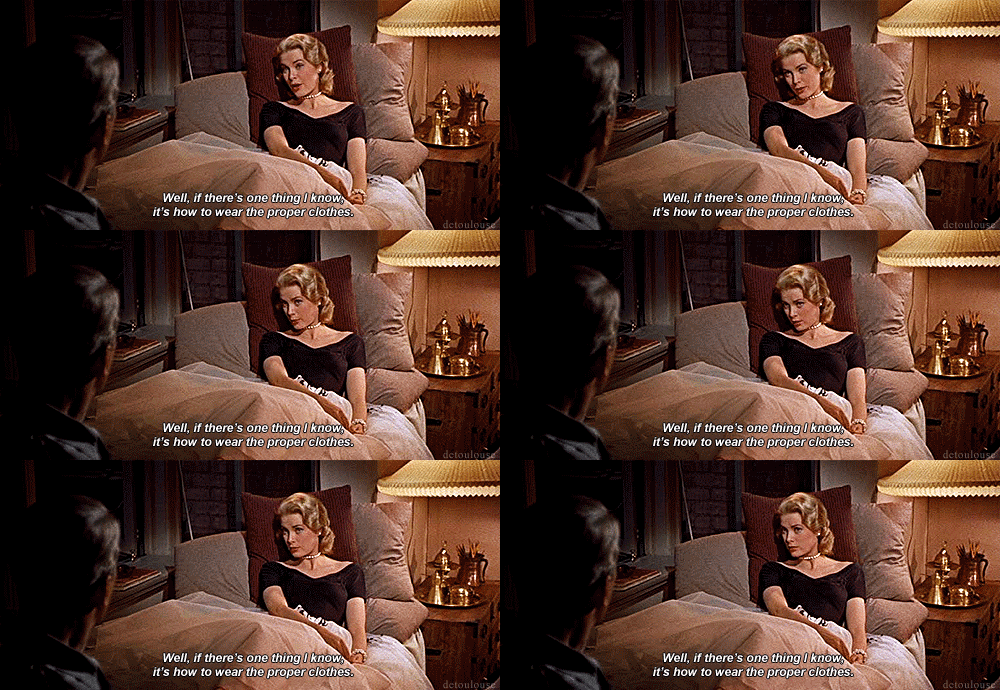
Por isso, são relativamente poucos os figurinos do cinema clássico que entraram na minha lista de desejos. Não apenas por seus preços exorbitantes, mas também porque não fazem meu estilo. Aqui está minha lista de figurinos do cinema que eu não pensaria duas vezes antes de vestir:

That’s why relatively few classic film outfits enter my wishlist. It’s not only because they’re probably very expensive, but because they don’t fit my personal style. Here is my list of film outfits I’d wear without thinking twice:

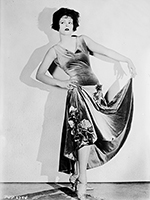
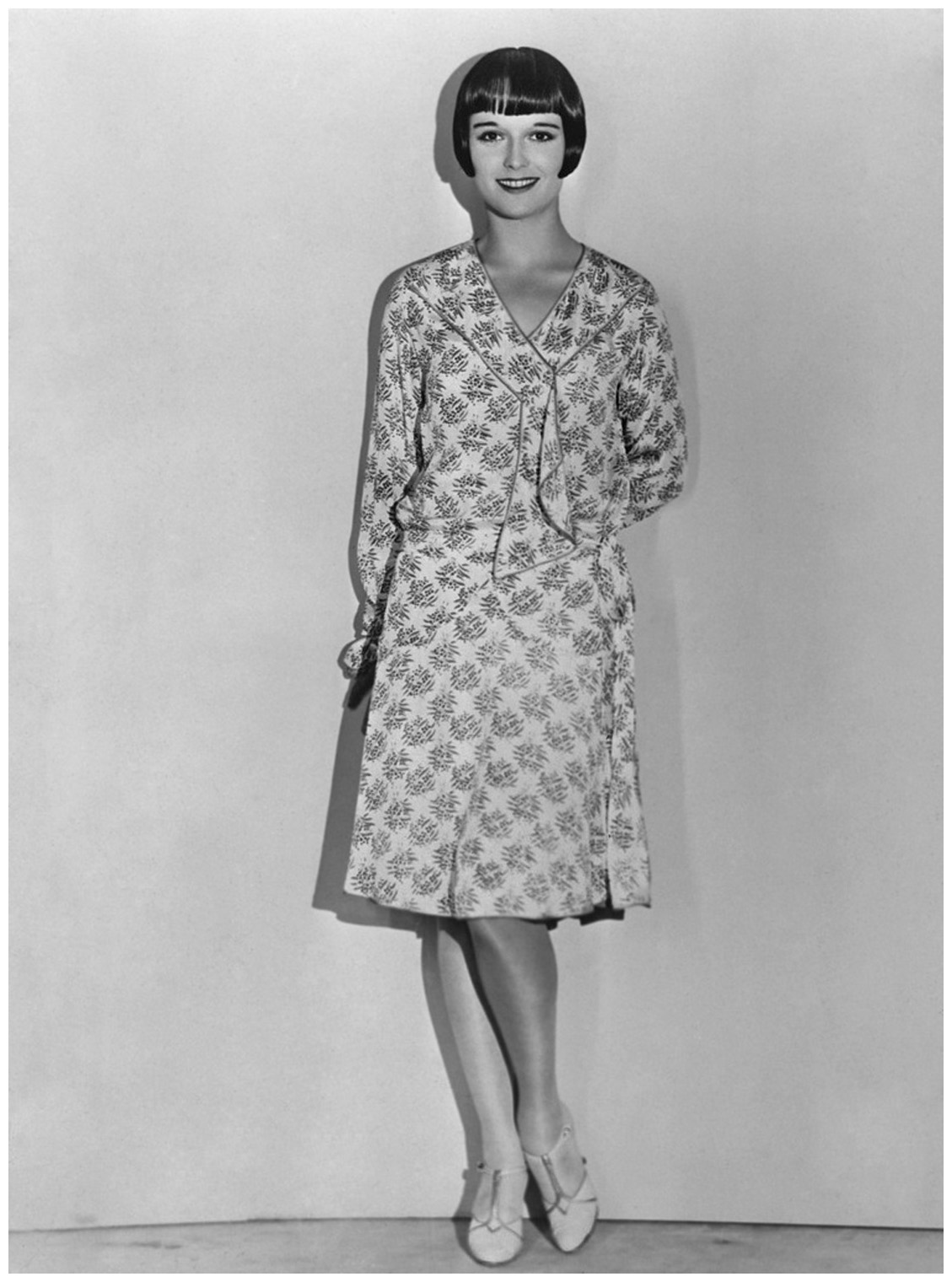
Qualquer coisa que Louise Brooks e Clara Bow usaram:
Não há dúvidas do porquê de essas moças serem ainda hoje consideradas ícones de estilo. Eu adoro quando elas usam vestidos e saias mais curtos, tanto em filmes – como Clara Bow em “Asas” (1927) – e no dia a dia – olhe para este lindo conjunto de marinheira!

Anything worn by Louise Brooks and Clara Bow:
No wonder these girls are still style icons. I love when they wear shorter dresses and skirts, both in movies – like Clara Bow in “Wings” (1927) and in daily life – look at that sailing suit!
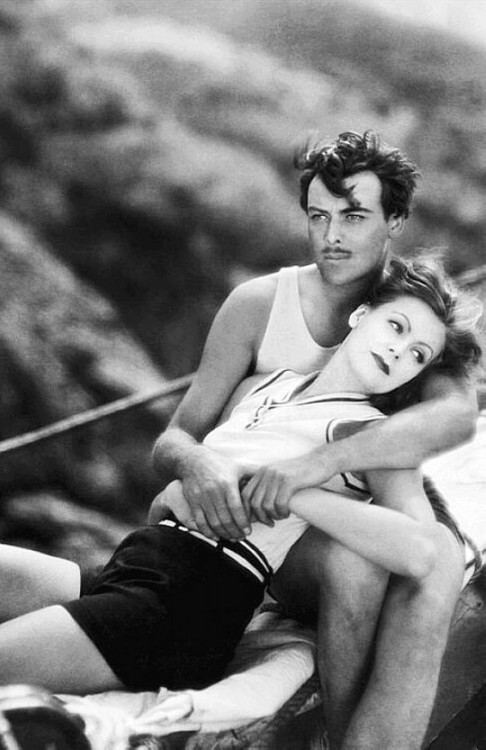
Roupas de Greta Garbo em “Mulher Singular” (1929):
Estas roupas são andróginas – e também ótimas para praticar esportes. Eu não faço o estilo atleta, mas as roupas com certeza parecem confortáveis e práticas. Bônus: o responsável por elas foi o lendário designer Adrian!

Greta Garbo’s outfits from “The Single Standard” (1929):
These clothes are androgynous – and also great for sports. I’m not very athletic, but they certainly look comfy and practical. Bonus points: designed by Adrian!
Vestido de Paulette Goddard em “Tempos Modernos” (1936):
O cabelo de Paulette em “Tempos Modernos” está praticamente do comprimento do meu agora, mas isso não é minha coisa favorita sobre a personagem. Para mim, a melhor roupa que ela usa é este vestido brilhante no show do restaurante. Eu o usaria para ir até a padaria? Provavelmente não. Para uma festa? Aí sim.

Paulette Goddard’s dress from “Modern Times” (1936):
Paulette’s hair in “Modern Times” is the same length as mine right now, but this is not what I love the most about her gamine character. For me, the greatest outfit she wears is this flamboyant dress in the restaurant show. Would I wear it to go the bakery? Probably not. To a party? Oh yes.
Mini-smoking de Judy Garland em “Casa, comida e carinho” (1950): 
Olhe este terninho adorável. Eu amo usar shorts. Eu aprecio um bom blazer. Judy e eu temos quase a mesma altura. O figurino foi usado em uma cena deletada de “Desfile de Páscoa” (1948), e reutilizado para o número musical “Get Happy”, filmado muitos meses após o fim das gravações.

Judy Garland’s short suit from “Summer Stock” (1950):
Look at that lovely suit. I love shorts. I enjoy blazers. Judy and I are about the same height. The outfit was previously used in a deleted scene from “Easter Parade” (1948), and re-used for the musical number “Get Happy”, shot many months after production wrapped.
Traje de banho em “Cantando na Chuva” (1952):
No número “Beautiful Girl” há um desfile de modas. Algumas roupas são exageradas, mas outras são realmente bonitas – como o vestido de casamento, a roupa de luto, os vestidos vermelho e roxo e, em especial, o traje de banho.

Swimming suit from “Singin’ in the Rain” (1952):
In the “Beautiful Girl” number there is a fashion show. Some of the clothes are exaggerated, but some are truly nice – like the wedding gown, the widow gown, the red dress, the purple dress and, in special, the swimming suit.
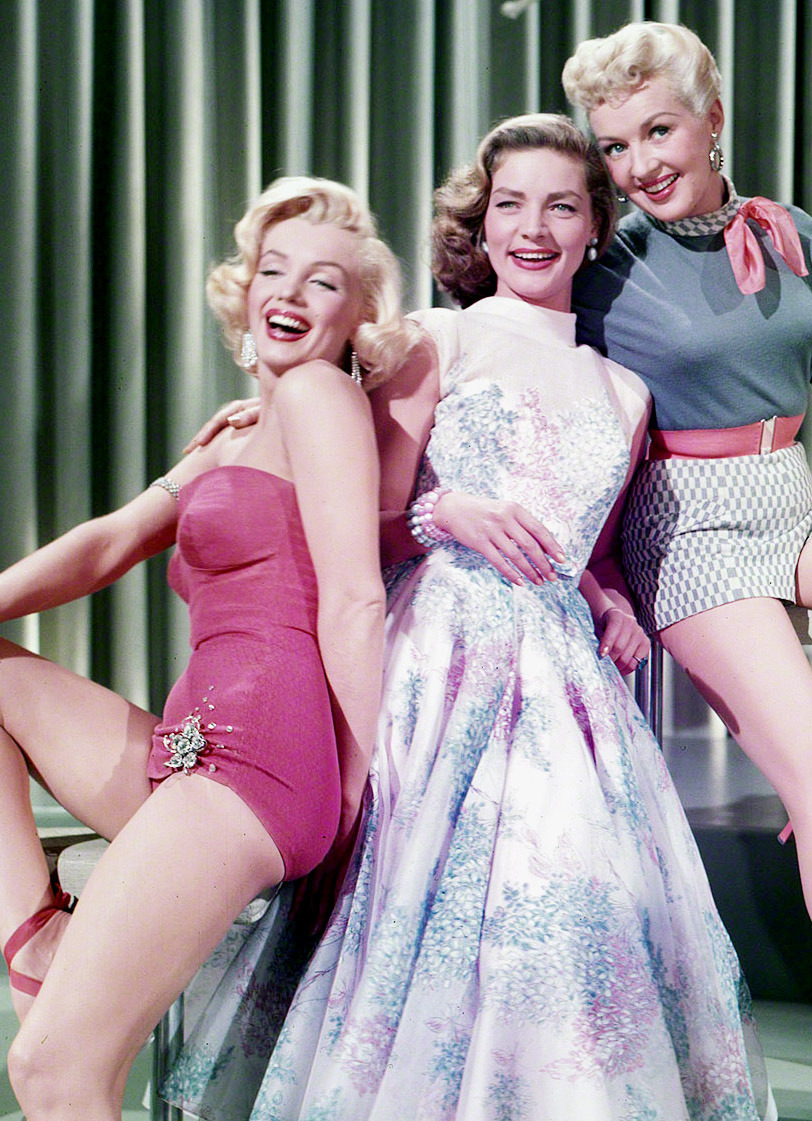
Short e blusa de Betty Grable em “Como agarrar um milionário” (1953):
Mais um desfile de moda, mais uma roupa maravilhosa: os shorts de Betty Grable, com um cinto cor de salmão e aquela blusa linda que completa o conjunto – esta é provavelmente meu figurino favorito da lista.

Betty Grable’s short and blouse from “How to Marry a Millionaire” (1953):
Another fashion show, another must have: Betty Grable’s amazing shorts, with a salmon belt and that wonderful blouse – this is probably my favorite outfit from the whole list.
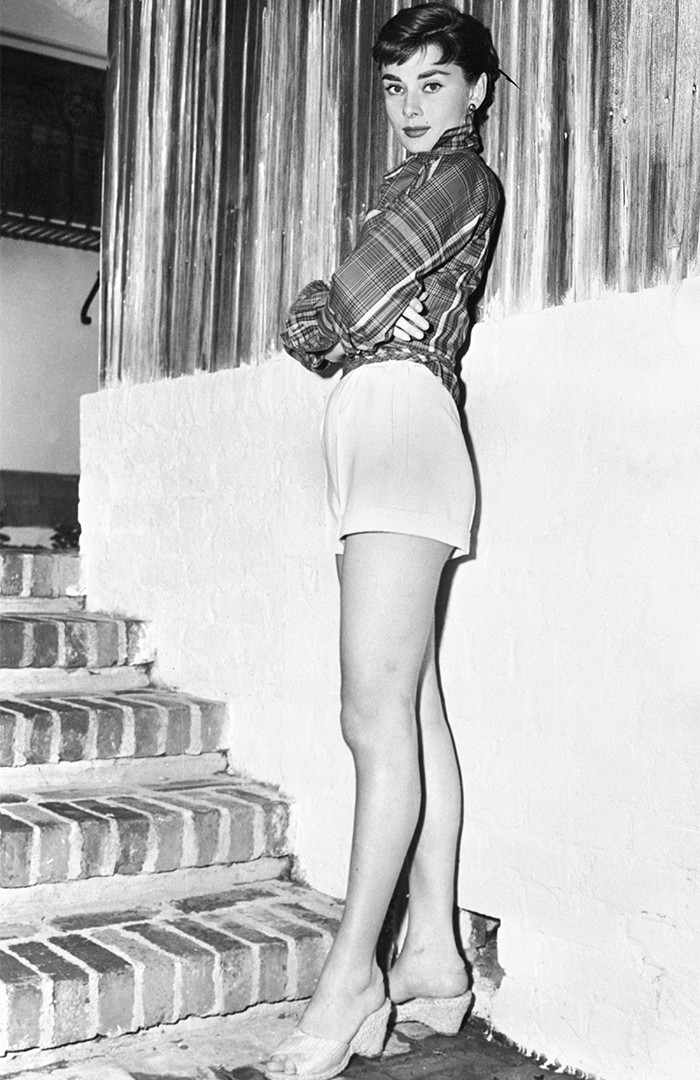
A maioria das roupas usadas por Audrey Hepburn:
Audrey também é um ícone de estilo que me inspira – embora eu não queira usar nada de Givenchy. Eu adoro a saia e blusa que ela usa durante sua aventura em “A Princesa e o Plebeu” (1953), mas eu gostaria mais se a saia fosse mais curta. Suas roupas em “Cinderela em Paris” (1957) e “Um Caminho para Dois” (1967) são lindas. E seu estilo do dia a dia também é inspirador: dê-me calças cigarrete, sapatilhas, blusas de gola alta ou camisas xadrez e eu serei uma menina estilosa e feliz!

Most of Audrey Hepburn’s clothes:
Audrey is also a style icon that inspires me – although I don’t want to dress any Givenchy. I love the skirt and blouse she wears during her adventure in “Roman Holiday” (1953), but I’d prefer a shorter skirt. Her clothes in “Funny Face” (1957) and “Two for the Road” (1967) are gorgeous. And her everyday style is also a must: give me cropped trousers, ballet flats, turtlenecks or plaid shirts and I’ll be a happy – and well-dressed – girl!
This is my contribution to the Free For All blogathon, hosted by Theresa at CineMaven’s Essays from the Couch.

Friday, November 10, 2017

Grace Kelly: style icon

Não podemos negar que o mundo da moda e o mundo do cinema caminham lado a lado desde, no mínimo, os anos 1920. Se tivéssemos que escolher uma estrela para exemplificar a relação entre moda e cinema, a maioria das pessoas escolheria Audrey Hepburn. Eu entendo o motivo: a parceria de Audrey com Givenchy foi icônica e alguns de seus filmes trataram do mundo da moda. Mas eu gostaria de discordar desta maioria: em minha opinião, Grace Kelly e as tendências da moda também andaram de mãos dadas.

We can't deny that the fashion world and the movie world walk side by side since, at least, the 1920s. If we had to choose one film star to exemplify the relationship between fashion and film, most people would point out Audrey Hepburn. I understand them: Audrey's partnership with Givenchy was iconic and some of her movies dealt with the fashion world. But I'd like to disagree with most people: in my opinion, Grace Kelly and fashion tendencies also waked hand in hand.
Grace desfilou pela primeira vez em um evento beneficente da escola. Sua mão e irmãs também participaram do desfile. Quando Grace decidiu tentar a carreira de atriz, ela começou a trabalhar como modelo, e ficou três anos nesta ocupação.

Grace modeled for the first time in a beneficent event at the school she attended. Her mother and sisters were also part of the fashion show. When Grace went on to pursue a career in acting, she started also working as a model, and did it for three years.
Grace começou com papéis na TV. Seu primeiro papel no cinema, em “Horas Intermináveis” (1951), foi muito pequeno. O papel seguinte, em “Matar ou Morrer” (1952), também foi pequeno, mas fundamental para a trama. Ann Peck, figurinista especialista em westerns, foi a responsável pelos figurinos das mulheres do filme.

Grace started with TV roles. Her first film role, in “Fourteen Hours” (1951), is very brief. The one that followed, in “High Noon” (1952), was also brief, but fundamental to the plot. Ann Peck, a western expert, was responsible for the female outfits in the film.
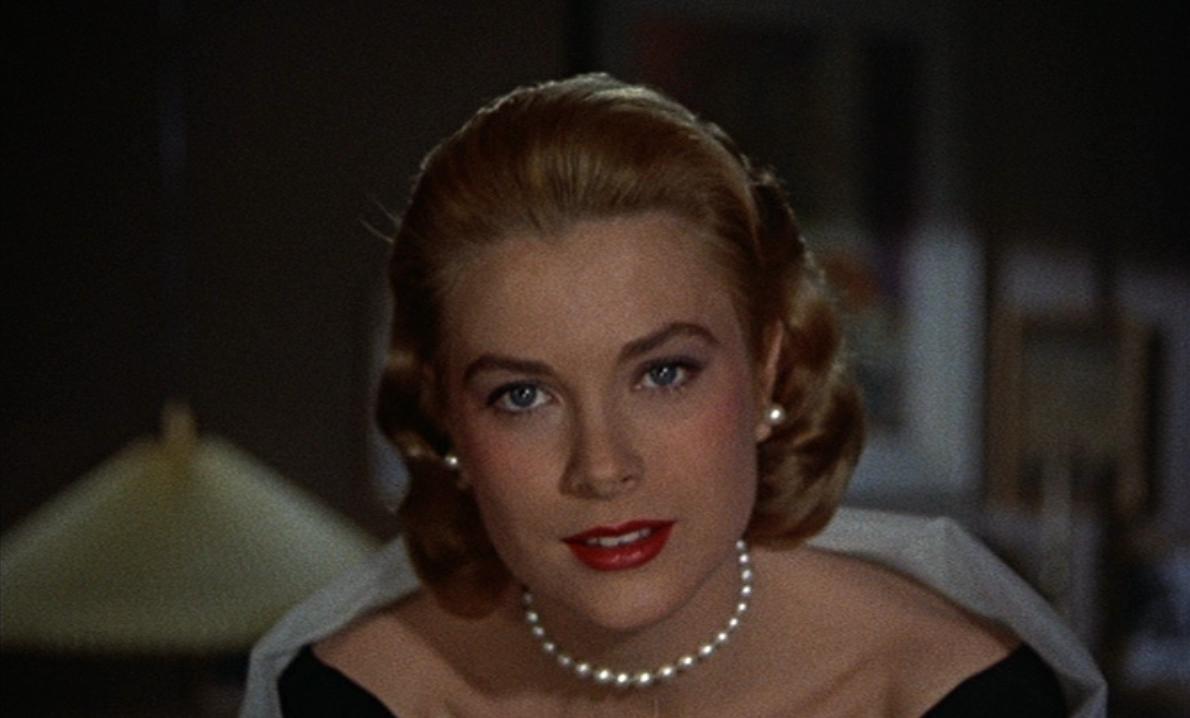
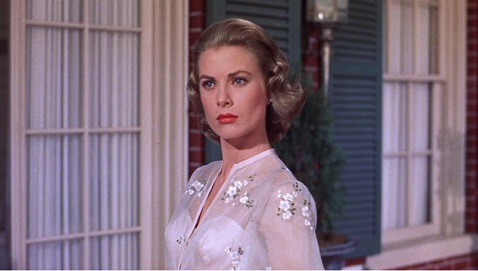
Ninguém vestiu Grace Kelly melhor que Edith Head. A parceria fashion entre elas durou quatro filmes, uma cerimônia do Oscar e uma viagem de despedida. Uma das mais fascinantes imagens de Grace Kelly se tornou de tirar o fôlego graças ao vestido que ela usa. Quando L.B. Jeffrie (James Stewart) abre os olhos, ele encontra sua noiva, Lisa Fremont (Kelly) bem à sua frente, usando um vestido preto e branco. O filme é “Janela Indiscreta” (1954) e essa é a primeira vez que muitos de nós fomos enfeitiçados por Grace Kelly.

Nobody dressed Grace Kelly better than Edith Head. Their fashion partnership lasted four films, one Oscar ceremony and a farewell trip. One of the most fascinating images of Grace Kelly was made even more breathtaking by the dress she wears. When L.B. Jeffries (James Stewart) opens his eyes, he finds his angelic fiancée, Lisa Fremont (Kelly) right in front of him, wearing a black and white dress. The film is “Rear Window” (1954), and this was the first time many of us were bewitched by Grace Kelly.
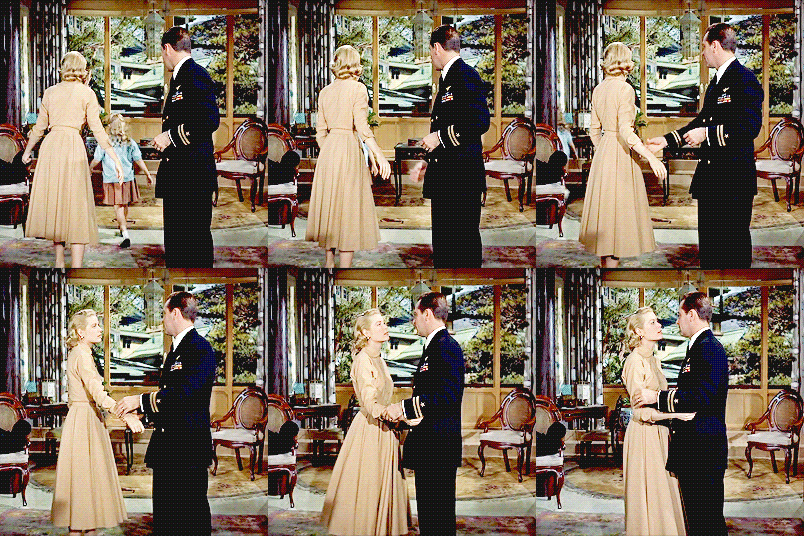
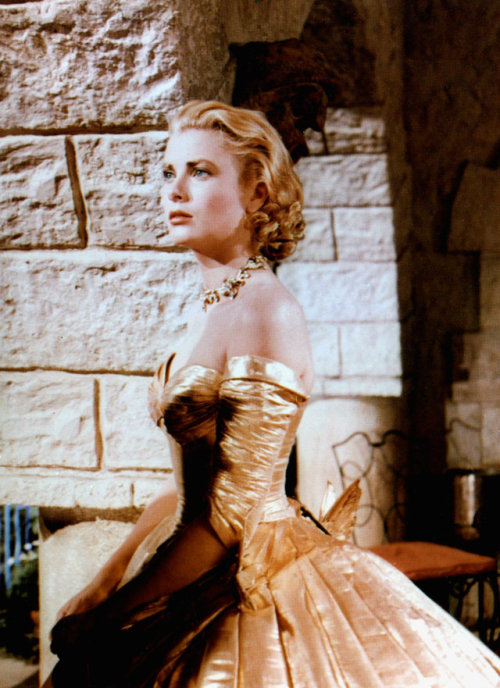
A próxima colaboração delas foi em “As Pontes de Toko-Ri”, um filme de 1954 que tem muito pouco de Grace Kelly e quase nada de ação – apenas nos minutos finais. Grace está no filme basicamente apenas para desfilar as criações glamourosas de Edith. O filme seguinte, entretanto, gerou bons frutos: com “Amar é Sofrer” (1954), Grace Kelly ganhou o Oscar de Melhor Atriz e na noite da cerimônia usou um vestido de Edith Head, muito diferente daqueles que a estilista concebeu para o papel dramático de Grace. Um uma decisão arriscada, Grace repetiu no Oscar o vestido usado na estreia do filme.

Their next collaboration was in “The Bridges at Toko-Ri”, a 1954 movie that has too little of Grace Kelly and not enough action – only in the final minutes. Grace is in the film only to walk with Head’s glamorous creations. The film that followed, however, was good for both: with “The Country Girl” (1954), Grace Kelly won the Best Actress Oscar and at the night of the ceremony she received her prize while wearing a dress designed by Edith Head – a dress very different from the simple clothes her character wears in the film. In a daring decision, Grace reused the dress with which she had attended the premiere of the film.
The Bridges at Toko-Ri (1954)
The Country Girl (1954)
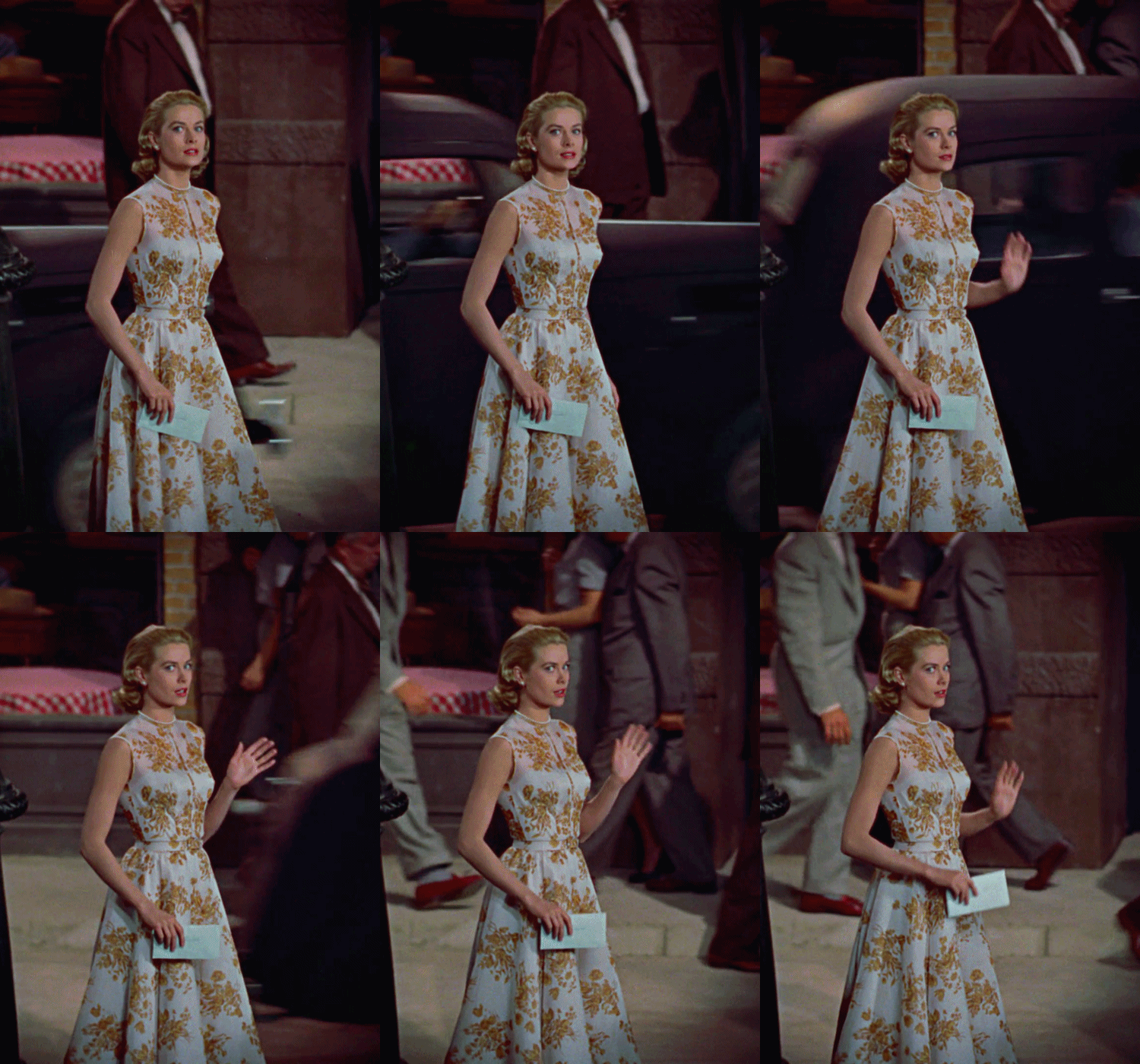
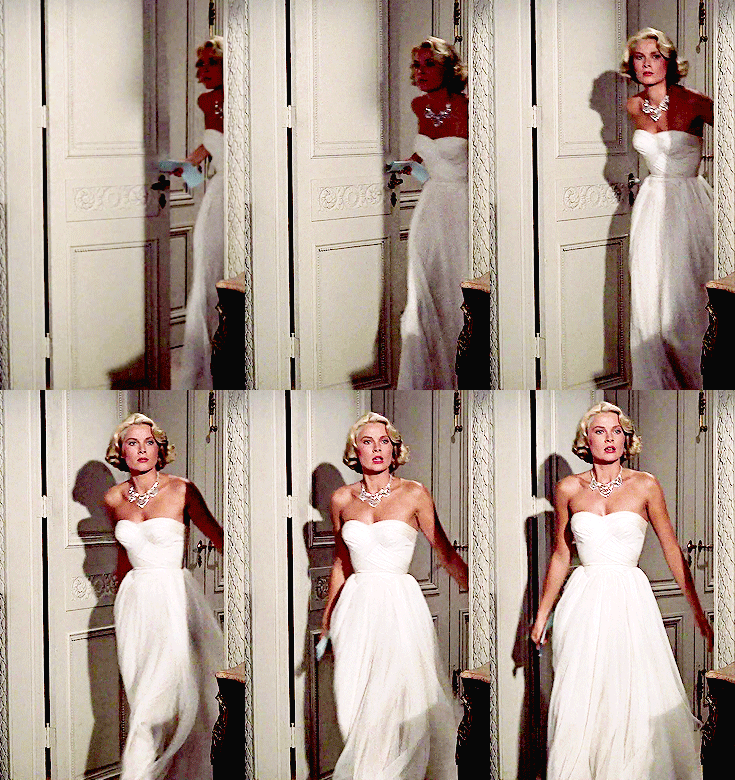
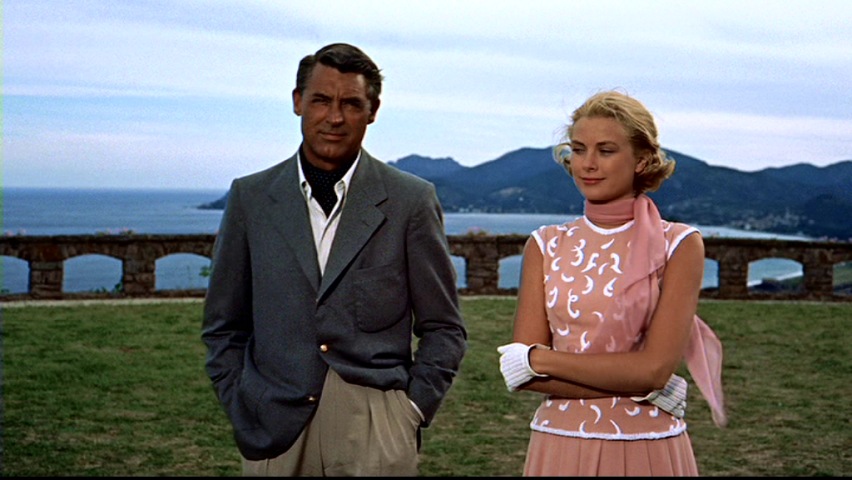
“Ladrão de Casaca” (155) é sem dúvida o filme no qual Grace Kelly usa as roupas mais bonitas. Como uma mulher riquíssima que pode ser a próxima vítima de um ladrão de joias, ela pode desfilar com lindos vestidos pelos cenários da Riviera Francesa. Sua beleza e suas roupas são inclusive capazes de fazer você desviar a atenção do queixo glorioso de Cary Grant e, bem, prestar atenção nela.

“To Catch a Thief” (1955) is without a doubt the film in which Grace Kelly wears the most beautiful clothes. As a very rich woman who may be the next victim of a jewel robber, she can show off gorgeous dresses in the French Riviera setting. Her beauty and her outfits can even make you stop looking at Cary Grant's glorious chin and, well, pay attention to her.
O terninho que Grace Kelly usava quando deixou Hollywood de vez foi também desenhado por Edith Head, e dado como um presente de despedida dos estúdios Paramount. Ironicamente, nenhum dos oito Oscar ganhos por Edith Head veio de um filme com Grace Kelly.

The suit Grace Kelly was wearing when she left Hollywood for good was also designed by Edith Head, as a farewell gift from Paramount studios. Ironically, none of Edith Head’s eight Oscar wins was from a film starring Grace Kelly.
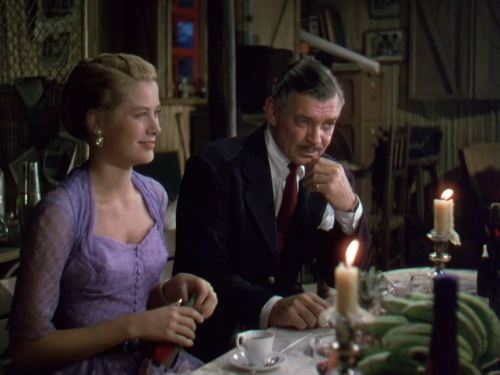
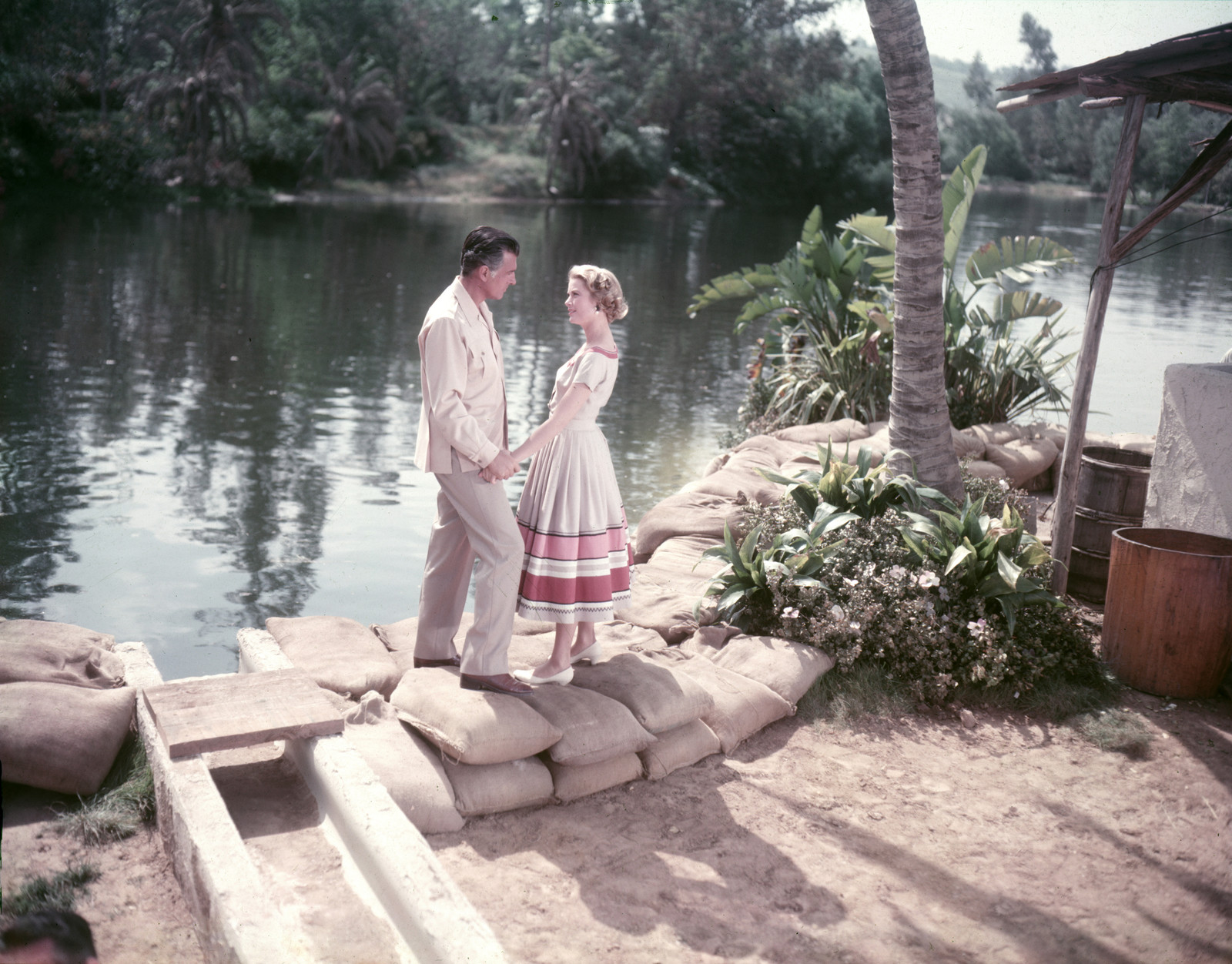
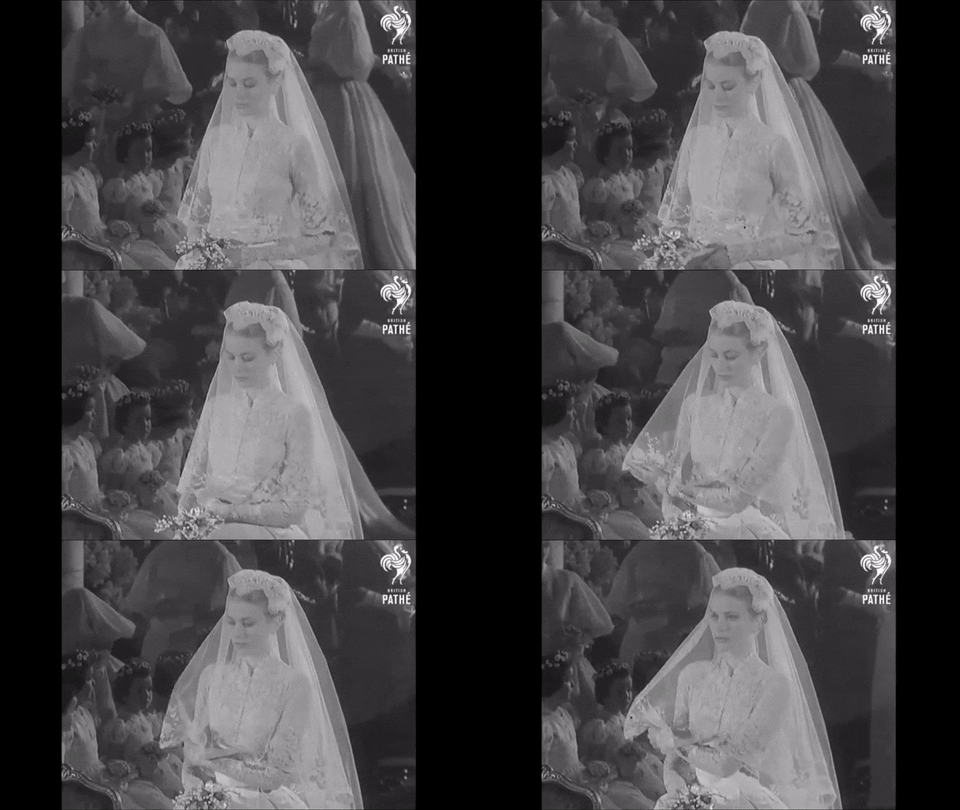
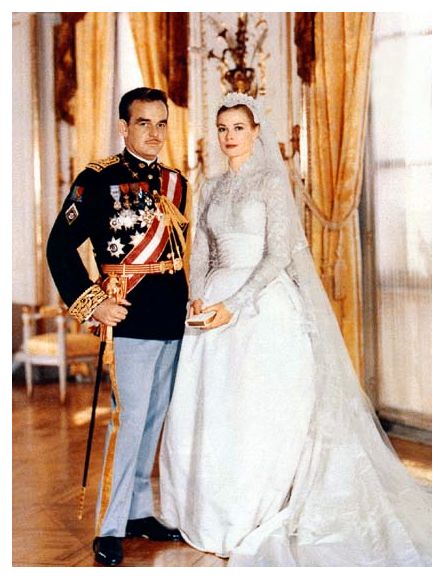
O icônico vestido de noiva de Grace Kelly não foi desenhado por Edith Head. Helen Rose, que foi responsável pelo figurino de Grace em quatro filmes – “Mogambo” (1953), “Tentação Verde” (1954), “Alta Sociedade” (1956) e “O Cisne” (também de 1956) – foi escolhida para desenhar dois vestidos de noiva para Grace: um para a cerimônia civil e outro para a religiosa. Em vez que usar uma tiara, ela escolheu usar um chapéu parecido com uma boina. O casamento foi o maior evento fashion de 1956.

Grace Kelly's iconic wedding dress wasn't designed by Edith Head. Helen Rose, who was responsible for Grace’s outfits in many films – “Mogambo” (1953), “Green Fire” (1954), “High Society” (1956) and “The Swan” (also 1956) – was chosen to design both wedding dresses for Grace: one for the civil ceremony and one for church. Instead of a tiara, she chose to wear a beret-style hat. The wedding was the biggest fashion event of 1956.
Mogambo (1953)
Green Fire (1954)
High Society (1956)
The Swan (1956)
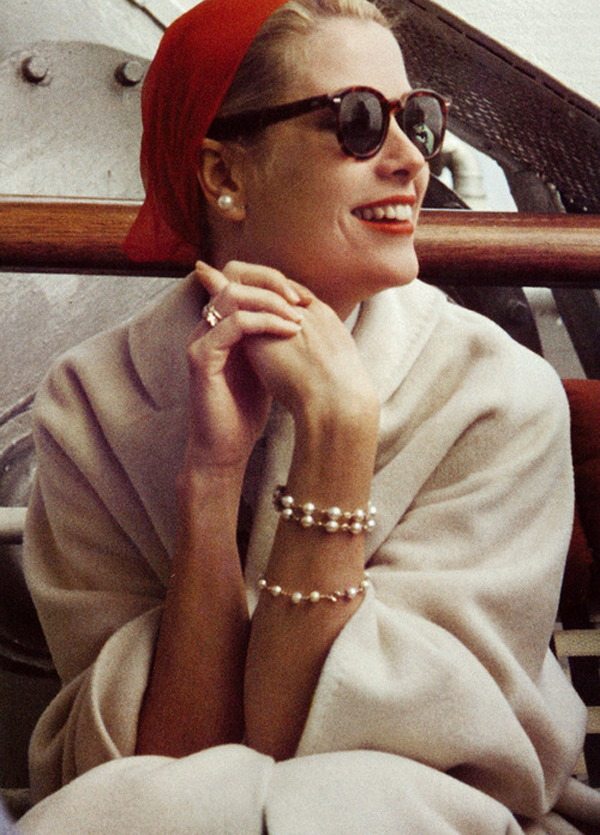
Após o casamento, Grace se afastou de Hollywood, mas não do mundo da moda. Ela começou a usar roupas de alta costura europeia e uma bolsa coringa, que de acordo com uma lenda era perfeita para esconder sua barriga na primeira gravidez. A grande bolsa de mão Hermès passou a ser chamada de “Kelly bag”.

After her marriage, Grace stayed away from Hollywood, but not from the fashion world. She started wearing European haute culture and a favorite handbag that according to the legend was used to cover up her first pregnancy. The big Hermès handbag she used became known as the “Kelly bag”.
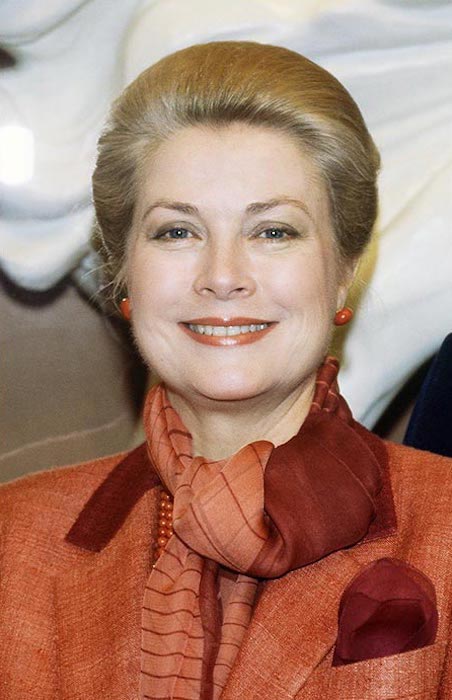
Grace Kelly faleceu há mais de 35 anos, mas seu estilo ainda é lembrado e reconhecido. Em 2012, ela estava entre os 100 ícones da moda mais influentes desde 1923 escolhidos pela revista TIME. E, se pensarmos em um look elegante e perfeito dos anos 1950, provavelmente visualizaremos algo usado por Grace Kelly.

Grace Kelly died more than 35 years ago, but her style is still remembered. In 2012, she was among the 100 most influential fashion icons since 1923 picked by TIME magazine. And, if we think about a perfect fancy 1950s look, we’ll probably think about something worn by Grace Kelly.

This is my contribution to the third Wonderful Grace Kelly blogathon, hosted by Virginie at The Wonderful World of Cinema.
Related Posts Plugin for WordPress, Blogger...