} Crítica Retrô: Frances Dee

Tradutor / Translator / Traductor / Übersetzer / Traduttore / Traducteur / 翻訳者 / переводчик

Showing posts with label Frances Dee. Show all posts

Saturday, July 20, 2019

As Quatro Irmãs (1933) / Little Women (1933)


Cristóvão Colombo! Essa é a expressão usada pela heroína Jo March sempre que fica surpresa ou maravilhada. Eu também usei a expressão enquanto assistia à versão de 1933 de “As Quatro Irmãs”, uma história emocionante sobre vida familiar e sacrifício na década de 1860 – uma história tão linda que ainda mexe conosco e ecoa os laços de família que cultivamos na década de 2010.

Christopher Columbus! This is the expletive used by the heroine Jo March whenever she is surprised or amazed. I also used the expletive as I watched the 1933 version of “Little Women”, a heartfelt story about family life and sacrifice in the 1860s – a story so beautiful it still moves and echoes the family ties we experience in the 2010s.
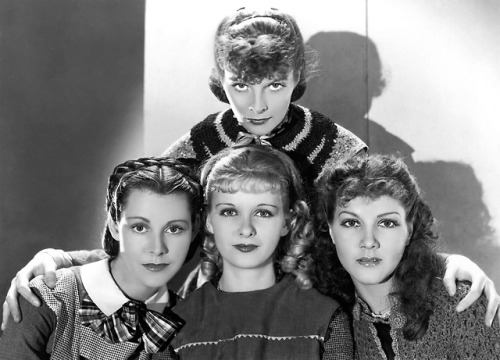

As irmãs March ficam em casa com a mãe enquanto o pai está lutando na Guerra Civil Americana. Meg (Frances Dee) é a mais velha, uma garota obediente. Josephine ou Jo (Katharine Hepburn) é uma moleca criativa e atrapalhada. Beth (Jean Parker) é uma tímida pianista. Amy (Joan Bennett) é a mais nova, uma garota levada.

The March sisters and their mother stay home while the father is fighting in the American Civil War. Meg (Frances Dee) is the eldest, an obedient girl. Josephine or Jo (Katharine Hepburn) is a creative and clumsy tomboy. Beth (Jean Parker) is a shy piano player. Amy (Joan Bennett) is the youngest, a spunky girl.


As meninas têm a mãe, chamada de Marmee (Spring Byington) e uma tia sovina e em geral antipática (Edna May Oliver). Os vizinhos das meninas são o Senhor Laurence (Henry Stephenson) e o neto dele, Laurie (Douglass Montgomery). Quando Jo vai a Nova York, ela fica em uma pensão e lá conhece o Professor Bhaer (Paul Lukas).

The girls have their mother, called Marmee (Spring Byington) and a stingy and often unsympathetic aunt (Edna May Oliver). The girls’ neighbors are the Mr Laurence (Henry Stephenson) and his grandson Laurie (Douglass Montgomery). When Jo goes to New York, she stays in a boarding house and there she meets Professor Bhaer (Paul Lukas).
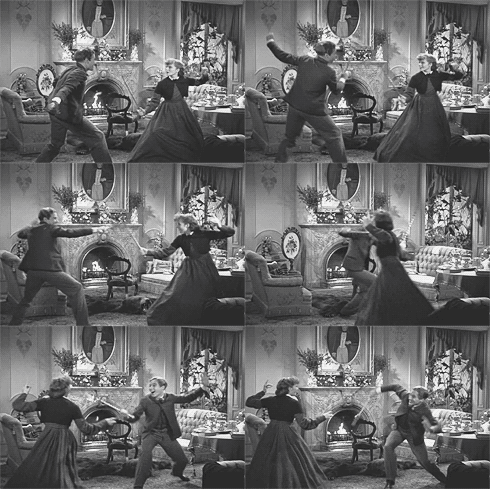

Cada garota tem uma história diferente, e temas como amor, viagem, autodescoberta, correr atrás dos sonhos e morte estão presentes. Eu adoro a maneira como cada personagem se desenvolve, e ninguém é o mesmo no começo e no final. Isso é verdade, por exemplo, para Amy, que no começo é uma menina sapeca e não muito esperta, em idade escolar, e se torna uma mulher charmosa e talentosa, sendo mostrada como uma boa pintora e ótima companhia.

Each girl has a developing storyline, and themes like love, travelling, self-discovery, pursuit of dreams and death are present. I love how each character really develops, and nobody is the same in the beginning and in the end. This is true, for instance, for Amy, who in the beginning is a naughty and not very bright schoolgirl, and develops into a charming and talented woman, being seen as a good painter and a good companion.
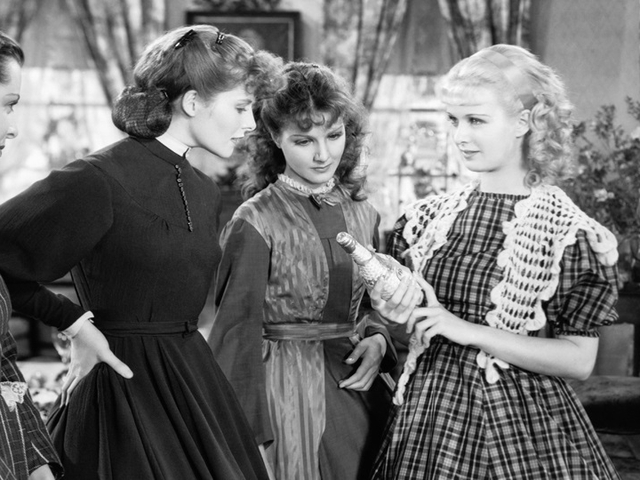

Joan Bennett, então com 22 anos, estava grávida da segunda filha durante as filmagens de “As Quatro Irmãs” – Joan teve quatro filhas. O figurinista Walter Plunkett teve de adaptar o figurino dela para esconder a barriga – o que nem sempre funcionou. Se você prestar atenção, verá algo mais interessante no figurino: as irmãs quase sempre trocam peças de roupa umas com as outras, o que simboliza a ligação afetiva entre elas.

Joan Bennett, then 22, was pregnant with her second daughter during the filming of “Little Women” – Joan would go on to have four daughters. Costume Designer Walter Plunkett had to adapt her wardrobe to hide the growing bump – which sometimes was impossible to do. If you look closely, you can see something more interesting about the costumes: the sisters often trade costumes with each other, which symbolizes the bond they have.
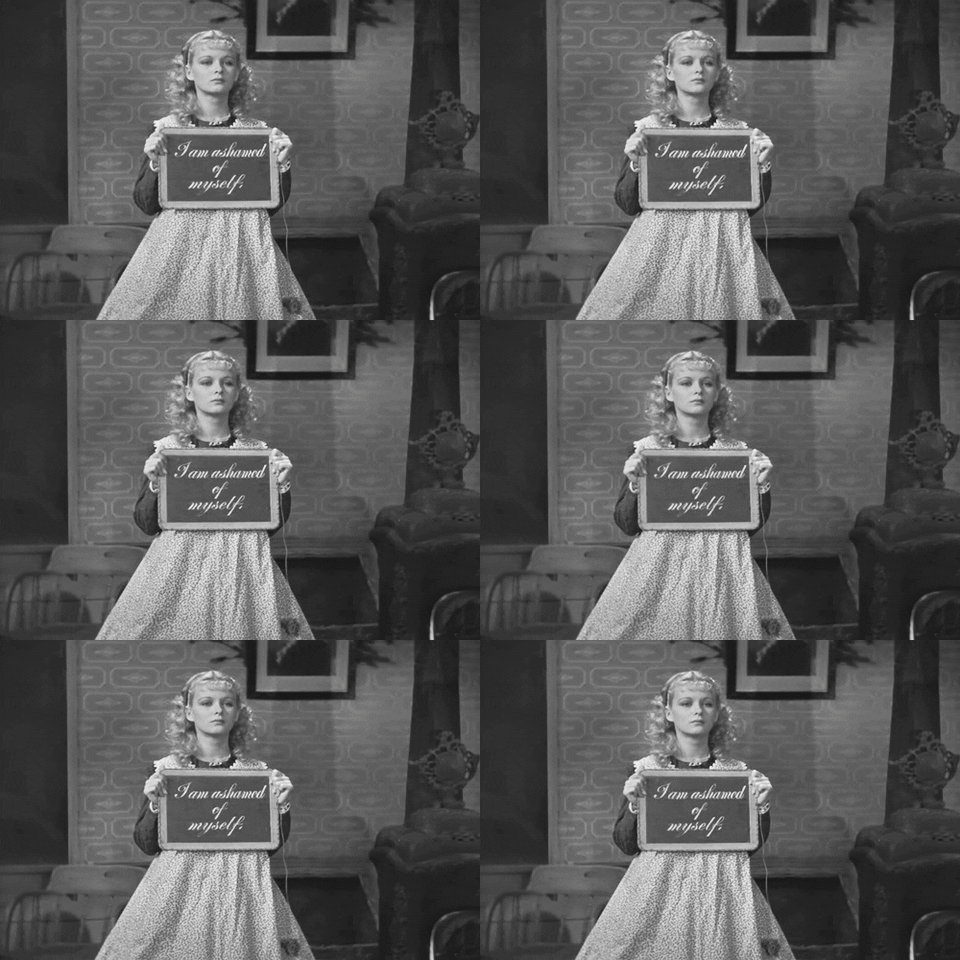

Joan Bennett teve muitas fases em sua carreira, todas bem marcadas por mudanças no visual. Durante sua primeira fase importante, como uma jovem heroína romântica, ela tinha cabelo loiro com muitos cachos – como aqui em “As Quatro Irmãs”. Eu sua segunda fase importante, como femme fatale em filmes noir, seu cabelo foi pintado de preto e seus cachos se tornaram mais esparsos.

Joan Bennett had several phases in her career, all well marked by changes in her look. During her first important phase, as a romantic young heroine, she had blond hair with tight curls – like here in “Little Women”. In her second important phase, as a noir femme fatale, her hair was died black and her curls were sparse.
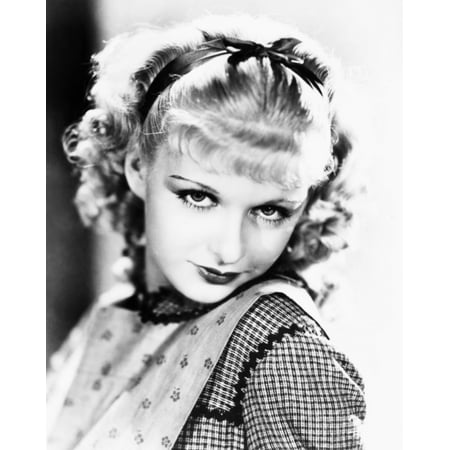
 
Joan Bennett, 1933
Joan Bennett, 1945
Você pode ver no rosto das atrizes que elas estavam se divertindo muito enquanto faziam o filme. Katharine Hepburn estava em seu ambiente, interpretando uma moleca esperta – ela e Louisa May Alcott, autora do livro “Little Women”, foram assim quando jovens. Elogiar Katharine é algo que eu faço com frequência, mas nunca é um exagero. Frances Dee é a mais conservadora das irmãs, e Jean Parker – do filme “Sós no Mundo” (1934) – é a mais doce. Douglass Montgomery – por vezes creditado como Kent Douglass – é um mocinho decente para a forte heroína de Hepburn. De fato, os sonhos de Jo eram grandes demais para o ambiente doméstico.

You can see in the actresses’ faces that they were having a wonderful time doing the film. Katharine Hepburn was in her environment, playing a smart tomboy – like she was and like Louisa May Alcott, the author of the book “Little Women”, was. Praising Katharine is something I often do, but it’s never an exaggeration. Frances Dee is the most conservative of the sisters, and Jean Parker – from the film “Two Alone” (1934) – is the sweetest. Douglass Montgomery – sometimes billed Kent Douglass – is a decent leading man to a much stronger Hepburn. Indeed, Jo’s dreams are too big for her home environment.


“As Quatro Irmãs” foi um imenso sucesso para a RKO e ganhou o Oscar de Melhor Roteiro Adaptado. Por ter estreado durante a Grande Depressão, o filme alimentou as almas nostálgicas que sentiam falta de tempos mais simples e mais felizes. Ele também conquistou o Vaticano, que listou “As Quatro Irmãs” em sua lista de 45 grandes filmes, publicada em 1995.

“Little Women” was a huge success for RKO and won the Best Adapted Screenplay Oscar. Released during the Depression, it fed the nostalgic souls who longed for simpler and happier times. It also conquered the Vatican, who listed “Little Women” in its list of 45 great films, published in 1995.


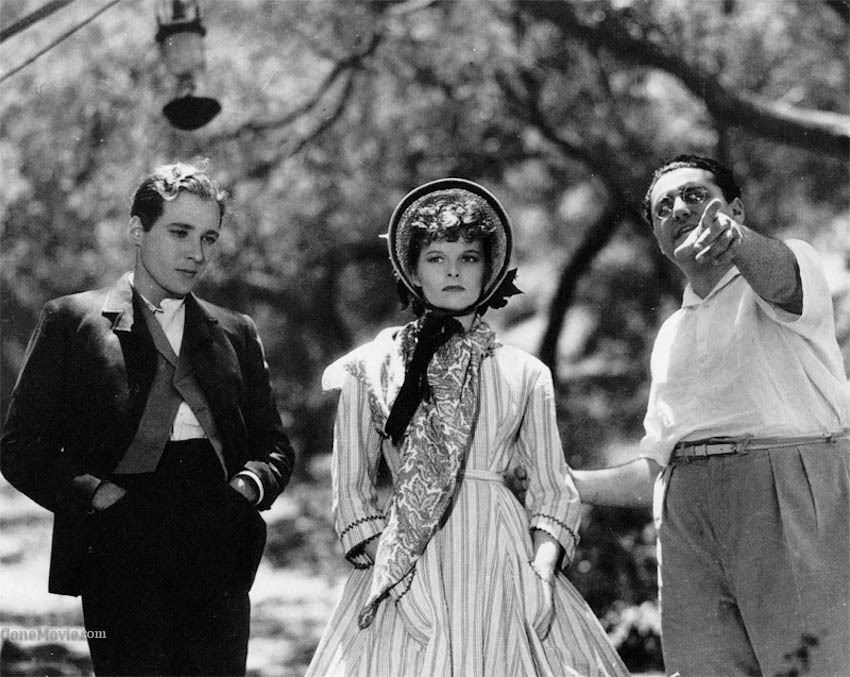
O livro de Louisa May Alcott foi adaptado para telas grandes e pequenas mais de 30 vezes até agora. Esta versão de 1933 é uma das melhores adaptações, graças às adoráveis performances e à direção de George Cukor, que sempre trabalhou bem com atrizes. Mais do que isso, o filme nos recorda que pequenos momentos com quem amamos são a coisa mais importante da vida.

Louisa May Alcott’s book was adapted to both the big and the small screen more than 30 times so far. This 1933 version is one of the best adaptations, thanks to its lovely performances and to George Cukor’s direction, who always worked well with his actresses. Moreover, it reminds us that little moments with our loved ones were and are the most important thing in life.

This is my contribution to the Joan Bennett blogathon, hosted by Crystal at In the Good Old Days of Classic Hollywood.


Sunday, April 7, 2019

Escravos do Desejo (1934) / Of Human Bondage (1934)


ESTA CRÍTICA TEM SPOILERS

THIS REVIEW HAS SPOILERS


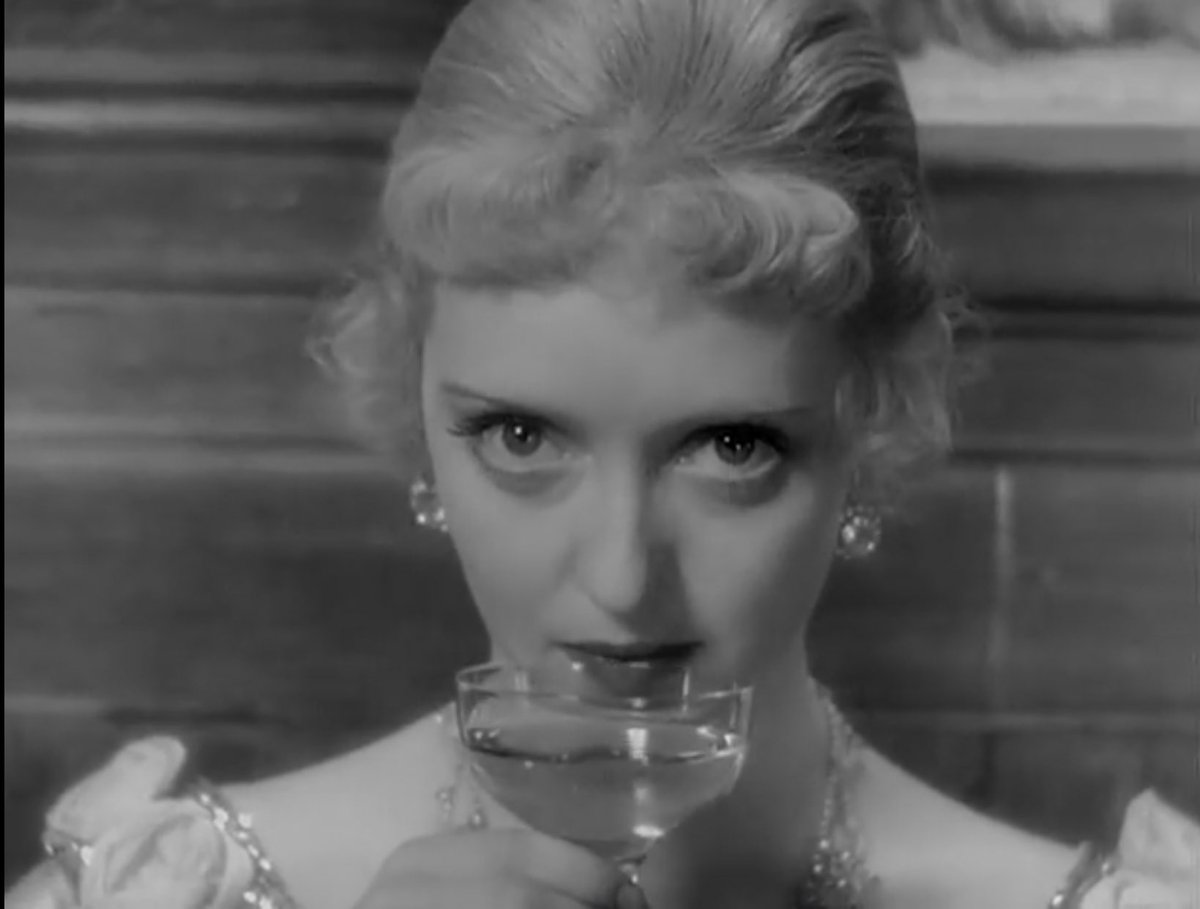
Quase todos os artistas, não importa qual arte façam, têm um trabalho considerado aquele que muda tudo. O livro que se tornou um best-seller e deu a seu autor muitos prêmios. A pintura que foi vendida a uma grande galeria e deu a seu pintor notoriedade. Ou o filme que fez o mundo todo olhar para um ator ou atriz e dizer: “que talento!”. Para Bette Davis, o filme que mudou tudo foi “Escravos do Desejo”, de 1934 - por vezes também chamado de “Servidão Humana” - o 23º filme da carreira dela em Hollywood - o que prova que são necessários muitos anos para fazer sucesso da noite para o dia.

Almost all artists, no matter the art they make, have one work labeled as a “big break”. That book that became a best-seller and gave its author many prizes. That painting that was sold to a big gallery and gave its painter notoriety. Or that movie that made everybody look at an actor or actress and say: “what a talent!”. For Bette Davis, the big break came with 1934’s “Of Human Bondage”, the 23rd film of her career in Hollywood - proving that it takes many years to become an overnight sensation.


Em Paris, Philip Carey (Leslie Howard) pergunta a seu professor de pintura se algum dia ele será um grande pintor. O professor é sincero: seu pupilo pode conhecer a técnica, mas lhe falta a criatividade de um gênio. Desapontado, Philip decide voltar para Londres e seguir a mesma carreira do pai, tornando-se médico. Detalhe importante: Philip manca por causa d dum defeito de nascença, e isso o envergonha muito.

In Paris, Philip Carey (Leslie Howard) asks his painting teacher if someday he would be a great painter. The teacher is sincere: his pupil may know the technique, but lacks the creativeness of a genius. Bummed, Philip decides to go back to London to follow his father’s footsteps and become a doctor. An important detail: Philip has a limp due to a birth defect and is very self-conscious about it.


Já em Londres, um amigo pede que ele o ajude a conquistar uma garota - por causa de sua estadia em Paris, o amigo acredita que Philip tem mais experiência com as mulheres. A garota em questão é a garçonete Mildred Rogers (Bette Davis). Ela e Philip trocam farpas no primeiro encontro - e Philip usa a péssima cantada “você deveria sorrir mais”. Mildred se enoja com o defeito físico dele.

Once in London, he is asked to help a friend conquer a girl - because he lived in Paris, his friend thinks Philip has more experience with girls. The girl in the picture is waitress Mildred Rogers (Bette Davis). She and Philip end up being rude with each other in their first meeting - with Philip even using, ugh, the pick-up line “you should smile more”. Mildred is disgusted by his limp.


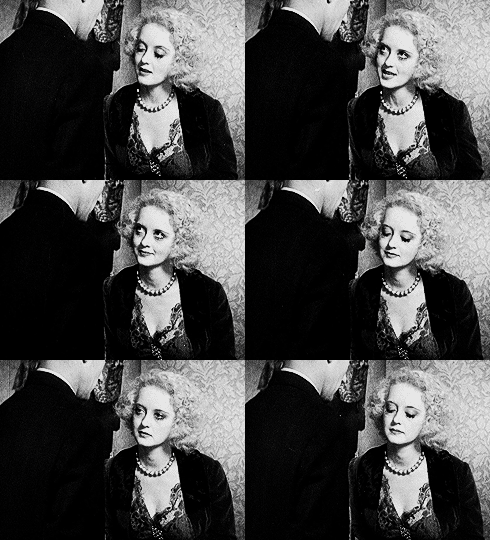
Philip a convida para jantar, e ela aceita. Ele sonha com ela, a convida para sair muitas outras vezes. Philip está obcecado. Mas Mildred é livre - ela é o tipo de personagem feminina livre que o Código Hays mataria muito em breve. Ela flerta com outros clientes, sai com eles e parece não se importar com convites porque recebe muitos deles, o tempo todo.

Philip invites her to go out for dinner, and she accepts. He dreams about her, he invites her out again and again. Philip is obsessed. But Mildred is free - she is the kind of free female character that the Production Code would soon kill. She flirts with other customers, goes out with them and seems unbothered by any invitation because she receives so many so often.


Philip tenta esquecer Mildred saindo com a escritora Norah (Kay Johnson). Agora a situação é inversa: enquanto Philip era apaixonado por Mildred e ela não o amava, agora temos Norah apaixonada por Philip sem ser correspondida. Um dia, Mildred volta - e eu adoraria ver a versão de Norah da história toda, porque temos filmes demais sobre mulheres que arruinaram a vida dos homens, mas poucos sobre mulheres que superaram um amor não correspondido.

Philip tries to forget Mildred by dating writer Norah (Kay Johnson). Now the situation is the inverse: while Philip was devoted to Mildred and she didn’t love him, now we have Norah being devoted to Philip but not being loved by him. Eventually, Mildred comes back - and I’d love to see Norah’s version of the whole story, because there are so many stories of women who ruined men’s lives, but so few of the women who got over loving someone and not being loved back.


Reginald Owen interpreta Thorpe Athelny, um homem que é paciente de Philip, e depois se torna seu amigo e casamenteiro. Ele é construído para ser interessante e criar uma atmosfera acolhedora, mas acaba sendo apenas chato e inconveniente. A filha de Athelny, Sally, é interpretado por Frances Dee. Sally é uma garota doce cuja chance de romance com Philip é arruinada pela, adivinhe, volta de Mildred.

Reginald Owen plays Thorpe Athelny, a man who is first Philip’s patient, then becomes kind of a friend and matchmaker. He is built to be amusing and create a cozy atmosphere, but ends up being only annoying and inconvenient. Athelny’s daughter, Sally, is played by Frances Dee. Sally is a sweet girl whose chance with Philip is ruined by, you guessed it, Mildred’s return.


“Escravos do Desejo” é baseado num romance de W. Somerset Maugham. O autor também escreveu “O Fio da Navalha”, que deu origem a um filme brilhante de 1946. Enquanto “O Fio da Navalha” é uma obra mais espiritual, “Escravos do Desejo” trata dos sentimentos mais crus, como amor, luxúria, desespero, nojo e raiva.

“Of Human Bondage” is based on a romance by W. Somerset Maugham. The author also wrote “The Razor’s Edge”, which was the basis for a brilliant film made in 1946. While “The Razor’s Edge” is a more spiritual work, “Of Human Bondage” is all about the rawest feelings, like love, lust, despair, disgust and anger.


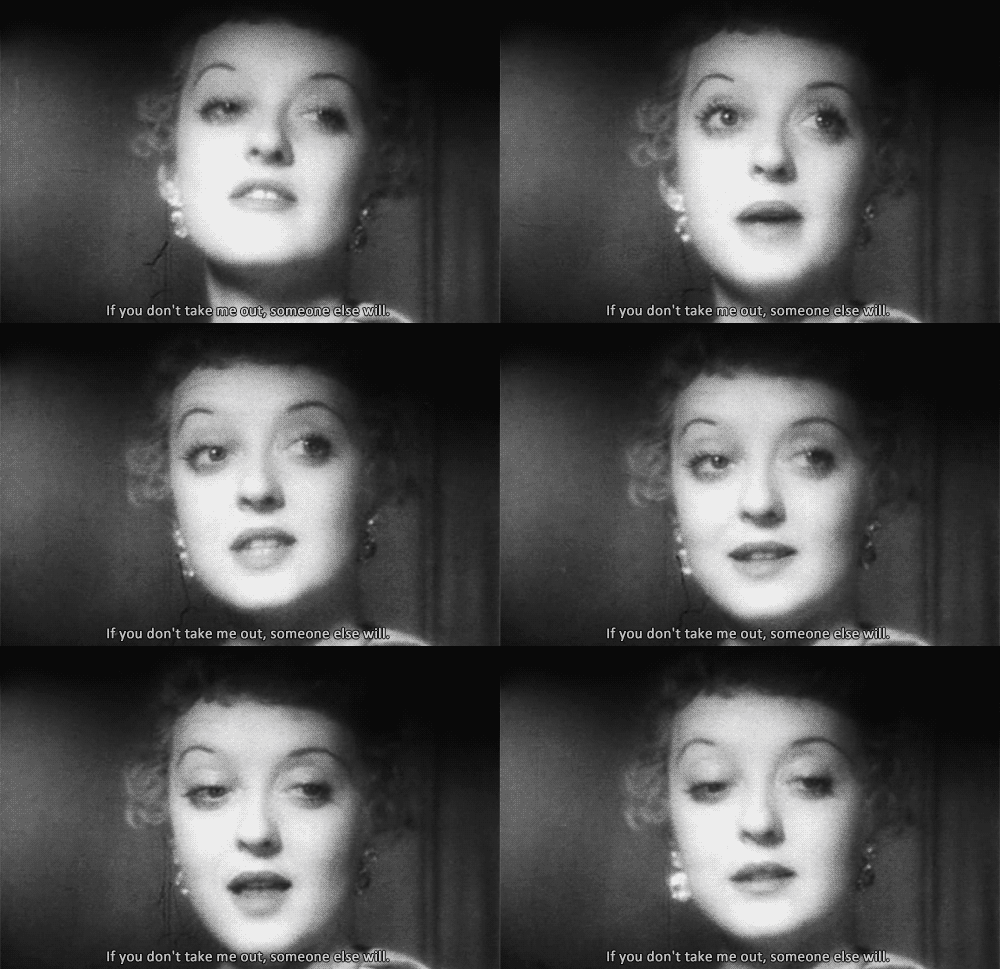
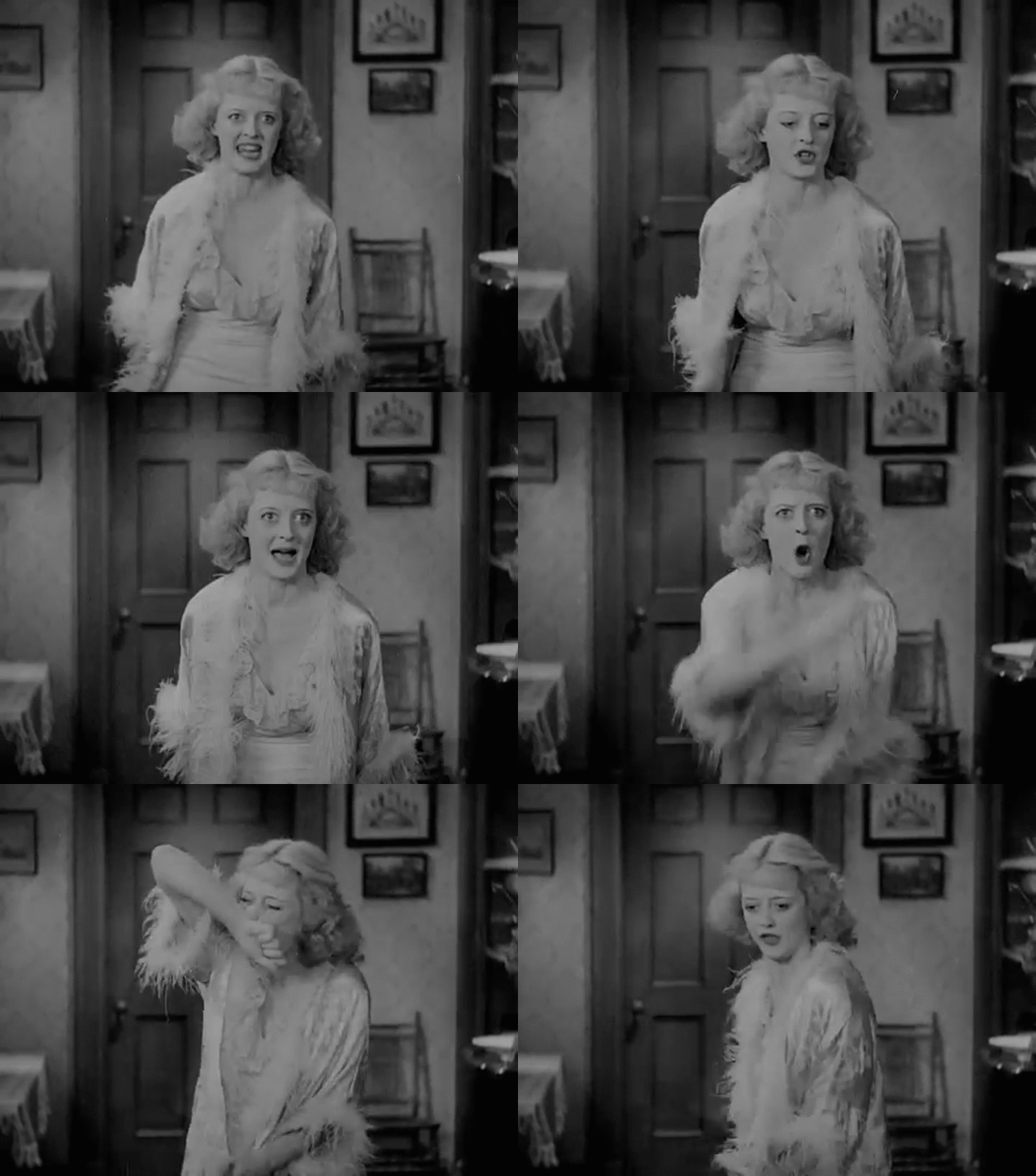
Bette Davis está simplesmente sublime neste filme. Ela é má, mas profundamente humana, e sua transformação é admirável - mas não no bom sentido. Por isso, foi um choque quando ela não foi indicada ao Oscar de Melhor Atriz. No começo dos anos 1930, a Academia permitia que novos candidatos fossem adicionados à cédula na hora da votação, e ela também revelava em que posição os indicados ficaram depois da votação - primeiro, segundo, terceiro lugar e assim por diante. Bette Davis foi tão constante na indicação informal que acabou em terceiro lugar, à frente de Grace Moore, indicada oficialmente pela Academia. O Oscar foi para Claudette Colbert naquele ano e, quando um candidato indicado extra-oficialmente ganhou o prêmio - o que aconteceu na categoria de Melhor Fotografia em 1935 - a Academia proibiu esse tipo de indicação.

Bette Davis is nothing but sublime in this movie. She is vile, but true to the human character, and her transformation is one to admire - not in the good sense. So, it was a shock when she wasn’t nominated for a Best Actress Oscar. Back in the early 1930s, the Academy allowed write-in votes, and it also revealed the positions the nominees eventually came in - first, second, third places and so on. Not only Bette was a write-in in the category, but she also came in third place, in front of real nominee Grace Moore. The Oscar went to Claudette Colbert that year and, when a write-in candidate actually on the award - the Cinematography award in 1935 - the Academy forbade the practice.


Bette Davis estava procurando papéis mais substanciais do que os que lhe eram oferecidos na Warner Brothers. Ela encontrou o que procurava em “Escravos do Desejo”, da RKO, e no final os executivos da Warner fizeram campanha contra ela na corrida do Oscar. Este filme foi um ponto de virada na carreira de Bette, e a prova de que ela nunca teve medo: ela não teve medo de interpretar personagens antipáticas como Mildred, não teve medo de ficar “feia” se isso fosse feito pelo realismo do papel, e nunca teve medo de exagerar – ou ser maior do que a própria vida.

Bette Davis was looking for juicier roles than the one she was being offered at Warner Brothers. She found what she was looking for in RKO’s “Of Human Bondage”, and eventually Warner executives campaigned against her at the Oscar race. This film was a turning point in Davis’s career, and the proof that the actress was never afraid: she was not afraid of playing unsympathetic roles like Mildred, not afraid of becoming “ugly” for a role if it demanded realism, and never afraid to be over the top – or larger than life.

This is my contribution to the Fourth Annual Bette Davis blogathon, hosted by Crystal at In the Good Old Days of Classic Hollywood.


Related Posts Plugin for WordPress, Blogger...