} Crítica Retrô: Franchot Tone

Tradutor / Translator / Traductor / Übersetzer / Traduttore / Traducteur / 翻訳者 / переводчик

Showing posts with label Franchot Tone. Show all posts

Friday, April 21, 2017

Amor de Dançarina / Dancing Lady (1933)

Era uma vez Joan Crawford, ou melhor, Janie Bartow. Assim como Mia de La La Land, ela acha que dança bem e está disposta a fazer de tudo para se tornar uma estrela da Broadway. É a MGM dos anos 30, então nós podemos ter certeza de que ela alcançará o sucesso. Porém, aqui o objetivo não é o mais importante – estamos muito mais interessadas na jornada até atingi-lo.

Once upon a time, there was Joan Crawford, or better, Janie Bartow. Like Mia from La La Land, she thinks she can dance and is willing to do anything to become a star on Broadway. It’s 1930’s MGM, so we can be sure she’ll succeed. But here the finish line is not important – we’re much more interested in the journey.
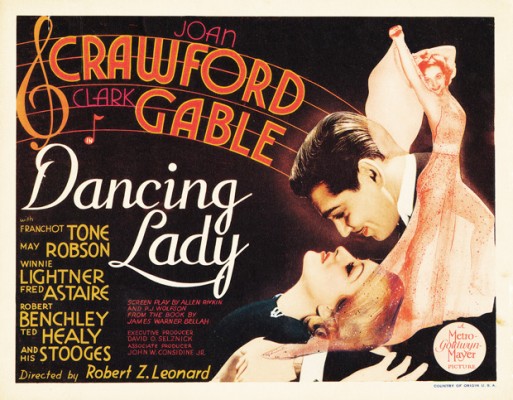

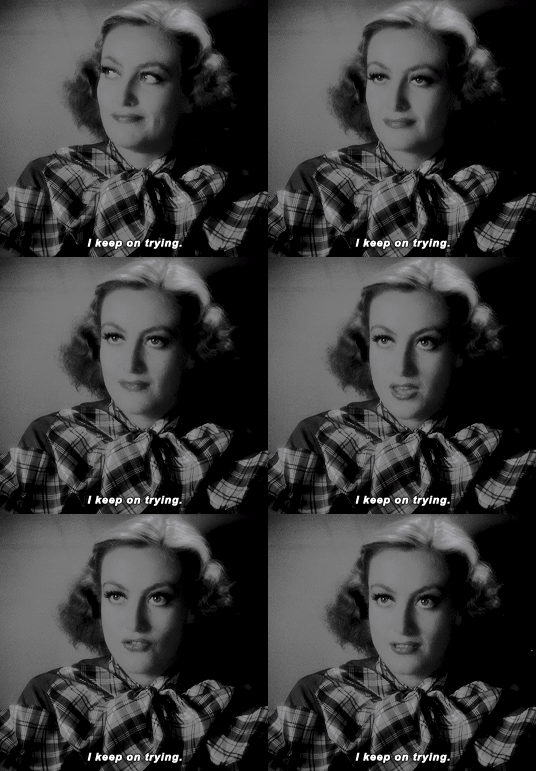
Tod Newton (Franchot Tone) é um homem rico cujo conceito de diversão é bem estranho. Ele paga o ingresso de seus amigos ricos e também de um mendigo para que todos possam assistir a um strip-tease burlesco que acaba com a polícia invadindo o teatro e prendendo as dançarinas. Então Tod vai até a delegacia assistir ao julgamento improvisado. Ele se encanta com Janie (Crawford) e paga a fiança de 30 dólares, livrando-a da cadeia.

Tod Newton (Franchot Tone) is a rich man whose concept of fun is a little weird. He pays entrances to his rich friends and also to a beggar for a Burlesque striptease act that ends up with the dancers being arrested for indecency. Then Tod follows the girls to the court in order to see the brief judgment. He is then smitten by Janie (Crawford) and pays the $30 bail to free her from jail.
Janie conta a Tod que ela quer ser levada a sério como dançarina. No dia seguinte, ela vai atrás deste sonho e também do Midas do teatro musical Patch Gallagher (Clark Gable). Ela não consegue nem chegar perto dele para pedir para fazer um teste, e mais uma vez Tod a ajuda.

Janie tells Tod that she wants to be a serious dancer. The following day, she chases her dream and goes after musical theater Midas Patch Gallagher (Clark Gable). She can't even get near him to discuss an audition, and once again Tod appears to offer help.
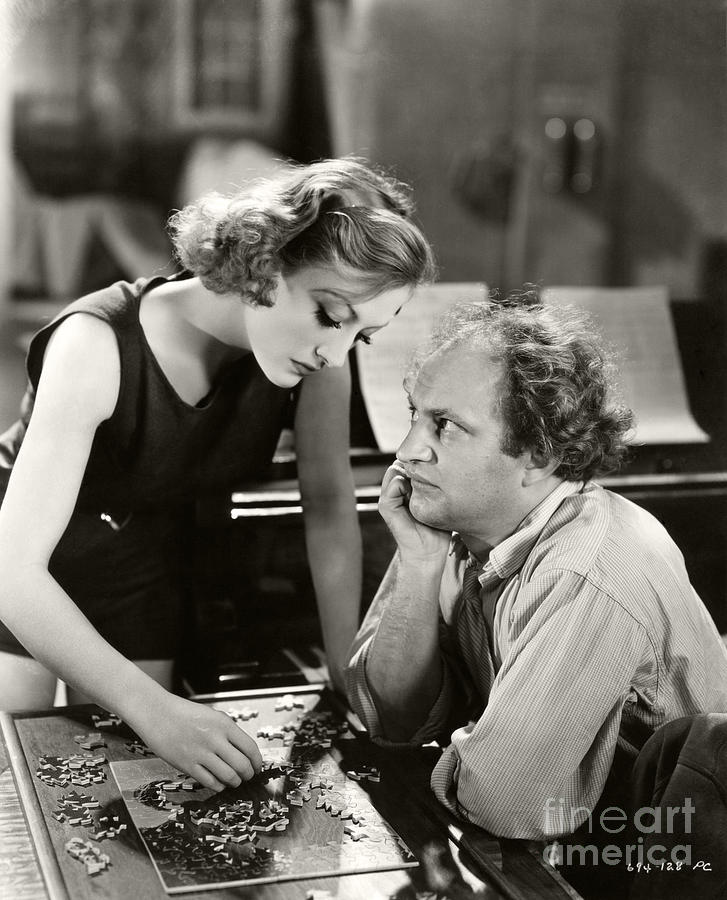
Tod envia uma carta de recomendação ao chefe de Gallagher e Janie é chamada para um teste – mas com os Três Patetas acompanhando-a ao piano. Ela se mostra mais esperta que eles – o que não é muito difícil – e prova que sabe sapatear.

Tod sends a recommendation letter to Gallagher's boss and Janie is given an audition – but with the Three Stooges accompanying her at the piano. She outsmarts them – which is not really difficult – and proves that she can tap dance.
Ela consegue o papel, e frequentemente discute com Gallagher. Ao mesmo tempo, Tod investe no show, e continua paquerando-a. Janie se diverte com ele, mas confessa que não está interessada em casamento – ela quer focar em seu objetivo e ajudar o show a ser um sucesso.

She gets the part, and often clashes with tough Gallagher. At the same time, Tod puts money on the show, and goes on with his courting. Janie has a good time with him, but tells him she's not interesting in marriage – she wants to focus on becoming a real dancer and help the show.
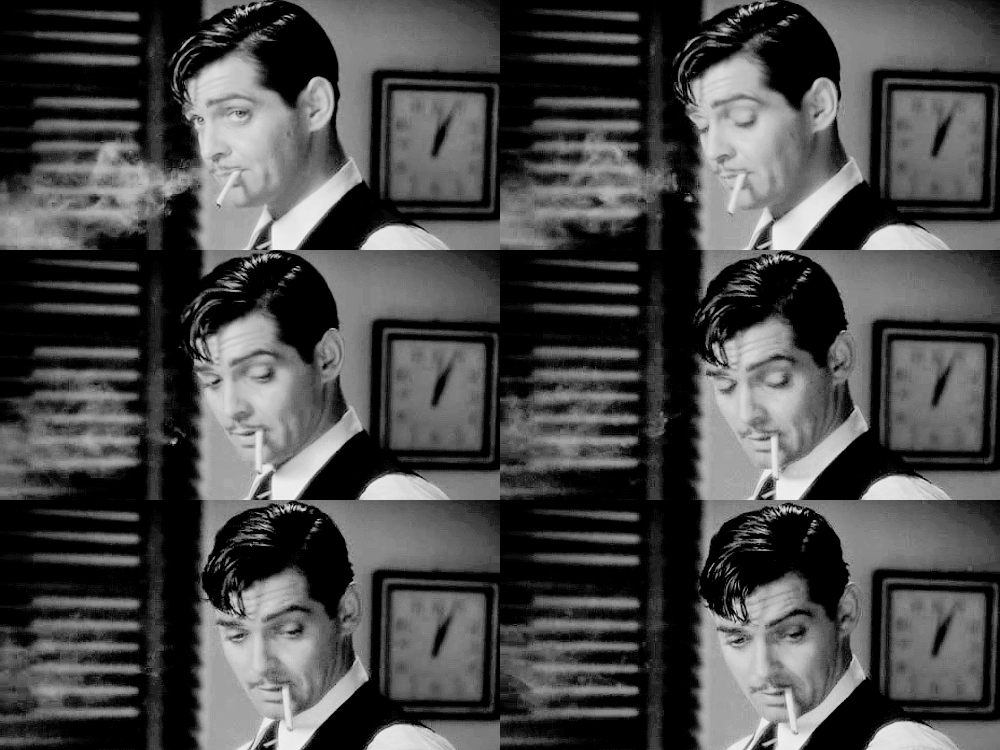
Algumas sequências mais rápidas parecem tiradas de filmes mudos – por exemplo, quando Janie toma o trem para ir até o centro em busca de seu sonho, ou quando ela está seguindo Gallagher. Há também um pouco da audácia dos filmes pre-Code, com roupas transparentes, dançarinas mal cobrindo seus mamilos e um uso específico de sombras enquanto as moças trocam de roupa.

Some fast sequences look like taken from silent films – for instance, when Janie first gets the train to go downtown after her dream, and when she is following Gallagher everywhere in order to be noticed. There is a little pre-Code naughtiness, too, with transparent gowns, dancers barely hiding their nipples and a specific use of shadows when the girls change clothes.
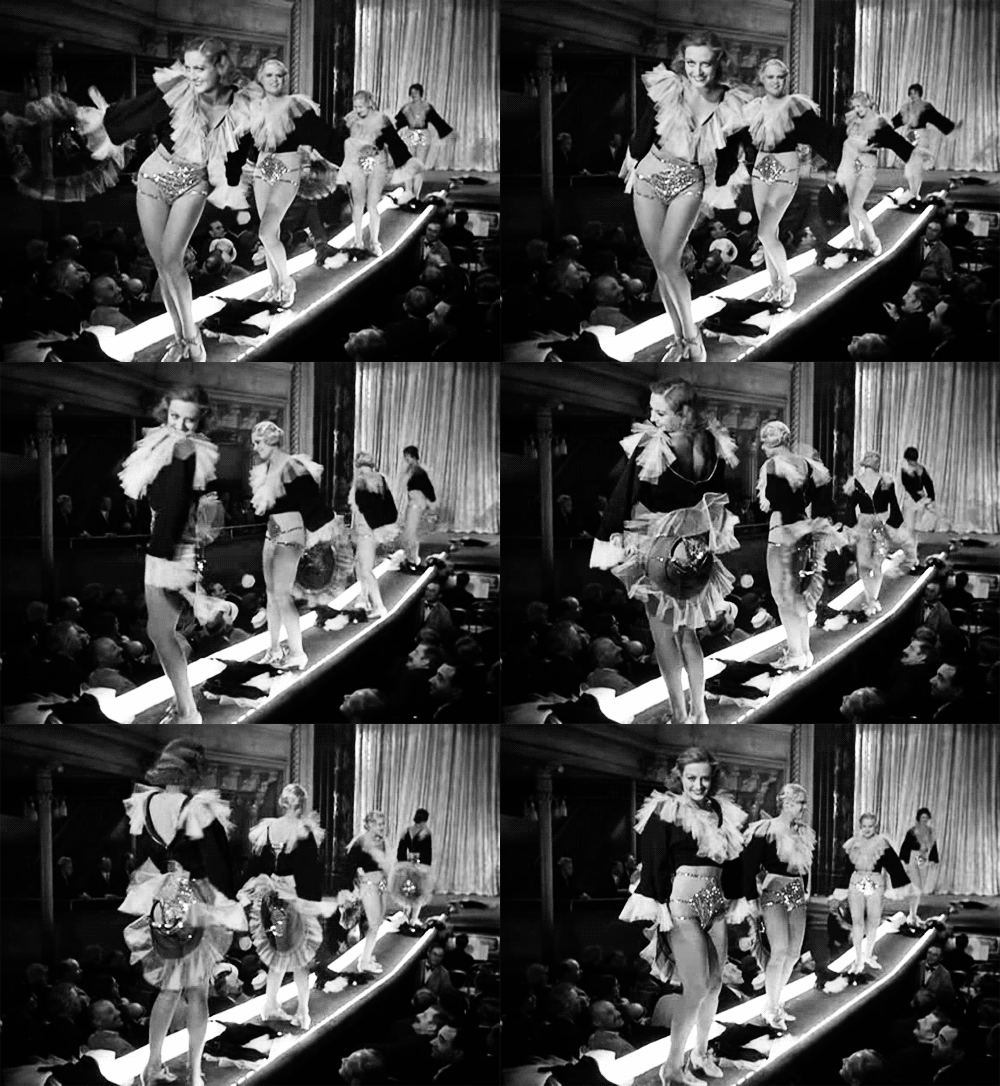
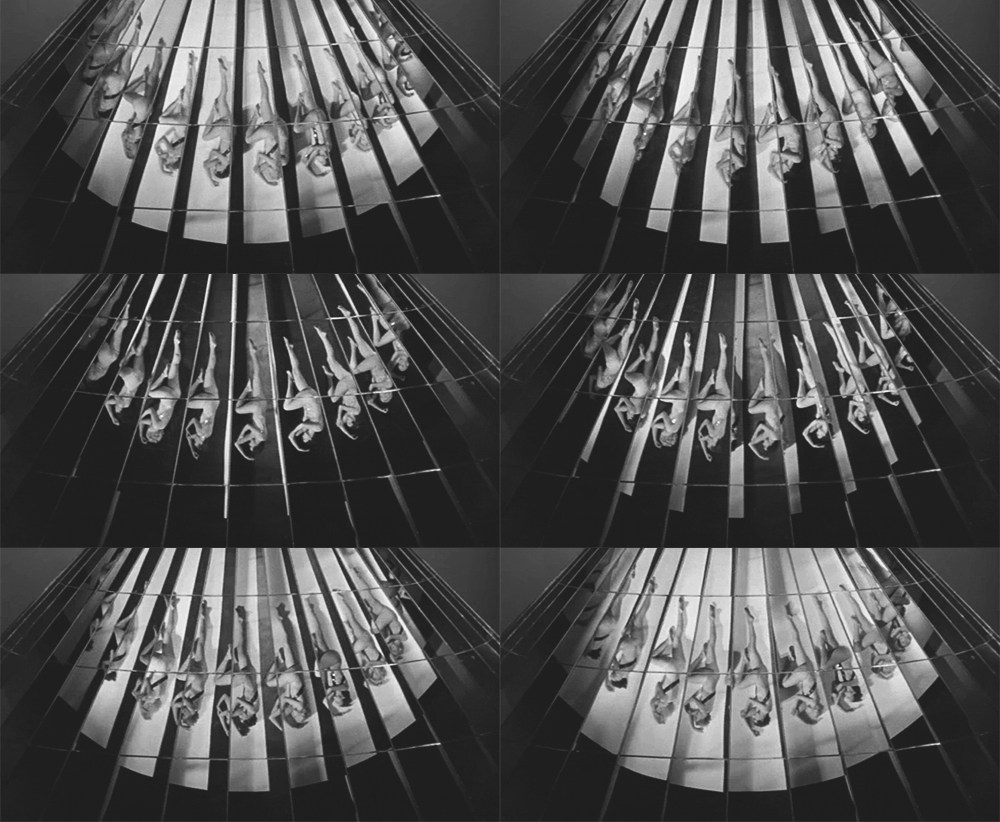
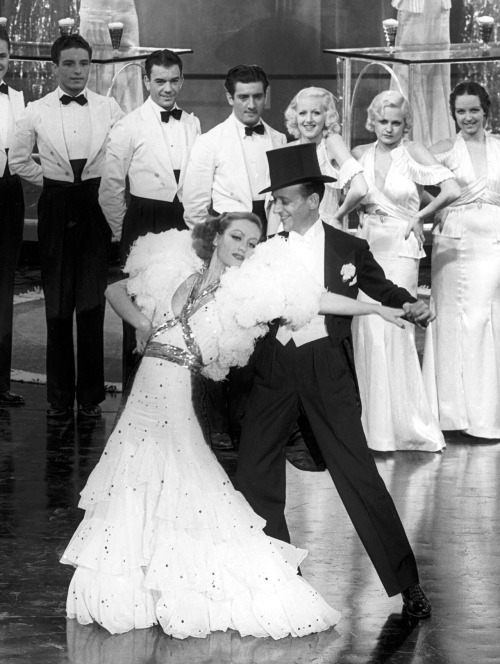
Quando o show finalmente estreia, percebemos que é um espetáculo kitsch. Com o intuito de superar os musicais de Busby Berkeley feitos na Warner, a MGM adiciona a “Amor de Dançarina” um breve momento em que acreditamos que vai começar a mágica do caleidoscópio, mas nada isso acontece. No lugar, temos um tapete voador, Crawford e Astaire com trajes típicos da Bavária – Joan com tranças loiras e Fred com um fino bigode – e então Nelson Eddy interrompendo franceses do século XVIII e convidando-os para virem para os dias atuais – onde, vestidos com celofane, eles dançam e tudo acaba em um carrossel!

When the show finally opens, we realize that it is a kitsch extravaganza. In order to top Busby Berkeley's musicals being made then at Warner, MGM puts in “Dancing Lady” a brief moment in which we believe the kaleidoscopic magic will appear, but it doesn't. Instead, we have a flying carpet, Crawford and Astaire dressed as Bavarians – with Joan in blonde braids and Fred with a thin mustache – and then Nelson Eddy interrupting French people from the 18th century and inviting them to the modern days – where, dressed in cellophane dresses, they have a dance-off that ends in a merry-go-round!

Em sétimo nos créditos, atrás de uma atriz chamada Winnie Lightner, há alguém chamado Fred Astaire. Pior, creditados como auxiliares, temos Nelson Eddy e Sterling Holloway. Pior ainda, Eve Arden e Lynn Bari sequer são creditadas!

Seventh billed, behind someone called Winnie Lightner, there is another someone called Fred Astaire. Worse, billed as supporting players, we have Nelson Eddy and Sterling Holloway. Even worst, Eve Arden and Lynn Bari are not even credited!

“Amor de Dançarina” foi a estreia de Fred no cinema, e ele interpreta a si mesmo. Embora Joan seja convincente como dançarina, para seu parceiro Fred a dança vem naturalmente – ele é mais gracioso, leve, como se ele tivesse nascido sabendo dançar. Em seu filme seguinte, ele novamente interpretaria alguém chamado Fred – mas desta vez, ele dançou com Ginger Rogers, e o resto é história.

“Dancing Lady” was Astaire's film debut, and he goes by his real name. Although Joan is believable as a dancer, for her partner Fred it comes naturally – he's smoother, lighter, like he was born dancing. In his next movie, he would once again play a character named Fred – but this time, he was paired with Ginger Rogers, and the rest is history.
Nelson Eddy também estreou no cinema em 1933, mas “Amor de Dançarina” não foi seu primeiro filme – embora tenha sido o primeiro em que ele recebeu crédito. O diretor de “Amor de Dançarina”, Robert Z. Leonard, dirigiria quatro musicais de Eddy com Jeanette MacDonald.

Nelson Eddy also debuted on film in 1933, but “Dancing Lady” wasn’t his very first movie – it was, however, the first in which he was credited. Director Robert Z. Leonard directed “Dancing Lady”, and would go on to direct four Eddy – MacDonald musicals.
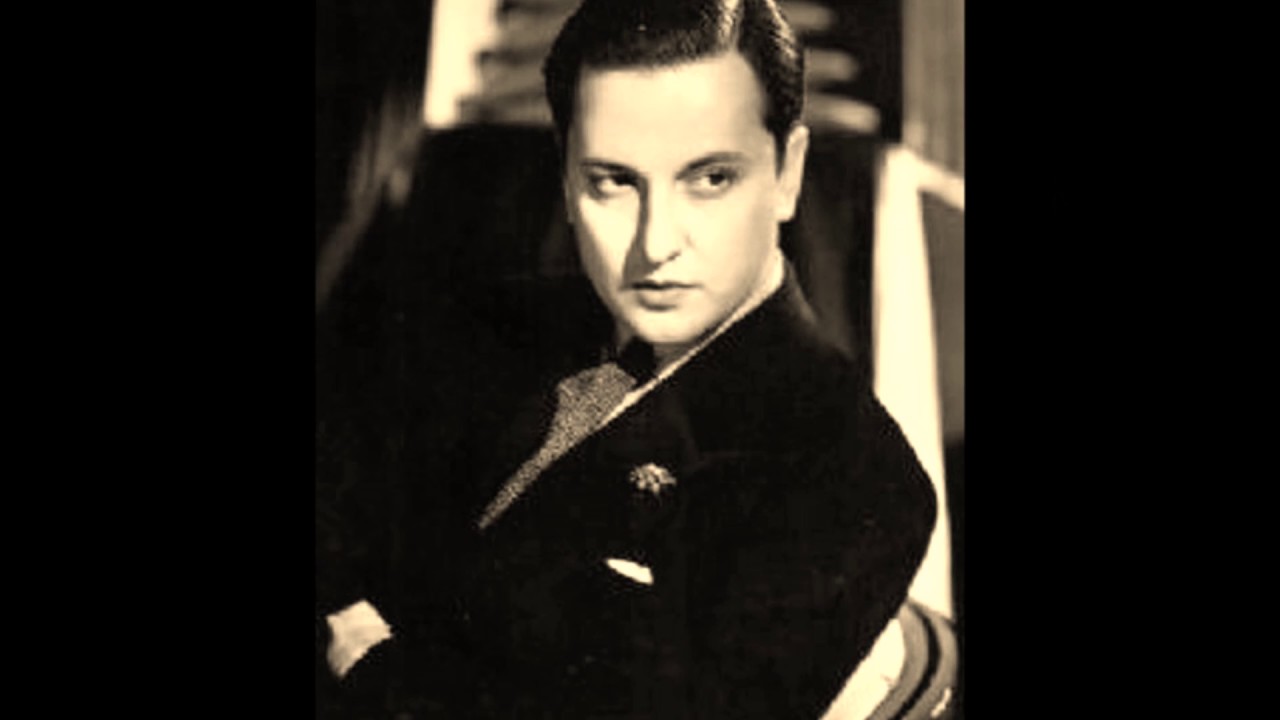
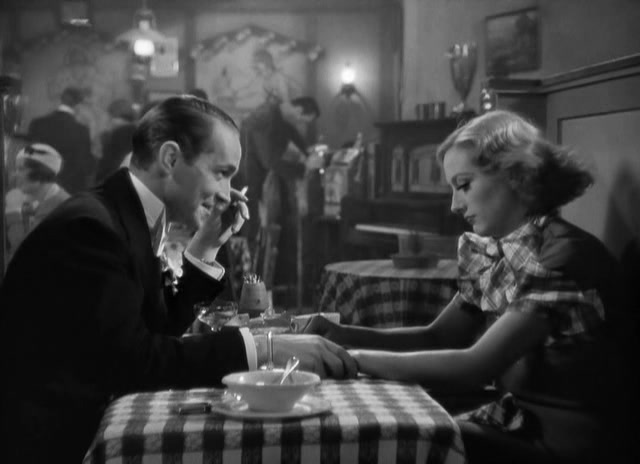
Franchot Tone interpreta o playboy rico interessado na protagonista – o mesmo tipo de papel que ele interpretaria no ano seguinte em “Boca para Beijar”, desta vez ao lado de Jean Harlow. O próprio Tone era de uma família rica e havia estudado na Cornell University – neste contexto, ele era o oposto de Joan Crawford. Joan e Franchot estavam namorando durante as filmagens de “Amor de Dançarina”, mas negavam o namoro para os jornalistas que perguntavam – afinal, o divórcio de Joan de Douglas Fairbanks Jr ainda não havia saído. Há boatos de que a rivalidade entre Bette Davis e Joan começou em 1935 foi causada por Franchot.

Franchot Tone plays the rich playboy interested in the leading lady – the same kind of role he’d play the following year in “The Girl from Missouri”, this time with Jean Harlow. Tone himself was from a wealthy family and attended Cornell University – in this sense, he was the opposite of Joan Crawford. Joan and Franchot were dating when “Dancing Lady” was being filmed, but they denied the romance to the magazine columnists who asked about it – after all, Joan’s divorce to Douglas Fairbanks Jr wasn’t yet completed. Rumor has it that Franchot was the reason behind Bette Davis’s and Joan’s feud, which started in 1935.
“Amor de Dançarina” foi um grande sucesso, mas não é nenhuma obra-prima. Nele falta a redenção e o toque sério que existem nos números finais dos musicais da Warner Brothers. É um filme de muitas estreias no elenco coadjuvante, mas ele pertence a Joan Crawford, e é seu carisma que nos faz acreditar que qualquer um pode triunfar na Broadway.

“Dancing Lady” was a huge success, but it’s far from a masterpiece. It lacks the redemption and serious touches that Warner Brothers musicals added to their finales. It’s a film of many debuts in the supporting cast, but it belongs to Joan Crawford, and her charisma that makes us believe anyone can triumph on Broadway.


This is my contribution to the Franchot Tone blogathon, hosted by Emily at Finding Franchot.

Friday, February 27, 2015

E o Mundo Marcha (1934) / The World Moves On (1934)

*Atenção: No IMDb o título do filme é “A Marcha dos Séculos”. Entretanto, ele foi exibido na televisão como “E o Mundo Marcha”*
Vez ou outra encontro um filme em preto e branco na TV a cabo e, não importa seu enredo ou seus protagonistas, sempre o assisto. E vez ou outra este filme surpresa se transforma, em frente aos meus olhos, em uma obra-prima desconhecida e menosprezada. “E o Mundo Marcha” só é lembrado por ter sido o primeiro filme aprovado pelo Código Hays (está lá o selo número 1 no começo da película), mas este belo trabalho de John Ford merece muito mais reconhecimento.

Every now and then, I find a black and white film on cable TV and, no matter the story or the leads, I watch it. And every now and then this surprise film becomes, in front of my eyes, in an unknown and underrated masterpiece. “The World Moves On” is only rememberd as the first film approved by the Hays Office (the seal with the number 1 is there in the beginning of the film”, but this beautiful film by John Ford deserves a lot more recognition.


Só o nome de John Ford já anuncia que estamos prestes a ver algo muito bom. E a história dividida em fases não decepciona. No início do século XIX, as famílias Warburton e Girard se unem no negócio do algodão. O marido de Mary Warburton (Madeleine Carroll) se torna sócio de Richard Girard (Franchot Tone), mas Mary e Richard se apaixonam. Quase um século se passa até que esse amor possa ser consumado através dos bisnetos de Mary e Richard, que “por acaso” têm o mesmo nome dos antepassados e são interpretados pelos mesmos atores. Até então o negócio do algodão foi um sucesso total, mas tempos tempestuosos estão por vir.

John Ford’s name alone announces that we’re about to see something very good. And the story that is divided in phases does not disappoint. In the beginning of the 19th century, the families Warburton and Girard make a partnership to sell cotton. Mary Warburton’s (Madeleine Carroll) husband becomes partners with Richard Girard (Franchot Tone), but Mary and Richard fall in love. Almost a century goes by until this love can be consummated through Mary’s and Richard’s great-grandkids, who “by chance” have the same name as them and are played by the same actors. Until then the cotton business had been going well, but bad times are coming.


Um fortuito detalhe do enredo: o negócio de algodão é comandado por diversos herdeiros, cada um vivendo em um país afetado pela Primeira Guerra Mundial. Temos percepções diferentes dos campos de batalha e da luta dentro dos exércitos francês, inglês, americano e alemão. O ator que interpreta Henri Girard, aliás, é o brasileiro Raul Roulien, que John Ford considerava “meu amigo e grande ator”.

An interesting detail in the plot: the cotton business is managed by several heirs, each one living in a country affected by World War I. Because of this we have different perceptions of the battle field and the fights inside the French, English, American and German armies. The actor who plays Henri Girard, by the way, is the Brazilian Raul Roulien, who John Ford considered “my friend and great actor”.


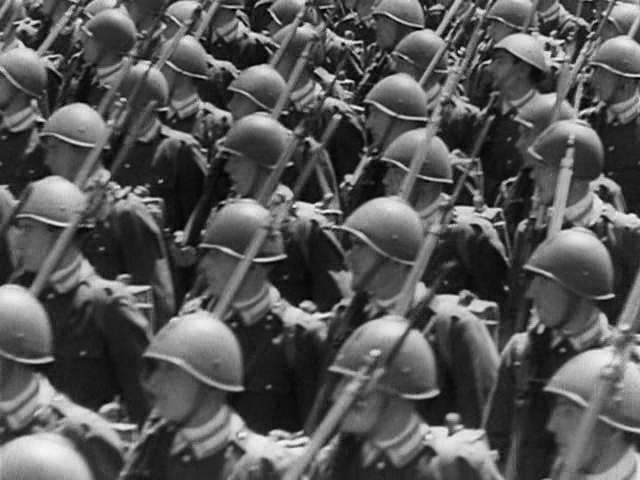
Todo e qualquer espectador fica boquiaberto nos minutos finais do filme, quando John Ford prevê a Segunda Guerra Mundial – com uma marcha de suásticas e tudo o mais. Serão tempos difíceis, prevê a personagem de Madeleine Carroll.

Each and all viewers become speechless in the final minutes of the film, when John Ford predicts World War II – with a march full of swastikas. These will be difficult times, and Madeleine Carroll’s character predicts.


Há, sim, um detalhe que mancha o filme, e não posso deixar de citá-lo: o tratamento do personagem Dixie (Stepin Fetchit) é muito, muito racista. O pobre negro não é nada inteligente, e por isso sempre está envolvido em confusões. Obviamente, a intenção original era usar o personagem como contraponto cômico em meio ao drama, mas aqui John Ford cometeu um grande erro. Em 1934 o personagem poderia ter sido engraçado (e ele até é divertido ainda hoje, porém causa mais vergonha que riso), mas o tempo e as novas ideias de igualdade e respeito mancharam este aspecto do enredo. Só que Stepin Fetchit pouco importava com as reações contra sua persona cinematográfica: parceiro constante de John Ford, foi o primeiro ator negro de cinema a ficar milionário.

There is a negative detail in the film, and I have to mention it: the treatment of the character Dixie (Stepin Fetchit) is very, very racist. The poor black man is not intelligent, and gets involved in many troubles because of it. Obviously, the original intention was to use the character as a comic relief in the middle of so much drama, but John Ford made a huge mistake. In 1934 the character could have been funny (and he is kinda funny even today, but now he generates more shame than laugh), but time and new widespread ideas of equality and respect stained this detail of the film. But Stepin Fetchit didn’t really care about the reactions against his film persona: a constant in John Ford’s stock company, he was the first black actor to become a millionaire.

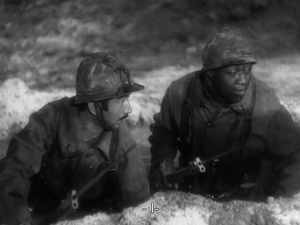
Raul Roulien e Stepin Fetchit
É o melhor filme de algum dos envolvidos? Definitivamente não. Madeleine Carroll fez “Os 39 Degraus / The 39 Steps” em 1935, mesmo ano em que Franchot Tone esteve em “O Grande Motim / Mutiny on the Bounty” e “Perigosa / Dangerous”. John Ford esteve envolvido na confecção de uma dúzia de clássicos, e por isso é até compreensível a mínima atenção dada a este filme.

Is this the best film of any of the involved cast? Not at all. Madeleine Carroll did “The 39 Steps” in 1935, the same year when Franchot Tone did “Mutiny on the Bounty” and “Dangerous”. John Ford was involved in the making of a dozen classics, and that’s why we can understand the little attention given to this film.


Para Peter Bogdanovich, John Ford confessou que gostaria de esquecer que fez “E o Mundo Marcha”. Ele não queria dirigir o filme. Brigou, discutiu, ganhou a fama de durão, e não escapou. A Fox o obrigou a dirigir a película, pois a intenção era repetir o sucesso de “Cavalgada / Cavalcade”, Oscar de Melhor Filme de 1933 que também contava a saga de uma família durante muitas gerações e vários conflitos. Não havia sobrado criatividade para o roteirista Reginald Berkeley, e o resultado são diálogos e situações que não ficam muito tempo na nossa memória.

To Peter Bogdanovich, John Ford confessed that he’d like to forget that he did “The World Moves On”. He didn’t want to direct the movie. He fought, argued, became known as a tough guy, and had to do it anyway. Fox made him direct the film, because they wanted to repeat the success of “Cavalcade”, the 1933 Best Picture Winner that also told the story of a family through several generations and many conflicts. There was not much creativity left for screenwriter Reginald Berkeley, and the result are dialogs and a situations that don’t stay long in our memories.


O que fica são as cenas de guerra, que causam um estranho déjà vu até no espectador mais jovem. Associei as cenas com “O Grande Desfile/ The Big Parade” (1925), mas a fonte era outra: as elogiadas cenas de batalha eram nada mais que cenas não utilizadas de “Cruzes de Madeira”, filme francês de 1932.

What stay with us is the war scenes, that cause a strange déjà vu even in the youngest viewer. I associated the scenes with “The Big Parade” (1925), but the source was different: the great battle scenes were only unused footage from “Wooden Crosses”, a French film made in 1932.


Madeleine Carroll, emprestada ao estúdio Fox em seu primeiro trabalho nos Estados Unidos, estava mais interessada no diretor Ford que no filme em si. John Ford preferiu esquecer esta sua obra. Franchot Tone não parece ter comentado sobre ela. O filme foi um fracasso de bilheteria, mas surpreende quem hoje, oitenta anos após ser filmado, lhe dá uma chance de mostrar a que veio. Porque até o pior filme de John Ford é excelente.

Madeleine Carroll, loaned to Fox in her first work in the US, was more interested in director Ford than in the film itself. John Ford preferred to forget this work. It looks like Franchot Tone never said anything about it. The film was a box-office failure, but it surprises whoever gives it a try today, eighty years after it was filmed. Because even John Ford’s wors movie is excellent.

This is my contribution to the Madeleine Carroll blogathon, hosted by Dorian at Tales of the Easily Distracted and Ruth at Silver Screenings!
Related Posts Plugin for WordPress, Blogger...