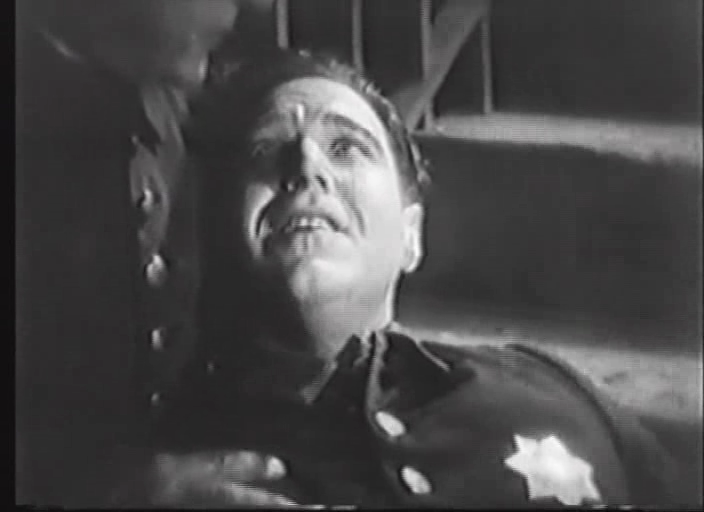
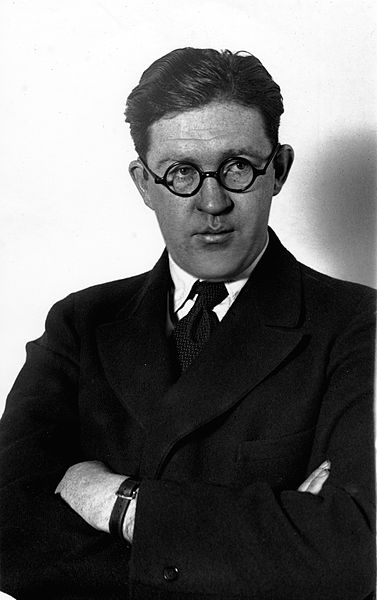
} Crítica Retrô: John Ford

Tradutor / Translator / Traductor / Übersetzer / Traduttore / Traducteur / 翻訳者 / переводчик

Showing posts with label John Ford. Show all posts

Monday, March 28, 2022

Lost in Translation: Odd classic film titles in Portuguese – Western edition


This month of March, a sad thing happened in the classic film blogging community. Our friend Patricia Nolan-Hall, from the blog Caftan Woman, passed away. Paddy, as she was called by us friends, was truly everybody’s friend. She managed to read and comment in basically every single blog post we all published, especially when the post was tied to a blogathon. More than once, I believed that nobody would read one of my posts and BAM, there it was Paddy’s comment letting me know that I wasn’t alone and my work was being read. Paddy made the online film community – and the internet – a better place, and from now on, I’ll always have her in mind when writing for my blog.

Paddy loved many movie genres, but the western is one I associate the most with her. So here it is my tribute for her: some oddly titled westerns in Brazil. I’m sure she would get a kick out of these titles. I hope you do too.

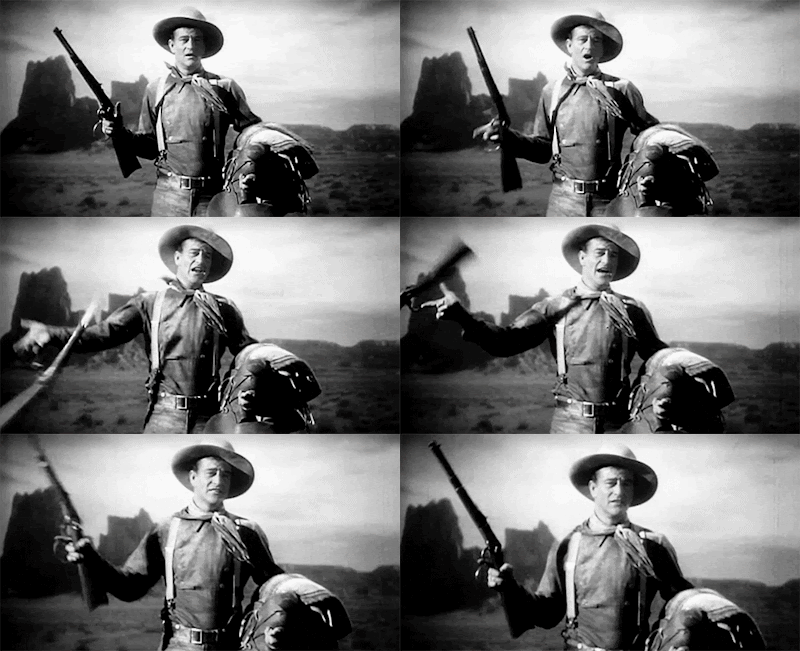
“Stagecoach” (1939) became “In the Time of Stagecoaches” (“No Tempo das Diligências”)

“The Ox-Bow Incident” (1943) received the title “Dead Consciences” (“Consciências Mortas”)

“My Darling Clementine” (1946) is here “Passion of the Strong” (“Paixão dos Fortes”)

“Fort Apache” (1948) became “Blood of Heroes” (“Sangue de Heróis”)

“3 Godfathers” (1948) received the title “Heaven has Sent Someone” (“O Céu Mandou Alguém”)

“She Wore a Yellow Ribbon” (1949) became “Invincible Legion” (“Legião Invencível”)

“The Gunfighter” (1950) is “The Killer” (“O Matador”)

“High Noon” (1952) became “To Kill or to Die” (“Matar ou Morrer”)

One of my favorites: “Shane” (1953) is called “The Brutes Also Love” (“Os Brutos Também Amam”)

“The Searchers” (1956) has the title “Trails of Hate” (“Rastros de Ódio”)

“3:10 to Yuma” (1957) became “Dashing and Bloodthirsty” (“Galante e Sanguinário”)

“The Big Country” (1958) is here “From the Earth Men are Born” (“Da Terra Nascem os Homens”)

“The Man Who Shot Liberty Valance” (1962) received the title “The Man Who Killed the Scoundrel” (“O Homem que Matou o Facínora”)

Friday, October 16, 2020

O Homem que Nunca Pecou (1935) / The Whole Town's Talking (1935)


Algumas coisas realmente me fascinam. Uma delas é o conceito de doppelgänger e a ideia de que há outras pessoas no mundo que são fisicamente (quase) iguais a mim. Eu não sou a única pessoa interessada nessa ideia, porque diversos filmes já foram feitos a partir deste conceito. Um deles é “O Homem que Nunca Pecou”, uma comédia de 1935 que é um ponto fora da curva nas filmografias do seu protagonista e do seu diretor.

Some things really fascinate me. One of them is the concept of a doppelgänger and the idea that there are other people in the world that look (almost) exactly like me. I’m not the only person who is interested in this idea, because there have been several movies built around the concept. One of them is “The Whole Town’s Talking”, a 1935 comedy that is an unusual entry in the filmographies of its lead and its director.

Arthur Ferguson Jones (Edward G. Robinson) nunca chegou tarde ao trabalho, onde está há mais de oito anos. Mas um dia isso acontece, e este é o dia que muda a vida dele para sempre. Seu chefe recebeu a ordem de aumentar o salário de Jones e demitir a primeira pessoa que chegar atrasado naquele dia. Jones chega atrasado mas, como é a primeira vez, o chefe o perdoa e demite a segunda pessoa que chegou atrasada: a despreocupada Miss Clark (Jean Arthur). Ela aceita bem a situação e tenta aproveitar seu último dia no escritório.

Arthur Ferguson Jones (Edward G. Robinson) has never arrived late to work in over eight years. But one day he does, and it is the day that changes his life forever. His boss has received orders to raise Jones' wage and fire the first person who arrives late that day. Jones arrives late but, since it's his first time, the boss forgives him and fires the second person who arrived late: the carefree Miss Clark (Jean Arthur). She takes the situation well and tries to enjoy her last day at the office.

Ao ler o jornal, Miss Clark percebe que Mannion, o inimigo público número 1 da cidade, se parece muito com Jones. E a semelhança é realmente inegável porque, quando Jones e Miss Clark vão almoçar num bar, um homem o vê e chama a polícia. Jones é preso como se fosse Mannion, e Miss Clark também é levada à delegacia como sua cúmplice.

While reading the newspaper, Miss Clark realizes that Mannion, the public enemy number 1 in town, looks a lot like Jones. And the resemblance is really uncanny, because, as Jones and Miss Clark are having lunch in a bar, a man sees him and calls the police. Jones is arrested as if he were Mannion, and Miss Clark is also taken to the police station as his accomplice. 

Depois de muitos questionamentos, os policiais percebem que as impressões digitais de Jones não batem com as de Mannion e ele é liberado, junto com Miss Clark. De volta ao escritório, Jones é chamado por seu chefe, que lhe faz uma proposta: um ghost-writer escreverá a história de vida de Mannion, e o jornal quer que Jones assine os artigos. Jones aceita e toma uns drinks com o chefe.

After many questions, the police officers realize Jones' fingerprints don't match Mannion's and he is freed, alongside Miss Clark. Back at the office, Jones is called by his boss and is presented with an opportunity: a ghost-writer is going to write Mannion's life story, and the newspaper wants Jones to sign the articles. Jones accepts and drinks with his boss.

Quando ele chega em casa, encontra seu gato e seu pássaro de estimação, ambos batizados com nomes retirados da literatura, e também o próprio Mannion, que quer chantagear o homem que se parece com ele. Ele quer o documento que a polícia deu a Jones garantindo que ele não é Mannion – se usar o documento durante a noite, Mannion poderá andar por aí cometendo crimes sem problemas.

When he arrives home to his pet cat and bird with literary names, Jones finds Mannion himself wanting to blackmail the man who looks like him. He wants the document that the police has given to Jones attesting that he isn't Mannion – by having it during the nights, Mannion can walk around and commit crimes without any problems.

Edward G. Robinson interpreta muito bem dois papéis muito diferentes. Como Mannion, ele é o gângster que conhecemos de filmes como “Alma no Lodo” (1931). Como Jones, ele é tão bondoso e educado que é capaz de oferecer uma xícara de chá a dois visitantes mesmo quando está vestindo apenas uma camisa e – imaginamos – roupa de baixo, porque Mannion havia acabado de roubar suas roupas.

Edward G. Robinson plays two very different roles very well. As Mannion, he is the gangster we know from films like “Little Caesar” (1931). As Jones, he's so kind and polite that he is able to offer a cup of tea to two visitors even though he's wearing only a shirt and – presumably – underwear, because Mannion had just stolen his clothes.

Infelizmente, Jean Arthur tem pouco a fazer no filme. Ela é crush e musa de Jones, pois ele escreve histórias olhando para uma foto dela. Ela é doce e decidida, mas Jones e Mannion são os focos do filme – Miss Clark literalmente desaparece do filme depois de ser raptada pelos capangas de Mannion, junto com a velha tia de Jones, uma personagem que é completamente desnecessária. Entretanto, foi ao ver este filme que Frank Capra ficou interessado em trabalhar com Jean. Sobre Jean Arthur, Edward G. Robinson escreveu em sua autobiografia: “Ela era excêntrica sem ser tola, única sem ser maluca, uma personalidade teatral que não era uma pessoa teatral. Era um prazer trabalhar e conviver com ela.”

Unfortunately, Jean Arthur has little to do in the film. She’s Jones’ crush and muse, as he writes stories while looking at a picture of her. She’s sweet and resolute, but Jones and Mannion are the focuses of the film – Miss Clark literally disappears from the picture after she’s kidnapped by Mannion’s men, alongside Jones’ old aunt, a character who is completely unnecessary. However, it was after seeing this film that Frank Capra got an interest in working with Jean. About Jean Arthur, Edward G. Robinson wrote in his autobiography: “She was whimsical without being silly, unique without being nutty, a theatrical personality who was an untheatrical person. She was a delight to work with and to know.”

Donald Meek rouba a cena como Hoyt, o homem que chamou a polícia no bar e por causa disso fica obcecado com a recompensa de 25 mil dólares pela informação. De acordo com o site do TCM e com o próprio Robert Osborne, Lucille Ball é figurante na sequência do banco perto do final do filme, mas é quase impossível identificá-la.

Donald Meek steals the scene as Hoyt, the man who called the police at the bar and because of that he's obsessed with getting a 25,000 dollar reward for the information. According to the TCM website and Robert Osborne himself, Lucille Ball was an extra in the bank sequence near the end of the film, but it’s almost impossible to identify her.

O Homem que Nunca Pecou” foi dirigido por John Ford – mas o filme se parece muito com um filme de Frank Capra! Ele foi feito pela Columbia, então estúdio onde Capra trabalhava, um dos roteiristas foi Robert Riskin, um colaborador frequente de Capra, e tem como protagonista feminina Jean Arthur, que fez três filmes com Capra. O filme tem até uma montagem com manchetes de jornal, uma marca registrada de Capra.

The Whole Town's Talking” was directed by John Ford – but the picture looks a lot like a Frank Capra film! It was made by Columbia, then Capra’s studio, co-written by Robert Riskin, a constant Capra collaborator, and its female star is Jean Arthur, who worked with Capra in three films. There is even a montage of newspaper healines, something that is a Capra distinctive mark.

Há no filme, entretanto, algo vergonhoso presente em muitos dos filmes de John Ford dos anos 20 e 30: uma piada racista. Ela é muito breve, mas nos incomoda: um porteiro negro é retratado como um bobo, olhando para as pessoas com os olhos arregalados, um traço comumente usado como estereótipo racista. Outro filme de Ford do mesmo período com um pouco mais de conteúdo racista é “E o Mundo Marcha” (1934).

There is in the film, however, something shameful present in many of John Ford's films from the 1920s and 1930s: a racist joke. It is very brief, but it bothers us: a black doorman is portrayed as silly, looking at people with his eyes wide open, a trait commonly used as a racist stereotype. Another Ford film with more racist content is “The World Moves On” (1934).

Como uma mistura de comédia screwball com uma subtrama de gângsters, “O Homem que Nunca Pecou” tem momentos hilários e momentos tensos. Um filme único para John Ford e Edward G. Robinson, ele é prova de que ambos eram mais versáteis do que comumente lhes damos crédito.

As a mix of screwball comedy with a gangster subplot, “The Whole Town's Talking” has hilarious moments and tense moments. A unique film for John Ford and Edward G. Robinson, it's proof that both were more versatile than we usually give them credit for.

This is my contribution to the 120 “Screwball” Years of Jean Arthur blogathon, hosted by Virginie at The Wonderful World of Cinema.


Thursday, November 7, 2019

A Águia Azul (1926) / The Blue Eagle (1926)


Há filmes mudos de todos os tamanhos e durações. Além disso, não é regra que, quando um diretor começa a fazer longas-metragens, ele pare de fazer filmes mais curtos. Veja John Ford, por exemplo. Ford começou como diretor em 1917 e, em 1926, ele já havia dirigido dezenas de filmes, incluindo o impressionante épico “O Cavalo de Ferro”, de 1924, que tem mais de duas horas de duração. Ford não teve vergonha de voltar a fazer filmes menores e mais intimistas, e foi exatamente isso que ele fez em 1926 com “A Águia Azul”.

Silent film comes in all shapes and sizes. Furthermore, it’s not a rule that, once a director graduates to feature films, he never comes back to shorter films. Take John Ford, for instance. Ford started directing movies in 1917 and, in 1926, he had already directed dozens of films, including the impressive epic “The Iron Horse”, from 1924, that is over two hours long. Ford wasn’t ashamed to go back to more intimate films, made in a smaller scale, and this was exactly what he did in 1926 with “The Blue Eagle”.


George Darcy (George O'Brien, completamente lambuzado com óleo para parecer que está suando) e Big Tim Ryan (William Russell, igualmente lambuzado com óleo) estão servindo no mesmo navio na Primeira Guerra Mundial, mas eles são rivais na cidade natal. Juntos na guerra, eles vivenciam as batalhas, a adrenalina e a perda de companheiros. Mas assim que a guerra acaba, a velha rivalidade ressurge.

George Darcy (George O’Brien, completely covered in oil to look like he’s sweating) and Big Tim Ryan (William Russell, equally covered in oil) are shipmates during World War I, but back at home they’re rivals. Together at war, they experience the battles, the adrenaline and the loss of shipmates. But once the war is over, the old grudge comes back.


Darcy e Ryan vivem perto das docas, em um bairro pobre dominado por gangues rivais, algo que também pode ser visto em “Anjos de Cara Suja” (1938) e “Sindicato de Ladrões” (1954). Darcy e Ryan pertencem a gangues rivais – Darcy aos Terriers e Ryan aos Rats – e ambos estão apaixonados pela mesma mulher, Rose Kelly (Janet Gaynor), filha do policial Sargento Kelly (Lew Short). No bairro deles, problemas com drogas estão crescendo, e o Padre Joe (Robert Edeson), também ex-marinheiro, decide pedir para Darcy e Ryan ajudarem a polícia a prender os traficantes.

Darcy and Ryan are from the waterfront – a rather poor neighborhood dominated by rival gangs, something that can be seen in films like “Angels with Dirty Faces” (1938) and “On the Waterfront” (1954). Darcy and Ryan belong to rival gangs – Darcy’s Terriers and Ryan’s Rats – and they both are in love with the same woman, Rose Kelly (Janet Gaynor), daughter of police Sergeant Kelly (Lew Short). In their neighborhood, problems with drugs are on the rise, and Father Joe (Robert Edeson), also a former Marine, decides to ask both Darcy and Ryan to help the police arrest the smugglers.


Num mundo em que traficantes têm um SUBMARINO e gangues são formadas apenas para intimidar parte de um bairro, é de se esperar que haja uma mistura de gêneros, algumas subtramas que não vão a lugar algum – qual a importância dos irmãos gêmeos de Rose na narrativa? - e conclusões rápidas. Afinal, “A Águia Azul” tem menos de uma hora de duração!

In a world where drug dealers have a SUBMARINE and gangs are formed only to intimidate part of a neighborhood, it's expected a mix of genres, a few subplots that go nowhere – what is the use of Rose's twin brothers in the narrative? - and quick conclusions. After all, “The Blue Eagle” is less than one hour long!


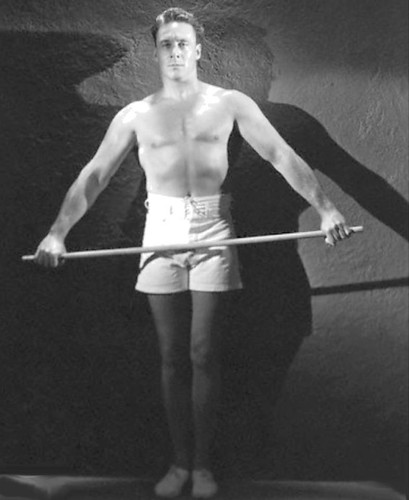
George O'Brien foi um galã popular na década de 1920 e estrela de faroestes nos anos 30, e seu filme mais famoso é a obra-prima “Aurora” (2927), também com Janet Gaynor. Foi através do filme “O Cavalo de Ferro” de Ford que O'Brien alcançou o estrelato – embora ele desejasse, quando chegou em Hollywood, ser operador de câmera!

George O'Brien was a popular leading man in the 1920s and western star in the 1930s, and his most famous film is the masterpiece “Sunrise” (1927), also with Janet Gaynor. It was through Ford's “The Iron Horse” that O'Brien achieved stardom – although his only wish when he went to Hollywood was to become a cameraman!


As aventuras anteriores de George O'Brien ajudaram-no muito em “A Águia Azul”: ele serviu na Marinha norte-americana durante a Primeira Guerra Mundial, e foi condecorado por bravura, e depois da guerra ele se tornou campeão de boxe. Ele se alistou novamente na Marinha durante a Segunda Guerra. O título do filme “A Águia Azul” vem do fato de os marinheiros norte-americanos serem conhecidos como “águias azuis”. George O'Brien tinha orgulho de seu serviço na Marinha e deste filme em particular porque, mais tarde, lhe foi perguntado que filme ele queria que fosse exibido em uma mostra retrospectiva de sua carreira, e ele escolheu “A Águia Azul”.

George O'Brien's previous life adventures helped him a lot in “The Blue Eagle”: he had been in the US Navy during World War I, and was decorated for bravery, and after the war he became a boxing champion. He re-enlisted in the Navy during World War II. The title of the film “The Blue Eagle” comes from the fact that the US Marines are often referred to as Blue Eagles. George O'Brien was fond of his time at the Navy and of this film in particular because, later in his life, he was asked which film he wanted to see showed in a career retrospective festival honoring him, and he chose “The Blue Eagle”.


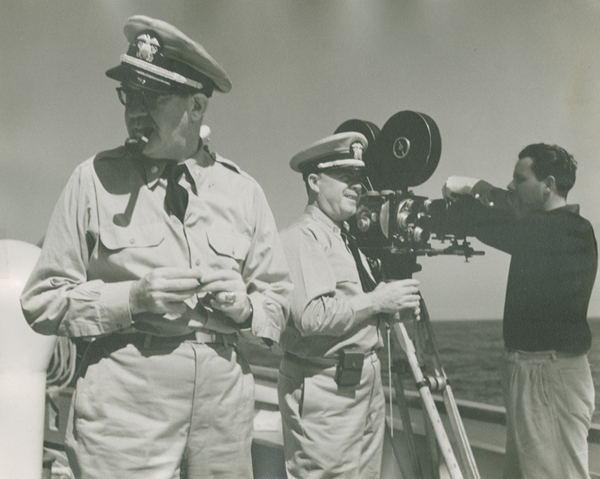
John Ford também teve uma ligação íntima com a Marinha, mas apenas depois de fazer “A Águia Azul”. Durante a Segunda Guerra Mundial, Ford trabalhou com a Marinha fazendo documentários de guerra. Um destes documentários é “A Batalha de Midway” (1942), ganhador de um Oscar. Ford foi uma testemunha ocular do Dia D em 1944, mas a maioria das imagens que ele filmou do Dia D foi considerada forte demais para ser exibida para o público.

John Ford also had a close link with the Navy, but only after making “The Blue Eagle”. During World War II, Ford worked with the Navy Department doing war documentaries. One of these documentaries is “The Battle of Midway” (1942), that won an Oscar. Ford was an eyewitness of the D-Day in 1944, but most of his footage shot on D-Day was considered too gruesome to be released to the public.


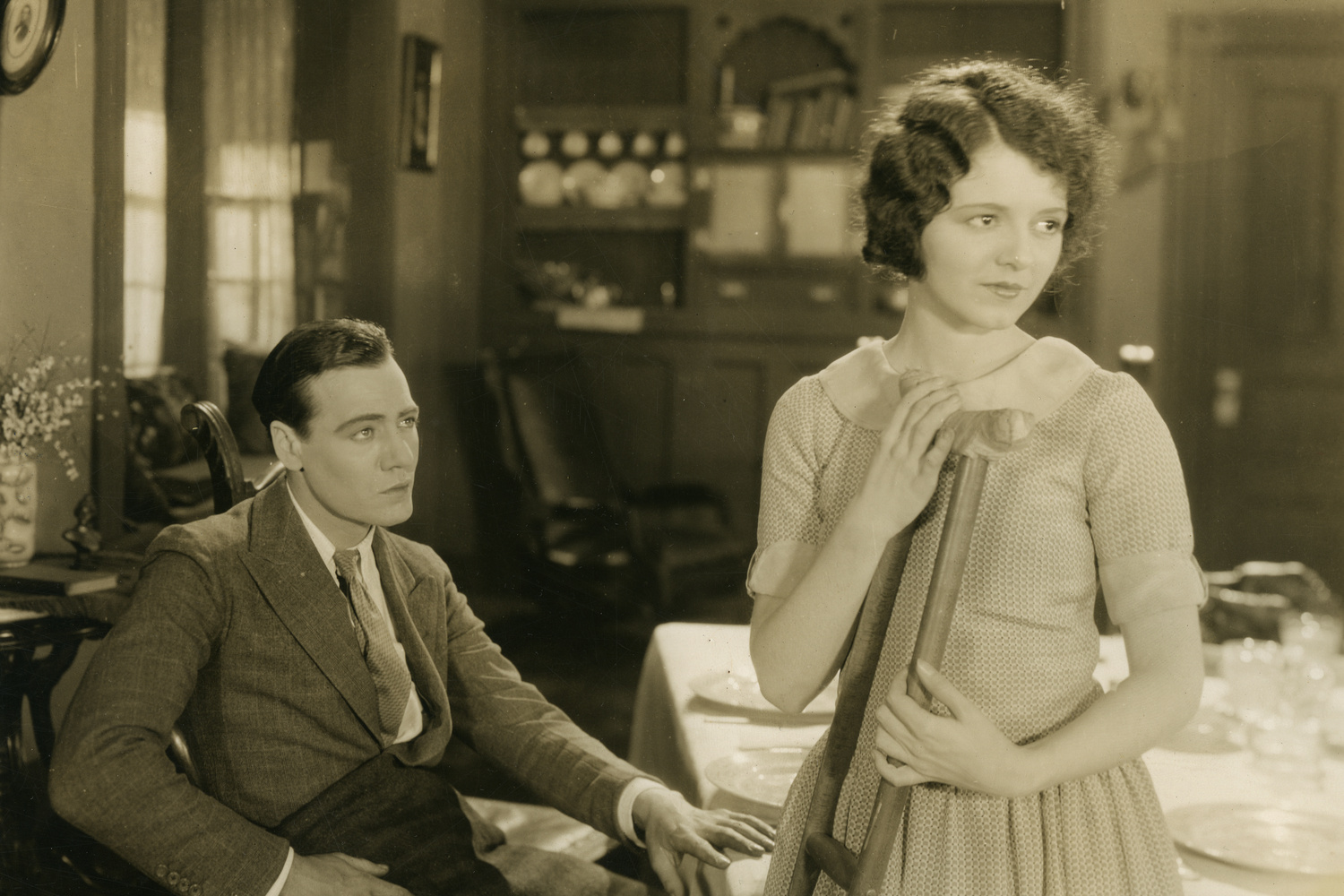
Janet Gaynor também fez outro filme com John Ford em 1926, “A Folha do Trevo”. Este é mais um pequeno filme que mistura comédia, drama e esporte – desta vez, corrida de cavalos. Com Janet Gaynor em um papel mais substancial e também um pouco de racismo, “A Folha do Trevo” é considerado o primeiro filme de John Ford que se passa na Irlanda.

Janet Gaynor also appeared in another John Ford film from 1926, “The Shamrock Handicap”. This is another small scale film that mixes drama, romance and sports – this time, it’s horse race. With Janet Gaynor in a more substantial role and also a bit of racism, “The Shamrock Handicap” is considered  the first John Ford film set in Ireland.
 
The Shamrock Handicap
Dois personagens muito importantes – aqueles que convencem Darcy e Ryan a declararem uma trégua – são o irmão deficiente de Darcy, Limpy (Philip Ford, sobrinho de John Ford), e o amigo bobão de Ryan, Dizzy (David Butler). Tanto Ford quanto Butler tiveram carreiras curtas como atores e mais tarde se tornaram prolíficos diretores.

Two very important characters – the ones that convince Darcy and Ryan to declare a truce – are Darcy’s handicapped brother, aptly named Limpy (Philip Ford, John Ford’s nephew), and Ryan’s good and dumb friend Dizzy (David Butler). Both Ford and Butler had brief careers as actors and later became prolific directors.


“A Águia Azul” tem atrativos para todos os públicos: romance, ação na guerra, drama urbano, um pouco de humor e até uma luta de boxe. Além disso, amantes de belos cenários, prestem atenção às luzes da cidade quando os personagens estão no cais. Infelizmente, as cenas com as batalhas navais ainda estão perdidas, o que torna o filme menos emocionante de ver hoje do que foi quando estreou. Mesmo assim, o filme nos traz o mais próximo que temos de um filme de gângster de John Ford, e por isso já merece ser visto.

The Blue Eagle” has something for everyone in the audience: romance, war action, urban drama, a bit of humor and even a boxing match. Also, lovers of beautiful scenery, pay attention to the city lights when the characters are on the waterfront. Unfortunately, the scenes with the sea battles are currently lost, which makes the film less exciting to see today than when it was originally released. Nevertheless, it brings the closest we have from a John Ford gangster picture, and for this alone it is worth a watch.

This is my contribution to the Send in the Marines blogathon, hosted by Gill and J-Dub at RealWeegieMidget Reviews and Dubsism.


Sunday, December 11, 2016

Quando John Ford conheceu John Wayne / When Ford Met Wayne

Todo mundo tem de começar de algum lugar. No cinema, o começo em geral envolve papéis como extra, sem crédito, até que, um dia, você tem seu primeiro grande sucesso. Para os atroes, o grande sucesso geralmente vem mais tarde que para as atrizes. Se você gosta de filmes clássicos, deve saber que o primeiro grande sucesso de John Wayne veio em 1939 com “No Tempo das Diligências”, uma produção que deu novos rumos às carreiras tanto do ator John Wayne quanto do diretor John Ford. Mas talvez você não saiba que Wayne e Ford já se conheciam antes de 1939 – e já haviam trabalhado juntos.

Everybody has to start somewhere. In the movie business, the start is often through uncredited roles as extras until, someday, you’re given your big break. For males, the big break often comes later than for females. If you like classic movies, you must know that John Wayne’s big break came in 1939 with the film “Stagecoach”, a production that gave a new path to the careers of both actor John Wayne and director John Ford. But maybe you don’t know that Wayne and Ford were no strangers before 1939.
John Wayne apareceu em 178 filmes e séries de TV em 50 anos de carreira. Mais da metade destes filmes foram feitos entre 1926 e 1939, quando Wayne era figurante ou parte de um grupo de faroestes B chamado ‘Os Três Mosqueteiros’ (lembre-se de que quem também fazia parte deste grupo era um homem chamado Lullaby Joslin, e ele tinha um boneco de ventríloquo bem esquisito).

John Wayne made 178 movies and TV shows in a career that lasted 50 years. More than half of them were made between 1926 and 1939, as an extra or part of a B-western group called The Three Mesquiteers (remember that another member of this group was a guy named Lullaby Joslin who had a creepy-looking puppet).
John Wayne ou, como ele era chamado na época, Duke Morrison, chegou em Hollywoodland em 1925, com 18 anos. Ele fez muitas coisas: trabalhou com objetos de cena, cuidou de animais de Hollywood, foi ajudante de eletricista e até atuou de vez em quando. Ou melhor: de vez em quando ele até teve a chance de ficar EM FRENTE às câmeras!

John Wayne, or, as he was called back then, Duke Morrison, arrived in Hollywoodland in 1925, aged 18. He did a lot of things: worked with props, handled animals, helped electricians and even acted every now and then. Or better: he sometimes was given the chance to stand IN FRONT of the camera!
John Ford era diretor desde 1917. Com o sucesso de“O Cavalo de Ferro” (1924), ele passou a fazer mais e mais longa-metragens para os estúdios Fox em Glendale, Califórnia. Seu primeiro encontro com John Wayne nunca foi descrito em detalhes, e eles provavelmente cruzaram os caminhos um do outro sem saber que aquele era um momento histórico – e, nem tão prontamente, o começo de uma bela amizade.

John Ford had been directing movies since 1917. After the success of “The Iron Horse” (1924), he had worked steadily in feature films for Fox studios in Glendale, California. His first meeting with John Wayne was never recorded, and they probably crossed each other’s paths without knowing that was a historical moment – and, not quite quickly, the beginning of a beautiful friendship.
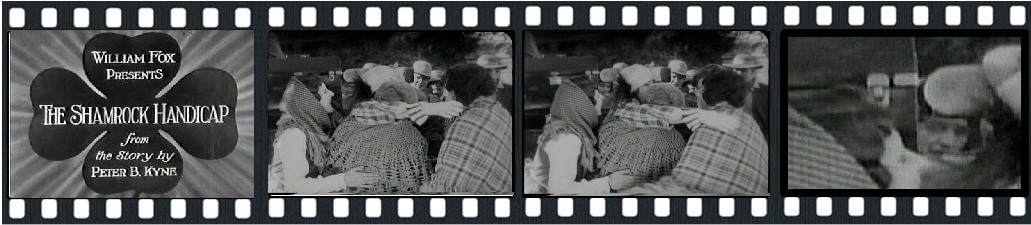
O comediante Lloyd ‘Ham’ Hamilton apresentou o jovem Wayne a Ford. A primeira vez em que Wayne trabalhou com Ford foi em 1926. Ele foi um figurante no filme “A Folha do Trevo”, estrelado por Janet Gaynor. Eles também filmaram “Minha Mãe”, que só estreou dois anos depois. John Wayne pode ser identificado no primeiro filme:

The comedian Lloyd ‘Ham’ Hamilton introduced young Wayne to Ford. The first time Wayne worked with Ford was in 1926. He was an extra in the movie “The Shamrock Handicap”, starring Janet Gaynor. They also shot “Mother Machree”, only released two years later, in 1928. John Wayne can be identified only in the earlier (click to enlarge):


John Ford usou John Wayne novamente como figurante não-creditado em 1928, no filme “Quatro Filhos” – no qual não podemos identificá-lo claramente – e em “Justiça do Amor” – no qual ele aparece duas vezes: primeiro vendado em uma cena fantástica de flashback e depois como um espectador que quebra uma cerca em uma corrida de cavalos.

John Ford used John Wayne again as an unbilled extra in 1928, in the movies “Four Sons” – in which we can’t clearly identify him – and “Hagman’s House” – in which he appears twice: once blindfolded in a very well-done flashback and again as a horserace spectator who breaks a fence.
E então John Ford começou a fazer filmes falados. John Wayne estava logo ali fazendo figuração no primeiro filme falado de Ford, “A Guarda Negra” (1929), estrelado por Victor McLaglen e Myrna Loy. Em seu filme seguinte com Ford, John Wayne teve até nome e algumas falas, mas permaneceu não-creditado: ele foi o marujo Bill no filme “Em Continência” (1929).

And then John Ford started making talkies. John Wayne was right there, in the background, in Ford’s first talkie, “The Black Watch” (1929), starring Victor McLaglen and Myrna Loy, and with Randolph Scott also as an extra. In his next film with Ford, Wayne even got a name and a few lines, but remained uncredited: he was midshipman Bill in “Salute” (1929).
"Salute" (1929)
Em 1930 outros dois filmes da dupla estrearam: “Homens sem Mulheres”, no qual Wayne tem algumas falas, e “Galanteador Audaz”. E então eles seguiram caminhos diferentes, porque Duke Morrison conseguiu um papel importante em “A Grande Jornada” e mudou seu nome para John Wayne a pedido dos produtores. Em 1939, John Ford procurou por John Wayne e lhe ofereceu o papel do ladrão Ringo em “No Tempo das Diligências”. O resto é história.

In 1930 two other films of the duo followed: “Men Without Women”, in which Wayne has a few lines, and “Born Reckless”. And then they parted for nine years, because Duke Morrison got an important role in “The Big Trail” and changed his name to John Wayne, at the producers’ request. In 1939, John Ford looked for John Wayne again, and offered him the role of the thief Ringo in “Stagecoach”. The rest is history.

Some stills and information were found at The John Wayne Database.

This is my contribution to the John Wayne Blogathon, hosted by Quiggy and Hamlette at The Midnite Drive-In and Hamlette’s Soliloquy.
Related Posts Plugin for WordPress, Blogger...