} Crítica Retrô: James Craig

Tradutor / Translator / Traductor / Übersetzer / Traduttore / Traducteur / 翻訳者 / переводчик

Showing posts with label James Craig. Show all posts

Sunday, October 31, 2021

O Homem que Vendeu a Alma (1941) / All That Money Can Buy (1941) (aka The Devil and Daniel Webster)


Bernard Herrmann é considerado um dos melhores compositores da história do cinema. Tendo trabalhado como compositor em 90 filmes – alguns deles feitos após sua morte usando sua música – é surpreendente que ele tenha sido indicado ao Oscar apenas cinco vezes – nenhuma delas por trabalhos nos filmes de seus colaborador constante, Alfred Hitchcock – e tenha ganhado apenas uma estatueta, em seu primeiro ano em Hollywood. O filme que deu a Herrmann seu único Oscar é “O Homem que Vendeu a Alma”.

Bernard Herrmann is considered one of the best composers in film history. Having worked as a composer in 90 titles – some of them movies made after his death that use his music – it’s a surprise to learn that Herrmann was nominated for the Oscar only five times – none of them for movies by his constant collaborator, Alfred Hitchcock – and won only once, in his very first year in Hollywood. The movie that gave Herrmann his sole Oscar is “All That Money Can Buy”, sometimes seen under the title “The Devil and Daniel Webster”.

É uma história que aconteceu há muito tempo, mas que poderia acontecer em qualquer momento, em qualquer lugar, com qualquer um – até mesmo com você, querido espectador. O fazendeiro Jabez Stone (James Craig) vem sofrendo com uma maré de azar. Ele está se sentindo tão mal que diz em voz alta que estaria disposto a fazer um pacto com o diabo em troca de melhorias. O diabo o escuta, aparece sob a forma de Mr Scratch (Walter Huston) e Jabez vende sua alma em troca de sete anos de prosperidade. Instantaneamente, Jabez enriquece e começa a comprar roupas e chapéus para sua esposa Mary (Anne Shirley) e sua mãe (Jane Darwell). E não demora muito para que ele deixe de frequentar a igreja para jogar cartas com os novos amigos.

It’s a story that happened a long time ago, but one that could happen anytime, anywhere, to anybody – even to you, dear viewer. Farmer Jabez Stone (James Craig) has been having a lot of bad luck lately. He’s feeling so unlucky and miserable that he says out loud that he’d be willing to make a pact with the devil to see things improving. The devil hears, appears in the form of Mr Scratch (Walter Huston) and Jabez sells his soul in exchange of seven years of good luck. Instantly, Jabez becomes rich and starts buying dresses and hats for his wife Mary (Anne Shirley) and his mother (Jane Darwell). And it doesn’t take long until he starts not going to church and instead playing cards with his new friends.

Mas quem diabos é Daniel Webster? Daniel Webster (Edward Arnold) é um político de Massachusetts que leva jeito com as palavras. Um dia, logo depois de Jabez fazer o pacto com o diabo, Daniel Webster visita a cidade vizinha à fazenda dele e se torna amigo de Jabez. Mary troca cartas com Daniel Webster e até mesmo dá ao seu filho o nome de Daniel. Mary então chama Daniel Webster para ajudar quando Jabez se torna arrogante e muito ambicioso, e Daniel Webster terá de usar suas palavras contra o diabo.

But who the hell is Daniel Webster? Daniel Webster (Edward Arnold) is a politician from Massachusetts who has a talent for words. One day, right after Jabez makes the pact with the devil, Daniel Webster visits the town near his farm and befriends him. Mary corresponds with Daniel Webster frquently, and even names her son Daniel after the politician. Mary then calls Daniel Webster to interfere when Jabez becomes arrogant and overly ambitious, and Daniel Webster will have to use his words against the devil.

Uma das muitas tentações que Jabez terá de enfrentar tem um belo rosto: é Belle (Simone Simon), sua nova empregada. O papel mais lembrado de Simone é como a protagonista de “Sangue de Pantera” (1942), um filme para o qual Bernard Herrmann fez arranjos para uma música, sem receber crédito. Simone Simon foi escalada para “Sangue de Pantera” depois que o produtor Val Lewton viu sua performance como a tentadora diabólica em “O Homem que Vendeu a Alma”.

One of the many temptations that Jabez will have to face has the prettiest face: Belle (Simone Simon), his new maid. Simon’s best remembered role is as the lead of “Cat People” (1942), a film in which Bernard Herrmann worked as an arranger for one song, for which he didn’t receive credit. Simone Simon was cast in “Cat People” after producer Val Lewton saw her turn as the devil’s temptress in “The Devil and Daniel Webster”.

A trilha sonora é excelente. Em determinado momento, há melodias idílicas que fazem a vida no campo soar como um paraíso, e no minuto seguinte há notas macabras. Há também momentos tensos e fantásticos marcados pela música, e há também algumas canções folclóricas. Tudo isso levou à vitória histórica de Herrmann na categoria Melhor Trilha Sonora Original, uma vitória mais que merecida. O que pode ter ajudado é que Herrmann já estava familiarizado com a história, pois compôs a trilha sonora para a adaptação de “O Homem que Vendeu a Alma” para o rádio em 1938.

The soundtrack is amazing. At one point, there are idyllic melodies that make life in the country sound like a paradise, and in the next minute there is a macabre tune. There are also tense moments and fantastic moments marked by music, and there are some folk tunes as well. All this led to Herrmann’s historical win in the Original Music Score category, a win that was very much deserved. What might have helped was that Herrmann was no strange to the story, as he had composed the soundtrack for the radio adaptation of “The Devil and Daniel Webster” in 1938.

Assim como o primeiro filme de Herrmann – “Cidadão Kane” – “O Homem que Vendeu a Alma” foi feito pelos estúdios RKO. Foi o primeiro filme que o diretor William Dieterle fez servindo também como produtor, e era a adaptação de um conto publicado em 1936 e adaptado para os palcos em 1939. Dieterle fez muitas experiências com o filme – um filme que herdou parte da quipe que trabalhou em “Cidadão Kane” – e a produção ficou acima do orçamento, o que se mostrou um problema.

Like Herrmann’s first film – “Citizen Kane” – “The Devil and Daniel Webster” was made by RKO studios. It was the first movie director William Dieterle made also as a producer, and it was the adaptation of a short story published in 1936 and then adapted to the stage in 1939. Dieterle experimented a lot with this film – a film that inherited part of the crew that worked in “Citizen Kane” – and the production ran over budget, which became a problem.

O Homem que Vendeu a Alma” é um filme de fantasia, mas tem alguns efeitos de iluminação interessantes – muitos deles parecem não ter sido feitos de propósito – que evocam o noir. Outro filme de fantasia com iluminação noir – e também com música composta por Bernard Herrmann! - é “O Fantasma Apaixonado” (1947).

The Devil and Daniel Webster” is a fantasy movie, but it has some interesting lighting effects – many of them seem made not on purpose – that evoke a noir feeling. Another fantasy movie with noir lighting – and also with music composed by Bernard Herrmann! - is “The Ghost and Mrs Muir” (1947).

O Homem que Vendeu a Alma” não é o primeiro filme a contar a história de alguém que vendeu sua alma ao diabo. Talvez a versão mais famosa de tal história seja Fausto, filmado em 1926 na Alemanha por F.W. Murnau. Numa curiosa coincidência, William Dieterle teve um papel de destaque neste filme como Valentin, que é morto por Fausto. “O Homem que Vendeu a Alma” também não foi o último filme a ter um julgamento com criaturas do outro mundo para decidir o destino de um homem: uma trama semelhante pode ser encontrada no magnífico filme britânico “Neste Mundo e no Outro” (1946).

The Devil and Daniel Webster” is not the first movie to tell the story of someone who sold his soul to the devil. Perhaps the most famous version of such a story is Faust, filmed in 1926 in Germany by F.W. Murnau. In a curious coincidence, William Dieterle had a major role in this film as Valentin, who is killed by Faust. “The Devil and Daniel Webster” is also not the last movie to have a hearing with otherwordly creatures to decide a man’s fate: a similar plot is found in the superb British film “A Matter of Life and Death” (1946).

Você deve estar se perguntando, e aqui está a resposta: sim, existiu um político chamado Daniel Webster em Massachusetts. Ele foi um dos mais famosos advogados do século XIX e foi candidato na eleição presidencial de 1836, que ele perdeu – mas provavelmente não porque não aceitou fazer um pacto com o diabo.

You might be wondering, so here is the answer: yes, there was a real politician called Daniel Webster from Massachusetts. He was one of the most famous lawyers of the 19th century and was a candidate in the 1836 presidential election, which he lost – but probably not because he refused to make a deal with the devil.

O Homem que Vendeu a Alma” foi um sucesso de crítica mas um fracasso de bilheteria. É mais que uma curiosidade, mais que o filme que deu a Bernard Herrmann o único Oscar de uma carreira brilhante. Quase tão bom quanto “Neste Mundo e no Outro”, este filme adapta a lenda de Fausto ao folclore norte-americano e acrescenta à história mágica e, por mais estranho que pareça, patriotismo. É realmente um filme único.

The Devil and Daniel Webster” was a critical success but a box-office failure. It’s more than a curiosity as it gave Bernard Herrmann the sole Oscar in an outstanding career. Almost as good as “A Matter of Life and Death”, this film adapts the Faust legend to American folklore and infuses the story with magic and, as oddly as it may sound, patriotism. It’s truly an unique gem.

This is my contribution to the Bernard Herrmann blogathon, hosted by The Classic Movie Muse.
Monday, December 30, 2019

Kitty Foyle (1940)


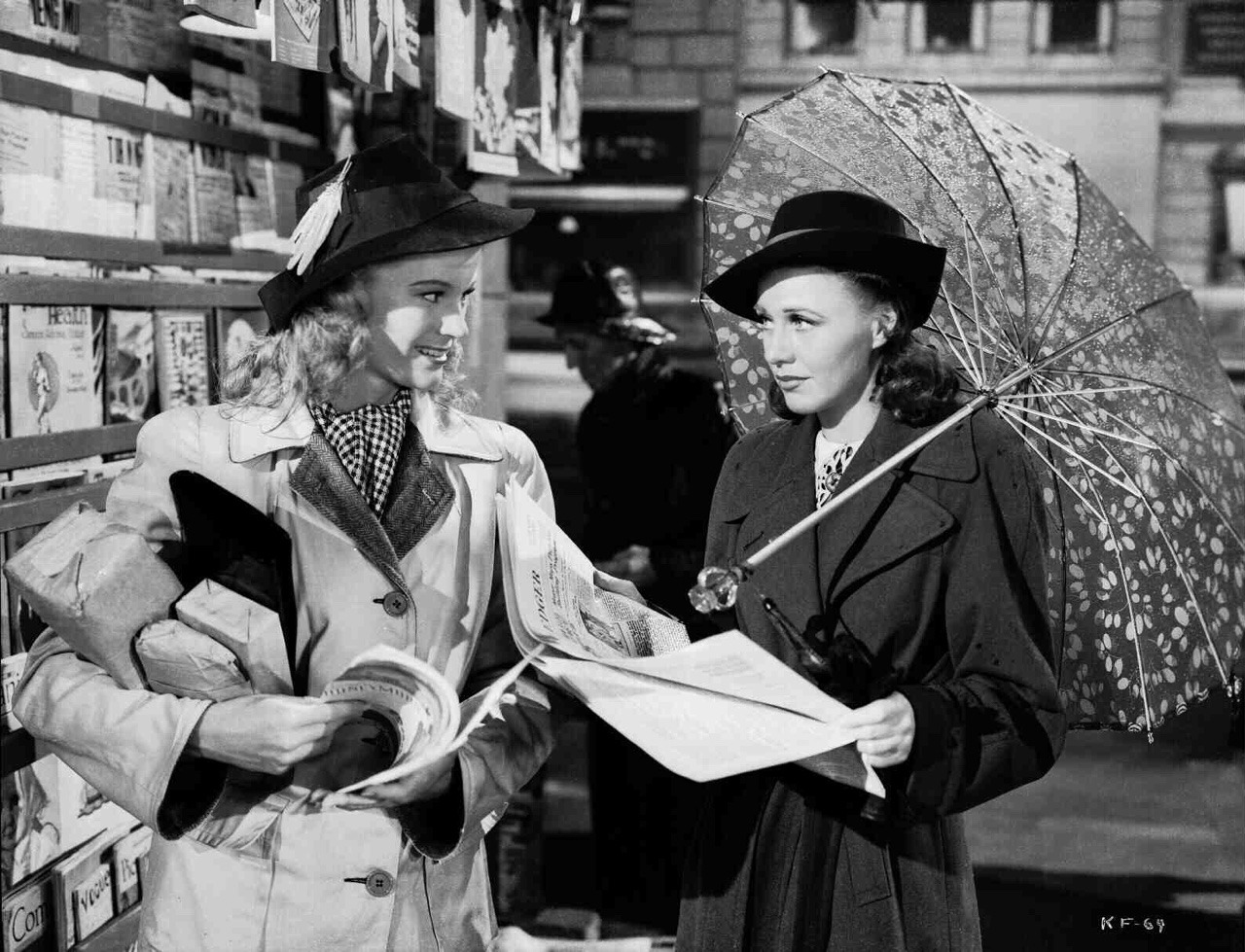
O que te faz querer ver um filme? É o elenco, o diretor ou a sinopse? Você tem uma lista de filmes para assistir? Você se planeja com antecedência ou assiste a qualquer coisa que encontrar na TV ou no streaming? Você se importa com os prêmios que um filme ganhou ou isso é irrelevante? Estou perguntando porque há muitos, muitos filmes para ver, e algum critério deve ser aplicado para que possamos escolher quais filmes ver e quais deixar passar. “Kitty Foyle”, de 1940, por exemplo, parecia digno de ser visto por ter trazido a única indicação ao Oscar de Ginger Rogers... e ela ganhou o Oscar! E, de fato, “Kitty Foyle” me fez refletir bastante.

What makes you want to watch a movie? Is it the cast, the director or the synopsis? Do you have a watch list? Do you plan ahead or do you watch whatever is on TV or streaming? Do you care if a film has won awards or isn’t it relevant for you? I’m asking because there are many, many movies to see, and some criteria must be applied for us to choose which ones to check and which ones to ignore. “Kitty Foyle”, from 1940, for instance, seemed worth checking out because it brings Ginger Roger’s only Oscar nomination… and she won that Oscar! And, indeed, “Kitty Foyle” made me think a lot.


O começo do filme é de doer: em uma breve sequência ambientada no começo do século XX, o filme mostra uma jovem vivendo uma vida perfeita, completa com marido e filhos. A mulher decide “descer de seu pedestal” e perder “privilégios” para conseguir direitos iguais – isto é, poder votar e trabalhar fora de casa. Já dá para perceber que o livro “Kitty Foyle” e o roteiro do filme foram escritos por homens?

The beginning of the film is cringe worthy: in a brief sequence set in the 1900s, the film shows a girl living the perfect life, complete with husband and kids. The woman decided to “climb down her pedestal” and lose her “privileges” in order to achieve equal rights – that is, to be able to vote and join the workforce. Can you see that the novel “Kitty Foyle” was written by a man, and so was the screenplay?


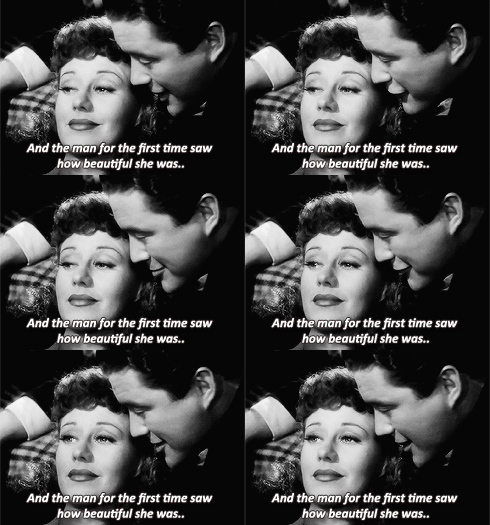
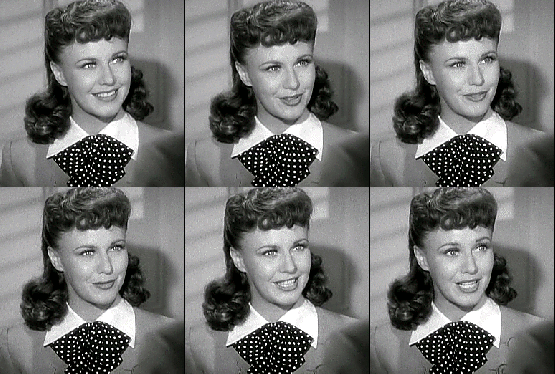
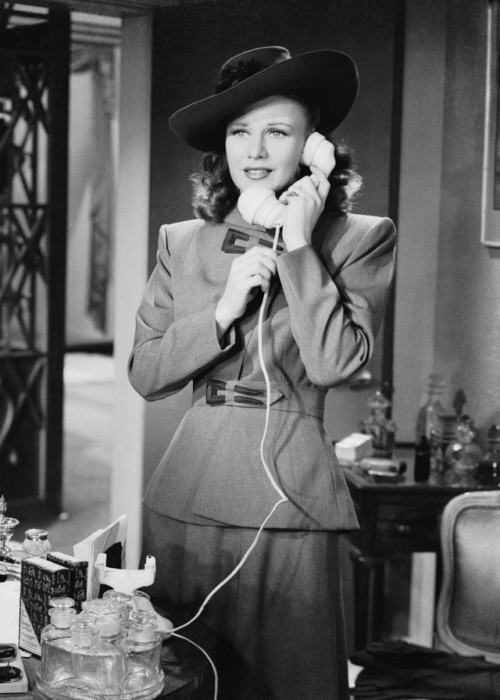
Kitty (uma Ginger Rogers morena) é uma jovem trabalhadora dos anos 40 tendo que escolher entre dois pretendentes. Uma noite, após sair do trabalho, ela acompanha seu namorado médico Mark (James Craig) até a casa de uma paciente. Lá ele ajuda no parto de um bebê e, quando Kitty o ajuda e segura o bebê, ele a pede em casamento. Ela aceita e ainda diz que se sente “tão completa” segurando aquele bebê. Eles planejam se casar naquela mesma noite, mas quando Kitty chega à pensão onde vive, ela encontra seu outro pretendente, Wyn (Dennis Morgan). Só há um problema: Wyn quer ficar com ela, mas se recusa a se divorciar de sua esposa.

Kitty (a brunette Ginger Rogers) is a 1940s “white-collar girl” having to choose between two beaus. One night, after leaving her work, she accompanies her doctor boyfriend Mark (James Craig) to a patient's house. There he helps deliver a baby and, when Kitty helps him and holds the baby, he proposes to her. She says yes, and also says that she feels “so right” holding that baby. They plan to get married that same night, but when Kitty arrives at the boarding house she lives in, she finds her other beau, Wyn (Dennis Morgan). There is only a problem: Wyn wants to be with her, but he won't divorce his wife.


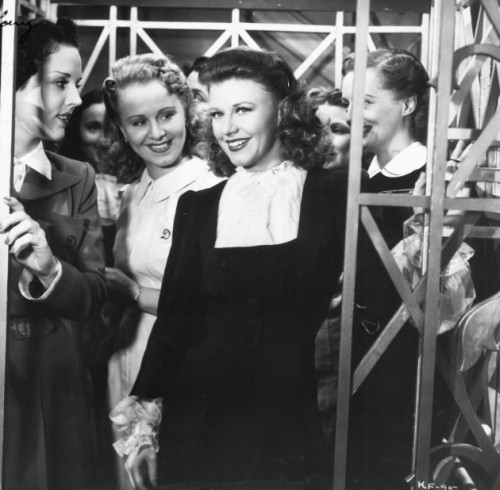
Uma sequência em flashback nos mostra que Kitty havia trabalhado para Wyn como datilógrafa. Em um gesto que deveria ser romântico, mas que se parece mais com assédio no trabalho, ele confessa seu amor por ela. E ela não conhece Mark em circunstâncias mais convenientes: ele a ajuda quando ela acidentalmente dispara o alarme da loja em que havia sido recém-contratada, e ele a chantageia para que ela aceite sair com ele.

A flashback sequence shows us that Kitty had worked for Wyn as a typist. In a move that should be romantic but looks more like workplace harassment, he confesses he loves her. And she doesn't meet Mark in more convenient circumstances either: he helps her when she accidentally sounds the alarm from the store she has just started working in and he humorously blackmails her to go on a date with him.


Há momentos mais progressistas no filme. Em um deles, Kitty enfrenta a família rica de Wyn, quando descobre que ele só poderia usar o dinheiro de sua herança se ele e ela vivessem na casa da família. Quando ela protesta por “gente morta poder ditar como Wyn vive sua vida”, nós quase nos esquecemos do discurso datado do começo.

There are more progressive moments in the film. In one of them, Kitty faces Wyn's rich family, when learning that he would only use his inheritance money if he and she lived in the family property. As she protests about how “dead people can say how Wyn must live his life”, we almost forget about the dated speech from the beginning.


O filme também lida com gravidez fora do casamento, mas encontra uma maneira muito convencional de rapidamente se livrar do assunto. Curiosamente, o livro era muito mais controverso – ele era vendido como “a novela mais ousada sobre uma mulher a ser escrita por um homem” – mas quase todos os temas controversos foram excluídos do roteiro por causa do Código Hays. Mais uma vez, o Código arruinou um filme – afinal, não podemos nos esquecer de que, na época, até a palavra “grávida” era proibida no cinema.

The film also deals with pregnancy out of wedlock, but it finds a very conventional way to quickly erase the subject. Interestingly, the novel was much more controversial – it was marketed as “the most daring novel ever written by a man about a woman” – but nearly all controversial themes had to be excluded from the screenplay due to the Hays Code. Once again, the Code has ruined a movie – after all, let’s not forget that back in the day even the word “pregnant” was forbidden in a film.


O título completo do filme é: “Kitty Foyle – A história natural de uma mulher”.  Isto é revelador, como se contentar-se com menos, com o mais conveniente, fosse o destino de todas as mulheres. Eu costumo dizer que se a poligamia fosse normalizada, 90% de todas as tramas de filmes perderiam o sentido. Isso aconteceria aqui, onde Kitty tem de escolher entre um homem que ela ama demais, mas com quem seu futuro é incerto, e um homem que ela não aprecia muito, mas com quem seu futuro será seguro.

The full title of the film is: “Kitty Foyle – The natural history of a woman”. This is revealing, as if settling for less, for the most convenient, was the fate of all women. I usually say that if polygamy was normalized, 90% of all film plots would stop working. This would happen here, where Kitty needs to choose between a man she loves deeply, but with whom her future is uncertain, and a man that she doesn’t like so much, but with whom her future will be safe.


Gostar de coisas antigas não significa ter valores antiquados. Eu não gostaria de ter nascido nos anos 1930. Eu sei que, se eu tivesse nascido naquela época, minha chance de ser uma mulher comum, dona de casa e mãe, seria muito maior do que minha chance de ter sido uma mulher trabalhadora e independente. Eu acredito que meu ponto de vista feminista é algo único que eu trago para minhas críticas, e tenho de apontar detalhes antiquados em filmes como “Kitty Foyle” para que possamos parar de romantizar a Era de Ouro do cinema como uma época melhor. Ela certamente não foi melhor para todos – talvez apenas para os homens brancos e heterossexuais, e é ótimo que nós, como sociedade, estejamos mudando isso.

Liking vintage things does not mean having vintage values. I don't wish I was born in the 1930s. I know that, if I was born back then, my chance of being a common woman, housewife and mother, would be much bigger than my chance of being an independent career woman. I believe that my feminist point of view is something unique I add to my reviews, and I have to point out those dated details in films like “Kitty Foyle” for us to sometimes stop romanticizing the Golden Age of Film as a better time. It certainly wasn’t better for all – maybe only for straight white man, and it’s so good that we, as a society, are changing this.


O roteiro foi escrito por Dalton Trumbo, com ajuda de Donald Ogden Stewart, mas ele pouco se parece com os melhores trabalhos destes grandes escritores. A história é romântica e por vezes engraçada, mas não tem o charme de “A Princesa e o Plebeu” (1953) de Trumbo e de “Núpcias de Escândalo” (1940) de Stewart.

The screenplay was written by Dalton Trumbo with help from Donald Ogden Stewart, but it hardly looks like the best works by those great writers. The story is romantic and sometimes funny, but lacks the charm of Trumbo’s “Roman Holiday” (1953) and Stewart’s “The Philadelphia Story” (1940).


Aliás, Ginger ganhou o Oscar derrotando Katharine Hepburn, de “Núpcias de Escândalo” – que havia se recusado a fazer “Kitty Foyle” – e outras indicadas cujas performances parecem ter merecido mais o prêmio do que ela: Joan Fontaine em “Rebecca” (1940) e a melhor de todas as indicadas, Bette Davis em “A Carta” (1940). Ah, e devemos nos lembrar de que Vivien Leigh sequer foi indicada por sua performance arrebatadora em “A Ponte de Waterloo” (1940)!

By the way, Ginger won her Oscar over Katharine Hepburn, from “The Philadelphia Story” – who had refused to star in “Kitty Foyle” – and other nominees whose performances seem more deserving than hers: Joan Fontaine in “Rebecca” (1940) and, the best of the bunch, Bette Davis in “The Letter”. Oh, and we must remember that Vivien Leigh wasn’t even nominated for her heartbreaking performance in “Waterloo Bridge” (1940)!


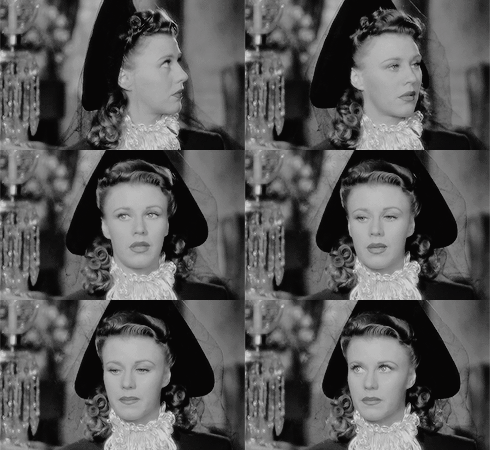
Ginger também lançou moda dentro e for a do filme. Do filme veio o “vestido Kitty Foyle”, um vestido escuro com colarinho e abotoadura brancos. Fora do filme, no Oscar, Ginger usou um vestido que causou frisson: com a parte de cima parecendo uma lingerie, o vestido de seda cinza foi considerado ousado demais. Mesmo que Ginger tenha seguido a sugestão de usar “tons sérios” por causa da guerra que estava em curso, foi a transparência do vestido que gerou críticas.

Ginger also created fashion trends in and outside the film. From the film came the “Kitty Foyle dress”, a dark dress with white collar and cuffs. Outside the film, at the Academy Awards, Ginger wore a dress that caused a stir: with the top part looking like a negligee, the grey silk dress was considered too daring. Although Ginger kept with the suggestion of wearing “muted tones” because of the ongoing war, it was the transparency of her dress that brought criticism.


“Kitty Foyle” é ruim? Não. É datado? Sim. Com um discurso de que o destino da mulher trabalhadora ainda é o casamento, o filme tem as qualidades e os defeitos que também encontramos nos melodramas de Douglas Srik, e nos anos 1950 Sirk provavelmente teria remodelado a história para torná-la mais interessante. Afinal, se havia alguém na Velha Hollywood que conhecia a “história natural de uma mulher”, este alguém era Sirk.

Is “Kitty Foyle” bad? No. Is it dated? Yes. With the speech about how the fate of the “white-collar girl” is still marriage, it has the positive and negative characteristics we also find in Douglas Sirk’s melodramas, and in the 1950s Sirk would probably have revamped the story to make it more interesting. After all, if there was someone in the Old Hollywood who knew about “the natural history of a woman”, this someone was Sirk.

This is my contribution to the Second Fred Astaire and Ginger Rogers blogathon, hosted by Michaela and Crystal at Love Letters to Old Hollywood and In the Good Old Days of Classic Hollywood.

Related Posts Plugin for WordPress, Blogger...