} Crítica Retrô: psicologia

Tradutor / Translator / Traductor / Übersetzer / Traduttore / Traducteur / 翻訳者 / переводчик

Showing posts with label psicologia. Show all posts

Sunday, July 22, 2018

Dance Comigo (1938) / Carefree (1938)

Fred Astaire e Ginger Rogers podem fazem algum filme ruim? Talvez. No final dos anos 30, Fred foi uma das várias estrelas de cinema chamadas de “veneno de bilheteria”, após o fracasso de alguns de seus filmes. “Dance Comigo” foi um destes filmes que deu prejuízo. Mas seria “Dance Comigo” tão ruim assim? Só há uma maneira de descobrir: assistindo-o!

Can Fred Astaire and Ginger Rogers do wrong? Maybe. In the late 1930s, Fred was one of the several film stars labeled “box office poison” after some of his films flopped at the box office. “Carefree” was one of those movies that lost money. But is “Carefree” so bad? There is only one way to find out: watching it! 

Você pode imaginar Fred Astaire como um psicanalista? Ele certamente seria um psicanalista pouco convencional. E é exatamente esta a profissão de seu personagem, doutor Tony Flagg, em “Dance Comigo”: um psicanalista tão peculiar que sua estratégia é fazer um paciente andar em círculos até ficar tonto para curar uma ressaca, enquanto o doutor Flagg toca “Jingle Bells” em uma gaita. O paciente é Stephen (Ralph Bellamy), desolado porque sua noiva rompeu o noivado – pela terceira vez!

Can you imagine Fred Astaire as a psychoanalyst? He certainly would have been a very unconventional one. And that’s exactly what his character, doctor Tony Flagg, is in “Carefree”: a psychoanalyst so peculiar that he makes a patient go around a bed several times until he gets dizzy, in order to cure his hangover, while Dr. Flagg plays “Jingle Bells” in a harmonica. The patient is Stephen (Ralph Bellamy), depressed because his fiancée called the engagement off – for the third time!


Para ajudar Stephen, o doutor Flagg decide fazer análise com a n0iva, Amanda Cooper (Ginger Rogers). Ele quer analisar especificamente os sonhos dela e, uma vez que ela não sonha, ele quer incitá-la a sonhar. O problema é que, quando ela finalmente consegue sonhar, ela percebe que o homem que ela ama não é Stephen. Você já deve estar imaginando o que acontece a seguir – porque Stephen é interpretado pela eterna segunda opção, Ralph Bellamy.

To help Stephen, Dr. Flagg decides to psychoanalyze the fiancée, Amanda Cooper (Ginger Rogers). He wants to analyze specifically her dreams and, since she says she can’t dream, he wants to provoke dreams in her. The problem is, when she dreams again, she realizes Stephen isn’t the man she loves. You can imagine what happens next – because, well, Stephen is played by the eternal second choice, Ralph Bellamy.


Este é um dos vários filmes sobre psicanálise, algo novo e na moda na época – Freud ainda estava vivo quando “Dance Comigo” foi feito. O filme é menos didático que a mais conhecida produção sobre o tema, “Quando Fala o Coração” (1945). Aqui, coisas como hipnose, anestésicos, sonhos e subconsciente são fonte de risadas.

This is one of many films that dealt with psychoanalysis, a brand new trend back then – Freud was still alive when “Carefree” was made. It is less didatical than the best remembered film about the theme, “Spellbound” (1945). Here, things like hypnosis, anesthesics, dreaming and subconscious are the source of laughs. 


O filme é muito divertido. As risadas começam logo na primeira sequência, quando um homem bêbado procura pelo doutor Flagg. Ginger tem duas sequências particularmente engraçadas para mostrar todo o seu talento como comediante: sua personagem é sedada pelo doutor Flagg com um gás, mas Stephen a acorda e a manda ir para a rádio trabalhar; e mais tarde, ela é hipnotizada e começa a andar pelo country club. Estes momentos me lembraram de outro filme em que Ginger Rogers precisa fazer este tipo de comédia: “O Inventor da Mocidade” (1952). Além de Ginger, temos Luella Gear como tia Cora e Jack Carson como Connors – dois personagens essencialmente cômicos.
The film is a very funny one. The laughs start in the first sequence, when a drunken man looks for doctor Tony Flagg. Ginger has two particularly funny sequences to show her skills as a comedienne: her character is sedated by doctor Flagg with a gas, but Stephen wakes her up and tells her to go work in the radio quickly or she’ll be late; and later, in another sequence, she is hypnotized and starts wandering a country club. These moments reminded me of another film in which Ginger has to act carefree: “”Monkey Business”, from 1952. Besides Ginger, we have Luella Gear as aunt Cora and Jack Carson as Connors – both essentially comic characters.


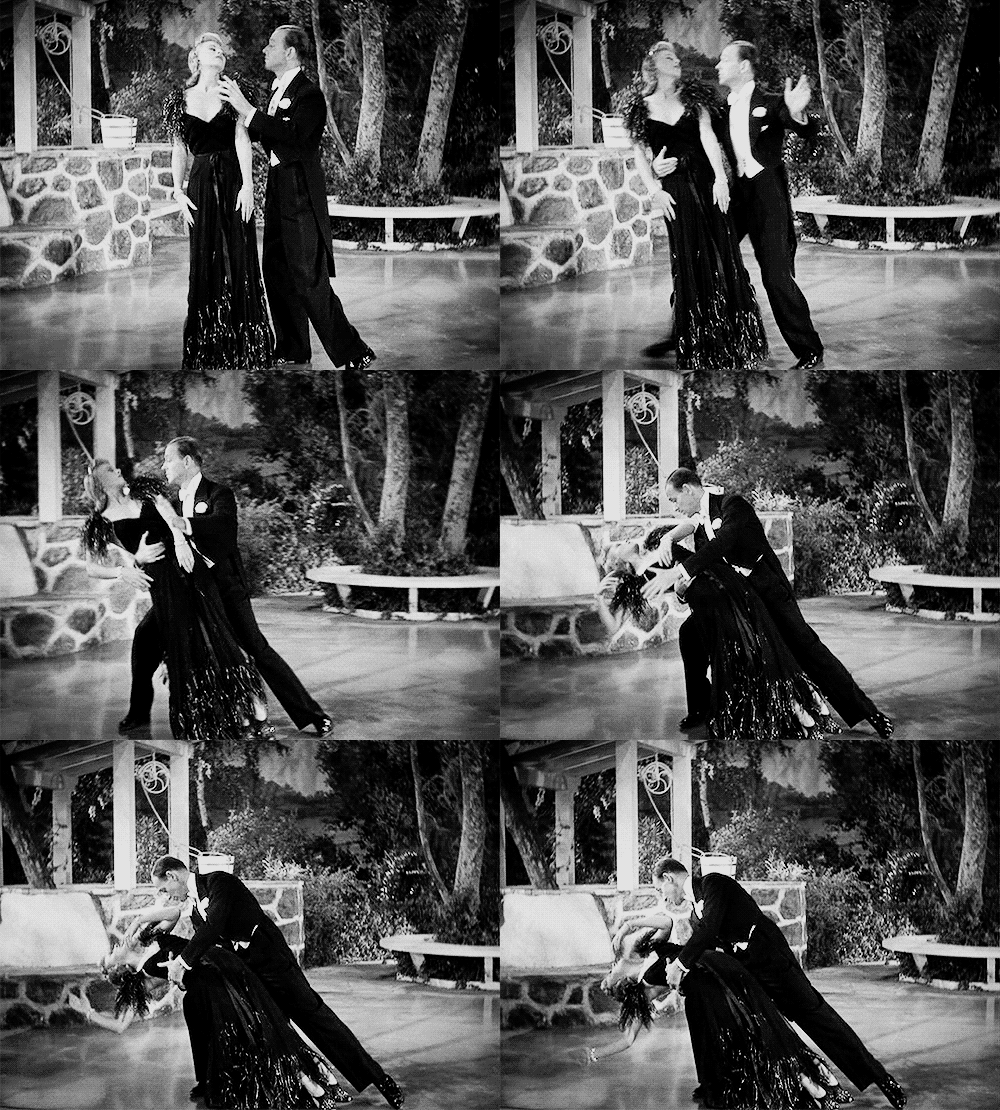
Já que “Dance Comigo” é um musical, você deve estar perguntando: como são os números de canto e dança? Bem, você tem Irving Berlin, Fred e Ginger, RKO: claro que os números são ótimos! Há um incrível momento em que Fred Astaire dança e joga golfe e também temos Fred e Ginger dançando em câmera lenta em cima de uma vitória-régia. Isso só é aceitável porque é uma sequência de sonho, OK?

Since “Carefree” is a musical, you might be asking: how is the music and dance? Well, it’s Irving Berlin, Fred and Ginger, RKO: of course it’s top notch! There is a great moment with Astaire tap dancing while golfing (the Putin puppet could never) and also Fred and Ginger dancing in slow motion on a Victoria amazonica (or vitória-régia in Portuguese), a huge plant from the Amazon rainforest. I can accept that because it was a dream sequence, OK?


De volta à questão inicial. Fred Astaire e Ginger Rogers podem fazem algum filme ruim? Não. Mas eles podiam fazer um filme “não tão brilhante”. Se você quiser assistir a algo maravilhoso, talvez seja melhor rever “O Picolino” (1935) ou “Ritmo Louco” (1936). Mas, se um pouco de besteiras não te incomodam, “Dance Comigo” é uma ótima opção.

Back at the initial question. Can Fred and Ginger do wrong? No. But they could do “less than right”. If you want to watch something amazing, maybe it's better to rewatch “Top Hat” (1935) or “Swing Time” (1936). But if some silliness doesn't bother you, “Carefree” is a very good choice.

This is my contribution to the Fred Astaire and Ginger Rogers blogathon, hosted by Michaela and Crystal at Love Letters to Old Hollywood and In the Good Old Days of Classic Hollywood

Thursday, January 29, 2015

Espelho D'Alma (1946) / The Dark Mirror (1946)

Se você gosta de um bom drama, seja em filmes, livros, novelas ou outra mídia, já deve ter encontrado pela frente o clichê da gêmea boa e da gêmea má. Essa fórmula de duas pessoas iguais fisicamente, mas com personalidades diferentes, de modo que uma delas odeia a outra, já foi usada dos mais diversos jeitos, em atrações interessantes ou como um grande atentado à inteligência humana. O truque pode ser conhecido hoje, mas era relativamente novo em 1946. Era a época de filmes noir, dos assassinatos em preto e branco, das femme fatales. Mas e quando não é uma, mas duas femme fatales, uma delas vítima e quiçá cúmplice da outra?

If you like a good melodrama, in film, books, soap operas or any other media, you might have met with the good twin / bad twin cliché. The formula of two people physically identical, but with different, clashing personalities, was already used in many ways, in interesting works of art or as a poor last resource. The trick can be well-known today, but it was relatively new in 1946. Tey were the times of film noir, black and white murders and femme fatales. But what happens when we have not one, but two femme fatales, and one of them is a victim and maybe the accomplice of the other one?


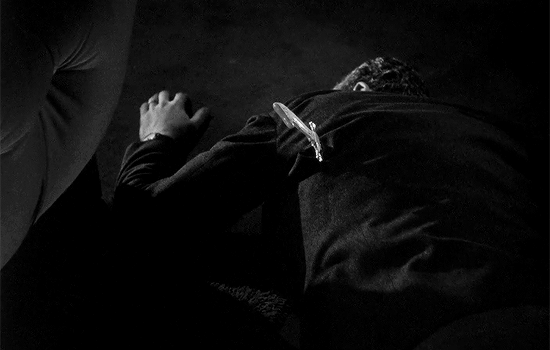
O Doutor Peralta foi encontrado morto. Esfaqueado, assassinado. Dois de seus vizinhos e a secretária apontam como assassina Teresa Collins (Olivia de Havilland), a moça que vende revistas e com quem o doutor planejava se casar. De sorriso amplo e olhos brilhantes, Teresa fica surpresa ao saber da morte do doutor. E mais: tem três álibis que a viram muito longe do local do crime naquela noite.

Doctor Peralta was found dead. He was stabbed, he was murdered. Two of his nwighbors and his secretary believe the killer is Teresa Collins (Olivia de Havilland), a magazine seller with whom the doctor wanted to get married. With a big smile and bright eyes, Teresa is shocked to learn about the doctor’s death. And more: there are three people who can prove she was very far from the place the crime happened that night.


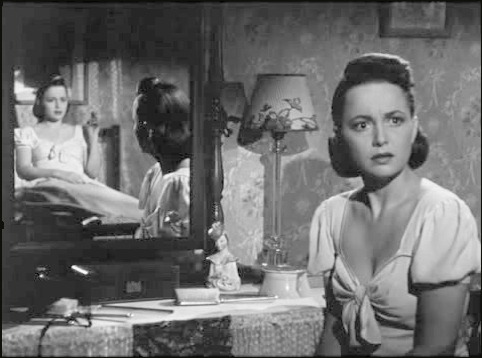
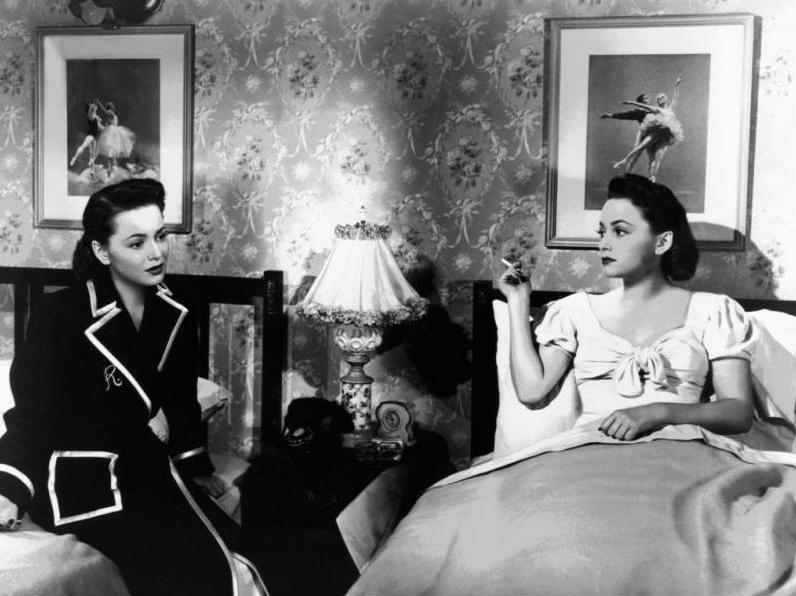
Mas o caso é mais complicado do que parece: Teresa tem uma irmã gêmea idêntica, Ruth, e ambas se revezavam na banca de revistas, de modo que ninguém no edifício sabia que se tratavam de duas irmãs. Isso frustra o tenente Stevenson (Thomas Mitchell) e o jovem Rusty (Richard Long), que estava apaixonado pela moça. As irmãs se recusam a falar qualquer coisa, de modo que fica impossível provar qual é culpada e qual é inocente.

But the case is more complicated than it looks like: Teresa has an identical twin sister, Ruth, and both worked at the magazine shop, and nobody at the building knew there were two sisters running the shop. This frustrates Lieutenant Stevenson (Thomas Mitchell) and young Rusty (Richard Long), who was in love with the girl. The sisters refuse to say anything, and it becomes impossible to prove who is guilty and who is innocent.


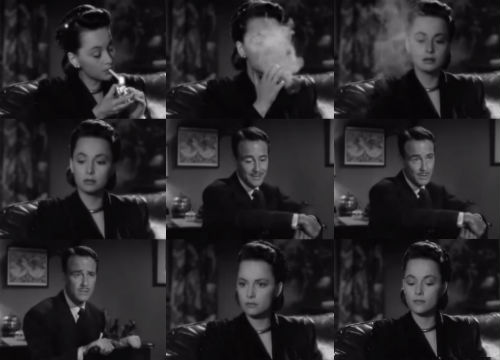
Ainda há uma esperança: o doutor Scott Elliott (Lew Ayres), médico no mesmo edifício e, conveniente e coincidentemente, especialista em gêmeos. Elas aceitam participar de uma pesquisa com o doutor, e logo a situação fica óbvia demais: a gêmea má se volta contra a gêmea boa e tenta fazê-la passar por louca.

There is still hope: Doctor Scott Elliott (Lew Ayres), a physician at the same building is, conveniently, an expert in twins. The girls accept to take part in a research with the doctor, and soon the situation becomes too obvious: the bad twin turns against the good twin and tries to make people believe the good twin is crazy.


É um pouco óbvio para o espectador quem é a gêmea boa e quem é a má. Isso é o ponto frustrante do filme. Entretanto, é interessante notar como de fato a polícia estava de mãos atadas com este caso. Com a tecnologia de hoje, provavelmente seria muito mais fácil identificar a gêmea criminosa. Mas não se preocupe: apesar desta fraqueza, o filme tem bons momentos e um excelente clímax, capaz de deixar qualquer um boquiaberto e com os neurônios retorcidos.

It is a little obvious for the audience who is the the good twin and who is the bad twin. This is the most frustrating thing in the film. However, it’s interesting to see how the police was really clueless with the case. With today’s technology, it’d probably be much easier to find out who is the guilty twin. But don’t worry: disconsidering this low point, the film has good moments and an excellent climax, that lets anyone breathless and with confused neurons.


Há um pouco de didatismo no filme. A psique humana ainda era um enigma para a maioria das pessoas. O pai da psicanálise, Sigmund Freud, havia morrido fazia apenas sete anos, e o público precisava ser doutrinado. Mas não se preocupe: não é o estilo “palestra do subconsciente” que Ingrid Bergman, Gregory Peck e Alfred Hitchcock fizeram um ano antes, em “Quando Fala o Coração” (1945). A novidade psicológica do filme fica por conta do teste Rorschach, em que o paciente diz o que vê em uma folha com um borrão de tinta. Este teste, motivo de piada em diversos filmes e seriados desde então, foi considerado ineficaz por estudiosos em 1965. 

There is a little didaticism in the film. Human psique was still an enigma for most people. The father of psychoalysis, Sigmund Freud, had died seven years before, and the audience needed to be doctrinated. But don’t worry: this is not the kind of “lecture about the subconscious” that Ingrid Bergman, Gregory Peck and Alfred Hitchcock did one year before, in “Spellbound” (1945). The big psychological novelty in the film is the Rorschach test, in which the patient describes what he or she sees in a paper with a paint stain. This test, center of many jokes in movies and series since then, was considered ineffective by academics in 1965.


É curioso ver o diálogo sobre rivalidade entre irmãs ser feito justamente para Olivia de Havilland, que teve uma longa rixa com a irmã também atriz Joan Fontaine. Os detalhes dessa rivalidade que vem desde a infância não foram tornados públicos (ao menos não todos os detalhes), mas sem dúvida é impossível dizer quem estava certa ou errada na disputa De Havilland contra Fontaine.

It is curious to see the dialog about sibling rivalry being acted exactly by Olivia de Havilland, who had a long feud with her sister (and also actress) Joan Fontaine. The details of this rivalry that comes since childhood were never made public (at least not ALL details), but without a doubt it’s impossible to say who was right or wrong in the De Havilland against Fontaine case.


Para Olivia de Havilland, 1946 foi um grande ano. Ela ficou dois anos afastada do cinema enquanto lutava para se livrar do abusivo contrato de sete anos da Warner Brothers. Por ter rejeitado vários papéis ruins, Olivia foi informada de que ficaria mais seis meses exclusiva da Warner, como forma de punição. Ela foi aos tribunais e ganhou o caso, mas, graças à influência da Warner em Hollywood, nenhum estúdio lhe ofereceu trabalho entre 1944 e 1946. Lew Ayres também estava afastado do cinema, porque deixou Hollywood em 1942 para trabalhar como médico e capelão durante a guerra no Pacífico. Protagonista de “Sem Novidade no Front” (1930), Ayres era um grande pacifista e perdeu a simpatia dos colegas durante a guerra porque se opunha ao conflito.

For Olivia de Havilland, 1946 was a fantastic year. She was far from movies for two years, fighting to get rido f Warner Brothers’s abusive seven-year contract. Because she rejected several bad roles, Olivia was informed that she would be a Warner exclusive for six more months as a punishment. She went to court and won the case, but, thanks to Warner’s influence in Hollywood, no studio offered her work between 1944 and 1946. Lew Ayres was also far from the movie business, because he left Hollywood in 1942 to work as doctor and chaplain during the war in the Pacific. The lead of “All Quiet on the Western Front” (1946), Ayres was a pacifist and lost the sympathy of his movie colleagues because he was against the war. 


Este não é o melhor filme de nenhum de seus atores. Não é o melhor filme do diretor Robert Siodmak (de “Os Assassinos”, 1946) nem do produtor Nunnally Johnson (de “Um Retrato de Mulher”, 1944). Mas é um filme muito bom, como o são todos os clássicos.

This is not the best film for nwither Olivia now Lew. It is not the best film by director Robert Siodmack (who did “The Killers” also in 1946) nor by producer Nunnally Johnson (from “The Woman in the Window”, 1944). But it is a very good classic film nonetheless.

This is my contribution to the Fourth Annual Dueling Divas blogathon, hosted by Lara at Backlots.

Related Posts Plugin for WordPress, Blogger...