} Crítica Retrô

Tradutor / Translator / Traductor / Übersetzer / Traduttore / Traducteur / 翻訳者 / переводчик

Sunday, November 12, 2017

O Mundo é um Teatro / Ziegfeld Girl (1941)

As mulheres frequentavam os cinemas nos anos 1930 queriam ter uma garota como melhor amiga: Joan Blondell. Esperta, divertida, espirituosa e sempre pronta para te apoiar: as personagens de Joan tinham tudo o que uma boa amiga deveria ter. As mulheres que frequentavam os cinemas nos anos 1940, por outro lado, tinham outro tipo de melhor amiga dos sonhos: Eve Arden.

Female filmgoers from the 1930s wished they had one girl as their best friend: Joan Blondell. Wise, funny, quick-witted and supportive: Joan's characters embodied everything a good pal should have. Female filmgoers from the 1940s, on the other hand, had other kind of dream best friend: Eve Arden.
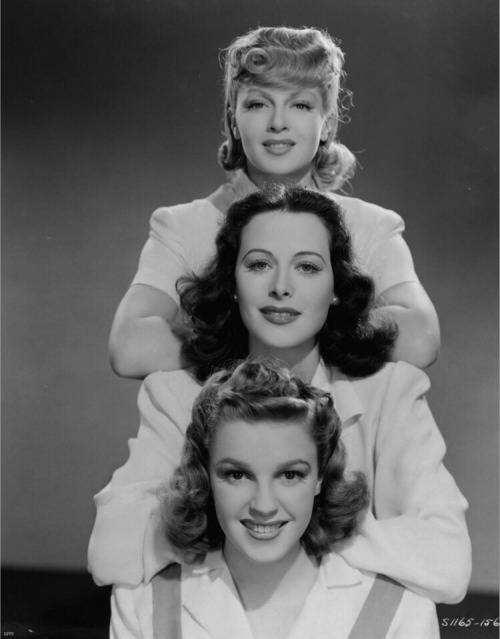
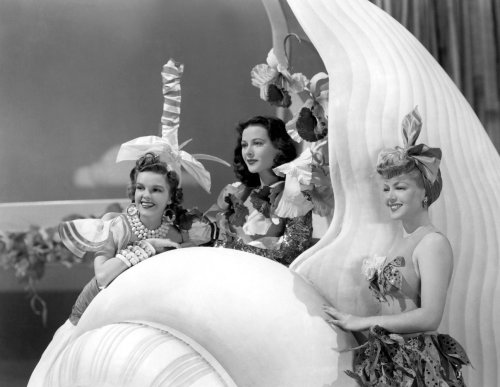
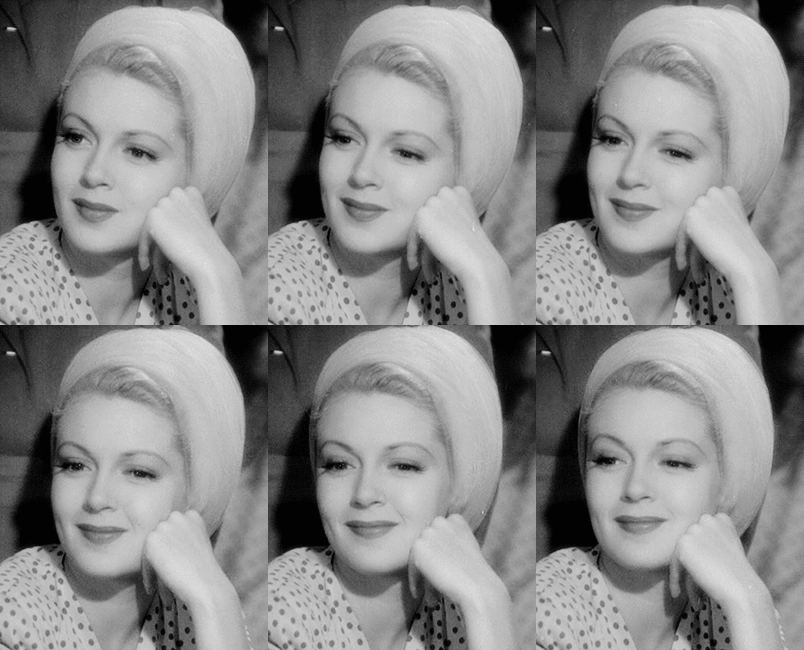
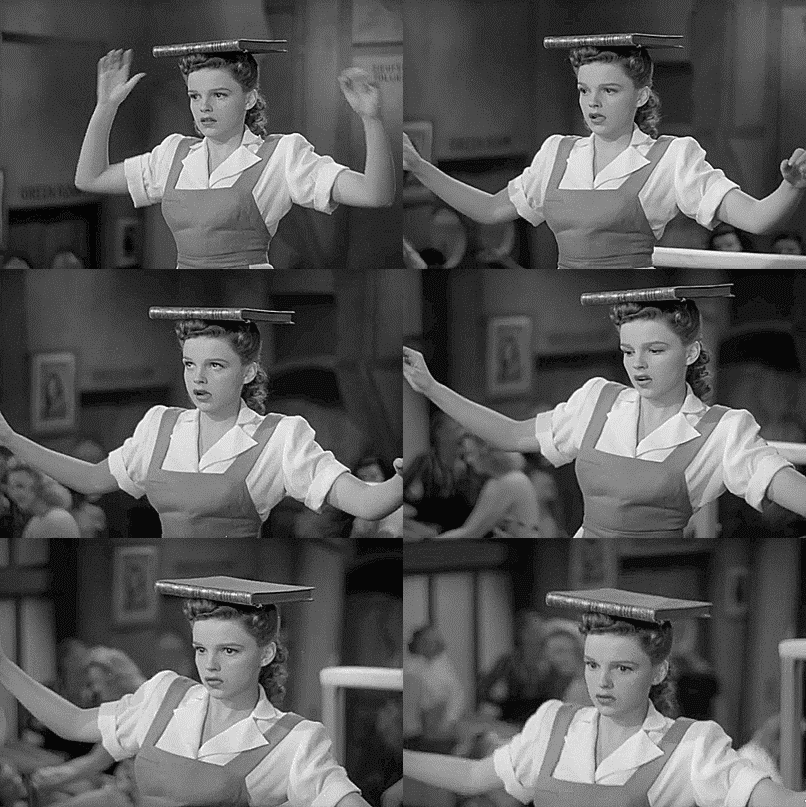
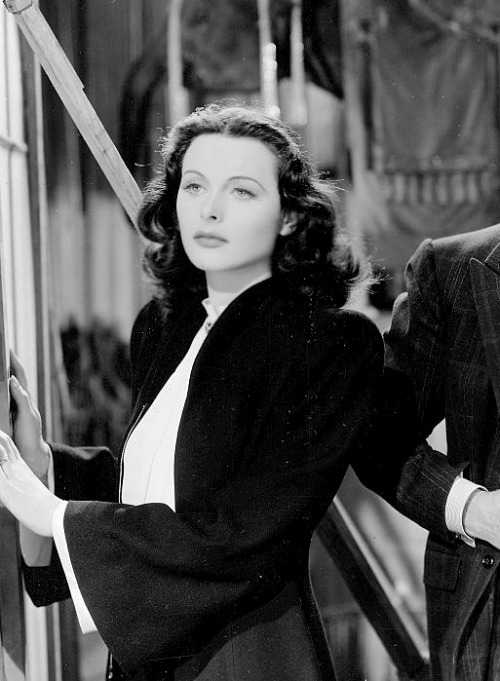
Três moças são recém-chegadas no grupo das Ziegfeld Girls. Sheila (Lana Turner) era ascensorista antes de ser descoberta pelo próprio Sr. Ziegfeld. Susie (Judy Garland) nasceu em uma família do teatro e o Sr. Ziegfeld viu o número que ela fazia com o pai, mas contratou apenas a garota. Sandra (Hedy Lamarr) estava acompanhando o marido violinista em um teste quando um cantor a viu e a mandou para o Sr. Ziegfeld. Ela aceitou o trabalho porque o casal estava passando por dificuldades.

Three women are new in the Ziegfeld Girls group. Sheila (Lana Turner) was an elevator operator before being spotted by Mr. Ziegfeld himself. Susie (Judy Garland) was born in a vaudeville family and Mr. Ziegfeld saw her number with her father, but hired only her. Sandra (Hedy Lamarr) was accompanying her violinist husband in an audition when a singer spotted her and sent her to Mr. Ziegfeld. She accepted the job as a show girl because the couple was out of money.
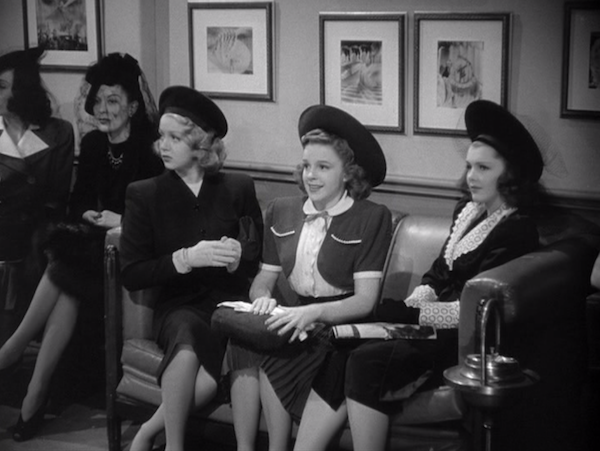
“O Mundo é um Teatro” é sobre as relações destas mulheres com os homens de suas vidas. Sheila tem um namorado simples, Gil (James Stewart), mas decide sair com um “benfeitor das artes”, Geoffrey Collins (Ian Hunter), que lhe presenteia com joias caras.

“Ziegfeld Girl” is all about the relationship these women have with the men in their lives. Sheila has a simple-minded boyfriend, Gil (James Stewart), but she decides to hang out with an “arts benefactor”, Geoffrey Collis (Ian Hunter), who gives her expensive jewelry.
O pai de Susie (Charles Winninger) deve encarar uma amarga verdade: ele ensinou tudo para sua garotinha, mas agora ele está acabado e o show quer contratar apenas ela. Ao mesmo tempo, Susie se interessa pelo irmão mais novo de Sheila, Jerry (Jackie Cooper).

Susie's father (Charles Winninger) must face a bitter truth: he has taught everything to his little girl, and now he's washed up and the shows only want her. At the same time, Susie becomes sweethearts with Sheila's young brother, Jerry (Jackie Cooper).
Sandra se vê dividida entre o marido Franz (Philip Dorn), que não gosta do novo trabalho dela, e o cantor Frank Merton (Tony Mayer), um conhecido mulherengo que foi responsável pela descoberta dela. Das três, Susan é aquela que tem menos tempo em cena, enquanto Sheila é a que tem mais.

Sandra becomes torn between her husband Franz (Philip Dorn), who disapproves her new job, and lead singer Frank Merton (Tony Martin), a well-known womanizer who discovered her. Out of the three, Sandra is the one that gets less screen time, while Sheila has the most.
Patsy Dixon (Eve Arden) não é uma das estrelas principais entre as Ziegfeld girls. A pobre Eve sequer é creditada no começo do filme! Patsy é uma artista que coleciona duas coisas: joias e maridos. Ela parece antipática e frívola, até que dá um conselho a Sheila em um momento delicado. E, se Eve Arden está lhe dando um conselho, é melhor escutá-la.

Patsy Dixon (Eve Arden) is not one of the main Ziegfeld girls. Poor Eve is not even credited in the beginning of the movie! Patsy is a showgirl that collects two things: jewelry and husbands. She sounds unsympathetic and frivolous, until a pivotal moment in which she gives advice to Sheila. And, if Eve Arden is giving you advice, you'd better listen to her.
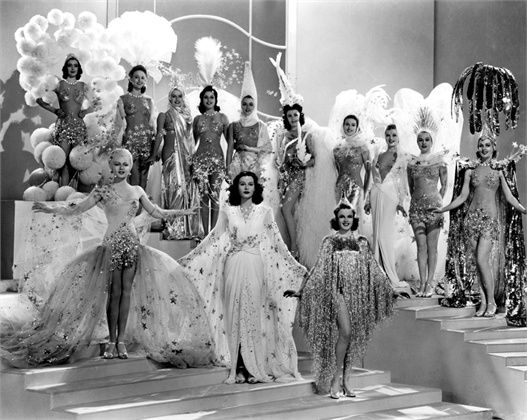
Busby Berkeley foi a escolha perfeita para dirigir os números de dança. Florenz Ziegfeld Jr não era um homem básico, e seu estilo combinou perfeitamente com o de Berkeley. Obviamente, a edição e os truques de câmera impossíveis de serem realizados no teatro deram uma pequena vantagem a Berkeley, e ele chegou um pouco mais longe de Ziegfeld com suas criações, que estão eternizadas em celuloide.

Busby Berkeley was the perfect choice to direct the dance numbers. Florenz Ziegfeld Jr wasn't a basic man at all, and his style combined perfectly with Berkeley's. Of course, editing and camera tricks that were not part of the theater world gave Berkeley a small advantage, and he went a mile further than Ziegfeld with his own creations, forever burned on celluloid.
É interessante notar que o próprio Sr. Ziegfeld nunca é visto. Quando o filme tinha data de estreia prevista para 1938, Walter Pidgeon havia sido escalado, e havia a possibilidade de William Powell reprisar o papel de Ziegfeld que já havia feito em “Ziegfeld – Criador de Estrelas” (1936). Walter Pidgeon acabou interpretando Ziegfeld em “Funny Girl – A Garota Genial” (1968). Em minha opinião, foi uma decisão sábia não mostrar o Sr. Ziegfeld no filme, ou o foco mudaria da vida das artistas, da Ziegfeld girls, para a vida do próprio showman.

It's interesting to notice that Mr. Ziegfeld is never seen. When the film was set for a 1938 release, Walter Pidgeon had been cast, and there was a chance that William Powell would recreate his role as Ziegfeld from the 1936 Oscar-winning extravaganza “The Great Ziegfeld”. Walter Pidgeon ended up playing Ziegfeld in “Funny Girl” (1968). In my opinion, it was a wise decision to not show Mr. Ziegfeld in the movie, because otherwise the focus would shift from the girls’ lives to the showman’s life.
Edward Everett Horton está adorável como sempre em seu papel de caça-talentos super-preocupado. Jackie Cooper tem pouco a fazer, apenas ser fofo ao lado de uma igualmente adorável Judy Garland, e foi particularmente bom ver o veterano do vaudeville Al Shean fazendo um número em frente às câmeras. James Stewart está muito bem e demonstra grande alcance nas técnicas de atuação.

Edward Everett Horton is his usual delightful self as the over-worried talent hunter. Jackie Cooper has little to do but to be cute to an equally adorable Judy Garland, and it was particularly nice to see vaudevillian Al Shean doing his routine for the cameras. James Stewart is very good in the movie, showing a fine acting range.
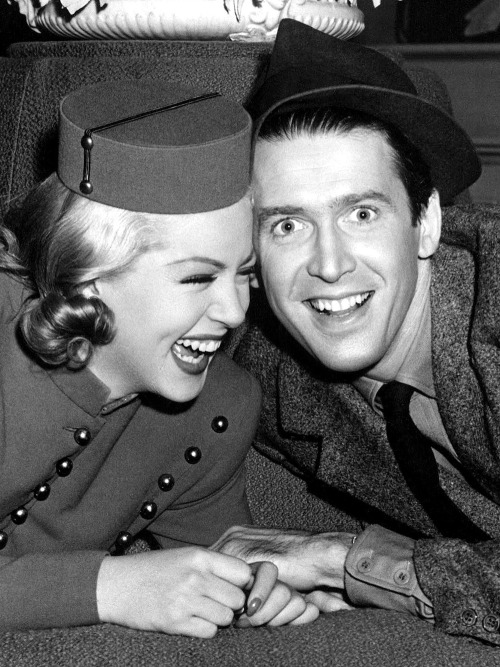
O final é previsível, mas isso não tira os méritos do filme. Se nem todas as histórias são exploradas ao máximo, “O Mundo é um Teatro” merece ser visto por causa dos incríveis números musicais, da direção de arte de Cedric Gibbons, dos figurinos fantásticos de Adrian, da boa performance de Lana Turner e da voz maravilhosa de Judy Garland.

The ending is predictable, but this doesn't take away the film's merits. If not all the stories deliver their full potential, “Ziegfeld Girl” deserves to be seen because of the amazing song and dance numbers, the art direction by Cedric Gibbons, the fantastic gowns by Adrian, Lana Turner’s good performance and Judy Garland’s marvelous voice.


This is my contribution to the Eve Arden blogathon, hosted by Laura at Phyllis Loves Classic Movies.

Friday, November 10, 2017

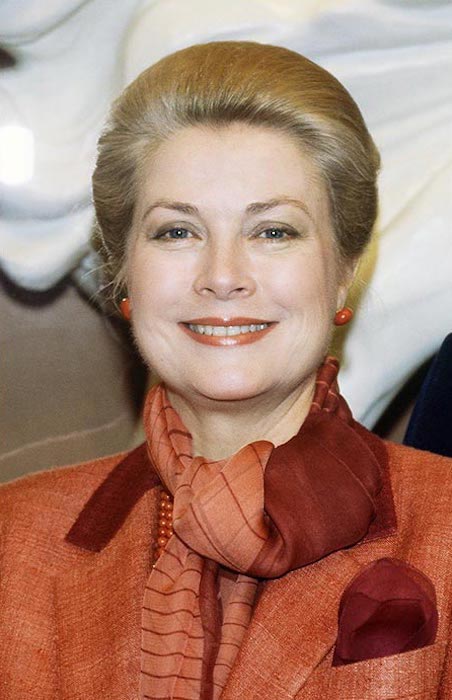
Grace Kelly: style icon

Não podemos negar que o mundo da moda e o mundo do cinema caminham lado a lado desde, no mínimo, os anos 1920. Se tivéssemos que escolher uma estrela para exemplificar a relação entre moda e cinema, a maioria das pessoas escolheria Audrey Hepburn. Eu entendo o motivo: a parceria de Audrey com Givenchy foi icônica e alguns de seus filmes trataram do mundo da moda. Mas eu gostaria de discordar desta maioria: em minha opinião, Grace Kelly e as tendências da moda também andaram de mãos dadas.

We can't deny that the fashion world and the movie world walk side by side since, at least, the 1920s. If we had to choose one film star to exemplify the relationship between fashion and film, most people would point out Audrey Hepburn. I understand them: Audrey's partnership with Givenchy was iconic and some of her movies dealt with the fashion world. But I'd like to disagree with most people: in my opinion, Grace Kelly and fashion tendencies also waked hand in hand.
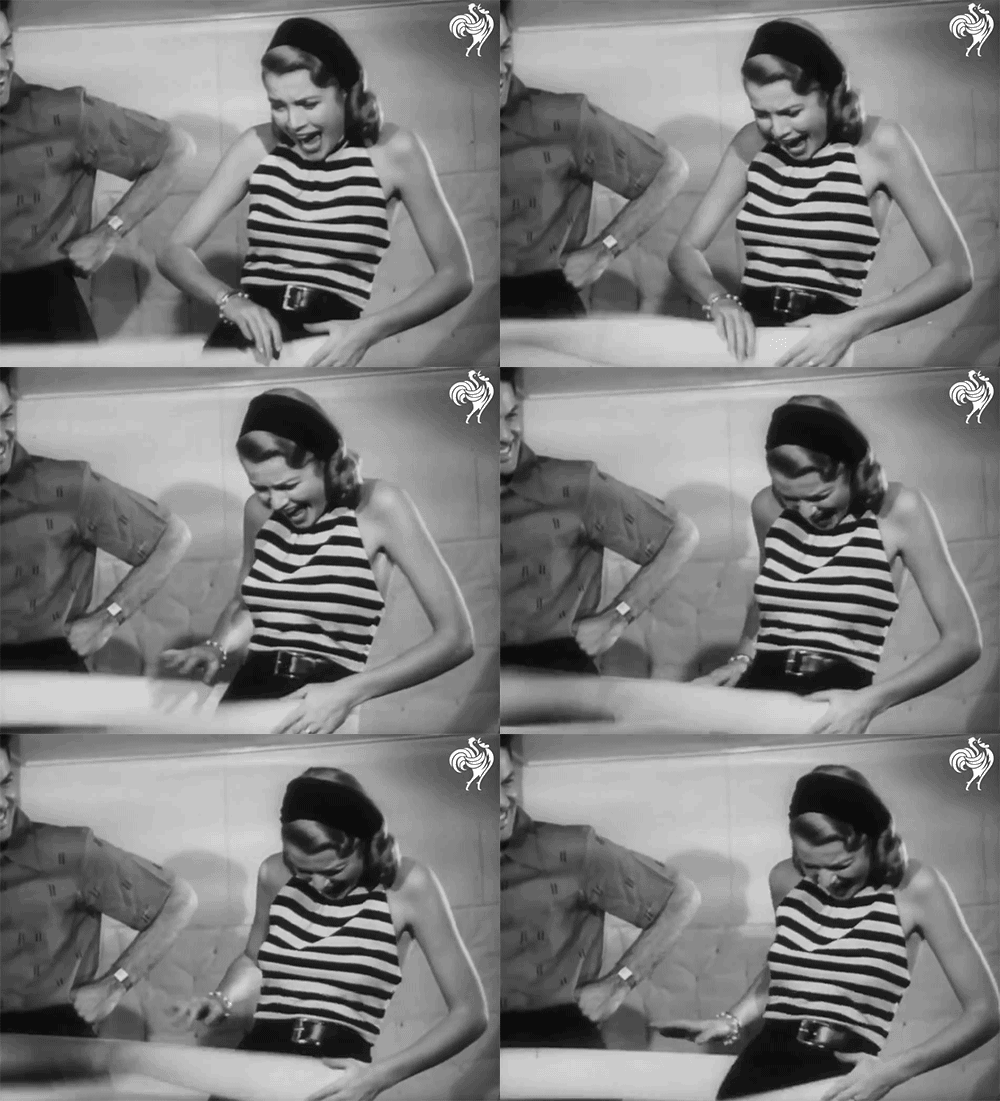
Grace desfilou pela primeira vez em um evento beneficente da escola. Sua mão e irmãs também participaram do desfile. Quando Grace decidiu tentar a carreira de atriz, ela começou a trabalhar como modelo, e ficou três anos nesta ocupação.

Grace modeled for the first time in a beneficent event at the school she attended. Her mother and sisters were also part of the fashion show. When Grace went on to pursue a career in acting, she started also working as a model, and did it for three years.
Grace começou com papéis na TV. Seu primeiro papel no cinema, em “Horas Intermináveis” (1951), foi muito pequeno. O papel seguinte, em “Matar ou Morrer” (1952), também foi pequeno, mas fundamental para a trama. Ann Peck, figurinista especialista em westerns, foi a responsável pelos figurinos das mulheres do filme.

Grace started with TV roles. Her first film role, in “Fourteen Hours” (1951), is very brief. The one that followed, in “High Noon” (1952), was also brief, but fundamental to the plot. Ann Peck, a western expert, was responsible for the female outfits in the film.
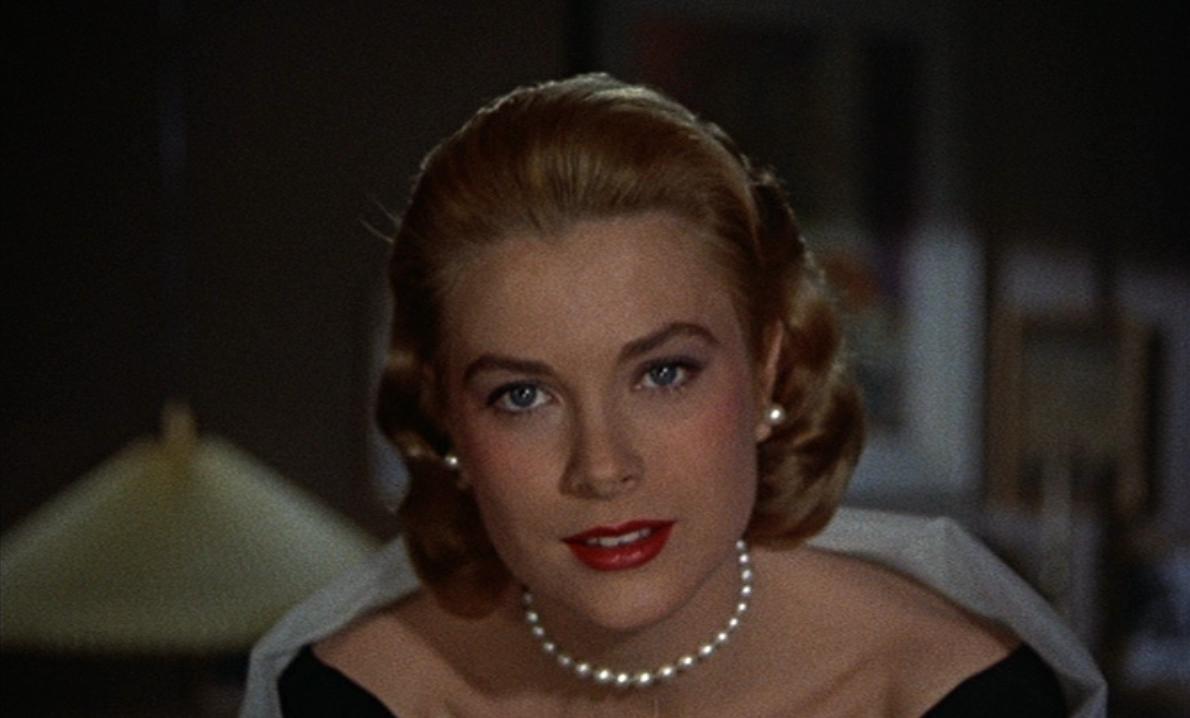
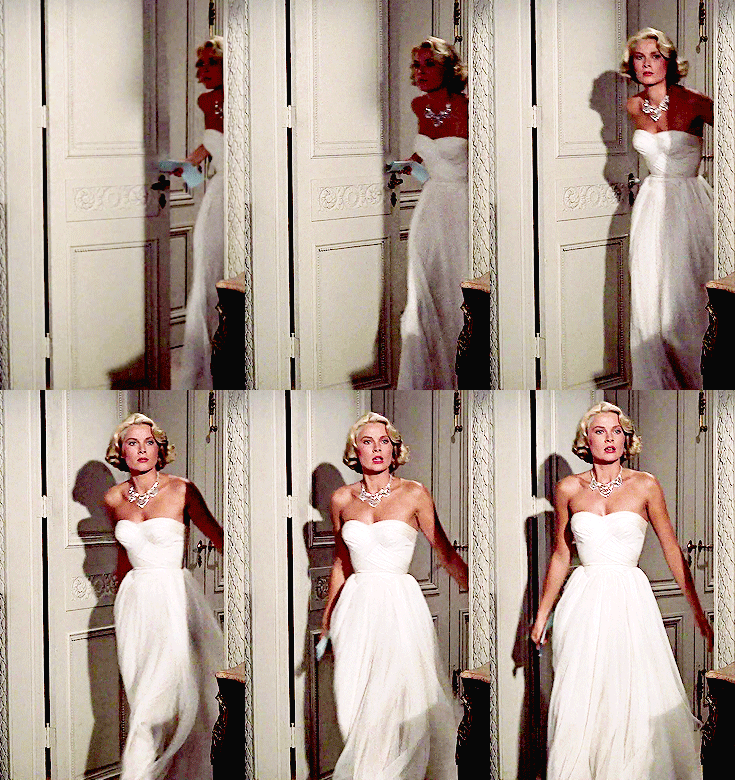
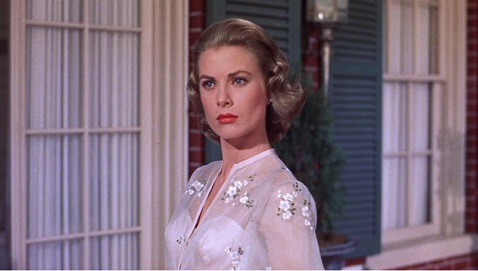
Ninguém vestiu Grace Kelly melhor que Edith Head. A parceria fashion entre elas durou quatro filmes, uma cerimônia do Oscar e uma viagem de despedida. Uma das mais fascinantes imagens de Grace Kelly se tornou de tirar o fôlego graças ao vestido que ela usa. Quando L.B. Jeffrie (James Stewart) abre os olhos, ele encontra sua noiva, Lisa Fremont (Kelly) bem à sua frente, usando um vestido preto e branco. O filme é “Janela Indiscreta” (1954) e essa é a primeira vez que muitos de nós fomos enfeitiçados por Grace Kelly.

Nobody dressed Grace Kelly better than Edith Head. Their fashion partnership lasted four films, one Oscar ceremony and a farewell trip. One of the most fascinating images of Grace Kelly was made even more breathtaking by the dress she wears. When L.B. Jeffries (James Stewart) opens his eyes, he finds his angelic fiancée, Lisa Fremont (Kelly) right in front of him, wearing a black and white dress. The film is “Rear Window” (1954), and this was the first time many of us were bewitched by Grace Kelly.
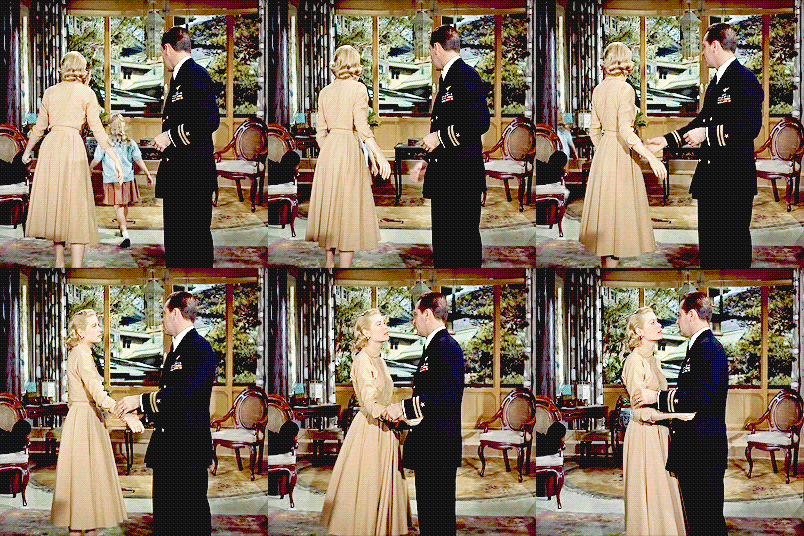
A próxima colaboração delas foi em “As Pontes de Toko-Ri”, um filme de 1954 que tem muito pouco de Grace Kelly e quase nada de ação – apenas nos minutos finais. Grace está no filme basicamente apenas para desfilar as criações glamourosas de Edith. O filme seguinte, entretanto, gerou bons frutos: com “Amar é Sofrer” (1954), Grace Kelly ganhou o Oscar de Melhor Atriz e na noite da cerimônia usou um vestido de Edith Head, muito diferente daqueles que a estilista concebeu para o papel dramático de Grace. Um uma decisão arriscada, Grace repetiu no Oscar o vestido usado na estreia do filme.

Their next collaboration was in “The Bridges at Toko-Ri”, a 1954 movie that has too little of Grace Kelly and not enough action – only in the final minutes. Grace is in the film only to walk with Head’s glamorous creations. The film that followed, however, was good for both: with “The Country Girl” (1954), Grace Kelly won the Best Actress Oscar and at the night of the ceremony she received her prize while wearing a dress designed by Edith Head – a dress very different from the simple clothes her character wears in the film. In a daring decision, Grace reused the dress with which she had attended the premiere of the film.
The Bridges at Toko-Ri (1954)
The Country Girl (1954)
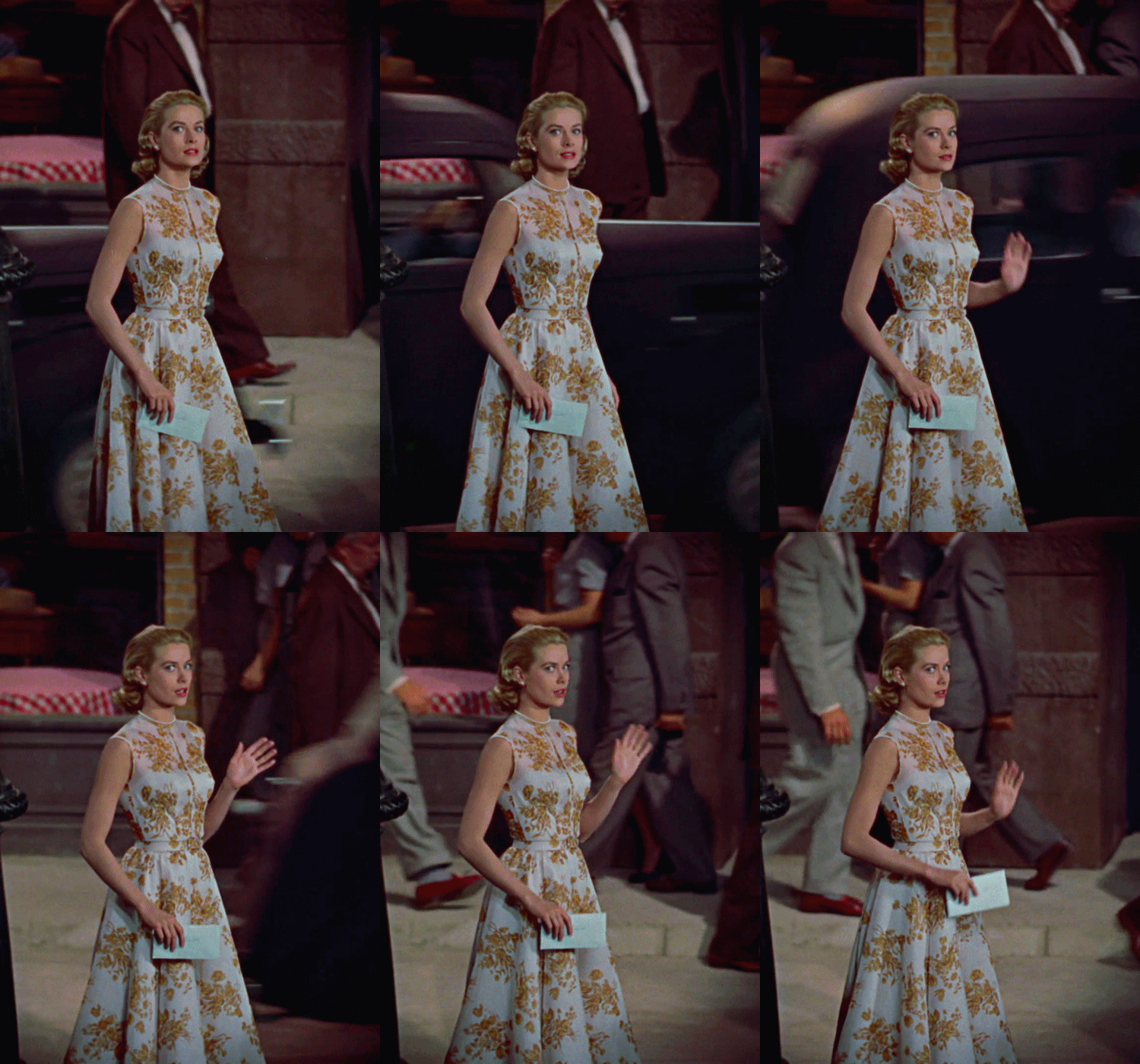
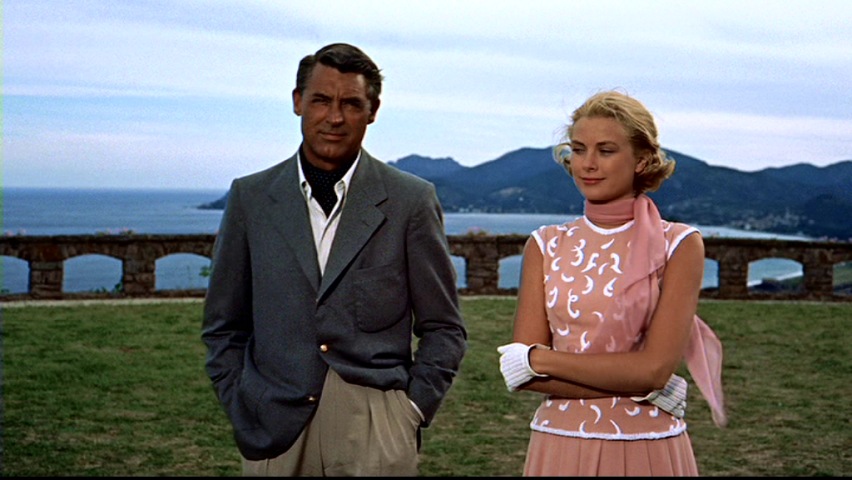
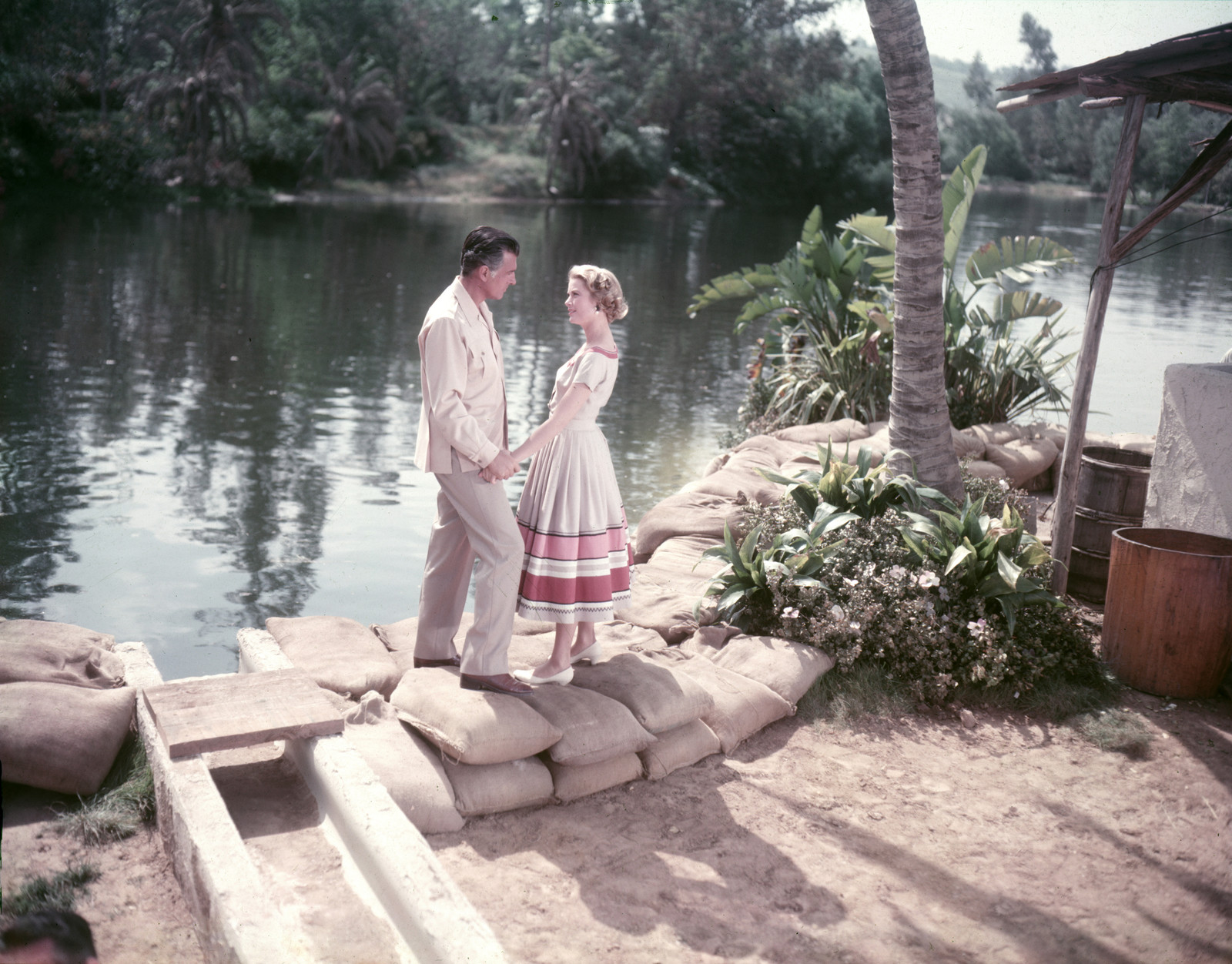
“Ladrão de Casaca” (155) é sem dúvida o filme no qual Grace Kelly usa as roupas mais bonitas. Como uma mulher riquíssima que pode ser a próxima vítima de um ladrão de joias, ela pode desfilar com lindos vestidos pelos cenários da Riviera Francesa. Sua beleza e suas roupas são inclusive capazes de fazer você desviar a atenção do queixo glorioso de Cary Grant e, bem, prestar atenção nela.

“To Catch a Thief” (1955) is without a doubt the film in which Grace Kelly wears the most beautiful clothes. As a very rich woman who may be the next victim of a jewel robber, she can show off gorgeous dresses in the French Riviera setting. Her beauty and her outfits can even make you stop looking at Cary Grant's glorious chin and, well, pay attention to her.
O terninho que Grace Kelly usava quando deixou Hollywood de vez foi também desenhado por Edith Head, e dado como um presente de despedida dos estúdios Paramount. Ironicamente, nenhum dos oito Oscar ganhos por Edith Head veio de um filme com Grace Kelly.

The suit Grace Kelly was wearing when she left Hollywood for good was also designed by Edith Head, as a farewell gift from Paramount studios. Ironically, none of Edith Head’s eight Oscar wins was from a film starring Grace Kelly.
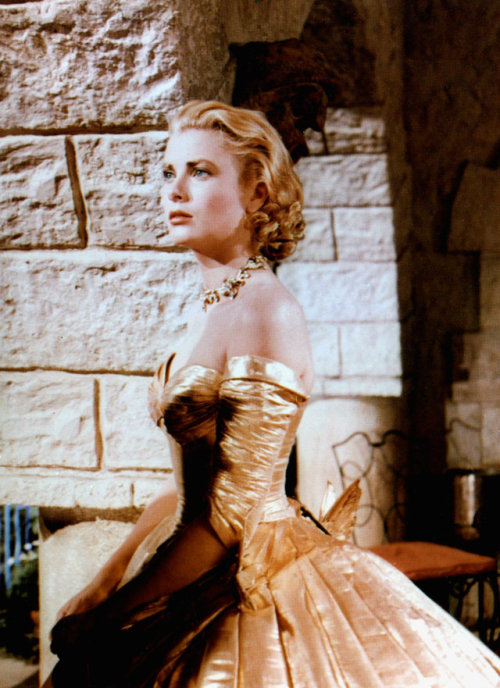
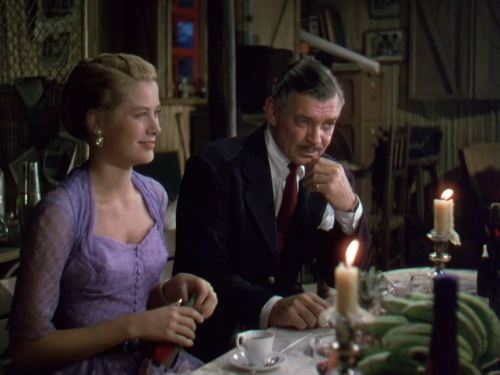
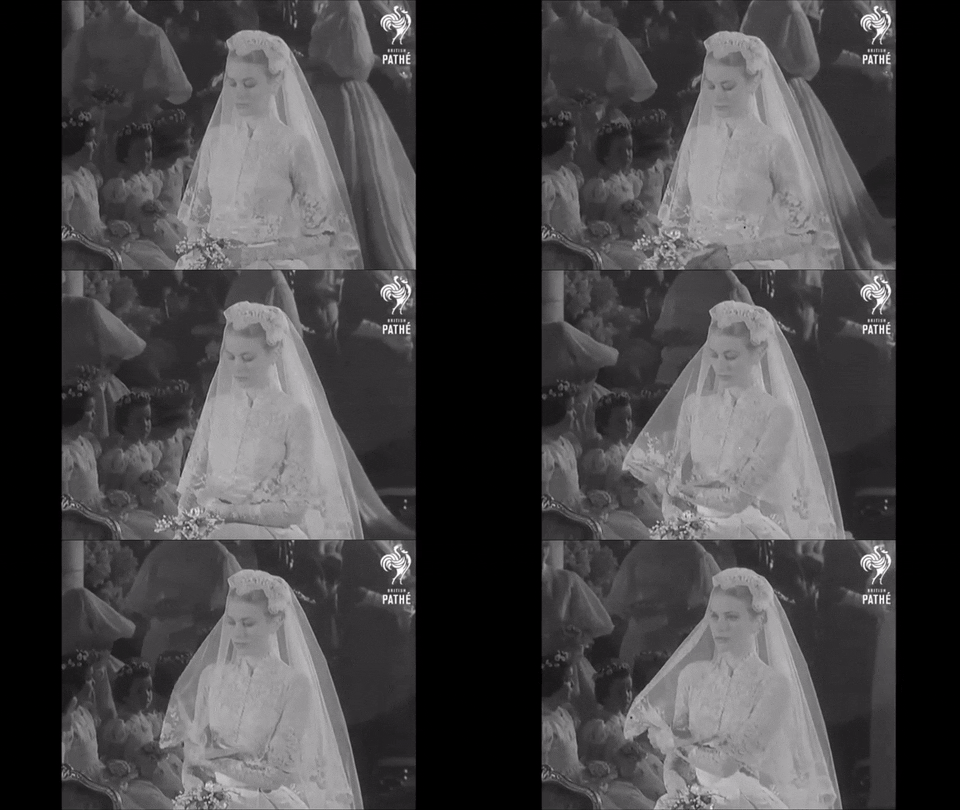
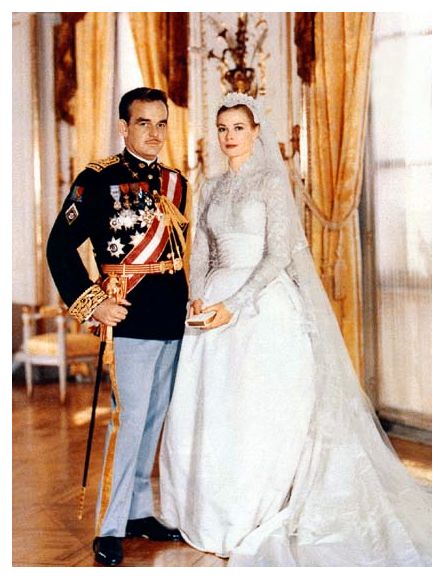
O icônico vestido de noiva de Grace Kelly não foi desenhado por Edith Head. Helen Rose, que foi responsável pelo figurino de Grace em quatro filmes – “Mogambo” (1953), “Tentação Verde” (1954), “Alta Sociedade” (1956) e “O Cisne” (também de 1956) – foi escolhida para desenhar dois vestidos de noiva para Grace: um para a cerimônia civil e outro para a religiosa. Em vez que usar uma tiara, ela escolheu usar um chapéu parecido com uma boina. O casamento foi o maior evento fashion de 1956.

Grace Kelly's iconic wedding dress wasn't designed by Edith Head. Helen Rose, who was responsible for Grace’s outfits in many films – “Mogambo” (1953), “Green Fire” (1954), “High Society” (1956) and “The Swan” (also 1956) – was chosen to design both wedding dresses for Grace: one for the civil ceremony and one for church. Instead of a tiara, she chose to wear a beret-style hat. The wedding was the biggest fashion event of 1956.
Mogambo (1953)
Green Fire (1954)
High Society (1956)
The Swan (1956)
Após o casamento, Grace se afastou de Hollywood, mas não do mundo da moda. Ela começou a usar roupas de alta costura europeia e uma bolsa coringa, que de acordo com uma lenda era perfeita para esconder sua barriga na primeira gravidez. A grande bolsa de mão Hermès passou a ser chamada de “Kelly bag”.

After her marriage, Grace stayed away from Hollywood, but not from the fashion world. She started wearing European haute culture and a favorite handbag that according to the legend was used to cover up her first pregnancy. The big Hermès handbag she used became known as the “Kelly bag”.
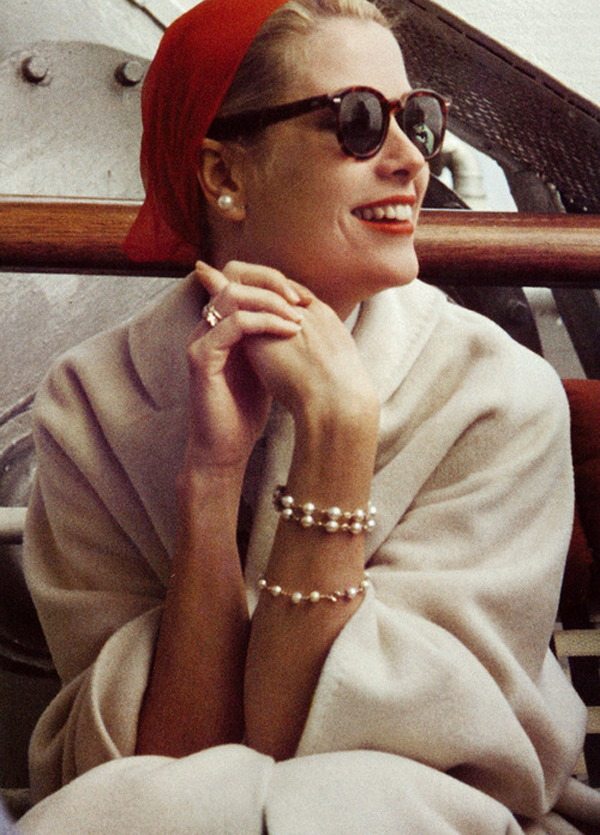
Grace Kelly faleceu há mais de 35 anos, mas seu estilo ainda é lembrado e reconhecido. Em 2012, ela estava entre os 100 ícones da moda mais influentes desde 1923 escolhidos pela revista TIME. E, se pensarmos em um look elegante e perfeito dos anos 1950, provavelmente visualizaremos algo usado por Grace Kelly.

Grace Kelly died more than 35 years ago, but her style is still remembered. In 2012, she was among the 100 most influential fashion icons since 1923 picked by TIME magazine. And, if we think about a perfect fancy 1950s look, we’ll probably think about something worn by Grace Kelly.

This is my contribution to the third Wonderful Grace Kelly blogathon, hosted by Virginie at The Wonderful World of Cinema.

Saturday, November 4, 2017

A Dama, o Vagabundo e o espaguete / The Lady, the Tramp and the spaghetti

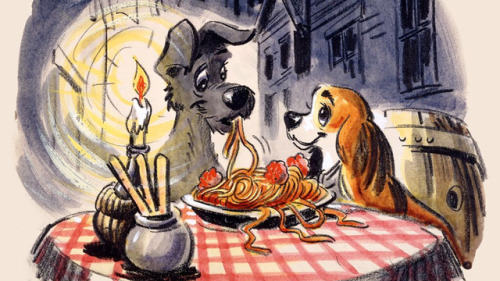
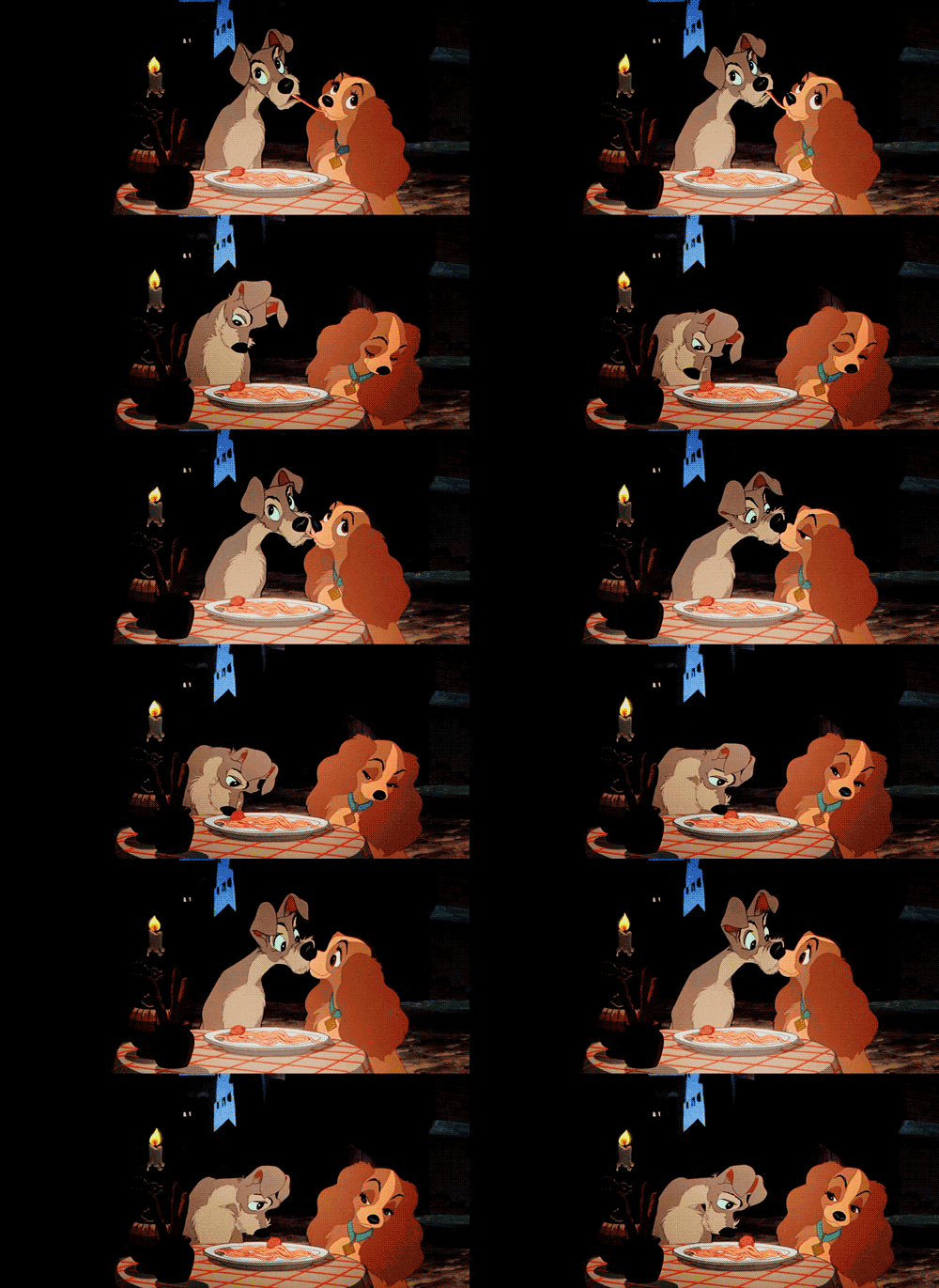
Alguns momentos cinematográficos ficam para sempre nas nossas mentes. Gene Kelly cantando na chuva. Dorothy e seus amigos indo ver o maravilhoso mágico de Oz. Scarlett O’Hara prometendo nunca mais passar fome. O vestido branco de Marilyn sendo levantado pela corrente de ar. Audrey Hepburn tomando café da manhã na frente da joalheria Tiffany’s. E, claro, a Dama e o Vagabundo dividindo de maneira roântica um prato de espaguete.

Some movie moments are forever in our minds. Gene Kelly singing in the rain. Dorothy and her pals off to see the wonderful wizard of Oz. Scarlett O’Hara promising to never be hungry again. Marilyn’s white dress flying with the air current. Audrey Hepburn having her breakfast at Tiffany’s. And, of course, the Lady and the Tramp romantically sharing a plate full of spaghetti.
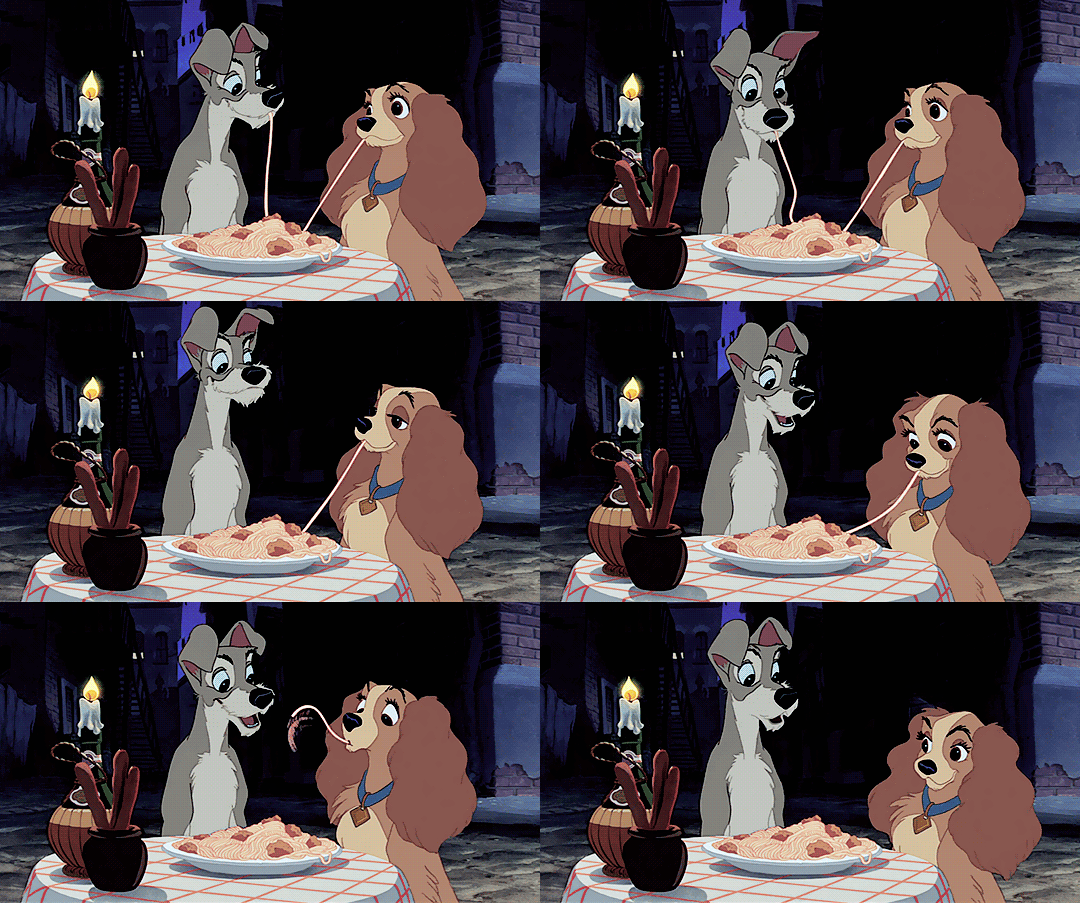
A história do filme é bem simples: Lady é uma cachorrinha mimada da raça Cocker Spaniel cuja rotina muda quando seus donos têm um bebê. Eles saem de viagem e deixam Lady e o bebê aos cuidados de Tia Sara e de seus dois malvados gatos siameses. Logo Lady encontra problemas. A Tia Sarah a leva para colocar uma focinheira, e Lasdy foge. Então ela encontra o Vagabundo, um vira-lata que sabe muito bem como se virar vivendo nas ruas. Na primeira noite juntos, eles dividem uma refeição romântica enquanto Toni, o dono do restaurante, canta “Bella Notte”.

The story of the film is pretty simple: Lady is a spoiled Cocker Spaniel whose routine is changed when her owners have a baby. They go on a trip, and leave Lady and the baby with Aunt Sarah and her two evil Siamese cats. Soon Lady is in trouble. Aunt Sarah takes her to put on a nose-piece, and Lady escapes. Then she meets the Tramp, a stray dog who knows how to survive in the streets. On their first night together, they share a romantic meal while Toni, the restaurant owner, sings “Bella Notte”.
Uma das cenas mais famosas na história da Disney quase foi cortada. Sim, o próprio Walt Disney achava que dois cachorros comendo espaguete era algo muito bobo para incluir no filme. Felizmente, o animador Frank Thomas trabalhou por conta própria na sequência, e o resultado deixou Disney impressionado. Frank Thomas havia sido responsável pela animação dos anões em “Branca de Neve e os Sete Anões” (1937) e em 1964 animaria ainda os pinguins dançarinos de “Mary Poppins”.

One of the most famous scenes in Disney history was almost cut. Yes, Walt Disney himself thought that two dogs eating spaghetti was something too silly to be in a movie. Luckily, animator Frank Thomas went on to animate the sequence alone, and the result left Disney impressed. Frank Thomas was already responsible for the animation of the Dwarfs in “Snow white and the Seven Dwarfs” (1937) and in 1964 would be the one to animate the dancing penguins in “Mary Poppins”.
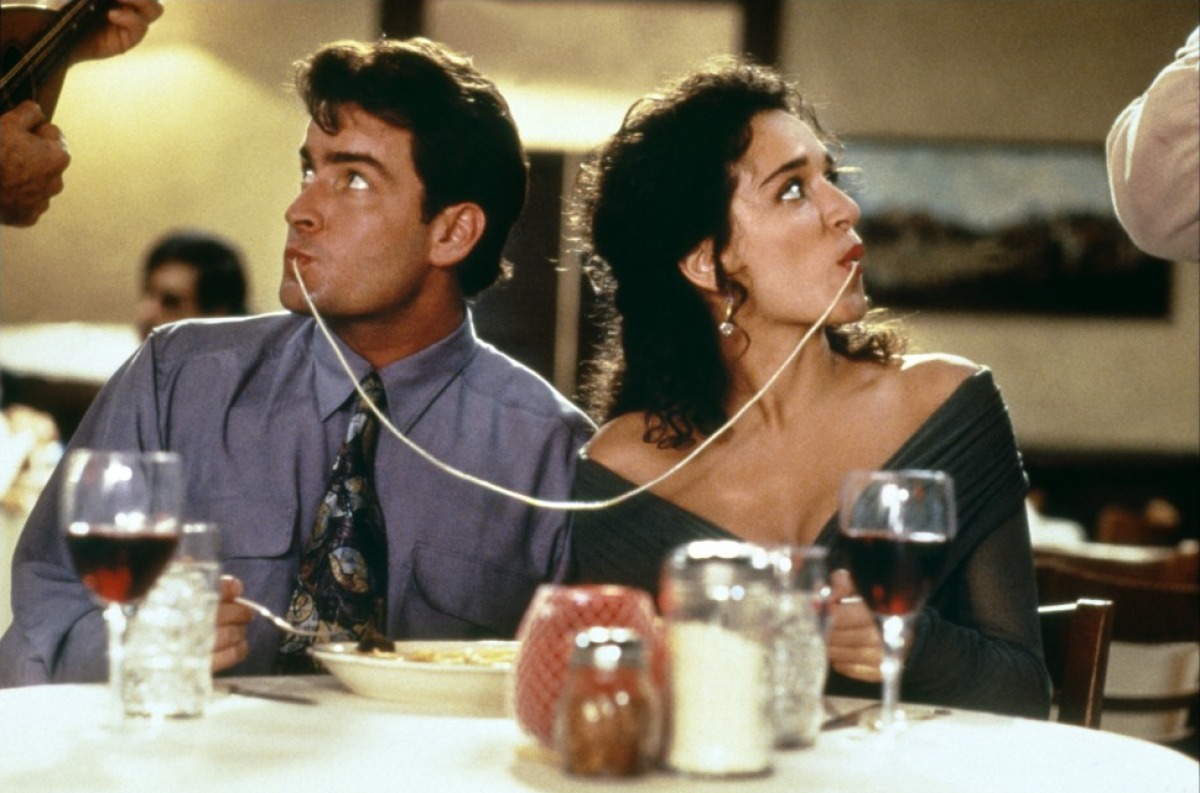
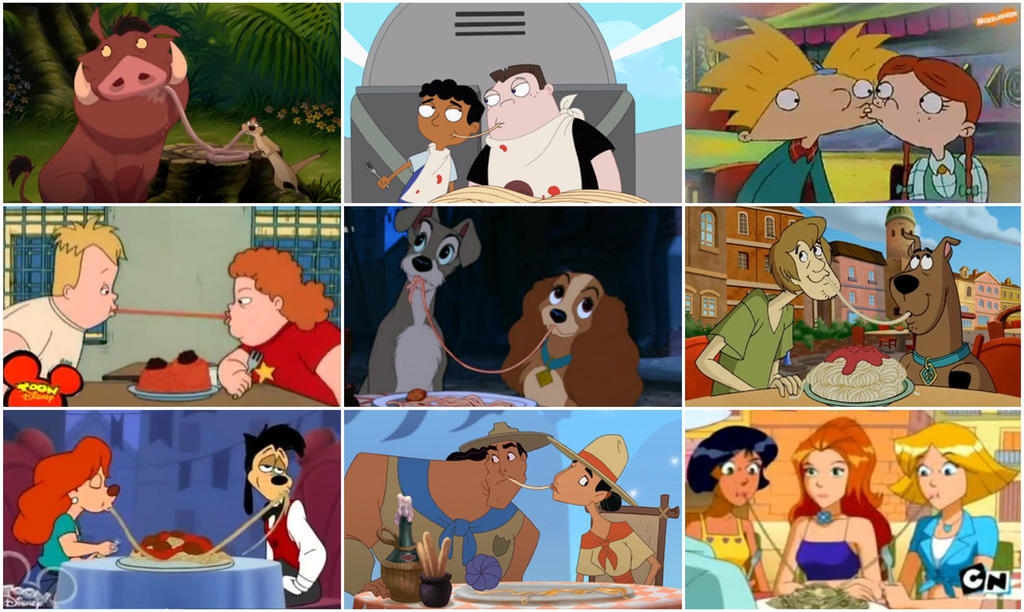
A sequência ficou, e com o tempo passou a ser referenciada e parodiada muitas vezes. Em algumas ocasiões o espaguete com almôndegas (ou porpettas?) é substituído por outra comida, e em outras ocasiões todo o estilo da sequência famosa é copiado. Veja:

The sequence stayed, and afterwards was often referenced and parodied. In some occasions the spaghetti with meatballs is replaced by some other food, sometimes the whole mood of the sequence is copied. Take a look:


Hot Shots! (1991)
Lady and the Tramp 2 (2001)

Simpsons
More Simpsons
Gravity Falls (2013)

“A Dama e o Vagabundo” estreou em 1955. O filme é hoje considerado um dos maiores clássicos da Disney, graças à animação, ao formato CinemaScope, ao tratamento de temas como amor, companheirismo – e até sexo antes do casamento! – e, sem dúvida, graças à inesquecível cena do espaguete.

“Lady and the Tramp” was released in 1955. It is now regarded as a major Disney classic, because of the animation, the CinemaScope format, the themes of love, partnership – and even pre-marital sex! – and without a doubt because of the unforgettable spaghetti scene.


This is my contribution to the Food in Film blogathon, hosted by Ruth at Silver Screenings and Kristina at Speakeasy.
Related Posts Plugin for WordPress, Blogger...