} Crítica Retrô

Tradutor / Translator / Traductor / Übersetzer / Traduttore / Traducteur / 翻訳者 / переводчик

Sunday, April 19, 2020

A Casa dos Maus Espíritos (1959) / House on Haunted Hill (1959)


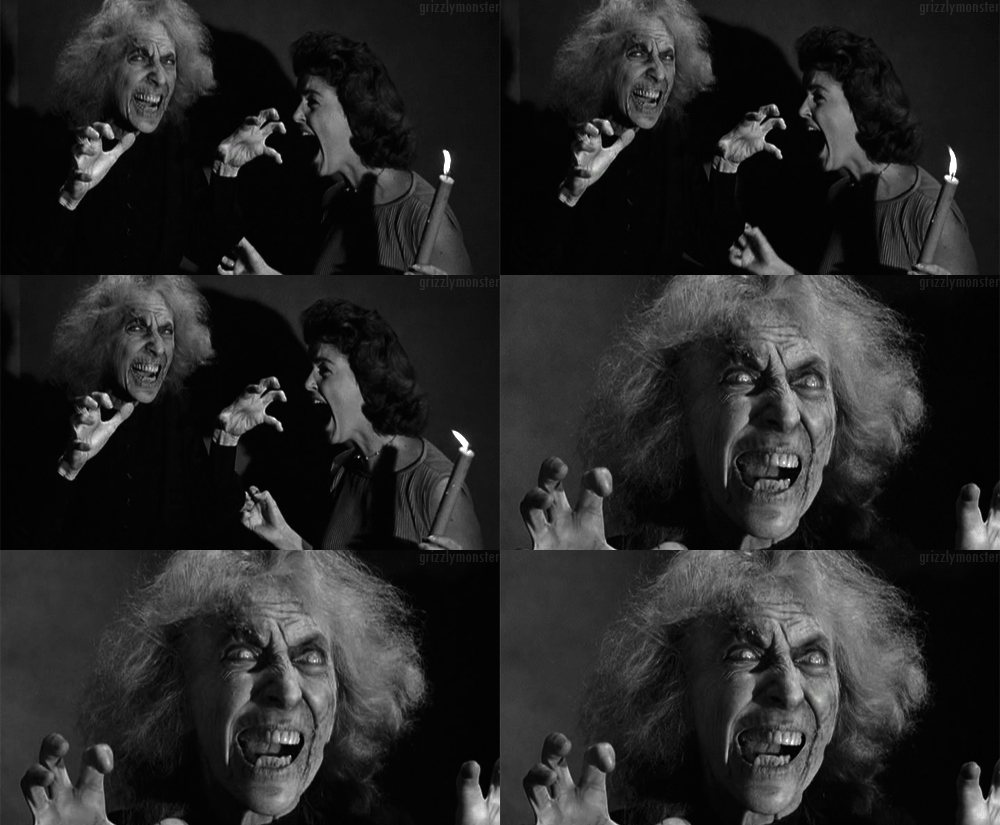
É hora da festa! Mas a festa é numa casa assombrada. E Vincent Price te convidou mesmo sem te conhecer – ele apenas quer te ver sendo assustado. Bem, não é isso que queremos quando assistimos a filmes de terror: ver outras pessoas levando sustos, além de ficarmos nós mesmos com medo? Se você gosta de gritos – um monte de gritos – e de sustos, “A Casa dos Maus Espíritos” é o filme ideal.

It’s party time! Except that the party is in a haunted house. And Vincent Price has invited you without knowing you – he only wants to see you get scared. Well, isn’t it what we want when we watch horror movies: to see other people get scared and freak ourselves out? If you’re into screams – a lot of screams – and jump scares, “House on Haunted Hill” is the film for you.


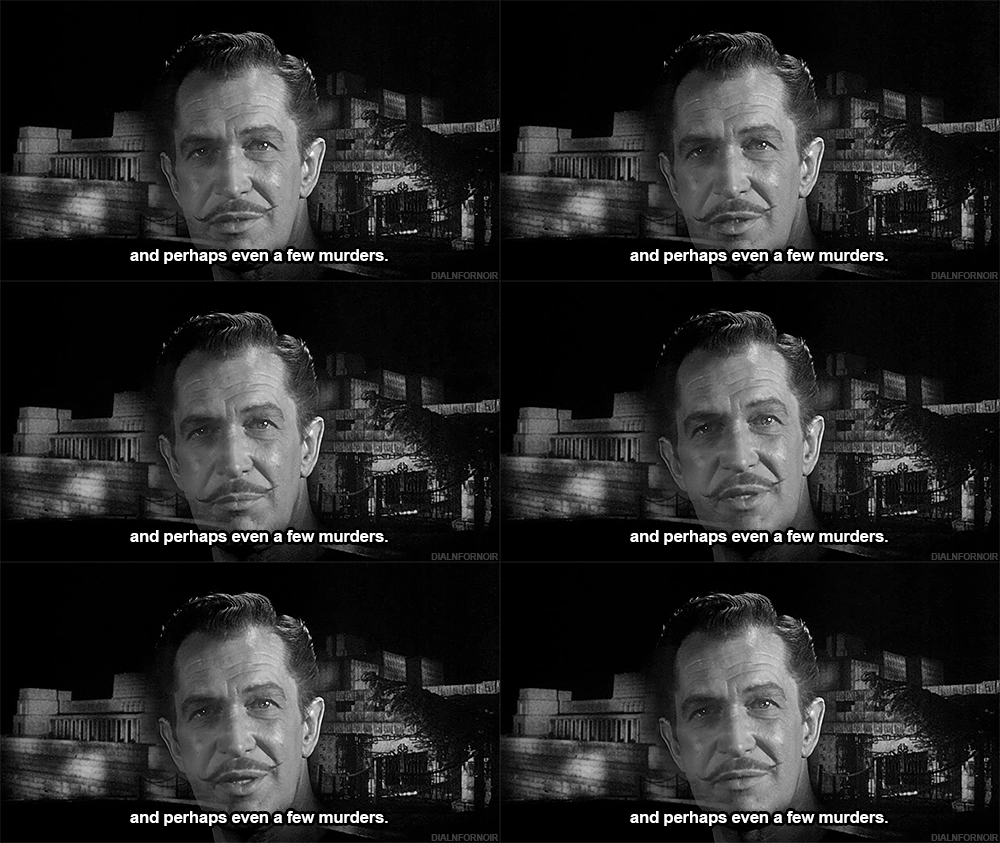
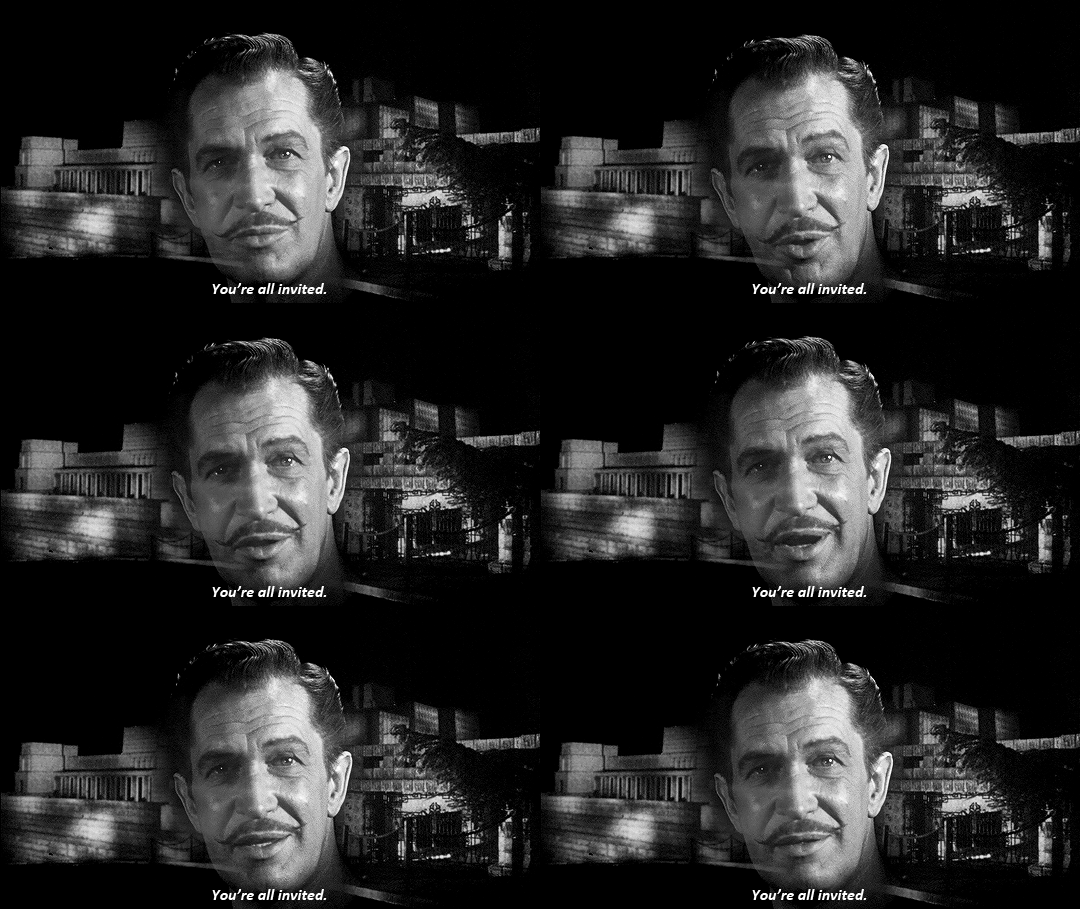
Uma série de gritos e uma risada maligna são ouvidos quando ainda não há imagens na tela. O público já sentiu um arrepio na espinha. A primeira coisa que vemos é a cabeça flutuante de Elisha Cook Jr, interpretando Watson Pritchard, cujo irmão foi morto durante uma estadia na casa dos maus espíritos. Então somos recebidos pela cabeça flutuante de Vincent Price, que nos conta que seu personagem alugou a casa para a esposa dar uma festa. Há cinco convidados, chegando em carros funerários, e quem conseguir ficar 12 horas na casa receberá 10 mil dólares.

A series of screams and an evil laugh are heard while there are no images on the screen yet. The audience is already on the edge of their seats. The first thing we see is the floating head of Elisha Cook Jr, playing Watson Pritchard, whose brother was killed while staying at the house on haunted hill. Then we're greeted by Vincent Price's floating head, who tells that his character rented the house for his wife to give a party. There are five guests, all arriving soon in funeral cars, and whoever is able to spend 12 hours on the house gets 10,000 dollars.
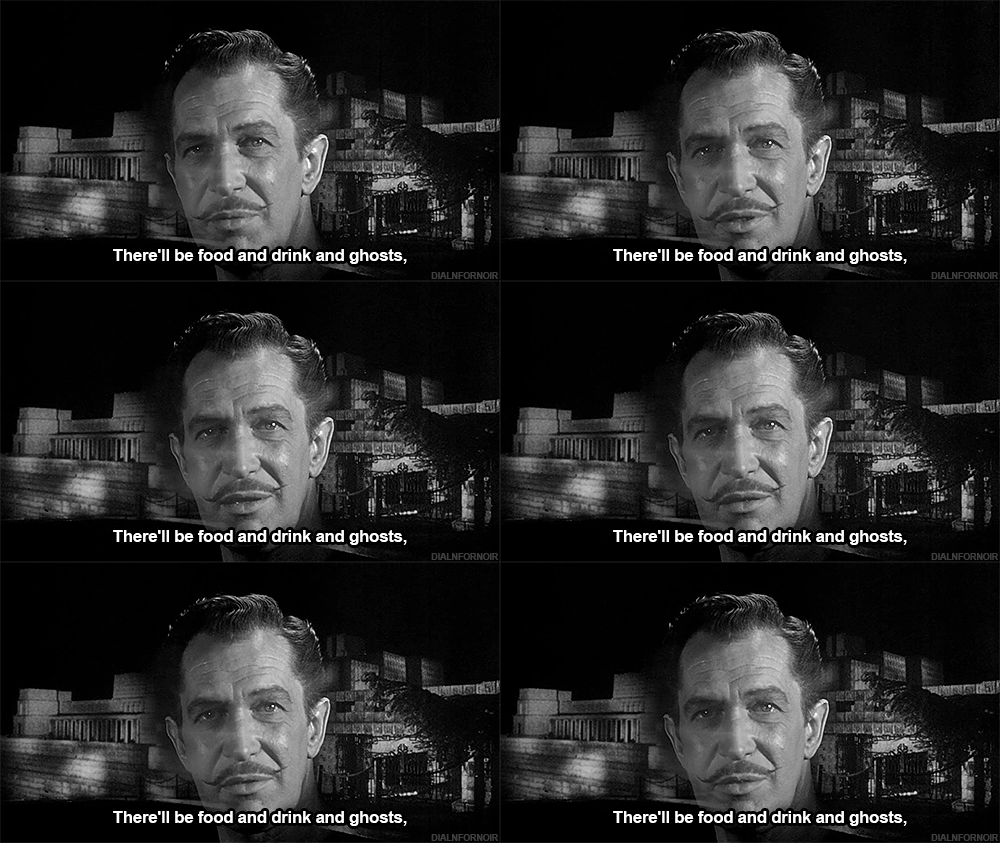

Há algo curioso aqui: nenhum dos convidados conhece pessoalmente os anfitriões – o personagem de Price, Frederick Loren, e sua esposa Annabelle (Carol Ohmart). Eles foram convidados ou pelo telefone ou por carta, e aceitaram o convite porque precisavam do dinheiro - a necessidade do dinheiro, aliás, é a única coisa que eles têm em comum. Frederick só quer ter o prazer de assisti-los tentando sobreviver para ganhar o prêmio. Esses ricaços são tão excêntricos, não?

There is something curious here: none of the guests personally know the hosts – Price's character, Frederick Loren, and his wife Annabelle (Carol Ohmart). They were invited either by phone or by mail, and accepted because they needed the money – their need for the money is, indeed, the only thing they have in common. Frederick only wants the pleasure to watch them trying to survive to win the prize. Those rich people are so eccentric, aren't they?


Annabelle, num primeiro momento, decide não participar da festa - ela é uma mulher peculiar (Frederick pergunta para ela “Você se lembra de como nos divertimos quando você me envenenou?”, por isso podemos imaginar que eles foram feitos um para o outro, de um jeito estranho). Mas, no caso deles, as aparências enganam. Na verdade, Annabelle é a quarta esposa de Frederick. A primeira esposa desapareceu, e as outras duas morreram em circunstâncias misteriosas. Ela não quer ser a próxima vítima.

Annabelle at first decides not to attend the party – she is a very odd woman (Frederick asks her “You remember the fun we had when you poisoned me?”, so we can imagine they are made for each other in a disturbing way). But, in their case, the appearances are very deceiving. In fact, Annabelle is Frederick's fourth wife. The first wife disappearedd, the other two died in mysterious circumstances. She doesn't want to be the next victim.


Sete pessoas já foram assassinadas na casa – quatro homens e três mulheres. Curiosamente, os convidados são quatro homens e três mulheres – um fantasma para cada, brinca Frederick. E não será só com fantasmas que eles terão de lidar.

Seven people had already been murdered on the house – four men and three women. Curiously, the guests are four men and three women – a ghost for each, Frederick jokes. And they won’t have to deal only with ghosts.
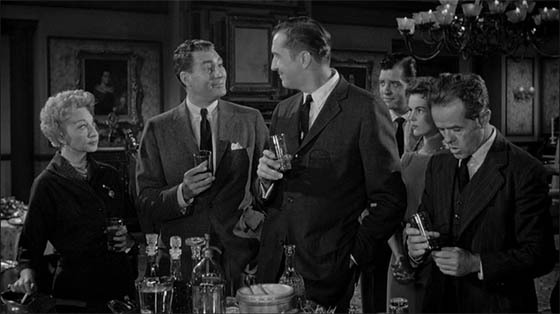

Nora Manning (Carolyn Craig) é nossa rainha do grito – ela grita tanto que se torna chata. Infelizmente, ela é a personagem que tem mais destaque, depois de Frederick. Como o filme é bem curto – tem apenas 75 minutos - os personagens não têm chance igual de brilharem, e alguns deles, como Ruth (Julie Mitchum, irmã de Robert Mitchum) e o piloto de avião, são pouco desenvolvidos. A história do personagem de Elisha Cook Jr também poderia ter sido explorada.

Nora Manning (Carolyn Craig) is our scream queen – she screams so much that she becomes annoying. Unfortunately, she is the character that gets the most screen time after Frederick. Because the film is very short – only 75 minutes – the characters don't have an equal chance to shine, and some of them, like Ruth (Julie Mitchum, Robert Mitchum’s sister) and the jet pilot, are barely developed. Elisha Cook Jr’s character’s story could also have been explored.

Obviamente, a casa também é um personagem. Ela se parece com uma velha fortaleza, talvez um prédio que podia abrigar um banco ou um prédio do governo – me lembrou do Forte Knox. Mais tarde eu descobri que Ennis House, o local usado para tomadas do exterior, foi construída com base na arquitetura Maia – foi o que certamente alertou meu cérebro de historiadora. Ricamente decorada, a casa é trancada por dentro, tendo barras nas janelas e uma porta que se fecha como a de um cofre. Watson compara a impenetrabilidade da casa com um caixão. Há atrações em todos os cantos da casa: uma mancha seca no teto é a fonte de um sangue pingando, um poço está cheio de ácido, um órgão toca sem pianista, há passagens secretas e muito mais. Há definitivamente muita coisa a explorar – e a temer – nas 12 horas que os personagens devem passar na casa.

The house, of course, is itself a character. It looks like an old fortress, maybe a building that could be a bank or a very secure governmental office – it reminded me of Fort Knox. Only later I learned that the Ennis House, used for exterior shots, was built based on Mayan architecture – it certainly rang a bell inside my historian’s brain. Beautifully furnished and decorated, the house is locked from the inside, having bars in the windows and a door like the ones found in vaults. Watson compares the impenetrability of the house to a coffin. There are attractions in every corner of the house: a dry stain in the ceiling still drops blood, a pit is full of acid, an organ plays without a pianist, hidden passages and more. There is definitely a lot to explore – and a lot to be afraid of – in the 12 hours the characters are supposed to spend there.


A trilha sonora tem tudo que se espera de uma trilha de filme de terror clássico: é horripilante, tem pequenos efeitos sonoros como portas abrindo e rangendo, piano, pratos e um suspense crescente. O compositor Von Dexter trabalhou em quatro filmes com o diretor William Castle, e esta é uma de suas composições mais icônicas.

The soundtrack is everything you can expect from a classic horror movie soundtrack: it’s eerie; it has little sound effects like doors opening and squeaking, piano, plates and an ever-growing suspense. Composer Von Dexter worked in four films with director William Castle, and this is one of his most iconic compositions.

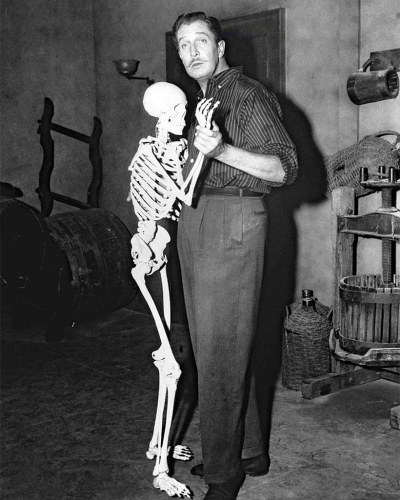
O diretor William Castle criou um truque chamado “Emergo” para acompanhar a exibição do filme em alguns cinemas: durante uma cena importante, um esqueleto de plástico deveria emergir na frente da tela e flutuar. William Castle, rei dos truques, lucrou muito com suas ideias, e “A Casa dos Maus Espíritos” foi um sucesso de bilheteria- e o esqueleto foi inclusive creditado como “ele mesmo”. Este foi o primeiro de dois filmes que Castle e Vincent Price fizeram juntos no mesmo ano.

The director William Castle created a gimmick called “Emergo” to accompany the screening of the film in some theaters: during a key scene, a plastic skeleton was supposed to emerge in front of the screen and float around. William Castle, king of gimmicks, profited a lot with his little tricks, and “House on Haunted Hill” was a box-office hit - and the skeleton was even credited as “itself”. This was the first of two movies Castle and Vincent Price did together in the same year.
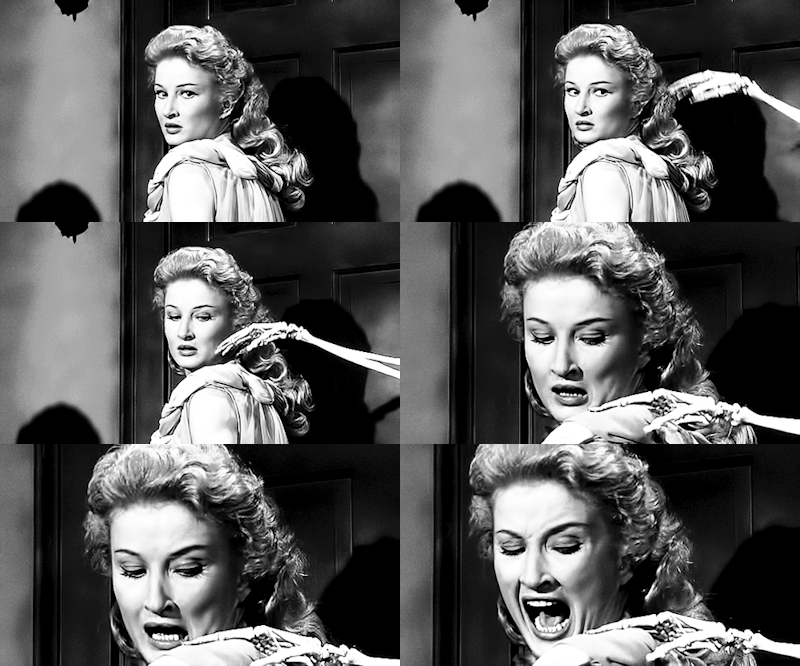

Nos últimos dez minutos, “A Casa dos Maus Espíritos” tem uma grande surpresa que o torna diferente de todos os filmes de terror que você já viu – na verdade, a surpresa até lhe confere um toque de filme noir. Filmada em apenas 13 dias, “A Casa dos Maus Espíritos” pode ter alguns defeitos, mas também mostra que filmes de baixo orçamento podem ser divertidos e assustadores – em especial se há algum truque envolvido.

In the last 10 minutes, “House on Haunted Hill” has an extreme plot twist that makes it different from all horror movies you've seen – in fact, the plot twist even makes it noirish. Filmed in only 13 days, “House on Haunted Hill” may have its flaws, but it also shows how low-budget films can be entertaining and frightening – especially if a gimmick is involved.

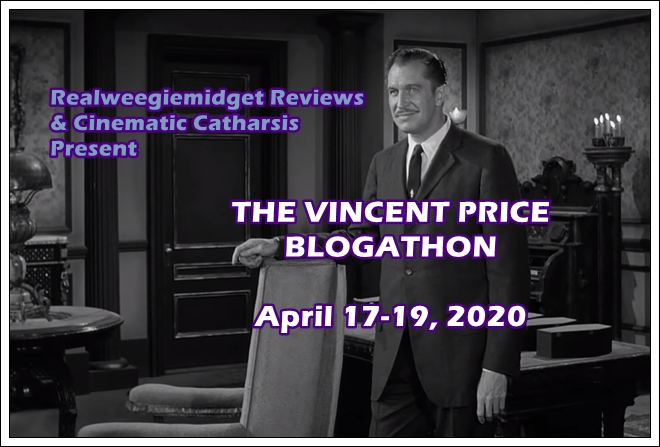
This is my contribution to the Vincent Price blogathon, hosted by Gill and Barry at ReelWeegieMidget Reviews and Cinematic Catharsis.
Sunday, April 5, 2020

A Mais Querida do Mundo (1962) / Billy Rose’s Jumbo (1962)


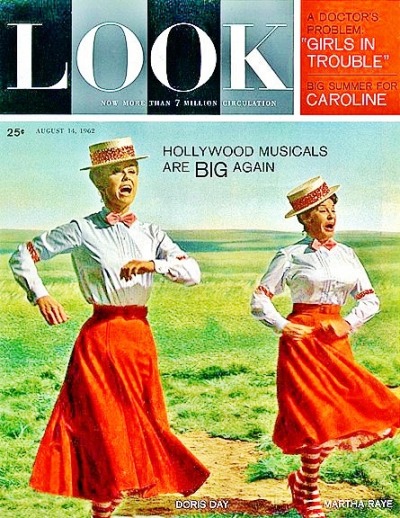
Um filme sobre o circo. Codirigido por Busby Berkeley, escrito por Sidney Sheldon, baseado numa peça escrita por Ben Hecht, estrelando Doris Day, Jimmy Durante e Stephen Boyd – sim, o Messala de “Ben-Hur”. E é um musical! O que poderia dar errado?

A movie about the circus. Co-directed by Busby Berkeley, written by Sidney Sheldon, based on a play written by Ben Hecht, starring Doris Day, Jimmy Durante and Stephen Boyd – yes, Messala from “Ben-Hur”. And it’s a musical! What could go wrong?


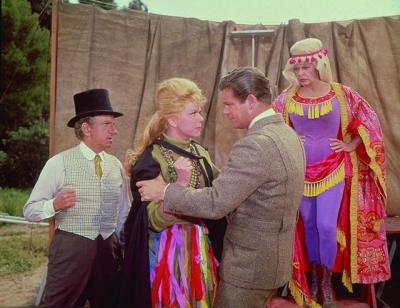
Um circo itinerante do passado está passando por dificuldades financeiras. Há muitas dívidas e o urso domesticado se demitiu por falta de pagamento. Não é só o urso que está de saída: alguns músicos, palhaços e um grande acrobata também vão embora. É neste momento que um belo estranho, Sam Rawlins (Stephen Boyd), chega à procura de trabalho – ele diz que pode fazer qualquer coisa. Num primeiro momento ele se desentende com Kitty (Doris Day), a gerente não oficial do circo e filha do dono do empreendimento circense.

An itinerant circus of days gone by is going through financial difficulties. There are lots of debts and the trained bear quit because it wasn’t paid. It’s not only the bear that’s leaving: some musicians, clowns and the star acrobat are also out. It’s in this moment that a tall dark stranger, Sam Rawlins (Stephen Boyd), arrives wanting work – he says he can do any kind of work. At first he clashes with Kitty (Doris Day), the circus’ unofficial manager and the owner’s daughter.


O dono do circo é Anthony Wonder (Jimmy Durante), que está noivo de Lulu (Martha Raye), a vidente do circo, há 14 anos. Entretanto, Anthony está mais apaixonado por Jumbo, o talentoso elefante do circo. Mas o principal concorrente de Anthony, John Noble (Dean Jagger), está de olho em Jumbo e mal pode esperar para comprar o elefante e todo o resto quando Anthony falir.

The owner of the circus is Anthony Wonder (Jimmy Durante), who has been engaged to Miss Lulu (Martha Raye), the circus’ fortune teller, for 14 years. However, Anthony is more in love with Jumbo, the circus’ talented elephant. But Anthony’s main competitor, John Noble (Dean Jagger), has an eye on Jumbo and can’t wait to buy the elephant and everything else when Anthony becomes bankrupt.


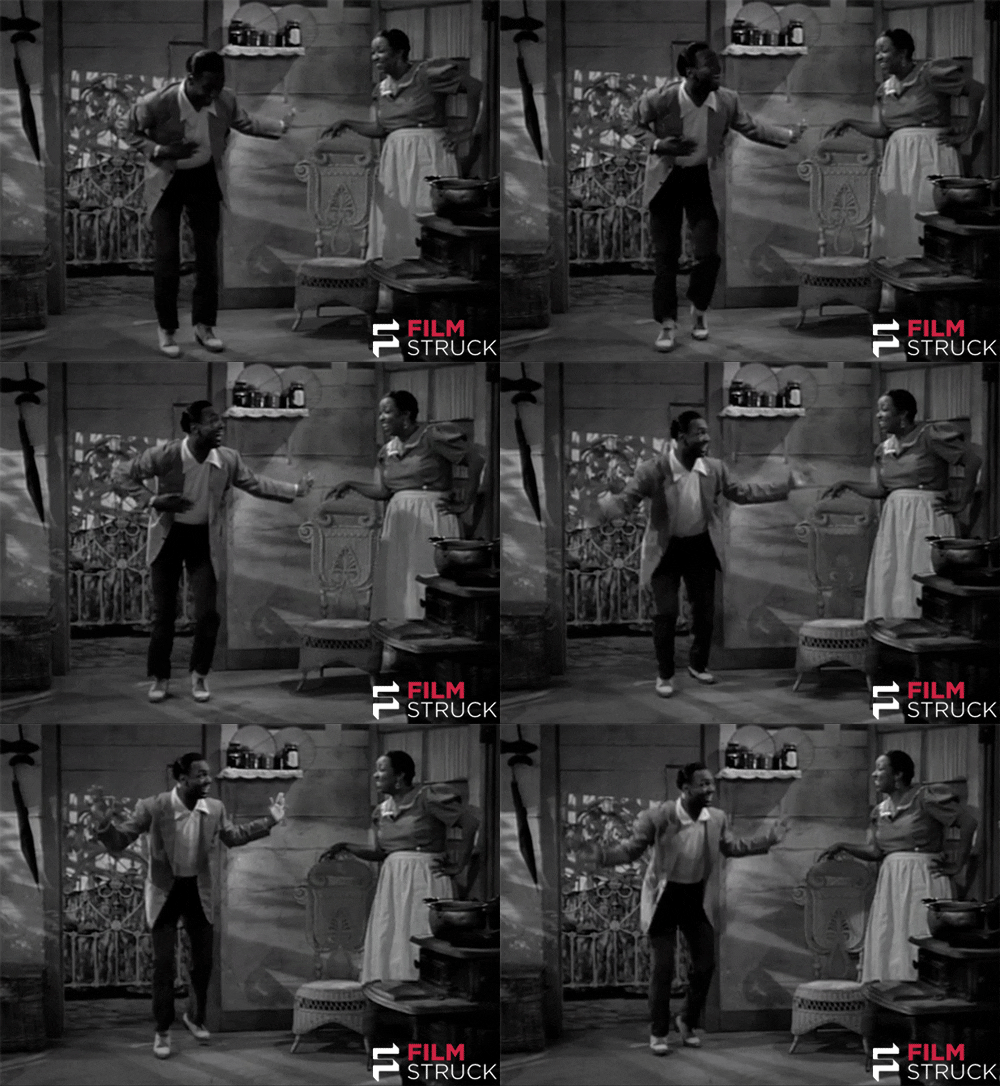
O número de Jimmy Durante na corda bamba é cheio de comédia física e eu tive de aplaudi-lo ao final. Ele também nos faz rir em muitos outros pequenos momentos, como quando ele diz que Jumbo se parece com ele, e também quando ele interage com Lulu. Se você pensou que Maurice Chevalier e Hermione Gingold foram a melhor coisa de “Gigi” (1958), espere até ver Jimmy Durante e Martha Raye em “A Mais Querida do Mundo”! Jimmy Durante não fez nenhum filme por 10 anos antes de “A Mais Querida do Mundo”, e não perdeu o jeito de fazer rir.

Jimmy Durante’s tightrope number is full of physical comedy and I couldn’t help but clap in the end. He also makes us laugh in many other small moments, like when he says Jumbo and him have an undeniable resemblance, and also whenever he interacts with Lulu. If you thought Maurice Chevalier and Hermione Gingold were the best thing in “Gigi” (1958), wait until you see Jimmy Durante and Martha Raye in “Billy Rose’s Jumbo”! Jimmy Durante hadn’t made any film for 10 years before “Billy Rose’s Jumbo” and didn’t lose his ability to make us laugh.


O circo é um meio muito visual. As ações importam muito mais que as palavras, e os movimentos dos acrobatas, palhaços e dançarinos são lembrados depois de muito tempo, enquanto as poucas palavras do mestre de cerimônias são logo esquecidas pelo respeitável público. Os números na corda bamba são os mais memoráveis – embora, obviamente, tenham sido executados por dublês e não por Jimmy Durante e Stephen Boyd. O coreógrafo que virou diretor Charles Walter faz maravilhas com sua câmera – ajudado por um idoso Busby Berkeley –, capturando toda a mágica de dias de glória do circo – melhor do que DeMille fez no oscarizado “O Maior Espetáculo da Terra” (1952).

The circus is a very visual medium. The actions matter way more than the words, and the movements of acrobats, clowns and dancers are remembered after a long time, while the few words of the master of ceremonies are soon forgotten by the public. The tightrope numbers are the most memorable ones – although, obviously, they were performed by stunts and not by Jimmy Durante and Stephen Boyd. Choreographer-turned-director Charles Walters does wonders with his camera – with the help of an old Busby Berkeley –, capturing all the magic of bygone circus’ glory days – better than DeMille did in his Oscar-winning “The Greatest Show on Earth” (1952).


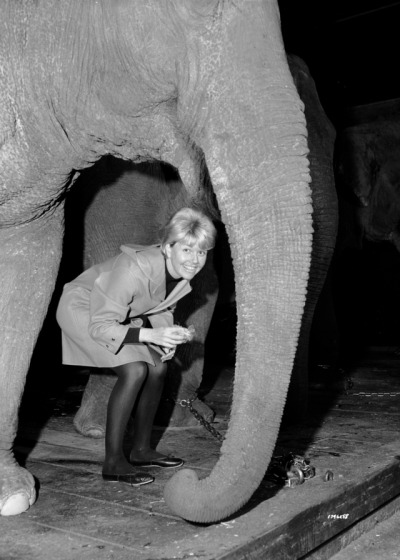
Atualmente, a maioria dos circos não tem mais animais – algo que eu considero certo, por muitas razões. É interessante perceber que a tradição circense europeia apresentava seus animais em números divertidos, enquanto a tradição norte-americana preferia mostrar um domador domando “feras selvagens”. Exotismo era a norma nos circos, e você pode ver muitos animais exóticos – como camelos – desfilando no filme. De toda forma, em “A Mais Querida do Mundo”, o elefante é tratado como parte da família por Anthony e, em especial, por Kitty. Doris Day, conhecida ativista pelos direitos dos animais, e o elefante Sidney se deram muito bem antes e durante as filmagens, e é possível ver como os elefantes são inteligentes através dos truques que Sidney / Jumbo aprendeu.

Nowadays, most circuses don’t have animal stars anymore – something I agree with, for a bunch of reasons. It’s interesting to notice that the European circus tradition presented their animals in playful acts, while the North American tradition preferred to show a trainer taming “wild beasts”. Exoticism was the norm is circuses, and you can see many exotic animals – like camels – on parade in the film. Anyway, in “Billy Rose’s Jumbo”, the elephant is treated as part of the family by Anthony and, in special, Kitty. Doris Day, a notorious animal rights’ advocate, and the star elephant Sidney formed a true bond before and during filming and you can see how intelligent elephants are by the tricks Sidney / Jumbo performs.


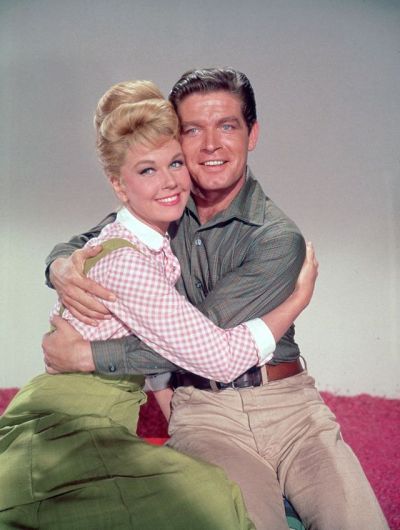
As canções não são particularmente memoráveis. Além disso, Stephen Boyd foi dublado cantando, mas ninguém sabe quem o dublou, pois as fontes da época não são claras sobre isso. Boyd está muito bonito no filme, apresenta uma química excelente com Doris Day e foi indicado ao Globo de Ouro por sua performance. Boyd havia abandonado a produção de “Cleópatra” (1963) e foi substituído por Richard Burton – e Burton havia sido a primeira opção de Charles Walters para interpretar Sam em “A Mais Querida do Mundo”!

The songs are not particularly memorable. Furthermore, Stephen Boyd’s singing was dubbed, but nobody knows who dubbed him, as sources of the time aren’t clear about the matter. Boyd is probably at his most handsome, had an amazing chemistry with Doris Day and was nominated for a Golden Globe for his performance. Boyd had left the production of “Cleopatra” (1963) and was replaced by Richard Burton – and Burton had been Charles Walters’ first choice for Sam in “Billy Rose’s Jumbo”!


“A Mais Querida do Mundo” teve origem como uma peça em 1935 e Jimmy Durante fez parte do elenco original que se apresentou no Teatro Hippodrome de Nova York – a peça do empresário Billy Rose foi um fracasso. Os direitos da peça foram adquiridos pela MGM nos anos 1940, e em 1952 um musical baseado nela seria feito com Donald O’Connor e Debbie Reynolds, mas o projeto foi cancelado em pré-produção. Antes disso, “A Mais Querida do Mundo” seria um possível veículo para Judy Garland e Mickey Rooney ou Gene Kelly.

“Billy Rose’s Jumbo” was originated as a play in 1935 and Jimmy Durante was part of the original cast that performed at the New York city’s Hippodrome Theater – the play by showman Billy Rose was a flop. The rights of the play were acquired by MGM in the 1940s, and in 1952 a musical based on it was in the works, with Donald O’Connor and Debbie Reynolds, but it was cancelled during pre-production. Before that, “Billy Rose’s Jumbo” had been thought as a possible vehicle for Judy Garland and Mickey Rooney or Gene Kelly.


“A Mais Querida do Mundo” é um dos musicais pertencentes a um tempo em que musicais extravagantes estavam caindo de moda. Com mais de duas horas de duração, com direito a uma abertura, este foi um dos últimos grandes musicais da MGM, e também o último musical da carreira de Doris Day.

“Billy Rose’s Jumbo” is one of the musicals that belong to a time when extravagant musicals were dying. With over two hours, and complete with overture, this was one of the last big budget MGM musicals, as well as Doris Day’s last musical movie.


“A Mais Querida do Mundo” é um filme regular. Seu enredo é previsível, e a resolução do conflito principal é muito rápida. Mesmo assim, é um filme bem divertido – que te fará rir, se assustar, aplaudir e esquecer seus problemas. Acho que todos nós precisamos de um filme assim agora, não?
“Billy Rose’s Jumbo” is a regular movie. Its plot is predictable, and the resolution of the main conflict is incredibly quick. Nevertheless, it’s a very enjoyable movie – one that will make you laugh, gasp, clap and forget the current troubles. I guess we all need this kind of movie right now, isn’t so?

This is my contribution to the Fourth Annual Doris Day blogathon, hosted by Michaela at Love Letters to Old Hollywood.

Saturday, March 21, 2020

Desenho Retrô: Manda-Chuva

Retro Cartoon: Top Cat


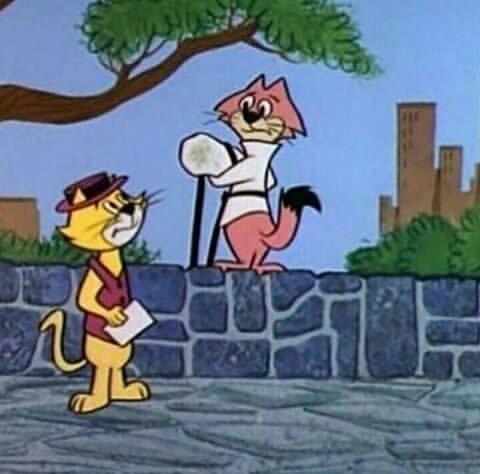
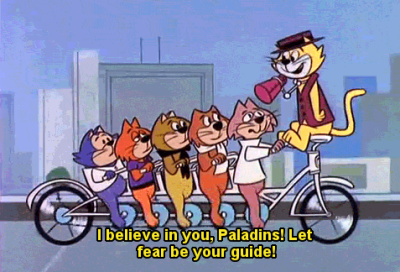
Um dos meus desenhos favoritos de quando eu tinha uns oito anos de idade era “Manda-Chuva”. Não sei dizer exatamente o porquê de eu gostar tanto deste desenho – talvez porque era muito bacana e colorido? Talvez porque os gatos do beco usavam roupas? De qualquer forma, eu fiquei surpresa quando, recentemente, percebi que “Manda-Chuva” teve apenas UMA temporada – só 30 episódios! E, mesmo assim, deixou uma grande marca nas mentes dos amantes de desenhos – inclusive em minha mente.

One of my favorite cartoons as a kid of about eight years old was “Top Cat”. I can't exactly say why I liked that cartoon so much – maybe because it was so groovy and colorful? Maybe because the alley cats wore clothes? Well, anyway, I was surprised when, recently, I realized “Top Cat” only had ONE season – only 30 episodes! And, nevertheless, it left a huge mark on the minds of cartoon lovers – including my mind.


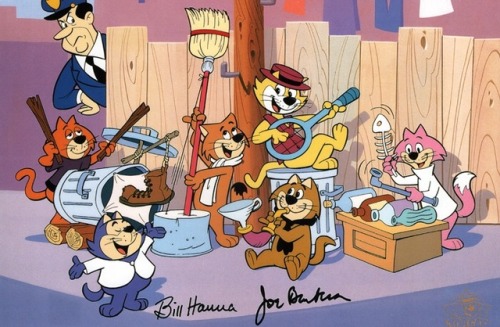
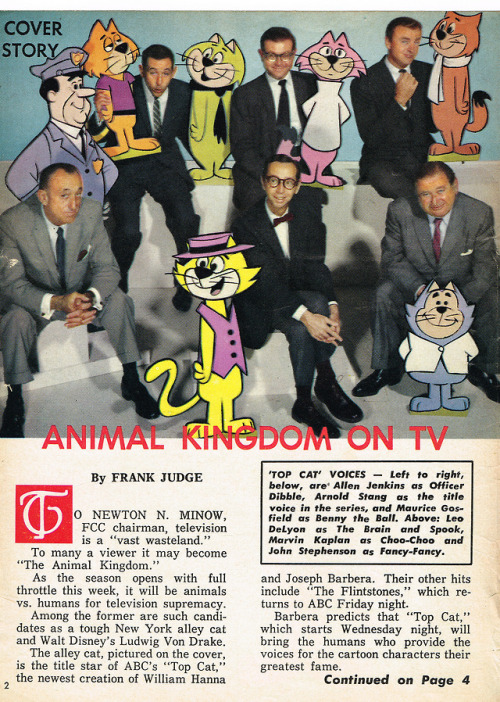
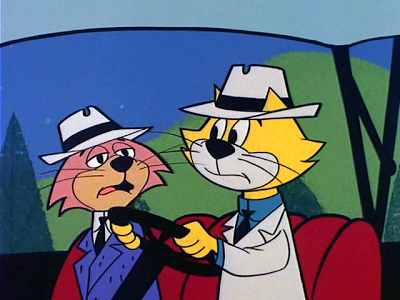
Dos seis gatos principais, meu favorito é o Xuxu. Ele é rosa, quieto, dramático e – a principal razão de eu gostar dele – ele usa um suéter branco de gola rulê. Xuxu é um cara blasé, calmo e elegante. Na verdade, meu episódio favorito de “Manda-Chuva” tem Xuxu como protagonista da ação: é o episódio 24, “Xuxu Fica Gagá”.

Out of the six main cats, my favorite is Choo-Choo. He is pink, quiet, dramatic and – the main reason why I like him – he wears a white sweater with a turtleneck. Choo-Choo is a blasé, calm, fashion guy. In fact, my favorite “Top Cat” episode puts Choo-Choo front and center in the action: it's episode 24, “Choo-Choo Goes Ga-Ga”.


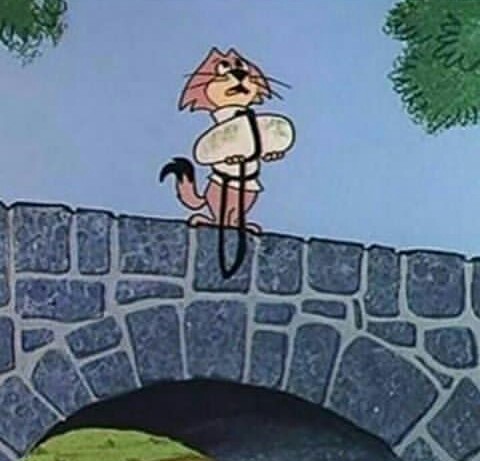
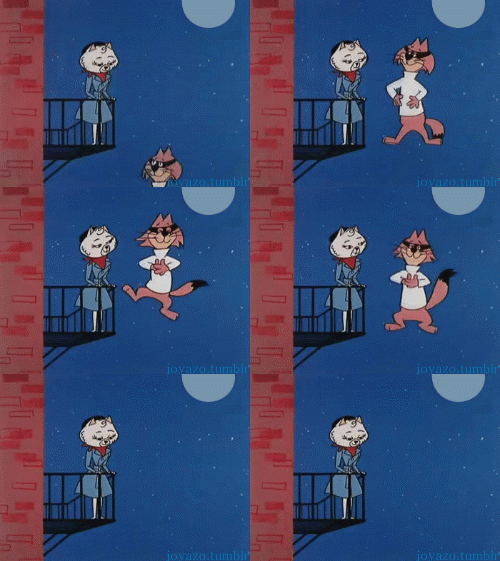
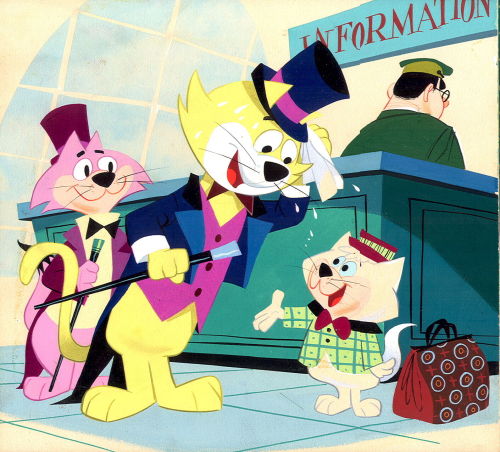
O episódio começa com Manda-Chuva levando seus amigos Gênio, Bacana, Espeto e Batatinha para o parque para ver gatinhas. Eles não encontram gatinhas, mas veem Xuxu, que está prestes a pular da ponte porque está apaixonado pela estrela de cinema felina Lola Glamour e não consegue declarar seu amor por ela.

The episode begins with Top Cat taking his pals Brain, Fancy-Fancy, Spook and Benny to the park to see pretty kittens. They find no kittens there, but they see Choo-Choo, who is about to jump from a bridge because he's in love with feline movie star Lola Glamour and can't confess his feelings for her.


Lola mora no Hotel Ritzy Plaza. Ela toma café da manhã na cama, sempre recebe presentes dos admiradores, sai com marajás e barões e possui montes de joias. Ela também é um pouco antipática. Xuxu será capaz de conquistá-la? O primeiro desafio será entrar no hotel, mas Manda-Chuva se encarregou desta missão. Ele também dirá a Lola que Xuxu é na verdade o Conde Chooch – um milionário que é dono do Texas. O maior desafio será Xuxu vencer sua timidez.

Lola lives at the Ritzy Plaza Hotel. She eats breakfast in bed, always receives presents from admirers, goes out with barons and maharajahs and owns tons of jewels. She is a bit unsympathetic, too. Can Choo-Choo woo her? The first challenge will be to enter the hotel, but Top Cat got this mission. He will also tell Lola that Choo-Choo is actually Count Chooch – a millionaire who is the owner of Texas. The bigger challenge will be for Choo-Choo to overcome his shyness.


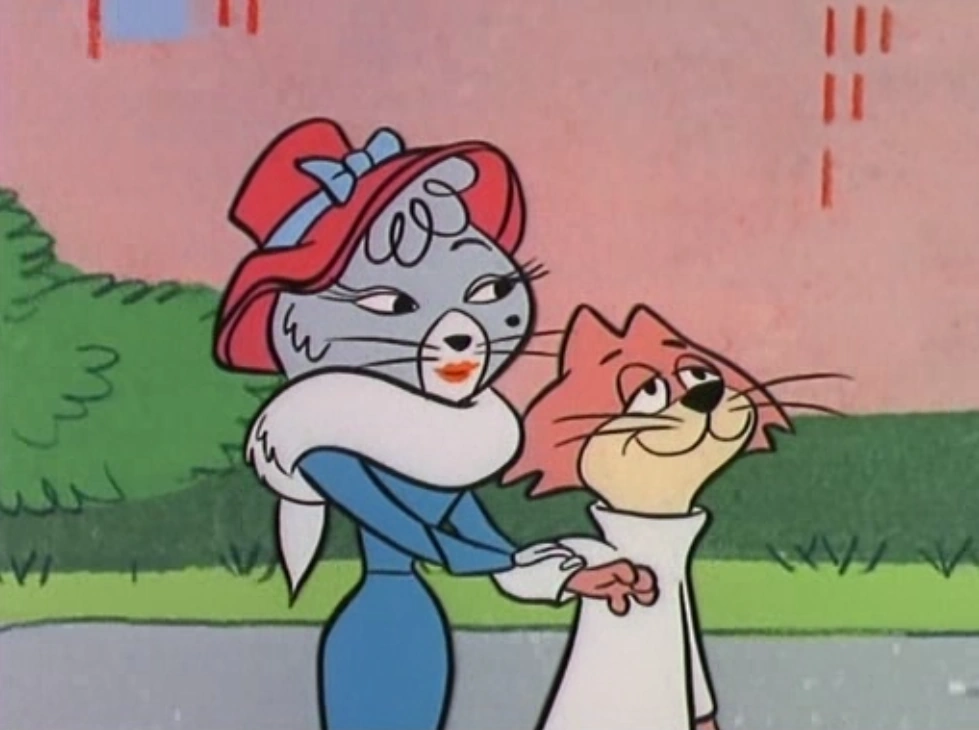
Esta não foi a primeira vez que Xuxu se apaixonou. Em um episódio anterior – “O Romance de Xuxu” - o gato rosa se apaixona por uma gata francesa chamada Goldie. No início, Manda-Chuva crê que o romance de Xuxu não pode dar certo, porque se der certo ele abandonará o grupo, mas quando descobre que Goldie tem um namorado, ele insiste em ajudar Xuxu a impressioná-la – primeiro ao salvá-la de bandidos, depois ao escrever poemas de amor.

This was not the first time Choo-Choo fell in love. In a previous episode – “Choo-Choo's Romance” - the pink cat becomes infatuated with a French kitten called Goldie. At first, Top cat thinks Choo-Choo's romance must sink, because if it is successful he'll abandon the group, but once he finds out Goldie has a boyfriend, he insists on helping Choo-Choo woo her – first by saving her from criminals, then by writing love poems.


“Manda-Chuva” foi inspirado pelos East Side Kids – um grupo de jovens atores originado nos Dead End Kids dos anos 1930 –, “The Phil Silvers Show”, que foi ao ar entre 1955 e 1959 e ao desenho de Hanna-Barbera “Joca e Dingue-Lingue”. Os gatos no desenho estavam sempre armando esquemas para enriquecer rápido ou conseguir uma boa refeição de graça. O Guarda Belo estava sempre por perto monitorando a gangue felina.

“Top Cat” was inspired by the East Side Kids – a group of youg actors originated in the 1930s Dead End Kids –, “The Phil Silvers Show”, that was broadcast between 1955 and 1959 and the Hanna-Barbera cartoon “Hokey Wolf”. The cats in the cartoon were always scheming some way to get rich quick or get a good meal for free. Officer Dibble was always around monitoring the feline gang.


Nos EUA, Arnold Stang dublava Manda-Chuva e Marvin Kaplan dublava Xuxu. Como curiosidade, a atriz Jean Vander Pyl dublou Goldie e Lola, as duas gatas por quem Xuxu se apaixona.  No Brasil, o ator Lima Duarte, então no começo da carreira, dublou Manda-Chuva e Espeto, com um sotaque bem diferente. O dublador Waldir Guedes dublou Xuxu e Bacana.

In the US, Arnold Stang voiced Top Cat and Marvin Kaplan voiced Choo-Choo. As a curiosity, actress Jean Vander Pyl voiced Goldie and Lola, the two cats Choo-Choo falls in love with. In Brazil, actor Lima Duarte, then in the beginning of his career, voiced Top Cat and also Spook, with a very different accent. Voice artist Waldir Guedes voiced both Choo-Choo and Fancy-Fancy.


Rever “Manda-Chuva” já adulta me permitiu rir de piadas que eu não compreendi quando era criança. Eu acredito que a maioria dos desenhos tem um pouco de conteúdo só para adultos, porque crianças não entendem algumas piadas e trocadilhos. Conforme eu revia o desenho, eu também vi que talvez, eu goste de Xuxu porque ele é como eu: quieto, dramático, tímido e muito elegante (hahaha).

Rewatching “Top Cat” as an adult allowed me to laugh at jokes that fell flat when I was a kid. I believe most cartoons really have a bit of their content made for adults only, because kids can't understand some jokes or puns. As I rewatched the cartoon, I also saw that, maybe, I like Choo-Choo because he is like me: quiet, dramatic, shy, and with great fashion sense (LOL).


Piadas à parte, eu acredito que “Manda-Chuva” foi cancelado cedo demais. Com seus episódios simples mas interessantes, eu posso imaginar o desenho durante muitas temporadas sem cansar. Infelizmente, o desenho teve muito mais sucesso na América Latina do que nos EUA. “Manda-Chuva” sobreviveu por uma década como história em quadrinhos e foi revivido por um estúdio de animação mexicano para dois longas em 2011 e 2015. Os novos filmes não foram grandes sucessos – e nós nunca saberemos que outras aventuras nossos amigos gatos poderiam ter vivido no desenho se ele tivesse durado mais um pouco.

Jokes aside, I believe “Top Cat” was cancelled too soon. With its simple yet amusing episodes, I could see the cartoon lasting many seasons without getting boring. Unfortunately, it was way more successful in Latin America than in the US. “Top Cat” survived for over a decade as a comic book and was revived by a Mexican animated studio for two features in 2011 and 2015. The revival was not very successful – and we'll never know the further adventures our cat friends could have lived in the cartoon if it had lasted longer.


This is my contribution to the 6th Annual Favourite TV Show Episode Blogathon, hosted by Terry at At Shroud of Thoughts.


Saturday, March 14, 2020

Uma Cabana no Céu (1943) / Cabin in the Sky (1943)


Hollywood é racista? A maioria de nós concordaria com a afirmação – e diria que Hollywood era ainda mais racista na chamada “Era de Ouro do cinema”, que não foi de ouro para todo mundo. Filmes com protagonistas negros eram raros, e diretores negros eram ainda mais raros. Mas, durante a Segunda Guerra Mundial, Hollywood viu potencial no mercado afro-americano e, tentando abraçar a diversidade, fez alguns musicais com elenco 100% negro. “Uma Cabine no Céu” (1943) foi um destes musicais.

Is Hollywood racist? Most of us would agree that it is – and it was even more in the so-called “Golden Age of Cinema”, one that wasn’t golden for everybody. Films with black leads were rare, and black directors were even rarer. But, during World War II, Hollywood saw a potential in the African-American market and, trying to embrace diversity, it made some all-black musicals. “Cabin in the Sky” (1943) was one of them.


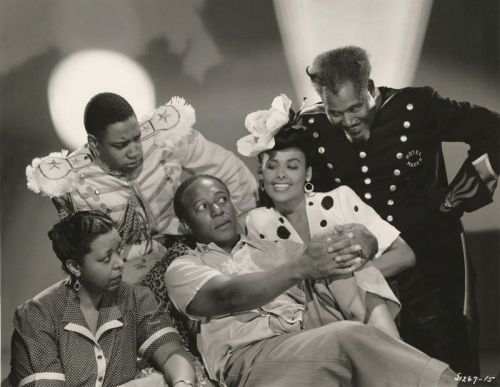
Petunia (Ethel Waters) e Little Joe (Eddie ‘Rochester’ Anderson) se amam profundamente. Entretanto, Joe tem vícios que incomodam sua esposa e atrapalham sua vida. Estes vícios são jogos de azar e a vamp Georgia Brown (Lena Horne). Um dia, Joe escapa da missa para ir jogar e, talvez, pagar uma dívida. Mas ele é baleado no clube e levado de volta para casa em estado crítico.

Petunia (Ethel Waters) and Little Joe (Eddie 'Rochester' Anderson) love each other very much. However, Joe has addictions that bother his wife and prevents him to live his fullest. These addictions are gambling and the vamp Georgia Brown (Lena Horne). One day, Joe escapes church service to go gambling and, maybe, pay a debt. But he is shot at the club and taken back home in a critical state.


Joe morre, e começa uma batalha por sua alma. Para Lúcifer Jr. (Rex Ingram), é óbvio que ele pertence ao inferno. Mas a prece de Petunia é tão poderosa que um soldado (Kenneth Spencer) de Deus intervém. Depois de consultar o próprio Deus, os dois lados decidem dar a Joe uma segunda chance. Ele agora tem seis meses para limpar a alma (o termo usado é “whitewashing”!!!), ou ele irá direto para o inferno. O uso de luz e sombras nesta sequência é admirável.

Little Joe dies, and a battle for his soul starts. It's clear for Lucifer Jr. (Rex Ingram) that he belongs to hell. But Petunia's prayer is so powerful that a soldier (Kenneth Spencer) of God intervenes. After consulting God himself, the two sides decide to give Joe a second chance. He now has six months to “whitewash” (!!!) his soul, or he'll go straight to hell. The use of light and shadows in this sequence is something to admire.


Lúcifer Jr. e seu bando decidem intervir e mandar tentações para Joe. Eles decidem torná-lo rico – uma ideia de um diabólico Louis Armstrong – e adicionar Georgia Brown à equação para criar desentendimentos entre Petunia e Joe e fazê-lo escolher o pecado.

Lucifer Jr. and his crew decide to intervene and send temptations to little Joe. They decide to make him rich – an idea from a devilish Louis Armstrong – and add Georgia Brown to the equation to create a misunderstanding between Petunia and Joe and make him choose sin.


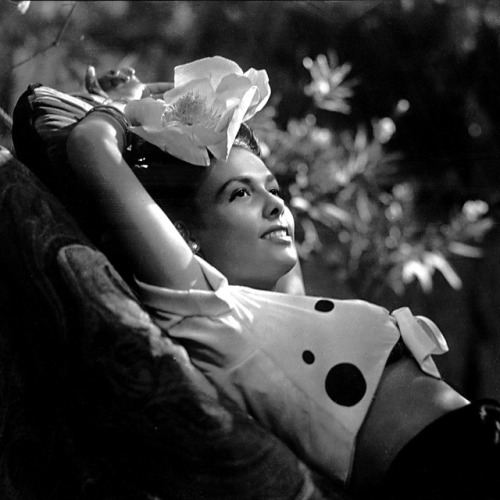
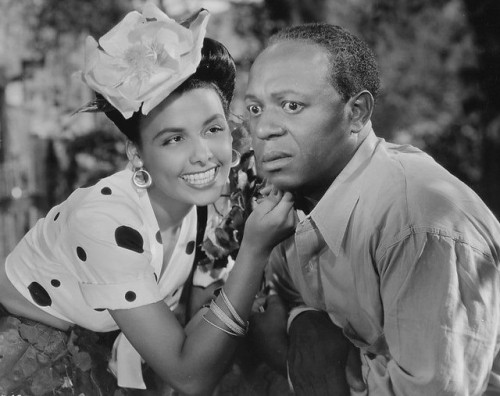
Nossa vamp Georgia Brown aparece apenas depois de 44 minutos. Ela é o exato oposto de Petunia. Petunia é a esposa esperta e trabalhadora, que se dedica de corpo e alma ao marido – sua felicidade tem nome, e esse nome é Joe. Georgia é uma femme fatale num musical, uma sedutora interessada em presentes, dinheiro e sexo.

Our vamp Georgia Brown only appears after 44 minutes. She is the exact opposite of Petunia. Petunia is the smart, hardworking wife who is completely devoted to her husband – her happiness has a name, and this name is Joe. Georgia is a femme fatale in a musical movie, a seductress interested in gifts, money and sex.


Ethel Waters e Lena Horne eram cantoras extraordinárias. Eddie ‘Rochester’ Anderson, por outro lado, não cantava tão bem, mas isso ajudou na imagem de homem comum de Joe. Você consegue imaginar alguém com a voz de, por exemplo, Paul Robeson como um pobre homem viciado em jogo e fraco para as tentações? Eu também não.

Ethel Waters and Lena Horne were outstanding singers. Eddie 'Rochester' Anderson, on the other hand, couldn't sing so well, but this helped the everyman image of his character Joe. I mean, can you imagine someone with the vocal range of, let's say, Paul Robeson being a poor man addicted to gambling and weak to temptations? Neither can I.


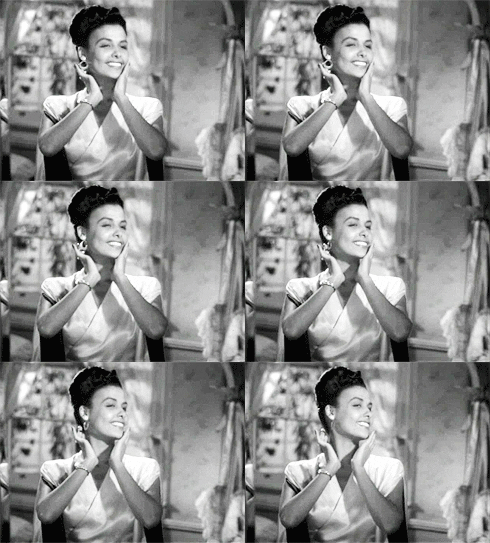
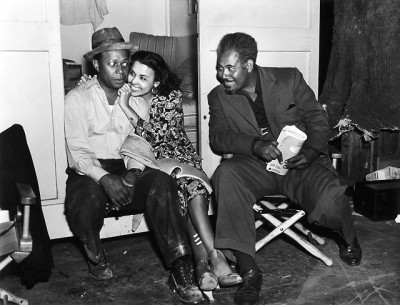
Lena Horne começou sua carreira como corista no famoso Cotton Club de Nova York no início dos anos 1930. No final da década ela já cantava com várias orquestras, e em 1942 ela foi contratada pela MGM. No entanto, na maioria de seus filmes ela aparecia como ela mesma em pequenas performances, sem importância para a trama, para que seu número pudesse ser cortado para a exibição do filme no sul dos EUA, região notadamente racista.

Lena Horne started her career as a chorus girl at the famous Cotton Club in New York in the early 1930s. By the end of the decade she was singing with several big band orchestras, and in 1942 she was hired by MGM. However, most of her film appearances at this time were as herself and in small walk-on performances, unimportant to the plot, so her number could be cut when the film was exhibited in the racist US South.


Mas houve alguns filmes que escandalizariam os racistas, e estes filmes tinham elenco 100% negro. “Uma Cabine no Céu” foi um deles – embora fosse apenas o quarto musical protagonizado por negros feito por um grande estúdio desde a chegada do som no cinema. Outro musical com elenco todo negro foi “Tempestade de Ritmo”, também feito em 1943, e também com Lena Horne. Isso significa que os dois maiores sucessos de Lena em Hollywood estrearam no mesmo ano.

But there were some films that would freak racists out, and those films had an all-black cast. “Cabin in the Sky” was one of them – although only the fourth all-black musical made by a major studio since the arrival of talkies. Another musical with an all-black cast was “Stormy Weather”, also released in 1943, and also featuring Lena Horne. This means the two biggest successes Lena had in Hollywood happened in the same year.


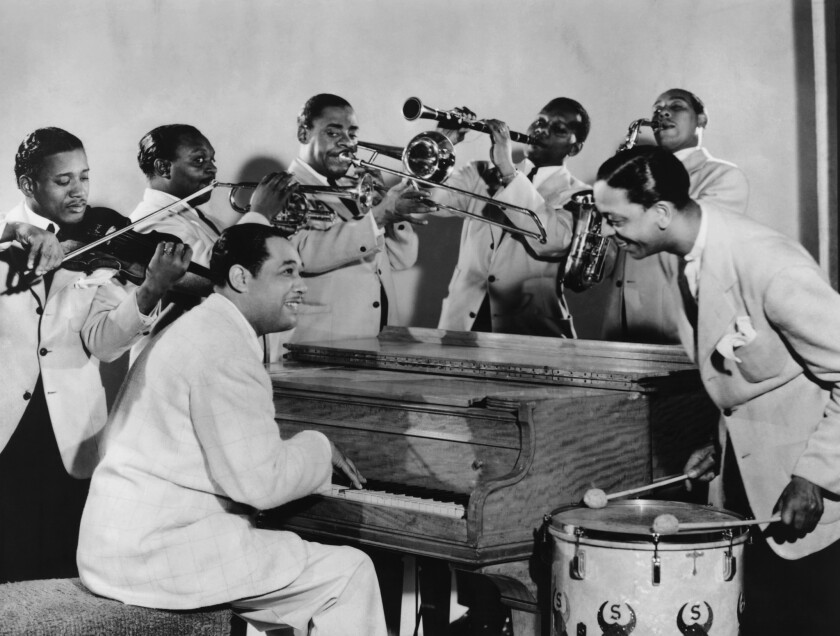
Além de Lena, você também encontrará Duke Ellington e sua orquestra tocando no clube onde Joe vai jogar. A orquestra de Ellington era o que chamavam de “hot bands”: bandas lideradas por negros e especializadas em swing e blues – jazz para dançar, não para relaxar. Duke Ellington esteve à frente de sua orquestra por mais de 60 anos e compôs mais de mil músicas.

Besides Lena, you can also find Duke Ellington and his orchestra playing at the club Joe goes to gamble. Ellington’s orchestra was what they called “hot bands”: bands leaded by black performers and specialized in swing and blues – jazz to dance, not to relax while listening. Duke Ellington led his orchestra for over 60 years and composed over 1,000 songs.


O então jovem diretor Vincente Minnelli recebeu seu primeiro crédito de direção em “Uma Cabine no Céu”. Busby Berkeley ajudou o novato em uma sequência, mas não recebeu crédito. Minnelli queria que Dooley Wilson, que interpretou Little Joe na Broadway, repetisse o papel no filme, mas a MGM acreditava que Eddie ‘Rochester’ Anderson era mais conhecido. Dooley Wilson, obviamente, é mais lembrado como o pianista Sam de “Casablanca”.

Up-and-coming director Vincente Minnelli received his first directing credit in “Cabin in the Sky”. Busby Berkeley helped the newcomer in one sequence, but went uncredited. Minnelli wanted Dooley Wilson, who had played Little Joe on Broadway, to also play the role in the film, but MGM believed Eddie ‘Rochester’ Anderson was a bigger star. Dooley Wilson, of course, is best remembered as pianist Sam from “Casablanca” (1942).


Eu vi duas coincidências interessantes entre “Uma Cabine no Céu” e “O Mágico de Oz” (1939), estrelado por Judy Garland, que mais tarde se casaria com Minnelli. Em ambos há um tornado importante para a trama – na verdade, a MGM reutilizou algumas tomadas do tornado de Oz no filme de 1943. E em ambos há atores que interpretam dois papéis, um num mundo de sonho ou sobrenatural – a terra de Oz em “O Mágico de Oz” e o Céu / Inferno em “Uma Cabine no Céu” – e outro no mundo real.

I saw two cool coincidences with “Cabin in the Sky” and “The Wizard of Oz” (1939), starring Judy Garland, who later would marry Minnelli. In both there is a tornado that is key to the plot – indeed, MGM reused some of the Oz tornado footage in the 1943 movie. And in both there are actors who play two roles, one in the dream or supernatural world – the Land of Oz in “The Wizard of Oz” and the Heaven / Hell in “Cabin in the Sky” – and another in the real world.


Este filme foi feito em uma época em que Hollywood estava tentando mostrar como eles eram amigáveis no tratamento do público afro-americano. Alerta de spoiler: eles não eram tão amigáveis. Estamos falando sobre os anos 1940, quando a segregação era forte e quando alguns prisioneiros de guerra nazistas se surpreenderam como péssimo tratamento dispensado aos negros no sul dos EUA. A própria Lena Horne se recusava a se apresentar para as tropas se os prisioneiros alemães fossem colocados nas fileiras da frente e os soldados negros nas fileiras de trás – uma prática muito comum até então.

This film was made in a time when Hollywood was trying to show how friendly they were towards the African-American public. Spoiler alert: they weren't so friendly. We're talking about the 1940s, when segregation was in full swing and when some Nazi prisoners of war were surprised by how badly black people were treated in the US South. Lena Horne herself refused to perform for war troops if German prisoners were put in the front row and black soldiers were put in the back – a very common practice then.


Lena Horne poderia ter mais tempo na tela em “Uma Cabine no Céu” se seu número “Ain’t It the Truth” não tivesse sido cortado. Ele foi considerado arriscado demais, pois Lena cantava enquanto tomava um banho de espuma. Como consequência, a versão de Louis Armstrong da mesma música também foi cortada, e ele ficou com um papel mínimo. A sequência foi usada num curta-metragem de 1946 e exibida em “Era Uma Vez em Hollywood, Parte III” (1994).

Lena Horne could have had more screen time in “Cabin in the Sky” if her number “Ain’t It the Truth” wasn’t cut. It was considered too risky, as Lena sung it while taking a bubble bath. As a consequence, Louis Armstrong’s rendition of the same song was also cut, leaving the musician with a minimum role. The sequence was used in a 1946 short and featured in “That’s Entertainment! III” (1994).


“Uma Cabine no Céu”, tanto o show da Broadway quanto o filme de Hollywood, foram escritos e dirigidos por homens broncos. Por causa disso, vemos algumas semelhanças na maneira como os negros são retratados aqui e em outras obras dos anos 1940. Por exemplo: em “Uma Cabine no Céu” e no último esquete de “Seis Destinos” (1942) – que também tinha Ethel Waters no elenco – os negros são mostrados como um pouco ingênuos, muito religiosos e com um forte senso de comunidade. Enquanto alguns temas, como a escolha entre bom e mau, são universais, é revigorante ver uma história como essa interpretada por artistas negros, o que também nos faz imaginar o que mais eles poderiam ter feito se Hollywood estivesse realmente interessada em diversidade.

“Cabin in the Sky”, both the Broadway show and the Hollywood movie, were written and directed by white men. Because of this, we see some similarities between how black people are portrayed here and in other works from the 1940s. For instance: in both “Cabin in the Sky” and in the last segment of “Tales of Manhattan” (1942) – that also had Ethel Waters in the cast – black people are portrayed as a bit naïve, deeply religious and with a strong sense of community. While some themes, like choosing good over evil, are universal, it’s refreshing to see a story like this played by black performers, which also makes us wonder what else they could achieve if Hollywood was really interested in diversity.

This is my contribution to the Pop Stars Moonlighting blogathon, hosted by Gill at ReelWeegieMidget Reviews.

Related Posts Plugin for WordPress, Blogger...