} Crítica Retrô: Burt Lancaster

Tradutor / Translator / Traductor / Übersetzer / Traduttore / Traducteur / 翻訳者 / переводчик

Showing posts with label Burt Lancaster. Show all posts

Wednesday, May 15, 2024

Entre Deus e o Pecado (1960) / Elmer Gantry (1960)

 Quando um filme garante um Oscar a um ator, nós cinéfilos rapidamente ficamos interessados neste filme. Quando o ator que ganhou o Oscar tem uma carreira tão prolífica e interessante quanto a de Burt Lancaster, só podemos imaginar que sua performance em tal filme foi incrível. “Entre Deus e o Pecado” deu a Lancaster seu único Oscar de Melhor Ator, e também deu a Shirley Jones o Oscar de Melhor Atriz Coadjuvante.


When a film gives an actor the Oscar, we cinephiles quickly become interested in this film. When the actor who won the Oscar has such a prolific and interesting career as Burt Lancaster’s, we can only imagine that his performance in said film was nothing but superb. “Elmer Gantry” (1960) gave Lancaster his only Best Actor Oscar, and also gave Shirley Jones a Best Supporting Actress Oscar. 

Elmer Gantry (Lancaster) é um bêbado, praticamente um mendigo, que passa a véspera de Natal com uma prostituta e pela manhã mente para sua mãe, dizendo que havia ido à igreja. Mas ele demonstra conhecer hinos de louvor quando participa de um culto com pessoas negras adorando ao Senhor. A sua alma ainda pode ser salva, no final das contas!


Elmer Gantry (Lancaster) is a drunkard, practically a hobo, who spends Christmas Eve with a prostitute and in the morning lies to his mother that he has gone to church. But he proves to know church hymns when he attends a gathering of black people worshipping the Lord. His soul can be saved, after all!
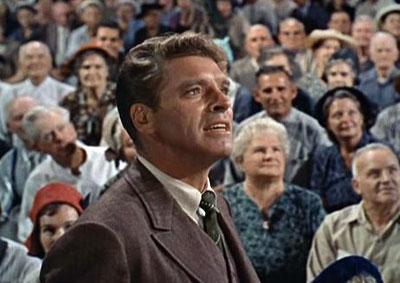
Na verdade, Elmer é um caixeiro viajante e, numa cidade, ele decide participar de um culto comandado pela Irmã Sharon Falconer (Jean Simmons). Ele não quer rezar, mas sim se juntar à Irmã Sharon contando sua “história de salvação”. Eles logo se tornam parceiros e amantes.


In reality, Elmer is a travelling salesman and, in one town, he decides to attend a religious gathering commanded by Sister Sharon Falconer (Jean Simmons). He doesn’t want to pray, but to join Sister Sharon telling his “salvation story”. They soon become partners and lovers.

Acompanhando Elmer e a Irmã Sharon na “peregrinação” temos Jim Lefferts (Arthur Kennedy), um jornalista que acaba escrevendo um artigo chamado “Santos ou Patifes” sobre a dupla. O artigo é lido por Lulu Bains (Shirley Jones), antiga amante de Elmer que agora é prostituta, que decide que quer vê-lo novamente.


Accompanying Elmer and Sister Sharon in their “pilgrimage” there is Jim Lefferts (Arthur Kennedy), a journalist who ends up writing an article called “Saints or Scoundrels” about the duo. The article is read by Lulu Bains (Shirley Jones), Elmer’s former lover and now a prostitute, who then decides she wants to see him again.

Os paramentos da Irmã Sharon me lembraram de outras figuras religiosas dos anos 1920 e 1930. A primeira é uma figura real: a Irmã Aimée Semple McPherson, que inspirou a Irmã Florence Fallon de Barbara Stanwyck em “A Mulher Miraculosa” (1931), e Irmã Alice de Tatiana Maslany no novo “Perry Mason” e foi retratada no cinema no excelente indie “A Mulher Milagrosa” (2019).


Sister Sharon’s vestments reminded me of other religious figures from the 1920s and 1930s. The first is a real-life figure: Sister Aimée Semple McPherson, who inspired Barbara Stanwyck’s Sister Florence Fallon in “The Miracle Woman” (1931), Tatiana Maslany’s Sister Alice in the new “Perry Mason” and was portrayed in movies in the excellent indie “Sister Aimée” (2019).

Ambos os protagonistas tiveram papéis semelhantes antes e depois de “Entre Deus e o Pecado”. Jean Simmons interpretou uma missionária no musical “Eles e Elas” (1955), enquanto Burt Lancaster esteve em outro filme que lida com religião e consumo de álcool em “Nas Trilhas da Aventura” (1965).


Both leads had similar roles before and after “Elmer Gantry”. Jean Simmons played a missionary in the musical “Guys and Dolls” (1955), while Burt Lancaster was in another film that deals with religion and alcohol consumption in “The Hallelujah Trail” (1965).

Burt Lancaster interpreta Elmer Gantry num tom histriônico, com zero sutileza, como o papel pedia. Ele deve ser um palhaço de circo e sabe desta demanda. Curiosamente, anos após a estreia do filme, Lancaster recebeu uma carta de um amigo de infância contando-lhe que sua performance no filme é o mais perto que ele chegou da maneira como ele se comportava na infância.


Burt Lancaster plays Elmer Gantry in a histrionic tone, with zero subtlety, as the role demanded. He must be a circus clown and he is aware of that. Curiously, years after the film premiered, Lancaster received a letter from a childhood friend telling him his performance in the movie is the closest to the way he behaved as a kid.

A trilha sonora inspirada é de André Previn. Nascido na Alemanha em 1929, ele e a família migraram para os EUA em 1938. Sua carreira em Hollywood começou quando ainda estava no Ensino Médio, em 1946. Ele ganharia quatro Oscars – dois antes de “Entre Deus e o Pecado”, dois depois – e é mais conhecido por ter sido o segundo marido de Mia Farrow, com quem ela ficou por nove anos, teve três filhos e adotou mais três. Previn faleceu aos 89 anos em 2019.


The inspired soundtrack is from André Previn. Born in Germany in 1929, he and his family flew to the US in 1938. His career in Hollywood began while he was still in high school, in 1946. He would go on to win four Oscars – two before “Elmer Gantry”, two after – and may be best known as Mia Farrow’s second husband, with whom she stayed for nine years, had three children and adopted three more. Previn passed away aged 89 in 2019.
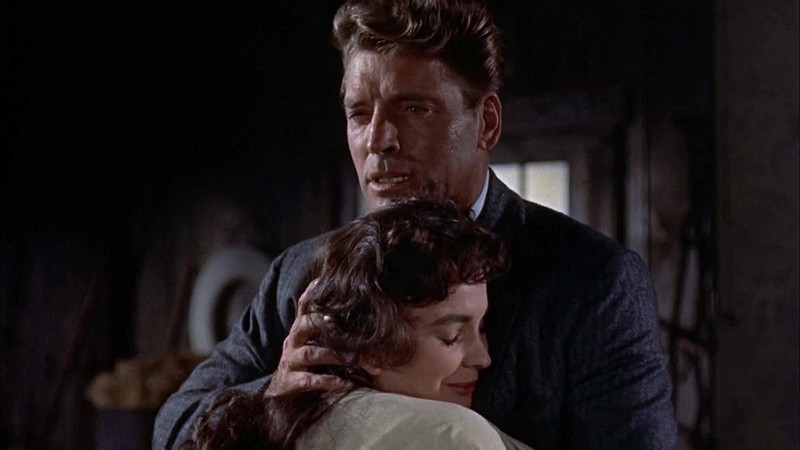
A Irmã Sharon é uma Revivalista, algo que Jim não consegue definir, mas cujo poder consegue sentir. As questões religiosas discutidas em “Entre Deus e o Pecado” são mais atuais do que nunca. Antes do filme começar, uma nota explicativa diz que “Liberdade Religiosa não é licença para abusar da fé das pessoas!”. E depois Lulu pergunta a Elmer “como pode que certas pessoas só encontram ódio na Bíblia?”.


Sister Sharon is a Revivalist, something Jim can’t quite define, but feels its power. The religious issues discussed in “Elmer Gantry” are more current than ever. Before the film starts, an awareness note says that “Freedom of Religion is not license to abuse the faith of the people!”. And then Lulu asks Elmer “how is that some people can only find hate in the Bible?”.
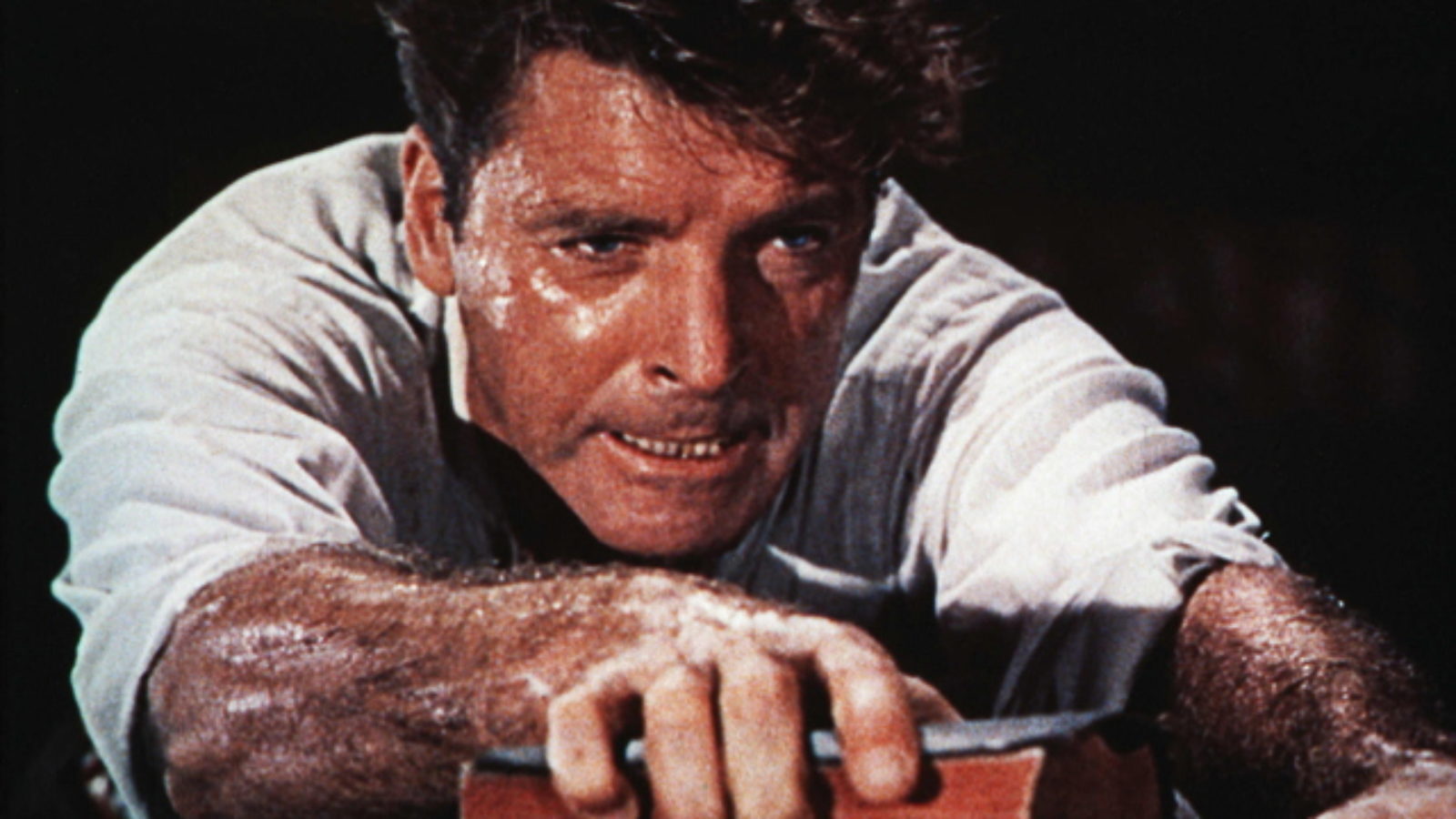
“Entre Deus e o Pecado” foi um destes filmes que comecei a assistir sem saber nada sobre e simplesmente não vi o tempo passar. É envolvente, emocionante, com ótimas performances de todo o elenco. É também catalisador para reflexões, pois muito mudou e ao mesmo tempo nada mudou nos últimos cema anos.


“Elmer Gantry” was one of those movies I started watching without knowing anything about and simply didn’t see time pass. It’s compelling, thrilling, with lots of great performances by the whole cast. It’s food for thought, because so much has changed and yet nothing has changed in the last 100 years.


This is my contribution to the It’s in the Name of the Title blogathon, hosted by Rebecca and Gill at Taking Up Room and Realweegiemidget Reviews.

Saturday, July 13, 2013

Dupla Dinâmica: Wyatt Earp e Doc Holliday

Dynamic Duo: Wyatt Earp and Doc Holliday

No Velho Oeste, não se pode confiar em ninguém, só na sua sombra e em seu cavalo, e nem sempre o cavalo é confiável. Mas muito antes de John Wayne me ensinar esta valiosa lição de vida, uma dupla de carne e osso ficou famosa com um episódio de um tiroteio no O.K. Corral. Wyatt Earp e Doc Holliday foram as provas vivas de que os opostos se atraem.

In the Old West, you could trust no one, only your shadow and a horse, and you couldn't always trust the horse. But before John Wayne taught me this precious lesson, a real duo became famous with an episode involving a gunfight in the O.K. Corral. Wyatt Earp and Doc Holliday were the living proof that opposites attract.
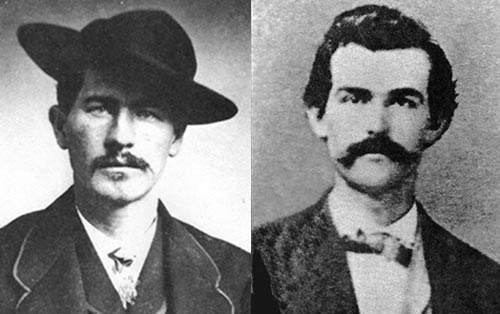
Wyatt e Doc
Wyatt Berry Stapp Earp (1848 – 1929) foi xerife, garimpeiro e apostador. Um ponto importante de sua vida foi a morte de sua primeira esposa no parto, em 1870, que o levou de volta ao oeste, trabalhando como caçador de búfalos e "motorista" de diligências. Em Tombstone, cidade do tiroteio, viviam seus quatro irmãos, também geralmente representados nas telas. Lá seu irmão Virgil era xerife, e foi daí que surgiu a rivalidade que acabou no tiroteio: os foras-da-lei Billy Claiborne, Ike e Billy Clanton, Tom e Frank McLaury enfrentaram Wyatt, Doc, Virgil e Morgan Earp após um mês de brigas. Embora os relatos da época sejam confusos (dois jornais dão duas versões diferentes), Wyatt disse que foi uma questão de auto-defesa, uma vez que eles estavam em menor número.

Wyatt Berry Stapp Earp (1848-1929) was a sheriff, mining worker and gambler. An important point in his life was the death of his first wife during childbirth, in 1870, something that sent him back to the west, where he worked as a buffalo hunter and stagecoach conductor. Tombstone, the scenario of the gunfight, was the home of his four brothers, often portrayed on the screen as well. There his brother Virgil was the marshall, and he was the starter of the rivalry that ended in the gunfight: the outlaws Billy Clairbone, Ike and Billy Clanton, Tom and Frank McLaury faced Wyatt, Doc, Virgil and Morgan Earp after a month of animosity. Although the sources of the time are not precise (two newspapers give two different versions), Wyatt declared that it was a matter of self-defense, because he and his brothers were in numeric disadvantage.

John Henry Holliday (1851 – 1887) foi um dentista (daí o apelido Doc), apostador e também um homem muito habilidoso com as armas. Apesar de sua precocidade (formou-se aos 20 anos, portanto era considerado menor de idade e não poderia pegar o diploma), a carreira brilhante que se anunciava para Doc foi cortada pela tuberculose, mal que matou sua mãe quando o menino tinha 15 anos. Segundo os médicos, ele tinha poucos meses de vida, então seu plano foi mudar-se para o Texas, onde o clima era mais agradável. Logo ele percebeu que jogos davam muito mais dinheiro que a profissão de dentista. Devido à tuberculose e sua morte apenas seis anos após o famoso tiroteio, em várias versões Doc morre durante o tiroteio, dando mais teor dramático à cena.

John Henry Holliday (1851-1887) was a dentist (hence the nickname Doc), gambler and also very good with guns. Although he was precocious (he graduated at 20, so was considered underage and couldn't receive his degree), the brilliant career he had on the horizon was cut short by tuberculosis, the same disease who left him motherless at 15. According to the doctors, he had few months to live, so he decided to move to Texas, where the climate was more pleasant. Soon he realized that gambling was more rewarding than being a dentist. Because of tuberculosis and his death six years after the shooting, in several versions Doc dies in the gunfight, adding more drama to the occasion.
A bizarrice foi extrema na primeira adaptação do episódio do O.K. Corral para as telas, em 1934, porque a viúva de Wyatt, Josephine, conseguiu que os estúdios não usassem o nome do marido, e assim o protagonista foi rebatizado como Michael Wyatt e vivido por George O’Brien.

The first adaptation of the O.K. Corral episode to the screen was extremely bizarre because, in 1934, Wyatt's widow, Josephine, forbade the studios to use the name of her husband, so the main character was renamed as Michael Wyatt and played by George O'Brien.

Um dos grandes nomes do western (e também um homem grande, 1,89 m), Randolph Scott interpretou Wyatt em 1939, no filme “A lei da fronteira”, com Cesar Romero como Doc. Extremamente fantasioso, neste filme Holliday morre antes do famoso tiroteio, que acontece em 1880, e Earp se vinga da morte do amigo.

One of the biggest names of the western genre (and also a big man, standing 6'2''), Randolph Scott played Wyatt in 1939 in the film “Frontier Marshall”, with Cesar Romero playing Doc. This film takes a lot of liberties, ofr instance: Holliday dies before the famous shooting, that happens in 1880, and Earp decides to avenge his friend. 
Mais um pouco de fantasia foi adicionada à história quando Doc (sem Wyatt), Pat Garrett e Billy The Kid disputam a atenção de Jane Russell em "O Proscrito" (1943). Doc é interpretado por Walter Huston e a trama até se mostra verossímil, pois Wyatt era casado e Doc, um conhecido mulherengo.

Some more fantasy was added to the story when Doc (without Wyatt), Pat Garrett and Billy the Kid fight for Jane Russell's attention in 'The Outlaw” (1943). Doc is played by Walter Huston and the story is even credible, because Wyatt was married and Doc, a famous womanizer.
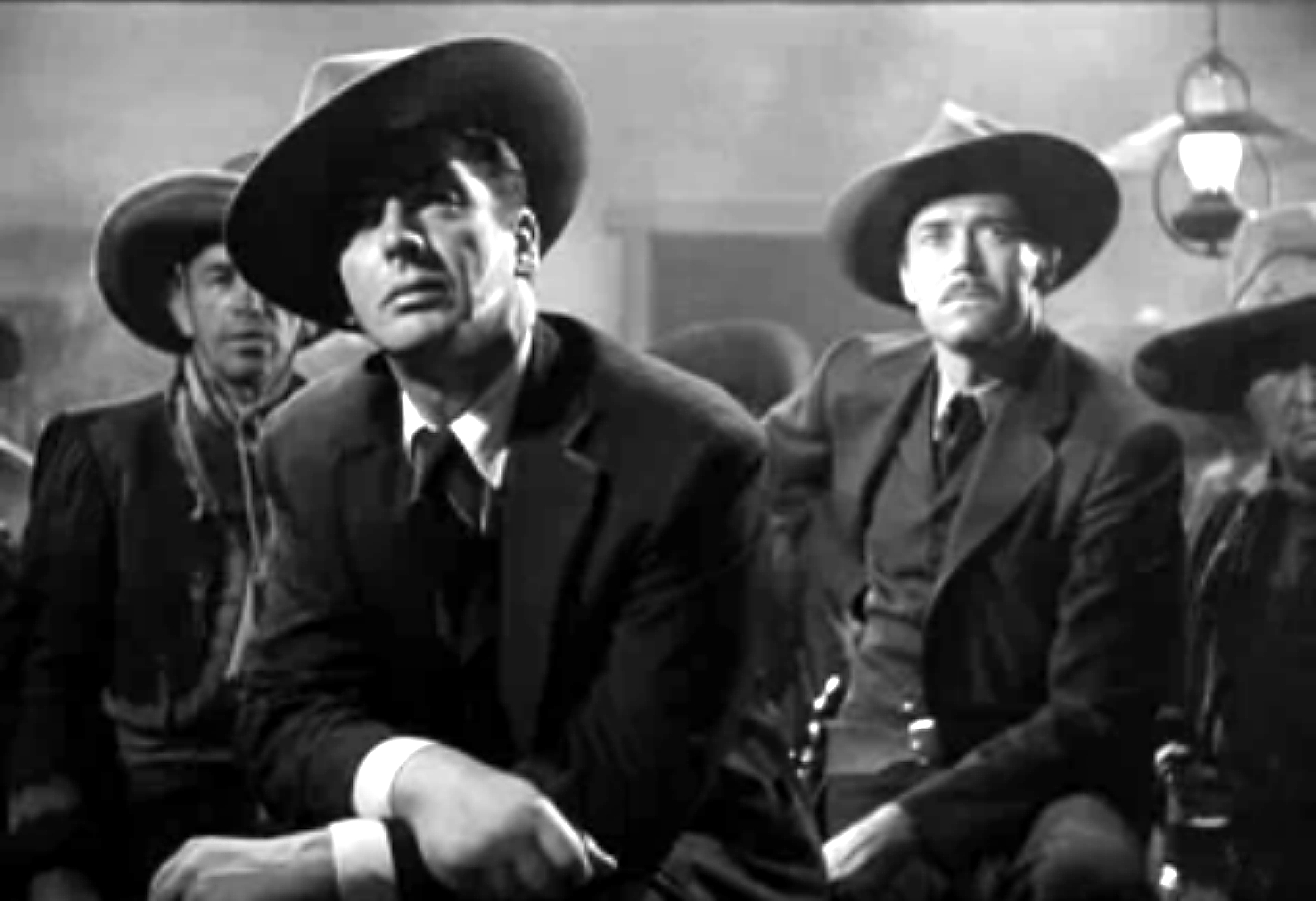
Sem dúvida a representação mais conhecida da dupla foi feita em “Paixão dos Fortes” (1946), de John Ford. Henry Fonda é Earp e Victor Mature, Holliday. Fonda inclusive se apresenta de maneira triunfal, dizendo: "Earp. Wyatt Earp". Ainda com um pouco de fantasia (e Doc sem seu bigode), o filme conta com um pouco do humor característico de John Ford e a estonteante Linda Darnell como a infeliz Chihuahua.

Without a doubt the most famous representation of the duo was made in “My darling Clementine” (1946), directed by John Ford. Henry Fonda plays Earp and Victor Mature, Holliday. Fond even introduces himself in a triunphal way, saying: “Earp. Wyatt Earp”. Still with some liberties (and Doc without his mustache), the film has a bit of Ford's characteristic humor and the gorgeous Linda Darnell as the ill-fated Chihuahua. 
Sucesso também alcançou “Sem lei, sem alma” (1957), com Burt Lancaster como Earp e Kirk Douglas como Holliday. O filme foca mais na amizade dos dois, com destaque para Doc, sempre divertido, e o tiroteio é o clímax do filme. No entanto, mais uma vez um personagem secundário surge para confundir: Johnny Ringo (John Ireland), um cowboy associado aos inimigos de Earp, morre no tiroteio, mas ele sequer estava presente. Sob o nome Jimmy Ringo, ele virou personagem em "O Matador" (1950), sendo interpretado por Gregory Peck.  

Another success was “Gunfight at the O.K. Corral” (1957), with Burt Lancaster playing Earp and Kirk Douglas as Holliday. The movie focuses on their friendship, with a lot of screen time for Doc, always funny, and the gunfight is the climax. However, once more a secondary character is here to make a confusion: Johnny Ringo (John Ireland), a cowboy who befriends Earp's enemis, dies in the shooting, but he wasn't even there in real life. Under the name Jimmy Ringo, he became a character in “The Gunfighter” (1950), and was played by Gregory Peck.
Nem sempre Doc e Earp eram os protagonistas do filme. Como lendas do oeste, eles apareceram em alguns filmes brevemente. Um exemplo disso é "Crepúsculo de uma raça " (1964), em que Wyatt Earp é interpretado por James Stewart e Doc Holliday por Arthur Kennedy. Ambos eram mais velhos que os personagens que interpretavam, e o diretor John Ford só decidiu inserir a cena cômica com essas duas lendas para não ter um intervalo na projeção. Ainda em um filme de James Stewart, "Winchester '73" (1950), Wyatt Earp surge brevemente interpretado por Will Geer.

Doc and Earp weren't always the main characters in the film. As legends of the Old West, they appeared briefly in some movies. One example is “Cheyenne Autumn” (1964), in which Wyatt Earp is played by James Stewart and Doc Holliday by Arthur Kennedy. Both were older than the characters they were playing and director John Ford only decided to add the comic scene with the two legends in order to avoid an intermission in the film. In another James Stewart picture, “Winchester '73” (1950), Wyatt Earp appears briefly and is playing by Will Geer.
Mais de uma vez Tombstone serviu de título para um filme sobre a dupla. Em 1942, com o subtítulo "the town too young to die" ("O Homem do Perigo" no Brasil), o filme trouxe Richard Dix como Wyatt e Kent Taylor como Doc, contando ainda com o bônus de ter Rex Bell, marido de Clara Bow, então já afastada do cinema, interpretando Virgil Earp. E, em 1993, Val Kilmer e Kurt Russell, respectivamente como Doc e Earp, filmaram no Arizona uma versão mais sangrenta da história. Outro grande nome do western moderno, Kevin Costner, encarnou Wyatt no ano seguinte em "Wyatt Earp", com Dennis Quaid como Doc.

More than once Tombstone was the title of a movie about the duo. In 1942, with the complementary title “the town too young to die”, the film had Richard Dix as Wyatt and Kent Taylor as Doc, and also Rex Bell, Clara Bow's husband (Clara had already been far from Hollywood fro a decade), playing Virgil Earp. And, in 1993, Val Kilmer an Kurt Russell, respectively as Doc and Earp, shot in Arizona a bloodier version of the story. Another big name of the modern wester, Kevin Costner, gave life to Wyatt the following year in “Wyatt Earp”, with Dennis Quaid as Doc.

Claro que Wyatt e Doc também apareceram separados. Em 1955, Joel McCrea foi Wyatt em "Choque de Ódio", que acompanha a vida do xerife antes de Tombstone, quando ele estava no Kansas.

Obviously, Wyatt and Doc also appeared by themselves in movies. In 1955, Joel McCrea was Wyatt in “Wichita”, a film that tells the marshall's trajetory before Tombstone, when he lived in Kansas.
Wyatt romântico
Ambos também foram transpostos para a televisão. "The Life and Legend of Wyatt Earp", série que durou cinco anos, contou com Hugh O'Brien como Wyatt e Douglas Fowley como Doc. Eles também apareceram brevemente em séries sobre Bat Masterson, sobre os tempos do western de modo geral e, pasmem, até na Ilha da Fantasia. Até em Doctor Who o tiroteio já foi retratado, em um episódio de 1966.

Both were also portrayed on television. “The Life and Legend of Wyatt Earp”, a series that had five seasons, had Hugh O'Brien as Wyatt and Douglas Fowley as Doc. They also appeared briefly in series about Bat Masterson, about the Old West times and, surprise, even in The Fantasy Island. Even in Doctor Who the gunfight was portrayed, in a 1966 episode.
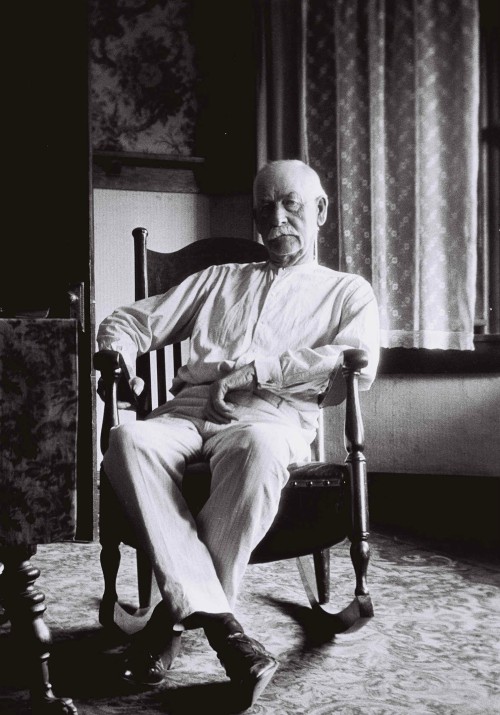
Mesmo se não ficasse famoso a ponto de virar personagem, Doc Holliday já teria uma ligação com o cinema: uma de suas primas distantes é Margaret Mitchell, autora do livro “E o vento levou...”. Já Wyatt Earp foi mais longe, e presenciou o nascimento do cinema, inclusive tornando-se amigo de caubóis das telas como William S. Hart e Tom Mix. Nessa temporada em Hollywood, Earp conheceu John Ford e John Wayne e contou a eles um pouco de suas aventuras. Foi a partir desses relatos que Wayne modelou sua persona cinematográfica de cowboy.

Even  if he didn't become famous enough to have his story told in the movies, he would already have a connection with the film world: one of his distant cousins is Margaret Mitchell, the author of the book “Gone with the Wind”. Wyatt Earp lived longer, saw the birth of cinema, and even became friends with screen cowboys such as William S. Hart and Tom Mix. When he visited Hollywood, Earp met John Ford and John Wayne and told them some of his adventures. It was based on these stories that Wayne created his cowboy film persona.
Wyatt Earp, 1923
Todos esses filmes mostram como o cinema gosta de exagerar, uma vez que o tiroteio real durou apenas 30 segundos. Mas, como James Stewart disse em outro western, "O homem que matou o fascínora / The man who shot Liberty Valance", em nada relacionado com Doc e Earp, mas resume perfeitamente a maneira como eles são retratados:

"When the legend becomes fact, print the legend"

All these movies show how films like to exaggerate, because the real shooting lasted only 30 seconds. But, as James Stewart said in another western, “The ma who shot Liberty Valance”, that has nothing to do eith Doc and Earp, but sums perfectly the way they are portraied:

“When the legend becomes fact, print the legend”


This is my contribution to the Dynamic Duos blogathon, hosted by Annmarie at ClassicMovie Hub and Aurora at Once Upon a Screen. A must-read event.


Related Posts Plugin for WordPress, Blogger...