} Crítica Retrô: Debbie Reynolds

Tradutor / Translator / Traductor / Übersetzer / Traduttore / Traducteur / 翻訳者 / переводчик

Showing posts with label Debbie Reynolds. Show all posts

Saturday, July 9, 2022

Cantando na Chuva: a cobertura de um clássico na imprensa brasileira


Singin’ in the Rain: the coverage of a classic in the Brazilian press

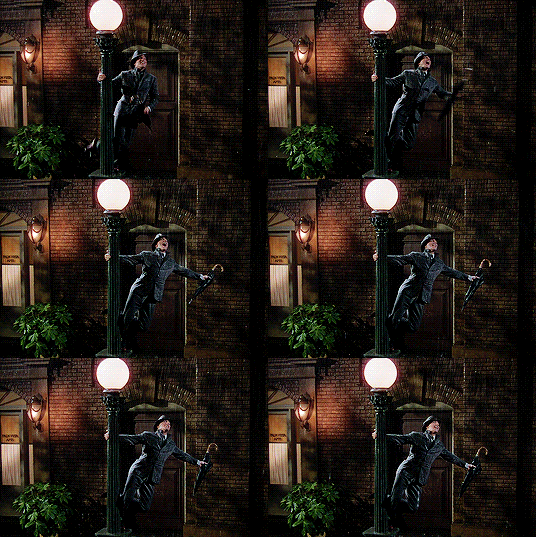
“Cantando na Chuva” estreou em 27 de março de 1952 nos EUA. O filme estreou no Brasil, segundo o IMDb, três meses depois, em 30 de junho de 1952. Setenta anos atrás, um filme que iria entrar para a história estreava, mas ele não foi considerado um clássico logo de cara. Foi um sucesso de bilheteria, claro, mas não ganhou nenhum Oscar e não animou os críticos - estivessem estes críticos nos EUA ou no Brasil.

“Singin’ in the Rain” had its premiere on March 27th, 1952 in the USA. It premiered in Brazil, according to IMDb, three months later, on June 30th, 1952. Seventy years ago, a film that would enter history premiered, but it wasn’t considered a classic right after its premiere. It was a box-office success, of course, but won no Oscars and didn’t excite critics - no matter if these critics were in the USA or Brazil.

O burburinho sobre “Cantando na Chuva” começou antes mesmo de o filme estrear. Num anúncio publicado no começo de 1952 na revista Cine Reporter, o filme foi citado, junto com “Scaramouche” e “Ivanhoé” como atrações vindouras da MGM que em breve chegariam aos cinemas. O texto do anúncio dizia, ao lado da figura de um leão: “Exibir MGM significa festa o ano inteiro!” Também antes da estreia, a mesma revista credita Gene Kelly como diretor de “Cantando na Chuva” e diz que a película é “considerada uma das melhores revistas musicais dos últimos tempos.”

The talk about “Singin’ in the Rain” started even before the film premiered. In an ad published early in 1952 in the magazine Cine Reporter, the movie was cited, together with “Scaramouche” and “Ivanhoe” as coming attractions from MGM that would reach the theaters soon. The text of the ad said, next to the figure of a lion: “Exhibiting MGM means partying during the whole year!” Also before the premiere, the same magazine credits Gene Kelly as director of “Singin’ in the Rain” and says it is “considered one of the best musicals of recent times.”

“Cantando na Chuva” foi exibido com “Scaramouche” e “Ivanhoé” num evento especial no Rio de Janeiro, então capital do Brasil, ocorrido no cinema Metro-Copacabana. Os três filmes ficaram conhecidos como “a trinca de ouro” e, depois desta estreia, já eram elogiados. O Cine Reporter chamou “Cantando na Chuva” de obra-prima, enquanto um repórter da Revista da Semana disse ser “nosso musical favorito”. A revista de cinema A Scena Muda elogiou o filme como símbolo do “amadurecimento do musical como gênero, englobando inclusive seriedade de intenções.” 

“Singin’ in the Rain” was exhibited with “Scaramouche” and “Ivanhoe” in a special event in Rio de Janeiro, then Brazil’s capital, hosted at the Metro-Copacabana movie theater. The three movies were known as “the golden trio” and, after this premiere, were already celebrated. Cine Reporter called “Singin’ in the Rain” a masterpiece, while a reporter from the Revista da Semana said it was “our favorite musical”. The film magazine A Scena Muda praised the movie as being a symbol of the “maturing of the musical as a gender, encompassing even serious intentions.”

O jornalista José Amádio, escrevendo a coluna Cine-Revista para a revista O Cruzeiro, chama o filme de “um leve e agradável Technicolor”, “agradável como uma tarde de primavera, no campo” e elogia as performances de Jean Hagen, que rouba todas as cenas em que está, e Donald O’Connor - primeiro chamando O’Connor de “quase sempre insípido”. Debbie Reynolds é “tão agradável aos olhos como um arco-íris” e Gene Kelly não é “tão bom cantor como bailarino”.

The journalist José Amádio, writing the Cine-Revista column at the magazine O Cruzeiro, calls the movie “a light and pleasant Technicolor”, “pleasant like a spring afternoon in the country” and praises the performances by Jean Hagen, who steals all the scenes she’s in, and Donald O’Connor - first calling O’Connor “almost always tasteless”. Debbie Reynolds is “as pleasant to the eyes as a rainbow” and Gene Kelly is not “as good as a singer as he is as a dancer”.

Além de ser elogiado pela imprensa, outros já estavam percebendo a qualidade de “Cantando na Chuva”. A Scena Muda publica que a The British Film Academy escolheu o musical como um dos melhores filmes do ano de 1953, junto com “Milagre em Milão”, “Rashomon”, “Carrie”, “Uma Aventura na África” e “Los Olvidados”.

Besides being praised by the press, others were already perceiving the high quality of “Singin’ in the Rain”. A Scena Muda publishes that The British Film Academy chose the musical as one of the best movies of the year 1952, together with “Miracle in Milan”, “Rashomon”, “Carrie”, “The African Queen” and “Los Olvidados”.

Em 1953, um artigo intitulado “A Garota que Venceu o Leão” foi publicado na revista Cinelândia sobre Debbie Reynolds. O artigo diz: “Ao entrar para o cinema, Debbie não sabia representar, mas aprendeu. Não sabia dançar, mas tomou algumas lições e tentou. Quem viu “Cantando na Chuva” pôde constatar o que dizemos.” A revista A Scena Muda foi mais bondosa com Debbie, dizendo que “em “Singin’ in the Rain”, Debbie saiu-se vitoriosa em uma verdadeira prova de fogo, cantando, dançando e representando como uma veterana “vedette” da tela.” E o artigo termina assim: “Não existe pessoa alguma que após assistir “Cantando na Chuva” não se tenha tornado fã de Debbie Reynolds.”

In 1953, an article called “The Girl who Won Over the Lion” was published in the Cinelândia magazine about Debbie Reynolds. It said: “When she got into the movie business, Debbie didn’t know how to act, but she learned. She didn’t know how to dance, but took a few lessons and tried. Whoever saw “Singin’ in the Rain” could see what we mean.” The magazine A Scena Muda was kinder to Debbie, saying that “in “Singin’ in the Rain”, Debbie won a hard battle, singing, dancing and acting like a true veteran of the musical movies”. And the article ends with this: “There is no person who, after watching “Singin’ in the Rain”, did not become a fan of Debbie Reynolds.”

Em 1974, um longo artigo sobre Gene Kelly na revista O Cruzeiro diz que, com “Cantando na Chuva”, ele se tornou um dos reis do musical. Naquela época, aos 62 anos, Kelly estava no Brasil para promover “Era uma Vez em Hollywood” e deu uma entrevista para a revista, na qual diz que seu próximo projeto era uma refilmagem musical de “A Mulher do Dia” (1942), algo que não se concretizou.

In 1974, a long article about Gene Kelly in the magazine O Cruzeiro says that, with “Singin’ in the Rain”, he became one of the kings of musical movies. At that time, at age 62, Kelly was in Brazil promoting “That’s Entertainment!” and gave an interview to the magazine, saying that his next project would be a musical remake of “Woman of the Year” (1942), something that was never made.

Mas nenhum jornalista brasileiro escreveu mais sobre “Cantando na Chuva” do que Ruy Castro. Na verdade, Gene Kelly e Cyd Charisse estão na capa de seu livro “Um Filme é para Sempre”. Neste livro, há uma seção inteira - Toró Mágico - dedicada a “Cantando na Chuva”, com quatro artigos sobre o filme. Nestes artigos, escritos entre 1991 e 2002, Ruy fala sobre a recepção morna do filme em 1952 e os papéis de Charisse, Kelly e Stanley Donen na feitura deste grande filme.

But no Brazilian journalist wrote more about “Singin’ in the Rain” than Ruy Castro. In fact, Gene Kelly and Cyd Charisse are on the cover of his book “Um Filme é para Sempre” (“A Film is Forever”). In this book, there is a whole section - Toró Mágico, or Magical Pouring - dedicated to “Singin’ in the Rain”, with four articles about the film. In these articles, published between 1991 and 2002, Ruy talks about the tepid reception of the film in 1952 and the roles of Charisse, Kelly and Stanley Donen in shaping this great film.

O tempo fez bem a “Cantando na Chuva”. O filme foi revisto, reconsiderado, serviu de assunto para reflexão através dos anos. Hoje, quase todos concordam que é o melhor musical já feito - não importa se é nosso favorito, é o melhor e ponto. Afinal, não há teste melhor para um filme que o teste do tempo.

Time was good to “Singin’ in the Rain”. It was rewatched, reconsidered, it served as food for thought through the years. Today, almost everybody agrees that it is the best movie musical ever made - no matter if it isn’t our favorite, it is definitely the best. After all, there is no better test for a movie than the test of time.

This is my contribution to the Singin’ in the Rain blogathon, hosted by The Classic Movie Muse. What a glorious feeling!

Tuesday, December 29, 2020

Três Palavrinhas (1950) / Three Little Words (1950)


Você deve conhecer Cole Porter, Ira e George Gershiwn, George M. Cohan, Irving Berlin e Jerome Kern. Talvez você não conheça Bert Kalmar e Harry Ruby, mas com certeza já ouviu as canções deles, como por exemplo “I Wanna Be Loved by You”. Kalmar e Ruby não foram os artistas mais famosos oriundos da Tin Pan Alley, região de Manhattan que concentrava os principais selos de música no começo do século XX, mas a dupla provou que merecia uma cinebiografia, que veio em 1950 com “Três Palavrinhas”.

You might be familiar with Cole Porter, Ira and George Gershwin, George M. Cohan, Irving Berlin and Jerome Kern. You might not know Bert Kalmar and Harry Ruby, but you certainly have heard their songs, such as “I Wanna Be Loved By You”. Kalmar and Ruby were not the most famous artists to emerge from the Tin Pan Alley, a region of Manhattan that concentrated the main music publishers of the early 20th century, but the duo proved to be worthy of a biopic, that came as 1950's “Three Little Words”.

Os dois se esbarram pela primeira vez em um incidente. Bert Kalmar (Fred Astaire) é um bem-sucedido dançarino no vaudeville, fazendo par com Jessie Brown (Vera-Ellen). Jessie quer se casar com Bert, mas ele está mais interessado em se tornar um mágico. Quando ele tenta fazer alguns truques de mágica no palco, o pianista Harry Ruby (Red Skelton) é enviado para ser assistente de Bert, e o número acaba com uma confusão hilariante envolvendo coelhos numa cartola e um ganso descontrolado.

They meet for the first time in an unfortunate incident. Bert Kalmar (Fred Astaire) is a successful vaudeville dancer, making a dancing duo with Jessie Brown (Vera-Ellen). Jessie wants to marry Bert, but he is more interested in becoming a magician. When he tries to do a few magic tricks on the stage, pianist Harry Ruby (Red Skelton) is sent to work as Bert's assistant, and the number ends up in a hilarious mess involving rabbits in a top hat and a vicious goose.

Os caminhos deles se cruzam novamente. Desta vez, Bert machucou o joelho e não pode dançar durante um ano. Harry está tentando a sorte como compositor e liricista. Eles se encontram no escritório de um agente e Bert ajuda Harry a escrever uma letra melhor para uma melodia. Entretanto, quando Bert reconhece Harry do incidente no show de mágica, ele fica furioso e vai embora. Mesmo assim, Harry publica a música que eles fizeram juntos, forçando Bert a começar uma parceria, pois a música faz grande sucesso.

Their paths cross a second time. This time, Bert has injured his knee and can't dance for a year. Harry is trying his luck as a composer and songwriter. They meet at an agent's office and Bert helps Harry to write better lyrics for his tune. However, when Bert recognizes Harry from the magic show incident, he gets mad and leaves. Nevertheless, Harry publishes the song they made together, forcing Bert to start a partnership as the song becomes a hit.

Esta parceria, obviamente, teve seus problemas. Assim como Bert implica com o amor de Harry pelo beisebol, Harry não gosta do interesse de Bert em mágica. Com as melhores intenções, eles interferem na vida pessoal um do outro. Há brigas, reencontros e silêncios constrangedores. Tudo isso era ficção, para deixar o filme mais interessante, porque Kalmar e Ruby, na vida real, se davam muito bem.

This partnership, of course, isn't one without a few problems. As Bert complains about Harry's love of baseball, Harry doesn't like Bert's interest in magic. With the best intentions, they interfere in each other's personal businesses. There are arguments, reunions and awkward silences. All of this was fiction, to make the film more interesting, as the real Kalmar and Ruby got along very well.

No começo da carreira no vaudeville, Fred Astaire conheceu Kalmar e Ruby. Sobre Bert Kalmar e Jessie Brown, Astaire disse: “Nós [Fred e a irmã Adele Astaire] costumávamos ficar nas coxias e ver Jessie e Bert com animação e inveja, nos perguntando se poderíamos igualar a elegância deles e chegar ao mesmo status que eles tinham”. Estas memórias podem tê-lo influenciado a declarar que “Três Palavrinhas” foi um dos filmes que mais gostou de fazer em Hollywood. Astaire ganhou o Globo de Ouro de Melhor Ator em Filme de Comédia ou Musical, no ano em que a categoria foi criada.

In his early years in vaudeville, Fred Astaire knew Kalmar and Ruby. About Bert Kalmar and Jessie Brown, Astaire said: "We [Fred and his sister Adele Astaire] used to stand in the wings and watch Jessie and Bert with thrilled envy, wondering if we could equal their finesse and reach their headline billing". These memories may have influenced him to declare that “Three Little Words” was among his favorite experiences in Hollywood. Astaire won the Golden Globe for Best Actor in a Motion Picture Musical or Comedy for this film, in the year the category was created.

“Três Palavrinhas” é o primeiro de dois filmes que Vera-Ellen fez com Fred Astaire. Com ou sem Astaire como parceiro de dança, Vera-Ellen brilha no filme. Ela prova que é tão capaz quanto Astaire quando eles dividem a cena, e sozinha ela mostra charme e vitalidade. Muito subestimada, Vera-Ellen merece ser mencionada, junto com Cyd Charisse, como uma das melhores dançarinas da Era de Ouro dos musicais de Hollywood.

Three Little Words” is the first of two films Vera-Ellen made with Fred Astaire. With or without Astaire as her dancing partner, Vera-Ellen shines in this film. She proves to be as capable as Astaire when they share the screen, and alone she displays charm and vitality. Often underrated, Vera-Ellen deserves to be mentioned, alongside Cyd Charisse, as one of the best dancers of Hollywood's Golden Age of musicals.

Debbie Reynolds aparece num pequeno papel como Helen Kane, e outra participação notável é Gloria DeHaven. Gloria interpreta a própria mãe, Sra Carter DeHaven – o nome verdadeiro dela era Flora Parker DeHaven –, uma estrela da Broadway que foi a primeira a cantar a canção “Who's Sorry Now” de Kalmar e Ruby. Eileen Percy, interpretada por Arlene Dahl, era atriz de cinema mudo. Helen Kane também foi uma atriz de cinema que serviu de inspiração para a personagem animada Betty Boop, e a própria Kane dublou Debbie Reynolds neste filme – isso significa que a cena que vemos tem Reynolds interpretando a atriz que a estava dublando nos bastidores!

Debbie Reynolds appears in a bit part as Helen Kane, and another interesting bit player is Gloria DeHaven. Gloria plays her own mother, Mrs. Carter DeHaven - her real name was Flora Parker DeHaven -, a Broadway star who introduced the Kalmar-Ruby song “Who's Sorry Now”. Eileen Percy, played by Arlene Dahl, was a silent film actress. Helen Kane was also a real film actress who inspired the cartoon character Betty Boop, and she even dubbed Debbie Reynolds's vocals in this movie – that means the scene is of Reynolds playing the actress that was dubbing her backstage!

Eu tenho apenas uma reclamação sobre este filme, e é sobre o lindo figurino feito por Helen Rose. Embora a história se passe no final dos anos 1910, as roupas de Vera-Ellen claramente são do começo dos anos 1950, algo que causou certa distração. Uma mulher dançando somente com um maiô preto teria causado frisson em 1919!

I have only one problem with the film, and it's the nonetheless gorgeous costumes by Helen Rose. Although the story is set in the late 1910s, Vera-Ellen's clothes are clearly from the early 1950s, and I found that a bit distracting. A woman dancing wearing only a black leotard would have caused frisson in 1919!


“Três Palavrinhas” me lembrou de outro filme de Fred Astaire, “Romance Inacabado”, de 1946. Ambos os filmes são sobre parceiros no show business que são muito diferentes um do outro. Em “Romance Inacabado”, entretanto, Astaire é um dançarino enquanto Bing Crosby é gerente de uma boate. Em “Três Palavrinhas”, Red Skelton é um bom contraste a Fred Astaire, servindo também como alívio cômico – porque ele pode amar beisebol, mas é péssimo no jogo. Eu acredito que “Romance Inacabado” tem números de dança e canções mais memoráveis.

Three Little Words” reminded me of another Fred Astaire movie, “Blue Skies”, from 1946. Both films are about show business partners who are very different from each other. In “Blue Skies”, however, Astaire is a dancer while Bing Crosby plays a nightclub manager. In “Three Little Words”, Red Skelton is a nice contrast to Astaire, serving also as comic relief – because he may love baseball, but he’s really bad at it. I believe “Blue Skies” has more memorable dance routines and songs.

"Romance Inacabado" / "Blue Skies"

MGM fez tantos musicais incríveis nos anos 40 e 50 que muitos deles acabam sendo colocados de lado, ao mesmo tempo em que discutimos sempre preciosidades como “Sinfonia de Paris” (1951) e “Cantando na Chuva” (1952). “Três Palavrinhas” pode não chamar tanto a atenção porque trata de compositores não muito lembrados, mas o filme merece ser visto em especial por causa das habilidades de dança de Vera-Ellen. Em três palavrinhas: você vai gostar!

MGM made so many great musicals in the 1940s and  1950s that many of them go overlooked, while we talk too often about gems like “An American in Paris” (1951) and “Singin' in the Rain” (1952). “Three Little Words” may not be as interesting because its subjects are not so well-known, but it deserves to be seen especially because of Vera-Ellen's dancing skills. In three little words: you'll like it!

This is my contribution to the Third Fred Astaire and Ginger Rogers blogathon, hosted by Michaela and Crystal at Love Letters to Old Hollywood and In the Good Old Days of Classic Hollywood
 

Tuesday, May 15, 2018

“Cantando na Chuva” é o melhor remédio / “Singin’ in the Rain” is the best medicine

Quando você está para baixo, e não vê saída para sua situação, o que você faz? Você busca conforto. O conforto pode ser encontrado nas coisas simples da vida, como uma comida gostosa ou, nosso assunto de hoje, um filme animador. Há filmes que lhe deixam alegre quando você está triste, lhe dá forças quando você está para baixo, lhe faz sorrir em meio ao sofrimento. O filme que faz tudo isso comigo é “Cantando na Chuva” (1952). É sempre ótimo vê-lo!

When you’re blue and you don’t know where to go to, what do you do? You seek comfort. That’s the origin of terms like ‘comfort food’ or, our subject today, ‘comfort movie’. It’s that movie that brings you joy when you’re sad, puts you up when you’re down, makes you smile in the middle of sorrow. My comfort movie is “Singin’ in the Rain” (1952). And what a glorious feeling it is to watch it in times of need!
Deixe-me dizer por que “Cantando na Chuva” é o melhor remédio:

Let me tell you why “Singin’ in the Rain” is the best medicine:
É um musical maravilhoso: Eu sei que não é todo mundo que ama musicais – eu já fui uma dessas pessoas tristes que odiavam musicais, dá para acreditar? Mas então eu percebi que os musicais são o gênero cinematográfico mais mágico que existe. Nós suspendemos nossas crenças quando assistimos a musicais. Não nos importamos se os personagens começam a cantar e dançar, do nada, no meio da rua. Os musicais são como sonhos – e quem não deseja que a vida seja, vez ou outra, como um sonho?

It is a wonderful musical: I know that not everybody loves musicals – I was once one of those poor, sad musical-haters, can you believe? But then I saw that the musicals are the most magical genre. We suspend belief when we watch musicals. We don't care if the characters start singing and dancing, out of nowhere, in the middle of the street. Musicals are like dreams – and don't you wish that life was also like a dream sometimes? 
Ensina que você pode fazer algo inesquecível com ‘coisas velhas’: Esta é uma lição para nós, que escrevemos sobre cinema clássico. Nós estamos escrevendo críticas de filmes que estrearam há 60 anos – ou antes disso. Mas nós não precisamos fazer sempre a mesma coisa. Podemos criar algo muito bacana com o material antigo que temos. Apenas duas músicas de “Cantando na Chuva” eram novas, e haviam sido criadas para o filme: ‘Moses Supposes’ e ‘Broadway Rhythm Ballet’. Todas as demais eram canções antigas, incluindo a que dá título ao filme. A mesma coisa com os objetos usados em cena: o carro de Kathy Selden (Debbie Reynolds) havia pertencido a Andy Hardy, e a mobília da casa de Don já havia aparecido em “A Carne e o Diabo” (1926). E mesmo assim, Betty Comden e Adolph Green criaram um filme único, icônico, inesquecível com todo esse material ‘reciclado’!

It teaches you that you can do something remarkable with ‘old material’: This is a lesson for us, classic film bloggers. We’re reviewing movies released 60 years ago – or earlier. We’re writing about dead idols. But we don’t have to do the same thing always. We can create something very cool with the old material we have. Only two songs from “Singin’ in the Rain” were new, created by the movie: ‘Moses Supposes’ and ‘Broadway Rhythm Ballet’. All the others were old songs, including the title song. The same happened to the props: Kathy Selden's (Debbie Reynolds) car was Andy Hardy's and Don's furniture had already appeared in “Flesh and the Devil” (1926). And yet Betty Comden and Adolph Green created a unique, iconic, remarkable movie with all this 'recycled' content!
Ensina como reagir às mudanças: Esta é provavelmente a principal razão por eu ter escolhido “Cantando na Chuva” como o filme que me faz sentir melhor. Todo mundo é, de algum modo, resistente às mudanças – e elas me incomodam MUITO. Entretanto, mudanças são as únicas certezas na vida. O filme mostra a mudança do cinema mudo para o falado, e como isso impactou toda uma indústria e muitas pessoas. E Hollywood não acabou com a chegada dos filmes falados – ela resistiu. Don Lockwood e Cosmo Brown sobreviveram à mudança. E nós certamente podemos sobreviver às mudanças nas nossas vidas, com coragem, resiliência, flexibilidade e um pouco de sorte – e sem uma voz terrível.

It teaches you how to react to changes: This is probably my number 1 reason to choose “Singin’ in the Rain” as my comfort movie. Everybody is, at some degree, afraid of changes – and I’m VERY afraid of them. But changes are the only certain thing in life. The film shows the change from silent movies to talkies, and how it impacted the whole industry and many lives. And Hollywood didn’t end when talkies came – it persevered. Don Lockwood and Cosmo Brown survived the change. And we certainly can survive changes in our lives, with courage, resilience, flexibility and a little luck – and by not having a funny voice.
Ensina a fazer tudo de novo, se necessário: É hora de uma pequena história dos bastidores. Donald O’Connor, que interpreta Cosmo Brown, fumava muito, e viu que o número “Make ‘Em Laugh” era um grande desafio, pois necessitava de muita comédia física. Ele ensaiou e, depois de gravar o número com perfeição, percebeu que estava com dificuldades para respirar. Donald ficou uma semana acamado, e durante este período o negativo original de “Make ‘Em Laugh” foi danificado. Donald O’Connor então voltou ao estúdio e gravou o número novamente. Viu? Às vezes, a segunda vez sai ainda melhor que a primeira!

It teaches you to do things again, if necessary: Time for a little backstage story. Donald O'Connor, who plays Cosmo Brown, was a heavy smoker, and saw a huge physical challenge in the number “Make 'Em Laugh”, that demanded a lot of physical comedy. He rehearsed and, after shooting the number perfectly, collapsed with problems to breath. O'Connor stayed in bed rest for a week, and during that time the original footage of “Make 'Em Laugh” was damaged. Donald O'Connor then came back and shot the number all over again. See? Sometimes the second time is the charm!
Ensina a esperar e não se desesperar: Quando Don, Kathy e Cosmo saíram do cinema, o futuro não parecia brilhante, mas na manhã seguinte o sol surgiu e tudo mudou. Eles poderiam ter desistido quando parecia não haver nada mais a fazer, mas em poucas horas eles pensaram, refletiram, encontraram uma solução e tudo voltou a estar bem. O tempo cura, e nos dá boas ideias e insights.

It teaches you to wait and not freak out: When Don, Kathy and Cosmo left the movie show, the future wasn't bright, but came the dawn the show goes on and everything changed. They could have given up when there seemed to be no way out, but in a few hours they brainstormed a solution and were well again. Time heals, gives us good ideas and insights.
Ensina a não levar tudo a sério: Quando Don Lockwood e Cosmo Brown têm uma aula com um professor de oratória, eles fazem uma farra, tirando com a cara do professor. É uma sequência muito divertida, e uma chance para ambos, Gene Kelly e Donald O’Connor, mostrarem suas habilidades no sapateado. Mesmo se você não consegue repetir a coreografia de ‘Moses Supposes’, o número ensina que você não deve levar tudo a sério, e que precisa rir de suas obrigações, tarefas e até de si mesmo de vez em quando. Obviamente, você não precisa começar a dançar no meio de uma aula chata – pensar em outra coisa já é suficiente.

It teaches you to not take everything so seriously: When Don Lockwood and Cosmo Brown attend a class with a speech coach, they wreck havoc, mocking the ridiculous coach. It’s a very funny sequence, and a chance for both Gene Kelly and Donald O’Connor to showcase their tap-dancing skills. Even if you can’t repeat the choreography from ‘Moses Supposes’, the number teaches you to not take everything so seriously, and laugh at your obligations, chores and even yourself every now and then. Of course, you don’t have to start dancing in the middle of a boring class – daydreaming is more than enough to take everything less seriously.
Aproxima as famílias: Minha mãe não é uma grande fã de cinema clássico. Mesmo assim, quando eu a convidei para ver “Cantando na Chuva” comigo no primeiro final de semana de 2016, ela aceitou – talvez por causa da pipoca de caramelo que eu ia fazer. De qualquer modo, ela viu o filme comigo, não cochilou e GOSTOU verdadeiramente de “Cantando na Chuva”. Um pequeno passo para mim, mas um imenso passo para minha mãe enquanto cinéfila em formação!

It brings families together: My mother isn’t the biggest classic film fan. However, when I invited her to watch “Singin’ in the Rain” with me on the first weekend of 2016, she accepted – because of the caramel popcorn I promised, maybe? Anyway, she watched the movie with me, didn’t fall asleep and actually LIKED it. A small step for me, but a huge step for my mom as a budding cinephile!


Happy National Classic Movie Day!

This is my contribution to The Classic Comfort Movie Blogathon, hosted by Rick from Classic Film and TV Café.


Related Posts Plugin for WordPress, Blogger...