Reza a lenda que, no funeral de Ernst Lubitsch, os diretores William Wyler e Billy Wilder estavam conversando. Wyler disse: “Nunca mais teremos Lubitsch”, ao que Wilder respondeu: “Pior ainda. Nunca mais teremos filmes de Lubitsch”. Lubitsch era muito estimado por seus colegas de profissão, graças ao que hoje é chamado de “o toque de Lubitsch”. Muitos críticos e historiadores tentaram definir este toque, e a maioria concorda que ele envolve sofisticação, sabedoria e sutileza. Podemos encontrar o toque de Lubitsch já nos filmes mudos do diretor? Vamos dar uma olhada em um destes filmes, “O Príncipe Estudante” (1927).
There is a story that goes like this: at Ernst Lubitch’s funeral, fellow film directors William Wyler and Billy Wilder were chatting. Wyler said “No more Lubitsch”, to which Wilder answered: “Worse than that. No more Lubitsch pictures”. Lubitsch was highly estimated among his peers, thanks to what is now called “the Lubitsch touch”. Many critics and historians tried to define this touch, and most of them agree that it involves sophistication, wit and subtlety. Can we find the Lubitsch touch already in the director’s silent movies? Let’s take a look at one of those movies, “The Student Prince in Old Heidelberg” (1927).

Karl Heinrich (Philippe De Lacy) é sobrinho do rei de Karlsburg, Karl VII (Gustav von Seyffertitz) e herdeiro do trono. Ao ver uma foto de Karl Heinrich na vitrine de uma loja, um garoto diz que deve ser ótimo ser um príncipe. Mas a vida não é tão boa para Karl Heinrich, que apenas queria ser uma criança normal. Em vez de brincar lá fora, ele tem lições de bom comportamento com o Dr Jüttner (Jean Hersholt), um tutor gentil.
Karl Heinrich (Philippe De Lacy) is the nephew of the king of Karlsburg, Karl VII (Gustav von Seyffertitz) and the heir to the throne. Upon seeing a picture of Karl Heinrich in a store window, a boy says that it must be great to be a prince. But it isn’t so great for Karl Heinrich, who only wishes to be a normal kid. Instead of playing outside, he’s taught how to behave by Dr Jüttner (Jean Hersholt), a kind tutor.

Os anos passam, e o já crescido Karl Heinrich (Ramon Novarro) sabe que não dá para se divertir com seu tio, mas é sempre bom passar um tempo com o Dr Jüttner. Mas o jovem rapaz terminou seus estudos, o que significa que o Dr Jüttner terá de ir embora em breve. Entretanto, ambos são surpreendidos quando o rei Karl VII decide mandar Karl Heinrich para Heidelberg e manda Jüttner como acompanhante.
The years pass, and the grown-up Karl Heinrich (Ramon Novarro) knows that there is no fun with his uncle, but you can always have a good time with Dr Jüttner. But the young man has finished high school, which means that Dr Jüttner will have to leave soon. However, both are surprised when King Karl VII decides to send Karl Heinrich to Heidelberg and tells Jüttner to accompany him.

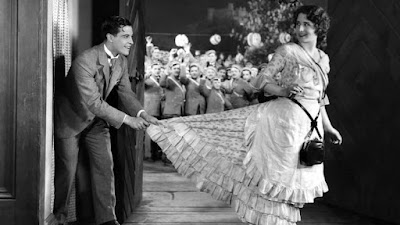
Em Heidelberg, Karl Heinrich se apaixona instantaneamente por Kathi (Norma Shearer), que trabalha em uma pousada local – e ela se apaixona por ele também! Todos sabem que Kathi é a garota mais bonita de Heidelberg, e que consegue beber uma garrafa cheia de cerveja de uma só vez, o que impressiona o príncipe. O problema é que Kathi é meio noiva, já que ela não sabe se ama seu noivo. E Karl Heinrich também já está comprometido com outra pessoa.
In Heidelberg, Karl Heinrich instantly falls in love with Kathi (Norma Shearer), who works at a local inn – and she falls for him too! Everybody knows that Kathi is the prettiest girl in Heidelberg, and someone who can drink a full mug of beer at once, which amazes the prince. The problem is that Kathi is kind of engaged, because she doesn’t know if she loves the guy. And Karl Heinrich was also promised to marry someone else.

O príncipe faz amizade com um grande grupo de estudantes e passa a festejar e beber com eles. Ele se aproxima de Kathi e os dois saem juntos e fazem planos. A diversão deles é interrompida pela notícia de que o rei Karl VII está doente, o que significa que Karl Heinrich precisa voltar imediatamente para Karlsburg.
The prince befriends a large group of students and starts drinking and partying hard with them. He becomes close to Kathi and the two go out and make plans. Their fun is interrupted by the news that king Karl VII is ill, which means that Karl Heinrich must return immediately to Karlsburg.

Há relativamente poucas cartelas de texto no filme, quando comparado a outros filmes do período – em especial os de Griffth! Alguns momentos poderiam ser melhorados com a adição de uma ou duas cartelas de texto – como quando Kathi está declamando um poema para o príncipe e se esquece do final. As pessoas creditadas como designs de títulos são Marian Ainslee e Ruth Cummings. No IMDb, não há muito sobre Ainslee, apenas que ela trabalhou majoritariamente como design de títulos, e na era sonora sua maior contribução foi ter dado a ideia para o filme “Dance Comigo” (1938), de Astaire e Rogers. Ruth Cummings era casada com o diretor Irving Cummings e mãe do roteirista Irving Cummings Jr.
There are relatively few title cards in this movie, when compared with others from the period – especially Griffith’s! Some moments could be better with the addition of a title card or two – like when Kathi is saying a poem to the prince and forgets the ending. The people credited as title designers are Marian Ainslee and Ruth Cummings. On IMDb, there is not much on Ainslee, only that she worked mostly making title cards for movies, and in the talkie era her main credit was “based on an original idea by” in the Astaire-Rogers vehicle “Carefree” (1938). Ruth Cummings was married to director Irving Cummings and mother of screenwriter Irving Cummings Jr.

Cedric Gibbons é uma das duas pessoas responsáveis pela decoração dos sets. Os sets são simples mas decorados com bom gosto. Há, entretanto, um belo campo artificial usado em uma cena de amor. Nós – e a comitiva do príncipe – esperávamos que ele ficasse em um resort ou hotel chique em Heidelberg, mas é numa pousada comum que ele encontrou amor e felicidade.
Cedric Gibbons is one of two people responsible for the sets. The sets are simple yet decorated in a pleasant manner. There is, however, a beautiful artificial field used in the famous love scene. We – and the prince’s entourage – expected him to stay in a fancy resort or hotel in Heidelberg, but it is in a common inn that he found love and happiness.

Tanto Ramon Novarro quanto Norma Shearer já eram grandes estrelas em 1927. Novarro estava mais bonito em two-strip Technicolor em “Ben-Hur” (1925), mas está bem aqui também. Shearer teria seus melhores trabalhos – e um Oscar – nos anos posteriores a “O Príncipe Estudante”. Curiosidade interessante:: Lubitsch achava que tanto Novarro quanto Shearer foram péssimas escolhas para os protagonistas do filme!
Both Ramon Novarro and Norma Shearer were already big stars in 1927. Novarro had looked better in two-strip Technicolor in “Ben-Hur” (1925), but looks good here too. Shearer would find her best work – and an Oscar – in the years after “The Student Prince in Old Heidelberg”, during the pre-Code era. Interesting trivia: Lubitsch thought that both Novarro and Shearer were miscast as the leads!
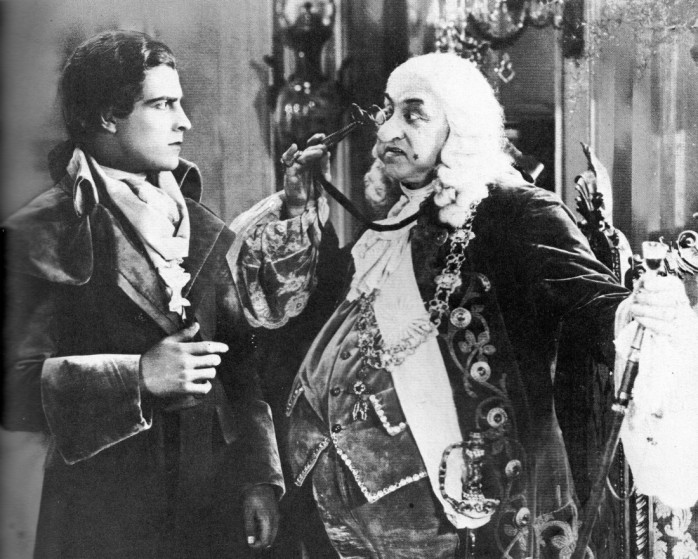
Gustav von Seyffertitz já é um velho conhecido dos fãs de cinema mudo. Entre seus trabalhos mais lembrados destacamos sua atuação como o vilão que inferniza a vida de Mary Pickford em “Aves Sem Ninho” (1926). Jean Hersholt era um ator dinamarquês que começou a atuar nos cinemas em 1906 e interpretou principalmente vilões em seus primeiros anos em Hollywood – bem diferente de seu papel em “O Príncipe Estudante”!
Gustav von Seyffertitz is already an old acquaintance of silent film fans. Among his best remembered works we highlight his turn as the bad guy making Mary Pickford’s life miserable in “Sparrows” (1926). Jean Hersholt was a Danish actor who started acting in movies in 1906 and played mainly villains in his first few years in Hollywood – so far away from his character in “The Student Prince in Old Heidelberg”!

“O Príncipe Estudante” teve um remake em 1954, com Edmund Purdom e Ann Blyth. Este foi um musical, pois a história havia se originado em uma opereta em 1902. O filme, entretanto, não manteve todas as canções da opereta e mudou a maioria das letras das canções que manteve. A voz de Edmund Purdom, nos momentos de cantoria, foi dublada por Mario Lanza.
“The Student Prince in Old Heidelberg” was remade in 1954 with Edmund Purdom and Ann Blyth. This was a musical, as the story originated in an operetta in 1902. The film, however, didn’t keep all the songs from the operetta and changed most of the lyrics. Edmund Purdom’s singing was dubbed by Mario Lanza.

“O Príncipe Estudante” é um filme mais complexo e melancólico do que aparenta ser de início. Como dito no site do TCM, é mais próximo dos filmes que Lubitsch fez na Alemanha do que dos filmes que ele faria em Hollywood. Baseado apenas neste filme, diríamos que o toque de Lubitsch é como o de Chaplin: um sorriso e, talvez, uma lágrima. Mas, talvez, possamos dizer outra coisa: que Lubitsch é muito mais que seu famoso toque.
“The Student Prince in Old Heidelberg” is a more complex and melancholic movie than it seems at first. As the TCM website mentions, it’s closer to the movies Lubitsch did in Germany than the ones he’d make in Hollywood. Based solely on this film, we would say that Lubitsch’s touch is like Chaplin’s: a laugh and perhaps a tear. But, maybe, we could say something else: Lubitsch was much more than his touch.
This is my contribution to the Odd or Even blogathon, hosted by Gill and Rebecca at Realweegiemidget Reviews and Taking Up Room.