} Crítica Retrô: Revolução Francesa

Tradutor / Translator / Traductor / Übersetzer / Traduttore / Traducteur / 翻訳者 / переводчик

Showing posts with label Revolução Francesa. Show all posts

Saturday, September 7, 2019

Scaramouche (1923)


Podia acontecer de tudo durante a Revolução Francesa – e, de fato, todos os tipos de coisas que pareciam impossíveis aconteceram durante a Revolução Francesa. O povo primeiro tomou a Bastilha, depois o Palácio das Tulherias, depois as ruas. O rei e a rainha perderam suas cabeças. Então o terror tomou conta, e a guilhotina trabalhou noite e dia. Enquanto tudo isso acontecia, as pessoas continuaram vivendo e amando, buscando vingança, justiça e procurando pela verdade. Em “Sacaramouche”, uma aventura ambientada durante a Revolução Francesa, nosso herói faz tudo isso que eu descrevi – mais do que muitas pessoas fazem durante a vida toda.

Everything could happen during the French Revolution – and, indeed, all kinds of things that seemed impossible did happen during the French Revolution. The people first took the Bastille, then took the Tuileries, then took the streets. A king and a queen lost their heads.  Then terror took over, and the guillotine worked night and day. While all this was happening, people kept on living and loving, seeking revenge, justice and looking for the truth. In “Scaramouche”, an adventure set during the French Revolution, our hero does all those things I’ve just described – more than many people do in a lifetime.  


No vale de Gavrillac, os melhores amigos André-Louis Moreau (Ramon Novarro) e Philippe de Vilmorin (Otto Matiesen) veem a pobreza, a fome e a morte infligidas no povo por um nobre local, o Marquês de La Tour D’Azyr (Lewis Stone). O eloquente Philippe desafia o Marquês e é morto em uma luta de esgrima. André promete vingança, usando a eloquência como sua arma contra o Marquês.

In the valley of Gavrillac, best friends André-Louis Moreau (Ramon Novarro) and Philippe de Vilmorin (Otto Matiesen) see the poverty, starvation and death that are inflicted upon the locals by a nearby nobleman, the Marquis de La Tour D’Azyr (Lewis Stone). The eloquent Philippe defies the Marquis and is killed in a sword fight. André vows to seek revenge, using eloquence as his weapon against the Marquis.


O padrinho de André, Quintin de Kercadiou (Lloyd Ingraham), tenta dissuadi-lo da busca por justiça contra o Marquês – na verdade, Quintin espera que o Marquês se case com sua filha, Aline (Alice Terry). Agora tudo ficou ainda mais pessoal para André, pois ele também está apaixonado por Aline.

André's godfather, Quintin de Kercadiou (Lloyd Ingraham), tries to dissuade him from seeking justice against the Marquis – in fact, Quintin hopes that the Marquis marries his daughter, Aline (Alice Terry). Now things get even more personal to André, as he, too, is in love with Aline.


A Revolução Francesa está acontecendo, e tudo está mudando muito rápido. André carrega consigo a cópia da Declaração dos Direitos do Homem e do Cidadão que Philippe levava sempre. André nunca perde uma oportunidade de fazer um discurso sobre a Declaração e sobre como a nobreza não pode mais oprimir o povo.

The French Revolution is underway, and things are changing fast. André carries with him the copy of the Declaration of the Rights of the Man and of the Citizen that Philippe used to carry. André never wastes an opportunity to make a speech about this Declaration and how the nobility can no longer oppress the people.
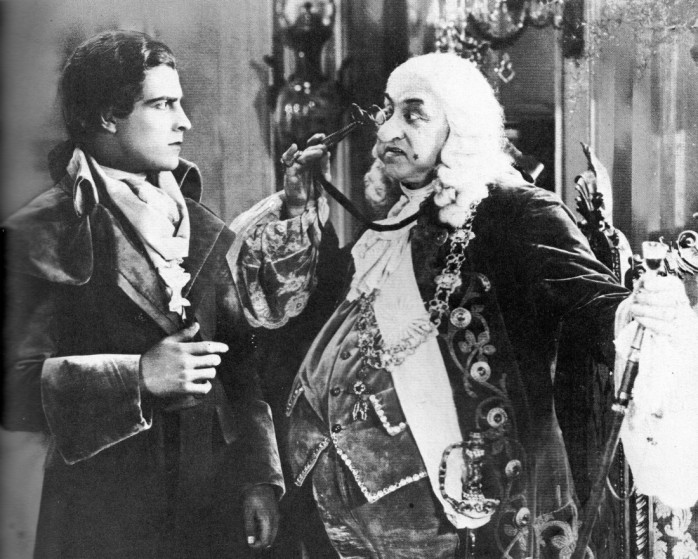

Agora perseguido pelos soldados do rei, André se junta a um grupo de artistas itinerantes como dramaturgo, depois de mostrar a todos sua eloquência e sabedoria. Agora chamado simplesmente de Monsieur X, André está com o grupo há um ano quando ele termina de escrever a ousada peça “Figaro – Scaramouche”. A peça estreia em um enorme teatro de Paris, e o próprio André interpreta Scaramouche, mas seu rosto é ocultado por uma máscara com um longo nariz.

Now being persecuted by the King's soldiers, André joins a group of travelling artists as a playwright, after he shows all his eloquence and wit. Now called simply Monsieur X, André has been with the group for a year when he finishes writing the daring play “Figaro – Scaramouche”. The play premieres in a huge theater in Paris, and André himself plays Scaramouche, but his face is hidden from the public by a mask with a long nose.


Tanto Aline quanto o Marquês de La Tour estão na estreia da peça, mas apenas Aline reconhece André. Acreditando que os dois estão juntos, André decide se casar com a atriz Climène (Edith Allen)... mas ela também é seduzida pelo Marquês! Mais sofrimento para André.

Both Aline and the Marquis de La Tour attend the premiere of the play, but only Aline recognizes André. Believing they are together, André decides to marry a fellow actress, Climène (Edith Allen)... but she is seduced by the Marquis as well! Heartache follows.


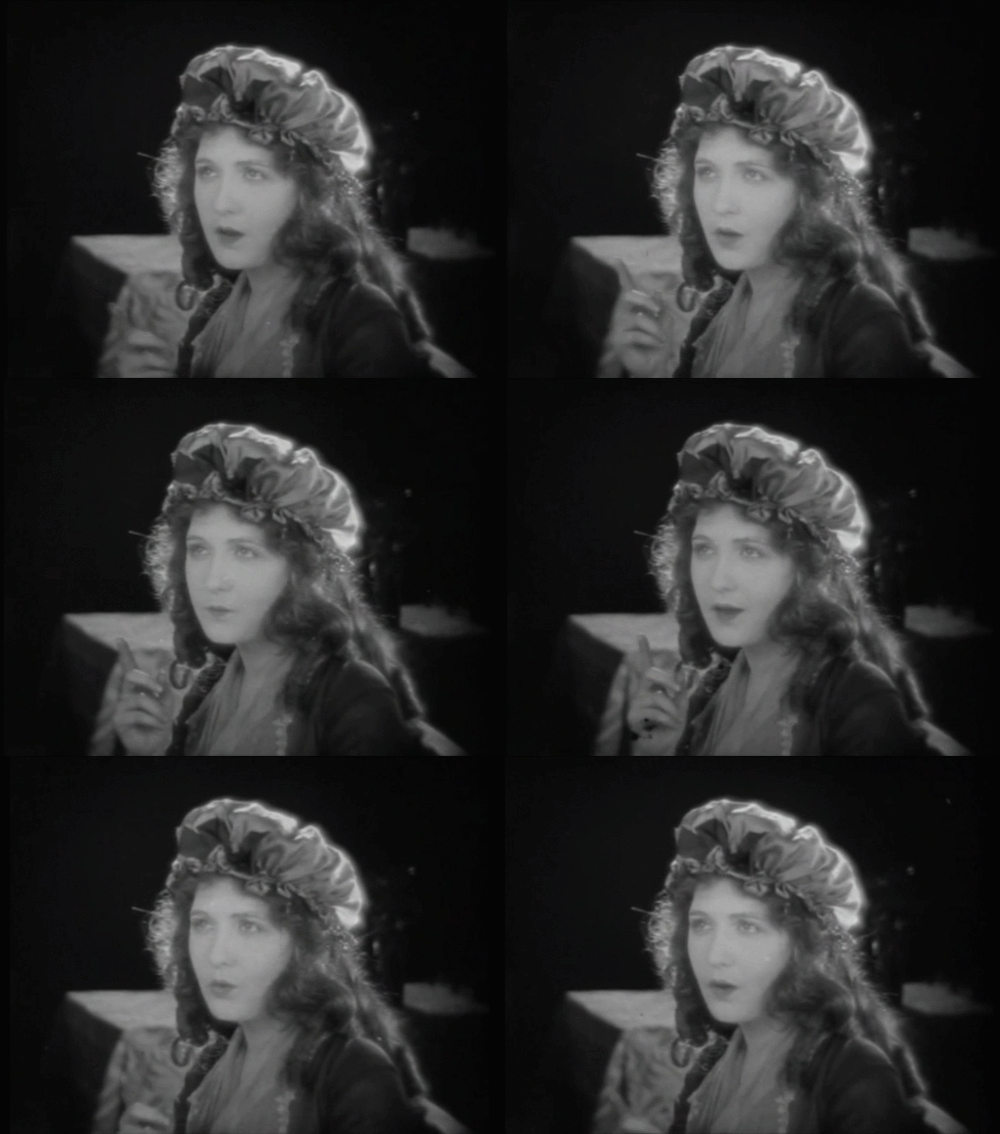
Mas e a Revolução Francesa? Agora a Assembleia Nacional está reunida, e a nobreza desesperada pode apenas usar sua habilidade com a espada para desafiar deputados do povo. Por isso, Danton (George Siegman) convida André – não mais artista, mas agora assistente de um professor de esgrima – para fazer parte da Assembleia. Então, haverá lutas de espada, reviravoltas na trama e um monte de pessoas nas ruas de Paris, incluindo esta mulher muito exaltada:

But the French Revolution was underway, wasn't it? Now the National Assembly is reunited, and the desperate nobility can only use their ability with the sword to fight deputies who speak for freedom. So, Danton (George Siegman) invites André – no longer an artist, but a fencing teaching assistant – to take part in the Assembly. Then, there will be sword fights, plot twists and a lot of fed up people on the streets of Paris, including this overly excited woman:
 
GIF via Movies, Silently
Feito pela Metro Pictures um ano antes da fusão que a transformou em MGM, “Scaramouche” é baseado num livro de 1921 escrito por Rafael Sabatini. O diretor Rex Ingram escolheu seus colaboradores frequentes Novarro, Stone e Alice Terry para os três papéis principais – e é interessante ver Lewis Stone como vilão, considerando que anos depois ele interpretaria o afável Juiz Hardy, pai de Andy Hardy em uma série de filmes.

Made by Metro Pictures one year before it merged to become MGM, “Scaramouche” is based on a 1921 novel written by Rafael Sabatini. Director Rex Ingram chose his usual collaborators Novarro, Stone and Alice Terry for the three main roles – and it’s interesting to see Lewis Stone as a villain, considering that years later he would play the affable Judge Hardy, Andy Hardy’s father in a series of movies.


Ramon Novarro, embora tenha seus olhos brilhantes capturados pela câmera de Ingram, infelizmente não está tão bonito como estaria dois anos depois em “Ben-Hur” (1925). Alice Terry, por outro lado, não tem uma personagem com muitas camadas para interpretar, mas está charmosa em todos os seus momentos em cena.

Ramon Novarro, although with glowing eyes captured by Ingram’s camera, unfortunately, is not as handsome here as he would be two years later in “Ben-Hur” (1925). Alice Terry, on the other hand, doesn’t have a character with many layers to play, but is charming every time she’s on screen.


“Scaramouche” é um filme com muitas cartelas de texto, o que é compreensível: uma história tão complexa não poderia ser contada com poucas cartelas. A história é tão complexa e cheia de reviravoltas que em alguns momentos ela se torna enfadonha – e todos sabemos que filmes mudos NÃO são chatos, tomando como exemplo o conto pacifista de 1919 “Eu Acuso!”. Como bônus, o filme é muito fiel ao livro, ao contrário do remake colorido de 1952.

“Scaramouche” is a film with lots of intertitles, which is understandable: such a complex story couldn't be told with only a few title cards. The tale is so complex and so full of twists that sometimes the film gets a bit boring – and we all know that silent films are NOT boring, take for instance the 1919 pacifistic tale “J’Accuse!”. As a bonus point, the film is very faithful to the novel, unlike the 1952 color remake.


Assim como em todos os dramas históricos, “Scaramouche” também tem muitos cenários lindamente decorados e incríveis figurinos, cabelos e maquiagens – detalhe: todo mundo tem uma pinta no rosto, algumas delas desenhadas em forma de coração ou estrela! Mas o destaque é para a reconstituição perfeita da Assembleia Nacional.

As it happens to most historical films, “Scaramouche” also has many beautifully decorated sets and amazing costumes, hair and make-up – detail: everybody has a beauty mark, some of them are drawn as hearts or stars! But the highlight is the perfect reconstitution of the National Assembly.


Com poucas lutas de espada emocionantes e alguns momentos chocantes – uma participação histórica especial te surpreenderá – “Scaramouche” é um filme que mostra como o cinema mudo podia ser visualmente belo. Na época, eles não precisavam de diálogos, eles tinham rostos – e cenários e figurinos para impressionar qualquer um.

With few exciting sword fights and a few shocks – one historical cameo will surprise you – “Scaramouche” is a film that shows how visually beautiful silent films can be. At the time, they didn’t need dialogue, they had faces – and sets, and costumes to amaze anyone.

This is my contribution to the Costume Drama blogathon, hosted by Debbie at Moon in Gemini.


Saturday, August 13, 2016

A Sombra da Guilhotina / Reign of Terror (aka The Black Book, 1949)

Uma narração policial abre o filme. Tudo muito noir e comum, se a narração não estivesse nos apresentando os protagonistas da fase mais sangrenta da Revolução Francesa. Quando alguns minutos se passam e as lições de história da época da escola são refrescadas na memória, tudo faz sentido: com muitas conspirações, traições e assassinatos, a Revolução Francesa é a época ideal para se ambientar um filme noir.

A policial narration opens the movie. This is very common in noir, but the odd thing is that the narration is presenting was the characters of the bloodiest phase of the French Revolution. When some minutes pass and the history lessons from school come back to our minds, everything makes sense: with a lot of conspiracy, treason and murder, the French Revolution is the perfect time for a film noir to be set.


O nome de todos os inimigos da França e os crimes que podem condená-los estão escritos em um livro de capa preta, que acaba de ser roubado. Robespierre (Richard Basehart) contrata o sanguinário carrasco Duval (Charles Gordon) para achar o livro em 24 horas. Chegando em Paris, Duval é emboscado e assassinado por Charles D’Aubigny (Robert Cummings), que toma seu lugar, uma vez que nenhum dos aliados de Robespierre conhecia Duval pessoalmente.

The names and crimes of all 'enemies of France' are writen in a black book that has just been stolen. Robespierre (Richard Basehart) hires sanguinary killer Duval (Charles Gordon) to find the book within 24 hours. Arriving in Paris, Duval is murdered by Charles D'Aubigny (Robert Cummings), who takes his place without problems, since Robespierre and his allies didn't know Duval in person.


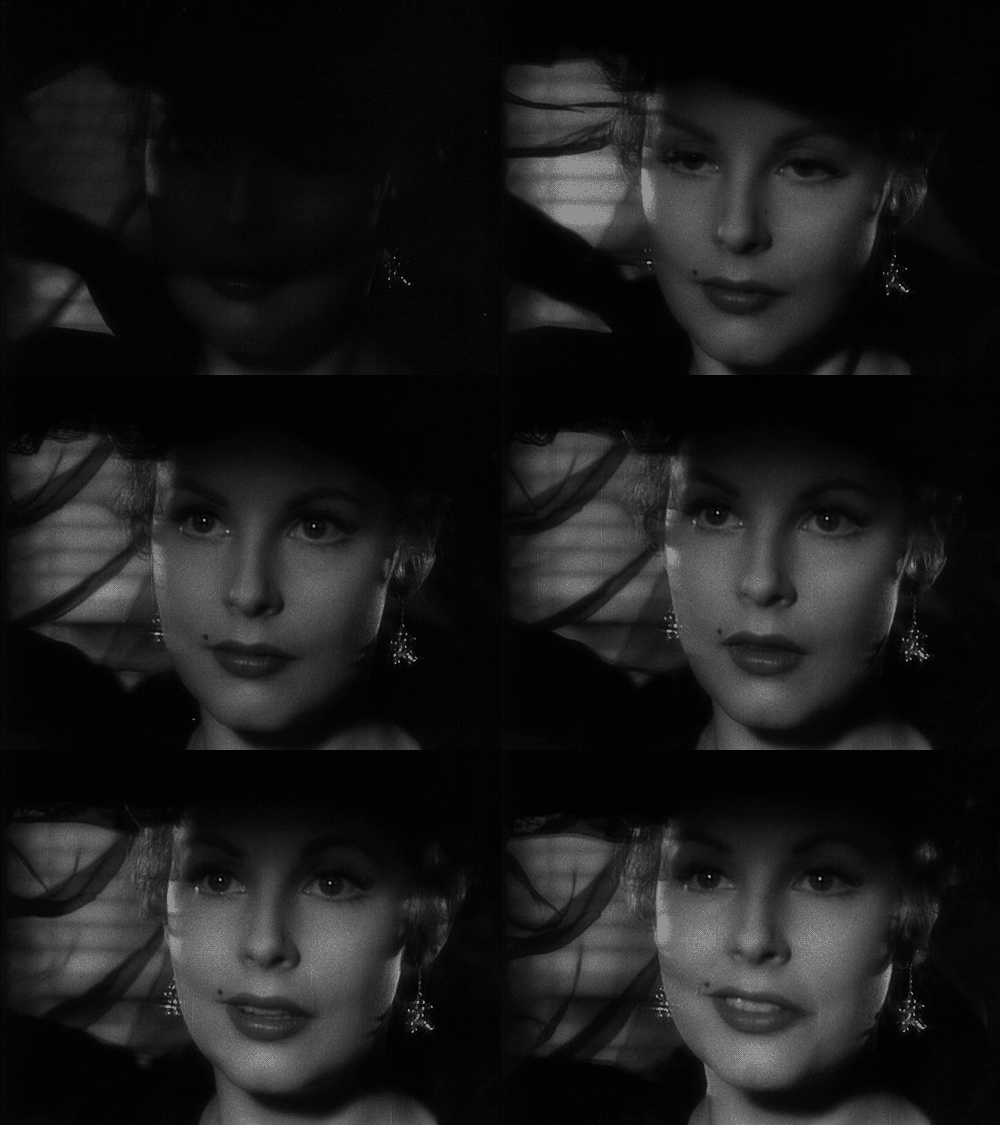
Tudo é parte de um grande plano para impedir o louco Robespierre de se tornar ditador. A rede de conspiração está em todo lugar: nos bares, em passagens secretas e até nas feiras de Paris. Mas é muito perigoso fazer parte desta rede. Uma das integrantes dela é Madelon (Arlene Dahl), uma velha e íntima conhecida de Charles.

Everything is part of a big plan to prevent crazy Robespierre from becoming dictator. The conspiracy network is everywhere: in bars, in secret passages and even in the marketplaces in Paris. But it is very dangerous to be part of this network. One of the conspirators is Madelon (Arlene Dahl), Charles's old and intimate acquaintance.


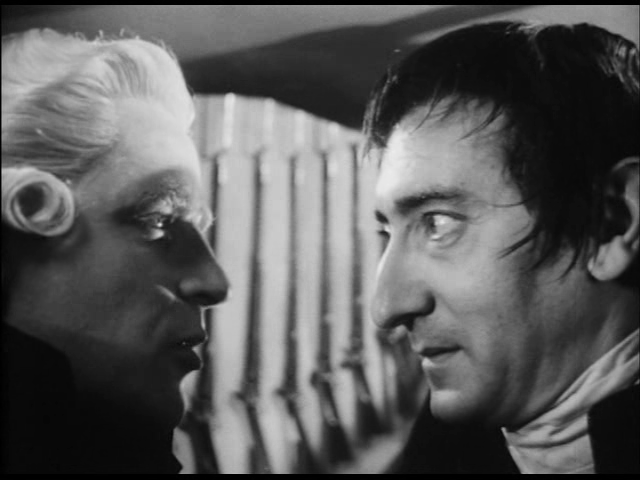
Não é apenas porque a fotografia é em preto e branco que o filme é considerado noir. A característica noir principal de “A Sombra da Guilhotina” é seu imaginativo e expressivo uso da iluminação. E quem está por trás disto é o habilidoso cinegrafista John Alton, que também trabalhou em “A Cicatriz” e “Demônio da Noite”, ambos de 1948.

It’s not only because of the black and white photography that we classify this film as noir. The main noir characteristic in “Reign of Terror” is its imaginative and expressive use of light. And the guy who does that is the talented cinematographer John Alton, who also worked in “The Scar” and “He walked by night”, both from 1948.


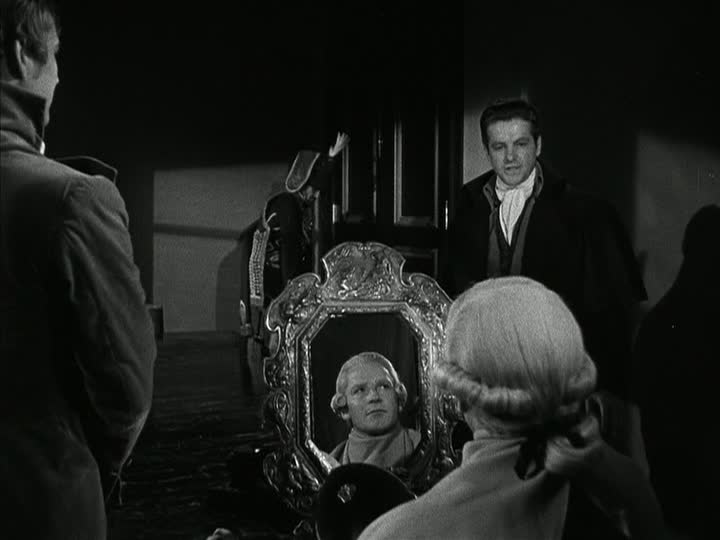
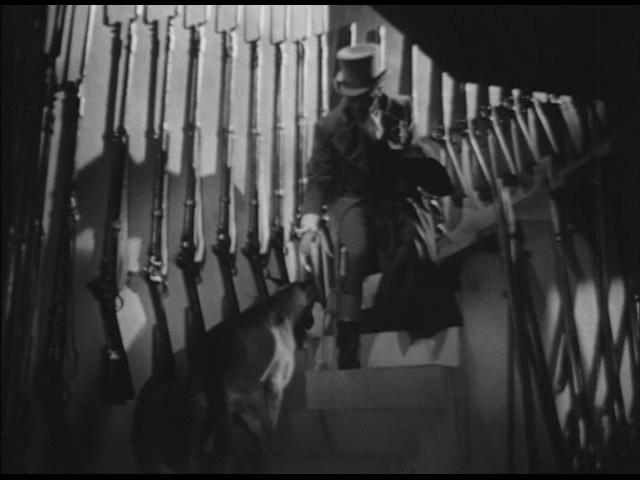
Há momentos em que as sombras são usadas com maestria e também closes expressionistas e exagerados nos rostos de alguns personagens. Os ângulos escolhidos são inusitados, a luz de velas é artificializada ao extremo e sombras aparentemente inúteis (como a da janela no primeiro encontro de Robespierre com Barras e Fouché) gritam noir em um filme histórico.

There are shadows used with mastery and also expressionist, exaggerated close-ups are used in some characters’ faces. The chosen angles are daring, the candlelight is made artificial to extreme, and the apparently useless shadows (like the one coming from the window, when Robespierre first meets Barras and Fouché) scream noir in a historical film.


A Sombra de Guilhotina” foi feito, vejam só, por um dos estúdios menores de Hollywood, o nanico Republic. Como todo estúdio poverty row, a Republic também usava cenários reciclados dos estúdios maiores, e aqui não foi diferente: estão irreconhecíveis os cenários reutilizados de “Joana D’Arc” (1948). O que luz e fotografia não são capazes de fazer com um set de filmagem!

Reign of Terror” was made, mind you, by a small poverty row studio called Republic. As many poverty row studios did, Republic also recycled sets from bigger studios, and does it here: the sets were previously used in “Joan of Arc” (1948), but you can’t easily tell they are the same. Black and white photography and proper cinematography can make a huge difference in a movie set!


E a Republic tinha naquela época ainda um homem que não havia sido maculado pelo faroeste: Anthony Mann, aos poucos conquistando seu lugar ao sol. Mann era um dos maiores talentos da Republic e “A Sombra da Guilhotina” é uma de suas obras menos celebradas.

And Republic had then a man not yet touched by westerns: Anthony Mann, who was slowly getting his place in the Sun. Mann was one of the most talented employees from Republic and “Reign of Terror” is one of his less celebrated great films.


E como você se sentiria estando no lugar de Charles? Quando estudamos sobre governos ditatoriais e outros problemas da história, sempre pensamos que poderia ter sido diferente. E foi por causa de gente como Charles que a história não foi ainda pior. É muito difícil, sofrido e perigoso ser como Charles e se arriscar para mudar o rumo da história. É mais seguro e cômodo e uma questão de sobrevivência ficar no seu canto, sem se rebelar contra o mal. Mas felizmente existem homens como Charles, que querem mudar o mundo. E felizmente existem filmes como “A Sombra da Guilhotina” para que todos possamos nos colocar ao menos uma vez no lugar dos homens mais destemidos.

And how would you feel if you were in Charles’s place? When we study about dictatorial governments and other historic mishaps, we always thing what could have been different. And it was because of people like Charles that history wasn’t even worse. It’s very difficult, sad and dangerous to be like Charles and risk yourself to change history. It’s safer and a matter of survival to be quiet in your place, without rebelling against evil. But fortunately there are men like Charles wanting to change the world. And fortunately there are films like “Reign of Terror” so we all can at least once put ourselves in the place of the most fearless men.

This is my contribution to the Film Noir Blogathon, hosted by Quiggy at The Midnite Drive-In.

Saturday, September 7, 2013

Órfãs da Tempestade (1921) / Orphans of the Storm (1921)

Dia cinco de setembro foi comemorado aqui no Brasil o Dia do Irmão. Eu não tenho irmãos, mas se tivesse gostaria que minha relação com ele / ela fosse igual a da de duas famosas irmãs do cinema mudo: Lillian e Dorothy Gish. Juntas ou separadas, elas eram imbatíveis em talento. Quando atuando num mesmo filme, Lillian e Dorothy eram normalmente irmãs também nas telas e a relação de amor e cumplicidade transparecia. Um dos exemplos mais contundentes é o último filme que as irmãs fizeram com o megalomaníaco D. W. Griffith, “Órfãs da Tempestade”, um drama eletrizante sobre a Revolução Francesa.


September 5th is Siblings Day in Brazil. I don’t have siblings, but if I had I’d like my relationship with him/her to be like the one between two famous sisters from silent cinema: Lillian and Dorothy Gish. Together or not, they had an immense talent. When acting in the same movie, Lillian and Dorothy were often also sisters on screen and you could see how much they loved and cared for each other. One of the biggest examples is the last film that the sisters made with megalomaniac D.W. Griffith, “Orphans of the Storm”, a sizzling drama about the French Revolution.

Uma família nobre pode cair em desgraça quando uma moça da família tem uma filha com um homem simples. A menina, de nome Louise, é abandonada na escada da Catedral de Notre Dame. O mesmo gesto faz o pobre Girard, que se arrepende e, além de voltar para casa com a filha, leva também o outro bebê abandonado. Henriette Girard (Lillian Gish) e Louise (Dorothy Gish) crescem como irmãs de sangue que se adoram e se apóiam quando os pais morrem. Logo depois, outra tragédia: Louise fica cega e Henriette decide levá-la para Paris, onde tem esperança de que algum médico seja capaz de curá-la. As irmãs não poderiam ter escolhido época pior para a viagem: estamos em 1789, às vésperas da Revolução Francesa.


A noble family can become disgraced when a female member has a child with a man from a social class below them. The girl, named Louise, is abandoned on the stairs of the Notre Dame Cathedral. This is the same gesture of the poor Girard, who regrets doing so and, besides coming back home with his daughter, takes with him the other abandoned baby. Henriette Girard (Lillian Gish) and Louise (Dorothy Gish) grow up as de facto sistrs who love each other and support each other when their parentes pass away. Soon after, another tragedy: Louise becomes blind and Henriette decides to take her to Paris, where she has hope that some doctor can cure her. The sisters couldn’t have picked a worse time for their trip: it’s 1789, right before the French Revolution. 

Um detestável aristocrata, o Marquês de Praille (Morgan Wallace), um homem que exagerava ao aplicar talco no rosto, se encanta por Henriette e a sequestra, levando-a até uma de suas famosas orgias, onde um bom aristocrata, Chevalier de Vaudrey (Joseph Schildkraut) se apaixona pela moça. Louise é deixada sozinha nas ruas e é resgatada por Pierre Frochard (Frank Puglia), a “ovelha branca”, o único bom elemento de uma família de mendigos. A senhora Frochard (Lucille La Verne) não demora a ameaçar Louise e a usa para pedir esmolas em Paris. E aí estoura a Revolução.

A deplorable aristocrat, the Marquis de Praille (Morgan Wallace), a man who used too much talcum powder, falls fro Henriette and abducts her, taking her to one of his famous orgies, where a good aristocrat, Chevalier de Vaudrey (Joseph Schildkraut) falls in love with the lady. Louise is abandoned on the streets and rescued by Pierre Frochard (Frank Puglia), the “white sheep”, the only good member from a Family of beggars. Mrs Frochard (Lucille La Verne) takes little time until she threatens Louise and uses her to beg on the streets. And then the Revolution starts.

Mais uma vez Griffith extrapola em sua megalomania, e não apenas por criar um filme de quase duas horas e meia. Ele insere muitos personagens e cria cenários suntuosos, quase à altura dos de “Intolerância” (1916), que exigem um figurino igualmente luxuoso e centenas de extras (um deles foi inclusive decapitado nas filmagens). Mas não foi nada fácil levar a história às telas. Baseando-se em uma peça francesa, Griffith escreveu o roteiro, relutando em copiar as duas versões anteriormente filmadas, em 1911 e 1915 (esta última com Theda Bara como Henriette, infelizmente, está perdida). Quem tinha os direitos sobre a peça era a atriz Kate Claxton, que se popularizou ao interpretar a protagonista no teatro, e não queria autorizar Griffith a adaptar a peça para o cinema. Depois de convencê-la, parece que Kate liberou de vez e vendeu os direitos também para o cinema alemão, que pretendia lançar sua versão no mercado junto à de Griffith. Coube ao diretor, então, comprar os direitos de distribuição da película alemã e adiar sua estreia. Ufa!

Once again Griffith goes big on his megalomania, and not only because he made a two-and-a-half-hours movie. He adds too many characters and creates sultry sets, almost like in “Intolerance” (1916), that demand na equally luxury wardrobe and hundreds of extras (one of them was even decapitated during filming). But it wasn’t at all easy to transplante the story to the screen. Based on a French play, Griffith wrote the screenplay, unsure about copying the two times the story was filmed, in 1911 and 1915 (this one with Theda Bara as Henriette is unfortunately lost). The one who had the rights for the play was the actress Kate Claxon, who became famous for playing the lead in the theater, and didn’t want to give the rights to Griffith to make this film. After convincing her, it looks like Claxon’s mind was fully changed, as she also sold the rights to German filmmakers who wanted to make their version and release it together with Griffith’s. So the diretor had to buy the rights for the distribution and postpone the premiere of the German film. Phew! 

Assim como em “Intolerância”, Griffith tenta passar uma mensagem, que fica clara logo no começo: não devemos acreditar em líderes fanáticos, como os bolcheviques. Essa mensagem agradou muito ao governo, tanto é que pouco depois do lançamento o elenco foi convidado para uma visita à Casa Branca. E, tirando essa explicação do início, há relativamente poucos intertítulos, de modo que cabe ao espectador gerar a maioria dos diálogos e súplicas em sua mente.

Like in “Intolerance”, Griffith tries to spread a message, one clear since the beginning: we can’t trust fanatic leaders, such as the bolsheviks. This message pleased the government, so much that a little while after the première the cast was invited to the White House. And, excluding the explanation from the beginning, there are relatively few title cards, so the viewer has to create most of the dialogues and pleas in his / her mind.  

É impossível ver esse filme sem se lembrar do livro de Charles Dickens adaptado para o cinema em 1935, “A Queda da Bastilha”. De fato, Griffith pesquisou alguns detalhes nesta obra e em livros de História para dar mais veracidade ao roteiro. Ele inclusive adicionou as figuras históricas de Danton (Monte Blue, muito alto) e Robespierre (Sidney Herbert, parecido com Basil Rathbone). Muitas cenas deste e do filme de 1935 são incrivelmente parecidas e aprendemos duas coisas dessas obras: além de muitos inocentes terem sido condenados à guilhotina, as mulheres más da época sempre usavam bigode. A vilã senhora Frochard é interpretada por Lucille La Verne, ícone do teatro que emprestaria sua voz à madrasta de “A Branca de Neve e os Sete Anões” (1937).

It’s impossible to watch this movie and not remember the Charles Dickens book adapted to the screen in 1935, “A Tale of Two Cities”. Indeed, Griffith researched some details in this work and other History books to give veracity to the screenplay. He even added historical figures such as Danton (Monte Blue, very tall) and Robespierre (Sidney Herbert, looking like Basil Rathbone). Many scenes from this film and the 1935 film look incredibly alike and we can learn two things from these works: besides the fact that many innocent people were sent to the guillotine, the evil women of the time Always had a mustache. The villain Mrs Frochard is played by Lucille La Verne, a theater icon who would later dub the villain from “Snow White and the Seven Dwarves” (1937).   

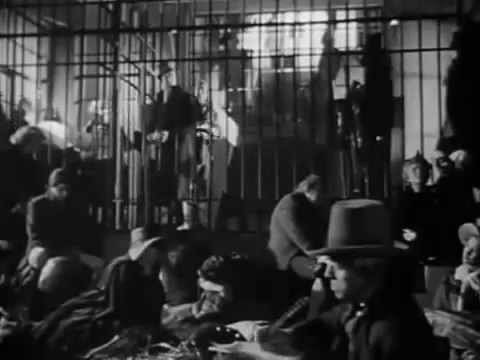
"Órfãs da Tempestade", 1921

"A Queda da Bastilha", 1935

Embora Lillian seja a mais conhecida das irmãs, Dorothy também sabe brilhar. Nascida Dorothy Elizabeth Gish cinco anos depois da irmã, ela cortou o cordão que a amarrava a Lillian quando Griffith começou a exagerar em seus filmes. Ambas estrearam sob as câmeras do diretor, seguindo o conselho da amiga Mary Pickford, em 1912 e, quando Lillian rodava “O Nascimento de uma Nação” (1915), Dorothy aproveitou para fazer curta-metragens, mas sua história sempre esteve ligada a Griffith. Era ele o supervisor desses filmes curtos e foi em um filme de D. W. que ela realmente se destacou: “Hearts of the World” (1918), uma propaganda de guerra da qual Griffith mais tarde se arrependeu.


Even though Lillian is the best known out of the two sisters, Dorothy also knows how to shine. Born Dorothy Elizabeth Gish five years after her sister, she cut the cord that tied her to Lillian when Griffith started going too big in his films. Both debuted under the director’s câmeras, following the advice from friend Mary Pickford, in 1912, and when Lillian made “The Birth of a Nation” (1915), Dorothy enjoyed her time alone making short films, but her story was always tied to Griffith. He was the supervisor for these short films and it was in a movie by D.W. that she shone: “Hearts of the World” (1918), a wartime propaganda that later brought regret to Griffith.   

Lillian sempre teve muito amor pela irmã que a acompanhou desde o início da carreira. D. W. Griffith, diz a lenda, acreditou que elas eram gêmeas na primeira película que fizeram, embora eu ache isso difícil de acreditar (fica sempre evidente que Dorothy tem cabelo mais escuro e Lillian tem olhos maiores). Entretanto, com o passar do tempo ele dava menos atenção para a irmã mais nova, deixando-a chateada. Lillian tentava contornar essa frustração elogiando e mimando a irmã, e inclusive sugeriu que Griffith adaptasse “Órfãs da Tempestade” para as telas com a intenção de fazer de Dorothy a protagonista Henriette. Embora os papéis tenham sido trocados no final, a atuação de Dorothy é excelente e, sim, há quem diga que em alguns momentos ela está melhor que Lillian.

Lillian always loved her sister very much, as since the beginning of her career Dorothy was there. Griffith, some tell, believed that they were twins when he met them, but this is hard to believe (it’s always clear that Dorothy has darker hair and Lillian has bigger euyes). However, as time passed, he started giving less attention to the younger sister, which made her mad. Lillian tried to conter this frustration by making compliments and pampering the sister, and even suggested that Griffith should adapt “Orphans of the Storm” to the screen so Dorothy could be the lead Henriette. Even though the roles were swaped in the end, Dorothy’s acting is outstanding and, yes, there are people who claim that she is better than Lillian in a few moments.  


Assisti a uma versão do YouTube sem trilha sonora e, para não ficar no completo silêncio, coloquei como trilha músicas de Ennio Morricone, o que gerou situações interessantes em momentos chave (é incrível como o tema de "Era uma vez no Oeste" combina com a Revolução Francesa). A obra-prima das irmãs Gish pode ser encontrada no YouTube ou no Internet Archive.

I watched a version on YouTube without a soundtrack and, to avoid the complete silence, added as a soundtrack the musics of Ennio Morricone, what generated interesting situations in key moments (it’s amazing how the theme for “Once Upon a Time in the West” matches the French Revolution). The masterpiece of the Gish sisters can be found on YouTube or Internet Archive.  


This is my contribution for the Gish Sisters Blogathon, hosted by Fritzi at Movies, Silently, and Lindsey at The Motion Pictures. Silents rule!


Related Posts Plugin for WordPress, Blogger...