} Crítica Retrô: amizade

Tradutor / Translator / Traductor / Übersetzer / Traduttore / Traducteur / 翻訳者 / переводчик

Showing posts with label amizade. Show all posts

Thursday, June 6, 2019

Anjos Rebeldes (1966) / The Trouble with Angels (1966)


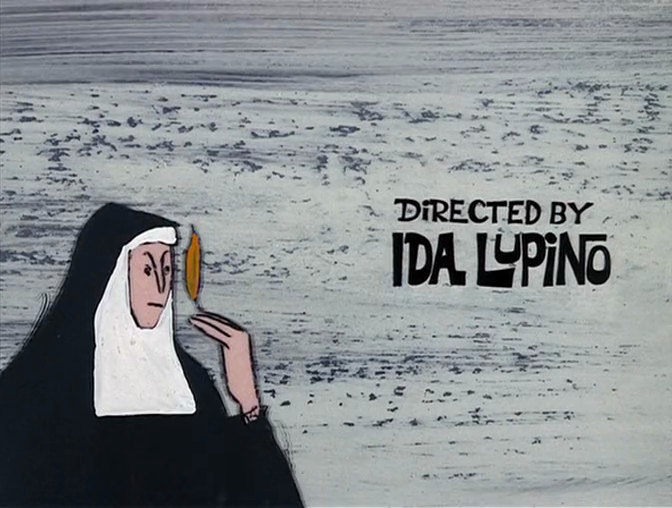
Se eu fosse julgar o filme “Anjos Rebeldes”, dirigido por Ida Lupino, apenas pela sequência de abertura animada, a nota dada seria de cinco estrelas. Créditos animados estavam na moda nos anos 60 – quem pode se esquecer de certa pantera cor de rosa que apareceu nos créditos de certo filme? – e a animação no começo de “Anjos Rebeldes” é uma lição perfeita sobre a arte de contar histórias.

If I was to judge the Ida Lupino-directed film “The Trouble with Angels” for its animated credits sequence, I'd give it a five star rating. Animated credits were in vogue in the 1960s – who could forget of a certain pink panther that appeared in the credits of a certain film? - and the animation work in the beginning of “The Trouble with Angels” is a perfect storytelling lesson.
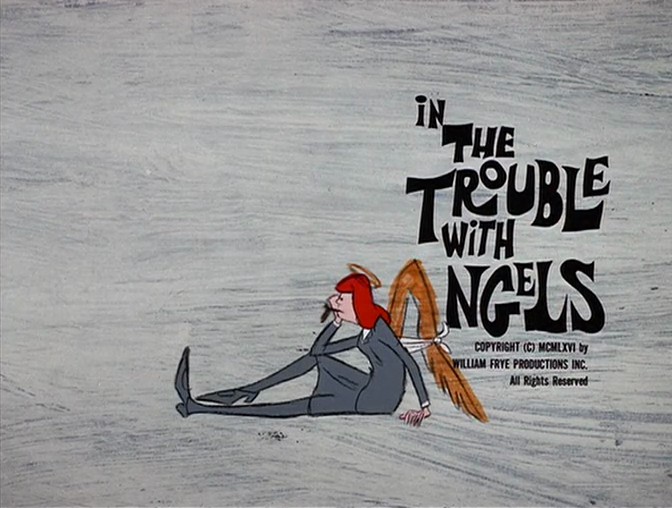

A partir dos créditos já sabemos que se trata de um filme sobre uma escola comandada por uma severa freira interpretada por Rosalind Russell. Também ficamos sabendo que a garota mais travessa da escola é interpretada pela superestrela adolescente Hayley Mills. De fato, Mary Clancy (Mills) chega à Academia São Francisco e logo diz que seu nome verdadeiro é Kim Novak. Depois disso, ela fuma no banheiro, leva as outras garotas para um passeio pelos aposentos da Madre Superiora e foge das aulas de natação na educação física.

From the credits we know the film is about a school run a by a strict nun played by Rosalind Russell. We also know that the naughtiest girl in that school is played by teen superstar Hayley Mills. Indeed, Mary Clancy (Mills) starts her attendance of the St. Francis Academy by saying her real name is Kim Novak. Next up she smokes in the bathroom, takes the other girls on tour to see the Mother Superior's room and escapes the swimming lessons in physical education class.
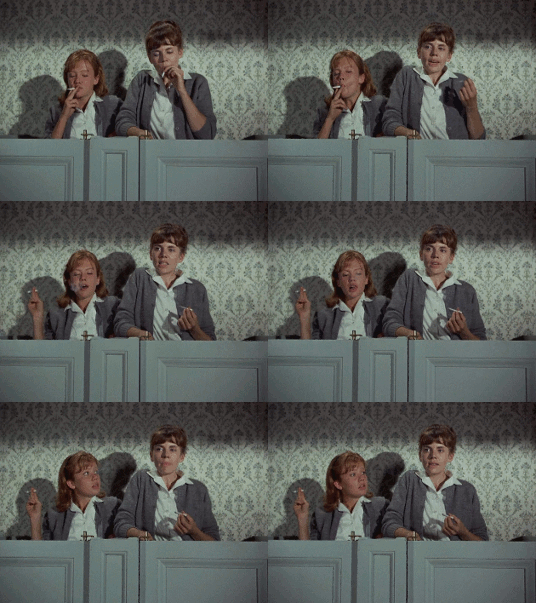

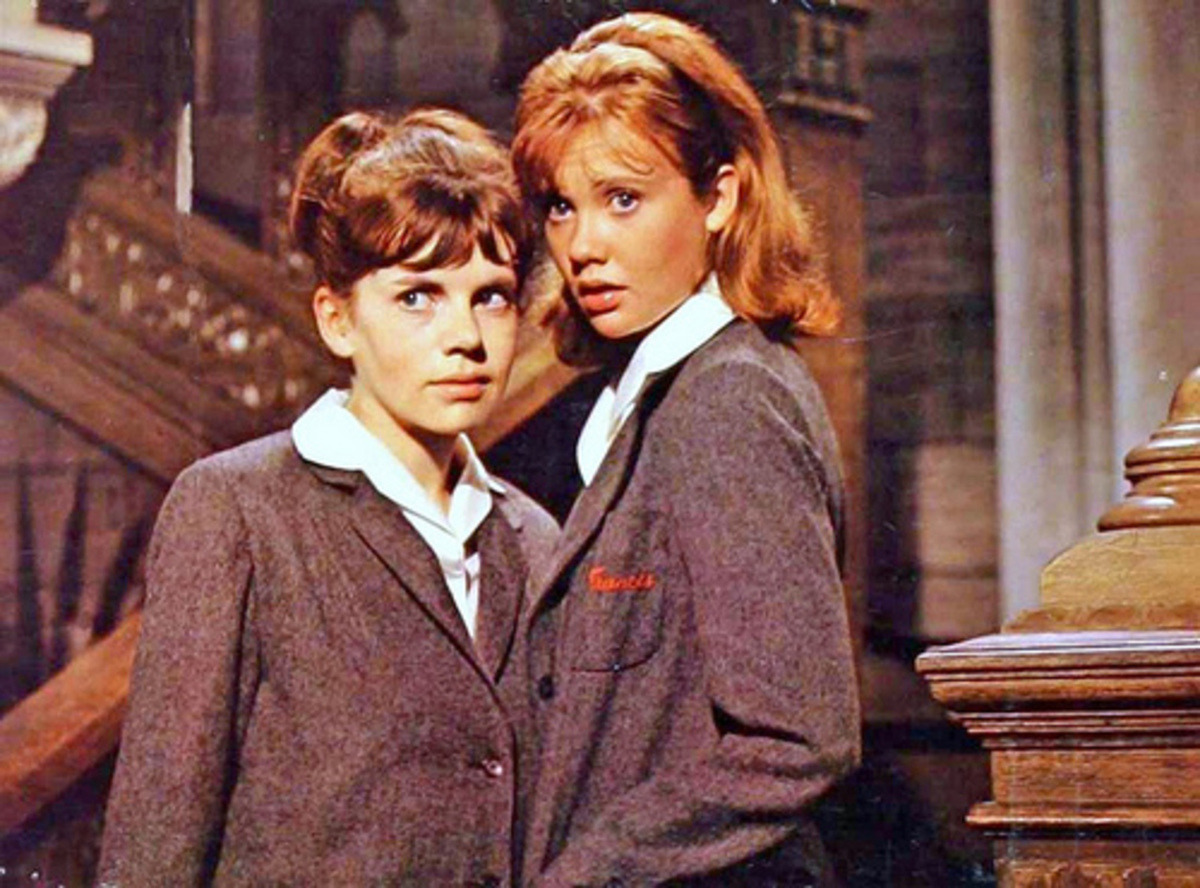
Quem sempre está junto com Mary é Rachel Devery (June Harding), uma garota atrapalhada cuja meta é conseguir que o diretor de sua antiga escola a resgate daquele local horrível. Rachel tem uma quedinha pelo diretor, Sr. Petrie (Jim Hutton), que ela descreve como uma versão mais nova de Jack Lemmon. Rachel segue as ideias incrivelmente brilhantes de Mary – que em geral não são nem um pouco brilhantes – e as duas são constantemente castigadas por causa de suas travessuras.

Alongside Mary there is always Rachel Devery (June Harding), a clumsy girl whose goal is to have the director of her former school rescue her from that horrible place. Rachel has a crush on the director, Mr. Petrie (Jim Hutton), who she describes as a younger Jack Lemmon. Rachel follows Mary's scathingly brilliant ideas – that are often not brilliant at all – and the two are constantly grounded because of their missbehaving.
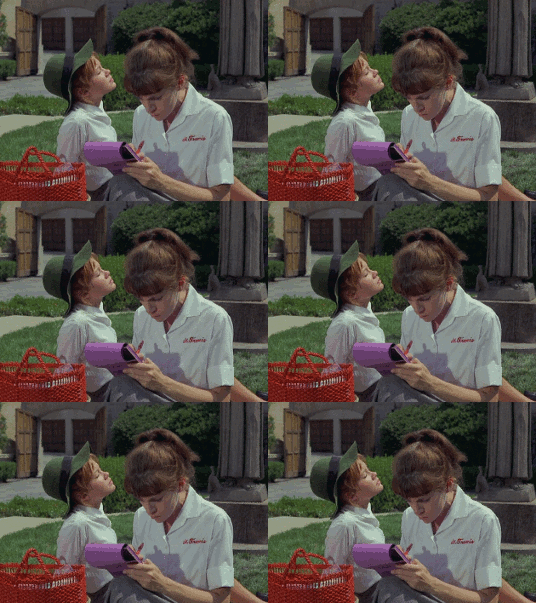

Acompanhamos Mary, Rachel e as outras garotas – entre elas há Charlotte, que está sempre prestes a desmaiar – durante três anos na Academia São Francisco. Durante este tempo, elas têm divertidas aulas de matemática com uma criativa freira, têm lições de dança e postura com a peculiar Sra. Phipps (Gypsy Rose Lee) e se juntam à banda numa competição para ganhar um prêmio em dinheiro com o objetivo de comprar um novo aquecedor para a escola.

We follow Mary, Rachel and the other girls – among them there is Charlotte, who is always about to faint – during their three years at St. Francis. During this time, they have fun math lessons with a creative nun, have dance and posture lessons with the unique Mrs Phipps (Gypsy Rose Lee) and join the band in a competition to win money to give the school a new boiler.
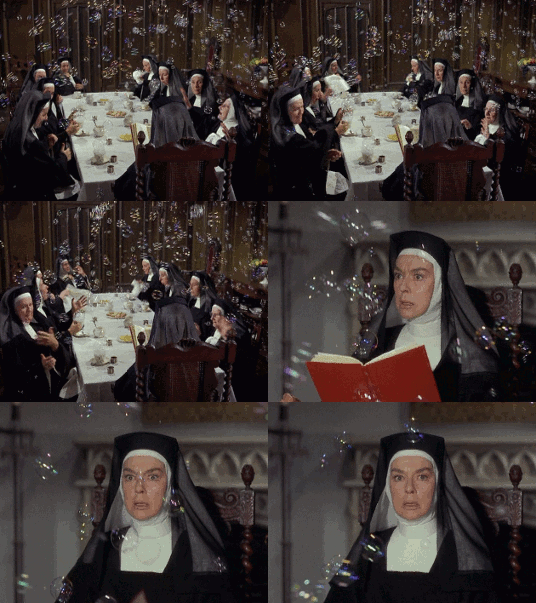

Hayley Mills, filha do ator britânico John Mills e da escritora Mary Hayley Bell, foi provavelmente a maior estrela juvenil dos anos 60. Na Disney, ela fez clássicos infantis como “Poliana” (1960) e “O Grande Amor de Nossas Vidas” (1961). Fora da Disney, ela trabalhou em filmes mais sérios como “Corações Feridos” (1964). “Anjos Rebeldes” se parece mais com seus primeiros trabalhos, mais leves, só que com um toque de rebeldia. E, bem, eu sempre achei que Hayley e Jane Fonda poderiam ter interpretado irmãs em um filme nos anos 60.
 
Hayley Mills, the daughter of British thespian John Mills and novelist Mary Hayley Bell, was arguably the biggest young star of the 1960s. Working for Disney, she made childhood classics like “Pollyanna” (1960) and “The Parent Trap” (1961). Outside Disney, she worked in more serious movies, like The Chalk Garden” (1964). “The Trouble with Angels” is more like her earlier light roles, but with a little rebel side. And, well, I always thought that Hayley and Jane Fonda could have played sisters in a 1960’s film.
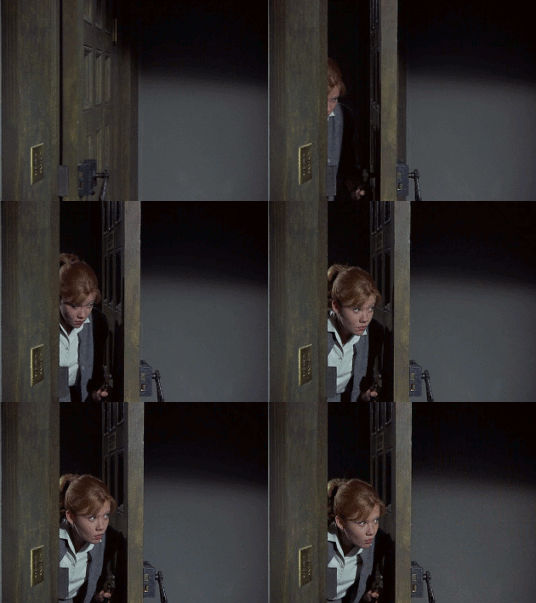

À primeira vista, a freira interpretada por Rosalind Russell nos parece uma personagem antipática, pois ela está sempre dando bronca nas protagonistas. Entretanto, ela tem compaixão, se importa muito com cada uma das meninas, não importa quão rebelde, e entende que domar um espírito rebelde não é o mesmo que destruí-lo. Ela também se vê em Mary, e nem ela nem as meninas tratam Mary diferente por ser órfã, algo raro de se ver em um filme.

At first, Rosalind Russell's Reverend Mother is an unsympathetic character, as she is always grounding our heroines. However, she is compassionate, really cares about each one of the girls, no matter how rebel they are, and understands that to tame a rebel spirit is not the same to break it. She also sees herself in Mary, and neither she nor any of the girls treat the fact that Mary is an orphan as a big deal, something quite surprising in a film.
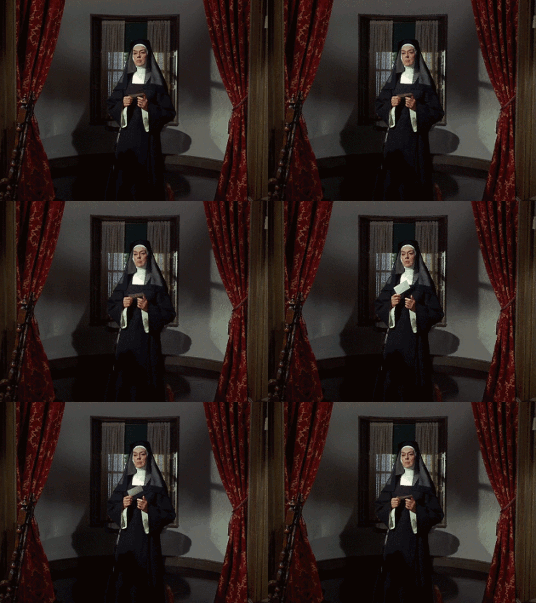

Mais de 25 anos antes de “Anjos Rebeldes”, Rosalind Russell fez “As Mulheres” (1939), um filme com um elenco 100% feminino e que era totalmente centrado nos homens. As mulheres só pensavam e falavam em homens, e não havia amizade entre a maioria das personagens. Felizmente, as coisas mudaram um pouco com o tempo, e foi preciso uma diretora como Ida Lupino para fazer um filme como “Anjos Rebeldes”, mostrando uma amizade verdadeira – não uma amizade sem problemas, mas cheia de afeição.

More than 25 years before “The Trouble with Angels”, Rosalind Russell appeared in “The Women” (1939), a film with an all-female cast that couldn't be more male-centric. All women thought and talked about was men, and there was no friendship between most of the female characters. Thankfully, things changed a bit with time, and it took a female director like Ida Lupino to make a film like “The Trouble with Angels”, showcasing a true female friendship – not one without problems, but one full of love.
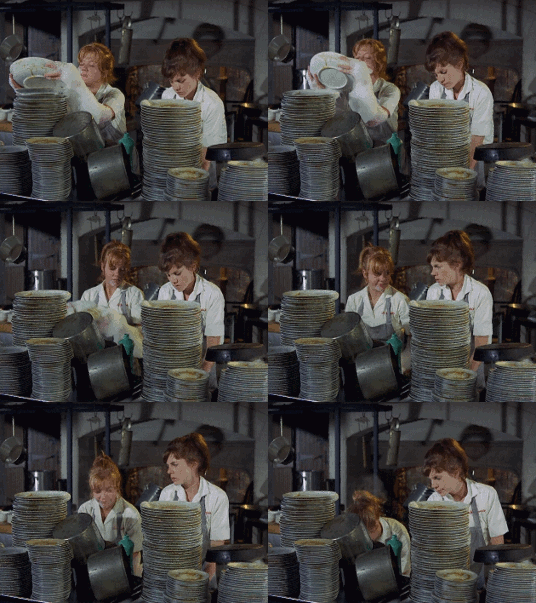

Eu amo Ida Lupino e a maneira como ela injeta consciência social em todos os seus filmes – mesmo em uma comédia como “Anjos Rebeldes”. Aqui, em uma cena que se passa em uma festa de Natal de caridade, Mary ouve senhorinhas falando e reclamando de suas vidas. Elas tiveram muitas dificuldades: casamento, perda de patrimônio, viuvez, o abandono dos filhos. Estes são problemas que em geral afetam, em porcentagem e em impacto psicológico, mais mulheres do que homens, e mesmo assim muitas mulheres – como as da Academia São Francisco – estão sendo preparadas para este futuro horrível de dependência financeira e para cuidarem de uma família que pode não estar lá quando ela precisar deles.

I love Ida Lupino and the social conscience she injects in all her movies – even in a light comedy like “The Trouble with Angels”. Here, in a scene in a charity Christmas party, Mary hears old ladies talking and complaining about their lives. They had many struggles: marriage, loss of money, becoming widowed, being forgotten by their kids. These are troubles that often affect, in percentage and in psychological toll, more women than men, and yet many women – like the women from the St. Francis Academy – are being prepared for this horrible future of financil dependence and taking care of a family that may not be there when you need them.


Embora eu tenha gostado de “Anjos Rebeldes”, havia muito mais para ver, considerando as histórias e personagens que apareceram aqui e ali. Eu gostaria de ver uma comparação e conflito entre os métodos de ensino das freiras e do Sr. Petrie – talvez até com um concurso de soletração entre as escolas, porque eu amo concursos de soletração. Eu adoraria ver a Rachel toda atrapalhada e apaixonada interagindo com o Sr. Petrie. Eu adoraria ver as garotas na excursão ao museu, e reagindo com maior profundidade à história de vida da Irmã Ursula.

Although I liked “The Trouble with Angels”, there was so much more I'd like to see, considering the storylines and characters that appeared here and there. I'd like to see a comparison and a conflict between the Reverend Mother's methods of teaching and Mr Petrie's – maybe even with a spelling bee competition between the schools, as I'm a sucker for spelling bees. I'd love to see Rachel being clumsy and infatuated interacting with Mr Petrie. I'd love to see the girls out in the field trip to the museum, and reacting more deeply to Sister Ursula's life story.
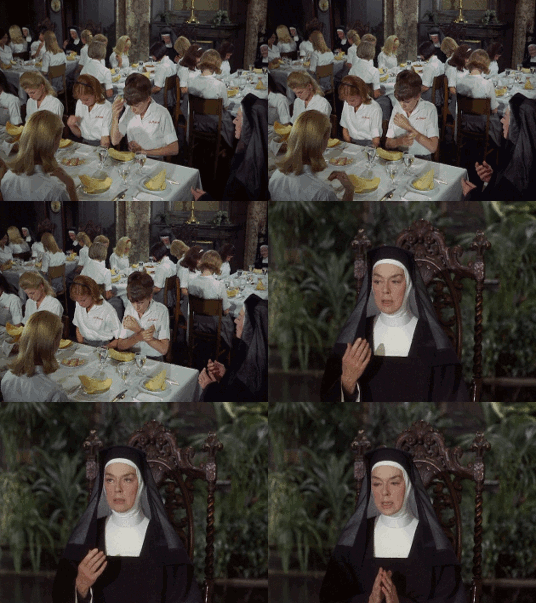

Eu estudei em uma escola de freiras dos cinco aos dez anos. Era tudo bem diferente de “Anjos Rebeldes” - algo óbvio, pois minha experiência como aluna aconteceu mais de 30 anos após a estreia do filme. Os alunos não eram internos como Mary e Rachel, mas havia algumas freiras severas como Rosalind Russell. E, infelizmente, eu não vivi nenhuma amizade intensa como a de Mary e Rachel.

I studied at a nun's school from ages 5 to 10. It was very different from the one in “The Trouble with Angels” - of course, because I was studying there more than 30 years after the film was released. The students were not interns like Mary and Rachel, but there were some more strict nuns like Rosalind Russell there. And, unfortunately, I haven't found such intense friendship there like Mary and Rachel did.

This is my contribution to the Rosalind Russell blogathon, hosted by Crystal at In the God Old Days of Classic Hollywood.


Saturday, September 23, 2017

Myrna Loy e Jean Harlow: uma amizade

Myrna Loy and Jean Harlow: a friendship


Myrna Williams nasceu em dois de agosto de 1905 em Helena, Montana. Harlean Carpenter nasceu em três de março de 1911 em Kansas City, Missouri. Myrna, agora com o sobrenome Loy, fez seu primeiro filme em 1925. Harlean, agora com o nome Jean Harlow, fez seu primeiro filme em 1928. Em 1934, as duas mulheres se conheceram por intermédio de um homem que ambas amavam – mas Myrna o amava apenas nas telas, e Jean na vida real.

Myrna Williams was born on August 2nd 1905 in Helena, Montana. Harlean Carpenter was born on March 3rd 1911 in Kansas City, Missouri. Myrna, now with the last name Loy, made her first movie in 1925. Harlean, now renamed Jean Harlow, made her first movie in 1928. In 1934, the two women were presented to each other by a man they both loved – but Myrna loved him on screen only, and Jean in real life.


Foi durante um programa de rádio para promover o filme “A Ceia dos Acusados” (1934) que William Powell apresentou sua namorada Jean Harlow para Myrna Loy, sua companheira de cena. Elas logo de cara gostaram uma da outra. Em sua autobiografia, “Being and Becoming”, Myrna Loy se lembra de Harlow:

It was during a radio show appearance to promote “The Thin Man” (1934) that William Powell introduced his girlfriend Jean Harlow to Myrna Loy, his screen partner. They immediately liked each other. In her memoir, “Being and Becoming”, Myrna Loy remembers Harlow:


Jean era sempre muito alegre, divertida, mas ela também era uma mulher sensível com grande dose de autorrespeito. Todo o resto – aquilo era artificial. Ela não era daquele jeito. Ela era apenas uma boa atriz que criou uma caracterização cheia de vida que exalava sex appeal.”.

Jean was always very cheerful, full of fun, but she also happened to be a sensitive woman with a great deal of self-respect. All that other stuff – that was all put on. She wasn't like that at all. She just happened to be a good actress who created a lively characterization that exuded sex appeal.”.


Em 1934, Jean Harlow já havia passado por algumas situações difíceis e estava, finalmente, feliz em sua vida amorosa. Ela estava feliz com Bill, e ficando contente com sua carreira. E em breve ela veria que tinha Myrna como amiga. Quando ela finalmente contracenou com Loy, Jean estava mudando sua persona cinematográfica.

By 1934, Jean Harlow had already had some rough times and was, finally, happy with her love life. She was happy with Bill, and getting happier with her career. And soon now she’d realized she had a friend in Myrna. When she finally worked with Loy, she was making changes in her film persona.


Myrna e Jean fizeram dois filmes juntas, e ambos estrearam em 1936. O que eu acho interessante é que, embora os filmes tenham duas das maiores estrelas da MGM, Myrna e Jean não são colocadas para competir entre si – pelo menos não deliberadamente e de maneira negativa.

Myrna and Jean appeared in two movies together, both released in 1936. What I find interesting is that, although these films have two big stars from MGM, in none of them they are put against each other to compete – at least not in a negative and deliberate way.


Em “Ciúmes”, a esposa Linda, interpretada por Myrna, apenas fica com ciúmes da secretária Whitey, interpretada por Jean, porque é levada a acreditar que ela está seduzindo seu marido, Van, interpretado porClark Gable. Linda ouve coisas ruins sobre Whitey, que não é uma predadora sexual, mas sim uma secretária séria.

In “Wife vs Secretary”, the wife Linda, played by Myrna, only becomes jealous of the secretary Whitey, played by Jean, because she is led to believe that the blonde beauty is seducing her husband, Van, played by Clark Gable. Linda is poisoned against Whitey, who isn’t a man hunter, but a serious secretary.


Em “Casado com Minha Noiva”, Jean e Myrna têm ainda menos tempo juntas em cena. No filme, Gladys (Jean) está ansiosa para se casar com Warren, um jornalista interpretado por Spencer Tracy. Mas ele não pode pensar em casamento porque está sendo processado pela herdeira Connie (Myrna) por causa de uma história que ele publicou sobre a vida amorosa dela. Então, ele decide juntar Connie e Bill (William Powell), um antigo repórter.

In “Libeled Lady”, Jean and Myrna have even less screen time together. In this movie, Gladys (Jean) is really looking forward to getting married to Warren, a journalist played by Spencer Tracy. But he can't think about marriage while he is being sued by heiress Connie (Myrna) because of a story he published about her love life. So, he decides to set Connie up with Bill (William Powell), a former reporter.


Mesmo que “Ciúmes” seja divertido – e tenha também James Stewart bem novinho! – eu acredito que “Casado com Minha Noiva” é um filme melhor. É amalucado, romântico e muito divertido – duas palavras: Bill pescando! Todos os atores envolvidos no filme concordaram comigo, porque, de acordo com Myrna, as filmagens de “Casado com Minha Noiva” foram muito agradáveis e durante os intervalos os atores permaneciam juntos conversando.

Although “Wife vs Secretary” is quite enjoyable – and has a very young James Stewart! - I believe that “Libeled Lady” is a superior film. It's zany, romantic and extremely funny – two words: Bill fishing! All the actors involved agreed with me, because, according to Myrna, the filming of “Libeled Lady” was very pleasant and during breaks the four actors stayed together chatting and laughing.


Jean e Myrna se divertiam juntas, mas só se tornaram amigas íntimas durante as filmagens de “A Comédia dos Acusados” (1936). Foi durante uma viagem de trem que esta história aconteceu – minha anedota favorita envolvendo Myrna Loy. Considerando que “A Comédia dos Acusados” estreou depois dos outros dois filmes que Jean e Myrna fizeram juntas, isto provavelmente aconteceu depois de terem filmado “Ciúmes” e “Casado com Minha Noiva”.

Jean and Myrna had fun together, but they only became intimate friends during the filming of “Another Thin Man” (1936). It was during a train trip that this fun story happened – my favorite anecdote involving Myrna Loy. Considering that “Another Thin Man” was released after the two films Jean and Myrna did together, this probably happened after the shooting of both “Wife vs Secretary” and “Libeled Lady”.


Myrna, Jean e William Powell estavam viajando de trem. Quando eles chegaram ao hotel St. Francis, descobriram que uma suíte chique já havia sido preparada para o famoso casal Powell e Loy, e havia apenas um pequeno quarto disponível para Harlow. Já que Myrna e Bill eram tão bons juntos, a gerência do hotel pensou que eles eram um casal na vida real! A situação foi resolvida colocando Bill no quartinho e as duas moças na suíte. Elas passaram a noite rindo, bebendo e conversando, e a amizade se fortaleceu.

Myrna, Jean and William Powell were travelling by train. When they arrived at the St. Francis Hotel, they found out that a fancy suite had been booked by the famous couple Powell and Loy, with only a small room left available for Harlow. Since Myrna and Bill worked so well together, the management of the hotel thought they were a couple in real life! The situation was solved leaving Bill in the small room and the two girls in the suite. They spent the night laughing, drinking and chatting, and their friendship became stronger.


Aquela confusão me deu uma das melhores amizades. Você poderia imaginar que Jean e eu éramos meninas na escola, de tanto que nos divertimos. Nós ficamos metade da noite acordadas, conversando e tomando gim, às vezes rindo, às vezes discutindo coisas mais sérias...”

That mix-up brought me one of my most cherished friendships. You would have thought Jean and I were in boarding school we had so much fun. We'd stay up half the night talking and sipping gin, sometimes laughing, sometimes discussing more serious things...” 


Jean Harlow fez mais dois filmes depois de “Casado com Minha Noiva” e, eu uma das mais tristes histórias em Hollywood, morreu com apenas 26 anos, deixando seu amado Bill e seus grandes amigos Myrna e Clark Gable devastados.

Jean Harlow made two more movies after “Libeled Lady” and, in one the saddest departures in Hollywood, died at only 26, leaving her beau Bill and her close friends Myrna and Clark Gable devastated.


Foi terrível, um choque horrível; eu amava Jean profundamente. Eu senti uma mistura nauseante de luto, culpa e frustração porque eu não fui capaz de fazer o que poderia tê-la salvado: afastado-a da mãe para que fosse examinada”.

"It was horrible, an awful blow; I loved Jean deeply. I felt a sickening mixture of grief, guilt, and frustration because I hadn't been able to do what might have saved her: get her away from her mother for an examination”.


Se Jean tivesse vivido mais, ela poderia ter trabalhado mais vezes com Myrna – mas eu acho que ela preferiria se casar com Bill (com myrna Loy de madrinha, claro) e deixar o cinema. Mesmo que breve, a amizade de Jean e Myrna foi forte e bela, e podemos sentir isso quando vemos as duas juntas na tela.

If Jean had lived, she could have worked more with Myrna – but I think she’d prefer to marry Bill (with Myrna Loy as a bridesmaid, of course), and retire from the movies. Although brief, Jean and Myrna’s friendship was strong and beautiful, and we can sense it when we see them on screen.

This is my contribution to the Duo Double Feature Blogathon, hosted by Laura at Phillys Loves Classic Movies and Emily at The Flapper Dame.

Sunday, November 20, 2016

Chicago (1927)

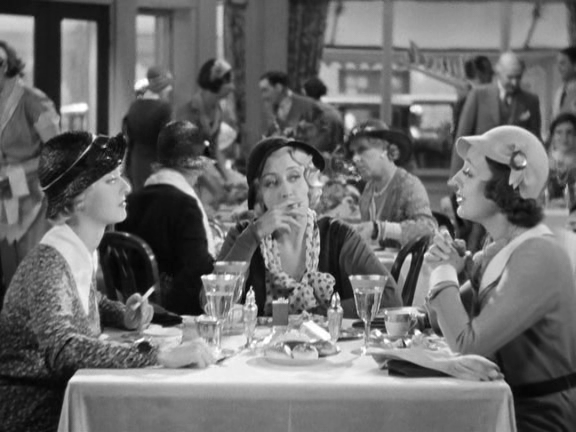
O tema era amizade. Dezenas de filmes passaram pela minha cabeça. Todos com algo em comum: eram sobre amizade entre homens. Há muitos filmes sobre “bromances”, camaradas, grupos de homens cultivando a amizade. E há poucos clássicos sobre amizade entre mulheres, sendo “Os Homens Preferem as Loiras” (1953) o mais conhecido deles. Quando duas mulheres são colocadas lado a lado, com a mesma importância, em geral elas são rivais no amor, e não amigas.  Será que só Lorelei e Dorothy conseguiram ser amigas num filme clássico?

The subject was friendship. I could think of dozens of movies. All of them with one thing in common: they were about friendship between men. There are a lot of films about bromances, camaraderie, groups of men who are good friends. And there are few classic films about friendship between women, and “Gentlemen Prefers Blondes” (1953) is the best known of them all. When two women are put side by side, with the same importance, in general they are rivals, not friends. Were Lorelei and Dorothy the only two girl pals in classic film?


Havia muitas duplas ou trios de amigas na era pre-Code, mas uma sempre se sobressaía e a outra ficava como alívio cômico, de lado, às vezes até esquecida ao longo do filme. É isso que acontece, por exemplo, em “Três... Ainda é Bom” (1932), com a personagem de Ann Dvorak ganhando destaque em detrimento das amigas Bette Davis, a moça simples, e Joan Blondell, a amiga bem-humorada.

There were a lot of female duos and trios in the pre-Code era, but one of them was the lead and the other was only comic relief and could be forgotten as the movie progressed. This happens, for instance, in“ Three on a Match” (1932), with Ann Dvorak’s character being the lead and his other two girl friends, Bette Davis, the simple girl, and Joan Blondell, the wisecrack friend, being left behind.


Não há poucos filmes sobre amizade feminina porque não havia amizades femininas inspiradoras na Old Hollywood. Podemos citar, por exemplo, as amigas Joan Crawford e Barbara Stanwyck, e também Bette Davis e Olivia de Havilland. Aparentemente, as rivalidades inspiravam muito mais que as amizades.

We can’t blame the lack of films about female friendship on the inexistence of real inspiring female friendships in Old Hollywood. We can cite BFFs Joan Crawford and Barbara Stanwyck, and also Bette Davis and Olivia de Havilland. But, apparently, rivalries were much more inspiring than friendships.


E é por isso que a minoria das produções mais famosas da Old Hollywood passam no teste de Bechdel. Poucas mulheres protagonistas, ou mesmo relevantes na história. A maioria das personagens femininas só existiam porque gravitavam ao redor de um homem, e duas personagens importantes femininas em um mesmo filme só podiam estar lá para disputar o personagem masculino. Mas vamos ao nosso filme.

And that’s why few Old Hollywood productions pass the Bechdel Test. Few female leads, or even few females with an important role. Most female characters existed because they gravitated around a man, and two important female characters in the same film could only be there to fight for the male character. But let’s see our film of choice.

O nome “Chicago” deve lembrar para você aquele musical que ganhou o Oscar de Melhor Filme em 2003 – tirando o prêmio merecido de “Gangues de Nova York” do deus Scorsese. Não é coincidência que o filme de 1927 tenha o mesmo título: é (quase) a mesma história.

The name “Chicago” may remind you of that musical that won the Best Picture Oscar in 2003 – stealing the deserved prize from “Gangs of New York”, directed my Our Lord Scorsese. It is not a coincidence that the 1927 film has the same title: it is (almost) the same story.


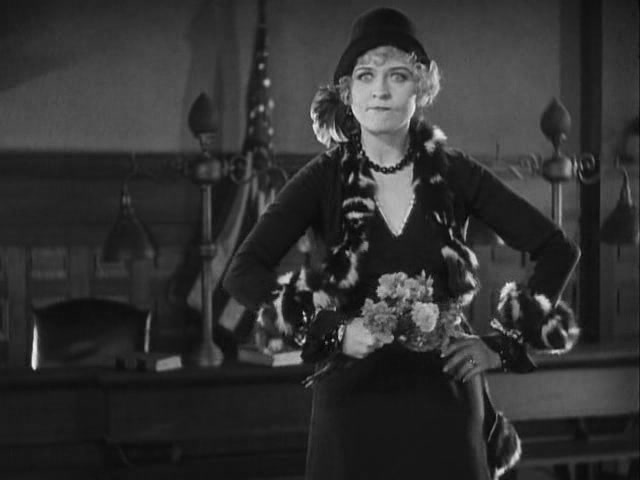
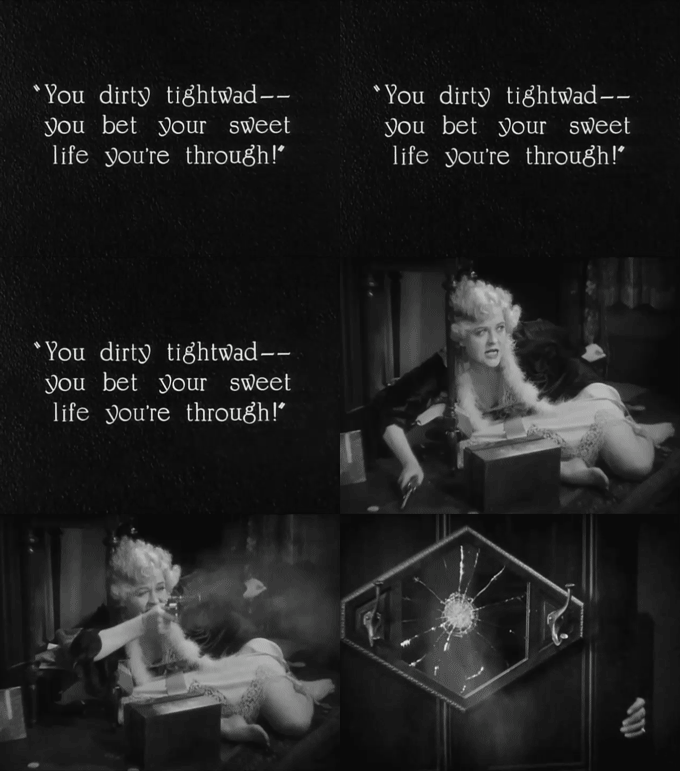
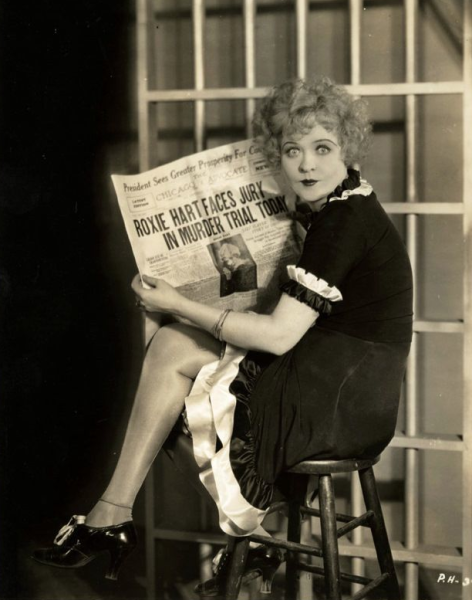
Amos Hart (Victor Varconi) é o marido perfeito, mas isso não impede sua esposa Roxie (Phyllis Haver) de ter um amante, Casely (Eugene Pallette). Após uma discussão sobre dinheiro, Casely anuncia que vai embora e Roxie, irada, atira nele. Desesperada por tê-lo matado, ela liga para Amos, que está disposto a assumir o crime mesmo depois de descobrir que Roxie o traía.

Amos Hart (Victor Varconi) is the perfect husband, but this doesn’t stop his wife Roxie (Phyllis Haver) from having a lover, Casely (Eugene Pallette). After an argument about money, Casely says he’ll leave Roxie and she, full of rage, shoots him. Desperate, she calls Amos, who is willing to confess the crime even after he finds out that Roxie was cheating on him.


Mas uma jogada de um investigador faz Roxie confessar, sem querer, que foi ela que deu o tiro, e ela vai para uma cadeia feminina. Amos precisa de cinco mil dólares para pagar um advogado para defendê-la no tribunal. Roxie vê tudo isso como um jeito ótimo de se tornar famosa.

But an investigator’s move leads Roxie to confess that she was the one who shot Casely, and she goes to an all-female prison. Amos needs five thousand dollars to pay a lawyer to defend her at the court. Roxie sees the entire situation as a great way to become famous.


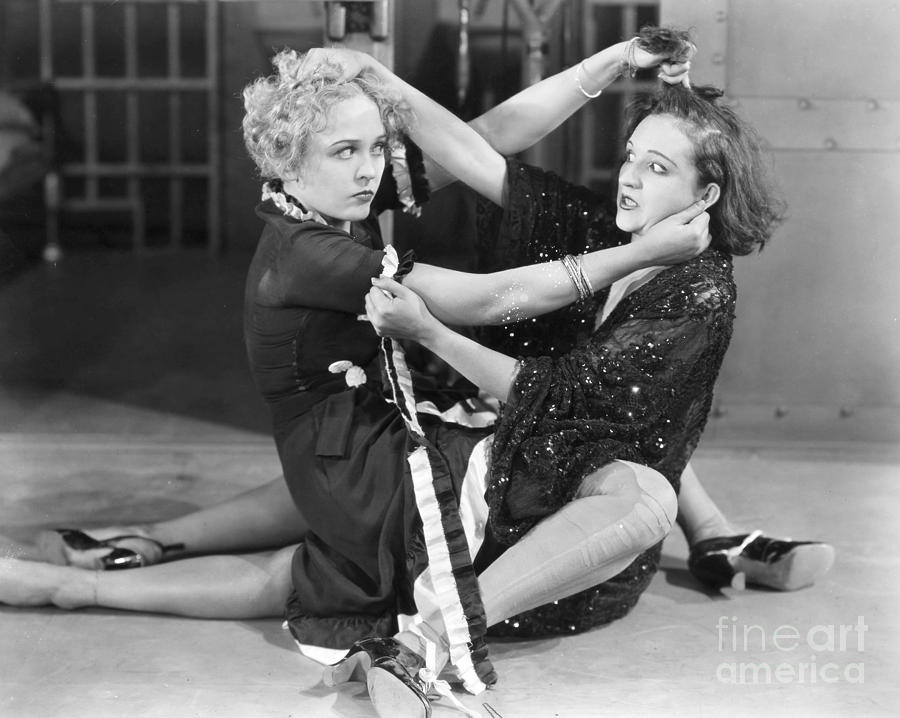
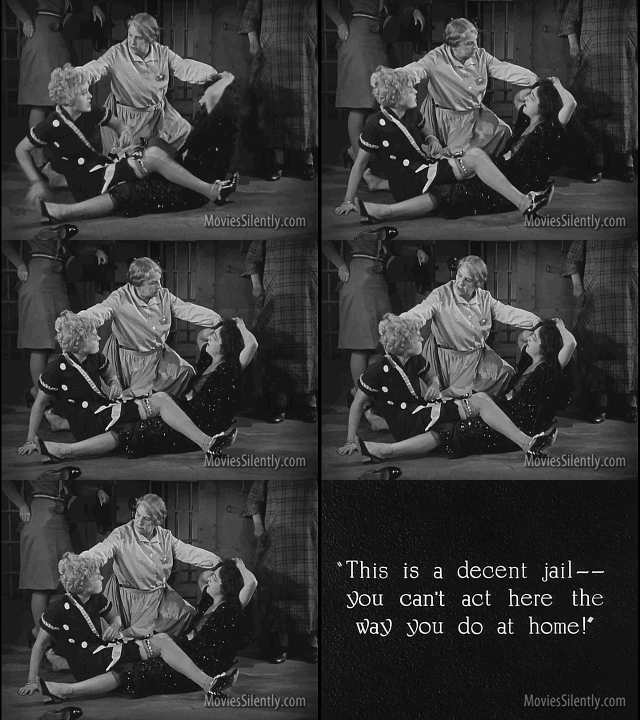
Onde entra a amizade na história? Este é o problema: ela não entra. Minha intenção era ver como a relação de frenemies de Roxie Hart e Velma Kelly foi mostrada no filme de 1927, mas Velma, interpretada por Julia Faye, tem apenas uma cena, na qual provoca Roxie e as duas acabam brigando na cadeia.

Where is friendship in our story? That’s the question: it isn’t there. My intention was to see how the frenemies relationship between Roxie Hart and Velma Kelly was portrayed in the 1927 film. However, Velma, played by Julia Faye, has only a scene, in which she teases Roxie and the two end up fighting in jail.

GIF via Movies, Silently

A história voltou às telas como comédia em 1942, sob o título “Roxie Hart”. Ginger Rogers vive Roxie no filme, e mais uma vez Velma aparece apenas para brigar com nossa protagonista por causa de popularidade.

The story went back to the screen as a comedy in 1942, under the title “Roxie Hart”. Ginger Rogers plays Roxie in the movie, and once again Velma is there only to fight with our lead because of popularity.


A peça de teatro foi escrita por uma mulher. A história foi adaptada para as telas em 1927 por uma mulher. Mas a peça de teatro não é igual ao musical conhecido: ele veio bem depois. A dramaturga, repórter e roteirista Maurine Dallas Watkins faleceu em 1969, e pouco depois os direitos de sua peça foram vendidos para Bob Fosse, que idealizou o musical como o conhecemos – e que serviu de base para o filme de 2002.

The theater play was written by a woman. The story was adapted to the screen in 1927 by a woman. But the theater play is not the same as the well-known musical: it came years later. The play writer, reporter and screenwriter Maurine Dallas Watkins died in 1969, and soon the rights for her play were sold to Bob Fosse, who idealized the musical as we know it – the one that was the basis for the 2002 film.

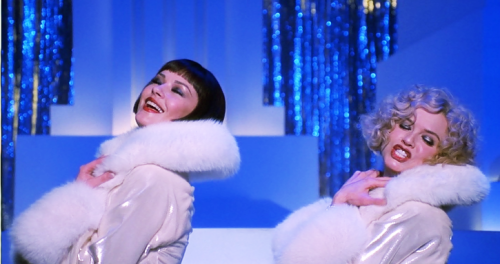
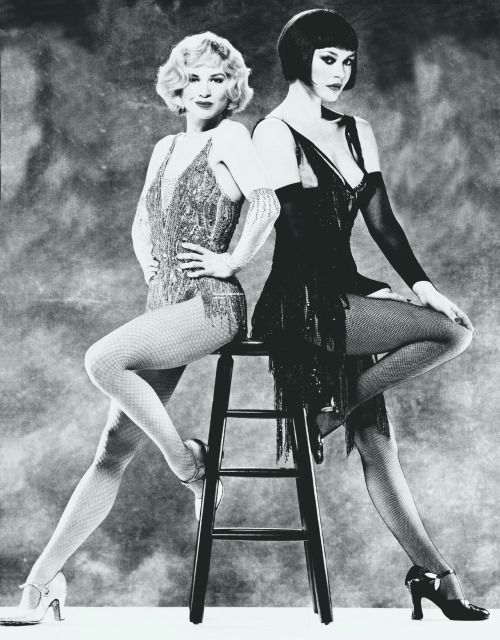
Neste filme, Roxie (Renée Zellweger) e Velma (Catherine Zeta-Jones) têm uma relação conturbada. Velma é o ídolo de Roxie, Roxie tenta ser amiga dela ao chegar à prisão, mas é esnobada. A partir de então elas começam uma disputa por espaço na mídia, mas ao final se tornam amigas.

In this film, Roxie (Renée Zellweger) and Velma (Catherine Zeta-Jones) have a difficult relationship. Velma is Roxie’s idol, Roxie attempts to become friends with her when she arrives in the prison, but she is snobbish. From then on they start a dispute for media space, but in the end they become friends. 


O filme de 1927 foca no sacrifício dramático de Amos, interpretado pelo belo húngaro Victor Varconi, e deixa Roxie como personagem cômica, sendo a excelente Phyllis Haver o destaque do filme. Em 1942, Ginger Rogers e Adolphe Menjou, que interpreta o advogado Billy Flynn, são os melhores em cena. Em 2002, é inegável a presença luminosa de Catherine Zeta-Jones como Velma.

The 1927 film focuses on the dramatic sacrifice of Amos, played by the handsome Hungarian Victor Varconi, and leaves Roxie as a comic character, being the excellent Phyllis Haver simply outstanding. In 1942, Ginger Rogers and Adolphe Menjou, who plays the lawyer Billy Flynn, are the best in scene. In 2002, Catherine Zeta-Jones’s luminous presence as Velma is undeniable.


Todas as versões da história são igualmente interessantes, e o recém-restaurado filme de 1927 vale muito a pena ser visto. É uma pena que existam tão poucos filmes clássicos sobre amizade entre mulheres, mas isto prova algo: amizade feminina é complexa, imprevisível e com muitos altos e baixos.

All the versions of the story are equally interesting, and the recently restored 1927 film is worth watching. It’s a pity that there are so very few classic films about female friendship, but this proves a point: female friendship is complex, unpredictable and with lots of ups and downs.

This is my contribution to the You Gotta Have Friends Blogathon, hosted by Debbie at Moon in Gemini.

Related Posts Plugin for WordPress, Blogger...