} Crítica Retrô: cinema francês

Tradutor / Translator / Traductor / Übersetzer / Traduttore / Traducteur / 翻訳者 / переводчик

Showing posts with label cinema francês. Show all posts

Tuesday, November 26, 2024

As Duas Inglesas e o Amor (1971) / Two English Girls (1971)

 Estou chegando num ponto muito triste em minha vida: o ponto em que não terei mais filmes novos de François Truffaut para assistir. Com “As Duas Inglesas e o Amor” fora da lista, agora há apenas dois filmes de Truffaut que ainda não vi: “Atire no Pianista” (1960) e “A Sereia do Mississippi” (1969). Mas deixemos as lágrimas para depois. Vamos falar sobre “As Duas Inglesas e o Amor”.


I’m reaching a very sad point in my life: the point where soon I won’t have any new-to-me François Truffaut movies to watch. With “Two English Girls” off the list, now there are only two Truffaut movies I haven’t seen: “Shoot the Piano Player” (1960) and “Mississippi Mermaid” (1969). But let’s leave the tears for later. Let’s talk instead about “Two English Girls”.


Esta é uma história de amor(es).

This is a love(s) story.


Europa, virada do século XIX para o século XX. O francês Claude (Jean-Pierre Léaud) decide visitar os Brown, amigos da família. Ele já conhece Anne Brown (Kika Markham), mas não a irmã dela, Muriel. Anne apresenta Claude para Muriel (Stacey Tendeter) na esperança de que um romance floresça entre eles. Primeiro ele a deseja e não é correspondido. Depois ele a recusa quando finalmente parece que ela começou a amá-lo. O tempo passa.  


Europe, turn of the 19th to the 20th century. Frenchman Claude (Jean-Pierre Léaud) decides to visit the Browns, friends of his family. He already knows Anne Brown (Kika Markham) but not her sister Muriel. Anne introduces Claude to Muriel (Stacey Tendeter) in the hopes of a romance blossoming between them. First he wants it, and she doesn’t. Then he refuses her when she finally seems to be starting loving him. Time passes.


Em Paris, Anne se torna escultora e reencontra Claude. Eles começam um romance que evolui para um relacionamento aberto que permite que ela também durma com Diurka (Philippe Léotard). A senhora Brown (Sylvia Marriott) desaprova o que chama de “um casamento internacional”, por isso Claude e Anne continuam um relacionamento informal, até que as coisas ficam complicadas.


In Paris, Anne becomes a sculptor and meets Claude again. They start an affair that evolves to an open relationship that allows her to also sleep with Diurka (Philippe Léotard). Mrs Brown (Sylvia Marriott) disapproves of what she calls “an international marriage”, so Claude and Anne remain informal in their relationship, until things become more complicated.


Esta não é a primeira vez que Truffaut lidou com um trisal. Você deve se lembrar de um filme mais famoso dela, “Jules e Jim - Uma Mulher para Dois” 91962), que tem, ao contrário, uma mulher (interpretada por Jeanne Moreau) e dois homens (interpretados por Oskar Werner e Henri Serre). Curiosamente, ambas as histórias vêm da mesma mente: o romancista Henri-Pierre Roché. E todos os trabalhos citados, incluindo as primeiras colaborações de Truffaut com Jean-Pierre Léaud, versam sobre jovens apaixonados.


This isn’t the first time Truffaut dealt with a threesome. You might remember a more famous work of his, “Jules and Jim” (1962), that has instead one woman (played by Jeanne Moreau) and two men (played by Oskar Werner and Henri Serre). Curiously, both stories come from the same mind: novelist Henri-Pierre Roché. And all the films cited here, including Truffaut’s early collaborations with Jean-Pierre Léaud, verse about young people in love.


O  título original, em francês, é “Les Deux Anglaises et le Continent”: As Duas Inglesas e o Continente. É explicado logo no começo que Claude é chamado de vez em quando pelas irmãs Brown de “o continente”, porque ele vem da França, na Europa continental, e as garotas vêm de uma ilha, a Inglaterra.

The original title, in French, is “Les Deux Anglaises et le Continent”: The Two English Girls and the Continent. It is explained early on that Claude is sometimes referred to by the Brown sisters as “The Continent”, because he is from France, in continental Europe, and the girls come from an island, England.


Nestor Almendros é o diretor de fotografia. Nascido em Barcelona, Espanha, em 1930, e morto em Nova York em 1992, Almendros teve 63 créditos como diretor de fotografia e oito como diretor, a maioria deles quando era um jovem estudante de cinema, vivendo entre Roma, onde estudava, e Cuba, onde sua família estava exilada por causa da ditadura de Franco. Ele e Truffaut foram colaboradores constantes, começando em 1970 com “O Garoto Selvagem”.


Nestor Almendros is the cinematographer. Born in Barcelona, Spain, in 1930, and dying in New York in 1992, Almendros had 63 credits as a cinematographer and eight as director, most of them when he was a young film student, living between Rome, where he attended school, and Cuba, where his family was exiled from Franco’s dictatorship. He and Truffaut were constant collaborators, starting in 1970 with “The Wild Child”.


O uso da cor vermelha é notável, assim como Bergman faria em “Gritos e Sussurros”, que estreou um ano depois. Bergman justificou o uso do vermelho em seu filme como fruto de sua imaginação: ele sempre imaginou que no interior da alma haveria uma membrana vermelha. Numa biografia de Truffaut por Antoine de Baecque e Serge Toubiana, “As Duas Inglesas e o Amor” é considerado, entre os amigos do diretor, seu filme mais visualmente impactante. 


The use of the color red is notable, just like Bergman would do in “Cries and Whispers”, released one year later. Bergman justified the use of red in his movie as something coming from his own imagination: he always imagined the interior of the soul to be a red membrane. In a Truffaut biography by Antoine de Baecque and Serge Toubiana, “Two English Girls” is considered among the director’s friends the most visually beautiful film he ever made.


Este foi o primeiro filme de uma das irmãs protagonistas, Stacey Tendeter, que tinha 22 anos na época. Ela já era casada com Andrew Walton, e eles ficariam juntos até a morte dela em 2008, com apenas 59 anos. Kika Markham, por outro lado, tinha forte presença na televisão desde 1955. Ela apresentou Truffaut aos seus pais durante as filmagens, e o diretor gostou tanto deles que escalou o pai dela como vidente numa cena.


This was the film debut of one of the lead sisters, Stacey Tendeter, who was 22 at the time. She was already married to Andrew Walton, and they would remain together until her death in 2008, when she was only 59. Kika Markham, on the other hand, had a strong presence on TV since 1955. She introduced Truffaut to her parents during the shooting, and the director liked them so much that he cast his dad as the fortune teller in a scene.


Truffaut dirigiu 27 filmes numa carreira que durou menos de 25 anos. Um dia, ficarei sem filmes novos de François Truffaut. Mas sempre teremos seus filmes para rever, como alguém que visita um velho amigo - e eu aposto que ele gostaria de ser visto como um velho amigo de cinéfilos ao redor do mundo. 


Truffaut directed 27 movies in a career that lasted less than 25 years. One day, I’ll run out of new-to-me François Truffaut movies. But we’ll always have his movies to come back to, like someone who is visiting an old friend - and I bet he’d have liked to be seen as an old friend to cinephiles all over the world.

Saturday, April 22, 2023

Nana (1926)


Eu sou apaixonada por muitas coisas, e o cinema francês é uma delas. Eu tento ver o máximo de filmes franceses que consigo, cubro estréias francesas para a Revista Eletrônica Ambrosia e aprendi mais que algumas palavrinhas em francês só assistindo a tantos filmes made in France. Eu aprendi muito sobre os mestres do cinema francês, e Jean Renoir é um deles. Por isso, não podia deixar passar a oportunidade de ver um dos primeiros filmes de Renoir e procurar o gênio em formação em “Nana” (1926).

I’m passionate about many things, and French cinema is one of them. I try to watch as many French films as I can, I cover French film premieres at the electronic magazine Ambrosia and I’ve learned more than a few French words by watching so many French films. I’ve learned a lot about the masters of French cinema, and Jean Renoir is one of them. So, I couldn’t say “no” to the opportunity of seeing one of Renoir’s early work, and finding the genius blossoming in “Nana” (1926).

Nana (Catherine Hessling) é descrita como “uma garota bonita, sem voz ou talento” mas ainda assim “a ídola do boulevard”. Ela enfeitiça todos os homens da plateia, do mais pobre ao mais rico, incluindo condes e jornalistas. Uma noite, depois do espetáculo, ela recebe no camarim o Conde Muffat (Werner Krauss), que se apaixona por ela. A Condessa Muffat (Jacqueline Forzane), por sua vez, está aproveitando a presença de Fauchery (Claude Autant-Lara), jornalista e dramaturgo.

 Nana (Catherine Hessling) is described as “a pretty girl, without a voice or talent”, but still “the idol of the boulevard”. She bewitches all men in the audience, from the poorest to the richest, and including counts and journalists. One night, after the show, she receives backstage the Count Muffat (Werner Krauss), who falls in love with her. Countess Muffat (Jacqueline Forzane), on the other hand, is enjoying the presence of Fauchery (Claude Autant-Lara), journalist and playwright.

De início, Nana recusa os avanços do Conde, mas ela muda de ideia quando perde o cobiçado papel da Pequena Duquesa numa peça para outra atriz, Rose Mignon (Jacqueline Ford). Nana pede que o Conde intervenha, e ele decide investir na peça contanto que Nana tenha o papel principal. Fauchery, que escreveu a peça, não fica feliz com a mudança, mas tem de concordar com o que o dono do teatro, Bordenave (Pierre Lestringuez), decidiu na negociação com o Conde. A peça é um fracasso e Nana abandona o teatro para se tornar cortesã. Em vez de aplausos, agora ela vai colecionar amantes.  

 At first, Nana refuses the Count’s approach, but she changes her mind when she loses the coveted role of The Little Duchess in a play to another actress, Rose Mignon (Jacqueline Ford). Nana asks the Count for intervention, and he decides to invest in the play as long as Nana plays the lead. Fauchery, who wrote the play, is not happy with the change, but has to agree with what the theater owner, Bordenave (Pierre Lestringuez), has decided in a negotiation with the Count. The play is a failure and Nana abandons the theater to become a courtesan. Instead of applauses, now she will collect lovers.
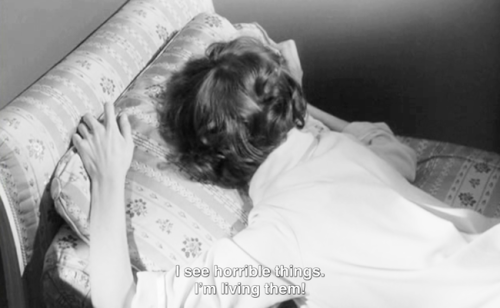
Catherine Hessling era esposa e musa de Jean Renoir. Não é um simples caso de nepotismo: Hessling é muito boa, seja seduzindo um homem, sofrendo ou dançando can-can. Sempre com olhos muito maquiados e boca pintada em formato de coração, Hessling podia interpretar personagens trágicas - como em “A Dama da Água” (1925) - e fez 14 filmes em uma carreira que durou de 1925 a 1925, quando, já separada de Renoir, ela se aposentou.

Catherine Hessling was Jean Renoir’s wife and muse. It’s not simply a case of nepotism: Hessling is really good, no matter if she’s seducing a man, suffering or dancing the can-can. Always with heavy eye makeup and heart-shaped lips, Hessling could play well tragic characters - like in “Whirlpool of Fate” (1925) - and appeared in 14 movies in a career that lasted 10 years, from 1925 to 1935, when, already divorced from Renoir, she retired.

Nos créditos é dito que o filme foi inspirado no romance de Emile Zola. O IMDb lista 13 adaptações da “Nana” de Zola, da era muda aos dias de hoje, incluindo longas-metragens, curtas e séries de TV. O roteiro do filme de Renoir foi escrito por Pierre Lestringuez, que também interpreta Bordenave. Tendo começado suas carreira como roteirista com a estreia de Renoir na direção, “A filha da Água”, Lestringuez escreveu 25 roteiros até sua morte em 1950. Sua carreira como ator foi bem mais curta, sendo ele creditado em apenas seis performances em frente às câmeras.

In the credits it’s said that the film was inspired by the novel by Emile Zola. IMDb lists 13 adaptations of Zola’s “Nana”, from the silent era to nowadays, including features, shorts and TV series. The scenario for Renoir’s film was written by Pierre Lestringuez, who also plays Bordenave. Starting his career as a screenwriter with Renoir’s debut “Whirlpool of Fate”, Lestringuez went on to write 25 scenarios until his death in 1950. His career as an actor was much shorter, as he’s credited with only six performances in front of the camera.

“Nana” se passa no final da década de 1860, o que pode ser percebido pelas roupas usadas pelas mulheres. O figurino é decente, mas os cenários luxuosos são o verdadeiro destaque. Pode se tratar de um passado recente - pelo menos o era na década de 1920 -, mas algumas coisas não mudaram, como por exemplo o medo da varíola.

 “Nana” is set in the late 1860s, which can be told by the clothes the women are wearing. The clothes are nice, but the lavish sets are truly outstanding. It may be a near past - near to 1920s, that is - but some things remained the same, like the fear of smallpox.

A parte com Nana no teatro é mais interessante que seu tempo como cortesã. Há também uma subtrama sobre apostas em corridas de cavalos que deveria ser emocionante, mas não é. Infelizmente, a parte no teatro é a mais curta, o que faz o filme parecer muito longo - e é realmente longo, com quase três horas de duração. Pode ser descrito como um Renoir ousado, mas ainda não o Renoir genal que conhecemos mais tarde em sua carreira.

The bit with Nana in the theater is more interesting than her times as a courtesan. There is also a whole subplot about bets in horse races that is supposed to be exciting, but isn’t really. Unfortunately, the theater bit is the shortest, which makes the film feel too long - and it’s long indeed, as it’s nearly three hours long. It can be described as a bold Renoir, but not yet the genius Renoir we all knew later in his career.

Saturday, August 24, 2019

Visões de Criança (1925) / Faces of Children (1925) / Visages D'Enfants (1925)


Esta é uma das mais velhas histórias do mundo: a do filho que sente ciúmes quando o pai viúvo decide se casar novamente. É mais do que ciúme: é o sentimento de que a memória da falecida mãe está sendo traída e esquecida. Uma história triste porém comum, e que se torna poética quando um cineasta francês decide fazer um filme sobre isso – afinal, os franceses fizeram alguns dos filmes mais tocantes e delicados.

It's one of the oldest stories in the world: the child that feels jealous when his father, a widower, decides to remarry. It's more than jealousy: it's the feeling that the dead mother's memory is being betrayed and forgotten. A sad yet common story that becomes poetic once a French filmmaker decides to make a film out of it – after all, French people have made some of the most touching and delicate films.


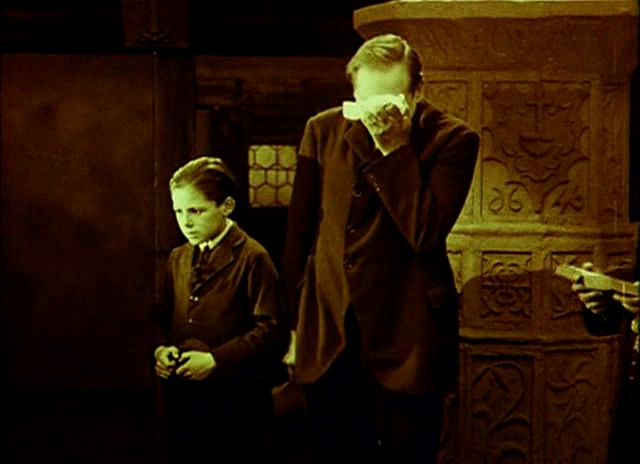
Pierre Amsler (Victor Vina) acaba de perder a esposa (Suzy Vernon). A morte da mãe afetou profundamente o filho mais velho, Jean (Jean Forest), enquanto a filha mais nova, Pierrette (Pierrette Hoyeuz), parece não entender o que aconteceu. Na primavera seguinte, Pierre decide se casar com Jeanne Dutois (Rachel Devirys), uma viúva que tem uma filha, Arlette (Arlette Peyran).

Pierre Amsler (Victor Vina) has just lost his wife (Suzy Vernon). The mother's death deeply affects their older son, Jean (Jean Forest), while their younger daughter, Pierrette (Pierrette Hoyeuz), seem to not understand what happened. The following spring, Pierre decides to marry Jeanne Dutois (Rachel Devirys), a widow who has a daughter, Arlette (Arlette Peyran).


Pierre pede Jeanne em casamento justamente num domingo, quando ele deveria visitar o túmulo de sua esposa. Apenas Jean visita o túmulo e leva flores, e este é o primeiro sinal de que Pierre pode já estar esquecendo e substituindo sua esposa. Incapaz de contar a novidade e Jean, Pierre pede ajuda ao Padre Porchet (Henri Duval). O Padre já havia ajudado Jean quando o menino teve um colapso nervoso logo após a morte da mãe.

Pierre proposes to Jeanne exactly on a Sunday, when he's supposed to visit his wife's tomb. Only Jean visits the tomb and brings flowers, and this is the first sign that Pierre may have already forgotten and replaced his wife. Unable to tell Jean the news, Pierre asks Father Porchet (Henri Duval) for help. The Father had helped Jean when the boy had a nervous breakdown right after his mother's death.


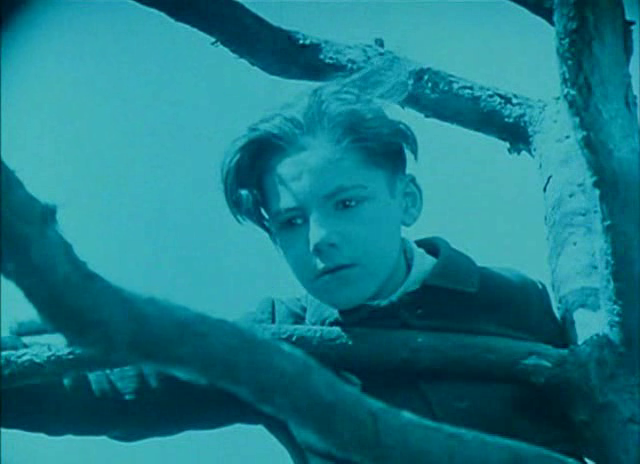
Jean passa algumas semanas com o Padre Porchet. Enquanto isso, Pierre e Jeanne se casam. Jean aceita a nova realidade com relutância, mas as coisas já começam mal quando Arlette não deixa Jean entrar na própria casa porque ela não sabia que ele estava voltando – e pior: ela está usando os lápis de cor dele!

Jean spends a few weeks with Father Porchet. Meanwhile, Pierre and Jeanne get married. Jean reluctantly accepts his new reality, but things are off to a bad start when Arlette doesn't let Jean enter his own house because she wasn't aware of his return – and worse: she is using his crayons!


A casa dele está mudada, sua rotina é diferente, e de repente Jean percebe que sua madrasta está usando as coisas da mãe dele. Na verdade, ele prefere destruir o velho vestido da mãe a ver Jeanne reutilizando o tecido. Mas Jeanne é uma boa madrasta: ela cuida de Jean e Pierrette e até proíbe Pierre de bater em Jean. É Arlette quem Jean mais odeia – por isso ele bola um plano para que ela leve uma bronca da mãe... mas ela acaba presa em uma avalanche.

His house is changed, his routine is different, and suddenly Jean realizes his stepmother is wearing his mother's things. In fact, he prefers to destroy his mother's old dress than to see Jeanne reusing its fabric. But Jeanne is a good stepmother: she cares for Jean and Pierrette and even prohibits Pierre to spank Jean. Arlette is the one Jean hates the most – so he makes up a plan to get in trouble with her mother... but she ends up trapped in an avalanche.


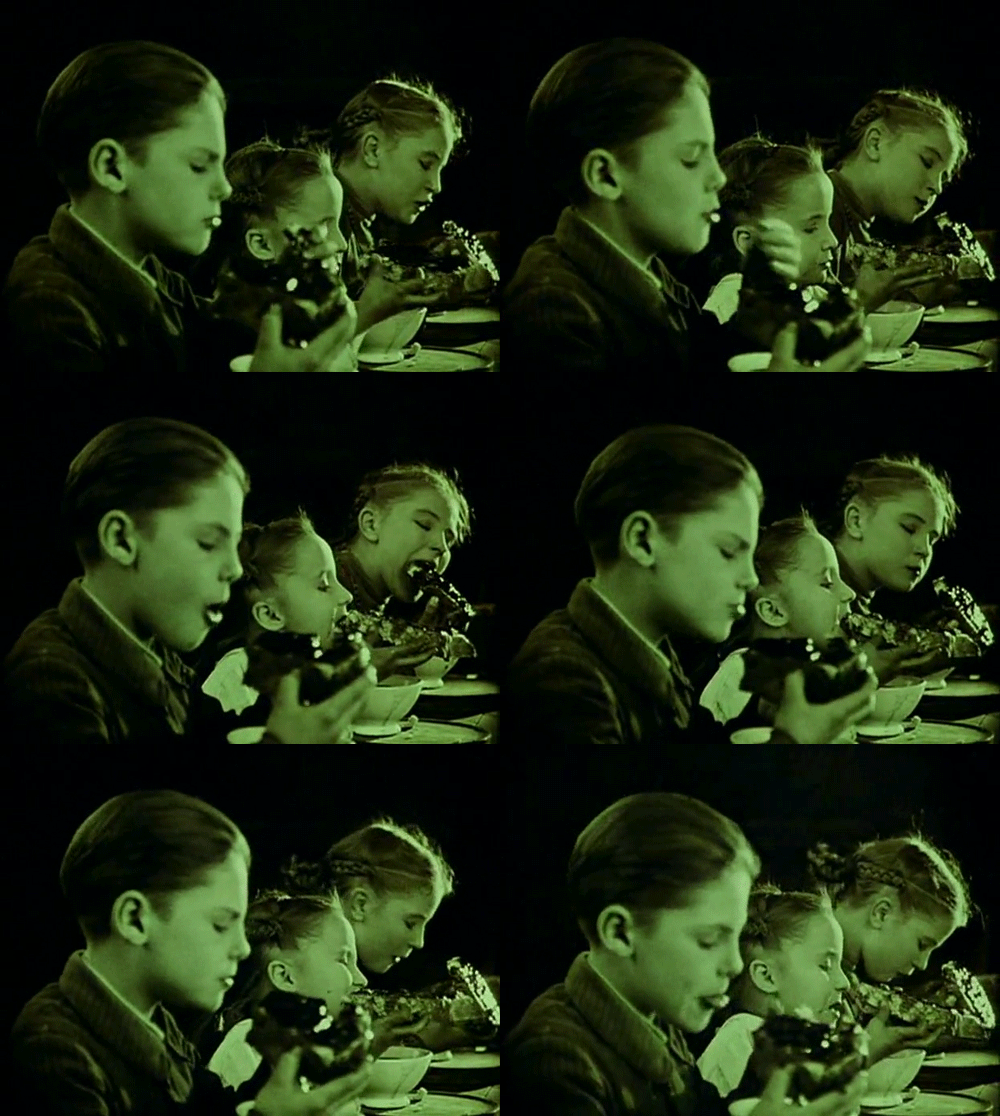
O jovem Jean Forest é simplesmente brilhante. Desde a primeira cena, em que ele parece realmente emocionado durante o funeral da mãe, é possível ver o quão talentoso o menino de 12 anos era. Infelizmente, Jean fez filmes de 1923 – quando foi descoberto pelo diretor Jacques Feyder – até 1935, quando ele decidiu focar em sua carreira no rádio.

Young Jean Forest is simply brilliant. Since the first scene, in which he seems truly moved during his mother's funeral, you can see how talented the 12 year-old boy was. Unfortunately, Jean Forest worked in film only from 1923 – when he was discovered by director Jacques Feyder – until 1935, when he decided to focus on radio work instead.


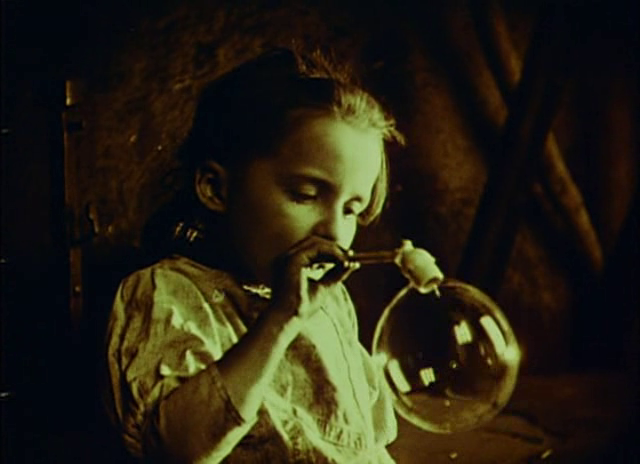
As duas garotas tiveram carreiras ainda mais curtas. A incrível Arlette Peyran não fez mais nenhum filme, e Pierrette Hoyeuz se aposentou das telas em 1926. Todos os atores mirins de “Visões de Criança” são ótimos, e sabemos que filmes sobre crianças podem facilmente se tornar chatos ou entediantes se as crianças não souberem atuar.

The two girls had even shorter careers. The amazing Arlette Peyran never did another film, while Pierrette Hoyeuz retired from the screen in 1926. All the child actors are remarkable in “Faces of Children”, and we know how films about children can easily become obnoxious or boring if the kids can't act.


Além de capturar belas imagens, o diretor Jacques Feyder editou “Visões de Criança” com maestria – quase como Eisenstein faria. A edição rápida em muitas cenas evoca muitas emoções na plateia e aumenta a carga dramática conforme vemos dois personagens convergindo para o mesmo ponto em um momento muito tenso.

Besides capturing gorgeous images, director Jacques Feyder edited “Faces of Children” like a pro – almost like Eisenstein would do. The quick cross-cutting in many scenes evokes many emotions in the audience and enhances drama as we see two characters converging to the same point in a very tense moment.


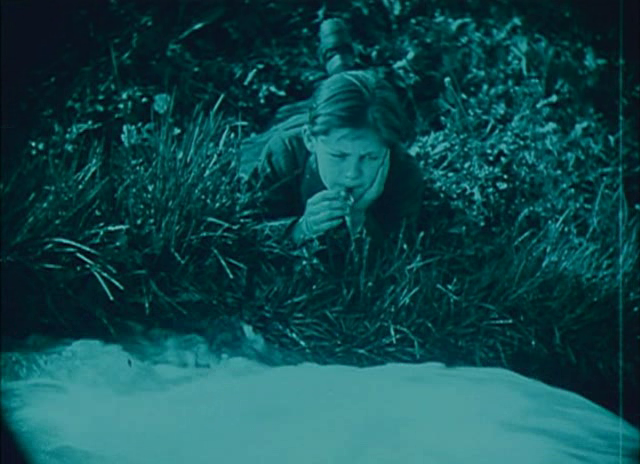
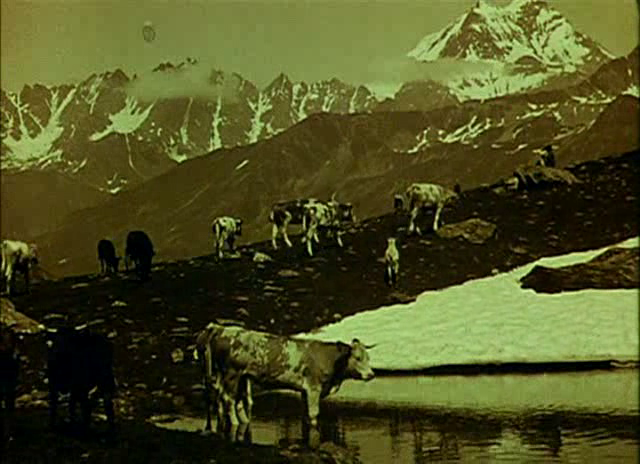
O filme adiciona muito melodrama e alguns efeitos especiais no clímax – uma sequência semelhante ao clímax de “Inocente Pecadora” (1920), mas melhor em alguns momentos. A paisagem natural – os Alpes – é de tirar o fôlego, e a maneira como ela é usada, quase como mais um personagem, é uma das marcas registradas de Feyder.

The film adds a lot of melodrama and some special effects in the climax – a sequence somewhat similar to the climax of “Way Down East” (1920), but better in some moments. The natural landscape – the Alps – is breathtaking, and the way it is used, almost as another character, is one of Feyder's trademarks.


Em 1923, Jacques Feyder escreveu um artigo para a revista austríaca “Der Internationale Film” dizendo que filmes de sucesso têm dois componentes: “uma história simples, um evento que fala com todas as inteligências, com todos os corações e a história deve ser situada em um cenário característico, ao mesmo tempo pitoresco e natural; em uma palavra ela deve criar, com o maior entendimento artístico, uma ‘atmosfera’”. Esta parágrafo não define apenas o cinema de Feyder, mas também “Visões de Criança”, sua obra-prima.

In 1923, Jacques Feyder wrote an article for the Austrian magazine “Der Internationale Film” saying that successful films had two components: “a simple story, an event that speaks to all intelligences, to all hearts and the story should be situated in a characteristic setting, at the same time picturesque and natural; in one word it should create, with the greatest artistic understanding, an 'atmosphere'”. This paragraph doesn't only define Feyder's cinema, but also “Faces of Children”, his masterpiece.

This is my contribution to the Vive la France! blogathon, hosted by Patty and Christian at Lady Eve’s Reel Life and Silver Screen Modes.

Friday, November 16, 2018

A Regra do Jogo (1939) / The Rules of the Game (1939)


A vida de um cinéfilo muitas vezes se resume a sempre tentar completar algum tipo de lista. Pode será lista da AFI dos melhores filmes feitos nos EUA, ou a lista da Sight and Sound dos melhores filmes de todos os tempos. Quantos nós já vimos de cada lista? E o mais importante: quanto ainda falta para completar cada lista?

The life of a film lover is the life of someone who is always trying to complete some kind of list. It may be the AFI list of the best American movies, or the Sight and Sound list of best films ever made. How many have we already watched from each list? And more important: how many is left for us to complete each list?


Por isso, como parte de um desafio, eu decidi dar uma olhada na lista do site “They Shoot Pictures Don’t They?”, com os mil melhores filmes e escolher o filme com melhor posição no ranking que eu ainda não tenha visto e dar uma chance a ele. O escolhido foi “A Regra do Jogo”, filme francês de 1939, que está na quarta posição na lista de melhores filmes.

So, as I felt challenged, I decided to see the “They Shoot Pictures Don't They?” list of 1000 greatest films and pick the highest-ranked film from the list I hadn't seen to give it a chance. The chosen film was then “The Rules of the Game”, or “La Règle du jeu” in its original French, from 1939, ranked fourth on the list of best films.


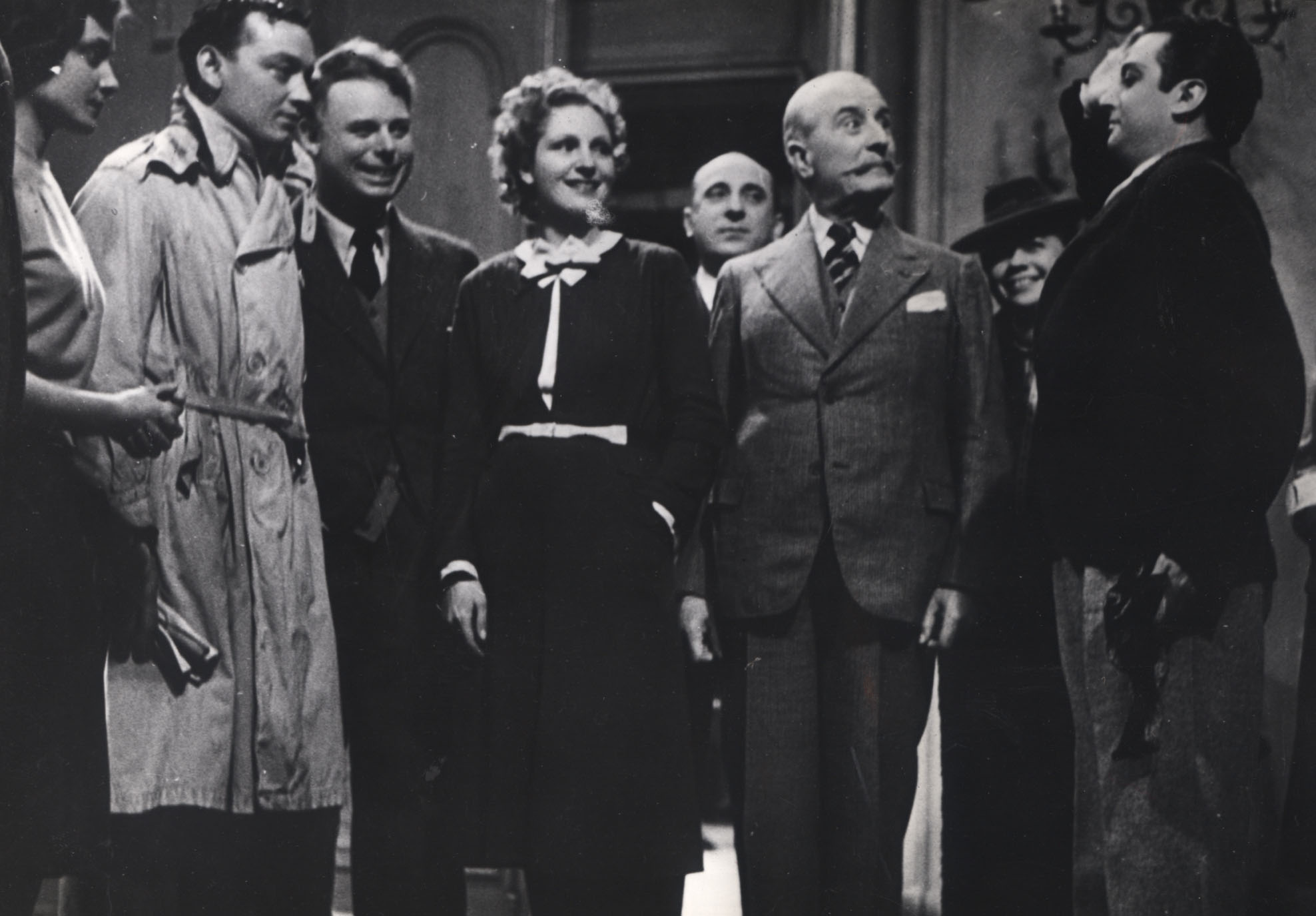
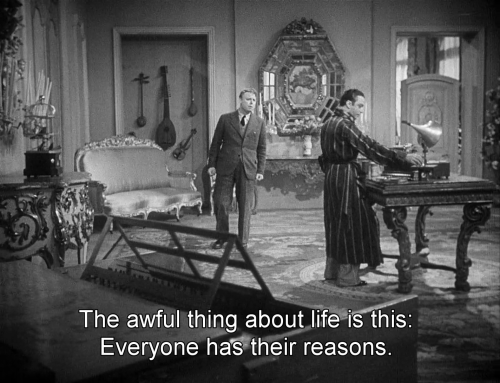
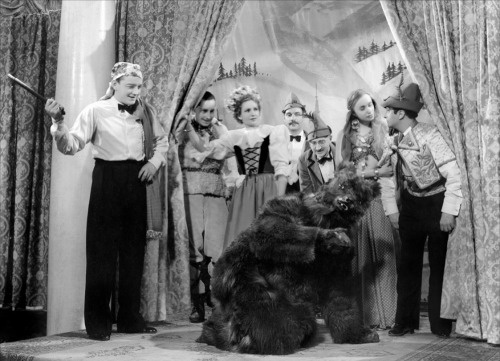
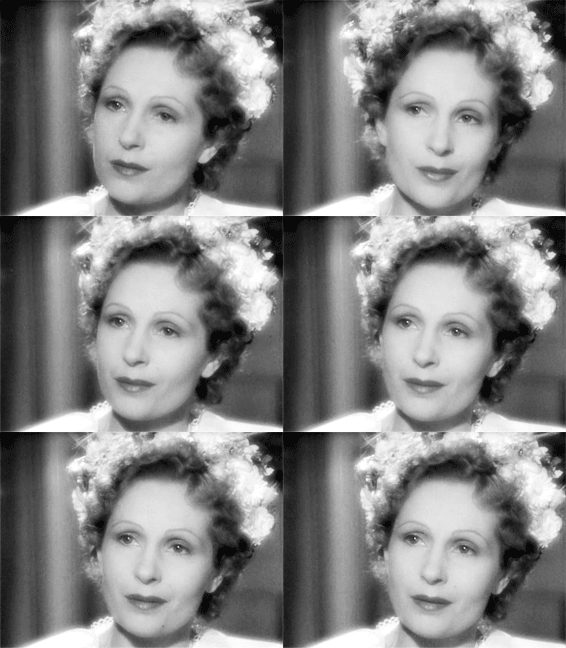
São muitos os convidados para uma caça ao coelho e ao faisão e a um baile à fantasia no La Colinière, o castelo que pertence a Christine (Nora Gregor) e Robert de La Cheyniest (Marcel Dalio). Entre os convidados estão André Jurieux (Roland Toutain), que acabara de cruzar, sozinho, o oceano Atlântico em tempo recorde; a amante de Robert, Geneviève (Mila Parély); o amigo de infância de Christina e melhor amigo de André, Octave (interpretado pelo próprio diretor Jean Renoir); e muitos outros.

Lots of people are invited to a rabbit and pheasant hunt and a masquerade at La Colinière, the castle that belongs to Christine (Nora Gregor) and Robert de la Cheyniest (Marcel Dalio). Among the guests there are André Jurieux (Roland Toutain), who has just crossed, all alone, the Atlantic by plane in record time; Robert's lover, Geneviève (Mila Parély); Christine's childhood friend and André's best friend, Octave (director Jean Renoir himself); and many more.


O poeta brasileiro Carlos Drummond de Andrade escreveu um poema em 1930 chamado “Quadrilha”, em que ele descreve os muitos amores de um grupo de pessoas. Temos algo similar em “A Regra do Jogo”: André ama Christine, que ama André e Robert, que ama Geneviève mas quer terminar o caso. Todos estão tendo casos extraconjugais, e estes casos não são segredo para ninguém.

Brazilian poet Carlos Drummond de Andrade wrote a poem in 1930 called  “Quadrilha”, in which he describes the many loves of a group of people. We have something similar here in “The Rules of the Game”: André loves Christine, who loves both him and Robert, who loves Geneviève but wants to end the affair. Everybody is making whoopee, as the slang of the time went, and  the affairs were no secret for anybody.


Eles não estão apenas cientes das traições mas também dispostos a socializar com os amantes dos parceiros e compartilhar com eles reclamações. Esta é a alta sociedade. A classe baixa, por outro lado, não lida tão bem com as traições. Sim, trair é o que aproxima a alta sociedade de seus empregados, mas a reação à traição é muito diferente.

They are not only aware of all the cheating but also willing to mingle with their partners' lovers and share pet peeves. This is high society. The lower class, on the other hand, doesn't deal so well with cheating. Yes, cheating is what approximates high society and their servants, but the reaction to cheating is so different.


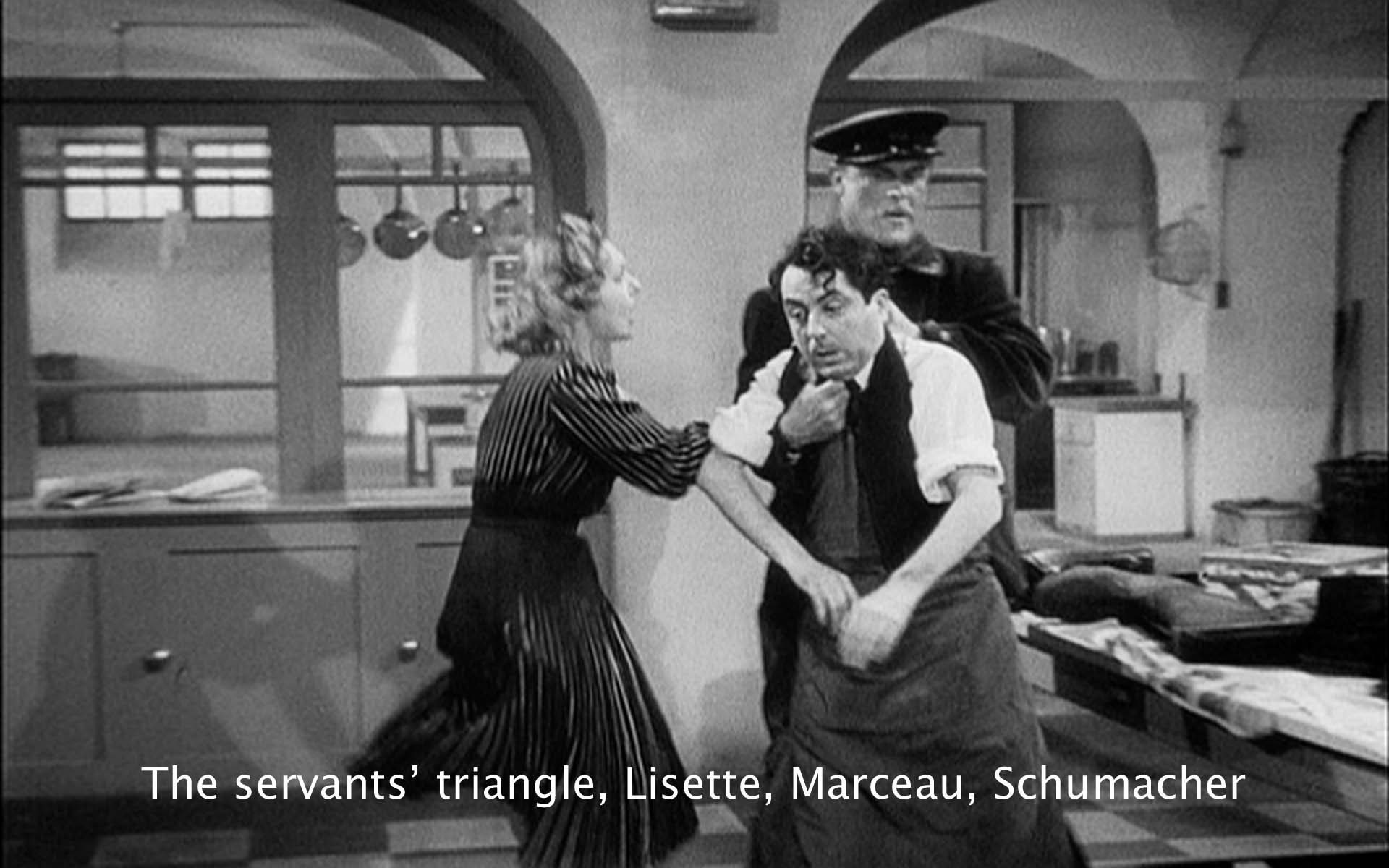
Tome como exemplo Lisette (Paulette Dubost), empregada de Christine. Ela fica o tempo todo em Paris e está acostumada aos hábitos da alta sociedade. Seu marido, Edouard Schumacher (Gaston Modot), trabalha no castelo no campo, e tem outra visão sobre o assunto. Ele não vê o adultério como algo normal, e fica furioso quanto Lisette flerta e beija outros homens – mas isso não a impede de continuar flertando. Como diz Lisette: “Quando é só por diversão, isso (a traição) não importa”.

Take for example Lisette (Paulette Dubost), Christine's servant. She spends all her time in Paris and is used to the habits of high society. Her husband, Edouard Schumacher (Gaston Modot), works in the castle on the countryside, and has another approach. He doesn't see adultery as something normal, and gets mad whenever Lisette flirts with and kisses other men – but his anger doesn't stop her. As Lisette says: “When it's just for fun, it (cheating) doesn't matter”.


Octave, interpretado pelo próprio Jean Renoir, é quem faz a ligação entre todos os personagens, mantendo boas relações tanto com a alta sociedade quanto com os empregados – ele também serve de alívio cômico em algumas ocasiões. E é ele quem diz: “Hoje todo mundo mente. O rádio, o cinema...” Irônico colocar estas palavras na boca do diretor.

Octave, played by Jean Renoir himself, is the one who makes a connection between all characters, being friendly with both the high society and the servants – he also serves as comic relief  in some occasions. And he's the one who utters the line: “today everybody lies. The radio, the cinema...” It’s ironic that these words come from the director’s mouth.


O subtítulo de “A Regra do Jogo” é “uma fantasia dramática de Jean Renoir”. De fato, o filme não é uma comédia – embora tenha momentos divertidos, quando se aproxima de uma farsa – e é uma grande crítica da hipocrisia na sociedade francesa. Mesmo com toda a sujeira acontecendo, – incluindo as traições e as brigas causadas pelas traições – a alta sociedade tem de parecer respeitável e indiferente, por isso traídos e traidores precisam fingir que são bons amigos, como se nada estivesse acontecendo e como se nada fosse um problema para eles – você entenderá quando ver o final do filme.

The subtitle of “The Rules of the Game” is “a dramatic fantasy by Jean Renoir”. Indeed, the film is not a comedy – although it has funny moments, becoming next to a farce – and it is a huge critic of the hypocrisy in French society. Even with all the dirt going on – that includes both the cheatings and the fights caused by the cheatings – high society has to look respectable and aloof, so cheaters and victims of cheating have to treat each other as good friends, as if nothing is happening and as if nothing could be a problem for them – you’ll understand when you see the ending of the film.


Tal filme não poderia ter sido feito nos EUA por causa da censura e do código Hays, e “A Regra do Jogo” não foi bem recebida na França, tendo mau desempenho na bilheteria e gerando protestos. E, quando a Alemanha nazista invadiu a França, “A Regra do Jogo” foi banida permanentemente por ser considerado um filme imoral.

Such a film couldn't be made in the US because of censorship and the Hays Code, and it wasn't well-received in France either, where it had a poor box-office performance and was the source of protests. And, when Nazi German invaded France, “The Rules of the Game” was permanently banned because it was considered an immoral film.


Um diálogo representa perfeitamente esta sociedade culturalmente ignorante. Uma das convidadas pergunta à sobrinha de Christine, Jackie (Anne Mayen), o que exatamente é essa tal arte pré-colombiana que a menina estuda na faculdade. Quando ela responde “É a civilização americana antes da chegada de Colombo”, a mulher reage com: “oh, pretos!” Jackie precisa ser mais clara: “Não, índios”, ao que a mulher mais uma vez reage com “Como eu fui boba! Buffalo Bill!” Elas partem em direções opostas, a mulher muito feliz, e Jackie resignada com a conversa estúpida.

One dialogue represents perfectly satirizes this culturally ignorant high society. One of the guests asks Christine's niece, Jackie (Anne Mayen), what exactly is this pre-Colombian art the girl is studying at college. When she answers “It's the American civilization before Columbus's arrival”, the woman reacts: “oh, negroes!” Jackie has to make it clear: “No, Indians”, to which the woman once again reacts: “How silly I am! Buffalo Bill!” They go on opposite sides, the woman very happy, Jackie resigned with the stupid conversation.


Mais do que tudo, “A Regra do Jogo” é produto da imaginação e visão de Renoir sobre a sociedade francesa. Tudo era muito óbvio para ele. Por exemplo: a própria Nora Gregor tinha uma história semelhante à de Christine: ela se tornou amante de um homem casado, o vice-chanceler da Áustria, em meados dos anos 30 e teve um filho com ele. Eles acabaram se casando, e quando ela filmou “A Regra do Jogo” já sabia bem o que era ter uma experiência com traição.

More than anything, “The Rules of the Game” is the product of Renoir’s imagination and vision about French society. Everything was too obvious to him. For example: Nora Gregor herself had a story similar to Christine’s: she became the lover of a married man, the vice chancellor of Austria, in the mid-1930s and had a child with him. They were eventually married, and when she shot “The Rules of the Game” she already knew well the cheating experience.


O filme merece estar um uma posição tão alta numa lista dos melhores filmes já feitos? Certamente. Reassistindo-o poderei apreciar por completo sua genialidade, mas já vejo a técnica empregada e a crítica necessária que foi feita: elas podem não estar escritas nem ser comentadas, mas uma vez que você aceita começar a vida sexual, você já aceitou a regra do jogo.

Does the film deserve to be so high in a list of best films ever made? Certainly. With more viewing I’ll be able to fully appreciate its genius, but I see that technique used to make the film, and also the necessary critic it makes: they may be unwritten and unspoken, but once you agree to start mating, you have agreed with the rules of the game.

This is my contribution to The Greatest Film I’ve Never Seen blogathon, hosted by Debbie at Moon in Gemini.

Thursday, September 7, 2017

Os Olhos Sem Rosto / Eyes Without a Face / Les Yeux san visage (1960)

ESTE ARTIGO CONTÉM SPOILERS

THIS ARTICLE HAS SPOILERS
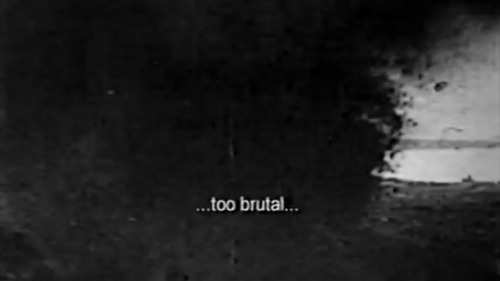
Os créditos surgem acompanhados por uma música sinistra de parque de diversões. A tela está quase preta, mas podemos sentir que estamos nos movendo pelas árvores que passam – seríamos nós passageiros em uma carruagem fantasma? Não, nós estamos apenas no carro de uma mulher que carrega um cadáver no banco de trás. Do cadáver, ela quer apenas o rosto. O filme começou há cinco minutos e já sentimos vários arrepios na espinha.

The credits roll accompanied by a sinister merry-go-round music. The screen is nearly black, but we can sense we’re moving by the trees passing by us – maybe we’re passengers in a phantom carriage? No, we’re riding along a woman who carries a lifeless body in her car. From the body, she wants just the face. We’re five minutes into the film and already have chills down our spines.
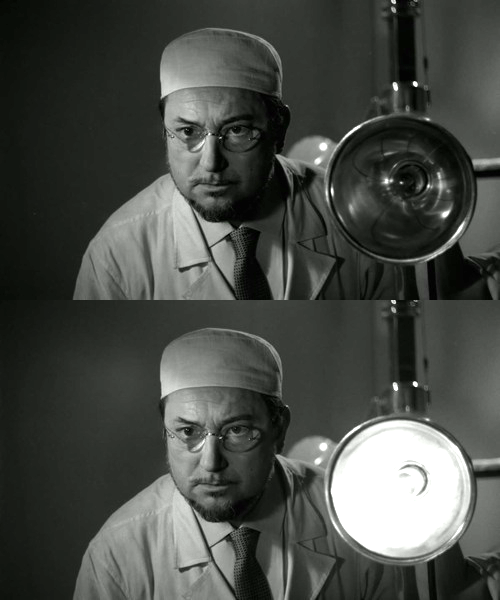
Agora vemos um cientista dando uma palestra sobre como evitar a rejeição em transplantes de órgãos. Assim como na palestra que abre “O Médico e o Monstro”, de 1931, um cientista fala abertamente na frente de um grupo de pessoas sobre os próximos passos de sua perigosa próxima experiência.

Now we have a scientist giving a lecture about how to avoid rejection in organ transplantations. Just like in the opening lecture from 1931’s “Dr Jekyll and Mr Hide”, a scientist discusses in front a group of people the steps of his next dangerous experiment.
O cientista é o Dr Génessier (Pierre Brasseur), cuja filha desapareceu recentemente. Ela foi vítima de um acidente de carro e ficou com o rosto desfigurado. Ela fugiu da clínica onde recebia tratamento. Só que nada disso aconteceu – o pai a tirou da clínica e começou a fazer experiências com transplantes faciais nela.

The scientist is Dr Génessier (Pierre Brasseur), whose daughter disappeared recently. She was a victim in a car crash and her face was left disfigured. She ran away from the clinic where she was been treated. Except she didn’t – her father took her away and started experimenting with facial transplantation surgery on her.
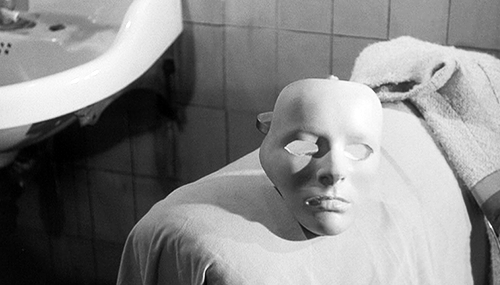
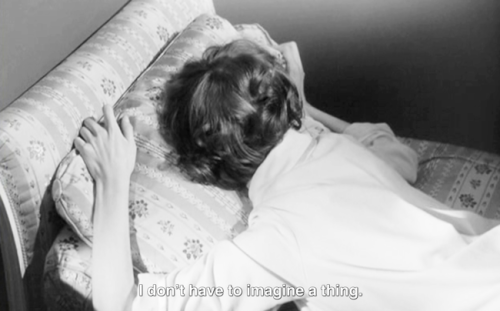
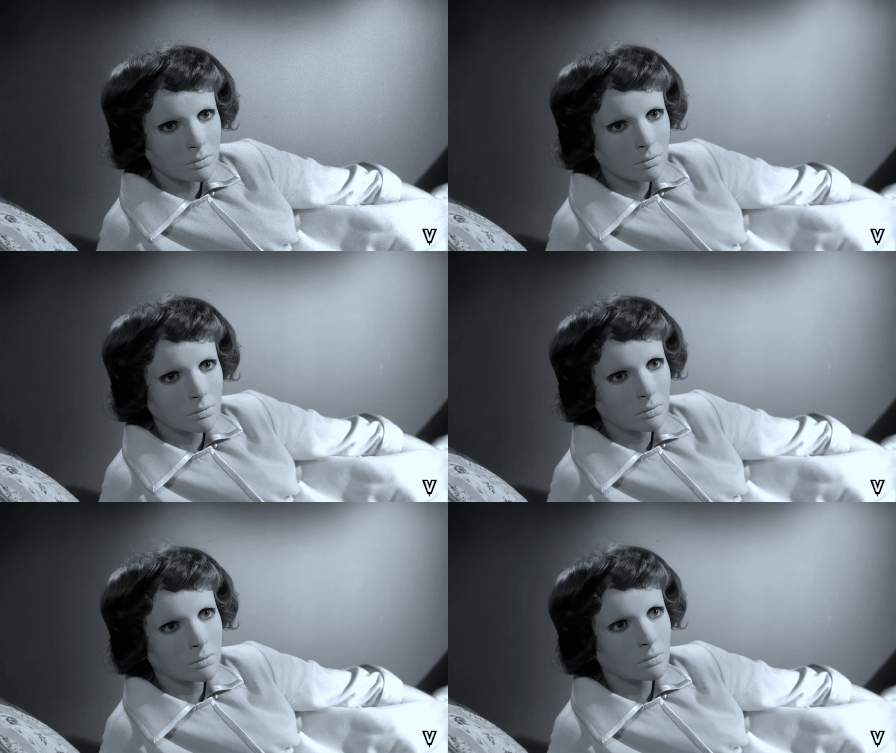
A filha, Christiane (Edith Scob) não está nada feliz. Ela vive trancada em uma luxuosa mansão, e precisa usar uma máscara para cobrir suas feridas. Ela passa por diversas cirurgias perigosas e complexas, mas seu corpo rejeita os novos rostos. E de onde vêm os rostos? Bem, de jovens mulheres raptadas e mortas pelo Dr Génessier e sua assistente Louise (Alida Valli), que, aliás, era a mulher dirigindo o carro na primeira cena. Louise oferece um quarto para uma moça alugar e lá vai – começa o corte.

The daughter, Christiane (Edith Scob) is not happy at all. She lives locked in a lavish mansion, wearing an ugly mask to cover her wounds. She goes through several dangerous and complex surgeries, but her body keeps rejecting the new faces. And where do the faces come from? Well, from young women kidnapped and killed by Dr. Génessier and his assistant Louise (Alida Valli), who, by the way, was the woman driving the car in the opening scene. Louise offers the girl a room to rent, and there they go – cutting her mercilessly.
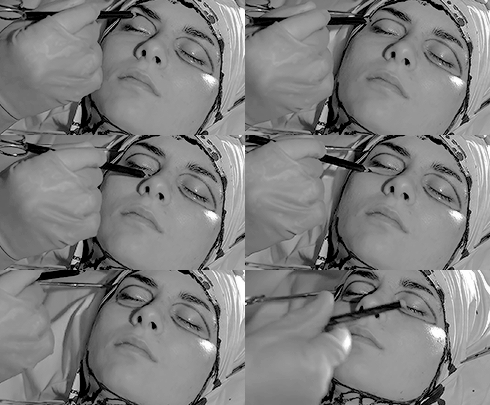
Por falar em corte, preciso dar um alerta de gatilho em potencial: há uma sequência altamente gráfica envolvendo uma cirurgia no meio do filme. Primeiro, Christiane tira a máscara e a mais nova vítima, Edna (Juliette Mayniel) vê o rosto dela sem estar coberto. É uma revelação ao estilo “Fantasma da Ópera”, com uma imagem desfocada que aos poucos revela um rosto destruído. Logo após este momento, acontece a cirurgia. É o básico da cirurgia plástica dos anos 60: o Dr Génessier marca o local com um lápis e ali faz o corte, de onde sai muito sangue – falso, obviamente. Não há problema em se sentir enojado e fechar os olhos – ou ficar com as mãos no seu próprio rosto para ter certeza de que ele ainda está lá, como eu fiz enquanto via.

Since we’re talking about cutting, a trigger warning must be given: there is a very graphic surgery scene in the middle of the movie. First, Christiane takes off her mask and the newest victim, Edna (Juliette Mayniel) sees her face without a mask. It’s a “Phantom of the Opera”-style revelation, with an unfocused image that slowly reveals a destroyed face. Right after this moment, the surgery happens. It’s 1960’s plastic surgery 101: Dr Génessier marks the place with a pencil, then comes the cutting and the fake blood. It’s OK to be disgusted and to look away – or to keep touching your face to make sure it’s still there, like I did while watching.
Como poderíamos classificar Génessier enquanto cientista: bom, maluco ou solitário? De certa maneira ele é bom, porque quer ver a filha feliz e perfeita novamente. Mas para conseguir isso ele se torna um cientista maluco e mata mulheres para pegar os rostos delas e transplantar em Christiane. Mas acima de tudo, eu acredito que ele é solitário. Ele perdeu a esposa quatro anos antes do acidente com Christiane, e agora a filha é tudo para ele. Ele se sente responsável pelo acidente e quer consertar as coisas – mesmo que para isso ele deixe um rastro de sangue e destrua muitas outras vidas. Dito isso, podemos sentir a solidão e o vazio de sua alma em seu rosto sem expressão – porque mesmo sem um rosto, Christiane é mais expressiva que o pai, e usa apenas os olhos para isso.

How would we classify Génessier as a scientist: good, mad or lonely? In a sense he is good, because he wants to see his daughter happy and perfect again. But in order to do this he goes mad and kills women to get their faces to transplant in Christiane. But above all, I believe he is lonely. He lost his wife four years before Christiane’s accident, and now the girl is everything to him. He feels responsible for the accident and wants to fix things – even if this leaves blood everywhere and destroys many other lives. That being said, we can feel the loneliness and the emptiness of his soul by his face without an expression – yes, because even without her face, Christiane is more expressive with her eyes than his father with his full face.
Todos os atores no filme estão muito bem. Esta foi a primeira vez que eu vi Pierre Brasseur em um filme, mas ele esteve em outras produções famosas que eu ainda pretendo ver. Alida Valli é linda e assustadora, e Edith Scob – que trabalha no cinema até hoje – é simplesmente maravilhosa. O diretor Georges Franju foi muito feliz na escolha da trilha sonora – ou na escolha de não ter trilha sonora em algumas sequências, como na da cirurgia. Ao contrário da cena do chuveiro de “Psicose”, nós não podemos imaginar esta cena acompanhada de nenhuma música – o que simplesmente arruinaria o clima de tensão.

Everybody in this movie is extremely good. This was the first time I saw Pierre Brasseur in a movie, but he made many other famous films I have yet to see. Alida Valli is gorgeous and scary, and Edith Scob – who is still making movies nowadays – is simply wonderful. Director Georges Franju is very successful in the choice of the music – or the choice of not having music in some sequences, like the surgery. Unlike “Psycho”’s shower scene, we can’t imagine this scene accompanied by any song – it’d simply ruin the tense effect.
“Os Olhos sem Rosto” foi, assim como muitos filmes revolucionários, mal recebido pelo público e pelos ditos “críticos”. A cena da cirurgia foi censurada em diversos mercados estrangeiros, e causou frisson nos países em que foi exibida sem cortes. Como filme de terror, “Os Olhos sem Rosto” é um os melhores do gênero. Mas como o próprio Franju considerava que este era um filme sobre angústia, devemos dizer: “Os Olhos sem Rosto” é o melhor filme sobre angústia já feito.

“Eyes Without a Face” was, like many groundbreaking films, received badly by the public and the so-called “critics”. The surgery scene was often censored in foreign markets, and caused frisson wherever it was fully exhibited. As a horror movie, “Eyes Without a Face” is one of the best of the genre. But since Franju himself considered it an anguish movie, we must say: “Eyes Without a Face” is the best anguish movie ever made.


This is my contribution to the Movie Scientist blogathon, hosted by Christina at Christina Wehner and Ruth at Silver Screenings
Related Posts Plugin for WordPress, Blogger...