} Crítica Retrô: François Truffaut

Tradutor / Translator / Traductor / Übersetzer / Traduttore / Traducteur / 翻訳者 / переводчик

Showing posts with label François Truffaut. Show all posts

Tuesday, November 26, 2024

As Duas Inglesas e o Amor (1971) / Two English Girls (1971)

 Estou chegando num ponto muito triste em minha vida: o ponto em que não terei mais filmes novos de François Truffaut para assistir. Com “As Duas Inglesas e o Amor” fora da lista, agora há apenas dois filmes de Truffaut que ainda não vi: “Atire no Pianista” (1960) e “A Sereia do Mississippi” (1969). Mas deixemos as lágrimas para depois. Vamos falar sobre “As Duas Inglesas e o Amor”.


I’m reaching a very sad point in my life: the point where soon I won’t have any new-to-me François Truffaut movies to watch. With “Two English Girls” off the list, now there are only two Truffaut movies I haven’t seen: “Shoot the Piano Player” (1960) and “Mississippi Mermaid” (1969). But let’s leave the tears for later. Let’s talk instead about “Two English Girls”.


Esta é uma história de amor(es).

This is a love(s) story.


Europa, virada do século XIX para o século XX. O francês Claude (Jean-Pierre Léaud) decide visitar os Brown, amigos da família. Ele já conhece Anne Brown (Kika Markham), mas não a irmã dela, Muriel. Anne apresenta Claude para Muriel (Stacey Tendeter) na esperança de que um romance floresça entre eles. Primeiro ele a deseja e não é correspondido. Depois ele a recusa quando finalmente parece que ela começou a amá-lo. O tempo passa.  


Europe, turn of the 19th to the 20th century. Frenchman Claude (Jean-Pierre Léaud) decides to visit the Browns, friends of his family. He already knows Anne Brown (Kika Markham) but not her sister Muriel. Anne introduces Claude to Muriel (Stacey Tendeter) in the hopes of a romance blossoming between them. First he wants it, and she doesn’t. Then he refuses her when she finally seems to be starting loving him. Time passes.


Em Paris, Anne se torna escultora e reencontra Claude. Eles começam um romance que evolui para um relacionamento aberto que permite que ela também durma com Diurka (Philippe Léotard). A senhora Brown (Sylvia Marriott) desaprova o que chama de “um casamento internacional”, por isso Claude e Anne continuam um relacionamento informal, até que as coisas ficam complicadas.


In Paris, Anne becomes a sculptor and meets Claude again. They start an affair that evolves to an open relationship that allows her to also sleep with Diurka (Philippe Léotard). Mrs Brown (Sylvia Marriott) disapproves of what she calls “an international marriage”, so Claude and Anne remain informal in their relationship, until things become more complicated.


Esta não é a primeira vez que Truffaut lidou com um trisal. Você deve se lembrar de um filme mais famoso dela, “Jules e Jim - Uma Mulher para Dois” 91962), que tem, ao contrário, uma mulher (interpretada por Jeanne Moreau) e dois homens (interpretados por Oskar Werner e Henri Serre). Curiosamente, ambas as histórias vêm da mesma mente: o romancista Henri-Pierre Roché. E todos os trabalhos citados, incluindo as primeiras colaborações de Truffaut com Jean-Pierre Léaud, versam sobre jovens apaixonados.


This isn’t the first time Truffaut dealt with a threesome. You might remember a more famous work of his, “Jules and Jim” (1962), that has instead one woman (played by Jeanne Moreau) and two men (played by Oskar Werner and Henri Serre). Curiously, both stories come from the same mind: novelist Henri-Pierre Roché. And all the films cited here, including Truffaut’s early collaborations with Jean-Pierre Léaud, verse about young people in love.


O  título original, em francês, é “Les Deux Anglaises et le Continent”: As Duas Inglesas e o Continente. É explicado logo no começo que Claude é chamado de vez em quando pelas irmãs Brown de “o continente”, porque ele vem da França, na Europa continental, e as garotas vêm de uma ilha, a Inglaterra.

The original title, in French, is “Les Deux Anglaises et le Continent”: The Two English Girls and the Continent. It is explained early on that Claude is sometimes referred to by the Brown sisters as “The Continent”, because he is from France, in continental Europe, and the girls come from an island, England.


Nestor Almendros é o diretor de fotografia. Nascido em Barcelona, Espanha, em 1930, e morto em Nova York em 1992, Almendros teve 63 créditos como diretor de fotografia e oito como diretor, a maioria deles quando era um jovem estudante de cinema, vivendo entre Roma, onde estudava, e Cuba, onde sua família estava exilada por causa da ditadura de Franco. Ele e Truffaut foram colaboradores constantes, começando em 1970 com “O Garoto Selvagem”.


Nestor Almendros is the cinematographer. Born in Barcelona, Spain, in 1930, and dying in New York in 1992, Almendros had 63 credits as a cinematographer and eight as director, most of them when he was a young film student, living between Rome, where he attended school, and Cuba, where his family was exiled from Franco’s dictatorship. He and Truffaut were constant collaborators, starting in 1970 with “The Wild Child”.


O uso da cor vermelha é notável, assim como Bergman faria em “Gritos e Sussurros”, que estreou um ano depois. Bergman justificou o uso do vermelho em seu filme como fruto de sua imaginação: ele sempre imaginou que no interior da alma haveria uma membrana vermelha. Numa biografia de Truffaut por Antoine de Baecque e Serge Toubiana, “As Duas Inglesas e o Amor” é considerado, entre os amigos do diretor, seu filme mais visualmente impactante. 


The use of the color red is notable, just like Bergman would do in “Cries and Whispers”, released one year later. Bergman justified the use of red in his movie as something coming from his own imagination: he always imagined the interior of the soul to be a red membrane. In a Truffaut biography by Antoine de Baecque and Serge Toubiana, “Two English Girls” is considered among the director’s friends the most visually beautiful film he ever made.


Este foi o primeiro filme de uma das irmãs protagonistas, Stacey Tendeter, que tinha 22 anos na época. Ela já era casada com Andrew Walton, e eles ficariam juntos até a morte dela em 2008, com apenas 59 anos. Kika Markham, por outro lado, tinha forte presença na televisão desde 1955. Ela apresentou Truffaut aos seus pais durante as filmagens, e o diretor gostou tanto deles que escalou o pai dela como vidente numa cena.


This was the film debut of one of the lead sisters, Stacey Tendeter, who was 22 at the time. She was already married to Andrew Walton, and they would remain together until her death in 2008, when she was only 59. Kika Markham, on the other hand, had a strong presence on TV since 1955. She introduced Truffaut to her parents during the shooting, and the director liked them so much that he cast his dad as the fortune teller in a scene.


Truffaut dirigiu 27 filmes numa carreira que durou menos de 25 anos. Um dia, ficarei sem filmes novos de François Truffaut. Mas sempre teremos seus filmes para rever, como alguém que visita um velho amigo - e eu aposto que ele gostaria de ser visto como um velho amigo de cinéfilos ao redor do mundo. 


Truffaut directed 27 movies in a career that lasted less than 25 years. One day, I’ll run out of new-to-me François Truffaut movies. But we’ll always have his movies to come back to, like someone who is visiting an old friend - and I bet he’d have liked to be seen as an old friend to cinephiles all over the world.

Sunday, December 22, 2019

François Truffaut, filmes de guerra e eu

François Truffaut, war movies and me

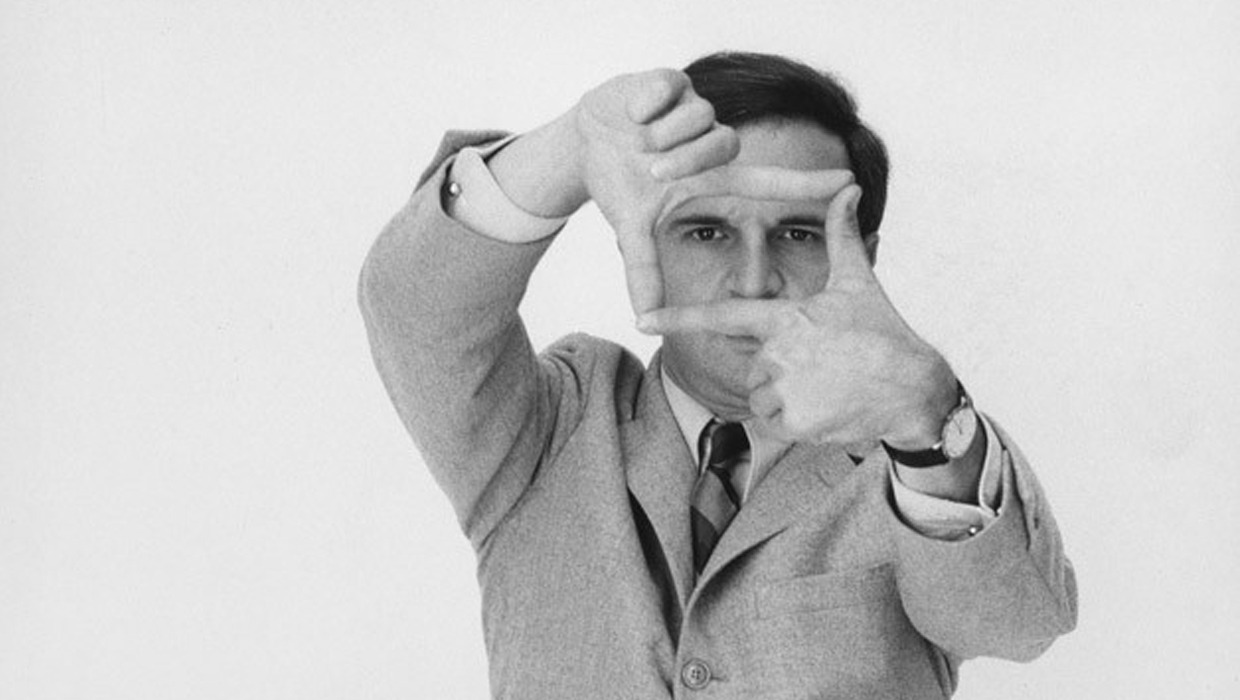
François Truffaut é um dos deuses do cinema. Além de ser um grande diretor, roteirista e por vezes ator, ele amava o cinema acima de todas as coisas. Ele era um de nós, cinéfilos. Mas isso não significa que ele estava sempre correto em suas opiniões sobre o cinema. Há algum tempo eu li algo que Truffaut disse e discordei dele. Truffaut disse que não existe um filme completamente antiguerra porque mesmo os filmes antiguerra acabam glorificando a guerra.

François Truffaut is one of the cinema gods. Besides being a great director, screenwriter and sometimes actor, he loved cinema above all else. He was one of us, film people. But it doesn’t mean he was always right in his opinions about film. A while ago I read something Truffaut said and I strongly disagreed. Truffaut said that there can’t be a completely anti-war movie because even anti-war movies end up glorifying war.

Chicago Tribune - November 11th, 1973 

Eu encontrei esta declaração enquanto pesquisava para uma apresentação. Eu passei 2019 e boa parte de 2018 fazendo esta pesquisa. No final, escolhi 34 filmes, feitos entre 1917 e 2017 – este intervalo de 100 anos foi coincidência – sobre a Primeira e a Segunda Guerras Mundiais.

I came across this declaration when I was doing research for a presentation. I spent 2019 and a good chunk of 2018 doing this research. In the end, I chose 34 films, made between 1917 and 2017 – this 100-year period was a coincidence – about World War I and World War II.


Minha intenção era analisar o discurso nestes filmes, e como ele mudou com o passar do tempo. No final, eu descobri que, durante as guerras, os filmes tinham um tom bem patriótico, mas depois ele mudava. Com “Eu Acuso!” (1919) de Abel Gance, os filmes e a sociedade em geral começaram a ver a Primeira Guerra Mundial como uma guerra na qual não valeu a pena lutar – e que moldou a Geração Perdida. Entretanto, por causa dos horrores dos campos de concentração, a Segunda Guerra Mundial sempre foi retratada no cinema como uma guerra do bem contra o mal, com os bons sendo parte da Geração Grandiosa.

My intention was to analyze the discourse in those films, and how it changed over time. In the end, I found out that, during the wars, the films had a very patriotic tone, but afterwards it changed. With Abel Gance’s “J’Accuse!” (1919), films and society in general started seeing World War I as a war that was not worth fighting – and one that shaped the Lost Generation. However, due to the horrors of concentration camps, World War II was always portrayed in film as a war of good versus evil, with the good ones being part of the Greatest Generation.

Me at the presentation

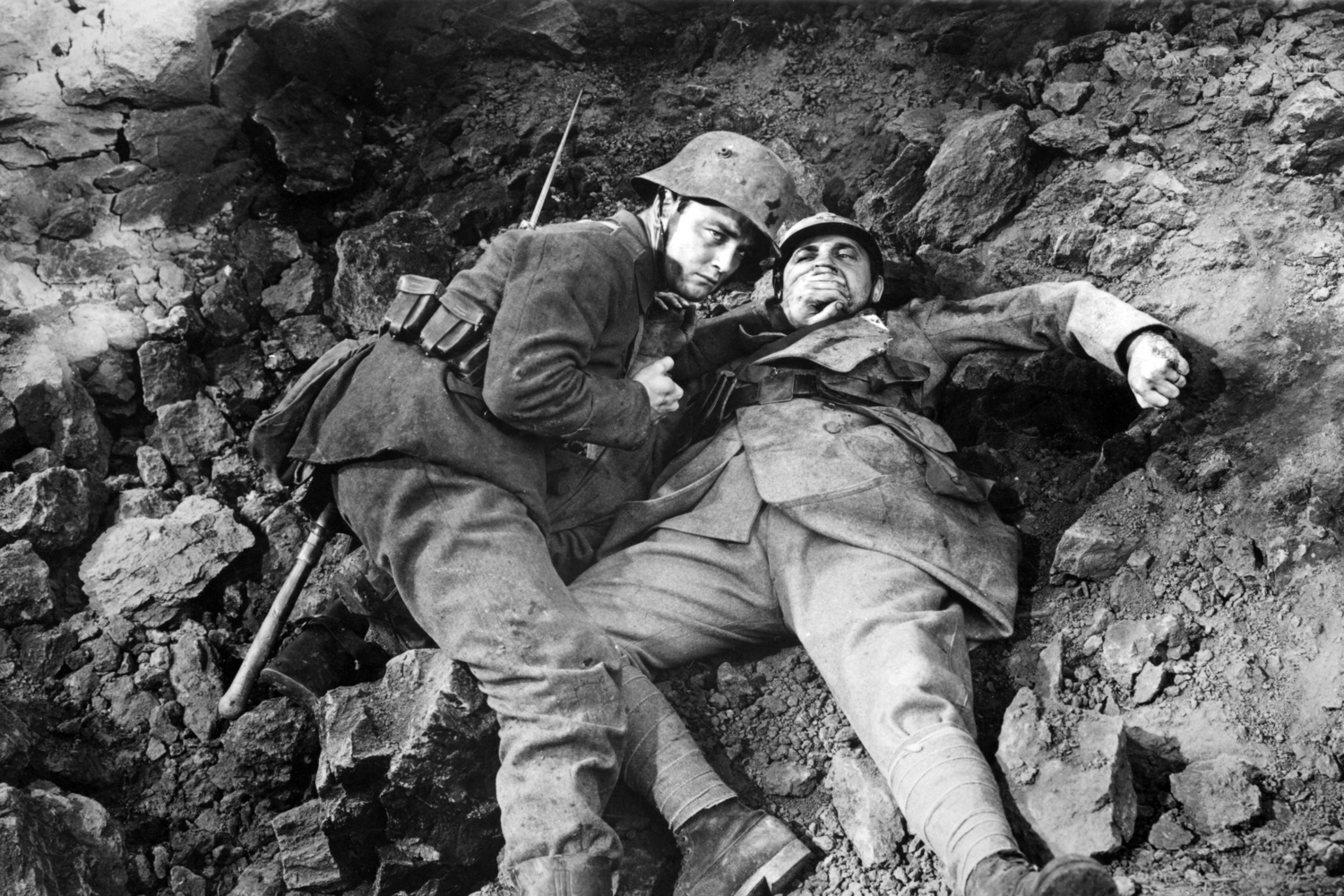
Isso significa que a maioria dos filmes sobre a Primeira Guerra Mundial é de filmes antiguerra, enquanto filmes sobre a Segunda Guerra Mundial são a favor da guerra. No artigo, Truffaut menciona “Glória Feita de Sangue” (1957), de Kubrick, como um filme antiguerra que na verdade glorifica a guerra. Eu não concordo muito com isso, mas há um filme que é completamente antiguerra e contesta a teoria de Truffaut: “Nada de Novo no Front” (1930).

This means that most films about WWI are anti-war films, while WWII films are pro-war. In the article, Truffaut mentions Kubrick’s “Paths of Glory” (1957) as an anti-war film that actually glorifies war. I don’t really agree with that, but there is one film that is completely anti-war and disproves Truffaut’s theory: “All Quiet on the Western Front” (1930).


“Nada de Novo no Front” é um filme de 1930 da Universal Pictures dirigido por Lewis Milestone. Ele é baseado no romance homônimo de Erich Maria Remarque, publicado em 1928. Ele conta a história do jovem alemão Paul Bäumer (interpretado por Lew Ayres) e seus colegas de classe que se alistam no exército após um inflamado discurso patriótico feito por um professor. Eles aprenderão que a guerra é bem diferente da descrição do professor: menos emocionante e glamourosa.

“All Quiet on the Western Front” is a 1930 Universal Pictures movie directed by Lewis Milestone. It is based on the novel of the same name by Erich Maria Remarque, published in 1928. It follows the young German Paul Bäumer (played by Lew Ayres) and his fellow classmates who enlist in the German Army after their teacher makes an intense patriotic speech. They all will learn that war isn’t that exciting or glamorous as the teacher had painted it.


Para mim, há duas sequências fundamentais que mostram a desilusão destes jovens e também que a guerra não merecia o esforço. A primeira é quando o Cabo Himmelstoss (John Wray) – o homem abusivo que treinou os jovens antes de eles partirem para o campo de batalha – chega ao front e, vendo a guerra pela primeira vez, se mostra um covarde. Himmelstoss só era valente perto de jovens imaturos. Fato curioso: Himmelstoss significa "céu em queda" em alemão.

For me, there are two key sequences that show the disillusionment of those youngsters, also showing that the war was not worth fighting. The first is when Corporal Himmelstoss (John Wray) – the abusive man who trained the boys before they went to the front – arrives in the front and, seeing war for the first time, acts with cowardice. Himmelstoss was, after all, only a big bully. Curious fact: Himmelstoss means "falling sky" in German.


A segunda sequência envolve Paul voltando para casa, de folga. Quando ele chega à sua cidade natal, ele percebe que ninguém lá é capaz de imaginar os horrores da guerra, e eles inclusive acham que a Alemanha está a um passo da vitória. Pior ainda: quando ele visita sua velha escola, ele vê o professor Kantorek (Arnold Lucy) repetindo o mesmo discurso patriótico glorioso para alunos muito mais jovens que Paul. Revoltado, Paul conta a eles a verdade sobre a guerra, e como o professor não sabe do que está falando porque nunca esteve no front. Paul é então chamado de covarde pelos jovens estudantes, em transe com o discurso patriótico.

The second sequence involves Paul coming back home for a while. When he reaches his hometown, he realizes that nobody there imagines the horrors of war, and they all actually think that Germany is almost winning the war. Even worse: when he visits his old school, he finds Professor Kantorek (Arnold Lucy) repeating the same glorious patriotic speech to students much younger than Paul. Revolted, Paul tells them the truth about war, and how the professor can’t know them because he had never been to the front. Paul is then called a coward by the young students entranced by the patriotic speech.


“Nada de Novo no Front” era tão pacifista em sua mensagem que foi banido na Alemanha Nazista, na Itália fascista, na Áustria e até mesmo na França. Estes países só puderam ver a obra-prima de 1930 após a Segunda Guerra Mundial.

“All Quiet on the Western Front” had such a strong pacifist message that it was banned from Nazi Germany, fascist Italy, Austria and even France. Those countries could only see the 1930 masterpiece after World War II.


Além disso, a história foi tão profunda que fez o ator Lew Ayres se tornar pacifista. Isso lhe custou muito: ele se opunha à Segunda Guerra Mundial e se alistou no exército apenas para servir como ajudante médico. Depois de alguma confusão, ele finalmente seguiu no exército no posto desejado.

Moreover, the story was so appealing that it turned actor Lew Ayres into a lifelong pacifist. This cost a lot to him: he was a conscientious objector to the Second World War and enlisted in the army only to serve as medical aid. A little kerfuffle followed, until he was granted his wish.


Eu não consegui encontrar nada sobre o que Truffaut achou de “Nada de Novo no Front” – e sua opinião seria bem-vinda, porque o filme só estreou na França em 1963, quando Truffaut já era crítico de cinema. De qualquer forma, eu posso dizer uma coisa: por ter os vencedores da guerra contando uma história empática sobre os perdedores, “Nada de Novo no Front” humaniza ambos os lados do conflito e mostra que a guerra é inútil porque somos todos iguais. E eu sinto muito, monsieur Truffaut, mas este filme cria este discurso antiguerra da mais perfeita e inquestionável maneira que eu já vi no cinema.

I couldn’t find anything about what Truffaut thought of “All Quiet on the Western Front” – and his thoughts would be welcome, because the film was only allowed to be shown in France in 1963, when Truffaut was already a film critic. Anyway, I can say one thing: by letting the winners of the war tell an empathetic story about the losers, “All Quiet on the Western Front” humanizes both sides of the conflict and shows that war is useless because we’re all equal. And I’m sorry, monsieur Truffaut, but this film does this anti-war speech in the most perfect, unquestionable way I’ve ever seen on a screen.

Friday, July 6, 2012

De repente, num domingo / Vivement dimanche! (1983)

Se houve um diretor que coletou mais influências ao longo de sua vida e carreira também como espectador, este foi sem dúvida François Truffaut. Como se esquecer de seu alter-ego, o diretor Ferrand de “A Noite Americana / La Nuit Américaine” (1973), que coloca diversos livros sobre as obras de diretores que admirava sobre uma mesa, a fim de lê-las para obter inspiração?

The director who collected most influences througout his life is career, especially as a moviegoer, was without a doubt François Truffaut. How can we forget his alter ego, director Ferrand in “Day for Night / La Nuit Américaine” (1973), who put over a table several books about the works of directors he admired, wanting to read them and be inspired?
Um dos que mais o influenciou foi Alfred Hitchcock, que acabou dando uma série de entrevistas a Truffaut que mais tade se transformariam em um livro. Por isso não é de se espantar que o realizador francês tenha feito várias referências e homenagens à obra de Hitchcock em seus próprios filmes. Prova disso são os thrillers “Atire no pianista!” (1960) e “A noiva estava de preto” (1968). Seu último filme também não deixa de ser incrivelmente hitchcockiano. Em cada país “Vivement dimanche!” ficou conhecido por um nome: aqui no Brasil é “De repente, num domingo”, o que não é muito correto, enquanto nos países de língua inglesa é “Confidentially Yours”, denunciando um subtexto romântico. A melhor tradução do francês, no entanto, seria “finalmente domingo!”. 

One of the directors that influenced him the most was Alfred Hitchcock, who even agreed to give a series of interviews to Truffaut, that were later published in a book. That's why it's no surprise that the French filmmaker has referenced and paid tributes to Hitchcock's work in his own films. As examples we have the thrillers “Shoot the Piano Player!” (1960) and “The Bride Wore Black” (1968). His last film was also incredibly Hitchcockian. In each country “Vivement Dimanche!” had a different title: in Brazil it is “Suddenyl, on Sunday”, which is a so-so translation, while in English-speaking countries it is “Confidentially Yours”, which gives away the romantic subplot. The best translation from French, however, would be “Finally Sunday!”.
A trama gira em torno de Julien Vercel (Jean-Louis Trintignant), um corretor de imóveis acusado de uma série de assassinatos. A protagonista é, no entanto, Barbara (Fanny Ardant), a secretária de Julien que passa a investigar os crimes. Todos se relacionam com a mulher dele, Marie-Christine, cujo comportamento promíscuo era desconhecido pelo marido.

This is the story of Julien Vercel (Jean-Louis Trintignant), a house dealer accused of a series of murders. The leading lady is Barbara (Fanny Ardant), Julien's secretary and the woman who decides to investigate the crimes. All of the murders are related to his wife, Marie-Christine, whose promiscuous behaviour was unknown to her husband.
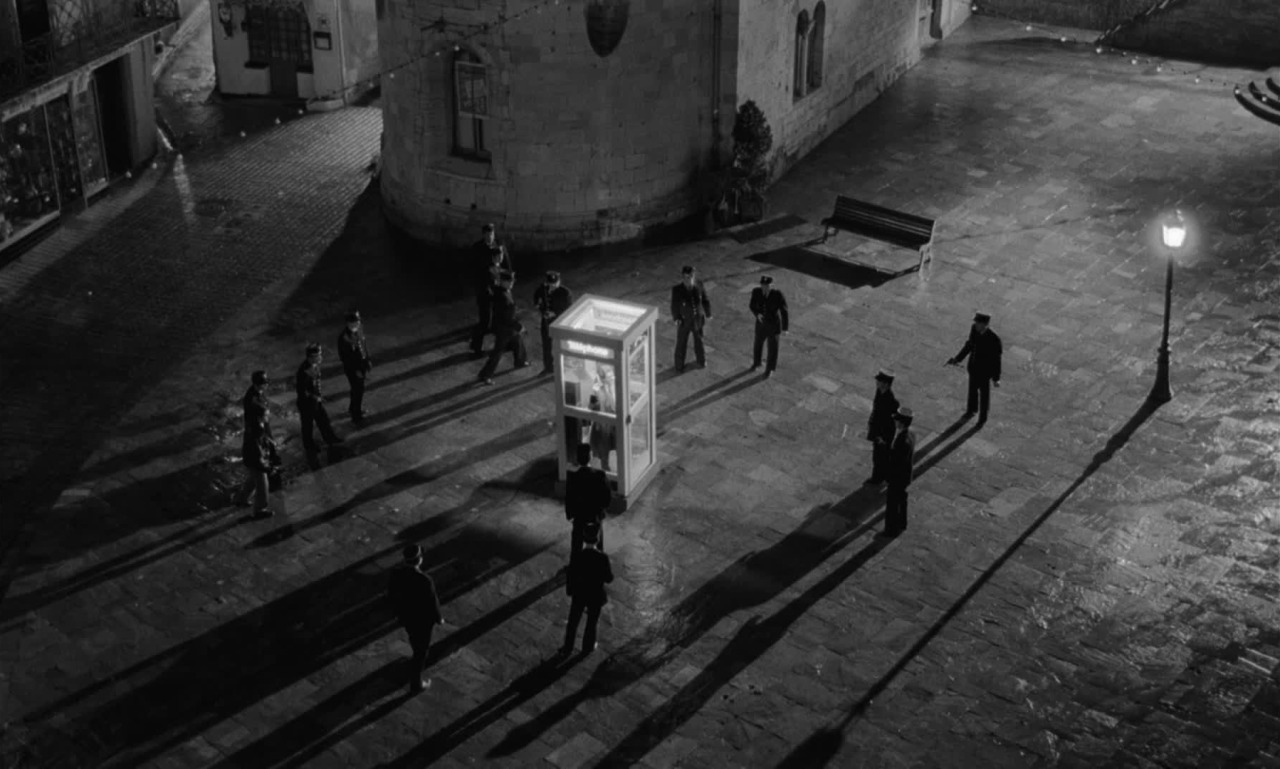
O filme tem todo um clima de filme noir, principalmente por ser em preto-e-branco, mas também pelo mistério, os locais insólitos de investigação e os ambientes fumacentos a serem explorados no meio da noite. A década de 1940 é evocada, mesmo sendo esta a época dos filmes considerados menos famosos dentro da obra de Hitch. Truffaut não faz nenhuma referência explícita aos filmes de Hitch, mas há algo de voyeurismo na pequena janela do escritório em que Barbara e Julien podem ver os pés das pessoas que passam na rua. A única referência ao cinema americano é a sessão no cinema de “Glória feita de sangue” (1957), dirigido por outro ídolo de Truffaut, Stanley Kubrick.


The movie has a film noir feeling, especially because it is shot in blakc and white, but also because it has mystery, odd places for investigation and smoky places to be explored in the middle of the night. The 1940 atmosphere is present, even though Hitchcock's most famous movies weren't made in this decade. Truffaut doesn't make any explicit reference to Hitchcock's films, but there is something voyeuristic in Barbara's and Julien's behaviour when they peek through an office window and see the feet of people walking down the street. The only refenrece to American cinema is the cinema exhibiting “Paths of Glory” (1957), directed by other of Truffaut's idols, Stanley Kubrick.
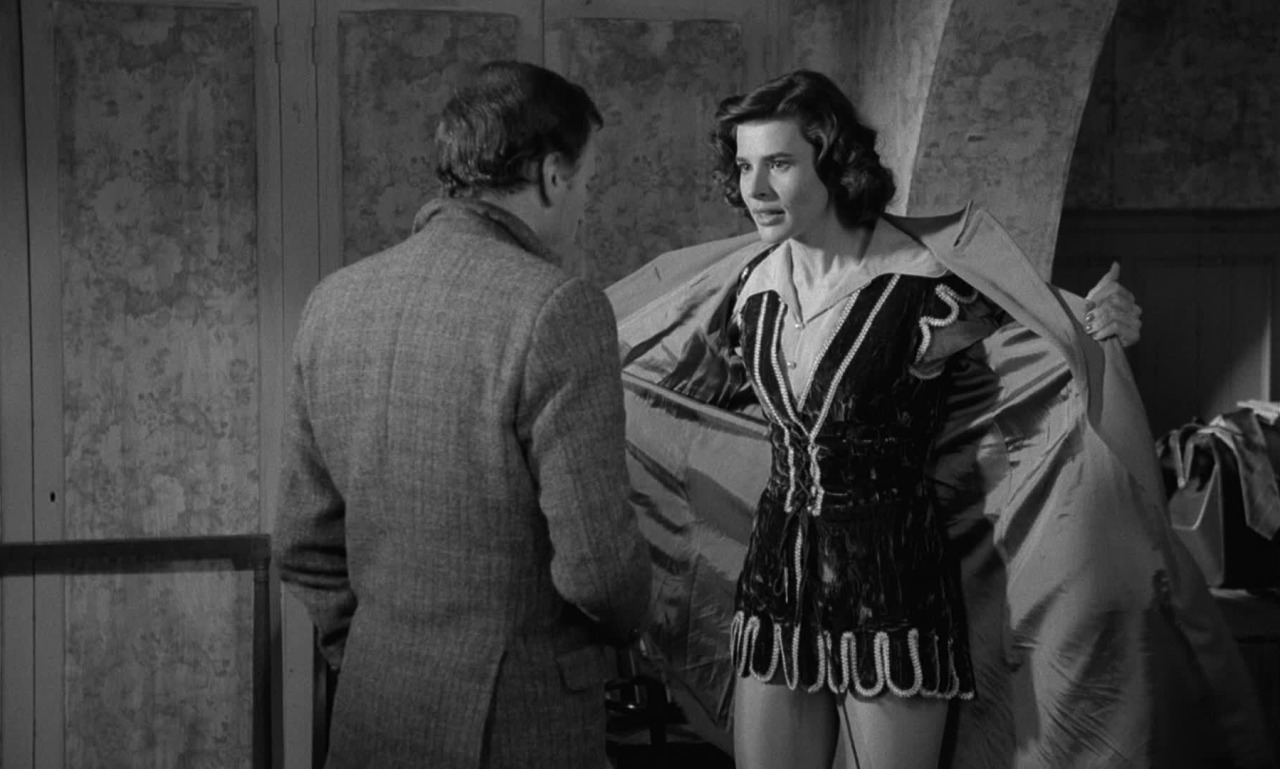
Outro ponto de convergência é a ideia de um homem ser acusado injustamente. Aqui não sabemos se ele é ou não culpado, como acontece nos filmes de Hitchcock em que o protagonista é claramente inocente, como “Intriga Internacional” (1959). E mais uma conexão é a parte cômica em que Barbara sai de um ensaio da peça “O corcunda de Notre Dame” e vai investigar o caso vestida com o figurino da produção. Hitchcock sempre usava doses de humor em seus filmes.

Another convergence point is the theme od a man wrongly accused. Here we don't know if he is guilty or innocent, something that does'nt happens in Hitchcock movies in which the leading man is obviously innocent, like “North by Northwest” (1959). Another connection is the comic moment when Barbara leaves the rehearsal of the play “The Hunchbak of Notre Dame” directly to investigate a case, still wearing her outfit for the play. Hitchcock always used little doses of humor in his films.
Algo interessante é que Truffaut, ao contrário de Hitchcock, geralmente tem mulheres no papel principal de seus filmes de suspense. Para Hitch, quem investiga o caso é James Stewart, Cary Grant, Henry Fonda ou outro no mesmo estilo bom moço. Para Truffaut, é uma de suas musas, como Jeanne Moreau ou a própria Fanny, com quem ele teve uma filha. Mas isso não quer dizer que o mestre do suspense não tenha tido suas “musas”: vale citar Grace Kelly, Tippi Hedren (um caso controverso, é verdade) e Ingrid Bergman, por quem Hitch teria se apaixonado sem ser correspondido. 


Something interesting is that Truffaut, unlike Hitchcock, usually has women in the leading role in his thrillers. For Hitch, the one who will investigate the case is James Stewart, Cary Grant, Henry Fond or another with the good guy persona. For Truffaut, it is one of his muses, like Jeanne Moreau or Fanny herself, with whom Truffaut had a daughter. But this doesn't mean that the Master of Suspense didn't have his muses: we can mention Grace Kelly, Tippi Hedren (a controversial example, to be fair) and Ingrid Bergman, whom Hitchcock might have fallen in love with, without being corresponded.
Sem dúvida a cena que mais lembra a obra de Hitch é o breve momento em que Barbara está dirigindo. Seu rosto é focalizado, nenhuma palavra é pronunciada e ela teme estar sendo seguida. Acrescente uma trilha sonora de suspense e voilà: imitamos a fuga de carro de Marion Crane (Janet Leigh) em “Psicose”!

There is no doubt about the scene that reminds Hitchcock's work the most: the brief moment in which Barbara is driving. Her face is in a close-up, no word is uttered and she fears being followed. Add a suspenseful score and voilà: we imitate Marion Crane's (Janet Leigh) car escape in “Psycho”!
Como a maioria dos cineastas, Truffaut não sabia que este seria seu último filme. Ele tinha o plano de dirigir 30 produções e então se aposentar para escrever livros. Mas ele adoeceu e faleceu precocemente em 1984, aos 52 anos, vítima de um tumor cerebral. Ele dirigiu 28, entre curtas e longas-metragens. Mais divertido do que sombrio em seu final, “De repente, num domingo” nos deixa com a certeza de que Truffaut foi um romântico e um intelectual. Afinal, não somos todos?

Like most filmmakers, Truffaut didn't know that this would be his last film. He had planned to direct 30 films and then retire and write books. But he got sick and died young in 1984, at age 52, because of a brain tumor. He directed 28, between short and feature films. More fun than dark in the final minutes, “Confidentially Yours” gives us the certainty that Truffaut was a romantic and an intellectual. But aren't we all?

This post is my entry for "The Best Hitchcock Films Hitchcock Never Made" blogathon, hosted by  Tales of the Easily Distracted and ClassicBecky's Brain Food.

Related Posts Plugin for WordPress, Blogger...