} Crítica Retrô: Primeira Guerra Mundial

Tradutor / Translator / Traductor / Übersetzer / Traduttore / Traducteur / 翻訳者 / переводчик

Showing posts with label Primeira Guerra Mundial. Show all posts

Wednesday, May 20, 2026

Guerra! Flagelo de Deus (1930) / Westfront 1918 (1930)


Sou completamente obcecada pela Primeira Guerra Mundial. Já escrevi sobre alguns clássicos sobre o conflito, como “Eu Acuso!” (1919) e as duas versões para o cinema de Adeus às Armas. Escrevi todo um artigo científico sobre filmes da Primeira Guerra. E se puder adicionar mais uma obsessão, melhor ainda. É o caso aqui: filmes alemães, em especial filmes dirigidos pelo grande G.W. Pabst. “Guerra! Flagelo de Deus” foi meu primeiro filme falado de Pabst, e também o primeiro que ele fez com som sincronizado! Levando em conta essas coincidências, essas são minhas opiniões sobre o filme.   

I’m totally obsessed with the subject of World War I. I reviewed a few classics about the conflict, such as “J’Accuse!” (1919) and the two screen versions of A Farewell to Arms. I wrote a full paper about WWI movies. And if I can add another obsession to it, better yet. This is the case: German movies and especially movies directed by the great G.W. Pabst. “Westfront 1918” was my first Pabst talkie, which was in fact Pabst’s first talkie! With my pocket full of coincidences, here are my thoughts about the movie.

É tudo muito divertido num albergue francês até que as bombas começam a cair. É hora de voltar para as trincheiras, que não estão tão longe assim. Aprendi no Ensino Fundamental II que foi na Primeira Guerra Mundial que a guerra invadiu as cidades, e antes disso os combates eram assunto exclusivo dos campos de batalha.

It’s all fun and games at a French inn when the bombs start falling. It’s time to get back to the trenches, which weren’t far away. I learned in middle school that it was during WWI that the war invaded the cities, before that the combats were a thing for the battlefields only.

O posto de comando pode ser no subsolo como as trincheiras comuns, mas os comandantes de alta patente têm telefone e um soldado que lhes serve comida fresca. Enquanto isso, há soldados empregados somente para fazer as cruzes usadas para marcar os túmulos - talvez seus próprios túmulos. Mas todos são iguais quando o assunto é diversão e artistas voluntários se apresentam para as tropas.

The commanders’ headquarters may be also underground like the common trenches, but the higher offices have a telephone and a soldier to serve their fresh food. Meanwhile, there are soldiers employed only to make crosses used to mark graves - maybe their own graves. But they are all equal when it’s about fun and voluntary artists put on a show for the troops.

A guerra também afeta as mulheres, mas elas não são muito vistas em filmes de guerra. Das apenas três personagens femininas, duas não têm nome e são só ligadas ao soldado Karl (Gustav Diessl): são sua mãe, interpretada por Else Heller, e sua esposa, interpretada por Hanna Hoesrich. A terceira personagem feminina é a garota francesa Yvette, interpretada por Jackie Monnier. As sequências com Karl chegando em seu apartamento é o puro suspense criado no cinema mudo, provando que Pabst ainda conservava suas raízes com firmeza no cinema silencioso.

War affects women as well, but they are not often seen in war movies. Of the only three credited female characters, two have no name and are only linked to the soldier Karl (Gustav Diessl): they are his mother, played by Else Heller, and his wife, played by Hanna Hoesrich. The third female character is Yvette, the French girl, played by Jackie Monnier. The sequence of Karl arriving in his flat is pure silent cinema build-up of suspense, proving that Pabst still had roots firmly in silent movies.

É covardia comparar Hollywood com o cinema de Weimar, quando a Alemanha estava passando por uma enorme crise. Do mesmo ano de “Guerra! Flagelo de Deus” - na verdade, os dois filmes estrearam com um intervalo de apenas 32 dias! - temos a obra-prima absoluta e ganhador do Oscar de Melhor Filme “Nada de Novo no Front”. Uma das melhores sequências neste filme envolve o protagonista de licença, voltando para casa para ser surpreendido - mas não positivamente. Em “Guerra! Flagelo de Deus”, Karl diz que não gosta quando os soldados saem de licença, porque eles voltam com más notícias para os colegas, dizendo que em casa as pessoas estão passando fome. Mais tarde, Karl tem sua própria experiência desagradável enquanto está de licença. Isso me lembrou de outro filme, a produção soviética “Balada de um Soldado” (1959), sobre um soldado de licença que ajuda as pessoas pelo caminho sempre com a esperança de ir para casa ver sua mãe.

It’s unfair to compare Hollywood with Weimar-Era cinema, when Germany was going through a huge crisis. From the same year of “Westfront 1918” - actually, the two movies premiered 32 days apart! - we have the absolute masterpiece and Best Picture Oscar winner “All Quiet on the Western Front”. One of the best sequences in the latter sees its protagonist on leave, returning home to be surprised - but not in the good sense. In “Westfront 1918”, Karl says he doesn’t like when soldiers go on leave, because they return to disappoint their colleagues, saying that at home people are starving. Later, Karl has his own unpleasant experience while on leave. This reminded me of yet another film, the Soviet production “Ballad of a Soldier” (1959), about a soldier on leave who helps people along the way while hoping to go home to see his mother.

O roteiro foi escrito por Ladislaus Vajda. Este roteirista nascido na Hungria foi colaborador constante de Pabst e não deve ser confundido com seu filho, também húngaro, o diretor Ladislao Vajda, que fez mais de 40 filmes em diversos países da Europa, sendo o mais famoso “Marcelino, Pão e Vinho” (1955).  

The screenplay was written by Ladislaus Vajda. This screenwriter born in Hungary was a constant collaborator of Pabst’s and must not be confused with his son, also Hungarian, the director Ladislao Vajda, who made over 40 movies in several countries of Europe, being the most famous “The Miracle of Marcelino” (1955).

Vajda Sr.

Meu querido François Truffaut disse que é impossível fazer um filme antiguerra porque todos os filmes sobre a guerra a mostram de maneira emocionante. Eu discordo completamente. Você precisa estar muito carregado de testosterona para achar legal ter balas e bombas caindo sobre sua cabeça, e a companhia constante do medo. A única coisa a temer é o próprio medo? Bobagem. A guerra é verdadeiramente um flagelo, como diz o título brasileiro, e “Guerra! Flagelo de Deus” é de fato um filme antiguerra, tanto é que foi banido pelos nazistas, que fizeram o mesmo com “Nada de Novo no Front”. Um grande elogio, eu diria.

My darling François Truffaut said that you can’t make an anti-war movie because all movies about war show it in an exciting way. I wholeheartedly disagree. You need to be too soaked in testosterone to think it’s cool having bullets and bombs near your head, and lots of fear. The only thing to fear is fear itself? Bullshit. War is truly a scourge, as the Brazilian title describes it, and “Westfront 1918” is truly an anti-war film, so much that it was banned by the Nazis, who did the same thing to “All Quiet on the Western Front”. A true compliment, may I say.

Sunday, December 22, 2019

François Truffaut, filmes de guerra e eu

François Truffaut, war movies and me

François Truffaut é um dos deuses do cinema. Além de ser um grande diretor, roteirista e por vezes ator, ele amava o cinema acima de todas as coisas. Ele era um de nós, cinéfilos. Mas isso não significa que ele estava sempre correto em suas opiniões sobre o cinema. Há algum tempo eu li algo que Truffaut disse e discordei dele. Truffaut disse que não existe um filme completamente antiguerra porque mesmo os filmes antiguerra acabam glorificando a guerra.

François Truffaut is one of the cinema gods. Besides being a great director, screenwriter and sometimes actor, he loved cinema above all else. He was one of us, film people. But it doesn’t mean he was always right in his opinions about film. A while ago I read something Truffaut said and I strongly disagreed. Truffaut said that there can’t be a completely anti-war movie because even anti-war movies end up glorifying war.

Chicago Tribune - November 11th, 1973 

Eu encontrei esta declaração enquanto pesquisava para uma apresentação. Eu passei 2019 e boa parte de 2018 fazendo esta pesquisa. No final, escolhi 34 filmes, feitos entre 1917 e 2017 – este intervalo de 100 anos foi coincidência – sobre a Primeira e a Segunda Guerras Mundiais.

I came across this declaration when I was doing research for a presentation. I spent 2019 and a good chunk of 2018 doing this research. In the end, I chose 34 films, made between 1917 and 2017 – this 100-year period was a coincidence – about World War I and World War II.


Minha intenção era analisar o discurso nestes filmes, e como ele mudou com o passar do tempo. No final, eu descobri que, durante as guerras, os filmes tinham um tom bem patriótico, mas depois ele mudava. Com “Eu Acuso!” (1919) de Abel Gance, os filmes e a sociedade em geral começaram a ver a Primeira Guerra Mundial como uma guerra na qual não valeu a pena lutar – e que moldou a Geração Perdida. Entretanto, por causa dos horrores dos campos de concentração, a Segunda Guerra Mundial sempre foi retratada no cinema como uma guerra do bem contra o mal, com os bons sendo parte da Geração Grandiosa.

My intention was to analyze the discourse in those films, and how it changed over time. In the end, I found out that, during the wars, the films had a very patriotic tone, but afterwards it changed. With Abel Gance’s “J’Accuse!” (1919), films and society in general started seeing World War I as a war that was not worth fighting – and one that shaped the Lost Generation. However, due to the horrors of concentration camps, World War II was always portrayed in film as a war of good versus evil, with the good ones being part of the Greatest Generation.

Me at the presentation

Isso significa que a maioria dos filmes sobre a Primeira Guerra Mundial é de filmes antiguerra, enquanto filmes sobre a Segunda Guerra Mundial são a favor da guerra. No artigo, Truffaut menciona “Glória Feita de Sangue” (1957), de Kubrick, como um filme antiguerra que na verdade glorifica a guerra. Eu não concordo muito com isso, mas há um filme que é completamente antiguerra e contesta a teoria de Truffaut: “Nada de Novo no Front” (1930).

This means that most films about WWI are anti-war films, while WWII films are pro-war. In the article, Truffaut mentions Kubrick’s “Paths of Glory” (1957) as an anti-war film that actually glorifies war. I don’t really agree with that, but there is one film that is completely anti-war and disproves Truffaut’s theory: “All Quiet on the Western Front” (1930).


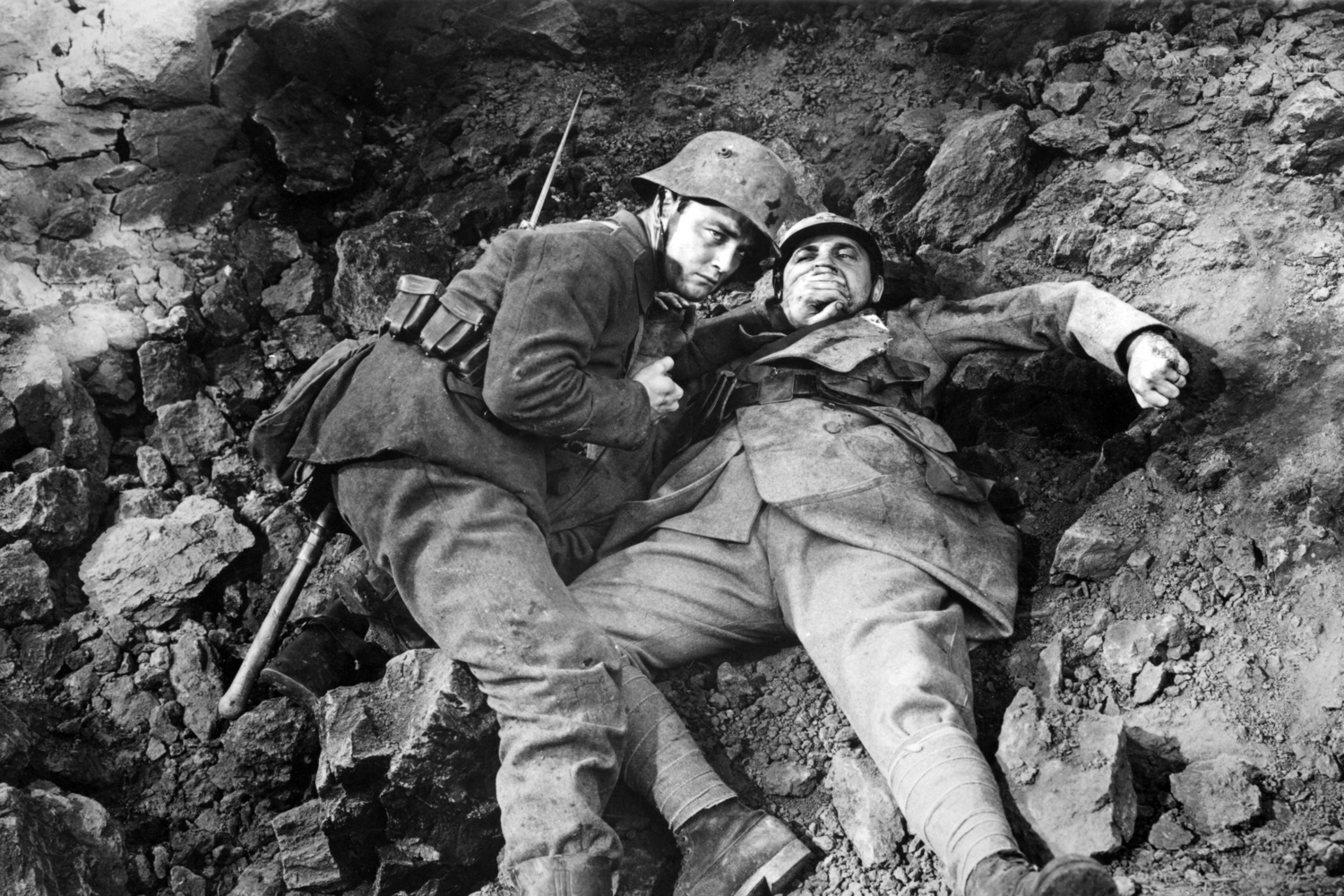
“Nada de Novo no Front” é um filme de 1930 da Universal Pictures dirigido por Lewis Milestone. Ele é baseado no romance homônimo de Erich Maria Remarque, publicado em 1928. Ele conta a história do jovem alemão Paul Bäumer (interpretado por Lew Ayres) e seus colegas de classe que se alistam no exército após um inflamado discurso patriótico feito por um professor. Eles aprenderão que a guerra é bem diferente da descrição do professor: menos emocionante e glamourosa.

“All Quiet on the Western Front” is a 1930 Universal Pictures movie directed by Lewis Milestone. It is based on the novel of the same name by Erich Maria Remarque, published in 1928. It follows the young German Paul Bäumer (played by Lew Ayres) and his fellow classmates who enlist in the German Army after their teacher makes an intense patriotic speech. They all will learn that war isn’t that exciting or glamorous as the teacher had painted it.


Para mim, há duas sequências fundamentais que mostram a desilusão destes jovens e também que a guerra não merecia o esforço. A primeira é quando o Cabo Himmelstoss (John Wray) – o homem abusivo que treinou os jovens antes de eles partirem para o campo de batalha – chega ao front e, vendo a guerra pela primeira vez, se mostra um covarde. Himmelstoss só era valente perto de jovens imaturos. Fato curioso: Himmelstoss significa "céu em queda" em alemão.

For me, there are two key sequences that show the disillusionment of those youngsters, also showing that the war was not worth fighting. The first is when Corporal Himmelstoss (John Wray) – the abusive man who trained the boys before they went to the front – arrives in the front and, seeing war for the first time, acts with cowardice. Himmelstoss was, after all, only a big bully. Curious fact: Himmelstoss means "falling sky" in German.
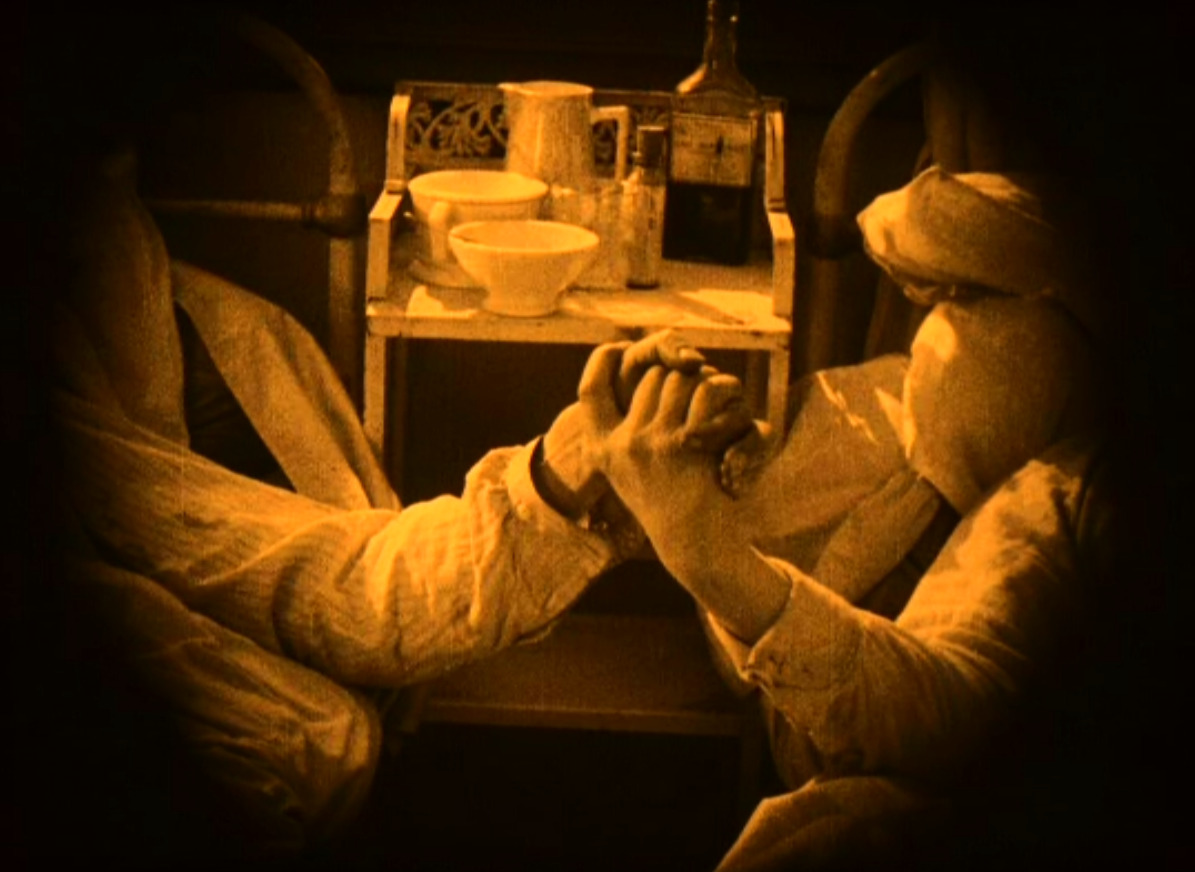
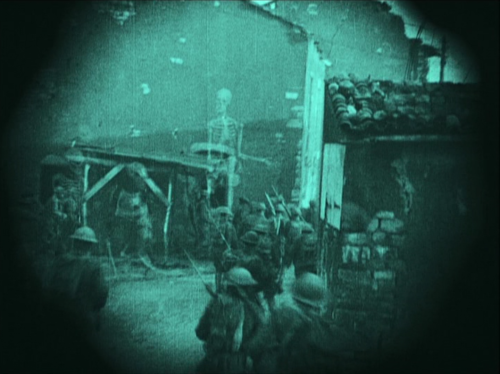

A segunda sequência envolve Paul voltando para casa, de folga. Quando ele chega à sua cidade natal, ele percebe que ninguém lá é capaz de imaginar os horrores da guerra, e eles inclusive acham que a Alemanha está a um passo da vitória. Pior ainda: quando ele visita sua velha escola, ele vê o professor Kantorek (Arnold Lucy) repetindo o mesmo discurso patriótico glorioso para alunos muito mais jovens que Paul. Revoltado, Paul conta a eles a verdade sobre a guerra, e como o professor não sabe do que está falando porque nunca esteve no front. Paul é então chamado de covarde pelos jovens estudantes, em transe com o discurso patriótico.

The second sequence involves Paul coming back home for a while. When he reaches his hometown, he realizes that nobody there imagines the horrors of war, and they all actually think that Germany is almost winning the war. Even worse: when he visits his old school, he finds Professor Kantorek (Arnold Lucy) repeating the same glorious patriotic speech to students much younger than Paul. Revolted, Paul tells them the truth about war, and how the professor can’t know them because he had never been to the front. Paul is then called a coward by the young students entranced by the patriotic speech.


“Nada de Novo no Front” era tão pacifista em sua mensagem que foi banido na Alemanha Nazista, na Itália fascista, na Áustria e até mesmo na França. Estes países só puderam ver a obra-prima de 1930 após a Segunda Guerra Mundial.

“All Quiet on the Western Front” had such a strong pacifist message that it was banned from Nazi Germany, fascist Italy, Austria and even France. Those countries could only see the 1930 masterpiece after World War II.


Além disso, a história foi tão profunda que fez o ator Lew Ayres se tornar pacifista. Isso lhe custou muito: ele se opunha à Segunda Guerra Mundial e se alistou no exército apenas para servir como ajudante médico. Depois de alguma confusão, ele finalmente seguiu no exército no posto desejado.

Moreover, the story was so appealing that it turned actor Lew Ayres into a lifelong pacifist. This cost a lot to him: he was a conscientious objector to the Second World War and enlisted in the army only to serve as medical aid. A little kerfuffle followed, until he was granted his wish.


Eu não consegui encontrar nada sobre o que Truffaut achou de “Nada de Novo no Front” – e sua opinião seria bem-vinda, porque o filme só estreou na França em 1963, quando Truffaut já era crítico de cinema. De qualquer forma, eu posso dizer uma coisa: por ter os vencedores da guerra contando uma história empática sobre os perdedores, “Nada de Novo no Front” humaniza ambos os lados do conflito e mostra que a guerra é inútil porque somos todos iguais. E eu sinto muito, monsieur Truffaut, mas este filme cria este discurso antiguerra da mais perfeita e inquestionável maneira que eu já vi no cinema.

I couldn’t find anything about what Truffaut thought of “All Quiet on the Western Front” – and his thoughts would be welcome, because the film was only allowed to be shown in France in 1963, when Truffaut was already a film critic. Anyway, I can say one thing: by letting the winners of the war tell an empathetic story about the losers, “All Quiet on the Western Front” humanizes both sides of the conflict and shows that war is useless because we’re all equal. And I’m sorry, monsieur Truffaut, but this film does this anti-war speech in the most perfect, unquestionable way I’ve ever seen on a screen.

Tuesday, August 13, 2019

Não Matarás (1932) / The Broken Lullaby (1932)


Em 1932, estrearam quatro filmes dirigidos por Ernst Lubitsch, incluindo o famosíssimo “Ladrão de Alcova”. Foi o ano mais prolífico de sua carreira nos EUA, trabalhando para a Paramount Pictures. E em 1932 surgiu “Não Matarás”, um filme tão incomum de Lubitsch que nos faz voltar para verificar os créditos. Sim, o filme foi produzido e dirigido por Lubitsch. E é um de seus melhores, mais humanos e emocionantes filmes.

In 1932, four films directed by Ernst Lubitsch premiered, including the very famous “Trouble in Paradise”. It was the most prolific year of his career in the US, working for Paramount Pictures. And in 1932 there appears “The Broken Lullaby”, such an unusual Lubitsch film that makes us double check the opening credits. Yes, it was produced and directed by Lubitsch. And it’s one of his most human, heartbreaking and best films.


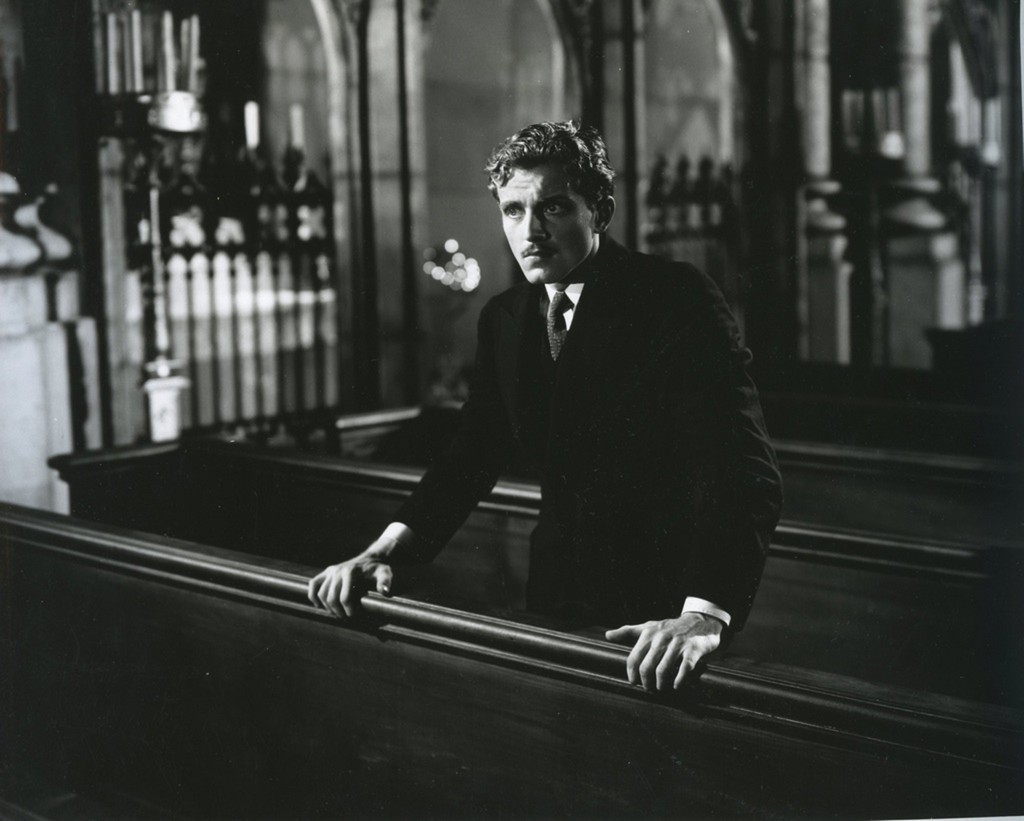
Enquanto a multidão celebra o primeiro aniversário do Armistício em 1919 com um desfile, soldados traumatizados no hospital gritam por causa dos barulhos. Em uma catedral de Notre Dame lotada, uma missa é assistida por soldados com baionetas penduradas nos cintos. Depois que a missa acaba, um homem à paisana permanece na igreja. Ele está lá para confessar que matou outro homem.

While the crowd celebrates the first anniversary of the Armistice in 1919 with parades, shell-shocked soldiers in the hospital scream with the noises they hear. In a crowded Notre Dame cathedral, a mass is attended by soldiers with their bayonets hanging from their belts. After the mass is over, a man in civilian clothes remains in the church. He is there to confess that he killed another man.


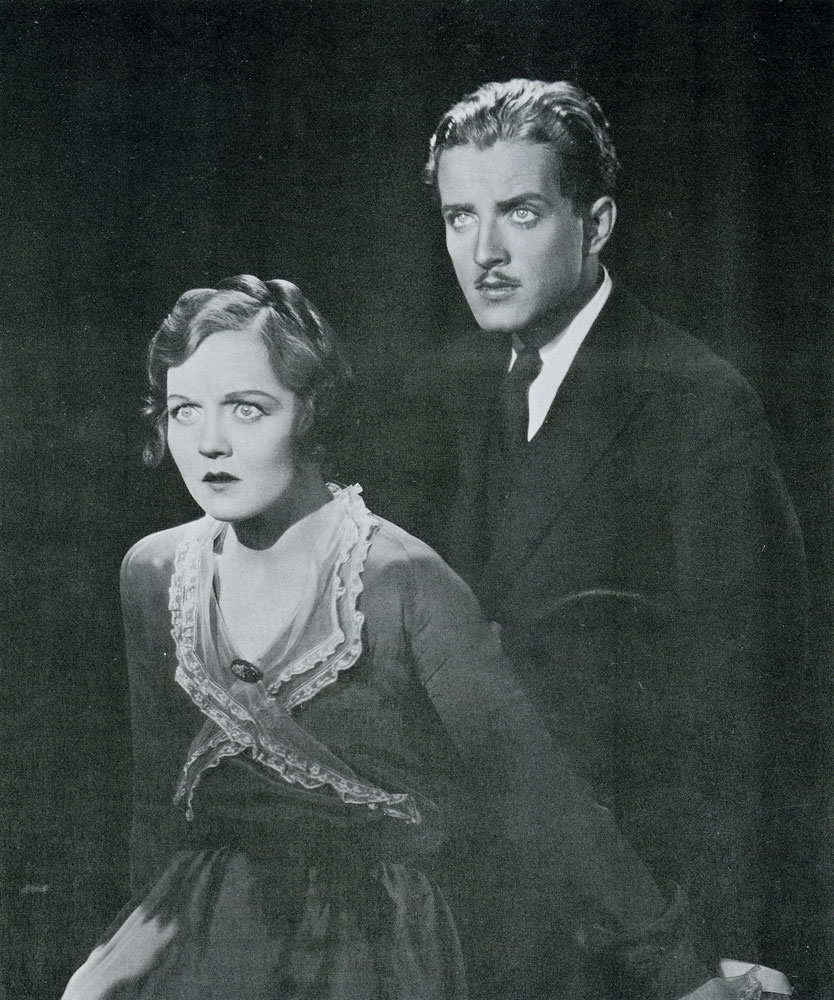
O homem, Paul Renard (Phillips Holmes), era um músico antes da guerra, e nas trincheiras ele matou um soldado alemão. O soldado levava consigo uma carta, pronta para ser enviada, e nela Paul descobriu o nome da vítima, Walter, e seu endereço – e que o pobre homem também amava música. Embora o padre diga a Paul que ele estava apenas cumprindo seu dever, ele não consegue ficar em paz. Entretanto, na igreja Paul decide ir até a Alemanha em busca do perdão da família do homem que ele matou.

The man, Paul Renard (Phillips Holmes), was a musician before the war, and in the trenches he killed a German soldier. The soldier had a letter with himself, ready to be sent, and so Paul learned the victim's name, Walter, and his address – and that the poor man also loved music. Although the priest tells Paul he was only doing his duty, he can't find peace. However, in the church Paul decides to go to German and seek the forgiveness from the family of the man he killed.


O pai de Walter, Dr. Holderlin (Lionel Barrymore), é um médico. A noiva de Walter, Elsa (Nancy Carroll), vive com o doutor e com Frau Holderlin (Louise Carter), e é cobiçada pelo insistente Herr Schultz (Lucien Littlefield). A família ainda está de luto pela morte de Walter.

Walter's father, Dr. Holderlin (Lionel Barrymore), is a physician. Walter's fiancée, Elsa (Nancy Carroll), lives with Dr and Frau Holderlin (Louise Carter), and she is pursued by the insistent Herr Schultz (Lucien Littlefield). The family is still grieving Walter’s death.


O Dr. Holderlin é inicialmente hostil com Paul, porque ele não aceita ouvir nada de um francês. Entretanto, como Elsa viu Paul levando flores no túmulo de Walter, o Dr. Holderlin muda de tom, e Frau Holderlin recebe Paul na casa deles. Agora Paul é incapaz de dizer que matou Walter, e por isso deixa a família pensando que ele e Walter eram amigos.

Dr. Holderlin is hostile at first to Paul, because he wouldn’t accept to hear anything from a Frenchman. However, as Elsa saw Paul bringing flowers to Walter's grave, Dr. Holderlin's tone changes, and Frau Holderlin welcomes Paul to their house. Now Paul can't say he killed Walter, so he lets the family think he and Walter were friends.


Herr Shcultz vê Elsa e Paul conversando, e logo começa a espalhar o boato de que Paul pode ser um espião. Nacionalismo e xenofobia estavam em alta depois da guerra, e a Alemanha ressentia a derrota e a humilhação. A ideia de Herr Schultz encontra o contexto perfeito para se espalhar. E Lubitsch, um imigrante alemão, era o diretor perfeito para lidar com este assunto.

Herr Schultz sees Elsa and Paul talking, and soon he starts spreading the rumor that Paul may be a spy. Nationalism and xenophobia was on the rise after the war, and German resented the loss and the humiliation. Herr Schultz's idea finds the perfect context to spread. And Lubitsch, a German immigrant, was the perfect director to tackle this subject.


Eu senti que este filme tem mais um “toque de Rouben Mamoulian” – um termo pouco usado porque eu acabei de criá-lo – do que o “toque de Lubitsch”. Quando Paul e Elsa andam pelas ruas da pequena cidade e as pessoas saem nas portas e janelas para vê-los, continuamos a ver os dois na tela, mas ouvimos os sinos que indicam as portas se abrindo. Este uso ousado e experimental do som para simbolizar a curiosidade da população local é puro Mamoulian, um diretor hoje pouco lembrado que fez obras brilhantes enquanto experimentava e improvisava no final dos anos 20 e início dos anos 30. Como curiosidade, também em 1932 Mamoulian dirigiu um filme que era puro Lubitsch: “Ama-me Esta Noite”.
 
I felt this film has more of the “Rouben Mamoulian touch” – a little-used term because it has just been created by me – than the “Lubitsch touch”. When Paul and Elsa walk down the streets of the small town and people appear on doors and windows to see them, we keep seeing the two on the screen, but we hear the bells of the doors opening. This daring and experimental use of sound to symbolize the curiosity of the local people is pure Mamoulian, now a little remembered filmmaker who excelled while experimenting and improvising in the late 1920s and early 1930s. As a curious note, also in 1932 Mamoulian directed a film that was pure Lubitsch: “Love Me Tonight”.


Lubitsch havia trabalhado incansavelmente na Alemanha durante a Primeira Guerra Mundial tanto como ator quanto diretor. Ele fez várias comédias e dramas históricos no final da década de 1910, e por causa do sucesso que estes filmes fizeram nos EUA no começo dos anos 20 ele foi chamado por Mary Pickford para trabalhar em Hollywood. Lubitsch deixou a Alemanha em 1922 e nunca olhou para trás. Nos EUA, ele desenvolveu o “toque de Lubitsch”, um estilo cinematográfico cheio de sugestões sexuais, charme e bom gosto. Nada disso é encontrado em “Não Matarás”.

Lubitsch had been working steadily in German during World War I, both as an actor and director. He did several comedies and historical dramas in the late 1910s, and because of the success those films made in the US in the early 20s he was personally called by Mary Pickford to work in Hollywood. Lubitsch left Germany in 1922 and never looked back. In the US, he developed the “Lubitsch touch”, a refined filmmaking approach full of sexual innuendo, charm and good taste. We find nothing of this in “Broken Lullaby”.
 
Lubitsch
Há muitos símbolos importantes em “Não Matarás”. Um deles é o vestido feito de tecido francês que Elsa deseja comprar. É óbvio que o interesse dela no vestido espelha seu interesse por Paul, que também é um “produto” francês. Há ainda os paralelos entre as vidas de Paul e Walter, pois o Dr. Holderlin mantém o quarto de Walter trancado e há um violino lá, preservado no estojo, como se esperasse Walter voltar e tocar – e, sem nenhuma surpresa, Paul é também violinista.

There are many important symbols in “Broken Lullaby”. One of them is the dress made of French fabric that Elsa gets interested in buying. It’s obvious that her interest for the dress mirrors her interest for Paul, himself a French product. There is also a mirroring situation with Paul’s and Walter’s lives, as Dr. Holderlin keeps Walter’s bedroom locked and there is a violin there, preserved in the box, like waiting for Walter to come back and play – and, to no surprise, Paul is a violinist.


Lionel Barrymore está brilhante como sempre. Seu monólogo sobre os pais serem responsáveis pela morte dos jovens, porque “éramos velhos demais para lutar, mas não velhos demais para odiar”, resume a Primeira Guerra Mundial e nos causa arrepios. Mesmo assim, Barrymore diz muito mais sem palavras: é no seu olhar sem esperança e no seu andar vacilante que vemos que ele continua vivendo, mas com muito sofrimento.

Lionel Barrymore is brilliant as always. His monologue about the fathers being responsible for the youngsters' deaths, because “we were too old to fight, but not too old to hate”, summons the whole World War I and gives us chills. Yet, Barrymore says much more without words: it’s in his hopeless eyes and in his vacillating walk that we see that he keeps living, but with so much suffering.


Phillips Holmes está praticamente esquecido hoje, mas com “Não Matarás” podemos ver que ele tinha olhos tão luminosos quanto os de William Powell. Holmes faleceu em 1940, em um acidente de avião, logo após se alistar na Aeronáutica canadense. Nancy Carroll está perfeita no clímax. No filme também temos ZaSu Pitts como Fraulein Anna, a empregada da família Holderlin. O rosto de ZaSu está incrivelmente belo neste filme, mas ela tem pouco a fazer além de fofocar.

Phillips Holmes is nearly forgotten today, but by “The Broken Lullaby” we can see that he had eyes as luminous and William Powell's. Holmes died in 1940, in a plane crash, right after he had joined the Canadian Air Force. Nancy Carroll is perfect in the climax. Also in the film we have ZaSu Pitts as Fraulein Anna, the Holderlin's maid. ZaSu's face is incredibly beautiful in this film, but she has nothing much to do besides gossiping.


“Não Matarás” é mais um filme sobre o mundo pós-guerra que mostra que não houve heróis e vilões na Primeira Guerra Mundial: de alguma maneira, todos perderam. A guerra muda vidas dos modos mais íntimos e inimagináveis, e “Não Matarás” é uma obra-prima que lida com amor, morte e luto.

“The Broken Lullaby” is another film about the post-war world that shows how there weren’t heroes and villains in the First World War: in some sense, everybody lost. War changes lives in the most intimate and unimaginable ways, and “The Broken Lullaby” is a masterpiece that deals with love, death and grieving.

This is my contribution to the Fifth Annual Barrymore Trilogy blogathon, hosted by Crystal and Gabriela at In the Good Old Days of Classic Hollywood and Pale Writer.

Sunday, November 11, 2018

Eu Acuso! (1919) / J’Accuse! (1919)


Como historiadora, eu considero a Primeira Guerra Mundial um dos assuntos mais fascinantes para estudar. O imperialismo deu origem a uma guerra que não se desenrolou apenas no front, mas também nas cidades, através de ataques e bombardeios - foi uma mistura de guerra civil e “guerra comum”. Milhões morreram durante o conflito, milhões ficaram deficientes ou desfigurados, e muitos outros milhões morreram porque, após a guerra, aqueles que voltaram para casa ajudaram a espalhar o vírus da Gripe Espanhola.

As a historian, I consider World War I to be one of the most fascinating periods to be studied. Imperialism led to a war that not only developed at the front, but also at the cities, through attack and bombings - it was a mix of civil war and “regular war”. Millions died during conflict, millions became handicapped or disfigured, and many more millions died because, after the war, those who returned home helped spread the Spanish flu virus.


No final, não valeu a pena ter lutado na guerra. Os sobreviventes formaram a Geração Perdida, viveram como boêmios na Europa ou foram recebidos como heróis nos EUA, apenas para ver o governo virar as costas para eles quando eles passaram a lutar contra o vício, o trauma ou o desemprego chegada a Grande Depressão. E o que mais fascinante é que a guerra e seus desdobramentos foram filmados.

In the end, it was not a war worth fighting. The war survivors became the Lost Generation, living like bohemians in Europe or being received like heroes in the US, only to see the government turn back on them when they suffered from addiction, PTSD or lost their jobs with the Depression. And what is more fascinating is that the war and its unfolding were caught on film.


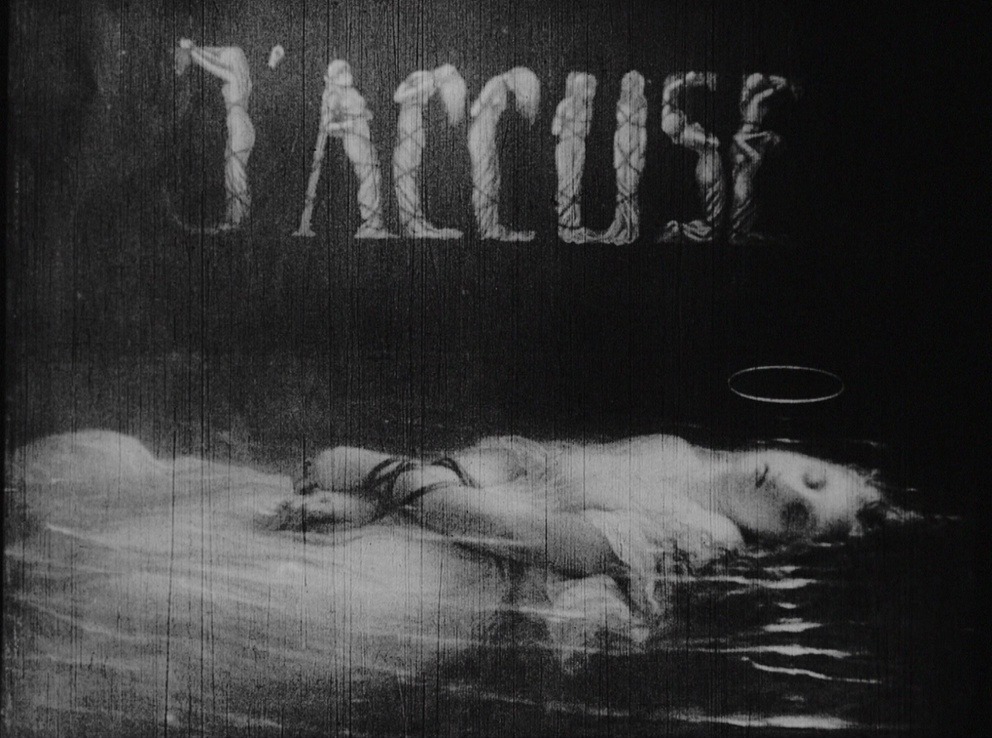
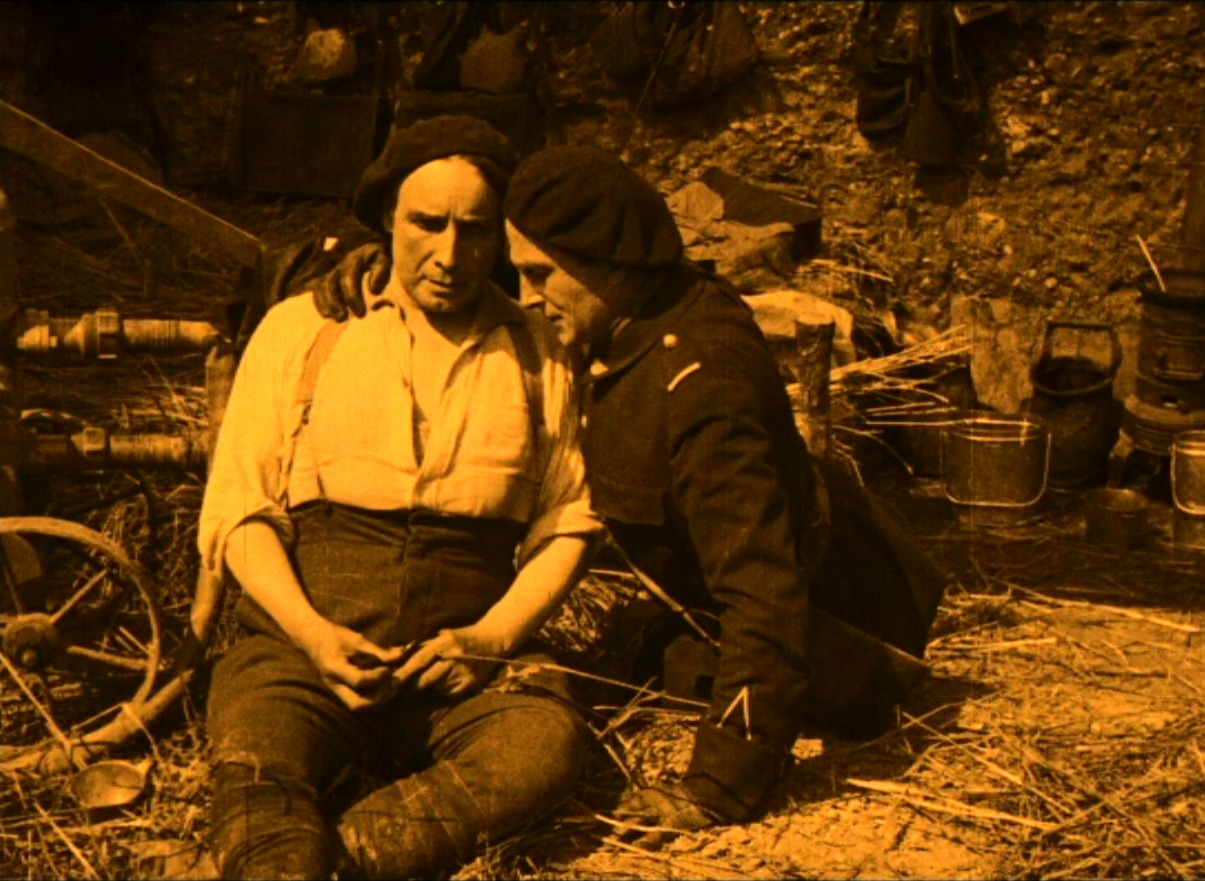
O épico francês “Eu Acuso!” é um desses filmes. Ele tem algumas cenas gravadas na verdadeira batalha de Saint-Mihiel, gravadas com a ajuda das tropas norte-americanas. É um poderoso filme antiguerra, que estreou somente seis meses depois do fim do conflito.

The French epic “I Accuse” is one of those films. It has a few scenes from the real battle of St. Mihiel, shot with the help of the American troops. It is a powerful anti-war film, released only six months after the conflict ended.


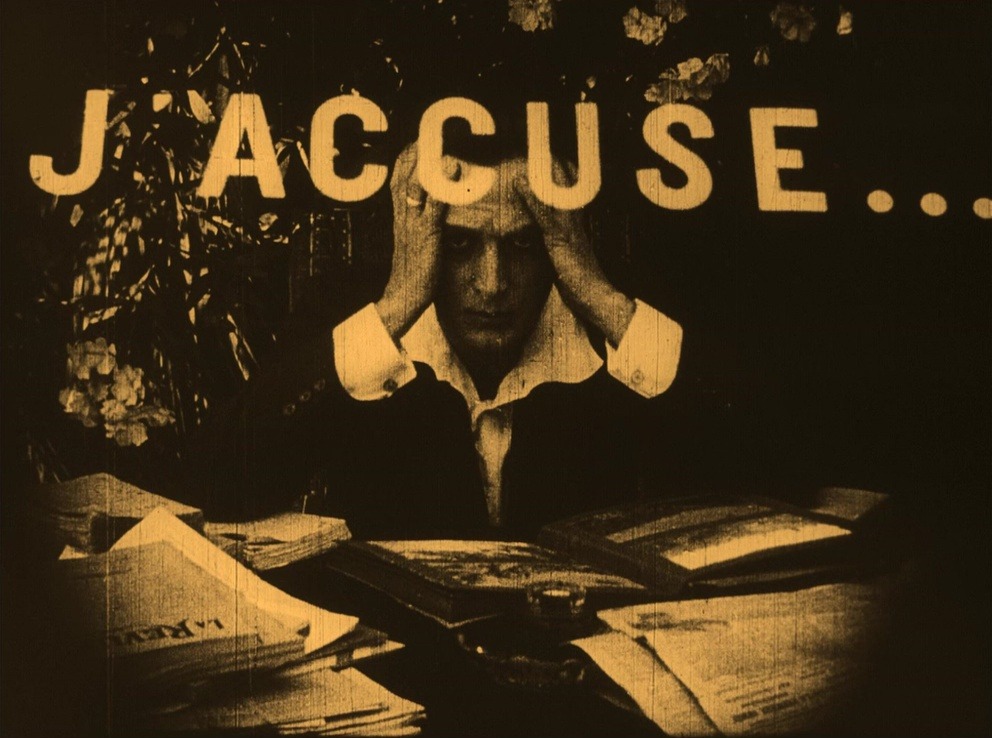
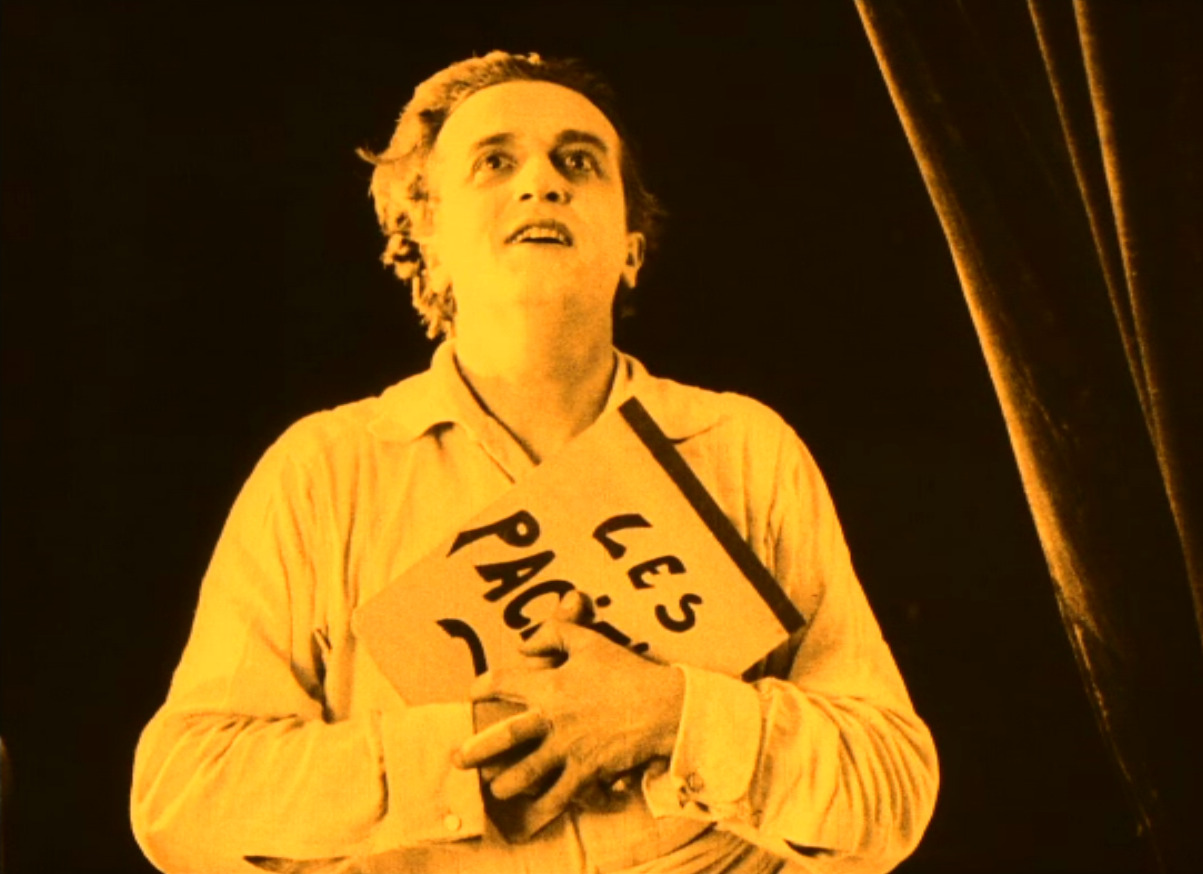
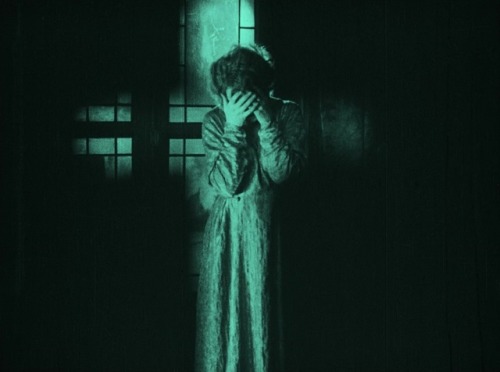
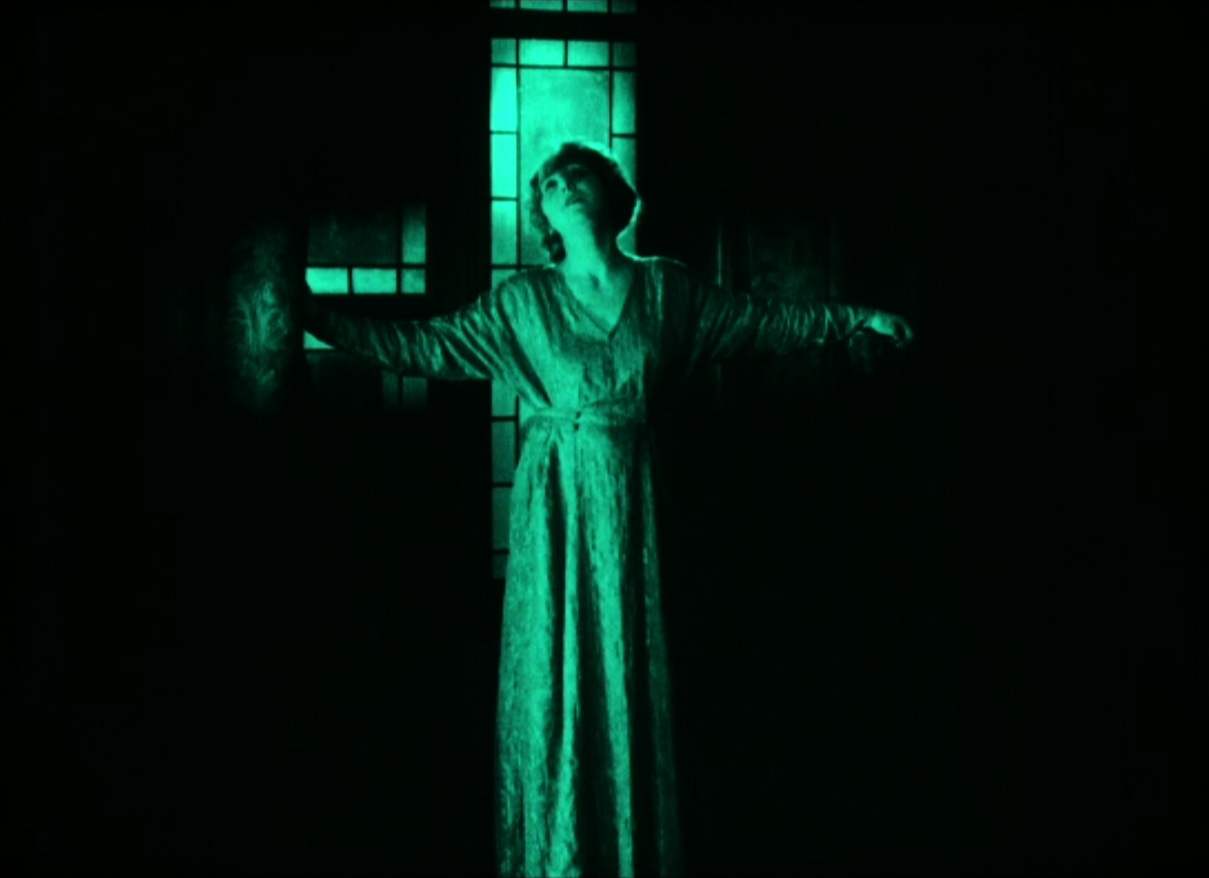
Jean Diaz (Romuald Joubé), nosso herói e poeta, é apresentado como sendo a personificação da França, todo inteligência e melancolia. Jean ama Edith (Maryse Dauvray), que é casada com um homem bêbado e violento, François (Sevérin-Mars).

Jean Diaz (Romuald Joubé), our hero and poet, is presented as the personification of France, all intelligence and melancholy. The first time we see him, the song we hear is Clair de la Lune - as French as it comes. Jean loves Edith (Maryse Dauvray), who is married to a drunken and violent man, François (Sevérin-Mars).


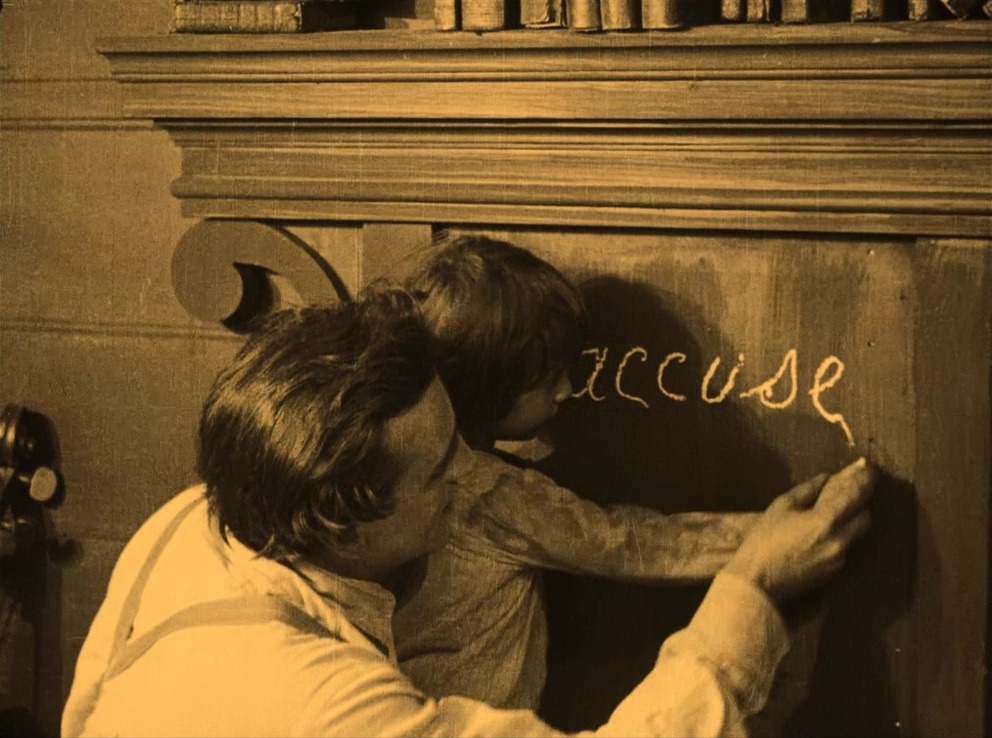
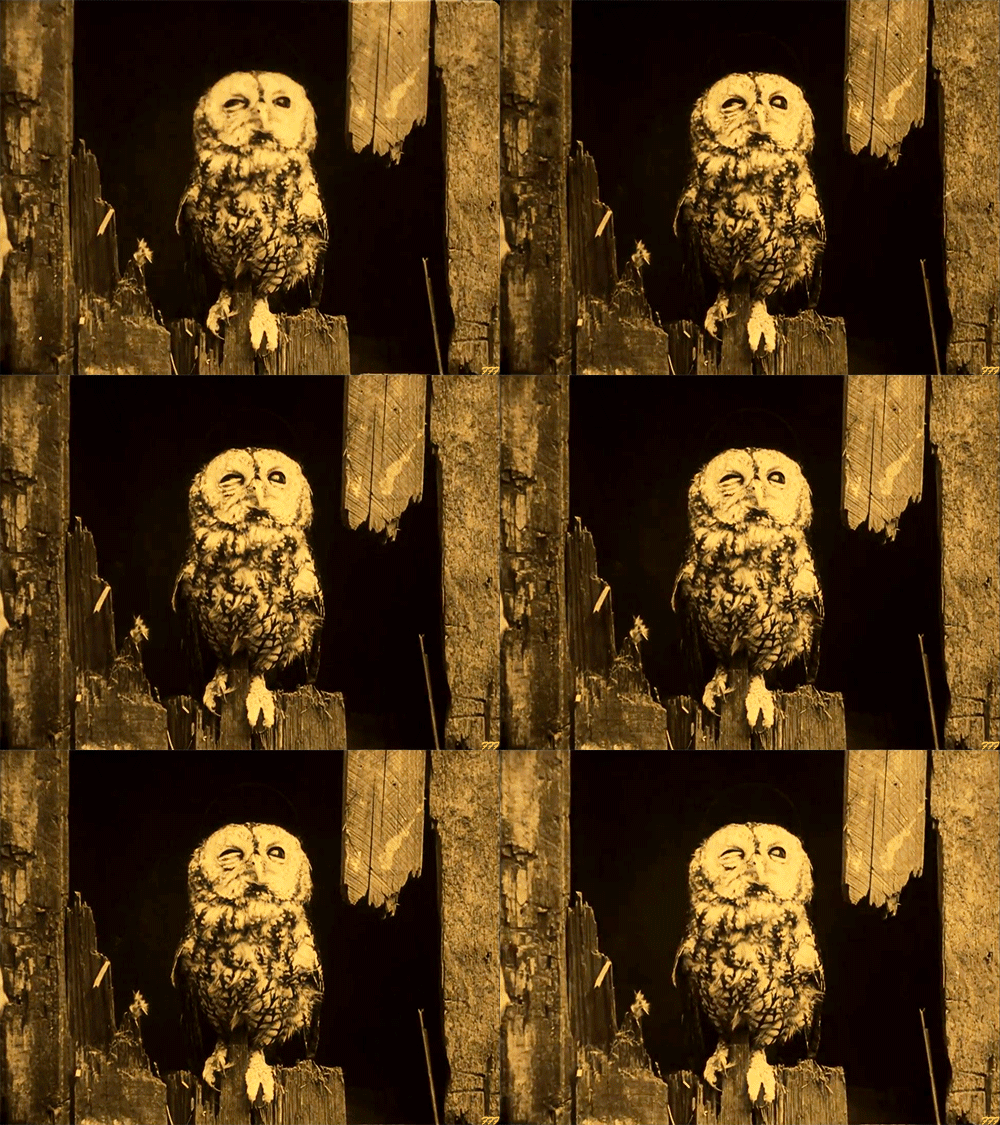
A vila onde eles moram está celebrando a véspera do dia de São João - Edith não está celebrando porque o marido a deixou trancada em casa - e o mal agouro foi avistado: uma coruja apareceu, avisando que a tragédia estava prestes a atingir a todos. Nós sabemos que tal tragédia é a guerra vindoura, e a guerra de fato chega, anunciada por uma criança que ouviu a palavra e a repetiu sem conhecer seu significado.

Their village is celebrating the Eve of St. John’s at the village - Edith is not celebrating because her husband kept her locked in the house - and bad omen was in sight: an owl appeared, announcing that tragedy was about to strike on them. We know the tragedy is the upcoming war, and the war indeed arrives, announced by a child that heard the word and repeated it without knowing the meaning.


François fica maravilhado com a notícia. Jean, que estava escrevendo uma coletânea de poemas sob o título ‘Os Pacíficos’, fica desolado. O pai de Edith, Maria Lazare (Maxime Desjardins), um herói da guerra de 1870 contra a Alemanha, também fica animado com a nova guerra, embora seja velho demais para se alistar. François manda Edith ficar com a família dele, porque ele vai partir imediatamente para o fronte, e Jean ficará na vila por mais um mês antes de partir.

François is delighted by news. Jean, who had been writing a collection of poems under the title ‘The Pacific Ones’, is desolated. Edith’s father, Maria Lazare (Maxime Desjardins), a former hero from the 1870 war against Germany, is also excited with the new war, even though he is too old to enlist. François sends Edith to stay with his family, because he will leave immediately for the front, and Jean will stay for another month before leaving.

No entanto, quando Edith é sequestrada pelos inimigos, Jean se junta ao exército imediatamente e acaba se tornando tenente na companhia de François. Por causa do amor que sentem por Edith, os dois pouco a pouco se tornam camaradas. Em casa, o pai de Edith se aproxima da mãe de Jean.

However, when Edith is taken captive by the enemies, Jean joins the army immediately and ends up as the lieutenant in François’s company. Because of the love they have for Edith, they slowly become comrades. At home, Edith’s father bonds with Jean’s mother.


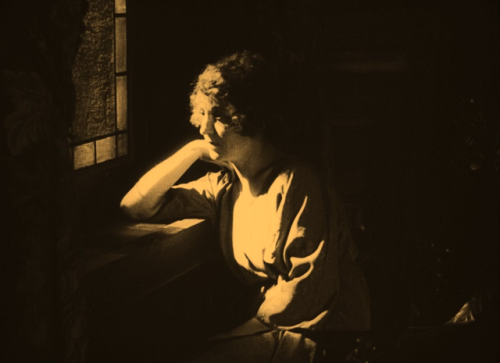
O filme é dividido em três partes. Por causa de seus 166 minutos no total, muitas pessoas podem considerar que a segunda parte - que se passa na vila, com Jean liberado por causa de doença e Edith de volta após fugir do cativeiro - é desnecessária, mas ela não é. Filmes de guerra raramente focam em personagens do gênero feminino porque as mulheres não vão para a batalha como soldados, mas elas sofrem tanto quanto qualquer soldado. Mulheres são sequestradas pelo inimigo, estupradas, espancadas. Mulheres sofrem porque seus amigos, maridos, pais e filhos estão no campo de batalha - e estes homens podem não voltar. Embora Edith seja uma donzela em perigo, ela é uma vítima comum da guerra.

The film is divided in three parts. Because it has, in total, 166 minutes, many people may consider the second part - set back home, with Jean on sick leave and Edith back from captivity - unnecessary, but it isn’t. War movies rarely focus on female characters because women don’t go to the front as soldiers, but they suffer just as much as any soldier. Even if they are not nurses or are not directly involved in the war, they suffer. Women are held captive by the enemy, raped, beaten. Women suffer because their friends, husbands, fathers and sons are at the front - and these men might not come back. As much as Edith is a damsel in distress, she is a common female victim of the war.


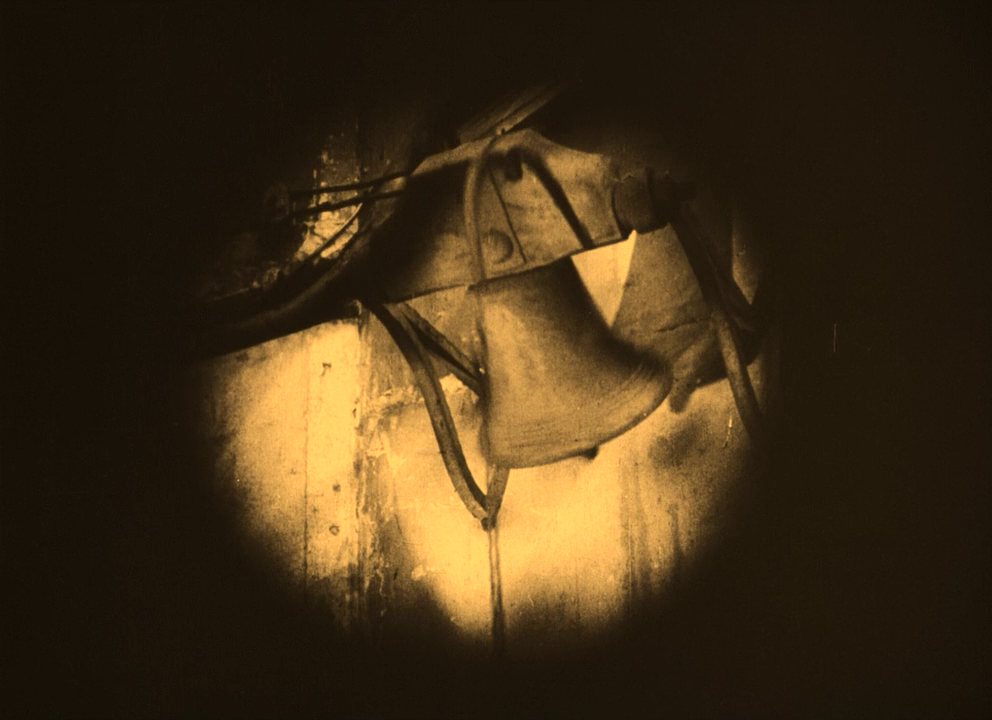
No começo, há muitos efeitos de “dissolver” que surpreendem o espectador. Ao longo do filme, o enquadramento chamado de “Iris shot” predomina - é o zoom-in, zoom-out ou close-up em forma de círculo. O close-up com Iris shot é particularmente poderoso para atrair nosso olhar para um único elemento da cena, destacando-o dos demais.

In the beginning, there are many “dissolving” effects that surprise the viewer. Throughout the movie, the Iris Shot predominates - the circle-shaped zoom-in, zoom-out or close-up. The Iris close-up is particularly powerful to make us look at only one element in the scene, making it stand out from the rest.


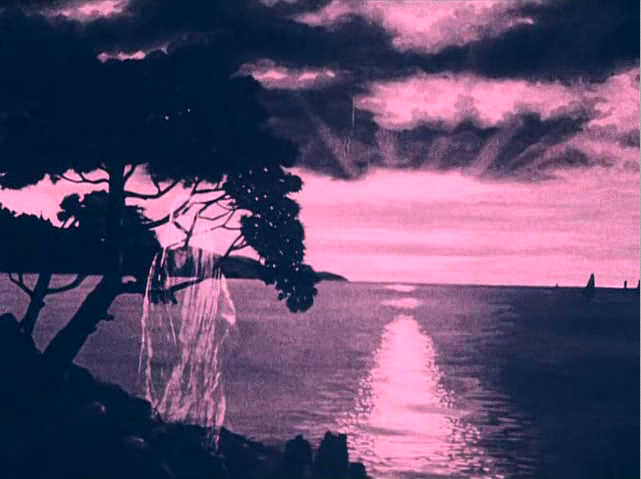
Um dos poemas de Jean - a Ode ao Sol - é particularmente importante para a narrativa. Entretanto, nós nunca chegamos a conhecer as palavras que compõem o poema. Abel Gance escolheu, em vez disso, usar motifs visuais do nascer do sol, pôr do sol e do sol espelhado nas águas enquanto o poema é recitado por Jean. Nós podemos inventar as palavras - ou não, porque elas não importam. As imagens foram suficientes para traduzir o que Jean quis dizer com seu poema.

One of Jean’s poems - the Ode to the Sun - is particularly important to the narrative. However, we never get to know the words that compose the poem. Abel Gance chose, instead, to use visual motifs of the sunrise, the sunset and the sun mirrored in the water when the poem was recited by Jean. We can make up the words - or maybe not, because they don’t matter. The images were enough to translate whatever Jean wanted to say with his poem.


E a verdadeira literatura surge, sem querer, como trechos de cartas de soldados. Eu imagino que, porque o filme foi feito logo depois da guerra, estas cartas não sejam reais, mas certamente são tocantes. E, desde então, tivemos acesso a cartas reais de soldados e vimos que elas são em geral emocionantes. É prova de que a beleza pode surgir de grandes doses de horror e dor.

And then the real, yet unpremeditated, literature appears as bits of letters from the soldiers. I imagine that, because the film was made so little after the war, those letters are not real ones, but they certainly are touching. And, since then, we got access to real soldiers’ letters and saw that they are usually very moving. It’s proof that beauty can appear from the utmost horror and pain.


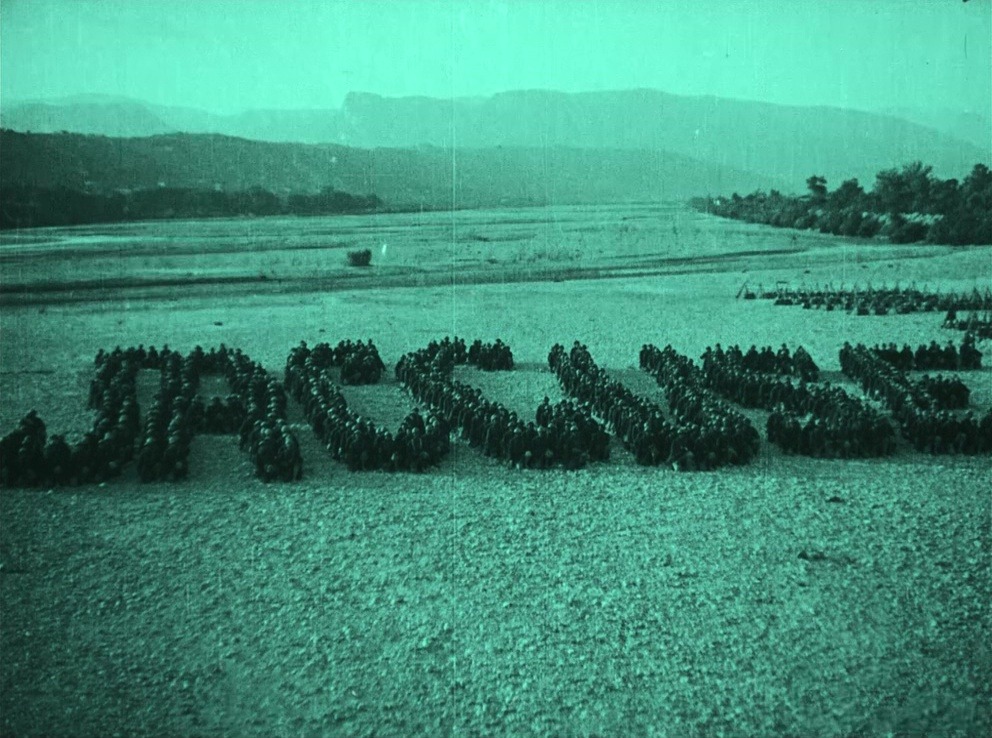
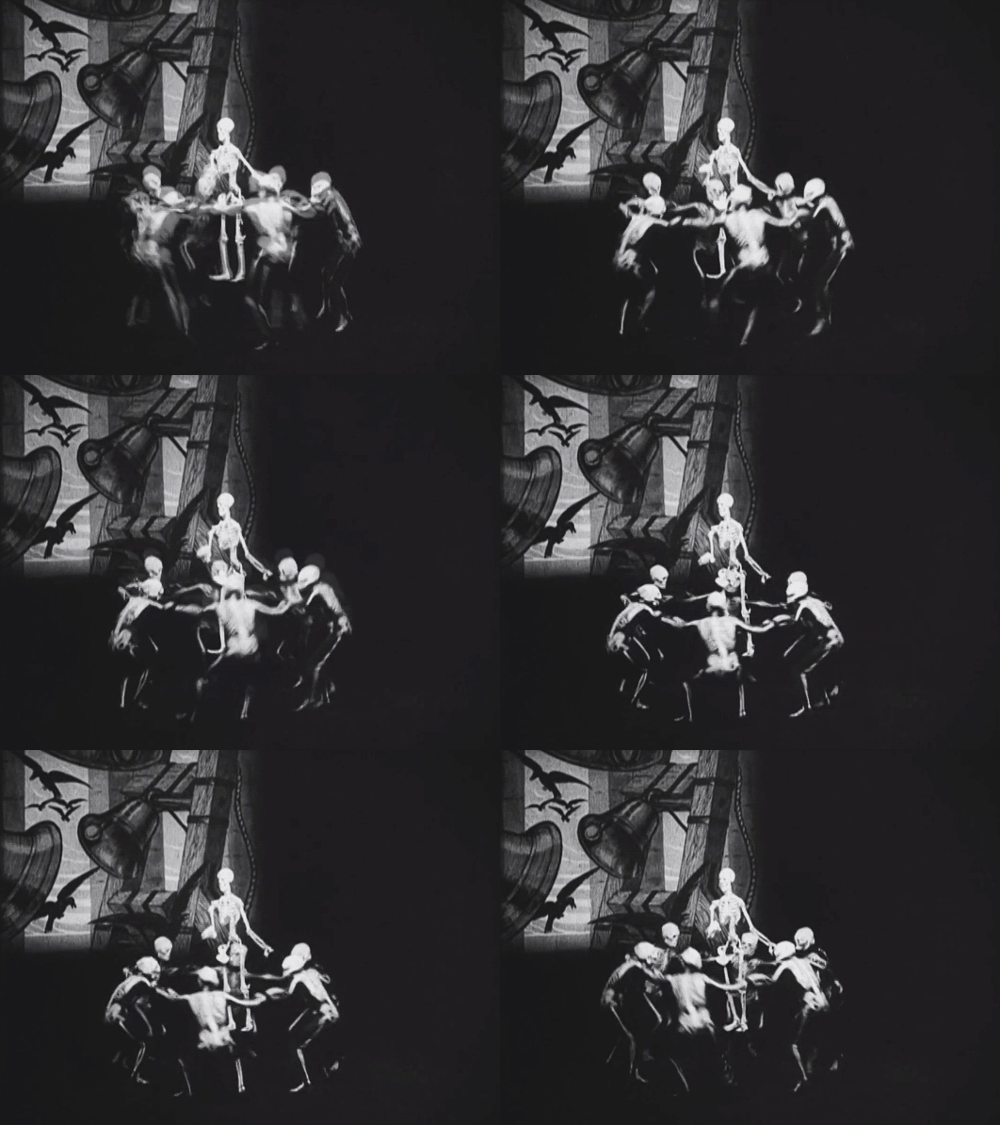
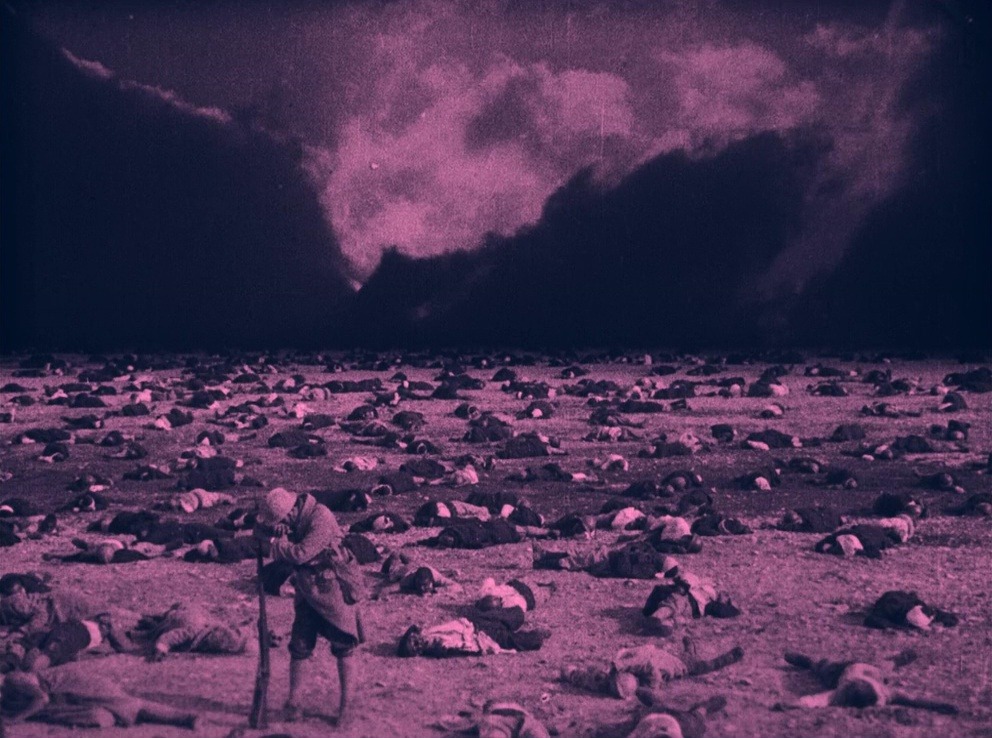
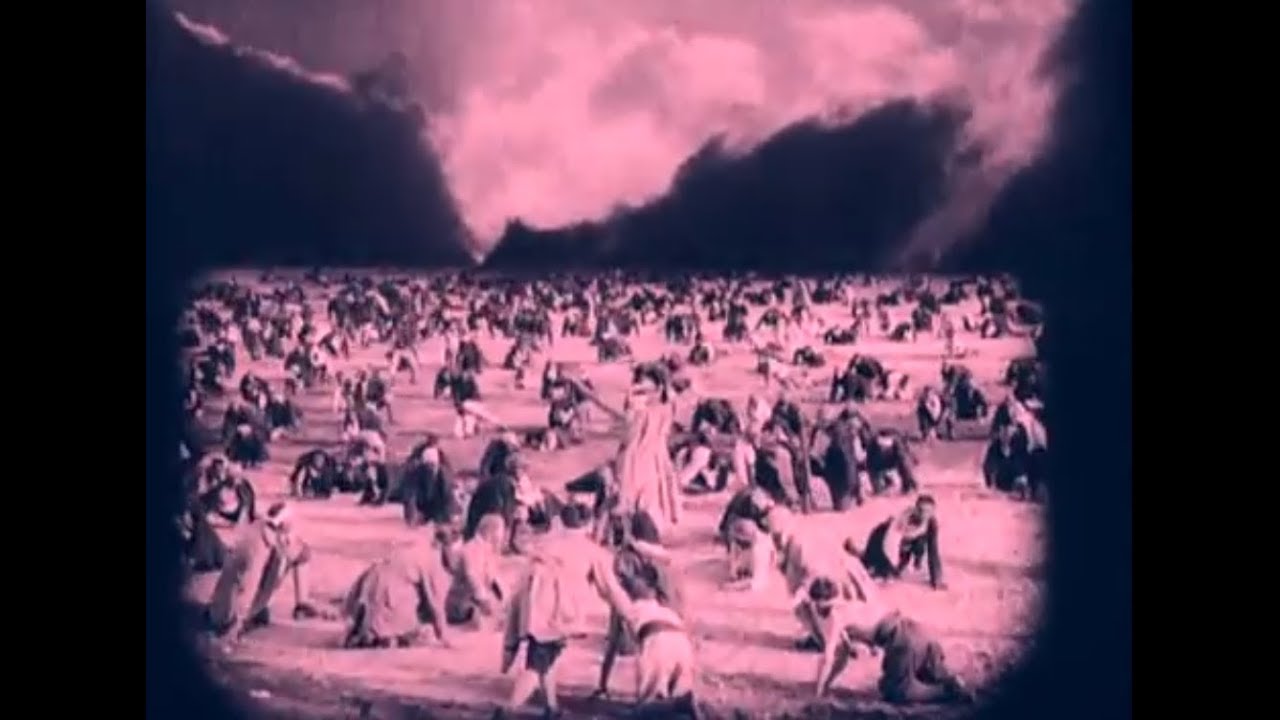
A sequência mais impressionante, na qual os mortos retornam de seus túmulos para marchar para a vila e ver se o sacrifício foi em vão, foi filmado com 2000 figurantes que eram na verdade soldados de folga. Eles haviam acabado de sair de Verdun e tinham oito dias de folga antes da volta para a luta no campo de batalha. Mais tarde, o diretor Abel Gance calculou que 80% dos homens da cena da marcha morreram em batalha.

The most impressive sequence, in which the dead return from their graves to march to the village to see if their sacrifice was in vain, was shot with 2000 extras who were actual soldiers on leave. They had just come from Verdun and had eight days off until they came back to the front to fight again. Later, director Abel Gance calculated that 80% of the men in the march footage really died in battle.


“Eu Acuso” foi um filme antiguerra pioneiro. Mais do que isso, foi um filme com técnicas de edição e cinematografia tão ousadas e pede feitas que deixariam o suposto mestre D.W. Griffith com muita inveja. É longo, complexo e brinca com nossos sentimentos. Melodramático, talvez. Necessário, sem dúvida. É uma obra de arte maravilhosa. Afinal, a arte é sobre experiências universais, como o amor, a morte, e a mistura das duas: a guerra.

“J’Accuse” was a pioneering anti-war movie. More than that, it was a film with editing techniques and cinematography so daring and perfect that would make the so-called great master D.W. Griffith incredibly jealous. It’s long, complex and it plays with our emotions. Melodramatic, maybe. Necessary, without a doubt. It’s a wonderful work of art. After all, art is about universal experiences, like love, death and the mix of these two: war.

This is my contribution to the World War One on Film Blogathon, hosted by Maddy at Maddy Loves Her Classic Films.

Related Posts Plugin for WordPress, Blogger...