} Crítica Retrô: infância

Tradutor / Translator / Traductor / Übersetzer / Traduttore / Traducteur / 翻訳者 / переводчик

Showing posts with label infância. Show all posts

Monday, February 26, 2018

There's One Born Every Minute (1942)


Em qualquer carreira, é raro começar no topo. No cinema, em especial, é raro começar como protagonista de um filme. A maioria, se não todas, as lendas do cinema começaram em papéis secundários, alguns até sem fala. Elizabeth Taylor também começou pequena – de ambas as maneiras: ela tinha apenas 10 anos quando fez seu primeiro filme, “There’s One Born every Minute”, que é um exemplo perfeito de filme B.

You rarely get to start on top in any career. In film, especially, it's rare to start as the star of a big picture. Most, if not all, film legends started in secondary roles, some of them as extras, others as walk-on roles. Elizabeth Taylor also started small – in both meanings: she was only 10 when she did her first film, and this film, “There's One Born Every Minute”, is a perfect example of a B-picture.


Curiosamente, a personagem de Elizabeth, Gloria, diz a primeira frase do filme: “Este cara engraçado é meu tataravô Claudius?”. Ela se refere a uma pintura que sua mãe, Minerva (Catherine Doucet) está pendurando na parede. A pintura está ali para inspirar grandeza, porque o pai de Gloria, Lemuel Twine (High Herbert), se candidatou ao cargo de prefeito da cidade de Witumpka Falls.

Curiously, Elizabeth's character, Gloria, says the very first sentence in the movie: “Is that funny-looking bloke (=man) my great-great-grandfather Claudius?”. She is referring to the painting her mother, Minerva (Catherine Doucet) is hanging on the wall. The painting is there to evoke greatness, because Gloria's father, Lemuel Twine (Hugh Herbert), is running for the position of mayor of the city of Witumpka Falls.
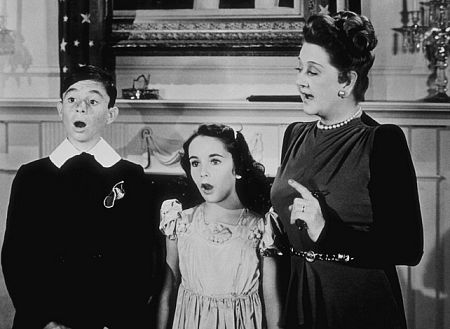

Gloria é a filha mais nova. Sua irmã mais velha Helen Barbara (Peggy Moran) é uma adolescente e seu irmão Junior (Carl ‘Alfalfa’ Switzer) é pouco mais velho que ela. O papai Lemuel ganha dinheiro fazendo pó para preparo de pudim – e age como um cientista maluco enquanto mistura os ingredientes, em busca do pudim perfeito. O pudim perfeito pode não existir, mas pode ser anunciado – e é isso que o marketeiro de Lemuel, Jimmy Hanagan (Tom Brown) faz: ele inventa uma nova vitamina, chamada Zumf, que é extremamente benéfica e que só é encontrada nos pudins de Lemuel.

Gloria is the youngest kid. Her older sister Helen Barbara (Peggy Moran) is a teenager and her brother Junior (Carl 'Alfalfa' Switzer) is just a little older than her. Daddy Lemuel makes pudding powder for a living – acting like a mad scientist while mixing the ingredients in search of a perfect pudding. The perfect pudding may not exist, but you can certainly advertise it – and that's what Lemuel's advertising assistant, Jimmy Hanagan (Tom Brown) does: he makes up a new vitamin, called Zumf, that is extremely beneficial and can only be found at Lemuel's puddings.


As vendas do pó para pudim aumentam vertiginosamente – e a popularidade de Lemuel também. O rico vendedor Lester Cadwalader (Guy Kibbee) não fica feliz com isso, porque ele está do lado do atual e estúpido perfeito, e precisa arranjar um jeito de sabotar a campanha de Lemuel. Lemuel não é um homem muito esperto, e deverá contar com a ajuda de seus ancestrais para fugir da sabotagem e continuar a ter chance na eleição.

The sales of pudding powder skyrocket – and so does Lemuel's popularity. Rich shop owner Lester Cadwalader (Guy Kibbee) is not happy with it, because he is supporting the current stupid mayor for re-election and must find a way of sabotaging Lemuel's campaign. Lemuel is not a very bright man, and must count with the help of his ancestors to escape the sabotage and compete fairly in the election.


Por causa do tema da eleição, podemos dizer que “There’s One Born Every Minute” é como uma versão pobre de “Herói de Mentira” – se “Herói de Mentira” estivesse drogado. É um filme engraçado, com um final muito machista e diversos momentos esquisitos.

By the election theme, you can say “There's One Born Every Minute” is like a poor version of “Hail the Conquering Hero” - if “Hail the Conquering Hero” was in an acid trip. It's a humorous film, with a very sexist ending and many weird moments.

Elizabeth Taylor não tem muito que fazer. Ela é a irmã levada, que vive correndo e importunando o irmão. Ela é fofa e divertida, e nada mais. De fato, seu primeiro empregador, Universal Pictures, não sabia o que fazer com ela – um diretor de elenco disse que ela tinha “olhos velhos demais para uma criança” e Elizabeth achava que ela intimidava os adultos no set – e após apenas um filme o estúdio a dispensou.

Elizabeth Taylor doesn't do much. She is the brat sister, running around and teasing her brother. She is cute and funny, and nothing else. Yet, she is wasted in this film. Indeed, her first studio, Universal Pictures, didn’t know what to do with her – one casting director said she had “eyes too old for a child” and Elizabeth thought she intimidated the adults on set – and after only one film they let her go.


Elizabeth era perfeita para ser uma estrela de cinema desde a infância: com cabelos pretos e olhos violeta, ela era uma criança que se parecia com um anjo único e exclusivo. Seu pai, Francis, era dono de uma galeria de arte. Sua mãe, Sara Sothern, foi atriz da Broadway e deixou os palcos quando se casou. Ambos os pais eram americanos, mas Elizabeth e seu irmão mais velho nasceram em Londres. A família voltou para os EUA em abril de 1939, devido ao clima político tenso na Europa. Dois anos depois, Elizabeth deu início a sua carreira no cinema.

Elizabeth was tailor-made (HA!) to be a movie star since childhood: with black hair and violet eyes, she was a kid that resembled an unusual angel. Her father, Francis, was an art dealer and gallery owner. Her mother, Sara Sothern, was a Broadway actress who left the stage after getting married. Both were Americans, but Elizabeth and her older brother were born in London. The family left for the US in April 1939, because of the tense political situation in Europe. Two years later, Elizabeth started her screen career.
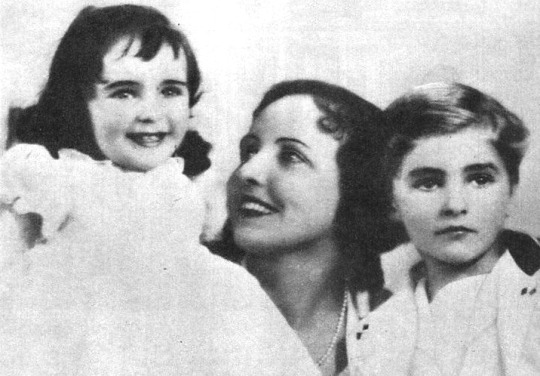
Elizabeth, mother Sara and brother Howard 
Em 1943, já contratada pela MGM, a pequena Elizabeth apareceria, mais uma vez sem receber créditos, em “Jane Eyre” como uma garota sofredora no orfanato, e como Priscilla em “A força do coração”. Seu maior sucesso viria no ano seguinte. Elizabeth Taylor dizia que sua infância acabou quando ela se tornou uma estrela, e ela com certeza sofreu um bocado durante a carreira – mas isto é uma história a ser contada em outra ocasião.

In 1943, already signed by MGM, little Elizabeth would appear, once again uncredited, in “Jane Eyre” as an ill-fated girl at the orphanage, and as Priscilla in “Lassie Come Home”. Her biggest success yet would come the following year. Elizabeth Taylor said that her childhood ended when she became a star, she certainly suffered during her career – but that’s another story.

This is my contribution to the Elizabeth Taylor blogathon, hosted by Crystal at In the Good Old Days of Classic Hollywood.
Thursday, October 20, 2011

Como formar novos cinéfilos clássicos no Dia das Crianças

How to make children care about classic movies


O Dia das Crianças pode já ter passado, mas isso não é motivo para nos esquecermos do chamado “futuro da nação”. Principalmente se é possível garantir que esse futuro seja recheado de filmes cássicos. Não é fácil, mas há algumas formas de introduzir as crianças ao maravilhoso mundo do cinema antigo!

Children’s Day may be over, but this is no reason to forget about the future. Especially if you can guarantee that this future will know about classic movies. It’s not easy, but there are some ways to introduce children to the wonderful world of classic movies!


1- Charles Chaplin: O humor de Chaplin é atemporal. Abusando da comédia corporal, do carisma e das boas intenções do adorável Vagabundo, seus filmes agradam a todos e ultrapassam gerações, sendo um ótimo começo para o amor pelo cinema.

1- Charles Chaplin: Chaplin’s humor is timeless. Overusing (not in a bad way) slapstick, charisma and the good intentions of his beloved Tramp, his movies please all of us and perpass generations, being a great start for the love for cinema.

2- Irmãos Marx: Comediantes com o mesmo apelo atemporal de Chaplin, mas desta vez usando o som como recurso, o tresloucado quarteto (e, mais tarde, trio) foi capaz de criar situações engraçadíssimas, usando o nonsense com maestria.

2- The Marx Brothers: Comedians with the same timeless approach as Chaplin, but this time using the sound as a resource, the zany quartet (and later, a trio) was able to create very funny situations, using nonsense like no other.

3- Filmes mudos: Crianças pequenas tendem a ser mais tolerantes que as mais velhas. Assim, elas provavelmente não torcerão o nariz de cara para os filmes mudos. Além de Chaplin, as comédias de Buster Keaton, Harold Lloyd e O Gordo e o Magro são ótimas pedidas. Só não vale passar Griffith para o pimpolho.

       3- Silent movies: Little children are usually more tolerant than the older ones. Being like that, they probably won’t deny watching silent movies. Besides Chaplin, the comedies by Buster Keaton, Harold Lloyd and Laurel and Hardy are great starting points. You only can’t show little ones Griffith melodramas or you’ll traumatize them.

         4-O Mágico de Oz: Hoje no Brasil esse não é o clássico absoluto da infância, mas em outros países ele é a porta para o mundo do cinema. A voz de Judy Garland, a turma carismática, a história comovente e a mensagem edificante o transformaram em um filme incrível e adorado por pessoas de todas as idades em todos os lugares,

   4- The Wizard of Oz: Today in Brazil this isn’t the absolute classic film associated with childhood, but in other places it’s the opening door to the world of cinema. Judy Garland’s voice, the charismatic troupe, the moving plot and the uplifting message make it a great movie beloved by people of all ages in all places.


 5- Filmes de Walt Disney: Disney produziu longas de 1937 a 1967, a Era de Ouro de seu estúdio. Assim como eu fui, milhões de crianças são familiarizadas com essas produções desde cedo e, posso dizer por experiência própria, é uma ótima maneira de se tornar cinéfilo.

 5- Films by Walt Disney: Disney himself made features from 1937 to 1967, the Golden Age of his studio. Like I was, millions of children are introduced to these productions since an early age and, as I can say from my own experience, it’s a great way to become a cinephile.

6- A Noviça Rebelde: Uma freira bondosa conquista sete crianças determinadas a infernizar todas as governantas que o pai contrata. Ela também amolece o coração do severo viúvo Capitão Von Trapp. Em meio aos perigos do nazismo e às paisagens deslumbrantes da Áustria, o filme conquistou milhões de fãs e tem especial apelo junto ao público infantil.

 6- The Sound of Music: A kind nun steals the hearts of seven children who used to make a hell of the lives of all nannies their father hires. She also softens the heart of the rigid widower Captain Von Trapp. Amidst the dangers of Nazism and the breathtaking backgrounds in Austria, the film conquered millions of fans and has a special appeal for the children.

 7- Clássicos infantis: Vale “As aventuras de Huckleberry Finn”, “Lassie”, “A mocidade é assim mesmo”, “A felicidade não se compra” e outros filmes inspiradores. Há sempre uma série de clássicos da infância que são indispensáveis na formação de qualquer ser humano (e não só “O Pequeno Príncipe”).

7- Childhood classics: Here you can use “The Adventures of Huckleberry Finn”, “Lassie”, “National Velvet”, “It’s a Wonderful Life” and other inspiring movies. There is always a list of childhood classics that are necessary to build up any human being (and not only “The Little Prince”). 

8- Musicais: Esteticamente apelativos; coloridos e singelos, os musicais antigos tendem a agradar às crianças. Através de belas músicas, grandes coreografias e intérpretes, filmes como “Agora seremos felizes”, “Desfile de Páscoa” e “Sete noivas para sete irmãos” são boas opções.   

 8- Musicals: Aesthetically pleasing; colorful and charming, the old-time musicals usually conquer the children. Through beautiful songs, great choreographies and amazing singers, films like “Meet Me in St Louis”, “Easter Parade” and “Seven Brides for Seven Brothers” are good options.


9- Faroestes (não muito sangrentos): Talvez essa sugestão agrade mais aos meninos. Num episódio da série “Modern Family” o garoto Luke faz amizade com um senhor da vizinhança que lhe aconselha assistir a filmes como “Matar ou Morrer” ou “Os brutos também amam”. E não é que é um bom conselho?

9-  Westerns (but not very bloody): Maybe this suggestion will please more boys than girls. In an episode of the series “Modern Family” the boy Luke becomes friends with a senior from his neighborhood who suggests him to watch movies like “High Noon” and “Shane”. And it’s good advice!

10- Filmes de Gene Kelly: Responsável por alguns dos maiores e melhores musicais da História, Gene era talentoso, carismático, bonito e se dava muito bem com crianças! Prova disso é o número “I´ve got rhythm” de “Sinfonia de Paris”.

 10- Gene Kelly movies: Responsible for some of the biggest and best musicals in History, Gene was talented, charistmatic, handsome and great with children! Proof: the number “I’ve got rhythm” from “An American in Paris”.


 11- Filmes de Mickey Rooney: Hoje ele é um velhinho simpático, mas Mickey foi uma espécie de criança prodígio, protagonizando sua própria série de filmes singelos e vários musicais alto-astral com Judy Garland.

 11- Mickey Rooney movies: Today he is a nice old man, but Mickey was a kind of prodigious child, as the lead of his own series of charming movies and many high-spirited musicals with Judy Garland.

12- Filmes de Shirley Temple: Quer exemplo melhor para uma criança que ver outra criança se divertindo nas telas? Shirley foi queridinha de uma geração, ganhou um Oscar aos seis anos e, de certa forma, ajudou um país inteiro a passar pela recessão econômica durante a Grande Depressão. Talvez ela ajude os mais novos a gostar de cinema!

12- Shirley Temple movies: Do you want a better example for children than another child having fun on screen? Shirley was the darling of a generation, won an Oscar at age six and, in a way, helped a whole country go through the economic recession during the 1930s. Maybe she could help youngsters like cinema!


Tomara que essas ideias possam dar origem a uma nova geração de amantes dos clássicos. Agora é só colocar em prática. Se você não tem fillhos, pegue aquele sobrinho, priminho, vizinho ou criança mais quietinha que você conheça e ponha em prática essa saudável maratona cinematográfica com sua cobaia infantil. Ou (por que não?) redesperte a sua infância e aproveite esses clássicos para todas as idades.

I hope these ideas can kickstart a new generation of young classic film lovers. Now it’s your turn. If you don’t have children, get that nephew, young cousin, neighbor or another quiet children you know and do a healthy marathon with your young guinea pig. Or (why not?) relive your childhood and enjoy these classics for all ages.

Related Posts Plugin for WordPress, Blogger...