} Crítica Retrô

Tradutor / Translator / Traductor / Übersetzer / Traduttore / Traducteur / 翻訳者 / переводчик

Saturday, May 5, 2018

O Homem Miraculoso (1919) / The Miracle Man (1919)

TRADUÇÃO EM PORTUGUÊS EM BREVE!

The Miracle Man” is a lost film. No, no copies of it have been found so far. No, I haven’t found some reels in my attic – the most exciting thing I’ve found recently in my attic was a spider. And how come I am writing about it? One of the Commandments of Film Criticism, a list created by me, is “you shall not analyze a film you haven’t watched”. Am I disobeying my own rule?


No. Because I’m not writing an analysis or a critical review of “The Miracle Man”. I’m actually making a reconstruction of this treasured lost film – it’s a detective’s work or, more precisely, an archaeological work. Considered that I flirted with being both a detective and an archaeologist when I was younger, this is not only a huge responsibility but also a dream coming true.

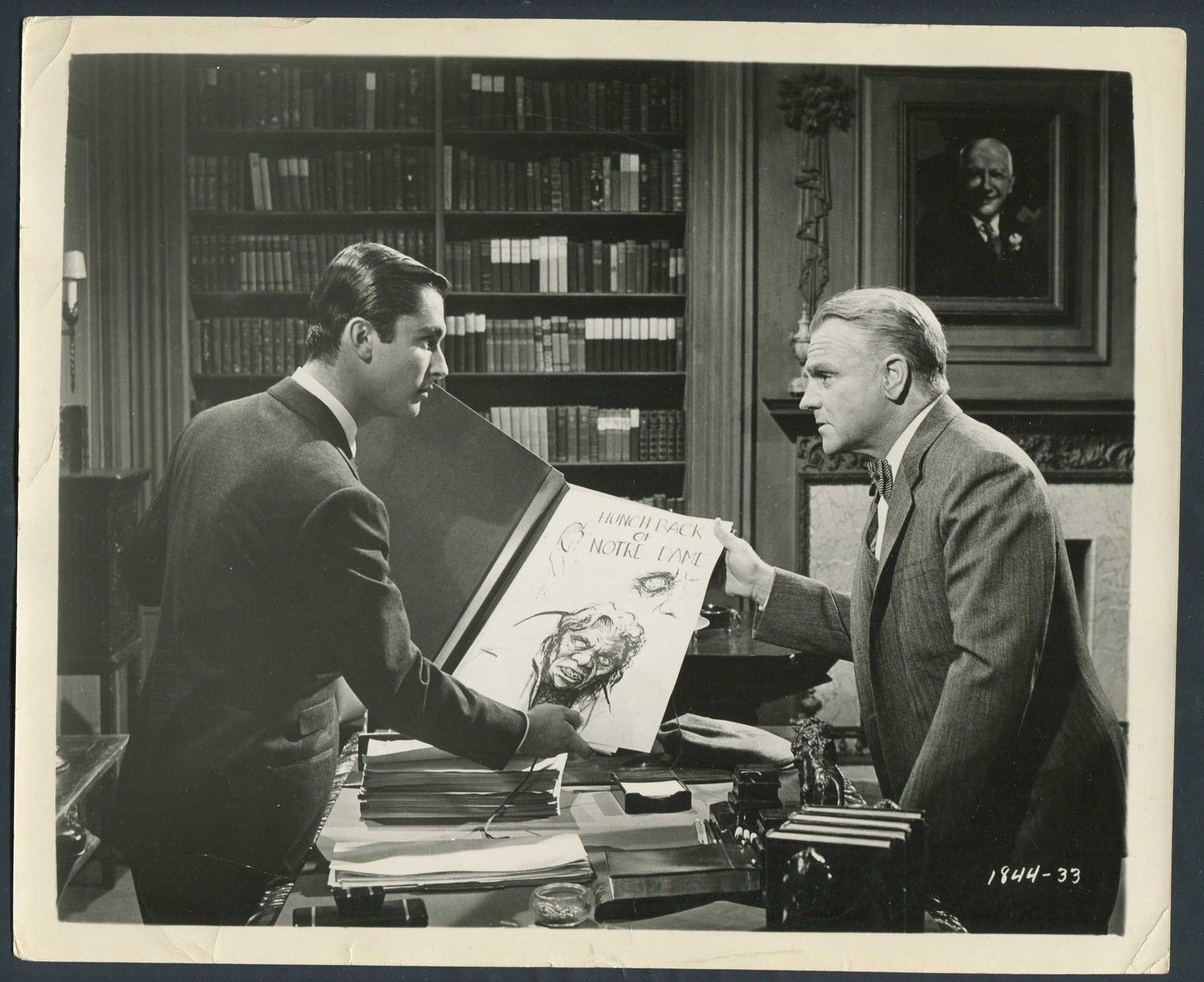
But WHY “The Miracle Man”, when all silent film fans know that the Holy Grail of lost film is another Lon Chaney flick, “London After Midnight” (1927)? Well, I chose “The Miracle Man” for personal reasons. I first heard of it – and of Lon Chaney – when I watched Chaney’s curious biopic “Man of a Thousand Faces”, made in 1957 and starring my favorite actor, James Cagney. Cagney’s recreation of a scene from “The Miracle Man” impressed me beyond words. And then a love for Chaney was born.


The Historical Sources

You might be asking: “how the hell will she reconstruct a lost movie?”. I’ll answer: through Brazilian film magazines. We, Brazilians, usually joke that this country knows no limits. Well, Brazilian film magazines knew no limits either: from the silent era onwards, until the 1950s, when most of them were extinct, these magazines published the whole plot of a film, together with stills. No criticism, no analysis: only spoilers. The magazines, however, were written in an archaic Portuguese – because the Portuguese language went through many changes in the past century.
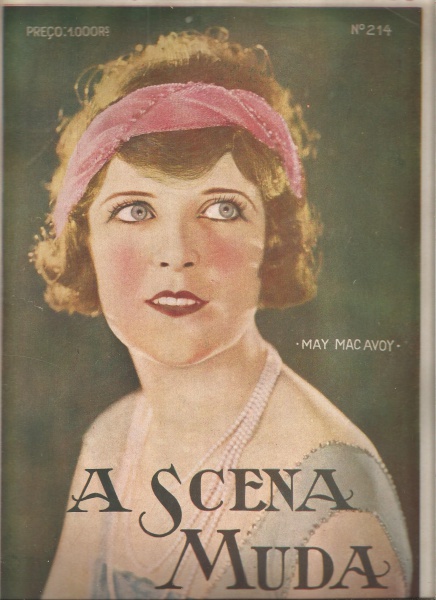
The Magazine

And thank God for those spoilers! I can only reconstruct the film because of them! I used here, to reconstruct the movie, the magazine “A Scene Muda”, that brought the story as adapted from the novel by Frank L. Packard to the screen. The whole story was published in six numbers in 1921 (numbers 12 to 18), and most images in this article are from the magazine. 

The Story – part 1 – The Swindlers

The Miracle Man” is set in a picturesque New York neighborhood – a place where children are poor and malnourished, yet money flows in nearby cabarets where the bourgeois has fun. At night, the darkness is almost total – only the cabarets offer some light to the sad streets. Looks like “The Penalty” (1920), another Chaney film.
One night, a policeman stops the traffic, and everybody looks at what may be causing the trouble: a horrid shapeless creature, with angry eyes and a face that shows, more than humanity, suffering. He walks with his elbows in the ground, his back protected by a leather piece, and his face turned upwards. He is The Frog and, yes, it is Lon Chaney at the screen.

Chaney
Many people look at him, some curious, some disgusted, some full of pity. A few of those people put coins in his deformed hand. He can’t say no. An older couple gives The Frog some money and enters a cabaret, an ugly building with a bar, a restaurant and some boarding rooms to rent. There they find all kinds of people: Chinese immigrants, prostitutes with exaggerated make-up, gamblers and drunkards. The woman is horrified with what she sees, while the man seems to be used to that sighting.

A girl is harassed by a drunken man, and goes far from him. She sits with a first-timer, a young man that was the first to give money to The Frog. The young man doesn’t want anything with the girl, and when she goes back to the place she was, the man attacks her – he wanted her to take money away from the silly young man. The young man enters the fight and saves the woman. The old woman, Mrs Higgins, is ecstatic with the action. The young man and the old woman give money to the girl to go away from that life. The young man introduces himself as Tom Burke (Thomas Meighan).


The girl, now with a good amount of money, gets out of the cabaret and in again, after helping a drunken woman. The girl is Rose (Betty Compson), and she goes to the second floor and enters a big room. A few moments later the crippled man enters. With a few movements, he puts all his members back in their place. The Frog is not really crippled: he is a swindler and his name is Jimmy. Lon Chaney has just surprised us. Then, the man who was harassing Rose enters the room and asks how much she had made that night. The man is Harry (J.M. Dumont) and he pretends to have tuberculosis to earn money from donations.

The gang
A man enters pretending he is from the police. It’s Tom Burke, also part of the scheme. After him enters the Japanese man (Kisaburô Kurihara) who guides the bourgeois to the cabaret, wanting his share of the money. Rose only presents a little of it, and the Japanese man gets angry, but Tom dissuades him of fighting. He goes out. Tom announces that he’ll use all the money in a new scheme, to what Jimmy protests, wanting his share. Tom orders all to give away the money, and they do.

Tom’s scheme is based on a newspaper article he found, about a deaf and blind man who can cure any illness. Tom tells that his plan is to go see the man in the village he lives in and pretend he was cured. Then Rose and Harry would go after him to help the story spread through newspaper, and at last Jimmy would do his contortionist trick and they would start managing the blind man’s cures – for a big price, obviously.


The Story – part 2 – The Miracle

Tom hit the road and, near the village of Needley, started pretending he was suffering from vertigo. Tom got out of his car and was quickly surrounded by peasants. He asked for a doctor. They said there was no doctor there, but he could see the Patriarch (Joseph J. Dowling). Tom is taken to him by peasant Hiram Higgins (F.A. Turner). The Patriarch, a strong old man in his seventies, was already waiting for them in front of his house. Tom felt some strange feeling when he got near the Patriarch.

Tom and Rose
The Patriarch walked to Tom and put his hand over Tom’s head, what impressed Tom very much. The Patriarch then left and Tom, saying he was cured, started talking with Higgins again. After Higgins offered him a place to stay, Tom saw Higgins’ daughter, Ruth (Lucille Hutton), with a little boy who walked with crutches (Frankie Lee). Tom learned that the little boy was the local teacher’s son, and his father didn’t want the boy to see the Patriarch because he didn’t believe in his curative powers.

Rose arrives at Needley two days later, wearing simple clothes and not using any make-up. With a few fake documents, she was going to impersonate the Patriarch’s niece, who left Needley as a child and never returned.

Tom and Rose in Needley
Jimmy and Harry followed, and traveled calling all the attention they could. In the train, Jimmy kept saying that he was going to see a miracle man who would cure him of his deformities, which called the attention of the other passengers, including siblings Richard (Lawson Butt) and Claire King (Elinor Fair). They were rich, and Claire suffered with a paralysis and needed a wheelchair to go anywhere. Listening to Jimmy, they decided to see the miraculous man, too.


At the same time, Tom tried to send the boy with crutches away to not spoil the whole miracle show, however the boy’s father once again refused, saying his son had an incurable disease and wasn’t going anywhere.

On the big day, a crowd followed Jimmy and Claire to the Patriarch’s house. Jimmy had convinced many of the train passengers to follow him and watch the miracle – including two journalists. Jimmy was covered in sweat and was making an extra hard effort to walk, with his elbows, on the irregular soil. He moved like a reptile on the ground.

When they arrived, the Patriarch started walking towards them. Everybody seemed skeptical – everybody but Claire, who started smiling with hope when she saw the Patriarch. In the front line, the boy with crutches observed.

Jimmy nears the Patriarch
Jimmy started shaking when he got near the Patriarch. It was show time. With his face pale, Jimmy seemed to suffer while doing his gymnastics, and put his members on the right place, one by one. He stood up and touched the Patriarch.

Silence. Everybody was impressed. An old woman passed out. The happiest of all people was the little boy with crutches, who then realized he could be cured, too. The little boy ran to the Patriarch, excited, and as he ran his legs got stronger, he left the crutches, and suddenly he was walking freely. The little boy hugged the Patriarch, moved. This is the scene we have extant,and it’s beautiful!

Everybody is speechless, but Tom, Rose, Harry and Jimmy are speechless. Tom feels he just committed sacrilege with his trick. Soon Claire King got up from her chair, in a suave and delicate way, and started walking, too.

Claire and the boy hug the Patriarch

The Story – Part 3 – The Business

Tom believes that both the “miracles” were a matter of suggestion – maybe a disease of the mind prevented Claire and the boy from walking? Anyway, Tom talks to the journalists, saying that he, too, was cured by the miracle man. Tom shows them the Patriarch’s house, and there he informs that he wants to create an economical fund to help poor sick people travel to Needley to see the Patriarch.

Everybody likes the idea and contributes. Tom writes a big check and Richard writes one twice as big. Rich men from Needley give money, and even the little boy gives a few coins to the fund. Rose is there, helping the Patriarch to sit in his usual chair to rest.

The three crooks
When everybody left, Rose hugged and kissed Tom. He told her to get out. Then she lit a cigarette, something Tom also criticized. Rose sat in corner, feeling upset.

The newspapers talked about Jimmy’s cure, the most impressive of the three that happened that day, and people started peregrinating towards Needley. All those people were rich, and after their cure – or the cure of their relatives – they gave a lot of money and expensive jewels for Tom’s fund. Tom, of course, kept everything and didn’t help any poor sick person.

Tom took care of the business while the others had fun. Jimmy started helping an old lonely woman who lived next door to the Patriarch. She said her only son would be Jimmy’s age if he hadn’t died. As Jimmy helped her with daily activities, she offered to pay him. He refused and said that, because she lost her son and Jimmy didn’t have a mother, he’d consider her as his mother. The old lady cried of happiness.

Jimmy and his new mother

Harry was at first upset with the lack of action in Needley, but he fell in love with Ruth Higgins and accepted a job at her father’s farm, to Tom’s surprise. Harry worked hard and, one day, decided to be totally honest with Hiram Higgins and tell him what he felt about Ruth. Mr. Higgins agreed with the relationship, and Harry and Ruth got engaged.

Harry and the Patriarch
The day before Harry got engaged Rose refused a pearl necklace from Tom, preferring to sew the Patriarch’s coat. Rose was also being courted by Richard King, but Tom didn’t pay attention to that, because he was worried only with his profit. That’s why Tom didn’t accept Richard’s invitation for a boat ride, but Rose did. When Jimmy said that Richard liked Rose, Tom punched him, and Jimmy fell. Jimmy, however, decided not to fight further, and left. When he passed near the Patriarch, Jimmy prayed for him to convert Tom and turn him into a good man.

Richard’s boat got stuck in sand, and couldn’t leave the place until the following morning. To save Rose’s reputation, Richard was willing to swim to the shore, but Rose stopped him, because he wasn’t a good swimmer and could die. They hugged, but Richard resisted the urge to kiss her. In his house, Tom was crazy with jealousy, and willing to kill Rose and Richard when they came back.

Rose and Richard

The Story – Part 4 – Conclusion

When they saw Rose arriving the next morning, Jimmy and Harry told her to be careful. With her conscience clean, Rose entered the house. Tom had given up his violent plan. Tom started being sarcastic, and Rose started defending Richard. Tom got more and more nervous, and when he put his hands up to hurt Rose, the Patriarch entered the room and put both his hands over Tom’s shoulders.


Tom put his hands down and, putting his head over one of the Patriarch’s hands, started crying. Harry and Jimmy entered the house, speechless. Tom was sorry, and decided to end the fund and leave Needley. Tom said he would keep the jewels, and the other three could share the money. Jimmy was the first one to refuse, saying he preferred to remain poor with his beloved new mother.

Harry refused, too, saying his fiancée wouldn’t accept the money, because they lived a simple life. Jimmy and Harry left. Tom stayed with Rose, and asked her what she would say if Richard asked her to marry him. Tom wanted to kill Richard and go away with Rose. Rose answered Tom: “you’ll know”.

Harry's change
Richard arrived as Tom left. Tom shook his rival’s hand, in a fake act of politeness. Richard and Rose started walking through the fields, and he proposed. She said she couldn’t marry him, and told him the truth about her life. Richard asked if Rose still loved Tom. She said yes.

Richard left, met Tom, said goodbye and told him to go on with the fund for poor sick people. Tom felt extremely ashamed and went back to the Patriarch’s house. He opened a case full of jewels and started crying. He was alone and ashamed of his villainy. He wanted to be like his friends, who changed and became simple, good people in that village.

Tom and Rose
Rose touched his shoulders. She had a pious look, and remembered him he still had a salvation. She said he isn’t an evil man, and she trusted him to run the fund, just like Richard said. A few minutes later, they went downstairs holding hands. The Patriarch, Jimmy and Harry were there. The Patriarch touched Tom’s and Rose’s hands and died.

The Patriarch’s dog licked its owner’s hand. All the people cried in the room. Very moved, Jimmy said they owned everything to the old man, and they could go on with his work if they were good people, because the Patriarch’s key for being a miracle man was having good thoughts.


Influences

The Miracle Man” premiered in Brazil in 1921. In the beginning of the following year, it was voted as the second best film shown in the country in 1921 by the readers of the magazine “Para Todos”, after only “Male and Female”, a DeMille-Swanson picture.“The Miracle Man” had such an impact that, in some 1924 numbers of the same magazine, it is still cited as an example of a great film yet to be matched.


The film was remade in 1932, with Sylvia Sidney, Chester Morris and Hobart Bosworth as the Patriarch. In the 1957 biopic “Man of a Thousand Faces”, the scene in which Jimmy is cured by the Patriarch is seen been shot, and it curiously is more moving in the 1957 recreation, probably because it shows Cagney in close-up, while the original scene was in a long shot – and the highlight in the 1919 movie was the little boy being cured, not Chaney.

Director George Loane Tucker made only one more film after “The Miracle Man”, and passed away in 1921. When this happened, the magazine Cinearte called him “the greatest director after Griffith”. “The Miracle Man” was a turning point in the careers of both Betty Compson and Lon Chaney, who then became big stars. Thomas Meighan was already popular – and, according to one publication, wasn’t able to cry on camera, so the director let him starve and not sleep until for two days he managed to do the scene and cry out of exhaustion.  


We can know the exact plot of “The Miracle Man”, but a lot is still lost: the expressions, the energy put in the performances, the special effects and camera angles. All of those could only be analyzed and enjoyed if the film is found. They say an image is worth a thousand words. This is, by far, my biggest post here, but still not enough to fully recreate the experience of watching “The Miracle Man”. Let’s hope for a copy to appear – after all, miracles do happen in the silent film world.

This is my contribution to the Lon Chaney blogathon, hosted by Ruth and Maddy at Silver Screenings and Maddy loves her classic films.

Tuesday, April 17, 2018

William Holden’s guide to a Picnic (1955)

  Um guia de William Holden para ter "Férias de Amor" (1955)

 
A primeira vez em que eu vi William Holden foi em uma propaganda do filme “Férias de Amor”. Eu me lembro bem de seu peito nu. Mas eu não me apaixonei por Holden naquele instante. Demoraria algum tempo até que eu fosse ver os seus filmes, incluindo “Férias de Amor”. A visão do peito dele não mudou minha vida, mas mudou a de Kim Novak, Rosalind Russell, Berry Field e Susan Strasberg.

The first time I ever saw William Holden, it was in a commercial for “Picnic”. I remember well his bare torso. But I didn't fall in love with him right then. It would take me some time to watch his films, including “Picnic”. The sight of his torso didn't change my life like it did for Kim Novak, Rosalind Russell, Betty Field and Susan Strasberg.
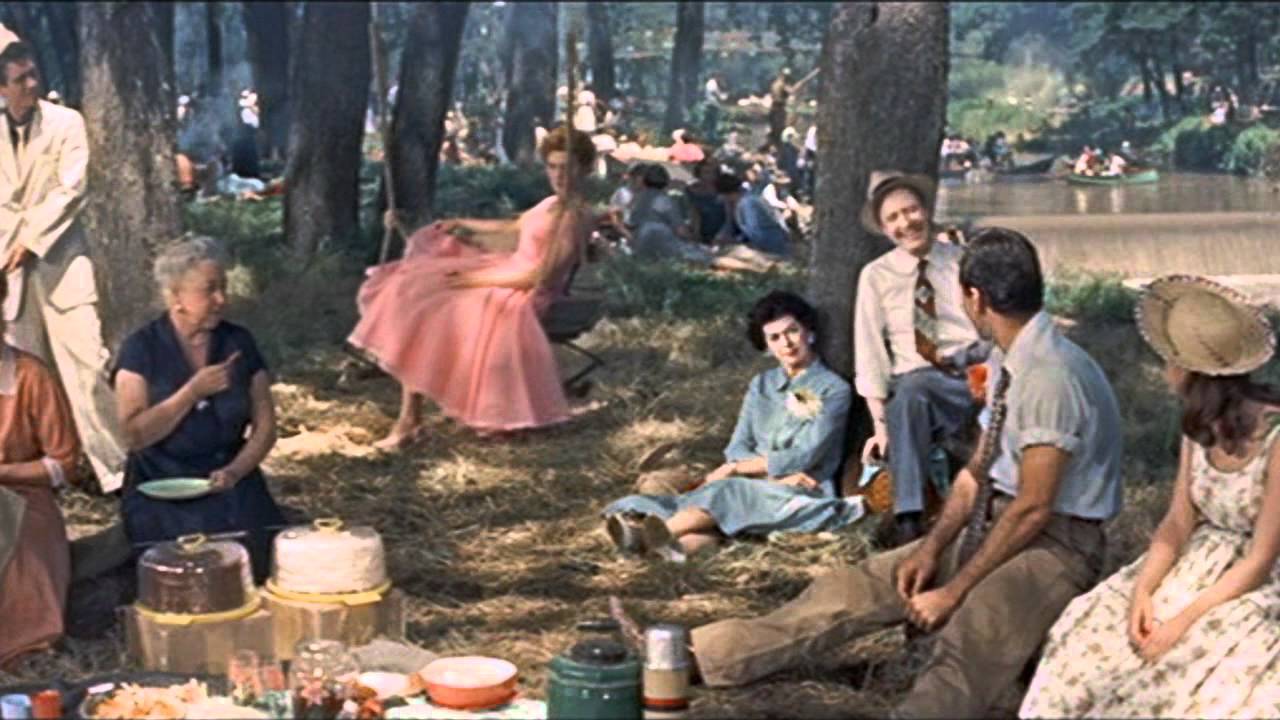
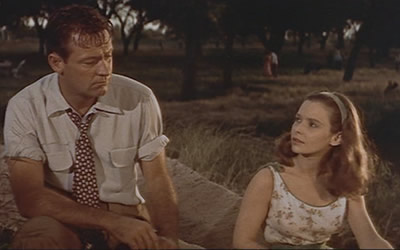
Em “Férias de Amor”, William Holden interpreta Hal Carter, um homem sem rumo que acaba de chegar a uma cidadezinha do Kansas, onde more um velho amigo da faculdade que ele acredita que poderá ajudá-lo. A primeira pessoa que se torna amiga de Hal é a senhora Helen Potts (Verna Felton), vizinha da família Owens. A senhora Potts, as Owens e praticamente todos na cidade irão a um piquenique para comemorar o Dia do Trabalho naquela tarde, e Hal é também convidado para o evento – e nem imagina que isso mudará sua vida.

In “Picnic” William Holden plays Hal Carter, a man without a plan that has just arrived to a small city of Kansas, going after his friend from college, who may help him. The first person Hal befriends is the nice Mrs Helen Potts (Verna Felton), neighbor to the Owens family. Mrs Potts, the Owens and basically everybody else in town will attend the Labor Day Picnic that afternoon, for which Hal is invited – not knowing it'd change his life.
Aqui está o guia de William Holden de como se comportar em um piquenique:
Here it is William Holden's guide on how to behave in a picnic:

1- Convide uma garota para ir ao piquenique com você – mesmo se você a tiver conhecido apenas algumas horas atrás. Seja muito legal com ela. Se ela é uma moleca, assim como Millie (Susan Strasberg), é uma boa ideia apostar corrida até o carro e ir cantando músicas populares até o local do piquenique.

1- Invite a girl to go to the Labor Day Picnic with you – no matter if you have met her f0r only a few hours. Be very nice to her. If she is a tomboy, like Millie (Susan Strasberg), it's a good idea to race her to the car and to sing old folk songs from home until the picnic.
2- Não se envergonhe por ter de pedir emprestadas as roupas de outra pessoa. Talvez você precise da ajuda de um colega da faculdade para ficar bonito! E ninguém te julgará se você tirar o paletó no meio do evento.

2- Don't be ashamed to ask for someone else's clothes. Maybe you'll need the help from a friend from college to look dapper! And nobody will judge you if you take off your blazer in the middle of the party.

3- Veja se as mães estão de olho nos seus filhos – se cordas forem necessárias para garantir a segurança, tudo bem.

3- Be sure that mothers are keeping an eye on their kids – if ropes are necessary for this to happen, OK.
4- Participe de jogos divertidos, mesmo que eles pareçam bobos. A corrida com três pernas é um clássico!

4- Engage in fun games, no matter if they look silly. The three-legged race is a classic!

5- Saiba que, para algumas pessoas, o piquenique é um evento social que pode mudar a vida delas para sempre. É o caso de Flo (Betty Field), uma mulher simples que quer que sua filha se case com um herdeiro.

5- Know that, for some people, the picnic means a social gathering in which their lives can change forever. This happens to Flo (Betty Field), a simple woman who wants her daughter to get married to a heir.
6- Saiba que, para outras pessoas, um piquenique traz tristeza e ressentimento. É o caso de Madge (Kim Novak), que está cansada de ser considerada apenas uma garota bonita, e Alan Benson (Cliff Robertson), que tem problemas com o pai e vai falar umas verdades para seu velho amigo da faculdade.

6- Know that, for other people, a picnic brings sorrow and resentment. This happens to Madge (Kim Novak), who is tired of being just a pretty girl and nothing else, and Alan Benson (Cliff Robertson), who has troubles with his father and is ready to tell what he really thinks about his old college friend.

7- Não tenha medo de mostrar os passos de dança que você conhece.

7- Don't be afraid to show the moves you've got.
8- Saiba que haverá um momento em que você pensará que existem no mundo somente você e a pessoa por quem você se apaixonou.

8- Know that there will be a moment when you'll think that there are only you and the person you fell in love with in the world.

9- Entenda que algumas pessoas sofrem muita pressão durante um piquenique e podem beber demais. A senhorita Rosemary Sydney (Rosalind Russell), uma professora solteirona, passa por isso durante seu encontro com o comerciante Howard (Arthur O'Connell). Tenha paciência com pessoas que se embebedam em piqueniques.

9- Understand that some people are in a lot of  pressure during a picnic and may drink too much. Miss Rosemary Sydney (Rosalind Russell), a spinster schoolteacher, goes through this in her date with businessman Howard (Arthur O'Connell). Be patient with people who get drunk at picnics.
10 – Tudo é muito divertido até que você é acusado de fazer algo que não fez e tudo sai do controle. Quando isso acontece, escolha bem quem será sua companhia na fuga, com quem você dividirá seus segredos.

10- Everything is all fun and games until you're accused of doing stuff you haven't done and everything spirals out of control. When this happens, choose wisely who will be your escape companion with which you'll share your secrets.
As coisas começam a esquentar a partir daqui. “Férias de Amor” é um filme charmoso, com um clima agradável até a metade e um ritmo completamente diferente a partir de então. Devemos prestar atenção a Rosalind Russell, em uma performance perfeita com boa dose de ridículo – não no sentido engraçado, mas no sentido de que sentimos pena de sua personagem. O piquenique pode ser o destaque do filme, mas é também só o ponto de partida para mudanças em muitas vidas.

Things will just start heating from here. “Picnic” is a charming movie, with a nice feeling until half the projection, and a completely different pace from then on. We must pay attention to Rosalind Russell, in a perfect performance with a good amount of ridiculousness – not in the humorous sense, but in the sense that we may feel sorry for her character. “Picnic” may be the title of the movie, but it's just the starting point for changes in many human lives.

This is my contribution to the 3rd Golden Boy Blogathon, hosted by Virginie, Michaela and Emily at The Wonderful World of Cinema, Love Letters to Old Hollywood and The Flapper Dame.

Sunday, April 15, 2018

Papai Noel Conquista os Marcianos (1964) e outras vezes em que o cinema foi a Marte


Santa Claus Conquers the Martians (1964) and other film trips to Mars


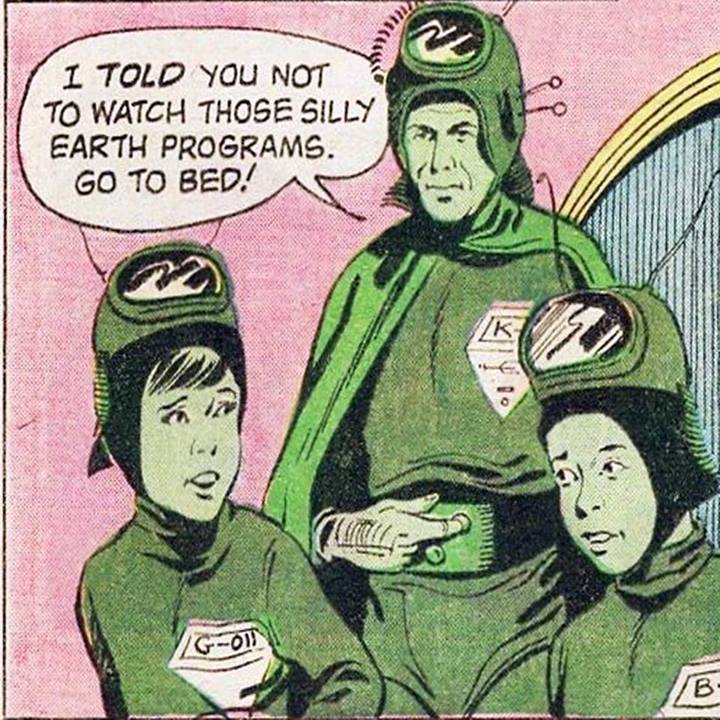
Um repórter da TV, falando diretamente da oficina do Papai Noel no Polo Norte, onde os ajudantes de Noel acabam de mostrar um boneco de um marciano, diz: “Se há [pessoas em Marte] eu espero que elas tenham alguém lá como você, Noel, para levar alegria e felicidade para todas as crianças marcianas”. Corte para os marcianos. Eles são exatamente como os bonecos e não, eles não têm um Papai Noel, mas têm a capacidade de ver os programas de TV da Terra. E, de acordo com um velho sábio, é a ausência de um Papai Noel – e a ausência de uma infância – que causa a tristeza nas crianças marcianas. Por isso, um grupo de marcianos decide vir à Terra para sequestrar o Papai Noel.

A TV reporter, speaking from Santa’s workshop at the North Pole, where the helpers just presented a Martian doll, says: “If there are [people on Mars] I hope they have someone like you up there, Santa, to bring joy and good cheer to all the Martian children”. Cut to the Martians. They are exactly as the doll predicted, and no, they not have a Santa Claus, but they are able to watch TV programs from Earth. And, according to a wise old man, it’s this lack of a Santa Claus – and the extended lack of a childhood – that is leaving Martian kids sad. So a group of Martians decide to come to Earth and kidnap Santa Claus.
É assim que tem início um marco do cinema ruim. Entre atores cobertos de maquiagem verde horrível, crianças sem expressão, piadas sem graça e o próprio Papai Noel, uma coisa salva “Papai Noel Conquista os Marcianos”: Marte. Não, o cenário não é bonito nem sequer bem elaborado, mas é algo que me fez pensar: por que o cinema é tão fascinado por Marte?

This is how a pinnacle of awful filmmaking unfolds. Among actors wearing horrible green make-up, children giving awful performances, unfunny jokes and Santa Claus himself, one thing kind of saves “Santa Claus Conquers the Martians”: Mars. No, the set is not gorgeous or even elaborate, but it is something that made me think: why is the film world so fascinated with Mars?
A resposta é simples: porque somos fascinados pelo desconhecido. E desde que Marte continue inexplorado, não há limite para a imaginação, e filmes no planeta vermelho podem ter praticamente qualquer coisa – até pílulas como refeição, homens verdes maus e um sistema que permite que os marcianos vejam programas de TV da Terra (por que eles não faziam seus próprios programas de TV?).

The answer is simple: because we are fascinated by the unknown. And as long as it remains unknown, there is no limit to imagination, and films set on Mars can have literally anything – even people who eat pills as meals, evil green men and some kind of system that allows Martians to watch TV shows made on Earth (why didn’t Martians make their own TV shows?).
O primeiro cineasta a ir a Marte, surpreendentemente, não foi Georges Méliès, mas Thomas Edison. Em 1910, Edison produziu “A Trip to Mars”, na qual um homem se torna astronauta após descobrir o pó da ‘gravidade reversa’, e em Marte ele encontra marcianos enormes que podem congelar os terráqueos com um simples sopro. Não há limites entre a ficção científica e o horror puro neste filme de cinco minutos.

The first filmmaker to go to Mars, surprisingly, wasn’t Georges Méliès, but Thomas Edison. In 1910, he produced “A Trip to Mars”, in which a man becomes an astronaut thanks to the discovery of the powder of ‘reverse gravity’ and finds out that Martians are HUGE and can freeze Earth people with only a blow. There is no boundary between science fiction and pure horror in this five-minute film.
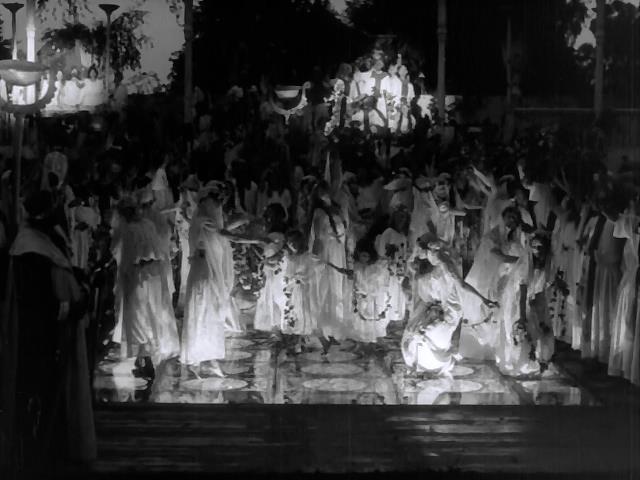
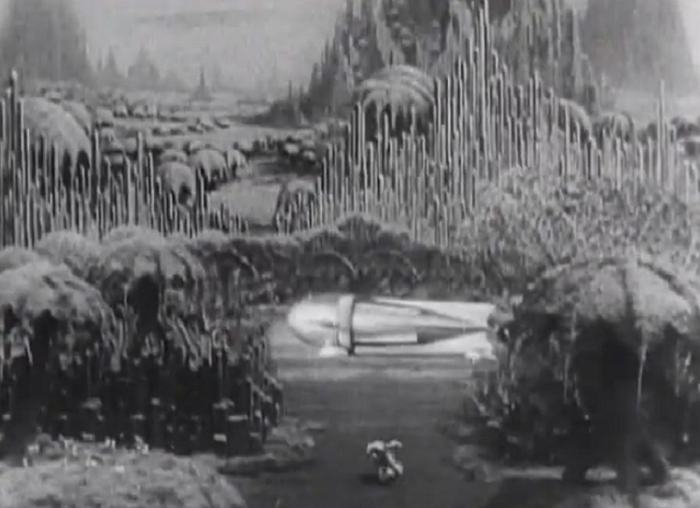
Em 1918, um grupo muito criativo de dinamarqueses fez o filme “Viagem a Marte” (ou “Himmelskibet”). Nele, um grupo de cientistas liderados por Avanti Planetaros (Gunnar Tolnaes) desafia todos os céticos e chegam a Marte em seis meses – que é, de fato, o tempo que uma viagem ao planeta vermelho demoraria hoje!

In 1918, a group of very creative Danish people made a film called “A Trip to Mars” (aka “Himmelskibet”). In it, a group of scientists led by Avanti Planetaros (Gunnar Tolnaes) challenges all naysayers and reach Mars in six months – what is, indeed, the time a trip to the Red Planet would take today!
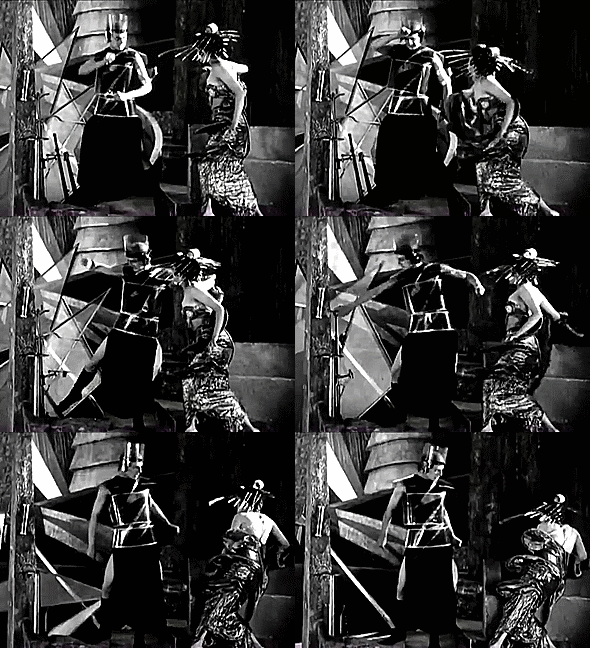
Mas nada poderia prepará-los para o que encontram lá: uma sociedade evoluída, na qual todas as pessoas são vegetarianas e pacifistas, e a guerra e o sofrimento foram abolidos. O líder deles é um homem sábio e ninguém teme a morte. Os marcianos contam que eram como as pessoas da Terra, mas aprenderam a viver em paz. A mesma paz não é compartilhada com o cinema soviético, como podemos ver em “Aelita, Rainha de Marte”, de 1924.

But nothing could prepare them for what they find there: an evolved society, where all people are vegetarians and pacifists, and all war and suffering has been abolished. Their leader is a wise man and nobody fears death. The Martians tell them that they were once like people on Earth, but they learned to live better and in peace. The same peace is not shared with the Soviet cinema, as we can see in the 1924 production “Aelita, Queen of Mars”.
Himmelskibet
Himmelskibet
Aelita
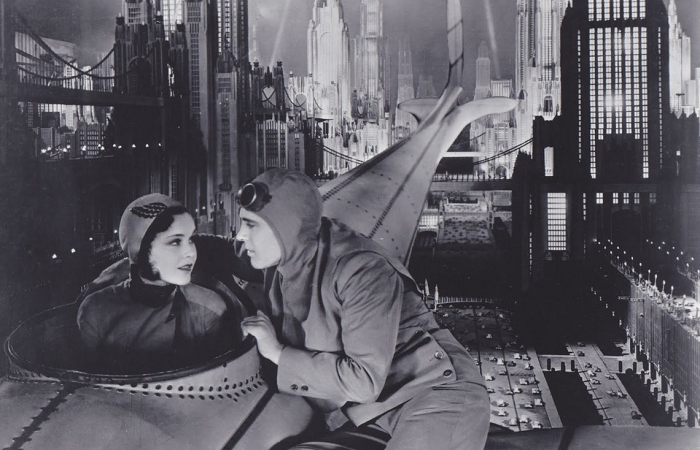
Com a chegada do som, Marte se tornou sinônimo de filme B. Dos anos 30 aos 70, quase todos os filmes sobre expedições a Marte eram seriados ou produções de baixo orçamento. “Fantasias de 1980”, de1930, é um dos mais estranhos de todos. Ele conta a história de um homem chamado J-21 (John Garrick), que, para impressionar a mulher que ama e ganhar o direito de se casar com ela, vai a Marte com um amigo e com um homem que foi morto em 1930 e ressuscitado pela ciência em 1980 (interpretado por El Brendel). Em Marte, eles descobrem uma sociedade em que todos têm um irmão gêmeo (um gêmeo bom e um mau), mas os marcianos são agradáveis, usam pouca roupa, o cenário é lindo e a líder é a rainha Loo Loo (Joyzelle Joyner). Para ser sincera, eu gostaria de visitar esta versão de Marte.

When sound came, Mars became a synonym of cheap movie. From the 1930s until the 1970s, almost all films about expeditions to Mars were serials or low-budget productions. “Just Imagine”, from 1930, is one of the weirdest of them all. Set in the 1980s, it tells the story of a man called J-21 (John Garrick), who, in order to impress his sweetheart and be allowed to marry her, goes to Mars with a friend and a man who was killed in 1930 and resurrected by science in 1980 (played by El Brendel). On Mars, they find a society in which everybody has a twin (one evil and one good), but the Martian people are welcoming, wear few clothes, the set is exquisite and their leader is queen Loo Loo (Joyzelle Joyner). To be sincere, I’d like to visit this version of Mars.
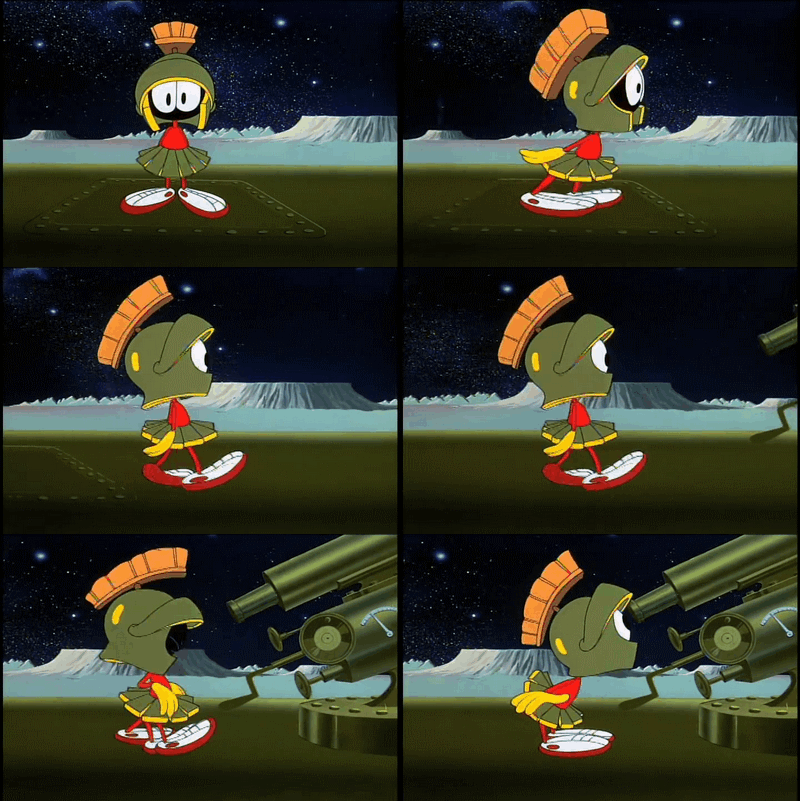
Buster Crabbe, como Flash Gordon, pode ter ido a Marte no seriado de 1938, mas os anos 50 foram a década que trouxe real interesse em viagens espaciais, tanto em filmes quanto em desenhos. Estudos traçam a origem da ideia de que alienígenas são ‘homenzinhos verdes’ até uma lenda contada no século XII, mas foi com as histórias de ficção científica dos anos 1940 e 50 que a ideia se popularizou. Por isso conhecemos Marvin o Marciano em 1948, e ele apareceu em outros desenhos nas décadas seguintes, incluindo o famoso curta “Duck Dodgers in the 24 ½th Century”, de 1953.

Buster-Crabbe-as-Flash-Gordon may have been to Mars in the 1938 serial, but the 1950s were the decade that brought real interest in space travelling, both on feature film and animation. Studies trace the idea of aliens being ‘little green men’ back to a legend told in the 12th century, but it was with science fiction stories from the 1940s and 50s that the idea became popular. No wonder we got Marvin the Martian in 1948, and he appeared in other cartoons the following decades, including the famous “Duck Dodgers in the 24 ½th  Century”, from 1953.
Marvin, 1948: nice skirt
Marvin, 2012: more relatable
Quem mais, além de Pernalonga, já foi a Marte? Ou melhor, quem ainda não foi a Marte? Tom e Jery já foram. Abbott e Costello também. Como vimos, Papai Noel também. Matt Damon esteve lá recentemente – e poderia ter ficado por lá. O que todos esses filmes sobre Marte têm a nos ensinar, não importa quão ridículos ou estúpidos eles sejam?

Who else, besides Bugs Bunny, has been to Mars? I mean, who hasn’t been to Mars? Tom and Jerry have. Abbott and Costello have. As we just saw, Santa Claus had. Matt Damon had been there recently – and he could have been left there. What all those films about Mars teach us, no matter how campy or stupid they are?
Eles nos ensinam que nós amamos o desconhecido e as muitas possibilidades que vêm com ele, mas só até certo ponto. Quando chegam a Marte, todos os personagens, em especial nos filmes mais antigos, encontram seres vivos semelhantes ao homem. Os marcianos podem falar outra língua, usar roupas engraçadas, ser maiores que nós, mas eles sempre se parecem conosco na ficção. Até Marvin tem um cachorro de estimação, o K-9! Explorar pode ser excitante, desde que estejamos no controle. Hoje sabemos que, se há vida em Marte, ela não se parece em nada com os humanos da Terra. Então, talvez, seja mais interessante para nós nos conformarmos com rostos familiares em planetas estranhos – talvez, nesta situação, a ficção científica será mais emocionante que a realidade.

They teach that we love the unknown and its many possibilities, but until a certain point. Once on Mars, almost all characters, especially in older films, find human-like life. Martians may speak a different language, dress funny, be bigger than us, but they always looked like us in fiction. Even Marvin has a dog, K-9, as a pet! Exploring is exciting, as long as we are in control. Today, we know that, if there is life on Mars, it’s nothing like humans on Earth. So, maybe, it’s more interesting for us to conform to familiar faces in strange planets – maybe, in this case, science fiction will be more exciting than reality.

This is my contribution to the Outer Space on Film blogathon, hosted by Debbie from Moon in Gemini.
Related Posts Plugin for WordPress, Blogger...