} Crítica Retrô

Tradutor / Translator / Traductor / Übersetzer / Traduttore / Traducteur / 翻訳者 / переводчик

Thursday, July 16, 2020

A Mulher Miraculosa (1931) / The Miracle Woman (1931)

Nas últimas semanas, minhas noites de domingo têm sido dedicadas ao reboot de “Perry Mason” exibido na HBO. Embora Mason seja um personagem conhecido e o protagonista da série, desde o começo a personagem que me chamou a atenção foi a Irmã Alice, interpretada por Tatiana Maslany. Quando eu a vi pregando no trailer da série, só consegui pensar numa coisa: ela é exatamente igual à Barbara Stanwyck em “A Mulher Miraculosa” (1931), um filme subestimado de Frank Capra no qual, na minha opinião, Stanwyck tem uma de suas melhores performances.

In the last few weeks, my Sunday nights have been occupied by the HBO reboot of “Perry Mason”. Although Mason is a well-known character and the lead of the show, since the beginning the character who called my attention was Sister Alice, played by Tatiana Maslany. When I saw her preaching in the trailer, I could only think about one thing: she was exactly like Barbara Stanwyck in “The Miracle Woman” (1931), an underrated Frank Capra film in which Stanwyck delivers, in my opinion, one of her best performances.

Em “A Mulher Miraculosa”, Stanwyck interpreta Florence Fallon, a filha de um pastor. Os serviços de seu pai não são mais necessários na igreja, e ele morre antes de fazer seu último sermão para os fiéis. Florence é incumbida de ler o último sermão, mas entra em colapso no meio da leitura e começa a dizer algumas verdades inconvenientes para os fiéis, que abandonaram o pai dela quando ele ficou doente e agora ele nem pode ter um enterro decente. Ela chama os fiéis de hipócritas e pecadores e todos eles deixam o recinto porque não aguentam ouvir a verdade.

In “The Miracle Woman”, Stanwyck plays Florence Fallon, the daughter of a preacher. Her father’s services are no longer needed by the church, and he dies before addressing his people for the last time. Florence receives the mission to read his final speech, but she breaks in the middle of it and starts telling inconvenient truths to the churchgoers, who abandoned her father when he got ill and now he can’t even have a decent burial. She calls the churchgoers hypocrites and sinners and they all leave because they can’t handle the truth.

Um homem chamado Bob Hornsby (Sam Hardy) estava de passagem pela igreja naquele dia e, depois que o ataque de fúria de Florence termina, ele oferece uma parceria: com a administração dele e os conhecimentos que ela tem da Bíblia, eles podem criar uma nova igreja. Sem nada a perder, Florence aceita a oferta e o Templo da Felicidade surge.

A man called Bob Hornsby (Sam Hardy) happened to be at the church that day and, after Florence’s rage is over, he offers her a business partnership: with his management and her knowledge of the Bible, they can create a new church. Without anything to lose, Florence accepts the offer and the Temple of Happiness is born.
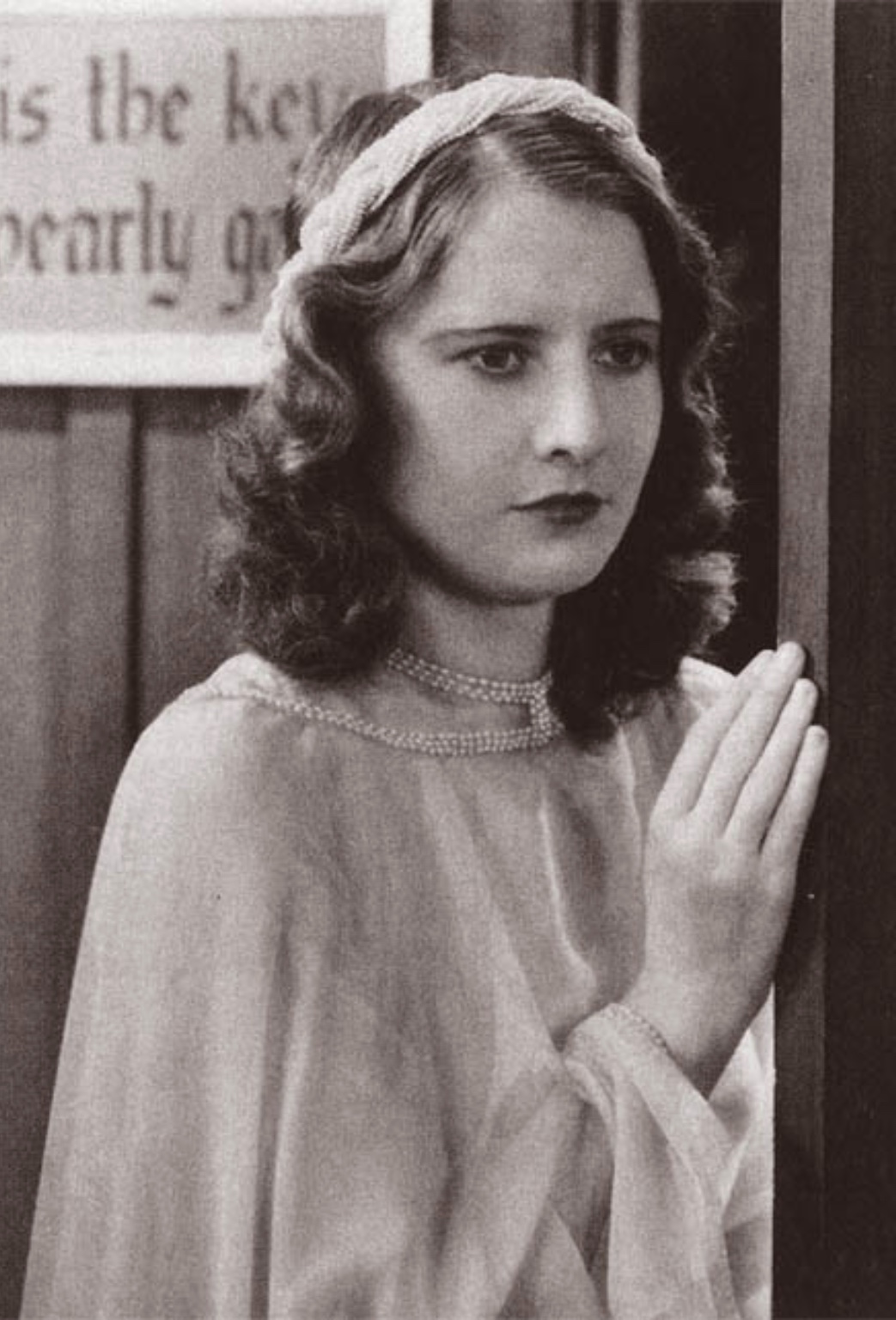
Em pouco tempo o templo está cheio e as pregações dela estão sendo transmitidas pelo rádio. Um dia, um homem cego ouve uma dessas pregações através do rádio da vizinha e muda de ideia sobre seu suicídio iminente. O homem é John Carson (David Manners), um ex-aviador e atualmente músico desempregado. As palavras de Florence – ou da Irmã Fallon – dão a ele esperança e ele decide não apenas continuar perseguindo o sucesso, mas também que deve conhecer a pregadora.

Soon her temple is full and her addresses are being broadcasted in the radio. One day, a blind man listens to one of these addresses through his neighbor’s radio and changes his mind about committing suicide. The man is John Carson (David Manners), a former aviator and currently unemployed musician. Florence’s – or Sister Fallon’s – words give him hope in the future and he decides not only to keep going after success, but also to meet the preacher.

A proprietária do apartamento de John, Senhora Higgins (Beryl Mercer), o leva ao templo logo no dia em que a Irmã Fallon está fazendo um showzinho dentro de uma jaula com leões. John se oferece para entrar na jaula quando Florence garante que aqueles que acreditam em Deus não serão atacados pelos leões. Ela usa o fato de John ser cego na performance e promete que ele voltará a ver – mas não diz quando – porque ele é um homem de fé.

John’s landlady Mrs Higgins (Beryl Mercer) takes him to the temple and they happen to go on the day Sister Fallon is performing a stunt inside a cage full of lions. John volunteers to enter the cage when Florence guarantees that people who believe in God won’t be attacked by the lions. She uses the fact that John is blind in her performance and promises that he shall see again – but doesn’t give him a date – because he is a faithful man.

Em seguida vemos Bob, o braço direito de Florence, dando bronca em algumas pessoas que ele contratou para participar de alguns milagres, incluindo dois homens que deveriam interpretar paralíticos mas que estavam com problemas para “entrar no personagem”. É então que Florence descobre que John não era mais um ator contratado por Bob, mas um homem cego de verdade que realmente acreditou nela. Ela já demonstra insatisfação com a maneira como Bob está conduzindo os negócios.

We next see her right hand Bob lecturing some people he had hired to participate in some miracles, including two men who should play paralyzed people but are having trouble “entering into character”. That’s when Florence learns that John wasn’t another actor hired by Bob, but a real blind man who actually believed in her. She already shows disappointment by how Bob is conducting the business.

Naquela noite, em vez de ir à festa de Bob, Florence encontra John do lado de fora da igreja. Está chovendo e ela oferece uma carona até a casa dele. Ele a convida para subir para seu apartamento e ela aceita, o que inicia uma noite agradável com eles cantando, jogando cartas e com John fazendo um show com um boneco de ventríloquo – que é meio bizarro. Como Judy menciona no site Movie Classics, o boneco é uma metáfora para como Florence está sendo manipulada e manipulando outros em seus sermões, mas isso não torna a cena menos bizarra. Ao final da noite, Florence descobriu que John desistiu do suicídio após ouvi-la, John é contratado para escrever um hino religioso para Florence e eles se beijam.

That night, instead of attending Bob's wild party, Florence bumps into John outside the church. It’s raining so she offers him a ride home. He invites her to his apartment and she accepts, which leads to a pleasant evening singing, playing cards and seeing John do an act with a ventriloquist dummy – which is kind of creepy. As Judy mentions at Movie Classics, the dummy is a metaphor for Florence serving as a mouthpiece only in her addresses, but it doesn't make the dummy less creepy. By the end of the night, Florence had learned that John had given up the idea of suicide after listening to her, John is hired to compose a religious hymn for Florence and they kiss.

Um momento-chave é quando John diz que o pai de Florence deve estar orgulhoso do sucesso dela como pastora. Ela então se mostra completamente desolada com o caminho que escolheu, mas abandonar este caminho será muito difícil porque Bob começa a chantageá-la. Ela alcançará a redenção ou perecerá na tragédia?

A triggering moment happens when John says that Florence’s father must be proud of her success as a preacher. She then achieves full disappointment with her chosen path, but abandoning this path will be very difficult because Bob starts blackmailing Florence. Will she achieve redemption or perish in a tragedy?

É interessante notar que, enquanto o povo entra na igreja, a música que toca é o hino patriótico “Over There”, composto por George M. Cohan durante a Primeira Guerra Mundial. Esta mistura de religião e patriotismo para tirar dinheiro das pessoas é uma velha técnica que ainda vem sendo usada, quase 90 anos depois da estreia de “A Mulher Miraculosa”. Achamos que evoluímos - como sociedade, como humanidade - muito no último século, mas não é verdade: continuamos caindo nos mesmos velhos truques.

It’s interesting to notice that, while the people enter the church, the music playing is the patriotic hymn “Over There”, composed by George M. Cohan during World War I. This mix of religion and patriotism to take money away from people is an old technique and one that is still being used, almost 90 years after “The Miracle Woman” was made. We think we - as a society, as mankind - evolved a lot in the last century, but it’s not true: we are still falling for the same old tricks.

Como Danny do site Pre-Code.com escreveu, “A Mulher Miraculosa” nasceu de uma década de dor. Após a Primeira Guerra Mundial, o charlatanismo cresceu através de pregadores falsos e do espiritualismo – afinal, milhões de pessoas queriam entrar em contato com entes queridos que morreram na guerra ou foram vítimas da Gripe Espanhola. O filme foi baseado em uma peça chamada “Bless You, Sister”, escrita por Robert Riskin, que se tornaria um colaborador constante de Frank Capra, mas que não se envolveu na adaptação da peça para o cinema. Quando o Código Hays foi imposto, filmes como “A Mulher Miraculosa” não mais poderiam ser feitos – provando que a censura não era apenas sobre moralidade, mas também sobre política e religião.

As Danny from PreCode.com wrote, “The Miracle Woman” is born out of the fabric of a decade of pain. After World War I, charlatanism grew in the forms of fake preachers and spiritualism – after all, millions of people wanted to contact the loved ones they lost at the war or because of the Spanish flu. The film was based on a play called “Bless You, Sister”, written by Robert Riskin, who would go on to become Capra's constant collaborator, but had nothing to do with the adaptation of the play to the screen. Once the Hays Code was enforced, films like “The Miracle Woman” couldn't be made anymore – proving that the censorship wasn't only about morality, but also about politics and religion. 

Ao rever este filme, percebi que estava certa: a Irmã Alice de “Perry Mason” tem muito em comum com Florence de “A Mulher Miraculosa”. Ambas usam robes brancos esvoaçantes para parecerem puras e sobrenaturais, uma mistura de anjo e apóstolo. Ambas obedecem a pessoas mais inescrupulosas e ambiciosas que elas: Florence obedece a Bob e Alice obedece à mãe, Birdy, interpretada por Lili Taylor. Ambas fazem falsos milagres. A única diferença é a cor do cabelo! É por isso que “A Mulher Miraculosa” deve ter sido uma inspiração para “Perry Mason”, pois a série tem início na Véspera do Ano Novo de 1932 e o filme é de 1931. Uma inspiração para ambas as pregadoras fictícias é a pregadora Aimée Semple McPherson (1890-1944), uma das fundadoras da Igreja Quadrangular.

By rewatching this film, I realized I was right: Sister Alice from “Perry Mason” has a lot in common with Florence from “The Miracle Woman”. Both wear flowing white robes during their addresses, in order to look otherworldly and pure, a mix of angel and apostle. Both obey more unscrupulous and greedy people: Florence obeys Bob, while Alice obeys her mother, Birdy, played by Lili Taylor. Both perform fake miracles. Their only difference is the hair color! That’s why “The Miracle Woman” must have been an inspiration for “Perry Mason”, as the series starts on New Year’s Eve of 1932, and the film is from 1931. One inspiration for both fictional preachers is the preacher Aimée Semple McPherson (1890-1944), one of the founders of the Foursquare Church.

Aimée Semple McPherson / Sister Alice in "Perry Mason"

John sabe ler Braille, mas para se comunicar com Florence ele pede que ela escreva cartas formando as palavras com letras cortadas, uma a uma, de revistas e jornais, para que ele possa reconhecer as formas. Eu particularmente nunca havia visto nada parecido, apesar de fazer sentido. David Manners se sai bem como um homem cego, sem exagerar ou nos fazer duvidar da cegueira de John. Manners é mais conhecido por ter feito filmes de terror nos estúdios Universal. Ele se aposentou do cinema em 1936.

John knows how to read Braille, but to communicate with Florence he asks her to write letters by making the words from letters cut, one by one, from magazines and newspapers, so he can recognize the shapes. I particularly had never witnessed something like that, but it makes sense. David Manners does well as a blind man, never exaggerating or making it hard for us to believe John is blind. Manners is best known for appearing in horror movies at Universal studios. He retired from the screen in 1936.

Embora “A Mulher Miraculosa” tenha seus problemas – e eu estou, sim, falando do boneco de ventríloquo – é inegável que Barbara Stanwyck mostra uma força imensa como protagonista toda vez que ela sobe ao púlpito e se dirige aos fiéis. Florence é ambígua, por vezes confusa e irada, e muito humana. “A Mulher Miraculosa” - este excelente, pouco comentado e tão atual filme – é a prova perfeita de que o melhor ainda estava por vir para Barbara Stanwyck.

Although “The Miracle Woman” has its problems – I’m looking at you, dummy – it’s undeniable that Barbara Stanwyck shows immense strength as the lead whenever she goes to the pulpit and addresses the churchgoers. Florence is ambiguous, sometimes confused and enraged, and very human. “The Miracle Woman” - this excellent seldom mentioned and very modern movie – is the proof that the best was yet to come for Barbara Stanwyck.

This is my contribution to The Queen of Sass: Barbara Stanwyck blogathon, hosted by Gabriela at Pale Writer.

Sunday, July 5, 2020

O Amor Nasceu do Ódio (1937) / Knight Without Armour (1937)

Não é nem um pouco surpreendente assistir a um filme norte-americano ou britânico feito durante a Guerra Fria criticando a União Soviética e a Revolução Russa. Mas ver um filme com o mesmo tema feito antes da Segunda Guerra Mundial é uma experiência interessante. “O Amor Nasceu do Ódio”, uma produção britânica de 1937, mostra, quase 30 anos antes de “Doutor Jivago”, o sofrimento da nobreza com a chegada da revolução – e ainda tenta adicionar romance na trama!

It's not surprising at all to see an American or British movie made during the Cold War criticizing the Sovietic Union and the Russian Revolution. But seeing a pre-World War II film with the same theme is quite an interesting experience. “Knight Without Armour”, a British production from 1937, shows almost 30 years before “Doctor Zhivago” the suffering of the noble classes when the revolution came – and it also tries to wave romance into the plot!


O correspondente estrangeiro A.J. Fothergill (Robert Donat) tinha 48 horas para deixar a Rússia – sim, Rússia, porque a história começa em 1917, quando ainda havia um Czar. Felizmente, um amigo lhe apresenta outra opção: ele pode deixar a barba crescer, adotar uma nova identidade e se tornar espião! Fothergill aceita esta adorável oferta e começa a espionar alguns revolucionários. O desdobramento das coisas não sai como esperado e ele se torna um prisioneiro político.

Foreign correspondent A.J. Fothergill (Robert Donat) has 48 hours to leave Russia – yes, Russia, because the story begins in 1913, when there was still a Tsar. Luckily, a friend presents him with an option: he can grow a beard, adopt a new identity and become a spy! Fothergill accepts this lovely offer and starts spying on a few naughty revolutionaries. Things don't go so well and he becomes a political prisoner.

Enquanto isso, a condessa Alexandra Vladinoff (Marlene Dietrich) está de boa. Tão de boa que ela está descansando no jardim enquanto seus empregados leem jornais que os convocam a se unir à revolução. Quando a revolução acontece, os empregados vão embora e a mansão dela é invadida por uma multidão raivosa que ela enfrenta usando apenas uma camisola branca, parecendo uma deusa flutuante. A multidão saqueia a mansão e espera para decidir o que farão com Alexandra. Quem poderá salvá-la?

Meanwhile, Countess Alexandra Vladinoff (Marlene Dietrich) is chill. So chill that she is chilling in the garden while her servants read newspapers calling them to join the revolution. When the revolution is successful, her servants leave and her mansion is invaded by an angry crowd that she faces wearing only a white nightgown, looking like a floating goddess. The crowd loots her mansion and waits to decide what they'll do to her. Who will save Alexandra?

Se você respondeu Fothergill, você acertou. Depois de passar anos preso na Sibéria, ele e outros prisioneiros são libertados pelos revolucionários. O único inconveniente é que eles acham que Fothergill se chama Peter Ouronov e também é revolucionário. Agora como parte de uma missão oficial – e sem barba – Fothergill vai para a mansão Vladinoff para encontrar Alexandra e acompanhá-la até Petrogrado.

If you answered Fothergill, you're right. After spending years in a prison in Siberia, he and the other prisoners are freed by the revolutionaries. The only inconvenient is that they think his name is Peter Ouronov and he is a revolutionary as well. Now part of an official mission – and without a beard – Fothergill goes to the Vladinoff mansion to meet Alexandra and accompany her to Petrograd.

Infelizmente, não há mais trens para Petrogrado, e Fothergill tem de deixar Alexandra para trás pois o Exército Branco – os Mencheviques – se aproximam. Não nos esqueçamos de que Fothergill havia se tornado sem querer um membro do Exército Vermelho, ou Bolchevique. Claro, antes de partir Fothergill e Alexandra já haviam recitado poemas um para o outro e estavam apaixonados.

Unfortunately, there are no trains to Petrograd anymore, and Fothergill has to leave Alexandra behind as the White Army – the Mensheviks – comes near. Let's not forget that Fothergill had unwillingly become a member of the Red, or Bolshevik Army. Of course, before parting Fothergill and Alexandra have already recited poems to each other and are in love.

“O Amor Nasceu do Ódio” foi produzido por Alexander Korda – que há 20 anos já fazia filmes em sua terra natal, a então Áustria-Hungria. Ele chegou à Inglaterra no começo dos anos 30 após um breve período em Hollywood, e em 1942 se tornaria o primeiro produtor de cinema a ser nomeado cavaleiro. Embora às vezes ele também dirigisse filmes, Korda não dirigiu “O Amor Nasceu do Ódio”, pois quem o fez foi o belga Jacques Feyder.

“Knight Without Armour” was produced by Alexander Korda – who had been making films for 20 years in his native Austria-Hungary. He had arrived in England in the early 1930s after a brief period in Hollywood, and in 1942 he'd become the first film producer to be knighted. Although he sometimes also sat behind the director's chair, Korda didn't direct “Knight Without Armour”, as Belgian Jacques Feyder did it.

Alexander Korda

É estranho ver Marlene Dietrich como uma donzela em perigo. Em “O Amor Nasceu do Ódio”, ela precisa ser resgatada várias vezes por Robert Donat, cujo personagem pensa rápido e sempre se livra das dificuldades usando sua perspicácia – seus atos heroicos são críveis, mas sua relação com Marlene não é muito. Dietrich está lá apenas para parecer fabulosa com cílios enormes, mesmo depois de passar a noite escondida na floresta, sem nunca se mostrar resoluta ou sedutora. Sua Alexandra é o oposto da sua Lola-Lola de “O Anjo Azul” (1930).

It's weird to see Marlene Dietrich as a damsel in distress. In “Knight Without Armour” she needs to be rescued again and again by Robert Donat, whose character thinks quickly and always gets out of difficulties with his wit – his heroic acts are believable, but his relationship with Marlene isn't so much. Dietrich is only there looking fabulous with huge eyelashes, even after spending the night hidden in the forest, never being resolute or seductive. Her Alexandra is the opposite of her Lola-Lola from “The Blue Angel” (1930).

Robert Donat foi um dos principais cavalheiros ingleses do cinema clássico. Ele comumente interpretava personagens educados e com senso de justiça, às vezes ajudando quem precisava, como neste filme e também em “A Morada da Sexta Felicidade”, seu último filme. Entretanto, foi ele que precisou da ajuda de Marlene Dietrich no set de “O Amor Nasceu do Ódio”. De acordo com Robert Osborne, quando um ataque de asma o afastou do trabalho, Dietrich não deixou que Robert fosse demitido e cuidou dele até ele se recuperar.

Robert Donat was one of the quintessential English gentlemen of classic film. He usually played polite characters that could be a moral compass, sometimes helping others in need, like in this film and also in “The Inn of the Sixth Happiness”, his last film. However, he was the one who needed help from Dietrich on the set of “Knigh Without Armour”. According to Robert Osborne, when a bout of asthma prevented him to work, Dietrich didn't let anyone fire Donat and also nursed him back to health.

A grande roteirista Frances Marion foi responsável pela adaptação do livro para as telas, mas alguns problemas existem no produto final. O terceiro ato basicamente desperdiça a oportunidade de ter mais um perigo e suspense, e o principal problema que eu vejo na história é que Fothergill muda de lado muitas vezes, entretanto nunca deixa claro que era um inglês que se meteu numa grande confusão.

The great screenwriter Frances Marion was responsible to adapt the novel to the screen, but some issues arise in the final film. The third acts basically wastes an opportunity to have another thrill and danger, and the main problem I have with the story is that Fothergill changes sides many times, but never leaves it clear that he was an English man caught in the middle of a huge mess.

Jack Cardiff é creditado como operador de câmera em “O Amor Nasceu do Ódio”. Cardiff se tornaria um dos mais respeitados e admirados diretores de fotografia do cinema britânico, em especial por seu trabalho com Powell e Pressburger. Há um momento inspirado neste filme, quando Marlene está primeiramente fora do foco, mas dá um passo e entra em foco parecendo um ser mágico. Também devemos mencionar a presença de Miklós Rózsa, em sua estreia como compositor. 

Jack Cardiff is credited as camera operator in “Knight Without Armour”. Cardiff would go on to become one of the most respected and admired cinematographers of British cinema, in special for his work in Powell and Pressburger movies. There is a particular inspired moment in this film, when Marlene is at first out of focus, but she steps ahead and enters focus looking like a fierce magical being. It's also worth mentioning the presence of Miklós Rózsa, who debuted as a composer in this film.

“O Amor Nasceu do Ódio” é um filme que para entre o romance e a propaganda – para se ter uma ideia, o grande salvador é a Cruz Vermelha Americana. A maioria dos jornalistas norte-americanos, obviamente, elogiaram o filme, e o público também gostou. Mesmo assim, o sucesso não foi suficiente para compensar os gastos com o orçamento deste épico falho.

“Knight Without Armour” is a film stuck midway between romance and propaganda – mind you, the ultimate savior in the film is the American Red Cross. Most American journalists, of course, praised the film, and the public liked it as well. Nevertheless, the success wasn't enough to recover the expenses made in the massive budget for this flawed epic.

This is my contribution to the Robert Donat blogathon, hosted by Maddy at Maddy Loves Her Classic Films.

Saturday, June 13, 2020

Sherlock Holmes (1939) / The Adventures of Sherlock Holmes (1939)

De acordo com o Livro Guinness dos Recordes, Sherlock Holmes é “o personagem literário humano com mais aparições no cinema e na TV”. Em 2012, quando ele foi reconhecido pelo Guinness, havia 254 filmes e séries envolvendo Sherlock, e isso inclui tanto as adaptações diretas do trabalho de Conan Doyle quanto paródias. Um dos atores mais inesquecíveis a interpretar Holmes foi Basil Rathbone, que encarnou o detetive em 14 filmes, começando em 1939, quando “O Cão dos Baskervilles” e “Sherlock Holmes” estrearam.

According to the Guinness Book, Sherlock Holmes is “the most portrayed literary human character in film & TV”. In 2012, when he was awarded by the Guinness, there had been 254 films and TV shows involving Holmes, no matter if they were direct adaptations of Conan Doyle's work or parodies. One of the most unforgettable actors to portray Holmes was Basil Rathbone, who played the detective 14 times, beginning with  in 1939, when both “The Hound of the Baskervilles” and “The Adventures of Sherlock Holmes” were released.

Descrito como “uma incursão no terror”, “O Cão dos Baskervilles” traz Sherlock (Rathbone) e o doutor Watson (Nigel Bruce) ao encontro do Sir Henry Baskerville (Richard Greene), um herdeiro que está prestes a se mudar para uma mansão em Devonshire após a morte do antigo proprietário. Dr Mortimer (Lionel Atwill) tem certeza de que o tal antigo proprietário, Sir Charles, foi assassinado por um cão colossal, por isso ele contratou Sherlock. Esta primeira aventura foi um grande sucesso, e o segundo filme da dupla chegou aos cinemas em menos de seis meses.

Described as “an incursion in terror”, “The Hound of the Baskervilles” brings Sherlock (Rathbone) and Doctor Watson (Nigel Bruce) to meet Sir Henry Baskerville (Richard Greene), a heir who is about to move to a mansion in Devonshire after the previous owner was found dead. Dr. Mortimer (Lionel Atwill) is certain that the former owner, Sir Charles, was murdered by a canine beast, that's why he hired Holmes. This first adventure was so successful that the second film of the duo hit the theaters within six months.  

Em “Sherlock Holmes”, o nefário Professor Moriarty (George Zucco) acaba de ser absolvido em um julgamento. Seu inimigo, Sherlock Holmes (Rathbone) chega tarde ao tribunal com algumas novas provas, mas Moriarty já está livre. Holmes e Moriarty conversam amigavelmente e dividem uma carruagem ao sair do prédio, mas prometem ficar de olho um no outro. Em casa, Moriarty cuida de suas flores e arquiteta um novo plano infalível para cometer o crime do século.

In “The Adventures of Sherlock Holmes”, the nefarious Professor Moriarty (George Zucco) has just been found not guilty of a few crimes. His nemesis, Sherlock Holmes (Rathbone) arrives late at the court with some new evidence, but Moriarty is already free. Holmes and Moriarty amiably chat and share a carriage as they leave the building, but they promise to keep an eye on each other. At home, Moriarty takes care of his flowers and plots a new infallible plan to commit the crime of the century.

Em casa, Sherlock recebe uma carta e mais tarde a visita de Ann Brandon (Ida Lupino), que acredita que seu irmão recebeu uma ameaça de morte através de um desenho enigmático. Quando Ann e Sherlock estão conversando, Jerrold Hunter (Alan Marshal), noivo e advogado de Ann, chega para dizer que ela está exagerando. Holmes decide investigar o caso mesmo assim – exatamente como Moriarty imaginou que ele faria. Enquanto Sherlock se disfarça para proteger Ann, Watson se torna guardião das joias da Coroa.

At home, Sherlock receives a letter and later the visit of Ann Brandon (Ida Lupino), who believes her brother received a death threat through an enigmatic drawing. When Ann and Sherlock are talking, Jerrold Hunter (Alan Marshal), Ann’s fiancé and solicitor, arrives to say she’s overreacting. Holmes decides to take the case anyway – just like Moriarty imagined he’d do. While Holmes even disguises himself in order to protect Ann, Watson becomes a guardian of the Crown Jewels.

Essa história parece um pouco familiar? Ela já havia sido filmada antes: em 1916, com William Gillette, que escreveu a peça “Sherlock Holmes” baseado nas obras de Conan Doyle, e em 1922, com John Barrymore como Sherlock. Bem, não foi esta história em particular que já havia sido filmada antes: o filme de 1939 faz algumas modificações, como a adição dos personagens Ann Brandon e Jerrold Hunter, e também a trama com as joias da Coroa.

Does this story sound a bit familiar? It had already been filmed before: in 1916, with William Gillette, who wrote the play “Sherlock Holmes” based on Conan Doyle’s works, and in 1922, with John Barrymore as Holmes. Well, it wasn’t this story in particular that was filmed before: the 1939 movie makes a few changes, like adding the characters Ann Brandon and Jerrold Hunter, and also the plot involving the Crown Jewels.

Nestes dois filmes, Watson serve mais como alívio cômico, sendo um homem simplório sempre pasmo com as deduções de Sherlock – e, em “Sherlock Holmes”, ele inclusive tem ciúmes de um garoto esperto, Billy (Terry Kilburn). Watson já foi de tudo no cânone de Sherlock: originalmente o narrador das aventuras, ele já foi o melhor amigo, o ajudante, o alívio cômico e até o interesse amoroso. Se você viu a série Sherlock da BBC, você sabe que até a senhora Hudson insinua que Sherlock e Watson são um casal.

In these two films, Watson is more like comic relief, being a silly man always baffled by Sherlock's deductions – and, in “The Adventures of Sherlock Holmes”, even jealous of a clever child, Billy (Terry Kilburn). Watson has been all kinds of things in the Sherlock canon: originally the narrator of the adventures, he has been the best friend, the sidekick, the comic relief and even the romantic interest. If you have seen the BBC series Sherlock, you know even Mrs Hudson insinuates that Sherlock and Watson are a couple.

Estes dois filmes de Sherlock de 1939 foram produzidos por Darryl Zanuck na 20th Century Fox e têm cerca de 80 minutos de duração cada um. Ambas as histórias se passam no final do século XIX, quando Conan Doyle escreveu suas obras, e ambos os filmes têm um design de produção incrível. Entretanto, havia um problema: estes filmes eram caros demais! Por isso a Fox dispensou Holmes e Watson e os outros 12 filmes com Rathbone e Bruce interpretando os personagens foram produzidos pela Universal e ambientados nos tempos modernos.

These two Sherlock films from 1939 were produced by Darryl Zanuck at 20th Century Fox and run at about 80 minutes each. Both stories are set in the late 19th century, when Conan Doyle wrote the stories, and both movies have great production design. However, there was a problem: those films were too expensive! That's why Fox ditched Holmes and Watson and the other 12 films with Rathbone and Bruce playing the characters were produced at Universal and set in modern times.

“Sherlock Holmes” não foi o primeiro filme a usar a frase “Elementar, meu caro Watson” – “A Volta de Sherlock Holmes” de 1929 foi o primeiro – mas foi este filme que popularizou a frase. Ao contrário do que muitos acreditam, a frase não existe em nenhuma história de Conan Doyle: é uma invenção do cinema.

“The Adventures of Sherlock Holmes” was not the first film to use the quote “Elementary, my dear Watson” – “The Return of Sherlock Holmes” from 1929 introduced it – but it was the movie that made the quote popular. Contrary to popular belief, the quote can’t be found in Conan Doyle’s work: it is a purely cinematic invention.

Basil Rathbone não encabeçava sequer os créditos em “O Cão dos Baskervilles” – o nome de Richard Greene aparecia primeiro porque era uma estrela mais conhecida em 1939. Até Nigel Bruce tinha mais tempo em cena do que Rathbone no primeiro filme! Mas Basil Rathbone, com charme, sabedoria, um violino, um cachimbo e um robe – que foram abandonados nos filmes feitos na Universal – deixou sua marca como Sherlock Holmes, e sempre será lembrado como um dos atores que melhor personificou o famoso detetive.

Basil Rathbone wasn’t even first billed in “The Hound of the Baskervilles” – Richard Greene was, because he was a more established star in 1939. Even Nigel Bruce had more screen time than Rathbone in the first film! But Basil Rathbone, with charm, wittiness, a fiddle, a pipe and a robe – that were abandoned in the movies made by Universal – left his mark as Sherlock Holmes, and will be forever remembered for being one of the actors who perfectly embodied the famous detective.

This is my contribution to The Suave Swordsman: Basil Rathbone blogathon, hosted by Gabriela at Pale Writer.


Friday, June 12, 2020

Os Últimos Dias de Pompeia (1913) / The Last Days of Pompeii (1913)

ESTE ARTIGO CONTÉM SPOILERS

THIS ARTICLE HAS SPOILERS

Você tem medo de vulcões? Quer dizer, quem não tem? E se eu disser que você pode já ter passado por lugares que já foram vulcões – ou pode até viver num local criado por um vulcão? Na verdade, eu nasci em uma cidade cujo terreno foi criado por atividade vulcânica milhões de anos atrás. Bem radical, né? Mas não precisa ter medo. Quando aprendemos mais sobre vulcões, nossas preocupações desaparecem. Há vulcões em todos os continentes, e cerca de 1500 deles ainda estão ativos – e pelo menos 12 estão ativos nesse momento. Há muito menos vulcões agora do que há algumas centenas de milhões de anos. Não há com o que se preocupar... a menos que você viva perto do Vesúvio.

Are you afraid of volcanoes? I mean, who isn’t? What if I tell you that you might have been to places that were once volcanoes – or you might even live in a place created by a volcano? As a matter of fact, I was born in a city whose landscape was created by volcano activity millions of years ago. Pretty rad, isn’t it? But don’t be afraid. When we learn more about volcanoes, our worries fade away. There are volcanoes on every continent, and about 1,500 of them are still active – and at least a dozen are active on any given day. This is much less than the number of volcanoes on Earth some hundred million years ago. There is nothing to worry about... unless you live near the Vesuvius.

Não há dúvida de que a tragédia mais famosa causa da por um vulcão aconteceu em 79 d.C., quando o Vesúvio arrasou a cidade de Pompeia – e também a cidade vizinha de Herculano, mas em geral essa segunda parte é esquecida. É um fato tão famoso que muitas histórias foram contadas sobre o povo de Pompeia que encontrou a morte naquele dia. Muitos filmes foram feitos sobre a tragédia. Na verdade, só em 1913, dois filmes com o mesmo enredo narraram os últimos dias de Pompeia: um filme, hoje mais conhecido, foi produzido por Ambrosio e o outro por Pasquali.

There is no doubt that the most famous tragedy caused by a volcano happened in 79 a.D., when the Vesuvius erased the city of Pompeii – and also the neighboring town of Herculaneum, but people tend to forget this second part. It is such a famous occurrence that many stories were told about the people of Pompei who found death that day. Many films were made about the tragedy. In fact, in 1913 alone, two movies with the same plot told the last days of Pompeii: one film, better known today, was produced by Ambrosio and the other by Pasquali.

Ambrosio poster

A escrava cega Nidia é enviada para dançar na festa de Arbaces, sacerdote de Ísis. Quando o anfitrião tenta assediá-la, Nidia foge. O forte e belo Glauco vê tudo e decide comprar Nidia, deixando-a livre – ou quase isso.

The blind slave Nidia is sent to dance at Arbaces’, the priest of Isis, party. When the host tries to harass her, Nidia runs away. Strong and handsome Glauco sees everything and decides to buy Nidia from her master, freeing her – almost.

Pasquali

Glauco tem um bom coração e também um problema amoroso. Julia está apaixonada por ele, mas ele ama Ione – e Ione é cobiçada por Arbaces. Para conquistar Ione, Arbaces diz a ela que Glauco ama Nidia. Para mostrar que isso não é verdade, Glauco dá Nidia de presente para Ione – mesmo Nidia estando apaixonada por ele! Parece que Glauco não tinha um coração tão bom.

Glauco has a good heart, and also a romantic problem. Julia is in love with him, but he loves Ione – and Ione is coveted by Arbaces. In order to conquer Ione, Arbaces tells her that Glauco loves Nidia. To show this is not true, Glauco gives Nidia to Ione as a present – even though Nidia is in love with him! Well, it looks like Glauco didn’t have such a good heart after all.

Ambrosio

Quando Glauco e Ione ficam noivos, a invejosa Julia convida Glauco para jantar, com o objetivo de dar a ele uma poção do amor – que Arbaces trocou por uma poção que o deixará insano. O plano completo de Arbaces inclui acusar Glauco de assassinato e mandá-lo para a arena lutar com os leões até a morte. Mas ninguém imaginava que o Vesúvio entraria em erupção naquele dia.

When Glauco and Ione get engaged, jealous Julia invites Glauco for dinner in order to give him a love potion – that Arbaces exchanges for an insanity potion. Arbaces’ extended plan involves accusing Glauco of murder and sending him to the arena to fight with lions until death. But nobody imagined that the Vesuvius would awake that day.

Ambrosio

É interessante comparar as duas produções. “Jone ovvero gli ultimi giorni di Pompei” (Ione ou Os Últimos Dias de Pompeia) foi produzido por Ernesto Maria Pasquali e tem 99 minutos de duração. Por outro lado, “Os Últimos Dias de Pompeia” foi produzido por Arturo Ambrosio e tem 88 minutos. Ambas foram baseadas num romance escrito por Edward Bulwer-Lytton.

It’s interesting to compare both productions. “Jone ovvero gli ultimi giorni di Pompei” (Ione or The Last Days of Pompeii) was produced by Ernesto Maria Pasquali and runs 99 minutes. On the other hand, “Gli ultimi giorni di Pompei” was produced by Arturo Ambrosio and is 88 minutes long. Both were based on a novel written by Edward Bulwer-Lytton.

Ambrosio

Não há dúvida de que a versão de Pasquali é a mais bonita esteticamente – em especial se você tiver acesso a uma cópia restaurada. Os figurinos e penteados são mais elaborados e os interiores, mais ricamente decorados. As cenas exteriores também são belas e há até um pequeno desfile de bigas na arena. No entanto, a versão de Ambrosio usa de maneira inteligente uma split screen quando Arbaces tenta iludir Ione no templo de Ísis.

There is no doubt that the Pasquali version is the most aesthetically appealing – in special if you can see a restored copy. The costumes and hairstyles are more elaborate and the interiors are more richly decorated. The exterior scenes are beautiful as well and there is even a small chariot parade at the arena. However, the Ambrosio production has a clever use of split screen when Arbaces tries to trick Ione at the temple of Isis.

Pasquali

Embora tenha um visual mais rústico, a versão de Ambrosio tem uma protagonista melhor. Como Nidia, Fernanda Negri Pouget é mais convincente e não tão desorientada quanto Suzanne de Labroy da versão de Pasquali, que parece ter acabado de ficar cega. A versão de Ambrosio apresenta Arbaces como um egípcio, uma “ameaça estrangeira”, e também dispensa a personagem Julia.

Although with a rawer look, the Ambrosio version has a better lead. As Nidia, Fernanda Negri Pouget is more believable and not as disoriented as Suzanne de Labroy from the Pasquali version, who seems like she had just become blind. The Ambrosio version presents Arbaces as an Egyptian, a “foreign menace”, and it also ditches the character Julia.

Pasquali

Arturo Ambrosio dirigiu um curta-metragem em 1908 sobre os últimos dias de Pompeia, também seguindo o romance de Bulwer-Lytton. Ambrosio teve uma carreira bem longa: seu perfil no IMDb lista mais de 1300 filmes como produtor! Ambrosio é considerado o pai da indústria cinematográfica italiana. Aliás, Ernesto Maria Pasquali trabalhou para Ambrosio no começo da carreira, antes de criar sua própria produtora. Tanto Ambrosio quanto Pasquali sofreram com a guerra, quando a indústria do cinema na Itália foi basicamente destruída e os filmes norte-americanos dominaram o mercado. Pasquali faleceu em 1919, e Ambrosio viveu até 1960.

Arturo Ambrosio had actually directed a 1908 short about the last days of Pompeii, also following the Bulwer-Lytton novel. Ambrosio had a very long career: his IMDb profile lists over 1,300 titles as producer! Ambrosio is considered the father of the Italian film industry. In fact, Ernesto Maria Pasquali had worked for Ambrosio in the beginning of his career, before creating his own production company. Both Ambrosio and Pasquali suffered the blow from the war, when the Italian film industry was basically destroyed and US films dominated the market. Pasquali passed away in 1919, while Ambrosio lived until 1960.

Arturo Ambrosio

É curioso que os amantes consigam, com a ajuda de Nidia, fugir e sobreviver à tragédia, enquanto o malvado Arbaces morre sufocado – ou esmagado por uma coluna na versão de Ambrosio. Claro, isso foi feito para agradar ao público, mas parece quase com uma traição. Ora, tanto pessoas boas quanto más morrem em tragédias. Vemos isso o tempo todo. Estamos vendo isso agora. A tragédia é democrática: não escolhe vítimas.

I find it curious that the lovers are able to run away, with Nidia’s help, and survive the tragedy, while the evil Arbaces dies suffocated – or crushed by a column in the Ambrosio version. Of course, this was made to please the audiences, but it is almost a betrayal. Come on, both good people and bad people die in tragedies. We see this all the time. We’re seeing this now. Tragedy is democratic: it does not choose the victims.

Ernesto Maria Pasquali

Já que estamos falando sobre coisas desagradáveis, se você assistir a ambas as versões, e a de Pasquali em particular, você perceberá que os romanos têm um jeito curioso de cumprimentar: levantando um braço em direção à outra pessoa. Sim, é o cumprimento nazista sendo feito em 1913. Na época, acreditava-se que os romanos antigos faziam esse tipo de cumprimento, e foi por isso que os fascistas copiaram o cumprimento - porque eles queriam resgatar a época de ouro da Roma Antiga na Itália moderna – e os nazistas copiaram o cumprimento dos fascistas. Não há evidência de que os romanos antigos faziam este gesto, pois ele foi visto pela primeira vez apenas em 1784 numa pintura do francês Jacques-Louis David.

Since we’re talking about unpleasant things, if you watch both versions, and the Pasquali version in particular, you’ll notice the Romans have an odd way of greeting each other: by raising an arm to the other person. Yes, it is the Nazi salute being done in 1913. Back then, it was believed that Ancient Romans used that kind of greeting, and this was the reason why fascists copied the greeting – because they wanted to rescue the golden times of Ancient Rome in modern Italy – and Nazis copied the salute from fascists. There is no evidence that Ancient Romans did this salute, as it was first seen only in 1784 in a painting by Frenchman Jacques-Louis David.

Ambrosio

Filmes de catástrofe sempre foram um sucesso – ambos os filmes italianos de 1913 foram exibidos nos EUA, por exemplo. Não sou capaz de dar uma resposta psicologicamente correta do porquê gostamos de ver desastres na tela, mas acredito que o fato de estarmos em um ambiente seguro como um cinema ou na frente da TV, sabendo que tudo aquilo é atualmente ficção, tem algo a ver com nosso apreço por este tipo de filme. Ninguém gosta de viver uma tragédia. Ninguém quer enfrentar um terremoto ou acidente aéreo ou navio afundando ou uma epidemia ou um vulcão em erupção.

Catastrophe movies have always been successful – both these Italian movies from 1913 were shown in the US, for instance. I can’t give a psychologically appropriate reason why we love to see disasters on the screen, but I believe that being in a safe environment like a movie theater or in front of the TV and knowing all that is currently fiction plays a role in our liking of those movies. Nobody likes to live a tragedy. Nobody wants to face an earthquake or a plane crash or a ship sinking or a plague or an awake volcano.

Ambrosio

A destruição de Pompeia provavelmente não foi a pior tragédia causa da pelo Vesúvio. Considerando seu ciclo e a estimativa de que o vulcão entra em erupção a cada 2500 anos aproximadamente, o Vesúvio pode entrar em erupção a qualquer momento. Ninguém vai querer estar lá para presenciar isso. Mas certamente haverá milhões de pessoas dispostas a ver o filme que será feito sobre a tragédia – como sempre ocorre.

The destruction of Pompeii probably wasn’t the worst tragedy the Vesuvius caused. Considering its cycle and the estimation that the volcano awakes every 2,500 years or so, the Vesuvius can awake any day now. Nobody will want to be there to witness it. But there will certainly be millions of people willing to see the film that will be made about the tragedy – as it always happens.

This is my contribution to The Disaster Blogathon, hosted by Quiggy and J-Dub at The Midnite Drive-In and Dubsism.

Related Posts Plugin for WordPress, Blogger...