} Crítica Retrô

Tradutor / Translator / Traductor / Übersetzer / Traduttore / Traducteur / 翻訳者 / переводчик

Monday, February 28, 2022

A História da Humanidade (1957) / The Story of Mankind (1957)


Mais estrelas que há no céu: com este lema eram anunciados os filmes “all-star”. Estes eram filmes com um elenco de dar inveja, e entre os muitos produzidos podemos mencionar “Grande Hotel” (1932), “Jantar às Oito” (1933), “Seis Destinos” (1942) e “A Conquista do Oeste” (1952). Se um bom elenco reflete na qualidade de um filme, isso significa que um filme “all-star” não pode ser ruim, certo? Errado. Vamos dar uma olhada em um filme “all-star” que deu muito errado: “A História da Humanidade” (1957).

More stars than there are in Heaven: with this motto the “all-star” movies were advertised. These were movies with an impressive cast, and among them we can mention “Grand Hotel” (1932), “Dinner at Eight” (1933), “Tales of Manhattan” (1942) and “How the West Was Won” (1952). If a good cast reflects in the quality of the movie, this means that an “all-star” movie can’t be bad, right? Wrong. Let’s take a look at an “all-star” movie gone terribly wrong: “The Story of Mankind” (1957).

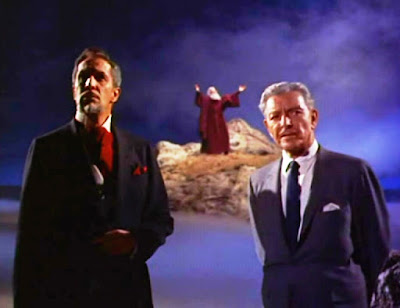
A trama até que é interessante. Depois do desenvolvimento de uma arma denominada Super H-Bomb – ou seja, uma bomba de hidrogênio -, seres celestiais organizam um julgamento no espaço sideral para decidir o destino da humanidade. Será que a humanidade deveria ser salva ou os seres celestiais deixarão os homens destruírem uns aos outros? Para decidirem, os juízes vão ouvir os argumentos do Espírito do Homem (Ronald Colman), que tentará proteger a humanidade, e do Diabo (Vincent Price), que tentará provar que a humanidade sempre foi má e merece ser extinta. Nos 90 minutos seguintes, haverá um desfile de participações especiais e algumas mortes ridículas.

The plot is actually interesting. After the development of a weapon named Super H-Bomb – that is, a hydrogen bomb –, celestial beings call for a tribunal in outer space to decide the fate of mankind. Should mankind be saved from itself or will the celestial beings let men destroy other men? In order to decide, the judges will hear arguments from the Spirit of Man (Ronald Colman), who will try to protect mankind, and from the Devil (Vincent Price), who will try to prove that mankind has always been evil and deserves to be erased from Earth. In the following 90 minutes, you’ll be served a parade of special guests and also some ridiculous onscreen deaths.


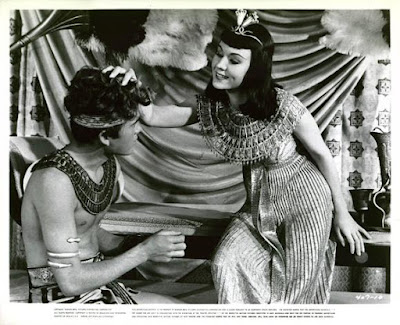
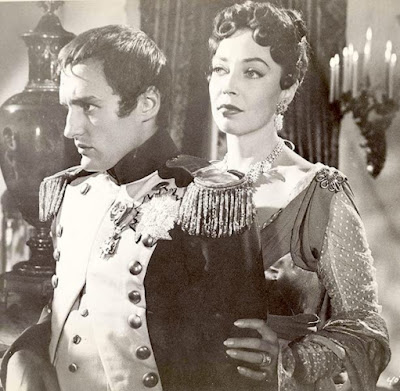
O filme não é muito bondoso para com as mulheres notáveis da história. Ele retrata Helena de Troia como uma femme fatale fútil, Cleópatra como ladra (e também fútil) e Maria Antonieta como uma tirana sem coração. Joana D’Arc (interpretada por Hedy Lamarr) é uma heroína, mas o Diabo usa o caso dela para provar que as pessoas são más porque traem outras pessoas, como Joan foi traída por compatriotas francesas. Mulheres são comumente apagadas da história, e é uma pena que, quando elas são mencionadas, são retratadas como personagens pouco complexas.

The movie is not very kind to the notorious women of history. It portrays Helen of Troy as a futile femme fatale, Cleopatra as a pickpocket (also futile) and Marie Antoinette as an inconsiderate tyrant. Joan of Arc (played by Hedy Lamarr) is a heroine, but the Devil uses her case to prove that people are evil because they betray other people, as Joan was betrayed by her fellow Frenchmen. Women are often erased from history, and it’s a shame that, when they are acknowledged, they are portrayed as less-than-complex characters.

A maioria dos momentos de bondade mostrados pelo Espírito do Homem tem a ver com religião. Isso inclui a revelação dos dez mandamentos para Moisés, os primeiros católicos rezando nas catacumbas em Roma, os monges mantendo a palavra de Deus viva na Idade Média. Todo esse discurso católico é estranho, e ainda mais estranho considerando que o filme diz que o julgamento é no espaço sideral, não no Céu. Nestes momentos, o filme se torna pregador, soando mais como uma lição de moral que uma obra de entretenimento.

Most of he moments of goodness shown by the Spirit of Man are connected with religion. This includes the reveal of the ten commandments to Moses, the first Catholics praying in the catacombs in Rome, the monks that kept God’s word alive during the Middle Ages. All this Catholic speech is odd, and even odder considering that the movie says that the courtroom is in outer space, and not Heaven. In these moments, the film becomes too preachy, sounding more than a moral lesson than a piece of entertainment.

A História da Humanidade” apresenta apenas a história eurocêntrica, sendo inclusive “anglocêntrica” quando conta, por exemplo, que a lei e a ordem foram trazidas de volta ao mundo quando o rei John assinou a Magna Carta no século XIII. Ao seguir esta visão, o Diabo apresenta um bom argumento, por exemplo, quando fala sobre a destruição trazida pelo colonizador para a América, com o massacre dos nativos. O Diabo mais uma vez tem razão quando o Espírito do Homem tenta mostrar que o colonizador inglês é um cavalheiro, e o Diabo o recorda da escravidão.

The Story of Mankind” presents only Eurocentric history, even being “anglocentric” when it tells, for instance, that law and order were brought back to the world when king John signed the Magna Carta in the 13th century. By following this vision, the Devil makes a point, for instance, when he talks about the destruction brought by the colonizers to America, with the slaughter of the natives. The Devil also scores when the Spirit of Men tries to paint English colonizers as true gentlemen, and the Devil reminds him of slavery.


Ronald Colman foi uma escolha perfeita para interpretar o Espírito do Homem e nos defender. Um ator fantástico, Colman interpretou muitos personagens honrados, como o protagonista de “A Queda da Bastilha” (1935). Vincent Price também foi a escolha perfeita para fazer o Diabo: suave e fria, sua persona cinematográfica combina com sua interpretação de um diabo bonitão e ultrarracional.

Ronald Colman was a perfect choice to play the Spirit of Man and defend us all. A superb actor, Colman often played honored characters, like the lead in “A Tale of Two Cities” (1935). Vincent Price was also perfectly cast as the Devil: suave yet cold, his onscreen persona matches this portrayal of a handsome and intellect-driven devil.


A premissa de “A História da Humanidade” é até bem intelectual: o homem é intrinsecamente bom ou mau? Esta é uma questão feita e refeita há séculos, uma questão que dividiu filósofos com o passar dos séculos: Thomas Hobbes acredita que somos intrinsecamente maus, Jean-Jacques Rousseau acha que os humanos são bons. Sociedades complexas modernas – e por “modernas” eu quero dizer sociedade como as que emergiram na Mesopotâmia por volta de 3000 a.C. - são as sociedades em que líderes tirânicos podem emergir – e convencer ou forçar as pessoas a fazer o mal. Psicólogos sociais, após experimentos e a observação dos julgamentos de Nuremberg, concluíram que é a situação que fará uma pessoa se comportar de maneira boa ou má. Ninguém conseguiu dar uma resposta definitiva para a questão – nem mesmo este filme.

The premise of “The Story of Mankind” is actually very intellectual: is man intrinsically good or evil? This is a centuries-old question, one that has divided philosophers through the ages: Thomas Hobbes thinks we’re inherently evil, Jean-Jacques Rousseau thinks humans are good. Modern complex societies – and by “modern” I mean societies like the ones that emerged in Mesopotamia around 3,000 b.C. - are the societies where tyrannical leaders could emerge – and convince or force people to do harm. Social psychologists, after experiments and the observation of the trials in Nuremberg, concluded that it is the situation that determines if a person will do good or behave badly. Nobody was able to give a definitive answer to the question – not even this film.

A História da Humanidade” foi dirigida, produzida e co-escrita por Irwin Allen, usando como base um livro de não-ficção com o mesmo título publicado em 1921. O nome de Irwin Allen é familiar para os fãs do gênero “filme de desastre”: ele foi produtor de “O Destino do Poseidon” (1972), “Inferno na Torre” (1974) e do ridículo “O Enxame” (1978).

The Story of Mankind” was directed, produced and co-written by Irwin Allen, using as source a non-fiction book of the same title published in 1921. Irwin Allen’s name is familiar for fans of the “disaster movie” genre: he was the producer of “The Poseidon Adventure” (1972), “The Towering Inferno” (1974) and the ridiculous “The Swarm” (1978).


Em 1957, Allen era apenas um ex-publicitário que estava fazendo sua estreia num filme live-action depois de dirigir dois documentários. De acordo com notícias da época, “A História da Humanidade” deveria ser um épico de três horas com apenas dois atores, um homem e uma mulher, contando toda a história da humanidade. A ideia mudou e um elenco de peso foi chamado para fazer o filme que conhecemos – isto é, este filme cheio de anacronismos e erros factuais.

In 1957, Allen was just a former publicist who was making his live-action feature film debut after directing two documentaries. According to press releases of the time, “The Story of Mankind” was first supposed to be a three-hour epic with only two actors, a man and a woman, telling the whole history of mankind. Things changed and an all-star cast was assembled to make the movie as we know it – that is, full of anachronisms and factual errors.


Eu sempre tento ver o lado bom dos filmes ruins, e consegui encontrar algumas coisas boas em “A História da Humanidade”. A sequência de Groucho Marx como colonizador inglês é divertida. Temos Francis X. Bushman, uma superestrela da era muda, como Moisés. A fotografia de Nicholas Musuraca – creditado como “Nick” – é muito boa. Surpreendentemente, não há blackface, brownface nem yellowface.

I always try to find redemptive characteristics even in the worst movies, and I managed to find some in “The Story of Mankind”. Groucho Marx’s bit as an English settler is funny. We have Francis X. Bushman, a superstar from the silent era, as Moses. The cinematography by Nicholas Musuraca – credited as “Nick” – is very good. Surprisingly, there is no blackface, brownface or yellowface.


Eu li em algum lugar que a História nada mais é que um bando de pessoas horríveis fazendo coisas horríveis. Eu penso muito sobre essa definição, e na maioria das vezes concordo com ela. Com genocídios, guerras e tantas outras coisas ruins que aconteceram e vêm acontecendo agora mesmo, eu também tendo a concordar com o Diabo de “A História da Humanidade” – a voz mais razoável num filme que às vezes soa como propaganda religiosa, e na maior parte do tempo é apenas uma bela bagunça.

I read somewhere that history is a bunch of horrible people doing horrible deeds. I’ve thought about this definition often, and I tend to agree with it. With genocides, wars and so much more bad things that have happened and are happening right now, I also tend to agree with the Devil from “The Story of Mankind” – the most reasonable voice in a film that sometimes feels like religious propaganda, and most of the time is just a beautiful mess.

This is my contribution to the Fourth So Bad It’s Good blogathon, hosted by Rebecca at Taking Up Room.

Friday, February 25, 2022

Sortilégio do Amor (1958) / Bell, Book and Candle (1958)

ESTA CRÍTICA TEM SPOILERS

THIS REVIEW HAS SPOILERS

Quando somos crianças, aprendemos com os contos de fadas que bruxas são feias, más e amargas. Mas muitos filmes contam uma história diferente. Estes filmes têm lindas feiticeiras, bondosas curandeiras e adoráveis bruxas. Tome como exemplo Veronica Lake em “Casei-me com uma Feiticeira” (1942). Ou Samantha, interpretada por Elizabeth Montgomery na série “A Feiticeira”. E podemos adicionar outra bruxa boa à lista: Kim Novak em “Sortilégio do Amor”.

When we are kids, we learn through fairy tales that witches are ugly, evil and bitter. But many movies tell a different story. These movies have gorgeous sorceresses, kind enchantresses and lovely witches. Think about Veronica Lake in “I Married a Witch” (1942), for instance. Or Samantha, played by Elizabeth Montgomery in the TV show “Bewitched”. And we could add another good witch to the list: Kim Novak in “Bell, Book and Candle”.

É Natal e a lojista Gillian Holroyd (Kim Novak) quer algo diferente da vida. Ela quer conhecer pessoas novas, ou melhor, ela quer que alguém novo preste atenção nela. Gillian está apaixonada por seu vizinho do andar de cima, Shepherd Henderson (James Stewart).

It’s Christmas and shop owner Gillian Holroyd (Kim Novak) wants something different in her life. She wants to meet new people, or better said, she wants someone who’s new to notice her. Gillian is in love with her upstairs neighbor Shepherd Henderson (James Stewart).

Shepherd encontra a tia de Gillian, Queenie (Elsa Lanchester), em seu apartamento e ela quebra o telefone dele, obrigando-o a ir no andar de baixo e pedir o telefone de Gillian emprestado - a tia Queenie quer que sua sobrinha tenha um romance! Lá, Shepherd é convidado pela tia Queenie para ir ao Clube Zodíaco, onde Queenie e Gillian irão passar a véspera de Natal.

Shepherd meets Gillian’s aunt Queenie (Elsa Lanchester) in his apartment and she breaks his phone so he can go downstairs and use Gillian’s – aunt Queenie wants her niece to have romance! While there Shepherd is invited by aunt Queenie to go to the Zodiac Club, where Queenie and Gilian will spend their Christmas Eve.

Shepherd vai ao Clube Zodíaco e leva com ela sua noiva Merle (Janice Rule), que por acaso é uma velha conhecida de Gillian. O irmão de Gillian, Nicky (Jack Lemmon), toca bongô no clube. Depois de uma noite desagradável - para Merle - no clube, todos vão para casa.

Shepherd goes to the Zodiac Club and brings along his fiancée Merle (Janice Rule), who happens to be Gillian’s old acquaintance. Who is playing the bongo at the club is Gillian’s brother Nicky (Jack Lemmon). After an unpleasant – for Merle – evening at the club, they all go home.

Em casa, Gillian recebe Shepherd, que diz que vai se casar no dia de Natal. Gillian o enfeitiça e o faz se apaixonar por ela. Ele desmancha o noivado e começa a sair com Gillian, indo a parques e restaurantes. A alegria deles é baqueada pela chegada do autor Sidney Redlitch (Ernie Kovacs), que quer escrever um livro sobre bruxas em Nova York.

At home, Gillian receives Sheperd, who says he’s getting married on Christmas Day. Gillian puts on a spell on him and makes him fall in love with her. He breaks up with his fiancée and starts going out with Gillian, to the park and to dinners. Their happiness is shaken   with the arrival of author Sidney Redlitch (Ernie Kovacs), who wants to write a book about witches in New York.

Nicky se envolve com o livro de Redlitch quando conta ao autor que ele é um mago e se oferece para ser consultor no projeto. A família Madrigal Holroyd se encontra numa encruzilhada, pois Gillian se preocupa com a possibilidade de seu segredo ser descoberto e isso atrapalhar seus planos de casamento - um casamento que ela deseja ardentemente, ignorando que bruxas que se apaixonam podem perder seus poderes.

Nicky gets entangled in Redlitch’s book when he tells the author he’s a warlock and wants to serve as consultant for the writing. The Madrigal Holroyd family find themselves at a crossroads, as Gillian gets nervous that her secret will be discovered and this will spoil her upcoming wedding – a wedding she wants so much, ignoring that witches who fall in love may lose their powers.

Mesmo que tudo no filme seja sobre ela, Kim Novak não é o primeiro nome que aparece nos créditos - James Stewart é que recebe esta honra. Novak estava trabalhando no cinema desde 1954 e já havia feito bons filmes como “Férias de Amor” (1955) e “Um Corpo que Cai”, que havia acabado de ser lançado. Stewart vinha trabalhando no cinema desde meados da década de 1930 - na verdade, ele fez sua estreia em filmes quando Novak tinha apenas dois anos de idade - e era ganhador de um Oscar, por isso era natural que seu nome precedesse o dela. Também ganhador do Oscar, Jack Lemmon é o terceiro listado nos créditos.

Even though everything in the film revolves around her, Kim Novak wasn’t first billed – James Stewart received top billing. Novak had been working in movies since 1954 and had already made good films like “Picnic” (1955), and “Vertigo” had just been released. Stewart had been working since the mid-1930s – in fact, he made his film debut when Novak was only two years old – and was an Oscar winner, so his first billing is only natural. Also an Oscar winner, Jack Lemmon receives third billing.

Como você deve saber, Kim Novak e James Stewart trabalharam juntos em “Um Corpo que Cai”, também de 1958. Anos depois, Novak disse que Stewart foi seu colega de cena favorito e que ela gostaria de ter feito mais filmes com ele. De 1959 em diante, Stewart passou a recusar papéis de galã, pois atrizes muito mais novas eram escaladas para viver seu par romântico. Ele decidiu que estes tipos de papéis não mais lhe cabiam, e focou em papéis paternais e mais sérios.

As you may know, Kim Novak and James Stewart worked together in “Vertigo”, also from 1958. Later in life, Novak said that Stewart was her favorite leading man and that she wished they worked together in more films. From 1959 onwards, Stewart started refusing romantic leading roles, as he was often paired with much younger actresses. He decided these roles suited him no more, and focused on fatherly roles or more serious ones.

Também no elenco temos Hermione Gingold como a grande bruxa Bianca de Passe. É interessante vê-la neste curto papel, tão diferente do papel que ela interpretou em “Gigi” no mesmo ano. Tanto Gingold quanto Elsa Lanchester, duas veteranas das telas, têm pouco tempo em cena em “Sortilégio do Amor”, mas se destacam.

Also in the cast we have Hermione Gingold as the great witch Bianca de Passe. It’s interesting to see her in this small part, so different from the role she played in “Gigi” that same year. Both Gingold and Elsa Lanchester, two screen veterans, have little screen time in “Bell, Book and Candle”, but they make the best of it.

O figurino foi feito pelo estilista Jean Louis. Kim Novak veste lindas roupas, desde as mais confortáveis usadas na loja até aquelas para ocasiões mais formais. Jean Louis não é muito lembrado como figurinista - não tanto quanto Edith Head ou Orry-Kelly, para citar alguns - mas trabalhou em quase 200 filmes e programas de TV, com sua mais famosa criação sendo o vestido de strip-tease usado por Rita Hayworth em “Gilda” (1946).

The gowns were made by Jean Louis. Kim Novak dresses beautiful clothes, from the comfy ones used at her store to the ones for more formal occasions. Jean Louis is not often remembered as a costume designer for film – not as much as others, like Edith Head and Orry-Kelly, to name a few - but he worked in almost 200 movies and TV shows, with his most famous piece being Rita Hayworth’s strip-tease dress from “Gilda” (1946).

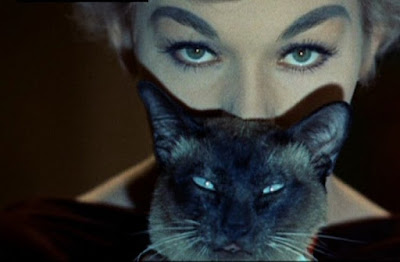
Gatos são comumente associados às bruxas. Gillian tem um gato siamês fofo, e os olhos de Kim Novak combinam perfeitamente com os do animal. Algo incomum em “Sortilégio do Amor” é que Gillian usa seu gato para os feitiços. De acordo com o site Cinema Cats (sim, isso existe), há histórias conflituosas sobre quantos gatos foram usados nas filmagens - o IMDb até menciona que um deles, Houdini, sofreu maus-tratos nas mãos da equipe de filmagem. De qualquer modo, o que nós sabemos da imprensa da época é que a busca pelo gato perfeito foi levada a sério, e os produtores queriam um gato com “uma personalidade de Ava Gardner”.

Cats are often associated with witches. Gillian has a cute Siamese cat, and Kim Novak’s eyes perfectly match the animal’s. An unusual thing in “Bell, Book and Candle” is that Gillian uses her cat for the spells. According to the website Cinema Cats (yes, this is a real thing), there are conflicting stories about how many cats were used in the shooting - IMDb even mentions that one of them, Houdini, was mistreated by the film crew. Anyway, what we know from the press of the time is that the search for a perfect cat for the movie was taken seriously, and the producers wanted a cat with “an Ava Gardner personality”.

O título do filme em inglês (Bell, Book and Candle) vem de uma velha frase repetida por Redlitch. Desde a Idade Média, um sino (Bell), um livro (Book) e uma vela (Candle) são os objetos usados no rito religioso da excomunhão - sendo o livro em questão a Bíblia Sagrada. Embora seja mais um alívio cômico, Redlitch prova que também é fonte de cultura!

The title of the movie comes from an old saying that is repeated by Redlitch. Since the Middle Ages, bell, book and candle are the objects used in the religious rite of excommunication - the book in question being the Holy Bible. Although more of a comic relief character, Redlitch proves he’s also source of culture!

A única coisa que me incomodou em “Sortilégio do Amor” foi que, para ser aceita por Shepherd, Gillian teve de perder seus poderes. O mesmo não acontece na já mencionada série “A Feiticeira”, na qual o marido “normal” tem de aprender a viver com a magia da esposa. O IMDb diz que “Sortilégio do Amor” serviu de inspiração para “A Feiticeira”, e fico feliz que essa mudança tenha sido feita.

The only thing that bothered me in “Bell, Book and Candle” was the fact that, to be accepted by Shepherd, Gillian had to lose her powers. The same doesn’t happen in the aforementioned “Bewitched” TV show, where the “normal” husband has to learn how to live with his wife’s magic. IMDb says that “Bell, Book and Candle” was actually the inspiration for “Bewitched”, and I’m glad this small change was made.

“Sortilégio do Amor” originou-se como peça da Broadway em 1950, estrelada por Rex Harrison e Lilli Palmer. David Selznick comprou os direitos da peça com a ideia de escalar sua esposa Jennifer Jones para o papel principal, mas o projeto não se materializou. Os estúdios Columbia então compraram os direitos e fizeram este charmoso filme - melhorado pela química entre James Stewart e Kim Novak.

 “Bell, Book and Candle” originated as a Broadway play in 1950, starring Rex Harrison and Lilli Palmer. David Selznick bought the rights to the play with the idea of casting his wife Jennifer Jones as the lead, but the project didn’t materialize. Columbia Pictures then bought the rights and made this charming little movie - one enhanced by the fine chemistry between James Stewart and Kim Novak.

This is my contribution to the Kim Novak blogathon, hosted by The Classic Movie Muse.

Saturday, January 22, 2022

O Príncipe Estudante (1927) / The Student Prince in Old Heidelberg (1927)


Reza a lenda que, no funeral de Ernst Lubitsch, os diretores William Wyler e Billy Wilder estavam conversando. Wyler disse: “Nunca mais teremos Lubitsch”, ao que Wilder respondeu: “Pior ainda. Nunca mais teremos filmes de Lubitsch”. Lubitsch era muito estimado por seus colegas de profissão, graças ao que hoje é chamado de “o toque de Lubitsch”. Muitos críticos e historiadores tentaram definir este toque, e a maioria concorda que ele envolve sofisticação, sabedoria e sutileza. Podemos encontrar o toque de Lubitsch já nos filmes mudos do diretor? Vamos dar uma olhada em um destes filmes, “O Príncipe Estudante” (1927).

There is a story that goes like this: at Ernst Lubitch’s funeral, fellow film directors William Wyler and Billy Wilder were chatting. Wyler said “No more Lubitsch”, to which Wilder answered: “Worse than that. No more Lubitsch pictures”. Lubitsch was highly estimated among his peers, thanks to what is now called “the Lubitsch touch”. Many critics and historians tried to define this touch, and most of them agree that it involves sophistication, wit and subtlety. Can we find the Lubitsch touch already in the director’s silent movies? Let’s take a look at one of those movies, “The Student Prince in Old Heidelberg” (1927).

Karl Heinrich (Philippe De Lacy) é sobrinho do rei de Karlsburg, Karl VII (Gustav von Seyffertitz) e herdeiro do trono. Ao ver uma foto de Karl Heinrich na vitrine de uma loja, um garoto diz que deve ser ótimo ser um príncipe. Mas a vida não é tão boa para Karl Heinrich, que apenas queria ser uma criança normal. Em vez de brincar lá fora, ele tem lições de bom comportamento com o Dr Jüttner (Jean Hersholt), um tutor gentil.

Karl Heinrich (Philippe De Lacy) is the nephew of the king of Karlsburg, Karl VII (Gustav von Seyffertitz) and the heir to the throne. Upon seeing a picture of Karl Heinrich in a store window, a boy says that it must be great to be a prince. But it isn’t so great for Karl Heinrich, who only wishes to be a normal kid. Instead of playing outside, he’s taught how to behave by Dr Jüttner (Jean Hersholt), a kind tutor.

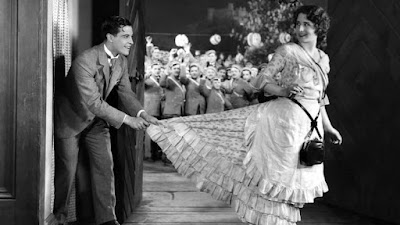
Os anos passam, e o já crescido Karl Heinrich (Ramon Novarro) sabe que não dá para se divertir com seu tio, mas é sempre bom passar um tempo com o Dr Jüttner. Mas o jovem rapaz terminou seus estudos, o que significa que o Dr Jüttner terá de ir embora em breve. Entretanto, ambos são surpreendidos quando o rei Karl VII decide mandar Karl Heinrich para Heidelberg e manda Jüttner como acompanhante.

The years pass, and the grown-up Karl Heinrich (Ramon Novarro) knows that there is no fun with his uncle, but you can always have a good time with Dr Jüttner. But the young man has finished high school, which means that Dr Jüttner will have to leave soon. However, both are surprised when King Karl VII decides to send Karl Heinrich to Heidelberg and tells Jüttner to accompany him.

Em Heidelberg, Karl Heinrich se apaixona instantaneamente por Kathi (Norma Shearer), que trabalha em uma pousada local – e ela se apaixona por ele também! Todos sabem que Kathi é a garota mais bonita de Heidelberg, e que consegue beber uma garrafa cheia de cerveja de uma só vez, o que impressiona o príncipe. O problema é que Kathi é meio noiva, já que ela não sabe se ama seu noivo. E Karl Heinrich também já está comprometido com outra pessoa.

In Heidelberg, Karl Heinrich instantly falls in love with Kathi (Norma Shearer), who works at a local inn – and she falls for him too! Everybody knows that Kathi is the prettiest girl in Heidelberg, and someone who can drink a full mug of beer at once, which amazes the prince. The problem is that Kathi is kind of engaged, because she doesn’t know if she loves the guy. And Karl Heinrich was also promised to marry someone else.

O príncipe faz amizade com um grande grupo de estudantes e passa a festejar e beber com eles. Ele se aproxima de Kathi e os dois saem juntos e fazem planos. A diversão deles é interrompida pela notícia de que o rei Karl VII está doente, o que significa que Karl Heinrich precisa voltar imediatamente para Karlsburg.

The prince befriends a large group of students and starts drinking and partying hard with them. He becomes close to Kathi and the two go out and make plans. Their fun is interrupted by the news that king Karl VII is ill, which means that Karl Heinrich must return immediately to Karlsburg.

Há relativamente poucas cartelas de texto no filme, quando comparado a outros filmes do período – em especial os de Griffth! Alguns momentos poderiam ser melhorados com a adição de uma ou duas cartelas de texto – como quando Kathi está declamando um poema para o príncipe e se esquece do final. As pessoas creditadas como designs de títulos são Marian Ainslee e Ruth Cummings. No IMDb, não há muito sobre Ainslee, apenas que ela trabalhou majoritariamente como design de títulos, e na era sonora sua maior contribução foi ter dado a ideia para o filme “Dance Comigo” (1938), de Astaire e Rogers. Ruth Cummings era casada com o diretor Irving Cummings e mãe do roteirista Irving Cummings Jr.

There are relatively few title cards in this movie, when compared with others from the period – especially Griffith’s! Some moments could be better with the addition of a title card or two – like when Kathi is saying a poem to the prince and forgets the ending. The people credited as title designers are Marian Ainslee and Ruth Cummings. On IMDb, there is not much on Ainslee, only that she worked mostly making title cards for movies, and in the talkie era her main credit was “based on an original idea by” in the Astaire-Rogers vehicle “Carefree” (1938). Ruth Cummings was married to director Irving Cummings and mother of screenwriter Irving Cummings Jr.

Cedric Gibbons é uma das duas pessoas responsáveis pela decoração dos sets. Os sets são simples mas decorados com bom gosto. Há, entretanto, um belo campo artificial usado em uma cena de amor. Nós – e a comitiva do príncipe – esperávamos que ele ficasse em um resort ou hotel chique em Heidelberg, mas é numa pousada comum que ele encontrou amor e felicidade.

Cedric Gibbons is one of two people responsible for the sets. The sets are simple yet decorated in a pleasant manner. There is, however, a beautiful artificial field used in the famous love scene. We – and the prince’s entourage – expected him to stay in a fancy resort or hotel in Heidelberg, but it is in a common inn that he found love and happiness. 

Tanto Ramon Novarro quanto Norma Shearer já eram grandes estrelas em 1927. Novarro estava mais bonito em two-strip Technicolor em “Ben-Hur” (1925), mas está bem aqui também. Shearer teria seus melhores trabalhos – e um Oscar – nos anos posteriores a “O Príncipe Estudante”. Curiosidade interessante:: Lubitsch achava que tanto Novarro quanto Shearer foram péssimas escolhas para os protagonistas do filme!

Both Ramon Novarro and Norma Shearer were already big stars in 1927. Novarro had looked better in two-strip Technicolor in “Ben-Hur” (1925), but looks good here too. Shearer would find her best work – and an Oscar – in the years after “The Student Prince in Old Heidelberg”, during the pre-Code era. Interesting trivia: Lubitsch thought that both Novarro and Shearer were miscast as the leads!

Gustav von Seyffertitz já é um velho conhecido dos fãs de cinema mudo. Entre seus trabalhos mais lembrados destacamos sua atuação como o vilão que inferniza a vida de Mary Pickford em “Aves Sem Ninho” (1926). Jean Hersholt era um ator dinamarquês que começou a atuar nos cinemas em 1906 e interpretou principalmente vilões em seus primeiros anos em Hollywood – bem diferente de seu papel em “O Príncipe Estudante”!

Gustav von Seyffertitz is already an old acquaintance of silent film fans. Among his best remembered works we highlight his turn as the bad guy making Mary Pickford’s life miserable in “Sparrows” (1926). Jean Hersholt was a Danish actor who started acting in movies in 1906 and played mainly villains in his first few years in Hollywood – so far away from his character in “The Student Prince in Old Heidelberg”!

O Príncipe Estudante” teve um remake em 1954, com Edmund Purdom e Ann Blyth. Este foi um musical, pois a história havia se originado em uma opereta em 1902. O filme, entretanto, não manteve todas as canções da opereta e mudou a maioria das letras das canções que manteve. A voz de Edmund Purdom, nos momentos de cantoria, foi dublada por Mario Lanza.

The Student Prince in Old Heidelberg” was remade in 1954 with Edmund Purdom and Ann Blyth. This was a musical, as the story originated in an operetta in 1902. The film, however, didn’t keep all the songs from the operetta and changed most of the lyrics. Edmund Purdom’s singing was dubbed by Mario Lanza.

O Príncipe Estudante” é um filme mais complexo e melancólico do que aparenta ser de início. Como dito no site do TCM, é mais próximo dos filmes que Lubitsch fez na Alemanha do que dos filmes que ele faria em Hollywood. Baseado apenas neste filme, diríamos que o toque de Lubitsch é como o de Chaplin: um sorriso e, talvez, uma lágrima. Mas, talvez, possamos dizer outra coisa: que Lubitsch é muito mais que seu famoso toque.

The Student Prince in Old Heidelberg” is a more complex and melancholic movie than it seems at first. As the TCM website mentions, it’s closer to the movies Lubitsch did in Germany than the ones he’d make in Hollywood. Based solely on this film, we would say that Lubitsch’s touch is like Chaplin’s: a laugh and perhaps a tear. But, maybe, we could say something else: Lubitsch was much more than his touch.

This is my contribution to the Odd or Even blogathon, hosted by Gill and Rebecca at Realweegiemidget Reviews and Taking Up Room.
Related Posts Plugin for WordPress, Blogger...