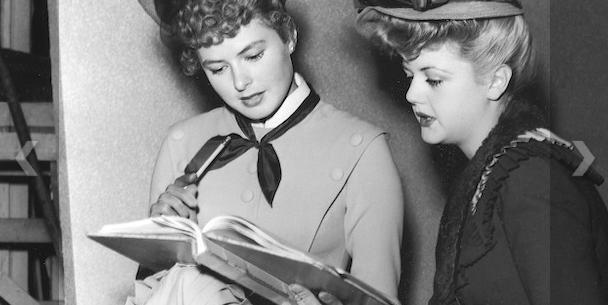
Alguns filmes simplesmente nos arrebatam quando
estamos desprevenidos e nos deixam sem fôlego – não importa quão antigos ou
curtos eles são. “Trágico Álibi” (1945) fez isto comigo. Ao me colocar no lugar
da protagonista, eu me senti aterrorizada, presa, nervosa e sem esperança. E eu
acredito que todas as mulheres que veem este filme sentem a mesma coisa.
Some
movies just grab us as we are off guard and leave us breathless – no matter how
old or short they are. “My Name is Julia Ross” (1945) did this to me. As I put
myself in the lead's place, I felt terrified, trapped, nervous and hopeless.
And I believe all women who watch this film feel the same.

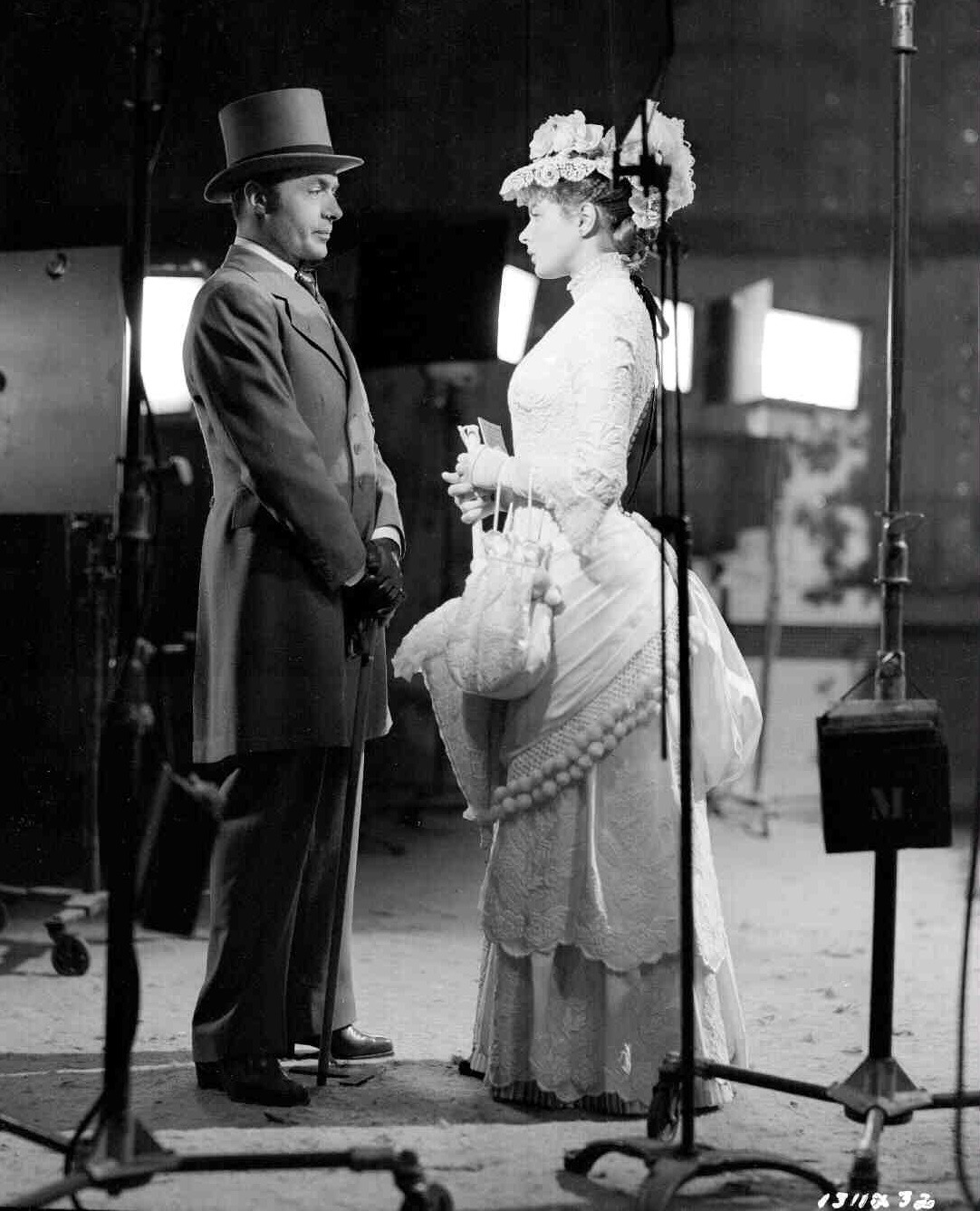
Julia Ross (Nina Foch) é nova em Londres. Ela
foi para a cidade para fazer uma cirurgia de apêndice e agora, sem família ou
conhecidos, ela procura por um trabalho. Uma agência de empregos a manda para
ser secretária da Senhora Hughes (Dame May Whitty) e de seu filho Ralph (George
Macready). Vemos que um grande e terrível plano está sendo colocado em prática,
pois Ralph e a mãe falam com os empregados da agência sobre como Julia se
parece com outra pessoa.
Julia
Ross (Nina Foch) is new to London. She arrived in the city to have her appendix
removed and now, with no family or acquaintances, she is looking for a job. An
employment agency sends her to be a secretary to Mrs Hughes (Dame May Whitty)
and her son Ralph (George Macready). We see that some big and evil plan is in
the works, as Ralph and his mother talk to the employees of the employment
agency, commenting about Julia’s remarkable resemblance with someone else.

Quando Julia chega ao local de trabalho, onde
ela também viverá dali em diante, os quatro cúmplices roubam seus pertences e
os destroem. Julia está dormindo graças a um sonífero. Enquanto ela dorme, a
família muda de uma rua em Londres para uma casa em Cornwall, próxima do mar.
Quando Julia acorda, ela não é mais Julia: para todos ao seu redor, ela é
Marion Hughes, esposa de Ralph, e por causa de um colapso nervoso ela está falando
bobagens – como quando diz que o seu nome é Julia Ross.
As
Julia arrives at her job, where she will also live from then on, the four
accomplices steal her belongings and destroy them. Julia is now sleeping thanks
to some narcotic. While she is sleeping, the family movies from a square in
London to a hose in Cornwall, by the sea. When Julia wakes up, she is not Julia
anymore: for everybody around her, she is Marion Hughes, Ralph’s wife, and
thanks to a mental breakdown she is saying nonsense - like the silly idea that
her name is Julia Ross.
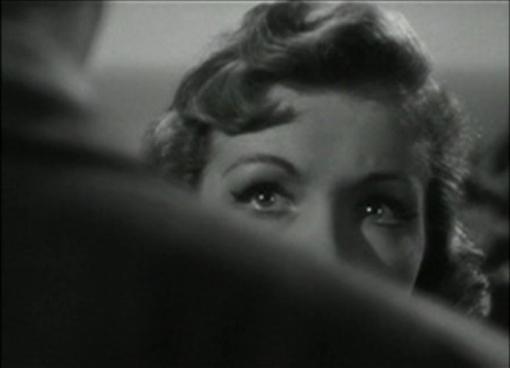
Primeiro vemos as costas de Julia e ela
atravessa a rua embaixo de chuva e entra em um prédio. Seu rosto é visto apenas
depois que ela lê um convite de casamento que demorou muito para ser entregue:
o casamento aconteceu no dia anterior ao dia em que ela recebeu o convite.
Pouco depois, ela se reencontra com o noivo do casamento: o amigo Dennis
(Roland Varno), cujo casamento não aconteceu de fato – e por causa de Julia!
Dennis é a única pessoa que ela conhece em Londres, e aparentemente o único que
pode salvá-la.
We
first see Julia’s back as she crosses the street in the rain and enters a
building. Her face is only seen after she reads a wedding invitation that took
too long to be delivered: the wedding happened the day before she got the
invitation. Soon, she meets again with the groom: her friend Dennis (Roland
Varno), whose wedding didn’t really happen – and because of Julia! Dennis is
the only person she knows in London, and apparently the only one who could save
her.

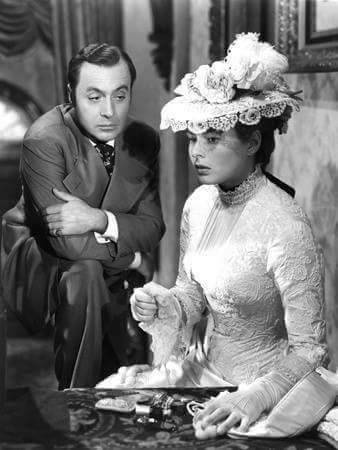
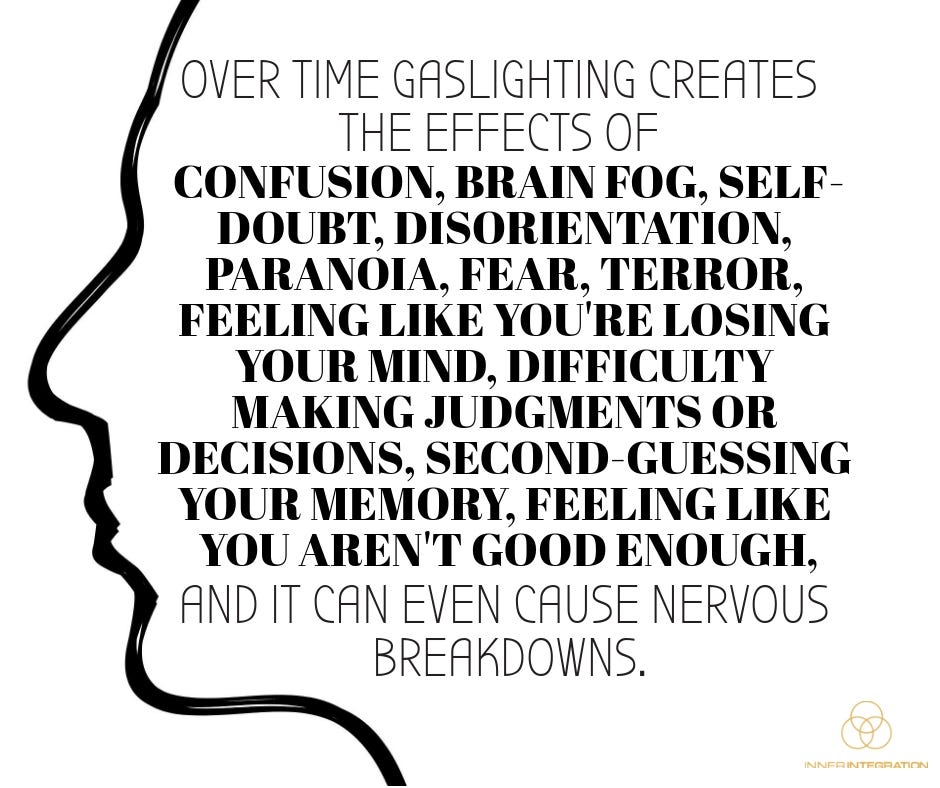
A situação é aterrorizante: perder sua
identidade, aquilo que te torna único, e ter todos duvidando de sua sanidade
quando está claro que você sabe o que está falando. Eu posso apostar que, sendo
mulher, o medo que eu senti vendo este filme foi maior do que qualquer coisa
que um homem pudesse sentir. Mulheres são as mais constantes vítimas de gaslighting – uma técnica que recebeu o nome de um filme de 1944 – e um homem
dificilmente passaria por isso. Você pode imaginar a palavra de um homem não
sendo levada a séria porque ele está histérico? Eu também não.
The
situation is terrifying: losing your identity, what makes you unique, and have
everybody doubt your sanity when it’s clear you know what you are talking
about. I can bet that, as a woman, the fear I felt while watching this film was
bigger than whatever a man could have felt. Women are the main victims of
gaslighting – a technique named after a film from 1944 – and a man would hardly
go through such a thing. Can you imagine a man’s word being discarded because
he is considered hysterical? Neither can I.

E nem tudo que Ralph poderia ter feito com Julia
é mostrado. O Código Hays de Produção estava em seu auge nos anos 40, e nenhuma
cena de sexo podia ser filmada. Isso significa que os momentos de maior nojo
para Julia acontecem quando Ralph a beija, mas ele poderia tê-la estuprado – e
na vida real ele a teria estuprado para mostrar sua dominância. E, como eles
eram “marido e mulher”, ninguém se importaria, e a acusação de estupro seria
considerada mais um delírio de Julia. Puxa, só agora estamos reconhecendo a
existência de estupro marital e punindo o crime, por isso nos anos 40 isso
certamente passaria impune.
And not
everything Ralph could have done to Julia was shown. The Production Code was in
full swing in the 1940s, and no sex scenes could be added to movies. This means
that Julia’s most disgusting moments happen when Ralph kisses her, but he could
have raped her – and in the real world he would have raped her to show his
dominance. And, since they were “husband and wife”, nobody would care, and they
would consider Julia’s rape accusation as another delirium. I mean, we’re only
now recognizing the existence of marital rape and punishing it, so in the 1940s
it would certainly pass unpunished.

Você nunca imaginou que a doce May Whitty
pudesse ser tão assustadora, mas ela é em “Trágico Álibi”. George Macready, por
outro lado, tinha experiência em interpretar vilões, pilantras e outros
personagens desagradáveis. Em “Gilda”, de 1946, Macready interpreta o dono de
cassino Ballin Mundson, o empregador sinistro de Glenn Ford – ah, e também o
marido de Gilda (Rita Hayworth).
You’ve
never imagined that sweet May Whitty could be so frightening, but she is in “My
Name is Julia Ross”. George Macready, on the other hand, was experienced in
playing villains, crooks and other unlikeable characters. In 1946's “Gilda”,
for instance, Macready plays casino owner Ballin Mundson, Glenn Ford's sinister
employer – oh, and also Gilda's (Rita Hayworth) husband.

Nina Foch, em geral lembrada pelo papel de
“patrocinadora” de Gene Kelly em “Sinfonia de Paris” (1951), está excelente
como Julia Ross. Ela torna a personagem simpática desde o começo, faz dela
fácil de se identificar às vezes, e nós torcemos por ela. Além disso, ela não é
uma donzela indefesa, e o tempo todo está usando a inteligência para tentar
enganar a família Hughes.
Nina
Foch, often remembered because of her role as Gene Kelly's “sponsor” in “An
American in Paris” (1951), is absolutely great as Julia Ross. She makes the
character likeable from the start, relatable at times, and we root for her.
Furthermore, she is no damsel in distress, and the whole time she is using her
brains to try to outsmart the Hughes.
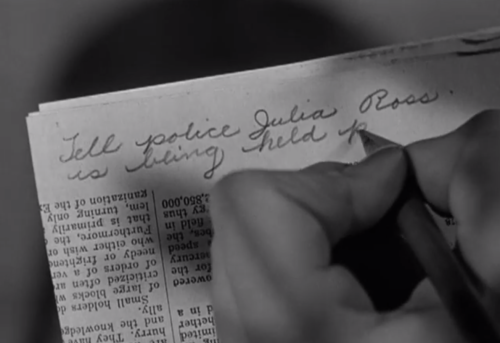
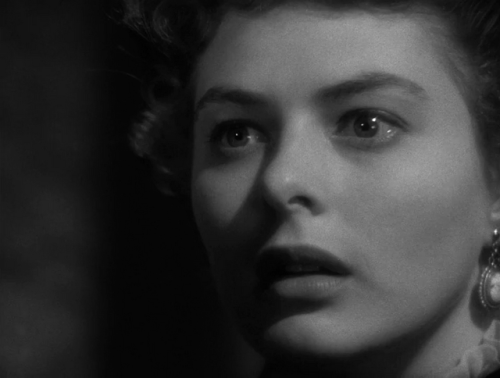
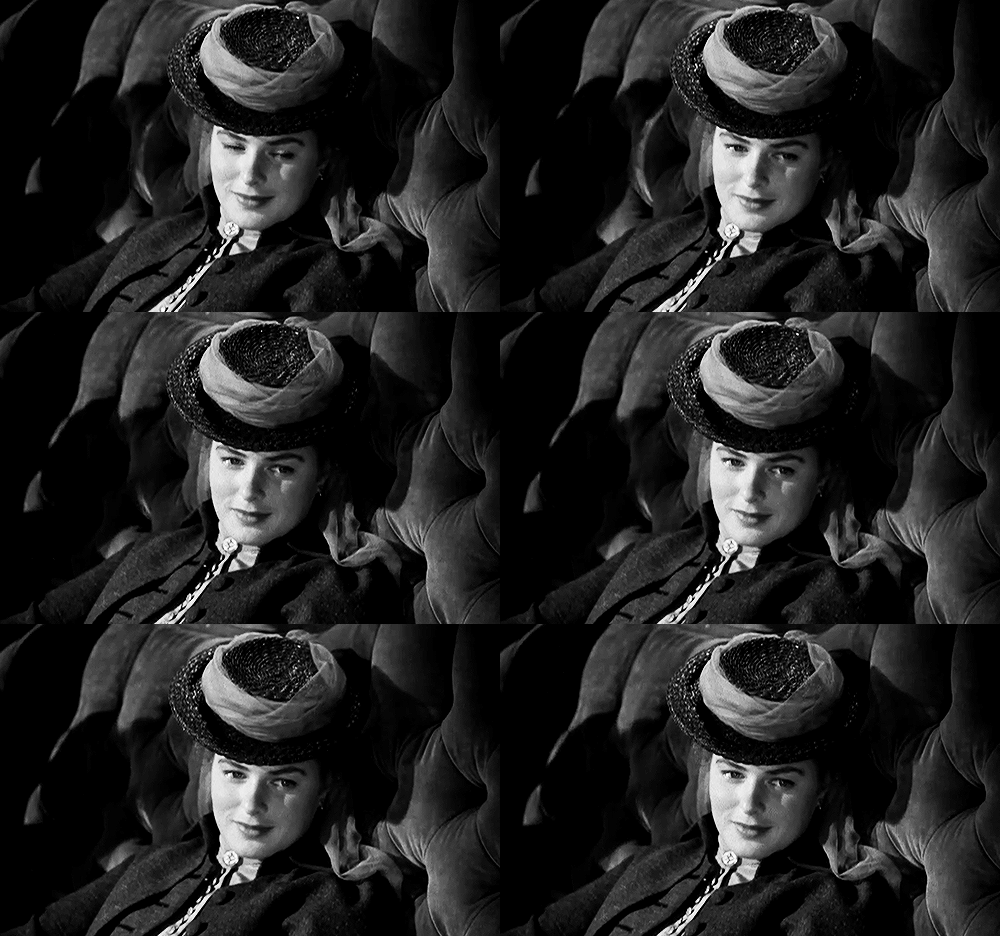
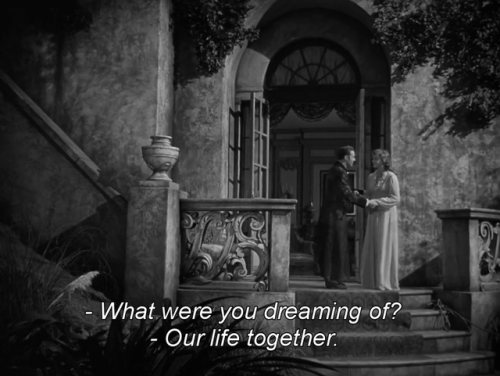
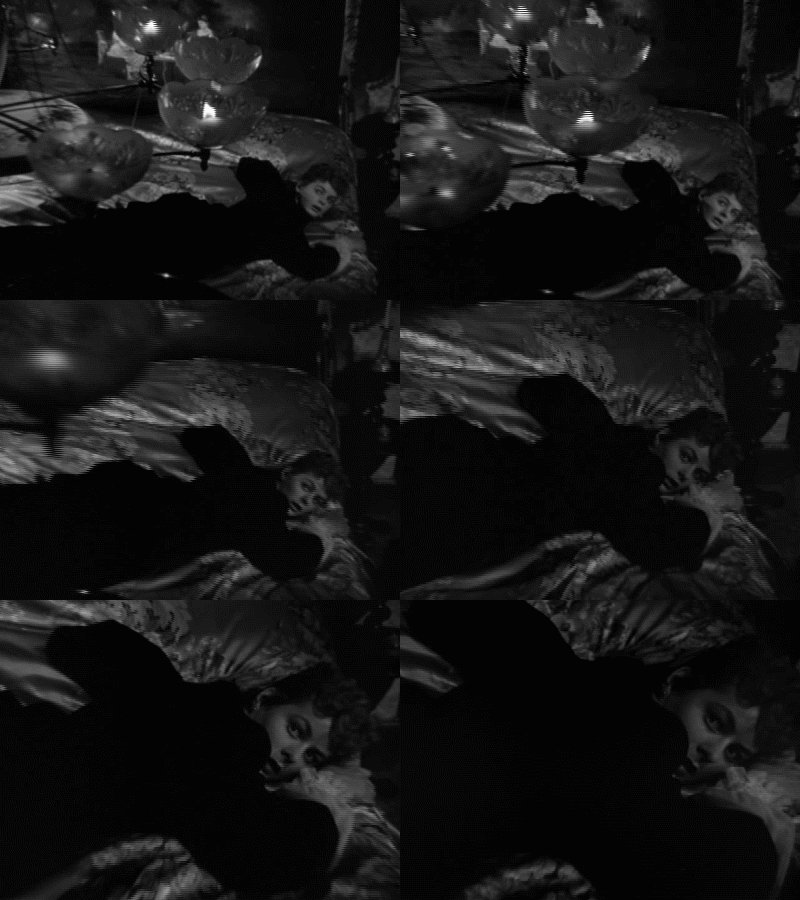
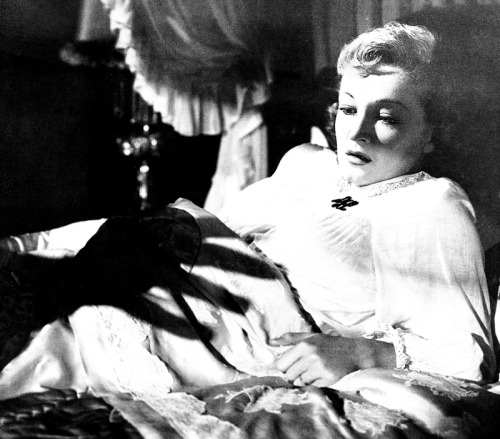
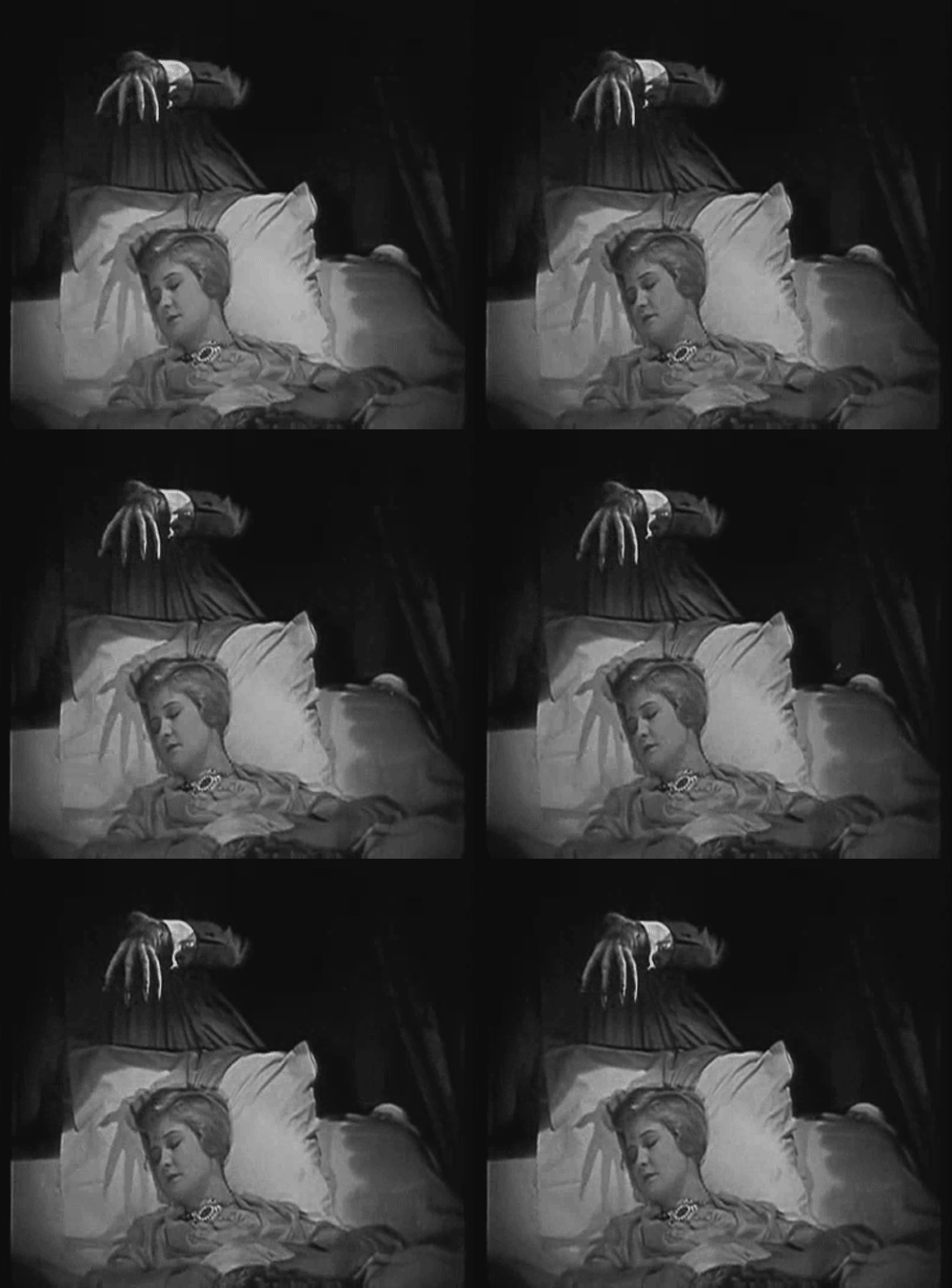
Assim como em muitos filmes noir, em “Trágico
Álibi” há muitas sombras e contrastes. Um momento em particular com a sombra de
uma mão nos lembra do clássico silencioso “O Gato e o Canário” (1927). Há
também muitas cenas fotografadas como se estivessem emolduradas por janelas ou
portas, e em uma cena em particular Julia é vista atrás de grades instaladas na
janela de seu quarto – uma maneira pouco sutil de dizer que ela era uma
prisioneira. Estas imagens foram concebidas pelo diretor de fotografia Burnett
Guffy – que mais tarde trabalharia em “A um Passo da Eternidade” (1953) – e
pelo diretor Joseph H. Lewis – cujo mais famoso filme é “Mortalmente Perigosa”
(1950).
As in
many noir films, in “My Name is Julia Ross” there are lots of shadows and
contrasts. One particular moment with the shadow of a hand reminds us of the
silent classic “The Cat and the Canary” (1927). There are also many scenes
photographed as if they were framed by windows or doors, and in one scene in
particular Julia is seen behind the bars that were installed in her bedroom
window – a not-so subtle way of saying that she was captive. These shots were
the work of cinematographer Burnett Guffey – who would later work in “From Here
to Eternity” (1953) – and director Joseph H. Lewis – whose most famous film is
“Gun Crazy” (1950).
 |
| My Name is Julia Ross, 1945 |
 |
| The Cat and the Canary, 1927 |
“Trágico Álibi” tem apenas 65 minutos de
duração, mas estes foram alguns dos minutos mais tensos da minha vida. Tendo
começado como um filme B de orçamento avantajado na Columbia, o filme foi feito
em 18 dias – embora o plano inicial tenha sido filmar tudo em 12 dias – e o
resultado não poderia ter sido melhor.
“My
Name is Julia Ross” is only 65 minutes long, but these were some of the tensest
minutes I’ve had in my life. Having started as a B-movie with a bigger budget
at Columbia, the film was shot in only 18 days – but the initial plan was to
shoot in only 12 – and the result couldn't have been better.
This is
my contribution to the Mystery Mania blogathon, hosted by Robin at Pop Culture
Reverie.