} Crítica Retrô

Tradutor / Translator / Traductor / Übersetzer / Traduttore / Traducteur / 翻訳者 / переводчик

Saturday, October 22, 2022

Variações sobre um mesmo tema: Casino Royale (1967 e 2006)

 
Variations on the same theme: Casino Royale (1967 and 2006)


Quem é seu James Bond favorito? Sean Connery? Daniel Craig? Roger Moore? Talvez aquele que interpretou Bond só uma vez, George Lazenby? Ou que tal... David Niven? Sim, você leu certo: David Niven foi James Bond, enquanto Sean Connery já interpretava o espião, mas Niven fez o papel numa paródia: o filme de 1967 “Casino Royale”, filme com grande elenco e dirigido por John Huston – entre outros.


Who is your favorite Bond? Sean Connery? Daniel Craig? Roger Moore? Maybe the one-time Bond George Lazenby? Or how about… David Niven? Yes, you’ve read it right: David Niven was Bond, while Connery was already playing the role, but Niven portrayed the character in a parody: the 1967 film “Casino Royale”, with an all-star cast, directed – among others – by John Huston.

James Bond (Niven) é um agente aposentado. Ele gagueja e é conhecido por ser abstêmio e casto – a única mulher que ele realmente amou foi Mata Hari, ao contrário deste novo 007, chamado de “incompetente” pelo velho Bond. Mas o mundo a espionagem precisa mais uma vez dele, porque espiões de diversos países foram mortos. Os chefes de quatro importantes agências de espionagem ao redor do mundo vão encontrar Bond em sua casa de campo e, após uma tragédia, Bond está de volta ao jogo.


James Bond (Niven) is a retired agent. He stutters and is known for being a teetotaler and for his chastity - the only woman he has ever loved was Mata Hari, unlike this new 007, who the old Bond calls “incompetent”. But the espionage world needs him again, as spies from several countries have been killed. The heads of four important espionage agencies around the world go find Bond in his country home and, after tragedy strikes, Bond comes back to the game.

Uma surpresa vem logo no início: David Niven não é o primeiro na lista de créditos. O primeiro lugar pertence a Peter Sellers, que interpreta o vigarista Evelyn Tremble. É para o personagem de Sellers que é tocada a música “The Look of Love” por Dusty Springfield. Há uma razão para isso: em 1967, Sellers era um astro mais em destaque do que David Niven. Podemos dizer que Niven compartilhava com seu Bond o status de ultrapassado. No meio do filme, Evelyn Tremble praticamente se torna o protagonista, sendo treinado pelo MI-6 e chamado de James Bond para uma missão especial: enfrentar Número (Orson Welles) em um cassino. E Sellers até se apresenta oficialmente como 007 com “Meu nome é Bond. James Bond”!


A surprise comes right in the beginning: David Niven is not first billed. Top billing belongs to Peter Sellers, who plays the swindler Evelyn Tremble. It’s for Sellers’s character that the song “The Look of Love” is performed by Dusty Springfield. This has a reason: in 1967, Sellers was a bigger star than Niven. We could say that Niven shared with his Bond the situation of being outdated. In the middle of the movie, Evelyn Tremble practically becomes the lead, being trained by MI-6 and called James Bond for a special mission: to face the Le Chiffre (Orson Welles) in a casino. And Sellers even manages to utter the official Bond introduction: “My name is Bond, James Bond”!

Ainda antes de David Niven, o segundo nome nos créditos é o de Ursula Andress. Sua presença aqui é de interesse, afinal, ela foi a primeiríssima Bond girl em “007 contra o satânico Dr No” (1962). Mas ela não foi a única pessoa a aparecer em um filme de 007 e na paródia “Casino Royale”, pois muitos outros atores secundários partilham deste feito.


Also before David Niven, the second billed is Ursula Andress. Her presence here is interesting, as she was the first ever Bond girl in “Dr No” (1962). But she wasn’t the only Bond cast member to appear in “Casino Royale”, as many other secondary players were also, one time or another, in a Bond film.

Uma das coisas mais bacanas nos filmes de 007 é ver toda a parafernália tecnológica que o MI-6 inventa para seu agente. Em “Casino Royale”, muitas engenhocas são mencionadas, mas um relógio que se parece muito com um smart watch moderno é o destaque. Outro elemento divertido relacionado à espionagem é a Escola de Espionagem Mata Hari, um prédio que tem seus interiores completamente inspirados pelo Expressionismo Alemão, nos fazendo lembrar de “O Gabinete do Dr Caligari” (1920).


One of the coolest things in Bond movies is seeing all the technological stuff MI-6 comes up with for their agent. In “Casino Royale”, lots of tools are mentioned, but a watch that looks a lot with modern smart watches is the highlight. Another fun espionage-related element is the Mata Hari School of Espionage, a building that has its interiors completely inspired by German Expressionism, reminding us of “The Cabinet of Doctor Caligari” (1920).

O que realmente valoriza este filme é a brincalhona e psicodélica trilha sonora. Falando sério, a trilha sonora é fantástica! Além da já mencionada “The Look of Love”, há o tema de Casino Royale tocado por Herb Alpert e The Tijuana Brass. Ambas as músicas foram compostas por Burt Bacharach, que estava ainda praticamente no começo de sua carreira, mas a apenas dois anos de compor a famosa “Raindrops Keep Falling on my Head”.


What really enhances the film is the playful and groovy soundtrack. Seriously, the soundtrack is amazing! Besides the aforementioned “The Look of Love”, there is the Casino Royale theme played by Herb Alpert and The Tijuana Brass. Both songs were composed by Burt Bacharach, who was practically in the beginning of his career then, but only two years before he composed the famous “Raindrops Keep Falling on my Head”.

Eu mencionei que John Huston foi um dos diretores. “Casino Royale” teve cinco diretores e estourou em muito o orçamento, com Peter Sellers infernizando todos no set, até mesmo Orson Welles, que estava se divertindo à beça fazendo truques de mágica.


I mentioned that John Huston was one of the directors. “Casino Royale” had five directors and went extremely over budget, with Peter Sellers pestering everyone on set, even Orson Welles, who was having the time of his life doing magic tricks to the camera.

Vamos para 2006, quase quarenta anos após “Casino Royale” ter sido feito. Em seu primeiro filme como 007, Daniel Craig tem de enfrentar, no Casino Royale de Montenegro, Le Chiffre (Mads Mikkelsen), um banqueiro ligado a grupos terroristas. Neste filme, o jogo de cartas é uma sequência cheia de suspense, ao contrário do que acontece no filme de 1967, no qual a sequência principal do jogo se torna secundária com toda a maluquice que acontece ao seu redor.   


Cut to 2006, nearly forty years after “Casino Royale” was made. In his first movie as 007, Daniel Craig has to face, in the Casino Royale of Montenegro, Le Chiffre (Mads Mikkelsen), a banker who is tied to terrorist groups. In this, the game sequence is very suspenseful, contrary to what happens in the 1967 movie, in which the main game sequence becomes secondary with all the mayhem happening around.

“Casino Royale”, a paródia, só podia ter sido feita nos anos 60. Por vezes datado, às vezes nem um pouco engraçado, é um produto curioso de seu tempo. É quase um crime comparar este filme com a versão de 2006, que segue mais fielmente o livro de Ian Fleming. “Casino Royale”, então, deve permanecer assim: como uma curiosidade, uma anomalia no universo de 007 – e algo que todos nós devemos experimentar pelo menos uma vez.


“Casino Royale”, the parody, could only have been made in the swinging 1960s. Sometimes dated, at times not even funny, it’s a most curious product of its era. It’s almost a crime to compare this film with the 2006 version, one that was much more faithful to Ian Fleming’s book. “Casino Royale”, then, must remain this: a curiosity, an anomaly in the Bond universe – and something we all should experience at least once.

This is my contribution to The “Take Two!” blogathon, hosted by Annette at Hometowns to Hollywood.

Friday, October 14, 2022

41 Giornate del Cinema Muto - 41st Pordenone Silent Film Festival


A melhor semana do ano veio… e já se foi. Esta semana é, obviamente, a semana em que o Festival de Cinema Mudo de Pordenone acontece. Este ano, a semana veio com notícias muito especiais: eu ganhei o prêmio do Collegium! Explicando: em 2020 eu fui uma das onze jovens pessoas escolhidas para o Collegium, um grupo de discussão dentro do festival. Todos nós tivemos que submeter um artigo documentando nossa participação e discutindo um ou mais filmes do festival. Eu escrevi sobre o insano “La Tempesta in un Cranio” e seus temas paralelos de doença mental, slapstick e estrelato. E meu artigo foi escolhido como o melhor de todos, empatado com o artigo escrito por meu amigo Travis. O artigo em breve estará no site do festival, por isso agora vou discutir os filmes exibidos na edição online de 2022 da Le Giornate del Cinema Muto.

The best week of the year has come… and gone. This week is, of course, the week when the Pordenone Silent Film Festival happens. This year, it came with very special news: I won the Collegium Prize! Explaining: in 2020 I was one of eleven young people chosen to be in the Collegium, a discussion group within the festival. We all had to submit a paper documenting our participation and discussing one or more films from the festival. I wrote about the wacky “La Tempesta in un Cranio” (1922) and its underlying themes of mental illness, slapstick and stardom. And my paper was chosen as the best of the batch, tied with the paper written by my friend Travis. The paper will soon be up at the festival website, so now I’ll discuss the films shown in the 2022 online edition of Le Giornate del Cinema Muto.


Houve dois grandes temas na Giornate deste ano. O primeiro era a Ruritania. Ruritania é uma região fictícia nos Bálcãs onde muitas aventuras aconteceram, começando com “O Prisioneiro de Zenda”. O reino de Silistria - onde a ação de “Sui Gradini del Trono” (1912) acontece - é o equivalente à Ruritania na arte italiana. No filme, o regente Backine (Giovanni Enrico Vidali) tenta substituir o Príncipe Herdeiro Wladimiro (Alberto Capozzi) por um sósia, o dançarino Chichito, e casar sua filha como o falso Príncipe Herdeiro. Como os filmes de super-heróis da atualidade, filmes “Silistrianos” emocionavam o público e era sucessos de bilheteria, mas não agradavam aos críticos.

There were two grand themes in this year’s Giornate. The first was Ruritania. Ruritania is the fictional region in the Balkans where many stories happened, starting with “The Prisoner of Zenda”. The kingdom of Silistria - where the action for “On the Steps of the Throne” (1912) happens - is the equivalent of Ruritania in Italian art. In the movie, the regent Backine (Giovanni Enrico Vidali) tries to substitute the Crown Prince Wladimiro (Alberto Capozzi) for a doppelgänger, the dancer Chichito, and marry his daughter to the fake Crown Prince. Like the superhero movies of nowadays, Silistrian movies excited the audience and were box office successes, but didn’t please the critics.

Outro filme da Ruritania no programa foi “His Majesty The Barber” (1928), um filme sueco-alemão que nos apresenta a Nickolo (o ator chileno Enrique Rivero), um barbeiro que é na verdade rei de um reino chamado Tirania. Nickolo não sabe que é um rei, pois o segredo é bem guardado por seu avô, também barbeiro e amigo pessoal da rica senhora Sophie Svensson (Karin Swamströn), que quer casar sua neta Astrid (Brita Appelgren) com um homem rico. Isso não é o que você espera, pois o filme tem um plot twist incrível no final.

Another Ruritanian movie in the programme was “His Majesty The Barber” (1928), a Swedish-German movie that introduces us to Nickolo (Chilean actor Enrique Rivero), a barber who is actually the king of a kingdom called Tirania. Nickolo doesn’t know he is a king, as the secret has been kept by his grandfather, also a barber and a personal friend of the well-to-do Mrs Sophie Svensson (Karin Swamströn), who wants to marry her granddaughter Astrid (Brita Appelgren) to a rich man. This is not what you expect, as the film has a wild plot twist in the end.

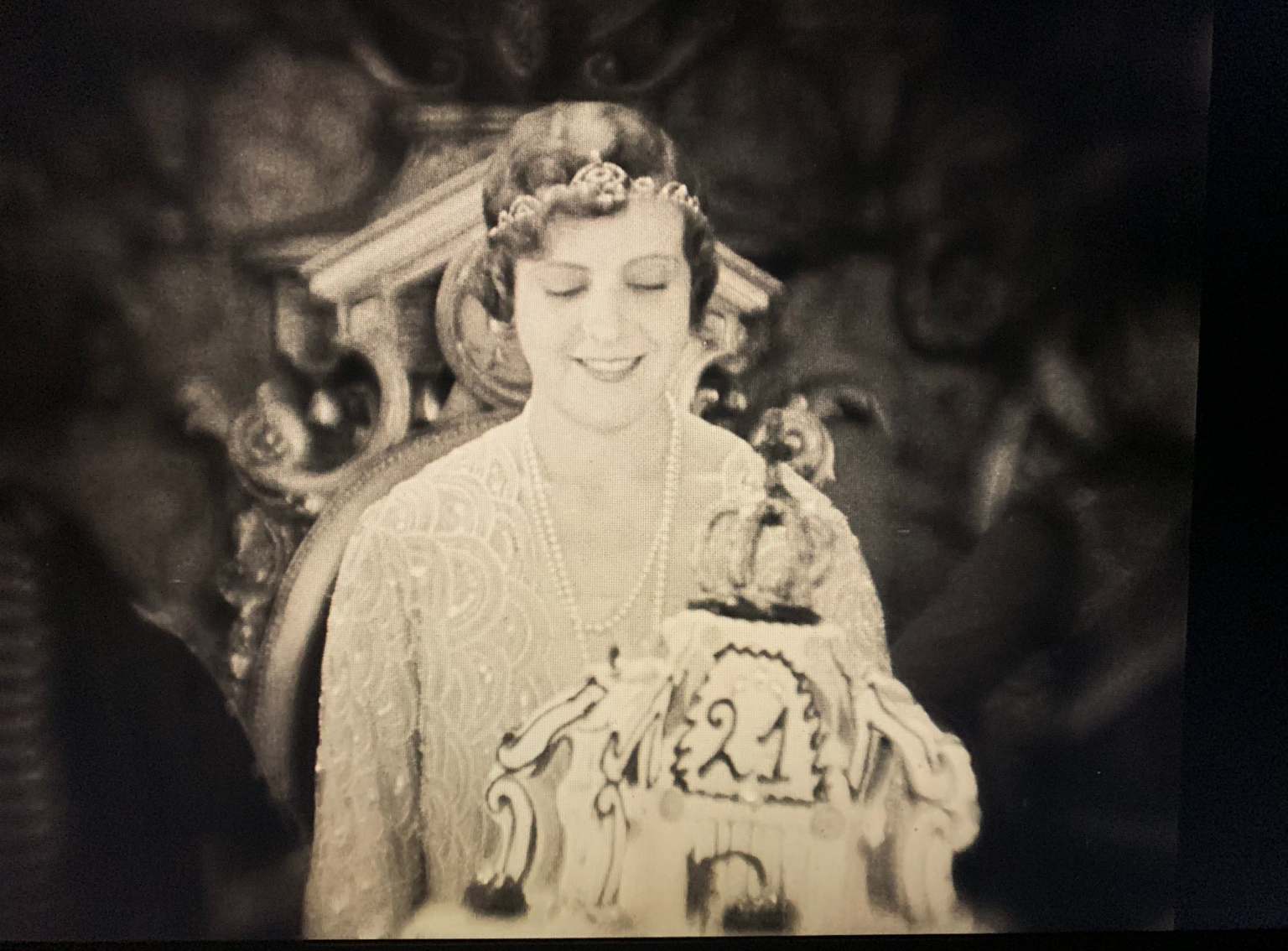
O reino de Lothen-Kunitz é onde a ação começa em “The Runaway Princess” (1929). A princesa Priscilla (Mady Christians) acaba de fazer 21 anos e isso significa que seu noivado com um príncipe de algum reino vizinho está para acontecer. Insatisfeita com a ideia de se casar com alguém que não conhece, Priscilla foge para Londres, onde ela se envolve com um grupo de falsários. Este filme tem poucas cartelas de títulos, algo que eu apreciei, mas é previsível.

The kingdom of Lothen-Kunitz is where the action starts in “The Runaway Princess” (1929). Princess Priscilla (Mady Christians) has just turned 21 and this means that her engagement with a Prince from a nearby kingdom will happen soon. Dissatisfied with the idea of marrying someone she’s never met, Priscilla runs away to London, where she gets involved with a group of forgers. This film has few title cards, something I liked, but it’s rather predictable.

O segundo tema era Norma Talmadge. No evento presencial, 15 dos filmes de Norma - mais três fragmentos de filmes - foram exibidos, enquanto na versão online três de seus filmes fizeram parte da mostra: o curta de 1912 “Mrs ‘Enry ‘Awkins” e dois longa-metragens. Em “Yes or No” (1920), Norma interprets dois papéis: a rica Margaret Vane, cujo marido está doente mas não conta para ela, e Minnie Berry, cujo marido é um operário que estuda à noite. Ambas as mulheres se sentem negligenciadas pelos maridos, e ambas são seduzidas por outros homens: a senhora Vane pelo bon-vivant Paul Derreck (Lowell Sherman) e a senhora Berry pelo seu inquilino Ted Leach (Gladden James). Essas mulheres dirão sim ou não para a tentação? Também no elenco está Natalie Talmadge - a futura esposa de Buster Keaton- como Emma, criada da senhora Vane e irmã de Minnie. Em “Yes or No” o papel duplo não é igual ao de “Sui Gradini del Trono”, no qual os sósias trocam de lugar, mas é uma boa técnica de qualquer maneira.

The second grand theme was Norma Talmadge. In the in-person event 15 of Norma’s movies - plus three fragments of movies - were screened, while in the online version three of her movies were shown: the 1912 short “Mrs ‘Enry ‘Awkins” and two features. In “Yes or No” (1920), Norma plays two roles: the rich Margaret Vane, whose husband is ill but doesn’t tell her, and Minnie Berry, whose husband is a factory worker by day and goes to school at night. Both women feel neglected by their husbands, and both are seduced by other men: Mrs Vane by the bon-vivant Paul Derreck (Lowell Sherman) and Mrs Berry by her tenant Ted Leach (Gladden James). Will these women say yes or no to temptation? Also in the cast there is Natalie Talmadge - aka Buster Keaton’s future wife - as Emma, Mrs Vane’s maid and Minnie’s sister. In “Yes or No” the dual role is not played as in “On the Steps of the Throne”, in which there is an exchange of doppelgängers, but it is a nice device nevertheless.

O segundo filme de Norma Talmadge exibido foi “The Lady”, dirigido por Frank Borzage. O filme começa com Polly Pearl, uma mulher de meia-idade (já interpretada por Talmadge), em sua taverna em Marselha. Lá ela reconta sua história de vida, primeiro como dançarina num teatro, ao que se segue um casamento com o rico Leonard St Aubyns (Wallace MacDonald), um casamento que só durou até a lua de mel. Sempre com o objetivo de ser uma dama, ela vai para a França, onde sofre um bocado. Os destaques deste drama lacrimoso foram a decoração de interiores de William Cameron Menzies e a atuação de Norma Talmadge, especialmente perto do final.

The second Norma Talmadge movie screened was “The Lady”, directed by Frank Borzage. The film begins with Polly Pearl, a middle-aged woman (already being played by Talmadge), in her tavern in Marseille. There she retells her life story, first as a dancer at a music hall, followed by her marriage to the rich Leonard St Aubyns (Wallace MacDonald), a marriage that lasted only as long as their honeymoon. Always with the goal of being a lady, she goes to France where she suffers a bit. The highlights of this tearful drama were William Cameron Menzies’ set decorations and Norma Talmadge’s acting, especially near the end.

“Just Around the Corner” (1921) foi escrito para as telas e dirigido por Frances Marion. O filme conta a vida da família Birdsong: Ma (Margaret Seddon), Essie (Sigrid Holmquist) e Jimmie (Lewis Sargent, ótimo no papel). Essie é influenciada por uma má amiga, que a leva a mudar de trabalho e a apresenta a um golpista, Joe Ullman (Edward Phillips). A mãe se preocupa com um possível casamento entre Essie e um homem decente, por isso ela fica sempre à espera da noite em que Essie trará seu namorado para jantar em casa. Este filme foi restaurado graças à atuação conjunta da Biblioteca do Congresso dos EUA e o sempre excelente Eyefilmmuseum da Holanda, e a cópia exibida estava incrível.

“Just Around the Corner” (1921) was written for the screen and directed by Frances Marion. It chronicles the life of the Birdsong family: Ma (Margaret Seddon), Essie (Sigrid Holmquist) and Jimmie (Lewis Sargent, great in the role). Essie is influenced by a bad friend who makes her change jobs and introduces her to a con man, Joe Ullman (Edward Phillips). Ma’s main concern is about Essie getting married to a decent man, that’s why she’s always waiting for the night Essie will take her beau home to dinner. This movie was restored thanks to a joint effort by the Library of Congress and the always excellent Eyefilmmuseum of the Netherlands, and the print was gorgeous.

As pessoas responsáveis por fazer o Código Hays ser respeitado ficariam malucas se tivessem que censurar o filme italiano “Profanazione”, de 1926. Estrelando Leda Gys, o filme conta a história de Giulia, uma mulher que, para pagar uma dívida, transa, contra sua vontade, com Roberto (de novo Alberto Capozzi), um homem que sempre a cobiçou. Giulia engravida e tem duas filhas, vive feliz por alguns anos, até que seu marido descobre que uma das meninas não é sua filha legítima.

People on the Hays Office would completely freak out if they had to censor the 1926 Italian film “Profanazione”. Starring Leda Gys, it tells the story of Giulia, a woman who, in order to pay a debt, has sex, against her will, with Roberto (again Alberto Capozzi), a man who always pursued her. Giulia gets pregnant and has two daughters, living happily for a few years, until her husband discovers that one of the girls is not his legitimate child.

Também teve espaço em Pordenone para documentários, tanto curtas quanto longa-metragens. Os curtas foram apresentados dentro da sessão da Ruritania e consistiam em newsreels mostrando os reis de Montenegro e da Eslovênia. Outro curta mostrava três festivais no Japão da década de 1910. O longa “Over Mountains, Over Valleys” (1929) não fez meu tipo, mas foi interessante ao mostrar principalmente crianças brincando em vilas da Eslováquia. Eu gostei muito das roupas das pessoas… e das ovelhas no começo. O diretor Karel Plicka realmente insere no filme traços etnográficos, fazendo dele um objeto muito curioso.

There was also space in Pordenone for documentary films, both shorts and features. The shorts were presented inside the Ruritanian session and consisted of newsreels showing the kings of Montenegro and Slovenia. Another short chronicled three festivals in 1910s Japan. The feature “Over Mountains, Over Valleys” (1929) was not my cup of tea, as I’m not that fond of documentaries, but it was interesting as it showed mostly children playing games in Slovakian villages. I really enjoyed the people’s clothes… and the sheep in the beginning. Filmmaker Karel Plicka really infuses the film of ethnographic traces, making this a most curious object.

Na Giornate pude ver qual é o apelo de Ivan Mosjoukine, um querido dos Twitter os que tratam do cinema mudo. E, uau, que estrela! Ele é o protagonista de “Manolescu”, de 1929, interpretando um homem que se transforma em um trapaceiro, com a ajuda de sua amante, Cleo (Brigitte Helm). Quando ele é atingido na cabeça por um inimigo, ele conhece a adorável enfermeira Jeanette (Dita Parlo) e passa a viver um dilema amoroso. Curiosamente, como referência ao tema da Ruritania, o título do filme em inglês é “Manolescu, o Príncipe das Aventuras”.

At the Giornate I could see what is the appeal of Ivan Mosjoukine, a favorite of Silent Film Twitter. And, wow, what a star! He is the lead of 1929’s “Manolescu”, playing a man who becomes a swindler and is helped in his “business” by his lover, Cleo (Brigitte Helm). When he suffers a blow to the head, he meets the lovely nurse Jeanette (Dita Parlo) and finds himself at an amorous crossroads. Curiously, as a tie to the Ruritanian theme, the title of this movie in English is “Manolescu, the Prince of Adventures”.

Outro ator que pude conhecer melhor na Giornate foi Harrison Ford - não, não o Indiana Jones, mas um astro do cinema mudo com o mesmo nome. Em “Up in Mabel’s Room” (1926), Mabel (Marie Prevost) havia se divorciado do marido Garry (Ford) por causa de uma bobagem. Agora ela está determinada a se casar novamente com Garry, e uma festa numa mansão é a oportunidade perfeita para Mabel acabar com o noivado de Garry com Phyllis (Phyllis Haver) e tomar seu homem de volta. Duas coisas chamaram minha atenção neste filme: a trilha brilhante da Zerorchestra e o papel do mordomo Hawkins, interpretado por William Orlamond.

Another lead that I could know better at the Giornate was Harrison Ford- no, not Indiana Jones, but a silent film star with this name. In “Up in Mabel’s Room” (1926), Mabel (Marie Prevost) had divorced her husband Garry (Ford) because of a small issue. Now she is serious about remarrying Garry, and a party at a mansion is the perfect opportunity for Mabel to end Garry’s engagement with Phyllis (Phyllis Haver) and get her man back. Two things called my attention in this film: the brilliant score by Zerorchestra and the role of Hawkins the butler, played by William Orlamond.

“O Grande Amor de uma Pequena Dançarina” (1924, título traduzido do original alemão) foi uma pérola. A animação feita com marionetes é a única sobrevivente do estúdio Piccolo-Film, e é o que chamamos de um “filme órfão”: não foi dirigido ou protagonizado por pessoas famosas, por isso não é o tipo de filme que chama atenção suficiente para ser restaurado e exibido. Também conhecido pelo maravilhoso título com trocadilho “The Cabinet of Dr Larifari”, este foi meu filme favorito de toda a Giornate, mesmo ele terminado com o deus ex-machina que eu mais detesto. Todo o resto foi perfeito: o trabalho com as marionetes, a atmosfera, a cor da cópia, a trilha sonora… Bem, se eu estivesse no Collegium este ano, escreveria meu artigo sobre este filme!

“The Big Love of a Little Dancer” (1924, title translated from the original German) was a gem. This animation made with puppets is the sole survivor of the Piccolo-Film studio, and it’s what we call an “orphan film”: not directed by nor starring famous people, it’s not the kind of film that calls enough attention to be restored and screened. Also known by the amazing punny title “The Cabinet of Dr Larifari”, this was my favorite movie of the entire Giornate, even though it ends with the deus ex-machina that I hate the most. The rest was everything perfect: the puppetry, the atmosphere, the tinting of the print, the soundtrack… Well, if I was in the Collegium this year, I’d write my paper entirely about this short!

Obviamente, seguindo a Giornate online e também vendo o que estava acontecendo presencialmente na Itália gera uma tristeza. Eu amaria ter visto “The Unknown” (1927), com meu ator favorito do cinema mudo, Lon Chaney, e dez minutos extras que eram desconhecidos do público. Eu amaria ter visto o programa especial das Nasty Women, porque eu recentemente entrevistei as curadoras desta sessão e foi uma entrevista fantástica. E, o desejo mais óbvio, eu amaria ter estado lá no dia do aniversário de Buster Keaton para receber meu prêmio no palco do Teatro Verdi.

Of course, following the Giornate online and also seeing what was happening on site in Italy leaves a bittersweet taste. I’d love to see “The Unknown” (1927), with my favorite silent film actor Lon Chaney and ten extra minutes previously unknown to the public. I’d love to have seen the Nasty Women special programme, because I recently interviewed the curators of this session and it was a great interview. And, the most obvious desire, I’d love to be there on Buster Keaton’s birthday to accept my prize at the stage of Teatro Verdi.

Todos nós que amamos cinema mudo sabemos o quanto desta arte está perdido: na verdade, o diretor da Giornate, Jay Weissberg, em uma das introduções, disse que 96% de todos os filmes feitos no Japão antes de 1945 estão perdidos! Mesmo assim, há tanto para ser descoberto - muito nos arquivos, precisando de restauração - e eu sempre me alegro de acompanhar a Giornate e descobrir tanta coisa. Pordenone é parte da minha história desde 2020, quando eles precisaram mudar para o ambiente online, e hoje estou feliz por ser também parte da história de Pordenone. Vejo vocês ano que vem, Pordenone - quem sabe presencialmente?

All of us who love silent film know how much of this art was lost: in fact, Giornate director Jay Weissberg, in one of his intros, said that 96% of all movies shot in Japan before 1945 are lost! Nevertheless, there is so much to be discovered - a lot in the vaults, needing restoration - and I’m always glad to follow the Giornate and discover so much. Pordenone has been part of my story since 2020, when they needed to switch to online, and now I’m glad to be also part of Pordenone’s history.
See you next year, Pordenone - maybe in person?

Wednesday, September 28, 2022

As Finanças do Grão-Duque (1924) / The Finances of the Grand Duke (1924)


Quantas obras-primas podem ser feitas numa vida? E quantas obras-primas podem ser feitas por alguém cuja carreira durou apenas 12 anos, produzindo 21 filmes? Este alguém é Friedrich Wilhelm Murnau, ou F.W. Murnau. Suas três obras-primas mais conhecidas são “Nosferatu” (1922), “A Última Gargalhada” (1924) e “Aurora” (1927), com uma possível obra-prima no atualmente perdido “Os Quatro Diabos” (1928). Trabalhando sem parar, Murnau fez outros filmes, não tão perfeitos quanto suas obras-primas, mas filmes que merecem ser vistos de qualquer maneira - devemos nos lembrar de que apenas 12 dos filmes de Murnau estão atualmente disponíveis. No mesmo ano em que Murnau fez “A Última Gargalhada”, ele fez outro filme ambicioso, “As Finanças do Grão-Duque”.


How many masterpieces can be made in a lifetime? And how many masterpieces can be made by someone whose career lasted for only 12 years and 21 films? This someone is Friedrich Wilhelm Murnau, or F.W. Murnau. His three best known masterpieces are “Nosferatu” (1922), “The Last Laugh” (1924) and “Sunrise” (1931), with a possible masterpiece in the currently lost “4 Devils” (1928). Working steadily, Murnau delivered other movies to the world, not as perfect as his masterpieces, but movies that deserved to be seen anyway - we should be reminded that only 12 of Murnau’s films are currently available. The same year Murnau made “The Last Laugh”, he made another ambitious film, “The Finances of the Grand Duke”.

As coisas não vão bem para Ramon XII, o Grão-Duque de Abacco (Harry Liedtke). Ele tem uma dívida enorme para com Marcowitz (Guido Herzfeld) e precisa pagar tudo em três dias, ou o Grão-Ducado de Abacco não mais pertencerá a ele. Uma solução cai do céu com uma carta da Princesa Olga da Rússia (Mady Christians), que deseja se casar com o Grão-Duque apesar das circunstâncias financeiras.


Things are not going well for Ramon XII, the Grand Duke of Abacco (Harry Liedtke). He has an enormous debt with Marcowitz (Guido Herzfeld) and needs to pay everything in three days, or the Grand Dukedom of Abacco will no longer belong to the Grand Duke. A solution falls from heaven as a letter from Princess Olga of Russia (Mady Christians), who wants to marry the Grand Duke despite his financial situation.

Mas há muito mais. O homem de negócios Bekker (Hermann Vallentin) está interessado em comprar Hermosa Point, parte do território de Abacco, para explorar as reservas de enxofre. O Grão-Duque não aceita a proposta de cinco milhões de Bekker em troca de Hermosa Point. Incapaz de ouvir um “não” como resposta, Bekker descobre quatro desajustados e se oferece para patrocinar o golpe que eles querem dar no Grã-Duque. Mais personagens aparecem, como o aventureiro Philipp Collins (Alfred Abel), que terá um papel de destaque na história.


 But there is much more. Businessman Bekker (Hermann Vallentin) is interested in buying Hermosa Point, part of Abacco’s territory, to explore the sulfur reservations. The Grand Duke doesn’t accept Bekker’s five million in exchange of Hermosa Point. Unable to hear “no” as an answer, Bekker finds four misfits and offers to fund their coup against the Grand Duke. More characters appear, like the adventurer Philipp Collins (Alfred Abel), who will have a role in the story.

Os 77 minutos de projeção são divididos em seis capítulos. A pessoa responsável pelo roteiro é ninguém menos que Thea von Harbou, então já casada com Fritz Lang. É curioso notar que Von Harbou escolhe Marcowitz - um homem com sobrenome judeu - como a fonte primária de problemas para o Grão-Duque. Todos nós sabemos que Von Harbou não fugiu da Alemanha com a ascensão do nazismo e era inclusive simpática ao partido. É sempre “interessante” observar pedacinhos de antissemitismo em seu trabalho anterior a 1933.


The 77 minutes of the film are divided in six chapters. The person responsible for the script is none other than Thea von Harbou, then already Fritz Lang’s wife. It’s curious to notice that Von Harbou chooses Marcowitz - a man with a Jewish last name - as the first source of problems for the Grand Duke. We all know that Von Harbou didn’t leave Germany with the rise of the Nazis and was even sympathetic to the party. It’s always “interesting” to notice bits of anti-Semitism in her early work.

Alguns rostos familiares do cinema mudo alemão, como Alfred Abel, que interpreta Philipp Collins, aparecem aqui e ali. Outro rosto familiar é mais difícil de distinguir: Max Schreck, que interpretou o papel-título em “Nosferatu”, é um dos revolucionários. O personagem de Schreck é simplesmente chamado de “o sinistro”.


Some familiar faces of German silent film, like Alfred Abel, who plays Philipp Collins, pop up here and there. Another familiar face is harder to distinguish: Max Schreck, who played the title role in “Nosferatu”, is one of the insurrectionists. Schreck’s character is simply named “the sinister one”.

A história é muito complexa, com muitos personagens e situações entrelaçadas, por vezes fica um pouco complicado seguir o andamento dos fatos.  Felizmente, no começo de cada capítulo há uma descrição da ação, algo que ajuda muito. Vale mencionar que a história não foi inventada pot Thea von Harbou: “As Finanças do Grão-Duque” foi baseado num livro de Frank Heller, escritor sueco.


The story is very complex, with many characters and intertwined situations, and sometimes it becomes a bit hard to follow. Luckily, in the beginning of each chapter there is a description of the action, something that comes in handy. It’s worth mentioning that the story wasn’t invented by Thea von Harbou: “The Finances of the Grand Duke” was based in a book by Frank Heller, a Swedish writer.

Algumas fontes dizem que este filme é uma comédia - aliás, a única comédia de Murnau. Pode não ser um filme cheio d humor, pois “As Finanças do Grão-Duque” é mais uma farça, dependendo de identidades falsas que só são reveladas no último minuto. Há muito absurdo non filme, mas ele não deixa de ser agradável e divertido. Vendo mais um dos bons filmes de Murnau, continuamos esperando e tendo esperança de que mais filmes dele sejam encontrados e redescobertos pelas plateias modernas.


 Some sources say that this film is a comedy - Murnau’s only comedy, by the way. It may not be very humorous, as “The Finances of the Grand Duke” is more of a farce, relying heavily on fake identities not revealed until the last minute. There is a lot of absurd in the movie, but it is enjoyable and entertaining. As we watch another of Murnau’s good movies, we keep waiting and hoping that more of his movies are found and rediscovered by modern audiences.

This is my contribution to the Silent Movie Day blogathon, hosted by Lea and Crystal at Silent-ology and In the Good Old Days of Classic Hollywood


Related Posts Plugin for WordPress, Blogger...