} Crítica Retrô: Alec Guinness

Tradutor / Translator / Traductor / Übersetzer / Traduttore / Traducteur / 翻訳者 / переводчик

Showing posts with label Alec Guinness. Show all posts

Saturday, February 22, 2020

Assassinato por Morte (1976) / Murder by Death (1976)


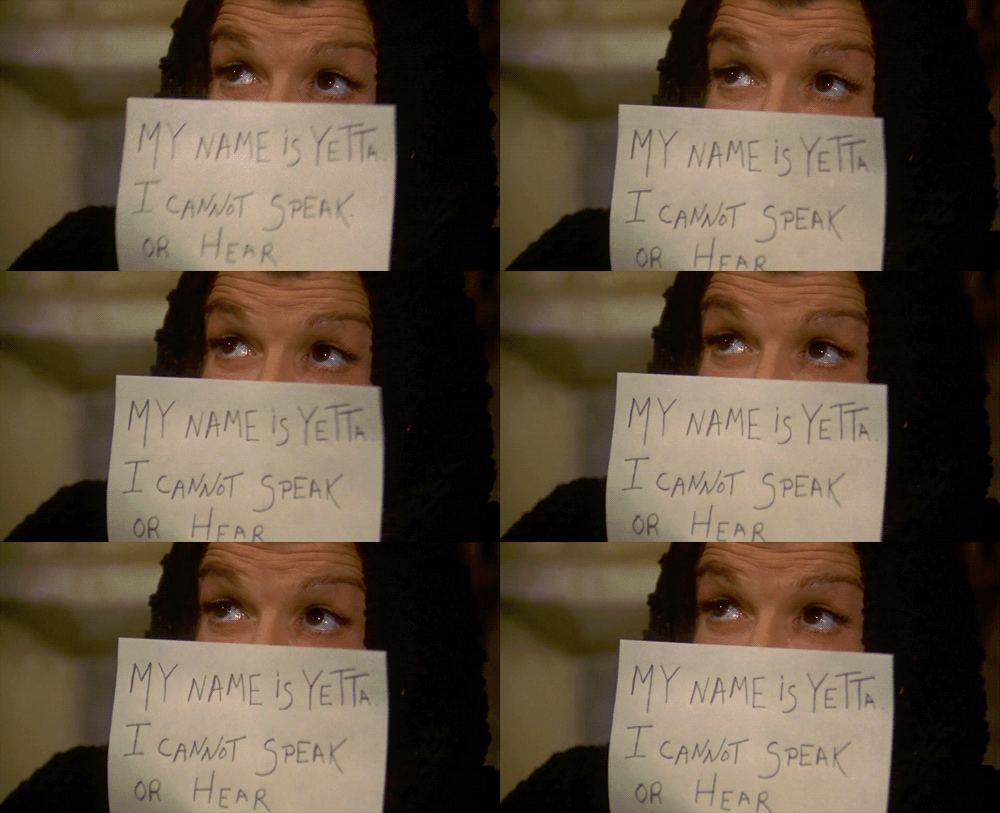
Sempre que um crime é cometido em filmes de mistério, nós costumamos suspeitar do mordomo. Em “Assassinato por Morte”, uma deliciosa comédia de mistério, esta ideia é subvertida desde o início, porque o mordomo, Jamesir Bensonmum (Alec Guinness), é cego. E a nova cozinheira, Yetta (Nancy Walker), também não é suspeita, porque ela não pode ouvir ou falar. Ah, e eu disse que se trata de suspeitos de um crime que ainda não foi cometido?

Whenever a crime occurs in a whodunit film, we're taken to suspect the butler. In “Murder by Death”, a delightful whodunit comedy, this idea is subverted since the beginning, because the butler, Jamesir Bensonmum (Alec Guinness), is blind. And the new cook, Yetta (Nancy Walker), is not a suspect either, because she can't hear or speak. Oh, and have I said that we're talking about suspects of a crime that hasn't yet occurred?
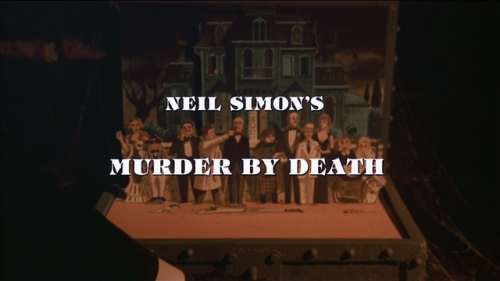

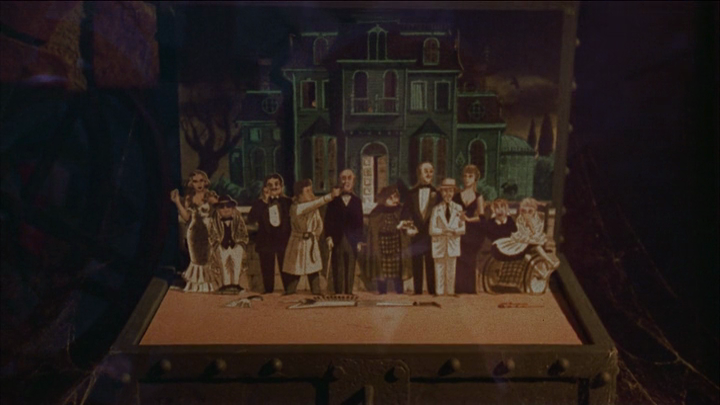
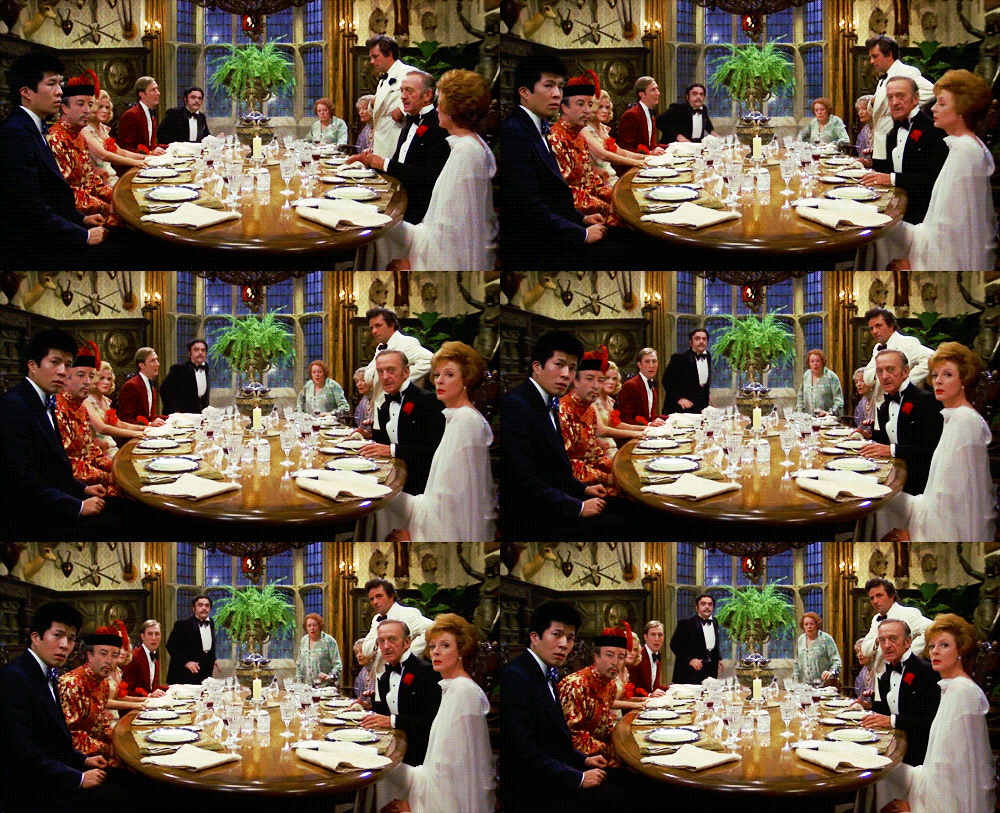
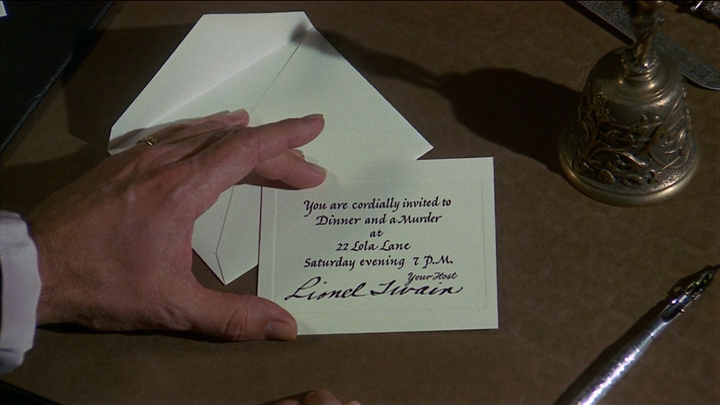
O maluco Sr Twain convida os maiores detetives do mundo para um “jantar e assassinato”. Seus convidados são Dick (David Niven), Dora Charleston (Maggie Smith) e seu cãozinho terrier, Sam Diamond (Peter Falk) e sua secretária, Sidney Wang (Peter Sellers) e seu filho adotivo, Milo Perrier (James Coco) e seu motorista, e Jessica Marbles (Elsa Lanchester) e sua enfermeira.

The twisted Mr Twain invites the world's top detectives for “dinner and murder”. His guests are Dick (David Niven), Dora Charleston (Maggie Smith) and their pet terrier, Sam Diamond (Peter Falk) and his secretary, Sidney Wang (Peter Sellers) and his adopted son, Milo Perrier (James Coco) and his chauffeur, and Jessica Marbles (Elsa Lanchester) and her nurse.

Se você gosta de histórias de detetive tanto quanto eu, já deve ter percebido que os personagens têm nomes parecidos com os de detetives famosos: Dick e Dora Charleston são um tributo a Nick e Nora Charles – interpretados por William Powell e Myrna Loy na série de filmes “The Thin Man” -, Sam Diamond é uma homenagem ao Sam Spade de Dashiell Hammett, Sidney Wand faz menção a Charlie Chan, Milo Perrier é uma alusão ao Hercule Poirot de Agatha Christie, e a Sra Marbles também vem da obra de Christie, da Sra Marple. Fãs de cinema clássico ouvirão algumas frases famosas, e também um grito familiar: o toque da campainha é o grito de Fay Wray em “King Kong” (1933).

If you love detective stories as much as I do, you must have realized that the characters are named after famous fictional detectives: Dick and Dora Charleston are a tribute to Nick and Nora Charles – played by William Powell and Myrna Loy in the “Thin Man” movie series -, Sam Diamond refers to Dashiell Hammett's Sam Spade, Sidney Wang is a nod to Charlie Chan, Milo Perrier is an allusion to Agatha Christie's Hercule Poirot, and Mrs Marbles also comes from Christie's work, but from Mrs Marple. Classic film fans will hear a few famous quotes, as well as a familiar scream: the “ring” of the doorbell is Fay Wray’s scream from “King Kong” (1933).


A performance de Peter Sellers como um homem asiático, completada com quimono, pode gerar algum debate. Ele estava fazendo yellow-face? Ou talvez ele estivesse criticando a prática do yellow-face – porque todos os atores que interpretaram Charlie Chan eram brancos, e o mais famoso deles, Warner Oland, era, de todas as nacionalidades possíveis, sueco? O que sabemos é que Sidney Wang é um personagem visto sob uma lente positiva, sendo inteligente e criativo. Uma piada constante é que ele fala inglês errado, algo que enfurece o anfitrião Lionel Twain (ninguém menos que Truman Capote) – mas Wang pode ser entendido com perfeição! No final das contas, a performance de Sellers pode ser um pouco embaraçosa, mas não o suficiente para “cancelar” o filme inteiro.

Peter Sellers's turn as an Asian man complete with kimono may raise some debate. Was he doing yellow-face? Or maybe he was mocking the practice of yellow-face – because all actors that played Charlie Chan were white, and the most famous of them, Warner Oland, was, of all nationalities, Swedish? What we know is that Sidney Wang is a character portrayed on a positive light, as intelligent and resourceful. A running joke is that he speaks broken English, something that infuriates the host Lionel Twain (no other than Truman Capote) – but Wang can be understood perfectly! In the end, Sellers’s performance is a bit cringe-worthy here and there, but not enough to “cancel” the whole film.
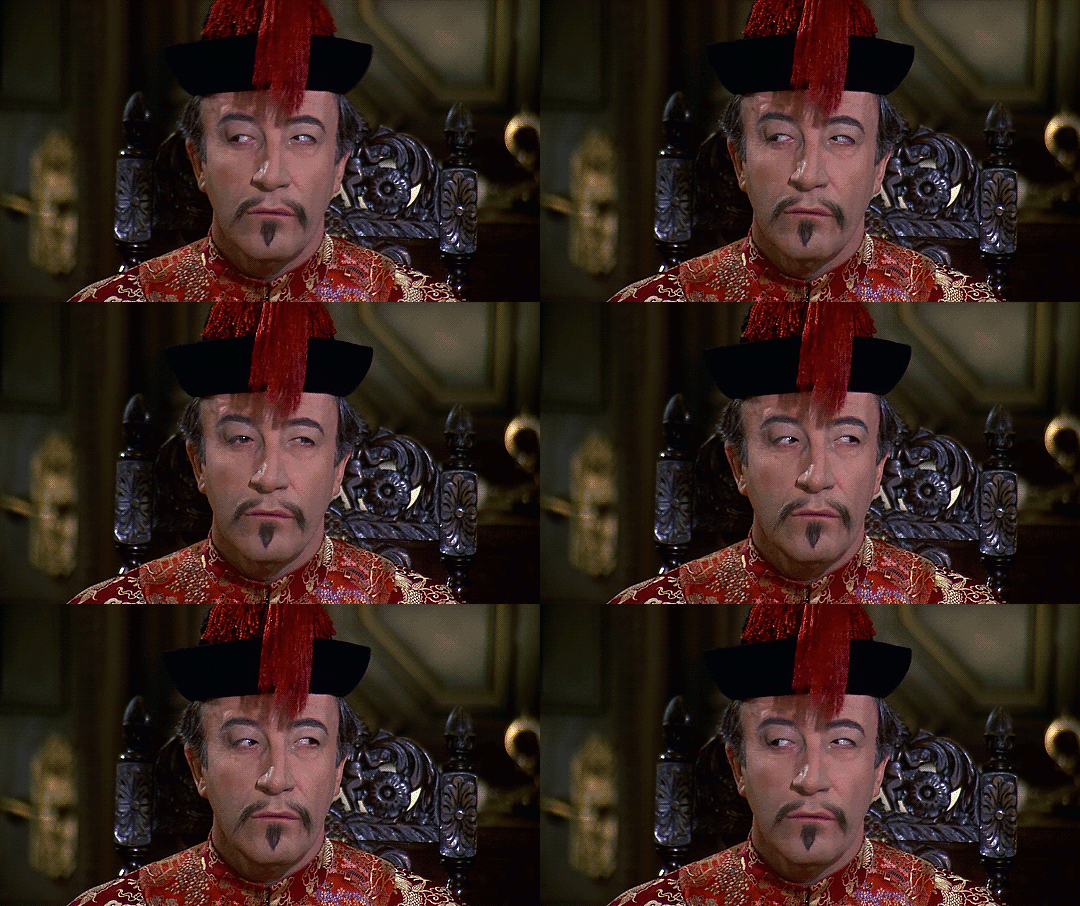

E aqui está outra questão: o personagem Bensonmum está zombando de pessoas com deficiência? Eu não acho. O personagem funciona graças ao absurdo que é alguém contratar um cego para ser mordomo – e Wang responde que isso é uma jogada esperta porque o mordomo jamais saberá quanto ele ganha. Muitas das falas mais engraçadas de Bensonmum não têm a ver com sua cegueira, e gags fáceis porém estúpidas são evitadas.

And here’s another question: is the character Bensonmum making fun of people with disabilities? I don’t think so. This character works thanks to the absurdity of someone hiring a blind man as a butler – and Wang answers that this is clever because the butler won’t know how much he gets paid. Many of Bensonmum’s funniest lines have nothing to do with him being blind, and easy but stupid gags are avoided.
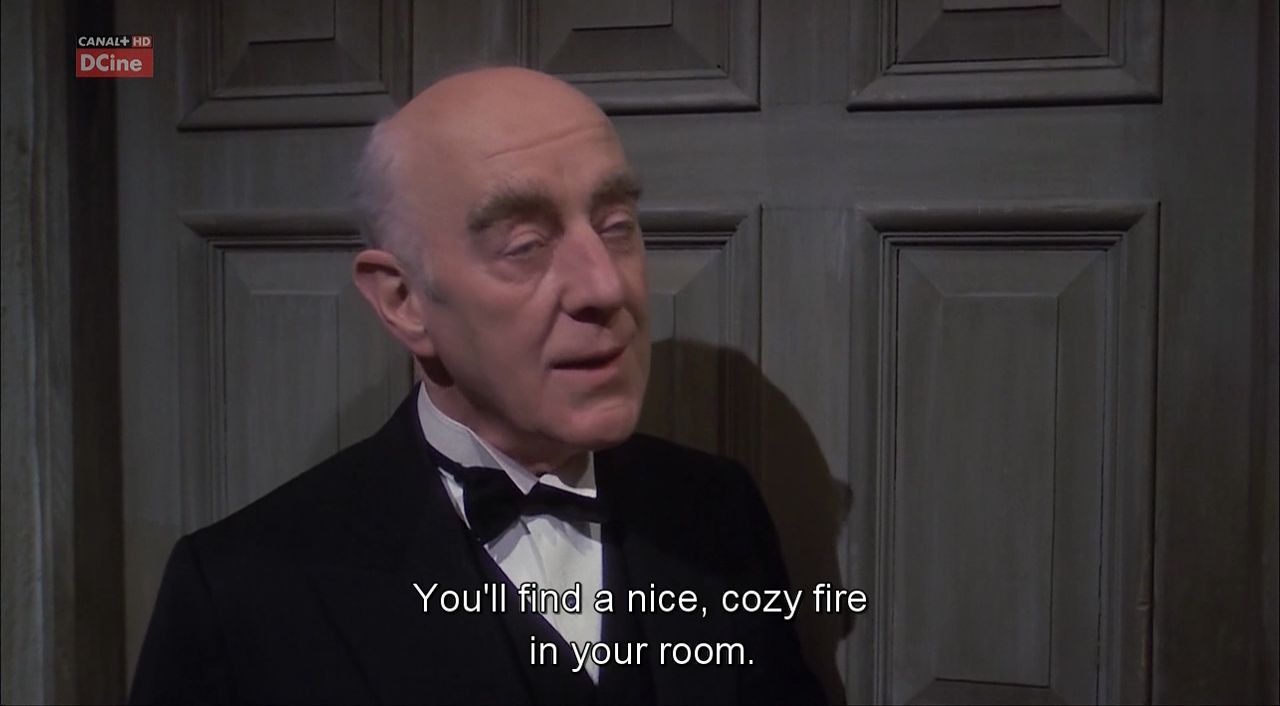

Um Peter Falk vesgo faz sua melhor imitação de Humphrey Bogart como Sam Diamond, enquanto sua esperta companheira Tess Skeffington é interpretada por Eileen Brennan. Enquanto isso, o motorista de Milo Perrier, Marcel (James Cromwell), parece mais esperto que seu patrão glutão. Nesse sentido – e também considerando Bensonmum e Yetta – os ajudantes roubam a cena em “Assassinato por Morte”, e são geralmente mais engraçados do que os detetives.

A cross-eyed Peter Falk tries his best Humphrey Bogart impression as Sam Diamond, while his clever girl Tess Skeffington is played by Eileen Brennan. Meanwhile, Milo Perrier's chauffeur Marcel (James Cromwell) seems smarter than his glutton boss. In this sense – and also considering Bensonmum and Yetta – the helpers steal the scene in “Murder by Death”, and are often funnier than the detectives.
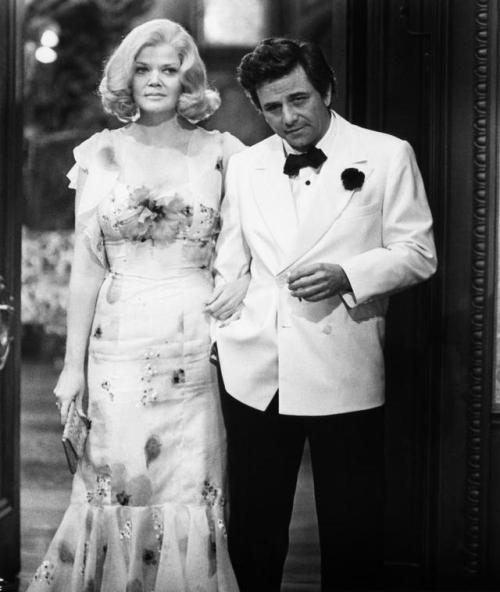

Considerando o elenco, “Assassinato por Morte” pode ser colocado entre os filmes all-star que eram mais comuns na Era de Ouro de Hollywood – sendo “Grande Hotel” (1932) e “Jantar às Oito” (1933) os filmes mais famosos desta categoria. Duas outras estrelas deveriam estar no elenco: Myrna Loy foi a primeira opção para Dora Charleston, e Katharine Hepburn faria a personagem Abigail Christian, uma paródia de Agatha Christie. As duas desistiram, por isso Maggie Smith foi escolhida para ser Dora e a personagem Abigail foi eliminada e a Sra Marbles foi criada em seu lugar.

Considering the cast, “Murder by Death” can be put among the all-star films that were more common during the Golden Age of Hollywood – being “Grand Hotel” (1932) and “Dinner at Eight” (1933) the most famous all-star movies. Two more stars were supposed to appear: Myrna Loy was the first choice for Dora Charleston, and Katharine Hepburn was supposed to be a parody of Agatha Christie called Abigail Christian. Both dropped, and thus Maggie Smith was cast as Dora and the character of Abigail was erased and Mrs Marbles was created instead.
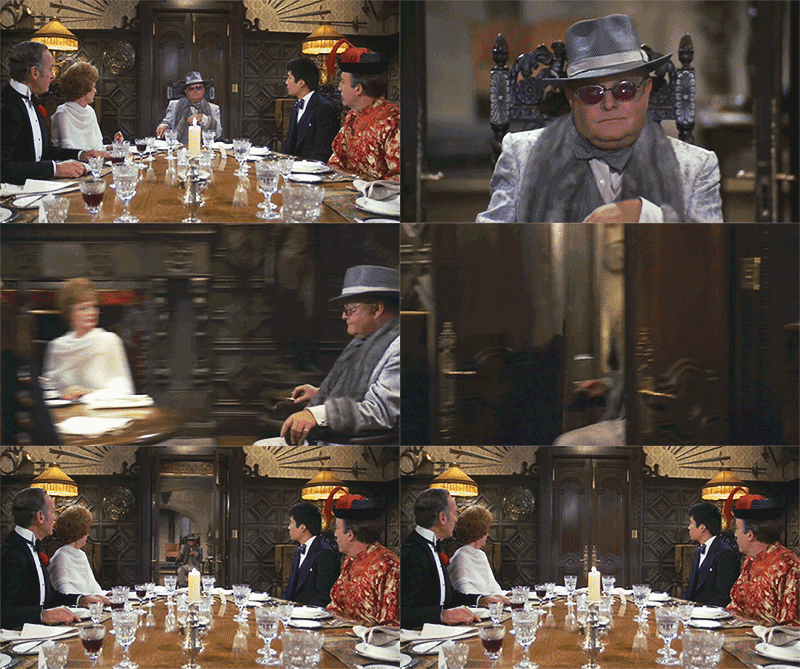

Neil Simon escreveu “Assassinato por Morte” diretamente para o cinema, ao contrário de sucessos anteriores, como “Descalços no Parque” (1967) e “Um Estranho Casal” (1968), que foram concebidos como peças e depois adaptados para o cinema. Desde a primeira leitura o elenco amou o roteiro, e o clima durante as gravações era ótimo – mesmo que às vezes um ataque de riso arruinasse uma tomada. Bem, nós compreendemos as risadas incontroláveis.

Neil Simon wrote “Murder by Death” directly for the cinema, unlike his earlier successes, as “Barefoot in the Park” (1967) and “The Odd Couple” (1968), that were conceived as plays and then adapted to movie. Since the first table read the cast loved the screenplay, and  the mood during filming was great – even though sometimes the cast laughed so much that a shot was ruined. Well, we can understand the uncontrollable laughter.


Creditada como “supervisora de edição” temos Margaret Booth, uma editora fantástica que trabalhou em alguns dos maiores clássicos, como “O Grande Motim” (1935), “A Dama das Camélias” (1936), “O Mágico de Oz” (1939) e “Ben-Hur” (1959). Ela começou em Hollywood em 1921, foi também produtora e redatora, e viveu até os 104 anos.

Credited as “supervising film editor” we have Margaret Booth, a legendary editor that has worked in some of the biggest classic films, including “Mutiny on the Bounty” (1935), “Camille” (1936), “The Wizard of Oz” (1939) and “Ben-Hur” (1959). She started in Hollywood in 1921, was also a producer and writer, and lived to be 104.
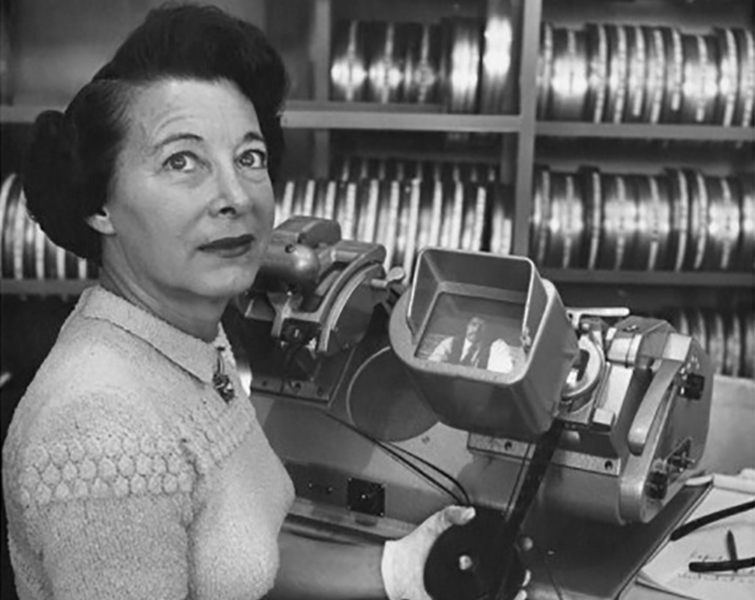

“Assassinato por Morte” certamente influenciou “Os Sete Suspeitos” (1985), um filme de mistério baseado em um jogo. Eileen Brennan está em ambos os filmes. O final de “Assassinato por Morte” me lembrou de “Charada” (1963), mas com mais reviravoltas. Depois destes filmes, o cinema se cansou de mistérios, e agora eles são bem mais raros (embora os recentes “Assassinato no Expresso do Oriente” (2017) e “Entre Facas e Segredos” (2019) possam assinalar uma voltas do gênero) – o que é uma pena porque, além de serem divertidos, estes filmes sempre podem terminar com a revelação de que o mordomo é o culpado.

“Murder by Death” certainly influenced “Clue” (1985), a film based on a game that is also a whodunit. Eileen Brennan stars in both. The ending of “Murder by Death” reminded me of “Charade” (1963), but with more plot twists. After those films, cinema got a bit tired of whodunits, and now they’re much rarer (although the recent “Murder on the Orient Express” (2017) and “Knives Out” (2019) may signal a genre comeback)  – which is a shame because, besides being entertaining, these films can always end with the reveal that the butler did it.

This is my contribution to the Butlers and Maids blogathon, hosted by Patricia and Rich at Caftan Woman and Wide Screen World.


Sunday, June 30, 2019

O Estranho Caso do Conde (1959) / The Scapegoat (1959)


Sempre que ouvimos o nome Daphne du Maurier, instantaneamente pensamos em Hitchcock como o elo que a liga ao cinema. Hitchcock adaptou os trabalhos mais famosos de Daphne para as telas: “Rebecca – A Mulher Inesquecível” (1940) e “Os Pássaros” (1963) – e, antes deles, “Estalagem Maldita” (1939). Mas Daphne du Maurier escreveu outras obras que foram adaptadas para o cinema. Uma delas é o suspense “O Estranho Caso do Conde”, que se tornou um filme estrelado por Alec Guinness e Bette Davis em 1959.

Whenever we hear the name Daphne du Maurier, we instantly think about Hitchcock as her link with cinema. Indeed, Hitchcock adapted Du Maurier's most famous works to the screen: “Rebecca” (1940) and “The Birds” (1963) – and, before that, “Jamaica Inn” (1939). But Daphne Du Maurier wrote other works that were adapted to film. One of them was the thriller “The Scapegoat”, that became a 1959 movie starring Alec Guinness and Bette Davis.


Um homem chamado John Barratt (Alec Guinness) chega à Inglaterra. Ele está se sentindo vazio e sem esperança. Estranhamente, muitas pessoas parecem conhecê-lo, mas ele parece não conhecer ninguém. A explicação é bem simples: John tem um sósia – alguém que é fisicamente igual a ele. Eeste sósia é Jacque de Gue (também Alec Guinness), um nobre cuja vida é o oposto da vida de John. Uma noite, eles se encontram e Jacque põe um sonífero na bebida de John. Agora, John deve tomar o lugar de Jacque.

A man called John Barratt (Alec Guinness) arrives in England. He is feeling empty and hopeless. Strangely, many people seem to know him, but he seems to know no one. The explanation is quite simple: John has a doppelgänger – a person who looks exactly like another person. This doppelgänger is Jacque De Gue (also Alec Guinness), a nobleman whose life is the opposite of John's. One night, they two meet and Jacque puts sleeping powder in John's drink. Now John must be in Jacque's place.


Mesmo estando confuso e bravo, John trata a filha de Jacque de maneira amigável. O mesmo não pode ser dito da maneira como ele trata a mãe de Jacque, a Condessa (Bette Davis), uma mulher viciada em morfina e que não sai mais da cama. John se encanta com sua nova vida, uma vida que até inclui uma amante – e John se apaixona pela amante de Jacque!

Although he is confused and mad, John treats Jacque's daughter  in a friendly way. The same can't be said about the way he treats Jacque's mother, the Countess (Bette Davis), a woman addicted to morphine that can't get out of her bed anymore. John is amused to have this new life, one that even includes a lover – and John falls in love with Jacque’s lover!


Há narração em voiceover durante o filme todo, como em um filme noir. O confronto entre John e Jacque também tem tons noir, pois acontece em uma sala cheia de sombras e contrastes entre luz e escuridão, mostrando a dualidade dos sósias.

There is voiceover narration during the whole movie, just like a film noir. The confrontation between John and Jacque also has noir tones, as it happens in a room full of shadows and contrasts between light and darkness, showing the dual nature of the doppelgängers.


Alec Guinness foi escolhido por Daphne du Maurier para interpretar os protagonistas. Alec tinha experiência em interpretar múltiplos papéis no mesmo filme, pois ele interpretou oito papéis em “As Oito Vítimas” (1949), feito uma década antes de “O Estranho Caso do Conde”. Ele tem muito mais a fazer em “O Estranho Caso do Conde”, porque seu trabalho no filme anterior havia sido mais ao estilo de uma participação especial de luxo.

Alec Guinness was chosen by Daphne du Maurier herself to play the leads. Guinness was experienced in playing multiple roles in the same film, as he played eight roles in “Kind Hearts and Coronets” (1949), released a decade before “The Scapegoat”. He has much more to do in “The Scapegoat”, though, as his eight-turn in the earlier film was more of a very deluxe cameo.


Bette Davis era apenas seis anos mais velha que Alec Guinness, mas interpretou a mãe dele. Bette é basicamente desperdiçada em uma performance que é só um pouco mais longa que uma participação especial. Ela ficou muito insatisfeita com o tamanho do papel, e constantemente brigava com o diretor Robert Hamer. Isso mostra como o machismo sempre funcionou no mundo do cinema, pois Guinness estava no auge da carreira, enquanto Bette era considerada ultrapassada.

Bette Davis was only six years older than Alec Guinness, yet she was playing his mother. Davis is basically wasted in a performance that is just a little longer than a cameo. She was very unhappy with the size of her role, and she often clashed with director Robert Hamer. This shows how sexism has always worked in the film world, as Guinness was on the top of his career, while Davis was considered a has-been.


O livro foi adaptado por ninguém menos que Gore Vidal. Originalmente publicado com 368 páginas, o livro foi profundamente mudado para se tornar um filme de 90 minutos – e Daphne du Maurier ficou muito brava com o resultado, acreditando que o roteiro havia destruído a essência de sua história. Os finais, por exemplo, são completamente diferentes no livro e no filme. “O Estranho Caso do Conde” foi produzido por Michael Balcon, que também produziu os filmes mudos e os primeiros filmes falados de Hitchcock. Balcon também é avô do ator Daniel Day-Lewis.

The novel was adapted by no other than Gore Vidal. Originally published with 368 pages, the novel was deeply changed to fit in a 90-minute film – and Daphne du Maurier was mad at the result, thinking that the screenplay had destroyed the essence of her story. The endings, for instance, are completely different in the book and in the film. “The Scapegoat” was produced by Michael Balcon, who also produced Hitchcock’s silent films and early talkies. Balcon is also actor Daniel Day-Lewis’s grandfather.


Há um imenso problema com “O Estranho Caso do Conde”: sua duração. O filme não tem bom ritmo, apresentando um final apressado e uma conclusão insatisfatória para muitos personagens. De fato, o conflito principal – um assassinato – só acontece por volta de 15 minutos antes do final e temos pouco tempo para investigá-lo e solucioná-lo.

There is a huge problem with “The Scapegoat”: its running time. The film wasn’t well-paced, having a rushed ending and an unsatisfactory closing for many characters. Indeed, one main conflict – a murder – only happens about 15 minutes before the end and we have too little to investigate and solve it.


Iniciado como um projeto pessoal para Alec Guinness e Daphne du Maurier, “O Estranho Caso do Conde” acabou sendo um fracasso de bilheteria. Du Maurier culpou Guinness pelo fracasso. Eu culpo o roteiro – um roteiro que fez com que o que poderia ter sido um mistério interessante e intrigante se tornasse um confronto apressado.

Started as a pet project to both Daphne du Maurier and Alec Guinness, “The Scapegoat” ended as a commercial failure. Du Maurier blamed Guinness for the failure. I blame the screenplay – one that made what could have been an interesting and intriguing mystery into a rushed confrontation.

This is my contribution to the Calls of Cornwall – The Daphne du Maurier blogathon, hosted by Gabriela at Pale Writer.


Friday, August 3, 2018

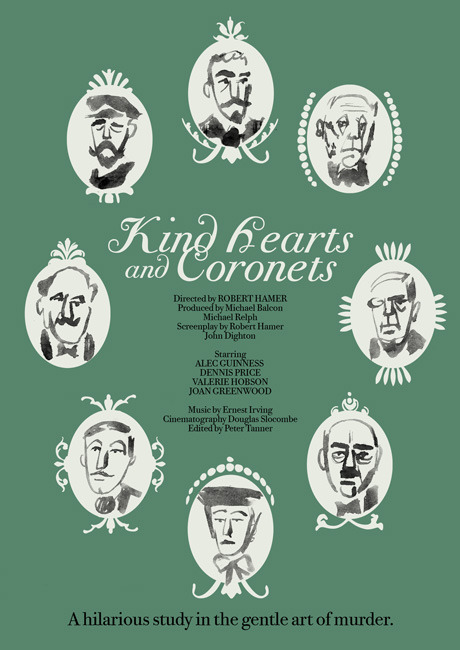
As Oito Vítimas (1949) / Kind Hearts and Coronets (1949)


Um ator interpretando mais de um personagem na mesma peça é algo comum no teatro. Também é comum no cinema, desde a era muda. Obviamente, com o tempo tudo pôde ficar mais interessante, e em vez de apenas dois papéis, um ator podia interpretar três – como Peter Sellers em “Doutor Fantástico”, de 1964 – ou mais papéis. Minha pesquisa descobriu que o ator que interpretou a maior quantidade de papéis em um só filme foi Michael Palin em “Monty Python em Busca do Cálice Sagrado” (1975) – ele interpretou DOZE personagens (embora possamos dizer que Buster Keaton interpretando todos na cena do concerto em “The Play House”, de 1921, perfaça mais que 12 personagens). Alec Guinness não ficou com o recorde no livro do Guinness (hahaha), mas ele fez proeza semelhante à de Palin 26 anos antes.

An actor playing more than one role in the same play is something common in theater. It is also common in film, since the silent era. Of course, with time things could become more interesting, and instead of the standard two roles, one actor could play three – like Peter Sellers in “Doctor Strangelove”, from 1964 – or more roles. My research found that the actor that played the most roles in a single film was Michael Palin in “Monty Python and the Holy Grail” (1975) - he played TWELVE characters (although it can be said that Buster Keaton playing everyone in the music hall scene from 1921's “The Play House” outnumbers 12). Alec Guinness didn't get the Guinness Book record (see what I did?), but he preceded Palin's prowess by 26 years.


Na cadeia, na noite anterior à sua execução, Louis (Dennis Price) conta sua história. Começa o flashback. Louis é filho de um cantor italiano e de uma nobre inglesa que fugiu para se casar. O pai de Louis morreu quando ele nasceu, e a família da mãe a rejeitou. Ela criou Louis com dificuldade, mas sempre o lembrando de que ele era um duque. Também rejeitado pela família D’Ascoyne, Louis começa a trabalhar numa loja de tecidos e sofre quando sua mãe morre e também quando a moça de quem ele gosta, Sibella (Joan Greenwood), o rejeita.

In the jail, the night before being executed, Louis (Dennis Price) tells his story. Enters the flashback. Louis is the son of an Italian singer and an English noblewoman who eloped and left her family. His father died when he was born, and his mother's family wouldn't accept her back. She raised Louis with difficulty, but she always reminded him that he was a Duke by birth. Also rejected by the D'Ascoyne family, Louis goes to work as a draper and suffers when his mother dies and also when the girl he loves, Sibella (Joan Greenwood), rejects him.


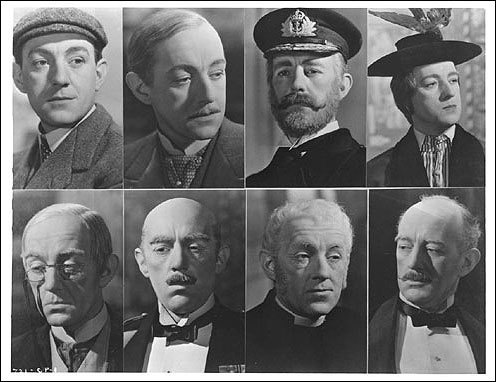
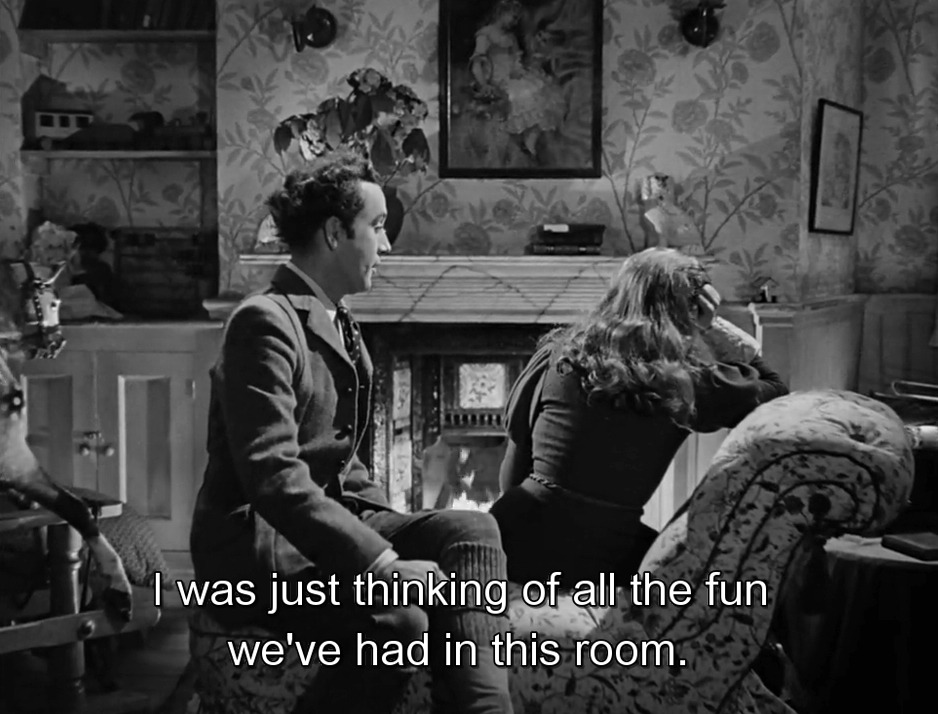
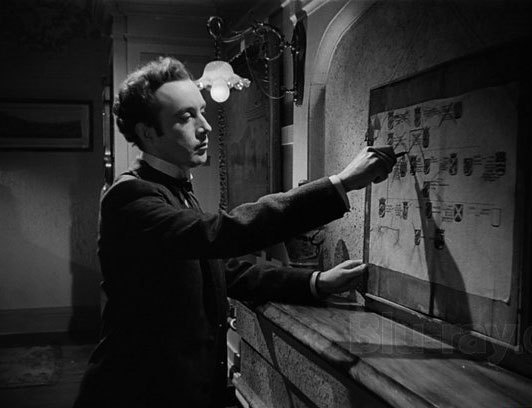
É aí que ele se lembra de algo que Mamãe disse uma vez: se 12 pessoas da família D’Ascoyne morressem, ele seria o herdeiro. Então Louis começa a ler o obituário diariamente na esperança de que essas pessoas tenham morrido – até que ele decide terminar o trabalho sozinho e matar os últimos oito membros da família D’Ascoyne – todos interpretados por Alec Guinness.

Then he remembers something Mama once said: if some 12 people from the D'Ascoyne family dropped dead, he would be the heir. So Louis starts reading the obituary daily in the hope to see those people dead – until he decides to finish the job himself and kill the last eight D'Ascoynes – all played by Alec Guinness.


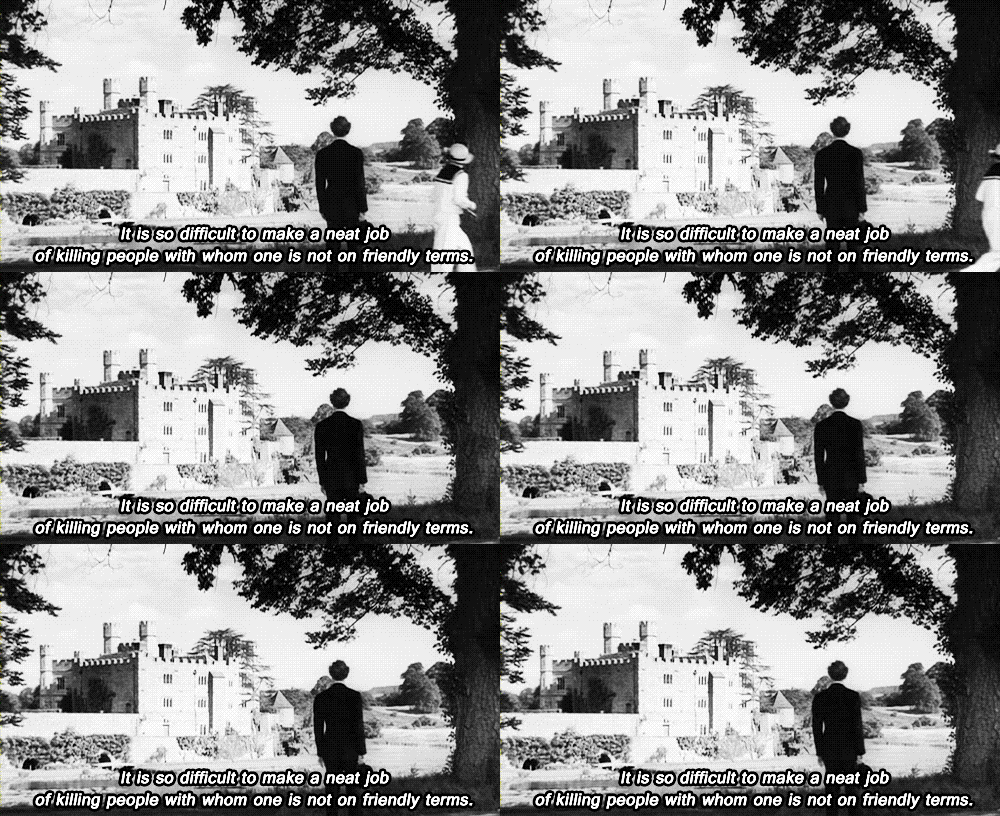
O primeiro encontro e a primeira morte são fruto do acaso, e dali em diante Louis começa a planejar sua vingança. Seus planos mudam um pouco quando ele se interessa por Edith (Valeria Hobson), viúva de uma das vítimas. É ela que diz a frase que dá o título original do filme em inglês.

The first meeting and killing is by chance, and from then on Louis starts plotting his revenge. His plans change a bit, of course, when he becomes interested in Edith (Valerie Hobson), the widow of one of his victims. She is the one to quote the original film title.


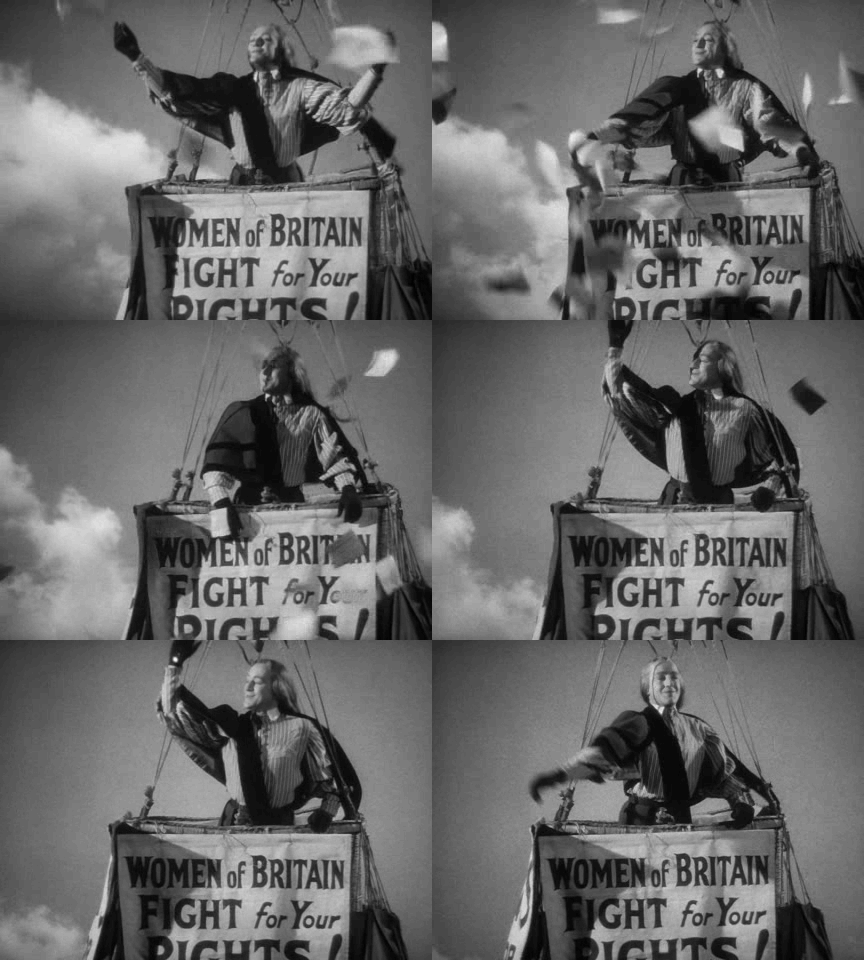
“As Oito Vítimas” prova o que nós já sabemos: que Alec Guinness é um ator muito, muito bom. E não é que ele se parece um pouco com Lon Chaney quando está caracterizado como o fotógrafo de 24 anos – que parece ter bem mais do que 24 anos? Também é divertido ver Guinness interpretando uma mulher, Agatha D’Ascoyne, uma sufragista em uma sequência breve e sem falas.

“Kind Hearts and Coronets” proves what we already know: that Alec Guinness is a very, very good actor. And doesn't he look a bit like Lon Chaney when he plays the 24-year-old photographer – who looks WAY older than 24? It's also fun to see Guinness as a woman, Agatha D'Ascoyne, a suffragette in a very brief sequence without lines.


Logo antes de fazer este filme, Alec Guinness interpretou Fagin em “Oliver Twist” (1948), um papel que também exigiu transformação física com maquiagem e perucas. Obviamente, isso foi muito pouco se comparado com as oito caracterizações de “As Oito Vítimas”. Originalmente, Guinness ia interpretar apenas três membros da família D’Ascoyne, mas ele insistiu em interpretar todos os oito – desafiando pessoas da indústria do cinema que não acreditavam que Alec poderia ser uma grande estrela de cinema.

Right before making this film, Alec Guinness played Fagin in “Oliver Twist” (1948), a role for which he also underwent physical transformation with make-up and wigs. Of course, this was very little next to the eight characterizations in “Kind Hearts and Coronets”. Originally, Guinness was going to play three members of the D’Ascoyne family, but he insisted on playing all eight – thus defying the people in the film industry who though Alec couldn’t become a big film star…


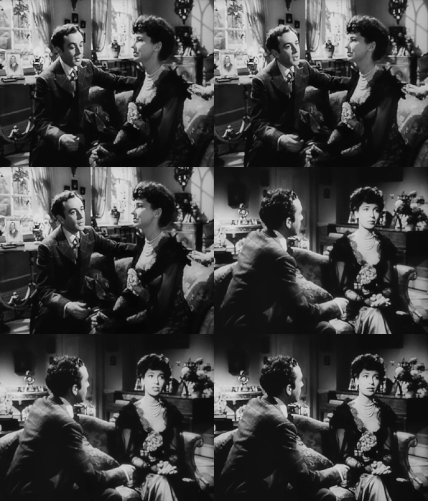
Quando Louis se oferece para se casar com Edith, depois de respeitado o período de luto, temos uma interessante composição de cena: entre Edith e Louis, conversando, há a cadeira do falecido marido, nunca mais usada após a morte dele – é a presença invisível atravancando os planos de Louis. Mas um diálogo posterior revela que Louis na verdade ama Sibella, com quem ele ainda se encontra, mesmo ela sendo casada.

When Louis offers himself to marry Edith, after the grief period is over, we have an interesting disposal of the props: between Edith and Louis, as they talk, there is the late husband's chair, never used again after his passing – it’s the invisible presence working against Louis’s plans. But a later dialogue reveals that Louis really loves Sibella, who he's still seeing, even though she is married.


O filme foi produzido por Michael Balcon – fundador dos estúdios Balcon-Saville-Fredman e Gainsborough Pictures, estúdios onde Hitchcock trabalhou na era muda, e também avô de Daniel Day-Lewis – e dirigido por Robert Hamer. Hamer também adaptou o livro para a tela, e ficou muito animado por poder fazer um filme diferente de todos que já haviam sido feitos na Inglaterra. Balcon mais tarde disse que “As Oito Vítimas” era seu filme favorito feito nos estúdios Ealing, e aquele que resistiria ao teste do tempo – como de fato aconteceu.

The film was produced by Michael Balcon – founder of the Balcon-Saville-Freedman studios and Gainsborough Pictures, where Hitchcock worked in the silent era, and also Daniel Day-Lewis's grandfather – and directed by Robert Hamer. Hamer also adapted the novel to the screen, and was more than excited to be able to make a film unlike any other ever made in England. Balcon later said that “Kind Hearts and Coronets” was his favorite film made at Ealing studios, and the one that would certainly stand the test of time – as it did.


“As Oito Vítimas” se passa durante a era Eduardiana, o que significa que você verá muitos figurinos maravilhosos – eu até prefiro a moda da Era Eduardiana à da Era Vitoriana, simplesmente porque eu imagino que os vestidos da década de 1910 são mais confortáveis. Sibella e Edith usam lindos vestidos – mesmo sendo de classes sociais diferentes, não vejo muita diferença no figurino das duas, talvez apenas nos acessórios.

“Kind Hearts and Coronets” is set during the Edwardian era, which means that you'll see many wonderful outfits – I actually prefer the Edwardian fashion to the Victorian fashion, simply because I imagine the 1910’s dresses to be more comfortable. Sibella and Edith both wear beautiful dresses - even though they are from different classes, I don’t see much difference between their outfits, maybe only between their accessories.


SPOILERS!

Sagaz, charmoso e surpreendente – porque Louis NÃO foi condenado à morte por causa dos assassinatos! – “As Oito Vítimas” sofreu com a idiotice do Código Hays. Como o Código exigia que todos os crimes fossem punidos – algo MUITO LONGE da realidade – uma cena teve de ser adicionada ao final de “As Oito Vítimas” quando o filme estreou nos EUA, tirando o brilhantismo de seu roteiro. Felizmente, o cinema se livrou desta bobagem e hoje nós podemos, e devemos, apreciar “As Oito Vítimas” em toda sua glória britânica original e

Witty, charming and surprising – because Louis was NOT condemned to be killed because of the murders! – “Kind Hearts and Coronets” suffered with the Production Code’s idiocy. Because the Code demanded all crimes in film to be punished – something FAR AWAY from the truth – a scene had to be added to the ending of “Kind Hearts and Coronets” when it was released in the US – destroying the brilliant screenplay. Thankfully, cinema got rid of this nonsense and now we can, and must, appreciate “Kind Hearts and Coronets” in all its original unapologetic British glory.

P.S.: Depois de escrever o post, fiquei sabendo de algumas façanhas ainda maiores alcançadas no cinema mudo: em 1916, o ator Marcel Perez interpretou DEZESSEIS personagens no curta-metragem "A Busy Night", que ele mesmo dirigiu, e em 1929 Lupino Lane interpretou VINTE E QUATRO personagens e dirigiu "Only Me"!

P.S.: After writing this post, I got to know about even bigger prowesses accomplished in silent cinema: in 1916, actor Marcel Perez played SIXTEEN character in the short film "A Busy Night", directed by himself, and in 1929 Lupino Lane played TWENTY-FOUR characters and directed the aptly titled "Only Me"!

This is my contribution to the Rule Britannia Film Blogathon, hosted by Terence at A Shroud of Thoughts.

Related Posts Plugin for WordPress, Blogger...