} Crítica Retrô: Maggie Smith

Tradutor / Translator / Traductor / Übersetzer / Traduttore / Traducteur / 翻訳者 / переводчик

Showing posts with label Maggie Smith. Show all posts

Monday, September 6, 2021

A Primavera de uma Solteirona (1969) / The Prime of Miss Jean Brodie (1969)

 Edimburgo, 1932. Uma mulher sai de sua casa numa bicicleta. A mulher é a senhorita Jean Brodie (Maggie Smith), uma professora de uma escola só para garotas. Ela está em seu melhor momento, ela sabe disso e diz isso, e toda sua dedicação vai para as meninas que ela ensina. Ela se interessa por beleza, arte e verdade. Entre suas alunas, ela tem quatro favoritas que estão sempre com ela: Sandy (Pamela Franklin), Jenny (Diane Grayson), Monica (Shirley Steedman) e a nova aluna Mary McGregor (Jane Carr).

Edinburgh, 1932. A woman leaves her house in a bicycle. The woman is Miss Jean Brodie (Maggie Smith), a teacher at a local all-girls school. She is in her prime, she knows that and she says that, and her dedication is all for the girls she teaches. She is interested in beauty, art and truth. Among her pupils, she has four favorites who are always with her: Sandy (Pamela Franklin), Jenny (Diane Grayson), Monica (Shirley Steedman) and new student Mary McGregor (Jane Carr).

Num diálogo muito bom, Sandy e Jenny discutem sobre a definição de “melhor momento” da senhorita Brodie. Jenny diz que elas deveriam estar vivendo naquele momento os dias mais felizes da vida delas, de acordo com o pai dela. Mas a senhorita Brodie fala de seu momento atual como a plenitude, e Sandy diz que esse momento é tão bom porque a senhorita Brodie não se casou. Seus pais não alcançaram a plenitude, Sandy diz. Jenny acrescenta: “Não, mas eles transam!”

In a very nice dialogue, Sandy and Jenny argue about Miss Brodie’s definition of “prime”. Jenny says that they should be living now the happiest days of their lives, her father told her. But Miss Brodie talks about her current prime as the best days, and Sandy says that her prime is so joyful because Miss Brodie didn’t get married. Their parents don’t have primes, Sandy says. Jenny adds: “No, they have sexual intercourse!”

As meninas duvidam que a senhorita Brodie tenha transado com seu namorado Hugh, que morreu na Primeira Guerra Mundial, mas a verdade é que, agora mesmo em sua plenitude, a senhorita Brodie está cheia de admiradores. Ela teve um caso com o professor de artes, Teddy Lloyd (Robert Stephens, então marido de Maggie Smith), que também está pintando um retrato dela - na verdade, todas as pinturas dele são inspiradas na senhorita Brodie! O professor de música Gordon Lowther (Gordon Jackson, abaixo) também está interessado nela.

The girls doubt that Miss Brodie ever had sexual intercourse with her boyfriend Hugh, who died in World War I, but the truth is that, right now in her prime, Miss Brodie is now short of admirers. She had an affair with the arts teacher, Teddy Lloyd (Robert Stephens, then Maggie Smith’s husband), who is also painting her portrait at his studio - in fact, everybody he paints ends up looking like Miss Brodie! The music teacher Gordon Lowther (Gordon Jackson, below) also pursues her.

A vida amorosa da senhorita Brodie não incomoda a severa diretora da escola, Miss Emmeline Mackay (Celia Johnson), mas seus métodos de ensino pouco ortodoxos e sua dedicação às quatro alunas favoritas - um grupo chamado de As Meninas Brodie - não agradam à diretora. Conforme o tempo passa, os problemas com a diretora crescem, e as Meninas Brodie começam a explorar as oportunidades da vida sozinhas.

Miss Brodie’s love life doesn’t bother the strict school headmistress Miss Emmeline Mackay (Celia Johnson), but her unique teaching methods and her dedication to her four favorite pupils - a group called The Brodie Girls - upset the headmistress. As time passes, the troubles with the headmistress grow, and the Brodie Girls start to explore life on their own.

A senhorita Brodie é diferente do resto dos professores da escola, e isso pode ser percebido pelas roupas que usa. Enquanto todos os outros usam preto e cinza, ela usa vestidos listrados ou echarpes coloridas. Seu melhor momento acontece quando ela entra em confronto com a diretora, interpretada por Célia Johnson - que talvez você conheça de “Desencanto” (1945), de David Lean - em seu último trabalho no cinema.

Miss Brodie is different from the rest of the staff at the school, and this can be seen in her clothes. While all others wear black and gray, she wears dresses with stripes or colorful scarves. Her best moment happens when she clashes with the headmistress, played by Celia Johnson - who you may know from David Lean’s “Brief Encounter” (1945) - in her final film role.

É interessante parar e pensar sobre o conceito de “melhor momento” ou “plenitude” para uma mulher. Primeiro, não existe conceito semelhante para os homens, ou ao menos o melhor momento para os homens dura muito mais do que para as mulheres. Tomemos por exemplo um filme que reuniu duas grandes estrelas de Hollywood em seus melhores momentos, “Amor na Tarde” (1957): quando o filme foi feito, Audrey Hepburn tinha 28 anos e Gary Cooper tinha 56 - o dobro da idade dela!

It’s an interesting thing to stop and think about the concept of “prime” for a woman. First, there is no such concept for men, or at best men’s prime lasts much longer than it does for women. Take for instance a film that united two Hollywood superstars in their primes, “Love in the Afternoon” (1957): when the movie was made, Audrey Hepburn was 28 and her co-star Gary Cooper was 56 - twice her age!

Maggie Smith tinha 35 quando “A Primavera de uma Solteirona” foi lançado. Na época, muitas pessoas a considerariam realmente uma “solteirona”. Ela já era balzaquiana, - termo usado para se referir a uma mulher com 30 anos de idade, por causa de um livro de Honoré de Balzac, “A Mulher de Trinta Anos” - uma mulher independente, charmosa, confiante e bem-resolvida. Por sua performance Maggi Smith ganhou o Oscar de Melhor Atriz, derrotando Liza Minnelli, Jane Fonda, Jean Simmons e Geneviève Bujold.

Maggie Smith was 35 when “The Prime of Miss Jean Brodie” was released. At the time, many people would consider her an “old spinster”. She is already a “balzaquiana”, - term used to refer to a woman in her thirties, because of a novel by Honoré de Balzac, “La Femme de Trente Ans” - an independent, charming, confident, resolute woman. For her performance Maggie Smith won the Best Actress Oscar, beating Liza Minnelli, Jane Fonda, Jean Simmons and Geneviève Bujold.

Já que estamos falando sobre idade, devemos mencionar que a maioria das garotas era velha demais para seus papéis. As personagens deveriam ter 12 anos de idade, ou seja, ser pré-adolescentes impressionáveis, mas a maioria delas tinha cerca de 20 anos e pelo menos uma delas já era mãe. Pamela Franklin, que interpreta Sandy com maestria, tinha18 anos durante as filmagens. De acordo com o IMDb, as carteiras usadas nas cenas tinham de ser mais altas que carteiras escolares normais, para que as meninas parecessem menores.

Since we’re talking about age, we must mention that most girls were too old for the parts they were playing. They were supposed to be 12-year-olds, that is, impressionable pre-teens, but most of them were about 20 and at least one of them was already a mother. Pamela Franklin, who plays Sandy brilliantly, was 18 when the film was shot. According to IMDb, the desks used as props on set had to be raised taller than normal school desks, in order to make the girls look smaller.

O título original do filme é “A Plenitude da Senhorita Jean Brodie”. No Brasil o título é “A Primavera de uma Solteirona”. “Primavera” aqui é usado para descrever a época do florescer da vida, mas o termo “solteirona” faz o título soar pejorativo. Em Portugal, o título é “Quando a Primavera Acaba”, enquanto na França, Espanha e Alemanha o título é “Os Melhores Anos da Senhorita Jean Brodie”.

In Brazil the film is titled “The Spring of a Spinster”. “Spring” here is used to describe the time life blooms, but the term “spinster” - “solteirona” no original - is pejorative. In Portugal, the title is “When Spring Ends”, while in France, Spain and Germany the title was “The Best Years of Miss Jean Brodie”. 

A senhorita Jean Brodie é uma personagem extremamente complexa. À primeira vista inspiradora, seu maior defeito é ser fascista. Grande apoiadora de Mussolini e Franco, ela doutrina suas meninas - chegando ao ponto de uma delas ir lutar na Espanha com o exército de Franco - e simplesmente não é possível tolerar este tipo de comportamento. Conforme o filme avança, a plenitude da senhorita Brodie passa e ela se torna cada vez mais patética, o que é um excelente, embora pouco usual, desenvolvimento para um personagem. E é isto que torna o filme extraordinário.

Miss Jean Brodie is an extremely complex character. At first inspirational, her biggest flaw is being a fascist. A huge fan of Mussolini and Franco, she indoctrinates her girls - to the point of one of them going to fight in Spain with Franco’s army - and we simply can’t tolerate this kind of behavior. As the film progresses, Miss Brodie’s prime passes and she becomes more and more pathetic, which is a great, yet unusual, character development. And it’s this character development that makes this film extraordinary.

This is my contribution to the No True Scotsman blogathon, hosted by Gill at Realweegiemidget Reviews. 

Saturday, February 22, 2020

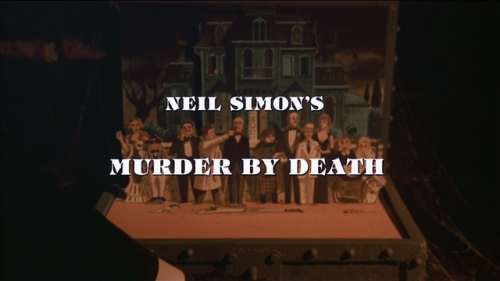
Assassinato por Morte (1976) / Murder by Death (1976)


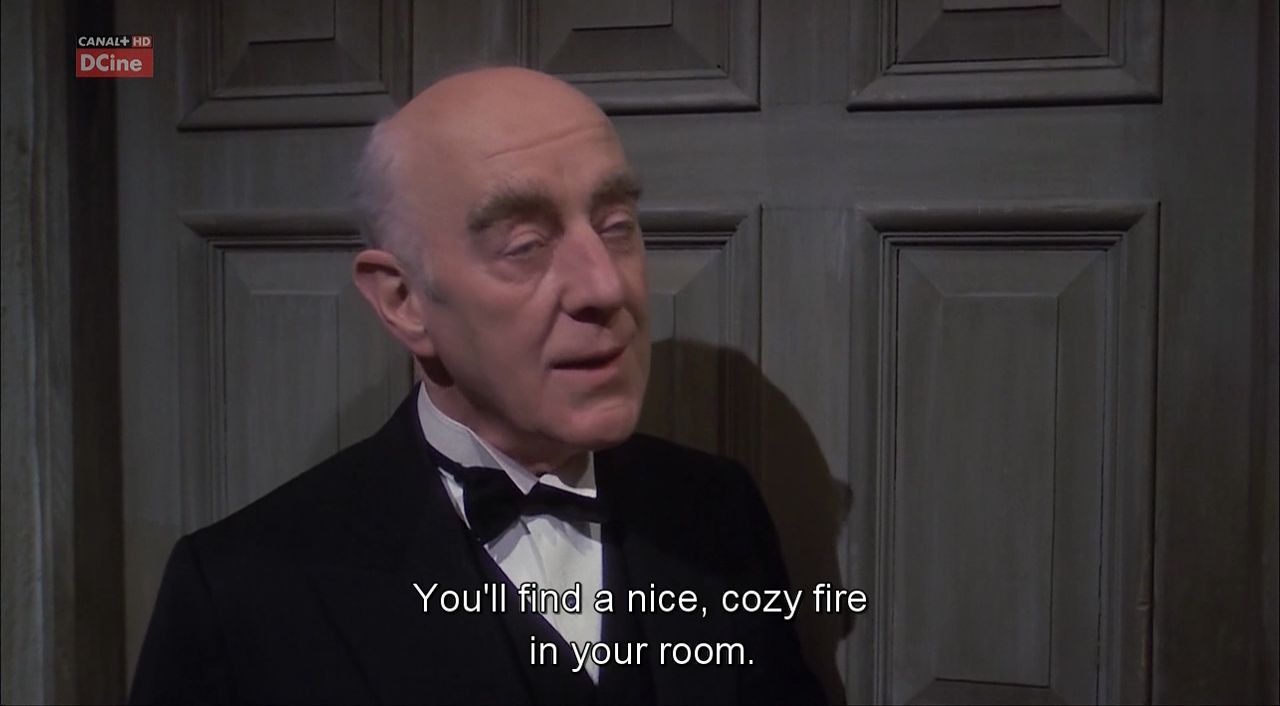
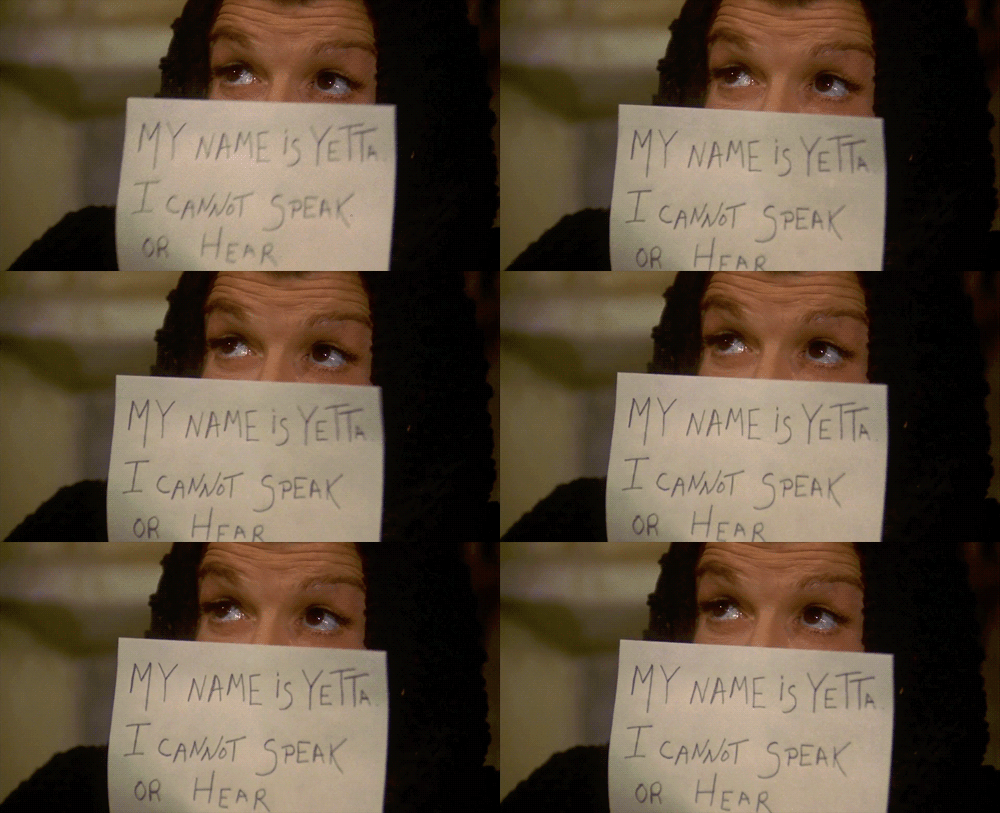
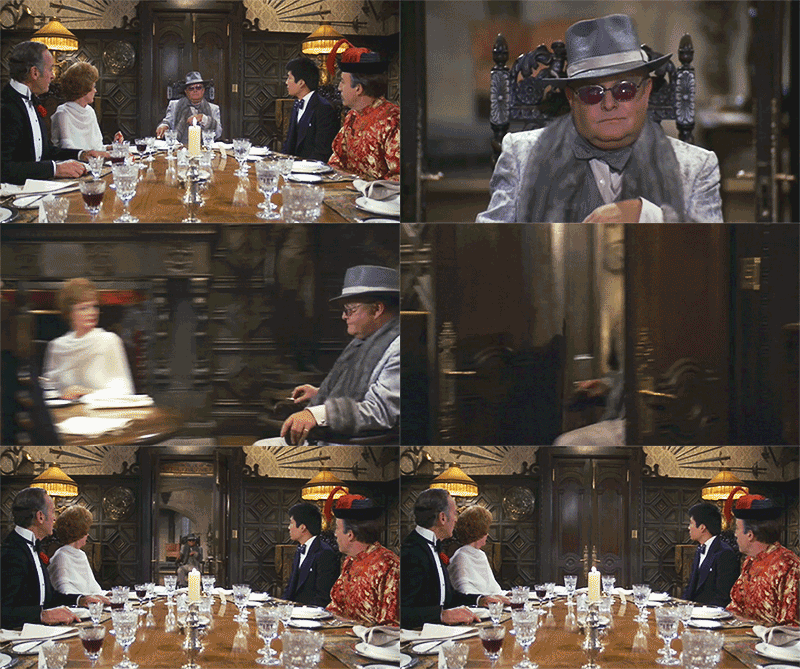
Sempre que um crime é cometido em filmes de mistério, nós costumamos suspeitar do mordomo. Em “Assassinato por Morte”, uma deliciosa comédia de mistério, esta ideia é subvertida desde o início, porque o mordomo, Jamesir Bensonmum (Alec Guinness), é cego. E a nova cozinheira, Yetta (Nancy Walker), também não é suspeita, porque ela não pode ouvir ou falar. Ah, e eu disse que se trata de suspeitos de um crime que ainda não foi cometido?

Whenever a crime occurs in a whodunit film, we're taken to suspect the butler. In “Murder by Death”, a delightful whodunit comedy, this idea is subverted since the beginning, because the butler, Jamesir Bensonmum (Alec Guinness), is blind. And the new cook, Yetta (Nancy Walker), is not a suspect either, because she can't hear or speak. Oh, and have I said that we're talking about suspects of a crime that hasn't yet occurred?


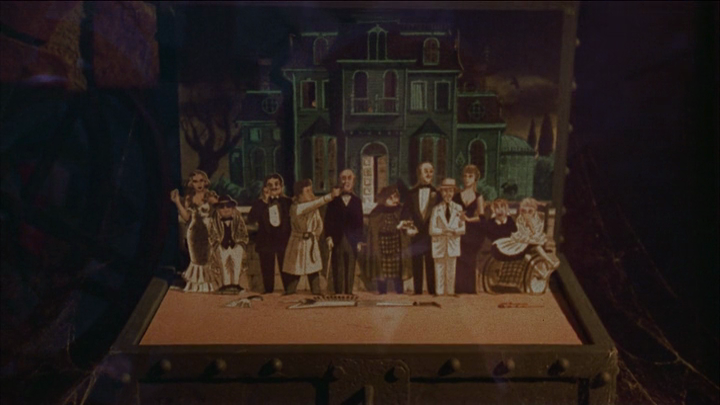
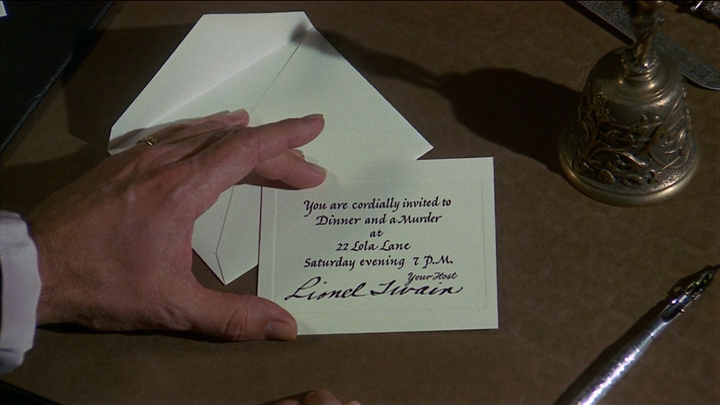
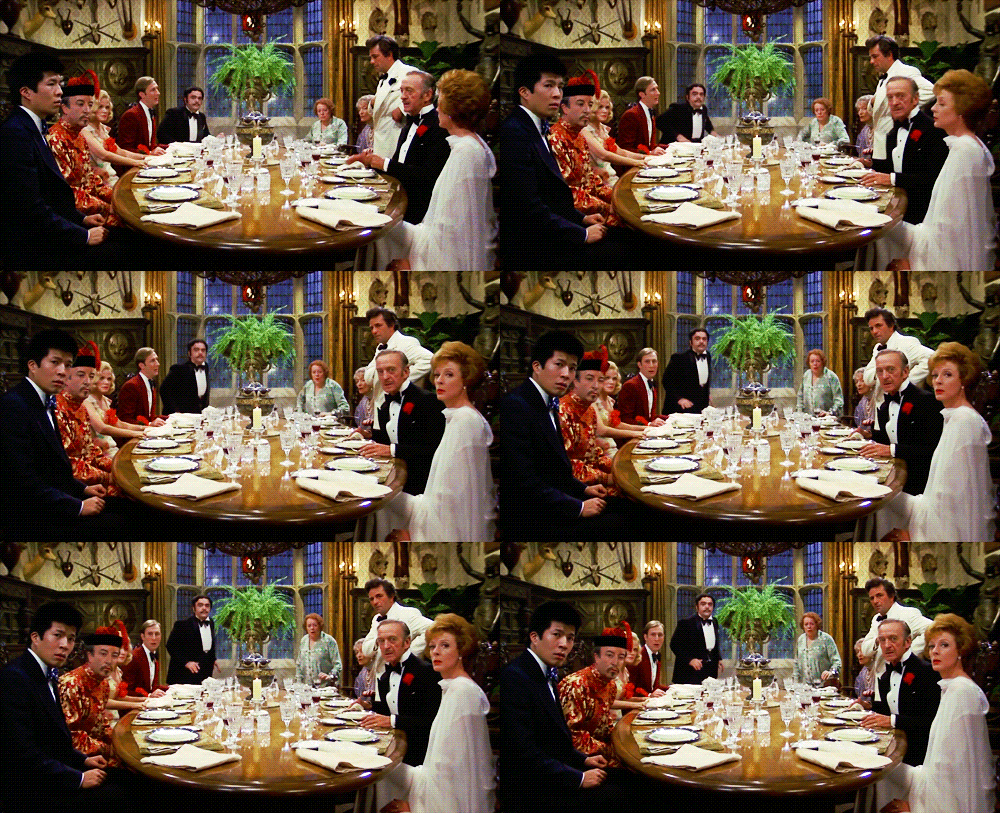
O maluco Sr Twain convida os maiores detetives do mundo para um “jantar e assassinato”. Seus convidados são Dick (David Niven), Dora Charleston (Maggie Smith) e seu cãozinho terrier, Sam Diamond (Peter Falk) e sua secretária, Sidney Wang (Peter Sellers) e seu filho adotivo, Milo Perrier (James Coco) e seu motorista, e Jessica Marbles (Elsa Lanchester) e sua enfermeira.

The twisted Mr Twain invites the world's top detectives for “dinner and murder”. His guests are Dick (David Niven), Dora Charleston (Maggie Smith) and their pet terrier, Sam Diamond (Peter Falk) and his secretary, Sidney Wang (Peter Sellers) and his adopted son, Milo Perrier (James Coco) and his chauffeur, and Jessica Marbles (Elsa Lanchester) and her nurse.


Se você gosta de histórias de detetive tanto quanto eu, já deve ter percebido que os personagens têm nomes parecidos com os de detetives famosos: Dick e Dora Charleston são um tributo a Nick e Nora Charles – interpretados por William Powell e Myrna Loy na série de filmes “The Thin Man” -, Sam Diamond é uma homenagem ao Sam Spade de Dashiell Hammett, Sidney Wand faz menção a Charlie Chan, Milo Perrier é uma alusão ao Hercule Poirot de Agatha Christie, e a Sra Marbles também vem da obra de Christie, da Sra Marple. Fãs de cinema clássico ouvirão algumas frases famosas, e também um grito familiar: o toque da campainha é o grito de Fay Wray em “King Kong” (1933).

If you love detective stories as much as I do, you must have realized that the characters are named after famous fictional detectives: Dick and Dora Charleston are a tribute to Nick and Nora Charles – played by William Powell and Myrna Loy in the “Thin Man” movie series -, Sam Diamond refers to Dashiell Hammett's Sam Spade, Sidney Wang is a nod to Charlie Chan, Milo Perrier is an allusion to Agatha Christie's Hercule Poirot, and Mrs Marbles also comes from Christie's work, but from Mrs Marple. Classic film fans will hear a few famous quotes, as well as a familiar scream: the “ring” of the doorbell is Fay Wray’s scream from “King Kong” (1933).


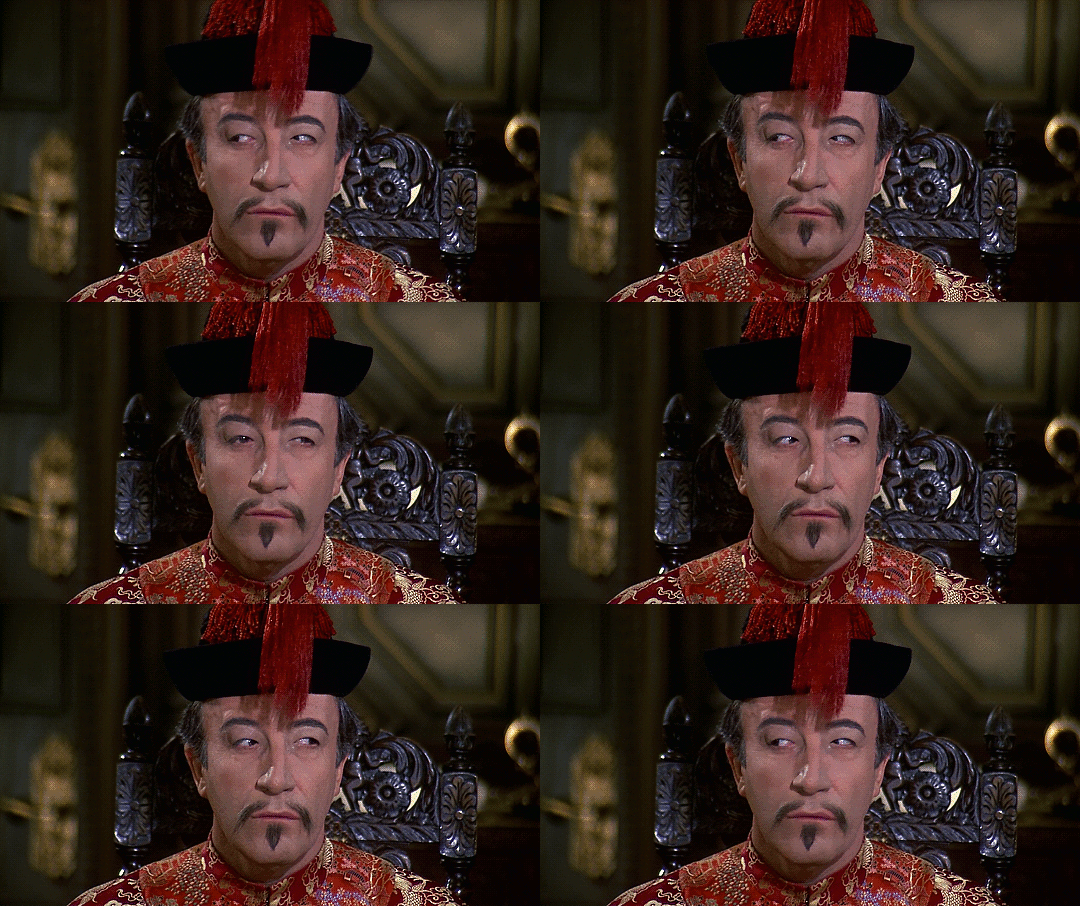
A performance de Peter Sellers como um homem asiático, completada com quimono, pode gerar algum debate. Ele estava fazendo yellow-face? Ou talvez ele estivesse criticando a prática do yellow-face – porque todos os atores que interpretaram Charlie Chan eram brancos, e o mais famoso deles, Warner Oland, era, de todas as nacionalidades possíveis, sueco? O que sabemos é que Sidney Wang é um personagem visto sob uma lente positiva, sendo inteligente e criativo. Uma piada constante é que ele fala inglês errado, algo que enfurece o anfitrião Lionel Twain (ninguém menos que Truman Capote) – mas Wang pode ser entendido com perfeição! No final das contas, a performance de Sellers pode ser um pouco embaraçosa, mas não o suficiente para “cancelar” o filme inteiro.

Peter Sellers's turn as an Asian man complete with kimono may raise some debate. Was he doing yellow-face? Or maybe he was mocking the practice of yellow-face – because all actors that played Charlie Chan were white, and the most famous of them, Warner Oland, was, of all nationalities, Swedish? What we know is that Sidney Wang is a character portrayed on a positive light, as intelligent and resourceful. A running joke is that he speaks broken English, something that infuriates the host Lionel Twain (no other than Truman Capote) – but Wang can be understood perfectly! In the end, Sellers’s performance is a bit cringe-worthy here and there, but not enough to “cancel” the whole film.


E aqui está outra questão: o personagem Bensonmum está zombando de pessoas com deficiência? Eu não acho. O personagem funciona graças ao absurdo que é alguém contratar um cego para ser mordomo – e Wang responde que isso é uma jogada esperta porque o mordomo jamais saberá quanto ele ganha. Muitas das falas mais engraçadas de Bensonmum não têm a ver com sua cegueira, e gags fáceis porém estúpidas são evitadas.

And here’s another question: is the character Bensonmum making fun of people with disabilities? I don’t think so. This character works thanks to the absurdity of someone hiring a blind man as a butler – and Wang answers that this is clever because the butler won’t know how much he gets paid. Many of Bensonmum’s funniest lines have nothing to do with him being blind, and easy but stupid gags are avoided.


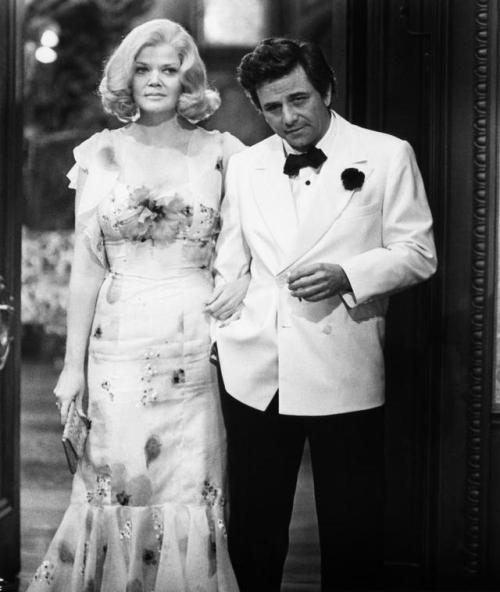
Um Peter Falk vesgo faz sua melhor imitação de Humphrey Bogart como Sam Diamond, enquanto sua esperta companheira Tess Skeffington é interpretada por Eileen Brennan. Enquanto isso, o motorista de Milo Perrier, Marcel (James Cromwell), parece mais esperto que seu patrão glutão. Nesse sentido – e também considerando Bensonmum e Yetta – os ajudantes roubam a cena em “Assassinato por Morte”, e são geralmente mais engraçados do que os detetives.

A cross-eyed Peter Falk tries his best Humphrey Bogart impression as Sam Diamond, while his clever girl Tess Skeffington is played by Eileen Brennan. Meanwhile, Milo Perrier's chauffeur Marcel (James Cromwell) seems smarter than his glutton boss. In this sense – and also considering Bensonmum and Yetta – the helpers steal the scene in “Murder by Death”, and are often funnier than the detectives.


Considerando o elenco, “Assassinato por Morte” pode ser colocado entre os filmes all-star que eram mais comuns na Era de Ouro de Hollywood – sendo “Grande Hotel” (1932) e “Jantar às Oito” (1933) os filmes mais famosos desta categoria. Duas outras estrelas deveriam estar no elenco: Myrna Loy foi a primeira opção para Dora Charleston, e Katharine Hepburn faria a personagem Abigail Christian, uma paródia de Agatha Christie. As duas desistiram, por isso Maggie Smith foi escolhida para ser Dora e a personagem Abigail foi eliminada e a Sra Marbles foi criada em seu lugar.

Considering the cast, “Murder by Death” can be put among the all-star films that were more common during the Golden Age of Hollywood – being “Grand Hotel” (1932) and “Dinner at Eight” (1933) the most famous all-star movies. Two more stars were supposed to appear: Myrna Loy was the first choice for Dora Charleston, and Katharine Hepburn was supposed to be a parody of Agatha Christie called Abigail Christian. Both dropped, and thus Maggie Smith was cast as Dora and the character of Abigail was erased and Mrs Marbles was created instead.


Neil Simon escreveu “Assassinato por Morte” diretamente para o cinema, ao contrário de sucessos anteriores, como “Descalços no Parque” (1967) e “Um Estranho Casal” (1968), que foram concebidos como peças e depois adaptados para o cinema. Desde a primeira leitura o elenco amou o roteiro, e o clima durante as gravações era ótimo – mesmo que às vezes um ataque de riso arruinasse uma tomada. Bem, nós compreendemos as risadas incontroláveis.

Neil Simon wrote “Murder by Death” directly for the cinema, unlike his earlier successes, as “Barefoot in the Park” (1967) and “The Odd Couple” (1968), that were conceived as plays and then adapted to movie. Since the first table read the cast loved the screenplay, and  the mood during filming was great – even though sometimes the cast laughed so much that a shot was ruined. Well, we can understand the uncontrollable laughter.


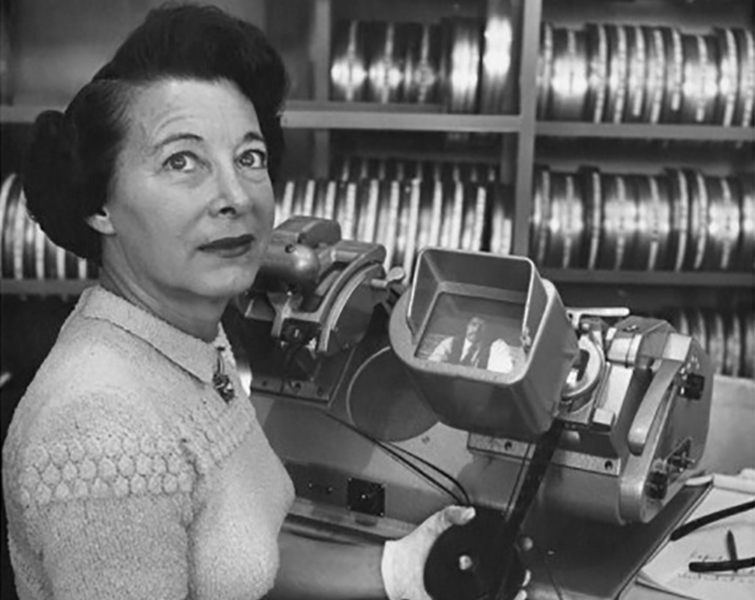
Creditada como “supervisora de edição” temos Margaret Booth, uma editora fantástica que trabalhou em alguns dos maiores clássicos, como “O Grande Motim” (1935), “A Dama das Camélias” (1936), “O Mágico de Oz” (1939) e “Ben-Hur” (1959). Ela começou em Hollywood em 1921, foi também produtora e redatora, e viveu até os 104 anos.

Credited as “supervising film editor” we have Margaret Booth, a legendary editor that has worked in some of the biggest classic films, including “Mutiny on the Bounty” (1935), “Camille” (1936), “The Wizard of Oz” (1939) and “Ben-Hur” (1959). She started in Hollywood in 1921, was also a producer and writer, and lived to be 104.


“Assassinato por Morte” certamente influenciou “Os Sete Suspeitos” (1985), um filme de mistério baseado em um jogo. Eileen Brennan está em ambos os filmes. O final de “Assassinato por Morte” me lembrou de “Charada” (1963), mas com mais reviravoltas. Depois destes filmes, o cinema se cansou de mistérios, e agora eles são bem mais raros (embora os recentes “Assassinato no Expresso do Oriente” (2017) e “Entre Facas e Segredos” (2019) possam assinalar uma voltas do gênero) – o que é uma pena porque, além de serem divertidos, estes filmes sempre podem terminar com a revelação de que o mordomo é o culpado.

“Murder by Death” certainly influenced “Clue” (1985), a film based on a game that is also a whodunit. Eileen Brennan stars in both. The ending of “Murder by Death” reminded me of “Charade” (1963), but with more plot twists. After those films, cinema got a bit tired of whodunits, and now they’re much rarer (although the recent “Murder on the Orient Express” (2017) and “Knives Out” (2019) may signal a genre comeback)  – which is a shame because, besides being entertaining, these films can always end with the reveal that the butler did it.

This is my contribution to the Butlers and Maids blogathon, hosted by Patricia and Rich at Caftan Woman and Wide Screen World.


Related Posts Plugin for WordPress, Blogger...