} Crítica Retrô: Jean Cocteau

Tradutor / Translator / Traductor / Übersetzer / Traduttore / Traducteur / 翻訳者 / переводчик

Showing posts with label Jean Cocteau. Show all posts

Tuesday, May 5, 2020

Orfeu (1950) / Orphée (1950)

O que torna uma história um clássico? Como o diretor Jean Cocteau diz no começo de “Orfeu” (1950), uma lenda é uma história que ultrapassa as barreiras de tempo e espaço. É uma história universal, que pode acontecer em qualquer lugar, em qualquer momento, com qualquer um. O mesmo acontece com um clássico: é universal. Não importa quanto tempo se passou desde que o clássico surgiu, ele ainda mexe com a gente. E um clássico não é uma obra de arte orgulhosa: ele pode ser adaptado, mudado, subvertido – e ainda haverá uma bela história para ser contada. Esta subversão acontece com a lenda de Orfeu em “Orfeu” (1950), de Jean Cocteau.

What makes a classic? As director Jean Cocteau puts in the beginning of “Orpheus” (1950), a legend is a story beyond time and space. It’s a universal tale that can happen anywhere, anytime, with anyone. The same happens with a classic: it’s universal. No matter how long it has been since the classic appeared, it still speaks with us. And a classic is not a proud work of art either: it can be adapted, changed, subverted – and there will still be a beautiful story to be told. This subversion happens to the legend of Orpheus in Jean Cocteau’s “Orphée”, from 1950.

Orfeu (Jean Marais) é um poeta famoso. Um dia, ele está com um amigo no Café dos Poetas quando conhece Jacques Cegeste (Edouard Dermithe). Cegeste é um jovem poeta brilhante. Ele publicou um livro intitulado “Nudismo”: todas as páginas estão em branco. Cegeste é bancado financeiramente por uma mulher rica, conhecida simplesmente como A Princesa (María Casares). Orfeu fica intrigado com Cegeste, mas não tem tempo de conhecê-lo.

Orphée (Jean Marais) is a famous poet. One day, he is hanging out with a friend at the Poets’ Café when he meets Jacques Cegeste (Edouard Dermithe). Cegeste is a brilliant new poet. He has published a book called “Nudism”: all pages are blank. Cegeste is supported financially by a rich woman, known simply as The Princess (María Casares). Orphée finds Cegeste intriguing, but has no time to get to know him.

Cegeste é atropelado por uma motocicleta em frente ao Café dos Poetas. A Princesa o coloca no carro dela e pede que Orfeu venha com eles para “servir de testemunha”. Orfeu os segue, e percebe que Cesgeste já está morto. A Princesa leva o corpo de Cegeste para casa, onde ela revela sua verdadeira identidade: ela é a Morte. Orfeu, chocado, observa a Morte e Cegeste cruzando o limite entre a vida e a morte e desmaia.

Cegeste is run over by a motorcycle in front of the Poets’ Café. The Princess puts him in her car and asks Orphée to come with them “to serve as a witness”. Orphée goes with them, and realizes Cegeste is already dead. The Princess takes Cegeste’s body to her house, where she reveals to be… Death. A shocked Orphée sees Death and Cegeste crossing the limit between life and death and collapses.

No dia seguinte, Orfeu é levado para casa por Heurtebise (François Périer). A esposa de Orfeu, Eurídice (Marie Déa), está preocupada com o desaparecimento do marido, e ansiosa para contar para ele que ela está grávida. Orfeu não fica nem um pouco animado. Ele está agora obcecado com uma estação de rádio peculiar que dita pequenos versos – versos melhores do que qualquer coisa que ele já escreveu. Orfeu começa a mandar os versos que ouviu no rádio para o jornal e isso chama a atenção do comissário local, porque os versos são idênticos aos escritos de Cegeste, e Orfeu se torna suspeito de matar – ou ao menos sequestrar – Cegeste

The following day, Orphée is taken home by Heurtebise (François Périer). Orphée’s wife, Eurydice (Marie Déa), is worried about her husband’s disappearance, and longing to tell him she found out she’s pregnant. Orphée couldn’t be less thrilled. He is now obsessed with a peculiar radio station that dictates little verses – verses better than everything he ever wrote. Orphée starts sending the verses he hears on radio to the newspaper and it calls the attention of the local commissar, because the verses are just like Cegeste’s work, and Orphée becomes a suspect of killing – or at least kidnapping – Cegeste.

A Morte vem para Eurídice. Orfeu se desespera com a morte de sua esposa, e Heurtebise, que havia se apaixonado por Eurídice, decide ajudar, contando um segredo de outro mundo: “Olhe para um espelho sua vida toda e você verá a Morte trabalhando” – os espelhos são o que separam os vivos dos mortos. Orfeu cruza este limite para trazer sua esposa de volta, mas descobre que a Morte está apaixonada por ele.

Death comes for Eurydice. Orphée becomes desperate with the death of his wife, and Heurtebise, who had fallen in love with Eurydice, decides to help, telling an otherworldly secret: “Look at a mirror your whole life and you’ll see Death working” – mirror are the things that separate the living from the dead. Orphée crosses this limit in order to bring his wife back, but finds out that Death is in love with him.

Foi o próprio Cocteau que escreveu o roteiro, subvertendo a antiga lenda e criando dois malfadados casais: Orfeu e a Morte e Eurídice e Heurtebise. Cocteau também foi o narrado do filme. De certa forma, Cocteau criou uma “trilogia de Orfeu”: três filmes baseados na lenda. “Orfeu” é o segundo da trilogia, sendo os outros dois “Sangue de um Poeta” (1932) e “O Testamento de Orfeu” (1960), seu último filme.

It was Cocteau himself who wrote the screenplay, subverting the old legend and creating two doomed couples: Orphée and Death and Eurydice and Heurtebise. Cocteau also provided the narration. In a certain way, Cocteau built an “Orphic Trilogy”: three films based on the legend. “Orphée” is the second of the trilogy, the other two are “Blood of a Poet” (1932) and “Testament of Orpheus” (1960), his last film.
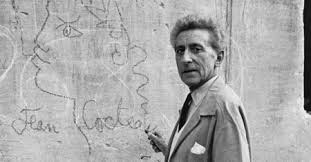
O compositor Georges Auric fez um excelente trabalho em “Orfeu”, em especial na cena em que Orfeu procura a Morte em uma rua movimentada. Auric teve uma longa carreira no cinema, começando com meu favorito, “A Nós a Liberdade” (1931), trabalhando várias vezes com Cocteau – como na obra-prima “A Bela e a Fera” (1946) –, arrasando em “Rififi” (1955) e até compondo para filmes de Hollywood como “César e Cleópatra” (1945), “A Princesa e o Plebeu” (1953) e “Mais Uma Vez, Adeus” (1961).

Composer Georges Auric did a wonderful job in “Orphée”, in special in the scene in which Orphée looks for Death in a busy street. Auric had a long career in film, starting with my personal favorite “A Nous la Liberté” (1931), working several times with Cocteau – like in his masterpiece “La Belle et la Bête” (1946) –, doing great in “Rififi” (1955) and even composing for Hollywood films such as “Cesar and Cleopatra” (1945), “Roman Holiday” (1953) and “Goodbye Again” (1961).

Nos anos 50, outra adaptação da lenda de Orfeu apareceria e se tornaria filme em 1959: “Orfeu Negro”, com a história ambientada no Rio de Janeiro durante o Carnaval. Esta versão é tão interessante quanto a de Cocteau. Cocteau conseguiu, ao recontar a história, mostrar que o amor após a morte é complicado, e o sacrifício é necessário para atingir a felicidade em todo lugar – até mesmo no submundo. Bravo.

In the 1950s, another adaptation of the legend of Orpheus would appear and become a film in 1959: “Black Orpheus”, with the story set in Rio de Janeiro during Carnaval. This version is as interesting as Cocteau’s. Cocteau managed, with his retelling, to show that love after death is a complicated thing, and sacrifice is necessary to be happy everywhere – even in the underworld. Bravo.

This is my contribution to the Love Goes On blogathon, hosted by Steve at MovieMovieBlogBlog II.

Thursday, March 16, 2017

Variações sobre um mesmo tema: A Bela e a Fera (1946, 1991 e além)

Variations on the same theme: Beauty and the Beast (1946, 1991 and beyond)

Tale as old as time
True as it can be
Barely even friendship
Then somebody bends
Unexpectedly
Just a little change
Small to say the least
Both a little scared
Neither one prepared
Beauty and the Beast!
A belíssima história de amor entre uma mulher e uma criatura que parece um búfalo é um conto de fadas que existe há um bom tempo: foi publicada em 1740, escrita por Gabrielle-Suzanne Barbot de Villeneuve. Após a morte de Gabrielle, outra escritora francesa, Jeanne-Marie Leprince de Beaumont, reescreveu o conto de fadas. Mas a história na verdade tem mais de 4000 anos!

The wonderful love story between a woman and a bull-like creature is a fairy tale that has been around for quite a while: it was published in 1740, written by Gabrielle-Suzanne Barbot de Villeneuve. After Gabrielle died, another French writer, Jeanne-Marie Leprince de Beaumont, rewrote the fairy tale.  But the story actually originated more then 4000 years ago!
Originalmente, a Bela e a Fera era bem semelhante a outros contos de fada, pelo menos em relação à história. Bela era a filha mais nova de um comerciante viúvo. Ela tinha duas irmãs muito preocupadas com a aparência e três irmãos que viviam se metendo em confusões. Quando seu pai recebe a notícia de que um de seus navios perdidos foi encontrado, a família toda, que estava há alguns meses vivendo na pobreza, fica em polvorosa. As irmãs querem que o pai lhes traga vestidos chiques com o dinheiro da venda dos produtos do navio. Bela quer apenas uma rosa.

In its genesis, Beauty and the Beast was very similar to other fairy tales, at least in its history. Belle was the youngest daughter of a widow sea merchant. She had two vain sisters and three troublemaker brothers. When her father recovers one of his ships after living some months in poverty, the whole family gets excited. The sisters want the father to bring fancy dresses to them, but Belle wants only a rose.
Voltando da negociação malsucedida no porto, o pai de Bela entra no território da Fera e é pego. A Fera deixa o pai da Bela visitar a família uma última vez, mas ele não volta ao cativeiro: a Bela toma o lugar do pai e parte para o castelo da Fera. A versão francesa de 1946 segue este roteiro. Nela, Bela é interpretada por Josette Day e a Fera por Jean Marais.

Coming back from an ill-fated negotiation at the harbor, Belle's father enters the Beast's territory and is imprisoned. The Beast lets Belle's father see his family for the last time, but he doesn't come back: Belle goes to the Beast's castle in her father's place. The 1946 French movie follows this storyline. Belle is pyayed by gorgeous Josette Day, and the Beast by Jean Marais.
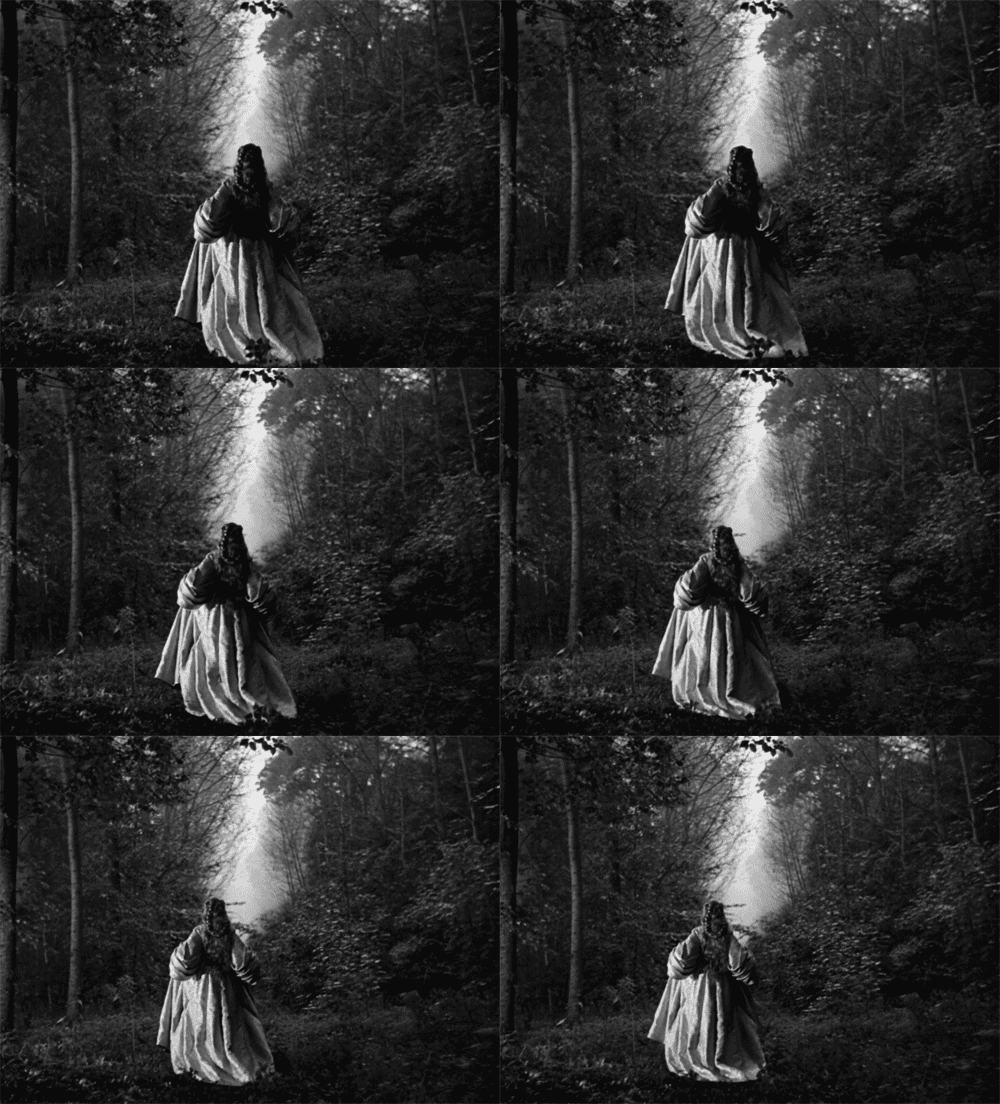
A versão de 1946 pode surpreender quem não está acostumado a ver clássicos e pensa que todos os filmes antigos são primitivos e chatos. Na verdade, a versão francesa é simplesmente mágica, e faz a mágica sem efeitos especiais computadorizados. Ainda por cima, é um filme feito logo após a Segunda Guerra Mundial, conflito do qual a França saiu muito abalada. De certa maneira, este é o tipo de filme que a França precisava na época: um filme que nos faz acreditar em mágica novamente.

The 1946 version may surprise the ones who are not used to old movies and expect it to be dull and primitive. Actually, the French version is nothing but magical, and does it without CGI and when France had just left World War II with lots of scars. In a sense, it was the kind of comfort movie France needed then: a movie that makes you believe in magic again.
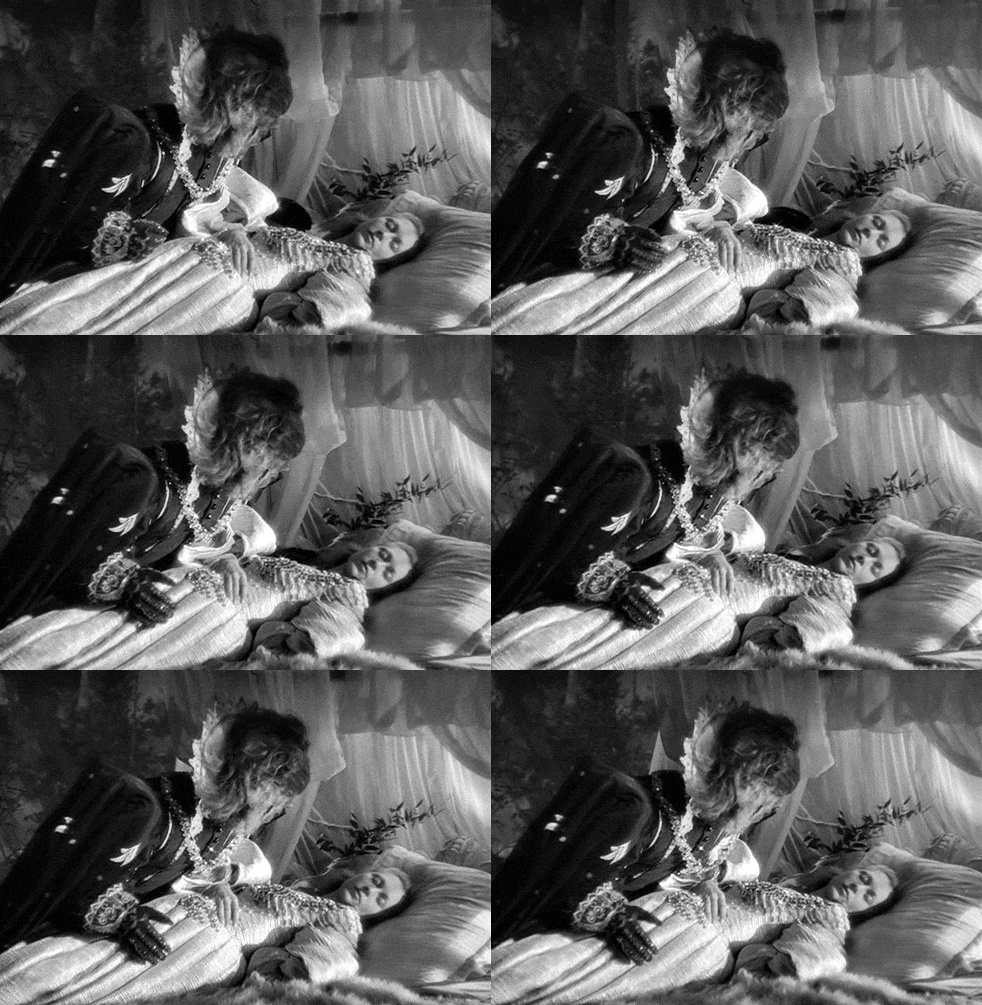
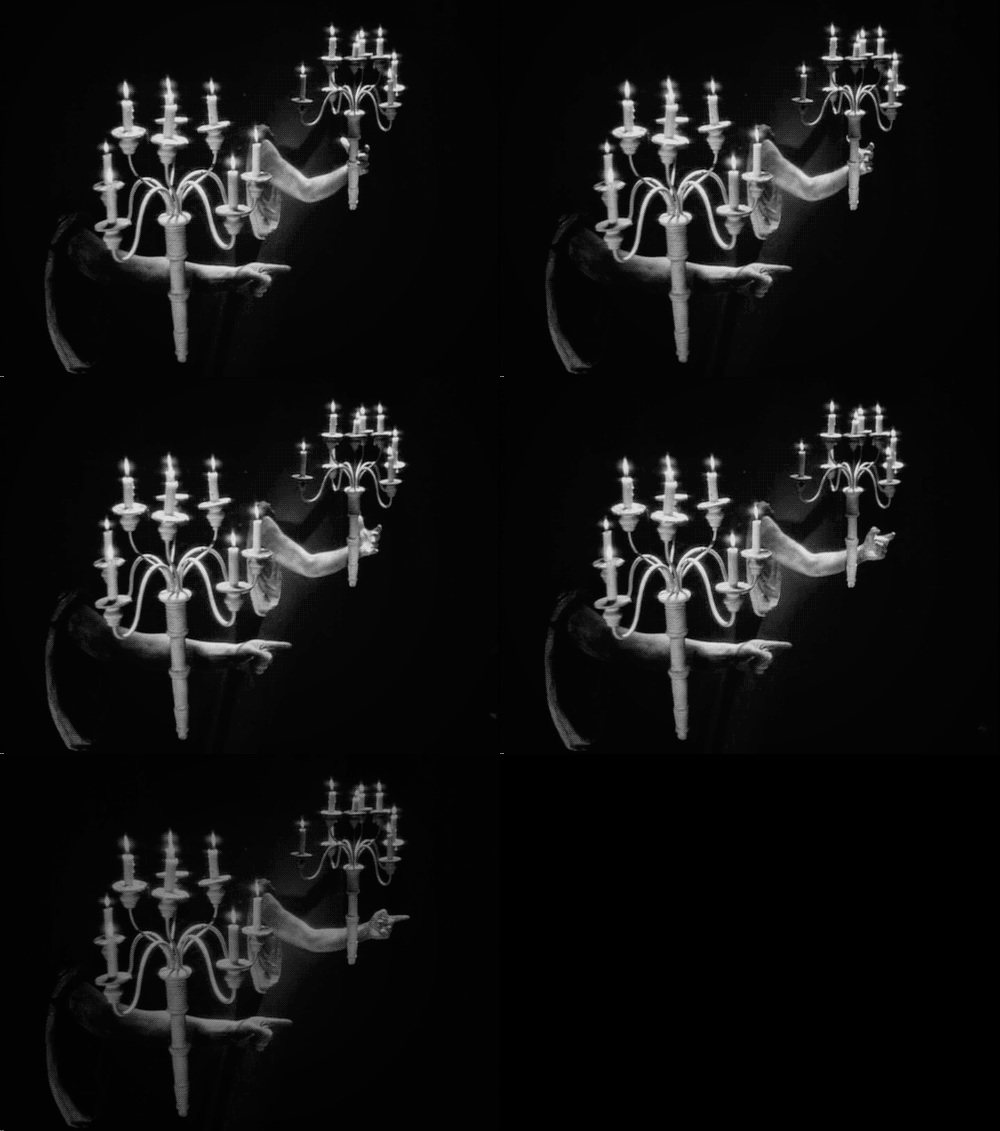
Meu truque favorito no filme de Jean Cocteau são os braços humanos que seguram objetos como velas e espelhos dentro do castelo da Fera. Foi asism que ele conseguiu mostrar os serviçais amaldiçoados no castelo. E isso não é tudo: a iluminação também confere um toque mágico. À luz de velas, Josette Day é etérea, angelical. Esse efeito não poderia ser obtido apenas com a luz em um filme a cores.

My favorite trick in Jean Cocteau's film is his idea of having moving arms holding the objects like candles and mirrors inside the Beast's castle. It was through this trick that he could transport to the screen the cursed maids, butlers and cooks. And this is not all: the lightning also adds to the magic. By candlelight, Josette Day looks ethereal, and such an effect couldn't be achieved in a color film.
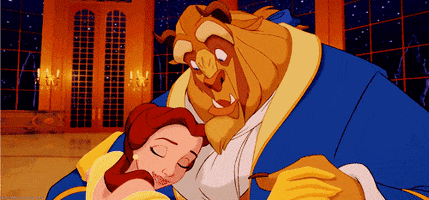
Não, o pai da Bela não era um inventor. Ela não era filha única, nem uma leitora voraz (ou seja, ela não era como eu). Ela não era paquerada pelo insistente e vaidoso Gaston, o homem com grandes músculos e cérebro de ervilha. Tudo isso é o toque Disney. Mas estas mudanças na história, junto com a animação de qualidade, obviamente, fizeram o filme ser indicado ao Oscar de Melhor Filme em 1992. É interessante notar que a animação tem diversas conexões com o cinema clássico.

No, Belle's father wasn't an inventor. She wasn't a single child who was also a bookworm (she wasn't me, after all). She wasn't courted by Gaston, a man with great muscles and a pea-sized brain. All this is Disney exclusivity. But those changes in the story, along with the great animation, of course, made the animated feature be nominated for the Best Picture Oscar in 1992. Interestingly, the animation has many connections to classic films.


A versão de 1946 inspirou o estilo de um episódio de 'Teatro dos Contos de Fada". Neste episódio, dirigido por Roger Vadim, a Bela é interpretada por Susan Sarandon e a Fera por Klaus Kinski. Será que já houve escalação de elenco melhor do que esta?

The 1946 version inspired the look of an episode of “Shelley Duvall's Faerie Tale Theatre”. In this episode, directed by Roger Vadim, Belle is played by Susan Sarandon, and the Beast by Klaus Kinski. Has there ever been a better casting than this?
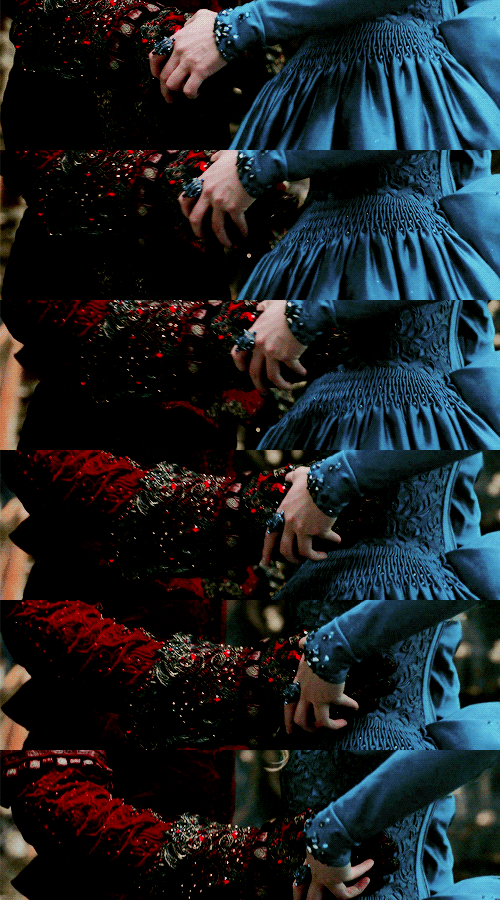
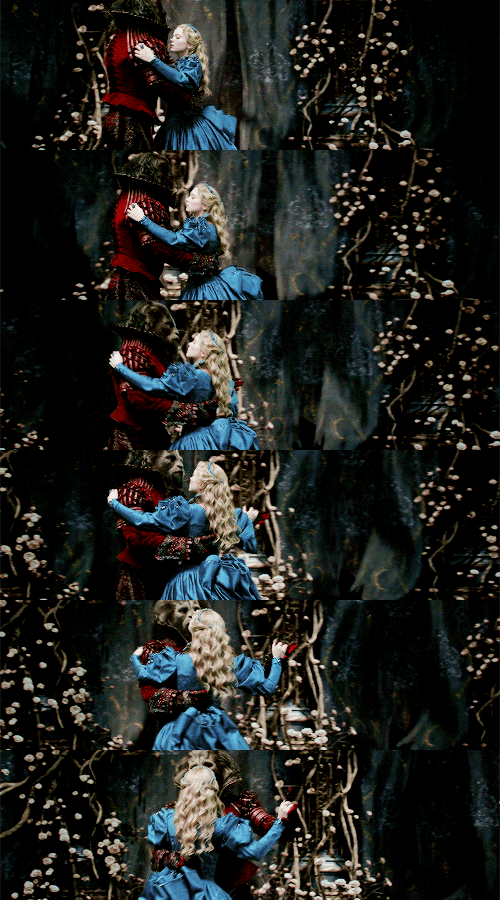
Houve uma versão em 2014, novamente feita na França, com Léa Seydoux e Vincent Cassel nos papéis principais. O filme pode ser visualmente deslumbrante, mas falta algo – talvez tenha sido a narrativa confusa, que avança e retrocede no tempo sem aviso, ou talvez seja a falta de química do casal. De toda forma, o filme é uma festa para os olhos e ao mesmo tempo uma cura para a insônia. Bem, pelo menos nesta versão a Bela e a Fera têm roupas lindas e diferentes do usual para o grande baile:

There was a 2014 version, again made in France, with Léa Seydoux and Vincent Cassel in the lead roles. While it is visually breathtaking, the film lacks something – maybe it is the confused narrative, that goes back and forward in time without warning, or maybe it is the lack of chemistry between the couple. Anyway, it is a feast for the eyes but at the same time a cure for insomnia. Well, at least in this version Belle and the Beast have different and gorgeous clothes for their dance:
A primeira adaptação para o cinema foi feita pela Pathé-Freres em 1899. Outras versões se seguiram, ainda no cinema mudo, tanto na França quanto na Inglaterra, mas há pouquíssimas informações sobre elas. O que se sabe é que existe uma cópia – ou possivelmente um fragmento – da versão de 1913 na Cinemateca Francesa. É uma pensa que não foi feita nenhuma versão da história na Hollywood do cinema mudo!

The first film adaptation of the story to the cinema was made by Pathé-Freres in 1899. Many more versions were made in the silent era, both in France and the UK, but information about these movies is scarce. A copy – or rather a fragment – of the 1913 version certainly exists in the French Cinémathèque, though. It’s a pity that no version of the tale was adapted to the screen in silent-era Hollywood!

Na TV foram feitas também diversas adaptações, entre filmes e episódios, entre os quais está um de “Shirley Temple’s Storybook” de 1958. Séries de TV também se inspiraram na história, incluindo uma versão modernizada estrelada por Linda Hamilton e Ron Perlman que durou três temporadas, de 1987 a 1990.

On TV there were several versions as well, considering TV movies and episodes such as one from “Shirley Temple’s Storybook” in 1958. TV series were also inspired by the tale, including a modernized version with Linda Hamilton and Ron Perlman, that lasted three seasons, from 1987 to 1990.
Qualquer que seja a versão e sua opinião sobre a história – afinal, qual a moral do conto de fadas (as aparências não importam ou o amor cura tudo?) – o cinema sempre conseguiu levar para as telas a magia que nos faz continuar acreditando no conto de fadas.

Whatever the version, and whatever is your reading of the story – which could exactly be the lesson we learned with Beauty and the Beast (appearances don’t matter / love cures everything?) – the film world never failed to translate the magic that makes us believe in fairy tales.
Related Posts Plugin for WordPress, Blogger...