} Crítica Retrô

Tradutor / Translator / Traductor / Übersetzer / Traduttore / Traducteur / 翻訳者 / переводчик

Friday, February 27, 2015

E o Mundo Marcha (1934) / The World Moves On (1934)

*Atenção: No IMDb o título do filme é “A Marcha dos Séculos”. Entretanto, ele foi exibido na televisão como “E o Mundo Marcha”*
Vez ou outra encontro um filme em preto e branco na TV a cabo e, não importa seu enredo ou seus protagonistas, sempre o assisto. E vez ou outra este filme surpresa se transforma, em frente aos meus olhos, em uma obra-prima desconhecida e menosprezada. “E o Mundo Marcha” só é lembrado por ter sido o primeiro filme aprovado pelo Código Hays (está lá o selo número 1 no começo da película), mas este belo trabalho de John Ford merece muito mais reconhecimento.

Every now and then, I find a black and white film on cable TV and, no matter the story or the leads, I watch it. And every now and then this surprise film becomes, in front of my eyes, in an unknown and underrated masterpiece. “The World Moves On” is only rememberd as the first film approved by the Hays Office (the seal with the number 1 is there in the beginning of the film”, but this beautiful film by John Ford deserves a lot more recognition.


Só o nome de John Ford já anuncia que estamos prestes a ver algo muito bom. E a história dividida em fases não decepciona. No início do século XIX, as famílias Warburton e Girard se unem no negócio do algodão. O marido de Mary Warburton (Madeleine Carroll) se torna sócio de Richard Girard (Franchot Tone), mas Mary e Richard se apaixonam. Quase um século se passa até que esse amor possa ser consumado através dos bisnetos de Mary e Richard, que “por acaso” têm o mesmo nome dos antepassados e são interpretados pelos mesmos atores. Até então o negócio do algodão foi um sucesso total, mas tempos tempestuosos estão por vir.

John Ford’s name alone announces that we’re about to see something very good. And the story that is divided in phases does not disappoint. In the beginning of the 19th century, the families Warburton and Girard make a partnership to sell cotton. Mary Warburton’s (Madeleine Carroll) husband becomes partners with Richard Girard (Franchot Tone), but Mary and Richard fall in love. Almost a century goes by until this love can be consummated through Mary’s and Richard’s great-grandkids, who “by chance” have the same name as them and are played by the same actors. Until then the cotton business had been going well, but bad times are coming.


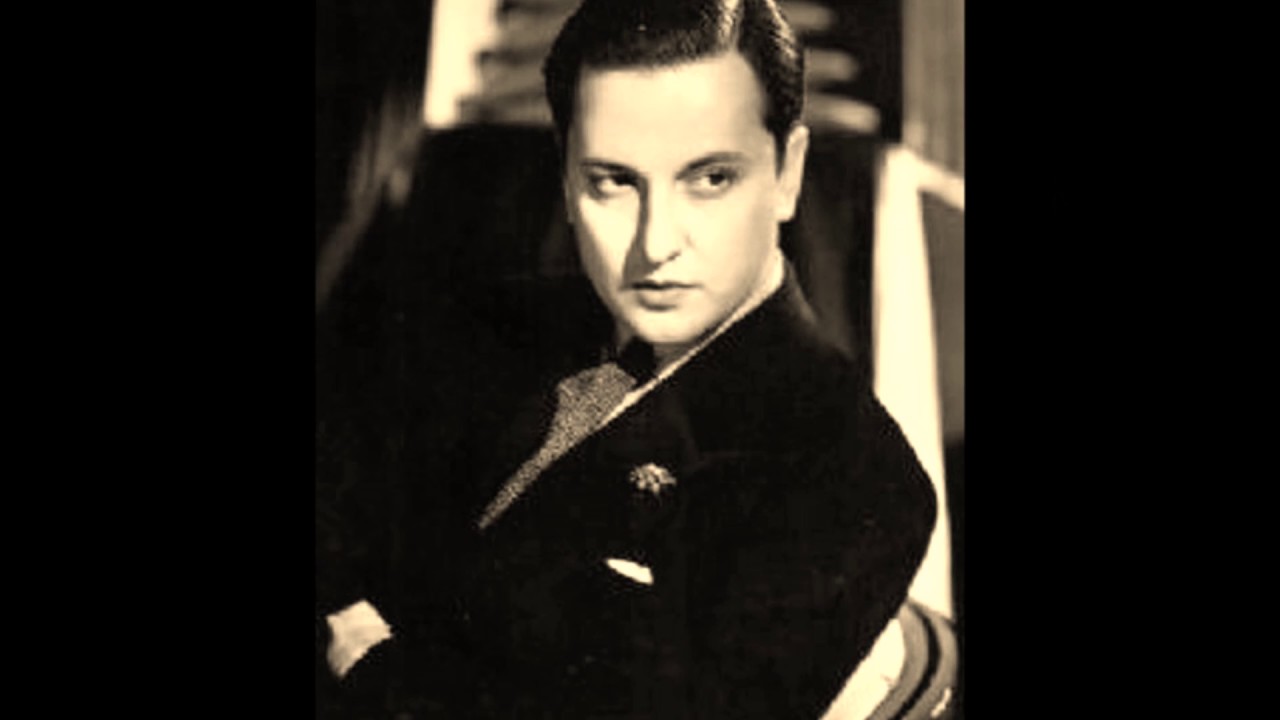
Um fortuito detalhe do enredo: o negócio de algodão é comandado por diversos herdeiros, cada um vivendo em um país afetado pela Primeira Guerra Mundial. Temos percepções diferentes dos campos de batalha e da luta dentro dos exércitos francês, inglês, americano e alemão. O ator que interpreta Henri Girard, aliás, é o brasileiro Raul Roulien, que John Ford considerava “meu amigo e grande ator”.

An interesting detail in the plot: the cotton business is managed by several heirs, each one living in a country affected by World War I. Because of this we have different perceptions of the battle field and the fights inside the French, English, American and German armies. The actor who plays Henri Girard, by the way, is the Brazilian Raul Roulien, who John Ford considered “my friend and great actor”.

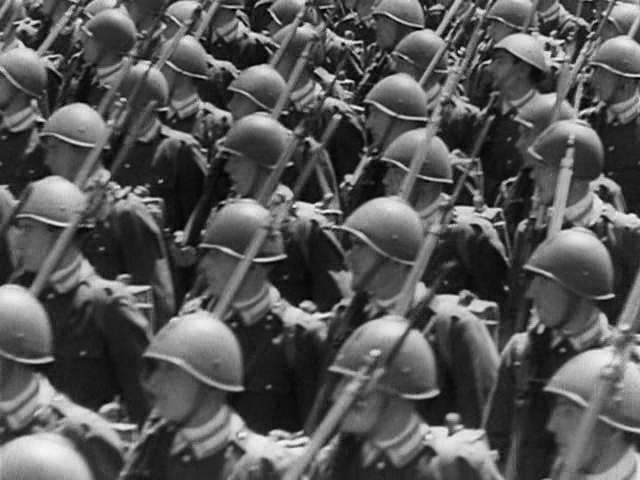
Todo e qualquer espectador fica boquiaberto nos minutos finais do filme, quando John Ford prevê a Segunda Guerra Mundial – com uma marcha de suásticas e tudo o mais. Serão tempos difíceis, prevê a personagem de Madeleine Carroll.

Each and all viewers become speechless in the final minutes of the film, when John Ford predicts World War II – with a march full of swastikas. These will be difficult times, and Madeleine Carroll’s character predicts.


Há, sim, um detalhe que mancha o filme, e não posso deixar de citá-lo: o tratamento do personagem Dixie (Stepin Fetchit) é muito, muito racista. O pobre negro não é nada inteligente, e por isso sempre está envolvido em confusões. Obviamente, a intenção original era usar o personagem como contraponto cômico em meio ao drama, mas aqui John Ford cometeu um grande erro. Em 1934 o personagem poderia ter sido engraçado (e ele até é divertido ainda hoje, porém causa mais vergonha que riso), mas o tempo e as novas ideias de igualdade e respeito mancharam este aspecto do enredo. Só que Stepin Fetchit pouco importava com as reações contra sua persona cinematográfica: parceiro constante de John Ford, foi o primeiro ator negro de cinema a ficar milionário.

There is a negative detail in the film, and I have to mention it: the treatment of the character Dixie (Stepin Fetchit) is very, very racist. The poor black man is not intelligent, and gets involved in many troubles because of it. Obviously, the original intention was to use the character as a comic relief in the middle of so much drama, but John Ford made a huge mistake. In 1934 the character could have been funny (and he is kinda funny even today, but now he generates more shame than laugh), but time and new widespread ideas of equality and respect stained this detail of the film. But Stepin Fetchit didn’t really care about the reactions against his film persona: a constant in John Ford’s stock company, he was the first black actor to become a millionaire.
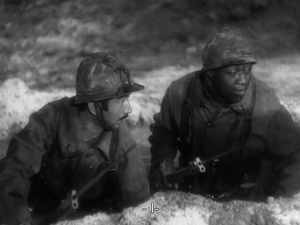
Raul Roulien e Stepin Fetchit
É o melhor filme de algum dos envolvidos? Definitivamente não. Madeleine Carroll fez “Os 39 Degraus / The 39 Steps” em 1935, mesmo ano em que Franchot Tone esteve em “O Grande Motim / Mutiny on the Bounty” e “Perigosa / Dangerous”. John Ford esteve envolvido na confecção de uma dúzia de clássicos, e por isso é até compreensível a mínima atenção dada a este filme.

Is this the best film of any of the involved cast? Not at all. Madeleine Carroll did “The 39 Steps” in 1935, the same year when Franchot Tone did “Mutiny on the Bounty” and “Dangerous”. John Ford was involved in the making of a dozen classics, and that’s why we can understand the little attention given to this film.
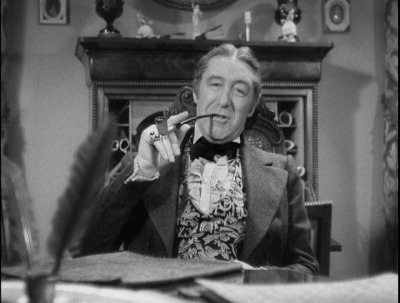

Para Peter Bogdanovich, John Ford confessou que gostaria de esquecer que fez “E o Mundo Marcha”. Ele não queria dirigir o filme. Brigou, discutiu, ganhou a fama de durão, e não escapou. A Fox o obrigou a dirigir a película, pois a intenção era repetir o sucesso de “Cavalgada / Cavalcade”, Oscar de Melhor Filme de 1933 que também contava a saga de uma família durante muitas gerações e vários conflitos. Não havia sobrado criatividade para o roteirista Reginald Berkeley, e o resultado são diálogos e situações que não ficam muito tempo na nossa memória.

To Peter Bogdanovich, John Ford confessed that he’d like to forget that he did “The World Moves On”. He didn’t want to direct the movie. He fought, argued, became known as a tough guy, and had to do it anyway. Fox made him direct the film, because they wanted to repeat the success of “Cavalcade”, the 1933 Best Picture Winner that also told the story of a family through several generations and many conflicts. There was not much creativity left for screenwriter Reginald Berkeley, and the result are dialogs and a situations that don’t stay long in our memories.


O que fica são as cenas de guerra, que causam um estranho déjà vu até no espectador mais jovem. Associei as cenas com “O Grande Desfile/ The Big Parade” (1925), mas a fonte era outra: as elogiadas cenas de batalha eram nada mais que cenas não utilizadas de “Cruzes de Madeira”, filme francês de 1932.

What stay with us is the war scenes, that cause a strange déjà vu even in the youngest viewer. I associated the scenes with “The Big Parade” (1925), but the source was different: the great battle scenes were only unused footage from “Wooden Crosses”, a French film made in 1932.

Madeleine Carroll, emprestada ao estúdio Fox em seu primeiro trabalho nos Estados Unidos, estava mais interessada no diretor Ford que no filme em si. John Ford preferiu esquecer esta sua obra. Franchot Tone não parece ter comentado sobre ela. O filme foi um fracasso de bilheteria, mas surpreende quem hoje, oitenta anos após ser filmado, lhe dá uma chance de mostrar a que veio. Porque até o pior filme de John Ford é excelente.

Madeleine Carroll, loaned to Fox in her first work in the US, was more interested in director Ford than in the film itself. John Ford preferred to forget this work. It looks like Franchot Tone never said anything about it. The film was a box-office failure, but it surprises whoever gives it a try today, eighty years after it was filmed. Because even John Ford’s wors movie is excellent.

This is my contribution to the Madeleine Carroll blogathon, hosted by Dorian at Tales of the Easily Distracted and Ruth at Silver Screenings!

Thursday, February 19, 2015

Bolão do Oscar 2015

Carnaval, Quarta-Feira de Cinzas, início das aulas, bolão do Oscar organizado pelo blog DVD, Sofá e Pipoca: estes são os eventos obrigatórios do mês de fevereiro. E com certeza as apostas para o Oscar são minhas preferidas. Apesar de não ter tanta certeza em minhas previsões quanto tinha em 2014, me arrisquei mesmo assim:

MELHOR FILME: Boyhood – Da infância à juventude

MELHOR ATOR: Eddie Redmayne, A Teoria de Tudo / The Theory of Everything

MELHOR ATRIZ: Julianne Moore, Para Sempre Alice / Still Alice

MELHOR ATOR COADJUVANTE: J.K. Simmons, Whiplash – Em busca da perfeição

MELHOR ATRIZ COADJUVANTE: Patricia Arquette, Boyhood – Da infância à juventude

MELHOR DIRETOR: Richard Linklater, Boyhood – Da infância à juventude

MELHOR ANIMAÇÃO: Como treinar seu dragão 2

MELHOR ROTEIRO ORIGINAL: Birdman

MELHOR ROTEIRO ADAPTADO: Graham Moore, O Jogo da Imitação

EFEITOS VISUAIS: Interestelar

TRILHA SONORA: Johann Johannsson, A Teoria de Tudo / The Theory of Everything

DIREÇÃO DE ARTE: O Grande Hotel Budapeste

FOTOGRAFIA: Emmanuel Lubezki, Birdman

MELHOR CANÇÃO ORIGINAL: Glory, Selma

FIGURINO: Milena Canonero, O Grande Hotel Budapeste

CABELO E MAQUIAGEM: O Grande Hotel Budapeste

MELHOR EDIÇÃO: Boyhood – Da infância à juventude

EDIÇÃO DE SOM: Sniper Americano

MIXAGEM DE SOM: Sniper Americano

MELHOR FILME ESTRANGEIRO: Ida

MELHOR DOCUMENTÁRIO: Citizenfour

DOCUMENTÁRIO DE CURTA-METRAGEM: Crisis Hotline: Veterans Press 1

MELHOR CURTA: The Phone Call

MELHOR CURTA DE ANIMAÇÃO: Feast

Sunday, February 8, 2015

Keaton fala! / Keaton speaks (easily)!

Quem ficou em Hollywood quando os filmes falados viraram primeiro febre, depois regra, não teve alternativa a não ser enfrentar a prova de fogo e tentar repetir o sucesso do cinema mudo na nova era sonora. Alguns falharam, outros tiveram êxito, outros adiaram o máximo possível. Mas é preciso sobreviver em Hollywood, e parte da sobrevivência inclui se adaptar aos novos tempos.
The actors who stayed in Hollywood when talkies became a fever and, later, a rule, had no alternative but face the difficult challenge of repeating the success they had in silents in the new talkie era. Some failed, others were successful, and some others postponed their talkie debut as much as they could. But you had to survive in Hollywood, and part of this survival was adapting oneself to the new times. 


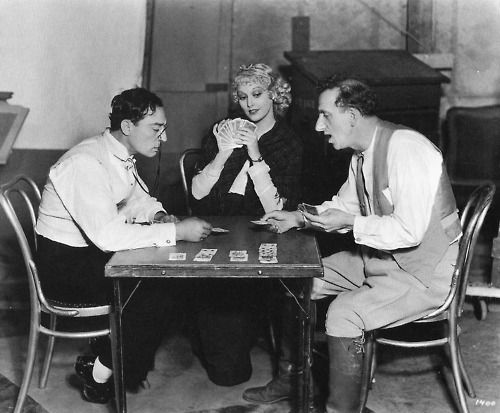
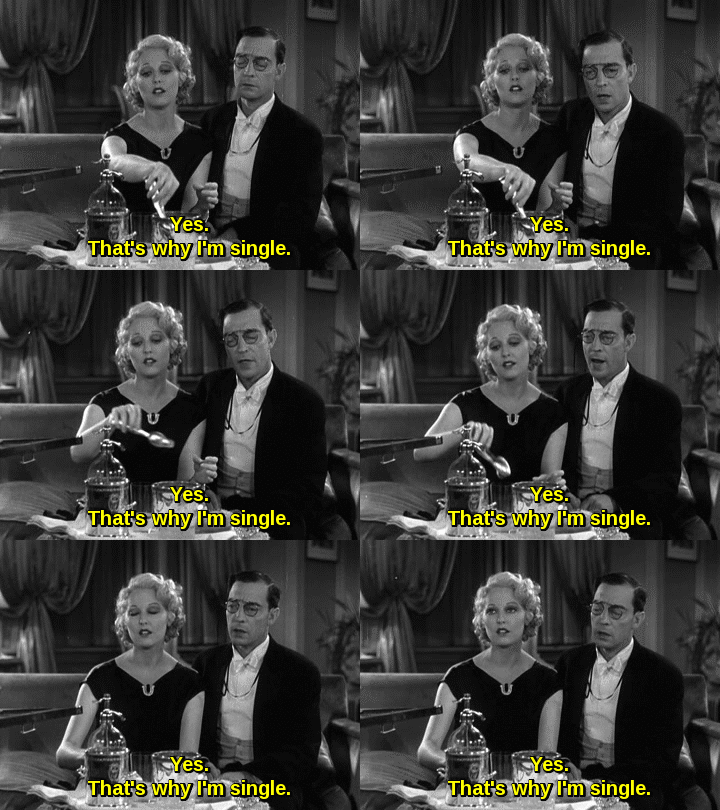
É muito estranho pensar em Buster Keaton... falando. Sua expressão sempre imutável e sua comédia física eram suficientes para garantir fãs e risadas no cinema mudo. E foi com um personagem excêntrico em uma produção sobre os bastidores do mundo teatral (algo que estava muito na moda) que ele deu seu show: “Speak Easily”, de 1932 (no Brasil, o título é “Pernas de Perfil”).

It's very wird to think about Buster Keaton talking. His never-changing expression and physical comedy were more than enough to make his fans laugh in silent cinema. And it was playing an excentric character in a production about the backstage stories in a theater – something in vogue at the time – that Keaton made a success: it was in “Speak Easily”, from 1932.

O solitário Professor Timoleon Zanders “T. Z.” Post está um pouco triste com as insinuações de seu assistente, que diz que a depressão poderá matá-lo a qualquer momento, como aconteceu com seu antecessor. Mas tudo muda quando o Professor recebe a notícia de que herdou 750 mil dólares. Na mesma hora, ele larga tudo e decide viajar. Ele logo vai a uma estação de trem (ah, o que seria de Keaton sem um trem?) e lá encontra uma trupe de artistas, dentre os quais está o músico-ator-comediante James (Jimmy Durante) e a encantadora Pansy Peets (Ruth Selwyn).

Lonely professor Timoleon Zanders 'T.Z.' Post is a little sad with waht his assistant says: that depression can kill him any time now, like it did with his predecessor. But everything changes when the Professor learns he has inherited 750 thousand dollars. He leaves everything behind and decides to travel the world. He goes to a train station – waht would become of Keaton without his trains? - and there he meets a group of artists, among them musician-actor-comedian James (Jimmy Durante) and the charming Pansy Peets (Ruth Selwyn).


Cheio de dinheiro e sem ter o que fazer, o Professor empresta um pouco para pagar as despesas dos artistas, e assim é elevado à posição de gerente do grupo. Ele decide então ir com o show para a Broadway!

With a lot of money and nothing to do, the professor lends some of it to the artists, and they decide to name him the manager of the group. Then, the professor decides to follow the show all the way to Broadway!


Mas há muitos problemas no caminho. Primeiro: trata-se do show com o pior grupo de coristas já visto. O Professor não percebeu isso porque está apaixonado por Pansy, que aliás é a pior das dançarinas. Há também a ambiciosa artista Eleanor Espere (Thelma Todd), que está apenas interessada no dinheiro do Professor. Isso sem mencionar um certo probleminha com a herança do Professor...

But there are many problems in their way. First: this is the show with the most chorus girls ever. The professor doesn't see the other girls because he is love with Pansy, who is, by the way, the worst dancer of them all. There is also ambitious Eleanor Espere (Thelma Todd), who is only interested in the professor's money. And there is also a little problem about the professor's inheritage...


Muitas pessoas notaram uma semelhança entre Buster Keaton e Jim Parsons, que interpreta o Dr. Sheldon Cooper em The Big Bang Theory. Mais de uma vez Jim fez referência a Keaton no Instagram, e choveram comentários sobre como seria incrível se um dia Parsons interpretasse Keaton. Eu aplaudo a ideia e adoraria que isso acontecesse, pois teria a oportunidade de ouro de ver dois de meus ídolos em um. Pois bem, em “Speak Easily” o personagem de Keaton em muito se assemelha a Sheldon. Ambos são professores universitários com poucas habilidades sociais e que acabam provocando risadas sem querer.

Many people noticed the similarities between Buster Keaton and Jim Parsons, who plays the physicist Sheldon Cooper in The Big Bang Theory. Several times Jim mentioned Keaton in his Instagram, and manhy comments pointed that it'd be incredible if someday Parsons played Keaton. I love the idea, because I'd have the opportunity to see two of my idols at once. And in “Speak Easily” Keaton's character is a lot like Sheldon. Both are college teachers with few social skills who make people laugh without meaning it.


Há poucos momentos de comédia física no filme, e estes são os mais divertidos. Sim, há alguns momentos em que a graça vem dos diálogos, e isso não prejudica em nada a performance de Buster Keaton. Colocá-lo em uma dupla com Jimmy Durante (só eu que acho que Jimmy se parece com Ed O’Neil?), aliás, foi uma excelente ideia, tanto é que eles repetiram a parceria em outros dois filmes.

There are few slapstick moments in this film, and these are the best moments. Yes, sometimes there is fun coming from the dialogues, and this doesn't harm Keaton's performance at all. To pair him with Jimmy Durante – who looks like Ed O'Neil in my opinion – was an excellent idea, and they appeared together again in two more films. 


A carreira sonora de Keaton não foi tão brilhante quanto sua fase muda, mas foi, sim, muito boa. Ele fez muitos curta-metragens, trabalhou na televisão e propôs gags para diversos filmes, entre eles o ótimo musical “A Bela Ditadora” (1949). Sua derrocada não veio por causa do som, mas por causa de uma mudança desastrosa: ao assinar contrato com a MGM em 1928, ele perdeu muito de sua liberdade para criar e inovar na comédia.

Keaton's sound career wasn't as brilliant as his silent phase, but it was good nevertheless. He made a lot of short films, worked on TV and was a gag advisor to many films, including the fun musical “Take Me Out to the Ball Game” (1949). His fall wasn't caused by the talkie revolution, but because of a disastrous move: when he signed with MGM in 1928, he lost his creative freedom and stopped inovating in his comedies.


E o cinema sonoro trouxe um pequeno problema: o humor não era mais universal. O filme teria de ser traduzido para que espectadores de outros países os entendessem. E aí começa a loucura: a MGM gravava cada cena dos filmes falados de Keaton três vezes: a primeira em inglês, a segunda em espanhol, e a terceira em outra língua (francês ou alemão). Some a este cansaço alguns problemas pessoais, como o divórcio da esposa Natalie Talmadge, o distanciamento dos filhos e o alcoolismo: está explicado por que o gênio criativo de Keaton não floresceu com o mesmo vigor nos anos 30.

And talkies brought a little problem: humor was not universal anymore. The films had to be translated so the foreign public would understand it. And this is where the craziness begins: MGM shot each scene of Keaton's films three times: once in English, the second time in Spanish and the third time in another language (either French or German). Add to this effort some personal problems, like the divorcing Natalie Talmadge, growing far from his kids and alcoholism: these are the reasons why Keaton's creative genius didn't flourish with the same strength in the 1930s.  


O importante é que Keaton fala. Fala bem e faz comédia. Como nunca deveria ter deixado de fazer.
But the important thing is that Keaton speaks. He speaks well and is funny – as funny as he always was.

This is my contribution to the First Annual Buster Keaton Blogathon, hosted by Lea at Silent-ology.

Tuesday, February 3, 2015

Um perfil de Emil Jannings

A profile of Emil Jannings

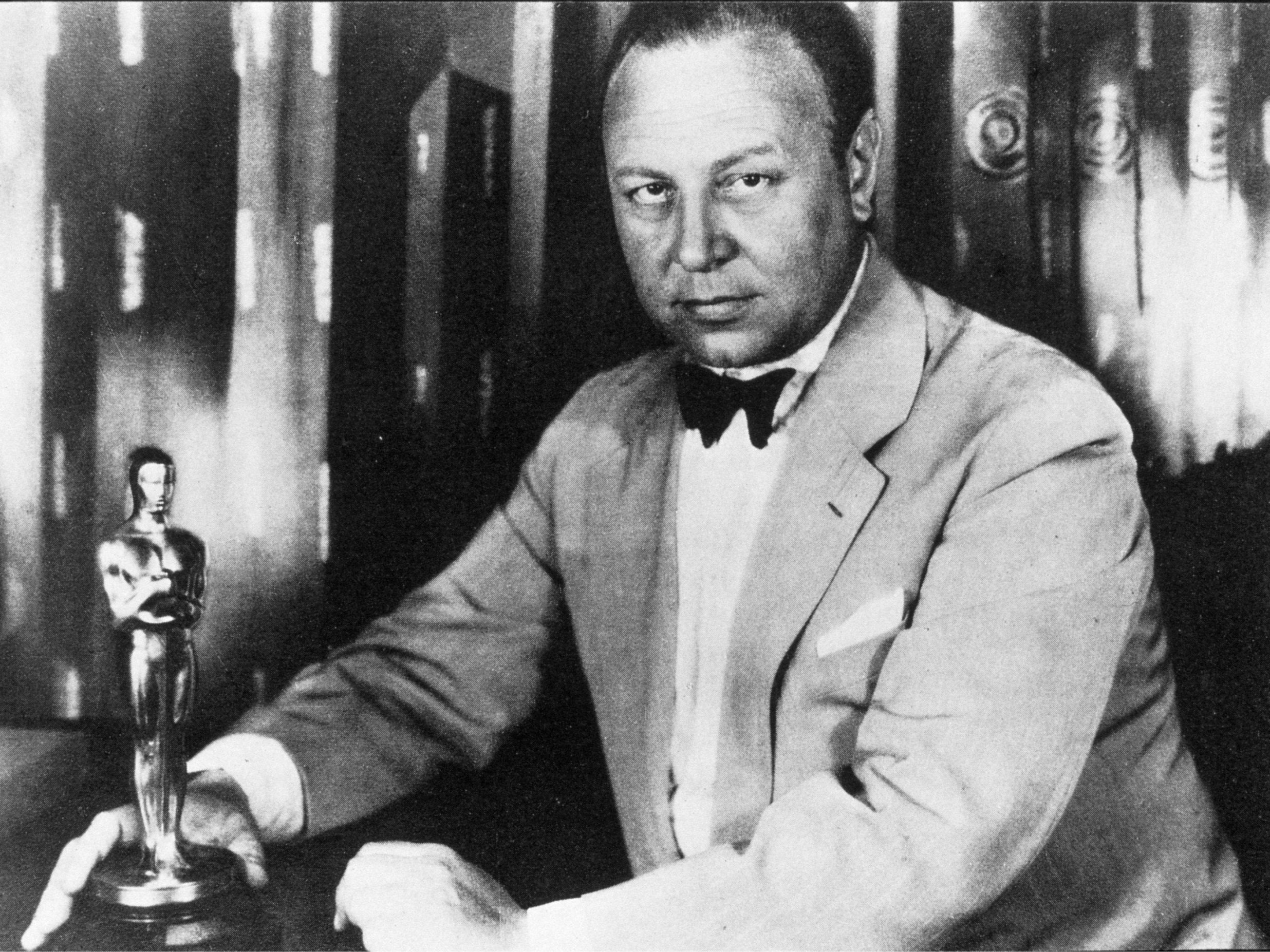
Hoje Emil Jannings é mais lembrado por ter sido o primeiro ganhador do Oscar de Melhor Ator, em 1929. Mas Jannings foi um homem de muitas honras: contracenou com Pola Negri, Marlene Dietrich, Conrad Veidt e Lya De Putti. Foi dirigido por Josef von Sternberg, Ernst Lubitsch, Paul Leni, King Vidor e F. W. Murnau. Chegou a ser considerado o melhor intérprete do mundo. Sua queda foi vertiginosa e muito triste por ter se ligado à pior política do século XX. Mas os verdadeiros fãs do bom cinema saberão apreciar o talento deste homem inconfundível. 

Today Emil Jannings is better remembered as the first winner of the Best Actor Oscar, in 1929. But Jannings was a man of many honors: he worked alongside Pola Negri, Marlene Dietrich, Conrad Veidt and Lya De Putti. He was directed by Josef von Sternberg, Ernst Lubitsch, Paul Leni, King Vidor and F.W. Murnau. He was even considered the best actor of the world. But his fall was huge and sad because he chose the side of the worst force of the 20th century. But the true fans of good cinema will know how to talk about the talents of this remarkable man.

Começamos destruindo um mito: Jannings não era alemão. Theodor Friedrich Emil Janenz nasceu na Suíça em 1884. Pouco encontrei sobre sua infância e juventude, a não ser a informação de que seu pai era americano. Aos 30 anos, em 1914, estreou no cinema e em 1918 já estava com Pola Negri e Ernst Lubitsch trabalhando em “Olhos da Múmia”, em que interpreta um árabe vingativo. Sua carreira oscilou entre papéis de vítima e de vilão.

We start by destroying a myth: Jannings wasn’t German. Theodor Friedrich Emil Janenz was born in Switzerland in 1884. I could not find much about his early years, except the fact that his father was American. At age 30, in 1914, hem ade his film debut and in 1918 he was already with Pola Negri and Ernst Lubitsch working on “The Eyes of the Mummy”, in which he plays a vindictive Arab man. His career alternated roles as a villain and a victim.

Fausto, 1926

Com “A Última Gargalhada” (1924), F. W. Murnau provou que o bom cinema não dispensava apenas diálogos, mas toda e qualquer palavra. Porque os únicos escritos em quase 90 minutos de projeção são o título do filme, o nome do diretor e do ator principal. É um filme psicodélico e cheio de significado, que parte da simples figura de um porteiro de hotel cuja profissão, única glória e alegria, lhe é tirada.

With “The Last Laugh” (1924), F.W. Murnau proved that good cinema didn’t need dialogues nor any written world. Because the only words in almost 90 minutes are the title of the film and the names of the director ando f the main actor. This is a psychodelic movie full of meaning, that brings the journey of a hotel clerk whose profession, his only glory and joy, is taken from him.    

A biógrafa de Rin Tin Tin (porque, sim, o astro canino tinha uma biógrafa) afirma que foi Rin Tin Tin o ganhador do primeiro Oscar de Melhor Ator, em 1929. A maioria dos votos era do cachorro mais popular das telas. Entretanto, receando que, se o prêmio recém-criado fosse entregue a um astro de quatro patas, o Oscar nunca seria levado a sério, a Academia entregou o troféu ao segundo colocado, este humano: Emil Jannings. Para Rin Tin Tin sobrou a honra de morrer no colo de Jean Harlow (quem não iria querer morrer naquele colo?).

Rin Tin Tin’s biographer (because, yes, the dog star had a biographer) claims that Rin Tin Tin was the winner of the Best Actor Oscar, in 1929. Most votes were for the most popular dog on the screen. However, feeling that, if the brand new award was given to a four-legged star, the Oscar would never be taken seriously, the Academy gave the award to the second place, a human: Emil Jannings. For Rin Tin Tin the glory that was left was to die on Jean Harlow’s lap (and who wouldn’t want to that on that lap?).  

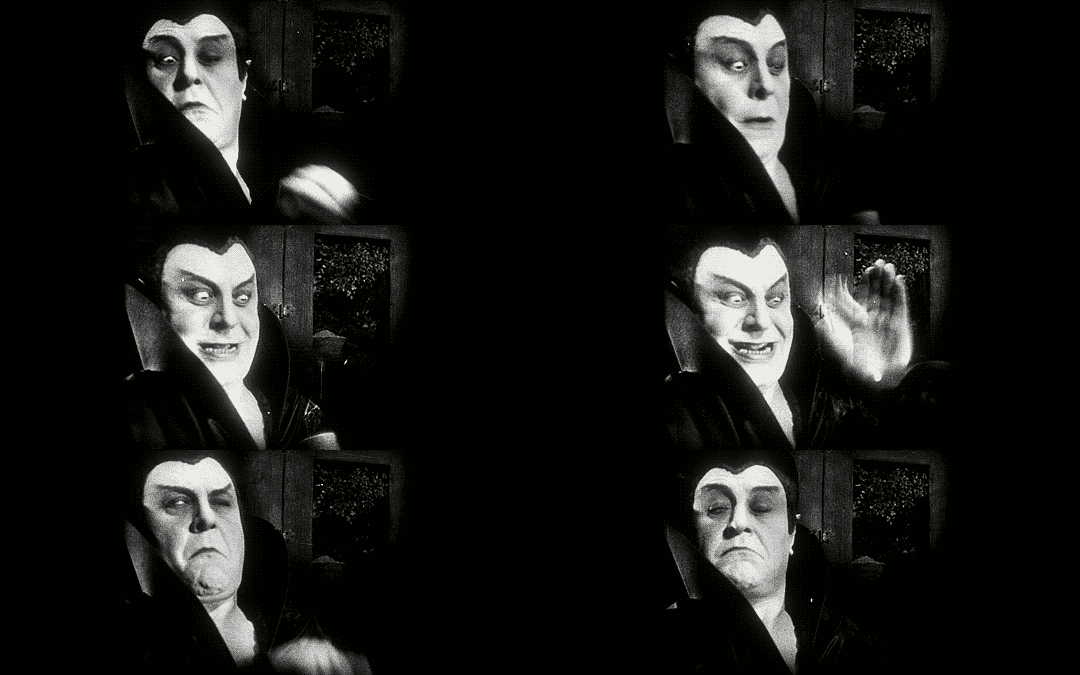
Mas Jannings mereceu o Oscar. Posso ser parcial ao falar isso, porque “A Última Ordem / The Last Command” (1928) é um dos meus filmes mudos favoritos, mas a atuação de Jannings é ESPETACULAR. Uma imagem vale mais que mil palavras, e nem três trilhões de artigos como este seriam suficientes para descrever o real valor deste filme e da atuação de seu protagonista. Um ex-guarda do czar, agora radicado em Hollywood, tem a oportunidade de reviver seu passado ao trabalhar como extra em um filme sobre a Rússia.

But Jannings deserved the award. I may be biased to say that, because “The Last Command” (1928) is one of my favorite silente movies, but Jannings’s performance in SPECTACULAR. An image is worth more than a thousand words, but not even three trillions of articles like this one would be enough to describe the real value of this film and its lead’s performance. A former Czarist guard, now in Hollywood, has the chance to relive his past while working as an extra in a film about Russia.

Entretanto, Jannings não ganhou o Oscar apenas por sua atuação primorosa em “A Última Ordem”. No primeiro ano do prêmio, a Academia permitiu que a indicação fosse feita considerando o trabalho do ator / atriz em múltiplos filmes do ano anterior. E aqui entra uma curiosidade triste: Jannings é o único ator já indicado ao Oscar cujo filme que lhe valeu a indicação (e a vitória) está perdido: “Tortura da Carne / The Way of All Flesh” (1927). Mas há quem dê esperanças de existir uma cópia dele por aí.

However, Jannings didn’t win the Oscar only for his great performance in “The Last Command”. In the first year of the award, the Academy allowed the nomination to be made considering the perfomer’s work in multiple films from the previous year. And here comes a sad curiosity: Jannings is the only actor nominated for an Oscar whose nominated film is lost: “The Way of All Flesh” (1927). But there are those who give us hope that a copy still exists somewhere.

Falando em filmes perdidos, Jannings também foi a estrela de “O Patriota” (1928), dirigido por King Vidor e só pelo trailer que sobrou dá para perceber que era maravilhoso. Tomara que seja encontrada alguma cópia dele nos porões de algum lugar do mundo!

Since we’re talking about lost movies, Jannings was also the star of “The Patriot” (1928), directed by King Vidor and whose trailer is enough to let us know that it was great. We can only hope that a copy of it is found in a basement somewhere!

A era do cinema mudo acabava e Jannings já colecionava glórias e elogios. Ainda viria seu filme mais famoso, e sua ainda mais famosa derrocada. Com a chegada do som em Hollywood, ele voltou para a Alemanha. Ele e Von Sternberg, diretor de “A Última Ordem”, se reuniram para mais uma obra-prima: “O Anjo Azul”, de 1930, em que Jannings interpreta o professor Rath, que se apaixona pela cantora Lola Lola (Marlene Dietrich), uma femme fatale primitiva.

The silent movie era was ending and Jannings already collected glories and compliments. His most famous film was yet to come, and his even more famous downfall. With sound coming to Hollywood, he went back to Germany. He and Vn Sternberg, the director of “The Last Command”, reunited for another masterpiece: “The Blue Angel”, from 1930, in which Jannings plays professor Rath, who falls in love with the singer Lola Lola (Marlene Dietrich), a primitive femme fatale.  

O Anjo Azul” foi proibido quando os nazistas chegaram ao poderem 1933. Marlene Dietrich sairia definitivamente da Alemanha. Josef von Sternberg, nascido na Áustria, também não mais pisaria em solo alemão. E aqui Jannings cometeu seu grande erro: seguiu trabalhando para o cinema de propaganda nazista, tendo a seu lado, por exemplo, a ex-esposa de Fritz Lang, Thea von Harbou.

“The Blue Angel” was banned when the Nazis came to power in 1933. Marlen Dietrich would once and for all leave Germany. Josef von Sternberg, born in Austria, also would never again set foot in German soil. And here Jannings made his big mistake: kept working for Nazi propaganda films, having alongside him, for instance, Fritz Lang’s ex, The von Harbou.

Emil Jannings morreu em 2 de janeiro de 1950. Nunca conseguiu se livrar da mácula que foi ter trabalhado para o Terceiro Reich. Entretanto, seus filmes estão aí (os que sobraram) para provar que o talento de Emil Jannings foi muito maior que seu maior erro.

Emil Jannings died on January 2nd, 1950. He would never see himself free of the mark gained when he worked for the Third Reich. Nevertheless, his films are there (some of them) to prove that Emil Jannings’s talento was bigger than his biggest mistake.

This is my first contribution to the 31 Days of Oscar Blogathon, hosted by mighty trio Aurora, Kellee and Paula at Once Upon a Screen, Outspoken & Freckled and Paula’s Cinema Club.

Thursday, January 29, 2015

Espelho D'Alma (1946) / The Dark Mirror (1946)

Se você gosta de um bom drama, seja em filmes, livros, novelas ou outra mídia, já deve ter encontrado pela frente o clichê da gêmea boa e da gêmea má. Essa fórmula de duas pessoas iguais fisicamente, mas com personalidades diferentes, de modo que uma delas odeia a outra, já foi usada dos mais diversos jeitos, em atrações interessantes ou como um grande atentado à inteligência humana. O truque pode ser conhecido hoje, mas era relativamente novo em 1946. Era a época de filmes noir, dos assassinatos em preto e branco, das femme fatales. Mas e quando não é uma, mas duas femme fatales, uma delas vítima e quiçá cúmplice da outra?

If you like a good melodrama, in film, books, soap operas or any other media, you might have met with the good twin / bad twin cliché. The formula of two people physically identical, but with different, clashing personalities, was already used in many ways, in interesting works of art or as a poor last resource. The trick can be well-known today, but it was relatively new in 1946. Tey were the times of film noir, black and white murders and femme fatales. But what happens when we have not one, but two femme fatales, and one of them is a victim and maybe the accomplice of the other one?


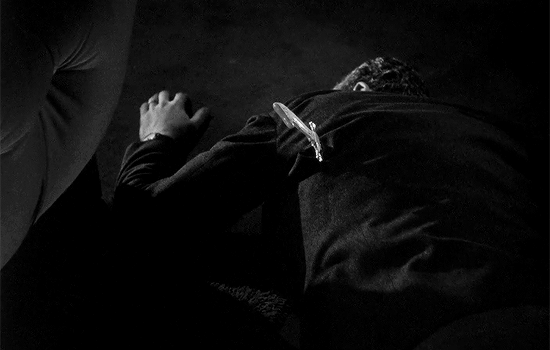
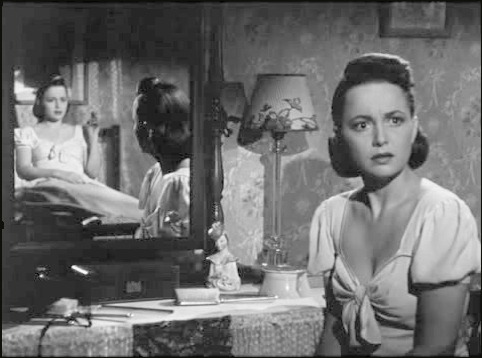
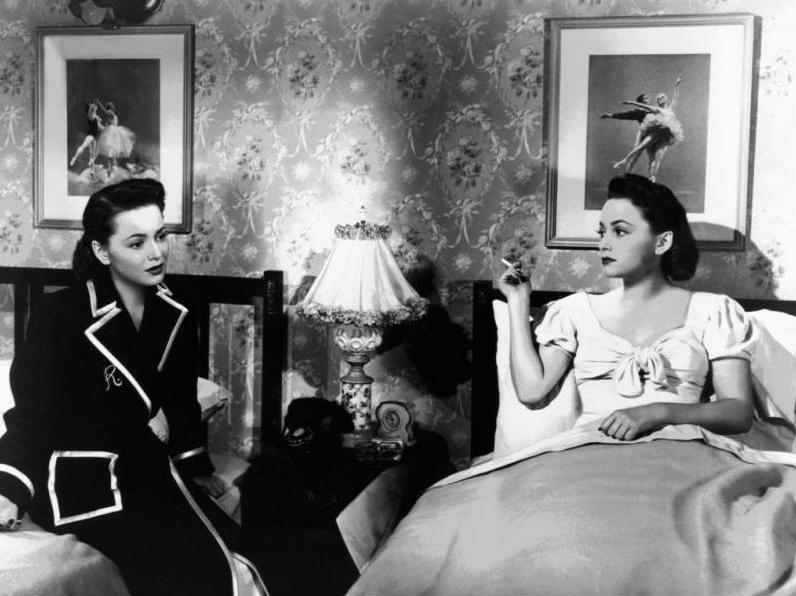
O Doutor Peralta foi encontrado morto. Esfaqueado, assassinado. Dois de seus vizinhos e a secretária apontam como assassina Teresa Collins (Olivia de Havilland), a moça que vende revistas e com quem o doutor planejava se casar. De sorriso amplo e olhos brilhantes, Teresa fica surpresa ao saber da morte do doutor. E mais: tem três álibis que a viram muito longe do local do crime naquela noite.

Doctor Peralta was found dead. He was stabbed, he was murdered. Two of his nwighbors and his secretary believe the killer is Teresa Collins (Olivia de Havilland), a magazine seller with whom the doctor wanted to get married. With a big smile and bright eyes, Teresa is shocked to learn about the doctor’s death. And more: there are three people who can prove she was very far from the place the crime happened that night.


Mas o caso é mais complicado do que parece: Teresa tem uma irmã gêmea idêntica, Ruth, e ambas se revezavam na banca de revistas, de modo que ninguém no edifício sabia que se tratavam de duas irmãs. Isso frustra o tenente Stevenson (Thomas Mitchell) e o jovem Rusty (Richard Long), que estava apaixonado pela moça. As irmãs se recusam a falar qualquer coisa, de modo que fica impossível provar qual é culpada e qual é inocente.

But the case is more complicated than it looks like: Teresa has an identical twin sister, Ruth, and both worked at the magazine shop, and nobody at the building knew there were two sisters running the shop. This frustrates Lieutenant Stevenson (Thomas Mitchell) and young Rusty (Richard Long), who was in love with the girl. The sisters refuse to say anything, and it becomes impossible to prove who is guilty and who is innocent.


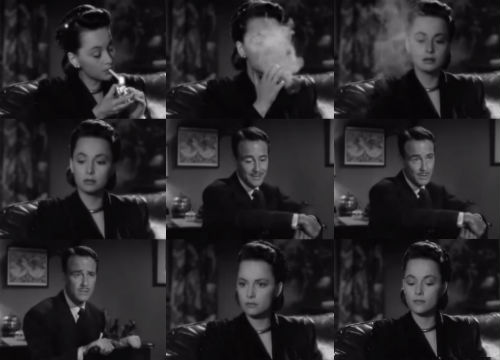
Ainda há uma esperança: o doutor Scott Elliott (Lew Ayres), médico no mesmo edifício e, conveniente e coincidentemente, especialista em gêmeos. Elas aceitam participar de uma pesquisa com o doutor, e logo a situação fica óbvia demais: a gêmea má se volta contra a gêmea boa e tenta fazê-la passar por louca.

There is still hope: Doctor Scott Elliott (Lew Ayres), a physician at the same building is, conveniently, an expert in twins. The girls accept to take part in a research with the doctor, and soon the situation becomes too obvious: the bad twin turns against the good twin and tries to make people believe the good twin is crazy.


É um pouco óbvio para o espectador quem é a gêmea boa e quem é a má. Isso é o ponto frustrante do filme. Entretanto, é interessante notar como de fato a polícia estava de mãos atadas com este caso. Com a tecnologia de hoje, provavelmente seria muito mais fácil identificar a gêmea criminosa. Mas não se preocupe: apesar desta fraqueza, o filme tem bons momentos e um excelente clímax, capaz de deixar qualquer um boquiaberto e com os neurônios retorcidos.

It is a little obvious for the audience who is the the good twin and who is the bad twin. This is the most frustrating thing in the film. However, it’s interesting to see how the police was really clueless with the case. With today’s technology, it’d probably be much easier to find out who is the guilty twin. But don’t worry: disconsidering this low point, the film has good moments and an excellent climax, that lets anyone breathless and with confused neurons.


Há um pouco de didatismo no filme. A psique humana ainda era um enigma para a maioria das pessoas. O pai da psicanálise, Sigmund Freud, havia morrido fazia apenas sete anos, e o público precisava ser doutrinado. Mas não se preocupe: não é o estilo “palestra do subconsciente” que Ingrid Bergman, Gregory Peck e Alfred Hitchcock fizeram um ano antes, em “Quando Fala o Coração” (1945). A novidade psicológica do filme fica por conta do teste Rorschach, em que o paciente diz o que vê em uma folha com um borrão de tinta. Este teste, motivo de piada em diversos filmes e seriados desde então, foi considerado ineficaz por estudiosos em 1965. 

There is a little didaticism in the film. Human psique was still an enigma for most people. The father of psychoalysis, Sigmund Freud, had died seven years before, and the audience needed to be doctrinated. But don’t worry: this is not the kind of “lecture about the subconscious” that Ingrid Bergman, Gregory Peck and Alfred Hitchcock did one year before, in “Spellbound” (1945). The big psychological novelty in the film is the Rorschach test, in which the patient describes what he or she sees in a paper with a paint stain. This test, center of many jokes in movies and series since then, was considered ineffective by academics in 1965.


É curioso ver o diálogo sobre rivalidade entre irmãs ser feito justamente para Olivia de Havilland, que teve uma longa rixa com a irmã também atriz Joan Fontaine. Os detalhes dessa rivalidade que vem desde a infância não foram tornados públicos (ao menos não todos os detalhes), mas sem dúvida é impossível dizer quem estava certa ou errada na disputa De Havilland contra Fontaine.

It is curious to see the dialog about sibling rivalry being acted exactly by Olivia de Havilland, who had a long feud with her sister (and also actress) Joan Fontaine. The details of this rivalry that comes since childhood were never made public (at least not ALL details), but without a doubt it’s impossible to say who was right or wrong in the De Havilland against Fontaine case.


Para Olivia de Havilland, 1946 foi um grande ano. Ela ficou dois anos afastada do cinema enquanto lutava para se livrar do abusivo contrato de sete anos da Warner Brothers. Por ter rejeitado vários papéis ruins, Olivia foi informada de que ficaria mais seis meses exclusiva da Warner, como forma de punição. Ela foi aos tribunais e ganhou o caso, mas, graças à influência da Warner em Hollywood, nenhum estúdio lhe ofereceu trabalho entre 1944 e 1946. Lew Ayres também estava afastado do cinema, porque deixou Hollywood em 1942 para trabalhar como médico e capelão durante a guerra no Pacífico. Protagonista de “Sem Novidade no Front” (1930), Ayres era um grande pacifista e perdeu a simpatia dos colegas durante a guerra porque se opunha ao conflito.

For Olivia de Havilland, 1946 was a fantastic year. She was far from movies for two years, fighting to get rido f Warner Brothers’s abusive seven-year contract. Because she rejected several bad roles, Olivia was informed that she would be a Warner exclusive for six more months as a punishment. She went to court and won the case, but, thanks to Warner’s influence in Hollywood, no studio offered her work between 1944 and 1946. Lew Ayres was also far from the movie business, because he left Hollywood in 1942 to work as doctor and chaplain during the war in the Pacific. The lead of “All Quiet on the Western Front” (1946), Ayres was a pacifist and lost the sympathy of his movie colleagues because he was against the war. 


Este não é o melhor filme de nenhum de seus atores. Não é o melhor filme do diretor Robert Siodmak (de “Os Assassinos”, 1946) nem do produtor Nunnally Johnson (de “Um Retrato de Mulher”, 1944). Mas é um filme muito bom, como o são todos os clássicos.

This is not the best film for nwither Olivia now Lew. It is not the best film by director Robert Siodmack (who did “The Killers” also in 1946) nor by producer Nunnally Johnson (from “The Woman in the Window”, 1944). But it is a very good classic film nonetheless.

This is my contribution to the Fourth Annual Dueling Divas blogathon, hosted by Lara at Backlots.

Related Posts Plugin for WordPress, Blogger...