} Crítica Retrô

Tradutor / Translator / Traductor / Übersetzer / Traduttore / Traducteur / 翻訳者 / переводчик

Saturday, April 26, 2025

A Turba (1928) / The Crowd (1928)


Alguns dos melhores filmes mudos foram feitos quando a era do cinema mudo estava lentamente se despedindo. O ano de 1928 produziu alguns dos melhores filmes e nos faz pensar o que aconteceria se o som sincronizado tivesse demorado mais um pouco para chegar. E não estou falando de megaproduções como “A Arca de Noé”. 1928 produziu filmes incríveis com muito pouco. Tome por exemplo o filme-sem-maquiagem “O Martírio de Joana D’Arc”... ou o filme sobre o qual falamos hoje. “A Turba” é tão comum que lida com nosso cotidiano, e nos causa dor.

Some of the best silent movies were made when the silent era was slowly fading. The year of 1928 produced some of the greatest movies and this makes us wonder what would happen if synchronized sound had arrived a little later. And I’m not talking only about mega productions such as "Noah's Ark”. 1928 produced some amazing movies with so little. Take for instance the make-up-less “The Passion of Joan of Arc”… or the movie we’re talking about today. “The Crowd” is so ordinary that it hits too close to home, and it aches.

No dia quatro de julho de 1900, um menino nasce na família Sims. Ele é chamado de John e seu pai diz que ele está destinado a fazer algo grandioso. Quando John (James Murray) tem 21 anos, ele se muda para a selva, quer dizer, Nova York. Ele se torna um dos milhões de trabalhadores num daqueles prédios imensos, fingindo trabalhar nas suas mesinhas e deixando como loucos o espaço quando acaba o turno.

On the Fourth of July in the year 1900, a boy is born in the Sims household. He’s named John and his father claims he is destined to do great deeds. When John (James Murray) is 21, he moves to the jungle, that is, New York. He becomes one of millions of workers in those huge buildings, pretending to work on their little desks and leaving like crazy cattle when the workday ends.

Numa tarde, o colega de John, Bert (Bert Roach), o apresenta a uma amiga de uma amiga, Mary (Eleanor Boardman). Eles vão a um parque de diversões de Coney Island e se dão bem - tão bem que ele a pede em casamento naquela mesma noite. Logo eles estão casados e vivendo num pequeno apartamento, esperando que ele consiga uma promoção. Logo começam também os problemas.

One evening, John’s coworker Bert (Bert Roach) introduces him to a friend of a friend, Mary (Eleanor Boardman). They go to the amusement park in Coney Island and get along fine - so fine that he proposes that very same night. Soon they’re married and living in a little flat, waiting for him to get a promotion. Also soon the troubles arrive.

No Natal, John prefere se divertir com Bert a passar o tempo com a desagradável família de Mary. Alguns meses depois, eles já discutem por bobagens, até que John declara: “casamento não é uma palavra… é uma sentença!” Será que o casamento deles vai durar só um ou dois anos, como Bert previu?

On Christmas, John prefers to party with Bert than to spend time with Mary’s judgmental family. A few months later, they’re arguing over little things, until John declares: “marriage isn’t a word… it’s a sentence!” Will their marriage last only a year or two, like Bert predicted?


Uma coisa que me incomodou foi que John passou a tratar Mary melhor quando ele descobriu que ela estava grávida. Uma mulher deve ser tratada com amor e respeito porque é um ser humano, não porque ela atualmente é uma incubadora. Ter Mary como “recipiente” carregando o filho DELE fez John vê-la com outros olhos, e isso é simplesmente errado - ou deveria ser em 2025. Eu entendo o anacronismo, mas esta sequência deixou-me um gosto amargo na boca.

One thing that bothered me was that John started treating Mary better when he learned she was pregnant. A woman must be treated with love and respect because she’s a human being, not because she’s currently an incubator. Having Mary as a vessel carrying HIS child made John see her differently, and this is simply wrong - or it should be in 2025. I understand the anachronism, but this sequence left me with a bitter taste in my mouth.

A fotografia é simplesmente brilhante. Logo no começo, quando o pequeno Johnny está subindo as escadas, é como se ele estivesse partindo para a idade adulta com todos ao pé da escada assistindo - esta bela sequência foi inspirada pelo Expressionismo Alemão. Além disso, os prédios são filmados de maneira a ficarem tão majestosos quanto os cenários de “Metrópolis”, feito um ano antes, e essa sequência inspirou outra obra-prima, “Se Meu Apartamento Falasse” (1960).

The cinematography is simply outstanding. Right in the beginning, while little Johnny is going upstairs, it’s as if he was ascending to adulthood with everybody downstairs watching - this beautiful sequence was inspired by German Expressionism. Also, the way the buildings are shot makes them as magnificent as the sets from “Metropolis”, made one year prior, and inspired the cinematography of another masterpiece, Billy Wilder’s “The Apartment” (1960).

O roteiro foi co-escrito pelo diretor King Vidor com John V.A. Weaver, no segundo de seus 11 créditos como roteirista, e as cartelas de texto ficaram a cargo de Joseph Farnham, ganhador do único Oscar de Melhor Escrita de Intertítulos, em 1929. “A Turba” foi o filme que se seguiu ao sucesso de Vidor “O Grande Desfile”, de 1925, e mais uma vez ele escolheu ter um homem comum como protagonista, desta vez não indo para a guerra, mas vivendo uma vida ordinária.

The screenplay was co-written by the director King Vidor with John V.A. Weaver, in the second of 11 writing credits, and the titles were written by Joseph Farnham, winner of the only Oscar for Best Title Writing, given in 1929. “The Crowd” was the film that followed Vidor’s hit “The Big Parade”, from 1925, and once again he chose to have an average man as his lead, but this time not going to war, but living an ordinary life.

Nascido em 1901, mas não em quatro de julho, James Murray, astro de “A Turba”, teve uma vida breve e triste, que King Vidro tentou narrar no roteiro nunca produzido chamado “The Actor”. Indo atrás de uma carreira em Hollywood após participar de um filme universitário, Murray foi escolhido entre os figurantes para ser o protagonista de “A Turba”. Mais trabalhos surgiram, mas o álcool atravessou seu caminho. Tendo recusado um papel de Vidor no filme “O Pão Nosso” (1934), Murray morreu afogado no Rio Hudson. Ele tinha apenas 35 anos.

Born in 1901, not on the Fourth of July, James Murray, the star of “The Crowd”, had a brief and sad life, one that King Vidor tried to narrate in the never-produced screenplay “The Actor”. Pursuing the Hollywood dream after appearing in a movie made at his university, Murray was picked from the extras to play the lead of “The Crowd”. More works followed, but alcohol got in the way. Refusing Vidor’s offer for a role in “Our Daily Bread” (1934), Murray drowned in the Hudson River. He was only 35. 

Os cenários foram decorados por Cedric Gibbons e Arnold Gillespie. Apesar da presença de Gibbons no departamento de arte, não há muita opulência nos cenários, pois a casa de John e Mary deveria ser caseira. Poderia ser nossa casa na tela. John e Mary poderiam ser nós.

The sets were decorated by Cedric Gibbons and Arnold Gillespie. Despite Gibbons presence in the art department, there is not much opulence in the sets, because John and Mary’s home is supposed to be homely. It could be our home on the screen. John and Mary could be us.
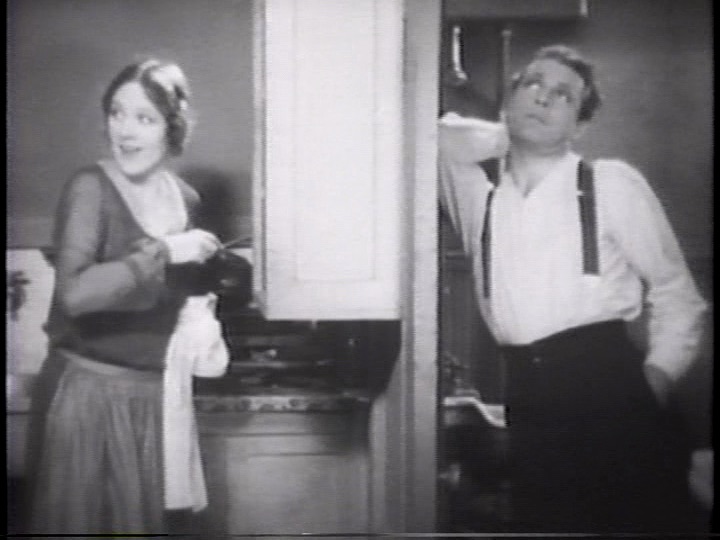
Há dois nomes mais comuns que John e Mary? Não havia nos anos 1920: de acordo com o site do Serviço Social dos EUA, Mary foi o nome mais popular para meninas naquela década, com mais de 70 mil garotinhas recebendo o nome todos os anos. Robert foi o nome masculino mais popular naquela década, com John em segundo lugar. Entretanto, em 1900, quando nosso John Sims nasceu, o nome John encabeçava a lista.

Are there two names more ordinary than John and Mary? In the 1920s, there weren’t: according to the USA Social Security website, Mary was the most popular name for girls in that decade, with more than 70,000 girls given the name per year. Robert was the most popular male name in that decade, with John not far behind. However, in 1900, when our John Sims was born, the name John was on the top of the list. 

Se alguns livros e filmes são descritos como “pedaços de Americana”, “A Turba” poderia ser descrito como “anti-Americana”. Explicando: Americana é o nome dado a qualquer artefato cultural que explora a herança e o folclore dos Estados Unidos da América. Comumente vistos pelo lado positivo, temas como trabalho duro, valores arraigados e a possibilidade de se tornar rico e famoso - o chamado “sonho americano”- são a norma. “A Turba” subverte este último tema, destacando, por exemplo, como “a multidão sempre ri com você… mas chorará com você apenas por um dia”.

If some books and movies are described as “slices of Americana”, “The Crowd” could be described as “anti-Americana”. Let’s explain: Americana is the name given to any cultural artifact that explores the heritage and folklore of the United States of America. Often seen in a positive light, themes as hard work, strong values and the possibility to become rich and famous - the so-called “American dream” - are the norm. “The Crowd” subverts this latter theme, highlighting, for instance, how “the crowd laughs with you always… but it will cry with you for only a day”.

Quando eles se conhecem, John e Mary zombam das pessoas na multidão que pensaram que seriam alguém um dia e fariam coisas incríveis. No final, eles percebem que há beleza em ser apenas mais um rosto na multidão. Se estivermos na multidão para assistir a um filme como este, com uma história simples mas elementos que o destacam, podemos nos considerar sortudos.

When they meet, John and Mary mock the people in the crowd who thought they would one day be someone and do big things. In the end, they realize there is beauty in being just another face in the crowd. If we’re in the crowd to watch a movie like this, with a simple story but outstanding elements, we can consider ourselves the lucky ones.

Thursday, April 3, 2025

Announcing the Fifth Luso World Cinema blogathon


Hello again from sunny Brazil! This year has already brought something brand new: an Oscar for a Lusophone country with the victory of “I’m Still Here” in the Best International Film category. It was the fifth time Brazil was up for this award – it’s a shame that Portugal and other Lusophone countries were never even nominated. Because of this historical win, we - that is, me and Beth from Spellbound with Beth Ann - decided to make a change in the Luso blogathon this year: instead of hosting on the usual date, May 5th, we decided to start the event on June 19th, when we celebrate Brazilian Cinema Day. The event will continue until June 22nd – plenty of time to contribute with a text and/or read the entries.

The rules are simple:

The Luso World Cinema Blogathon once again accepts posts about films made in Lusophone countries, that is, countries that speak Portuguese – see the list below –, and film stars with Luso heritage, that means, film stars of Portuguese descent. This list includes natives like Carmen Miranda, Rodrigo Santoro, Sônia Braga, Raul Roulien, Maria de Medeiros and also Keanu Reeves, Mary Astor, Louise Fazenda, Tom Hanks, Joe DeRita, James Franco, Daniel Brühl, Auli'i Cravalho (the voice of Disney's Moana!), Nestor Paiva, Amy Poehler,  Dorothy DeBorba and many more you can find listed HERE. You can write an overview of those people's lives or careers or focus on a specific film or TV show they made. We also accept the quite rare portraits of Portuguese, Brazilian or other Luso people in film, like in 1937’s “Captain Courageous”, in which Spencer Tracy plays a Portuguese sailor, for instance.

Now a little intermission to know more about us, your hostesses:


Here are a few lists of movies from Lusophone countries:

List of films from Portugal: https://en.wikipedia.org/wiki/Category:Portuguese_films

List of films from Brazil: https://en.wikipedia.org/wiki/Category:Brazilian_films

List of films from Cape Verde: https://en.wikipedia.org/wiki/Category:Cape_Verdean_films

List of films from Mozambique: https://en.wikipedia.org/wiki/Category:Mozambican_films

List of films from Angola: https://en.wikipedia.org/wiki/Category:Angolan_films

List of films from Guinea-Bissau:  https://en.wikipedia.org/wiki/Category:Bissau-Guinean_films

List of films from São Tomé and Príncipe: https://en.wikipedia.org/wiki/Cinema_of_S%C3%A3o_Tom%C3%A9_and_Pr%C3%ADncipe

List of films from Equatorial Guinea: https://en.wikipedia.org/wiki/Category:Equatoguinean_films

List of films from East Timor: https://en.wikipedia.org/wiki/Category:East_Timorese_films

We have banners for you to spread the news about the blogathon:

Mary Astor

Ilhéu de Contenda / The Island of Contenda (1996)

A Trança Feiticeira / The Bewitching Braid (1996)

Trikal (1985)

Air Conditioner (2020)

Rio, Zona Norte / Rio, Northern Zone (1957)


Mulheres de Beira / Border Women (1923)

Mark Ruffalo


Carmen Miranda

Tom Hanks


Maria de Medeiros


Jasmine Guy

Yvonne Furneaux in Lisbon (1956)


Lena Horne

Who's doing what:

Crítica Retrô: Silvino Santos, a filmmaker from the jungle

Spellbound with Beth Ann: That time when TCM called Carmen Miranda a Latin AND Hispanic icon

Realweegiemidget Reviews: That Man from Rio (1964)

Cinematic Catharsis: Tombs of the Blind Dead (1972)

Hollywood Kitchen: Louise Fazenda's Cookie Recipe

Speakeasy: Zé do Caixão a.k.a Coffin Joe

Classic Film and TV Corner: The Miranda Sisters

Taking Up Room: Mary Astor in "Dodsworth" (1936)

Moon in Gemini: Keanu Reeves in "Tune In Tomorrow" (1990)

A Shroud of Thoughts: Nestor Paiva

The Midnite Drive-In: The Creature from the Black Lagoon (1954, set somewhere in Brazil) 

18 Cinema Lane - Jasmine Guy's episodes of  "Touched by an Angel"

Silver Screenings - Storm Over Lisbon (1944)

Monday, March 31, 2025

O Cantor de Jazz (1927) / The Jazz Singer (1927)


É mentira que eu nunca assisti a “O Cantor de Jazz”. Uma vez eu assisti à metade dele numa aula. Com metade do spoiler, aqui estou eu para escrever sobre este filme que mudou a História. “Esperem um minuto, esperem um minuto! Vocês ainda não ouviram nada” foram as palavras que mudaram tudo. O cinema finalmente podia falar.

It’s a lie that I had never watched “The Jazz Singer”. I once watched about half of it in a class. Half-spoiled, here I am to review this movie that was a game changer. “Wait a minute, wait a minute! You ain’t heard nothing yet” were the words that changed everything. Cinema finally could talk.

Espera-se que Jakie Rabinowitz (Robert Gordon) se torne um Cantor como seu pai (Warner Oland) - seguindo cinco gerações na mesma profissão. Um Cantor ou Hazzan é um músico judeu que apresenta rezas na sinagoga na forma de canções. Para justificar a recusa do menino em se tornar um Cantor, sua mãe (Eugenie Besserer) diz “ele tem todos os hinos na cabeça, mas não no coração”. O pai encontra Jakie cantando ragtime num bar e, trazendo o garoto de forma violenta até em casa, bate nele. Jakie sai de casa e promete nunca mais voltar.

It’s expected that Jakie Rabinowitz (Robert Gordon) becomes a Cantor like his father (Warner Oland) - and five generations before him. A Cantor or Hazzan is a Jewish musician who presents prayers in the synagogue in the form of songs. To justify the boy’s refusal to step up as a Cantor, his mother (Eugenie Besserer) says “he has all the hymns in his head, but not in his heart”. The father finds Jakie singing ragtime tunes at a bar and, violently bringing him home, spanks his son. Jakie leaves home and vows to never return.

Anos depois, encontramos Jack Robin (Al Jolson) como cantor de jazz. Ele tem como fã e amante a bela Mary (May McAvoy), que descreve a maneira como ele canta como “com uma lágrima na voz”. Ela também é artista e arranja um lugar para Jack em seu show. Depois de uma turnê pelo país, eles voltam a Nova York, onde Jack enfrentará seu passado e tomará uma decisão que afetará seu futuro.

Years later, we find Jack Robin (Al Jolson) as a jazz singer. He finds a fan as well as a lover in Mary Dale (May McAvoy), who describes his singing as “having a tear in his voice”. She is an artist too and finds a spot for Jack in her revue. After touring the country, they go back ton New York, where Jack will face his past and make a decision that will affect his future.

Al Jolson, nascido Asa Yoelson no que hoje é a Lituânia, era conhecido como “o Maior Artista do Mundo” em seu auge. O homem que mudou para sempre a Broadway com sua maneira de cantar nos anos 1920, após o ataque a Pearl Harbor se tornou o primeiro cantor a se apresentar para as tropas no front. Al Jolson começou sua carreira no circo e logo galgou seu caminho no vaudeville, na Broadway e no cinema, quase fazendo seu primeiro filme em 1923: “Mammy’s Boy” de D.W. Griffith nunca foi completado. Sua segunda incursão no cinema foi “O Cantor de Jazz”. Influenciando cantores como Bing Crosby, Al Jolson transformava em ouro tudo em que tocava.

Al Jolson, born Asa Yoelson in what is now Lithuania, was known as “the World’s Greatest Entertainer” in his heyday. Forever changing Broadway with his singing style in the 1920s, after Pearl Harbor he became the first singer to entertain the troops overseas. Al Jolson started his career in the circus and quickly moved up to vaudeville, Broadway and cinema, almost making his first film in 1923: D.W. Griffith’s “Mammy’s Boy” was never completed. His second attempt at cinema was “The Jazz Singer”. Influencing crooners such as Bing Crosby, everything that Jolson touched became gold.

Num momento daqueles que você pisca e já passou, é possível ver Myrna Loy como corista no teatro, dizendo sobre Jack: “Ele não tem chance com Mary”. Nascida em 1905, Loy havia sido escalada quase que exclusivamente para interpretar vamps no cinema mudo, mas sua imagem mudou para a de “esposa perfeita” nos anos 1930, culminando com sua escolha como Rainha do Cinema em 1938. A estrela de “O Cantor de Jazz” tomou um caminho diferente: comumente citada como “a menos talentosa entre as protagonistas do cinema mudo”, May McAvoy detestou os papéis que a Warner Bros escolheu para ela após este filme, e se aposentou ao casar em 1929.

In a “blink and you miss it” moment you can see Myrna Loy as a chorus girl at the theater, saying about Jack: “He hasn’t a chance with Mary”. Born in 1905, Loy had been typecast as a vamp in silent movies, but her image changed to a “perfect wife” type in the 1930s, culminating with her being voted the Queen of the Movies in 1938. The lead of “The Jazz Singer” had a different path: often cited as “the least-talented leading lady in silents”, May McAvoy disliked the roles Warner Bros chose for her after this movie, and retired when she got married in 1929.

Parte filme silencioso, parte falado, não é de se espantar que o público enlouquecesse quando de repente ouvissem a voz de Al Jolson. Só que não foi essa a primeira coisa que o público ouviu, aos 22 minutos de projeção. Antes houve músicas interpretadas pelo jovem Jakie e o mais velho Jack, além de um hino judeu. O som sincronizado não era novidade - era possível encontrar efeitos sonoros em filmes anteriores, como em “Don Juan” de 1926 -, a novidade era o diálogo sincronizado à ação. Como curiosidade, devemos citar que tanto Myrna Loy quanto Warner Oland também estavam em “Don Juan”.

Part silent, part talkie, it’s no wonder that the audience would go crazy when suddenly they heard Al Jolson’s voice. Except that this wasn’t the first thing the audience heard, at the 22 minute mark. Before there were songs performed by the young Jakie and the older Jack, as well as a Jewish hymn. Synchronized sound was not new - you could find sound effects in previous films, such as 1926’s “Don Juan” -, the novelty was the synchronized dialogue. As a curiosity, we must sign that both Myrna Loy and Warner Oland also appeared in “Don Juan”.

Mas o plano não incluía ter diálogos sincronizados: só as canções deveriam ter sido gravadas no estúdio. Quando Al Jolson improvisou o “Esperem um minuto…” depois da primeira canção, o produtor Sam Warner gostou tanto que insistiu para manter a frase e mais um pouco de diálogo improvisado. Isso viria com um preço: a produção foi tão estressante para Sam Warner que ele faleceu um dia antes de o filme ser apresentado concluído para o elenco e equipe. O filme estreou nos cinemas muitos meses depois.

But the plan wasn’t to have synchronized dialogue as well: only songs were supposed to be recorded at the studio. When Al Jolson ad-libbed “Wait a minute…” after the first song, film producer Sam Warner liked it so much that he insisted on keeping the line and other improvised dialogue. This would come with a cost: production was so strenuous on Sam Warner that he died the day before the film was released to the cast and crew. The film premiered to the general public many months later.

Tudo é muito divertido até que chegamos a um ponto crítico: de repente lá está ela, a sequência com Al Jolson fazendo blackface. Essa prática deplorável não era condenada em 1927 e podia ser considerada uma forma de retratar a assimilação cultural. Jakie era judeu e, assim como a população negra, considerado um cidadão de segundo categoria. Jolson era um ativista pelos direitos civis em seu tempo - que era obviamente diferente de sê-lo nos anos 1960 - e vê-lo em blackface era como ver alguém se tornar completamente americano. Sim, em certo sentido o blackface definiu o que era a América durante um tempo.

Everything is fun and games until we reach a critical point: suddenly there it is, the infamous sequence of Al Jolson in blackface. This deplorable practice wasn’t frowned upon in 1927 and it could be seen as a way of portraying cultural assimilation. Jakie was Jewish and, like the black population, considered a second-rate citizen. Jolson was a civil rights advocate in his time - that is obviously different from the actors who were civil rights activists in the 1960s - and seeing him in blackface is seeing someone become truly American. Yes, in a sense blackface defined America in its time.

“O Cantor de Jazz” é um filme sobre a luta entre o velho e o novo, a tradição e a modernidade. Em breve, por causa deste filme, o cinema como um todo enfrentaria o mesmo dilema. Um comentário no Letterboxd disse que, se outro filme tivesse dado o passo em direção ao som sincronizado, “O Cantor de Jazz” seria hoje esquecido, e não estava errado. O filme seguinte de Jolson, “A Última Canção” (1928), foi um megassucesso de bilheteria, mas raramente se fala sobre ele hoje. Algumas coisas simplesmente têm que ser, e este filme teve de entrar para a História.

“The Jazz Singer” is a film about the fight between old and new, tradition and modernity. Soon, because of this film, cinema as a whole would face the same dilemma. A Letterboxd comment said that, if another movie had made the leap from silence to synchronized sound, “The Jazz Singer” would be forgotten today, and this is not wrong. Jolson’s subsequent film, “The Singing Fool” (1928), was a box office smash but is rarely talked about today. Some things are simply meant to be, and this film was meant to be enshrined in History.

Saturday, March 8, 2025

Urban Gad: explorando o trabalho de um pioneiro do cinema

 Urban Gad: exploring the work of a film pioneer

Um dos melhores acontecimentos do fim do ano - além do Natal e de todas as festas - é receber as estatísticas do Letterboxd. O Year in Review é muito esperado pelos cinéfilos. Este ano tive uma surpresa: meu diretor mais assistido de 2024 foi Urban Gad. Isso tem uma explicação: no começo do ano mergulhei fundo nos primeiros trabalhos de Asta Nielsen e muitos destes filmes foram dirigidos por Gad. Agora me volto novamente ao cinema dinamarquês e a Gad em particular. Vamos conhecer este mestre.

One of the best things that happen when a year ends - besides Christmas and all the parties - is receiving stats from Letterboxd. The Year in Review is much expected by us movie nerds. This year I had a surprise: my most watched director of 2024 was Urban Gad. This has an explanation: in the beginning of the year I dived deep into Asta Nielsen’s early roles and many of these movies were directed by Gad. Now I look again to Danish cinema and to Gad in particular. Let’s meet this master.

Peter Urban Bruun Gad nasceu em 1879 - sua mãe era a dramaturga e mestre em boas maneiras Emma Gad - e faleceu em 1947. Seu segundo filme foi “O Abismo” de 1910 e foi de cara um grande sucesso internacional, algo novo não apenas para o cinema dinamarquês, mas para o cinema em geral. O IMDb lista para Gad 71 filmes como diretor e 36 como roteirista, todos no cinema mudo. É hora de dar uma olhada em alguns deles.

Peter Urban Bruun Gad was born in 1879, his mother being playwright and master of good manners Emma Gad, and died in 1947. His second film was “The Abyss” from 1910 and it was already a big hit internationally, something new not only to Danish cinema, but to cinema as a whole. IMDb lists 71 films as a director and 36 as screenwriter, all in the silent era. Time to take a look at some of them.

De 1911 vem “The Strange Bird / Der Fremde Vogel”. Asta Nielsen estrela como May Mannering, que se apaixona pelo camponês Paul (Carl Cleving) durante as férias. A família dela é contra o relacionamento, então os pombinhos fogem, mas a tragédia os encontra - como o filme anuncia na primeira cartela de texto, trata-se de uma “tragédia de amor”.

From 1911 comes “The Strange Bird / Der Fremde Vogel”. Asta Nielsen stars as May Mannering, who falls in love with the local Paul (Carl Cleving) during a vacation. Her family is against the relationship, so the lovebirds run away, but tragedy hits them - as the film is announced in the main title card, it’s a “love tragedy”.

Também de 1911 é “The Great Moment / In dem großen Augenblick”. O filme traz Annie (Asta Nielsen) às voltas com um dilema: aceitar ou recusar uma proposta para dar sua filha para adoção. Três anos depois de aceitar a proposta, Annie tenta recuperar a criança. É curioso que a adoção também seja o foco de outro filme dinamarquês, “A Garota da Agulha” (crítica em inglês AQUI), indicado a Melhor Filme Internacional no Oscar de 2025. A história do filme recente é ambientada após a Primeira Guerra Mundial, pouco tempo depois de este filme de Gad e Nielsen ter sido feito. Nele, o incêndio no clímax é bem impressionante. 

Also from 1911 is “The Great Moment / In dem großen Augenblick”. The film revolves around Annie (Asta Nielsen) accepting or refusing to give her baby daughter up for adoption. Three years after she accepts the offer, Annie tries to get her daughter back. It’s curious because adoption was the focus of another Danish film, “The Girl with the Needle”, nominated for Best International Film at the Oscars in 2025. The story of the modern movie is set in the aftermath of World War I, not long after this Gad-Nielsen film was made. In it, the climatic fire is pretty impressive.

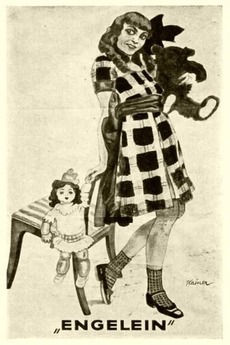
Agora algo diferente: uma comédia! “Little Angel / Engelein” nos apresenta a um casal que tem de mentir sobre a idade da filha para garantir uma herança. Mas depois a moça de 17 anos, Jesta (Asta Nielsen), tem de fingir ter apenas 12 anos para seu tio Peter (Max Landa). O problema é que Jesta tem um namorado, Theodor (Fred Immler) e uma cunhada, Meta (Adele Reuter-Eichberg), que está atrás do tio Peter. Esta comédia é bem divertida e prova que Nielsen tem talentos variados. Dois anos depois, sob a direção de Edmund Edel, Nielsen fez uma sequência do filme, chamada “The Guinea Pig”. 

Now something different: a comedy! “Little Angel / Engelein” introduces us to a couple who has to lie about their daughter’s age in order to secure an inheritance. But then 17-year-old Jesta (Asta Nielsen) has to pass as a 12-year-old for her Uncle Peter (Max Landa). The problem is that Jesta has a boyfriend, Theodor (Fred Immler), and a sister-in-law, Meta (Adele Reuter-Eichberg), who is after Uncle Peter. This comedy was a lot of fun, proving Nielsen’s many eclectic talents. Two years later, under Edmund Edel’s direction, Nielsen made a sequel to this movie, called “The Guinea Pig”.


Vamos ouvir a opinião do próprio Gad. No primeiro livro dinamarquês sobre teoria do cinema, “Filmen – Dens Midler og Maal” (Filme - Seus Meios e seus Fins), de 1919, ele declarou (tradução minha a partir do inglês): “O ator deve se posicionar entre animais selvagens, ou deve pular e escalar, colocando-se sob risco de cair de grandes alturas, ou saltar de ou para vários meios de transporte a toda velocidade”. Embora tenhamos visto mais melodrama do que outro gênero em sua filmografia, eles com certeza têm momentos de total emoção. 

Let’s hear from Gad himself. On the first Danish book about film theory, “Filmen – Dens Midler og Maal” (Film – Its Means and Ends) from 1919, he declared: “The actor must either place himself among wild animals, or he must carry out jumps or climbing feats that put him at risk of plummeting from great heights, or leap from or to various means of transport at full speed”. Although we’ve seen more melodramas from him this time, they sure had their thrills.

Não pude evitar a comparação de Gad com outro mestre do cinema mudo dinamarquês, Benjamin Christensen. Chamado de primeiro autor cinematográfico do país pelo site oficial dedicado ao Cinema Mudo Dinamarquês, Christensen nasceu em 1879, assim como Gad, mas dirigiu apenas 19 filmes. Sua estreia como diretor foi “The Mysterious X” (também conhecido como “Sealed Orders”, 1914), em que ele também foi roteirista e protagonista. Christensen interpreta o tenente Van Hauen, cuja esposa (Karen Sandberg) é assediada pelo espião Conde Spinelli (Hermann Spiro), que rouba alguns documentos confidenciais de Van Hauen e trama para acusá-lo de traição. No que é provavelmente o primeiro MacGuffin do cinema, um elefante de papel domina sonhos e causa discórdia. 

I couldn’t avoid comparing Gad with another master of the Danish silent screen, Benjamin Christensen. Called the first real author of Danish cinema by the website dedicated only to Danish Silent Film, Christensen was born in 1879, like Gad, but directed only 19 titles. His directorial debut was “The Mysterious X” (also known as “Sealed Orders”, 1914), that he also co-wrote and starred in. Christensen plays the lieutenant Van Hauen, whose wife (Karen Sandberg) is being courted by the spy Count Spinelli (Hermann Spiro), who steals some top secret papers from Van Hauen and frames him to be found guilty of treason. In what is probably cinema’s first MacGuffin, a paper elephant dominates dreams and causes mayhem.

As carreiras de Urban Gad e Asta Nielsen estavam intimamente ligadas. Eles eram mais que uma dupla dinâmica de diretor e atriz como D. W.Griffith e Lillian Gish, eles formaram um casal 20 antes de Mary Pickford se casar com Douglas Fairbanks e criar o conceito de super casal. Contemporâneos de outra dupla, os comediantes John Bunny e Flora Finch, Gad e Nielsen eram algo completamente novo no cinema da época.

The careers of Urban Gad and Asta Nielsen were totally connected. They were more than a dynamic duo of director and actress - like D.W. Griffith and Lillian Gish, they were a power couple even before Mary Pickford married Douglas Fairbanks and invented the concept of power couple in cinema. Contemporary to another duo, the comedians John Bunny and Flora Finch, Gad and Nielsen were something completely new in cinema in their time.

Vou repetir a conclusão do meu já mencionado artigo sobre o início de carreira de Asta Nielsen: o Primeiro Cinema - de 1895 a 1915 - é tão comumente desprezado, mas não deveria ser. Tragicamente, a maior parte dele se perdeu, mas cada pérola que encontrarmos deste período deve ser vista, discutida e apreciada.

I’ll repeat here the conclusion of my aforementioned article about Asta Nielsen’s early career: early cinema - or the First Cinema, from 1895 to 1915 - is so often taken for granted and overlooked but it shouldn’t be. Tragically most of it is lost, but every gem we can find from this period should be seen, discussed and enjoyed. 

This is my contribution to the Silent Pioneers Blogathon, hosted by
Classic Film and TV Corner.

Related Posts Plugin for WordPress, Blogger...