} Crítica Retrô: Guerra Fria

Tradutor / Translator / Traductor / Übersetzer / Traduttore / Traducteur / 翻訳者 / переводчик

Showing posts with label Guerra Fria. Show all posts

Saturday, August 5, 2017

Nunca Me Deixes Ir / Never Let Me Go (1953)

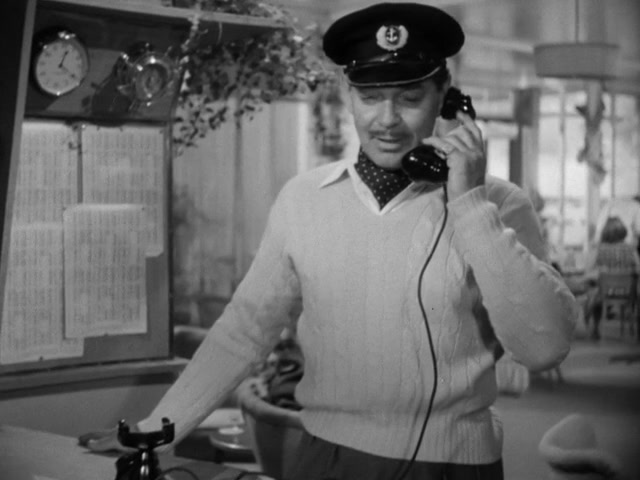
Alguns relacionamentos estão amaldiçoados desde o começo – como o de Romeu e Julieta, que eram membros de famílias rivais. E não havia nada mais moderno em termos de rivalidade em 1953 do que a Guerra Fria. Por isso temos em “Nunca Me Deixes Ir” Romeu e Julieta modernos: ele, Philip Sutherland (Clark Gable), é americano, e ela, Marya Lamarkina (Gene Tierney), é russa.

Some relationships are doomed from the start – like Romeo and Juliet, who were the children of rival families. And there was nothing more modern in terms of rivalry in 1953 than the Cold War. So, we have in “Never Let Me Go” a modern Romeo and Juliet: he, Philip Sutherland (Clark Gable), is an American, and she, Marya Lamarkina (Gene Tierney), is Russian.
A história começa no dia da vitória – o dia em que a Segunda Guerra Mundial foi oficialmente vencida pelos Aliados. Philip, um jornalista, vem mandando flores para Marya, uma bailarina, há mais de um ano. Ele nem imagine que ela corresponde o seu amor e está aprendendo inglês para finalmente poder falar com ele. A oportunidade aparece naquela noite, quando ela dá uma entrevista a uma rádio da Inglaterra e se dirige a ele. É a primeira vez que eles conversam, e as coisas vão bem rápido a partir daí. Em pouco tempo eles estão casados.

The story begins on V Day – the day the Second World War was oficially won by the Allies. Philip, a journalist, has been sending flowers to Marya, a ballerina, for over a year. Little does he know that she corresponds his affection and is learning English in order to finally talk to him. The opportunity appears that night, when she gives an interview to a radio from England and hints at him. It's the first time they talk, and things move pretty quickly for them. In little time they are married.

Mas a alegria não dura para sempre. Os pais dela foram mandados para o exílio e a deixaram na escola de balé. Ela sabe que os soviéticos podem ser cruéis e negar um visto para que ela vá para os Estados Unidos com o marido – eles já fizeram isso com a amiga dela, Svetlana. Ele não liga para a paranoia dela – afinal, 'isso não vai acontecer conosco', ele diz, 'Joe' Stalin – como ele se refere ao líder – não vai se importar com um simples casal.

But joy doesn't last forever. Her parents were sent to exile and left her in ballet school. She knows that the Soviets can be cruel and deny her a visa to go to the US with her husband – they already did it to her friend Svetlana. He doesn't care for her paranoia – after all, 'it won't happen to us', he keeps repeating, 'Joe' Stalin – as he refers to the leader – won't care for a simple couple.
Nós temos um aliado que vai tentar ajudar o casal a ficar junto: Steve Quillan (Kenneth Moore), um radialista inglês que conhece a censura logo no começo do filme e mais tarde decide desafiar as autoridades soviéticas mandando mensagens cifradas através de seu programa de rádio.

We have an ally who will try to help the couple stay together: Steve Quillan (Kenneth Moore), an English radio journalist who feels the censorship right in the beginning of the film and later decides to defy the Soviet authorities by sending secret messages through his radio program.
Este filme tem um quê de propaganda – não há dúvidas a respeito disto. Como a liberdade é um direito tão importante e amado nos Estados Unidos e em outros países ocidentais, o filme foca na pouca liberdade que o povo da União Soviética tem – eles não podem ser felizes a não ser que isso beneficie os sovietes, ou o coletivo. A busca pelo amor é o tema aqui – e vamos combinar: a indústria do cinema em Hollywood foi basicamente construída em cima de filmes sobre a busca pelo amor.

This movie has a propaganda feeling – there is no doubt about it. Being liberty such a beloved and important right in the US and other western countries, the film focuses on the lack of freedom the people of the Soviet Union have – they can't be happy unless it benefits the Soviets, the collective. The pursuit of love is the theme here – and let's face it: the Hollywood industry was basically built with movies about the pursuit of love.
O filme é narrado por Clark Gable, até que de repente o narrador muda, na marca de 40 minutos. Agora é Joe (Bernard Miles), um engenheiro naval, que dá sua opinião sobre as atitudes de Philip. Alguns minutos depois, Gable volta à sua função de narrador. Eu me pergunto se o mesmo acontece no livro que inspirou o filme. E falando em estranhezas, “Nunca Me Deixes Ir” tem pouco balé e muita vodca. Os momentos com vodca são, entretanto, os mais divertidos.

The film is narrated by Clark Gable, until it suddenly shifts narrator at 40 minutes or so. Now it's Joe (Bernard Miles), a boat engineer, who gives his impressions about Philip's actions. A few minutes later, Gable is back at his position as narrator. I wonder if it also happens in the book that served as the source for the movie. Speaking of oddities, “Never Let Me Go” has too much vodka and too little ballet. The vodka moments are, nevertheless, the funniest.
É Gene Tierney mesmo dançando? Bem, ela começou a fazer aulas de balé para fazer o filme, mas o mais provável é que não seja ela nos momentos mais complicados – como quando vemos a Rainha dos Cisnes dançando na ponta dos pés em O Lago dos Cisnes, porque é uma tomada longa e não podemos ver com clareza o rosto da bailarina. Vemos Gene em close-ups, mas uma coisa é verdade: por causa do filme ela se apaixonou por balé e continuou indo a e patrocinando espetáculos de balé até o fim da vida.

Did Gene Tierney do her own dancing? Well, she started having ballet lessons in order to do this film, but it's more probable that it's not her in the more complicated moments – like when we see the Swan Queen dancing en pointe in The Swan Lake, because it is a long shot and we can't clearly see the ballerina's face. We see Gene only in close-ups, but one thing is true: because of this film she fell in love with ballet and kept going to and sponsoring ballet recitals until the end of her life.
Tierney é linda e adorável, embora seu sotaque incomode um pouco. Mas o filme é de Gable – é ele que faz todo o esforço para 'nunca deixá-la ir'. É impossível não torcermos por Philip e Marya – e isto por causa de uma escolha sábia de elenco porque, convenhamos, que ator do cinema clássico representa os Estados Unidos melhor que Clark Gable, que pode inclusive ser considerado o melhor exemplo de estrela do sistema de estúdio? É um filme pró-americano, mas com um detalhe interessante: uma russa em particular não vê problema em dedurar camaradas quando necessário – algo que americanos bons e preocupados estavam fazendo então durante as investigações anti-comunistas da caça às bruxas, e estão fazendo agora também. No final, americanos e russos não são tão diferentes.

Tierney is gorgeous and lovely, even though her accent bothers us a little. But it is Gable's film – he is the one making all the effort to 'never let her go'. We can't avoid rooting for Philip and Marya – and this due to a wise casting choice because, come on, which classic Hollywood actor embodies America better than Clark Gable, who may even be the best example of star of the studio system? It is a pro-America film, but with an interesting twist: a particular Russian sees no problem in 'naming names' when necessary – something good, worried Americans were doing in the HUAC investigations back then, and are even doing now. In the end, Americans and Russians are not very different from each other.

For a different take on this film, check the review at Phyllis Loves Classic Movies!

This is my contribution to the En Pointe: The Ballet blogathon, hosted by Michaela at Love Letters to Old Hollywood and Christina at Christina Wehner.

Friday, May 27, 2011

Cupido Não Tem Bandeira (1961) / One, Two, Three (1961)

Uma divertida análise do capitalismo e crítica ao comunismo em plena Guerra Fria.

A fun analysis of capitalism and a critique to communism during the Cold War.

James Cagney estrela esse filme como o chefe da filial da Coca-Cola em Berlim, que tenta levar o refrigerante-símbolo do imperialismo norte-americano para o lado vermelho da cortina de ferro. De olho na promoção para chefe das operações europeias, ele aceita hospedar a espevitada filha do chefe em sua própria casa. Mas as coisas se complicam quando ela se apaixona por um jovem da Berlim Oriental.

James Cagney is the star of this film, playing the manager of a Coca-Cola franchise in Berlin. He tries to bring the soda that symbolizes North-American imperialism to the red side of the Iron Curtain. Wanting the position of chief of European opperations, he accepts to receive his boss' naughty daughter as a guest in his own house. But things get difficult wuen she falls in love with a young man from East Berlin.

Cupido Não Tem Bandeira” foi um filme divertido para o público, mas não para Cagney: após o filme, ele se aposentou, fazendo apenas mais uma pequena aparição em “Na Época do Ragtime” (1981). Dizem que durante a produção o veterano ficava furioso com Horst Buchholz, que tentava roubar a atenção para si nas cenas que faziam juntos. Se eu estivesse em uma produção com James Cagney, meu ator favorito, jamais tentaria roubar a atenção. Talvez eu me levantasse toda vez que ele passasse, como fazem aqui seus funcionários!

One, Two, Three” was a fun movie for the audience, but not for Cagney: after the film, he retired and only made another appearance in “Ragtime” (1981). It's said that, during the production of this film, the veteran actor got mad at Horst Buchholz, who tried to steal the attention for himself in all the scenes he had with Cagney. If I was in a production with James Cagney, my favorite actor, I'd never try to steal the attention. Maybe I'd stand every time he entered the room, just like his employees do!

Muito interessante nesse filme é a referência a outros filmes, algo raro até então. Cagney solta uma frase proferida por Edward G. Robinson. A esposa dele, Phyllis (Arlene Francis), diz: “O que aconteceu com Scarlet? E o Vento Levou...”. Schlemmer se veste de mulher para confundir os comunistas, assim como Jack Lemmon em “Quanto mais quente melhor” (1959), dirigido também por Billy Wilder. Atravessando a fronteira, um policial faz uma imitação de ... James Cagney! E Cagney quase usa um “grapefruit” como arma novamente! (Quem pode esquecer a pobre Mae Clarke tendo a fruta espremida no rosto em “Inimigo Público”, de1931?).

Something very interesting in this film are the references to other films, which wasn't so common back in the 60s. Cagney quotes a line once used by Edward G. Robinson. His wife Phyllis (Arlene Francis) says: “What happened to Scarlet: She is gone with the wind...” Schlemmer dresses as a woman to deceive the communists, and Jack Lemmon does the same in “Some Like It Hot” (1959), also directed by Billy Wilder. Crossing the border a police officer imitates... James Cagney! And Cagney almost uses a grapefruit as a weapon once again! (Who can forget poor Mae Clarke receiving a mashed grapefruit in her face in “The Public Enemy”, from 1931?).


A zombaria com o comunismo é ponto de partida de diversas piadas. O carro usado em Berlim Oriental está obsoleto quase 30 anos. Há paradas com multidões uniformizadas carregando imagens do líder Kruschev, como em “Ninotchcka” (1939), com a diferença que o líder no filme com Garbo (cujo co-roteirista era, por sinal, Wilder) era Stalin. Um dos camaradas, batendo contra a parede, derruba a foto do líder atual, mostrando a do líder anterior, episódio, aliás, verídico. O jovem pretendente da garota americana é preso por carregar um balão dizendo: “caiam fora, comunistas!” e um relógio cuco que toca “Yankee Doodle Dandy”. A sessão de tortura consiste na fita da versão americana de “Biquíni de Bolinha Amarelinha” tocando incessantemente. E, é claro, numa citação de Karl Marx, é citado também Groucho Marx.

Many jokes are there only to mock communism. The car used in East Berlin is almost 30 years outdated. There are parades with crowds in uniforms carrying images of the leader Kruschev, just like in “Ninotchcka” (1939), with the difference that the leader in the film with Greta Garbo (a film co-written by none other than Wilder) was Stalin. One of the comrades, knocking on a wall, makes the picture of the current leader fall, revealing the image of the former leader – an episode that really happened. The young man who loves the American girl is arrested because he's carrying a balloon with the words “go away, communists!” and a cuckoo clock that plays “Yankee Doodle Dandy”. The torture session consists of a tape of the American version of “Itsy Bitsy Teenie Weenie Yellow Polka Dot Bikini” playing non-stop. And, of course, when Karl Marx is mentioned, another mention is made to Groucho Marx.

Mais do que isso: zomba-se do nazismo. Os trabalhadores da empresa, educados e doutrinados durante o Terceiro Reich, repetem os obséquios mecanicamente e se levantam com disciplina militar toda vez que o personagem de James Cagney atravessa o escritório.

More than that: Wilder mocks Nazism. The workers of the factory, raised and indoctrinated during the Third Reich, repete their actions mecanically and stand up following discipline every time James Cagney’s character enters the office.

Cupido não tem Bandeira”, entretanto, não é um filme para ser apreciado por qualquer um. O único nome de peso, além do diretor Billy Wilder, é James Cagney. Além disso, é um filme datado e conteudista. Na época, com a construção do Muro de Berlim acontecendo e, principalmente, hoje, o filme perdeu o aspecto de farsa presente, por exemplo, em “Quanto Mais Quente Melhor”. Mas, se visto com os olhos de 1960, de Guerra Fria sem Muro, continua a divertir.

One, Two, Three”, however, is not a film that can be enjoyed by anyone. The only big name, besides director Billy Wilder, is James Cagney. Besides that, it's a dated film that demands some history knowledge to be understood. At the time, with the building of the Berlin Wall and, in special, today, the film lost the farce facet that, for instance, “Some Like It Hot” has. But, if it is seen with 1960 eyes, thinking about the Cold War without a Wall, it can still be fun.

Related Posts Plugin for WordPress, Blogger...