} Crítica Retrô: Jack Webb

Tradutor / Translator / Traductor / Übersetzer / Traduttore / Traducteur / 翻訳者 / переводчик

Showing posts with label Jack Webb. Show all posts

Sunday, July 7, 2019

Taverna Maldita (1955) / Pete Kelly's Blues (1955)

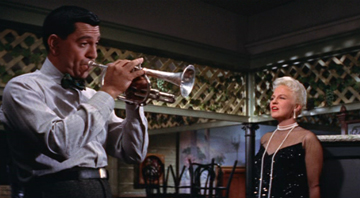
A história começa em 1915 em Nova Orleans, onde um membro de uma família negra está sendo enterrado no campo, à margem do rio. Depois do funeral, uma corneta cai no chão. A linha do tempo pula para 1919, Jersey City, onde a mesma corneta, agora velha e amassada, é o prêmio ganho em um jogo de dados por Pete Kelly (Jack Webb). Nossa próxima parada é Kansas city, 1927, e Pete está tocando com sua banda num bar – ele toca, obviamente, a corneta.

The story starts in 1915 in New Orleans, where a member of a black family is being buried in the field, by the river. After the funeral, a cornet falls on the ground. We jump to 1919, Jersey City, where the same cornet, now old and smashed, is won in a dice game by Pete Kelly (Jack Webb). Our next stop is Kansas City, 1927, and Pete is playing with his band in a bar – he is playing, obviously, the cornet.


Entretanto, a banda de Pete não é um sucesso. Eles tocam em um speakeasy e não recebem nada do dono do lugar, que está mais interessado em contrabandear bebida do que em patrocinar a banda. Por isso ele não se importa quando um gângster – e estamos falando de um grande e influente gângster – tenta extorquir a banda. Frank McCarg (Edmond O'Brien) oferece proteção em troca de 25% dos ganhos da banda – e ele não aceitará um não como resposta.

However, Pete's band is not a success. They play in a speakeasy and receive nothing from the owner of the place, who is more interested in smuggling booze than in funding the band. So he doesn't care when a gangster – and we're talking about a big, influent gangster – tries to extort them. Frank McCarg (Edmond O'Brien) offers protection over 25% over the band's earnings – and he won't accept no as an answer.
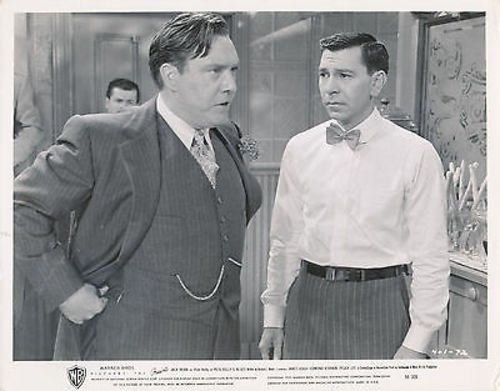


Enquanto isso, uma garota festeira chamada Ivy Conrad (Janet Leigh) se apaixona por Pete e se mostra insistente na conquista. Outro problema surge quando o clarinetista de Pete, Al (Lee Marvin), diz a ele que está infeliz e que acha que a banda não tem futuro.

Meanwhile, a party girl called Ivy Conrad (Janet Leigh) falls in love with Pete and she is insistent about it. Another trouble arises as Pete's clarinetist, Al (Lee Marvin), tells him he's unhappy and how he thinks the band is going nowhere. 


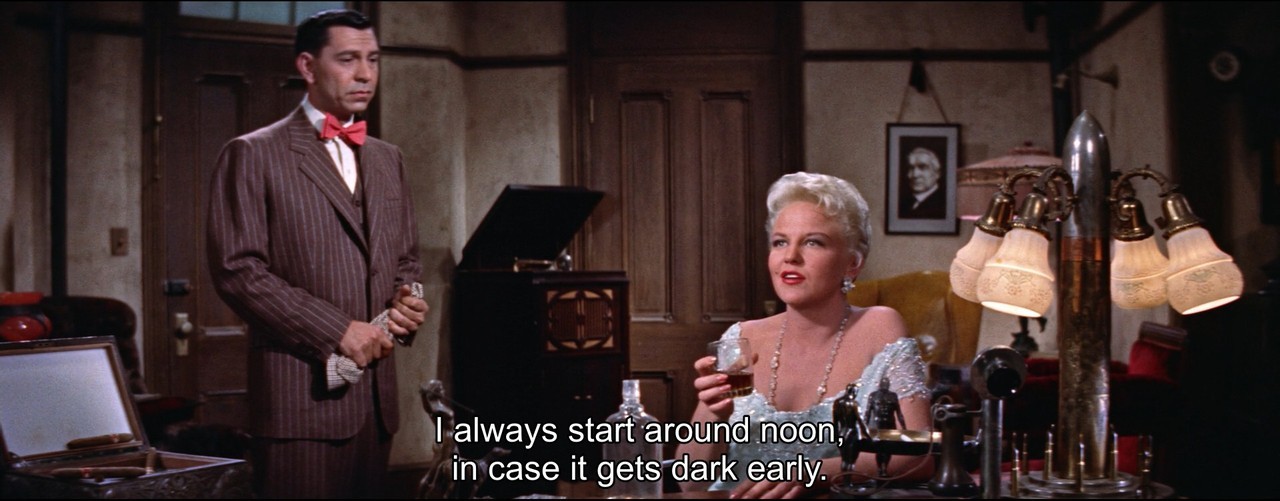
Mais tarde Pete descobre que McCarg só está interessado em ter a banda para acompanhar a namorada dele, a cantora alcoólatra Rose Hopkins (Peggy Lee) – Pete não quer uma cantora, mas McCarg está disposto a PAGAR a banda para que ela cante. E então um policial chamado George Tenell (Andy Devine) pede que Pete colabore para que ele possa prender McCarg.

Later Pete learns that McCarg is only interested in having a band to accompany his girlfriend, alcoholic singer Rose Hopkins (Peggy Lee) – Pete doesn't want a singer, but McCarg is willing to PAY the band to have her. And then a cop named George Tenell (Andy Devine) asks for Pete's collaboration to get McCarg arrested. 


Fazer com que a corneta seja originária de uma família negra de Nova Orleans e seja o prêmio de Pete Kelly, então um soldado certamente voltando da guerra, é um artifício do enredo que envelheceu mal. Era para dizer que a musicalidade de Pete estava toda naquela corneta? Era para usar o mito do negro feliz que tem muito ritmo nas veias – e nos instrumentos musicais? É uma variação do estereótipo do “negro mágico”?  De qualquer forma, é estranho e desnecessário – e me fez ficar esperando  uma história como a do terno que passa de mão em mão em “Seis Destinos” (1942).

To have the cornet come from a black family in New Orleans and be won by Pete Kelly, then a soldier certainly coming home from the war, is a plot point that aged badly. Did they mean that Pete's musicality was all in that cornet? Did they mean to use the myth of the happy black person who has a lot of rhythm running in their veins – and in their musical instruments? Is this a brief twist of the “magical negro” trope? Anyway, it is odd and unnecessary – and left me waiting for a story like the one about the suit in “Tales of Manhattan” (1942).


Filmado em Warnercolor, “Taverna Maldita” usa a cor para ampliar os sentimentos em uma cena sempre que possível. Uma cena em um clube na qual filtros de cor se revezam para mostrar a mudança na iluminação é simplesmente uma festa para os olhos, e é o destaque visual de um filme bastante vivo – com cores mais vivas do que é de se esperar para um filme que se passa em 1927.

Filmed in Warnercolor, “Pete Kely's Blues” uses color to enhance the feelings of a scene whenever possible. A scene at a nightclub in which color filters change to show the change in illumination is simply a feast for the eyes, and is a visual highlight of a rather bright movie – brighter than expected for a film set in 1927.


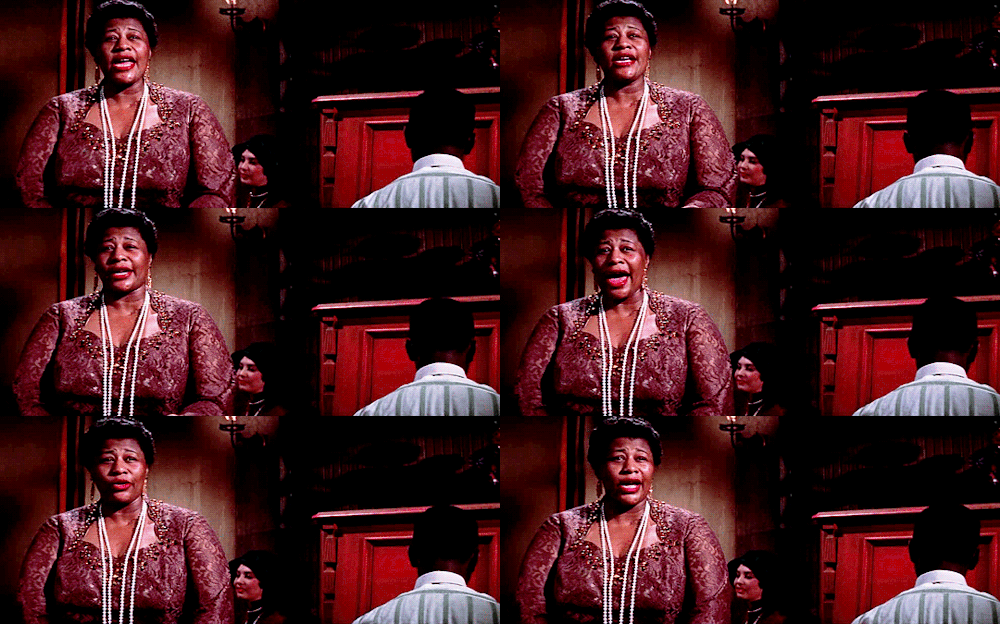
Eu gostei muito dos figurinos de Janet Leigh, em especial do vestido prateado com sapatos vermelhos muito, muito lindos – eu certamente usaria aqueles sapatos! Embora ela seja a melindrosa chique, seu papel não é o de maior destaque: Peggy Lee tem o papel mais desafiador em “Taverna Maldita”. Há ainda duas mulheres notáveis: uma jovem Jayne Mansfield é uma vendedora de cigarros e Ella Fitzgerald é cantora e proprietária do bar Fat Annie's.

I really liked Janet Leigh's outfits, in special her silver dress and wonderful, wonderful red shoes – I'd certainly wear those shoes! Although she is the fancy flapper, her role isn't the most substantial one: Peggy Lee has the most challenging role in “Pete Kelly's Blues”. There are also two other ladies of notice: a young Jayne Mansfield as a cigarette girl and Ella Fitzgerald as the main singer and owner of a bar called Fat Annie's.


Além de ser a estrela de “Taverna Maldita”, Jack Webb também dirigiu o filme – e ele até sabia tocar corneta! Jack esteve envolvido com o projeto desde o início. No começo, “Taverna Maldita” foi um programa de rádio, protagonizado por Jack Webb, que foi exibido em 1951. Depois do filme, em 1959, Webb produziu a série de TV de “Taverna Maldita”, que durou apenas uma temporada.

Besides being the star of “Pete Kelly's Blues”, Jack Webb also directed the film – and he also knew how to play the cornet! Jack was involved with the project since the beginning. At first, “Pete Kelly's Blues” was a radio show, starring Jack Webb, that was broadcast in 1951. After the film, in 1959, Webb produced the TV show “Pete Kelly's Blues”, that lasted only one season.
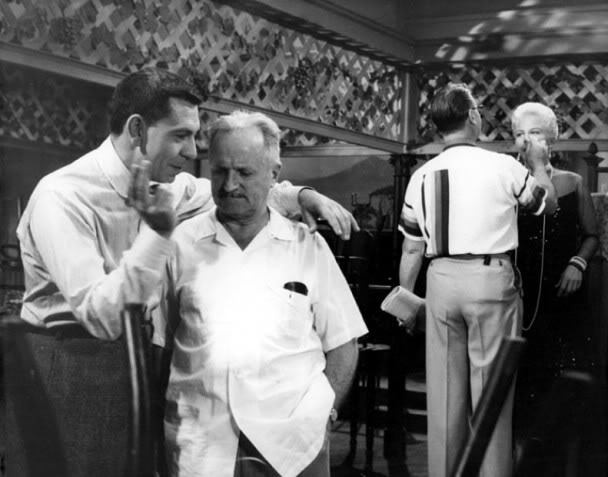


Com uma mistura inovadora de música e elementos do subgênero gângster, “Taverna Maldita” é um filme agradável e pouco visto que demonstra os muitos talentos de Jack Webb, Ella Fitzgerald e, em particular, de Peggy Lee, que foi inclusive indicada a um Oscar de Atriz Coadjuvante.

With an innovative mix of music and gangster elements, “Pete Kelly's Blues” is an enjoyable and underseen film that showcases the many talents of Jack Webb, Ella Fitzgerald and, in special, Peggy Lee, who was even nominated for a Supporting Actress Oscar.

This is my contribution to the Janet Leigh blogathon, hosted by Michaella at Love Letters to Old Hollywood.

Thursday, October 16, 2014

The D.I. (1957) e o incrível Jack Webb

The D.I. (1957) and the amazing Jack Webb
Ator, produtor, diretor, roteirista. Com este currículo, Jack Webb me fez lembrar Orson Welles. Mas eu nunca havia ouvido falar de Jack Webb, o que me fez pensar que Jack era o Orson Welles dos pobres. Como eu estava enganada! Welles e Web têm muito em comum, além dos diversos papéis em frente e atrás das câmeras: homens durões e sérios, que começaram a carreira no rádio, conquistaram mulheres bonitas, conseguiram sucesso e não cuidaram bem da própria saúde. Welles dirigiu e estrelou seu filme mais conhecido, “Cidadão Kane”. Jack estrelou, dirigiu e também produziu seu filme mais conhecido, “The D.I.” (1957).

Actor, producer, director, screenwriter.  With this resumée, Jack Webb  reminded me of Orson Welles. But I had never heard about Jack Webb, so I though he was the poor people's Orson Welles. How wrong I was! Welles and Webb had a lot in common, besides their functions in front of and behind the cameras: tough and serious men, they both started in the radio, conquered pretty women, were successful and didn't take care of their own health. Welles directed and starred in his best known film, “Citizen Kane”. Jack starred, directed and also produced his best known film, “The D.I.” (1957).


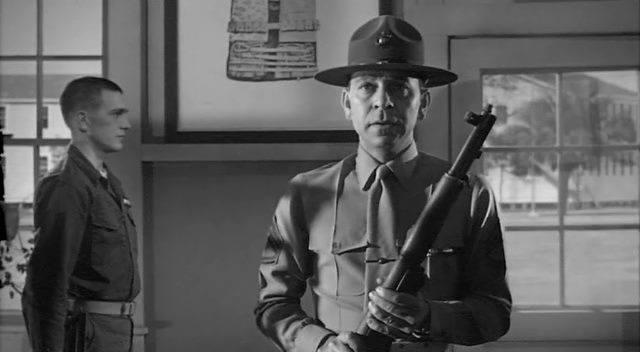
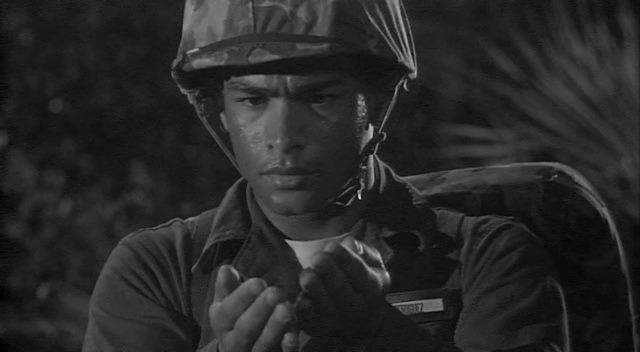
O sargento Jim Moore (Jack Webb) treina seu pelotão com disciplina e pulso firme. Não há lugar para moleza entre os soldados! Mas o exemplar recruta Owens (Don Dubbins), quando está sob pressão, não consegue manter o foco e se atrapalha. Isso leva o sargento Moore a gritar muito com Owens & Companhia, e o ponto alto da tirania acontece quando ele obriga todo o pelotão a encontrar uma mosca que Owens matara naquela tarde na praia. A missão? Enterrar a mosca!

Sergeant Jim Moore (Jack Webb) trains his platoon with discipline and toughness. There is no place for laziness among soldiers! But exemplary newcomer Owens (Don Dubbins), whenever he is under pressure, can't focuse and makes mistakes. That's why sergeant Moore shouts a lot with Owens and Co., and the climax of his tiranny is when he makes the platoon find a fly Owens had killed that afternoon at the beach. The mission? To bury the fly!

Este era apenas o segundo filme dirigido por Jack Webb, mas ele já acumulava grande prestígio. Webb foi um dos atores que se tornou ídolo nos primeiros anos da televisão. O novo meio engatinhava e ele já soube o que fazer para alcançar o sucesso. E Jack trabalhou com o que mais gostava: investigação policial. Foi com o filme “O Demônio da Noite / He Walked by Night” (1948) que ele teve a ideia de criar um programa de rádio (e, depois, de televisão) contando casos verídicos investigados pela polícia de Los Angeles. Pela primeira vez o público poderia se sentir parte da investigação, conhecendo métodos e jargões policiais. No rádio, “Dragnet” durou de 1949 a 1957. Na televisão, de 1951 a 1959.

This was only the second film directed by Jack Webb and he already had prestife. Webb was one of the actors who became an idol when TV appeared. The new medium was still crawling and he already knew what to do to be successful. And Jack worked with his favorite thing: police investigation. It was through the film “He Walked by Night” (1948) that he had the idea to create a radio show (and, later, a TV show) about real cases investigated by the LA police department. For the first time, tthe audience could feel like part of the investigation, getting to know the method and the slang used by the police. In the radio, “Dragnet” lasted from 1949 to 1957. On TV, from 1951 to 1959.


Jack Webb gostava de duas coisas em suas produções: economia e veracidade. E ele conseguiu ambos neste filme ao contratar marinheiros de verdade para interpretar os colegas de pelotão do recruta Owens. O próprio ator Don Dubbins, intérprete de Owens, tinha um pouco de experiência na frente de batalha cinematográfica: trabalhou como extra nos filmes de guerra “A um passo da eternidade / From Here to Eternity” (1954) e “A Nave da Revolta / The Caine Mutiny” (1954).

Jack Webb liked two things in his productions: economy and truth. And he got both in “The D.I.” as he hired real Mariners to play the members of Owens's platoon. Actor Don Dubbins himself had some experience in the film front: he had worked as an extra in the war movies “From Here to Eternity” (1954) and “The Caine Mutiny” (1954).


Podemos ver que Webb era um excelente diretor com apenas uma cena: o close da boca de um soldado enquanto este fala suas dezenas de tarefas. São muitos os closes neste filme, e também os travellings no alojamento dos soldados. Webb pode não ter inovado tanto nos ângulos de câmera quanto Welles, mas sem dúvida fez um belo trabalho neste drama psicológico.

We can see that Jack Webb was an excellent director with only one scene: the close-up of a soldier's mouth while he says dozens of chores. There are a lot of close-ups in this film, and also many travellings in the soldiers' quarters. Webb may not have been as innovative with the camera angles, but without a doubt he did a good job in this psychological drama.


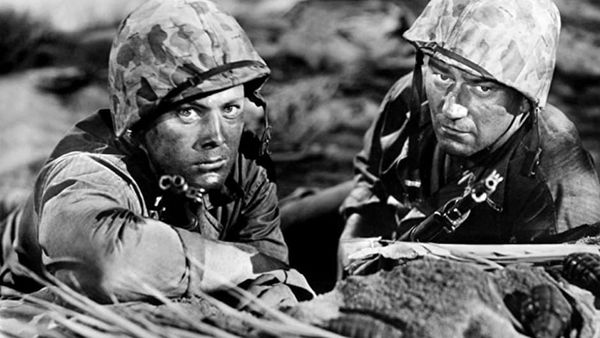
São muitos os filmes sobre a Marinha. São muitos os filmes com comandantes tiranos. O sargento Jim Moore em muito se parece, por exemplo, com o capitão Morton, interpretado por James Cagney em “Mister Roberts” (1955). E a situação de treinamento para a batalha nas praias lembra muito “Iwo Jima – O Potal da glória / Sands of Iwo Jima” (1949, que também contava com alguns soldados de verdade no elenco). Não há como não associar os sentimentos paternalistas de Moore pelo recruta Owens com o carinho velado que o sargento Stryker (John Wayne) tem pelo recruta Conway (John Agar) no filme de 1949.

There are many films about the Marines. There are many films with tyrannical commanders. Sergeant Jim Moore is a lot like Captain Morton, played by James Cagney in “Mister Roberts” (1955). And the training sequence at the beach reminds us of “Sands of Iwo Jima” (1949, that also had some real soldiers in the cast). There is no way to deny that Moore's fatherly feelings towards Owens are just like the kind of love Sergeant Stryker (John Wayne) has towards Conway (John Agar) in the 1949 film.
Sands of Iwo Jima (1949)
As três mulheres do filme merecem atenção: Virginia Gregg rouba a cena como a mãe do recruta Owens. Virginia terminaria a carreira dando voz a outra mãe, bem mais notória: ela dubla Norma Bates em “Psicose III” (1986). Monica Lewis canta uma canção escrita por Ray Conniff, “If’n You Don’t, Somebody Else Will”. A vendedora por quem o sargento Moore se interessa é Jackie Loughery, então esposa de Jack Webb e ex-Miss Estados Unidos. Mas, como em todos os filmes em que a Marinha é tema, o destaque é masculino. E Jack Webb merece todos os créditos pelo sucesso de “The D.I.”

The three women in the film deserve attention: Virginia Gregg steals the scene as Owens's mother. Virginia would end her career dubbing another mother, a more famous one: she was the voice of Norma Bates in “Psycho III” (1986). Monica Lewis sings a song written by Ray Conniff, “If’n You Don't, Somebody Else Will”. The salesgirl for whom Sergeant Moore falls is Jackie Loughery, then Jack Webb's wife and former Miss USA. But, as it happens in all films about the Marines, the men receive more attention. And Jack Webb deserves all the credit for the success of “The D.I.”.

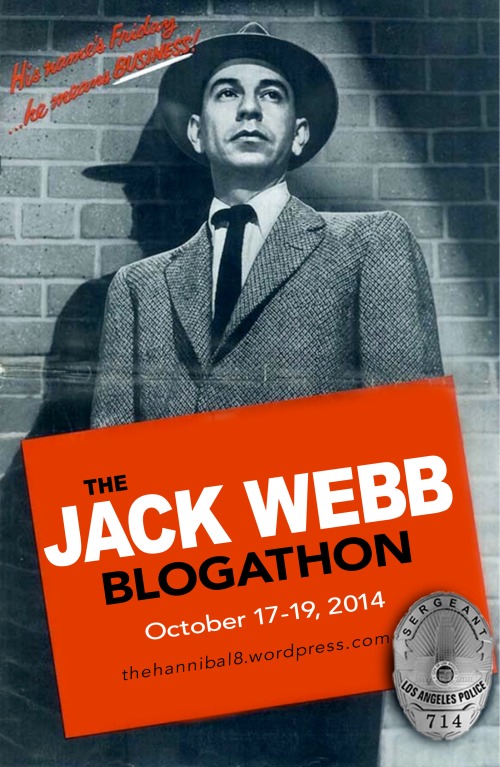
This is my contribution to the Jack Webb blogathon, hosted by Toby at The Hannibal 8. Yes, sir!

Related Posts Plugin for WordPress, Blogger...