} Crítica Retrô: Sylvia Sidney

Tradutor / Translator / Traductor / Übersetzer / Traduttore / Traducteur / 翻訳者 / переводчик

Showing posts with label Sylvia Sidney. Show all posts

Friday, June 28, 2024

Beco Sem Saída (1937) / Dead End (1937)

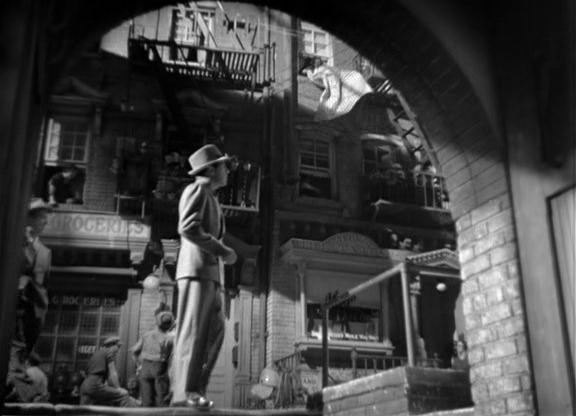
 Como toda cidade grande, Nova York é uma cidade de contrastes. Os ricos e os pobres coexistem, muitas vezes num mesmo bairro. É num destes bairros que se passa a ação do filme “Beco Sem Saída”. E, graças a uma brilhante direção de arte, realmente sentimos que estamos neste local de contrastes junto com os personagens.


Like any big city, New York is a city of contrasts. The rich and the poor coexist, sometimes in the same neighborhood. It’s in one of those neighborhoods that the film “Dead End” is set. And, thanks to its brilliant art direction, we really feel we’re in this place of contrasts with the characters.

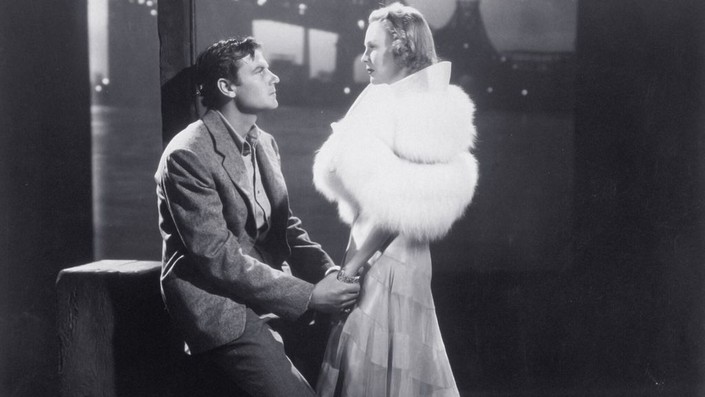
Da sua janela num cortiço, Drina (Sylvia Sidney) pode ver a casa onde vive Kay Burton (Wendy Barrie). Kay está saindo com o amigo de infância de Drina Dave (Joel McCrea), um arquiteto à procura de trabalho. Contaminado pelos valores de Kay, Dave quer demolir o cortiço e construir casas decentes para gente decente. Drina, que gosta de Dave, fica de coração partido com o plano dele.  


From her window at a tenement, Drina (Sylvia Sidney) can see the house where Kay Burton (Wendy Barrie) lives. Kay is seeing Drina’s childhood friend Dave (Joel McCrea), an architect seeking a job. Contamined by Kay’s values, Dave wants to put the tenement on the ground and build decent houses for decent people. Drina, who likes Dave, is heartbroken by his plan.
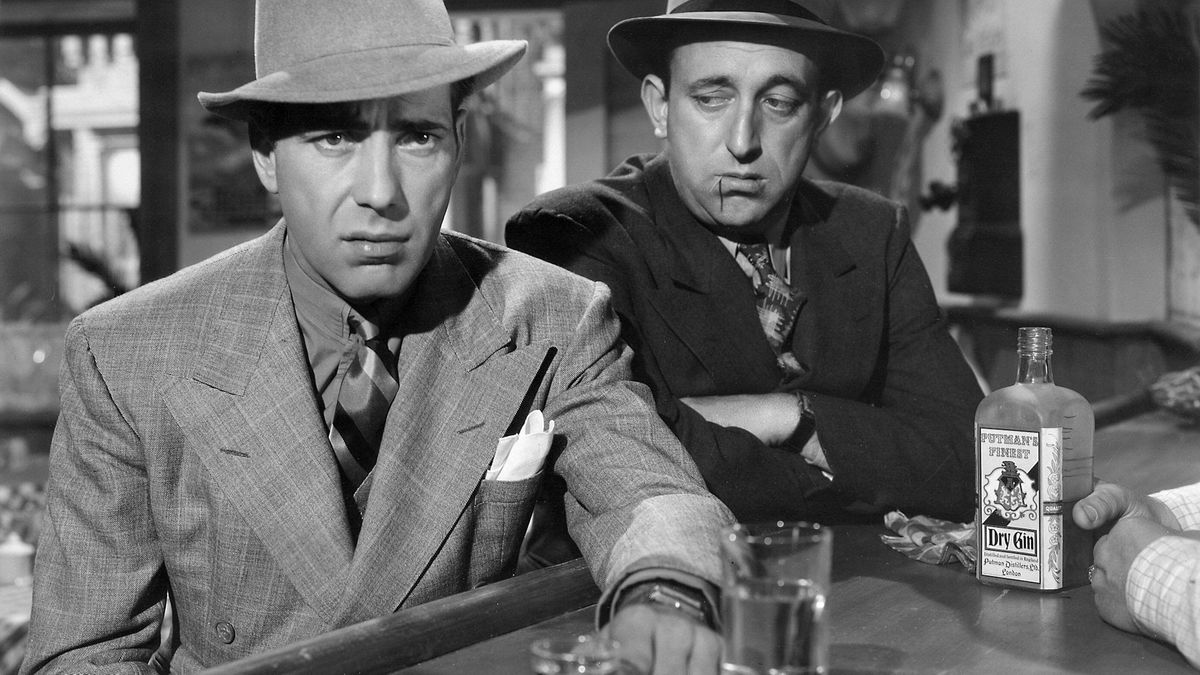
Andando pelo cortiço temos dois homens e um deles diz que seu nome é Johnson (Humphrey Bogart). Ele na verdade cresceu naquele bairro e foi mandado para o reformatório quando adolescente – afinal, ele já matou oito homens! Ele está procurando uma antiga namorada, Francey (Claire Trevor), mas o reencontro não será como ele esperava.


Hanging around the tenement there are two guys and one of them says his name is Johnson (Humphrey Bogart). He actually grew up there but was sent to reform school as a teenager – after all, he already killed eight men! He is looking for an old girlfriend, Francey (Claire Trevor), a meeting that won’t happen as he expected.

Mais do que Drina e Dave, o filme é sobre uma gangue de garotos que vivem no cortiço, cujo líder é o irmão mais novo de Drina, Tommy (Billy Halop). Ela diz que os meninos não prestam, e o diz com convicção. Tommy se mete em problemas quando a gangue incomoda e agride o menino rico Philip (Charles Peck), que é sobrinho de um juiz.


More than Drina and Dave, the movie is about a gang of boys who live in the tenement, whose leader is Drina’s younger brother Tommy (Billy Halop). She says the boys are no good, and she means it. Tommy gets in trouble when the gang picks on and beats the rich boy Philip (Charles Peck), who is the nephew of a judge.

Os meninos da gangue são interpretados por um grupo de jovens atores que ficaram conhecidos como “the Dead End Kids”. Eles vieram de um dos mais violentos bairros de Nova York e apareceram na peça de teatro “Beco Sem Saída”, depois neste filme, e depois novamente nos cinemas em “Anjos de Cara Suja” (1938) – curiosamente, mais um filme com Humphrey Bogart num papel secundário e vilanesco. Samuel Goldwyn teve a ideia de trazer os meninos do teatro para o estúdio, mas se arrependeu quando eles começaram a aprontar no local. O sexteto original fez três filmes e se separou para cada um se concentrar em carreira solo.


The boys from the gang are played by a group of young performers who became known as “the Dead End Kids”. They came from the toughest New York neighborhood and appeared on the stage production of “Dead End”, then this film, then again on screen with “Angels with Dirty Faces” (1938) – curiously, another film with Humphrey Bogart in a secondary and heavy role. Samuel Goldwyn had the idea to bring the boys from the theater to the studio, but regretted as they ran mischievously through the place. The original sextet made three films together and split to have solo careers.

Humphrey Bogart é apenas o terceiro nome nos créditos, mas tem bastante tempo na tela. Seu diálogo com sua amarga mãe, que ele não via há dez anos, é emocionante. Ele teve no ano anterior muito sucesso com “A Floresta Petrificada” e ia ganhando reconhecimento como o grande ator que era. Ele não foi, entretanto, a primeira escolha para o papel que interpretou em “Beco Sem Saída”: o produtor Samuel Goldwyn queria James Cagney para o papel, e Bogart só foi escolhido depois que George Raft recusou o papel.


Humphrey Bogart is only third billed, but he receives a decent amount of screen time. His conversation with his bittered mother, who he hadn’t seen in ten years, is poignant. He had a big hit in the previous year’s “The Petrified Forest” and was gaining recognition as the great actor he was. He wasn’t, however, the first choice for the role he played in “Dead End”: producer Samuel Goldwyn wanted James Cagney cast instead, and Bogart was only chosen when George Raft declined the role.
Embora sua década de maior sucesso tenha sido a de 1950, William Wyler trabalhava como diretor desde 1925. Nascido em 1902 no que era então o Império Alemão, Wyler era primo de Carl Laemmle, chefe dos Estúdios Universal, que o contratou para trabalhar no cinema em 1921, primeiro movendo objetos de cena, depois como assistente de edição. Quando fez “Beco Sem Saída” Wyler já havia recebido sua primeira indicação ao Oscar de Melhor Diretor, por “Fogo de Outono” (1936).


Although he would see more success in the 1950s, William Wyler’s first credit as a director is from a 1925 short. Born in 1902 in what was back then the German Empire, Wyler was the cousin of Carl Laemmle, head of the Universal Studios, who hired him to work in film in 1921, first moving props around, then as first assistant editor. When he made “Dead End” Wyler had already been nominated for his first Best Director Oscar, for “Dodsworth” (1936).
O roteiro foi escrito por Lillian Hellman, baseado na popular peça. A própria Lillian era uma exitosa dramaturga, com sucessos na Broadway como “The Children’s Hour”, “The Little Foxes” e “Watch on the Rhine”, que foram todos adaptados mais tarde para o cinema. Ela foi indicada a dois Oscars e entrou para a lista negra nos anos 1950 quando se recusou a responder às perguntas do Comitê de Atividades Anti-Americanas.


The screenplay was written by Lillian Hellman, based on a popular play. Lillian herself was a successful playwright, with Broadway hits such as “The Children’s Hour”, “The Little Foxes” and “Watch on the Rhine”, all of which were adapted to the screen later. She was nominated for two Oscars and was blacklisted in the 1950s when she refused to answer the questions of the House Committee on Un-American Activities.

A brilhante direção de fotografia ficou a cargo de Gregg Toland, que é mais conhecido por seu trabalho revolucionário em “Cidadão Kane” (1941). Pela atmosfera criada pela câmera de Toland, “Beco Sem Saída” pode até mesmo ser considerado um proto-noir ou um filme tardio no sub-gênero de filmes de gângster que era tão comum no início dos anos 1930. William Wyler e Gregg Toland fizeram seis filmes juntos e poderiam ter colaborado mais se Gregg não tivesse morrido prematuramente em 1948.


The great cinematography is by Gregg Toland, who is better known for his revolutionary job in “Citizen Kane” (1941). By the mood created by Toland’s camera, “Dead End” could even be labeled as a proto-noir or a late entry in the gangster movie genre that was so common in the early 1930s. William Wyler and Gregg Toland worked in six films together and could have collaborated more if it wasn’t for Toland’s premature death in 1948.

“Beco Sem Saída” foi indicado a quatro Oscars: Melhor Filme, Direção de Fotografia, Direção de Arte e Atriz Coadjuvante para Claire Trevor, que tem apenas uma cena de cinco minutos e cuja doença não pôde ser mencionada por causa, vocês sabem, do Código Hays. As performances de todo o elenco são ótimas, mas o filme é realmente uma festa para os olhos, pois reconstrói em um estúdio em Hollywood o microcosmo de um de tantos bairros em Nova York.


“Dead End” was nominated for four Oscars: Best Picture, Cinematography, Art Direction and Supporting Actress for Claire Trevor, who has only five minutes of screen time and whose disease couldn’t be said out loud because, you know, of the Hays Code. The performances of the whole cast are great, but the film is actually a feast for the eyes, as it reconstructs in a Hollywood studio the microcosmos of one of so many New York neighborhoods.

Saturday, June 11, 2016

Fúria / Fury (1936)

Às vezes precisamos de um soco no estômago. Um soco metafórico, obviamente: algo que nos tire da zona de conforto, que nos incomode, que nos deixe insatisfeitos com nós mesmos. Isso é possível com muitos filmes. Isso aconteceu comigo vendo o primeiro filme feito por Fritz Lang em Hollywoo, “Fúria” (1936), que tenta responder duas perguntas principais: Por que coisas ruins acontecem com pessoas boas? E como isso pode destruir a bondade que existe nelas?

Sometimes we need a punch in the stomach. A metaphoric punch, obviously: something to take us out of our comfort zone, to bother us, to leave us dissatisfied with ourselves. This is possible with many films. This happened to me while I was watching Fritz Lang's first Hollywood film, “Fury” (1936), that tries to answer two main questions: Why bad things happen to good people? And how can these things destroy the goodness in those people?
Joe Wilson (Spencer Tracy) era um cara legal. Ele queria se casar com seu grande amor, Katherine Grant (Sylvia Sidney), mas para isso precisava juntar dinheiro. Ele prospera junto dos irmãos com um posto de gasolina em Chicago, enquanto Katherine vai trabalhar em outra cidade. Quando Joe finalmente consegue o dinheiro, decide ir até sua amada, acompanhado de seu fiel cachorro Rainbow (Terry, mais conhecido por interpretar Toto em “O Mágico de Oz” em 1939). E no caminho começam os problemas.

Joe Wilson (Spencer Tracy) was a nice guy. He wanted to marry his sweetheart, Katherine Grant (Sylvia Sidney), but to do it he needed to save money. He does well with his brothers in a gas station in Chicago, while Katharine goes to work in another town. When Joe finally gets enough money, he decides to go meet his sweetheart, carrying along his loyal dog Rainbow (Terry, best known for playing Toto in “The Wizard of Oz” in 1939). And then troubles start.
Joe é detido na estrada e levado para ser interrogado sobre o sequestro de uma moça. Infelizes coincidências levam o delegado a acreditar que Joe sabe algo sobre o crime, e ele é preso até que os fatos sejam apurados. Mas não dá tempo de descobrir a verdade: em pouco tempo se espalha a notícia de que um envolvido no sequestro foi preso, e ninguém quer saber a versão de Joe antes de formarem uma opinião sobre ele. Em uma poderosa e sábia metáfora envolvendo pessoas fofoqueiras e galinhas cacarejantes, fica claro que a verdade é o que menos importa quando os ânimos estão em ebulição.

Joe is stopped on the way and taken to be asked about the kidnapping of a girl. Unfortunate coincidences make the sheriff believe that Joe knows something about the crime, and he is arrested until the facts are checked. But there is no time to find out the truth: quickly the news about a man involved in the kidnapping being arrested spread through town, and nobody wants to know Joe's version before making a judgement about him. In a powerful and wise metaphor involving people who spread gossips and sassy chickens, it becomes clear that the truth is the less important thing when there is too much animosity.
E é por isso que eles colocam fogo na delegacia – e vibram com a ideia de Joe sendo queimado vivo. Quando os verdadeiros sequestradores são presos e confessam o crime, todos os moradores que apoiaram o linchamento preferem esquecer o infortúnio. Mas Joe, que sobreviveu, não esquecerá: ele quer vingança, e mais nada. E há um povoado inteiro a ser julgado e condenado – não apenas os 22 homens acusados de homicídio, mas suas famílias, as pessoas que passaram adiante o boato, e as que se deliciaram com a morte de um inocente.

And that's why they burn down the jail – and rejoice with the idea of Joe being burned alive. When the real kidnappers are arrested and confess the crime, all the people who supported the lynching prefer to forget the misfortune. But Joe, who survived, won't forget: he wants revenge, and nothing else. And there is a whole town to be condemned – not only the 22 people indicted for murder, but their families, the people who spread the rumors and the ones who became happy with the death of an innocent man.
A verdade é que somos julgados diariamente – e em geral por pessoas que têm pouca ou nenhuma moral para nos julgar. E é quando isso acontece que ficamos menos esperançosos com relação à humanidade, perdemos a confiança em outras pessoas e até mesmo pensamos em vingança. Isso já aconteceu comigo.

The truth is that we are all judged every day – and in general by people who have no moral to judge us. And it is when this happens that we lose hope for mankind, can't trust people and even think about revenge. This already happened to me.

Este é um dentre muitos filmes sobre o perigo das massas sedentas por justiça, nem um pouco abertas ao diálogo. Outros filmes com o tema são “Consciências Mortas” (1943) e “”O Sol é para Todos” (1962). Há também um tema menos abordado, que é a corrupção por amizade. Todos na cidade querem defender os culpados – porque, no fundo, todos são também um pouco culpados, inclusive o delegado.

This is one among many movies about the dangers of the mobs looking for justice and not interested in dialog. Other movies about the theme are “The Ox-Bow Incident” (1943) and “To Kill a Mockingbird” (1962). There is also a less common theme, the 'corruption by friendship'. Everybody in the city want to stand for the guilty ones – because, deep down inside, they are all guilty, including the sheriff.
Spencer Tracy está ótimo em momentos tão contrastantes: do moço apaixonado ao sobrevivente cheio de ódio, ele brilha e convence, embora o destaque seja para sua versão mais sombria. Walter Abel também está espetacular como o advogado de acusação, que usa muito a técnica de “você pode apagar uma pergunta da ata, mas não da mente dos jurados”.

Spencer Tracy is great in very distinct moments: from the young man in love to the survivor full of rage, he shines and is convincing, although he is better as the darkest version. Walter Abel is also spectacular as the district attorney, who uses the technique of “you can erase an answer from the report, but not from the jury's minds”.
Fritz Lang havia acabado de sair da Alemanha nazista, e podemos ver reflexos de seu último filme alemão, “M” (1931), em “Fúria”. Entretanto, Lang estava mergulhando em um problema atual de seu novo país, o linchamento, e conseguiu fazer um filme pertinente não apenas para 1936, mas também para os dias atuais. Em “Fúria”, aprendemos que às vezes a razão não consegue vencer a bestialidade. Mas é sempre bom tentar manter a razão – afinal, é ela que nos torna humanos.

Fritz Lang had just left Nazi Germany and we can see an influence from his last German film, “M” (1931), in “Fury”. However, Lang was dealing with a current problem happening in his new country, lynching, and was able to make a pertinent film not only for 1936, but also nowadays. In “Fury”, we learn that sometimes reason cannot defeat bestiality. But it is always good to try to keep reason – after all, it is reason that makes us human.

This is my contribution to the Order in the Court! The Classic Courtroom Movies blogathon, hosted by Theresa and Lesley at Cinemaven’s Essays from the Couch and Second Sight Cinema.
Related Posts Plugin for WordPress, Blogger...