} Crítica Retrô

Tradutor / Translator / Traductor / Übersetzer / Traduttore / Traducteur / 翻訳者 / переводчик

Sunday, May 12, 2019

Um Rosto de Mulher (1941) / A Woman's Face (1941)

Durante a Era de Ouro dos estúdios, sempre que um artista tinha liberdade para interpretar um personagem diferente do que estava acostumado – em geral depois de muita insistência e luta – o resultado era quase sempre maravilhoso. Por exemplo: quando a MGM deixou Joan Crawford arriscar e interpretar uma personagem marcada – em vez de mais uma mulher glamourosa – em “Um Rosto de Mulher”, ela nos legou uma performance incrível.

During the Studio Era, whenever a performer was allowed to play against type – usually after a lot of insistence and fighting – the result was almost always wonderful. For instance: when MGM let Joan Crawford take a risk and play a scarred character – instead of another glamorous woman – in “A Woman's Face”, she delivered an outstanding performance.
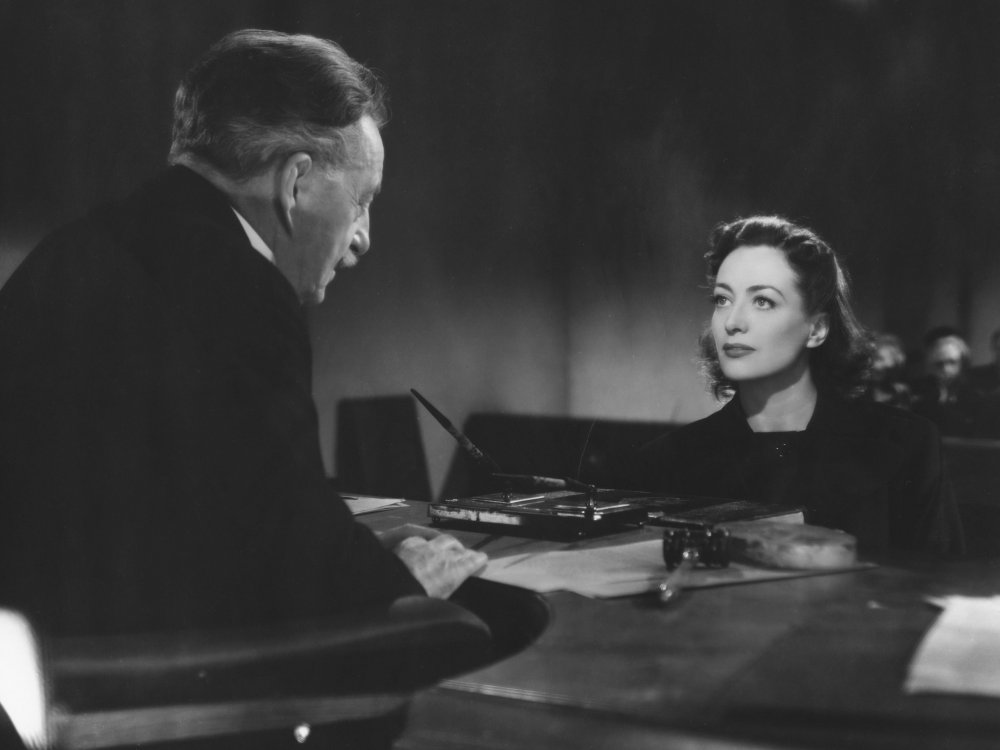


Em um tribunal em Estocolmo, o julgamento de Anna Holm (Joan Crawford) começa. Anna é acusada de assassinato. As testemunhas são chamadas e contam a história em flashback. Anna e seus “amigos” trabalhavam em um restaurante, mas este trabalho era só de fachada: eles atuavam de verdade no ramo da chantagem.

In a tribunal in Stockholm, the judgment of Anna Holm (Joan Crawford) begins. Anna is accused of murder. The witnesses are called and they tell the story in flashback. Anna and her “friends” worked in a restaurant, but this job was just a disguise: they were really active in the blackmail market.


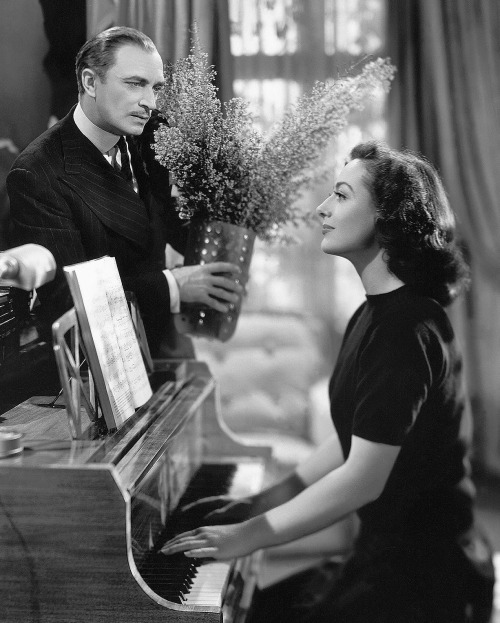
A vítima de chantagem que vai mudar toda a história é Vera Segert (Osa Massen), cujas cartas de amor para um amante foram parar nas mãos erradas. Enquanto negocia com Vera, Anna conhece o esposo dela, Gustaf (Melvyn Douglas), quese interessa pela grande cicatriz que Anna tem no rosto. Gustav então se oferece para operar Anna e remover a cicatriz. Ao mesmo tempo, Anna se apaixona por Torsten Barring (Conrad Veidt), que a quer para executar seu próprio plano maligno.

The blackmail victim that will change everything is Vera Segert (Osa Massen), whose love letters to a lover ended up in wrong hands. While negotiating with Vera, Anna meets her husband, Gustaf (Melvyn Douglas), who gets interested in the big scar Anna has in her face. Gustav then offers to operate Anna and remove the scar. At the same time, Anna falls in love with Torsten Barring (Conrad Veidt), who wants her for an evil plan of his own.


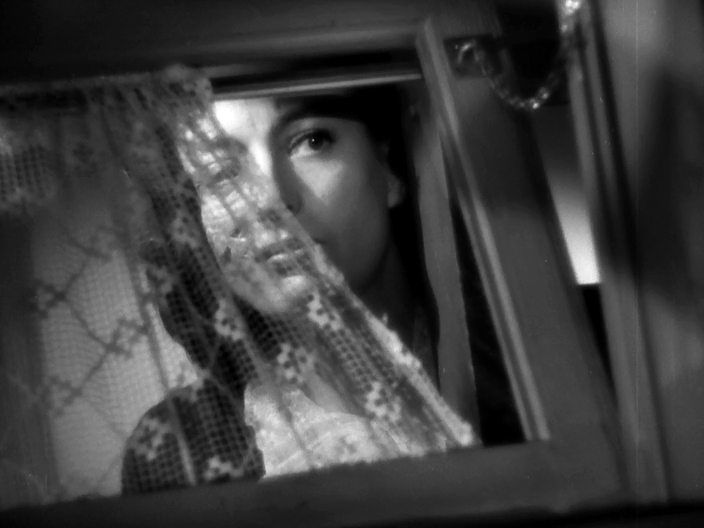
A cicatriz de Anna é decorrente de um incêndio ao qual ela sobreviveu na infância. Por causa da cicatriz, ela não conseguiu arranjar trabalho quando era adolescente e então se tornou criminosa. Anna lidava com canalhas, e em geral desconfiava de todos – não porque eles eram canalhas, mas porque ela achava que eles estavam sempre zombando de seu rosto. Toda a vida e todas as atitudes de Anna foram pautadas em sua cicatriz.

Anna got her scar after she survived a fire in her childhood. Because of the scar, she couldn't find a job as a teen and turned to crime. Anna was dealing with crooks, and she was often suspicious of everybody – not because they were crooks, but because she thought they were always mocking her appearance. All her life and her actions have been dictated by that scar.


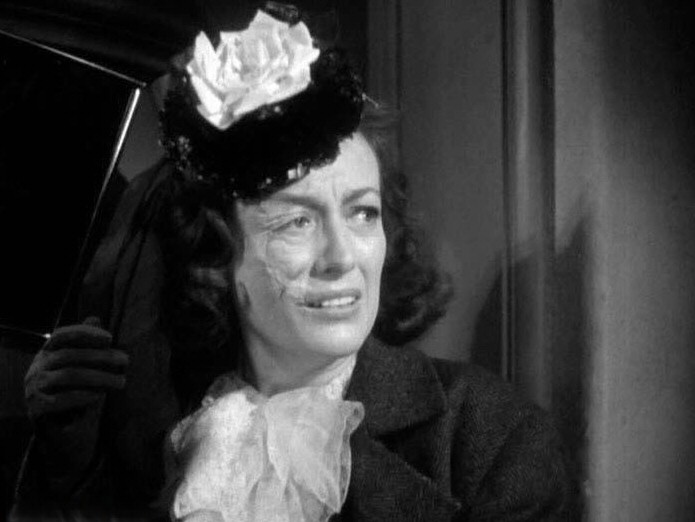
“Um Rosto de Mulher” nos leva a refletir sobre as aparências e sobre como julgamos as pessoas pela aparência. Isso vai além das noções de bonito ou feio: aqui estamos falando de uma pessoa marcada, na mesma situação de pessoas que adquiriram uma deficiência depois de um acidente. Eu pensei muito nas pessoas que lutaram em guerras e ficaram para sempre marcadas ou deficientes porque não havia  tratamento ou cirurgia plástica na época. Estas são as vítimas do fogo, de bombas e de ataques com gás que tiveram de conviver com pessoas que não acreditavam que alguém “diferente” merecia respeito.

A Woman's Face” leads us to think about appearances and how we judge people by their looks. This goes way beyond the notions of beautiful and ugly: here we are talking about someone scarred, in the same situation as people who were left handicapped by some accident. I thought a lot about people who had fought in wars and left permanently scarred or disabled because there was no treatment or plastic surgery in that time. These are the victims of fires, bombs, gas attacks, who then had to live among people who didn't see someone “different” as someone worth respecting.


Hollywood, desde sempre, fez remakes de sucessos internacionais, e neste caso não foi diferente. “Um Rosto de Mulher” é o remake de “A Mulher que Vendeu a Alma”, filme sueco de 1938 que revelou ao mundo uma jovem de 23 anos chamada Ingrid Bergman. Enquanto Crawford está bem no remake, não há comparação com a personagem amarga interpretada por Ingrid no original.

Hollywood, since the beginning, remade international successes, and this case was no exception. “A Woman's Face” is the remake of “En kvinnas ansikte”, a Swedish film from 1938 that introduced to the world a young 23-year-old girl named Ingrid Bergman. While Crawford is good in the remake, there is no comparison to the embittered character played by Ingrid in the original.


Em uma única cena no sótão, Conrad Veidt consegue ser incrivelmente assustador e sombrio – muito diferente de quando ele está dançando com Joan Crawford. Como Vera, Osa Massen ou é uma péssima atriz ou uma ótima atriz interpretando uma personagem insuportável. Alguns coadjuvantes brilham, em especial Marjorie Main e Donald Meek.

In a single scene in an attic, Conrad Veidt manages to be incredibly scary and somber – very different from when he's dancing with Joan Crawford. As Vera, Osa Massen is either a very bad actress or a very good one playing an annoying character. Some supporting players shine, in special Marjorie Main and Donald Meek.


Do ponto de vista técnico, há algumas coisas a se destacar em “Um Rosto de Mulher”. Há uma cena muito interessante com diversos espelhos. Há duas sequências muito tensas e sem música – apenas com os barulhos do ambiente, e esta escolha foi muito eficiente para aumentar o suspense. E, claro, o departamento de maquiagem fez maravilhas não apenas com a criação da cicatriz de Anna, mas também com a maneira como mostram o efeito do fogo no olho dela.

From the technical point of view, there are a few things to point out about “A Woman's Face”. There is a very interesting shot with a lot of mirrors. There are a couple of very tense scenes that have no music – only the noises of the place, and this choice proved to be very effective to increase the suspense. And, of course, the make-up department did wonders not only conceiving Anna's scar, but also showing how the fire also affected her eye.
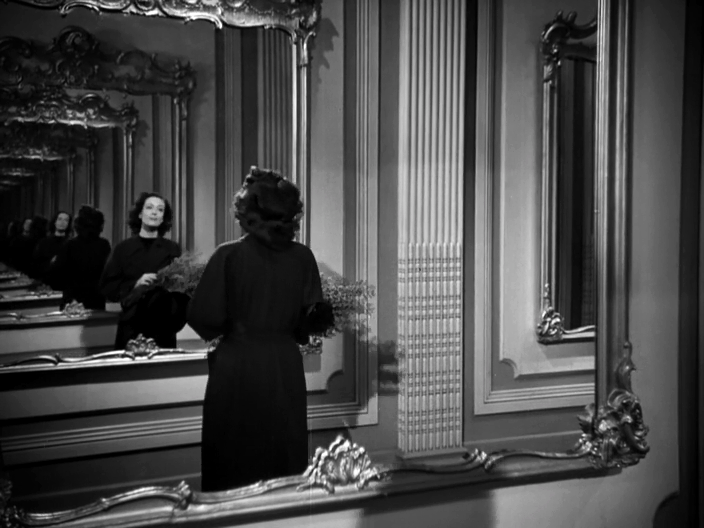


Antes do doutor Gustaf ver o resultado da cirurgia de Anna, ele diz ter medo de que ela se torne “um belo rosto sem coração”. A mudança no rosto de Anna vem junto com uma mudança no coração, e assim o filme reforça o estereótipo de Hollywood de que tudo que é belo é bondoso. “Um Rosto de Mulher” é um ótimo filme, mas eu gostaria mais dele se a aparência de Anna não tivesse mudado. Afinal, se o Corcunda de Notre Dame podia ser um cara legal mesmo sendo considerado “feio”, por que o mesmo não poderia acontecer com Anna Holm?

Before Dr. Gustaf sees the result of Anna's surgery, he says he's afraid of her ending up having “a beautiful face and no heart”. As Anna's change in her face comes with a change of heart, we see another picture that reinforces the Hollywood stereotype that beautiful equals kind. “A Woman's Face” is a great film, but I'd love it more if the Anna's appearance didn't change. After all, if the Hunchback of Notre Dame could be a great guy even being considered “ugly”, why couldn't Anna Holm be the same?


This is my contribution to the Joan Crawford blogathon, hosted by Pale Writer and Poppity Talks Classic Films.


Monday, May 6, 2019

Quando Paris Alucina (1964) / Paris When It Sizzles (1964)


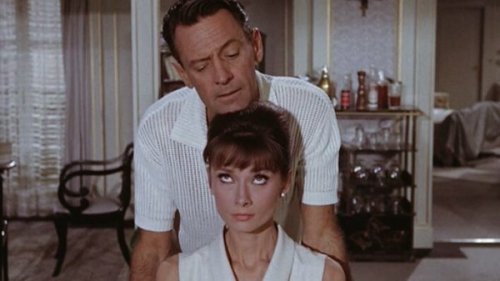
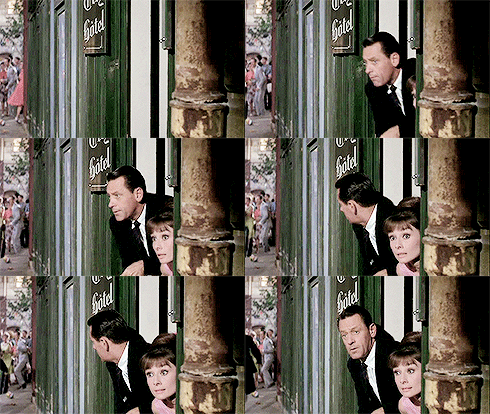
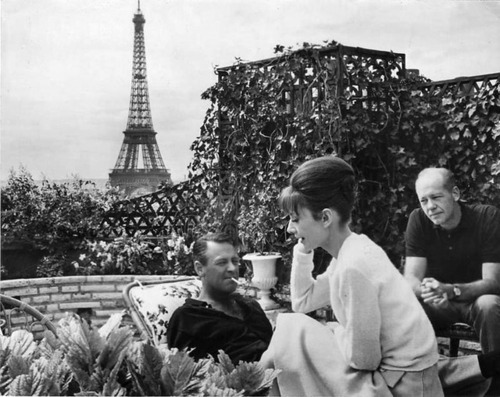
Dez anos depois de sua última parceria, “Sabrina” (1954), William Holden e Audrey Hepburn se encontraram novamente em um estúdio de cinema – ou melhor, em dois estúdios de cinema. “Quando Paris Alucina” (1964) é um filme metalinguístico, ou seja, é um filme sobre fazer filmes, e ele tem um filme dentro de outro filme. Pode parecer confuso, mas a película é na verdade muito boa para ajudar as pessoas a compreenderem como os filmes são feitos – e como esse processo pode ser caótico.

Ten years after their previous collaboration, “Sabrina” (1954), William Holden and Audrey Hepburn met again on a movie set – or better, at two movie sets. “Paris When It Sizzles” (1964) is a metalinguistic film, that is, a film about making films, and it has a film inside other film. It may sound confusing, but the movie is actually a very good one to make people understand how films are made – and how chaotic this process can be.


Richard Benson (William Holden) é um roteirista que está trabalhando no roteiro do seu próximo filme, chamado “A Garota que Roubou a Torre Eiffel”. Ou ele deveria estar trabalhando: ele passou cinco meses se divertindo, bebendo, tomando sol e procrastinando e agora ele só tem dois dias para entregar um roteiro de 130 páginas.

Richard Benson (William Holden) is a screenwriter who is working on the screenplay for his next film, called “The Girl who Stole the Eiffel Tower”. Or he should be working: he spent five months partying, drinking, sunbathing and procrastinating, and now he only has two days to deliver a 130-page script.


Uma datilógrafa, Gabrielle Simpson (Audrey Hepburn), é enviada para ajudá-lo a digitar o roteiro. Ele confessa para ela que não tem nada pronto, embora ele descreva o filme com grandiosidade, como uma mistura gloriosa de gêneros. Gabrielle fica surpresa com a situação incomum, mas mesmo assim eles começam a trabalhar juntos, com Richard jogando cara ou coroa para tomar decisões sobre o filme – como, por exemplo, se a cena inicial se passará durante o dia ou à noite.

A typist, Gabrielle Simpson (Audrey Hepburn), is sent to help him type his script. He confesses to her that he has nothing ready, although he describes his film with grandiosity as glorious a mix of genres. Even though Gabrielle is surprised with the uncommon situation, they start working together, with Richard tossing a coin to decide some things about his movie – like if the opening scene will be set by day or at night.


As coisas não vão bem. Chateado, Richard começa a conversar com Gabrielle e decide usar a história dela como inspiração. “A Garota que Roubou a Torre Eiffel” será sobre uma jovem trabalhadora festejando o Dia da Bastilha depois que seu amigo, Maurice, cancela o encontro que eles tinham. Conforme Richard imagina a ação, ela se desenrola na frente dos nossos olhos. É o filme dentro do filme.

Things are not going well. Upset, Richard starts talking to Gabrielle and decides to use her story as an inspiration. “The Girl who Stole the Eiffel Tower” will be about a working girl spending the Bastille Day festivities after her date, Maurice, dumps her. As Richard envisions the action, it develops in front of our eyes. It's the film within the film.


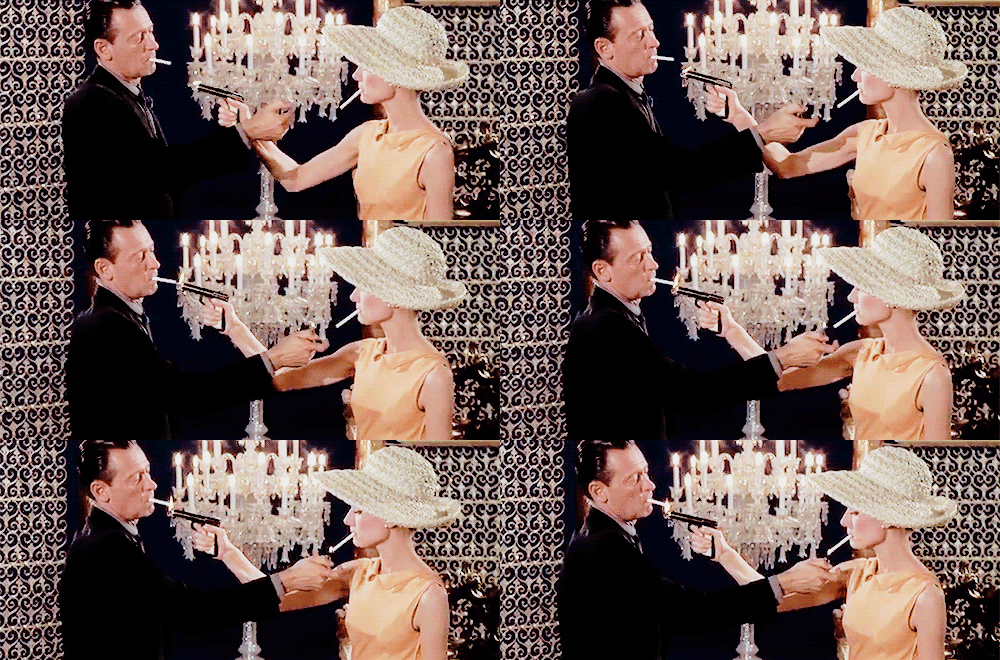
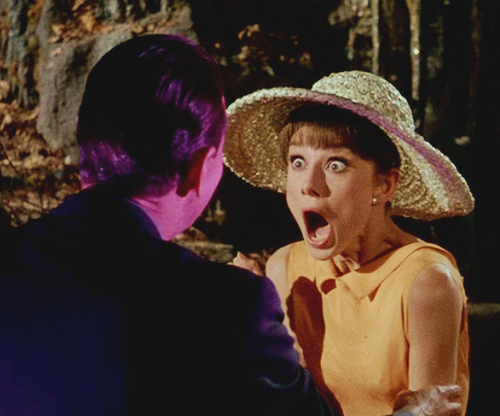
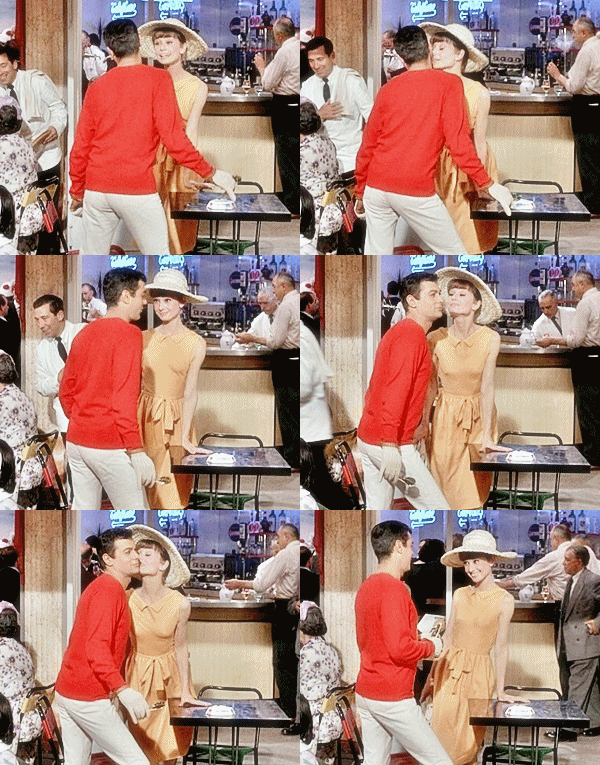
A garota, Gabby, também é interpretada por Audrey Hepburn. Maurice, seu amigo narcisista, é interpretado por Tony Curtis em uma participação hilária. Mas um homem misterioso, Rick, interpretado por William Holden, decide levá-la para passar um dia divertido com ele. Agora eles precisam decidir o que acontecerá a seguir. “A Garota que Roubou a Torre Eiffel” será um filme de romance? De aventura? De suspense? De horror? Ou talvez de comédia?

The girl, Gabby, is played by Audrey Hepburn as well. Maurice, her narcissistic date, is played by Tony Curtis in an hilarious cameo. But a mysterious man, Rick, played by William Holden, decides to take her out for a fun day. Now they have to decide what will happen next. Will “The Girl who Stole the Eiffel Tower” be a romantic movie? An adventure? Spy thriller? Horror film? Or maybe a comedy?


Filmes metalinguísticos são meu tipo de filme favorito. Além de apreciar “Quando Paris Alucina”, eu também me vi retratada em muitas situações. Primeiro, Richard é um procrastinador. Assim como ele, eu também estou acostumada a fazer minhas tarefas quando a data limite está próxima. Como eu não gosto da palavra “procrastinação”, eu prefiro dizer que não sou boa em administrar meu tempo, mas não importa qual termo eu uso: o resultado é o mesmo.

Metalinguistic films are my favorite kind of film. Besides enjoying “Paris When It Sizzles”, I also saw myself in many situations. First, Richard is a procrastinator. Like him, I am also used to doing my things when the deadline is approaching. As I don't like the world “procrastinating”, I prefer to say that I'm not good at managing my time, but no matter the term I use: the result is the same.


Segundo, Richard é um escritor que gosta de visualizar as cenas que ele está criando. Eu, sempre que escrevo ficção, também gosto de visualizar a ação se desenvolvendo na minha mente, por isso eu escolho alguns atores, vivos ou mortos, e às vezes até pessoas que eu conheço, para imaginá-los interpretando as cenas na minha cabeça. É mais fácil ver se o que você escreveu é verossímil se você pode, bem, ver a ação se desenrolar na sua mente.

Second, Richard is a writer who likes to visualize the scenes he's creating. I, whenever I write fiction, also like to visualize the action developing in my mind, so I “cast” some actors, dead or alive, and sometimes even people I know, to imagine them playing the scenes in my head. It's easier to see if what you wrote is believable if you can, well, see it unfolding in your mind.


Há muitas, muitas piadas envolvendo o mundo do cinema. Para começar, Gabrielle conta a Richard que seu último trabalho foi com um cineasta em cujos filmes a coisa mais importante era a ação que NÃO estava acontecendo – e eu logo pensei em Buñuel e filmes europeus experimentais.

There are many, many jokes involving the film world. To begin with, Gabrielle tells Richard that she last worked for a filmmaker in whose films the important thing was what was NOT going on – and I instantly thought about Buñuel and experimental European flicks.
 
Tony Curtis and Audrey Hepburn
Depois, Richard zomba dos atores que seguem o Método. Assim que Richard começa a visualizar o filme dentro do filme, os créditos rolam e neles está escrito “little person” no lugar dos nomes de profissionais como diretor de arte e decorador. No filme dentro do filme, Gabby diz não gostar dos filmes da Nouvelle Vague (chamados de New Wave pelos norte-americanos) porque nada acontece neles. Há algumas referências a “Bonequinha de Luxo” (1961), outro filme de Audrey. E há algumas participações especiais, incluindo Marlene Dietrich, Mel Ferrer e as participações vocais de Frank Sinatra e Fred Astaire!

Next, Richard mocks Method actors. As Richard starts envisioning the film-within-the-film, the credits appear and they have “little person” written for behind-the-cameras professionals like art director and set decorator. In the film-within-the-film, Gabby says that she doesn't like those New Wave movies because nothing happens in them. There are a few hints to Audrey’s movie “Breakfast at Tiffany's” (1961). And there are a few cameos, including Marlene Dietrich, Mel Ferrer and the vocal cameos of Frank Sinatra and Fred Astaire!


Mais do que isso, “Quando Paris Alucina” é uma lição na arte de fazer filmes. Os novatos aprendem o significado de fade in, fade out e do efeito de dissolver (“dissolve”). Nós literalmente vemos um roteiro ganhar vida na nossa frente. Nós testemunhamos o processo de brainstorm que gera um filme, e podemos ter certeza de que muitos dos, se não todos, filmes que vimos e apreciamos surgiram através deste exercício de imaginação.

More than that, “Paris When It Sizzles” is a filmmaking lesson. Beginners get to know the meaning of fade in, fade out and the dissolve effect. We literally see a script becoming alive in front of us. We witness the brainstorm process that gives birth to a movie, and we can be sure that many, if not all, flicks we've seen and enjoyed came to be through this exercise of imagination.


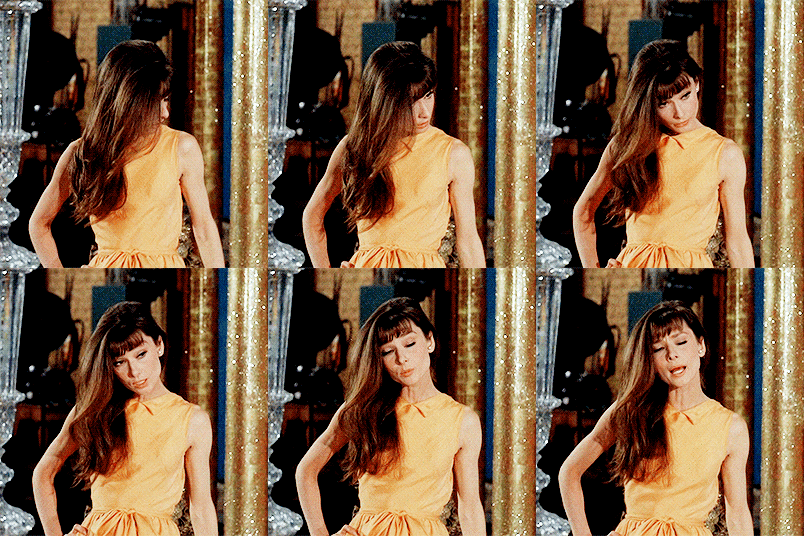
Audrey adiciona um toque infantil à sua Gabrielle que bem pode ser chamado de “serendipidade”, uma palavra ensinada a ela por Richard. Como Gabby, a heroína do filme dentro do filme, ela é como uma moleca, parecendo ingênua mas usando sua sagacidade sempre que precisa fugir de problemas – ela é feita do mesmo material das heroínas de cinema mudo interpretadas por Ossi Oswalda. Audrey parecia estar se divertindo muito enquanto gravava o filme.

Audrey adds a childlike touch to her Gabrielle that can be called “serendipity”, a word Richard teaches her. As Gabby, the heroine of the film-within-the-film, she is like a gamine, looking naïve but using her brains whenever she needs to escape some trouble – she is made from the same material of silent film heroines played by Ossi Oswalda. Audrey really seemed to be having a lot of fun while doing  the film.


“Quando Paris Alucina” não foi um sucesso entre os críticos. Mesmo hoje, muitos fãs de cinema não gostam muito do filme. Eu, por outro lado, acho-o bastante divertido – e, mais importante, um retrato em forma de paródia da indústria do cinema e do processo criativo.

“Paris When It Sizzles” was not a success among critics. Even nowadays, many film fans are not very fond of the film. I, on the other hand, find it very entertaining – and, more important, a tongue-in-cheek portrait of the film industry and the creative process.

This is my contribution to the Audrey at 90: The Salute to Audrey Hepburn blogathon, hosted by Janet at Sister Celluloid.


As our friend Kate Gabrielle mentioned, Audrey would have loved if, as a birthday gift, we donated some money – any quantity – to UNICEF. You can donate HERE.


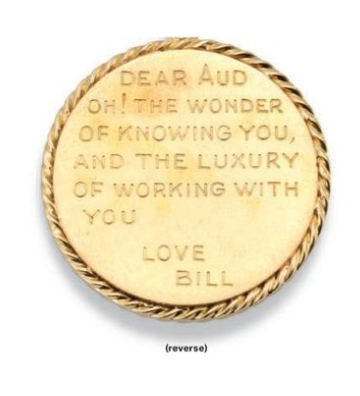
Holden deu a Audrey esta joia charmosa depois do final das filmagens
Holden gave Audrey this charming jewel after the film wrapped

Thursday, April 25, 2019

Ipcress: Arquivo Confidencial (1965) / The Ipcress File (1965)


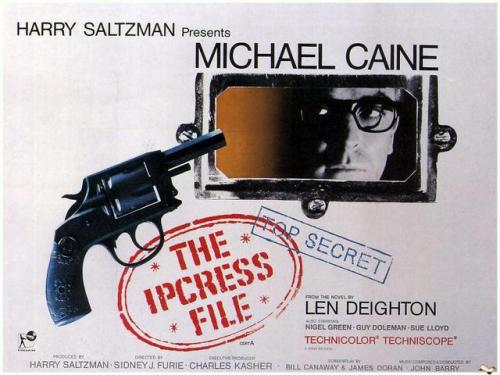
O investigador Harry Palmer foi criado para ser o oposto de James Bond. Ele deveria ser um homem comum que não usa engenhocas em suas missões e que nem sempre se ocupa de seduzir mulheres bonitas. Até seu nome deveria ser bobo: Harry Palmer foi o nome mais bobo em que Michael Caine conseguiu pensar para o personagem. Mas o primeiro filme de Harry Palmer, “Ipcress – Arquivo Confidencial” (1965), não tem nada de bobo.

Investigator Harry Palmer was created to be an anti-Bond. He is supposed to be a common man who does not use gadgets in his missions and who is not always seducing beautiful women. Even his name is supposed to be boring: Harry Palmer was the most boring name Michael Caine could come with for the character. But Harry Palmer’s first film, “The Ipcress File” (1965), is not boring at all.


O ótimo porém insolente sargento Harry Palmer (Michael Caine) é transferido pelo coronel Ross (Guy Doleman) para uma nova função, ficando no lugar de um homem que foi morto recentemente. Este homem estava investigando a aposentadoria repentina de grandes cientistas que estavam bem e de repente perderam suas habilidades.

Great yet insolent sergeant Harry Palmer (Michael Caine) is transferred by Colonel Ross (Guy Doleman) to a new position, replacing a man who had just been killed. This deceased man was investigating the sudden retirement of top-notch scientists who were just fine and suddenly couldn't function anymore.


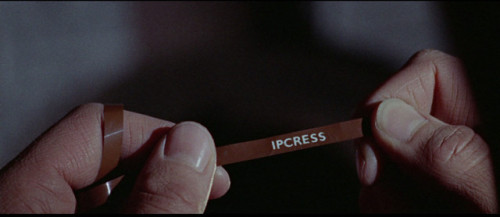
Harry pode estar trabalhando para o major Dalby (Nigel Green), mas ele ainda prefere suas velhas técnicas de investigação. Não importa o que Harry faça, Dalby acha que “não é bom o suficiente”. Isso acontece até que Harry e a equipe encontram uma fita de áudio onde está escrito “Ipcress”.

Harry might be working for major Dalby (Nigel Green) now, but he still prefers his old investigation techniques. No matter what Harry does, Dalby thinks “It's not good enough”. This happens until Harry and the team find an audiotape with “Ipcress” written on it.


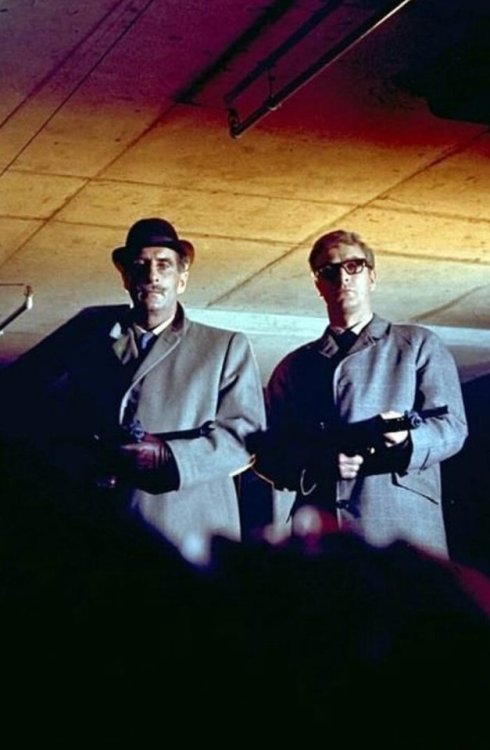
Descobrir a função da fita não será o único desafio de Harry: ele também se envolverá com uma agente, descobrirá que tanto Rossa quanto Dalby querem a fita e será cobaia em um experimento torturante. Para tornar tudo um pouco pior, Harry será seguido por um homem com óculos de armação quebrada.

Finding out what the tape does won't be Harry's only challenge: he will also get involved with a female agent, he will find out that both Ross and Dalby want the tape and he will go through a torturing experience. To make things a bit worse, Harry will be followed everywhere by a man with broken glasses.


“Ipcress – Arquivo Confidencial” é um filme com uma trama muito complexa – quase tão complexa quanto a de “O Espião que Sabia Demais” (2011). Mesmo assim, há espaço para humor quando Harry e seu chefe conversam, de maneira não muito amigável, enquanto fazem compras de supermercado. Há também uma sequência de muito suspense em uma garagem subterrânea onde um homem ferido é resgatado.

“The Ipcress File” is a film with a very complex plot – almost as complex as “Tinker Taylor Soldier Spy” (2011). Nevertheless, there is room for humor as Harry and his boss talk, not exactly in an amicable way, while they do grocery shop. There is also a very suspenseful sequence in an underground parking lot as a hurt man is traded by cash.


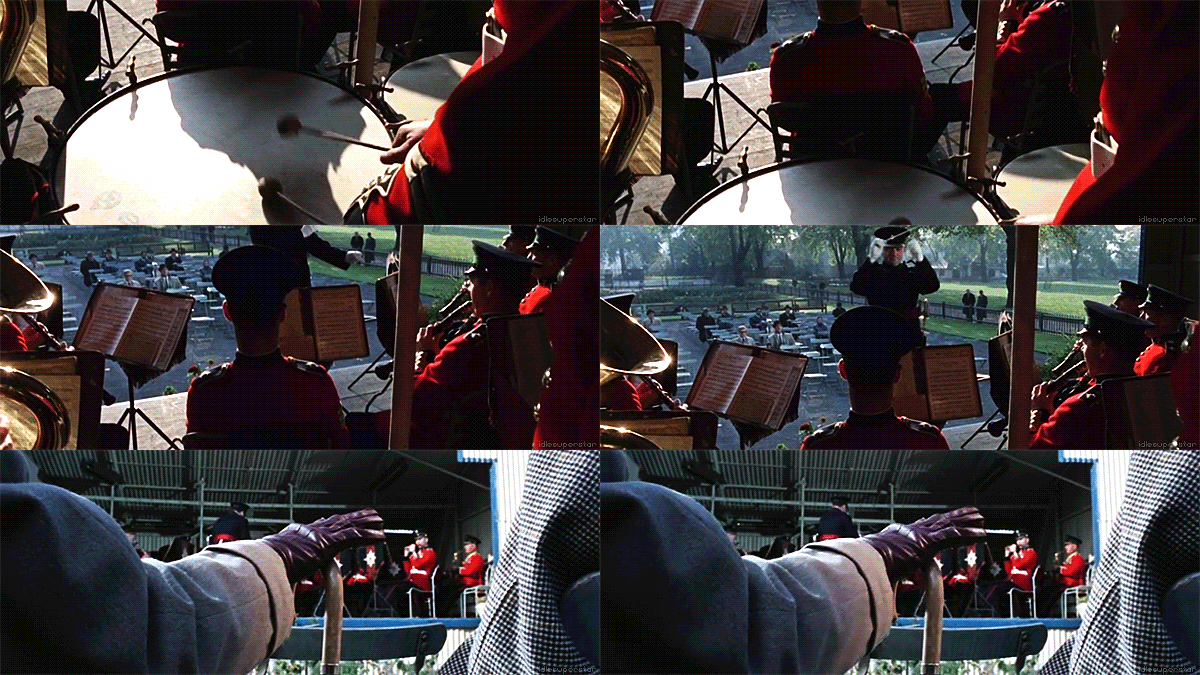
Há uma boa quantidade de ângulos criativos, que nos fazem ver a ação através de lentes de óculos, cabines telefônicas transparentes, pequenas aberturas e buracos nas paredes. De acordo com Michael Caine, o diretor Sidney Furie decidiu filmar as cenas como se o público estivesse seguindo a ação detrás de alguma coisa, como um agente escondido.

There is a fine amount of creative shots, making us see the action through glass lenses, transparent telephone boots, small apertures and holes in walls. According to Michael Caine, director Sidney Furie deliberately chose to shoot the film as the public was following the action hiding behind something, as an undercover agent.


Havia muitas pessoas trabalhando em “Ipcress – Arquivo Confidencial” que haviam trabalhado em filmes do 007:  o produtor Harry Saltzman, o editor Peter Hunt, o designer de produção Ken Adam e o compositor John Barry. Sendo profissionais versáteis, eles conseguiram criar uma atmosfera muito diferente da dos filmes de James Bond – a diferença mais perceptível é a música.

There were many people working on “The Ipcress File” who had also worked in Bond movies: producer Harry Saltzman, editor Peter Hunt, production designer Ken Adam and composer John Barry. As versatile professionals, they managed to create an atmosphere as far from the Bond movies as possible – the most perceptible difference is the soundtrack.


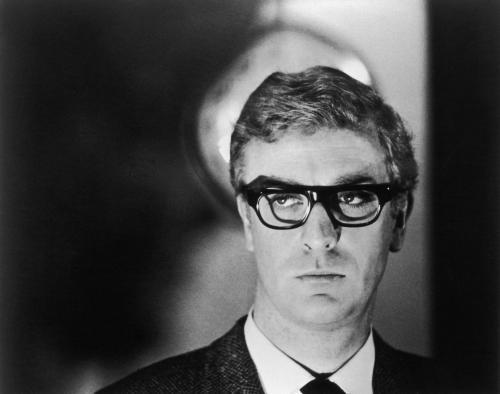
“Ipcress – Arquivo Confidencial” foi um livro escrito por Len Deighton e publicado em 1962. No livro, narrado em primeira pessoa, o agente principal não tem nome. Já que é raro para uma película ser filmada com ponto de vista de primeira pessoa – a primeira metade de “Prisioneiro do Passado” (1947) é uma exceção – os produtores precisavam de um nome para nosso anti-herói. Michael Caine sugeriu o nome, e usou o sobrenome de seu colega de escola mais chato. Caine também escolheu manter os óculos que o personagem usava no livro para fazer Palmer mais humano – e para ajudar na caracterização de Caine, já que o ator usa óculos na vida real. Como alguém que usa óculos, fico feliz em ver um investigador cuja vista é tão ruim quanto a minha.

“The Ipcress File” was a book written by Len Deighton and published in 1962. In the book, narrated in the first person, the lead agent had no name. Since it’s rare for a movie to be filmed with a first person point-of-view – with the first half of “Dark Passage” (1947) being one exception – the producers needed a name for our anti-hero. Michael Caine suggested the name, and took the surname from his most boring school classmate. Caine also chose to keep the glasses the character used in the novel as a way to make Palmer more down-to-Earth – and to help Caine’s characterization, as the actor wears glasses in real life. As someone who wears glasses, I’m happy to see an investigator whose sight is as bad as mine.


“Ipcress – Arquivo Confidencial” deu origem a uma pequena série de filmes – foram seis no total. Michael Caine não interpretou o protagonista em apenas um deles, “Spy Story” (1976), no qual o protagonista recebeu outro nome. Os dois últimos filmes da série não oficial de Harry Palmer foram feitos diretamente para a TV.

“The Ipcress File” originated a small series of films – there were six in total. Michael Caine didn’t play the lead in only one of the films, “Spy Story” (1976), in which the lead was also renamed. The last two films of the unofficial Harry Palmer series were made for TV in the 1990s.


“Ipcress – Arquivo Confidencial” foi um grande sucesso. E como foi também o primeiro filme de Michael Caine como protagonista, ele logo se tornou uma grande estrela – e ele nem era a primeira opção do produtor: Saltzman queria Christopher Plummer para o papel, mas Plummer preferiu fazer “A Noviça Rebelde”. Em 1999, “Ipcress – Arquivo Confidencial” foi escolhido o 59º melhor filme inglês pelo Instituto de Cinema Britânico. E, mesmo com Harry Palmer tendo sido criado para ser o oposto de James Bond, temos de concordar que Michael Caine é tão bacana quanto qualquer ator que fez 007, não?

“The Ipcress File” was a huge success. As it was Michael Caine’s first time as he lead, he soon became a superstar – and he wasn’t even the producer’s first choice: Saltzman wanted Christopher Plummer for the role, but Plummer chose to do “The Sound of Music” instead. In 1999, “The Ipcress File” was voted the 59th best British film ever by the British Film Institute. And, even though Harry Palmer was created to be an anti-Bond, we all can agree that Michael Caine is as cool as any actor who played agent 007, isn’t he?

This is my contribution to the Second Marvellous Michael Caine blogathon, hosted by Gill at Realweegiemidget Reviews.


Friday, April 19, 2019

Ingênua Até Certo Ponto (1953) / The Moon is Blue (1953)


Eu sou fascinada por filmes que foram condenados ou censurados. Eu amo quando um filme ri na cara da Legião da Decência ou da Igreja Católica. Eu adoro filmes provocantes. Por isso que fiquei intrigada com “Ingênua Até Certo Ponto” (1953), um filme que foi condenado pela Production Code Administration e pela Legião da Decência. Além disso, ele tem o comercial de cerveja mais estranho de todos os tempos.

I’m fascinated by films that were either condemned or censored. I love whenever a film laughed at the face of the Legion of Decency or the Catholic Church. I adore provocative movies. That’s why I was more than intrigued with “The Moon is Blue” (1953), a film that was condemned by the Production Coda Administration and the Legion of Decency. Also, it has the weirdest beer commercial ever.


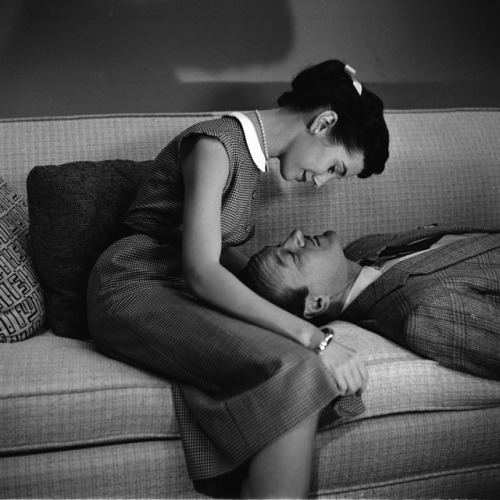
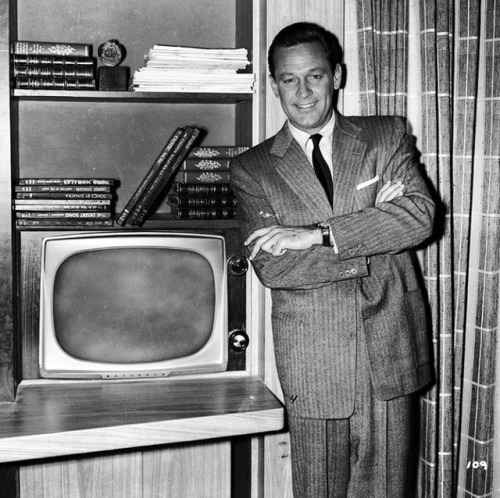
Patty (Maggie McNamara) está vendo as vitrines das lojas quando seus olhos encontram os de um estranho. Este homem começa a segui-la em outras lojas e vai atrás dela até o topo do Empire State Bulding. Isso deveria ser uma sequência engraçada e charmosa, mas se você é uma mulher você sabe que ser seguida por um homem é assustador. Felizmente, este estranho é inofensivo porque ele é interpretado pelo grande William Holden – mas este é só o começo dos problemas para Patty.

Patty (Maggie McNamara) is window shopping when she locks eyes with a stranger. This man starts following her to other stores and eventually to the top of the Empire State Building. It's supposed to be a funny and charming sequence, but if you're a woman you know that being followed by a man is terrifying. Fortunately, this stranger is harmless because he is played by the great William Holden – but this is just the beginning of Patty's problems.


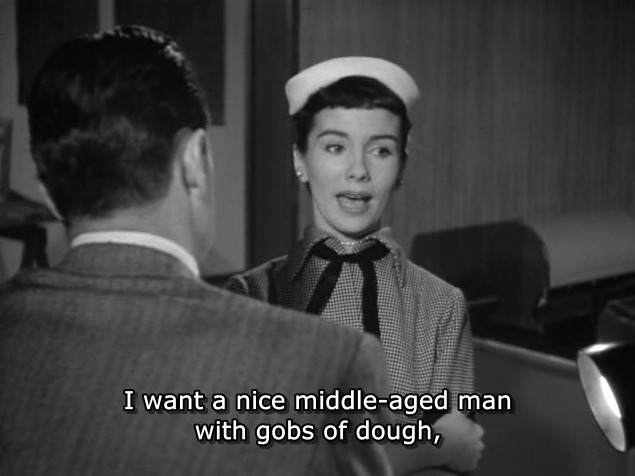
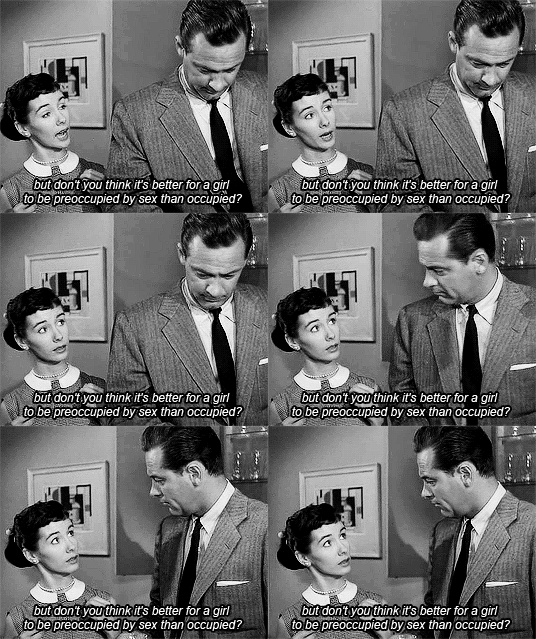
Ainda bem que Patty não é boba. Ela vai com Don (o personagem de Holden) até o escritório dele, e lá ela diz que é atriz e está procurando um homem com quem se casar. Mas não qualquer homem: de preferência um homem de meia-idade que já tenha sido casado e que não vá babar em cima dela. Don é muito jovem e está babando. Um pouco depois, ela também surpreende uma taxista com sua conversa franca com Don sobre as intenções dele e, confuso, ele aceita que o jantar deles tenha “afeto, mas sem paixão”.

A good thing is that Patty is not a fool. She goes with Don (Holden's character) to his office, and there she says that she is an actress trying to get a man to marry her. But not any man: preferably a middle-aged man who had been married before and won't drool over her. Don is too young and currently drooling. A while later, she also surprises a taxi driver with her blunt talk to Don about his intentions, and, confused, he agrees that their dinner can have “affection, but no passion”.


Depois de uma conversa reveladora no apartamento de Don, ele sai para comprar ingredientes para Patty preparar o jantar. Enquanto Don está fora, seu vizinho David (David Niven) bate à porta à procura de Don, e se surpreende ao encontrar uma garota como Patty no lugar. David quer falar com Don porque a filha de David, Cynthia (Dawn Addams), passou a noite com Don e estava furiosa porque “ele fez mal a ela” – nesse caso, ela estava furiosa porque Don não a tocou!

After a revealing chat at Don’s apartment, he leaves to buy ingredients for Patty to make dinner. While Don is out, his neighbor David (David Niven) knocks on his door looking for him, and is surprised to find a girl like Patty there. David wants to talk to Don because David’s daughter, Cynthia (Dawn Addams), had spent the night with Don and was sour because “he had done her wrong” – in this case, she was sour because Don didn’t touch her!


David fica para jantar com Don e Patty, e mais tarde David e Patty vão até o apartamento dele, onde ele fala sobre os sentimentos que tem por ela. Cynthia também aparece, e assuntos como virtude, dar o exemplo e pureza são discutidos.

David stays for dinner with Don and Patty, and later David and Patty go to his apartment, when he talks about his feelings for her. Cynthia also appears, and issues like virtue, leading by example and purity are discussed.


É fácil perceber por que “Ingênua Até Certo Ponto” foi condenado: a protagonista está longe de ser o que era esperado para uma mulher dos anos 1950. Patty O’Neill poderia ser considerada um mau exemplo para as jovens espectadoras. Patty não acredita no amor, é completamente prática ao falar sobre casamento e considera natural discutir sexo e sedução. Ela não quer ilusões românticas, ela quer segurança. Você consegue imaginar, nos anos 50, o que aconteceria se as mulheres começassem a ser tão... EXIGENTES?

It’s easy to see why “The Moon is Blue” was condemned: the leading lady was not what is expected of women to be in the 1950s. Patty O’Neill could even be considered a bad role model for young moviegoers. Patty doesn’t believe in love, she is completely practical when talking about marriage and considers it’s natural to discuss sex and seduction. She doesn’t want romantic illusions, she wants security. Can you imagine, in the 1950s, what would happen if women started being so… DEMANDING?


Tanto Patty quanto Cynthia são novos tipos de mulher, que gostam de ser beijadas e tocadas, e não necessariamente se envolver romanticamente com um homem. Elas não podem dizer não a um homem e não gostam que os homens digam não a elas. Elas são mulheres modernas, modernas demais para os anos 50, mesmo Patty ainda sendo virgem.

Both Patty and Cynthia are new kinds of women, who enjoy being kissed and touched, and not necessarily get romantically involved with a man. They can’t say no to a man and don’t like when a man says no to them. They are modern women, too modern for the 50s, even though Patty is still a virgin.


E aí está o problema: “Ingênua Até Certo Ponto” ousou usar a palavra “virgem” – algo que nenhum outro filme da era do Código Hays havia ousado fazer! E tem mais: este filme também foi pioneiro no uso de “seduzir” e “amante”, por isso a Legião da Decência deu ao filme uma nota C – a mais baixa possível – e a película foi banida em algumas cidades, como Boston e Memphis.

And there lies the problem: “The Moon is Blue” was bold enough to use the word “virgin” – something that no other film from the Code era had done until them! There is more: this film was also a pioneer of the use of both “seduce” and “mistress”, so the Legion of Decency gave it a C rating – the lowest possible –  and the film was banned in some cities, like Boston and Memphis.


“Ingênua Até Certo Ponto” teve origem como uma peça da Broadway que também foi dirigida por Otto Preminger. Assim que ele conseguiu os direitos de adaptação da peça para o cinema, Preminger fez escolhas curiosas no elenco, escalando David Niven, então considerado uma estrela em decadência, e a novata Maggie McNamara, que havia interpretado a protagonista da peça em Chicago. Para equilibrar as coisas, ele escolheu William Holden para completar o trio – Holden era então um ator muito popular nas bilheterias.

“The Moon is Blue” originated as Broadway play that was also directed by Otto Preminger. As he secured the rights to adapt the play to the screen, Preminger made odd cast choices as he chose David Niven, then considered a fading star, and newcomer Maggie McNamara, who had played the lead of the play in Chicago. To balance things, he chose William Holden to complete the trio – Holden was then a very popular actor among moviegoers.


Maggie McNamara é adorável como a tagarela Patty – ela inclusive foi indicada a um Oscar por “Ingênua Até Certo Ponto”, seu primeiro filme. A atriz, que se parecia muito com Jean Simmons, foi uma das três protagonistas de “A Fonte dos Desejos”, de 1954. Infelizmente, sua carreira nunca decolou e anos mais tarde ela passou a trabalhar como datilógrafa para sobreviver. Maggie cometeu suicídio em 1978, aos 48 anos.

Maggie McNamara is adorable as the talkative Patty – she was even nominated for an Oscar for “The Moon is Blue”, her very first film. The actress, who looked a lot like Jean Simmons, was one of the three leads in 1954’s “Three Coins in the Fountain”. Unfortunately, her career never took off and later in life she worked as a typist to survive. Maggie committed suicide in 1978, at age 48.


David Niven ganhou um Globo de Ouro por interpretar David, o que deu nova vida à sua carreira, e William Holden teve um ótimo ano de 1953: ele apareceu em quatro filmes naquele ano – além de uma participação na versão alemã de “Ingênua Até Certo Ponto” – e um desses filmes, “Inferno nº 17”, deu a ele um Oscar. Como uma coincidência curiosa, Otto Preminger interpreta o antagonista de “Inferno nº 17”.

David Niven won a Golden Globe for his portrayal of David, what gave new life to his career, and William Holden had an overall great year of 1953: he appeared in four films that year – plus a cameo in the German version of “The Moon is Blue” – and one of those films, “Stalag 17”, gave him his only Oscar. As a curious coincidence, Otto Preminger plays the antagonist in “Stalag 17”.


No final das contas, “Ingênua Até Certo Ponto” e Otto Preminger riram por último: a United Artists distribuiu o filme mesmo sem o selo de aprovação do Código. O filme foi um sucesso de bilheteria e as pessoas perceberam que ele não tinha nada questionável – ele era, na verdade, um filme bastante decente, charmoso e divertido. Era o começo do fim do Código Hays. Viva “Ingênua Até Certo Ponto”!

In the end, “The Moon is Blue” and Otto Preminger had the last laugh: United Artists distributed the movie even though it didn’t receive a Code Seal from Breen’s office. The film was a box-office hit and people realized that it had nothing to object – it was actually a very decent, charming and entertaining movie. It was the beginning of the end of the Code. Hooray for “The Moon is Blue”!

This is my contribution to the 4th Golden Boy blogathon, hosted by Virginie, Michaela and Emily at The Wonderful World of Cinema, Love Letters to Old Hollywood and The Flapper Dame.


Related Posts Plugin for WordPress, Blogger...