} Crítica Retrô: Alberto Cavalcanti

Tradutor / Translator / Traductor / Übersetzer / Traduttore / Traducteur / 翻訳者 / переводчик

Showing posts with label Alberto Cavalcanti. Show all posts

Monday, January 1, 2018

Resoluções cinematográficas 2017 – Resultado / 12 classics for 2017 – results

Eu falhei.

I failed.

Pela primeira vez desde que me comprometi a cumprir esta tarefa hercúlea, três anos atrás, eu falhei e não assisti a todos os filmes da minha lista. E não foi minha culpa: eu simplesmente não consegui encontrar uma cópia de “Cilada Amorosa” (1929). Ele nunca saiu em DVD onde eu moro e eu não consegui encontrar o filme mesmo através de, hum, meios nem sempre legalizados. Mas eu não desisti: ainda estou procurando por “Cilada Amorosa” como quem procura o Santo Graal, e um dia eu assistirei ao filme e completarei esta lista.

For the first time since I took on this yearly Herculean task, three years ago, I failed to watch all the films on my list. And it was not my fault: I simply couldn't find a copy of “The Love Trap” (1929). It was never released on DVD where I live and it couldn't even be found in, er, less than legal ways. I haven't given up: I'm still looking for “The Love Trap” as one looks for a Holy Grail, and one day I intend to watch it and complete my list.

Agora, vamos esquecer minha vergonha por um momento e ler minhas impressões sobre cada clássico que eu vi pela primeira vez em 2017:

Now, let's forget my shame for a while and read my thoughts on each of the classics I saw for the first time in 2017:

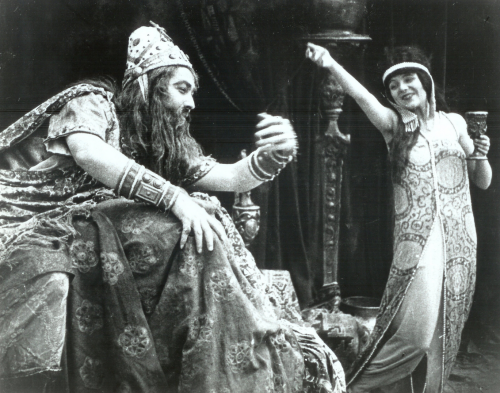
Judith of Bethulia (1914): Esta é a história bíblica de como Jerusalém foi salva quando a mística Judith (Blanche Sweet) seduziu e matou o príncipe Holofernes (Henry B. Walthall.) Não seo fã de Griffith, e não estava tão familiarizada com a história quanto o público de 1914 provavelmente estava, mas este filme me lembrou do estilo das novelas da Record.

Judith of Bethulia (1914): This is the biblical story of how Jerusalem was saved when mystical Judith (Blanche Sweet) seduced and killed prince Holofernes (Henry B. Walthall). I’m not a Griffith fan, and I was not as familiar with story as the 1914 moviegoers probably were, but this film reminded me of the production values of a corny biblical soap opera.
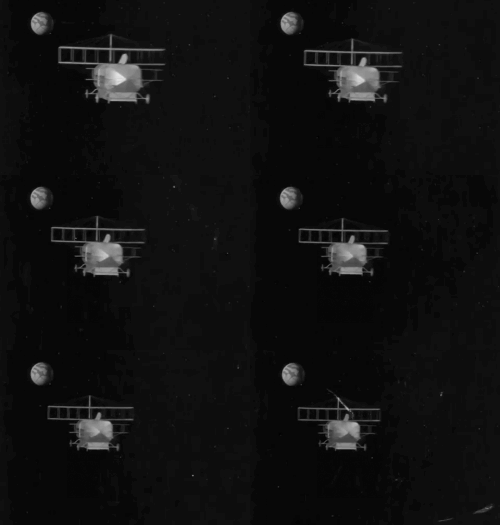
Himmelskibet (1918): É basicamente o que o título em inglês diz – uma viagem para Marte – mas é muito impressionante para algo feito em 1918. E é ainda mais surpreendente o fato de que eles acertaram o tempo que leva uma viagem da Terra à Marte – cerca de seis meses! Os efeitos especiais são muito bons, e você se surpreenderá ao descobrir como os marcianos vivem. Eu também adorei os nomes dos personagens em Latim – Planetaros, Corona, Dubius.

A Trip to Mars / Himmelskibet (1918): It’s basically that – A Trip to Mars – but very impressive for 1918. And it’s even more impressive that they got right the time to travel from Earth to Mars – about six months! The special effects are very good, and you’ll be surprised to find out how Martians live. I also loved the Latin names– Planetaros, Corona, Dubius.
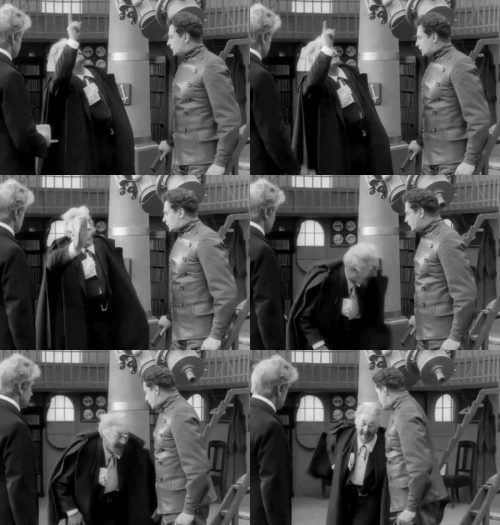
A Morte Cansada / Der Müde tod (1921): Este feito só poderia ter sido feito durante o Expressionismo Alemão. Em Hollywood, o filme teria um final feliz, mais facilmente digerível, mas nada realista. Na Alemanha, a história da mulher (Lil Dagover) que tenta salvar uma das três almas em diferentes lugares e épocas com o intuito de trazer seu amado de volta dos mortos é contada com perfeição – como se “Intolerância” (1916) tivesse sido bem feito.

Destiny / Der Müde Tod (1921): This film could only be made during the German Expressionism movement. In Hollywood, it would have been pushed to a palatable, but not realistic, happy ending. In Germany, the story of a woman (Lil Dagover) who tries to save one of three souls in different places and times to have her boyfriend back from the dead is perfectly developed – like an “Intolerance” (1916) done right.
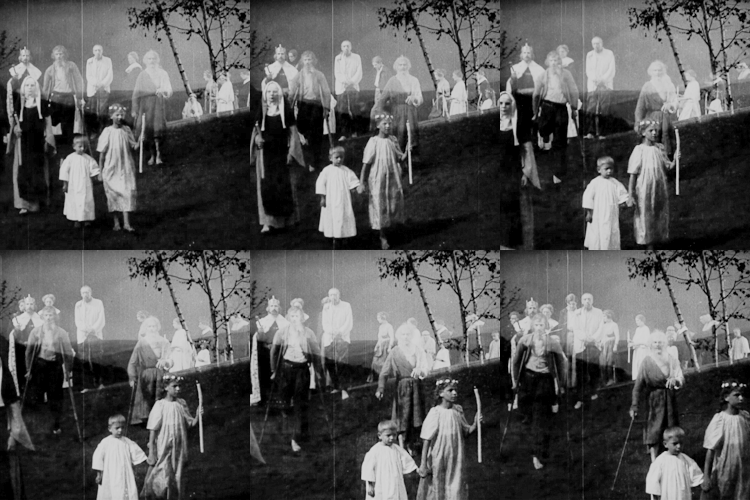
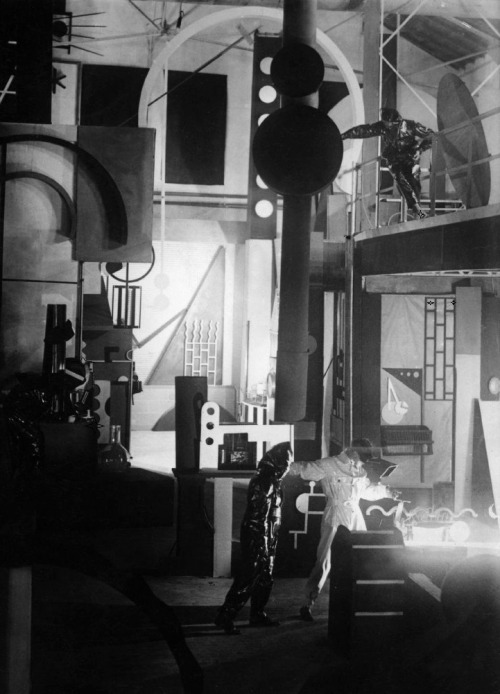
L’Inhumaine (1924): A história envolve uma cantora fria, Claire (Georgette Leblanc) e seus muitos admiradores. Há um toque dramático e ao fim o filme se transforma em ficção científica. Mas os cenários são a verdadeira atração: idealizados por dois diretores de arte (o brasileiro Alberto Cavalcanti e o francês Claude Autant-Lara), os cenários são ousados, futuristas, assimétricos, cubistas, assustadores e tão impressionantes quanto os de “Metrópolis” (1927) – ou até um pouco mais.

The New Enchantment / L’inhumaine (1924): The story involves a cold singer, Claire (Georgette Leblanc) and her many admirers. There is a dramatic touch and then it becomes science fiction. But the sets are the real attraction here: designed by two art directors (Brazilian Alberto Cavalcanti and French Claude Autant-Lara), they’re bold, futuristic, cubist, asymmetric, awe-inducing and as impressive as the sets in “Metropolis” (1927) – maybe even more.
Uma Página de Loucura (1926): Este clássico japonês é contado sem intertítulos e é, por causa disso e de outras coisas, fascinante. O final é maravilhoso, e trata-se de um filme que você deve assistir muitas vezes para apreciá-lo por completo. Leia minha crítica completa AQUI.

A Page of Madness (1926): This Japanese classic is told without intertitles and is, because of this and other things, fascinating. The ending is wonderful, and it is one film you should watch many times to fully appreciate it. My full review is HERE.

Aurora / Sunrise (1927): Eu devo confessar que na metade do filme pensei ser estranho e até sexista o fato de que a esposa (Janet Gaynor) havia perdoado o marido (George O’Brien) e estava se divertindo muito com ele algumas horas depois de ele ter tentado matá-la. Mas então os 15 minutos finais me deixaram sem palavras. Que surpresa. Bravo, Murnau, você merece ser aplaudido de pé.

Sunrise (1927): I must confess that in the middle of the film I thought it was weird and even sexist the fact that the wife (Janet Gaynor) forgave her husband (George O’Brien) and was having the time of her life with him some mere hours after he tried to kill her. But then the final 15 minutes came and OH MY. What a plot twist. Bravo, Murnau, I ended up giving you a standing ovation.
Cilada Amorosa / The Love Trap (1929)

Ver para Crer / Why Be Good? (1929): Este filme tem um subtexto feminista e Colleen Moore arrasa na pista de dança. Ela é Pert Kelly, uma vendedora que adora festejar – e cuja reputação a prejudica quando o filho de seu patrão (Neil Hamilton) se apaixona por ela. Eu pretendo escrever mais sobre este filme.

Why Be Good? (1929): This film has a feminist subtext and Colleen Moore rocks some dance movements. She’s Pert Kelly, a salesgirl who loves to party – and whose reputation precedes her when the boss’s son (Neil Hamilton) falls in love with her. I intend to write more about this movie.

O Presídio / The Big House (1930): Este filme foi escrito por Frances Marion – a primeira mulher a ganhar um Oscar de roteiro e também a primeira mulher a ganhar um Oscar em categorias diferentes da atuação. É a história de Kent (Robert Montgomery), que dirigia embriagado e matou um homem atropelado, e seus companheiros de cela durões: Butch (Wallace Beery) e Morgan (Chester Morris). O filme também deu a Douglas Shearer o primeiro Oscar de Mixagem Som da história.

The Big House (1930): This film was written by the great Frances Marion – the first woman to win a Screenplay Oscar and also the first woman to win a non-acting Oscar. It’s the story of Kent (Robert Montgomery), who killed a man by driving drunk, and his though cell companions: Butch (Wallace Beery) and Morgan (Chester Morris). The film also gave Douglas Shearer the first Best Sound Mixing Oscar ever.
Glória e Poder / The Power and the Glory (1933): É Cidadão Kane oito anos antes de Cidadão Kane – ou quase isso. Este filme tem um excelente roteiro – obrigada, Preston Sturges! – e traz Colleen Moore naquele que é provavelmente seu melhor momento. Crítica completa AQUI.

The Power and the Glory (1933): It is Citizen Kane eight years before Citizen Kane – kind of. This film is beautifully written – thanks, Preston Sturges! – and showcases Colleen Moore at probably her best moment. Full review HERE.
A Mulher de Branco / Woman in White (1948): É místico, e se parece muito com um conto de fadas noir. O filme também trata de alienação e roubo. Crítica completa AQUI.

Woman in White (1948): It’s mystical, and it’s much like a noir fairy tale. It also involves alienation and robbery. Eleanor Parker is amazing. Full review HERE.
Papai é do Contra / Hobson’s Choice (1954): Charles Laughton está ótimo como o conservador Hobson, mas eu gostei especialmente de Brenda de Banzie como sua esperta filha mais velha e do brilhante John Mill como um funcionário talentoso porém ingênuo. Crítica completa AQUI.


Hobson’s Choice (1954): Charles Laughton is great as old-fashioned Hobson, but I especially loved Brenda de Banzie as his smart older daughter and brilliant John Mills as a talented but naïve employee. Full review HERE.
Tuesday, August 9, 2016

Alberto Cavalcanti: brasileiro de nascimento, cidadão do mundo através do cinema

Alberto Cavalcanti: Brazilian by birth, citizen of the world through film

(Clique nos infográficos para vê-los em tamanho maior)
(Click in the infographics to enlarge them) 

Alguns anos atrás, a noite de sexta-feira tinha um só propósito: descobrir o cinema brasileiro dos anos 50. Era uma sessão cinemateca especial, exibida na TV Justiça e que provavelmente tinha apenas eu como público. Mas foi ali que eu descobrir excelentes filmes brasileiros. E foi ali que um nome chamou minha atenção: Alberto Cavalcanti.

A few years ago, Friday nights had only one goal: they were for me to discover the Brazilian films of the 1950s. It was a special movie session on Justice TV, and I was probably their only viewer. But it was there that I discovered excellent Brazilian movies. And it was there that a name called my attention: Alberto Cavalcanti.

Eu já sabia que muitas pessoas haviam emigrado da Europa para o Brasil nos anos 50 e foram trabalhar na indústria cinematográfica. Entre eles estava o diretor inglês Tom Payne. Por isso, pensei que Alberto Cavalcanti fosse um italiano radicado no Brasil. Pouco depois, vi que Alberto dirigiu também uma sequência inesquecível do ventríloquo do filme “Na solidão da noite” (1945). E é aí que descubro: Alberto era brasileiro!

I was already aware that many people had emigrated from Europe to Brazil in the 1950s to work in the film industry. Among them was English director Tom Payne. So, I imagined Alberto Cavalcanti was an Italian living and working in Brazil. A little time later, I realize that Alberto was also the director of the unforgettable ventriloquist sequence from “Dead of Night” (1945). And then I find out: Alberto was Brazilian!

Mas Alberto fez cinema no mundo inteiro. Ele fez de tudo, de figurines a produção e direção. Começou a carreira na França dos anos 1920, passou as décadas de 30 e 40 na Inglaterra e voltou ao Brasil na década de 50. Depois, passou pela Itália, Alemanha, Inglaterra e França novamente, morrendo em 1982 em Paris, aos 85 anos. Com ele, não havia blockbusters: só cinema independente. Só arte.

But Alberto worked in films all over the world. He did everything, from costume design to producing and directing. He started in France, in the 1920s, spent the 1930s and 1940s in England and came back to Brazil in the 1950s. Then, he worked in Italy, German, England and France again, dying in 1982 in Paris. With him, there was no chance for blockbusters: only independent cinema. Only art.


Alberto de Almeida Cavalcanti nasceu no Rio de Janeiro em 1897. Era filho de um matemático, entrou para a faculdade aos 15 anos, e pouco depois foi expulso por discutir com um professor. O pai de Alberto o mandou então para Genebra para estudar arquitetura. Aos 18 anos Alberto foi para Paris trabalhar como arquiteto e designer de interiores. Ele se correspondia com o vanguardista Marcel L’Herbier, e em 1920 o amigo por correspondência chamou Alberto para trabalhar no cinema.

Alberto de Almeida Cavalcanti was born in Rio de Janeiro in 1897. He was the son of a prominent mathematician, entered college at 15 and soon was expelled after an argument with a teacher. Alberto’s father sent him to Geneva to study Architecture. At 18 Alberto moved to Paris to work as an architect and interior designer. He exchanged letters with avant-garde artist Marcel L’Herbier, and in 1920 the pen pal asked Alberto to work with him in the movies.

Nos anos seguintes, Alberto trabalhou com figurinos, design de cenários e como diretor assistente. Em 1926 ele dirigiu seu primeiro filme, o documentário “Rien que les heures”, que logo na estreia foi aclamado pela crítica.

In the following years, Alberto worked with costume design, set design and as assistant director. In 1926 he directed his first film, the documentary “Rien que les heures”, and was highly acclaimed by the critics.


Seu lindo curta-metragem “La p'tite Lili” (1927) é a adaptação de uma canção popular francesa para o cinema, e conta com Jean Renoir e a esposa Catherine Hessling no elenco. O efeito granulado que vemos em algumas cenas não é fruto da ação do tempo, mas de uma ideia do próprio Alberto, que colocava pedaços de seda em frente a câmera para criar o efeito etéreo que ele queria imprimir na protagonista.

His gorgeous short film “La p’tite Lili” (1927) is the adaptation of a popular French song to the screen, and has Jean Renoir and wife Catherine Hessling in the cast. The granulated effect we see in some scenes was not caused by the passage of time, but was an idea from Alberto himself, who used to hang pieces of silk in front of the camera in order to create an otherworldly effect for the leading character. 


Se você já viu “Como era verde o meu vale” (1941), deve saber como a vida dos mineradores de carvão é sofrida. Seis anos antes, Alberto nos mostrou isso em um documentário de apenas 11 minutos, “Coal Face”, embalado por uma canção popular dos mineiros e muito sofrimento. Ao contrário do documentarista Robert Flaherty, amigo de Cavalcanti, o brasileiro preferia fazer o documentário nu e cru, sem romantismo.

If you have ever seen “How Green Was My Valley” (1941), you must know how hard the life of coal miners is. Six years before the release of this film, however, Alberto showed us the same thing in a documentary only 11 minutes long, “Coal Face”, with a miner’s song serving as soundtrack. Contrary to his good friend Robert Flaherty, Cavalcanti wanted to make raw documentaries, without romantism.


Em 1949, ele voltou ao Brasil e se tornou o primeiro diretor-geral da famosa Companhia Cinematográfica Vera Cruz. Alberto modernizou o jeito brasileiro de fazer cinema, produziu documentários do diretor Lima Barreto e acumulou as funções de diretor, redator e produtor na Cinematográfica Maristela.

In 1949, He came back to Brazil and became the first general director in the Vera Cruz Cinematographic Company. Alberto modernized the Brazilian movie-making system, served as producer for director Lima Barreto’s documentaries and worked as both director, writer and producer at Maristela Cinematographic Co.

Aquele primeiro filme de Alberto que eu vi foi “Simão, o caolho” (1952), que é até hoje minha comédia brasileira favorita. É uma maravilhosa comédia de costumes sobre Simão (Mesquitinha) que acredita que apenas não atingiu todo seu potencial porque lhe falta um olho – e lhe sobra um filho, que ele teve fora do casamento e que sustenta sem que sua esposa desconfie de nada.

Tht first Alberto film I saw was “Simon, the one-eyed” (1952), and it still is my favorite Brazilian comedy. It is a marvelous situation comedy about Simon (Mesquitinha), who believes he only has not achieved everything he could because he has an eye missing – oh, and also a son born out of wedlock, who he supports without his wife’s awareness.


Mas, às vezes, a pior coisa que alguém pode fazer é voltar para casa. Alberto queria fazer filmes sérios, que pudessem ser apreciados no mundo inteiro. A Vera Cruz não queria. Alberto desempenhava muito bem várias funções. Ninguém gostava disso. Os críticos brasileiros desdenharam dele, os “cidadãos de bem” o acusaram de ser comunista e, em 1954, Alberto deixou o Brasil. E sua carreira nunca mais foi a mesma.

But, sometimes, the worst thing someone can do is come home. Alberto wanted to make serious films that could be appreciated all over the world. Vera Cruz didn’t. Alberto excelled at anything he did. Nobody liked that. Brazilian critics treated him with disdain, the “good citizens” accused him of being a communist and, in 1954, Alberto left Brazil. And his career was never the same again.

Alberto passou por vários países em seus últimos anos, trabalhando em documentários, filmes de ficção e até em uma animação. Seu último trabalho foi um longo documentário, 160 minutos, sobre... ele mesmo. Parecia que Alberto sabia que o mundo ainda havia de redescobrir sua genialidade.

Alberto lived in several countries in his last years, working in documentaries, fictions and even an animated feature. His last work was a long documentary, 160 minutes long, about… himself. It was like if Alberto knew that the world would still rediscover his geniality.


Quando Cavalcanti morreu, em 1982, um jornal o chamou de “gênio mal-amado”. Geoff Brown, do BFI, disse que “se Cavalcanti não tivesse existido, seria necessário inventá-lo” por ser personagem essencial do cinema inglês. Precisamos redescobrir Cavalcanti. Eu já fiz minha parte. Agora é sua vez.

Whant Cavalcanti died, in 1982, a newspaper called him “the unloved genius”. Geoff Brown, from the BFI, said that “if Calvalcanti hadn’t existed, it would be necessary to invent him”, because he was an essential piece in English cinema. We need to rediscover Cavalcanti. I already did it. Now it’s your turn.

This is my contribution to the Classic Movie History Project, hosted by Fritzi, Aurora and Ruth at Movies, Silently, Once Upon a Screen and Silver Screenings.

Related Posts Plugin for WordPress, Blogger...