} Crítica Retrô: bastidores

Tradutor / Translator / Traductor / Übersetzer / Traduttore / Traducteur / 翻訳者 / переводчик

Showing posts with label bastidores. Show all posts

Tuesday, April 4, 2017

Corações Enamorados / Young at Heart (1954)

Quando eu comecei a assistir a “Corações Enamorados” (1954), eu esperava momentos agradáveis em uma comédia romântica com Doris Day e Frank Sinatra. Mas eu fui trouxa! É uma história de amor, sim, mas muito mais sombria do que eu esperava. E eu gostei de cada minuto do filme.

When I started watching “Young at Heart” (1954), I thought I was in for a treat: a romantic comedy with Doris Day and Frank Sinatra. Boy, how wrong I was! It is a love story, yes, but much darker than I expected. In the end, I was shaking. And I enjoyed every minute of it.
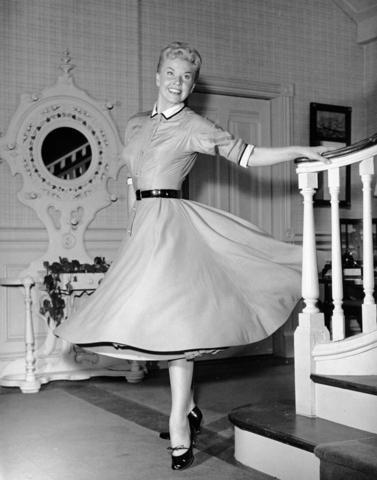
A música corre no sangue da família Tuttle. O pai, Gregory (Robert Keith), é, obviamente, professor de música. As três filhas tocam instrumentos, mas estão mais interessadas em outra coisa: se casar. Quando a mais velha, Fran (Dorothy Malone) anuncia seu noivado, as mais novas, Laurie (Doris Day) e Amy (Elisabeth Fraser), ficam com medo de se tornarem solteironas como a tia Jessie (Ethel Barrymore), que também vive com eles.

Everybody loves music in the Tuttle family. The father, Gregory (Robert Keith), is, obviously, a music teacher. The three daughters all play instruments, but they’re more interested in one thing: getting married. When the oldest, Fran (Dorothy Malone) tells the family she is engaged, the two younger girls, Laurie (Doris Day) and Amy (Elisabeth Fraser), fear becoming spinters like aunt Jessie (Ethel Barrymore), who also lives in the house.
Um dia, um belo estranho chega à cidade. Ele não é Frank Sinatra, e nem é desconhecido. Ele é Alex Burke (Gig Young), um músico cujo pai era um grande amigo de Gregory Tuttle. Ele veio estudar no conservatório de Gregory e fica hospedado na casa dos Tuttle. Ele se apaixona por Laurie à primeira vista. Entretanto, todas as três irmãs Tuttle se apaixonam por ele.

One day, a tall dark stranger arrives in town. He is not Frank Sinatra, and he’s not such a stranger either. He is Alex Burke (Gig Young), a musician whose father was best friends with Gregory Tuttle. He came to study at Gregory’s conservatory and to live in the Tuttle’s house. He is instantly smitten with Laurie. However, all three Tuttle sisters fall for him.
Laurie e Alex parecem feitos um para o outro. Então chega outro homem: Barney Sloan (Frank Sinatra) chega para ajudar Alex com arranjos para pian0. Barney é um músico tão talentoso quanto Alex – talvez até mais – mas é muito amargo. Ele está sempre reclamando, nunca sorri e culpa tudo e todos por seus fracassos.

Laurie and Alex seem perfect for each other. Then another guy arrives: Barney Sloan (Frank Sinatra) comes in to help Alex with some piano arrangements. Barney is as talented a musician as Alex – maybe even more – but he is too bitter. He’s always complaining, never smiles, blames everybody and everything for his lack of success.
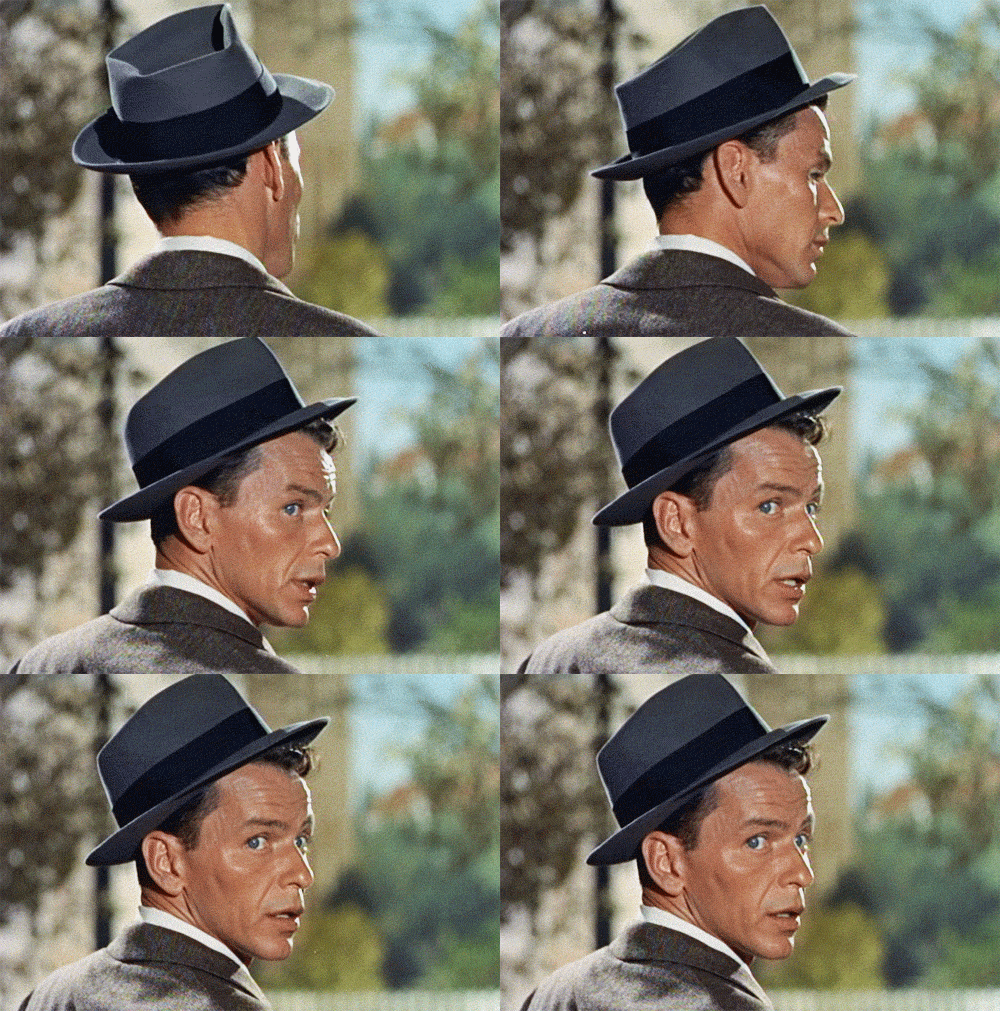
Laurie fica interessada neste homem cínico e se apaixona. Isto prova que o “amor à primeira vista” é um mito e que na verdade a “animosidade no primeiro encontro” é o verdadeiro indicativo de amor (alerta de sarcasmo!). E quando você pensa que tudo vai muito bem, vem a tragédia.

Laurie gets interested in such a cynical character and falls in love. This proves that “love at first sight” is a myth and actually “animosity at first encounter” is the real indicative of love (sarcasm alert!). And when you think everything is wonderful, tragedy strucks.
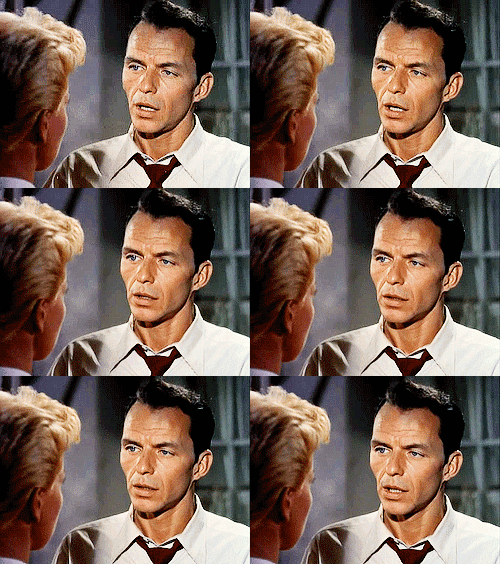
“Corações Enamorados” foi o primeiro filme produzido pela Arwin Productions, companhia de Doris Day e de seu marido Martin Melcher. Sinatra não gostava nada de Melcher, e insistiu para que ele ficasse longe do set. Frank tentou alertar Doris para o comportamento do marido, mas não funcionou: 14 anos depois, quando Doris e Martin se separaram, ela descobriu que ele a havia deixado sem dinheiro algum.

“Young at Heart” was the first film produced by Arwin Productions, a company owned by Doris Day and her then husband Martin Melcher. Sinatra disliked Melcher immensely, and demanded him to not be allowed on set. Frank tried to prevent Doris of her husband’s behavior, but it didn’t work: 14 years later, when Doris and Martin divorced, she found out he had left her penniless.
Doris Day & Martin Melcher
E este não foi o único problema que Sinatra causou no set. Ele exigiu que o final fosse modificado – porque “Corações Enamorados” é um remake de “Quatro Filhas”, que foi o primeiro filme de John Garfield. Ele também brigou com o diretor de fotografia, Charles Lang, e exigiu que Ted D. McCord substituísse Lang. Estes episódios mostram que Frank podia ser tão amargo quanto seu personagem, mas outra situação no set mostra seu lado doce: ele organizou uma festa de aniversário surpresa para Ethel Barrymore, então com a saúde frágil, e ela adorou a gentileza.

And this wasn’t the only trouble Sinatra caused on set. He demanded the ending to be changed – because “Young at Heart” is a remake of “Four Daughters” (1938), which was John Garfield’s screen debut. He also argued with the first director of photography, Charles Lang, and demanded Ted D. McCord to replace Lang. These episodes show that Frank could be as bitter as his character, but another on-set situation shows his sweet side: he threw a surprise birthday party for co-star Ethel Barrymore, who was then in frail health, but who loved the gesture.  
Sinatra e Day cantaram juntos no rádio em várias ocasiões nos anos 40 e são suas músicas, cantadas solo ou em dueto, o destaque de “Corações Enamorados”. No filme, eles não têm muita química – o que eles demonstram é mais muita compaixão. Ethel Barrymore é ótima no começo, mas quase desaparece com o andamento do filme. Gig Young é como um Ralph Bellamy para Doris Day – o que significa que em amis de um filme ele quase se casa com ela, mas acaba perdendo-a.

Sinatra and Day sung together in radio in various occasions of the 1940s and their songs, sung in a duet or not, are the highlight of “Young at Heart”. In the movie, they don’t have a great chemistry – it’s rather a lot of compassion what they have. Ethel Barrymore is delightful in the beginning, and nearly vanishes as the film progresses. Gig Young is a Ralph Bellamy type to Doris Day – which means that more than once he almost marries her character, but ends up losing her.
Não é mais um musical escapista. Em sua fórmula e andamento, é muito similar a “Música e Lágrimas”, feito no mesmo ano. Sinceramente, eu gostei de “Corações Enamorados” e não sei como me sentir em relação ao outro fim que fora antes considerado. Fico feliz que o filme tenha acabado com um clima positivo – o que é muito mais apropriado para sua época e suas estrelas.

It’s not another feel-good musical. In pace, it’s very similar to “The Glenn Miller Story”, released the same year. Sincerely, I liked “Young at Heart”, and I’m not sure about the other end that was first planned. I’m happy it at least ended in a positive note – much more suitable for its time and its stars.

This is my contribution to the Doris Day blogathon, hosted by sweet Michaela at Love Letters to Old Hollywood. Here’s our love letter to Dodo!

Thursday, December 22, 2016

O Diabo Riu por Último / Beat the Devil (1953)

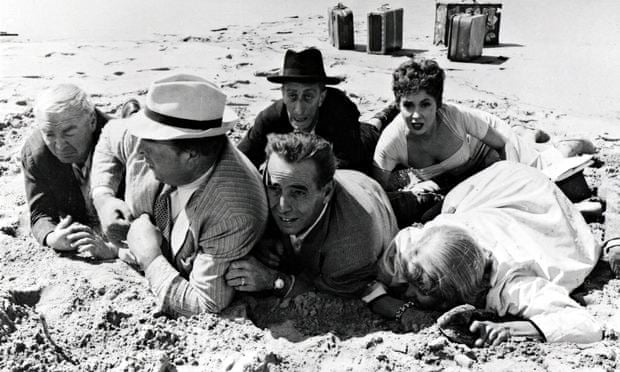
Alguns encontros são obra do destino. Foi obra do destino o primeiro encontro de Humphrey Bogart e John Huston. E é com um encontro que é uma verdadeira obra do destino que o último filme que eles fizeram juntos, “O Diabo Riu por Último”, começa.

Some meetings are totally fortuitous. It was a fortuitous happening when Humphrey Bogart met John Huston. And it is with a fortuitous happening that their last film together, “Beat the Devil”, begins.
Billy Dannreuther (Humphrey Bogart) está em uma cidade exótica da Itália com sua esposa Maria (Gina Lollobrigida) esperando que seu barco esteja pronto para zarpar. Outro casal que está esperando para embarcar no navio são Harry Chelm (Edward Underdown) e Gwendolen (Jennifer Jones, com o cabelo pintado de loiro). O navio vai para a África, onde Harry deve comprar terras para explorar – ele diz que pretende plantar café, mas suas intenções são outras.

Billy Dannreuther (Bogart) is in an exotic town in Italy with his wife, Maria (Gina Lollobrigida) waiting for their ship to be ready to sail. Another couple waiting to board on the ship is Harry Chelm (Edward Underdown) and Gwendolen (Jennifer Jones, with her hair dyed blonde). The ship goes to Africa, where Harry will buy a piece of land to explore – he says he’ll plant coffee, but his intentions are different.
Billy tem alguns velhos conhecidos, Peterson (Robert Morley), O’Hara (Peter Lorre), Major Ross (Ivor Barnard) e Ravello (Marco Tulli), também zanzando pelo local e ouvindo cuidadosamente o que Gwen disse. O problema é que ela é uma mentirosa compulsiva e é muito difícil dizer quando ela está falando a verdade e quando está inventando. Para complicar mais a situação, enquanto o navio está sendo preparado Billy e Gwen se envolvem, e o mesmo acontece com Maria e Harry.

Billy had some old acquaintances, Peterson (Robert Morley), O’Hara (Peter Lorre), Major Ross (Ivor Barnard) and Ravello (Marco Tulli) also wandering around and listening carefully to what Gwen says. The problem is that Gwen is a compulsive liar, and we often can’t say if she’s telling the truth or making it up. To make things worse, while the ship is being prepared, Billy gets involved with Gwen, and Maria with Harry.
Há alguns momentos divertidos no filme, como quando o carro em que Billy e Peterson estão para e eles precisam empurrá-lo para que ele volte a funcionar. Nós também temos uma ótima galeria de personagens, incluindo o quarteto do mal e o irônico responsável pelo navio, interpretado por Mario Perrone, que estava trabalhando como pianista em um restaurante de Roma antes de ser escalados para “O Diabo Riu por Último”.

There are some very funny moments in the film, like when the car in which Billy and Peterson travel stops and they have to push it to make it work again. We also have a very good gallery of characters, including the evil quartet and the ironic ship purser, played by Mario Perrone, who was working a restaurant pianist in Rome before appearing in “Beat the Devil”.
A voz de Bogart é inconfundível, certo? Errado! Em alguns momentos, pode parecer que estamos ouvindo a voz de Bogie, mas não é ele: é um novato vindo da Inglaterra que podia imitar diversas vozes. O nome do novato era Peter Sellers. Ele foi contratado para fazer a dublagem quando Bogart se envolveu em um acidente de carro e perdeu alguns dentes da frente, e ficou impossibilitado de falar com clareza.

Bogart’s voice is unmistakable, right? Wrong! In some moments, it may seem like we are hearing Bogie, but that’s not him: it’s a newcomer from England who could imitate several voices. The newcomer’s name was Peter Sellers. He was hired to do the voiceover when Bogart got involved in a car crash and lost some front teeth, becoming unable to speak clearly.
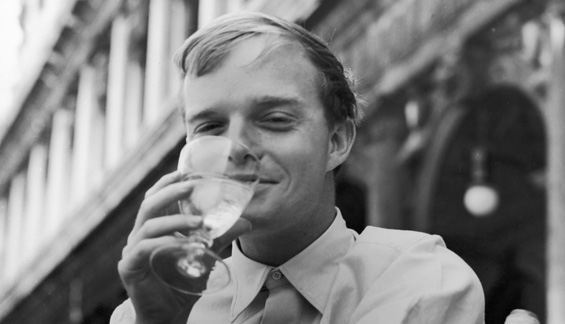
O que John Huston tentou fazer com este filme? Além de ser o diretor, ele era um dos roteiristas – o outro era Truman Capote. Capote e Huston escreviam o roteiro conforme o filmavam, o que significava que ninguém sabia o fim ou mesmo o tom geral do filme.

What did John Huston try to do with this movie? Besides being the director, he was one of the screenwriters – the other being Truman Capote. Capote and Huston wrote the script as they shot, meaning that nobody knew the ending or even the general tone of the film.
Na primeira vez em que Bogart e Huston trabalharam juntos, eles fizeram a obra-prima “O Falcão Maltês” (1941). Na última vez em que eles trabalharam juntos, eles só queriam se divertir. E eles realmente fizeram isso com “O Diabo Riu por Último”: em um ambiente sempre alegre, elenco e equipe jogavam cartas, comiam e bebiam e relaxavam em um belo cenário. Huston ficou tão bêbado e relaxado que foi fazer uma caminhada noturna e caiu de um penhasco, porém não se machucou.

The first time Bogart and Huston worked together, they made the masterpiece “The Maltese Falcon” (1941). The last time they worked together, they just wanted to have fun. And they really did it with “Beat the Devil”: in an always happy environment, the cast and crew played cards, enjoyed food and drinks and relaxed in a beautiful scenario. Huston got so drunk and relaxed that he went for a night walk and fell off a cliff, but remained unharmed.
Alguns dizem que Huston queria fazer uma sátira – mas uma sátira do que, exatamente? Filem noir? Filmes de aventura? Qual a razão de adicionar à história um revolucionário árabe apaixonado por Rita Hayworth? Roger Ebert escreveu que “O diabo Riu por Último” foi o primeiro filme “camp” já feito – sendo seu tom “camp” proposital.

Some say Huston wanted to make a satire – but a satire of what, exactly? Film noir? Adventure films? What is the point of adding to the story an Arab revolutionary leader in love with Rita Hayworth? Roger Ebert wrote that “Beat the Devil” was the first camp film ever made – with its “campiness” being on purpose.
Bogart não ficou muito feliz com o resultado, afinal, foi sua produtora Santana que financiou o filme. Mas ele estava, no final das contas, entre amigos. “O Diabo Riu por Último” não é uma comédia de gargalhar, mas tem momentos divertidos, não é noir, mas tem mistério. É um filme que pertence a um gênero único e exclusivo, e é mais um produto da mente de Capote que dos talentos de Huston e Bogart.

Bogart was not very happy with the result, after all, it was his production company Santana that put money to make the movie. But he was, after all, among friends. “Beat the Devil” is not a laugh-out-loud comedy, but has its funny moments, it’s not noir but it has mysteries. It’s a film that belongs in its own genre, and is more a work of Capote’s mind than of Huston’s and Bogart’s talents.
“Beat the Devil” (1953) is on public domain. It can be watched on YouTube and The Internet Archive.

This is my contribution to the Humphrey Bogart blogathon, hosted at Musings of a Classic Film Addict and Sleepwalking in Hollywood.

Saturday, September 24, 2016

Cantinflas (2014)

Ele chegou a ser o comediante mais importante e amado do mundo mas, se não tivesse passado brevemente por Hollywood, é provável que a fama de Mario Moreno, ou Cantinflas, hoje se restringisse aos países de língua espanhola. E são as negociações para contratar Cantinflas para seu grande filme norte-americano, “A Volta ao Mundo em 80 Dias” (1956), que dão início à cinebiografia do ídolo mexicano.

He was once the most important and beloved comedian in the world but, if he hadn’t worked briefly in Hollywood, it’s probable that Mario Moreno, or Cantinflas, would be known today only in Spanish-speaking countries. And the negotiations to hire Cantinflas to his biggest Hollywood movie, “Around the World in 80 Days” are the starting point for his biopic.
Michael Todd (interpretado por Michael Imperioli) é um produtor de teatro que tem a ideia de fazer o maior e mais fascinante filme do mundo, que contará com um ingrediente secreto: sua adaptação da história de Júlio Verne para os cinemas contará com participações especiais de astros do mundo inteiro! Ele APENAS precisa convencer a United Artists a financiá-lo e distribuir o filme! E isso é uma tarefa complicada ao extremo: se há uma coisa que Hollywood nunca gostou de fazer, mas sempre deveria ter feito, é arriscar.

Michael Todd (portrayed by Micheal Imperioli) is a theater producer who has the plan to make the greatest, biggest film in the world, and a film with a secret ingredient. He wants his adaptation of Jules Verne’s story to have cameos of films stars from all over the world! He ONLY has to convince United Artists to finance and distribute it! And this is an extremely complicated task: if there is one think Hollywood never liked doing, but should have always done, it is taking risks.
Michael Todd diz, ao ouvir pela primeira vez sobre Mario Moreno: “tá, ponha ele no primeiro burro voador para LA.” Afinal, “Ele é a pessoa mais amada no México, Espanha e resto da América Latina.”. Mas como Cantinflas conseguiu tanto prestígio?

Michael Todd says, hearing of Mario Moreno for the first time: “Yeah, get him in the next flying donkey to LA”. After all, “He is the most beloved person in Mexico, Spain and all of Latin America”. But how exactly Cantinflas became so?
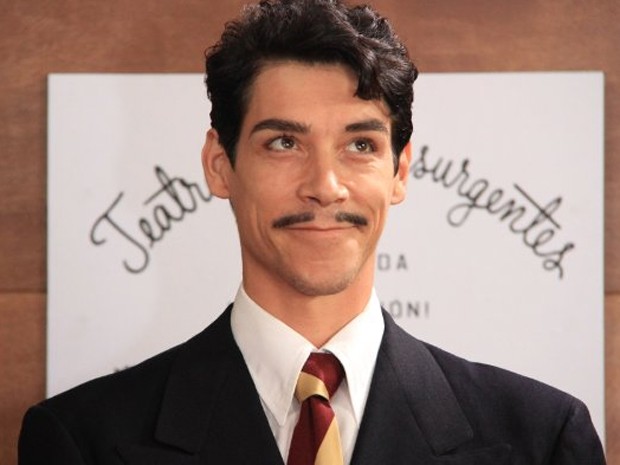
À luta de Michael Todd são costuradas cenas da trajetória artística de Mario Moreno (Oscar Jaenada), o homem que tentou ser boxeador e toureiro, mas que nasceu para ser palhaço. A história avança e retrocede no tempo, entre o México dos anos 1930 e 1940 e Los Angeles em 1955 – até que os destinos de Michael Todd e Mario Moreno se cruzam.

To Michael Todd’s effort we add scenes from Mario Moreno’s (Oscar Jaenada) artistic path: he tried to be a boxer and a bullfighter, but he was born to be a clown. The story goes back and forth in time, between Mexico in the 1930s and Los Angeles in 1955 – until Mario’s and Michael’s fates cross.
Precisamos saber que há uma diferença entre Mario Moreno, a pessoa, e Cantinflas, a personagem. Da mesma maneira e com os mesmos materiais que Chaplin criou seu vagabundo, Mario criou Cantinflas: com roupas simples, um colete (chamado comicamente de “La gabardina”) pendurado em um só ombro, um chapéu, um bigode e um cigarro. Cantinflas e Chaplin de fato se conheceram, mas Chaplin nada teve a ver com a contratação de Cantinflas para “A Volta ao Mundo em 80 Dias”, como mostra a cinebiografia.

We need to know there are differences between Mario Moreno, the person, and Cantinflas, the persona. In the same way and with the same ingredients that Chaplin created his Tramp character, Mario created Cantinflas: with simple clothes, a vest (comically called “la gabardina”) hanging in only one shoulder, a hat, a moustache and a cigarette. Cantinflas and Chaplin actually met, but Chaplin had nothing to do with hiring Cantinflas for “Around the World in 80 Days”, like the biopic shows us.
“Cantinflas”, o filme, é um prato cheio para quem gosta de cinema clássico, com as muitas menções desde os minutos iniciais. É um pouco frustrante ver que os escolhidos para interpretar, ainda que brevemente e às vezes sem falas, astros de Hollywood como Elizabeth Taylor e Marlon Brando não se parecem com os atores. E um erro dolorido: em 1956 Mary Pickford de fato deixou o comando da United Artists, mas de maneira alguma deixou o estúdio nas mãos de Douglas Fairbanks e Charles Chaplin – afinal, Fairbanks estava morto há mais de 15 anos e Chaplin, radicado na Europa. Inserir a figura de Chaplin na cinebiografia, aliás, é a grande manobra emocional feita com o público.

“Cantinflas”, the film, is a great piece for anyone who likes classic film, with lots of mentions to films and stars of the time since the beginning. It is a little frustrating when you realize that the actors chosen to play Hollywood stars like Elizabeth Taylor and Marlon Brando – in a cameo with no lines – look nothing like the people being portrayed. And a painful mistake: in 1956 Mary Pickford really had left a leading position at United Artists, but by no means she left the studio in the hands of both Douglas Fairbanks and Charles Chaplin – after all, Fairbanks died more than 15 years before that and Chaplin was living in Europe.
Todos os clichês do show business estão ali: a pobreza do começo de carreira, a trupe mambembe, o envolvimento com a filha do primeiro patrão e a demissão, o sucesso em uma cidade grande, o astro já estabelecido que menospreza o novato, a felicidade e infelicidade no casamento, a infidelidade, o fundo do poço e a redenção. Outros traços comuns na trajetória de grandes estrelas que não podiam faltar na cinebiografia de Cantinflas foram o desdém da elite e acolhimento inicial rápido por parte do povo, e a luta pela liberdade criativa e o direito de improvisar no teatro e no cinema.

All the show clichés in show business are there: the poverty in the beginning of his career, the carnival, the time he got caught with his boss’s daughter and was fired, the success in a big city, the well-known star who treats the newcomer badly, the happiness and unhappiness in married life, the unfaithfulness, hitting the bottom and the redemption. Some other common steps in a big star’s career: Cantinflas also suffered with the disdain of the rich ones, was well received quickly by the poorer ones, and also fought for creative freedom and his right to improvise in both theater and film.
O filme atingiu seus objetivos principais: atraiu um grande público (mais de um milhão e meio de espectadores só no México), foi uma ode à nostalgia e foi escolhido como o representante mexicano para o Oscar de Melhor Filme Estrangeiro em 2015. Houve polêmica com a escolha do ator espanhol Oscar Jaenada para interpretar Cantinflas, mas sua performance foi muito elogiada e é um dos pontos altos do filme.

The film reached its main goals: it attracted a lot of moviegoers (more than 1.5 million in Mexico alone), was an ode to nostalgia and was chosen as the Mexican representative for the Best Film in a Foreign Language Oscar in 2015. There was a negative buzz when Spanish actor Oscar Jaenada was chosen to play Cantinflas, but his performance received praise and is one of the best things in the movie.
Há relatos que colocam Mario Moreno e Cantinflas como duas personalidades completamente opostas: o personagem era querido e simpático, enquanto seu criador era antipático na vida real. O personagem se tornou lendário e deu origem ao verbo “cantinflear”, ou seja, falar muito até confundir o interlocutor. Mario pode não ter sido um grande exemplo, mas o legado Cantinflas vive, e o comediante ainda é um orgulho para a América Latina.

There are stories that put Mario Moreno and Cantinflas as two completely opposite personalities: the character was beloved and humble, while his creator was unsympathetic in real life. The character became a legend and was the origin of the verb “cantinflear” in Spanish, that is, to talk too much in order to confuse who you’re talking to. Mario may not have been the best example to follow, but Cantinflas’s legacy lives on, and the comedian is still the pride of Latin America.

This post is part of the Hispanic Heritage Month celebration. Follow the hashtag #DePelicula to find more content.

Saturday, September 3, 2016

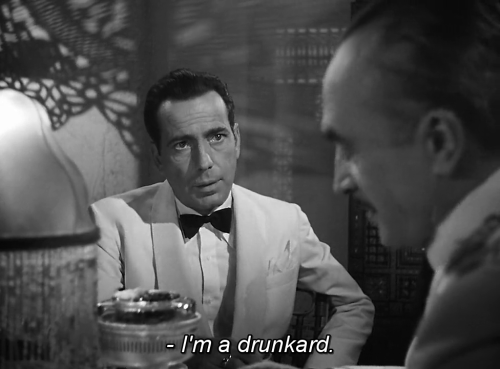
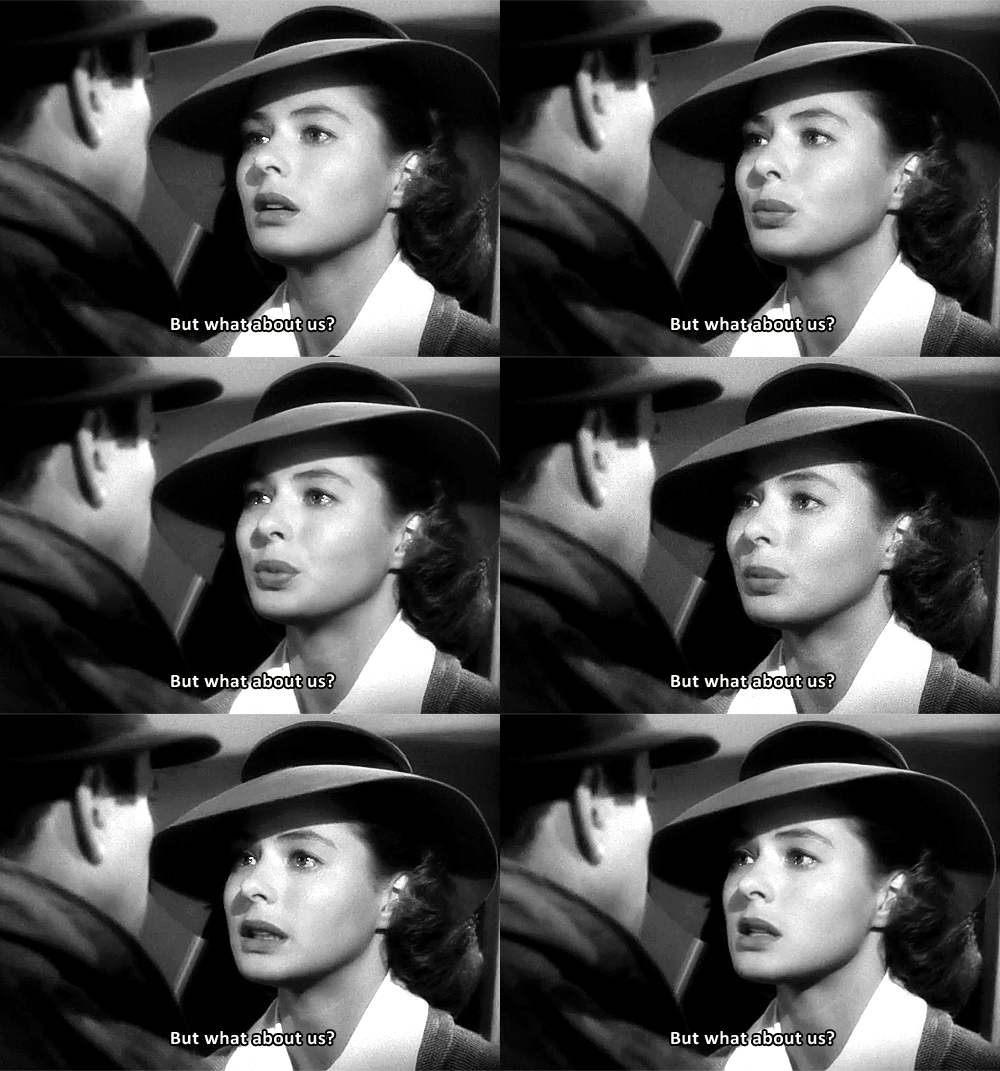
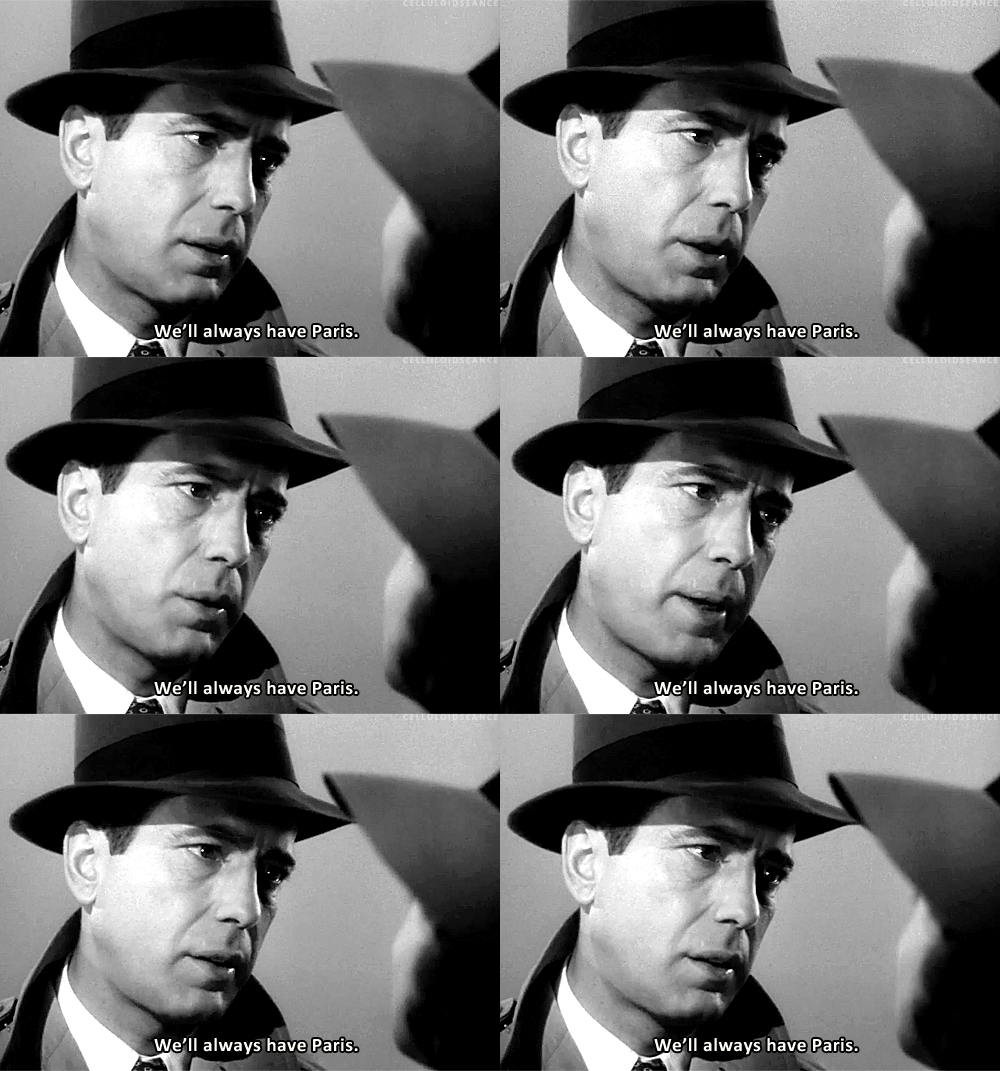
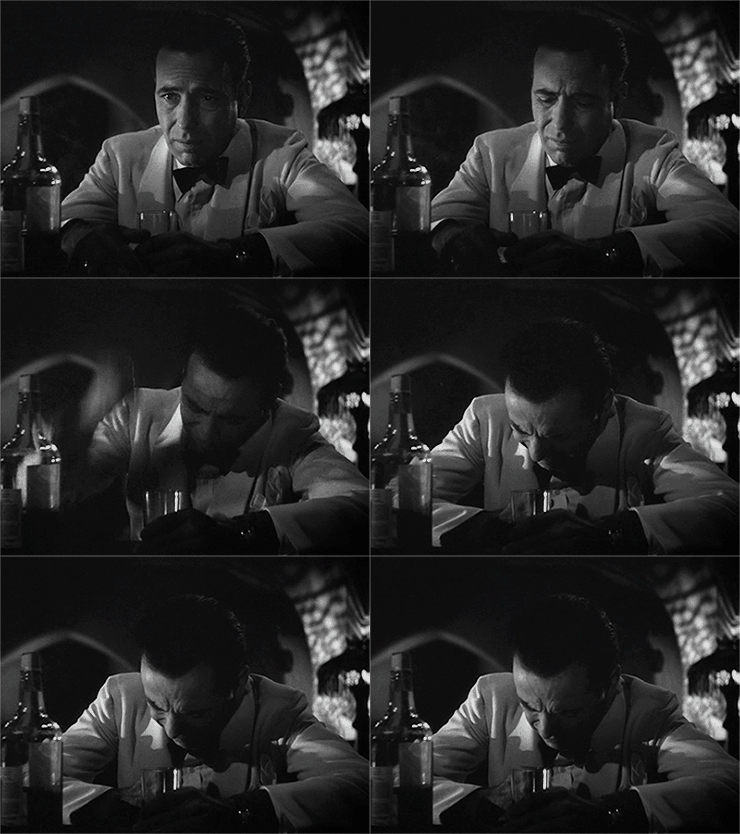
Resenha: Casablanca – A criação de uma obra-prima involuntária do cinema, de Renzo Mora

Book review: Casablanca – Creating an involuntary masterpiece, by Renzo Mora

Comumente escrevo aqui sobre filmes cujos bastidores são tão ou mais interessantes que o produto final que chegou às telas. As histórias de como elenco e equipe foram reunidos, como interagiram e como deram à luz o filme que vemos geralmente não transparecem na tela, mas o making-off pode surgir anos depois, como é o caso deste livro.

I often write about movies whose backstage stories are even more interesting than the final feature film: there are tales of how cast and crew were escalated, how they interacted with each other and how, in spite of a lot of troubles, some great movies were done. We usually don’t see the animosity translated to the screen, but the making-off can surface years later, like in this book.

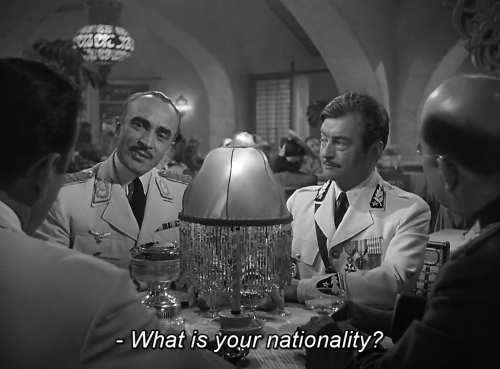
Casablanca” surgiu como mais um produto de uma linha de montagem. Nada em sua gênese indicava que seria um filme especial. A história veio de uma peça fracassada e pouco conhecida chamada “Everybody comes to Ricky’s”. O elenco era o time habitual da Warner Brothers, com uma ou outra alteração no meio do caminho (George Raft, por exemplo, recusou o papel de Rick Blaine). Havia uma música-tema, que quase foi cortada porque era velha, tola e em nada contribuía para o avanço da história. Aí tudo se juntou, e o resultado foi um dos filmes mais amados do mundo.

Casablanca” was just another product from an assembly line. Nothing in its genesis indicated it would be a special film. The story came from a theater text that was a failure and soon forgotten, called “Everybody Comes to Ricky’s”. The cast was made by the usual team working at Warner Brothers, with one change or another along the way (George Raft, for instance, refused the role of Rick Blaine). There was a theme song, but it was almost cut because it was old, silly and didn’t do anything to advance the plot. Then everything got together, and the result was one of the most beloved films in the world.


O subtítulo do livro é “A criação de uma obra-prima involuntária do cinema”, mas bem que poderia ser “Tudo que você queria saber sobre Casablanca mas não tinha a quem perguntar”. O livro é fruto de uma grande pesquisa do autor Renzo Mora, e em muitas vezes se apresenta realmente como isto: uma pesquisa científica. Embora seja classificado na categoria “ensaio sobre cinema”, o livro tem muitas citações de outras obras, como uma tese ou artigo científico também tem.

The subtitle of the book is “Creating an involuntary masterpiece”, but it could be “Everything you wanted to know about Casablanca but was afraid to ask”. The book was written after author Renzo Mora did an intense research, and in many occasions it really looks like the result of a scientific research. It is classified as “movie essay”, but the book has many citations from other sources, like a thesis or scientific article does. 

O conteúdo é amplo: um pouco da vida e da carreira dos atores e do diretor Michael Curtiz, com destaque, óbvio, para Bergman e Bogart; a narrativa toda do filme, a música, os coadjuvantes, o contexto histórico, a repercussão de Casablanca, o Oscar, as influências, uma linha do tempo, uma coleção de falas memoráveis do filme e, obviamente, muitas imagens. É conteúdo para todos os gostos.

The content is variated: a little bit about the actors' lives and careers, focusing obviously on Bergman and Bogart, an overview of director Michael Curtiz's work, the whole plot recounted, the soundtrack, the supporting players, the historical context, the reception of Casablanca, the influences, a timeline, a collection of memorable quotes and, of course, a lot of images. It is content enough to please all tastes.


Tamanha pesquisa descobre algumas narrativas que não encontramos facilmente na internet, como o reencontro de Bogie e Ingrid na Itália em 1954, ou como o playboy brasileiro Jorginho Guinle presenciou a memorável cena de “As Time Goes By” sendo gravada graças a uma feliz coincidência.

This huge research discovers some stories we can't easily find on the internet, like when Bogie and Ingrid met in Italy in 1954 or how Brazilian playboy Jorginho Guinle watched the recording of the famous “As Time Goes By” sequence totally by chance.

De fácil leitura, com pouco mais de cem páginas, este livro é recomendadíssimo, ainda mais em tempos de muito plágio e pouca checagem dos fatos em todas as áreas, mas no jornalismo cinematográfico em particular.

Easy to read, with a little more than 100 pages, this book is recommended, even more so when we consider that we are living in times when plagiarism is king and so few people bother to check the facts. Bad times for journalism in general, and film criticism in particular.


This book review is part of Raquel's 2016 Summer Reading Classic Film Book Challenge.

Related Posts Plugin for WordPress, Blogger...