} Crítica Retrô: Jennifer Jones

Tradutor / Translator / Traductor / Übersetzer / Traduttore / Traducteur / 翻訳者 / переводчик

Showing posts with label Jennifer Jones. Show all posts

Sunday, October 1, 2017

Duelo ao Sol (1946) / Duel in the Sun (1946)

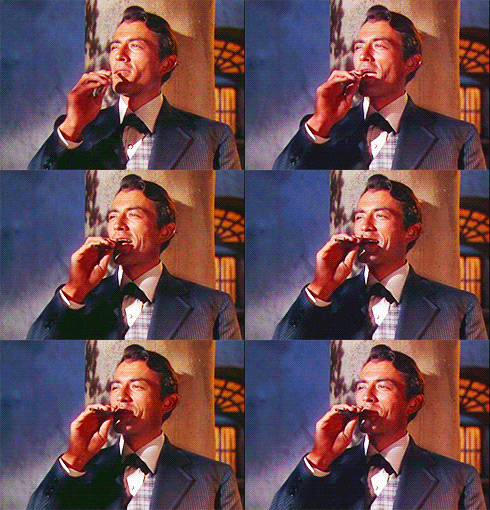
Eu amo a velha Hollywood. Eu amo cinema clássico. Eu fico animada ao ler, nos créditos iniciais, nomes como Joseph Cotten, Jennifer Jones, Gregory Peck, Lillian Gish, Herbert Marshall, Lionel Barrymore e Butterfly McQueen. Mas graças a Deus eu também sou uma mulher moderna, ilustrada e progressista e sou capaz de ver um filme clássico não com viés de nostalgia e um senso de que aquela é uma obra intocável, e assim eu posso perceber quando um filme clássico pisa na bola. 

I love old Hollywood. I love classic film. I get goosebumps reading, in the opening credits, names like Joseph Cotten, Jennifer Jones, Gregory Peck, Lillian Gish, Herbert Marshall, Lionel Barrymore and Butterfly McQueen. But thanks God I'm also a modern, woke, progressive woman and I'm able to look at classic film not with nostalgia and a sense of flawlessness, but with criticism, and then I can see when a classic film screws up.
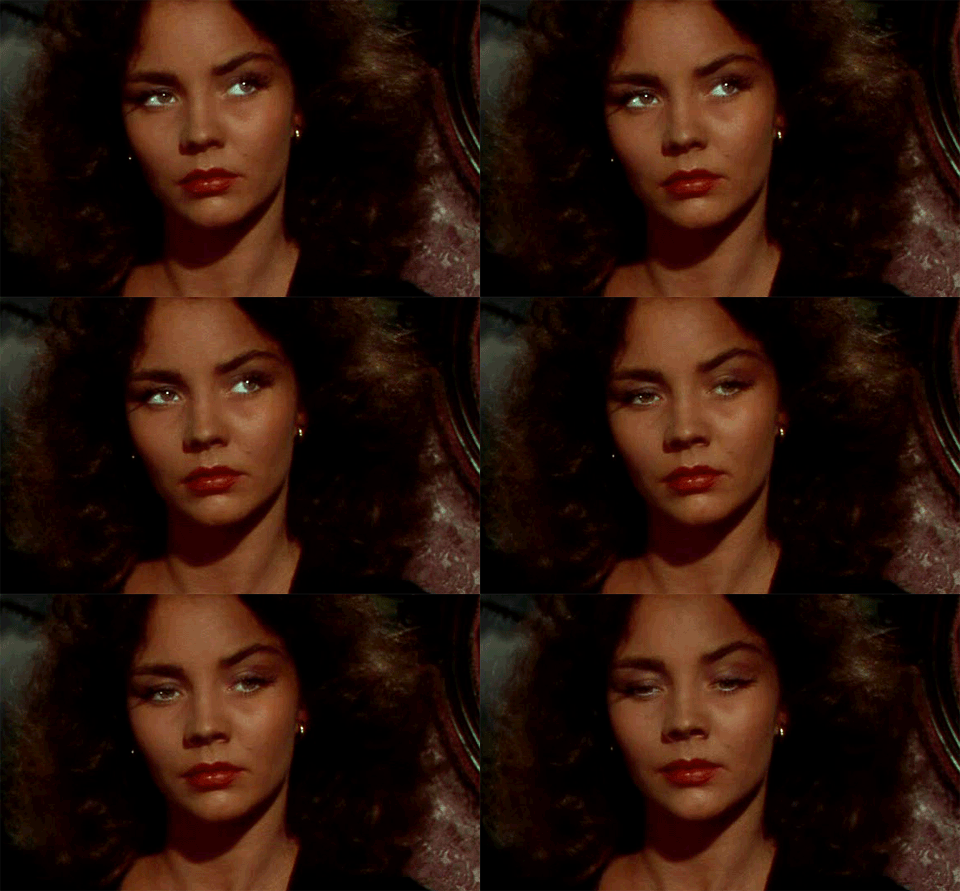

Pearl Chavez (Jennifer Jones) é uma mestiça, filha de pai branco e mãe índia. Numa noite, a mãe dela está dançando em um bar e deixa o local com um homem após um breve jogo de sedução. O pai de Pearl (Herbert Marshall) os segue e os mata a tiros. Ele se declara culpado pelo assassinato, e diz que o primeiro crime que cometeu foi se envolver com uma índia. Ele é enforcado e envia Pearl para viver com a prima de segundo grau, Laura Belle (Lillian Gish).

Pearl Chavez (Jennifer Jones) is a half-breed, that is, the daughter of a white father and an Indian mother. One night, her mother is dancing at a bar and leaves the place with a man who she had seduced. Pearl's father (Herbert Marshall) follows them and shoots them. He pleads guilty for murder, and says that the first guilty thing he did was getting involved with an Indian. He is hung and sends Pearl to live with his second cousin, Laura Belle (Lillian Gish).
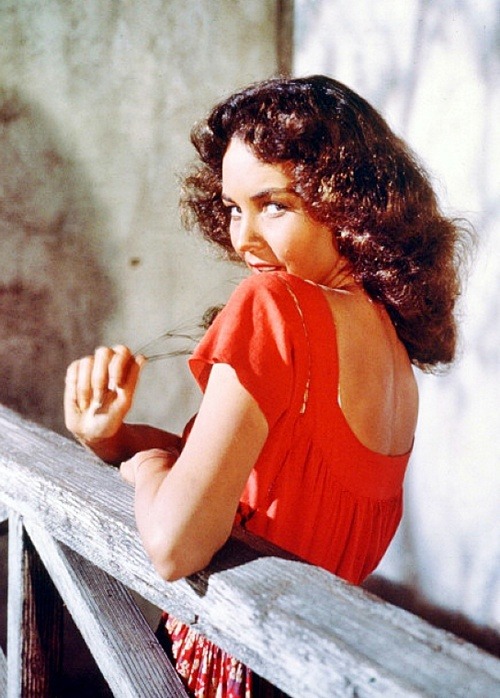

O marido de Laura Belle é chamado por todos – inclusive pela própria Laura – de Senador McCanles (Lionel Barrymore). Laura tem também dois filhos: o mais velho e sensato Jesse (Joseph Cotten) e o mais novo e mulherengo Lewton (Gregory Peck). O mais recente problema na imensa propriedade dos McCanles no Texas é a chegada de uma ferrovia, que trará aquilo que o Senador considera pior que uma praga: IMIGRANTES!

Laura Belle has a husband, who everybody – including herself – calls senator McCanles (Lionel Barrymore) and two sons: eldest and sensible Jesse (Joseph Cotten) and younger and womanizer Lewton (Gregory Peck). The latest problem in the mammoth property the McCanles family has in Texas is the arrival of a railway, that will bring something the senator considers worse than a plague: IMMIGRANTS!


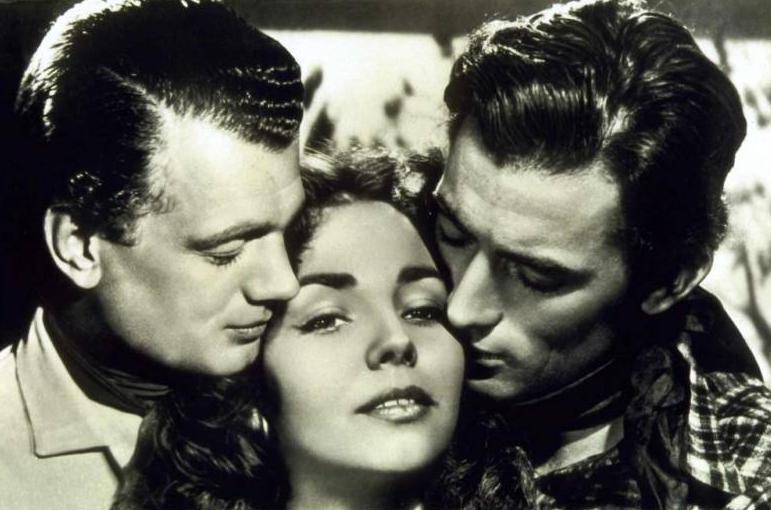
Além da questão da ferrovia, a chegada de Pearl aumenta a rivalidade entre os irmãos. Num primeiro momento, Pearl gosta mais de Jesse, porque ele a trata melhor, e Lewton vê esta preferência como um desafio – Lewton tentará conquistá-la com brutalidade, mesmo não querendo nada sério com ela.

Besides the railroad problem, Pearl's arrival makes the rivalry between the brothers more intense. At first, Pearl likes Jesse better, because he's a more polite man, and Lewton sees her preference as a challenge – Lewton will try to conquer her with brutality, even if he doesn't want anything serious with her.


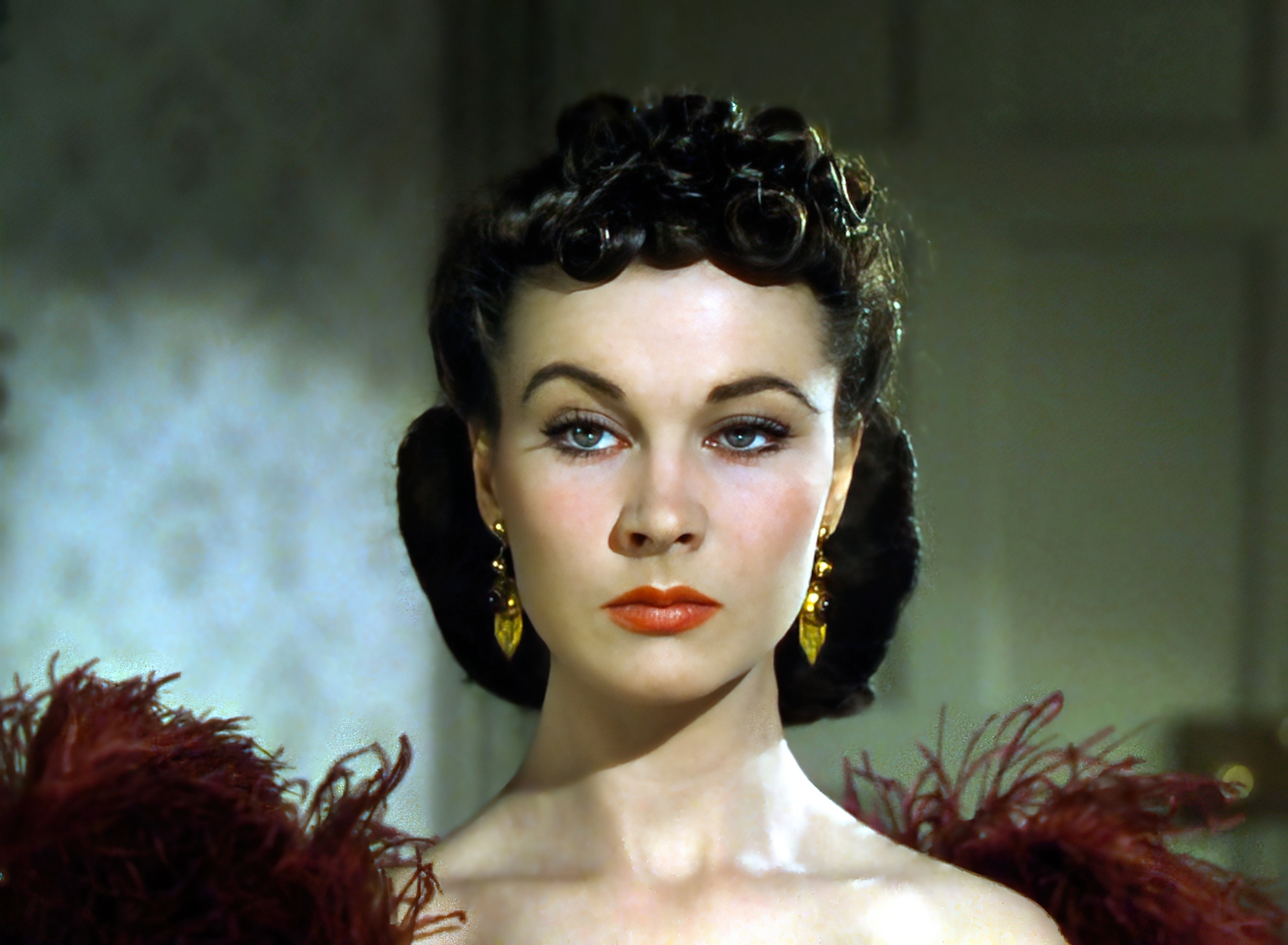
Não é nenhum segredo que Selznick queria fazer um filme ainda mais grandioso que “E o Vento Levou…”. E este foi seu erro: ao seguir à risca a fórmula de “E o Vento Levou...”, as comparações foram inevitáveis. Você tem um triângulo amoroso, uma história que se passa no passado, um ótimo elenco de coadjuvantes e até mesmo a paleta de cores é semelhante. Selznick inclusive repetiu os problemas dos bastidores e contratou seis diretores diferentes para seu novo épico! Mas “Duelo ao Sol” perde feito na comparação.

It's no secret that Selznick wanted to make a film that would be bigger and better than “Gone with the Wind”. And this was his mistake: by following the GWTW formula verbatim, the comparisons were unavoidable. You have a love triangle, a story set in the past, a great supporting cast and even the color palette is similar. Selznick even mimicked his on-set troubles and hired six different directors for his new epic! But “Duel in the Sun” pales in comparison.


Pearl não é uma heroína tão marcante quanto Scarlett O’Hara. O primeiro erro de Selznick com a personagem foi escolher uma atriz branca para interpretar uma mestiça... com um sutil Brownface. Obviamente, a velha Hollywood nunca permitiria que uma índia autêntica fosse protagonista – e eu imagino que a Hollywood moderna também não faria isso. Além deste fato, Pearl não é complexa como Scarlett. Ela não é decidida, esforçada, corajosa e não algo pelo que lutar, como Scarlett tem Tara. Pearl age por luxúria e um estranho senso de moralidade – algo que pode ser interpretado como uma característica de sua origem mestiça.

Pearl is not as bold a heroine as Scarlett O'Hara. The first way Selznick screwed up with her character was by allowing a white woman to play a half-Indian… in brownface. Of course, classic Hollywood would never have an authentic Indian as a leading lady – and I imagine modern Hollywood wouldn't as well. Besides this, Pearl is not as complex as Scarlett. She isn't industrious and brave and she doesn't have something to fight for like Scarlett has with Tara. Pearl is moved by lust and a weird sense of morality – something that can be interpreted as a characteristic of her ‘half-breed’ origin.


Gregory Peck não é nenhum Clark Gable. Claro, Peck ainda estava no começa da carreira, e se pensarmos em seus papéis posteriores, é estranho vê-lo como vilão. Mas Peck convence como Lewton – eu o odiei para valer em muitos momentos. Lillian Gish e Lionel Barrymore estão simplesmente fantásticos, em especial na última cena juntos. Butterfly McQueen interpreta Vashti, o mesmo tipo de criada pouco esperta e de voz esganiçada que ela interpretou em “E o Vento Levou...”. Laura Belle inclusive diz que Vashti não pode ser treinada – sim, treinada como um cão.

Gregory Peck is no Clark Gable. Sure, Peck was still in the beginning of his career, and if we think about his later roles, it's weird to see him as a villain. But Peck is very convincing as Lewton – I truly hated him in many moments. Lillian Gish and Lionel Barrymore are simply outstanding, especially in their last scene together. Butterfly McQueen plays Vashti, the usual kind of empty-headed, high-pitched maid she played in “Gone with the Wind”. Laura Belle even says that Vashti can't be “trained” - yes, trained like a dog.


1939
1946
A fotografia é sem dúvida o melhor elemento do filme, mesmo que muitas cenas com silhuetas pareçam copiadas de “E o Vento Levou...”. As cenas exteriores são em geral fotografadas em tons de vermelho, o que me fez pensar em “Legião Invencível”, de 1949, de Jon Ford – com a diferença que o filme de Selznick foi filmado no Texas, e o de Ford no Arizona.

The cinematography is without a doubt the best thing in the movie, even though many scenes with silhouettes look like copies of “Gone with the Wind”. The exteriors are mostly photographed in red tones, something that made me think of John Ford's “She Wore a Yellow Ribbon”, from 1949 – with the difference that Selznick's movie was filmed in Texas, and Ford's in Arizona.


Como faroeste, “Duelo ao Sol” funciona bem. Temos dois duelos perto do fim, e o mais inesperado é o melhor deles. O filme não é um épico como “E o Vento Levou...”, e é mais datado que o predecessor feito em 1939, especialmente na caracterização da criada Vashti e na visão muito, muito errada acerca da miscigenação.

As a western, “Duel in the Sun” works well. We have actually two duels near the end, and the most unexpected is the best one. It's no epic like “Gone with the Wind”, and it is more dated than the Civil War era movie made in 1939, especially in the portrayal of maid Vashti and the very, very wrong take on miscegenation.

This is my contribution to the Texas Blogathon, hosted by The Midnight Drive-In.

Tuesday, May 23, 2017

Variações sobre um mesmo tema: Adeus às Armas (1932 e 1957)

Variations on the same theme: A Farewell to Arms (1932 and 1957)


Você com certeza já ouviu falar de Ernest Hemingway, o escritor americano que adorava duas coisas: a vida boêmia e gatos. Nenhum destes interesses do autor tem espaço naquela que é sua mais famosa obra: o romance “Adeus às Armas”.

You probably have heard about Ernest Hemingway, the American writer who loved two things: bohemia and cats. None of these appears in the author's most famous book, the novel “A Farewell to Arms”.


Hemingway foi motorista de ambulância na Itália durante a Primeira Guerra Mundial, e em 1929 publicou um livro baseado nesta experiência. Em “Adeus às Armas”, o motorista de ambulância americano Frederic Henry e a enfermeira inglesa Catherine Barkley se apaixonam durante a guerra. O amor poderá esperar até que haja paz? É só isso. E é só o começo de tudo.

Hemingway was an ambulance driver in Italy during World War I, and in 1929 published a book based on these times. In “A Farewell to Arms”, the American ambulance driver Frederic Henry and the English nurse Catherine Barkley fall in love amidst the war. Could love wait until peace arrives? That's basically it. And that's just the beginning of everything.


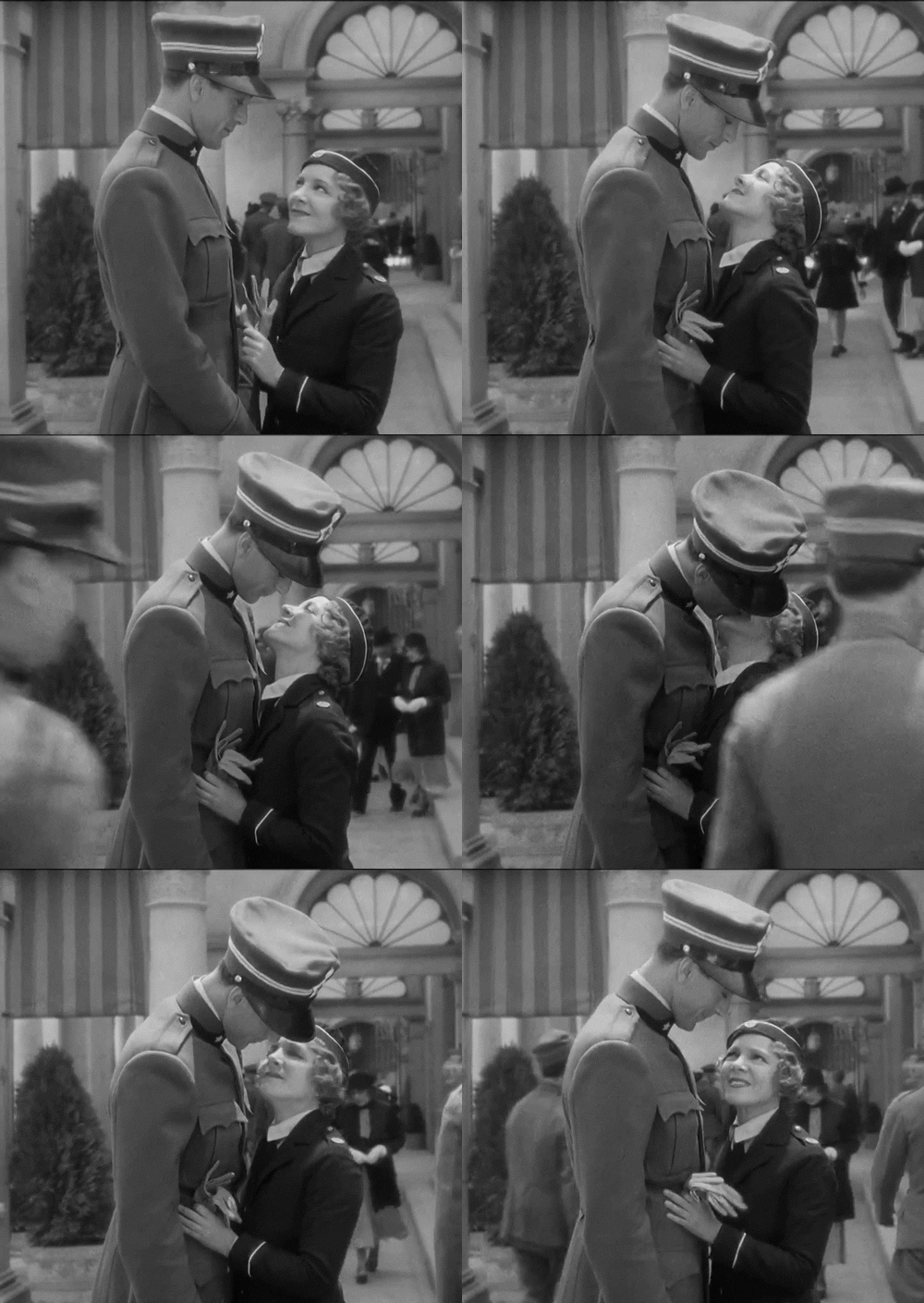
No ano seguinte à publicação do livro, a história foi adaptada para o teatro e logo foi feita uma versão para o cinema. Fredric March, contratado para ser o protagonista, recusou o papel ao saber que Frank Borzage o dirigiria. Foi a oportunidade perfeita para um homem alto e charmoso que crescia cada vez mais em Hollywood: Gary Cooper.

The years after the book was published, the story was adapted into a play and soon an adaptation to the screen followed. Fredric March, hired to be the leading man, refused it when he heard that Frank Borzage was assigned as the director. It was a perfect opportunity for a tall and charming man who was getting more and more space in Hollywood: Gary Cooper.


Ao seu lado estava Helen Hayes, admirada no teatro – onde começou aos cinco anos interpretando meninos – e que havia ganhado o Oscar de Melhor Atriz no ano anterior. Em apenas uma hora e meia – a versão de 1957 tem duas horas e meia – as mais de trezentas páginas do romance de Hemingway são contadas com boas omissões. O foco fica no casal e não na guerra. 

Next to him there was Helen Hayes, an admired lady of the theater – where she started at five playing male roles – and who had just won the Best Actress Oscar the year before. In just an hour and a half – the 1957 version is two and a half hours long – the more than 300 pages from Hemingway's novel are told with a lot of ommissions. The focus is on the couple, not the war.


Assim como tudo que Borzage fez, “Adeus às Armas” é um deleite para os olhos. Você está na guerra, mas há um belo palácio onde as enfermeiras e os comandantes ficam, com uma gloriosa fonte no jardim. Este jardim é o cenário da maioria das cenas belas de românticas do filme.

Like anything Borzage did, “A Farewell to Arms” is a feast for the eyes. You are in the war, but you have a beautiful palace where the nurses and commanders stay, with a glorious fountain in the garden. This garden is the scenario for the most beautiful and romantic scenes of the movie.


Helen Hayes desenvolveu um crush em Gary Cooper, enquanto Cooper e Hemingway se tornaram grandes amigos. O que não deixou Hemingway feliz foi a maneira como Hollywood tratou seu precioso material, mudando o personagem Rinaldi (interpretado por Adolphe Menjou), e até filmando dois finais para que os donos dos cinemas pudessem decidir se queriam um final feliz ou triste para a sessão. No final, as críticas foram diversas, mas em sua maioria positivas.

Helen Hayes developed a crush on Gary Cooper, while Cooper and Hemingway became lifelong friends. What didn't make Hemingway happy was how Hollywood tackled his precious material, changing character Rinaldi (played by Adolphe Menjou), and even filming two endings so theater owners could decide if they wanted a happy or a sad ending for the session. In the end, the reviews were mixed, but mostly positive.


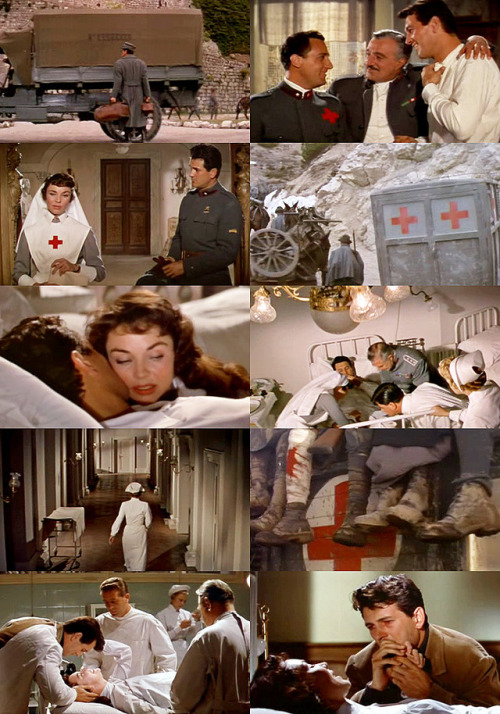
Desde o começou tem-se a impressão de que David O. Selznick quis repetir com sua adaptação de “Adeus às Armas” o sucesso de “E o Vento Levou...”. O próprio título é apresentado da mesma forma, com as letras imensas rolando da direita para a esquerda da tela. Assim como sua obra de 1939, este também conta com cenários de tirar o fôlego, o tema da guerra, os muitos feridos e o uso expressivo da cor.

Since the beginning we get the impression that David O. Selznick was trying, with his adaptation of “A Farewell to Arms”, to repeat the success of “Gone with the Wind”. The title itself is presented the same way, with huge letter rolling from right to left on the screen. Just like his 1939 film, this one also has breathtaking scenarios, the war theme and an expressive use of color.


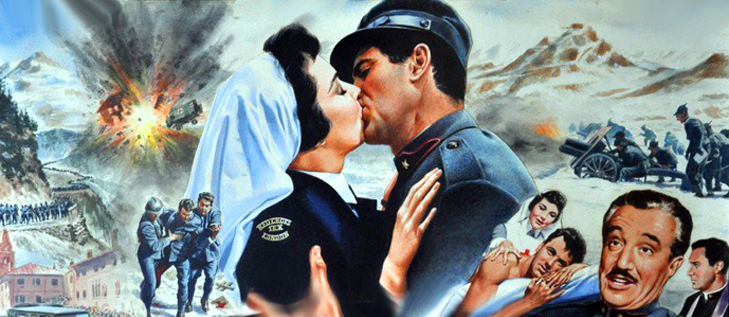
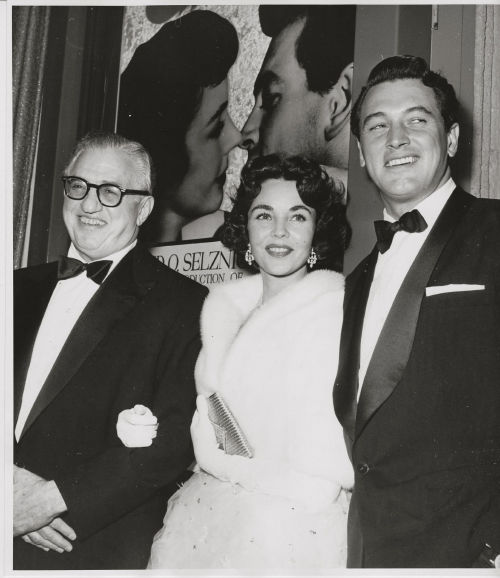
Protagonizado por Rock Hudson, interpretando Frederic como um tenente, e Jennifer Jones, conta ainda com os talentos secundários de Vittorio de Sica, Alberto Sordi e Mercedes McCambridge. Um usuário do IMDb não considerou boa a escalação de Jennifer, então esposa de Selznick, para o papel principal (e não tenho dúvida de que, se o produtor tivesse conhecido Jennifer nos anos 30, apesar da pouca idade, ele faria um lobby para ela ser incluída no elenco do épico sobre a Guerra Civil Americana). O usuário disse que Jennifer era velha demais para o papel.

The film is lead by Rock Hudson, playing Frederic as a lieutenant, and Jennifer Jones, and also have, as supporting players, Vittoria de Sica, Alberto Sordi and Mercedes McCambridge. An IMDb user didn't like the casting of Jennifer Jones, then Selznick's wife, as the lead (and I have no doubt that, if the producer had met Jennifer in the 1930s, even though she was too young, he would have lobbied for a role for her in the Civil War epic). The user said Jennifer was too old for the part.


Embora eu goste da atriz (sensacional em “A Canção de Bernadette”, de 1943), fica claro que o filme foca mais no personagem de Hudson. Entretanto, se fosse necessário substituir a protagonista, surgem duas possibilidades em minha mente: Deborah Kerr, o que não seria ruim já que ela continuaria a ser mais velha que Rock, ou Elizabeth Taylor, que à primeira vista parece perfeita para o papel.

Even though I like Jennifer (who is sensational in “The song of Bernadette”,  from 1943), it's clear that the film is focused on Rock's character. But if it was necessary to replace the leading lady, I'd have two suggestions: Deborah Kerr, who was also older than Rock, and Elizabeth Taylor, who seems just perfect for the role.


Selznick só conseguiu o direito para adaptar a obra de Hemingway através de uma troca: a Warner Brothers, que possuía esse direito, queria fazer uma nova versão de “Nasce uma Estrela”, que estava sob a tutela de Selznick, produtor da versão de 1937. A troca foi simples e as ambições de Selznick começaram a se acumular.

Selznick only got the rights to adapt Hemingway's book through an exchange: Warner Brothers, who had this right, wanted to make a new version of “A Star is Born”, and Selznick, who produced the 1937 version, had the rights over the story. The exchange was simple and Selznick's ambitions started to pile up.


Buscando cenários autênticos, Selznick demitiu o primeiro diretor, John Huston, e mandou Charles Vidor filmar nos Alpes italianos. Ele também não economizou na duração do filme, e foi mais fiel ao livro de Hemingway, embora novamente focasse mais no casal e menos na guerra. No final, foi um filme grandioso, mas uma decepção para a crítica e a bilheteria.

Looking for authentic scenarios, Selznick fired his first director, John Huston, and sent Charles Vidor to shoot in the Italian Alps. He also didn't save on screen time, and was more faithful to Hemingway's book, although again focusing more on the couple than on the war. In the end, it was a grandiose film, but a box office and critical disappointment.


Estas foram as duas únicas adaptações de “Adeus às Armas” para o cinema. Embora nenhuma das duas seja perfeita por causa das liberdades tomadas, ambas têm qualidades e são bons filmes, cada um em sua fatia da história de Hollywood.

These were the only two adaptations of “A Farewell to Arms” into feature films. Even though none of the versions is perfect due to the liberties taken, both have qualities and are worthy pieces of movie history.

O veredicto: se você tiver tempo sobrando, veja as duas versões. Mas leia antes o livro!

The verdict: if you have enough time, watch both versions. But read the book first!

This is my contribution to the Medicine in the Movies Blogathon, hosted by Charlene at Charlene’s (Mostly) Classic Movie Reviews.

Thursday, December 22, 2016

O Diabo Riu por Último / Beat the Devil (1953)

Alguns encontros são obra do destino. Foi obra do destino o primeiro encontro de Humphrey Bogart e John Huston. E é com um encontro que é uma verdadeira obra do destino que o último filme que eles fizeram juntos, “O Diabo Riu por Último”, começa.

Some meetings are totally fortuitous. It was a fortuitous happening when Humphrey Bogart met John Huston. And it is with a fortuitous happening that their last film together, “Beat the Devil”, begins.
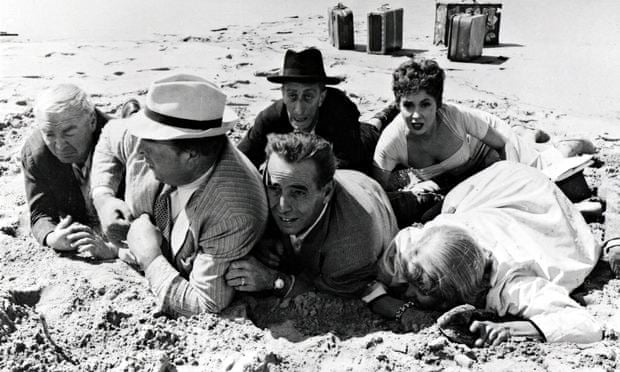
Billy Dannreuther (Humphrey Bogart) está em uma cidade exótica da Itália com sua esposa Maria (Gina Lollobrigida) esperando que seu barco esteja pronto para zarpar. Outro casal que está esperando para embarcar no navio são Harry Chelm (Edward Underdown) e Gwendolen (Jennifer Jones, com o cabelo pintado de loiro). O navio vai para a África, onde Harry deve comprar terras para explorar – ele diz que pretende plantar café, mas suas intenções são outras.

Billy Dannreuther (Bogart) is in an exotic town in Italy with his wife, Maria (Gina Lollobrigida) waiting for their ship to be ready to sail. Another couple waiting to board on the ship is Harry Chelm (Edward Underdown) and Gwendolen (Jennifer Jones, with her hair dyed blonde). The ship goes to Africa, where Harry will buy a piece of land to explore – he says he’ll plant coffee, but his intentions are different.
Billy tem alguns velhos conhecidos, Peterson (Robert Morley), O’Hara (Peter Lorre), Major Ross (Ivor Barnard) e Ravello (Marco Tulli), também zanzando pelo local e ouvindo cuidadosamente o que Gwen disse. O problema é que ela é uma mentirosa compulsiva e é muito difícil dizer quando ela está falando a verdade e quando está inventando. Para complicar mais a situação, enquanto o navio está sendo preparado Billy e Gwen se envolvem, e o mesmo acontece com Maria e Harry.

Billy had some old acquaintances, Peterson (Robert Morley), O’Hara (Peter Lorre), Major Ross (Ivor Barnard) and Ravello (Marco Tulli) also wandering around and listening carefully to what Gwen says. The problem is that Gwen is a compulsive liar, and we often can’t say if she’s telling the truth or making it up. To make things worse, while the ship is being prepared, Billy gets involved with Gwen, and Maria with Harry.
Há alguns momentos divertidos no filme, como quando o carro em que Billy e Peterson estão para e eles precisam empurrá-lo para que ele volte a funcionar. Nós também temos uma ótima galeria de personagens, incluindo o quarteto do mal e o irônico responsável pelo navio, interpretado por Mario Perrone, que estava trabalhando como pianista em um restaurante de Roma antes de ser escalados para “O Diabo Riu por Último”.

There are some very funny moments in the film, like when the car in which Billy and Peterson travel stops and they have to push it to make it work again. We also have a very good gallery of characters, including the evil quartet and the ironic ship purser, played by Mario Perrone, who was working a restaurant pianist in Rome before appearing in “Beat the Devil”.
A voz de Bogart é inconfundível, certo? Errado! Em alguns momentos, pode parecer que estamos ouvindo a voz de Bogie, mas não é ele: é um novato vindo da Inglaterra que podia imitar diversas vozes. O nome do novato era Peter Sellers. Ele foi contratado para fazer a dublagem quando Bogart se envolveu em um acidente de carro e perdeu alguns dentes da frente, e ficou impossibilitado de falar com clareza.

Bogart’s voice is unmistakable, right? Wrong! In some moments, it may seem like we are hearing Bogie, but that’s not him: it’s a newcomer from England who could imitate several voices. The newcomer’s name was Peter Sellers. He was hired to do the voiceover when Bogart got involved in a car crash and lost some front teeth, becoming unable to speak clearly.
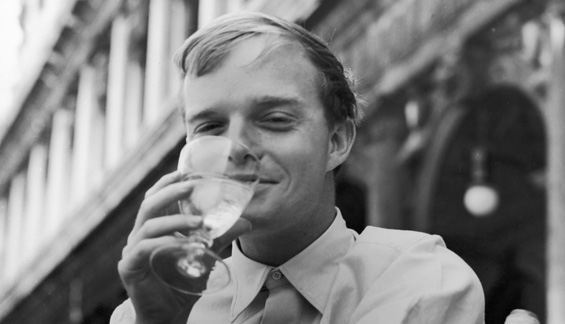
O que John Huston tentou fazer com este filme? Além de ser o diretor, ele era um dos roteiristas – o outro era Truman Capote. Capote e Huston escreviam o roteiro conforme o filmavam, o que significava que ninguém sabia o fim ou mesmo o tom geral do filme.

What did John Huston try to do with this movie? Besides being the director, he was one of the screenwriters – the other being Truman Capote. Capote and Huston wrote the script as they shot, meaning that nobody knew the ending or even the general tone of the film.
Na primeira vez em que Bogart e Huston trabalharam juntos, eles fizeram a obra-prima “O Falcão Maltês” (1941). Na última vez em que eles trabalharam juntos, eles só queriam se divertir. E eles realmente fizeram isso com “O Diabo Riu por Último”: em um ambiente sempre alegre, elenco e equipe jogavam cartas, comiam e bebiam e relaxavam em um belo cenário. Huston ficou tão bêbado e relaxado que foi fazer uma caminhada noturna e caiu de um penhasco, porém não se machucou.

The first time Bogart and Huston worked together, they made the masterpiece “The Maltese Falcon” (1941). The last time they worked together, they just wanted to have fun. And they really did it with “Beat the Devil”: in an always happy environment, the cast and crew played cards, enjoyed food and drinks and relaxed in a beautiful scenario. Huston got so drunk and relaxed that he went for a night walk and fell off a cliff, but remained unharmed.
Alguns dizem que Huston queria fazer uma sátira – mas uma sátira do que, exatamente? Filem noir? Filmes de aventura? Qual a razão de adicionar à história um revolucionário árabe apaixonado por Rita Hayworth? Roger Ebert escreveu que “O diabo Riu por Último” foi o primeiro filme “camp” já feito – sendo seu tom “camp” proposital.

Some say Huston wanted to make a satire – but a satire of what, exactly? Film noir? Adventure films? What is the point of adding to the story an Arab revolutionary leader in love with Rita Hayworth? Roger Ebert wrote that “Beat the Devil” was the first camp film ever made – with its “campiness” being on purpose.
Bogart não ficou muito feliz com o resultado, afinal, foi sua produtora Santana que financiou o filme. Mas ele estava, no final das contas, entre amigos. “O Diabo Riu por Último” não é uma comédia de gargalhar, mas tem momentos divertidos, não é noir, mas tem mistério. É um filme que pertence a um gênero único e exclusivo, e é mais um produto da mente de Capote que dos talentos de Huston e Bogart.

Bogart was not very happy with the result, after all, it was his production company Santana that put money to make the movie. But he was, after all, among friends. “Beat the Devil” is not a laugh-out-loud comedy, but has its funny moments, it’s not noir but it has mysteries. It’s a film that belongs in its own genre, and is more a work of Capote’s mind than of Huston’s and Bogart’s talents.
“Beat the Devil” (1953) is on public domain. It can be watched on YouTube and The Internet Archive.

This is my contribution to the Humphrey Bogart blogathon, hosted at Musings of a Classic Film Addict and Sleepwalking in Hollywood.

Thursday, June 28, 2012

Joseph Cotten: um coadjuvante de luxo

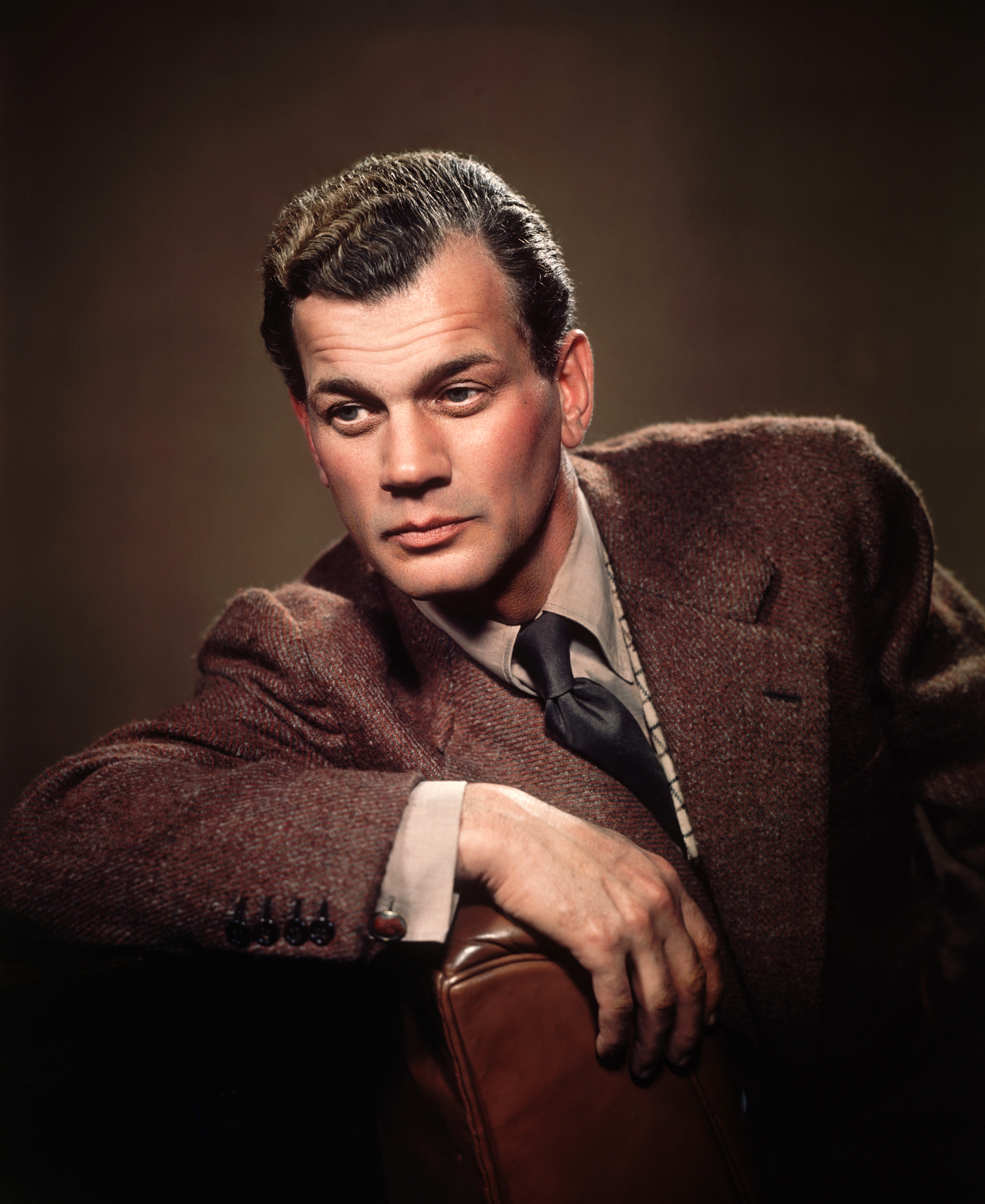
Ele nunca foi indicado ao Oscar. Seu nome não é conhecido pelo público leigo. No entanto, os cinéfilos clássicos devem se lembrar com carinho do belo e versátil Joseph Cotten, que teve a sorte de estar em uma série de filmes importantes, entrando para a história da sétima arte e escrevendo seu nome num seleto grupo de atores que teve o privilégio de trabalhar com gênios como Alfred Hitchcock e Orson Welles.
Seu desejo de estar em um palco e representar foi despertado na infância. Nasceu no sul, estudou interpretação em Washington, trabalhou como vendedor de aspiradores e tintas em Nova York e guarda-costas e crítico de teatro em Miami. Em 1936 conheceu Orson Welles, de quem se tornaria amigo íntimo, sendo inclusive seu padrinho no casamento com Rita Hayworth. Na ocasião do encontro, Welles ateou fogo a um cesto de lixo e, em outra história curiosa, ele e Joseph estavam ensaiando para um programa de rádio quando tiveram um ataque de riso incontrolável. Ele também ajudou Welles a fundar o Mercury Theatre.
Em “Cidadão Kane / Citizen Kane” (1941) ele é Jedediah Leland, amigo de Charles Foster Kane e crítico de teatro. Trabalha para a cadeia de jornais e, após ficar bêbado, Kane termina uma crítica por ele. Joseph trabalhou com Welles também em “Soberba / The Magnificent Ambersons” (1942), “Jornada do Pavor / Journey into Fear” (1943), no qual foi também roteirista, "O Terceiro Homem / The Third Man" (1949), “A Marca da Maldade / Touch of Evil” (1958), no qual não foi creditado, e participou de “Verdades e Mentiras / F for Fake” (1973), o último fime de Welles. Ele também participou do curta “Too much Johnson”, que foi a primeira experiência de Orson com o cinema, em 1938. A pequena produção era exibida antes das apresentações do Mercury Theatre.
Com o mestre do suspense Cotten trabalhou nos filmes “Sob o signo de Capricórnio / Under Capricorn” (1949) e “A sombra de uma dúvida / Shadow of a Doubt” (‘1943), este provavelmente seu mais famoso trabalho. Ele também participou da série “Alfred Hitchcock Presents”, aparecendo em três episódios.
Em 1939 ele foi C. K. Dexter Haven na peça “The Philadelphia Story”, contracenando com Katharine Hepburn. Em 1940 a peça virou filme e o papel de Cotten ficou com Cary Grant. Em 1954, foi Linus Larabee em “Sabrina’s Fair”, peça que no mesmo ano daria origem ao filme protagonizado por Audrey Hepburn. Desta vez, Humphrey Bogart fez o papel de Cotten, embora a contragosto.
Joseph Cotten casou-se duas vezes, com ambos os relacionamentos durando mais de 30 anos. Criou a filha de sua primeira esposa, Lenore La Mont, e depois da morte dela casou-se com a atriz Patricia Medina. Era grande amigo de David O. Selznick, tendo trabalhado quatro vezes com a esposa de David, Jennifer Jones. Em uma festa na casa de Selznick, aliás, Cotten e Ingrid Bergman (com quem contracenou em “À Meia-Luz / Gaslight”), por diversão, foram garçom e garçonete. Outra atriz com quem contracenou bastante foi Teresa Wright, com quem fez nove filmes.
Nos anos 50 e 60 Cotten fez várias participações na televisão, ganhando seu próprio show em 1956. Também trabalhou nos filmes “O abominável Dr. Phibes / The abominable Dr. Phibes” (1971) e “Aeroporto 77”. Na velhice, além de trabalhar esporadicamente, dedicava-se à jardinagem e escreveu uma autobiografia, “Vanish will get you somewhere”, considerada uma das melhores e mais bem-escritas do gênero. Faleceu em 1994 e, apesar de ter feito parte de enormes sucessos, é um dos mais subestimados atores do cinema clássico. E um dos mais belos perfis.  
Related Posts Plugin for WordPress, Blogger...