} Crítica Retrô: 1966

Tradutor / Translator / Traductor / Übersetzer / Traduttore / Traducteur / 翻訳者 / переводчик

Showing posts with label 1966. Show all posts

Thursday, June 6, 2019

Anjos Rebeldes (1966) / The Trouble with Angels (1966)


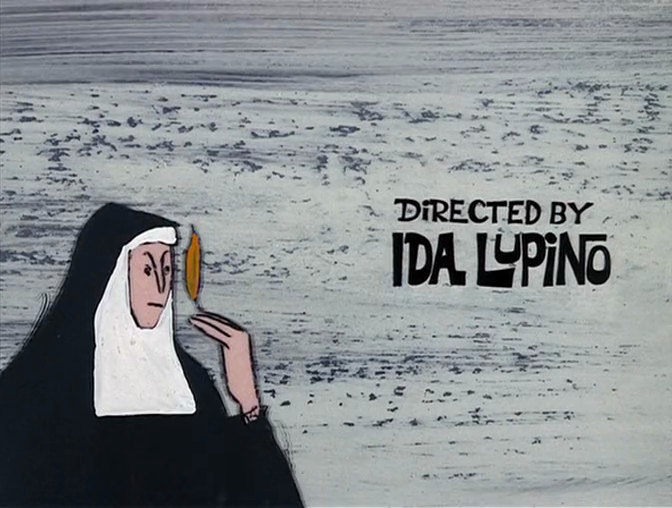
Se eu fosse julgar o filme “Anjos Rebeldes”, dirigido por Ida Lupino, apenas pela sequência de abertura animada, a nota dada seria de cinco estrelas. Créditos animados estavam na moda nos anos 60 – quem pode se esquecer de certa pantera cor de rosa que apareceu nos créditos de certo filme? – e a animação no começo de “Anjos Rebeldes” é uma lição perfeita sobre a arte de contar histórias.

If I was to judge the Ida Lupino-directed film “The Trouble with Angels” for its animated credits sequence, I'd give it a five star rating. Animated credits were in vogue in the 1960s – who could forget of a certain pink panther that appeared in the credits of a certain film? - and the animation work in the beginning of “The Trouble with Angels” is a perfect storytelling lesson.
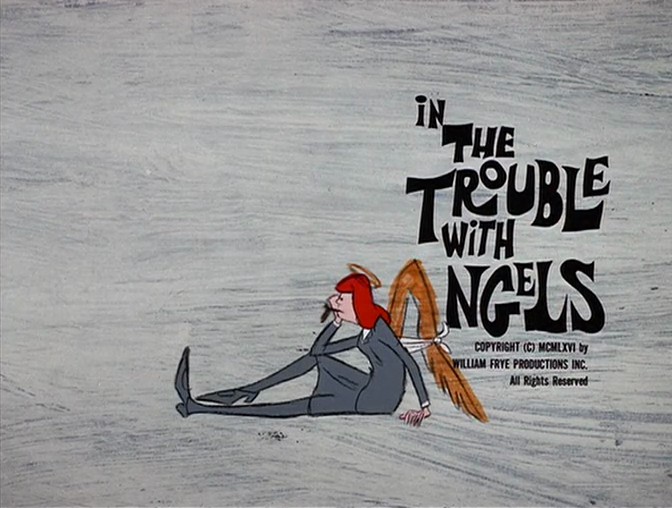

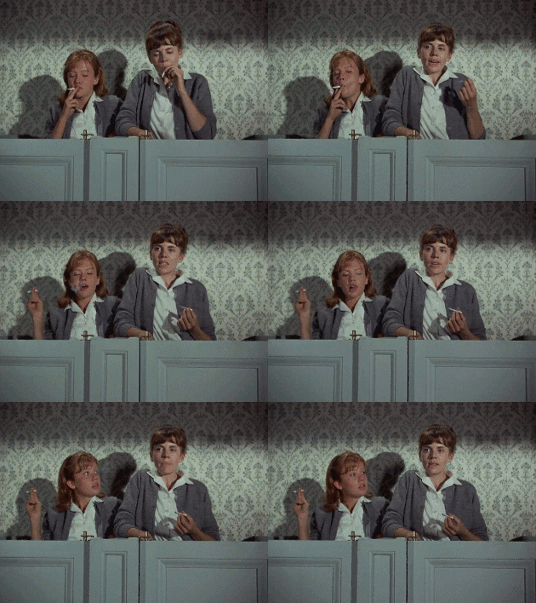
A partir dos créditos já sabemos que se trata de um filme sobre uma escola comandada por uma severa freira interpretada por Rosalind Russell. Também ficamos sabendo que a garota mais travessa da escola é interpretada pela superestrela adolescente Hayley Mills. De fato, Mary Clancy (Mills) chega à Academia São Francisco e logo diz que seu nome verdadeiro é Kim Novak. Depois disso, ela fuma no banheiro, leva as outras garotas para um passeio pelos aposentos da Madre Superiora e foge das aulas de natação na educação física.

From the credits we know the film is about a school run a by a strict nun played by Rosalind Russell. We also know that the naughtiest girl in that school is played by teen superstar Hayley Mills. Indeed, Mary Clancy (Mills) starts her attendance of the St. Francis Academy by saying her real name is Kim Novak. Next up she smokes in the bathroom, takes the other girls on tour to see the Mother Superior's room and escapes the swimming lessons in physical education class.

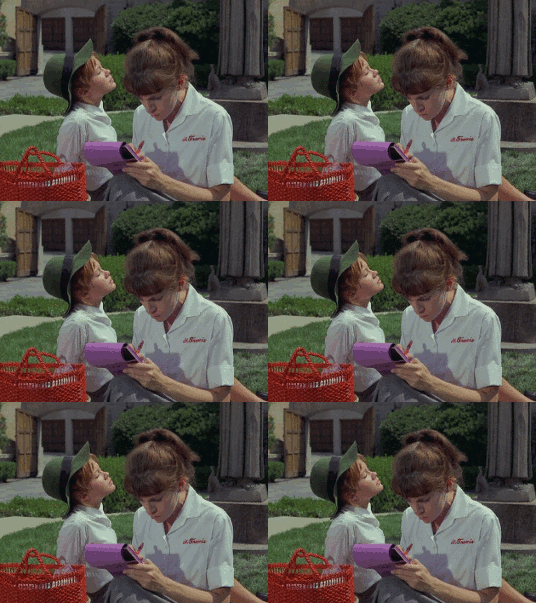
Quem sempre está junto com Mary é Rachel Devery (June Harding), uma garota atrapalhada cuja meta é conseguir que o diretor de sua antiga escola a resgate daquele local horrível. Rachel tem uma quedinha pelo diretor, Sr. Petrie (Jim Hutton), que ela descreve como uma versão mais nova de Jack Lemmon. Rachel segue as ideias incrivelmente brilhantes de Mary – que em geral não são nem um pouco brilhantes – e as duas são constantemente castigadas por causa de suas travessuras.

Alongside Mary there is always Rachel Devery (June Harding), a clumsy girl whose goal is to have the director of her former school rescue her from that horrible place. Rachel has a crush on the director, Mr. Petrie (Jim Hutton), who she describes as a younger Jack Lemmon. Rachel follows Mary's scathingly brilliant ideas – that are often not brilliant at all – and the two are constantly grounded because of their missbehaving.

Acompanhamos Mary, Rachel e as outras garotas – entre elas há Charlotte, que está sempre prestes a desmaiar – durante três anos na Academia São Francisco. Durante este tempo, elas têm divertidas aulas de matemática com uma criativa freira, têm lições de dança e postura com a peculiar Sra. Phipps (Gypsy Rose Lee) e se juntam à banda numa competição para ganhar um prêmio em dinheiro com o objetivo de comprar um novo aquecedor para a escola.

We follow Mary, Rachel and the other girls – among them there is Charlotte, who is always about to faint – during their three years at St. Francis. During this time, they have fun math lessons with a creative nun, have dance and posture lessons with the unique Mrs Phipps (Gypsy Rose Lee) and join the band in a competition to win money to give the school a new boiler.

Hayley Mills, filha do ator britânico John Mills e da escritora Mary Hayley Bell, foi provavelmente a maior estrela juvenil dos anos 60. Na Disney, ela fez clássicos infantis como “Poliana” (1960) e “O Grande Amor de Nossas Vidas” (1961). Fora da Disney, ela trabalhou em filmes mais sérios como “Corações Feridos” (1964). “Anjos Rebeldes” se parece mais com seus primeiros trabalhos, mais leves, só que com um toque de rebeldia. E, bem, eu sempre achei que Hayley e Jane Fonda poderiam ter interpretado irmãs em um filme nos anos 60.
 
Hayley Mills, the daughter of British thespian John Mills and novelist Mary Hayley Bell, was arguably the biggest young star of the 1960s. Working for Disney, she made childhood classics like “Pollyanna” (1960) and “The Parent Trap” (1961). Outside Disney, she worked in more serious movies, like The Chalk Garden” (1964). “The Trouble with Angels” is more like her earlier light roles, but with a little rebel side. And, well, I always thought that Hayley and Jane Fonda could have played sisters in a 1960’s film.
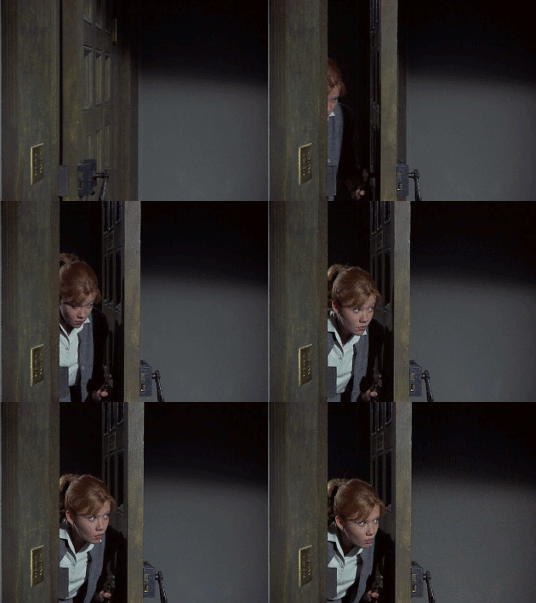

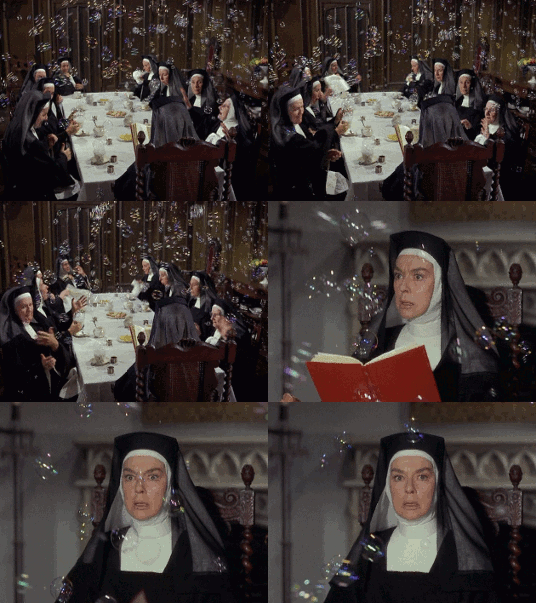
À primeira vista, a freira interpretada por Rosalind Russell nos parece uma personagem antipática, pois ela está sempre dando bronca nas protagonistas. Entretanto, ela tem compaixão, se importa muito com cada uma das meninas, não importa quão rebelde, e entende que domar um espírito rebelde não é o mesmo que destruí-lo. Ela também se vê em Mary, e nem ela nem as meninas tratam Mary diferente por ser órfã, algo raro de se ver em um filme.

At first, Rosalind Russell's Reverend Mother is an unsympathetic character, as she is always grounding our heroines. However, she is compassionate, really cares about each one of the girls, no matter how rebel they are, and understands that to tame a rebel spirit is not the same to break it. She also sees herself in Mary, and neither she nor any of the girls treat the fact that Mary is an orphan as a big deal, something quite surprising in a film.
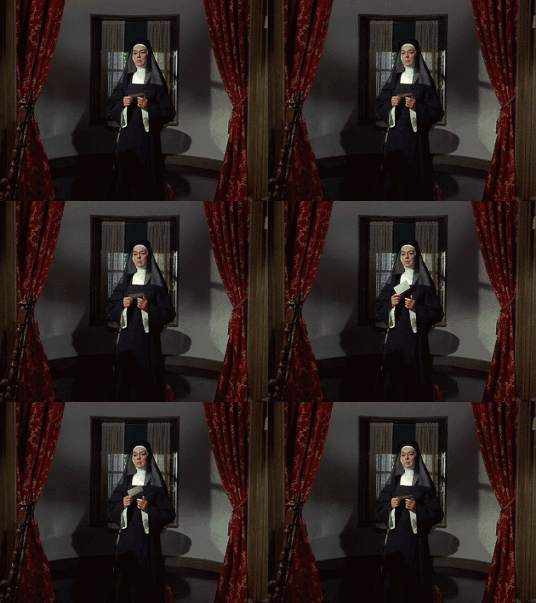

Mais de 25 anos antes de “Anjos Rebeldes”, Rosalind Russell fez “As Mulheres” (1939), um filme com um elenco 100% feminino e que era totalmente centrado nos homens. As mulheres só pensavam e falavam em homens, e não havia amizade entre a maioria das personagens. Felizmente, as coisas mudaram um pouco com o tempo, e foi preciso uma diretora como Ida Lupino para fazer um filme como “Anjos Rebeldes”, mostrando uma amizade verdadeira – não uma amizade sem problemas, mas cheia de afeição.

More than 25 years before “The Trouble with Angels”, Rosalind Russell appeared in “The Women” (1939), a film with an all-female cast that couldn't be more male-centric. All women thought and talked about was men, and there was no friendship between most of the female characters. Thankfully, things changed a bit with time, and it took a female director like Ida Lupino to make a film like “The Trouble with Angels”, showcasing a true female friendship – not one without problems, but one full of love.


Eu amo Ida Lupino e a maneira como ela injeta consciência social em todos os seus filmes – mesmo em uma comédia como “Anjos Rebeldes”. Aqui, em uma cena que se passa em uma festa de Natal de caridade, Mary ouve senhorinhas falando e reclamando de suas vidas. Elas tiveram muitas dificuldades: casamento, perda de patrimônio, viuvez, o abandono dos filhos. Estes são problemas que em geral afetam, em porcentagem e em impacto psicológico, mais mulheres do que homens, e mesmo assim muitas mulheres – como as da Academia São Francisco – estão sendo preparadas para este futuro horrível de dependência financeira e para cuidarem de uma família que pode não estar lá quando ela precisar deles.

I love Ida Lupino and the social conscience she injects in all her movies – even in a light comedy like “The Trouble with Angels”. Here, in a scene in a charity Christmas party, Mary hears old ladies talking and complaining about their lives. They had many struggles: marriage, loss of money, becoming widowed, being forgotten by their kids. These are troubles that often affect, in percentage and in psychological toll, more women than men, and yet many women – like the women from the St. Francis Academy – are being prepared for this horrible future of financil dependence and taking care of a family that may not be there when you need them.


Embora eu tenha gostado de “Anjos Rebeldes”, havia muito mais para ver, considerando as histórias e personagens que apareceram aqui e ali. Eu gostaria de ver uma comparação e conflito entre os métodos de ensino das freiras e do Sr. Petrie – talvez até com um concurso de soletração entre as escolas, porque eu amo concursos de soletração. Eu adoraria ver a Rachel toda atrapalhada e apaixonada interagindo com o Sr. Petrie. Eu adoraria ver as garotas na excursão ao museu, e reagindo com maior profundidade à história de vida da Irmã Ursula.

Although I liked “The Trouble with Angels”, there was so much more I'd like to see, considering the storylines and characters that appeared here and there. I'd like to see a comparison and a conflict between the Reverend Mother's methods of teaching and Mr Petrie's – maybe even with a spelling bee competition between the schools, as I'm a sucker for spelling bees. I'd love to see Rachel being clumsy and infatuated interacting with Mr Petrie. I'd love to see the girls out in the field trip to the museum, and reacting more deeply to Sister Ursula's life story.
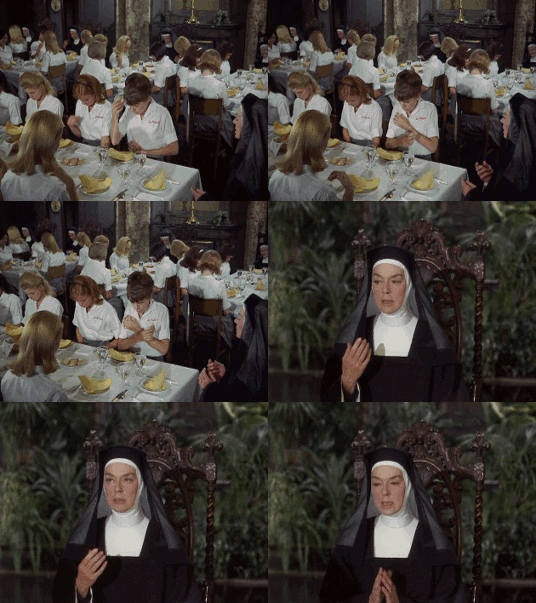

Eu estudei em uma escola de freiras dos cinco aos dez anos. Era tudo bem diferente de “Anjos Rebeldes” - algo óbvio, pois minha experiência como aluna aconteceu mais de 30 anos após a estreia do filme. Os alunos não eram internos como Mary e Rachel, mas havia algumas freiras severas como Rosalind Russell. E, infelizmente, eu não vivi nenhuma amizade intensa como a de Mary e Rachel.

I studied at a nun's school from ages 5 to 10. It was very different from the one in “The Trouble with Angels” - of course, because I was studying there more than 30 years after the film was released. The students were not interns like Mary and Rachel, but there were some more strict nuns like Rosalind Russell there. And, unfortunately, I haven't found such intense friendship there like Mary and Rachel did.
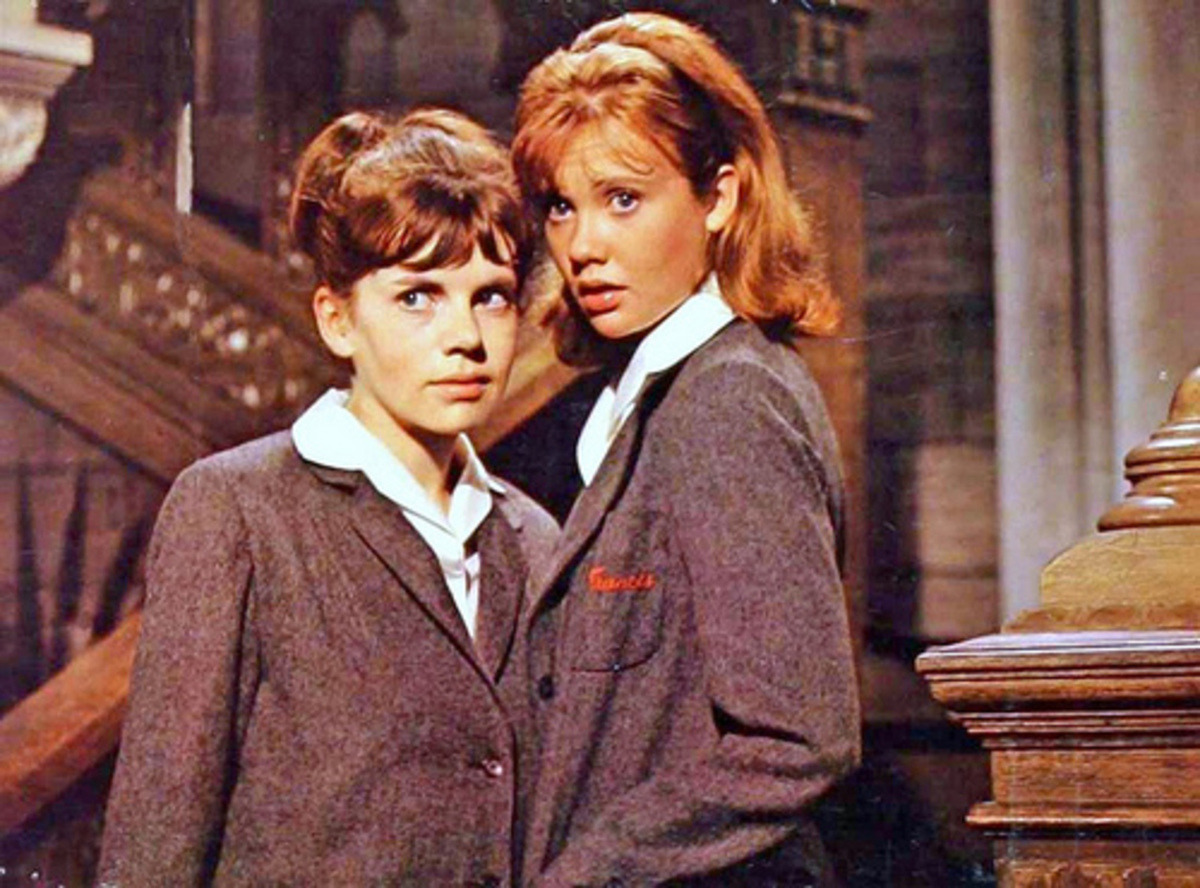

This is my contribution to the Rosalind Russell blogathon, hosted by Crystal at In the God Old Days of Classic Hollywood.


Sunday, September 16, 2018

O Caçador de Aventuras (1966) / Harper (1966)


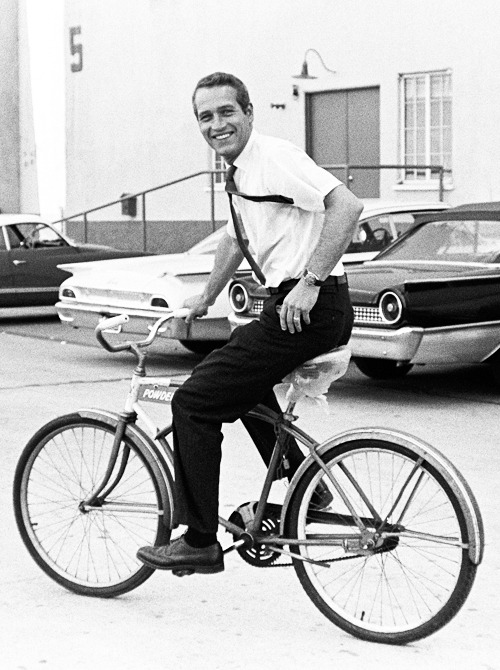
Um fato pouco conhecido na comunidade de cinema clássico é que eu queria ser detetive quando era criança. OK, esse pode não ser um fato relevante para a comunidade de cinema clássico, mas é importante para este artigo. Quando criança, minha única referência de detetive era Sherlock Holmes. Conforme eu cresci, eu conheci Philo Vance e Nick Charles, ambos interpretados por William Powell. Os anos 30 e 40 foram cheios de detetives bacanas e, em meados dos anos 60, Hollywood decidiu que era hora de trazer de volta estes detetives bacanas. E Paul Newman foi o escolhido para seguir as pistas, porque Newman é o epítome de tudo que é mais bacana.

A little known fact in the classic film community is that I wanted to be a detective when I was a child. OK, this may be irrelevant information for the classic film community as a whole, but it is important for this post. As a kid, my only detective reference was Sherlock Holmes. As I grew up, I got to know other cool sleuths, like Philo Vance and Nick Charles, both played by William Powell. The 1930s and 1940s were full of cool detectives, and when the mid 1960s came, Hollywood decided it was time to bring back cool detectives. And Paul Newman was chosen to follow clues, because Newman is the epithome of cool.


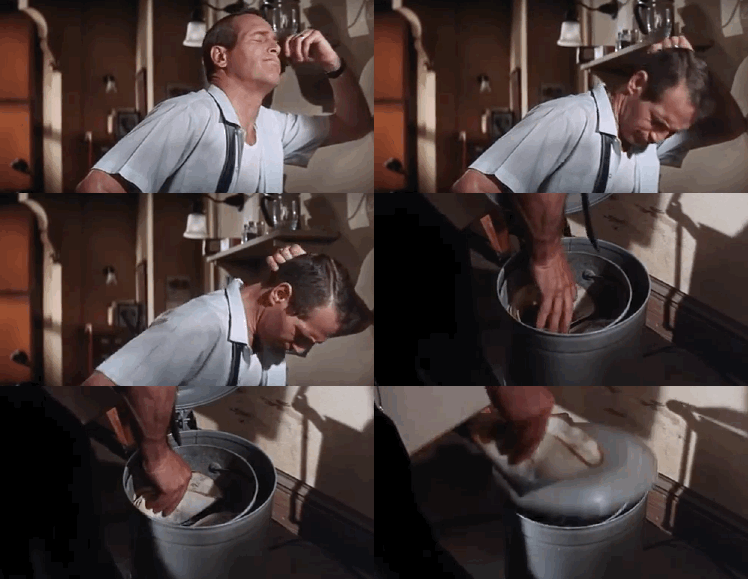
Lew Harper (Paul Newman) não é um detetive comum. Para começar, ele vive em seu escritório em um prédio comercial, dormindo e preparando refeições em um combo improvisado de cama / cozinha / mesa de trabalho. Ele não é particularmente atlético, sedutor ou sortudo. Ele não tem aparelhos mirabolantes e algumas vezes ele perde oportunidades e escapa por pouco da morte com ajudas improváveis – às vezes, até o público é mais esperto que ele. E ele é um palhaço. É como se Paul Newman, um conhecido piadista, tivesse se tornado detetive!

Lew Harper (Paul Newman) is not a common detective – if there ever was one in fiction. To begin with, he lives in his office in a commercial building, sleeping and preparing meals in an improvised bed / kitchen / desk combo. He is not particularly athletic, seductive or lucky. He does not have gadgets and sometimes he misses opportunities and narrowly escapes death with improbable help – sometimes, even the audience outsmarts him. And he's goofy. It's like Paul Newman, a huge prankster, became a detective!


Harper é chamado para solucionar o desaparecimento de Ralph Sampson, um homem rico e mentalmente instável, cuja paranoia faz com que seja impossível a família envolver a polícia no caso. E “família” é um termo não muito correto para estes tipos: temos Elaine Sampson (Lauren Bacall), a esposa que de fato chamou Harper, Miranda (Pamela Tiffin), a filha do Sr Sampson de um casamento anterior, e Alan (Robert Wagner), o jovem piloto que mora na casa dos fundos.

Harper is called to solve the disappearance of Ralph Sampson, a rich and mentally unstable man whose paranoia makes it impossible for his family to call the police when he goes missing. And “family” is a nice way of putting it: we have Elaine Sampson (Lauren Bacall), the wife who effectively called Harper, Miranda (Pamela Tiffin), Mr Sampson's daughter from a previous marriage, and Alan (Robert Wagner), the young pilot who lives in the back house.


Eles começam a investigar em Los Angeles, onde Ralph foi visto pela última vez. Lá, Harper conhece uma ex-atriz que Ralph costumava encontrar, Fay Estabrook (Shelley  Winters), uma pianista de bar que tem problemas com drogas, Betty Fraley (Julie Harris) e outras figuras estranhas. Completando o caso, há astrologia, um guru com um templo no topo de uma montanha, e contratação ilegal de mão de obra estrangeira. Ah, e também há o amigo advogado de Harper, Albert Graves (Arthur Hill), que é apaixonado por Miranda mas não sabe como conquistá-la. Sim, é uma grande bagunça.

They start investigating in Los Angeles, where Ralph was last seen. There, Harper meets a former actress who Ralph used to see, Fay Estabrook (Shelley Winters), a piano player from a bar who has some problems with narcotics, Betty Fraley (Julie Harris) and other odd figures. To complete the case, there is astrology, a guru with a temple on the top of a mountain and illegal foreign workers. Oh, and there is also Harper's lawyer friend, Albert Graves (Arthur Hill), who is in love with Miranda but doesn't know how to conquer the girl. Yes, it's a complete mess.


Mesmo com a trama complicada, o filme é bem divertido. Os anos 60 foram provavelmente a década com os filmes mais divertidos – e não estou falando das comédias mais engraçadas. Mesmo os filmes ruins dos anos 60 nos divertem. Toda a atmosfera da década é divertida: a arquitetura e decoração, as roupas, as músicas em especial, e as atuações. “Harper” tem de tudo, com destaque para as muitas frases irônicas proferidas pelo protagonista.

Even if the plot is so complicated, the film is too much fun. The 1960s were probably the decade in which the funniest movies were made – and I'm not talking about the funniest comedies. Even the bad 1960s movies are fun to watch. The whole 1960s atmosphere is fun: the architecture and decoration, the clothes, the songs in particular, and the performances. “Harper” has it all, and also many funny lines spoken by the lead.


A enteada Miranda diz que Elaine “não é mais uma grande beldade” - e eu discordo. Aos 42 anos, Lauren Bacall podia ser considerada “madura” para os padrões de Hollywod, mas ela nunca deixou de ser bela, porque ela tinha mais do que beleza: ela tinha classe. Mesmo quando jovem – ela tinha só 19 quando filmou “Uma Aventura na Martinica” (1944) – ela já possuía esta classe que a fazia brilhar.

The stepdaughter Miranda says about Elaine: “she's not a raving beauty anymore” - I choose to disagree. At 42, Lauren Bacall could be considered “mature” for Hollywood standards, but beauty is something she never lost, because she had more than beauty: she had class. Even as a young woman – only 19 when filming “To Have and Have Not” (1944) – she already possessed this class that made her glow.


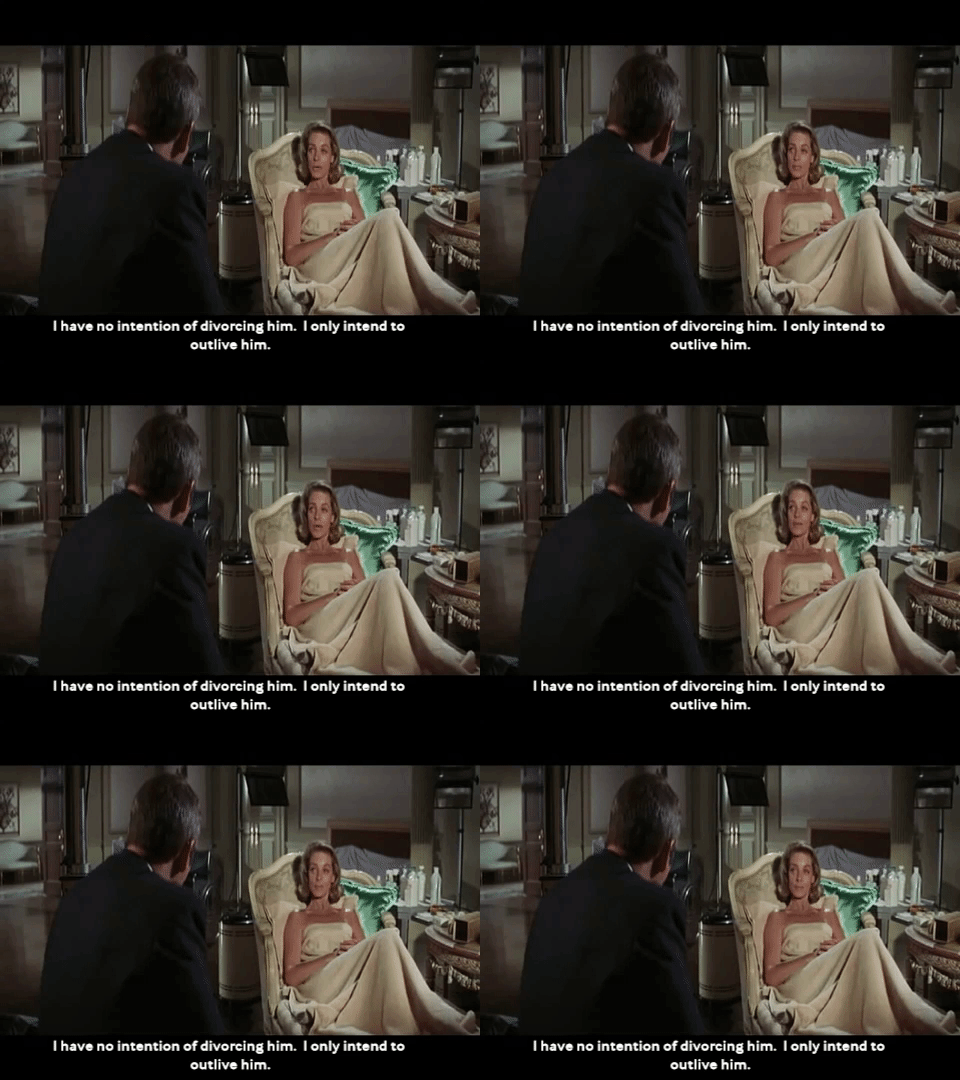
Em “Harper”, Lauren Bacall é quase desperdiçada, aparecendo apenas em algumas cenas e só sentada, porque sua personagem havia sofrido um acidente andando a cavalo. Isso pode não ser muito legal – especialmente se considerando que Paul Newman, o protagonista, era apenas um ano mais novo que Bacall – mas há uma razão. “Harper” queria fazer uma homenagem aos filmes de detetive de Humphrey Bogart, em especial “À Beira do Abismo” (1946). Nele, o homem que contrata Phillip Marlowe, o Sr Sternwood, está numa cadeira de rodas, assim como a personagem de Bacall em “Harper”.

In “Harper”, Lauren Bacall is nearly wasted, appearing in a few scenes and only seated, because her character had suffered a horseback riding accident. This may not be very nice – especially considering that Paul Newman, the lead, was only a year younger than Bacall – but there is a reason. “Harper” wanted to pay tribute to Humphrey Bogart’s detective films, in special “The Big Sleep” (1946). In it, the man who hires Phillip Marlowe, Mr Sternwood, is in a wheelchair, just like Bacall’s character in “Harper”.


E já que estamos falando sobre beldades, precisamos falar sobre Shelley Winters. Sua personagem é uma ex-atriz que abandonou a carreira após engordar, e por causa disso ela é vista como uma criatura ridícula que só serve para fazer rir. Na vida real, a carreira de Shelley pode ser dividida em duas fases, e em ambas ela fez mais papéis coadjuvantes que principais. Ela teve dificuldades na primeira fase por ser considerada “vulgar demais” para papéis importantes, e por isso só conseguiu papéis menores, porém vitais para os filmes em que apareceu. A segunda fase começa com “O diário de Anne Frank” (1959), pelo qual ela ganhou o Oscar de Melhor Atriz Coadjuvante, e nessa fase, com o ganho de peso, ela se especializou em papéis de matrona, bêbada ou cômica.

And since we're talking about beauty, we need to talk about Shelley Winters. Her character is a former actress who lost her career as she got fat, and because of it she is played as a ridiculous thing to be laughed at. In real life, Winters's career can be divided in two phases, both more as a supporting actress than a lead. She struggled in the first phase, because she was considered “too vulgar” for big roles and got only smaller, yet important, ones. The second phase begins with “The Diary of Anne Frank” (1959), for which she won the Best Supporting Actress Oscar, and in this phase, as she gained weight, she became a character actress specialized in drunk, reckless, fun or matronly roles.


E temos outra mulher em “Harper” que ainda não foi mencionada: Janet Leigh interpreta Susan, a esposa que Lew Harper, que quer o divórcio, mas Harper não assina os papéis. Susan não tem muita serventia no filme – talvez ela esteja lá para conferir um passado mais humano para Harper – e o problema do divórcio nunca é resolvido. Eu tenho a impressão de que a ideia original era iniciar uma série de filmes de Harper – no modelo James Bond – mas apenas uma sequência foi feita, em 1975: “A Piscina Mortal”.

And we have another woman in “Harper” that wasn’t mentioned yet: Janet Leigh plays Susan, Lew Harper’s wife who is seeking a divorce, but Harper won’t sign the papers. Susan doesn’t really have a reason to exist in the film – maybe she is there to give a more human past to Harper – and their divorce situation is never really solved. I have the impression the original idea was to start a Harper series of films – like the Bond series – but only a sequel was made, in 1975: “The Drowning Pool”.


“Harper” é divertido principalmente por causa do roteirista William Goldman, que faz sua estreia sozinho aqui. Goldman escreveria o roteiro de muitos outros filmes, como “Butch Cassidy” (1969) e “Todos os Homens do Presidente” (1976). E “Harper” funciona também por causa de Paul Newman, um ator muito talentoso e BACANA. Eu não tenho uma vontade maior de ser detetive agora porque fui inspirada por Harper. Mas eu espero que todos que virem “Harper” se sintam ao menos inspirados a tentar ser tão bacana quanto Paul Newman – se isso foi possível.

“Harper” is funny mainly because of screenwriter William Goldman, making his debut solo here. Goldman would go on to write screenplays for many films, like “Butch Cassidy and the Sundance Kid” (1969) and “All the President's Men” (1976). And “Harper” works also because of Paul Newman, a very talented and COOL actor. I'm not now more inclined to be a detective than I was before because I was inspired by “Harper”. But I hope everybody that sees “Harper” gets inspired, at least, to try to be as cool as Paul Newman – if this is even possible.

This is my contribution to the Second Lauren Bacall blogathon, hosted by Crystal at In the Good Old Days of Classic Hollywood.


Wednesday, May 23, 2018

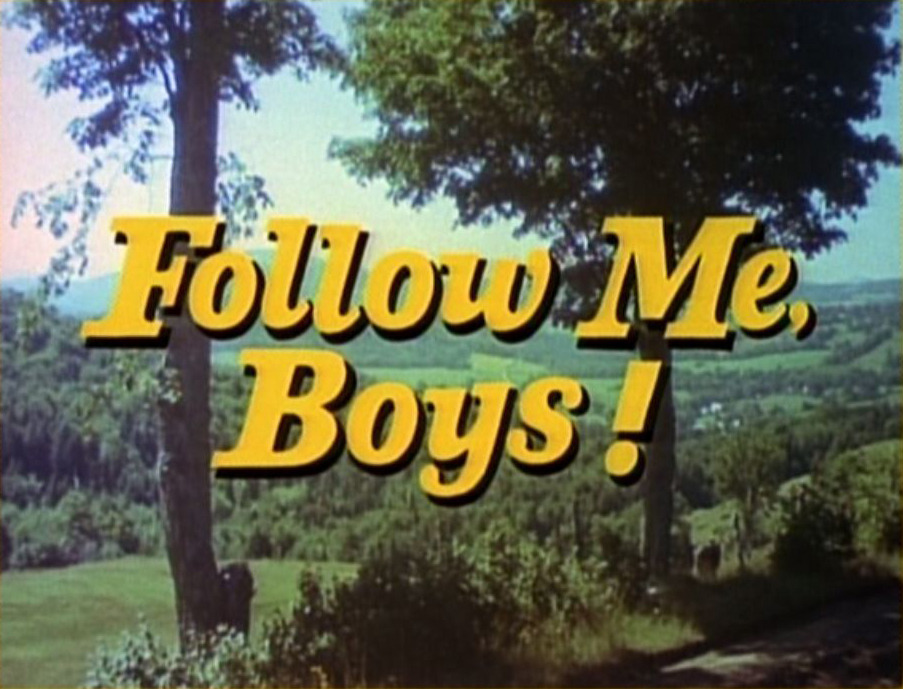
Nunca é Tarde para Amar (1966) / Follow Me, Boys (1966)

Está provado que os anos 60 foram a Era de Ouro dos filmes live-action na Disney. “Mary Poppins” (1964) pode ter sido o mais bem-sucedido deles, inclusive no Oscar, e é também aquele que as pessoas se lembram com mais carinho. Mas houve muito, muito mais filmes live-action, e eles eram veículos ideais para dois tipos de atores: os experientes e simpáticos, e os novatos talentosos.

It is proved that the 1960s were the Golden Age of Disney live-action films. “Mary Poppins” (1964) may have been the most successful from the batch, even Oscar-wise, and also the one people remember with more fondness. But there were many, many more live-action movies, and they were ideal vehicles for two kinds of performers: experienced and sympathetic ones, and talented newcomers.
Em “Nunca é Tarde para Amar” (1966), a performance mais simpática é do protagonista Fred MacMurray, mas temos também Vera Miles, Lillian Gish e Charlie Ruggle. E o novato talentoso era um menino de 15 anos que havia acabado de ser contratado pela Disney. Seu nome era Kurt Russell.

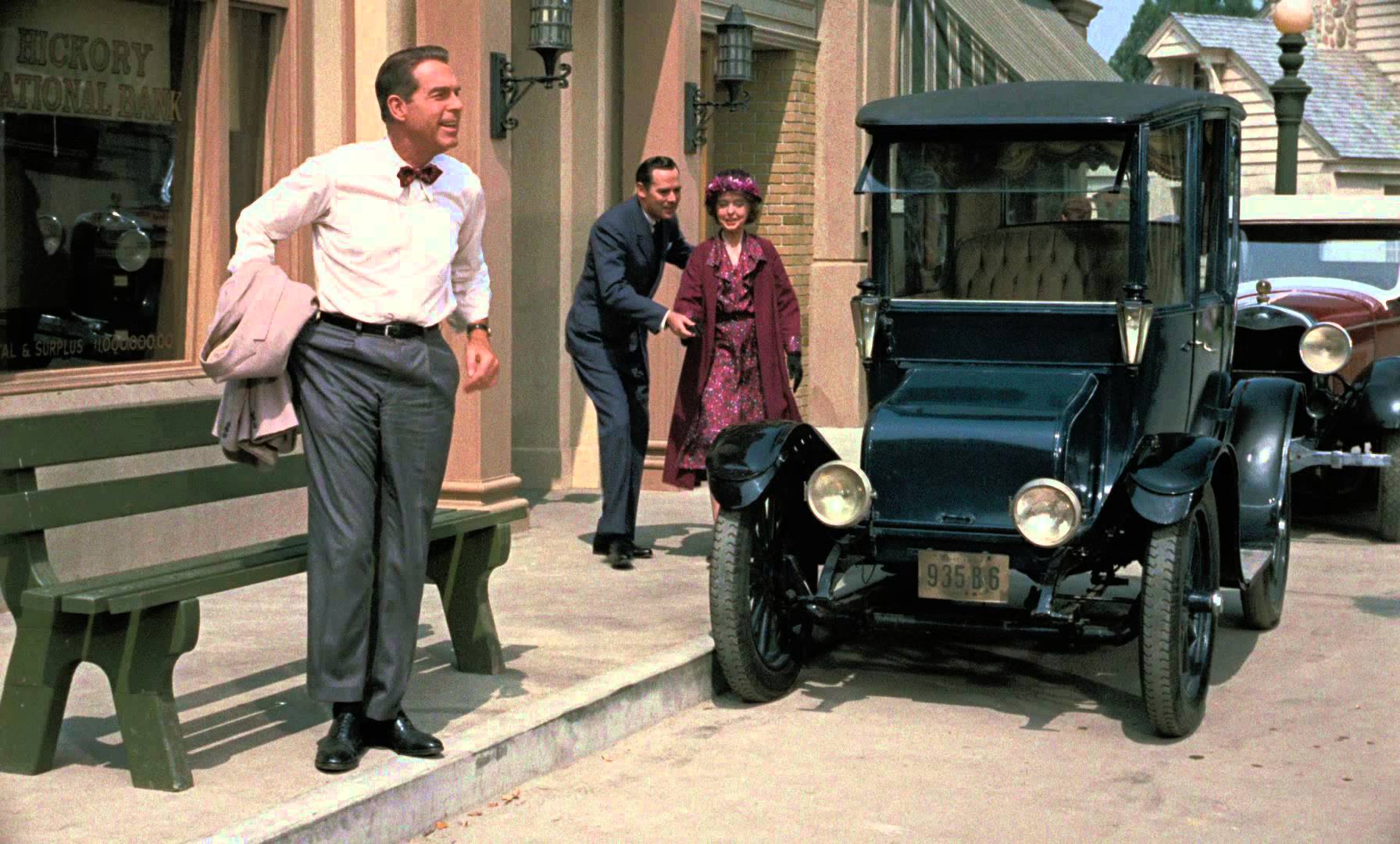
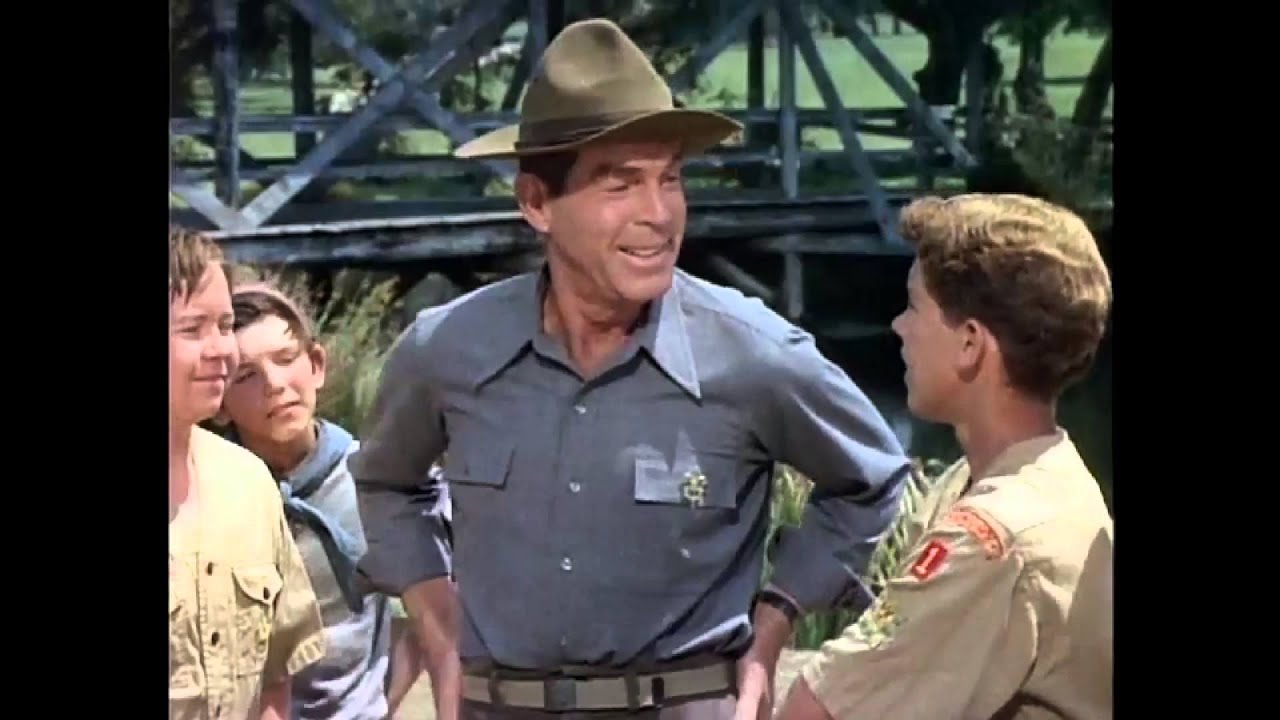
In “Follow Me, Boys” (1966), the most prominent sympathetic performance is lead Fred MacMurray, but we also have Vera Miles, Lillian Gish and Charlie Ruggles in the cast. And the talented newcomer was a 15-year-old boy who had just been hired by Disney. His name was Kurt Russell.
Lemuel ‘Lem’ Siddons (MacMurray) quer ser advogado. Mas há uma grande distância entre o que queremos ser e o que devemos ser. Enquanto ele não vai para a faculdade, Lem tem outros empregos. Quando o conhecemos, ele é saxofonista de uma banda, mas ele logo muda de emprego quando chega à cidadezinha de Hickory. Lem decide ficar por lá e trabalhar como vendedor. E então ele consegue um segundo emprego, como chefe de escoteiros voluntário.

Lemuel ‘Lem’ Siddons (MacMurray) wants to be a lawyer. But there is a great distance between what we want to be and what we are supposed to be. While he can’t go to college, Lem has some odd jobs. When we meet him, he is playing saxophone in a band, but he quickly change jobs when he arrives in Hickory, a very small town. Lem decides to settle down and work as a sales clerk. And then he gets a second job, as a volunteer scoutmaster.
O dono da loja é John Everett Hughes (Charlie Ruggles). A ideia de criar uma tropa de escoteiros é dada em uma reunião local como forma de tirar os meninos das ruas. Muitos garotos gostam da ideia e se juntam à tropa – exceto o garoto mais problemático da cidade, Whitey (Kurt Russell). Ah, e há também a adorável Vida Downey (Vera Miles) e seu namorado ambicioso, Ralph (Elliott Reid), que quer confiscar a propriedade da idosa Hetty Seibert (Lillian Gish). Hetty empresta a propriedade para que os escoteiros tenham onde se reunir.

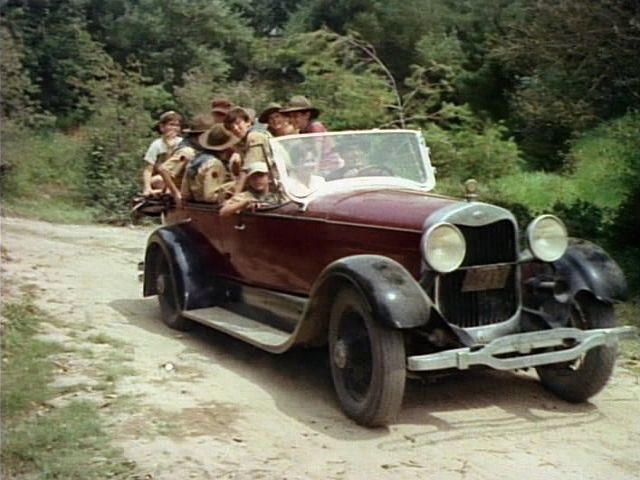
The store’s owner is John Everett Hughes (Charlie Ruggles). The idea of creating a boy scouts troop was given in a local reunion as a way to taking the boys off the streets. Many boys like the idea and join the Boy Scouts troop – except the local troublemaker, Whitey (Kurt Russell). Oh, there is also lovely Vida Downey (Vera Miles) and her ambitious beau, Ralph (Elliott Reid), who wants to take a land property from elder Hetty Seibert (Lillian Gish). Hetty lets the Boy Scouts reunite in her property.
O filme começa em 1930 – há inclusive um cinema anunciando um filme de Carole Lombard, com quem Fred MacMurray trabalhou no começo da carreira. Mais tarde, o tempo salta para 1944 e há uma sub-trama de guerra – alternando entre comédia e um pouquinho de drama. Em uma manobra clássica da Disney, descobrimos que Whitey, o problemático, é na verdade um bom menino, e ele recebe muita ajuda de Lem.

The film starts in 1930 – there is even a theater marquee announcing a movie with Carole Lombard, with whom Fred MacMurray had worked early in his career. Later on, the film jumps to 1944 and there is a war subplot – that alternates between fun and a little drama. In a classic Disney maneuver, we find out that Whitey, the troublemaker, is actually a sweet boy, and he receives a lot of love and help from Lem.
Como dito anteriormente, Kurt Russell tinha 15 anos quando “Nunca é Tarde para Amar” foi filmado. Ele fez mais 9 filmes para a Disney nos 10 anos seguintes. Russell, MacMurray e a jovem estrela Hayley Mills eram provavelmente os mais bem-sucedidos atores nos filmes live-action da Disney nos anos 60. Sem dúvida, Russell se deu melhor que Mills com o passar do tempo – e ele continua trabalhando sem parar!

As said before, Kurt Russell was 15 when “Follow Me, Boys” was shot. He went on to make 9 more movies for Disney in the following 10 years. Russell, MacMurray and young star Hayley Mills were arguably the three biggest and most successful players in live-action Disney films in the 1960s. Without a doubt, Russell fared better than Mills as he grew up – and he continues working steadily!
“Nunca é Tarde para Amar” apresentou uma canção, com o mesmo título do filme, que é uma deliciosa música chiclete – e ela foi escrita pelos irmãos Sherman, responsáveis pelas canções de “Mary Poppins”. O filme foi também o último a estrear antes da morte de Walt Disney – ele faleceu duas semanas após a estreia.

“Follow Me, Boys” presented a song, with the same title as the movie, that is a pleasant earworm – and the song was written by the Sherman brothers, also responsible for the songs in “Mary Poppins”. It was also the last film released before Walt Disney’s death – he passed away two weeks after the premiere.
“Nunca é Tarde para Amar” é um filme para a família, e certamente agrada a todos os membros de uma família. Fred MacMurray tem carisma e também tinha experiência como escoteiro... bem, ao menos quando ele era criança. Com um elenco misturando talentos jovens e experientes, “Nunca é Tarde para Amar” é uma graça – e provavelmente te deixará com vontade de ser escoteiro!

“Follow Me, Boys” is a family film, and is certain to please all members of a family. Fred MacMurray has charisma and also had experience as a Boy Scout… well, as a child, at least. With a cast mixing young and experienced talents, “Follow Me, Boys” is a delight – and it’ll probably leave you wanting to be a Scout!

This is my contribution to the Kurt Russell blogathon, hosted by Gill at Real Weegie Midget Reviews.

Related Posts Plugin for WordPress, Blogger...