} Crítica Retrô: 1932

Tradutor / Translator / Traductor / Übersetzer / Traduttore / Traducteur / 翻訳者 / переводчик

Showing posts with label 1932. Show all posts

Friday, June 27, 2025

Hollywood (1932) / What Price Hollywood? (1932)


Meu filme favorito de todos os tempos é a versão de 1937 de “Nasce uma Estrela”. Com Technicolor brilhante, este drama sobre fama e infortúnio me arrebatou quando o vi pela primeira vez, há mais de 15 anos. Até agora, o filme foi refilmado três vezes - em 1954 com Judy Garland, em 1976 com Barbra Streisand e em 2018 com Lady Gaga. Mas mesmo em 1937 a história não era completamente original: o filme foi meio que inspirado por uma produção anterior, sobre a qual escreverei sobre agora, depois de todos esses anos apaixonada pela história de Vicky Lester e Norman Maine.

My favorite film of all time is the 1937 version of “A Star is Born”. With shining Technicolor, this drama of fame and misfortune swept me out of my feet when I first watched it, over 15 years ago. So far, the film was remade three times - in 1954 with Judy Garland, in 1976 with Barbra Streisand and in 2018 with Lady Gaga. But the story wasn’t completely original in 1937: the movie was kind of inspired by an earlier movie, which I’ll review today, after all those years being in love with the story of Vicky Lester and Norman Maine.

Mary Evans (Constance Bennett) segue as modas ditadas pelas estrelas de cinema e pelas revistas sobre o tema. Ela sonha com uma beijoca de Clark Gable, mas enquanto não tem sua grande chance, trabalha servindo mesas numa lanchonete local. Numa noite ela serve a mesa do famoso diretor Max Carey (Lowell Sherman), que, estando bêbado, a convida para ser seu par numa estreia de filme.  

Mary Evans (Constance Bennett) follows the fashions dictated by movie stars and fan magazines. She dreams of a smooch from Clark Gable, but while she doesn’t get her big break, she waits tables in a local derby. One night she waits the table of famous director Max Carey (Lowell Sherman), who, being drunk, invites her to be his date in a movie premiere.

No dia seguinte, porque Mary o trouxe inconsciente até a casa dele, Carey diz para ela ir até o estúdio. Ela consegue um pequeno papel com uma fala. Ela passa muitas horas ensaiando e o esforço compensa: o produtor Sr Saxe (Gregory Ratoff) lhe oferece um contrato a longo prazo. Com o apelido de “Amiga da América”, eles querem transformar Mary numa estrela. E conseguem.

The following day, since Mary brought him unconscious to his house, Mr Carey tells her to come to the studio. She is given a bit part with one line. She spends many hours rehearsing and the effort pays off: the producer Mr Saxe (Gregory Ratoff) gives her a long-term contract. Marketing her as “America’s Pal”, they want to turn Mary into a star. And so they do.

Um dia num jogo de polo, ela conhece Lonny Borden (Neil Hamilton), que a força a jantar com ele porque ele não aceita não como resposta. O horrível jantar forçado é logo seguido do anúncio do noivado deles. O casamento é um grande evento, mas a lua de mel precisa ser adiada porque Mary precisa regravar algumas cenas de seu próximo filme. Lonny é um milionário, mas pelo estúdio ele é conhecido como Sr Evans. Carey não quer que Mary desperdice seu tempo e talento dando atenção ao marido ao invés de focar na carreira. 

One day in a polo game she meets Lonny Borden (Neil Hamilton), who then forces her to have dinner with him because he can’t take no for an answer. The horrible forced dinner is quickly followed by the news of their engagement. The wedding is a huge event, but the honeymoon has to be postponed because Mary needs to do some retakes for her next film. Lonny is a millionaire but around the studio he is referred to as Mr Evans. Mr Carey doesn’t want Mary wasting her time and talent giving attention to her husband and focusing less on her career.

O contrato de sete anos com o mesmo estúdio era prática comum em Hollywood. À primeira vista soava como segurança, mas podia ser uma prisão. O contrato era como ter um dono: os estúdios eram donos de suas estrelas e as estrelas tinham que aceitar quaisquer papéis e roteiros que os executivos escolhiam para elas. Mas havia maneiras de escapar: atores podiam incentivar a permuta com outros estúdios que ofereciam papéis melhores, como fez Elizabeth Taylor, ou recusar papéis do estúdio, o que fez Bette Davis, sendo então suspensa por causa de seu comportamento.

The contract lasting for seven years with the same studio was common practice in Hollywood. It at first sounded like security, but could be a prison. The contract was basically an ownership: studios owned their stars and the stars had to accept whichever roles and scripts the executives chose for them. But there were ways out: actors could trigger loans to other studios for juicier roles, as Elizabeth Taylor did, or refuse roles from their studios, which Bette Davis did and was suspended for her behavior.

Este filme foi baseado numa história de Adela Rogers St. John. Muitos detalhes do roteiro são comentados por uma coluna de fofocas chamada “You Ask Me!”. Mas Adela não veio dessas colunas: ela foi uma respeitada jornalista em revistas de cinema, que a levaram até Hollywood, onde a primeira adaptação de uma de suas histórias foi feita em 1918. Para “Hollywood”, ela provavelmente se inspirou na vida pessoal de Colleen Moore e na tragédia do diretor Tom Forman. Adela foi indicada ao Oscar na categoria Melhor História. 

This movie was based on a story by Adela Rogers St. John. Many plot points here are commented upon by a gossip column called “You Ask Me!”. Adela didn’t come from these columns, though: she was a respected journalist in fan magazines, which led her to Hollywood, where the first adaptation of one of her stories was made in 1918. For “What Price Hollywood?”, she probably took inspiration from Colleen Moore’s personal life and the tragedy of director Tom Forman. Adela was nominated for an Oscar in the Best Story category.

Tanto “Hollywood” quanto a versão de 1937 de “Nasce uma Estrela” foram produzidos por David Selznick, que queria Clara Bow no papel principal e precisou convencer os executivos da RKO de que um filme sobre filmes seria bem-sucedido. Tanto “Hollywood” quanto a versão de 1954 de “Nasce uma Estrela” foram dirigidos por George Cukor. Cukor se recusou a dirigir a versão de 1937 por causa das semelhanças que continha com o filme de 1932. 

Both “What Price Hollywood?” and the 1937 “A Star is Born” were produced by David Selznick, who wanted to cast Clara Bow as the lead and had to convince RKO executives that a movie about movies would be successful. Both “What Price Hollywood?” and the 1954 “A Star is Born” were directed by George Cukor. Cukor refused to direct the 1937 version because of the similarities between this and the 1932 movie.

Os créditos começam com algo que não estamos acostumados a ver: um galo em cima de um globo e as palavras “An RKO Pathé Picture”. Em 1931 a RKO adquiriu a Pathé Exchange, fundada em 1914. Com a fusão vieram algumas das maiores estrelas da Pathé, como Constance Bennett. O nome “RKO Pathé” foi usado apenas até o fim de 191, quando o estúdio voltou a se chamar somente RKO. 

The credits begin with something we’re not used to seeing: a rooster over a globe and the words “An RKO Pathé Picture”. In 1931 RKO acquired Pathé Exchange, founded in 1914. With the merge came some of the greatest Pathé stars, such as Constance Bennett. The name “RKO Pathé” was used only until late 1932, when the studio became once again only RKO. 

Eu simplesmente amei os vestidos de Mary! Eu com certeza os usaria se eles fossem um pouco mais curtos A supervisão de figurino ficou a cargo de Margaret Pemberton, que tem apenas dois créditos no currículo. Na estreia, o destaque foi uma sequência com uma montagem da ascensão de Mary para os píncaros da fama, usando efeitos especiais que eram então novidade. 

I simply loved Mary’s dresses! I would certainly wear them if they were a little shorter. The wardrobe supervisor is Margaret Pemberton, who has only two film credits. At the premiere, however, the highlight was a sequence featuring a montage of Mary’s ascension to the top of Tinseltown, using special effects that were brand new at the time.

Em “Hollywood”, a figura bêbada problemática é o diretor Max Carey e não o marido da estrela, o que faz do roteiro mais criativo do que o de “Nasce uma Estrela”, mas provavelmente com menos pathos. É bacana, entretanto, ver uma “versão” da história na era pre–Code, mesmo sendo cheia de misoginia e racismo para com a empregada de Mary, Juanita (a incansável Louise Beavers). Considerando os prós e contras, é uma boa sessão.

In “What Price Hollywood?”, the problematic drunk figure is the director Mr Carey and not the starlet’s husband, which makes the plot more creative than the one in “A Star is Born”, although probably with less pathos. It’s nice, however, to see a “version” of the story made in the pre-Code era, even though it’s full of misogyny and racism towards the character of Mary’s maid Juanita (the hardworking Louise Beavers). Considering the pros and cons, it’s an enjoyable movie.

Friday, August 9, 2024

Cinemaníaco (1932) / Movie Crazy (1932)


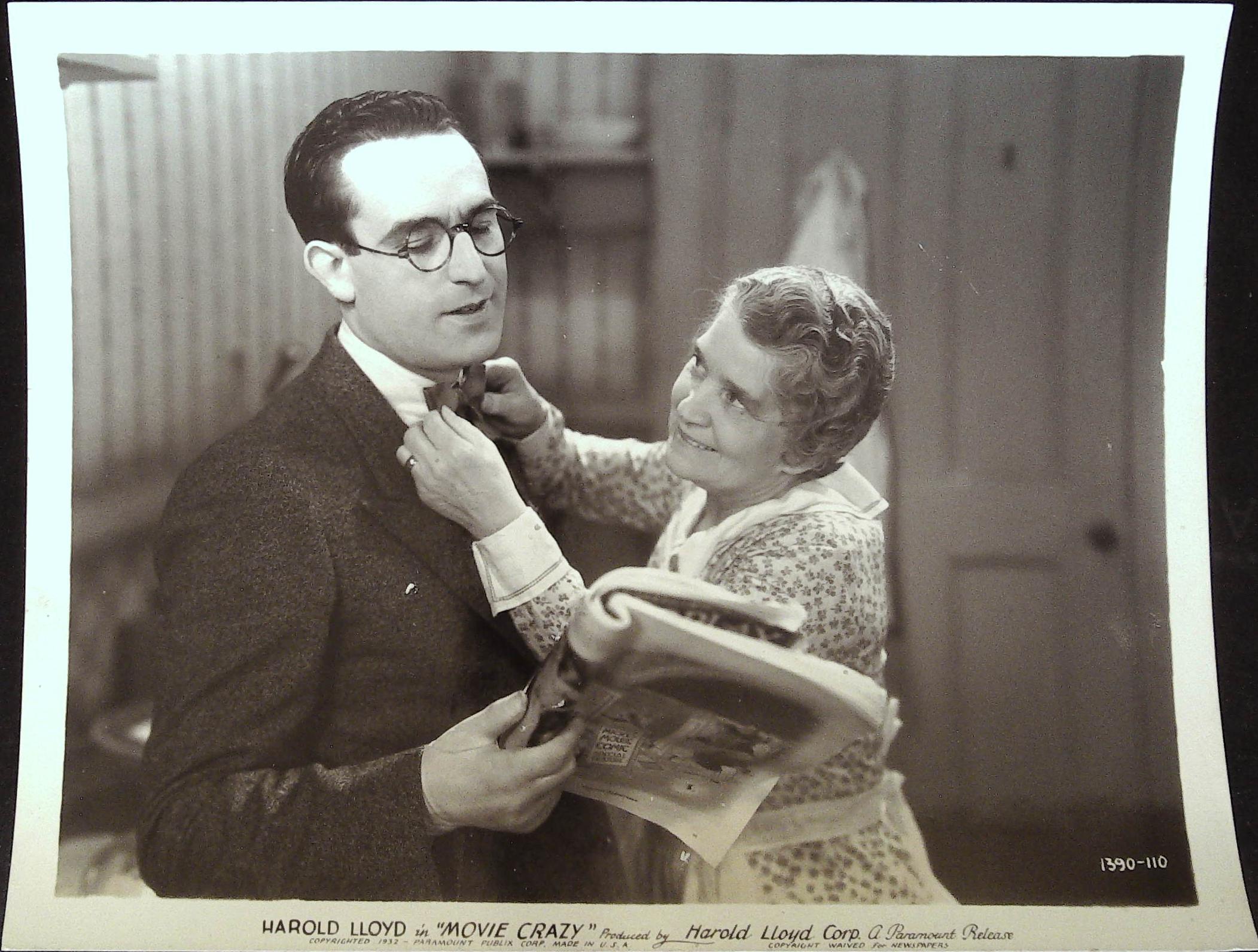
Eu amo filmes. E os filmes que eu mais amo são filmes sobre filmes. Eu considero “Crepúsculo dos Deuses” (1950) o melhor filme já feito, meu filme favorito de todos os tempos é “Nasce uma Estrela” de 1937 e eu também amo profundamente “Fazendo Fita” (1928). Por isso eu não poderia deixar passar a oportunidade de ver e escrever sobre “Cinemaníaco” (1932), que não é apenas um filme sobre filmes que conversa comigo, mas também aquele que é considerado o melhor filme falado de Harold Llloyd.


I love movies. And the movies I love the most are movies about movies. I consider “Sunset Boulevard” (1950) to be the best movie ever made, my favorite movie of all times is “A Star is Born” from 1937 and I also love deeply “Show People” (1928). That’s why I couldn’t miss the opportunity to watch and review “Movie Crazy” (1932), not only a movie about movies that talks to me, but also a film that’s considered Harold Lloyd’s best sound picture.

Começando com uma divertida gag visual que poderia ter sido usada nos filmes mudos, “Cinemaníaco” conta a história de Harold (Lloyd), para quem o cinema é tudo. Sua mãe (Lucy Beaumont) concorda com isso, mas seu pai (DeWitt Jennings) não gosta muito – da mesma maneira que meu avô não gostava muito da minha “mania”. Harold manda uma carta e uma foto para um chefe de estúdio, mas em vez de sua foto ele acaba anexando a imagem de outra pessoa. Ele é chamado para Hollywood e, sem saber do erro, lá vai ele!


Starting with a fun visual gag that could have been used in silent films, “Movie Crazy” tells the story of Harold (Lloyd), for whom cinema is everything. His mother (Lucy Beaumont) is OK with it, but his father (DeWitt Jennings) is unimpressed – the same way my grandfather wasn’t impressed with my “mania”. Harold sends a letter and a picture to a studio head, but instead of his picture he ends up annexing someone else’s photo. He is called to Hollywood and, not knowing the mistake, here he goes!

Assim que desembarca em Hollywood, Harold atrapalha uma cena que está sendo filmada, mas seu destino é a Planet Film Corporation, onde o Sr O’Brien (Spencer Charters) está esperando alguém diferente. O encontro deles é tempestuoso, como esperado, mas Harold tenta escapar – algo que não combina com seu desejo de se tornar astro do cinema.


Harold messes up with a scene being shot the moment he sets foot in Hollywood, but his final destination is Planet Film Corporation, where Mr O’Brien (Spencer Charters) is expecting someone different. Their meeting is tempestuous as expected, but Harold tries to escape – something that doesn’t match his desire to become a movie star.


Durante uma tempestade, Harold conhece Mary Sears (Constance Cummings). O primeiro contato é confuso por causa das trapalhadas de Harold, mas eles logo se tornam amigos. Mas eles já haviam se conhecido anteriormente: Mary é a atriz do filme que estava sendo rodado quando Harold chegou a Hollywood, e ele não a reconheceu porque ela usava uma peruca de cabelos negros no set de filmagem. No dia seguinte no estúdio, Mary está novamente usando a peruca e chama a atenção de Harold ao falar com um forte sotaque espanhol. Mary decide então brincar com a confusão da dupla identidade.


During a storm, Harold meets Mary Sears (Constance Cummings). Their beginning is shaky because of Harold’s clumsiness, but soon they become friends. But they had met before: Mary is the actress from the movie that was being shot when Harold first arrived in Hollywood, and he couldn’t recognize her because she was wearing a black wig on set. The following day at the studio, Mary is also wearing the wig and calls Harold’s attention by speaking with a heavy Spanish accent. Mary then decides to play with the mistaken identities.

Uma das minhas coisas favoritas em filmes sobre filmes é ver a fábrica de sonhos em ação, isto é, os bastidores de um estúdio de cinema. Também é ótimo ver alguém atuando mal de propósito. Você precisa ser um ator muito bom para atuar mal e fazer isso ser engraçado, mas não ridículo. O objetivo é a risada, não a vergonha.


One of my favorite things in movies about movies is seeing the dream factory in action, that is, the backstage of a film studio. It’s also great to see someone playing a bad actor. You’ve got to be a very good actor to act badly and make it funny but not ridiculous. The goal is the laugh, not the cringe.

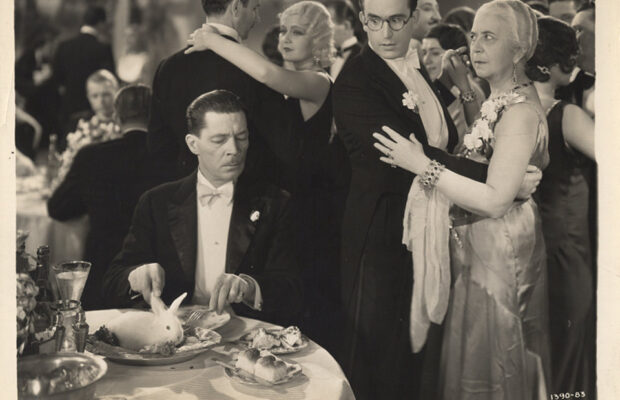
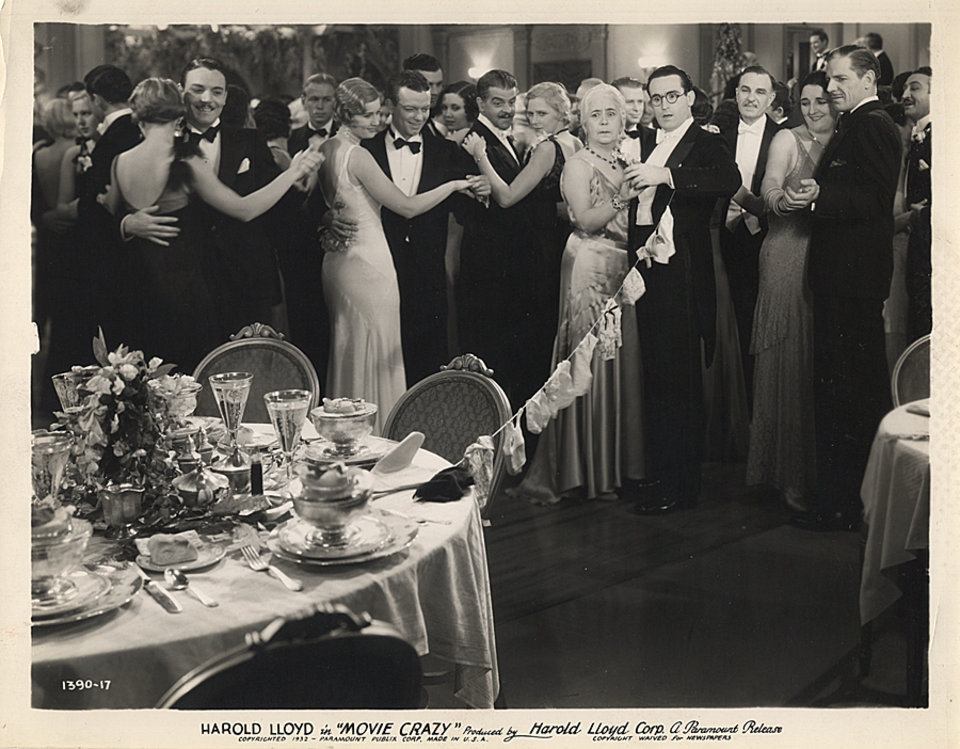
No começo da crítica eu escrevi que a gag que abre o filme poderia ter sido usada no cinema mudo. O mesmo se prova verdade para muitas outras gags, como o sapato que é arrastado pela correnteza até o bueiro ou o cigarro que queima a cabeça de um homem calvo. As muitas trapalhadas causadas quando Harold veste a jaqueta de um mágico também funcionariam num filme mudo. A briga no clímax é tirada diretamente dos filmes mudos – de fato: a sequência é um remake de uma semelhante em “O Caçula” (1927), também de Lloyd.


In the beginning of the review I said that the gag that opens the film could have been used in silent cinema. The same is true to many other gags, like the shoe being taken by the rain to the sewer and the cigarette burning a bald man’s head. The many shenanigans caused by Harold wearing a magician’s jacket instead of his own also would work in a silent film. The climatic fight is another element taken directly from silent movies – and in fact it was: the sequence is a reworking of a similar one from Lloyd’s “The Kid Brother” (1927).

Cinemaníaco” é interessante para falar sobre diversidade no cinema. Há um personagem interpretado por Grady Sutton que é claramente gay – ou melhor, afeminado – porque ele sobe numa mesa e grita como uma mulher quando diversos ratos correm pelo chão durante um jantar chique. Há também dois personagens negros, a empregada de Mary, Besssie, e o valete no banheiro masculino. Ele é interpretado por Sam McDaniel, que não recebe crédito, enquanto a atriz que faz Bessie permanece não identificada no IMDb. Outro toque moderno, com ares feministas: o admirador de Mary, Vance (Kenneth Thomson), um ator bêbado, é um homem violento que diz em alto e bom tom que a mataria para que ela não namorasse outra pessoa.


Movie Crazy” is interesting to talk about diversity in film. There is a character played by Grady Sutton that is clearly coded as gay – or rather, effeminate – because he goes up a table and screams like a woman while several rats are running around on the floor during a dinner party. There are also two black characters, Mary’s maid Bessie and the men’s restroom valet. He is played by an uncredited Sam McDaniel, while the actress who plays Bessie remains unidentified on IMDb. Another modern touch, with feminist undertones: Mary’s admirer Vance (Kenneth Thomson), a drunk actor, is a violent man who says out loud that he would kill her to prevent her from dating someone else.


O diretor é Clyde Bruckman, também responsável pela continuidade. Um bem-sucedido escritor, Bruckman co-escreveu obras-primas como “Bancando o Águia” (1924) e “A General” (1926). Ele dirigiu 21 filmes, incluindo curtas de O Gordo e o Magro e os dois primeiros filmes falados de Harold Lloyd. Apesar de creditado como diretor, durante as filmagens de “Cinemaníaco” Bruckman esteve constantemente incapacitado por causa da bebida e Harold Lloyd teve de dirigir a maioria das cenas. Bruckman usou material de “Cinemaníaco” em seu último filme, “Conquistando a Muque” (1945) e foi processado por Lloyd por não ter lhe dado crédito. Em desgraça, Bruckman cometeu suicídio em 1955.


The director is Clyde Bruckman, who is also responsible for continuity. An accomplished writer, Bruckman co-write masterpieces such as “Sherlock Jr” (1924) and “The General” (1926). He directed 21 movies, including Laurel & Hardy shorts and Harold Lloyd’s first two talkies. Despite being credited as director, during the making of “Movie Crazy” Bruckman was often incapacitated by his alcoholism and Harold Lloyd had to direct most scenes. Bruckman used material from “Movie Crazy” in his last film, “She Gets Her Man” (1945) and was sued by Lloyd because of the lack of credits. Discredited, Bruckman committed suicide in 1955.

O diretor assistente é Gaylord Lloyd, irmão mais velho de Harold. Seu primeiro filme como ator foi em 1916 e em muitas ocasiões ele foi dublê do irmão, pela similaridade física, e comumente não recebia créditos. Gaylord tem cinco créditos como diretor assistente entre 1927 e 1932, todos em filmes de Harold.


The assistant director is Gaylord Lloyd, Harold’s older brother. His first film as an actor was in 1916 and in many occasions he doubled for his brother, with whom he looked a lot alike, and he was often uncredited. Gaylord had five credits as assistant director between 1927 and 1932, all in Harold’s films.

Cinemaníaco” foi feito por Lloyd para a Paramount. Ele havia trabalhado com Hal Roach desde 1914, quando desenvolveu o personagem Lonesome Luke. Harold e Roach seguiram caminhos diferentes em 1924, quando o comediante criou a Harold Lloyd Film Company, distribuindo seus filmes primeiro através da Pathé, depois através da Paramount.


Movie Crazy” was made by Lloyd for Paramount. He had been working with Hal Roach since 1914, when he developed the Lonesome Luke character. Harold and Roach parted in 1924, when the comic created the Harold Lloyd Film Company, distributing his films first through Pathé, then through Paramount.

Eu sou como a personagem de Harold Lloyd: Cinemaníaca. Mas, ao contrário dele e de tantos cinemaníacos, nunca tive vontade de fazer filmes. Assitir e escrever sobre eles é o que me faz feliz – e o que me salvou. Eu escrevi sobre como os filmes me salvaram em meu primeiro livro infantojuvenil, “Menina Bonita com Mania de Fita”, cujas ilustrações da talentosa Clara Assis evocam Marion Davies no já mencionado “Fazendo Fita”. Meu livro está disponível na Amazon.


I’m like Harold Lloyd’s character: Movie Crazy. But, unlike him and so many movie crazy people, I never got the urge to appear in or make movies. Watching them and writing about them is what makes me happy – and what saved me. I wrote about how movies saved me in my first children’s book, “The Movie Crazy Pretty Girl”, whose illustrations by the talented Clara Assis evoke Marion Davies in the aforementioned movie about movies “Show People”. My book is available on Amazon.


Thursday, October 31, 2019

O Vampiro (1932) / Vampyr (1932)


Somos seres altamente sugestionáveis. Os que se assustam facilmente são capazes de pular ao ouvir qualquer barulho ou ver uma sombra. Os entusiastas do horror também acabam se tornando sugestionáveis, pois quanto mais eles aprendem sobre o sobrenatural, mais tênue se torna a linha entre a realidade e o sobrenatural. É exatamente isso que acontece com nosso herói, Allan Gray, no filme “O Vampiro” (1932), de Carl Theodor Dreyer.

We’re highly suggestible beings. The easily scared jump whenever they hear a sound or see a shadow. The horror enthusiasts also end up becoming suggestible, because the more they learn about the supernatural, the more blurred the line between reality and the supernatural becomes. This is exactly what happens with our hero, Allan Gray, in Carl Theodor Dreyer’s “Vampyr” (1932).


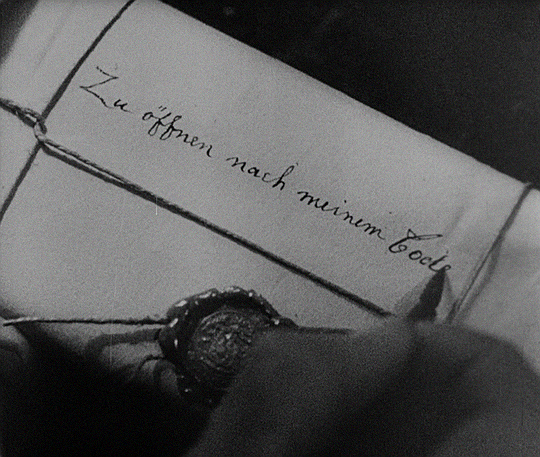
Allan Gray (Julian West) é um estudante do sobrenatural. Uma tarde, ele está passeando distraído quando encontra uma hospedaria em uma pequena vila, onde ele decide passar a noite. Seus terrores noturnos não são mostrados, mas descritos por uma longa cartela de títulos. Pela manhã, um homem entra no quarto de Allan, diz a ele que “ela não pode morrer” e deixa um pacote escrito “que só pode ser aberto após sua morte”.

Allan Gray (Julian West) is a student of the supernatural. One evening, he’s wandering around when he finds a small inn in a village, where he decides to spend the night at. His nightly terrors are not shown, but described in a long title card. In the morning, a man enters Allan’s bedroom, tells him that “she mustn’t die” and leaves a package “to be opened when he is dead”.


Mais tarde, Allan segue algumas sombras sem corpos e testemunha a morte do homem. Logo após o homem morrer, Allan abre o pacote e lá encontra um livro sobre vampiros. Allan então vê a filha do homem, Léone (Sybille Schmitz), ser mordida no pescoço. Um médico muito suspeito chega para cuidar dela. Agora Allan precisará impedir que Léone viva a eternidade como vampiro.

Later, Allan follows a few shadows without bodies and witnesses the man’s death. Right after the man dies, Allan opens the package and there he finds a book about vampires. Allan then witnesses the man’s daughter, Léone (Sybille Schmitz), being bitten on the neck. A very suspect doctor arrives to take care of her. Now Allan will be needed to save Léone from living eternity as a vampire.


O texto constante e enorme na tela quebra o ritmo do filme e, embora seja didático e importante para a história, atrapalha mais do que ajuda. “O Vampiro” foi concebido como um filme mudo, mas os planos mudaram durante a produção e o diálogo teve de ser gravado após as filmagens. Ainda assim há pouco diálogo no filme, o que, junto com a música de tensão, ajuda a criar suspense.

The constant and huge text in the screen breaks the film’s pace and, although didactical and important to the story, it bothers more than it helps. “Vampyr” was conceived as a silent movie, but the plans changed during production and the dialogue had to be recorded after shooting. There is still very little dialogue in the final film, which, along with the tense music, builds suspense.


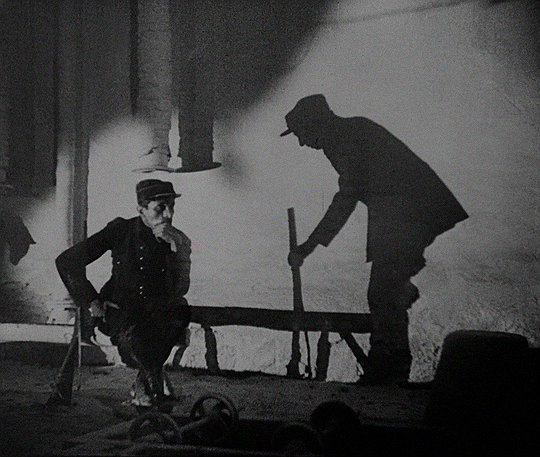
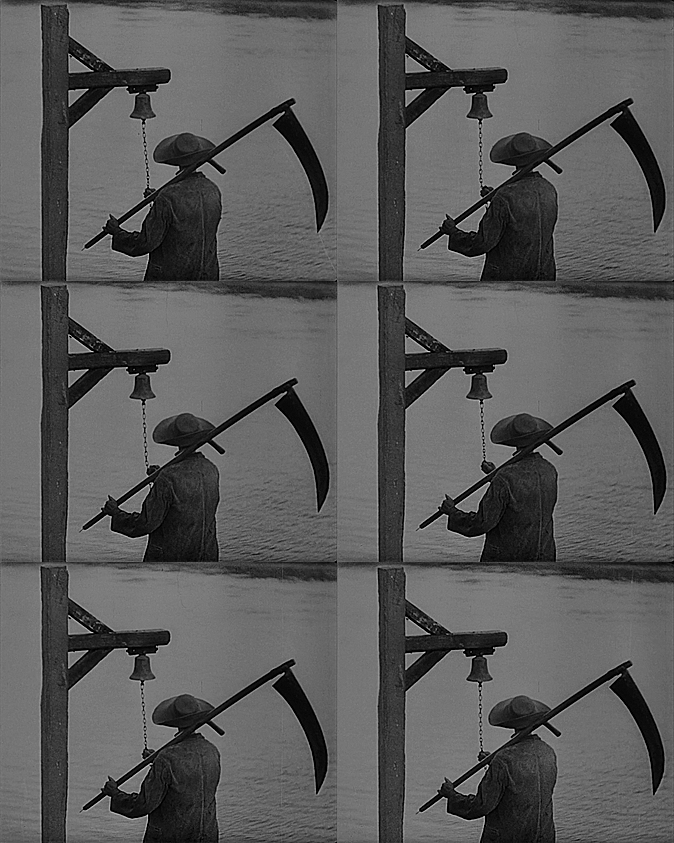
O destaque em “O Vampiro” é, sem dúvida, uma sequência muito claustrofóbica num caixão, filmada do ponto de vista da pessoa que está no caixão. Visualmente, todo o filme é hipnotizante, e outras sequências brilhantes incluem sombras, corpos que são quase transparentes e uma sequência de sonho com um esqueleto. O diretor de fotografia Rudolph Maté – de “A Paixão de Joana D’Arc” (1928), também de Dreyer – fez maravilhas ao filmar estas sequências.

The highlight of “Vampyr” is, without a doubt, a very claustrophobic coffin scene, filmed from the perspective of the person in the coffin. Visually, the whole film is hypnotizing, and other brilliant sequences include shadows, bodies that are nearly transparent and a dream sequence with a skeleton. Cinematographer Rudolph Maté – from Dreyer’s previous film, “The Passion of Joan of Arc” (1928) – did wonders while shooting these scenes.


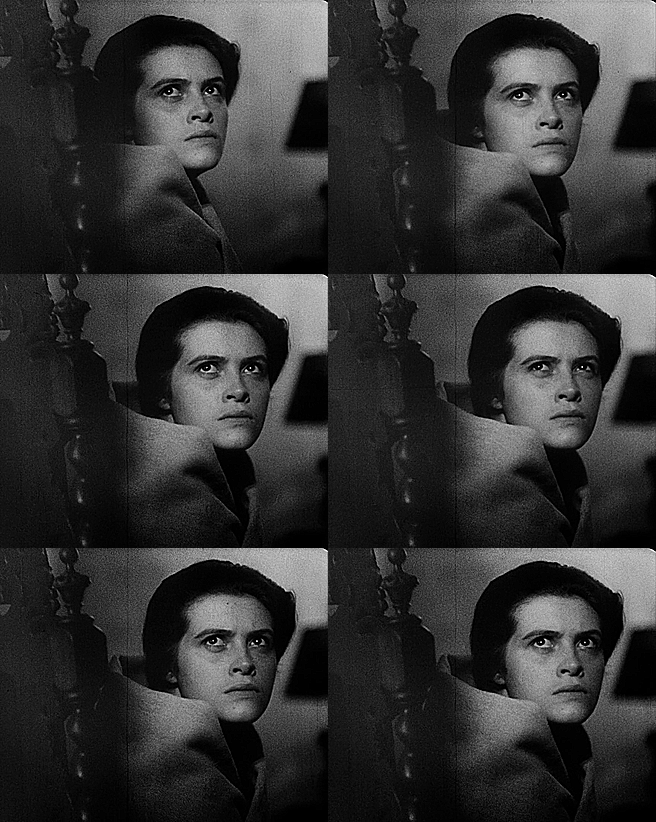
Assim como na maioria dos filmes de Carl Theodor Dreyer, quase todos os atores são amadores. Uma exceção importante em “O Vampiro” é Léone, a protagonista, interpretada por Sybille Schmitz. Nascida na Alemanha, ela trabalhou no teatro com Max Reinhardt e se tornou bastante popular na década de 1930. Em “O Vampiro”, sua expressão de desejo por sangue é ao mesmo tempo assustadora e fascinante. Sybille continuou trabalhando no cinema durante o Terceiro Reich, mas em papéis menores e fazendo femme fatales, porque ela não parecia “ariana o suficiente”. Por causa de seu vínculo empregatício sob o governo de Hitler, ela caiu no ostracismo a partir de 1945, e começou a abusar das drogas e do álcool. Sybille cometeu suicídio em 1955, e seus últimos anos serviram de base para o brilhante filme de 1982 “O Desespero de Veronika Voss”, de Rainer Werner Fassbinder.

Like in most Carl Theodor Dreyer films, almost all actors are amateurs. One important exception in “Vampyr” is Léone the leading lady, played by Sybille Schmitz. Born in German, she worked in theater under famous director Max Reinhardt and became quite popular in the 1930s. In “Vampyr”, her expression of lust for blood is at the same time scary and fascinating. Sybille kept on working in film during the Third Reich, but in smaller roles and as femme fatales, because she didn’t look “Aryan enough”. Because of this continuous employment under Hitler, she was ostracized after 1945, and started abusing drugs and alcohol. Sybille committed suicide in 1955, and her final years were the basis for the brilliant 1982 film “Veronika Voss”, by Rainer Werner Fassbinder.
 
Sybille Schmitz

Veronika Voss, 1982
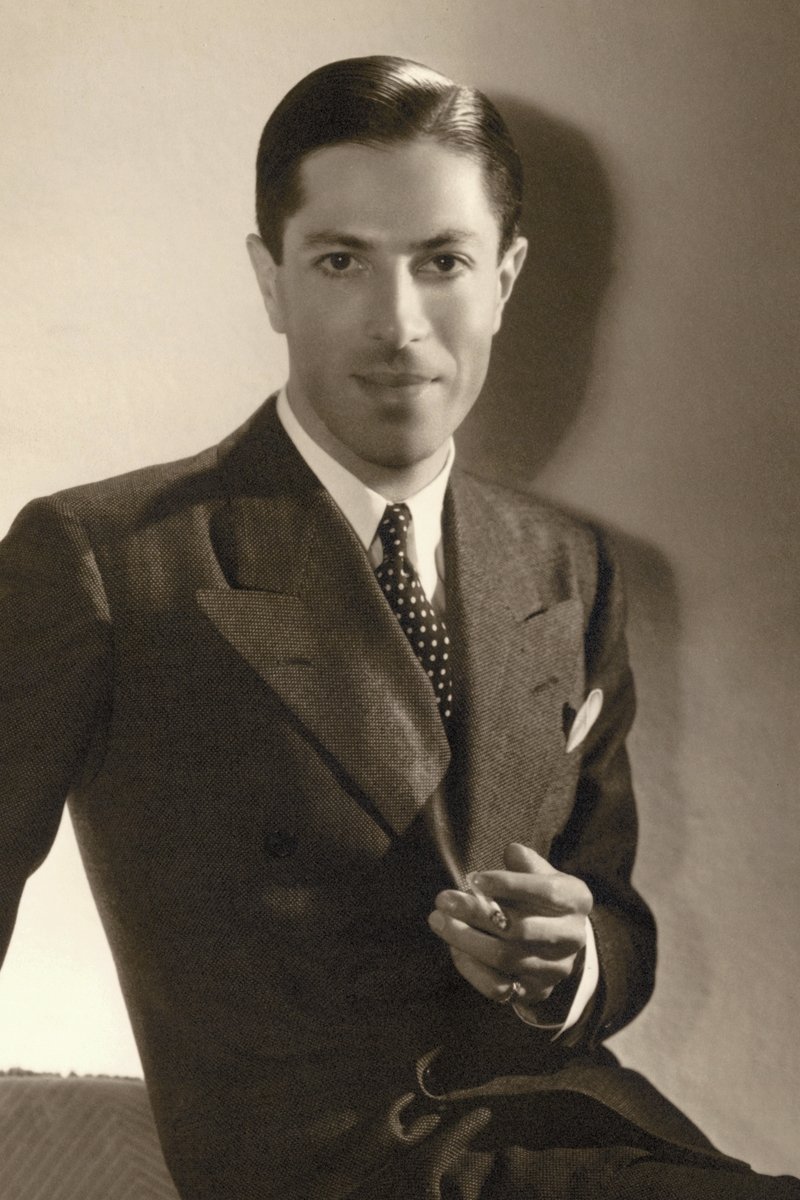
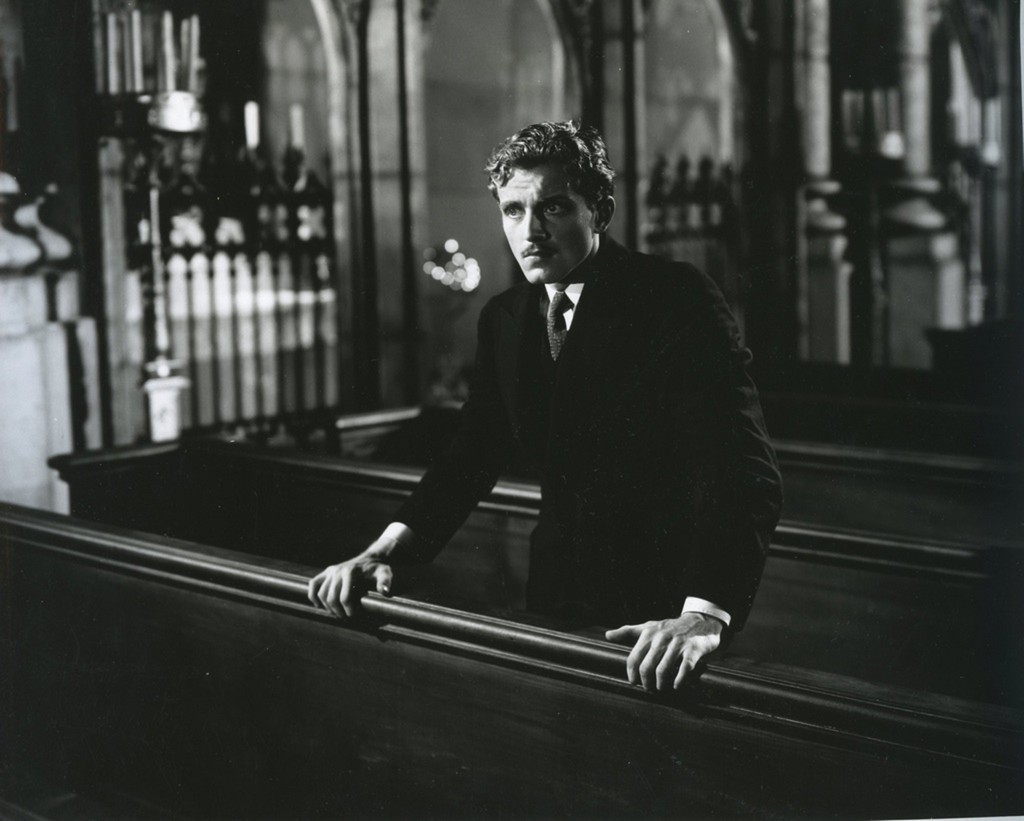
Nicolas de Gunzburg, um herdeiro francês vindo de uma família nobre russa, financiou o filme com uma condição: ele deveria ser escolhido para o papel principal. Foi assim que Nicolas adotou o nome artístico Julian West. Nicolas / Julian nunca fez outro filme, mas se tornou famoso no mundo da moda como editor de revistas de moda como Vogue e Harper’s Bazaar. Aliás, você percebeu como ele e H.P. Lovecraft se pareciam?

Nicolas de Gunzburg, a French heir from a noble Russian family, financed the film with one condition: he should be given the leading role. That’s how Nicolas adopted the stage name of Julian West. Nicolas / Julian never made another film, but he became a famous figure in the fashion world as editor of fashion magazines such as Vogue and Harper’s Bazaar. By the way, do you see how much he and H.P. Lovecraft look alike?

Nicolas / Julian
H.P. Lovecraft
Como acontecia nos primeiros filmes falados, em “O Vampiro” o diálogo foi gravado em diversas línguas para que o filme pudesse ser exportado para vários países. A versão em inglês foi perdida – embora alguns estudiosos digam que tal versão não foi sequer finalizada. Cópias em alemão e francês foram usadas para restaurar o filme à versão que temos hoje, com 73 minutos de duração. Ainda há algumas sequências perdidas.

Like it was common with early talkies, in “Vampyr” the dialogue was also recorded in several languages in order to export the film to several countries. The English version is lost – although some scholars claim that this version was never even completed. Prints in German and French were used to restore the film to the version we have today, and it is 73 minutes long. There are still some sequences lost.


Carl Theodor Dreyer disse que, com “O Vampiro”, ele quis “fazer um filme diferente de todos os outros filmes” e “criar um sonho na tela e mostrar que o horror não é encontrado nas coisas ao nosso redor, mas em nosso subconsciente”. Ele conseguiu fazer as duas coisas, mas pagou um preço alto: “O Vampiro” foi um fracasso de bilheteria e esgotou o diretor emocional e financeiramente. Dreyer fez apenas mais quatro filmes, se aposentando em 1964. Mas “O Vampiro” resistiu ao teste do tempo, e agora é considerado um clássico experimental e cult, e suas imagens ainda assombram nossas mentes.

Carl Theodor Dreyer said that, with “Vampyr”, he wanted to “make a film different from all other films” and “to create a dream on scream and show that horror is not to be found in the things around us but in our own subconscious”. He ended up achieving both, but paid a high price: “Vampyr” was a box-office failure and drained the director emotionally and financially. Dreyer made only four more films, retiring in 1964. But “Vampyr” stood the test of time, and now it’s highly regarded as a cult, experimental classic, and its images are still hunting our minds.

This is my contribution to the Dark and Deep: The Gothic Horror Blogathon, hosted by Gabriela at Pale Writer.

Tuesday, August 13, 2019

Não Matarás (1932) / The Broken Lullaby (1932)


Em 1932, estrearam quatro filmes dirigidos por Ernst Lubitsch, incluindo o famosíssimo “Ladrão de Alcova”. Foi o ano mais prolífico de sua carreira nos EUA, trabalhando para a Paramount Pictures. E em 1932 surgiu “Não Matarás”, um filme tão incomum de Lubitsch que nos faz voltar para verificar os créditos. Sim, o filme foi produzido e dirigido por Lubitsch. E é um de seus melhores, mais humanos e emocionantes filmes.

In 1932, four films directed by Ernst Lubitsch premiered, including the very famous “Trouble in Paradise”. It was the most prolific year of his career in the US, working for Paramount Pictures. And in 1932 there appears “The Broken Lullaby”, such an unusual Lubitsch film that makes us double check the opening credits. Yes, it was produced and directed by Lubitsch. And it’s one of his most human, heartbreaking and best films.


Enquanto a multidão celebra o primeiro aniversário do Armistício em 1919 com um desfile, soldados traumatizados no hospital gritam por causa dos barulhos. Em uma catedral de Notre Dame lotada, uma missa é assistida por soldados com baionetas penduradas nos cintos. Depois que a missa acaba, um homem à paisana permanece na igreja. Ele está lá para confessar que matou outro homem.

While the crowd celebrates the first anniversary of the Armistice in 1919 with parades, shell-shocked soldiers in the hospital scream with the noises they hear. In a crowded Notre Dame cathedral, a mass is attended by soldiers with their bayonets hanging from their belts. After the mass is over, a man in civilian clothes remains in the church. He is there to confess that he killed another man.


O homem, Paul Renard (Phillips Holmes), era um músico antes da guerra, e nas trincheiras ele matou um soldado alemão. O soldado levava consigo uma carta, pronta para ser enviada, e nela Paul descobriu o nome da vítima, Walter, e seu endereço – e que o pobre homem também amava música. Embora o padre diga a Paul que ele estava apenas cumprindo seu dever, ele não consegue ficar em paz. Entretanto, na igreja Paul decide ir até a Alemanha em busca do perdão da família do homem que ele matou.

The man, Paul Renard (Phillips Holmes), was a musician before the war, and in the trenches he killed a German soldier. The soldier had a letter with himself, ready to be sent, and so Paul learned the victim's name, Walter, and his address – and that the poor man also loved music. Although the priest tells Paul he was only doing his duty, he can't find peace. However, in the church Paul decides to go to German and seek the forgiveness from the family of the man he killed.


O pai de Walter, Dr. Holderlin (Lionel Barrymore), é um médico. A noiva de Walter, Elsa (Nancy Carroll), vive com o doutor e com Frau Holderlin (Louise Carter), e é cobiçada pelo insistente Herr Schultz (Lucien Littlefield). A família ainda está de luto pela morte de Walter.

Walter's father, Dr. Holderlin (Lionel Barrymore), is a physician. Walter's fiancée, Elsa (Nancy Carroll), lives with Dr and Frau Holderlin (Louise Carter), and she is pursued by the insistent Herr Schultz (Lucien Littlefield). The family is still grieving Walter’s death.


O Dr. Holderlin é inicialmente hostil com Paul, porque ele não aceita ouvir nada de um francês. Entretanto, como Elsa viu Paul levando flores no túmulo de Walter, o Dr. Holderlin muda de tom, e Frau Holderlin recebe Paul na casa deles. Agora Paul é incapaz de dizer que matou Walter, e por isso deixa a família pensando que ele e Walter eram amigos.

Dr. Holderlin is hostile at first to Paul, because he wouldn’t accept to hear anything from a Frenchman. However, as Elsa saw Paul bringing flowers to Walter's grave, Dr. Holderlin's tone changes, and Frau Holderlin welcomes Paul to their house. Now Paul can't say he killed Walter, so he lets the family think he and Walter were friends.


Herr Shcultz vê Elsa e Paul conversando, e logo começa a espalhar o boato de que Paul pode ser um espião. Nacionalismo e xenofobia estavam em alta depois da guerra, e a Alemanha ressentia a derrota e a humilhação. A ideia de Herr Schultz encontra o contexto perfeito para se espalhar. E Lubitsch, um imigrante alemão, era o diretor perfeito para lidar com este assunto.

Herr Schultz sees Elsa and Paul talking, and soon he starts spreading the rumor that Paul may be a spy. Nationalism and xenophobia was on the rise after the war, and German resented the loss and the humiliation. Herr Schultz's idea finds the perfect context to spread. And Lubitsch, a German immigrant, was the perfect director to tackle this subject.


Eu senti que este filme tem mais um “toque de Rouben Mamoulian” – um termo pouco usado porque eu acabei de criá-lo – do que o “toque de Lubitsch”. Quando Paul e Elsa andam pelas ruas da pequena cidade e as pessoas saem nas portas e janelas para vê-los, continuamos a ver os dois na tela, mas ouvimos os sinos que indicam as portas se abrindo. Este uso ousado e experimental do som para simbolizar a curiosidade da população local é puro Mamoulian, um diretor hoje pouco lembrado que fez obras brilhantes enquanto experimentava e improvisava no final dos anos 20 e início dos anos 30. Como curiosidade, também em 1932 Mamoulian dirigiu um filme que era puro Lubitsch: “Ama-me Esta Noite”.
 
I felt this film has more of the “Rouben Mamoulian touch” – a little-used term because it has just been created by me – than the “Lubitsch touch”. When Paul and Elsa walk down the streets of the small town and people appear on doors and windows to see them, we keep seeing the two on the screen, but we hear the bells of the doors opening. This daring and experimental use of sound to symbolize the curiosity of the local people is pure Mamoulian, now a little remembered filmmaker who excelled while experimenting and improvising in the late 1920s and early 1930s. As a curious note, also in 1932 Mamoulian directed a film that was pure Lubitsch: “Love Me Tonight”.


Lubitsch havia trabalhado incansavelmente na Alemanha durante a Primeira Guerra Mundial tanto como ator quanto diretor. Ele fez várias comédias e dramas históricos no final da década de 1910, e por causa do sucesso que estes filmes fizeram nos EUA no começo dos anos 20 ele foi chamado por Mary Pickford para trabalhar em Hollywood. Lubitsch deixou a Alemanha em 1922 e nunca olhou para trás. Nos EUA, ele desenvolveu o “toque de Lubitsch”, um estilo cinematográfico cheio de sugestões sexuais, charme e bom gosto. Nada disso é encontrado em “Não Matarás”.

Lubitsch had been working steadily in German during World War I, both as an actor and director. He did several comedies and historical dramas in the late 1910s, and because of the success those films made in the US in the early 20s he was personally called by Mary Pickford to work in Hollywood. Lubitsch left Germany in 1922 and never looked back. In the US, he developed the “Lubitsch touch”, a refined filmmaking approach full of sexual innuendo, charm and good taste. We find nothing of this in “Broken Lullaby”.
 
Lubitsch
Há muitos símbolos importantes em “Não Matarás”. Um deles é o vestido feito de tecido francês que Elsa deseja comprar. É óbvio que o interesse dela no vestido espelha seu interesse por Paul, que também é um “produto” francês. Há ainda os paralelos entre as vidas de Paul e Walter, pois o Dr. Holderlin mantém o quarto de Walter trancado e há um violino lá, preservado no estojo, como se esperasse Walter voltar e tocar – e, sem nenhuma surpresa, Paul é também violinista.

There are many important symbols in “Broken Lullaby”. One of them is the dress made of French fabric that Elsa gets interested in buying. It’s obvious that her interest for the dress mirrors her interest for Paul, himself a French product. There is also a mirroring situation with Paul’s and Walter’s lives, as Dr. Holderlin keeps Walter’s bedroom locked and there is a violin there, preserved in the box, like waiting for Walter to come back and play – and, to no surprise, Paul is a violinist.


Lionel Barrymore está brilhante como sempre. Seu monólogo sobre os pais serem responsáveis pela morte dos jovens, porque “éramos velhos demais para lutar, mas não velhos demais para odiar”, resume a Primeira Guerra Mundial e nos causa arrepios. Mesmo assim, Barrymore diz muito mais sem palavras: é no seu olhar sem esperança e no seu andar vacilante que vemos que ele continua vivendo, mas com muito sofrimento.

Lionel Barrymore is brilliant as always. His monologue about the fathers being responsible for the youngsters' deaths, because “we were too old to fight, but not too old to hate”, summons the whole World War I and gives us chills. Yet, Barrymore says much more without words: it’s in his hopeless eyes and in his vacillating walk that we see that he keeps living, but with so much suffering.


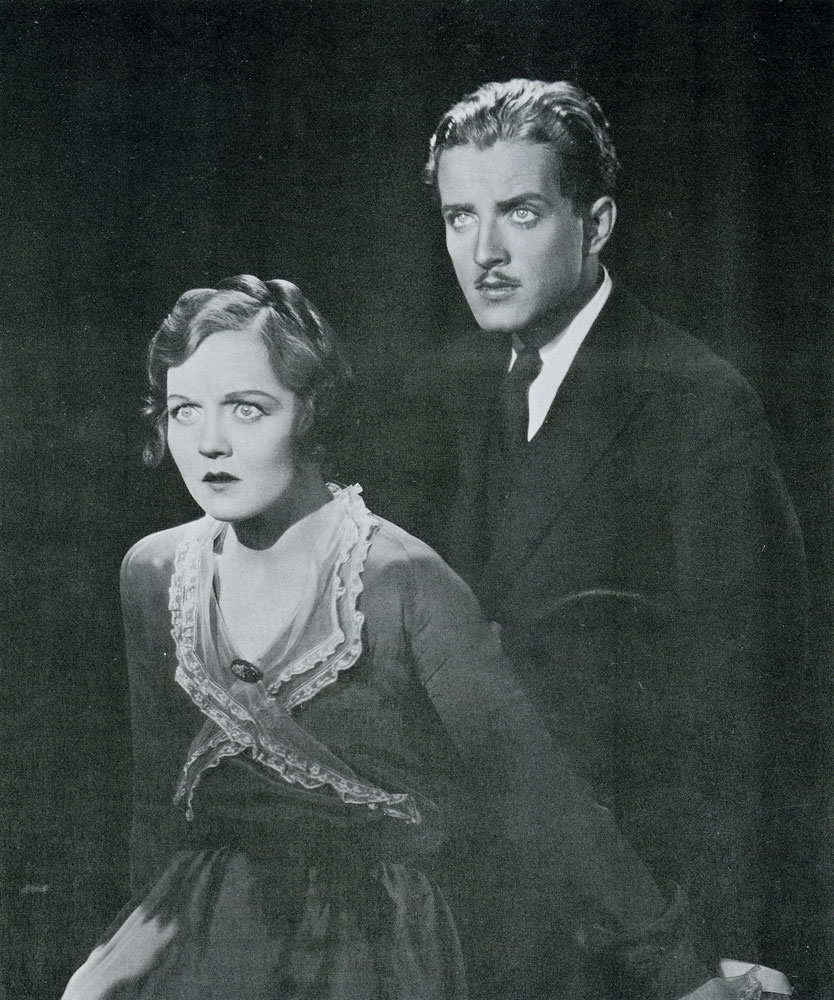
Phillips Holmes está praticamente esquecido hoje, mas com “Não Matarás” podemos ver que ele tinha olhos tão luminosos quanto os de William Powell. Holmes faleceu em 1940, em um acidente de avião, logo após se alistar na Aeronáutica canadense. Nancy Carroll está perfeita no clímax. No filme também temos ZaSu Pitts como Fraulein Anna, a empregada da família Holderlin. O rosto de ZaSu está incrivelmente belo neste filme, mas ela tem pouco a fazer além de fofocar.

Phillips Holmes is nearly forgotten today, but by “The Broken Lullaby” we can see that he had eyes as luminous and William Powell's. Holmes died in 1940, in a plane crash, right after he had joined the Canadian Air Force. Nancy Carroll is perfect in the climax. Also in the film we have ZaSu Pitts as Fraulein Anna, the Holderlin's maid. ZaSu's face is incredibly beautiful in this film, but she has nothing much to do besides gossiping.


“Não Matarás” é mais um filme sobre o mundo pós-guerra que mostra que não houve heróis e vilões na Primeira Guerra Mundial: de alguma maneira, todos perderam. A guerra muda vidas dos modos mais íntimos e inimagináveis, e “Não Matarás” é uma obra-prima que lida com amor, morte e luto.

“The Broken Lullaby” is another film about the post-war world that shows how there weren’t heroes and villains in the First World War: in some sense, everybody lost. War changes lives in the most intimate and unimaginable ways, and “The Broken Lullaby” is a masterpiece that deals with love, death and grieving.

This is my contribution to the Fifth Annual Barrymore Trilogy blogathon, hosted by Crystal and Gabriela at In the Good Old Days of Classic Hollywood and Pale Writer.

Related Posts Plugin for WordPress, Blogger...