} Crítica Retrô: 1954

Tradutor / Translator / Traductor / Übersetzer / Traduttore / Traducteur / 翻訳者 / переводчик

Showing posts with label 1954. Show all posts

Monday, August 28, 2023

Viagem à Itália (1954) / Journey to Italy (1954)


Quando Ingrid Bergman deixou Hollywood e um casamento sólido e escolheu a Itália e um romance com o diretor Roberto Rossellini, foi um escândalo. Este episódio é tão conhecido dentro da biografia de Bergman que às vezes os filmes que ela fez com Rossellini são ofuscados pelo escândalo. Este pequeno conjunto de seis filmes inclui “Stromboli” (1950), a obra-prima “Europa ‘51” (1952), uma recontagem da história de Joana D’Arc e esta curiosa “Viagem à Itália”.


When Ingrid Bergman left Hollywood and a solid marriage and chose Italy and a romance with director Roberto Rossellini, it was a scandal. This episode is so well-known inside Bergman’s biography that sometimes the movies she did with Rossellini are obfuscated by the scandal. This little oeuvre of six films includes “Stromboli” (1950), the masterpiece “Europa ‘51” (1952), a re-telling of Joan of Arc’s story and this curious “Journey to Italy”.
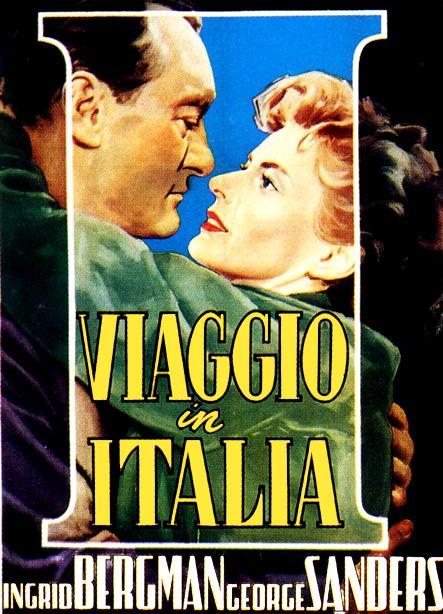
Esta é a história da primeira vez em que o casal Katherine (Ingrid Bergman) e Alex (George Sanders) fica sozinho de verdade desde que se casaram. Eles estão na Itália por causa de uma herança, mas não ficarão sozinhos por muito tempo, pois encontram velhos conhecidos e fazem novas amizades em jantares nos quais ambos desaprovam que o outro se divirta com outras pessoas. Entre as ruínas eles discutem e parecem chegar a um ponto de virada no relacionamento.


This is the story of the first time the couple Katherine (Ingrid Bergman) and Alex (George Sanders) is truly alone ever since they got married. They are in Italy because of an inheritance, but they won’t stay alone for long, as they meet old acquaintances and make new friends in dinners where both dislike that the other has fun with other people. Among the ruins, they have their arguments and seem to arrive at a crossroads in their relationship.

Quando Katherine visita um museu na primeira metade do filme, as peças em exibição são oriundas de Pompeia. A tragédia da cidade tomada pelo vulcão séculos atrás assombra o casal, pois a vila que herdaram tem como vista o Vesúvio. Ao voltar do museu, ela conta sua experiência, dizendo que foi como se ela pudesse sentir como estas pessoas, imortalizadas em estátuas, eram e o que elas queriam.


When Katherine visits a museum in the first half of the film, the pieces there are remains from Pompeii. The tragedy of the city engulfed by the volcano centuries ago lingers on the couple, as the villa they inherited has the Vesuvius as a view. After coming back from the museum, she chronicles her experiences, saying that it was as if she could sense how those people immortalized in statues were like and what they wanted.

Embora não creditada, a fonte para o filme foi uma novela chamada “Duo”, da escritora Colette. Rossellini, junto com Vitaliano Brancati, escreveu o roteiro. George Sanders escreveu em sua autobiografia que rodar o filme foi uma experiência desesperadora, que ele realmente detestou. Talvez tenha sido porque este é um filme feito por um Rossellini em mutação: o diretor / roteirista / produtor estava abandonado o Neorrealismo e se comprometendo com um novo tipo de Realismo. O método de trabalho de Rossellini – especialmente o fato de ele trabalhar sem um roteiro – também desagradaram a Sanders.


Although uncredited, the source of the film was a novel called “Duo” by writer Colette. Rossellini, together with Vitaliano Brancati, wrote the screenplay. George Sanders wrote in his autobiography that shooting the film was an exasperating experience, one he truly disliked. Maybe it was because this is a movie made by a changing Rossellini: the director / writer / producer was abandoning the Neo-Realism and committing to a new kind of Realism. Rossellini’s work methods – especially working without a script – also displeased Sanders.

Em 1953, quando o filme começou a ser rodado, Bergman e Rossellini, como um casal, estavam em crise. O diretor também atravessava uma crise financeira – ele só conseguiu financiamento para o filme através de um industrial milanês que era seu fã. Quando as filmagens terminaram, Rossellini demorou mais um ano e meio para conseguir um distribuidor para o filme, que foi um fracasso de bilheteria e só agradou aos críticos da Cahiers du Cinéma – aqueles jovens que revolucionariam o cinema com a Nouvelle Vague alguns anos mais tarde.


In 1953, when the movie started shooting, Bergman and Rossellini, as a couple, were struggling. The director was also struggling financially – he could only get financing for the movie through a Milanese industrialist who was his fan. When filming ended, it took Rossellini a year and a half to find a distributor, but the film performed poorly at the box office and pleased only the critics from the Cahiers du Cinèma – those young men who would revolutionize cinema with the Nouvelle Vague a few years later.

Ocupando a posição 72 na lista de Melhores Filmes de Todos os Tempos da Sight and Sound de 2022, “Viagem à Itália” merece o reconhecimento. Um melodrama sem vilão – ou um em que a vida e suas atribulações são o vilão – o filme pode não ter me impressionado tanto quanto “Europa ‘51”, mas foi ótimo fazer esta viagem junto a Sanders e Bergman – e ao maestro Rossellini, obviamente.


Ranked 72 in the 2022 Sight and Sound Best Movies of All Time poll, “Journey to Italy” deserves the recognition. A melodrama without a villain – or one where life and its tribulations is the villain – the film may have not left an impression on me as big as “Europa ‘51”, but it was great to take this journey alongside Sanders and Bergman – and maestro Rossellini, of course.


This is my contribution to the 6th Wonderful Ingrid Bergman blogathon, hosted by Virginie at The Wonderful World of Cinema.

Tuesday, March 23, 2021

Buster Keaton in “The Awakening” (1954)


Quando os caminhos de Buster Keaton e de Douglas Fairbanks se cruzaram, aconteceu uma mudança: Keaton fez seu primeiro longa-metragem, “O Pesado” (1920), porque Fairbanks o recomendou para os estúdios Metro. Trinta e quatro anos depois, os caminhos de Buster se cruzaram com os de Douglas Fairbanks Jr. Na época, séries antológicas na TV eram populares, e com eles pessoas como Hitchcock e Fairbanks tinham programas próprios sem precisar se envolver demais com o trabalho toda semana – por exemplo, escrevendo, dirigindo ou gravando uma nova história toda semana, podendo apenas produzir e supervisionar o show. Doug foi o apresentador de “Douglas Fairbanks Presents” de 1953 a 1957  e, em 14 de julho de 1954, Doug teve a honra de apresentar Buster Keaton interpretando um personagem dramático de Gogol – algo que nunca pensamos que veríamos, mas que bom que isso aconteceu.

When Buster Keaton's path crossed with Douglas Fairbanks', change happened: Keaton made his first feature film, “The Saphead” (1920), because Fairbanks recommended him to Metro to play the lead. Thirty-four years later, Buster's path crossed with Douglas Fairbanks Jr's. At that time, anthology series on TV were quite popular, and with them people like Hitchcock and Fairbanks had a show to call their own without having to do a lot of hard work every week – I mean, they didn't have to write, direct or shoot a new story every week, they could only produce and oversee the show. Doug was the host of “Douglas Fairbanks Presents” from 1953 to 1957 and, on July 14th 1954, Doug had the honor to present Buster playing a dramatic character by Gogol – something we never thought we'd see, but we're glad it happened.

Como Doug diz, nossa história é ambientada em qualquer lugar – ou mesmo lugar nenhum. O tempo? Ontem ou hoje ou no futuro distante. O tema? Liberdade. Uma liberdade esquecida. Esquecer a liberdade é o que leva uma sociedade a aceitar o totalitarismo, e isto foi o que aconteceu antes da história começar. Tudo que sabemos é que o local está sob o comando de alguém chamado O Chefe (James Hayter), cuja foto está presente nas casas dos cidadãos – e até nos escritórios e nos quartos! - com as palavras “Ele SE IMPORTA” escritas abaixo da imagem.

As Doug says, the setting of our story is anywhere or nowhere. The time? Yesterday or today or tomorrows to come. The subject? Freedom. A forgotten freedom. Forgetting freedom is what leads a society to accept totalitarism, and this is what happened before the story begins. All we know is that the place is under someone called The Chief (James Hayter), whose photo hangs in citizens' houses – even in their offices and bedrooms! - with the words “He CARES” underneath the image. 

Buster é O Homem, um burocrata comum que se importa mais com números e dados do que com pessoas. Mas é claro, as coisas e especialmente as pessoas devem estar em seus devidos lugares, seguindo uma classificação rígida! O Homem não se importa com pessoas, diversão ou moda – prova disso é que ele tem um sobretudo muito velho que precisa de conserto. Mas O Alfaiate (Sam Jaffe) convence O Homem a fazer um sobretudo novo em vez de consertar o antigo.

Buster is The Man, a common bureaucrat who cares more about numbers and data than with people. But of course, things and especially people must  be in their proper places, following a rigid classification! The Man doesn't care about people, fun or fashion – a proof of that is that he has a very old overcoat needing mending. But The Tailor (Sam Jaffe) covinces The Man to make a new, expensive overcoat instead.

E o sobretudo muda O Homem. De repente seus colegas de trabalho o admiram, e a garota que vive em seu prédio passa a achá-lo bonito. Quando o sobretudo é roubado, O Homem começa a questionar a burocracia ao seu redor e se transforma naquele que realmente se importa – e isso, obviamente, será um grande problema e o levará a um encontro com O Chefe.

And the overcoat changes The Man. Suddenly his coworkers admire him, and the girl who lives in his building thinks he's handsome. When the overcoat is stolen, The Man starts questioning the bureaucracy around him and becomes the one who really truly cares – and this, of course, will be a huge problem and lead him to a meeting with The Chief.

É incrível ver quanto podia ser inserido em tão pouco tempo – 30 minutos menos os comerciais! Eu não quero parecer nostálgica e desprezar o que há de bom na TV moderna, mas hoje em geral vemos programas de TV com muitos personagens e histórias tolas contadas 30 minutos ou menos, enquanto nos anos 50, no começo da televisão, clássicos da literatura mundial eram adaptados para o novo meio e podiam ser brilhantemente contados em pouco tempo com um elenco enxuto.

It's amazing how so much could be packed in such a little time – 30 minutes minus the commercials! I don't want to sound nostalgic and dismiss the good modern TV, but now we often see TV shows with many characters and silly stories told in thirty minutes or less, when in the 1950s, the dawn of television, classics of world literature were adapted to the new medium and could be brilliantly told in a short time with an equally short cast.

Eu não li o conto de Gogol, mas pude passar os olhos brevemente por ele. O conto traz o nome do protagonista e é claramente ambientado na Rússia do século XIX – o que torna a história menos universal. O conto foi adaptado para as telas por Larry Marcus, que escreveu 10 episódios de “Douglas Fairbanks Presents”, foi responsável pela ótima adaptação de Agatha Christie “Testemunha de Acusação” (1957) e também escreveu o roteiro original do filme “O Bígamo” (1953).

I didn't read Gogol's story “The Cloak”, but I was able to briefly run my eyes through it. The story names the main character and the set is clearly 19th-century Russia – which makes it a less universal tale. The story was adapted to the screen by Larry Marcus, who wrote 10 episodes of “Douglas Fairbanks Presents”, was responsible for the great Agatha Christie adaptation “Witness for the Prosecution” (1957) and also wrote the original story for the film “The Bigamist” (1953).

A Wikipedia menciona 13 adaptações do conto para o cinema e a TV. Em “The Awakening”, há muitas mudanças importantes com relação ao original, e alguns elementos de “1984” de George Orwell podem ser vistos, como o poder que O chefe tem sobre todos, e a ideia de que todos estão sendo vigiados. Embora O Chefe seja uma figura que só aparece em uma curta cena, sua presença está por toda parte, e por causa disso nós já antipatizamos com ele e com o regime - e é ótimo ver Buster desafiar o regime. Quando Buster fala, você se surpreende. Quando ele grita e se rebela, você fica maravilhado com o que aquele homenzinho do rosto de pedra podia fazer.

Wikipedia lists 13 film and TV adaptations of the story. In “The Awakening”, there were many important changes from the original, and some elements from George Orwell's “Nineteen Eighty-Four” can be seen, like the power The Chief has over everybody, and the idea that everybody is under vigilance. Although The Chief is a figure that only appears in a small scene, his presence is everywhere, and because of that we already dislike him and the regime - and it’s great to see Buster standing up to the regime. When Buster talks, you are surprised. When he shouts and rebels, you're marveled at what that little stone-faced man could do.

Fairbanks viu Keaton como única opção para o papel principal. Ele disse: “Me pareceu uma bela ideia - uma ideia nova - colocá-lo em um papel sério, porque ele era tão bom ator e com grande talento. Funcionou muito bem; sua performance foi maravilhosa. Eu acredito que ele e Chaplin eram os maiores mestres da pantomima produzidos pelo cinema. Eles podiam expressar tanto com tão pouco.” Buster não ficou nervoso com a atuação dramática, garantiu sua esposa Eleanor: “Na comédia, ele tinha de criar tudo. No drama, você apenas decora suas falas e deixa outra pessoa se preocupar.”

Fairbanks saw nobody but Keaton in the main role. He said: "It struck me as a beautiful idea—a novel idea—to put him in a straight part, because he was such a beautiful actor and a great talent. It worked out very well; he gave a marvelous performance. I think that he and Chaplin were the supreme pantomimists that the screen has produced. They could convey so much with so little." Buster was not nervous about doing drama, and his wife Eleanor guaranteed it: “In comedy, he had to create everything. In drama, you just learn your lines and let someone else do the worrying."

Eu fiquei particularmente feliz quando um dos recursos narrativos que eu mais odeio - o final “tudo não passou de um sonho” - foi subvertido de maneira ousada e inspirada. Ao ter seu sobretudo levado, O Homem é despertado. Ser despertado para a realidade é em geral muito doloroso e traz vários problemas, e “The Awakening” mostra que, por causa disso, é preciso mais do que ser despertado: se manter desperto é algo completamente diferente, que muda a vida de uma pessoa.

I was particularly happy when one of my most hated narrative devices – the “it was all just a dream” finale – was subverted in a bold and inspired way. By having his overcoat taken, The Man has his awakening. To wake up for reality is often extremely painful and troublesome, and “The Awakening” shows that, because of this, there is more than waking up: staying woke – and here I may be using the double meaning the word has earned recently – is something completely different and life-changing.

This is my contribution to the 7th Annual Buster Keaton blogathon, hosted by Lea at Silent-ology.

Monday, July 31, 2017

Papai é do Contra (1954) / Hobson's Choice (1954)

A música que acompanha os créditos iniciais dá um tom de brincadeira. Logo depois do final dos créditos, muda o tom: há uma tempestade,e uma bota suspensa que me fez pensar que um homem havia acabado de ser enforcado. Mas o tom não permanece sério por muito tempo: a bota é, felizmente, apenas parte da decoração da loja do Sapateiro Hobson. Dentro da loja, diversos sapatos das eras Vitoriana e Eduardiana. Algumas folhas de árvore batem nas janelas, a porta da loja abre de repente, o próprio Hobson entra, e ele arrota.

The music that accompanies the opening credits is extremely playful. Right after the credits end, things change: there is a storm, and a boot that made me believe was from a man who had just been hanged. But things don't get serious for too long: the boot is, thankfully, only part of the marquise of the Hobson Boot Maker shop. Inside of it, lots of Victorian / Edwardian shoes. Some tree leaves hit the window, the door opens suddenly, enters Hobson himself, and he burps.
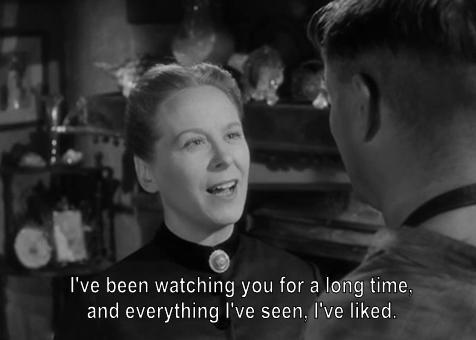
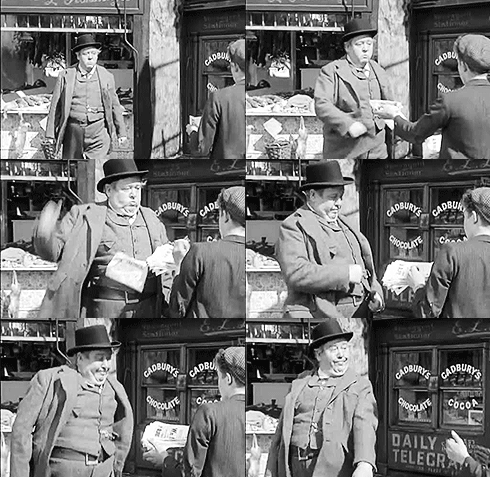
Henry Hobson (Charles Laughton) gosta de bebida alcoólica, é viúvo e tem três filhas: Alice, Vicky e Maggie. Ele decide encontrar maridos para as duas mais novas, porque 'Maggie é útil demais para se deixar ir' – mas ele realmente quer dizer que a) ela é como uma figura materna, que cuida dele, e b) ela é velha demais para se casar (meu Deus, afinal, ela jé tem 30 anos!). Ah, e os maridos que ele quer para as filhas devem ser abstêmios – eles não podem beber.

Henry Hobson (Charles Laughton) likes to drink, is a widower and has three daughters: Alice, Vicky and Maggie. He decides to find husbands for the two younger girls, because 'Maggie is too useful to part with'- nah, he actually means that a) she is like a mother figure, taking care of him, and b) she's too old to get married (OMG, she is 30!). Oh, and the husbands he wants for his daughters must be temperance men – they can't drink.
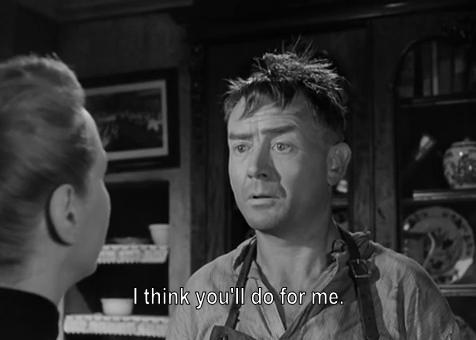
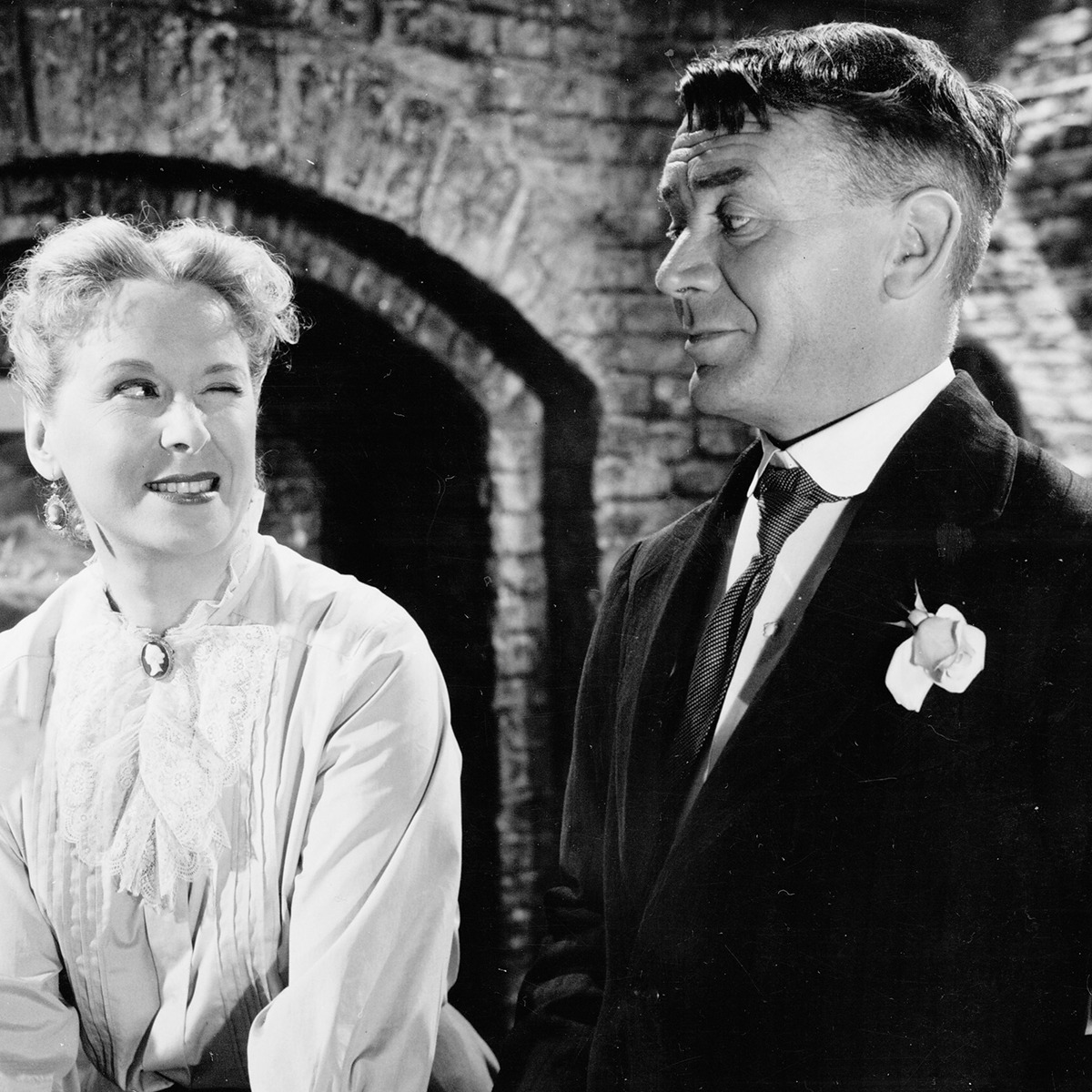
Hobson rapidamente desiste do plano de casamento quando ele descobre que organizar o casamento de uma filha é um negócio caro. Ele prefere ver as filhas solteironas e infelizes. Mas Maggie (Brenda De Banzie) não vai aceitar este destino: sendo uma mulher esperta e prática, ela decide se casar com Willie Mossop (John Mills), o simplório homem que fabrica botas para Hobson – mas ele é o melhor artesão de calçados da cidade. O plano de Maggie é abrir com o marido um negócio para fazer concorrência à loja de seu pai.

Hobson is quickly dissuaded from his marrying plan when he learns that marrying a daughter is too expensive a business. He prefers to see his daughters as old maids, unhappy. But Maggie (Brenda De Banzie) won't accept this fate: as a clever and practical woman, she decides to marry Willie Mossop (John Mills), the simple man who works for the Hobsons' as a boot maker – the best boot maker in town, to be precise. Maggie's plan is to start a business with her husband to rival her father's shop.
Henry Hobson não seria considerado um bom pai nos dias de hoje – e eu imagino se ele sequer foi considerado um bom pai em 1954. Ele explora suas filhas, fazendo-as trabalhar para ele sem receber salário. Ele até ameaça e bate em seu funcionário Willie. Sim, posso ver que se trata de uma comédia e Hobson pode ser uma figura caricata, mas eu me pergunto se ainda não há homens que pensam e se comportam como ele – e com certeza estes ogros existem.

Henry Hobson would not be considered a good father today – and I wonder if he was considered good back in 1954. He explores his daughters, making them work for him without receiving a wage. He even threatens and beats his employee Willie. Yes, I can see that the film is a comedy and Hobson may be a caricature, but I wonder if there are men who still think and behave like Hobson – and for sure there are ogres like him in the world.
Willie tem olhos esbugalhados, está sempre surpreso e seu corte de cabelo me faz lembrar um dos Três Patetas. Tanto Laughton quanto Mills têm ótimos momentos mostrando habilidades na comédia física: Laughton quando está bêbado e tenta “pisar na Lua”, e Mills quando está se despindo para sua incomum noite de núpcias.

Willie has his eyes wide open, very surprised, and a weird, Stooge-like haircut. Both Laughton and Mills have great moments showcasing physical comedy: Laughton when he is drunk and tries to “step on the moon”, and Mills when he is undressing for his uncommon wedding night.
Você deve ter visto Brenda De Banzie como a sequestradora em “O Homem que Sabia Demais” (1956). A atuação dela em “Papai é do Contra” não podia ser mais diferente do que apresenta no suspense. Maggie é uma mulher esperta que manipula as situações para que tudo ocorra como ela deseja. Ela pode ser a “grande mulher por trás de um (aparente) grande homem”, mas este era o único modo que, durante séculos, as mulheres espertas tinham de conseguir o que queriam. Aliás, seria Maggie sufragista?

You may know Brenda De Banzie only as a child kidnapper in “The Man who Knew Too Much” (1956). Her performance in “Hobson' Choice” can't be more different than that. Maggie is a smart woman who manipulates situations in order to make things go the way she wants. She may be the “great woman behind a (seemingly) great man”, but this was the only way that, for centuries, smart women could get what they wanted. By the way, could Maggie be a suffragette?
Na língua inglesa, e especialmente no Reino Unido, a expressão “Hobson's choice” significa “uma escolha aparentemente livre em que na verdade não há alternativa”, de acordo com o dicionário Merriam-Webster. A origem da expressão é encontrada no final do século XVI, quando um homem que alugava cavalos chamado Thomas Hobson decidiu que seus clientes deveriam escolher entre alugar o cavalo que ele tinha disponível ou ficar sem cavalo. A expressão se tornou popular com o passar dos anos e deu o nome à peça de 1915 que serviu de base para o filme.

In the English language, and especially in the UK, the expression “Hobson's choice” means “an apparently free choice when there is no real alternative”, according to the Merriam-Webster dictionary. The origin of the expression is found at the late 16th century, when a horse rental man called Thomas Hobson decided that his costumers should choose between renting the horse he had available for them, or no horse at all. The expression became popular with time and named the 1915 comedy play that was the basis for this film.
David Lean é mais lembrado pelos grandes épicos que ele fez em Hollywood e filmou em locação: “Lawrence da Arábia” (1962) e “Doutor Jivago” (1965). De seu período inglês, o filme mais conhecido é o sensível drama “Desencanto” (1945), e por isso muitas pessoas podem ter dificuldade em imaginar Lean fazendo comédia. Mas ele podia fazê-la muito bem. Sim, o texto, a fotografia de uma Londres não romântica e o ótimo elenco ajudam, mas não podemos negar que “Papai é do Contra” é outra grande obra da carreira de Lean.

David Lean is best remembered by the big epics he did in Hollywood and filmed on location: “Lawrence of Arabia” (1962) and “Doctor Zhivago” (1965). From his English period, the best known movie is the sensitive drama “Brief Encounter” (1945), and that's why many people have a hard time imagining Lean doing comedy. But he could do it very well. Of course, the text, the cinematography of a non-romantic London and the great cast help a lot, but we can't deny that “Hobson's Choice” was another great achievement in Lean's career.


This is my contribution to the 4th Annual British Invaders Blogathon, hosted by Terence at A Shroud of Thoughts.

Tuesday, April 4, 2017

Corações Enamorados / Young at Heart (1954)

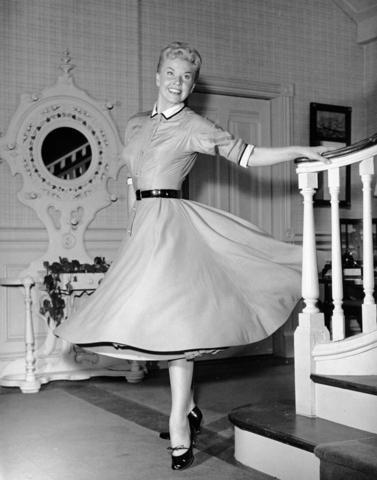
Quando eu comecei a assistir a “Corações Enamorados” (1954), eu esperava momentos agradáveis em uma comédia romântica com Doris Day e Frank Sinatra. Mas eu fui trouxa! É uma história de amor, sim, mas muito mais sombria do que eu esperava. E eu gostei de cada minuto do filme.

When I started watching “Young at Heart” (1954), I thought I was in for a treat: a romantic comedy with Doris Day and Frank Sinatra. Boy, how wrong I was! It is a love story, yes, but much darker than I expected. In the end, I was shaking. And I enjoyed every minute of it.
A música corre no sangue da família Tuttle. O pai, Gregory (Robert Keith), é, obviamente, professor de música. As três filhas tocam instrumentos, mas estão mais interessadas em outra coisa: se casar. Quando a mais velha, Fran (Dorothy Malone) anuncia seu noivado, as mais novas, Laurie (Doris Day) e Amy (Elisabeth Fraser), ficam com medo de se tornarem solteironas como a tia Jessie (Ethel Barrymore), que também vive com eles.

Everybody loves music in the Tuttle family. The father, Gregory (Robert Keith), is, obviously, a music teacher. The three daughters all play instruments, but they’re more interested in one thing: getting married. When the oldest, Fran (Dorothy Malone) tells the family she is engaged, the two younger girls, Laurie (Doris Day) and Amy (Elisabeth Fraser), fear becoming spinters like aunt Jessie (Ethel Barrymore), who also lives in the house.
Um dia, um belo estranho chega à cidade. Ele não é Frank Sinatra, e nem é desconhecido. Ele é Alex Burke (Gig Young), um músico cujo pai era um grande amigo de Gregory Tuttle. Ele veio estudar no conservatório de Gregory e fica hospedado na casa dos Tuttle. Ele se apaixona por Laurie à primeira vista. Entretanto, todas as três irmãs Tuttle se apaixonam por ele.

One day, a tall dark stranger arrives in town. He is not Frank Sinatra, and he’s not such a stranger either. He is Alex Burke (Gig Young), a musician whose father was best friends with Gregory Tuttle. He came to study at Gregory’s conservatory and to live in the Tuttle’s house. He is instantly smitten with Laurie. However, all three Tuttle sisters fall for him.
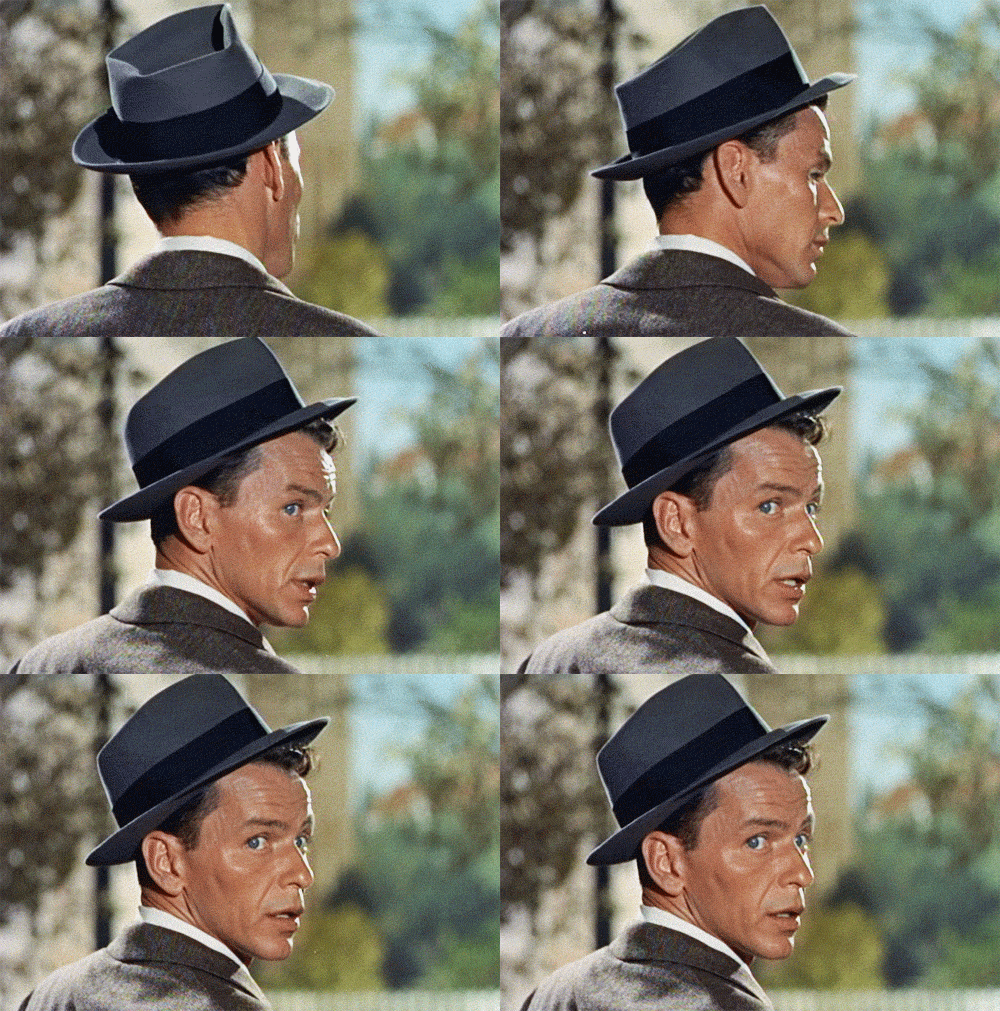
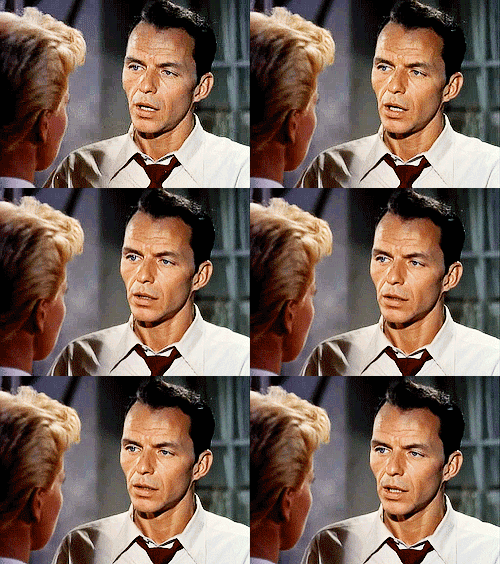
Laurie e Alex parecem feitos um para o outro. Então chega outro homem: Barney Sloan (Frank Sinatra) chega para ajudar Alex com arranjos para pian0. Barney é um músico tão talentoso quanto Alex – talvez até mais – mas é muito amargo. Ele está sempre reclamando, nunca sorri e culpa tudo e todos por seus fracassos.

Laurie and Alex seem perfect for each other. Then another guy arrives: Barney Sloan (Frank Sinatra) comes in to help Alex with some piano arrangements. Barney is as talented a musician as Alex – maybe even more – but he is too bitter. He’s always complaining, never smiles, blames everybody and everything for his lack of success.
Laurie fica interessada neste homem cínico e se apaixona. Isto prova que o “amor à primeira vista” é um mito e que na verdade a “animosidade no primeiro encontro” é o verdadeiro indicativo de amor (alerta de sarcasmo!). E quando você pensa que tudo vai muito bem, vem a tragédia.

Laurie gets interested in such a cynical character and falls in love. This proves that “love at first sight” is a myth and actually “animosity at first encounter” is the real indicative of love (sarcasm alert!). And when you think everything is wonderful, tragedy strucks.
“Corações Enamorados” foi o primeiro filme produzido pela Arwin Productions, companhia de Doris Day e de seu marido Martin Melcher. Sinatra não gostava nada de Melcher, e insistiu para que ele ficasse longe do set. Frank tentou alertar Doris para o comportamento do marido, mas não funcionou: 14 anos depois, quando Doris e Martin se separaram, ela descobriu que ele a havia deixado sem dinheiro algum.

“Young at Heart” was the first film produced by Arwin Productions, a company owned by Doris Day and her then husband Martin Melcher. Sinatra disliked Melcher immensely, and demanded him to not be allowed on set. Frank tried to prevent Doris of her husband’s behavior, but it didn’t work: 14 years later, when Doris and Martin divorced, she found out he had left her penniless.
Doris Day & Martin Melcher
E este não foi o único problema que Sinatra causou no set. Ele exigiu que o final fosse modificado – porque “Corações Enamorados” é um remake de “Quatro Filhas”, que foi o primeiro filme de John Garfield. Ele também brigou com o diretor de fotografia, Charles Lang, e exigiu que Ted D. McCord substituísse Lang. Estes episódios mostram que Frank podia ser tão amargo quanto seu personagem, mas outra situação no set mostra seu lado doce: ele organizou uma festa de aniversário surpresa para Ethel Barrymore, então com a saúde frágil, e ela adorou a gentileza.

And this wasn’t the only trouble Sinatra caused on set. He demanded the ending to be changed – because “Young at Heart” is a remake of “Four Daughters” (1938), which was John Garfield’s screen debut. He also argued with the first director of photography, Charles Lang, and demanded Ted D. McCord to replace Lang. These episodes show that Frank could be as bitter as his character, but another on-set situation shows his sweet side: he threw a surprise birthday party for co-star Ethel Barrymore, who was then in frail health, but who loved the gesture.  
Sinatra e Day cantaram juntos no rádio em várias ocasiões nos anos 40 e são suas músicas, cantadas solo ou em dueto, o destaque de “Corações Enamorados”. No filme, eles não têm muita química – o que eles demonstram é mais muita compaixão. Ethel Barrymore é ótima no começo, mas quase desaparece com o andamento do filme. Gig Young é como um Ralph Bellamy para Doris Day – o que significa que em amis de um filme ele quase se casa com ela, mas acaba perdendo-a.

Sinatra and Day sung together in radio in various occasions of the 1940s and their songs, sung in a duet or not, are the highlight of “Young at Heart”. In the movie, they don’t have a great chemistry – it’s rather a lot of compassion what they have. Ethel Barrymore is delightful in the beginning, and nearly vanishes as the film progresses. Gig Young is a Ralph Bellamy type to Doris Day – which means that more than once he almost marries her character, but ends up losing her.
Não é mais um musical escapista. Em sua fórmula e andamento, é muito similar a “Música e Lágrimas”, feito no mesmo ano. Sinceramente, eu gostei de “Corações Enamorados” e não sei como me sentir em relação ao outro fim que fora antes considerado. Fico feliz que o filme tenha acabado com um clima positivo – o que é muito mais apropriado para sua época e suas estrelas.

It’s not another feel-good musical. In pace, it’s very similar to “The Glenn Miller Story”, released the same year. Sincerely, I liked “Young at Heart”, and I’m not sure about the other end that was first planned. I’m happy it at least ended in a positive note – much more suitable for its time and its stars.

This is my contribution to the Doris Day blogathon, hosted by sweet Michaela at Love Letters to Old Hollywood. Here’s our love letter to Dodo!
Related Posts Plugin for WordPress, Blogger...