} Crítica Retrô: Gig Young

Tradutor / Translator / Traductor / Übersetzer / Traduttore / Traducteur / 翻訳者 / переводчик

Showing posts with label Gig Young. Show all posts

Saturday, October 12, 2019

Amor Eletrônico (1957) / Desk Set (1957)


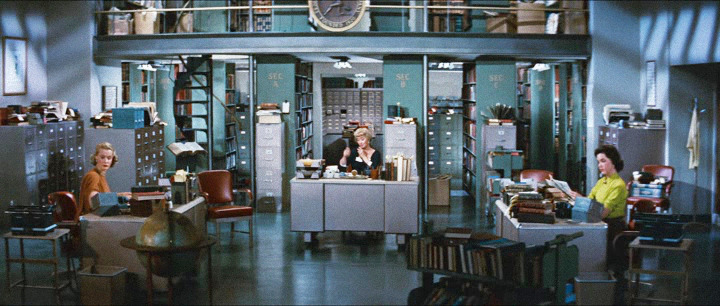
Muitas profissões desapareceram no último século, em especial por causa de mudanças na tecnologia. Entre essas profissões, temos condutores de coches, telefonistas, ascensoristas, cortadores de gelo e pessoas que empilhavam os pinos de boliche após cada tacada. “Amor Eletrônico” é um filme sobre uma dessas profissões desaparecidas: o quarteto feminino principal trabalha no departamento de referências de uma empresa de telecomunicações, pesquisando informações para pessoas que ligam fazendo perguntas.

Many professions have disappeared in the last century, in special because of technological changes. Among those professions, we have carriage conductors, switchboard operators, elevator operators, ice cutters and bowling alley pinsetters. “Desk Set” is a film about one of these vanished professions: our leading female quartet work in the reference department of a broadcasting company, researching info for people who call them with questions.
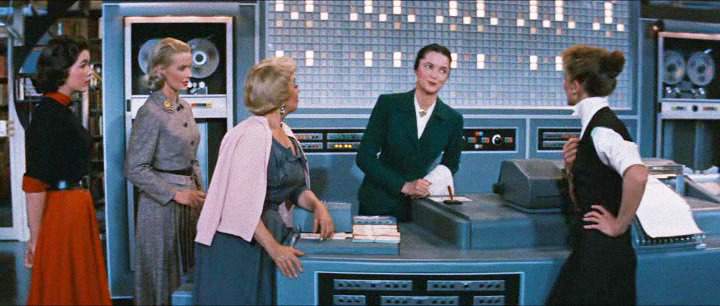

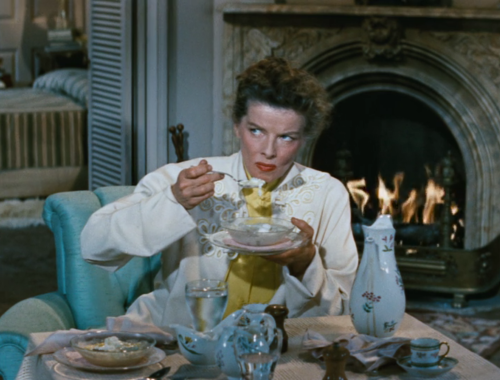
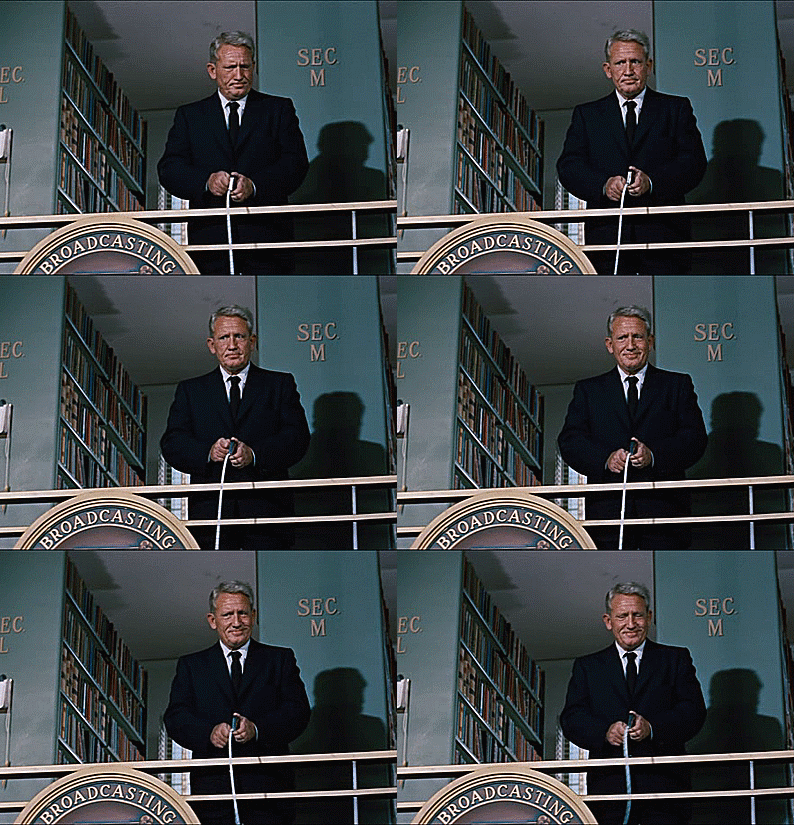
Mas as meninas estão prestes a se tornar obsoletas. Richard Sumner (Spencer Tracy) é um engenheiro contratado pela empresa delas para instalar um “cérebro eletrônico” para substituir o departamento de referências. Entretanto, ele não pode contar a verdade sobre o que está fazendo para as meninas, e deve questionar a chefe do departamento de referências, Bunny Watson (Katharine Hepburn), acerca do trabalho que elas fazem lá antes de trazer o cérebro eletrônico.

But the girls are about to become obsolete. Richard Sumner (Spencer Tracy) is an engineer hired by their company to install an “electronic brain” to replace the reference department. However, he can’t tell the truth about what he’s doing to the girls, and he must inquire the head of the reference department, Bunny Watson (Katharine Hepburn), about the work done there before the electronic brain is brought over.

Joan Blondell está interpretando mais uma vez a melhor amiga esperta, uma personagem que ela interpretava com perfeição desde o começo dos anos 1930. Como amiga de Bunny, Peg Costello a aconselha a parar de acreditar nas promessas vazias do namorado. Bunny vive uma relação complicada com seu chefe, Mike Cutler (Gig Young), já há sete anos. Gig Young interpreta o terceiro elemento do triângulo amoroso - ou, como eu gosto de dizer, ele é o Ralph Bellamy dos anos 1950 e 60.

Joan Blondell is back at playing the witty best girl friend, a character she excelled in playing in the early 1930s. As Bunny’s best friend, Peg Costello advises her to stop believing in her boyfriend’s empty promises. Bunny is in a complicated relationship with her boss, Mike Cutler (Gig Young), that has been on for seven years. Gig Young plays the second element of a romantic triangle here - or, as I like to call, he is the Ralph Bellamy of the 1950s and 60s.
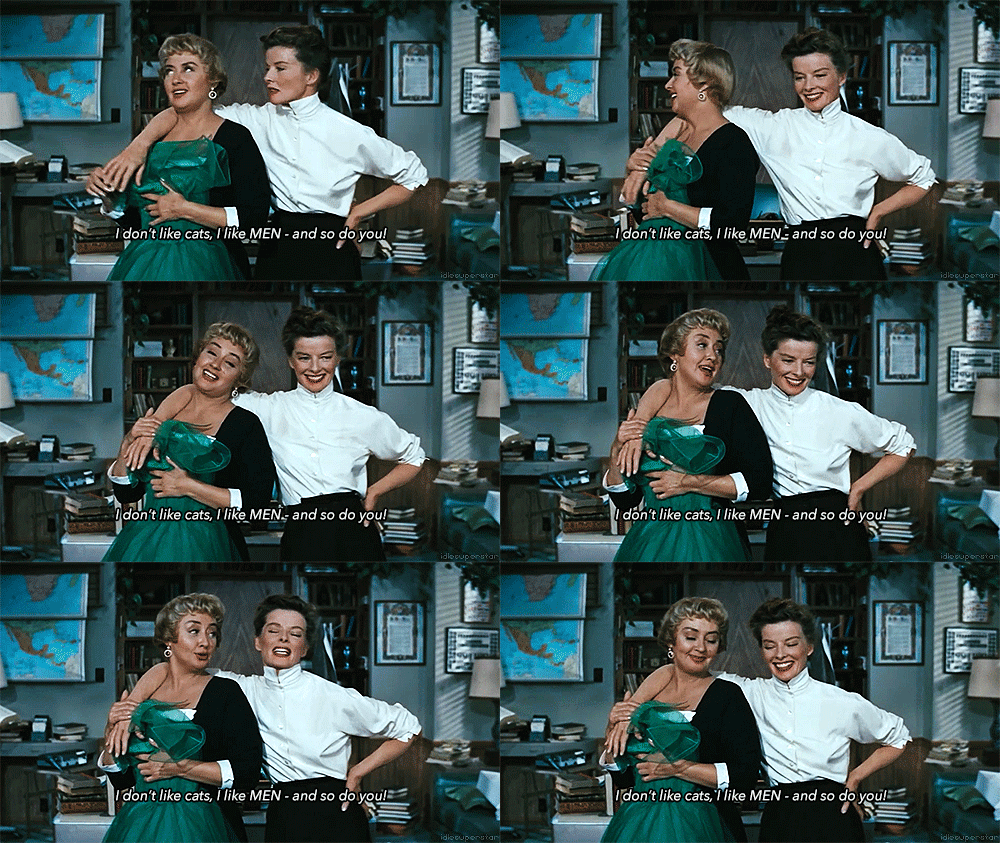

Este é o oitavo de nove filmes que Hepburn e Tracy fizeram juntos. “Amor Eletrônico” é uma comédia romântica - muitas de suas parcerias eram comédias, como “A Mulher do Dia” (1942), “A Costela de Adão” (1949) e “A Mulher Absoluta” (1952). De fato, há muitos momentos cômicos no filme, incluindo o jantar no apartamento de Bunny e a festa de Natal da empresa. Hepburn e Tracy estão ótimos como sempre, e podemos sentir que eles estavam se divertindo enquanto faziam o filme.

This is the eighth of nine films Hepburn and Tracy together. “Desk Set” is a romantic comedy - many of their partnerships were comedies, like “Woman of the Year” (1942), “Adam’s Rib” (1949) and “Pat and Mike” (1952). Indeed, there are many humorous moments in the film, including the dinner at Bunny’s apartment and the Christmas party at the office. Hepburn and Tracy are delightful as well, and we can feel they were having a good time shooting the film.
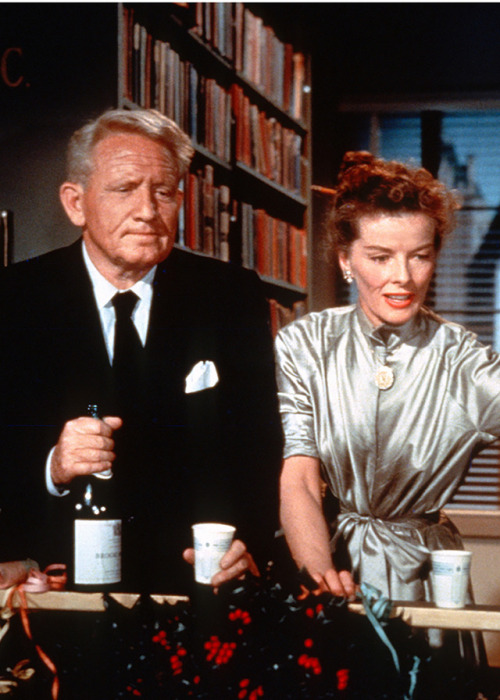

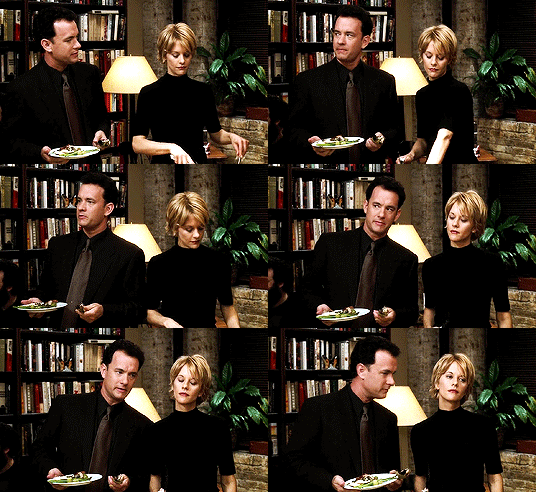
A dupla responsável pelo roteiro é Phoebe e Henry Ephron, pais de Nora Ephron. Como coincidência interessante, Nora mais tarde escreveu e dirigiu “Mensagem para Você” (1998), um filme que também é sobre uma mulher que se apaixona por um homem cujo trabalho poderá deixá-la desempregada - no caso, Meg Ryan interpretava a dona de uma pequena livraria e Tom Hanks era o dono de uma grande rede de livrarias. Há mais uma conexão curiosa com o cinema clássico aqui: “Mensagem para Você” é um remake da comédia de 1940 de Ernst Lubitsch, “A Loja da Esquina”.

The duo responsible for the screenplay is Phoebe and Henry Ephron, Nora Ephron’s parents. As a nice coincidence, Nora later wrote and directed “You’ve Got Mail” (1998), a film also about a woman who falls in love with a man whose work may leave her unemployed - in that case, Meg Ryan played the owner of a small bookstore and Tom Hanks the owner of a big branch of libraries. There is one more nice classic film connection here: “You’ve Got Mail” is a remake of the 1940 Ernst Lubitsch comedy “The Shop Around the Corner”.
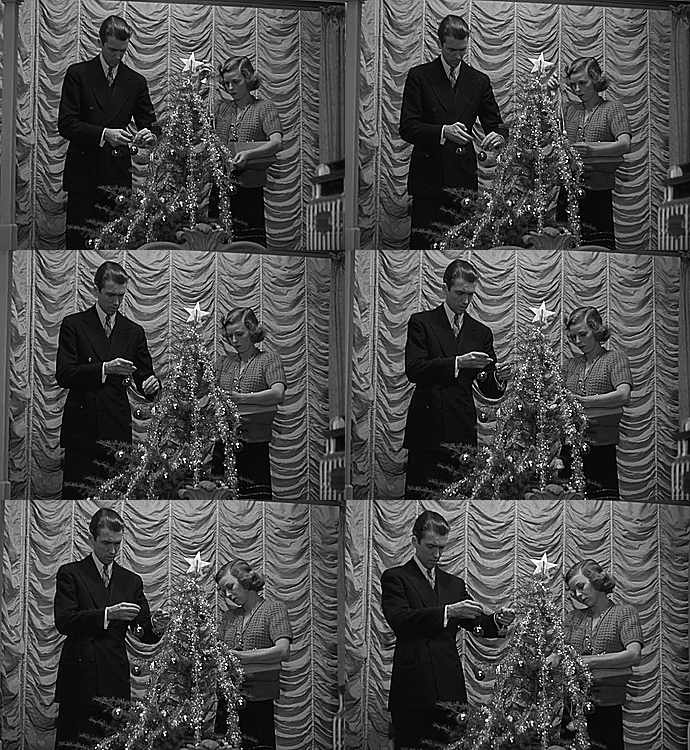
"A Loja da Esquina / The Shop Around the Corner"
"Mensagem para Você / You've Got Mail"

Como podemos ver no filme, antes da internet, as pessoas ligavam para departamentos de referências sempre que precisavam de alguma informação - por exemplo, os versos exatos de um poema ou os nomes das renas do Papai Noel - em especial em empresas de telecomunicações como a do filme. É interessante ver que este departamento só tem mulheres como funcionárias - e Peg diz em uma cena que há só homens no departamento legal. De fato, as meninas do departamento de referências são bibliotecárias, e há mais bibliotecárias do que bibliotecários: de acordo com o censo norte-americano, atualmente 83% dos bibliotecários são mulheres, e nos anos 1930 essa porcentagem era muito maior: incríveis 92%!

As we can see in the movie, before the internet, people called reference departments whenever they wanted any information - for instance, the exact words of a poem or the names of Santa Claus’ reindeers - in special in broadcasting companies like the one in the film. It’s interesting to see that this department has only women working in - and Peg later says that there are only men in the legal department. Indeed, the girls at the reference department are librarians, and there are more female librarians than male ones: according to the US census, today 83% of librarians are female, and in the 1930s this percentage was much higher: a whopping 92%!
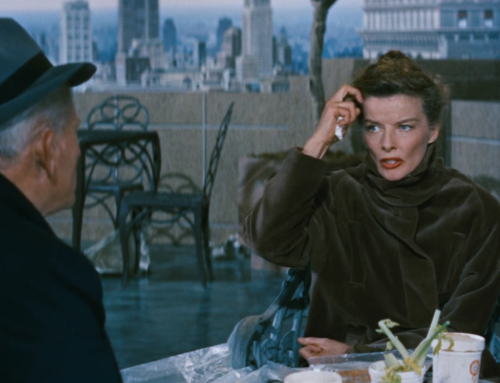

Eu adoraria trabalhar no mesmo departamento de referências de Miss Watson, Miss Costello, Miss Saylor e Miss Blair. Estar cercada de livros - estar cercada de conhecimento! - o dia todo é emocionante. Além disso, eu sou muito boa em memorizar informações inúteis e curiosidades estranhas. Talvez eu pudesse ser uma especialista em cinema clássico, assim como Miss Costello é especialista em fatos sobre baseball.

I’d love to work in the same reference department as Miss Watson, Miss Costello, Miss Saylor and Miss Blair. Being around books - being around knowledge! - all day long is exciting. Moreover, I excel at keeping useless information and weird trivia memorized. Maybe I could be an expert in classic film info, just like Miss Costello is an expert in baseball facts.

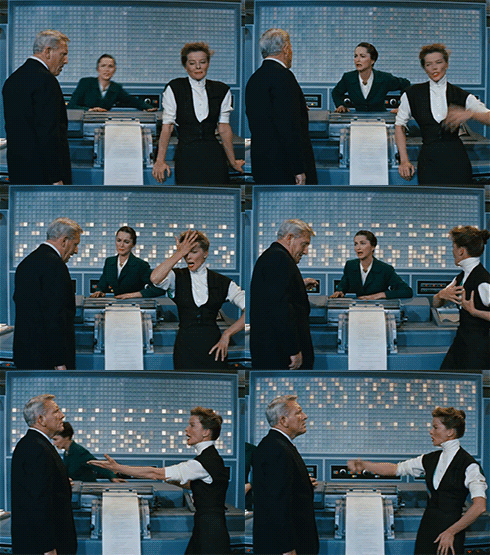
Quando Miss Warriner (Neva Patterson) chega para instalar o EMMARAC, o cérebro eletrônico, as meninas do departamento de referências mantêm seus empregos apenas para inserir no cérebro todas as informações que elas possuem - e então elas serão demitidas. EMMARAC foi baseado em computadores da IMB, e assim como todos os computadores primitivos, ele era muito grande, do tamanho de uma casa. Agora temos smartphones que cabem na palma de nossas mãos e são mais poderosos do que qualquer computador primitivo. Mas uma coisa não mudou: se o usuário não conseguir usar o cérebro eletrônico com sabedoria - fazendo a questão certa para chegar à resposta correta, e interpretando a resposta - o cérebro eletrônico é inútil, mesmo com toda a informação do mundo.

As Miss Warriner (Neva Patterson) arrives to install EMMARAC, the electronic brain, the girls from the reference department are kept there only to feed the brain with all the available information they have - and then they will be fired. EMMARAC was based on a real computer by IBM, and as all other primitive computers, it was very big, the size of a room. Now we have smartphones that are the size of our hands and are also more powerful than any primitive computer. But one thing remains: if the user can’t use the electronic brain properly - by asking the precise question to get a precise answer, and by interpreting this answer - the electronic brain is useless, even with all the information in the world.

Embora tenha sido recebido com críticas moderadas em 1957, hoje muitas pessoas consideram “Amor Eletrônico” a mais divertida das colaborações de Hepburn e Tracy. No site Rotten Tomatoes, o filme tem 100% de aprovação. Não há dúvidas de que o filme envelheceu bem, não apenas com humor atemporal, mas também com um tema ainda relevante: homem contra máquina, o coração humano contra o cérebro metálico. Ainda estamos debatendo sobre as profissões que se tornarão obsoletas graças à tecnologia, e bibliotecárias são geralmente citadas em listas de profissões que em breve desaparecerão. Como Katharine Hepburn mostra no filme - e eu, como estudante de biblioteconomia, concordo - nos sempre precisaremos de cérebros humanos preparados para lidar com a informação. Nenhum computador saberá como usar e interpretar informações sabiamente ou, digamos, escrever uma crítica de filme como essa.

Although it was received with moderate reviews in 1957, many people today consider “Desk Set” to be the funniest of the Hepburn / Tracy collaborations. On Rotten Tomatoes, the film holds a 100% rate of approval. There is no doubt the film stands the test of time, not only with atemporal humor, but also with a still relevant theme: man versus machine, the human heart versus the metallic brain. We’re still debating about what professions will become obsolete thanks to technology, and librarians are often cited in lists of professions doomed to disappear. As Katharine Hepburn shows in this movie - and, as a library science student, I agree - we’ll always need prepared human brains to handle information. No computer will know how to properly use and interpret information or, let’s say, write a movie review like this.


This is my contribution to the Second Spencer Tracy and Katharine Hepburn blogathon, hosted by Crystal and Michaela at In the Good Old Days of Classic Hollywood and Love Letters to Old Hollywood.

Friday, April 5, 2019

Um Amor de Professora (1958) / Teacher’s Pet (1958)


Em muitos países – por exemplo, no Brasil – não é necessário ter um diploma em jornalismo para ser jornalista. Claro, há muitos colunistas convidados escrevendo em jornais, revistas e sites, e muitos mais que são chamados de jornalistas mas que aprenderam a profissão ao exercê-la todos os dias, durante muitos anos. Um homem que aprendeu jornalismo nas ruas e nas salas de redação dos jornais é o protagonista de “Um Amor de Professora” (1958), interpretado por ninguém menos que Clark Gable – fazendo par com Doris Day, o que pode soar estranho de início, mas funciona como mágica.

In many countries – like in Brazil – it's not necessary to have a degree in journalism to be a journalist. Sure, there are many guest columnists writing for newspapers, magazines and websites, and there are many more who are called journalists but who learned the profession by doing it every day, for many years. One man who learned journalism in the streets and newspapers rooms is the lead of “Teacher's Pet” (1958), played by no other than Clark Gable – in a pairing with Doris Day, which may sound odd at first, but it works like magic.


James ‘Jim’ Gannon (Clark Gable) não precisou ir para a faculdade para se tornar editor de um jornal e autoridade em seu meio. Ele diz a uma preocupada mãe de um dos aprendizes do jornal tudo o que pensa sobre estudar jornalismo na faculdade: é uma perda de tempo, porque só se aprende jornalismo fazendo jornalismo. Esta também é a razão pela qual Jim se recusa a dar uma palestra em um curso de jornalismo – uma recusa que é multiplicada por 100 quando ele descobre que o curso tem uma mulher como professora. E uma mulher que vê o jornalismo como vocação, não como negócio.

James 'Jim' Gannon (Clark Gable) didn't need to go to college to become an editor at a newspaper and an authority in his field. He tells a worried mother of one of the newspaper apprentices what he thinks about going to school to study journalism: a waste of time, because you can only learn journalism by doing it. This is also the reason why Jim refuses to give a lecture at a journalism course – a refusal that is multiplied by 100 when he learns that the course is taught by a woman. And a woman that sees journalism as a profession, while Jim sees journalism as a trade.


Mesmo protestando, Jim é obrigado pelo chefe a ir ao curso de jornalismo dar a palestra. Entretanto, uma carta raivosa de recusa escrita por ele chega antes nas mãos dela e, quando ele está na sala de aula, esperando para falar com a surpreendentemente bela professora Erica Stone (Doris Day), ela lê a carta e ridiculariza o seu conteúdo. Jim então tem uma ideia: ele irá se matricular no curso, e ensinar para a professora que jornalismo não pode ser ensinado em uma sala de aula.

No matter his protests, Jim is obligated by his boss to go to the journalism course to give the lecture. However, an angry letter he wrote arrives before him and, when he is in the classroom, patiently waiting to talk to the surprisingly pretty teacher Erica Stone (Doris Day), she reads his letter and ridicules the content. Jim then has an idea: he will enroll in the course, and teach the professor that journalism can't be taught in a classroom.


Assim Jim se matricula sob o pseudônimo Gallagher e logo se torna um aluno brilhante. Sua escrita é tão boa que Erica  decide ser sua tutora, e ele fica com ciúmes quando ela não pode orientá-lo todas as noites devido aos seus encontros com o renomado psicólogo Dr Hugo Pine (Gig Young). Mesmo quando a verdade sobre a identidade de Jim / Gallagher vem à tona, nada sai como esperado.

So Jim enrolls under the name of Gallagher and soon becomes a stellar student. His writing is so good that Erica decides to tutor him personally, and he gets jealous when she isn't able to tutor him every night because of her meetings with the reputed psychologist Dr Hugo Pine (Gig Young). Even when the truth is told about Jim's / Gallagher's identity, nothing comes as expected.


Clark Gable nunca esteve tão expressivo quanto em “Um Amor de Professora”. Como Hugo, Gig Young não é apenas um rival para Jim, mas também um sabe-tudo – que também dança mambo – que mexe com a confiança de Jim. Mamie van Doren tem um pequeno papel como Peggy, uma cantora que é amiga de Jim, e infelizmente é retratada como uma loira burra para arrancar risadas.

Clark Gable is at his most expressive in “Teacher's Pet”. As Hugo, Gig Young is not only a rival in love to Jim, but also a know-it-all – who also dances mambo – and undermines Jim's confidence. Mamie van Doren has a small role as Peggy, a singer who is a friend of Jim's, and unfortunately is portrayed as a dumb blonde for laughs.


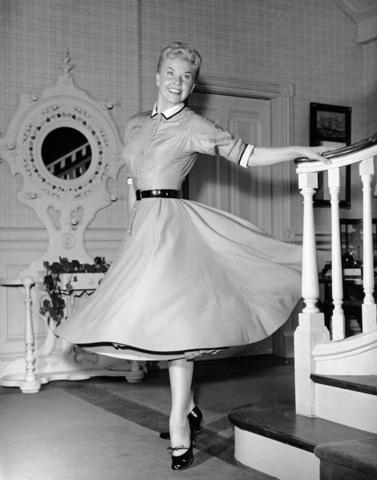
Doris Day e Clark Gable têm uma boa química? Bem, não tenho certeza se ‘química’ é a palavra correta aqui. Doris e seu parceiro e amigo Rock Hudson certamente tinham química, e em alguns filmes eles inclusive usaram a situação de confusão de identidades que é explorada também em “Um Amor de Professora”, mas o que ela mostra com Gable é diferente: o personagem dele está sexualmente atraído por ela, enquanto ela é relutante quanto às investidas dele.

Do Doris Day and Clark Gable have a good chemistry? Well, I don't know if 'chemistry' is the right word here. Doris and her constant partner and friend Rock Hudson certainly had chemistry, and in some movies they even played the situation of mistaken identities explored in “Teacher's Pet”, but what she shows here with Gable is different: his character is lusting over her, while she is reluctant to his acts.


“Um Amor de Professora” foi escrito pela dupla de marido e esposa Michael Kanin e Fay Kanin – o irmão mais novo de Michael é o roteirista Garson Kanin, que por sua vez foi casado com a atriz Ruth Gordon. Graças aos Kanin, “Um Amor de Professora” é muito engraçado, em especial quando Gig Young aparece em cena.

“Teacher's Pet” was written by the husband and wife duo Michael Kanin and Fay Kanin – Michael's younger brother is the more famous screenwriter Garson Kanin, who by his turn was married to actress Ruth Gordon. Thanks to the Kanins, “Teacher’s Pet” is very funny, in special whenever Gig Young was on screen.


Mesmo não gostando de remakes, eu adoraria ver uma versão de “Um Amor de Professora” com os gêneros dos protagonistas trocados. Obviamente, com as redes sociais que temos hoje, seria quase impossível que um professor não conhecesse o rosto de um jornalista que foi convidado a dar palestra para sua turma, mas eu acredito que algum truque poderia ser usado para fazer a história funcionar – com uma jornalista disfarçada, querendo ensinar uma lição a um professor, mudando completamente o visual para se passar por aluna, por exemplo. Mudar os gêneros dos protagonistas certamente criaria novas e interessantes dinâmicas.

As much as I don't like remakes, I'd love to see a gender-bent version of “Teacher's Pet”. Of course, today with social media, it'd be nearly impossible for a teacher to not know the face of a journalist who was invited to give a lecture to their class, but I imagine that some trick could be used to make the plot work – with the undercover female journalist, wanting to teach a lesson to a male teacher, changing her whole look before enrolling in his class, for instance. Bending the genders of the leads certainly would create new and interesting dynamics and situations.


Além de ser um filme delicioso, apesar de pouco conhecido, “Um Amor de Professora” traz um bom debate sobre conhecimento, educação, experiência e sabedoria, e nos ensina que o mais importante é saber equilibrar tudo isso.

Besides being a delightful, yet little know film, “Teacher's Pet” brings a nice debate about knowledge, education, experience and wisdom, and teaches us that the most important thing is balancing all that.

This is my contribution to the Third Doris Day blogathon, hosted by Michaela at Love Letters to Old Hollywood.


Saturday, September 9, 2017

A Mulher de Branco (1948) / The Woman in White (1948)

“A Mulher de Branco” me lembra de vários filmes da década de 1940. Pode ser um tema em comum, um personagem, uma situação, um cenário. Como eu fui capaz de fazer tantas conexões, foi com curiosidade e surpresa que descobri que a história que deu origem ao filme foi uma das primeiras do gênero investigativo.

“The Woman in White” reminds me of many films made in the 1940s. It may be a common theme, a character, a situation, a set. Since I was able to make so many connections, it was curious to know that the original story was a pioneer in the investigation genre.


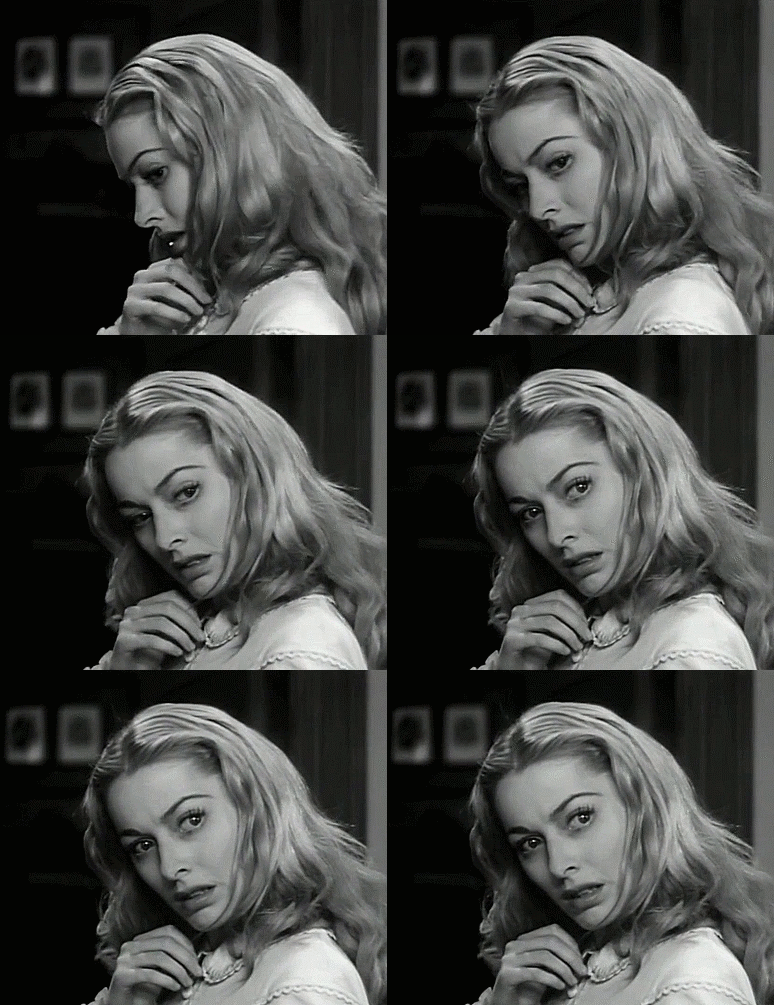
Assim como em “O Retrato de Jennie” (1948), “A Mulher de Branco” apresenta uma mulher misteriosa que é vista por um pintor. Ela é primeiro uma peça de um mistério, e depois uma fonte de inspiração. A mulher misteriosa aparece perto da floresta e encontra o professor de pintura Walter Hartright (Gig Young), que acaba de chegar à cidade. Ela desaparece quando surge uma carruagem na estrada, e diz algumas coisas estranhas sobre como ela finge viver na casa em que o senhor Hartright está indo trabalhar.

Like in “Portrait of Jennie” (1948), “The Woman in White” has a mysterious woman that appears for a painter. She is first the piece of a mystery, and second a source of inspiration. The mysterious woman appears in the woods and meets the drawing tutor Walter Hartright (Gig Young), who has just arrived in town. She vanishes when a carriage comes near, and says some odd things about pretending to live in the house Mr Hartright is going to work in.


Assim como em “Silêncio nas Trevas” (1946), o dono da propriedade é inválido. Aqui ele é o senhor Frederick Fairlie (John Abbott), um homem com ataques nervosos que se sente zonzo quando alguém fala alto perto dele. Fairlie serve mais como alívio cômico. Junto com ele está sempre seu criado, Louis, interpretado por Curtis Bois, um ator alemão cuja carreira no cinema durou 82 anos.

Like in “The Spiral Staircase” (1946), the owner of the house is ill and invalid. Here it is Mr Frederick Fairlie (John Abbott), a man with weak nerves who feels dizzy if someone talks too loud. Mr Fairlie comes across as comic relief. With him there is always his companion, Louis, played by Curtis Bois, a German actor famous for having a career spanning 82 years.


Assim como em “O Fantasma Apaixonado” (1947), há um clima sobrenatural desde as primeiras cenas. O senhor Hartright é contratado para ser professor de pintura da sobrinha do senhor Fairlie, Laura (Eleanot Parker), uma moça incrivelmente parecida com a mulher de branco que surgiu naquela noite.

Like in “The Ghost and Mrs Muir” (1947), there is a supernatural feeling since the beginning. Mr Hartright was hired to give drawing lessons to Mr Fairlie's niece, Laura (Eleanor Parker), who has a striking resemblance with the woman in white he saw that night.


Mas o que acontece na propriedade Limmeridge naquela metade do século XIX? O senhor Fairlie está muito doente, e hospeda agora em sua casa o conde Fosco (Sydney Greenstreet),cujo comportamento é duvidoso. Quem cuida da casa é a prima de Laura, Marian (Alix Smith), uma moça séria que gosta do senhor Hartright, mas não acredita quando ele conta a história da mulher de branco. E a própria Laura também gosta do senhor Hartright, mas está noiva de Sir Percival (John Emery).

But what happens in the Limmeridge house in that middle of the 19th  century? Mr Fairlie is too ill, and is currently receiving the visit of Count Fosco (Sydney Greenstreet), who has a suspicious behavior. The person who takes care of the house is Laura's cousin, Marian (Alexis Smith), a practical girl who likes Mr Hartright, but can't believe his story about the woman in white. And Laura herself also likes Mr Hartright, but she is engaged to Sir Percival (John Emery).


O que se segue é chantagem, gaslighting, intriga e algo que pode ser tanto envenenamento – como em “Interlúdio” (1946) – ou hipnose. Acrescentamos à propriedade Limmeridge a presença aparentemente inofensiva de Agnes Moorehead e o que temos é um bom mistério de época – com Sydney Greenstreet em um de seus melhores momentos.

What follows is blackmail, gaslighting, intrigue, and something that may be poisoning – like in “Notorious” (1946) – or hypnotizing. We add to the Limmeridge house the apparently inoffensive presence of Agnes Moorehead and what we have is a nice period mystery – with Sydney Greenstreet in one of his best moments.


Wilkie Collins escreveu o livro em 1860. “A Mulher de Branco” era, assim como “Werther”, um romance epistolar, no qual a história é contada através de cartas. O livro tem mais de 600 páginas e foi um dos pioneiros do gênero investigativo. Mesmo Hrtright não sendo detetive, ele usa o pensamento lógico e a espionagem para juntar as peças do quebra-cabeças – com uma ajudinha de Marian. O livro foi adaptado para o cinema diversas vezes.

Wilkie Collins wrote the book in 1860. “The Woman in White” was, like “Werther”, an epistolary book, in which the story is told through letters. The book had more than 600 pages and was one of the pioneers of the detective fiction. Although Hartright is no detective, he employs logical thinking and snooping in order to put the pieces of the puzzle together – with a little help from Marian. The book was adapted to the screen several times.


Se considerarmos apenas o uso das sombras e uma cena em particular com um candelabro, podemos chamar este filme de um noir de época. A trilha composta por Max Steiner é fantástica, como sempre. E eu não posso elogiar o cenário o suficiente. A atmosfera do filme é sobrenatural sem ser nebulosa, e isto é um ponto positivo. Se há pontos negativos, eles vieram da história original, que perde força e fica estranha em certo momento, quando se escolhe uma saída fácil.

If we consider only the use of shadows and one particular scene with a chandelier, we could call this film a period noir. The score by Max Steiner is fantastic, as always. And I can't say enough good things about the set decoration. The atmosphere of the movie is supernatural without being foggy, and that’s quite an accomplishment. If there are let downs, they are in the original story, that loses power and becomes odd at a certain point, choosing an easy way out.


“A Mulher de Branco” é um dos 12 filmes que pretendo ver em 2017. Não lembro quem recomendou a película para mim, mas acredito que tenha sido a Nitrate Diva no Twitter. De qualquer forma, eu gostei da recomendação e agora também recomendo “A Mulher de Branco” para qualquer pessoa que goste de cinematografia de primeira e não se importe com algumas falhas no roteiro.

“The Woman in White” is one of the 12 new-to-me movies I intend to watch in 2017. I don’t remember who first recommended it to me, but I think it was Nitrate Diva on Twitter. Anyway, whoever you were, I appreciated the recommendation and I’ll also recommend “The Woman in White” to anyone who likes great cinematography and doesn’t care about a few plot holes.

This is my contribution to the Colours Blogathon, hosted by Thoughts All Sorts.

Tuesday, April 4, 2017

Corações Enamorados / Young at Heart (1954)

Quando eu comecei a assistir a “Corações Enamorados” (1954), eu esperava momentos agradáveis em uma comédia romântica com Doris Day e Frank Sinatra. Mas eu fui trouxa! É uma história de amor, sim, mas muito mais sombria do que eu esperava. E eu gostei de cada minuto do filme.

When I started watching “Young at Heart” (1954), I thought I was in for a treat: a romantic comedy with Doris Day and Frank Sinatra. Boy, how wrong I was! It is a love story, yes, but much darker than I expected. In the end, I was shaking. And I enjoyed every minute of it.
A música corre no sangue da família Tuttle. O pai, Gregory (Robert Keith), é, obviamente, professor de música. As três filhas tocam instrumentos, mas estão mais interessadas em outra coisa: se casar. Quando a mais velha, Fran (Dorothy Malone) anuncia seu noivado, as mais novas, Laurie (Doris Day) e Amy (Elisabeth Fraser), ficam com medo de se tornarem solteironas como a tia Jessie (Ethel Barrymore), que também vive com eles.

Everybody loves music in the Tuttle family. The father, Gregory (Robert Keith), is, obviously, a music teacher. The three daughters all play instruments, but they’re more interested in one thing: getting married. When the oldest, Fran (Dorothy Malone) tells the family she is engaged, the two younger girls, Laurie (Doris Day) and Amy (Elisabeth Fraser), fear becoming spinters like aunt Jessie (Ethel Barrymore), who also lives in the house.
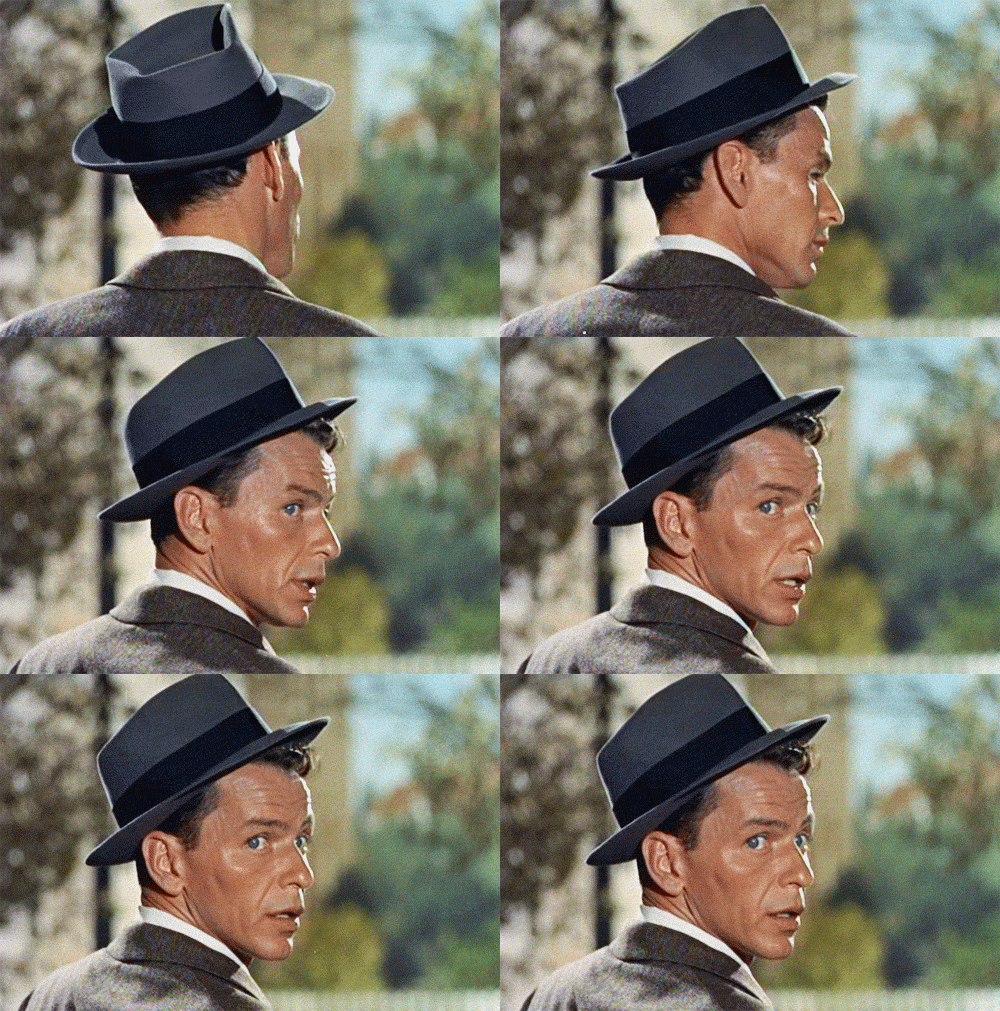
Um dia, um belo estranho chega à cidade. Ele não é Frank Sinatra, e nem é desconhecido. Ele é Alex Burke (Gig Young), um músico cujo pai era um grande amigo de Gregory Tuttle. Ele veio estudar no conservatório de Gregory e fica hospedado na casa dos Tuttle. Ele se apaixona por Laurie à primeira vista. Entretanto, todas as três irmãs Tuttle se apaixonam por ele.

One day, a tall dark stranger arrives in town. He is not Frank Sinatra, and he’s not such a stranger either. He is Alex Burke (Gig Young), a musician whose father was best friends with Gregory Tuttle. He came to study at Gregory’s conservatory and to live in the Tuttle’s house. He is instantly smitten with Laurie. However, all three Tuttle sisters fall for him.
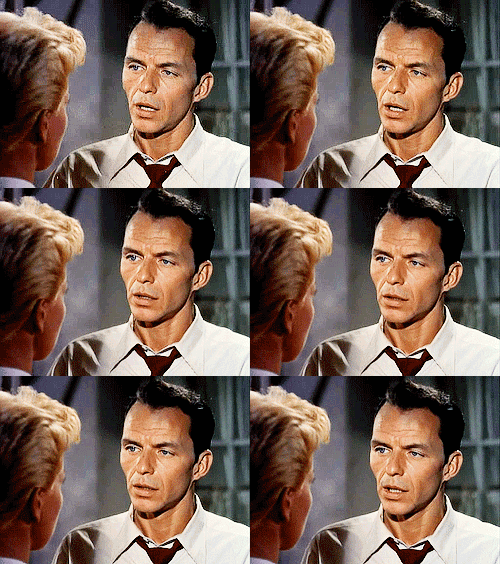
Laurie e Alex parecem feitos um para o outro. Então chega outro homem: Barney Sloan (Frank Sinatra) chega para ajudar Alex com arranjos para pian0. Barney é um músico tão talentoso quanto Alex – talvez até mais – mas é muito amargo. Ele está sempre reclamando, nunca sorri e culpa tudo e todos por seus fracassos.

Laurie and Alex seem perfect for each other. Then another guy arrives: Barney Sloan (Frank Sinatra) comes in to help Alex with some piano arrangements. Barney is as talented a musician as Alex – maybe even more – but he is too bitter. He’s always complaining, never smiles, blames everybody and everything for his lack of success.
Laurie fica interessada neste homem cínico e se apaixona. Isto prova que o “amor à primeira vista” é um mito e que na verdade a “animosidade no primeiro encontro” é o verdadeiro indicativo de amor (alerta de sarcasmo!). E quando você pensa que tudo vai muito bem, vem a tragédia.

Laurie gets interested in such a cynical character and falls in love. This proves that “love at first sight” is a myth and actually “animosity at first encounter” is the real indicative of love (sarcasm alert!). And when you think everything is wonderful, tragedy strucks.
“Corações Enamorados” foi o primeiro filme produzido pela Arwin Productions, companhia de Doris Day e de seu marido Martin Melcher. Sinatra não gostava nada de Melcher, e insistiu para que ele ficasse longe do set. Frank tentou alertar Doris para o comportamento do marido, mas não funcionou: 14 anos depois, quando Doris e Martin se separaram, ela descobriu que ele a havia deixado sem dinheiro algum.

“Young at Heart” was the first film produced by Arwin Productions, a company owned by Doris Day and her then husband Martin Melcher. Sinatra disliked Melcher immensely, and demanded him to not be allowed on set. Frank tried to prevent Doris of her husband’s behavior, but it didn’t work: 14 years later, when Doris and Martin divorced, she found out he had left her penniless.
Doris Day & Martin Melcher
E este não foi o único problema que Sinatra causou no set. Ele exigiu que o final fosse modificado – porque “Corações Enamorados” é um remake de “Quatro Filhas”, que foi o primeiro filme de John Garfield. Ele também brigou com o diretor de fotografia, Charles Lang, e exigiu que Ted D. McCord substituísse Lang. Estes episódios mostram que Frank podia ser tão amargo quanto seu personagem, mas outra situação no set mostra seu lado doce: ele organizou uma festa de aniversário surpresa para Ethel Barrymore, então com a saúde frágil, e ela adorou a gentileza.

And this wasn’t the only trouble Sinatra caused on set. He demanded the ending to be changed – because “Young at Heart” is a remake of “Four Daughters” (1938), which was John Garfield’s screen debut. He also argued with the first director of photography, Charles Lang, and demanded Ted D. McCord to replace Lang. These episodes show that Frank could be as bitter as his character, but another on-set situation shows his sweet side: he threw a surprise birthday party for co-star Ethel Barrymore, who was then in frail health, but who loved the gesture.  
Sinatra e Day cantaram juntos no rádio em várias ocasiões nos anos 40 e são suas músicas, cantadas solo ou em dueto, o destaque de “Corações Enamorados”. No filme, eles não têm muita química – o que eles demonstram é mais muita compaixão. Ethel Barrymore é ótima no começo, mas quase desaparece com o andamento do filme. Gig Young é como um Ralph Bellamy para Doris Day – o que significa que em amis de um filme ele quase se casa com ela, mas acaba perdendo-a.

Sinatra and Day sung together in radio in various occasions of the 1940s and their songs, sung in a duet or not, are the highlight of “Young at Heart”. In the movie, they don’t have a great chemistry – it’s rather a lot of compassion what they have. Ethel Barrymore is delightful in the beginning, and nearly vanishes as the film progresses. Gig Young is a Ralph Bellamy type to Doris Day – which means that more than once he almost marries her character, but ends up losing her.
Não é mais um musical escapista. Em sua fórmula e andamento, é muito similar a “Música e Lágrimas”, feito no mesmo ano. Sinceramente, eu gostei de “Corações Enamorados” e não sei como me sentir em relação ao outro fim que fora antes considerado. Fico feliz que o filme tenha acabado com um clima positivo – o que é muito mais apropriado para sua época e suas estrelas.

It’s not another feel-good musical. In pace, it’s very similar to “The Glenn Miller Story”, released the same year. Sincerely, I liked “Young at Heart”, and I’m not sure about the other end that was first planned. I’m happy it at least ended in a positive note – much more suitable for its time and its stars.

This is my contribution to the Doris Day blogathon, hosted by sweet Michaela at Love Letters to Old Hollywood. Here’s our love letter to Dodo!
Related Posts Plugin for WordPress, Blogger...