} Crítica Retrô: literatura

Tradutor / Translator / Traductor / Übersetzer / Traduttore / Traducteur / 翻訳者 / переводчик

Showing posts with label literatura. Show all posts

Friday, May 2, 2025

Inferno (1911) / Dante’s Inferno (1911)


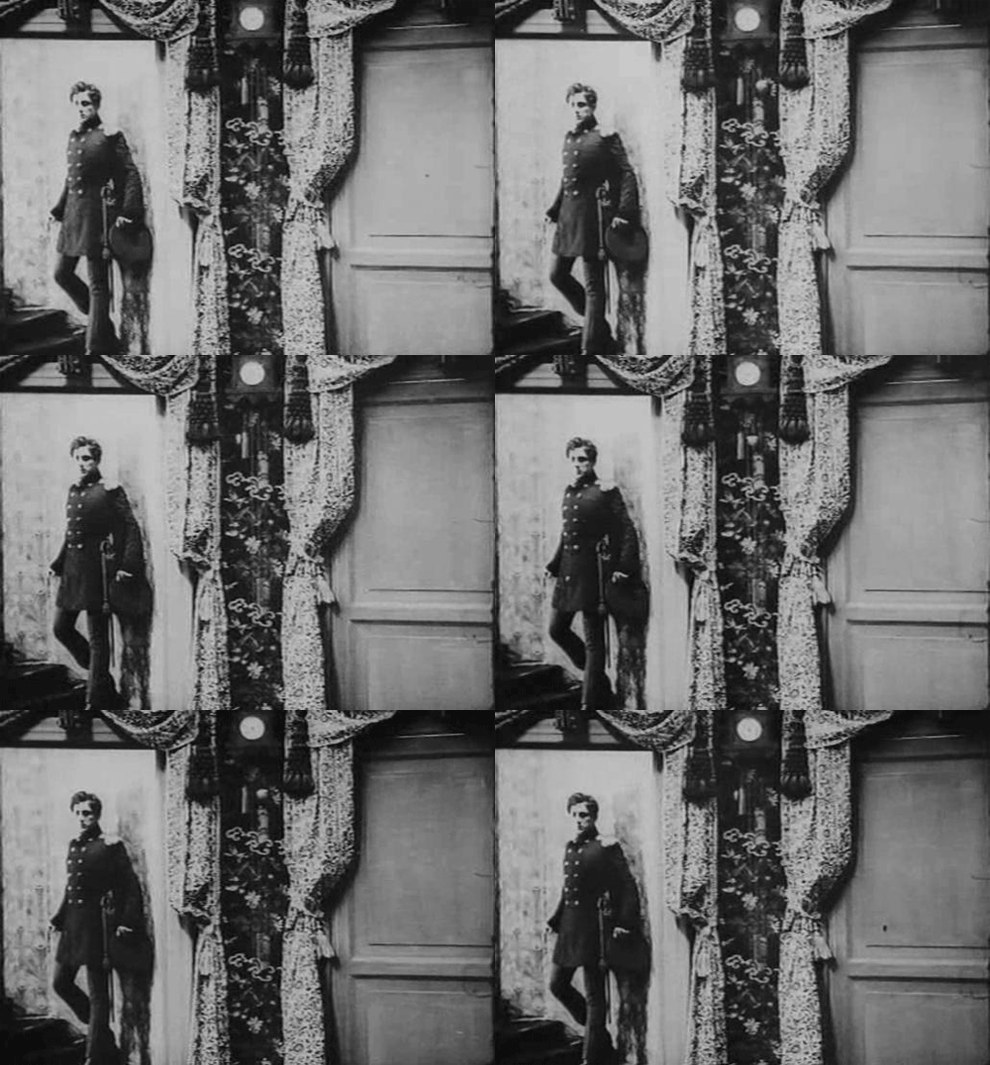
Quando falamos de autores de livros no gênero aventura, quem vem à sua mente? Pode ser Mark Twain com sua dupla Tom Sawyer e Huck Finn, ou talvez Júlio Verne. Dificilmente pensaríamos em alguém como Dante Alighieri como autor de aventura, mas o IMDb não pensa assim. O filme de 1911 “Inferno”, adaptado da “Divina Comédia” de Dante, é um dos primeiros filmes classificado como “aventura” no IMDb.

When we talk about book authors in the adventure genre, who comes to your mind first? It might be Mark Twain with his duo Tom Sawyer and Huck Finn, or maybe Jules Verne. We hardly think of someone like Dante Alighieri as an adventure author, but IMDb thinks differently. The 1911 movie “Dante’s Inferno”, adapted from his “Divine Comedy” is one of the earliest movies labeled “adventure” on IMDb.

Dante (Salvatore Papa) é uma alma vagando por uma floresta quando bestas ferozes (pessoas vestidas em roupas de animais, completas com rabos) impedem que ele deixe o lugar. Ele é resgatado por Virgílio (Arturo Pirovano), mas eles marcham direto para o inferno. Numa excursão guiada pelo poeta, Dante visita os círculos do inferno. Enquanto isso, sua amada Beatrice confiou em Virgílio para ajudá-la a se reunir com Dante.

Dante (Salvatore Papa) is a soul walking through a forest when ferocious beasts (people dressed in animals’ clothes complete with tails) stop him from leaving the place. He’s rescued by Virgilio (Arturo Pirovano), but they march straight to hell. In an excursion guided by the poet, Dante visits all the circles of hell. Meanwhile, his beloved Beatrice has trusted Virgilio to reunite her with Dante.

No último parágrafo me referi a Virgílio como “poeta”, mas ele foi mais que isso. Ele foi O poeta da Roma Antiga, da Idade Média e também do início da modernidade, apenas recentemente deixando os bancos escolares e caindo parcialmente no esquecimento. Ele ficou famoso com, acima de tudo e até hoje, com sua Eneida, um poema épico.

In the last paragraph I referred to Virgilio - or Virgil - as “poet”, but he was more than that. He was THE poet of Ancient Rome, the Middle Ages and even the early modern times, leaving the school benches and thus fading into partial obscurity only very recently. He became famous with, above all and until today, his Aeneid, an epic poem.

Dante ouve a história de vida, ou melhor, a história de morte, de muitas almas que estão no inferno. Não é possível aprofundar nas histórias num filme que dura 65 minutos, mas há pequenos vislumbres de pelo menos três histórias que acontecem em cenários variados. Aqui algum conhecimento da “Divina Comédia” pode ajudar, porque há figuras ilustres contando suas histórias e não é fácil reconhecê-las no filme.  

Dante hears the life story, or rather death story, of many souls who are in hell. Not much can be told deeply in a movie that lasts 65 minutes, but there are small snippets of at least three stories that happen in diverse settings. Here some knowledge of the “Divine Comedy” may help, because there are illustrious figures telling their stories and it’s not easy to recognize them in the film.

Enquanto há alguns efeitos especiais muito bons, como almas flutuando acima da cabeça de Dante, há também alguns primitivos, como as já mencionadas bestas e o cão de três cabeças, Cerberus. Multidões de figurantes, em sua maioria nus, foram necessários para fazer o filme. Você poderia pensar que muita tecnologia seria demandada para transportar para as telas as coisas imaginadas por Dante Alighieri, como uma chuva de fogo, mas mais uma vez o primeiro cinema mostra como era inventivo.

While there are some very good special effects, like souls floating over Dante’s head, there are also primitive ones, like the aforementioned beasts and the dog with three heads, Cerberus. Crowds of extras, most of them naked, were necessary to make this movie. You might think that a lot of technology would be necessary to portray on screen the things imagined by Dante Alighieri, such as a rain made of fire, but once again the early cinema shows its inventiveness.

O visual do filme foi inspirado pelo artista Gustave Doré. Suas xilogravuras feitas para ilustrar a “Divina Comédia” de Dante foram seu passaporte para a fama e também a inspiração para o filme. Embora não elogiado em vida como um grande artista, os talentos de Doré foram reconhecidos após sua morte com apenas 52 anos.

The overall look of the film was inspired by artist Gustave Doré. His wood-engravings made to illustrate Dante’s “Divine Comedy” were his passport to fame and also the inspiration for the movie. Although not praised in life as a great artist, Doré’s talents were recognized after his death at only 52.

O cinema era um negócio de família para Giuseppe de Liguoro, que atuou em “Inferno” e também foi um dos diretores. Vindo da aristocracia, ele dirigiu 91 filmes na era muda. Um de seus filhos, Eugenio, por vezes atuava nos filmes do pai, e seu outro filho, Wladimiro, se tornou ator / diretor / diretor de fotografia.

Cinema as a family affair can be found in Giuseppe de Liguoro, who acted in “Dante’s Inferno” and is also one of the directors. Coming from an aristocratic background, he directed 91 films in the silent era. One of his sons, Eugenio, sometimes acted in his films, and his other son, Wladimiro, became an actor / director / cinematographer.

Custando o dobro de outro épico do primeiro cinema, “Quo Vadis?”, feito no ano seguinte, “Inferno” é atualmente o mais antigo longa-metragem preservado e ajudou a trilhar o caminho para os longas por onde passou, fosse na Europa ou nos Estados Unidos, em sessões com custo diferenciado do ingresso, educando  o público para deixá-los acostumados a ficar sentados por períodos mais longos de tempo.

Costing twice as much as the early epic “Quo Vadis?”, made the following year, “Dante’s Inferno” is now the oldest surviving feature film and helped pave the way for features whenever it was exhibited, be it Europe or the United States, in sessions that had a different pricing and educated their public to make them used to sitting through longer periods of time.

Considerado perdido por muitos anos, uma cópia foi encontrada na Filmoteca Vaticana, um arquivo criado pelo Papa João XXIII em 1959. Tive sorte de encontrar uma cópia cristalina e restaurada no YouTube. “Inferno” demorou três anos para ficar pronto, e é ótimo que possamos nos deliciar com essa estranha aventura saída da mente de um dos maiores escritores da História.

Presumed lost for many years, a copy was found at the Filmoteca Vaticana, an archive established by the Pope John XXIII in 1959. I was lucky enough to find a pristine restored copy on YouTube. “Dante’s Inferno” took three years to make, and it’s great that we can still rejoice at this strange adventure taken from the mind of one of the greatest writers in History.

This is my contribution to the Adventurethon, hosted by Gill and Barry at Realweegiemidget Reviews and Cinematic Catharsis.

Friday, November 15, 2019

Fernando Pessoa e o cinema / Fernando Pessoa and film


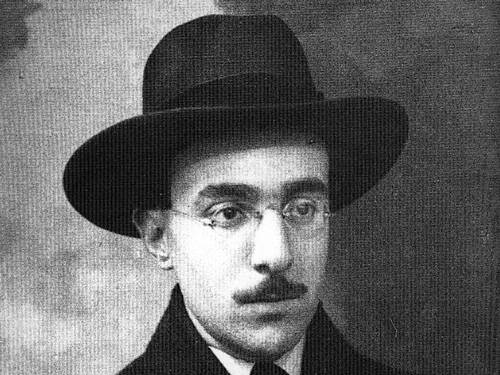
Os dois escritores mais famosos de Portugal são o romancista José Saramago – que inclusive ganhou o Nobel – e o poeta Fernando Pessoa. Enquanto Saramago chegou a Hollywood com a adaptação paras as telas de seu livro “Ensaio Sobre a Cegueira” em 2008 – curiosamente dirigido pelo diretor brasileiro Fernando Meirelles – Pessoa nunca chegou a Hollywood. De acordo com o IMDb, seus escritos serviram de base para 36 produções, a maioria curtas-metragens. Mas o próprio Pessoa já havia sonhado em conquistar as telas.

The two most famous writers from Portugal are novelist José Saramago – who is also a Nobel laureate – and poet Fernando Pessoa. While Saramago made it to Hollywood when his novel “Ensaio Sobre a Cegueira” (Essay on Blindness) was adapted for the screen as the film “Blindness” (2008) – curiously directed by Brazilian director Fernando Meirelles – Pessoa never made it to Hollywood. According to IMDb, his writings were the base for 36 productions, most of them shorts. But Pessoa himself once dreamed about reaching the screen.


É importante dizer que Fernando Pessoa não era só um: ele era múltiplo. Ele criou diversos heterônimos para escrever em estilos diferentes e sobre assuntos diversos – e até criou biografias para eles. Um destes heterônimos era Álvaro de Campos, um poeta futurista, engenheiro e quase sempre um homem amargo. Em seu poema “Carnaval” ele diz: “Fitas de cinema correndo sempre / E nunca tendo um sentido preciso”. Álvaro de Campos criticava tudo, incluindo o cinema.

It’s important to say that Fernando Pessoa wasn’t just one: he was multiple. He created several alter egos / heteronyms to write in different styles and about different subjects – and even created biographies for them. One of these alter egos was Álvaro de Campos, a futuristic poet, an engineer and almost always a bitter man. In his poem “Carnaval” he says: “Film reels always running / And never having a precise sense”. Álvaro de Campos criticized everything, including cinema.
 
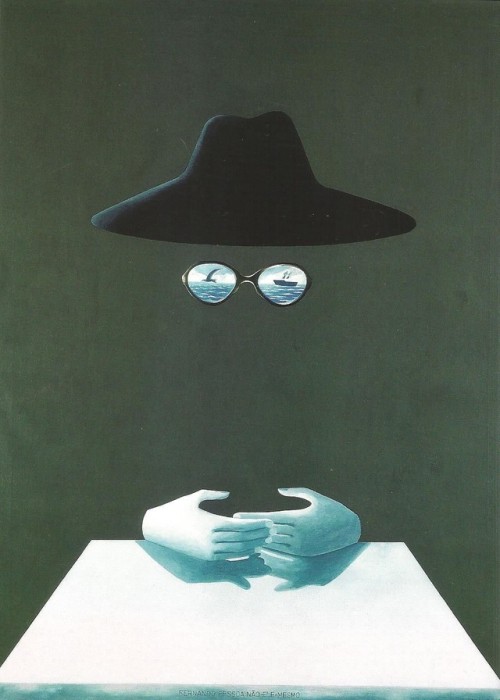
Fernando Pessoa Not Himself
(oil on canvas, 1976 by António Costa Pinheiro)
Mas o próprio Fernando Pessoa pensava que o cinema poderia ser muito útil para promover Portugal em terras estrangeiras. Então, o que ele fez? Ele planejou abrir uma companhia cinematográfica! Seu empreendimento, que seria chamado Cosmopolis, produziria filmes especiais de propaganda, mostrando o melhor lado do moderno e agora democrático país que era Portugal – o país se tornou uma república em 1910, abandonando o regime monárquico.

But Fernando Pessoa himself thought that cinema could be very useful to promote Portugal in foreign lands. So, what did he do? He planned to open a film company! His endeavor, to be called Cosmopolis, would produce special propaganda films, showing the best side of the modern and now democratic Portugal – the country became a republic in 1910, abandoning the monarchic government.
 
"I have in me all the dreams of the world"
O plano da Cosmopolis foi feito no final da década de 1910 e logo abandonado. Mas Pessoa voltou nos anos 20 com uma nova ideia: uma produtora de cinema a ser chamada de Ecce Film, que teria sua sede na famosa Rua de São Bento, 333-335, onde muitos filmes já haviam sido feitos. Este empreendimento também não se realizou. Mas Pessoa não se importou, pois em meados dos anos 1920 ele estava escrevendo argumentos para o cinema.

The Cosmopolis plan was made in the late 1910s and soon abandoned. But Pessoa came back in the 1920s with a new idea: a film production company to be called Ecce Film, and to have its headquarters at the famed São Bento Street, 333-335, where many films had been shot. This endeavor also didn’t become true. But Pessoa didn’t care, as in the mid-1920s he was actually writing film arguments.


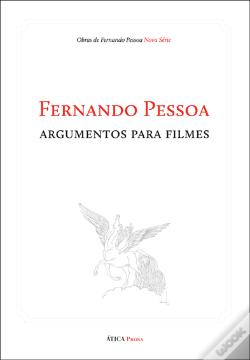
Os sete argumentos que Fernando Pessoa escreveu foram mantidos em segredo por quase 80 anos, e em 2011 eles foram reunidos no livro “Argumentos para Filmes” pelos pesquisadores Patricio Ferrari e Claudia Fischer. Pessoa escreveu os argumentos em português (apenas os diálogos), inglês e francês, e estes textos podem ser divididos em duas categorias: thrillers (cinco deles) e comédias (os outros dois).

The seven arguments Fernando Pessoa wrote were kept a secret for nearly eighty years, and in 2011 they were reunited in the book “Argumentos para Filmes” (that is, Movie Scripts), by researchers Patricio Ferrari and Claudia Fischer. Pessoa wrote the arguments in Portuguese (dialogues only), English and French, and these texts can be divided in two categories: thrillers (five of them) and comedies (the other two).


Um argumento, intitulado “Três Andares”, demonstraria as desigualdades sociais através de três famílias de um mesmo prédio, mas de diferentes classes sociais, que executam a mesma ação. Um thriller inclusive apresenta o uso do MacGuffin: neste filme, um milionário cruzaria o Atlântico de navio levando consigo um objeto valioso e acompanhado por um detetive particular, e então várias pessoas tentariam roubar este objeto... apenas para descobrir no final que o objeto real já havia sido enviado em outro navio na semana anterior.

One argument, called “Three Floors”, would demonstrate social inequalities by having three families from the same building but from different social classes do the same actions. One thriller even has a clever use of the MacGuffin: in this film, a millionaire would cross the Atlantic by ship taking a valuable object with him and accompanied by a private detective, then several people try to steal this object... only to find out in the end that the real object had been shipped a week earlier in another ship.
Lisbon in the 1920s
É também interessante notar que Pessoa escreveu, em 1930: “Com exceção dos alemães e dos russos, ninguém ainda colocou nada de arte no cinema”. Ele parece refletir aqui a opinião de outros escritores portugueses que escreviam e publicavam a revista Presença e geralmente davam destaque aos filmes alemães e soviéticos. Embora Pessoa criticasse os “homens vazios do cinema”, comparando Mary Pickford e Rodolfo Valentino a aventureiros tolos que apenas queriam quebrar recordes de velocidade (ele usa as palavras “viciados em velocidade, estrelas de papelão do cinema”), uma revista com anotações encontrada em seus pertences mostra que ele estava particularmente interessado no mapa astral de Joan Crawford.

It’s also interesting to see that Pessoa wrote, in 1930: “Except the Germans and the Russians, no one has as yet been able to put anything like art into the cinema”. He seems to reflect here the opinion of fellow Portuguese writers who wrote and published the magazine Presença (Presence) and often highlighted German and Soviet films. Although Pessoa criticized the “film hollow men” of Hollywood, comparing Mary Pickford and Rudolf Valentino to silly adventurers who only wanted to break speed records (he uses the words “speed dopers, film cardboarders”), an annotated magazine found in his belongings shows that he was particularly interested in Joan Crawford’s astrology chart.


Fernando Pessoa faleceu em 1935 aos 47 anos – por causa de cirrose ou pancreatite. Ele deixou muitos trabalhos e empreendimentos inacabados, incluindo todos estes mencionados na seara do cinema. Companhia cinematográfica, produtora de filmes, argumentos fílmicos: é bastante coisa para alguém que escreveu, em uma carta de 1929 para o amigo José Régio: “Ao inquérito sobre cinema não responderei. Não sei o que penso do cinema.”

Fernando Pessoa passed away in 1935 at age 47 – due to either cirrhosis or pancreatitis. He left many works and endeavors unfinished, including all these mentioned in the film world. Film company, production company, seven arguments: it’s a lot for someone who wrote, in a 1929 letter to his friend José Régio: “I won’t answer the questionnaire about cinema. I don’t know what I think about cinema.”
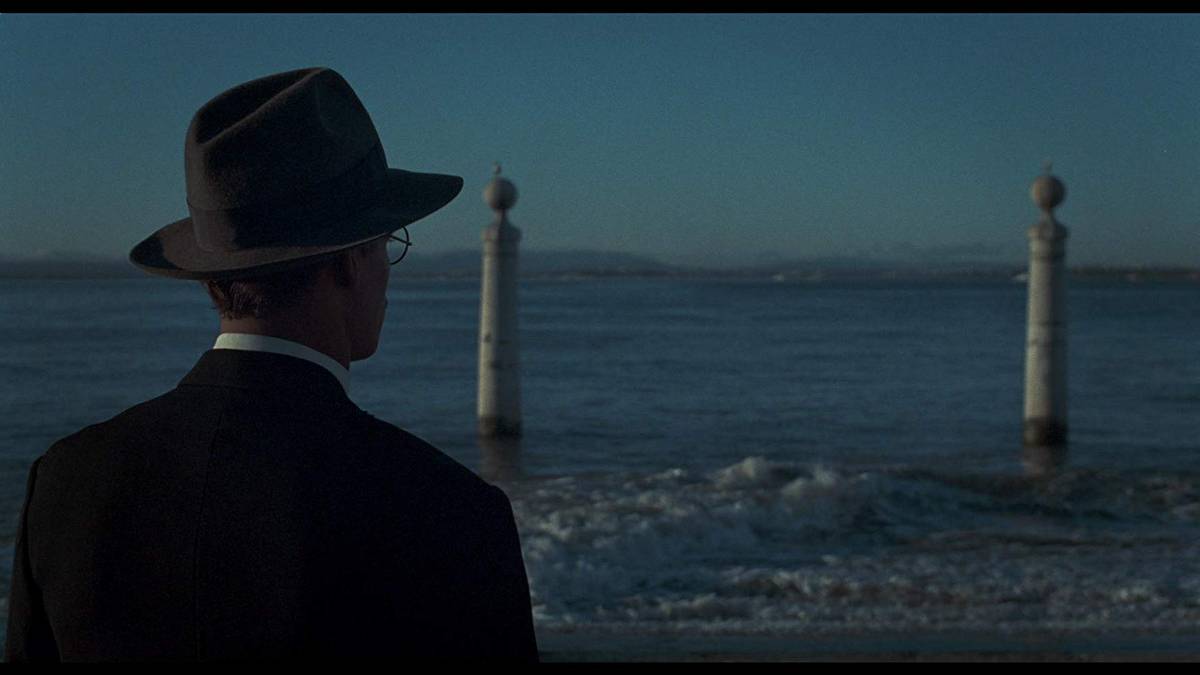
"Como Fernando Pessoa Salvou Portugal" (2018)
Fontes:

FERRARI, Patricio. FISCHER, Claudia. Fernando Pessoa: Argumentos para Filmes. Lisboa: Editora Ática, 192 p, 2011.
FRIAS, Joana Matos. Transforma-se o espectador no próprio espectáculo: O desassossego fílmico de Fernando Pessoa.

MARTONI. Alex Sandro. O cinema de Fernando Pessoa. Cadernos de Letras da UFF - Dossiê: Palavra & Imagem n° 44, p. 393-398, 2012.

SANTIAGO, Silviano. Fernando Pessoa e o cinema. Estado de São Paulo, 09 de junho de 2012.

This is my contribution to the Luso World Cinema Blogathon, hosted by Beth and me at Spellbound by Movies and here at Crítica Retrô. 


Saturday, August 3, 2019

A Dama de Espadas (1949) / The Queen of Spades (1949)


ESTA CRÍTICA CONTÉM SPOILERS

THIS ARTICLE HAS SPOILERS

Ver um filme que é elogiado pela maioria dos críticos e também por diretores como Martin Scorsese e Wes Anderson é como fazer uma aposta segura. A obra-prima britânica de horror “A Dama de Espadas”, baseada em um conto russo, foi considerada perdida até 2009, quando foi redescoberta e restaurada – para hoje termos a sorte de poder vê-la.

Watching a film that is praised by most critics and also by filmmakers like Martin Scorsese and Wes Anderson is always a safe bet. The British horror masterpiece “The Queen of Spades”, based on a Russian short story, was considered lost until 2009, when it was rediscovered and restored – and now we’re lucky to be able to watch it.


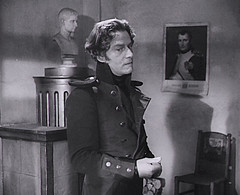
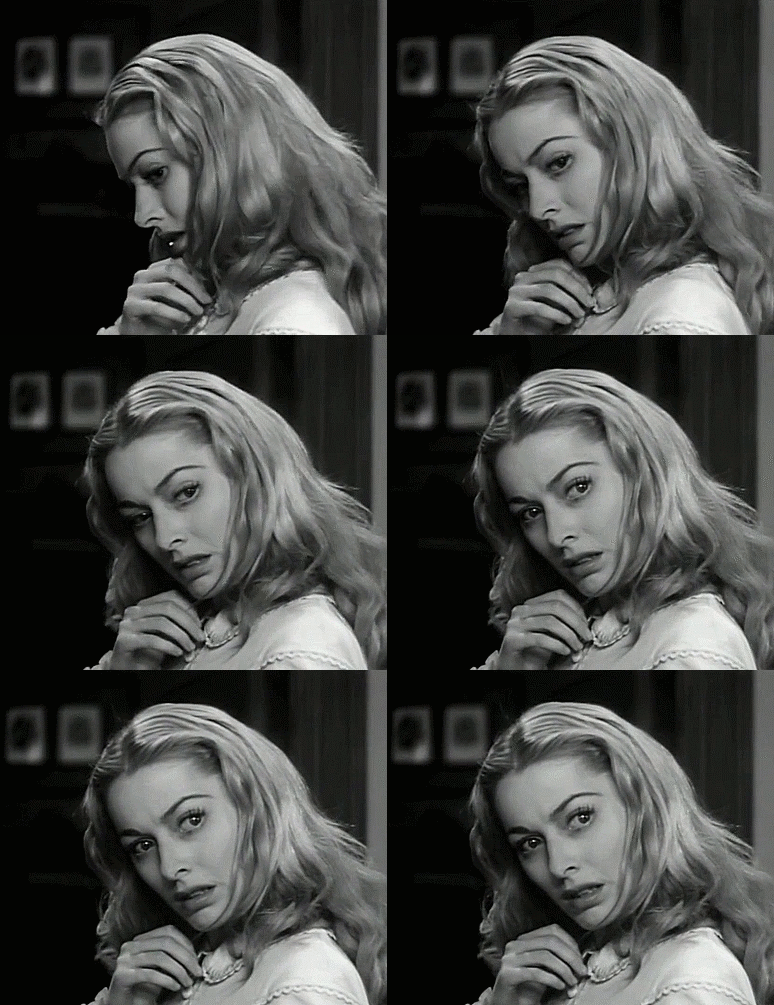
O ano é 1806. Um novo jogo de cartas chamado Faro se tornou febre na Rússia. O capitão Herman Suvorin (Anton Walbrook), entretanto, parece ser imune a esta febre. Ele tem outras coisas com as quais se preocupar: sendo um grande fã de Napoleão Bonaparte – ele tem um busto e um quadro de Napoleão no quarto – Suvorin sonha com uma grandeza e uma fortuna que não consegue alcançar.

The year is 1806. A new card game called Faro has became a fever in Russia. Captain Herman Suvorin (Anton Walbrook), however, seems to be immune to that fever. He has bigger things to worry: a big fan of Napoleon Bonaparte – he has a bust and a painting of Napoleon in his bedroom – Suvorin dreams with a greatness and a fortune that he fails to achieve.


Um dia, enquanto mexia em uma pilha de livros, ele encontra um sobre pessoas que venderam suas almas ao diabo em troca de algo grandioso em troca. No livro ele descobre que a Condessa Ranevskaya (Edith Evans), em 1746, vendeu sua alma ao diabo em troca do poder de nunca perder um jogo de cartas, pois ela precisava recuperar o dinheiro do marido, roubado por seu amante. Suvorin se alegra ao descobrir que a condessa ainda está viva.

One day, while perusing a bunch of old books, he finds one about people who sold their souls to the devil to get something big as a reward. In the book he learns about Countess Ranevskaya (Edith Evans) who, in 1746, sold her soul to the devil so she would never lose a card game, because she needed to recover her husband's money, stolen by her lover. Suvorin is thrilled to learn that the Countess is still alive.


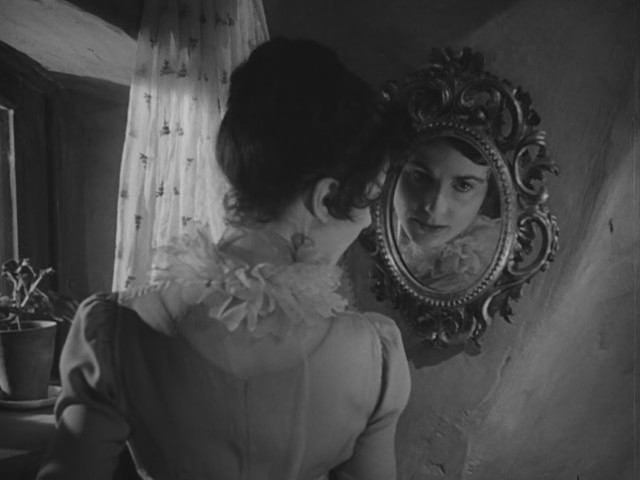
Pra conhecer a condessa, ele decide seduzir a dama de companhia dela, Lizaveta Ivanova (Yvonne Mitchell). A pobre Ivanova acretiva que ele realmente a ama. Quando Suvorin está escrevendo uma carta de amor para ela, uma aranha tecendo uma teia aparece: afinal, ele apenas quer usar Ivanova para chegar à condessa. Assim a armadilha é representada por uma poderosa metáfora visual.

To get to meet the Countess, he decides to seduce the lady's companion, Lizaveta Ivanova (Yvonne Mitchell). Poor Ivanova thinks he really loves her. When Suvorin is writing a love letter to her, a spider in its web appears: after all, he only wants to use her to reach the Countess. It’s a trap translated in a powerful visual metaphor.


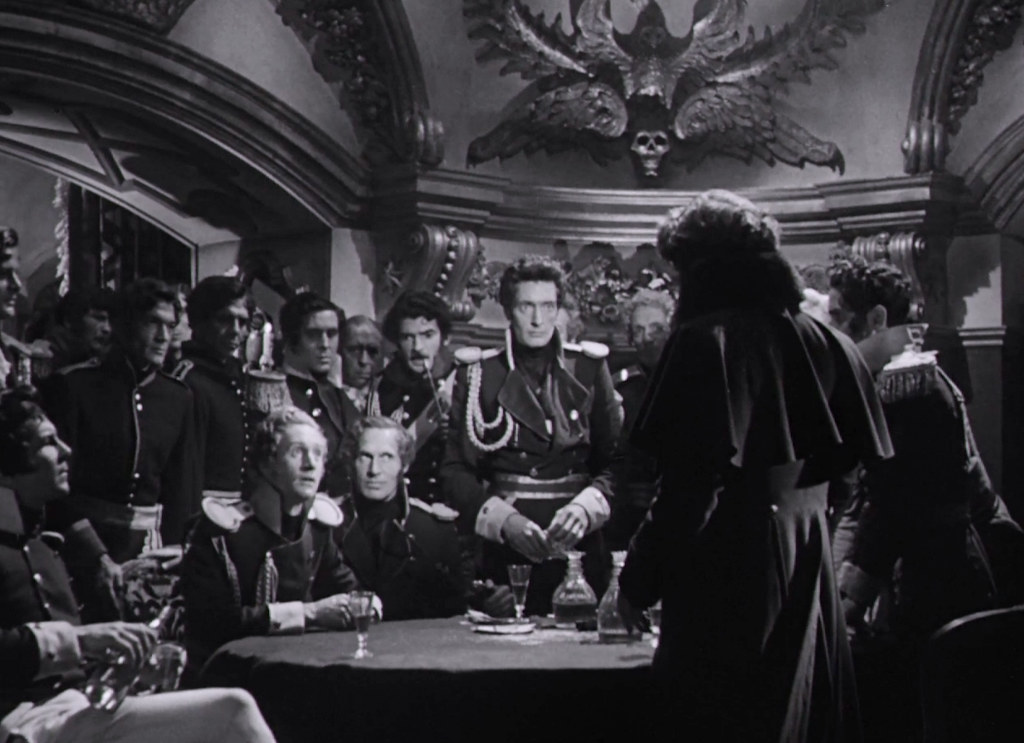
Depois de um baile, Suvorin consegue entrar no quarto da condessa e pergunta a ela quais são as três cartas que nunca a deixaram perder. Antes de contar o segredo, a condessa morre. Suvorin é mais tarde assombrado pelo fantasma da condessa e, durante seu delírio, descobre que as três cartas são o três, o sete e o ás. Ele então decide apostar alto no Faro, mas se engana e aposta na Rainha de Espadas e não no ás. Enquanto isso, Ivanova descobre a verdade sobre seu pretendente.

After a ball, Suvorin manages to enter the Countess’s bedroom and asks her for the secret of the three cards that never let her lose. Before telling the secret, the Countess dies. Suvorin is later haunted by the Countess’s ghost and, during his delirium, he learns that the three cards are the three, the seven and the ace. He then decides to bet high on Faro, but mistakenly bets on the Queen of Spades instead of on the ace. Meanwhile, Ivanova learns the truth about her suitor.


“A Dama de Espadas” é um excelente filme com grandes atuações, trilha sonora arrepiante e um design de produção maravilhoso. Os figurinos e em especial os cenários, todos lindamente feitos., foram os meus aspectos favoritos do filme.

“The Queen of Spades” is a terrific film with great performances, chilling music and outstanding production design. The outfits and in special the sets, all of them beautifully made, were my favorite aspects of the movie.


Anton Walbrook – hoje mais lembrado como Lermontov em “Os Sapatinhos Vermelhos” (1948) – tem em “A Dama de Espadas” provavelmente a melhor performance de sua carreira. Como Suvorin, ele é extremamente ambicioso, um mentiroso e manipulador que se rende à loucura em uma sequência que é de arrepiar e demonstra seu enorme talento. É com certeza uma das melhores performances em um dos melhores filmes de terror feitos na Inglaterra.

Anton Walbrook – now better remembered as Lermontov from “The Red Shoes” (1948) – has in “The Queen of Spades” probably the best performance of his career. As Suvorin, he is overly ambitious, a liar and a manipulator who descents into madness in a sequence that is a thrill and a demonstration of his huge talent. It’s certainly one of the top performances in one of the top horror movies made in England.


Yvone Mitchell era uma novata em “A Dama de Espadas”. O mesmo quase poderia ser dito sobre Edith Evans, que estava de volta aos cinemas depois de uma breve experiência na era muda. O perfil de Yvonne e suas expressões me fizeram lembrar um pouco de Ingrid Bergman, e ela atua bem, mas o filme pertence a Walbrook.

Yvonne Mitchell was a newcomer in “The Queen of Spades”. The same could almost be said about Edith Evans, who was back to the film world after a brief experience in the silent era. Yvonne's profile and expressions reminded me a bit of Ingrid Bergman, and she delivers a good performance, but the film belongs to Walbrook.


O diretor Thorold Dickinson foi escolhido para dirigir “A Dama de Espadas” graças a uma sugestão de Walbrook. Os dois haviam trabalhado juntos no filme britânico “À Meia-Luz”, de 1940. Depois que a MGM fez sua versão em 1944, o estúdio tentou destruir todas as cópias do original britânico, mas felizmente não conseguiram. Thorold Dickinson dirigiu apenas nove filmes em sua carreira.

Director Thorold Dickinson was brought to direct “The Queen of Spades” per Walbrook’s suggestion. The two had previously worked together in the British “Gaslight” from 1940. After MGM did its version in 1944, the studio tried to destroy all the copies of the original British film, but luckily they failed. Thorold Dickinson only directed nine films in his career.


“A Dama de Espadas” é um conto escrito por Alexander Pushkin e serviu de base para uma ópera de Tchakovsky. A história foi adaptada para o cinema diversas vezes, mais notadamente em duas ocasiões durante a Rússia Czarista: uma vez em 1910 como um filme de 15 minutos e novamente em 1916 em um longa de 62 minutos. A adaptação de 1910 foi a primeira vez que a história foi transposta para as telas.

“The Queen of Spades” is a short story written by Alexander Pushkin and was the basis for an opera by Tchaikovsky. It was adapted to film several times, most notably in two occasions during Czarist Russia: once in 1910 as a 15-minute film and again in 1916 in a 62-minute feature. The 1910 adaptation was the very first time this story was seen on screen.
1918
1916
Muitas pessoas classificam o filme “A Dama de Espadas” como terror, embora a parte terrível seja apenas o delírio de Suvorin. A Inglaterra não teve grande tradição no horror clássico no cinema – o filme de terror clássico mais lembrado da Inglaterra é provavelmente o filme de antologia “Na Solidão da Noite” (1945).

Many people categorize the film “The Queen of Spades” as horror, although the horrible part is only Suvorin’s delirium. England didn’t have a big classic horror tradition in its film industry – the best remembered classic English horror is probably the anthology film “Dead of Night” (1945).
 
"Na Solidão da Noite / Dead of Night" (1945)
Talvez por causa do ritmo – construir toda a trama até o clímax de horror leva muito tempo – “A Dama de Espadas” não é reconhecida como a obra-prima de terror que realmente é. Impossível de ser filmada dos EUA anticomunistas do período, a história russa encontrou na Inglaterra uma equipe à sua altura para novamente ganhar vida nos cinemas – em uma belíssima versão.

Maybe because of the pace – building everything up until the horror-themed climax takes very long – “The Queen of Spades” is not recognized as a horror masterpiece that it is. It would be impossible to film it in the anticommunist USA of the time, so the Russian story found in England a perfect team to once again make it alive on screens – in a gorgeous version.

This is my contribution to the 6th Annual Rule, Britannia Blogathon, hosted by Terry at A Shroud of Thoughts.


Saturday, September 9, 2017

A Mulher de Branco (1948) / The Woman in White (1948)

“A Mulher de Branco” me lembra de vários filmes da década de 1940. Pode ser um tema em comum, um personagem, uma situação, um cenário. Como eu fui capaz de fazer tantas conexões, foi com curiosidade e surpresa que descobri que a história que deu origem ao filme foi uma das primeiras do gênero investigativo.

“The Woman in White” reminds me of many films made in the 1940s. It may be a common theme, a character, a situation, a set. Since I was able to make so many connections, it was curious to know that the original story was a pioneer in the investigation genre.


Assim como em “O Retrato de Jennie” (1948), “A Mulher de Branco” apresenta uma mulher misteriosa que é vista por um pintor. Ela é primeiro uma peça de um mistério, e depois uma fonte de inspiração. A mulher misteriosa aparece perto da floresta e encontra o professor de pintura Walter Hartright (Gig Young), que acaba de chegar à cidade. Ela desaparece quando surge uma carruagem na estrada, e diz algumas coisas estranhas sobre como ela finge viver na casa em que o senhor Hartright está indo trabalhar.

Like in “Portrait of Jennie” (1948), “The Woman in White” has a mysterious woman that appears for a painter. She is first the piece of a mystery, and second a source of inspiration. The mysterious woman appears in the woods and meets the drawing tutor Walter Hartright (Gig Young), who has just arrived in town. She vanishes when a carriage comes near, and says some odd things about pretending to live in the house Mr Hartright is going to work in.


Assim como em “Silêncio nas Trevas” (1946), o dono da propriedade é inválido. Aqui ele é o senhor Frederick Fairlie (John Abbott), um homem com ataques nervosos que se sente zonzo quando alguém fala alto perto dele. Fairlie serve mais como alívio cômico. Junto com ele está sempre seu criado, Louis, interpretado por Curtis Bois, um ator alemão cuja carreira no cinema durou 82 anos.

Like in “The Spiral Staircase” (1946), the owner of the house is ill and invalid. Here it is Mr Frederick Fairlie (John Abbott), a man with weak nerves who feels dizzy if someone talks too loud. Mr Fairlie comes across as comic relief. With him there is always his companion, Louis, played by Curtis Bois, a German actor famous for having a career spanning 82 years.


Assim como em “O Fantasma Apaixonado” (1947), há um clima sobrenatural desde as primeiras cenas. O senhor Hartright é contratado para ser professor de pintura da sobrinha do senhor Fairlie, Laura (Eleanot Parker), uma moça incrivelmente parecida com a mulher de branco que surgiu naquela noite.

Like in “The Ghost and Mrs Muir” (1947), there is a supernatural feeling since the beginning. Mr Hartright was hired to give drawing lessons to Mr Fairlie's niece, Laura (Eleanor Parker), who has a striking resemblance with the woman in white he saw that night.


Mas o que acontece na propriedade Limmeridge naquela metade do século XIX? O senhor Fairlie está muito doente, e hospeda agora em sua casa o conde Fosco (Sydney Greenstreet),cujo comportamento é duvidoso. Quem cuida da casa é a prima de Laura, Marian (Alix Smith), uma moça séria que gosta do senhor Hartright, mas não acredita quando ele conta a história da mulher de branco. E a própria Laura também gosta do senhor Hartright, mas está noiva de Sir Percival (John Emery).

But what happens in the Limmeridge house in that middle of the 19th  century? Mr Fairlie is too ill, and is currently receiving the visit of Count Fosco (Sydney Greenstreet), who has a suspicious behavior. The person who takes care of the house is Laura's cousin, Marian (Alexis Smith), a practical girl who likes Mr Hartright, but can't believe his story about the woman in white. And Laura herself also likes Mr Hartright, but she is engaged to Sir Percival (John Emery).


O que se segue é chantagem, gaslighting, intriga e algo que pode ser tanto envenenamento – como em “Interlúdio” (1946) – ou hipnose. Acrescentamos à propriedade Limmeridge a presença aparentemente inofensiva de Agnes Moorehead e o que temos é um bom mistério de época – com Sydney Greenstreet em um de seus melhores momentos.

What follows is blackmail, gaslighting, intrigue, and something that may be poisoning – like in “Notorious” (1946) – or hypnotizing. We add to the Limmeridge house the apparently inoffensive presence of Agnes Moorehead and what we have is a nice period mystery – with Sydney Greenstreet in one of his best moments.


Wilkie Collins escreveu o livro em 1860. “A Mulher de Branco” era, assim como “Werther”, um romance epistolar, no qual a história é contada através de cartas. O livro tem mais de 600 páginas e foi um dos pioneiros do gênero investigativo. Mesmo Hrtright não sendo detetive, ele usa o pensamento lógico e a espionagem para juntar as peças do quebra-cabeças – com uma ajudinha de Marian. O livro foi adaptado para o cinema diversas vezes.

Wilkie Collins wrote the book in 1860. “The Woman in White” was, like “Werther”, an epistolary book, in which the story is told through letters. The book had more than 600 pages and was one of the pioneers of the detective fiction. Although Hartright is no detective, he employs logical thinking and snooping in order to put the pieces of the puzzle together – with a little help from Marian. The book was adapted to the screen several times.


Se considerarmos apenas o uso das sombras e uma cena em particular com um candelabro, podemos chamar este filme de um noir de época. A trilha composta por Max Steiner é fantástica, como sempre. E eu não posso elogiar o cenário o suficiente. A atmosfera do filme é sobrenatural sem ser nebulosa, e isto é um ponto positivo. Se há pontos negativos, eles vieram da história original, que perde força e fica estranha em certo momento, quando se escolhe uma saída fácil.

If we consider only the use of shadows and one particular scene with a chandelier, we could call this film a period noir. The score by Max Steiner is fantastic, as always. And I can't say enough good things about the set decoration. The atmosphere of the movie is supernatural without being foggy, and that’s quite an accomplishment. If there are let downs, they are in the original story, that loses power and becomes odd at a certain point, choosing an easy way out.


“A Mulher de Branco” é um dos 12 filmes que pretendo ver em 2017. Não lembro quem recomendou a película para mim, mas acredito que tenha sido a Nitrate Diva no Twitter. De qualquer forma, eu gostei da recomendação e agora também recomendo “A Mulher de Branco” para qualquer pessoa que goste de cinematografia de primeira e não se importe com algumas falhas no roteiro.

“The Woman in White” is one of the 12 new-to-me movies I intend to watch in 2017. I don’t remember who first recommended it to me, but I think it was Nitrate Diva on Twitter. Anyway, whoever you were, I appreciated the recommendation and I’ll also recommend “The Woman in White” to anyone who likes great cinematography and doesn’t care about a few plot holes.

This is my contribution to the Colours Blogathon, hosted by Thoughts All Sorts.

Friday, September 16, 2016

A morte no Nilo / Death on the Nile (1978)


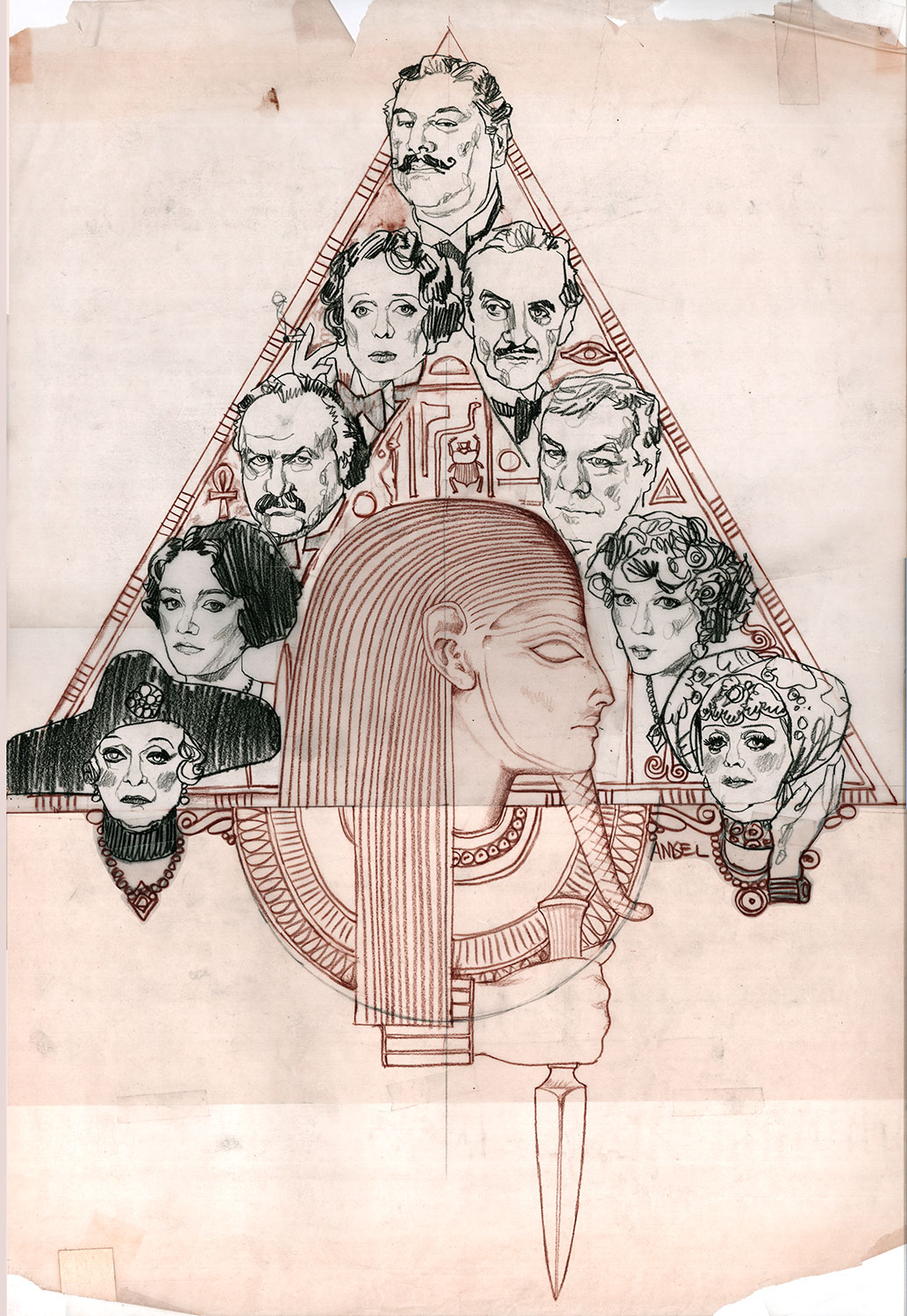
Ler Agatha Christie é quase uma tradição familiar. Minha avó gosta muito dela, e minha mãe tem uma respeitável coleção (foto acima). E é natural que eu tenha herdado estes livros. Tenho predileção pelas histórias que foram adaptadas para o cinema, e foi uma surpresa quando encontrei o livro “A Morte no Nilo” ainda lacrado, sem ser lido desde sua publicação, em 1984 – e tendo na capa o elenco do filme de 1978, com um brilhante elenco. Coube a mim ser a primeira a ler o livro.

Reading Agatha Christie is kind of a familiar tradition. My grandma likes her a lot, and my mother owns a respectable collection (picture above). And it is natural that I inherited those books. I usually prefer the stories that were adapted to the screen, and I had a surprise when I found “Death in the Nile” still with the plastic cover on: nobody read the book since it was published and bought in 1984. Moreover, there was on the cover a picture of the all-star cast of the 1978 adaptation. I knew I had to be the first to read it.

#AgathaChristieBookshelf
 
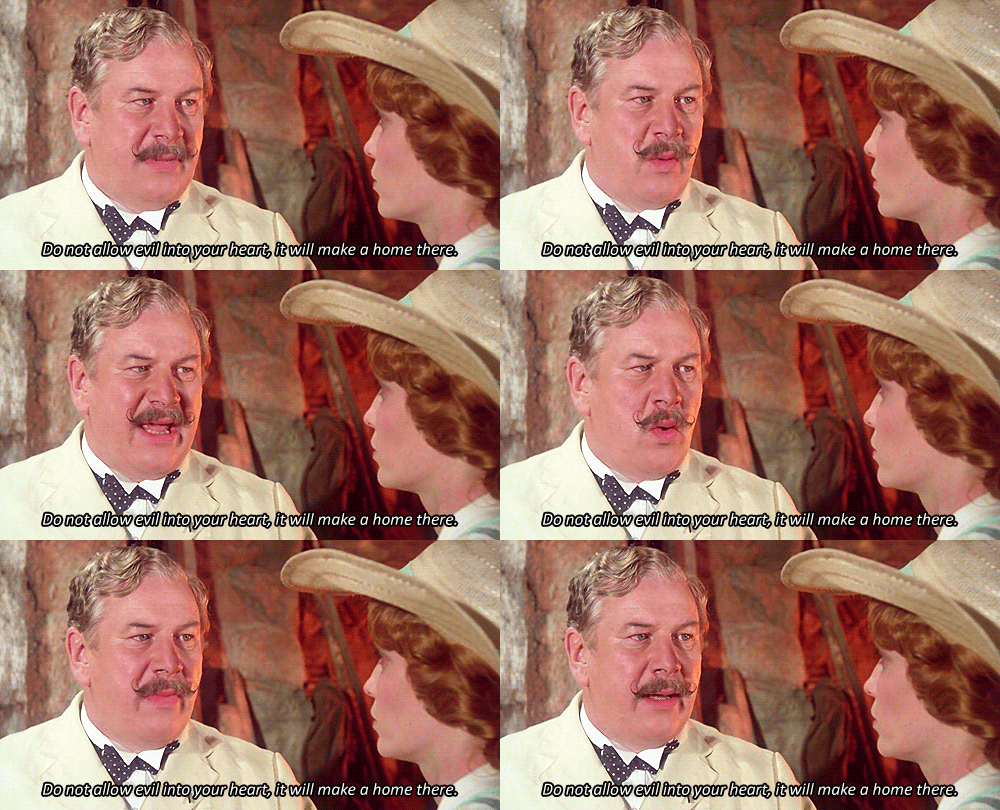
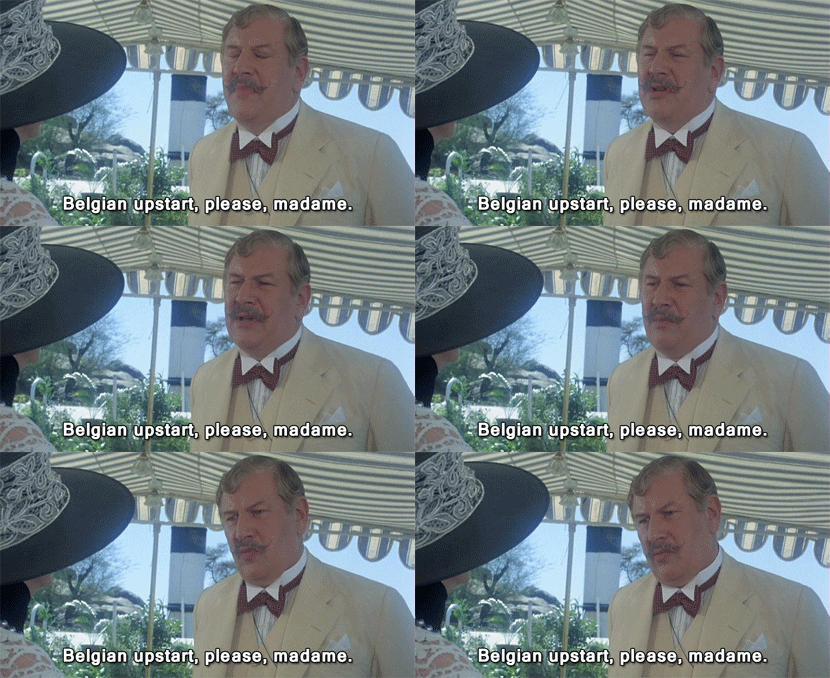
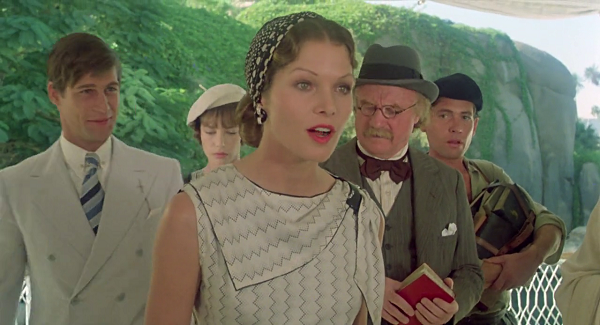
É a história do assassinato de uma moça muito rica, Linnet Ridgeway (Luise Chiles), em sua lua de mel, a bordo de um navio no Egito. Todos os passageiros são suspeitos, seja por causa do dinheiro de Linnet, ou pelo fato de ela ter se casado com o ex-noivo da melhor amiga, Jacqueline de Bellefort (Mia Farrow). Mas não há problema: a bordo está também o detetive belga Hercule Poirot (Peter Ustinov), que não deixará o caso sem solução.

It is the story of the murder of a very rich girl, Linnet Ridgeway (Luise Chiles), in her honeymoon, aboard a ship in Egypt. All the passengers are suspects, considering Linnet’s fortune or the fact that she had just married the former fiancée of her best friend, Jacqueline de Bellefort (Mia Farrow). But there are no troubles: on the ship we also have the Belgian detective Hercule Poirot (Peter Ustinov), and he won’t leave the case without a solution.
Sempre haverá decepção quanto a adaptações de livros de mistério para o cinema. Quando você já teve contato com a obra, já irá consumir o filme sabendo o final – salvo os raros casos em que a história é modificada. A comparação é inevitável, mas felizmente temos pontos positivos tanto no livro quanto no filme em questão.

There will always be disappointment when mystery books are adapted to the screen. When you had already read the book, you’ll see the film knowing “who did it” – not considering the rare cases in which the storyline is changed. We can’t avoid the comparison, but fortunately we have positive points for book and movie here.
Agatha Christie sempre cria uma galeria memorável de personagens, e nem todos têm o merecido destaque em pouco mais de duas horas de filme. E alguns personagens ainda foram cortados, como o patinho feio Cornelia Robson, o arqueólogo Richetti, a senhora Allerton e seu filho Tim. O mesmo acontece em outro filme com grande elenco adaptado de um romance de Christie, “Assassinato no Expresso do Oriente”, feito em 1974.

Agath Christie always creates a memorable gallery of characters, and not all of them have the screen time they deserve in the 135-minute film. And some characters were cut during the book to film transition, including ugly duckling Cornelia Robson, Signor Richetti the archaeologist, Mrs Allerton and her son Tim. The same thing happens in another all-star adaptation of a Christie novel, “Murder on the Orient Express”, made in 1974.
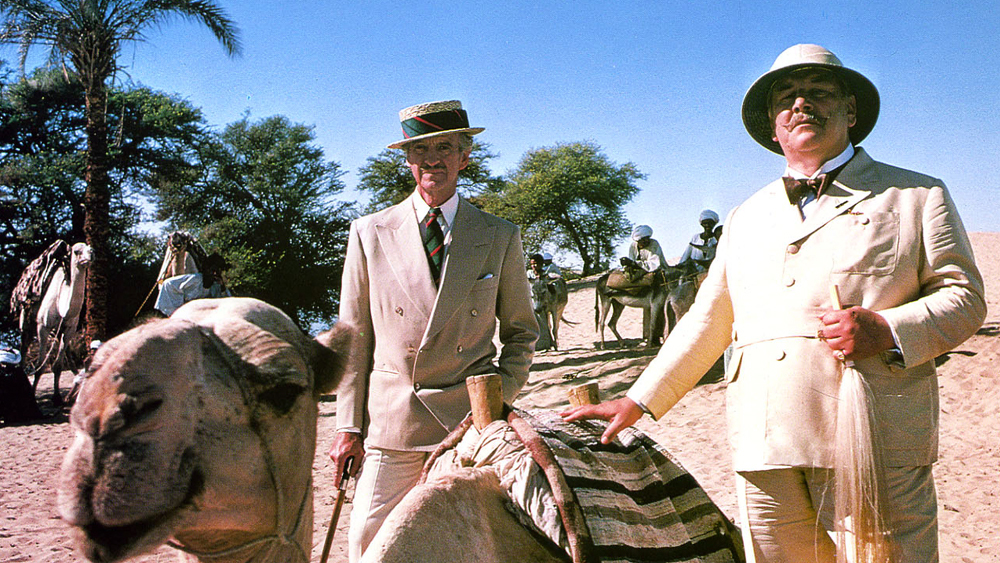
É impagável a “dança conceitual” entre a excêntrica e bêbada senhora Salome Otterbourne (Angela Lansbury) e o Colonel Race (David Niven). Ustinov, em sua primeira de seis vezes como Poirot, é excelente. Suas cenas com David Niven nos dão vontade de ver mais da dupla Poirot e Colonel Race.

We have a priceless dance with the eccentric and drunk Mrs Salome Otterbourne (Angela Lansbury) and Colonel Race (David Niven) Ustinov, in his first of six times as Poirot, is excellent. His scenes with David Niven make us wish to see more of the Poirot – Colonel Race partnership.
#SquadGoals
O papel do guia do navio Karnak (interpretado por I.S. Johare) é ingrato e desconfortável. Ele é construído em cima de preconceitos: o guia usa um turbante, tenta ser agradável a qualquer custo e tem um sotaque engraçado.

The role of the guide of the ship Karnak (played by I.S. Johare) is uncomfortable to be seen. He is built on prejudices and stereotypes: the guide wears a thick turban, tries to please all the passengers and has a laugh-inducing English accent.

É muito interessante como são mostrados os motivos que cada passageiro tinha para matar Linnet: Poirot narra a “reconstituição hipotética” e a cena se passa na tela, o que nos dá a oportunidade de ter diversos pontos de vista e probabilidades. Mas talvez já houvesse indícios muito fortes desde o início que apontavam para o culpado...

I found especially interesting the scenes with the “hypothetical reconstruction” of the crime: Poirot narrates all the reasons each passenger had to kill Linnet, and the scene appears on the screen, giving us the chance to see several points of view, different perspectives and analyze the odds. But maybe there were, in the very beginning of the film, things pointing out to the guilty person…
SPOILERS!!!
Jacqueline parece desequilibrada desde o começo no filme. Há até uma metáfora (que eu enxerguei, pelo menos) quando ela e Simon se beijam num carro em movimento, o carro sai da estrada, mas volta logo depois. Eles se desencontrarão na vida, mas voltarão a se juntar logo depois – e se juntam para matar.

Jacqueline looks disturbed since the beginning of the movie. There is even a metaphor (at least, I interpreted the scene this way): when Jacqueline and Simon kiss in a moving car, the car leaves the road and enters the field, but re-enters the road a few seconds later. They will be separated briefly in life, but they will get together again later – and they’ll get together to kill.
FIM DOS SPOILERS
END OF SPOILERS
A fotografia do filme é maravilhosa, e isso só é possível porque ele foi de fato gravado no Egito. Claro que isso significou desconforto para os atores, que enfrentavam dias de mais de 40 graus Celsius. Bette Davis, que tem um papel relativamente pequeno, reclamou de ter de ir ao local de filmagem, dizendo que “antigamente eles construíam o Nilo no estúdio”!

The cinematography is wonderful, thanks to the film really being shot on location in Egypt. Of course it meant discomfort to the cast, who faced temperatures higher than 100 degrees Fahrenheit. Bette Davis, who has a relatively small role, complained about going to shoot on location, saying that “In the older days, they’d have built the Nile for you”!
Além das belas paisagens, os cenários e figurinos são deslumbrantes, e podem até desviar a atenção da ação principal – o mesmo acontece em “Assassinato num Dia de Sol” (1982), a empreitada seguinte de Ustinov como Poirot.

Besides the breathtaking Egyptian nature, the sets and costumes are gorgeous, and they can even take your focus off from the main action – the same happens with “Evil Under the Sun” (1982), the following work of Ustinov as Poirot.
“A Morte no Nilo” é bonito e astuto, em especial para quem ainda não conhece a obra. Veja o filme, sim, e depois faça um favor a si mesmo e corra atrás do livro. E depois, se tiver coragem, vá fazer uma viagem de barco pelo Nilo.

“Death on the Nile” is visually beautiful and very clever, in special to the ones who haven’t read the book. Watch the movie, and then do yourself a favor and go read the book. And, if you still have courage, it’s time to travel the Nile on a boat!

This is my contribution to the Agatha Christie Blogathon, hosted by Christina and Domi at Christina Wehner and Little Bits of Classics.
Related Posts Plugin for WordPress, Blogger...