} Crítica Retrô: adaptação

Tradutor / Translator / Traductor / Übersetzer / Traduttore / Traducteur / 翻訳者 / переводчик

Showing posts with label adaptação. Show all posts

Saturday, July 18, 2026

Variações sobre um mesmo tema: A Letra Escarlate (1926 e 1934)


Variations on the same theme: The Scarlet Letter (1926 and 1934)

Eu não sei do que eu gosto mais: de ler ou ver filmes. É ótimo quando posso juntar esses interesses, e não estou falando em ler as legendas ou cartelas de título. Estou falando em ler um livro e depois assistir à adaptação para os cinemas e comparar ambas as obras. O caso mais recente: “A Letra Escarlate” de Nathaniel Hawthorne. Sim, faz mais de dez anos que li o livro, mas ainda me lembrava da trama.

I don’t know what I like the most: reading or watching movies. It’s good when I can join them, and I’m not talking about reading the closed captions or intertitles. I’m talking about reading a book and then watching the adaptation to compare both. The most recent case: Nathaniel Hawthorne’s “The Scarlet Letter”. Sure, it was more than ten years ago that I read the novel, but I still had the plot in my mind. 


Nathaniel Hawthorne publicou “A Letra Escarlate” em 1850 e a história se passa duzentos anos antes. A primeira adaptação para os cinemas foi feita em 1908, escrita e estrelando a pioneira Gene Gauntier. Aqui vou focar em duas adaptações, uma da era muda (1926) e outra dos primeiros anos da era falada (1934) 

Nathaniel Hawthorne published “The Scarlet Letter” in 1850 and the story is set two centuries before. The first film adaptation was made in 1908, written for the screen and starring the pioneer Gene Gauntier. Here I’ll focus on two adaptations, one from the silent era (1926) and another from the first years of sound film (1934).

1926: uma Hester virginal

1926: a virginal Hester

Na puritana colônia de Boston, Hester Prynne (Lillian Gish) é censurada por pecados como pular e correr no sábado e não esconder roupas íntimas quando lava essas peças imorais de roupa. Quem fica responsável por puni-la é o reverendo Arthur Dimmesdale (Lars Hanson), mas ele se apaixona por ela. 

In the puritan colonial Boston, Hester Prynne (Lillian Gish) is censored for sins such as skipping and running on Sabbath and not hiding underwear when she washes these immoral pieces of clothing. The one responsible for punishing her is the Reverend Arthur Dimmesdale (Lars Hanson), but he falls in love with her.


Arthur quer se casar e ir para a Inglaterra, mas um obstáculo terrível e escandaloso surge: Hester já é casada! Arthur parte para a Inglaterra sozinho. Quando ele volta, Hester teve um bebê - um bebê dele! - e por tê-lo sem ser casada ela será punida, tendo de usar nas roupas uma escarlate letra A - de adúltera. 

Arthur wants to get married and leave for England, but a terrible, scandalous obstacle appears: Hester is already married! Arthur leaves for England alone. When he returns, Hester has had a child - his child! - and for this out-of-wedlock birth she is to be punished by wearing embroidered in her clothes a red letter A - for adulteress.


Hester e sua filha Pearl (Joyce Coad) vivem como párias e Arthur sofre por muitos motivos. Por sua omissão num momento que requeria coragem. Por ser amado por um povo que odeia sua filha. E o que ninguém esperava acontece: o marido ausente de Hester, Roger (Henry B. Walthall), volta e quer vingança!

Hester and her daughter Pearl (Joyce Coad) live as pariahs and Arthur suffers for many reasons. For his omission when courage was needed. For being loved by the people who hate his daughter. And what nobody was expecting happens: Hester’s estranged husband Roger (Henry B. Walthall) comes back, and he wants revenge!

Lillian Gish está excelente como sempre. Seu rosto atua por ela. Ela só tem que arregalar os olhos para que saibamos que Hester está implorando para Arthur não confessar que ele é pai da filha dela. Saindo debaixo das asas de Griffith, Gish tinha poder em seu novo estúdio, a MGM, e pessoalmente sugeriu que ela estrelasse nesta adaptação. Ela também escolheu o diretor. 

Lillian Gish is outstanding as always. Her face acts for her. She only has to open her eyes a little wider for us to know that Hester is imploring for Arthur to not confess he’s her child’s father. Departing from her Griffith-directed roles, Gish was a powerhouse for her new studio, MGM, and personally suggested to star in this adaptation. She also chose the director.


Este é o primeiro de dois filmes que o diretor Victor Sjöström fez com Lillian Gish - eles voltariam a se encontrar dois anos depois para “Vento e Areia”, também com Lars Hanson e Frances Marion. Sjöström foi para Hollywood em 1923 e foi escolhido pessoalmente por Lillian Gish para este projeto, um filme lindamente fotografado, e não apenas por causa da sequência com o reflexo na água no começo.

This is the first of two movies director Victor Sjöström made with Lillian Gish - they would reteam two years later for “The Wind”, also with Lars Hanson and Frances Marion. Sjöström went to Hollywood in 1923 and was handpicked by Lillian Gish for this project that ended up being a beautifully shot film, and not only for the brief water mirror sequence in the beginning.

1934: Hester a flapper

1934: Hester the flapper 

A versão de 1934 é bem mais curta e começa com Hester Prynne (Colleen Moore) sendo punida por adultério em praça pública. Quem chega a tempo de ver o espetáculo é seu marido ausente, Roger (Henry B. Walthall), que ela reconhece do cadafalso. Só mais tarde somos informados de que o reverendo Arthur Dimmesdale (Hardie Albright) foi quem engravidou Hester. 

The 1934 version is much shorter and begins with Hester Prynne (Colleen Moore) being punished for adultery at the village’s square. Arriving just in time is her estranged husband Roger (Henry B. Walthall), who she recognizes from the scaffold. Only later we’re informed that Reverend Arthur Dimmesdale (Hardie Albright) is the man who wronged Hester.


A mulher marcada e sua filha Pearl (Cora Sue Collins) vivem felizes juntas. As outras crianças não querem que Pearl brinque com elas, mas não importa porque ela tem a companhia da mãe o tempo todo. Mas o governo da colônia de Boston quer tirar Pearl da mãe e dá-la para que uma mulher temente a Deus a crie e eduque. 

The marked woman and her child Pearl (Cora Sue Collins) live happily together. Other children don’t want Pearl to play with them, but it’s okay because she has the company of her mother all the time. But the government of the Boston colony wants to take Pearl away from her mother and give the child to a God-fearing woman to educate and care for.


A voz de Colleen Moore é bem mais grave do que eu imaginei assistindo seus filmes mudos leves. Talvez tenha sido o contexto. Moore fez 64 filmes entre 1916 e 1934, com um hiato entre 1929 e 1933. Ela era a flapper clássica nos anos 1920, junto a Clara Bow. O IMDb diz que ela era a melhor amiga de Lillian Gish, e a Wikipedia que ela entrou para o cinema porque queria ser uma segunda Lillian Gish. Não importa qual versão seja verdade - talvez não é nenhuma - o que importa é que Colleen Moore interpretou Hester muito bem. Depois deste filme, ela se aposentou de vez das telas.

Colleen Moore’s voice sounded much deeper than I had imagined by watching her light silent films. Maybe it was the context. Moore made 64 films between 1916 and 1934, with a hiatus between 1929 and 1933. She was the quintessential flapper in the 1920s, alongside Clara Bow. IMDb said she was Lillian Gish’s best friend, and Wikipedia claims that she entered movies with the hopes of becoming a second Lillian Gish. No matter which one is true - or maybe both are false - Colleen Moore played Hester really well. After this movie, she retired from the screens for good. 

Nesta versão há uma dupla para alívio cômico, Bartholomew (Alan Hale) e Sampson (William Kent). Eles podem ser vistos por aí consertando a roda de uma carroça ou fazendo a corte a uma mulher. Eles poderiam ser um contraponto ao triângulo amoroso envolvendo Hester, Arthur e Roger, mas na minha opinião eles não adicionam nada ao filme, feito pela Majestic Pictures Corporation, um estúdio de segunda linha dos anos 1930 que às vezes fazia alguns filmes mais elaborados que os filmes B de sempre. 

In this version there is a duo for comic relief, Bartholomew (Alan Hale) and Sampson (William Kent). They can be found fooling around, fixing a wheel of a carriage or courting a woman. They could be a counterpoint to the love triangle involving Hester, Arthur and Roger, but in my opinion they add nothing to the film, made by Majestic Pictures Corporation, a Poverty Row studio from the 1930s that sometimes made more elaborate movies than the regular B-movie productions.  

Comparação

Comparison

O que diferencia as duas versões é, acima de tudo, o roteiro. É a mesma história contada de maneiras diferentes. A roteirista responsável pela adaptação do romance em 1926 foi ninguém menos que a grande Frances Marion, que também escreveu as poéticas cartelas de texto. A dupla adaptando o livro para as telas era formada por dois homens, e isso é óbvio: a versão de 1934 não é muito sobre Hester, mas sobre os homens ao redor dela, como Roger, Arthur e a dupla de alívio cômico.

What differs the two versions is, above all, the writing. It’s the same story told in different ways. The screenwriter responsible for the adaptation of the romance in 1926 was none other than the great Frances Marion, who also wrote the very poetic titles. The duo adapting the book to the screen in 1934 was formed by two men, and it shows: the 1934 version is not so much about Hester, but more about the men around her, such as Roger, Arthur and even the comic relief duo.


E se há outro elo entre as duas versões, é a presença de Henry B. Walthall em ambas como Roger. Tendo estreado no cinema em 1908 e sido presença constante nos filmes de Griffith, Henry fracassou como produtor quando criou a The Union Feature Film Company, para produzir longas-metragens antes que houvesse interesse por filmes mais longos. Ele fez uma boa passagem para o cinema falado e fez seu último filme semanas antes de morrer em 1936.

And if there is another thing that unites both versions, it is the presence of Henry B. Walthall in both as Roger. Having debuted in films in 1908 and becoming a regular at Griffith’s movies, Henry failed to become a producer when he formed The Union Feature Film Company, to produce features before the interest for them appeared. He transitioned well to talkies and made his final film weeks before dying in 1936.

Só podemos agradecer porque as coisas mudaram desde a época em que se passa a história. Era uma época de superstição religiosa generalizada, um tempo em que adultos podiam odiar uma criança e dizer que ela estava “possuída pelo demônio”, um tempo que não podemos deixar voltar - nem mesmo se esse tempo, como o filme de 1934 diz na introdução, ajudou “a moldar o destino de uma nação”. Mas devo confessar que a torturaaquática com uma mulher que tomava conta da vida dos outros foi bacana. O que podemos levar da história é o que uma cartela de texto da versão de 1926 diz: “por que somos ensinados a ter vergonha do amor?” 

We can only be happy because things have changed since the time the story is set in. It was a time with widespread religious superstition, a time when adults could hate a child and call her “possessed by the devil”, a time we cannot let come back - no matter if it, like the 1934 movie says in the intro, helped “shape the destiny of a nation”. But I must confess that the aquatic torture with a woman who took care of other people’s lives was pleasing to watch. What we can take from the story is what a title card in the 1926 movie says: “why are we taught to be ashamed of love?”

This is my contribution to the 2026 Classic Literature on Film blogathon, hosted by Paul at Silver Screen Classics.

Wednesday, July 15, 2026

A Odisseia (1911) / The Odyssey (1911) / L’Odissea (1911)


Quando eu tinha treze anos, a escola exigiu a leitura de uma versão resumida de duas obras-primas de Homero: a Ilíada e a Odisseia. Já naquela época, a leitura não era uma obrigação para mim, era um prazer. Eu fiquei surpresa com a presença e a intervenção dos deuses gregos nas histórias e suas tramas ficaram marcadas na minha mente.

When I was thirteen, school made us read an abridged version of Homer’s two masterpieces: the Iliad and the Odyssey. Already at the time, reading wasn’t an obligation for me, it was a pleasure. I was surprised by the presence and intervention of the Greek gods in the stories and their plots were glued to my mind. 


No meu primeiro ano de faculdade surgiram os MOOCs - sigla em inglês para Cursos Abertos Online em Massa. O primeiro que eu fiz era sobre a Ilíada e a Odisseia, com um professor especialista nestas duas obras da literatura. Dá para imaginar ser especialista numa obra de arte? Isso mexeu comigo e o curso foi exigente, mas foi um prazer fazê-lo.

In my first year of college MOOCs - Massive Open Online Courses - became a thing. The first I took part in was about the Iliad and the Odyssey, taught by a professor with a degree in these two works of literature. Can you imagine having a degree in a work of art? It puzzled my mind and the course was demanding, but also rewarding.


Semana passada vi um post no Instagram da Le Giornate del Cinema Muto sobre o filme de 1911 “A Odisseia / L’Odissea”. A publicação nos contava que essa adaptação do poema épico de Homero foi feita após o sucesso de “L’Inferno” (1911), um filme sobre o qual já escrevi AQUI. Por isso, em vez de marchar para os cinemas para assistir à nova adaptação de Christopher Nolan, eu decidi escrever sobre a adaptação vintage de uma das maiores histórias de todos os tempos.

Last week I saw a post on the Instagram account of the Pordenone Silent Film Festival about the 1911 film “The Odyssey / L’Odissea”. The publication told us that this adaptation of Homer’s epic tale was made after the success of “L’Inferno” (1911), a film I previously reviewed HERE. So, instead of marching to the cinemas to watch Christopher Nolan’s new adaptation, I decided to review the vintage retelling of one of the greatest stories ever told.


Ulisses ou Odisseu (Giuseppe de Liguoro) deixa sua família na ilha de Ítaca para lutar na guerra de Troia. Começam os rumores de que Odisseu morreu e pretendentes começam a fazer fila esperando que a viúva Penélope decida com quem se casará em seguida. Com o  intuito de adiar essa decisão, Penélope tece uma mortalha para o marido de dia e desfaz o trabalho de noite - essa noite sendo representada por um filtro azul na película.

Odysseus (Giuseppe de Liguoro) leaves his family on the island of Ithaca to fight the war in Troy. People start the rumor that Odysseus is dead and suitors start to line up waiting for widow Penelope to decide whom she will remarry. Wanting to postpone the decision, Penelope weaves a shroud for her husband by day and unweaves at night - night being represented by a blue tinting.


A guerra em Troia acaba - sem nenhum cavalo à vista - e Odisseu, vivíssimo, começa sua viagem de volta. É verdade que quando estamos voltando a viagem parece mais rápida, mas não para nosso herói: antes de chegar a Ítaca ele vai encontrar um ciclope, sereias, todo tipo de monstros e a fúria dos deuses.

The war in Troy ends - no horse in sight - and Odysseus, very much alive, starts his voyage home. It’s true that when you’re coming back the trip seems quicker, but not for our hero: before reaching Ithaca he’ll encounter a cyclop, sirens, all kinds of monsters and the rage of the gods.


Você deve achar que em 1911 o cinema era muito rudimentar, certo? ERRADO! Em “A Odisseia” há efeitos especiais como dupla exposição para revelar a deusa Atena e o gigante de um olho só Polifemo é convincentemente assustador. Agora é um bom momento para contar que o episódio do gigante já havia sido contado antes nas telas, por ninguém menos que nosso velho amigo Méliès em 1905.

You think that in 1911 cinema was very rudimentary, right? WRONG! In “The Odyssey” there are special effects such as double exposure to reveal the goddess Athena and the one-eyed giant Polyphemus is seen as convincingly menacing. Here it’s a good moment to tell that the episode of the giant had been told before on screen, by none other than our old friend Méliès in 1905.


“A Odisseia” foi feita pela Milano Filmes, então uma das mais importantes companhias produtoras italianas. Fundada em 1908, continuou firme até o final da década de 1920. Em 1919, ela surpreendentemente se recusou a se juntar ao conglomerado Unione Cinematografica Italiana.

“The Odyssey” was made by Milano films, then one of the most important Italian film production companies. Founded in 1908, it remained strong until the late 1920s. In 1919, it surprisingly refused to join the conglomerate Unione Cinematografica Italiana.


O filme foi feito para ser exibido na Feira Mundial de Turin, um evento que durou seis meses e recebeu quse 7,5 milhões de visitantes. O evento também celebrava os 50 anos da Unificação Italiana. Uma competição de filmes foi levada a cabo dentro da feira e “A Odisseia” ganhou um prêmio na categoria de filmes educativos.

The film was made to be exhibited in the Turin World Fair, an event that lasted six months and received almost 7,5 million visitors. The event was also celebrating 50 years of the Italian Unification. A film competition was held in the fair and “The Odyssey” won an award in the educational films category.   


Apesar de durar apenas 44 minutos, o filme cobre quase todas as histórias de dentro da Odisseia, com a ausência óbvia do encontro de Odisseu com a feiticeira Circe. A Odisseia é a história de um homem sábio, e sua primeira adaptação completa para a tela só podia ser assim: cheia de sabedoria.

Despite being only 44 minutes long, the movie covers almost all tales inside of the Odyssey, with the obvious absence being the encounter between Odysseus and the witch Circe. The Odyssey is all about a clever man, and its first full adaptation to the screen could only be that: clever.

Saturday, January 27, 2024

O Nome da Rosa (1986) / The Name of the Rose (1986)


Fato curioso: eu sou formada em Biblioteconomia! Mesmo trabalhando como crítica de cinema, tenho orgulho de dizer que me formei em 2022, depois de muito esforço. Dito isto, é óbvio que filmes - e livros - sobre bibliotecários me interessam muito. Por isso eu escolhi revisitar o filme “O Nome da Rosa”, e também ler o livro, tendo como foco o retrato do bibliotecário nestas obras.


Fun fact: I hold a degree in Library Science! Even though I work as a film critic, I’m proud to say I finished the degree in 2022, after a lot of hard work. That being said, it’s obvious that movies - and books - about librarians are of utmost interest to me. That’s why I chose to revisit the movie “The Name of the Rose”, and also read the novel, focusing on the portrayal of the librarian in these works.

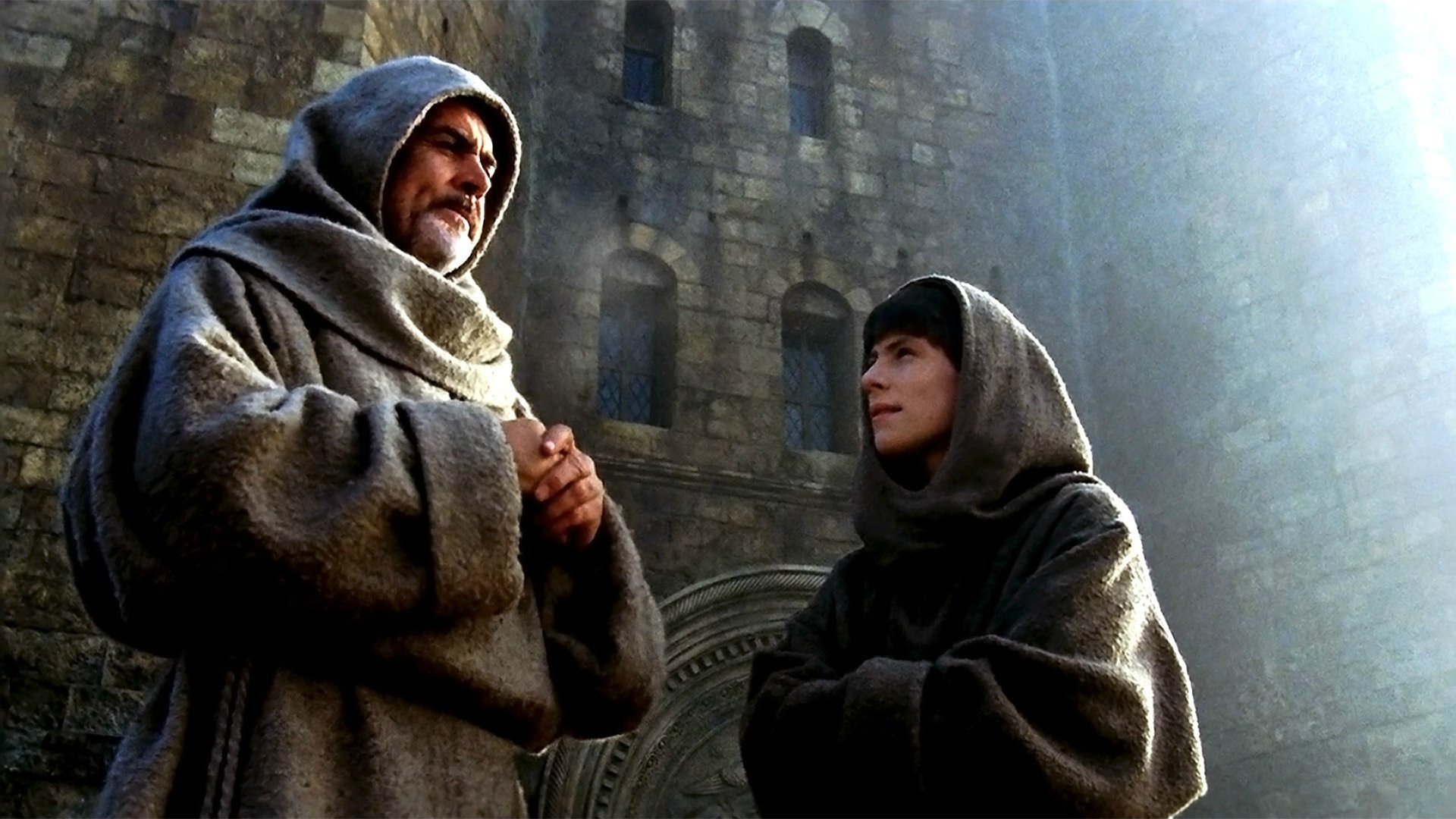
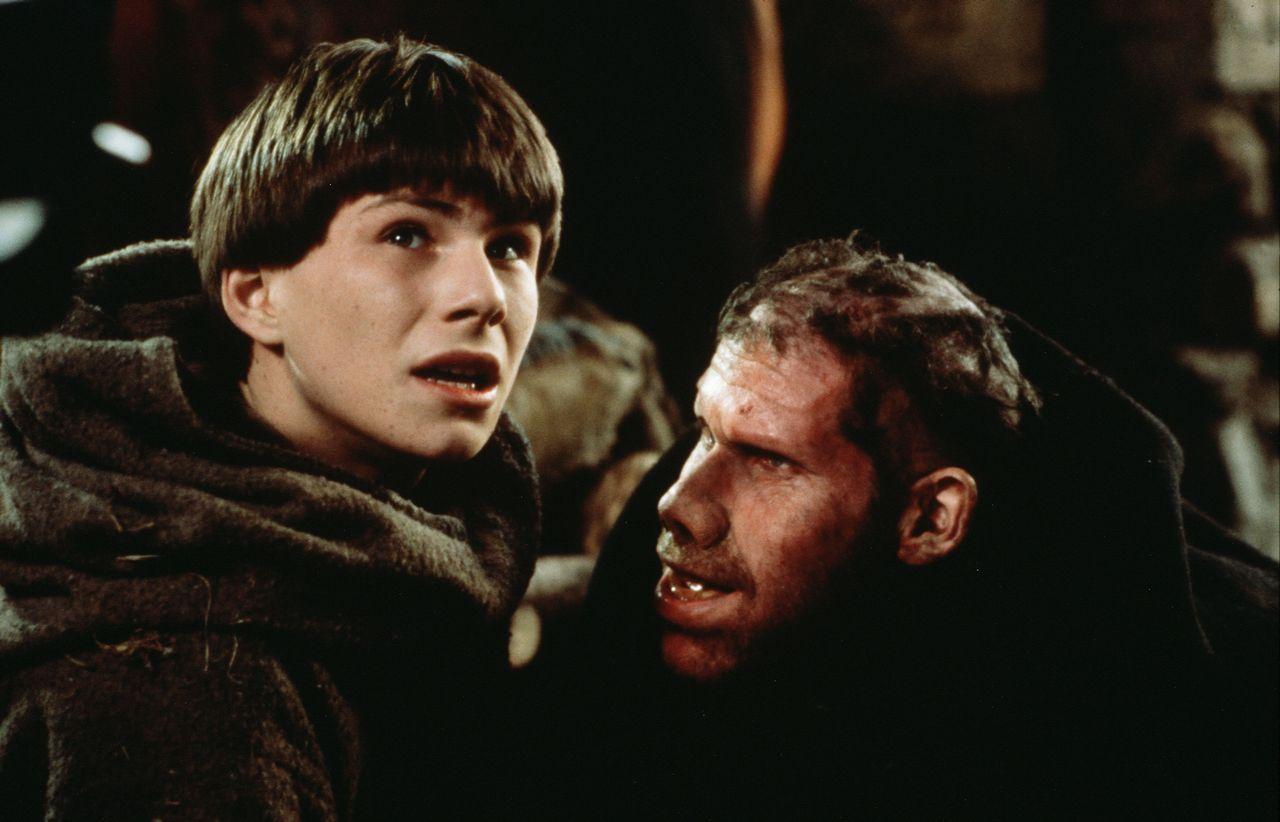
A história se passa durante sete dias em 1327, mas é na verdade narrada por um Adso mais velho. Em 1327, Adso de Melk (Christian Slater) e seu mentor William de Baskerville (Sean Connery) chegam a uma abadia onde algo terrível havia acontecido: um dos monges havia morrido em circunstâncias misteriosas. William, sendo um homem sábio, é chamado para investigar o caso. Logo depois de sua chegada, mais mortes misteriosas acontecem.  


The story takes place during seven days in 1327, but is actually being narrated by an older Adso. In 1327, Adso de Melk (Christian Slater) and his mentor William of Baskerville (Sean Connery) arrive in an abbey where a terrible thing has happened: one of the monks had died in obscure circumstances. William, being the wise man he is, is asked to investigate the case. Right after he arrives, more complicated deaths occur.

O que todos os monges mortos tinham em comum era alguma ligação com a biblioteca da abadia. A biblioteca é um local trancado, quase sagrado, e palco de intrigas. O lugar é protegido pelo bibliotecário-chefe Malaquias (Volker Prechtel) e seu assistente Berengário (Michael Habeck). É um local não para preservar e obter conhecimento, mas para manter o conhecimento cativo.


What all the dead monks had in common was that they all had some kind of link with the library of the abbey. The library is a locked, almost sacred, place and the stage for intrigues. The place is protected by chief librarian Malachia (Volker Prechtel) and his assistant Berengar (Michael Habeck). It’s a place not to preserve and obtain knowledge, but to hold knowledge captive.

Na Idade Média, o mais perto das modernas bibliotecas que existia eram os monastérios, onde livros não eram apenas guardados, mas estudados e copiados pelos monges. Isto é descrito em “O Nome da Rosa”, com muitos segredos sendo guardados pelos monges no scriptorium - onde os livros eram copiados -, especialmente pelos monges que sabiam línguas estrangeiras como árabe e grego. Os manuscritos eram sobre assuntos religiosos ou escritos por religiosos, e algumas obras seculares também eram guardadas - no livro, para servir de exemplo do que não pensar - e até mesmo emprestar e pegar emprestados manuscritos era possível devido aos monges itinerantes como William e Adso. No tempo em que se passam o livro e o filme, já havia bibliotecas sendo construídas dentro das novas universidades.  


In the Middle Ages, the closest we had to modern libraries were monasteries, where books were not only kept, but also studied and copied by monks. This is described in “The Name of the Rose”, with many secrets being held by the monks in the scriptorium - where the books were copied -, especially the monks who knew foreign languages such as Arab and Greek. Manuscripts were about religious issues or by religious figures, and some secular writings were kept - in the book, to be an example of what not to think - and even lending and borrowing manuscripts was made possible because of travelling monks such as William and Adso. By the time book and movie are set, there were already libraries being constructed inside the new universities.

O filme define a si mesmo como “um palimpsesto do romance de Umberto Eco. Palimpsesto significa, de acordo com o dicionário Merriam-Webster, “material escrito usado uma ou mais vezes depois que o escrito anterior foi apagado.” É um jeito elegante de dizer que se trata de uma adaptação mais ou menos fiel do livro. Duas diferenças principais: o personagem Salvatore (Ron Perlman) não é corcunda no livro; e no filme os inquisidores ficam por mais tempo, inclusive usando o pátio da abadia para queimar as pessoas consideradas culpadas após julgamento. Além disso, no filme, William é ainda mais perspicaz do que no livro, e muitas discussões sobre fé não estão no filme, embora sejam importantes para a trama.


The movie defines itself as “a palimpsest of Umberto Eco’s novel”. Palimpsest means, according to the Merriam-Webster dictionary, “writing material used one or more times after earlier writing has been erased”. It’s a fancy way to say that the movie is a somewhat-faithful adaptation of the novel. Two main differences: character Salvatore (Ron Perlman) doesn’t have a hunchback in the novel; and in the film the inquisitors stay for a longer time, even using the abbey’s patio to set fire to those found guilty in the judgments. Also, in the movie, William of Baskerville is even more perceptive than in the novel, and many discussions about faith are not in the movie, even though they are important to the plot.

Este é um filme que não passa no Teste de Bechdel, ou seja, um filme que não tem ao menos duas personagens femininas com nome e que conversam entre si sobre um assunto que não seja sobre homens. A garota no filme não tem nome, não tem falas nem poder. Isto é esperado de um filme cuja trama acontece dentro de uma abadia, e considerando toda a história da exclusão das mulheres pela religião católica. Há inclusive um momento em que William cita a Bíblia, dizendo: “mais amarga que a morte é a mulher”.


This is a movie that doesn’t pass the Bechdel Test, that is, a movie that doesn’t have at least two female characters with names and who talk to each other about a subject that is not men. The girl in the film is both nameless, lineless and powerless. This is expected, as a movie whose action happens in an abbey, and considering the whole history of female exclusion in the Catholic religion. There is even a moment when William quotes the Bible, saying: “bitterer than death is the woman”.

De acordo com o IMDb, Sean Connery estava em um momento difícil da carreira quando fez este filme. Mas seu retorno ao sucesso viria logo: no ano seguinte ele faria “Os Intocáveis”, pelo qual ganharia um Oscar de Melhor Ator Coadjuvante. Por “O Nome da Rosa” Connery ganhou um BAFTA de Melhor Ator.


According to IMDb, Sean Connery was in a very low point of his career when he made this movie. But his comeback was just around the corner: the following year he would make “The Untouchables”, for which he would win an Oscar for Best Supporting Actor. For “The Name of the Rose” Connery won a BAFTA for Best Actor.


Para a faculdade, eu tinha de escrever um artigo de 15 páginas sobre qualquer assunto dentro da Biblioteconomia. Meu primeiro impulso foi escrever sobre “O Nome da Rosa”, comparando livro, filme e vida real. Em vez disso, eu escolhi escrever sobre adaptações necessárias para uma biblioteca atender usuários com deficiência. Eu fico feliz que tenha mudado de ideia, pois agora posso escrever, num artigo para o blog simples mas - espero - informativo, sobre “O Nome da Rosa” - o mais famoso romance de Umberto Eco, mas ao mesmo tempo aquele que ele considerava seu pior trabalho de ficção. Sobre o filme, em 2013 Eco foi sucinto: “é um bom filme”.  


For college, once I had to write a 15-page paper on any topic of Library Science. My first urge was to write about “The Name of the Rose”, comparing novel, movie and real life. I chose instead to write about adaptations a library needs to accommodate users with disabilities. I’m glad I changed my mind, so now I can write, in a simple but I hope informative blog post, about “The Name of the Rose” - Umberto Eco’s most famous novel, but the one he considered his worst work of fiction. About the movie, in 2013 Eco was succinct: “it’s a nice movie”.


This is my contribution to the On the Job blogathon, hosted by Hamlette’s Soliloquy and The Midnite Drive-In.

Saturday, September 24, 2022

As Aventuras Cinematográficas de Huckleberry Finn

The Cinematic Adventures of Huckleberry Finn

De acordo com o IMDb, a novela de Mark Twain “As Aventuras de Huckleberry Finn” já foi adaptada para o cinema e a TV mais de 20 vezes, começando com “Huck and Tom” – com Jack Pickford como Tom Sawyer – em 1918. Eu escolhi assistir e resenhar três destas adaptações, todas feitas antes de 1940, e comparar com o livro, que eu li há alguns anos. Por isso este post também é por si só, uma aventura – literária e cinematográfica.

According to IMDb, Mark Twain’ novel “The Adventures of Huckleberry Finn” has been adapted to movies and TV shows, so far, more than 20 times, starting with “Huck and Tom” – that had Jack Pickford as Tom Sawyer – in 1918. I chose to watch and review three of those adaptations, all made before 1940, and compare with the book that I have read a few years ago. That’s why this post is, in itself, an adventure – a literary and cinematographic adventure, that is.

O livro, publicado em 1884, conta as muitas aventuras de Huckleberry Finn, camarada de Tom Sawyer, junto ao escravo em fuga Jim ao longo do rio Mississippi. Antes que a aventura comece, Huck é sequestrado pelo pai, um alcoólatra, que quer o dinheiro que Huck ganhou no livro anterior. Todas as versões que eu vi seguem esta história.

The book, published in 1884, tells the many adventures of Huckleberry Finn, Tom Sawyer’s comrade, alongside the runaway slave Jim through the Mississippi River. Before the adventures start, Huck is kidnapped by his alcoholic father, who wants the money Huck got in the previous book. All versions I’ve watched follow this plot.

Encontrei no Internet Archive apenas a primeira metade da versão de 1920, um filme dirigido por William Desmond Taylor que se destaca por ter sido a primeira adaptação do livro solo para o cinema. Aqui, Huck é interpretado por Lewis Sargent, Tom por Gordon Griffith e Jim por George Reed. Esta primeira metade mostra como Huck foi sequestrado por seu pai alcoólatra e como escapou do cativeiro, e termina quando ele encontra Jim, que havia sido vendido para um homem mau e também escapou. Um ponto importante é que a senhora Watson maltrata Jim, se transformando ela própria em um tipo de vilã.

I could find on the Internet Archive only the first half of the 1920 version, a film directed by William Desmond Taylor that was important for being the very first adaptation exclusively of the novel to the big screen. Huck here is played by Lewis Sargent, Tom by Gordon Griffith and Jim by George Reed. This first half shows how Huck was kidnapped by his alcoholic father and escaped captivity, and it ends when he meets Jim, who had been sold to a bad man and also escaped. Something that calls the attention is how harsh Mrs Watson treats Jim, becoming a villainess in her own right.

A versão de 1931 da Paramount, intitulada no Brasil “Mocidade Feliz”, tem Jackie Coogan como Tom Sawyer, Junior Durkin como Huck e Clarence Muse como Jim. Dirigida por Norman Taurog, esta versão toma um bom tempo mostrando as desventuras de Huck na escola antes do sequestro. Jim e Tom resgatam Huck e os três partem para viver aventuras – afinal, não dava para desperdiçar o poder do nome de Jackie Coogan, ainda um grande astro 10 anos após ser descoberto por Chaplin em “O Garoto”. Coogan, Durkin e a maioria do elenco repetem os papéis que interpretaram em “Aventuras de Tom Sawyer” em 1930. Já que Tom é parte da aventura, muitas mudanças foram feitas na história do livro, e apenas uma história é contada: dois homens que dizem ser um Duque e um Rei fingem ser os tios estrangeiros de duas garotas órfãs. Mesmo assim, esta versão conta com um bom elenco, com Coogan, Durkin (que tragicamente morreu poucos anos depois em um acidente de carro), Jane Darwell e Eugene Pallette.

The 1931 version, from Paramount Pictures, has Jackie Coogan as Tom Sawyer, Junior Durkin as Huck and Clarence Muse as Jim. Directed by Norman Taurog, this version takes a good time showing us Huck’s misadventures at school before his kidnapping. Jim and Tom rescue Huck and the three go on to live adventures - after all, you can’t waste Jackie Coogan’s star power, still strong 10 years after his discovery in Chaplin’s “The Kid”. Coogan, Durkin and most of the cast are repeating the roles they played in “Tom Sawyer” in 1930. Since Tom is part of the whole adventure, a lot of changes were made from the book, and only one story is told: two men who say they are a Duke and a King pose as the foreign uncles for two orphaned girls. Nevertheless, this version brings a good cast, with Coogan, Durkin (who tragically died only a few years later in a car crash), Jane Darwell and Eugene Pallette.

E em 1939 a MGM tinha o astro perfeito para ser o protagonista de “As Aventuras de Huck”: Mickey Rooney. Com Rex Ingram como Jim e nada de Tom Sawyer à vista, Rooney é brilhante como o menino-herói. Nesta versão, Huck não é sequestrado pelo pai, mas aceita ir com ele pois Huck está prestes a desapontar a viúva Douglass (Elizabeth Risdon) e a senhorita Wtason (Clara Blandick), que estavam tomando conta dele. Quando Huck deixa o pai, Jim é falsamente acusado de assassinar o garoto, e os dois descem o Mississippi, até que encontram o Rei e o Duque, que primeiro fazem um show e depois fingem ser os tios das órfãs. Este filme tem algumas escolhas estranhas – se vistas com os olhos de hoje – como mostrar como algo positivo o fato de Huck fumar cachimbo e todo um discurso de Huck sobre Jim ser escravo porque foi esse o destino dado a ele por Deus. Há também dois momentos em que Mickey Rooney se veste de menina.

And in 1939 MGM had the perfect star to be the lead of “The Adventures of Huckleberry Finn”: Mickey Rooney. With Rex Ingram as Jim and no Tom Sawyer in sight, Rooney is outstanding as the boy-hero. In this version, Huck isn’t kidnapped by his father, but agrees to go with him as he’s about to disappoint the Widow Douglass (Elizabeth Risdon) and Miss Watson (Clara Blandick), who had been taking care of him. When Huck escapes his father, Jim is falsely accused of murdering the boy, and the two go down the Mississippi, until they meet the King and the Duke, who first put on a show and later impersonate the orphans’ uncles. This movie has some odd choices – as seen nowadays – like showing Huck smoking a pipe as something nice and a whole speech by Huck about Jim being a slave because this was what God intended for him. There are also two moments in which Mickey Rooney dresses in drag.

Houve uma adaptação da história para o programa de TV Climax em 1955, na qual Jim foi completamente apagado. E então, no final dos anos 50, um cão azul andarilho que cantava Querida Clementina foi criado, e batizado de Dom Pixote – Huckleberry Hound no original. William Hanna e Joseph Barbera quase batizaram Zé Colmeia de Huckleberry Bear, mas mudaram de ideia no último minuto. Além do estilo de vida aventureiro, Dom Pixote tem pouco em comum com Huckleberry Finn.

There was an adaptation of the story for the TV show Climax in 1955, in which Jim was completely erased. And then, in the late 1950s, a blue dog wandering and singing Oh My Darling Clementine was created, and baptized Huckleberry Hound. William Hanna and Joseph Barbera almosted baptized Yogi Bear as Huckleberry Bear, but changed their minds in the last minute. Other than his lifestyle, Huckleberry Hound has little in common with Huckleberry Finn.

E então outras adaptações foram feitas. Houve uma em 1960 dirigida por Michael Curtiz (abaixo), com Buster Keaton em um pequeno papel. J. Lee Thompson dirigiu uma versão em 1974 para a tela grande  e no ano seguinte uma adaptação foi feita para a TV, com Ron Howard como Huck. A versão mais recente da história é um curta-metragem de 2020, mas uma nova adaptação para o cinema já está em pré-produção!

And then other adaptations were made. There was one in 1960 directed by Michael Curtiz (below), with Buster Keaton in a small role. J. Lee Thompson directed a version in 1974 for the big screen and the next year a version was made for the small screen, with Ron Howard as Huck. The most recent version of the story is a short film from 2020 and there is another adaptation in the works!

O relacionamento e a camaradagem entre Huck e Jim é uma das coisas mais importantes no livro, e foi traduzida para as telas de maneiras diferentes. Não houve momentos suficientes de Huck-e-Jim no fragmento de 1920 para que eu pudesse ver como os dois personagens interagiam. Na versão de 1931, a presença de Tom Sawyer por todo o filme eclipsou a relacão de Jim e Huck. Há uma verdadeira amizade retratada no filme de 1939, mesmo que o roteiro reforce que Jim não é uma pessoa muito esperta, sendo inclusive infantil algumas vezes.

The rapport and the camaraderie between Huck and Jim is one of the most important things in the book, and it was translated to the screen in different ways. There wasn’t enough of Huck-and-Jim moments in the 1920 fragment for us to see how the two characters interacted. In the 1931 version, the presence of Tom Sawyer all through the movie eclipsed Jim and Huck’s relationship. There is a true friendship portrayed in the 1939 film, even though they reinforce that Jim is a not-so-bright person, even childish at times.

Eu entendo que “As Aventuras de Huckleberry Finn” é um clássico norte-americano e leitura obrigatória em muitas escolas  - mesmo o livro tendo sido envolvido em polêmicas e até mesmo banido em alguns lugares! Eu li o livro já adulta, tentando agigantar meus horizontes quando o assunto é literatura mundial. Eu gostei muito do livro e agora, dando o veredicto sobre as duas adaptações e meia que vi, tenho que dizer que a versão de 1939 com Mickey Rooney é a melhor delas. E a MGM faz magia novamente!

I understand that “The Adventures of Huckleberry Finn” is an American classic and mandatory reading in many schools – even though the book has been involved in polemics and even banned in some places! I read the novel when I was already an adult, broadening my understanding of world literature. I really enjoyed the novel and now, giving the verdict about the two-and-a-half adataptations I watched, I have to say that the 1939 version with Mickey Rooney is the best of them. MGM does it again, folks!

This is my contribution to the Classic Literature in Film blogathon, hosted by Paul at Silver Screen Classics.

Related Posts Plugin for WordPress, Blogger...