} Crítica Retrô: 1943

Tradutor / Translator / Traductor / Übersetzer / Traduttore / Traducteur / 翻訳者 / переводчик

Showing posts with label 1943. Show all posts

Saturday, March 14, 2020

Uma Cabana no Céu (1943) / Cabin in the Sky (1943)


Hollywood é racista? A maioria de nós concordaria com a afirmação – e diria que Hollywood era ainda mais racista na chamada “Era de Ouro do cinema”, que não foi de ouro para todo mundo. Filmes com protagonistas negros eram raros, e diretores negros eram ainda mais raros. Mas, durante a Segunda Guerra Mundial, Hollywood viu potencial no mercado afro-americano e, tentando abraçar a diversidade, fez alguns musicais com elenco 100% negro. “Uma Cabine no Céu” (1943) foi um destes musicais.

Is Hollywood racist? Most of us would agree that it is – and it was even more in the so-called “Golden Age of Cinema”, one that wasn’t golden for everybody. Films with black leads were rare, and black directors were even rarer. But, during World War II, Hollywood saw a potential in the African-American market and, trying to embrace diversity, it made some all-black musicals. “Cabin in the Sky” (1943) was one of them.
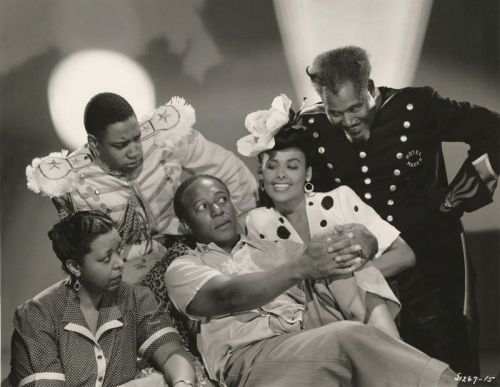

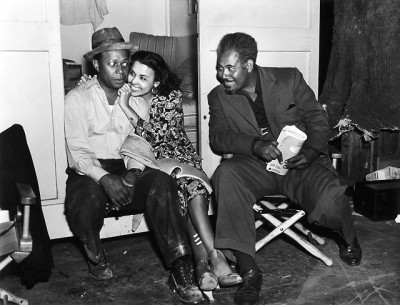
Petunia (Ethel Waters) e Little Joe (Eddie ‘Rochester’ Anderson) se amam profundamente. Entretanto, Joe tem vícios que incomodam sua esposa e atrapalham sua vida. Estes vícios são jogos de azar e a vamp Georgia Brown (Lena Horne). Um dia, Joe escapa da missa para ir jogar e, talvez, pagar uma dívida. Mas ele é baleado no clube e levado de volta para casa em estado crítico.

Petunia (Ethel Waters) and Little Joe (Eddie 'Rochester' Anderson) love each other very much. However, Joe has addictions that bother his wife and prevents him to live his fullest. These addictions are gambling and the vamp Georgia Brown (Lena Horne). One day, Joe escapes church service to go gambling and, maybe, pay a debt. But he is shot at the club and taken back home in a critical state.


Joe morre, e começa uma batalha por sua alma. Para Lúcifer Jr. (Rex Ingram), é óbvio que ele pertence ao inferno. Mas a prece de Petunia é tão poderosa que um soldado (Kenneth Spencer) de Deus intervém. Depois de consultar o próprio Deus, os dois lados decidem dar a Joe uma segunda chance. Ele agora tem seis meses para limpar a alma (o termo usado é “whitewashing”!!!), ou ele irá direto para o inferno. O uso de luz e sombras nesta sequência é admirável.

Little Joe dies, and a battle for his soul starts. It's clear for Lucifer Jr. (Rex Ingram) that he belongs to hell. But Petunia's prayer is so powerful that a soldier (Kenneth Spencer) of God intervenes. After consulting God himself, the two sides decide to give Joe a second chance. He now has six months to “whitewash” (!!!) his soul, or he'll go straight to hell. The use of light and shadows in this sequence is something to admire.


Lúcifer Jr. e seu bando decidem intervir e mandar tentações para Joe. Eles decidem torná-lo rico – uma ideia de um diabólico Louis Armstrong – e adicionar Georgia Brown à equação para criar desentendimentos entre Petunia e Joe e fazê-lo escolher o pecado.

Lucifer Jr. and his crew decide to intervene and send temptations to little Joe. They decide to make him rich – an idea from a devilish Louis Armstrong – and add Georgia Brown to the equation to create a misunderstanding between Petunia and Joe and make him choose sin.


Nossa vamp Georgia Brown aparece apenas depois de 44 minutos. Ela é o exato oposto de Petunia. Petunia é a esposa esperta e trabalhadora, que se dedica de corpo e alma ao marido – sua felicidade tem nome, e esse nome é Joe. Georgia é uma femme fatale num musical, uma sedutora interessada em presentes, dinheiro e sexo.

Our vamp Georgia Brown only appears after 44 minutes. She is the exact opposite of Petunia. Petunia is the smart, hardworking wife who is completely devoted to her husband – her happiness has a name, and this name is Joe. Georgia is a femme fatale in a musical movie, a seductress interested in gifts, money and sex.
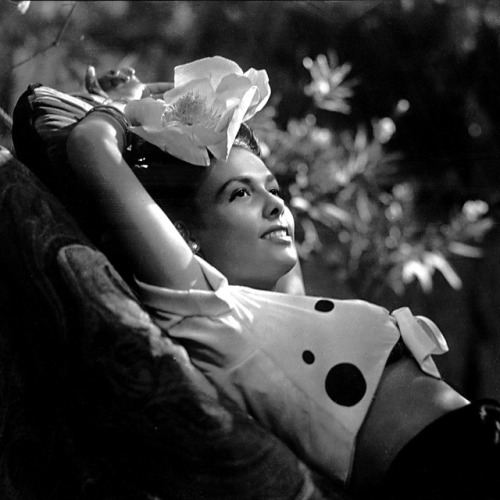

Ethel Waters e Lena Horne eram cantoras extraordinárias. Eddie ‘Rochester’ Anderson, por outro lado, não cantava tão bem, mas isso ajudou na imagem de homem comum de Joe. Você consegue imaginar alguém com a voz de, por exemplo, Paul Robeson como um pobre homem viciado em jogo e fraco para as tentações? Eu também não.

Ethel Waters and Lena Horne were outstanding singers. Eddie 'Rochester' Anderson, on the other hand, couldn't sing so well, but this helped the everyman image of his character Joe. I mean, can you imagine someone with the vocal range of, let's say, Paul Robeson being a poor man addicted to gambling and weak to temptations? Neither can I.
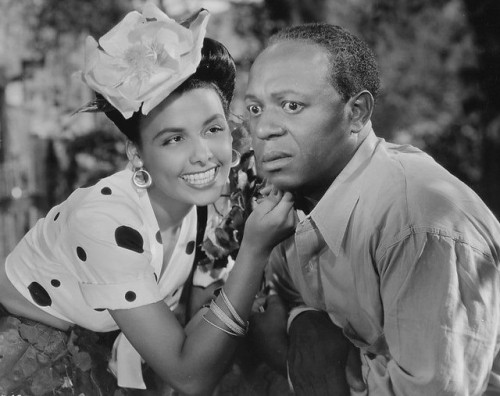

Lena Horne começou sua carreira como corista no famoso Cotton Club de Nova York no início dos anos 1930. No final da década ela já cantava com várias orquestras, e em 1942 ela foi contratada pela MGM. No entanto, na maioria de seus filmes ela aparecia como ela mesma em pequenas performances, sem importância para a trama, para que seu número pudesse ser cortado para a exibição do filme no sul dos EUA, região notadamente racista.

Lena Horne started her career as a chorus girl at the famous Cotton Club in New York in the early 1930s. By the end of the decade she was singing with several big band orchestras, and in 1942 she was hired by MGM. However, most of her film appearances at this time were as herself and in small walk-on performances, unimportant to the plot, so her number could be cut when the film was exhibited in the racist US South.


Mas houve alguns filmes que escandalizariam os racistas, e estes filmes tinham elenco 100% negro. “Uma Cabine no Céu” foi um deles – embora fosse apenas o quarto musical protagonizado por negros feito por um grande estúdio desde a chegada do som no cinema. Outro musical com elenco todo negro foi “Tempestade de Ritmo”, também feito em 1943, e também com Lena Horne. Isso significa que os dois maiores sucessos de Lena em Hollywood estrearam no mesmo ano.

But there were some films that would freak racists out, and those films had an all-black cast. “Cabin in the Sky” was one of them – although only the fourth all-black musical made by a major studio since the arrival of talkies. Another musical with an all-black cast was “Stormy Weather”, also released in 1943, and also featuring Lena Horne. This means the two biggest successes Lena had in Hollywood happened in the same year.

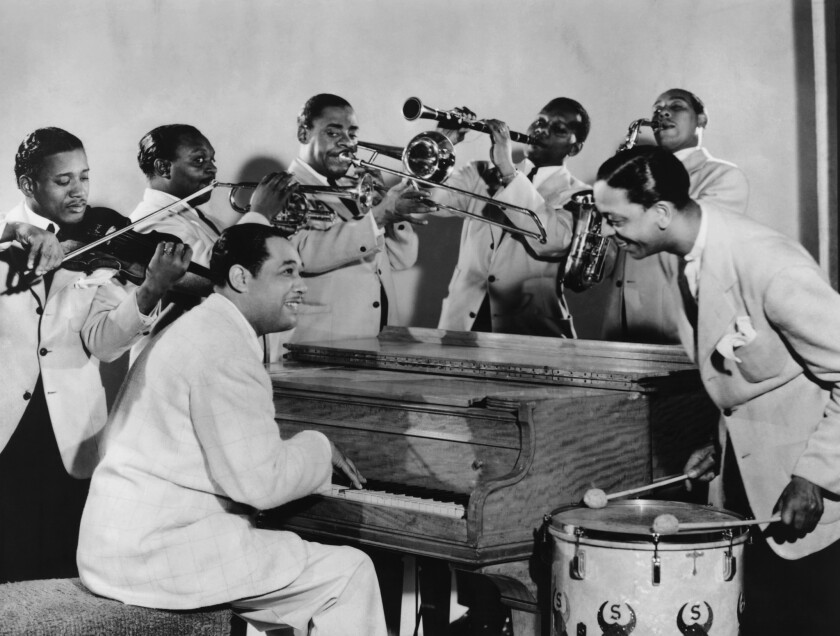
Além de Lena, você também encontrará Duke Ellington e sua orquestra tocando no clube onde Joe vai jogar. A orquestra de Ellington era o que chamavam de “hot bands”: bandas lideradas por negros e especializadas em swing e blues – jazz para dançar, não para relaxar. Duke Ellington esteve à frente de sua orquestra por mais de 60 anos e compôs mais de mil músicas.

Besides Lena, you can also find Duke Ellington and his orchestra playing at the club Joe goes to gamble. Ellington’s orchestra was what they called “hot bands”: bands leaded by black performers and specialized in swing and blues – jazz to dance, not to relax while listening. Duke Ellington led his orchestra for over 60 years and composed over 1,000 songs.

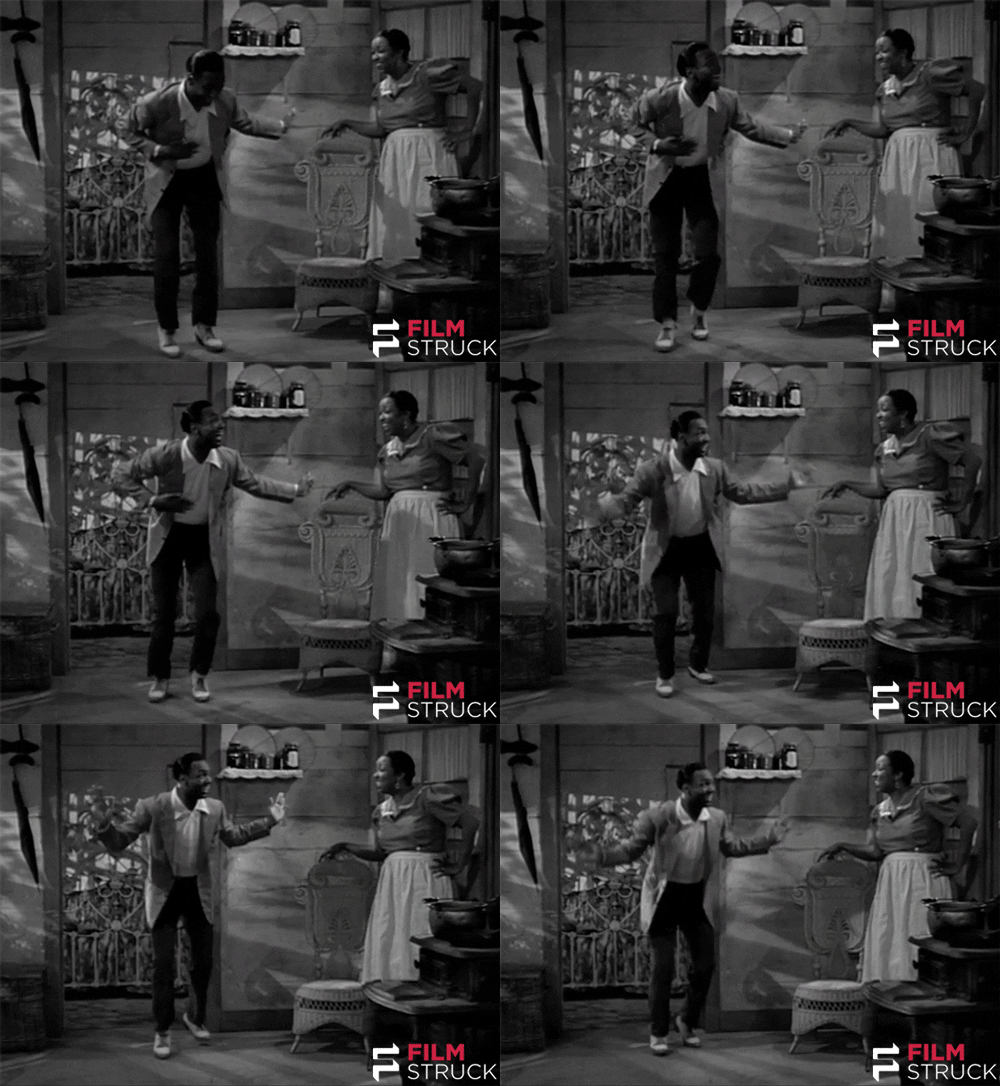
O então jovem diretor Vincente Minnelli recebeu seu primeiro crédito de direção em “Uma Cabine no Céu”. Busby Berkeley ajudou o novato em uma sequência, mas não recebeu crédito. Minnelli queria que Dooley Wilson, que interpretou Little Joe na Broadway, repetisse o papel no filme, mas a MGM acreditava que Eddie ‘Rochester’ Anderson era mais conhecido. Dooley Wilson, obviamente, é mais lembrado como o pianista Sam de “Casablanca”.

Up-and-coming director Vincente Minnelli received his first directing credit in “Cabin in the Sky”. Busby Berkeley helped the newcomer in one sequence, but went uncredited. Minnelli wanted Dooley Wilson, who had played Little Joe on Broadway, to also play the role in the film, but MGM believed Eddie ‘Rochester’ Anderson was a bigger star. Dooley Wilson, of course, is best remembered as pianist Sam from “Casablanca” (1942).


Eu vi duas coincidências interessantes entre “Uma Cabine no Céu” e “O Mágico de Oz” (1939), estrelado por Judy Garland, que mais tarde se casaria com Minnelli. Em ambos há um tornado importante para a trama – na verdade, a MGM reutilizou algumas tomadas do tornado de Oz no filme de 1943. E em ambos há atores que interpretam dois papéis, um num mundo de sonho ou sobrenatural – a terra de Oz em “O Mágico de Oz” e o Céu / Inferno em “Uma Cabine no Céu” – e outro no mundo real.

I saw two cool coincidences with “Cabin in the Sky” and “The Wizard of Oz” (1939), starring Judy Garland, who later would marry Minnelli. In both there is a tornado that is key to the plot – indeed, MGM reused some of the Oz tornado footage in the 1943 movie. And in both there are actors who play two roles, one in the dream or supernatural world – the Land of Oz in “The Wizard of Oz” and the Heaven / Hell in “Cabin in the Sky” – and another in the real world.


Este filme foi feito em uma época em que Hollywood estava tentando mostrar como eles eram amigáveis no tratamento do público afro-americano. Alerta de spoiler: eles não eram tão amigáveis. Estamos falando sobre os anos 1940, quando a segregação era forte e quando alguns prisioneiros de guerra nazistas se surpreenderam como péssimo tratamento dispensado aos negros no sul dos EUA. A própria Lena Horne se recusava a se apresentar para as tropas se os prisioneiros alemães fossem colocados nas fileiras da frente e os soldados negros nas fileiras de trás – uma prática muito comum até então.

This film was made in a time when Hollywood was trying to show how friendly they were towards the African-American public. Spoiler alert: they weren't so friendly. We're talking about the 1940s, when segregation was in full swing and when some Nazi prisoners of war were surprised by how badly black people were treated in the US South. Lena Horne herself refused to perform for war troops if German prisoners were put in the front row and black soldiers were put in the back – a very common practice then.

Lena Horne poderia ter mais tempo na tela em “Uma Cabine no Céu” se seu número “Ain’t It the Truth” não tivesse sido cortado. Ele foi considerado arriscado demais, pois Lena cantava enquanto tomava um banho de espuma. Como consequência, a versão de Louis Armstrong da mesma música também foi cortada, e ele ficou com um papel mínimo. A sequência foi usada num curta-metragem de 1946 e exibida em “Era Uma Vez em Hollywood, Parte III” (1994).

Lena Horne could have had more screen time in “Cabin in the Sky” if her number “Ain’t It the Truth” wasn’t cut. It was considered too risky, as Lena sung it while taking a bubble bath. As a consequence, Louis Armstrong’s rendition of the same song was also cut, leaving the musician with a minimum role. The sequence was used in a 1946 short and featured in “That’s Entertainment! III” (1994).


“Uma Cabine no Céu”, tanto o show da Broadway quanto o filme de Hollywood, foram escritos e dirigidos por homens broncos. Por causa disso, vemos algumas semelhanças na maneira como os negros são retratados aqui e em outras obras dos anos 1940. Por exemplo: em “Uma Cabine no Céu” e no último esquete de “Seis Destinos” (1942) – que também tinha Ethel Waters no elenco – os negros são mostrados como um pouco ingênuos, muito religiosos e com um forte senso de comunidade. Enquanto alguns temas, como a escolha entre bom e mau, são universais, é revigorante ver uma história como essa interpretada por artistas negros, o que também nos faz imaginar o que mais eles poderiam ter feito se Hollywood estivesse realmente interessada em diversidade.

“Cabin in the Sky”, both the Broadway show and the Hollywood movie, were written and directed by white men. Because of this, we see some similarities between how black people are portrayed here and in other works from the 1940s. For instance: in both “Cabin in the Sky” and in the last segment of “Tales of Manhattan” (1942) – that also had Ethel Waters in the cast – black people are portrayed as a bit naïve, deeply religious and with a strong sense of community. While some themes, like choosing good over evil, are universal, it’s refreshing to see a story like this played by black performers, which also makes us wonder what else they could achieve if Hollywood was really interested in diversity.

This is my contribution to the Pop Stars Moonlighting blogathon, hosted by Gill at ReelWeegieMidget Reviews.

Friday, January 10, 2020

Coronel Blimp: Vida e Morte (1943) / The Life and Death of Colonel Blimp (1943)


ESTE ARTIGO TEM SPOILERS
THIS ARTICLE HAS SPOILERS

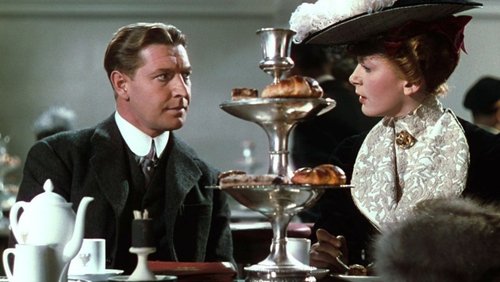
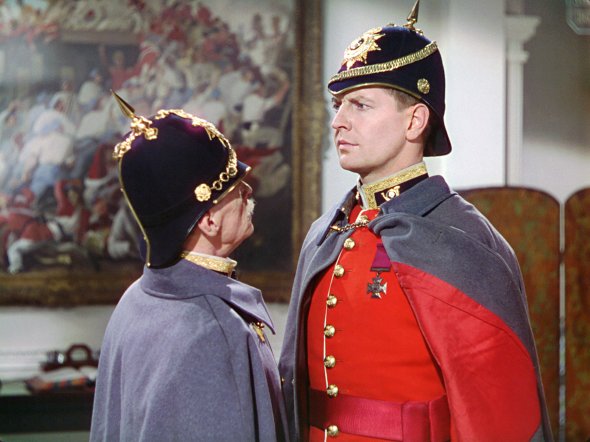
“A guerra começa à meia-noite!” Mesmo com esse protesto, o General Clive Candy é levado como prisioneiro de um grupo de soldados ingleses em treinamento. Assim que Candy cai numa piscina num banho turco, ele – e nós – revisitamos sua vida em uma série de flashbacks.

“War starts at midnight!” Even with this protest, Major-General Clive Candy is taken as prisoner of an English group of soldiers in training. As Candy falls in a pool in a Turkish bath, he – and we – revisits his life in a series of flashbacks.


Durante a Segunda Guerra dos Bôeres (1899-1902), Clive Candy (Roger Livesey) participou de um tipo diferente de ação. Como um tenente de folga, ele recebeu uma carta de uma mulher inglesa que trabalhava em Berlim, Edith Hunter (Deborah Kerr). Ela reclama que Kaunitz, um alemão, está espalhando propaganda contra a Inglaterra. Como os superiores de Clive não se importam com o assunto, ele decide parar Kaunitz sozinho.

During the Second Boer War (1899-1902), Clive Candy (Roger Livesey) saw a different kind of action. As a lieutenant on leave, he receives a letter from an English woman working in Berlin, Edith Hunter (Deborah Kerr). She complains that Kaunitz, a German, is spreading anti-British propaganda. As Candy's superiors don't care about the matter, he decides to stop Kaunitz himself.


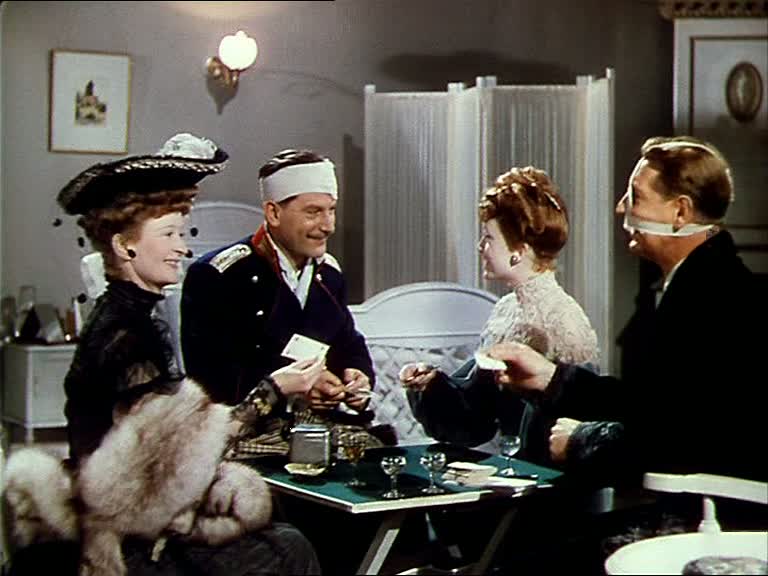
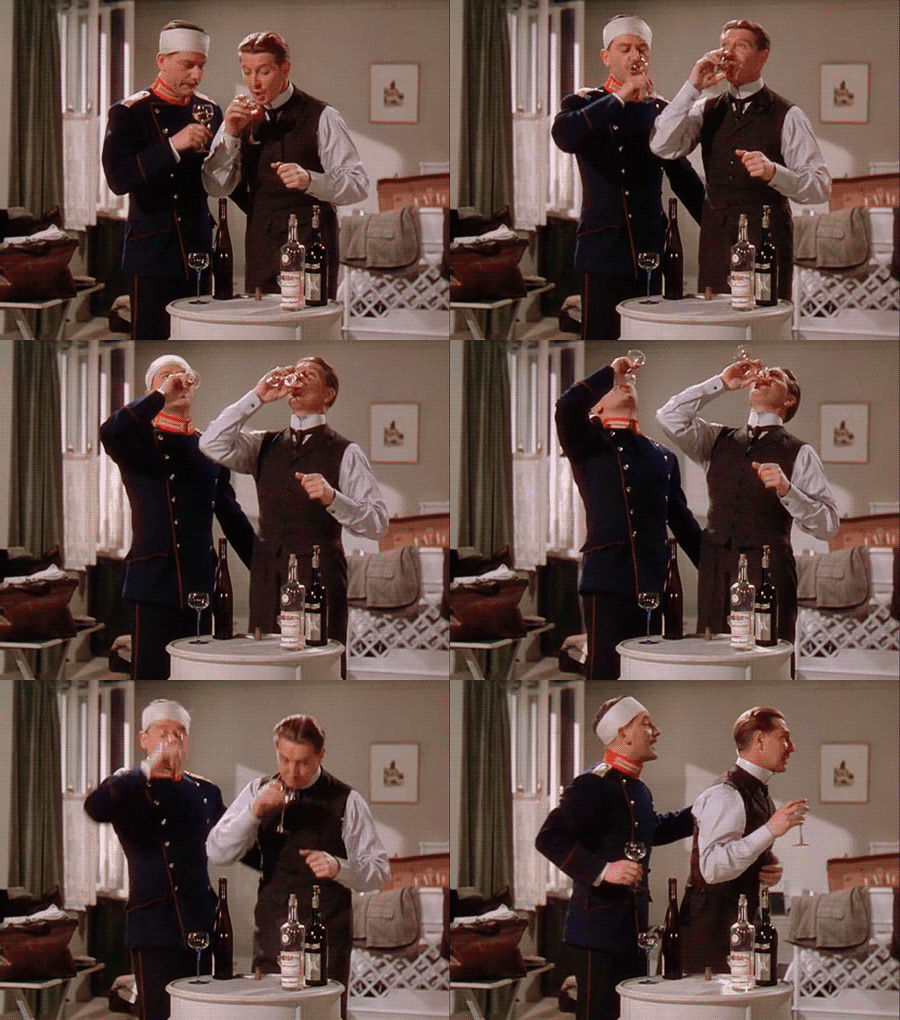
Candy conhece Edith e, com ela, confronta Kaunitz (David Ward) e acaba causando um grande incidente diplomático. Ele é mandado para duelar com um oficial alemão, Theo Kretschmar-Schuldorff (Anton Walbrook). Ambos são feridos no duelo – e se tornam amigos.

Candy meets Edith and, with her, confronts Kaunitz (David Ward) and ends up causing a minor diplomatic incident. He is sent to duel with a German officer, Theo Kretschmar-Schuldorff (Anton Walbrook). Both are wounded in the duel – and they become friends.


Candy vai para a África. Uma montagem cheia de cabeças empalhadas de animais mortos por Candy mostra a passagem do tempo – uma sequência destas não seria aceita hoje. Agora a Primeira Guerra Mundial (1914-1918) está em curso. O agora General Candy, com um bigode, está em Flandres com seu mordomo Murdoch (John Laurie) pouco antes da assinatura do Armistício. Numa base da Cruz Vermelha ele conhece a enfermeira Barbara Wynne (também Deborah Kerr), e se apaixona por ela por causa de sua semelhança com Edith. Mesmo sendo 20 anos mais nova que ele, ela aceita o pedido de casamento.

Candy leaves to Africa. A montage full of heads of animals shot by Candy show the passage of time – such a sequence wouldn’t be accepted today. Now World War I (1914-1918) is underway. The now General Candy, with a moustache, is in Flanders with his butler Murdoch (John Laurie) a while before the Armistice is signed. In a Red Cross base he meets nurse Barbara Wynne (also Deborah Kerr), and falls in love with her because of the resemblance she bears with Edith. Despite being 20 years younger than him, she accepts his proposal.


Quando a guerra acaba, Candy encontra Theo em um campo de prisioneiros de guerra. A relação deles é, à primeira vista, impactada, mas Theo é libertado e vai jantar com Candy. Theo é mandado de volta para a Alemanha, enquanto Candy e sua esposa Barbara viajam pelo mundo.

When the war is over, Candy tracks down Theo in a prisoner of war camp. Their relationship is at first shaken, but Theo is freed and they have dinner together. Theo is sent back to German, while Candy and his wife Barbara travel the world.


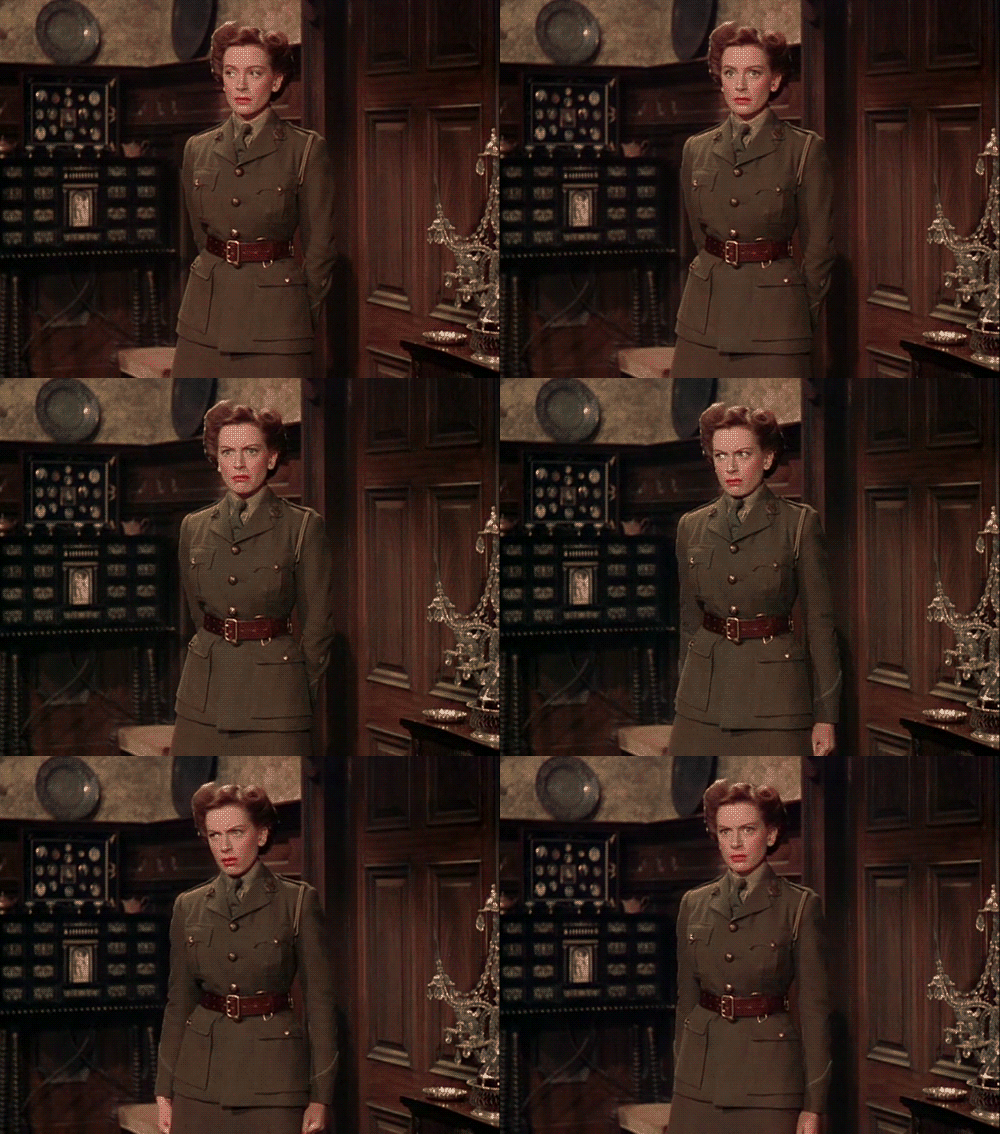
Barbara morre em 1926, sem deixar filhos. Candy volta a caçar animais selvagens e novamente enche as paredes de casa com as cabeças empalhadas. Logo é 1939, e Theo, agora um químico aposentado, está na Inglaterra após ter enviuvado e ter visto os dois filhos se tornarem nazistas.  Candy encontra Theo no escritório de imigração e o leva para sua casa, onde Theo conhece a motorista de Candy, Angela (adivinhe quem? Deborah Kerr) e se impressiona com a semelhança entre ela, Edith, e Barbara. O filme volta para o começo.

Barbara dies in 1926, leaving no children. Candy starts hunting wild animals again and filling his walls with their heads. Soon it’s 1939, and Theo, now a retired chemist, is in England after becoming a widower himself and seeing his two sons become Nazis. Candy meets Theo at the immigration office and takes him to his home, where Theo meets Candy’s driver, Angela (guess who? Deborah Kerr) and gets impressed with her resemblance with both Edith and Barbara. The film finally comes full circle.


A lógica diz que um filme como “Coronel Blimp: Vida e Morte” não poderia ser feito durante a guerra. É um filme colorido – portanto, mais caro – que tem um personagem alemão simpático e um oficial inglês não muito nobre, e que está ficando obsoleto. A lógica diz que um filme como “Lawrence da Arábia” poderia ser feito durante a guerra, para contar os feitos de um herói de guerra e inspirar os jovens soldados. Mas o mundo do cinema nem sempre segue a lógica.

Logic says that a film like “The Life and Death of Colonel Blimp” couldn't and shouldn’t be made in wartime England. This is a color film – therefore, more expensive – that has a sympathetic German character and a not so noble English officer, who is becoming obsolete. Logic says that a film like “Lawrence of Arabia” would be made in wartime England, to chronicle the deeds of a war hero and inspire the young soldiers. But the film world does not always follow logic.


Winston Churchill se recusou a dar um visto de exportação para o filme depois que ele ficou a par da história que seria contada – por causa disso, o filme só estreou nos EUA em 1945, e numa versão editada. Algumas teorias dizem que Churchill sentiu que Candy era uma sátira dele, mas não há prova disso. Mesmo assim, “Coronel Blimp: Vida e Morte” estreou na Inglaterra com sucesso.

Winston Churchill refused to give a visa for the film after he got to know the story that was being told – because of that, the film only premiered in the US in 1945, and in an edited version. Some theories say that Churchill felt that Candy was a character made to satirize him, but there is no proof of that. Nevertheless, “The Life and Death of Colonel Blimp” premiered in England and was a success.


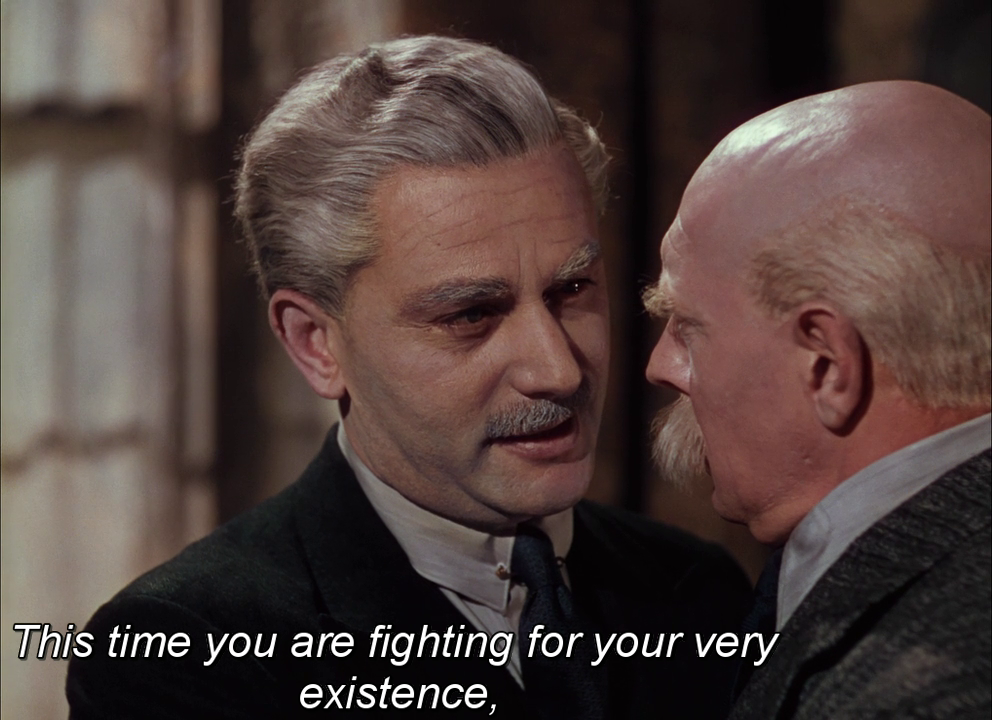
Embora Clive Candy seja o protagonista do filme, creio que Theo é o personagem mais interessante. Primeiro, ele é um soldado alemão com um forte senso de dever e que fala apenas duas expressões em inglês. Isso não impede que uma amizade entre ele e Candy surja. Depois da Primeira Guerra Mundial, Theo está amargo e não é bem recebido entre os amigos de Candy. Além disso, ele não tem certeza sobre como a Alemanha será tratada no Tratado de Versalhes – alerta de spoiler: a Alemanha foi tratada injustamente. E é durante a Segunda Guerra Mundial que seu personagem brilha. Por ter perdido seus dois filhos para o nazismo, ele sabe que combater os nazistas não será como combater qualquer outro inimigo. Numa época em que todos os filmes de guerra retratavam os alemães como uma massa de inimigos, ter um personagem alemão não-judeu como a voz da razão é uma surpresa. E Anton Walbrook, ele próprio um refugiado, é talentoso e bonito.

Although Clive Candy is the lead of the film, I found Theo to be the most interesting character. First, he’s a German soldier with a strong sense of duty who just speaks two expressions in English. This doesn’t prevent a friendship between him and Candy to blossom. After World War I, Theo is bitter and is not well-received among Candy’s friends. Furthermore, he is uncertain about how German would be treated by the Treaty of Versailles – spoiler alert: Germany wasn’t treated fairly. And it’s during World War II that his character shines. Having lost his two sons to Nazism, he knows fighting Nazis won’t be like fighting any other enemy. In a time when all war movies portrayed German people as a mass of enemies, to have a non-Jewish German character as the voice of reason is a surprise. It also doesn’t hurt that Anton Walbrook, a refugee himself, is both talented and handsome.


Os três papéis de Deborah Kerr podem ser associados com a ideia de duplos ou doppelgangers. De acordo com um estudo de 2016 de uma universidade australiana, há apenas uma chance em 135 de você ter um doppelganger exato. Por isso, a chance de Candy conhecer três mulheres que são exatamente iguais, todas na Europa, em um período de 40 anos, é muito, muito pequena. Mas, de novo, os filmes seguem uma lógica diferente.

Deborah Kerr’s three roles can be associated with the idea of doppelgangers. According to a 2016 study from an Australian university, there is only a 1 in 135 chance that there is an exact pair of doppelgangers. So, the chance of Candy having met three women who look exactly the same, all in Europe, in a 40-year period is very, very small. But, again, movies follow a different logic.


Dito isto, é uma pena que nenhuma das personagens de Deborah Kerr seja bem desenvolvida. Eu entendo que o foco seja, primeiro, em Clive Candy e, segundo, em sua amizade com Theo. Angela é a única das personagens que mostra mais independência, pois ela tem um emprego e contradiz Candy para apoiar a opinião de Theo sobre a guerra. Deborah Kerr foi escalada para o filme depois que Wendy Hiller engravidou e teve de deixar o projeto. Michael Powell se apaixonou por Deborah e traduziu muito de sua obsessão para a obsessão de Candy por uma “mulher ideal”.

This being said, it’s a pity that none of Deborah Kerr’s characters is well developed. I understand the focus was, first, on Clive Candy and second on his friendship with Theo. Angela is the only Kerr character that shows more independence as she has a job and contradicts Candy in order to support Theo’s views about the war. Deborah Kerr was cast in the picture after Wendy Hiller got pregnant and had to drop out. Michael Powell fell in love with Deborah and translated a lot of his obsession to Candy’s obsession for an “ideal woman”.


O diretor, produtor e roteirista Emeric Pressburger disse que “Coronel Blimp: Vida e Morte” foi o seu filme favorito de sua parceria com Michael Powell. Eu teria escolhido “Os Sapatinhos Vermelhos” (1948) ou o brilhante “Neste Mundo e no Outro” (1946) como o melhor de Powell e Pressburger, mas não posso negar que Coronel Blimp é um filme luminoso, intrigante e surpreendente.

Director, producer and screenwriter Emeric Pressburger said that “The Life and Death of Colonel Blimp” was the favorite film of his partnership with Michael Powell. Although I’d choose “The Red Shoes” (1948) or the brilliant “A Matter of Life and Death” (1946) as Powell’s and Pressburger’s best, I can’t deny that Colonel Blimp is a luminous, intriguing and surprising film.

This is my contribution to the Second Deborah Kerr blogathon, hosted by Maddy from Maddy Loves Her Classic Films.


Thursday, January 26, 2017

#TheResistance at the movies: Horas de Tormenta (1943) / Watch on the Rhine (1943)

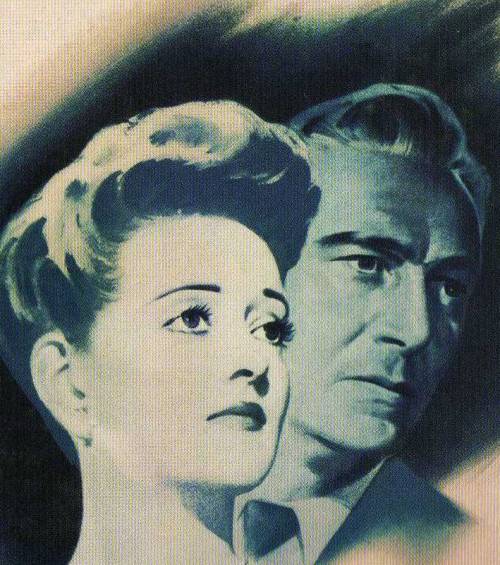
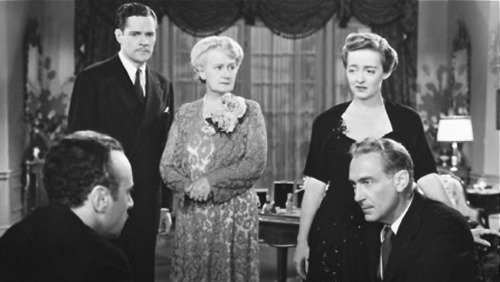
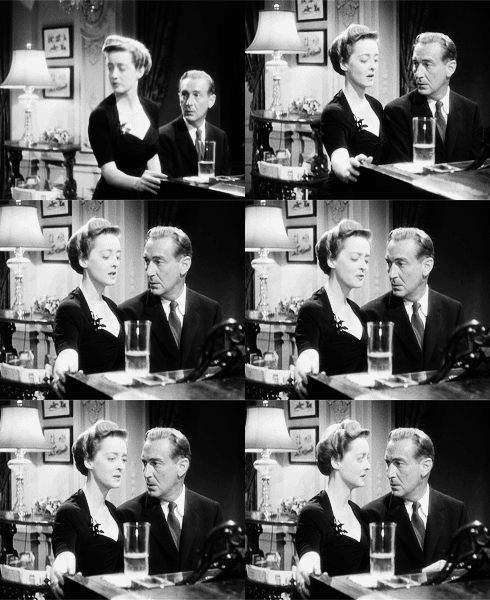
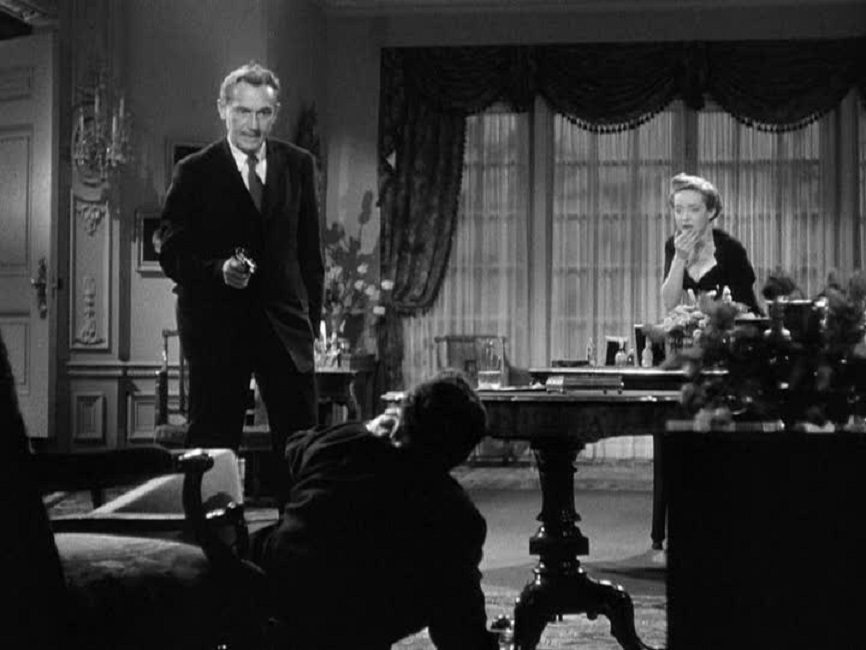
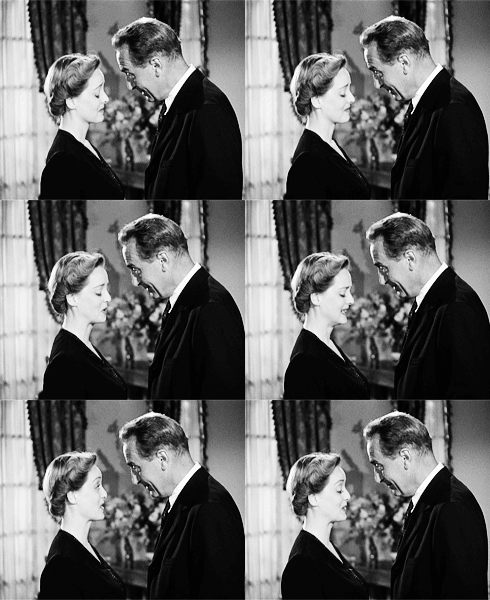
“Horas de Tormenta” é mais conhecido por ser o filme que fez Paul Lukas ganhar um Oscar de Melhor ator quando Humphrey Bogart também concorria ao prêmio por sua interpretação de Rick Blaine em Casablanca. Mas o filme merece ser conhecido por outros atributos. É verdade que Paul Lukas interpreta o melhor personagem, deixando até Bette Davis em segundo plano, e ele é também o mais inspirador – e deveria ser nossa inspiração nos tempos sombrios que estamos vivendo.

“Watch on the Rhine” is best remembered for being the film that made Paul Lukas win an Oscar over Humphrey Bogart’s portrayal of Rick Blaine in Casablanca. But the movie deserves to be remembered for more than this. It’s true that Paul Lukas is the greatest character onscreen, overshadowing even Bette Davis, and he’s also the most inspirational – and one that should be our inspiration in times as somber as the ones we live in.

Em 1943, o Oscar foi todo sobre #TheResistance. Embora o filme com mais indicações e prêmios tenha sido “A Canção de Bernadette”, podemos ver o tema comum e combater o mal em “Horas de Tormenta”, “Casablanca” e “Por quem os sinos dobram”, um filme que levou apenas a estatueta de Melhor Atriz Coadjuvante. E os três ativistas lutando pelo prêmio de Melhor Ator eram o ativista discreto Rick, de Bogart, o ativista sem medo Kurt, de Lukas, e o ativista que punha a mão na massa Robert Jordan, de Gary Cooper.

In 1943, the Oscars were all about #TheResistance. Although the film with the most nominations and wins was “The Song of Bernadette”, we can sense a common theme of fighting evil in both “Watch on the Rhine”, “Casablanca” and “For whom the bell tolls”, a film that ultimately got the Best Supporting Actress award. As for the three activists battling for the Best Actor statuette, we get the quiet activist on Bogart’s Rick, the outspoken one in Lukas’ Kurt and the go-getter in Gary Cooper’s Robert Jordan.  
Nós não estamos novamente neste momento artisticamente, mas certamente precisamos resistir ao fascismo, assim como o personagem de Paul Lukas, Kurt Muller, faz em “Horas de Tormenta”. Então aí vão 10 lições sobre ativismo por Paul Lukas (as falas retiradas diretamente do filme estão em negrito):

We’re not again at this moment artistically, but we certainly are in need of resisting against fascism, just like Paul Lukas’ character, Kurt Muller, does in “Watch on the Rhine”. So here we have 10 lessons on activism by Paul Lukas (quotes taken directly from the film are in bold):

1- Nós seriamente precisamos de pessoas como ele: o texto no início do filme elogia quem lutou contra o fascismo desde sua gênese, e não apenas quando o mal chegou o poder. Seria você uma destas pessoas?

1- We seriously need people like him: The text at the beginning praises the people who have fought fascism since its genesis, and not only when it rose to power. Are you one of those people?
2- “O mundo mudou, e algumas pessoas nele são perigosas”: Sara (Bette Davis) se refere aos nazistas que chegaram ao poder no começo dos anos 30 e estavam então em guerra contra os aliados, mas eu aposto que você consegue citar ao menos três pessoas perigosas no mundo atualmente.

2- “The world has changed, and some people in it are dangerous”: Sara (Bette Davis) is talking about the Nazis that rose to power in the early 1930s and were then at war against the Allies, but I bet you can cite at least three dangerous people living in the world right now.

3- “Soa tão grande. E é tão pequeno. Eu sou um anti-fascista”: Kurt não tem medo de contar à família de sua esposa qual é sua profissão. Mais do que isso: ele não tem nem vergonha nem orgulho do que faz. Ele odeia ser chamado de “um homem nobre” apenas porque ele luta contra o fascismo. É apenas o trabalho dele.

3- “It sounds so big. And it is so small. I’m an anti-fascist”: Kurt is not afraid to tell his in-laws what he does for a living. More than that: he’s neither ashamed nor proud of what he does. He hates being described as “a noble man” only because he fights fascism. It’s only his job.
4- “Antes da tempestade nazista… Eu descobri que apenas a esperança não é suficiente”: como podemos ter esperança se não lutamos? Você vai depender da luta dos outros? E, desculpem-me as pessoas religiosas, mas ações dizem mais e fazem mais que simples orações.

4- “Before the Nazi storm… I find out that hope by itself is not enough”: how can you have hope if you don’t fight? Will you rely on the fight of others? And, I apologize to religious people, actions speak louder and do more than simple prayers.
5- “Os homens que sabem por que eles lutam vão lutar com mais afinco”: autoexplicativo. Informação é poderosa. Informação gera raiva e medo, os combustíveis da mudança.

5- “Given men who know what they fight for, and will fight hard”: self-explanatory. Information is powerful. Information generates anger and fear, the fuels for change.

6- “A vontade de lutar não pode ser inserida em um homem, mas quando ela já está lá...”: ela só é extinta com a morte.

6- “The willingness to fight cannot be put in a man, but when it is there…”: it’s only extinguished with death.
7- “Você não sabe o que é estar com medo. Infelizmente, acho que você vai ter de aprender”: uma mensagem para nossos tempos, quando o fascismo está ganhando espaço novamente. É também uma mensagem para as famílias dos ativistas mais apaixonados, que terão medo por seus entes queridos, mas terão de aceitar o fato de que lutar é a missão deles.

7- “You don’t know what it is to be frightened. Unfortunately, I think you’ll have to learn”: a message for our times, when fascism is rising once again. It’s also a message for the families of the most passionate activists, who will fear for their loved ones, but will have to accept that fighting is their mission.

8- “Bem, é o que em geral acontece com os heróis, infelizmente”: falando de seu amigo e ativista Max Freidank, que havia acabado de ser capturado pelos nazistas e perdeu um braço na luta. Esta frase de Kurt nos mostra uma verdade dura e amedrontadora, mas lembre-se: há muitos ativistas, mas poucos heróis. Você pode lutar por uma causa, mas isso não significa que você terá de se sacrificar por ela se este não for seu destino.

8- “Well, it’s what often happens to heroes, unfortunately”: speaking of his friend and activist Max Freidank, who had just been captured by Nazis after losing an arm. This quote by Kurt tells us a harsh, chilling truth, but remember: there are many activists, but few heroes. You can be a fighter for a cause, but it doesn’t mean you’ll have to sacrifice yourself for it if this is not your destiny.
9- “Os únicos homens que fazem valer seu tempo na Terra são aqueles que lutam por outros homens”: seja um deles. Esteja do lado correto da história.

9- “The only men on Earth worth their time on Earth were the men who would fight for other men”: be one of them. Be in the right side of history.

10- “Eu devo tomar meu lugar. Não posso fazer mais nada. Deus me ajude. Amém”: esta frase de Lutero é citada por Kurt e deve ser seguida por todos os não-conformistas.

10- “I must make my stand. I can do nothing else. God help me. Amen”: this quote by Luther is cited by Kurt and should be followed by all non-conformists.
Além de tudo isso, Kurt e Sara nos lembram que fascistas não são aliens: são pessoas como nós, feitas de carne e osso, não são invencíveis e podem ser destruídas. (SPOILERS) Ironicamente, o escritório do Código Hays queria que Kurt morresse no fim porque ele atirou em um fascista, afinal, o personagem teria de pagar por seu crime! Isso em muito se parece com o recente debate sobre “é certo socar um nazista”. Fico feliz em dizer que Kurt terminou bem, então tudo bem para nós lutarmos contra os nazistas como bem entendermos.

Besides all that, Kurt and Sara reminds us that fascists are not aliens: they are human beings like us, made of flesh and bone, not invincible, and can be destroyed. (SPOILERS) Ironically, the Hays Office wanted Kurt to die in the end because he shot a fascist, after all, he had to pay for his crime! This is very much like the recent “is it OK to punch a Nazi” debate. I’m happy to inform that, for Kurt it ended up OK, so it’s OK for us to fight Nazis any way we want. 

Sunday, November 13, 2016

O Circo / El Circo (1943)

Comparar gênios da comédia é uma boa maneira de se ter uma dimensão da popularidade e genialidade de alguns atores. Comumente, Cantinflas é comparado com Charles Chaplin, e diz-se que o próprio Carlitos considerava o comediante mexicano melhor que ele. Na recente cinebiografia Cantinflas (2014), muita licença poética é usada quando o filme mostra que foi Chaplin que mandou o script de “A Volta ao Mundo em 80 Dias” para Cantinflas, e assim o tirou do fundo do poço e o convenceu a fazer seu grande filme em Hollywood. Isso tudo provavelmente é mentira, mas há um elo ligando Chaplin e Cantinflas: o remake de “O Circo”.

Comparing comedy geniuses is a good way to have a notion of their popularity and geniality. Cantinflas is commonly compared to Charles Chaplin, and it is told that Chaplin himself considered the Mexican comedian the best of the two. In the recent biopic Cantinflas (2014), a lot of poetic license is taken when the film shows how Chaplin was the one who sent the script of “Around the World in 80 Days” to Cantinflas and convinced him to do the movie, taking Cantinflas out of depression and giving him his big break in Hollywood. All this script story is much probably invented, but there is something connecting Chaplin and Cantinflas: the remake of “The Circus”.  
Resolvi ver “El Circo” (1943) em um domingo à noite apenas porque, com 92 minutos de duração, seria uma diversão relativamente rápida. Comecei a ver, a rir, e a me dar conta de que eu já conhecia aquela história. Era como se eu estivesse tendo um déjà vu. Mas aí me lembrei de que no mundo do cinema não existem déjà vus: existem apenas remakes.

I decided to watch “El Circo” (1943) on a Sunday night only because it was a relatively quick distraction, clocking at 92 minutes. I started watching, laughing, and realized that I already knew that story. It was like having a déjà vu. But then I remembered that in the film world there are no déjà vus: there are only remakes.
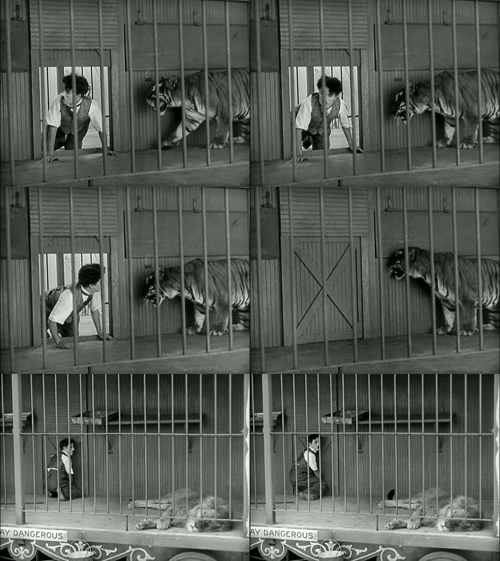
No filme de 1928, Chaplin é o conhecido Vagabundo. Acusado injustamente de roubar uma carteira. Perseguido por um policial, ele foge e invade o picadeiro do circo. Ele interfere em diversos números do circo, e é aplaudido pelo público. Logo, o Vagabundo é contratado pelo dono do circo e se apaixona pela filha do dono do circo, a equilibrista (Merna Kennedy). Ele limpa jaulas e o picadeiro, ensaia com palhaços, participa dos números do mágico e dos equilibristas.

In the 1928 film, Chaplin is the well-known Tramp. He is wrongly accused of stealing a wallet. Running away from a police officer, he invades a circus presentation. He interferes with several circus numbers and the public loves him. Soon the Tramp is hired and falls in love with the circus’s owner’s daughter and bareback rider (Merna Kennedy). He cleans cages, rehearses with clowns, takes part in magic tricks and acrobatic numbers.

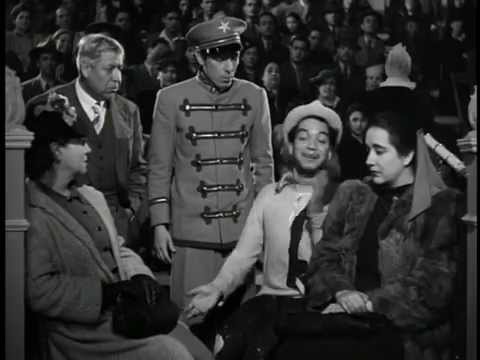
No filme de 1943, Cantinflas é um sapateiro anônimo. Ele vai a um show do circo, e se apaixona pela domadora de cavalos e filha do dono do circo, Rosalinda (Gloria Lynch). Ela vai à oficina dele pedir que ele conserte sua bota e, ao ir entregá-la no circo, ele acaba contratado para trabalhar lá. Ele acaba sendo trapezista, limpador de jaulas, mestre de cerimônias e equilibrista.

In the 1943 film, Cantinflas is na unnamed shoemaker. He goes to a circus presentation and falls in love with the circus’s owner’s daughter and horse tamer, Rosalinda (Gloria Lynch). She goes to his shoe shop and asks him to fix her boot. When he goes to the circus to give her the fixed boot, he is hired to work there. He works as a trapeze artist, cage cleaner, master of ceremonies and acrobat.
É particularmente interessante observar como um filme mudo é refeito como filme falado. Chaplin fez um filme recheado de gags visuais, enquanto a versão de Cantinflas está cheia de frases bem-humoradas e inesperadas, além de uma boa quantia de trocadilhos que infelizmente perdem a graça quando traduzidos. “O Circo” de Chaplin e “El Circo” de Cantinflas são, por isso, filmes com fontes de comédia diferentes, mas histórias idênticas.

It’s particularly interesting to see how a silent film is remade as a talkie. Chaplin made a film full of visual gags, while Cantinflas’s version has a lot of humorous quotes, unexpected comebacks and also a good amount of puns that, unfortunately, make no sense when translated. Chaplin’s “The Circus” and Cantinflas’s “El Circo” are movies with different comic sources, but identical plots.
“El Circo” foi produzido pela Posa Films, um pequeno estúdio e distribuidor do qual Cantinflas era um dos sócios. A Posa Filsm foi responsável por diversas paródias de filmes hollywoodianos, como “Ni Sangre Ni Arena” (1940) e “Romeo Y Julieta” (1943), que parodiavam “Sangue e Areia” (1922, remake em 1941) e “Romeu e Julieta” (1936). Ambas as paródias estrelavam Cantinflas.

“El Circo” was produced by Posa Films, a small studio and distributor owned by Cantinflas and two other partners. Posa Filsm was responsible for several parodies of Hollywood films, like “Ni Sangre Ni Arena” (1941) and “Romeo y Julieta” (1943), parodies of respectively “Blood and Sand” (1922, remade in 1941) and “Romeo and Juliet” (1936). Both these parodies starred Cantinflas.
Misturando comédia física, verbal e uma pitada de emoção, Cantinflas conseguiu fazer um excelente remake. Seus melhores filmes ainda estavam por vir, mas, para quem quer conhecer a obra do grande mexicano, “El Circo” é um ótimo ponto de partida.

Mixing physical comedy, verbal slapstick and a bit of emotion, Cantinflas could make an excellent remake. His best films were still to come but, if you want to get to know the whole body of work of the great Mexican comedian, “El Circo” is a perfect starting point.

This is my contribution to the #AtTheCircus blogathon, hosted by dear Summer at Serendipitous Anachronisms and, well… me.


Thank you to all who took part in our event! There is more to come!  
Related Posts Plugin for WordPress, Blogger...