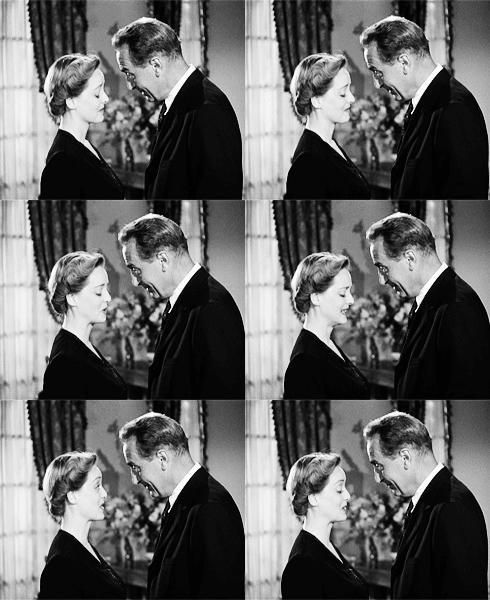
Cristóvão Colombo! Essa é a expressão usada pela heroína Jo March
sempre que fica surpresa ou maravilhada. Eu também usei a expressão enquanto
assistia à versão de 1933 de “As Quatro Irmãs”, uma história emocionante sobre
vida familiar e sacrifício na década de 1860 – uma história tão linda que ainda
mexe conosco e ecoa os laços de família que cultivamos na década de 2010.
Christopher
Columbus! This is the expletive used by the heroine Jo March whenever she is
surprised or amazed. I also used the expletive as I watched the 1933 version of
“Little Women”, a heartfelt story about family life and sacrifice in the 1860s –
a story so beautiful it still moves and echoes the family ties we experience in
the 2010s.
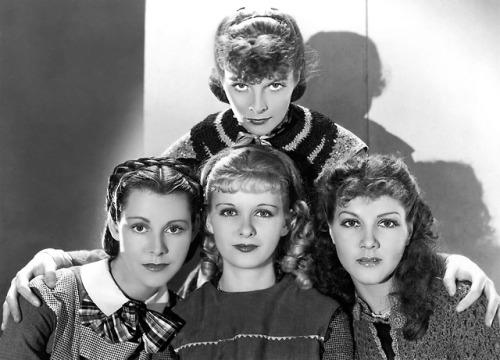
As irmãs
March ficam em casa com a mãe enquanto o pai está lutando na Guerra Civil
Americana. Meg (Frances Dee) é a mais velha, uma garota obediente. Josephine ou
Jo (Katharine Hepburn) é uma moleca criativa e atrapalhada. Beth (Jean Parker)
é uma tímida pianista. Amy (Joan Bennett) é a mais nova, uma garota levada.
The March
sisters and their mother stay home while the father is fighting in the American
Civil War. Meg (Frances Dee) is the eldest, an obedient girl. Josephine or Jo (Katharine
Hepburn) is a creative and clumsy tomboy. Beth (Jean Parker) is a shy piano
player. Amy (Joan Bennett) is the youngest, a spunky girl.
As meninas
têm a mãe, chamada de Marmee (Spring Byington) e uma tia sovina e em geral
antipática (Edna May Oliver). Os vizinhos das meninas são o Senhor Laurence
(Henry Stephenson) e o neto dele, Laurie (Douglass Montgomery). Quando Jo vai a
Nova York, ela fica em uma pensão e lá conhece o Professor Bhaer (Paul Lukas).
The girls
have their mother, called Marmee (Spring Byington) and a stingy and often
unsympathetic aunt (Edna May Oliver). The girls’ neighbors are the Mr Laurence
(Henry Stephenson) and his grandson Laurie (Douglass Montgomery). When Jo goes
to New York, she stays in a boarding house and there she meets Professor Bhaer
(Paul Lukas).
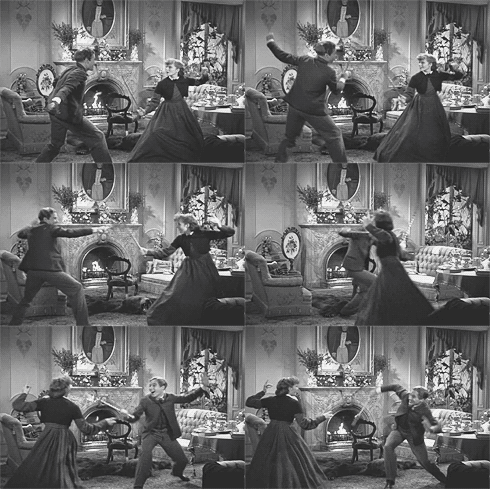
Cada
garota tem uma história diferente, e temas como amor, viagem, autodescoberta, correr
atrás dos sonhos e morte estão presentes. Eu adoro a maneira como cada
personagem se desenvolve, e ninguém é o mesmo no começo e no final. Isso é verdade,
por exemplo, para Amy, que no começo é uma menina sapeca e não muito esperta,
em idade escolar, e se torna uma mulher charmosa e talentosa, sendo mostrada
como uma boa pintora e ótima companhia.
Each girl has
a developing storyline, and themes like love, travelling, self-discovery,
pursuit of dreams and death are present. I love how each character really
develops, and nobody is the same in the beginning and in the end. This is true,
for instance, for Amy, who in the beginning is a naughty and not very bright
schoolgirl, and develops into a charming and talented woman, being seen as a
good painter and a good companion.
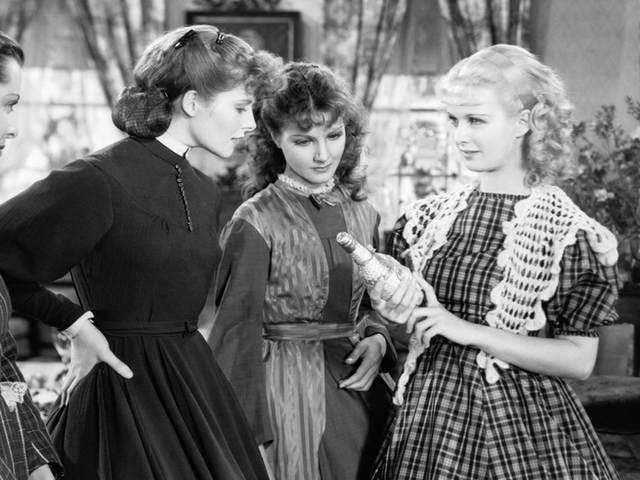
Joan
Bennett, então com 22 anos, estava grávida da segunda filha durante as
filmagens de “As Quatro Irmãs” – Joan teve quatro filhas. O figurinista Walter
Plunkett teve de adaptar o figurino dela para esconder a barriga – o que nem
sempre funcionou. Se você prestar atenção, verá algo mais interessante no figurino:
as irmãs quase sempre trocam peças de roupa umas com as outras, o que simboliza
a ligação afetiva entre elas.
Joan Bennett,
then 22, was pregnant with her second daughter during the filming of “Little
Women” – Joan would go on to have four daughters. Costume Designer Walter Plunkett
had to adapt her wardrobe to hide the growing bump – which sometimes was
impossible to do. If you look closely, you can see something more interesting
about the costumes: the sisters often trade costumes with each other, which
symbolizes the bond they have.
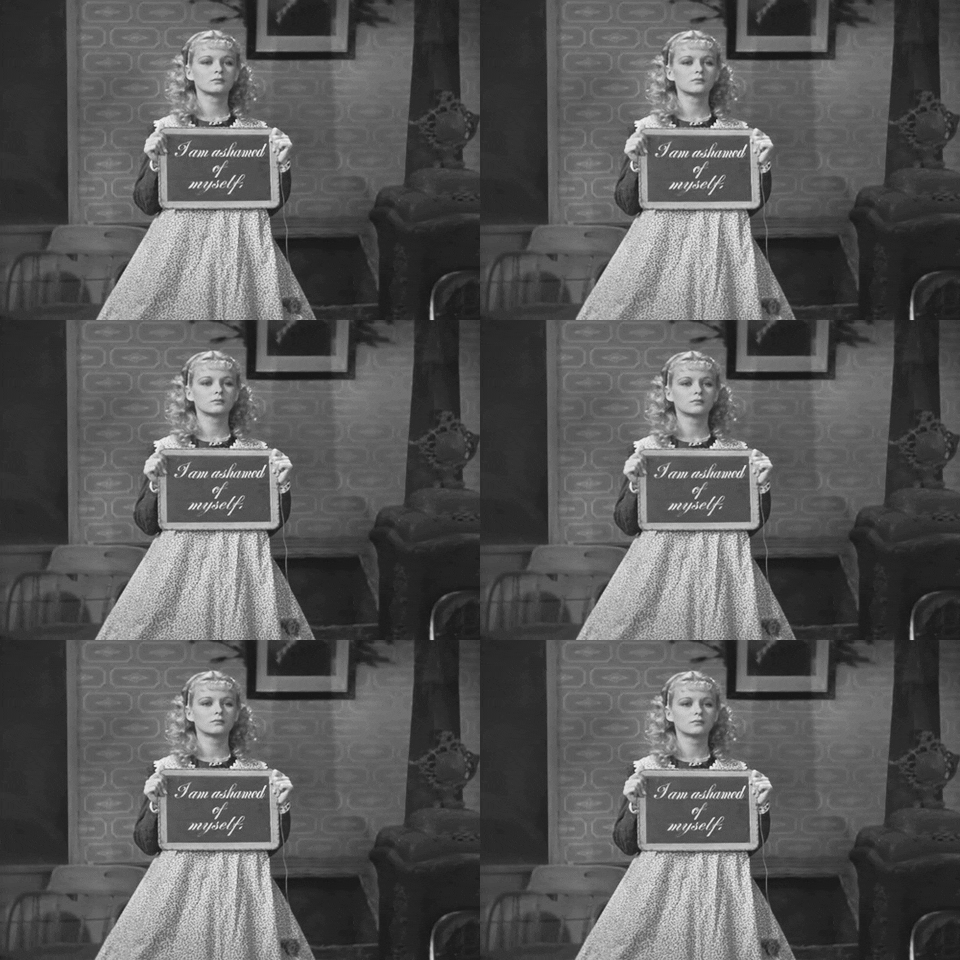
Joan
Bennett teve muitas fases em sua carreira, todas bem marcadas por mudanças no
visual. Durante sua primeira fase importante, como uma jovem heroína romântica,
ela tinha cabelo loiro com muitos cachos – como aqui em “As Quatro Irmãs”. Eu
sua segunda fase importante, como femme fatale em filmes noir, seu cabelo foi
pintado de preto e seus cachos se tornaram mais esparsos.
Joan Bennett
had several phases in her career, all well marked by changes in her look.
During her first important phase, as a romantic young heroine, she had blond
hair with tight curls – like here in “Little Women”. In her second important
phase, as a noir femme fatale, her hair was died black and her curls were
sparse.

Joan Bennett, 1933
Joan Bennett, 1945
Você pode ver
no rosto das atrizes que elas estavam se divertindo muito enquanto faziam o
filme. Katharine Hepburn estava em seu ambiente, interpretando uma moleca
esperta – ela e Louisa May Alcott, autora do livro “Little Women”, foram assim
quando jovens. Elogiar Katharine é algo que eu faço com frequência, mas nunca é
um exagero. Frances Dee é a mais conservadora das irmãs, e Jean Parker – do filme
“Sós no Mundo” (1934) – é a mais doce. Douglass Montgomery – por vezes
creditado como Kent Douglass – é um mocinho decente para a forte heroína de
Hepburn. De fato, os sonhos de Jo eram grandes demais para o ambiente
doméstico.
You can see
in the actresses’ faces that they were having a wonderful time doing the film.
Katharine Hepburn was in her environment, playing a smart tomboy – like she was
and like Louisa May Alcott, the author of the book “Little Women”, was. Praising
Katharine is something I often do, but it’s never an exaggeration. Frances Dee
is the most conservative of the sisters, and Jean Parker – from the film “Two Alone” (1934) – is the sweetest. Douglass Montgomery – sometimes billed Kent
Douglass – is a decent leading man to a much stronger Hepburn. Indeed, Jo’s
dreams are too big for her home environment.
“As Quatro
Irmãs” foi um imenso sucesso para a RKO e ganhou o Oscar de Melhor Roteiro
Adaptado. Por ter estreado durante a Grande Depressão, o filme alimentou as
almas nostálgicas que sentiam falta de tempos mais simples e mais felizes. Ele
também conquistou o Vaticano, que listou “As Quatro Irmãs” em sua lista de 45 grandes filmes, publicada em 1995.
“Little Women”
was a huge success for RKO and won the Best Adapted Screenplay Oscar. Released
during the Depression, it fed the nostalgic souls who longed for simpler and
happier times. It also conquered the Vatican, who listed “Little Women” in its
list of 45 great films, published in 1995.
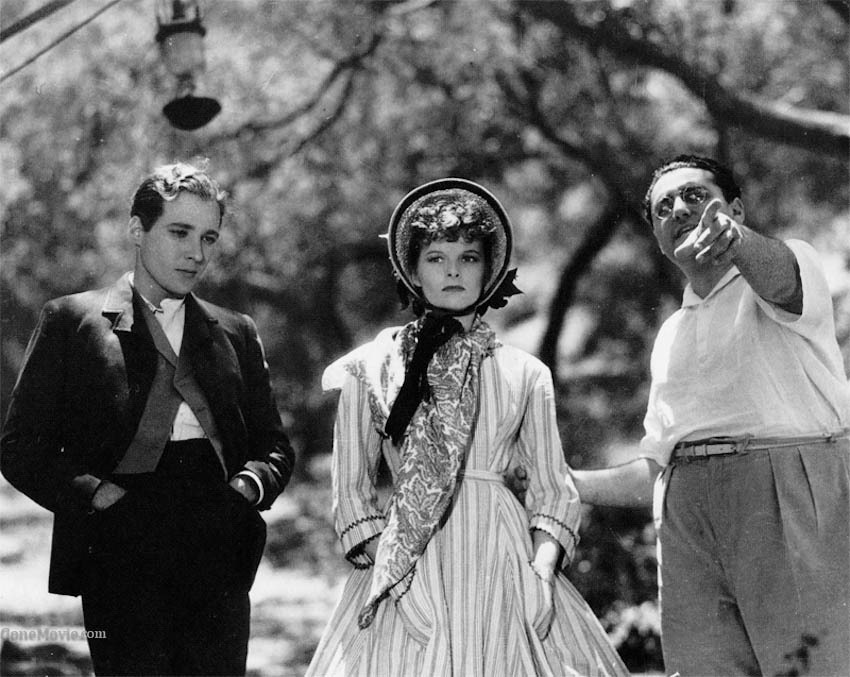
O livro de
Louisa May Alcott foi adaptado para telas grandes e pequenas mais de 30 vezes
até agora. Esta versão de 1933 é uma das melhores adaptações, graças às
adoráveis performances e à direção de George Cukor, que sempre trabalhou bem com
atrizes. Mais do que isso, o filme nos recorda que pequenos momentos com quem
amamos são a coisa mais importante da vida.
Louisa May
Alcott’s book was adapted to both the big and the small screen more than 30
times so far. This 1933 version is one of the best adaptations, thanks to its
lovely performances and to George Cukor’s direction, who always worked well
with his actresses. Moreover, it reminds us that little moments with our loved
ones were and are the most important thing in life.
This is my
contribution to the Joan Bennett blogathon, hosted by Crystal at In the Good
Old Days of Classic Hollywood.
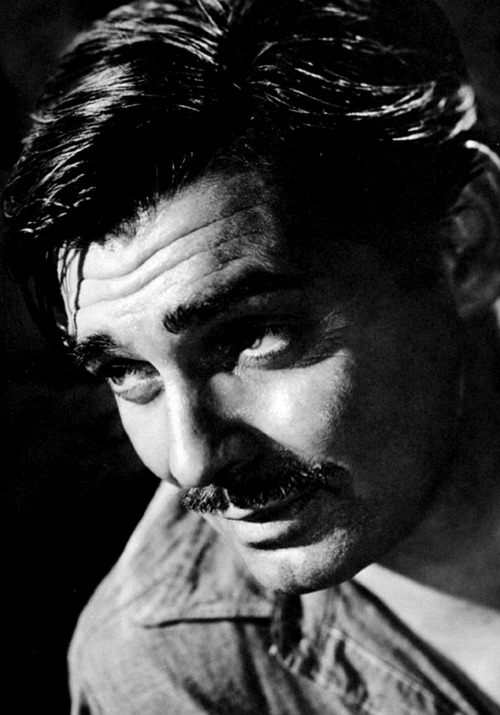
Clark Gable e Joan Crawford fizeram oito filmes
juntos. O primeiro deles foi em 1931, e o último em 1940. “Almas Rebeldes” é
este último filme da parceria, um filme que veio logo depois de muito sucesso
para ambos: em 1939 Gable fez um pequeno filme chamado “E o Vento Levou...” e
Crawford foi uma das estrelas de “As Mulheres”. “Almas Rebeldes” foi, para as
duas estrelas, uma grande mudança em relação à pompa de seus trabalhos
pregressos.
Clark Gable and Joan
Crawford made eight films together. Their first pairing was in 1931, and their
last in 1940. “Strange Cargo” is this last film they made together, and it came
following successes from both: in 1939, Gable was in a little film called “Gone
with the Wind” and Crawford was one of the many stars in “The Women”. “Strange
Cargo” was a complete change from the glamour and pomp for the two stars.
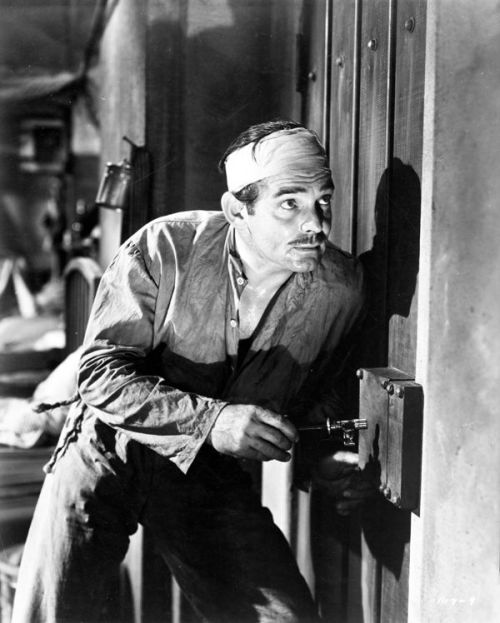
Apenas pessoas esquecidas vivem na Guiana – um
local que, no mundo do cinema, se parece muito com a África de “O Diabo Riu por Último” (1953). Há uma grande prisão lá, para 'homens que perderam as
esperanças'. E as mulheres que trabalham no bar local são imigrantes que fariam
qualquer coisa para sobreviver. Mas há uma regra: mulheres e prisioneiros não
podem ser vistos juntos. É por isso que o prisioneiro Verne (Clark Gable)
representa encrenca para Julie (Joan Crawford). O primeiro contato dele é mias
para violento que para romântico, e ele só pensa em uma coisa: em fugir.
Only forgotten people
live in Guiana – a place that, in the film world, looks a lot like the Africa
we see in 1953's “Beat the Devil”. There is a big prison there, for 'men who
have lost hope'. And the women who work in the local bar are immigrants who
would do anything to survive. But there is a rule: women and inmates can't be
seen together. That is why prisoner Verne (Clark Gable) represents trouble to
Julie (Joan Crawford). His first approach is more violent than romantic, and he
only thinks of one thing: escaping.
Verne tenta fugir pela primeira vez no filme
depois de ir trabalhar no porto carregando e descarregando navios. Ele entra no
bar de Renard, onde Julie, que ele havia visto mais cedo naquele mesmo dia,
trabalha. Enquanto ele se esconde no quarto dela, Julie conta para os guardas o
paradeiro de Verne. Ele é recapturado, mas Julie foi encontrada com ele, e por
isso deve sair da colônia em até 12 horas.
Verne makes his first
attempt to escape in the movie by running away after he goes to the harbor to
load ships. He ends up in Renard's bar, where Julie, who he has seen earlier
that day, works. While he is hiding in her room, Julie tells the guards where
he is. Verne is recaptured, but Julie was found with him, and thus she must
leave the colony within 12 hours.
De volta à prisão, Verne se envolve em um plano
de fuga com outros oito homens. Seu inimigo, Moll (Albert Dekker), tenta
impedir que ele vá com o grupo, mas Verne consegue escapar e segue um mapa à
procura da liberdade prometida. Ao mesmo tempo, Julie recusa a oferta do
Monsieur Pig (Peter Lorre), que quer sair da colônia com ela, mas aceita a
oferta de Marfeau (Bernard Nedell) para ir embora com ele. Obviamente, Marfeau
não quer ajudar – ela apenas quer o corpo de Julie só para si.
Back to the prison, Verne
gets involved in a nine-men plan to escape. His nemesis, Moll (Albert Dekker),
tries to prevent him from going with the group, but Verne manages to escape
anyway, and follows a map in search for the promised freedom. At the same time,
Julie has refused Monsieur Pig's (Peter Lorre) offer to leave the colony with
him, but accepted Marfeau's (Bernard Nedell) offer to leave with him. Of course,
Marfeau doesn't want to help – he only wants to have Julie's body for himself.
O agora reduzido grupo de fuga se divide em dois,
e dois trios enfrentam os obstáculos da selva. É óbvio que com o tempo surjam
brigas dentro dos grupos e alguns fugitivos pereçam. Neste sentido, o filme me
fez lembrar o pouco conhecido filme brasileiro de aventura “Arara Vermelha”
(1957), sobre um grupo que rouba um diamante e precisa atravessar a selva para
escapar com a pedra.
The now reduced escape
group is divided by two, and two trios face the hardships of the jungle. Of
course, with time there are fights inside the group, and some of the runaways
perish. In this sense, the movie reminded me of little-known Brazilian
adventure film “Arara Vermelha” (1957), about a group that steals a diamond and
has to cross the jungle to escape with the stone.
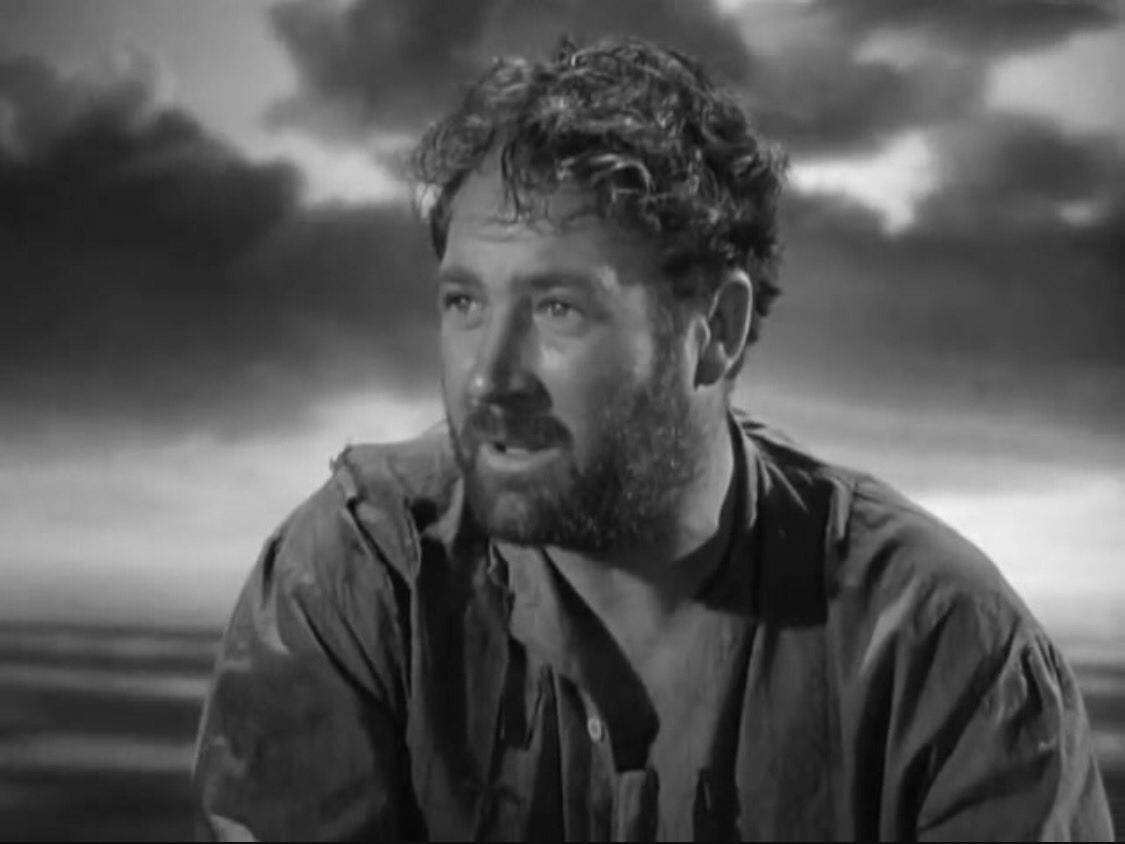
Os coadjuvantes são ótimos. Peter Lorre fala com
uma voz suave, porém aterrorizante. Ian Hunter interpreta o misterioso e
espiritualizado Crambeau. Em um espaço pequeno e apertado, a câmera foca de
baixo para cima em Hessler (Paul Lukas), embora a mesma câmera focalize outros
prisioneiros de frente. Com este recurso, Hessler parece mais sombrio e
perigoso. É um ótimo efeito que diz muito sobre seu caráter. Aliás, nós só
ficamos sabendo qual crime levou Hessler à prisão. Para os outros prisioneiros,
a razão para estar lá não importa.
The supporting characters
are amazing. Peter Lorre speaks with a suave yet terrifying voice. Ian Hunter
plays the mysterious and spiritualized Crambeau. In a tiny, tight space, the
camera looks from down to up to Hessler (Paul Lukas), even though the other
inmates are shot with a more conventional camera angle. This way, Hessler looks
more somber, more dangerous. It's a great effect that says a lot about his
character. By the way, we only get to know Hessler's crime. For all the other
inmates, the reason for being there doesn't matter.
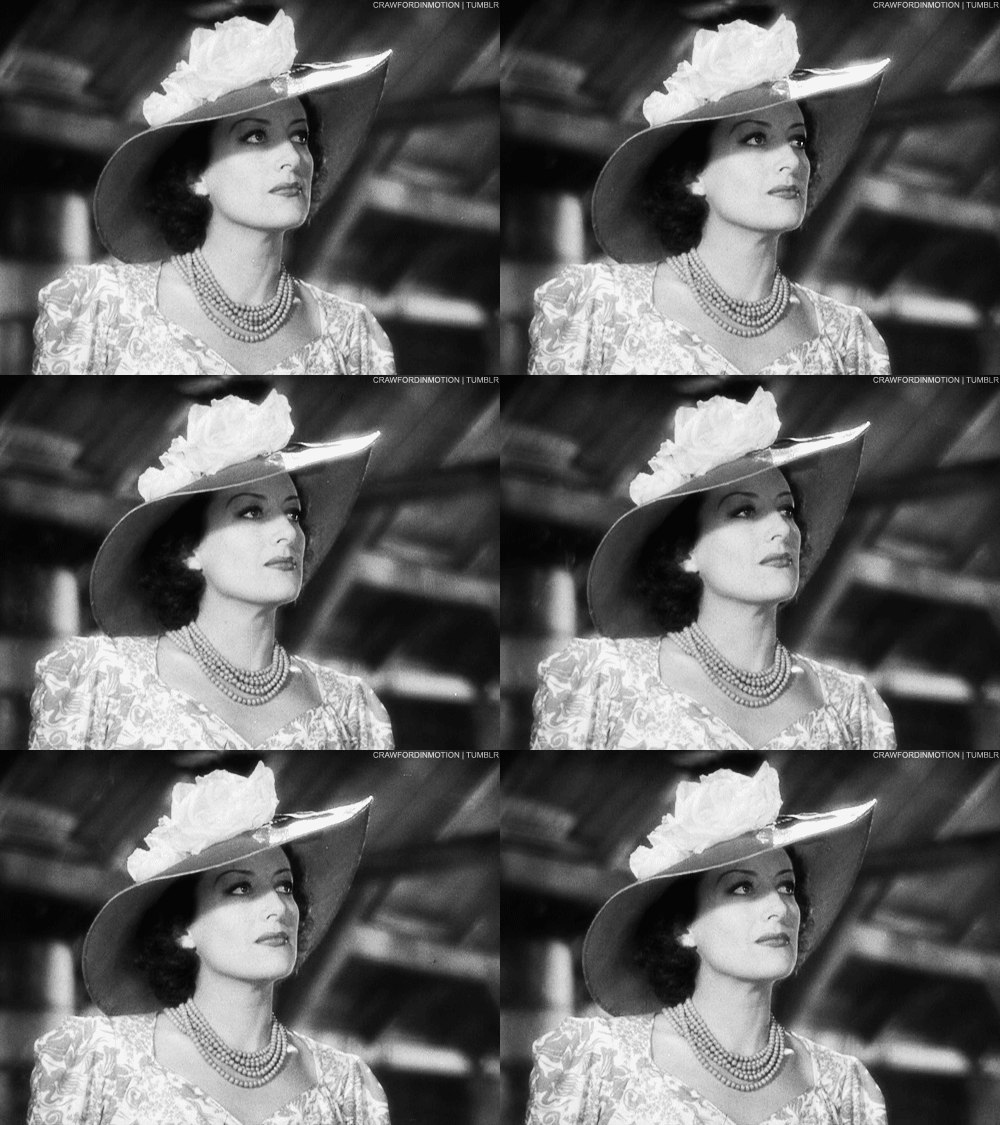
Nenhuma palavra precisa ser dita para que
saibamos que Julie é uma prostituta – aliás, a outra garota que vemos
acompanhando Julie quando Joan Crawford aparece na tela pela primeira vez é
interpretada pela ex-atriz de cinema mudo Betty Compson. Assim como em “Rain”
(1932), Crawford é visceral e simples na interpretação de Julie, e tem alguns
belos momentos nos quais seu rosto sem maquiagem é focado pela câmera. Dá para
imaginar como é ter apenas o mar e o rosto de Joan Crawford na sua frente?
No word has to be said so
we know that Julie is a prostitute – by the way, the other girl who is seen
accompanying Julie when Crawford first appears on screen is played by former
silent sweetheart Betty Compson. Like in “Rain” (1932), Crawford is raw and
simple when she plays Julie, and has some beautiful moments in which her
make-up free face is focused by the camera. Can you imagine having only the sea
and Joan Crawford's face in front of you?
O diretor Frank Borzage tratou de espiritualidade
em muitos de seus filmes. Aqui, o tema mostrou ser um problema: a Legião
Católica de Decência condenou o filme, causando boicotes em muitas cidades e a
completa proibição da exibição de “Almas Rebeldes” em alguns lugares. Eu não
acho que o filme 'zombe da Bíblia', como a Legião alegou, pelo contrário: a
maneira como o filme lida com redenção é linda e inspiradora.
Director Frank Borzage
dealt with spirituality in many of his films. Here, the theme proved to be a
problem: the Catholic Legion of Decendy condemned the film, causing boycotts in
many cities and the complete censorship of “Strange Cargo” in some places. I
don't see the film 'making fun of the Scriptures' as the Legion alleged, on the
contrary: the way the film deals with redemption is beautiful and inspiring.
Crambeau (Ian Hunter)
Com uma grande direção de arte – três palavras:
selva no estúdio – e muitos personagens interessantes, “Almas Rebeldes” é um
filme muito bom. É uma pena que a Legião da Decência tenha impactado
negativamente sua performance nas bilheteria. “Almas Rebeldes” pode não ser uma
obra-prima, mas é uma mistura curiosa de aventura e espiritualidade, e um filme
que merece ser conhecido por mais gente.
With a great art
direction – two words: studio jungle – and so many interesting characters,
“Strange Cargo” is a very good film. Too bad the Legion of Decency impacted its
box office negatively. “Strange Cargo” may not be a masterpiece, but it is a curious
blend of adventure and spitituality, and deserves to be better known.
This is my contribution to the Clark Gable blogathon,
hosted by Michaela at Love Letter to Old Hollywood.
“Horas
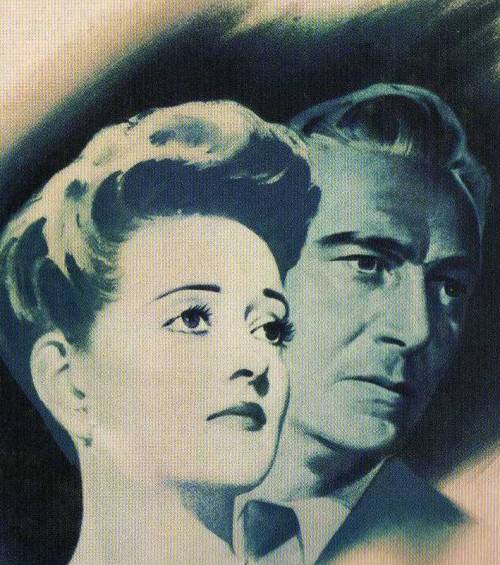
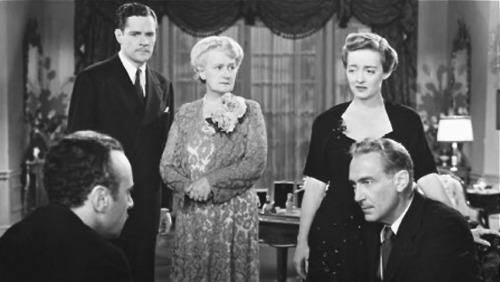
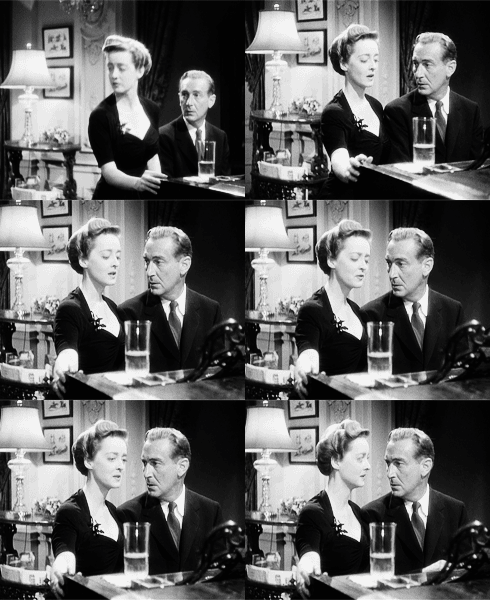
de Tormenta” é mais conhecido por ser o filme que fez Paul Lukas
ganhar um Oscar de Melhor ator quando Humphrey Bogart também
concorria ao prêmio por sua interpretação de Rick Blaine em
Casablanca. Mas o filme merece ser conhecido por outros atributos. É
verdade que Paul Lukas interpreta o melhor personagem, deixando até
Bette Davis em segundo plano, e ele é também o mais inspirador –
e deveria ser nossa inspiração nos tempos sombrios que estamos
vivendo.
“Watch
on the Rhine” is best remembered for being the film that made Paul
Lukas win an Oscar over Humphrey Bogart’s portrayal of Rick Blaine
in Casablanca. But the movie deserves to be remembered for more than
this. It’s true that Paul Lukas is the greatest character onscreen,
overshadowing even Bette Davis, and he’s also the most
inspirational – and one that should be our inspiration in times as
somber as the ones we live in.
Em 1943, o Oscar foi todo sobre #TheResistance. Embora
o filme com mais indicações e prêmios tenha sido “A Canção de Bernadette”,
podemos ver o tema comum e combater o mal em “Horas de Tormenta”, “Casablanca”
e “Por quem os sinos dobram”, um filme que levou apenas a estatueta de Melhor
Atriz Coadjuvante. E os três ativistas lutando pelo prêmio de Melhor Ator eram
o ativista discreto Rick, de Bogart, o ativista sem medo Kurt, de Lukas, e o
ativista que punha a mão na massa Robert Jordan, de Gary Cooper.
In 1943, the Oscars were all about #TheResistance.
Although the film with the most nominations and wins was “The Song of
Bernadette”, we can sense a common theme of fighting evil in both “Watch on the
Rhine”, “Casablanca” and “For whom the bell tolls”, a film that ultimately got
the Best Supporting Actress award. As for the three activists battling for the
Best Actor statuette, we get the quiet activist on Bogart’s Rick, the outspoken
one in Lukas’ Kurt and the go-getter in Gary Cooper’s Robert Jordan.
Nós não estamos novamente neste momento
artisticamente, mas certamente precisamos resistir ao fascismo, assim como o
personagem de Paul Lukas, Kurt Muller, faz em “Horas de Tormenta”. Então aí vão
10 lições sobre ativismo por Paul Lukas (as falas retiradas diretamente do
filme estão em negrito):
We’re not again at this moment artistically, but we
certainly are in need of resisting against fascism, just like Paul Lukas’
character, Kurt Muller, does in “Watch on the Rhine”. So here we have 10 lessons
on activism by Paul Lukas (quotes taken directly from the film are in bold):
1- Nós seriamente precisamos de pessoas como ele: o
texto no início do filme elogia quem lutou contra o fascismo desde sua gênese, e
não apenas quando o mal chegou o poder. Seria você uma destas pessoas?
1- We seriously need people like him: The text at the beginning praises the people who have fought fascism since its genesis, and not
only when it rose to power. Are you one of those people?
2- “O mundo mudou, e algumas pessoas nele são
perigosas”: Sara (Bette Davis) se refere aos nazistas que chegaram ao poder
no começo dos anos 30 e estavam então em guerra contra os aliados, mas eu
aposto que você consegue citar ao menos três pessoas perigosas no mundo
atualmente.
2- “The world has changed, and some people in it
are dangerous”: Sara (Bette Davis) is talking about the Nazis that rose to
power in the early 1930s and were then at war against the Allies, but I bet you
can cite at least three dangerous people living in the world right now.
3- “Soa tão grande. E é tão pequeno. Eu sou um
anti-fascista”: Kurt não tem medo de contar à família de sua esposa qual é
sua profissão. Mais do que isso: ele não tem nem vergonha nem orgulho do que
faz. Ele odeia ser chamado de “um homem nobre” apenas porque ele luta contra o
fascismo. É apenas o trabalho dele.
3- “It sounds so big. And it is so small. I’m an
anti-fascist”: Kurt is not afraid to tell his in-laws what he does for a
living. More than that: he’s neither ashamed nor proud of what he does. He
hates being described as “a noble man” only because he fights fascism. It’s
only his job.
4- “Antes da tempestade
nazista… Eu descobri que apenas a esperança não é suficiente”: como podemos
ter esperança se não lutamos? Você vai depender
da luta dos outros? E, desculpem-me as pessoas religiosas, mas ações dizem mais
e fazem mais que simples orações.
4- “Before the Nazi storm… I find out that hope
by itself is not enough”: how can you have hope if you don’t fight? Will
you rely on the fight of others? And, I apologize to religious people, actions
speak louder and do more than simple prayers.
5- “Os homens que sabem por que eles lutam vão
lutar com mais afinco”: autoexplicativo. Informação é poderosa.
Informação gera raiva e medo, os combustíveis da mudança.
5- “Given men who know what they fight for, and
will fight hard”: self-explanatory. Information is powerful. Information
generates anger and fear, the fuels for change.
6- “A vontade de lutar não pode ser inserida em
um homem, mas quando ela já está lá...”: ela só é extinta com a morte.
6- “The willingness to fight cannot be put in a
man, but when it is there…”: it’s only extinguished with death.
7- “Você não sabe o que é estar com medo. Infelizmente,
acho que você vai ter de aprender”: uma mensagem para nossos tempos, quando
o fascismo está ganhando espaço novamente. É também uma mensagem para as
famílias dos ativistas mais apaixonados, que terão medo por seus entes
queridos, mas terão de aceitar o fato de que lutar é a missão deles.
7- “You don’t know what it is to be frightened.
Unfortunately, I think you’ll have to learn”: a message for our times, when
fascism is rising once again. It’s also a message for the families of the most
passionate activists, who will fear for their loved ones, but will have to
accept that fighting is their mission.
8- “Bem, é o que em geral acontece com os heróis,
infelizmente”: falando de seu amigo e ativista Max Freidank, que havia
acabado de ser capturado pelos nazistas e perdeu um braço na luta. Esta frase
de Kurt nos mostra uma verdade dura e amedrontadora, mas lembre-se: há muitos
ativistas, mas poucos heróis. Você pode lutar por uma causa, mas isso não
significa que você terá de se sacrificar por ela se este não for seu destino.
8- “Well, it’s what often happens to heroes,
unfortunately”: speaking of his friend and activist Max Freidank, who had
just been captured by Nazis after losing an arm. This quote by Kurt tells us a
harsh, chilling truth, but remember: there are many activists, but few heroes.
You can be a fighter for a cause, but it doesn’t mean you’ll have to sacrifice
yourself for it if this is not your destiny.
9- “Os únicos homens que fazem valer seu tempo na
Terra são aqueles que lutam por outros homens”: seja um deles. Esteja do
lado correto da história.
9- “The only men on Earth worth their time on
Earth were the men who would fight for other men”: be one of them. Be in
the right side of history.
10- “Eu devo tomar meu lugar. Não posso fazer
mais nada. Deus me ajude. Amém”: esta frase de Lutero é citada por Kurt e
deve ser seguida por todos os não-conformistas.
10- “I must make my stand. I can do nothing else.
God help me. Amen”: this quote by Luther is cited by Kurt and should be
followed by all non-conformists.
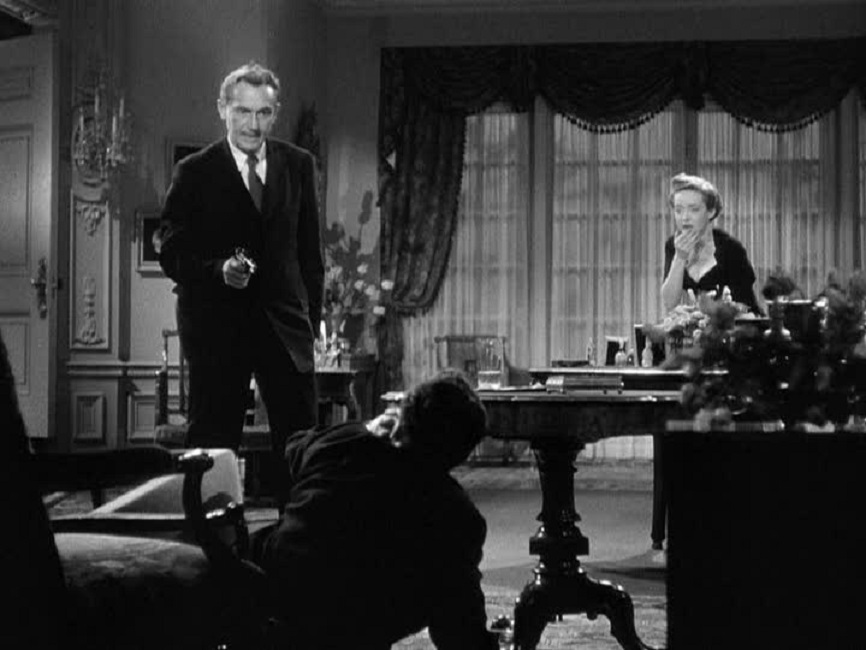
Além de tudo isso, Kurt e Sara nos lembram que
fascistas não são aliens: são pessoas como nós, feitas de carne e osso, não são
invencíveis e podem ser destruídas. (SPOILERS) Ironicamente, o
escritório do Código Hays queria que Kurt morresse no fim porque ele atirou em
um fascista, afinal, o personagem teria de pagar por seu crime! Isso em muito
se parece com o recente debate sobre “é certo socar um nazista”. Fico feliz em
dizer que Kurt terminou bem, então tudo bem para nós lutarmos contra os
nazistas como bem entendermos.
Besides all that, Kurt and Sara reminds us that
fascists are not aliens: they are human beings like us, made of flesh and bone,
not invincible, and can be destroyed. (SPOILERS) Ironically, the Hays
Office wanted Kurt to die in the end because he shot a fascist, after all, he
had to pay for his crime! This is very much like the recent “is it OK to punch
a Nazi” debate. I’m happy to inform that, for Kurt it ended up OK, so it’s OK
for us to fight Nazis any way we want.