} Crítica Retrô: 1950

Tradutor / Translator / Traductor / Übersetzer / Traduttore / Traducteur / 翻訳者 / переводчик

Showing posts with label 1950. Show all posts

Friday, August 30, 2024

Mortalmente Perigosa (1950) / Gun Crazy (1950)


Geralmente pensamos na Era de Ouro de Hollywood como uma época em que só filmes bons eram feitos por grandes estúdios. Não era bem assim: filmes ruins também eram feitos no período, só que eles não entraram no “cânone”. E não eram somente grandes estúdios que estavam fazendo filmes: os chamados estúdios da “Rua da Pobreza” também existiam, e alguns fizeram filmes muito bons. Uma destas pérolas de estúdios pequenos é “Mortalmente Perigosa” (1950).


We often think about the Golden Age of Hollywood as a time when only good movies were made by big studios. It wasn’t exactly like that: bad movies were also made at the period, they just didn’t enter “the canon”. And not only big studios were making movies: the so-called “Poverty Row” studios also existed, and some made very good movies. One of these pearls from small studios is “Gun Crazy” (1950).

Bart Tare sempre foi louco por armas e por atirar - algo que lhe causa problemas e por causa disso ele é mandado para o reformatório. De volta depois de anos ausente, Bart (John Dall) e seus amigos de infância vão assistir a um espetáculo itinerante da atiradora Annie Laurie Starr (Peggy Cummins). Depois de desafiar Laurie no palco, Bart consegue um lugar no espetáculo.


Bart Tare has always been crazy about guns and shooting - something that gets him into trouble and because of that he is sent to reform school. Back from years of absence, Bart (John Dall) and his childhood friends go see an itinerant show featuring the shooter Annie Laurie Starr (Peggy Cummins). After challenging Laurie on the stage, Bart gets a spot on the show.

A carreira dele como artista de espetáculo itinerante dura apenas alguns dias. Bart é um tolo apaixonado por Laurie, e ela também gosta dele. Mas o gerente do show, Packie (Berry Kroeger), diz que Laurie é dele. Quando Bart desafia a ordem do chefe de não ver mais Laurie, Packie demite ambos. Eles se casam, mas a felicidade e o pouco dinheiro que tinham não duram muito. O que eles fazem? Começam a fazer assaltos e, como são excelentes atiradores, eles sabem que não machucarão ninguém, só assustarão as pessoas com sua mira. Eles logo entram nas listas de Mais Procurados. E então eles planejam um último assalto antes de se aposentarem.


His career as a carnival attraction lasts for only a few days. Bart is a fool in love with Laurie, and she likes him too. But the carnival manager, Packie (Berry Kroeger), says Laurie is his. When Bart defies his order to not see Laurie, Packie fires both. They get married, but their happiness and the little money they have don’t last long. What do they do? Start robbing places and, as they are excellent shooters, they know they won’t harm anyone, just scare people with their aim. They soon enter the Most Wanted list. And then they plan one last job before retiring.

É interessante como Laurie é construída enquanto uma femme fatale. Quando eles são demitidos do espetáculo, é ela que dirige o carro - ela é a condutora da história, no final das contas. É ela quem tem grandes aspirações, quer coisas caras e um homem que possa dá-las para ela. Ela é a mente por trás dos assaltos e atira para matar quando quer, enquanto Bart não consegue machucar ninguém. Como todos os homens vítimas de femme fatales, Bart começa seu caminho para perdição quando conhece Laurie.


It’s interesting how Laurie is built as a femme fatale. When they are fired from the carnival, it’s her who drives the car - she is the conductor of the story, after all. She is the one with big aspirations, wanting expensive things and a man who can provide them for her. She is the mind behind the robberies and shoots to kill when she wants to, while Bart can’t harm any person. Like all the men who fall victims of femme fatales, Bart meets his doom when he becomes involved with Laurie.

O último a receber crédito é alguém que não se tornou uma grande estrela, mas que apareceu em filmes de prestígio como “Amor, Sublime Amor” (1961): Rusty Tamblyn, que é a primeira pessoa a aparecer na tela, como um jovem Bart que quebra a vitrine de uma loja para roubar uma arma. Atuando desde os 14 anos de idade, ele adotou o nome artístico Russ em 1953, aos 19 anos. Ele é atualmente o último protagonista sobrevivente de “Sete Noivas para Sete Irmãos” (1954).   


Last credited, someone who wouldn’t become exactly an A-lister, but who appeared in prestigious movies such as “West Side Story” (1961): Rusty Tamblyn, who is the first person to appear on screen, as a young Bart breaking a shop window to get a gun. Acting since age 14, he adopted the name Russ in 1953, at 19. He is currently the last surviving lead of “Seven Brides for Seven Brothers” (1954).

O diretor Joseph H. Lewis queria Veronica Lake como protagonista, mas não conseguiu libertá-la do contrato com outro estúdio. Peggy Cummins tem em “Mortalmente Perigosa” seu principal papel, dos 29 filmes e programas de TV que fez numa carreira que durou de 1940 a 1965. Peggy viveu até os 92 anos.


Director Joseph H. Lewis wanted Veronica Lake as the lead, but wasn’t able to get her out from the studio contract. Peggy Cummins has in “Gun Crazy” her main role, out of only 29 movies and TV shows she made in a career that lasted from 1940 to 1965. Peggy lived to be 92.

“Mortalmente Perigosa” foi baseado numa história originalmente publicada no Saturday Evening Post. O crédito foi para o autor da história, MacKinlay Kantor, e Millard Kaaufman, mas na realidade o roteiro foi escrito por Dalton Trumbo, que estava então na Lista Negra, e que persuadiu Kaufman a receber o crédito em seu lugar.


“Gun Crazy” was based on a story first published at the Saturday Evening Post. The credit goes to the author of said story, MacKinlay Kantor, and Millard Kaufman, but in reality the screenplay was written by Dalton Trumbo, then blacklisted, who persuaded Kaufman to receive credit in his place.

Bart e Laurie são levemente baseados em Bonnie e Clyde, mas é outro membro da Cena Criminal dos Velhos Tempos que merece destaque: o consultor técnico Al J. Jennings. Ele havia feito filmes, tanto mudos quanto falados, antes, mas foi sua experiência como ladrão de bancos que o levou para o set de “Mortalmente Perigosa”. Sua autobiografia foi filmada um ano depois com Dan Duryea interpretando-o em “Entre o Crime e a Lei”.


Bart and Laurie are loosely based on Bonnie and Clyde, but it’s another member of the Old-Days Crime Scene who gets the spotlight: technical advisor Al J. Jennings. He had appeared in a few films, both silent and talkies, before, but it was his expertise as a bank robber who brought him to the set of “Gun Crazy”. His autobiography was filmed one year later with Dan Duryea playing him in “Al Jennings of Oklahoma”.

O título original “Gun Crazy” pode se referir tanto a Bart quanto a Laurie. O título em português, “Mortalmente Perigosa”, com o adjetivo no feminino, se refere exclusivamente a Laurie. O título foi “Viver para Matar” (“Vivir para Matar”) na Argentina, “Mulher ou Demônio” (“Femme ou Démon”) na Bélgica e “O Demônio das Armas” (“El Demonio de las Armas”) na Espanha.


The original title “Gun Crazy” can refer to either Bart or Laurie. The title in Portuguese, “Deadly Dangerous”, as it has a female adjective, refers exclusively to Laurie. The title became “Living to Kill” (“Vivir para Matar”) in Argentine, “Woman or Devil” (“Femme ou démon”) in Belgium and “The Demon of the Guns” (“El Demonio de las Armas”) in Spain.

O estúdio King Brothers Productions esteve ativo em Hollywood entre 1941 e 1969. Além de “Mortalmente Perigosa”, que foi distribuída pela United Artists, ele também produziu “Arenas Sangrentas”(1956), também de um roteiro de Dalton Trumbo. A história do estúdio nos mostra que nunca há nada que seja “pequeno demais” - nem esteja “na lista negra” - que impeça um grande filme de ser feito.


King Brothers Productions was active in Hollywood from 1941 to 1969. Besides “Gun Crazy”, that was distributed by United Artists, it produced the successful “The Brave One” (1956), also from a script by Dalton Trumbo. The studio’s story shows us that there is never such a thing as “too small” - nor “blacklisted” - that can prevent a great movie to be made.

Tuesday, April 30, 2024

À Margem da Vida (1950) / Caged (1950)


Diz-se que a prisão muda um homem. Mas o que ela faz com uma mulher? Não importa se a pena é de alguns meses ou muitos anos, ir para a prisão é sempre uma experiência traumática, pois a prisão não melhora ninguém, é só um lugar de punições diárias. Eu nunca fui presa, mas graças aos filmes posso ter uma ideia de como é esta experiência. O filme que me mostrou isso é “À Margem da Vida” (1950).


It is said that prison changes a man. But what does it do to a woman? No matter if the penalty is a few months or many years, going to prison is always a traumatic experience, as prison doesn’t improve anyone, is just a place for daily punishment. I've never been to prison, but thanks to the movies I can imagine how it is to be there. The movie that showed me how is 1950’s “Caged”.

Marie Allen (Eleanor Parker) foi considerada cúmplice de assalto à mão armada, delito cometido pelo marido dela. Aos 19 anos, ela ainda é uma adolescente quando vai para a cadeia – Parker tinha na época 27 anos. A senhora Benton (Agnes Moorehead) diz a Marie que ela trabalhará na lavanderia, mas a senhora Harper (Hope Emerson) a coloca para esfregar o chão. Para piorar as coisas, Marie está grávida e seu marido está morto.


Marie Allen (Eleanor Parker) was considered an “accessory” to armed robbery, crime committed by her husband. At 19, she’s still a bobby-soxer when she goes to jail – Parker was in reality 27. Mrs Benton (Agnes Moorehead) tells Marie she’ll work in the laundry, but Mrs Harper (Hope Emerson) puts the girl to scrub floors instead. To make things worse, Marie is pregnant and her husband is dead.

Algumas mulheres foram presas porque homens fizeram com que elas se envolvessem em crimes, como aconteceu com a própria Marie e a detenta June (Olive Deerin). Outra detenta, a aparentemente bobinha Emma (Ellen Corby), está lá porque matou um homem, seu marido abusivo, após três tentativas. E há outras mulheres do lado de fora tendo problemas com homens, como a mãe de Marie com seu novo marido.


Some women were arrested because men got them involved in crimes, like it happened to Marie herself and fellow inmate June (Olive Deering). Another one, silly-sounding Emma (Ellen Corby), is there because she killed a man, her abusive husband, after three attempts. And there are other women outside having troubles with men, like Marie’s mother with her new husband.

Quando Marie pede um pente para pentear seus cabelos antes de tirar a foto oficial da prisão, aquela com números e tudo mais, a fotógrafa, outra mulher, diz que não há necessidade de ter pentes porque não há nenhum homem ali. Mas para Marie pentear o cabelo não era para sedução, mas sim para autoestima – se é que é possível cultivá-la num lugar como aquele.


When Marie asks if she can have a comb to comb her hair before taking the official prison photo, with numbers and all, the photographer, also a woman, says that there is no need for combs because there aren’t any men in there. But for Marie combing her hair wasn’t a matter of seduction, it was a matter of self-esteem – if any could be cultivated in a place like that.

A bondosa Ruth Benton, interpretada por Agnes Moorehead, só quer o melhor para “suas meninas” e as trata com respeito e até um tipo de amor materno. É por isso que ela entra em atrito com a grosseira e aproveitadora Evelyn Harper e Harper denuncia os métodos muito humanos da senhora Benton como inadequados para os superiores.


The kind Ruth Benton, played by Agnes Moorehead, only wants the best for “her girls” and treats them with respect and even some kind of motherly love. That’s why she clashes with rude and corrupt Evelyn Harper and Harper denounces Mrs Benton’s very humane methods as inadequate to their superiors.

Quase a última nos créditos é a ganhadora do Oscar Jane Darwell. Ela aparece por poucos minutos, como a responsável pela sala de isolamento. Nos Oscars, “À Margem da Vida” foi indicado em três categorias: Atriz para Eleanor Parker, Atriz Coadjuvante para Hope Emerson e Roteiro. Parker ganhou o prêmio de Melhor Atriz no Festival de Cinema de Veneza.


Almost the last billed, we find Oscar winner Jane Darwell. She is there for just a few minutes, as the matron responsible for the isolation room. At the Oscars, “Caged” was nominated in three categories: Actress for Eleanor Parker, Supporting Actress for Hope Emerson and Writing. Parker won the Best Actress Award at the Venice Film Festival.

A trilha sonora de Max Steiner permite alguns momentos sublimes num ambiente tão duro. A dureza era real porque, para escrever o roteiro, a jornalista investigativa Virginia Kellogg foi a muitas prisões de mulheres como parte do processo de pesquisa e foi inclusive mantida presa numa delas.


Max Steiner’s soundtrack allows a few moments of the sublime to emerge in such a raw environment. The rawness was real, because, to write the screenplay, investigative journalist Virginia Kellogg went to many women’s prisons as part of the research process and was even incarcerated in one of them.

A Warner Brothers ficou famosa por seus filmes realistas no começo dos anos de 1930. Embora numa escala menor, o estúdio continuou fazendo tais filmes, e “À Margem da Vida” é prova disso. O produtor Jerry Wald queria, com esse filme, gerar a mesma mudança – para as prisões femininas – que o estúdio gerou quase 20 anos antes, quando leis foram mudadas por causa do realismo de “O Fugitivo” (1932).


Warner Brothers became known for its films with gritty realism in the early 1930s. Although in a smaller scale, the studio kept doing these kind of movies, and “Caged” proves that. Producer Jerry Wald wanted, with this film, to create the same change – for women’s prison – the studio created almost 20 years prior, when laws were changed because of the grittiness of “I am a Fugitive from a Chain Gang” (1932).

Há uma cena muito interessante filmada em contra-plongée (de baixo para cima) na qual Harper humilha a detenta Kitty (Betty Garde). A sombra das grades é vista no teto, criando um efeito incrível. Outra ótima composição vem mais tarde após uma rebelião, quando a senhora Benton está toda coberta por sombras e somente Marie, dentre todas as detentas, tem seu rosto iluminado.


There is a very interesting scene shot in a contra-plongée (from bottom to top) in which Harper humiliates the inmate Kitty (Betty Garde). The shadow of the prison bars is visible in the ceiling, creating a great effect. Another great composition comes later after a rebellion, when Mrs Benton is all covered in shadows and only Marie, of all inmates, receives light in her face.

Como o Código Hays proibia assuntos como gravidez e parto de serem tratados de forma realista no cinema, temos aqui um desafio com Marie. Quando ela deveria estar grávida de oito meses, mal é visível a barriga, e o parto é filmado focando no rosto da senhora Benton, que está em outro quarto esperando para ouvir o choro do recém-nascido.


Since the Hays Code prohibited subjects such as pregnancy and childbirth to be realistically portrayed in movies, we have here a challenge with Marie. When she’s supposed to be eight months pregnant she barely has a bump, and the birth is filmed focused on Mrs Benton waiting in the outside room to hear the newborn’s cry.

Uma detenta conta para Marie que “nesta gaiola ou você fica forte ou você acaba morta”. Meses se passam e Marie diz que ela viveu “uma vida em apenas um ano nesta gaiola”. Marie ficou tão forte que endureceu, assim como acontece com muitas mulheres que vão presa, e isso não tem mais volta. Um excelente filme, “À Margem da Vida” prova o que hoje sabemos tão bem: a prisão muda uma mulher – para pior.


One fellow inmate tells Marie that “in this cage you get tough or you get killed”. Months pass and Marie says that she has lived “a lifetime in one year at this cage”. Marie got so tough that she became hardened, like most women do when incarcerated, and there is no going back. A great movie, “Caged” proves what we know so well today: prison changes a woman – for the worst.


This is my contribution to The Third Agnes Moorehead blogathon, hosted by Crystal at In the Good Old Days of Classic Hollywood.

Wednesday, November 9, 2022

Sombras do Mal (1950) / Night and the City (1950)


Você conhece Jules Dassin? O nome pode não fazer sentido num primeiro momento, mas ele merece ser conhecido. O ator / roteirista / diretor trabalhou em diversos gêneros, nos EUA em que nasceu e no estrangeiro, e até se beneficiou por ter sido posto na lista negra. Como Dassin foi acusado de ser comunista, teve de se mudar de Hollywood para a Europa, onde ele dirigiu filmes como “Rififi” (1955) e o adorável “Nunca aos Domingos” (1960). Mas no meio de seu processo na Casa de Atividades AntiAmericanas, ele fez outra obra-prima: o complexo e tenso noir “Sombras do Mal”.

Do you know Jules Dassin? The name might not ring a bell at first, but it should. The actor / writer / director worked in several genres, in his native US and abroad, and even benefited from being blacklisted. As Dassin was accused of being a communist, he moved from Hollywood to Europe, where he directed great movies such as “Rififi” (1955) and the lovely “Never on Sundays” (1960). But in the middle of being blacklisted, he made another masterpiece: the complex and tense noir “Night and the City”.


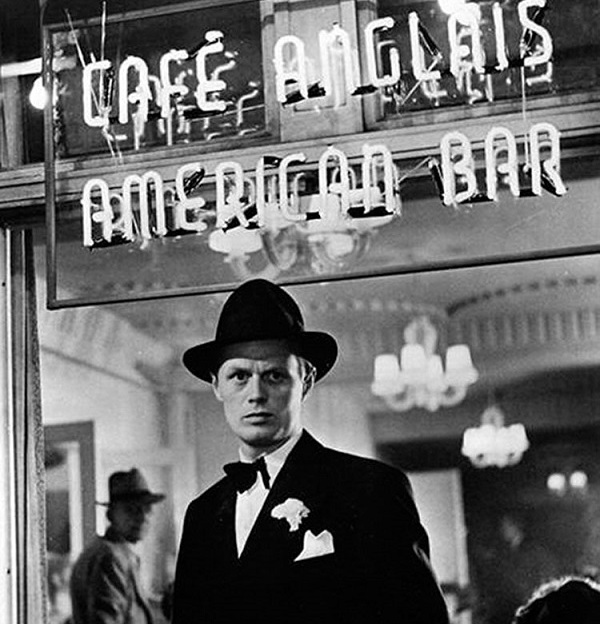
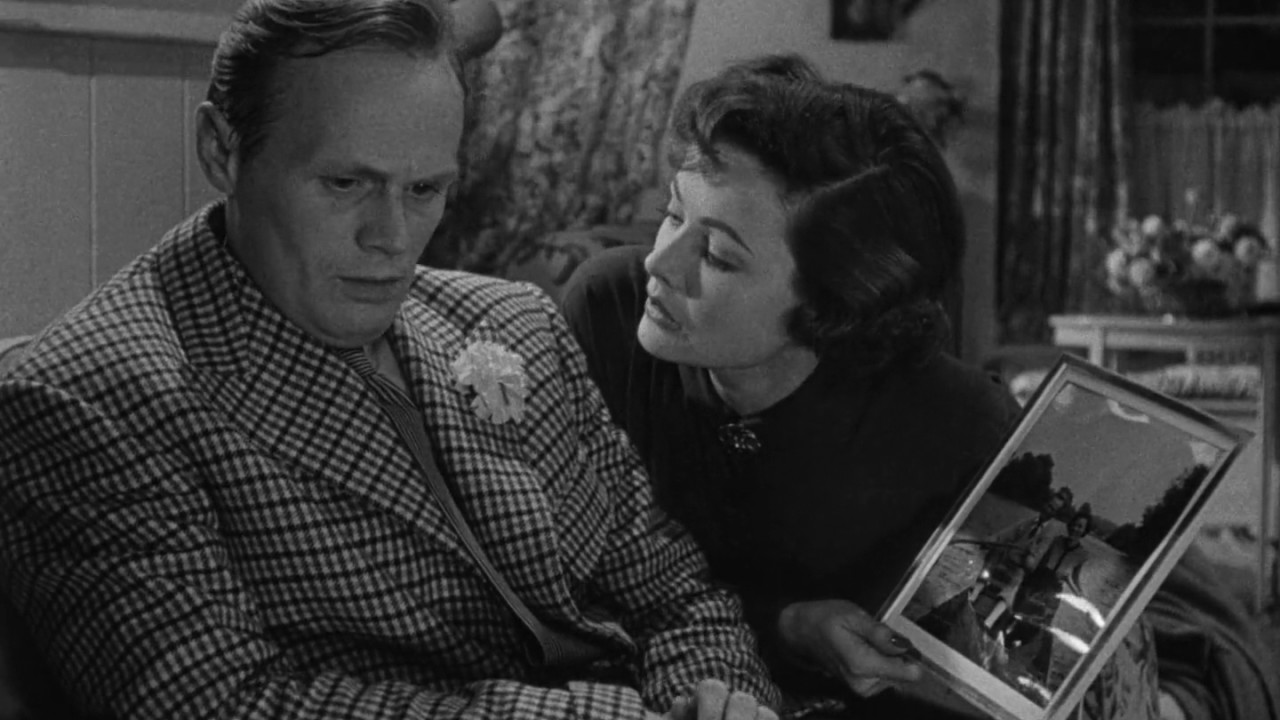
O narrador dá o tom: a noite é qualquer noite, a cidade é Londres. Numa noite qualquer em Londres encontramos Harry Fabian (Richard Widmark) correndo de um “velho conhecido”? Ele chega até o apartamento de sua namorada e, uma vez lá dentro, tenta vender seu mais novo esquema para Mary (Gene Tierney): Uma pílula que serve como combustível. Harry quer ser alguém na vida, enquanto Mary quer estar com alguém - com Harry, não com o vizinho que gosta dela, Adam (Hugh Marlowe).

The narrator sets the tone: the night is any given night, the city is London. At any given night in London we find Harry Fabian (Richard Widmark) running from an “old acquaintance”. He reaches his girlfriend’s apartment and, once inside, tries to sell his latest scheme to Mary (Gene Tierney): a pill that works as fuel. Harry wants to be someone in life, while Mary only wants to be with someone - with Harry, not with the neighbor who likes her, Adam (Hugh Marlowe).


Oficialmente, Harry e Mary trabalham num clube noturno que pertence a Phil (Francis L. Sullivan) e Helen (Googie Withers). Um dia, Harry tem uma ideia brilhante envolvendo lutas e o lutador grego Gregorius (Stanislaus Zbyszko, lutador na vida real) e seu pupilo Nikolas (Ken Richmond). Ao tentar controlar o ramo de lutas em toda a Londres, Harry atrairá chantagistas e assassinos.

Officially, Harry and Mary work at a nightclub that belongs to Phil (Francis L. Sullivan) and Helen (Googie Withers). One day, Harry has a brilliant idea that involves wrestling and the Greek wrestler Gregorius (Stanislaus Zbyszko, a real-life wrestler) and his pupil Nikolas (Ken Richmond). Wanting to control the wrestling scene in all of London, Harry will attract blackmailers and killers.


Os elementos formulaicos do filme noir estão presentes: as claramente visíveis fontes de luz, as muitas sombras criadas por essas luzes, a fotografia em preto e branco que realça essas sombras, a narração em voice over usada aqui só no início, escadas e ângulos de câmera ousados. Há até uma sequência muito interessante, apesar de breve, na qual entramos num carro com um personagem e compartilhamos do ponto de vista do passageiro do carro. Não há flashback e, principalmente, não há femme fatale. Gene Tierney havia interpretado uma fantástica femme fatale no noir em cores “Amar foi a Minha Ruína” (1945), mas aqui ela é a mulher sofredora que tem pouco tempo em cena.

The formulaic elements of film noir are there: the clearly visible sources of lights, the many shadows created by these lights, the black and white photography that enhances these shadows, the voice over narration used here only in the beginning, stairs and bold camera angles. There is even a very interesting, yet brief, sequence in which we enter a car with a character and share the viewpoint of a passenger in the car. There is no flashback and, mainly, there is no femme fatale. Gene Tierney had played a fantastic femme fatale in the colorful noir “Leave Her to Heaven” (1945), but here she is the suffering femme who has little screen time.


Uma perseguição muito importante acontece através de Londres até que Harry chega num terreno de obras. Isso me fez lembrar de dois outros filmes noir com perseguições em terrenos de obras: “Força do Mal” (1948) e o noir brasileiro posterior “Na Senda do Crime” (1954). Não há dúvidas de que um dublê foi usado em “Sombras do Mal”, e aqui precisamos dar o devido valor aos dublês que são uma parte fundamental da história do cinema desde o início. Mesmo assim, Richard Widmark teve de correr em várias sequências, algo que, segundo o IMDb, fez com que ele perdesse bastante peso.

A very important persecution happens throughout London until Harry arrives in a construction site. This reminds me of two other noirs with persecutions in construction sites: “Force of Evil” (1948) and the posterior Brazilian noir “Na Senda do Crime” (1954). There is no doubt that a body double was used in “Night and the City” and here we need to give the proper kudos to stunt men who have been a fundamental part of film history since its dawn. Nevertheless, Richard Widmark had to run in several sequences, something that, according to IMDb, made him lose a lot of weight.


Há uma breve sequência na qual Mary canta no clube. Não é Gene Tierney cantando: a voz dela foi dublada pela atriz Maudie Edwards, que já havia dublado outras estrelas de cinema como Diana Dors e Margaret Lockwood. Maudie começou a carreira no teatro aos quatro anos de idade, e fez diversos personagens masculinos na juventude. Sua carreira cinematográfica durou de 1936 a 1972.

There is a brief sequence in which Mary sings in the nightclub. It isn’t Gene Tierney singing: her voice was dubbed by actress Maudie Edwards, who had already dubbed other film stars such as Diana Dors and Margaret Lockwood. Maudie had first appeared on stage at four, and played many male roles in the theater while young.
Her film career lasted from 1936 to 1972.


Kristo é o filho de Gregorius e quem controla o ramo da luta quando Harry chega. Ele é interpretado por Herbert Lom e é bem curioso ver Lom como principal vilão de um filme. Você deve reconhecer o nome e o rosto dos filmes da Pantera Cor de Rosa: Lom interpretou o Inspetor Dreyfus em sete filmes com Peter Sellers como o detetive Clouseau. Nascido no que era na época o Império Austro-Húngaro - na atual República Tcheca -, a carreira de Lom no cinema britânico durou mais de 60 anos, nos quais interpretou também personagens sérios e trágicos, como o Fantasma da Obra numa versão da história em 1962.

Kristo is Gregorius’ son and the controller of the wrestling scene when Harry arrives. He’s played by Herbert Lom and it’s quite curious to see Lom as the main villain in a movie. You may recognize his name and his face from the Pink Panther movies: Lom played Inspector Dreyfus to Peter Sellers’ Clouseau in seven movies. Born in what was then Austria-Hungary - now Czech Republic -, Lon’s career in the British cinema lasted more than sixty years, playing also serious and tragic roles, like the Phantom of the Opera in a 1962 version of the story.


“Sombras do Mal” é baseado em um romance de Gerald Kersh. Jules Dassin confessou que só leu o livro depois de fazer o filme, por isso Harry é bem mais simpático no filme do que no livro. A adaptação para as telas foi feita pelo roteirista Jo Eisinger, que já fazia parte da história do filme noir porque foi roteirista de “Gilda” (1946), outro noir com uma história complexa.

“Night and the City” was based on a novel by Gerald Kersh. Jules Dassin confessed that he only read the novel after making the movie, that’s why Harry is a much more sympathetic character in the movie than he is in the book. The adaptation for the screen was made by Jo Eisinger, who was already in the film noir history because he was the screenwriter for “Gilda” (1946), another noir with a complex story.


“Sombras do Mal” não foi bem recebido pelos críticos quando estreou. Entretanto, como comumente acontece na história do cinema, mais tarde o filme foi revisitado por estudiosos e pelo público e reavaliado. Hoje um dos mais elogiados filmes noir dos anos 50, “Sombras do Mal” e sua galeria de personagens trágicos tem o lugar que merece no panteão do noir.

“Night and the City” wasn’t well-received by critics when it premiered. However, as it often happens in film history, later the movie was revisited by scholars and the public and reevaluated. Now one of the most complimented noirs of the 1950s, “Night and the City” and its gallery of tragic characters has the place it deserves in the noir pantheon.


This is a contribution to the Movies are Murder blogathon, hosted by the Classic Movie Blog Association.


Tuesday, December 29, 2020

Três Palavrinhas (1950) / Three Little Words (1950)


Você deve conhecer Cole Porter, Ira e George Gershiwn, George M. Cohan, Irving Berlin e Jerome Kern. Talvez você não conheça Bert Kalmar e Harry Ruby, mas com certeza já ouviu as canções deles, como por exemplo “I Wanna Be Loved by You”. Kalmar e Ruby não foram os artistas mais famosos oriundos da Tin Pan Alley, região de Manhattan que concentrava os principais selos de música no começo do século XX, mas a dupla provou que merecia uma cinebiografia, que veio em 1950 com “Três Palavrinhas”.

You might be familiar with Cole Porter, Ira and George Gershwin, George M. Cohan, Irving Berlin and Jerome Kern. You might not know Bert Kalmar and Harry Ruby, but you certainly have heard their songs, such as “I Wanna Be Loved By You”. Kalmar and Ruby were not the most famous artists to emerge from the Tin Pan Alley, a region of Manhattan that concentrated the main music publishers of the early 20th century, but the duo proved to be worthy of a biopic, that came as 1950's “Three Little Words”.

Os dois se esbarram pela primeira vez em um incidente. Bert Kalmar (Fred Astaire) é um bem-sucedido dançarino no vaudeville, fazendo par com Jessie Brown (Vera-Ellen). Jessie quer se casar com Bert, mas ele está mais interessado em se tornar um mágico. Quando ele tenta fazer alguns truques de mágica no palco, o pianista Harry Ruby (Red Skelton) é enviado para ser assistente de Bert, e o número acaba com uma confusão hilariante envolvendo coelhos numa cartola e um ganso descontrolado.

They meet for the first time in an unfortunate incident. Bert Kalmar (Fred Astaire) is a successful vaudeville dancer, making a dancing duo with Jessie Brown (Vera-Ellen). Jessie wants to marry Bert, but he is more interested in becoming a magician. When he tries to do a few magic tricks on the stage, pianist Harry Ruby (Red Skelton) is sent to work as Bert's assistant, and the number ends up in a hilarious mess involving rabbits in a top hat and a vicious goose.

Os caminhos deles se cruzam novamente. Desta vez, Bert machucou o joelho e não pode dançar durante um ano. Harry está tentando a sorte como compositor e liricista. Eles se encontram no escritório de um agente e Bert ajuda Harry a escrever uma letra melhor para uma melodia. Entretanto, quando Bert reconhece Harry do incidente no show de mágica, ele fica furioso e vai embora. Mesmo assim, Harry publica a música que eles fizeram juntos, forçando Bert a começar uma parceria, pois a música faz grande sucesso.

Their paths cross a second time. This time, Bert has injured his knee and can't dance for a year. Harry is trying his luck as a composer and songwriter. They meet at an agent's office and Bert helps Harry to write better lyrics for his tune. However, when Bert recognizes Harry from the magic show incident, he gets mad and leaves. Nevertheless, Harry publishes the song they made together, forcing Bert to start a partnership as the song becomes a hit.

Esta parceria, obviamente, teve seus problemas. Assim como Bert implica com o amor de Harry pelo beisebol, Harry não gosta do interesse de Bert em mágica. Com as melhores intenções, eles interferem na vida pessoal um do outro. Há brigas, reencontros e silêncios constrangedores. Tudo isso era ficção, para deixar o filme mais interessante, porque Kalmar e Ruby, na vida real, se davam muito bem.

This partnership, of course, isn't one without a few problems. As Bert complains about Harry's love of baseball, Harry doesn't like Bert's interest in magic. With the best intentions, they interfere in each other's personal businesses. There are arguments, reunions and awkward silences. All of this was fiction, to make the film more interesting, as the real Kalmar and Ruby got along very well.

No começo da carreira no vaudeville, Fred Astaire conheceu Kalmar e Ruby. Sobre Bert Kalmar e Jessie Brown, Astaire disse: “Nós [Fred e a irmã Adele Astaire] costumávamos ficar nas coxias e ver Jessie e Bert com animação e inveja, nos perguntando se poderíamos igualar a elegância deles e chegar ao mesmo status que eles tinham”. Estas memórias podem tê-lo influenciado a declarar que “Três Palavrinhas” foi um dos filmes que mais gostou de fazer em Hollywood. Astaire ganhou o Globo de Ouro de Melhor Ator em Filme de Comédia ou Musical, no ano em que a categoria foi criada.

In his early years in vaudeville, Fred Astaire knew Kalmar and Ruby. About Bert Kalmar and Jessie Brown, Astaire said: "We [Fred and his sister Adele Astaire] used to stand in the wings and watch Jessie and Bert with thrilled envy, wondering if we could equal their finesse and reach their headline billing". These memories may have influenced him to declare that “Three Little Words” was among his favorite experiences in Hollywood. Astaire won the Golden Globe for Best Actor in a Motion Picture Musical or Comedy for this film, in the year the category was created.

“Três Palavrinhas” é o primeiro de dois filmes que Vera-Ellen fez com Fred Astaire. Com ou sem Astaire como parceiro de dança, Vera-Ellen brilha no filme. Ela prova que é tão capaz quanto Astaire quando eles dividem a cena, e sozinha ela mostra charme e vitalidade. Muito subestimada, Vera-Ellen merece ser mencionada, junto com Cyd Charisse, como uma das melhores dançarinas da Era de Ouro dos musicais de Hollywood.

“Three Little Words” is the first of two films Vera-Ellen made with Fred Astaire. With or without Astaire as her dancing partner, Vera-Ellen shines in this film. She proves to be as capable as Astaire when they share the screen, and alone she displays charm and vitality. Often underrated, Vera-Ellen deserves to be mentioned, alongside Cyd Charisse, as one of the best dancers of Hollywood's Golden Age of musicals.

Debbie Reynolds aparece num pequeno papel como Helen Kane, e outra participação notável é Gloria DeHaven. Gloria interpreta a própria mãe, Sra Carter DeHaven – o nome verdadeiro dela era Flora Parker DeHaven –, uma estrela da Broadway que foi a primeira a cantar a canção “Who's Sorry Now” de Kalmar e Ruby. Eileen Percy, interpretada por Arlene Dahl, era atriz de cinema mudo. Helen Kane também foi uma atriz de cinema que serviu de inspiração para a personagem animada Betty Boop, e a própria Kane dublou Debbie Reynolds neste filme – isso significa que a cena que vemos tem Reynolds interpretando a atriz que a estava dublando nos bastidores!

Debbie Reynolds appears in a bit part as Helen Kane, and another interesting bit player is Gloria DeHaven. Gloria plays her own mother, Mrs. Carter DeHaven - her real name was Flora Parker DeHaven -, a Broadway star who introduced the Kalmar-Ruby song “Who's Sorry Now”. Eileen Percy, played by Arlene Dahl, was a silent film actress. Helen Kane was also a real film actress who inspired the cartoon character Betty Boop, and she even dubbed Debbie Reynolds's vocals in this movie – that means the scene is of Reynolds playing the actress that was dubbing her backstage!

Eu tenho apenas uma reclamação sobre este filme, e é sobre o lindo figurino feito por Helen Rose. Embora a história se passe no final dos anos 1910, as roupas de Vera-Ellen claramente são do começo dos anos 1950, algo que causou certa distração. Uma mulher dançando somente com um maiô preto teria causado frisson em 1919!

I have only one problem with the film, and it's the nonetheless gorgeous costumes by Helen Rose. Although the story is set in the late 1910s, Vera-Ellen's clothes are clearly from the early 1950s, and I found that a bit distracting. A woman dancing wearing only a black leotard would have caused frisson in 1919!


“Três Palavrinhas” me lembrou de outro filme de Fred Astaire, “Romance Inacabado”, de 1946. Ambos os filmes são sobre parceiros no show business que são muito diferentes um do outro. Em “Romance Inacabado”, entretanto, Astaire é um dançarino enquanto Bing Crosby é gerente de uma boate. Em “Três Palavrinhas”, Red Skelton é um bom contraste a Fred Astaire, servindo também como alívio cômico – porque ele pode amar beisebol, mas é péssimo no jogo. Eu acredito que “Romance Inacabado” tem números de dança e canções mais memoráveis.

“Three Little Words” reminded me of another Fred Astaire movie, “Blue Skies”, from 1946. Both films are about show business partners who are very different from each other. In “Blue Skies”, however, Astaire is a dancer while Bing Crosby plays a nightclub manager. In “Three Little Words”, Red Skelton is a nice contrast to Astaire, serving also as comic relief – because he may love baseball, but he’s really bad at it. I believe “Blue Skies” has more memorable dance routines and songs.

"Romance Inacabado" / "Blue Skies"

MGM fez tantos musicais incríveis nos anos 40 e 50 que muitos deles acabam sendo colocados de lado, ao mesmo tempo em que discutimos sempre preciosidades como “Sinfonia de Paris” (1951) e “Cantando na Chuva” (1952). “Três Palavrinhas” pode não chamar tanto a atenção porque trata de compositores não muito lembrados, mas o filme merece ser visto em especial por causa das habilidades de dança de Vera-Ellen. Em três palavrinhas: você vai gostar!

MGM made so many great musicals in the 1940s and  1950s that many of them go overlooked, while we talk too often about gems like “An American in Paris” (1951) and “Singin' in the Rain” (1952). “Three Little Words” may not be as interesting because its subjects are not so well-known, but it deserves to be seen especially because of Vera-Ellen's dancing skills. In three little words: you'll like it!

This is my contribution to the Third Fred Astaire and Ginger Rogers blogathon, hosted by Michaela and Crystal at Love Letters to Old Hollywood and In the Good Old Days of Classic Hollywood. 
 
Related Posts Plugin for WordPress, Blogger...