} Crítica Retrô: filme noir

Tradutor / Translator / Traductor / Übersetzer / Traduttore / Traducteur / 翻訳者 / переводчик

Showing posts with label filme noir. Show all posts

Friday, November 25, 2022

Lost in Translation: odd classic film titles in Portuguese – film noir edition


Noirvember has arrived and with it the urge to watch foggy detective stories or films with iconic femme fatales. That’s why we bring for you today another post in the “Lost in Translation” series. This time, with good news: “Lost in Translation” was nominated for Best Classic Movie Series in the latest Classic Movie Blog Association Awards. We didn’t win, but it’s truly an honor to be nominated. Now, let’s go on with the list – remembering that titles that do not appear here were translated verbatim:


“Double Indemnity” (1944) became “Blood Pact” (“Pacto de Sangue”)


“Murder, my Sweet” (1944) is here “See You, Darling” (“Até a Vista, Querida”)  


“Detour” (1945) is known as “Destiny’s Curve” (“Curva do Destino”)


“My Name is Julia Ross” (1945) was called here “Tragical Alibi” (“Trágico Álibi”)


“The Big Sleep” (1946) was translated as “On the Verge of the Abism” (“À Beira do Abismo”)


“Out of the Past” (1947) is here “Fugue from the Past” (“Fuga do Passado”)


“Criss Cross” (1949) received the title “Meanness” (“Baixeza”)


“Caught” (1949) is here “Prisoner Heart” (“Coração Prisioneiro”)


The historical noir “Reign of Terror”(also known as “The Black Book”, 1949) was called here “The Shadow of the Guillotine” (“A Sombra da Guilhotina”)


“The Asphalt Jungle” (1950) is known as “The Secret of the Jewels” (“O Segredo das Joias”)


“In a Lonely Place” (1950) was translated as “In the Silence of the Night” (“No Silêncio da Noite”)


“Sunset Boulevard” (1950) became “Dawn of the Gods” (“Crepúsculo dos Deuses”)


“The Big Heat” (1953) received the title “The Corrupts” (“Os Corruptos”)


“Kiss Me Deadly” (1955) is here “Death in a Kiss” (“A Morten um Beijo”)


“The Big Combo” (1955) received the title “Crime Empire” (“Império do Crime”)


Stanley Kubrick’s “The Killing” (1956) is here “The Great Coup” (“O Grande Golpe”)


“Sweet Smell of Success” (1957) is known as “The Inebriation of Success” (“A Embriaguez do Sucesso”)


“Touch of Evil” (1958) is here “The Mark of Wickdness” (“A Marca da Maldade”)

Wednesday, November 9, 2022

Sombras do Mal (1950) / Night and the City (1950)


Você conhece Jules Dassin? O nome pode não fazer sentido num primeiro momento, mas ele merece ser conhecido. O ator / roteirista / diretor trabalhou em diversos gêneros, nos EUA em que nasceu e no estrangeiro, e até se beneficiou por ter sido posto na lista negra. Como Dassin foi acusado de ser comunista, teve de se mudar de Hollywood para a Europa, onde ele dirigiu filmes como “Rififi” (1955) e o adorável “Nunca aos Domingos” (1960). Mas no meio de seu processo na Casa de Atividades AntiAmericanas, ele fez outra obra-prima: o complexo e tenso noir “Sombras do Mal”.

Do you know Jules Dassin? The name might not ring a bell at first, but it should. The actor / writer / director worked in several genres, in his native US and abroad, and even benefited from being blacklisted. As Dassin was accused of being a communist, he moved from Hollywood to Europe, where he directed great movies such as “Rififi” (1955) and the lovely “Never on Sundays” (1960). But in the middle of being blacklisted, he made another masterpiece: the complex and tense noir “Night and the City”.


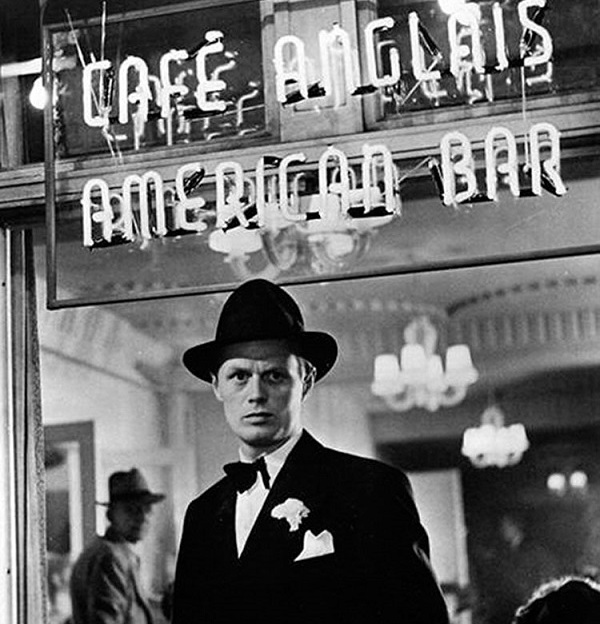
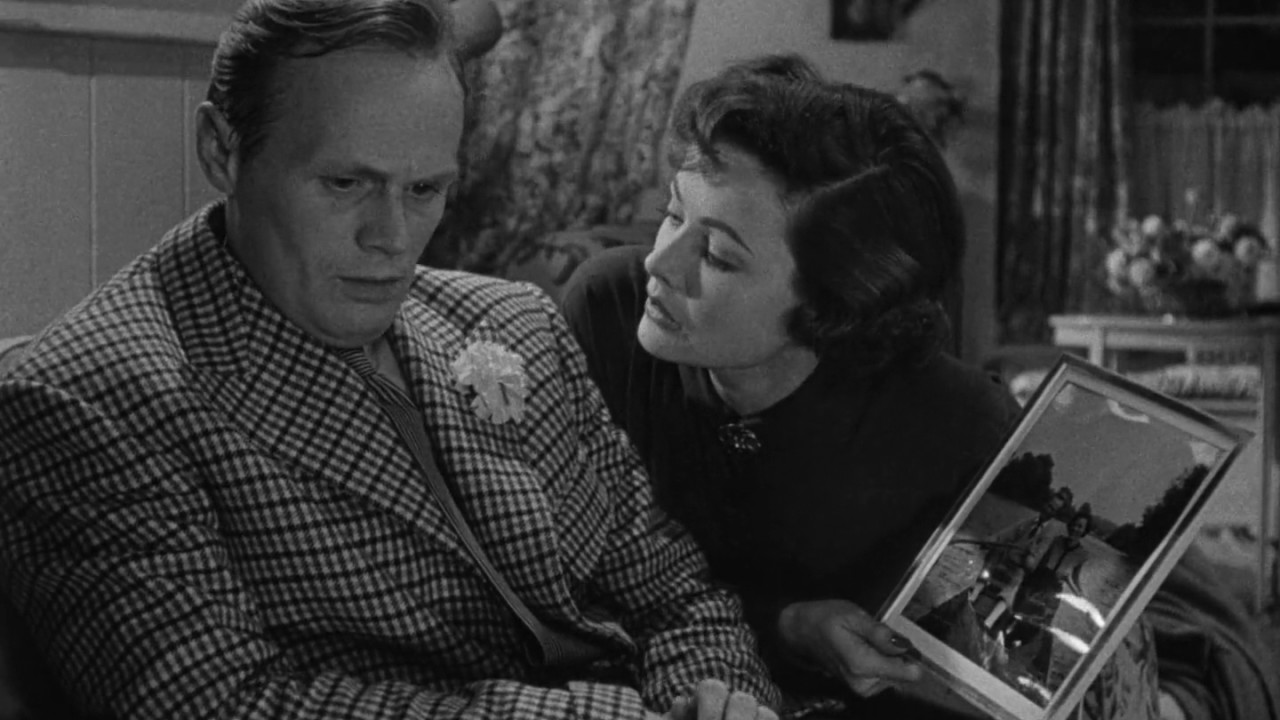
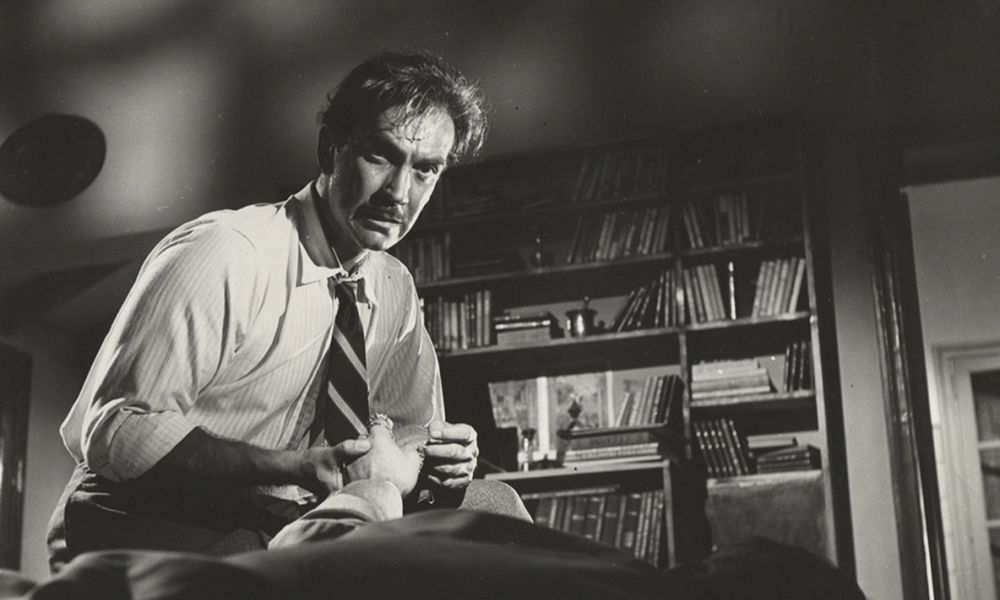
O narrador dá o tom: a noite é qualquer noite, a cidade é Londres. Numa noite qualquer em Londres encontramos Harry Fabian (Richard Widmark) correndo de um “velho conhecido”? Ele chega até o apartamento de sua namorada e, uma vez lá dentro, tenta vender seu mais novo esquema para Mary (Gene Tierney): Uma pílula que serve como combustível. Harry quer ser alguém na vida, enquanto Mary quer estar com alguém - com Harry, não com o vizinho que gosta dela, Adam (Hugh Marlowe).

The narrator sets the tone: the night is any given night, the city is London. At any given night in London we find Harry Fabian (Richard Widmark) running from an “old acquaintance”. He reaches his girlfriend’s apartment and, once inside, tries to sell his latest scheme to Mary (Gene Tierney): a pill that works as fuel. Harry wants to be someone in life, while Mary only wants to be with someone - with Harry, not with the neighbor who likes her, Adam (Hugh Marlowe).


Oficialmente, Harry e Mary trabalham num clube noturno que pertence a Phil (Francis L. Sullivan) e Helen (Googie Withers). Um dia, Harry tem uma ideia brilhante envolvendo lutas e o lutador grego Gregorius (Stanislaus Zbyszko, lutador na vida real) e seu pupilo Nikolas (Ken Richmond). Ao tentar controlar o ramo de lutas em toda a Londres, Harry atrairá chantagistas e assassinos.

Officially, Harry and Mary work at a nightclub that belongs to Phil (Francis L. Sullivan) and Helen (Googie Withers). One day, Harry has a brilliant idea that involves wrestling and the Greek wrestler Gregorius (Stanislaus Zbyszko, a real-life wrestler) and his pupil Nikolas (Ken Richmond). Wanting to control the wrestling scene in all of London, Harry will attract blackmailers and killers.


Os elementos formulaicos do filme noir estão presentes: as claramente visíveis fontes de luz, as muitas sombras criadas por essas luzes, a fotografia em preto e branco que realça essas sombras, a narração em voice over usada aqui só no início, escadas e ângulos de câmera ousados. Há até uma sequência muito interessante, apesar de breve, na qual entramos num carro com um personagem e compartilhamos do ponto de vista do passageiro do carro. Não há flashback e, principalmente, não há femme fatale. Gene Tierney havia interpretado uma fantástica femme fatale no noir em cores “Amar foi a Minha Ruína” (1945), mas aqui ela é a mulher sofredora que tem pouco tempo em cena.

The formulaic elements of film noir are there: the clearly visible sources of lights, the many shadows created by these lights, the black and white photography that enhances these shadows, the voice over narration used here only in the beginning, stairs and bold camera angles. There is even a very interesting, yet brief, sequence in which we enter a car with a character and share the viewpoint of a passenger in the car. There is no flashback and, mainly, there is no femme fatale. Gene Tierney had played a fantastic femme fatale in the colorful noir “Leave Her to Heaven” (1945), but here she is the suffering femme who has little screen time.


Uma perseguição muito importante acontece através de Londres até que Harry chega num terreno de obras. Isso me fez lembrar de dois outros filmes noir com perseguições em terrenos de obras: “Força do Mal” (1948) e o noir brasileiro posterior “Na Senda do Crime” (1954). Não há dúvidas de que um dublê foi usado em “Sombras do Mal”, e aqui precisamos dar o devido valor aos dublês que são uma parte fundamental da história do cinema desde o início. Mesmo assim, Richard Widmark teve de correr em várias sequências, algo que, segundo o IMDb, fez com que ele perdesse bastante peso.

A very important persecution happens throughout London until Harry arrives in a construction site. This reminds me of two other noirs with persecutions in construction sites: “Force of Evil” (1948) and the posterior Brazilian noir “Na Senda do Crime” (1954). There is no doubt that a body double was used in “Night and the City” and here we need to give the proper kudos to stunt men who have been a fundamental part of film history since its dawn. Nevertheless, Richard Widmark had to run in several sequences, something that, according to IMDb, made him lose a lot of weight.


Há uma breve sequência na qual Mary canta no clube. Não é Gene Tierney cantando: a voz dela foi dublada pela atriz Maudie Edwards, que já havia dublado outras estrelas de cinema como Diana Dors e Margaret Lockwood. Maudie começou a carreira no teatro aos quatro anos de idade, e fez diversos personagens masculinos na juventude. Sua carreira cinematográfica durou de 1936 a 1972.

There is a brief sequence in which Mary sings in the nightclub. It isn’t Gene Tierney singing: her voice was dubbed by actress Maudie Edwards, who had already dubbed other film stars such as Diana Dors and Margaret Lockwood. Maudie had first appeared on stage at four, and played many male roles in the theater while young.
Her film career lasted from 1936 to 1972.


Kristo é o filho de Gregorius e quem controla o ramo da luta quando Harry chega. Ele é interpretado por Herbert Lom e é bem curioso ver Lom como principal vilão de um filme. Você deve reconhecer o nome e o rosto dos filmes da Pantera Cor de Rosa: Lom interpretou o Inspetor Dreyfus em sete filmes com Peter Sellers como o detetive Clouseau. Nascido no que era na época o Império Austro-Húngaro - na atual República Tcheca -, a carreira de Lom no cinema britânico durou mais de 60 anos, nos quais interpretou também personagens sérios e trágicos, como o Fantasma da Obra numa versão da história em 1962.

Kristo is Gregorius’ son and the controller of the wrestling scene when Harry arrives. He’s played by Herbert Lom and it’s quite curious to see Lom as the main villain in a movie. You may recognize his name and his face from the Pink Panther movies: Lom played Inspector Dreyfus to Peter Sellers’ Clouseau in seven movies. Born in what was then Austria-Hungary - now Czech Republic -, Lon’s career in the British cinema lasted more than sixty years, playing also serious and tragic roles, like the Phantom of the Opera in a 1962 version of the story.


“Sombras do Mal” é baseado em um romance de Gerald Kersh. Jules Dassin confessou que só leu o livro depois de fazer o filme, por isso Harry é bem mais simpático no filme do que no livro. A adaptação para as telas foi feita pelo roteirista Jo Eisinger, que já fazia parte da história do filme noir porque foi roteirista de “Gilda” (1946), outro noir com uma história complexa.

“Night and the City” was based on a novel by Gerald Kersh. Jules Dassin confessed that he only read the novel after making the movie, that’s why Harry is a much more sympathetic character in the movie than he is in the book. The adaptation for the screen was made by Jo Eisinger, who was already in the film noir history because he was the screenwriter for “Gilda” (1946), another noir with a complex story.


“Sombras do Mal” não foi bem recebido pelos críticos quando estreou. Entretanto, como comumente acontece na história do cinema, mais tarde o filme foi revisitado por estudiosos e pelo público e reavaliado. Hoje um dos mais elogiados filmes noir dos anos 50, “Sombras do Mal” e sua galeria de personagens trágicos tem o lugar que merece no panteão do noir.

“Night and the City” wasn’t well-received by critics when it premiered. However, as it often happens in film history, later the movie was revisited by scholars and the public and reevaluated. Now one of the most complimented noirs of the 1950s, “Night and the City” and its gallery of tragic characters has the place it deserves in the noir pantheon.


This is a contribution to the Movies are Murder blogathon, hosted by the Classic Movie Blog Association.


Sunday, May 15, 2022

Quatro filmes noir que eu amo / Four favorite noirs


Feliz Dia do Cinema Clássico! O Rick do blog Classic Film & TV Café adora propor para nós, blogueiros, um desafio para celebrar este dia. Este ano ele pediu para nós elencarmos nossos quatro filmes noir favoritos... espere, só quatro? Sim, só quatro, e “favoritos” é modo de dizer. Ele pediu para indicarmos quatro noirs de que gostamos, ou que achamos subestimados, ou que devem ser vistos muitas vezes...Você entendeu. Então aqui estão, os quatro noirs que eu gostaria de indicar:

Happy National Classic Movie Day! Rick from the blog Classic Film & TV Café loves to give us, bloggers, a challenge to celebrate this day. This year he asked us for our four favorite noirs... wait, only four? Yes, only four, and “favorites” is a way of saying. He asked us to highlight four noirs that we like, or we think are underseen, or are worth watching several times... You get it. So here they are, the four noirs I want to highlight: 

A Dama de Xangai (1947): Não apenas um dos meus noirs favoritos, mas também um dos meus filmes favoritos da vida. Lindamente fotografado, ele conta a malfadada história de Michael O’Hara (Orson Welles, que também foi diretor, produtor e roteirista), contratado por um advogado manco, Arthur Bannister (Everett Sloane). Michael se envolve com a esposa de Bannister, Elsa (Rita Hayworth, em processo de divórcio de Welles na época) e... bem, há derramamento de sangue. Eu adora a parte sobre os tubarões brasileiros vistos em Frotaleza por um jovem Michael, e também o clímax numa sala de espelhos. Leia mais sobre “A Dama de Xangai” AQUI.

Lady from Shanghai (1947): Not only one of my favorite noirs, also one of my favorite movies ever. Beautifully shot, it tells the ill-fated story of Michael O’Hara (Orson Welles, who also directed and produced the film and wrote the screenplay), hired by a lawyer with a limp, Arthur Bannister (Everett Sloane). Michael becomes involved with Bannister’s wife Elsa (Rita Hayworth, divorcing Welles at the time) and…well, there’s blood. I love the bit about the Brazilians sharks seen in the city of Fortaleza by a younger Michael, and also the climax in a room full of mirrors. Read more about “The Lady from Shanghai” HERE.

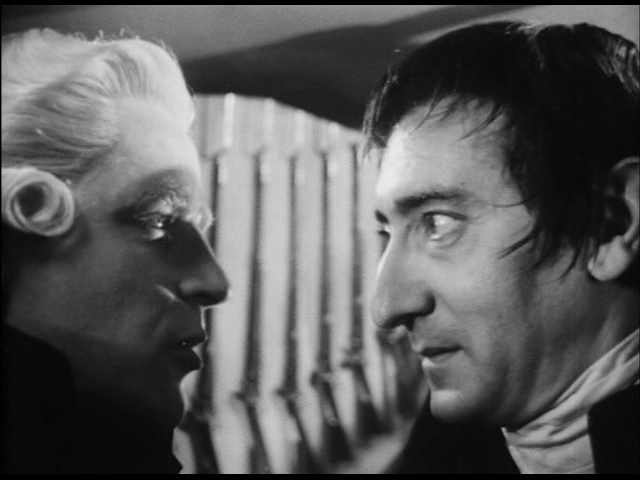
A Sombra da Guilhotina (1949): O filme noir é parte da História, mas este é ainda mais histórico que a maioria. Ambientado nos anos 1790, no Período do Terror da Revolução Francesa, em inglês ele é conhecido pelos títulos “Reign of Terror” e “The Black Book”. O tal livro negro é onde estão escritos todos os nomes dos “inimigos da França”, um livro que precisa ser recuperado por Robespierre (interpretado por Richard Basehart). Se Robespierre conseguir o livro, ele terá tudo de que precisa para se tornar um ditador, por isso uma rede de resistência é formada por toda a França, e entre os membros desta rede temos Madelon (Arlene Dahl). O uso de sombras e a iluminação são os destaques deste noir histórico. Leia mais sobre “A Sombra da Guilhotina” AQUI.

Reign of Terror (1949): Film noir is part of History, but this one is more historic than most. Set in the 1790s, the time of the Reign of Terror in the French Revolution, it is also known by the title “The Black Book”. That book is where all the names of the “enemies of France” are written, a book that needs to be recovered by Robespierre (played by Richard Basehart). If Robespierre gets the book, he will have everything needed to become a dictator, so a resistance network is formed all over France, and among the members of this network we have Madelon (Arlene Dahl). The use of shadows and the lighting are the highlights of this historical noir. Read more about “Reign of Terror aka The Black Book” HERE.

Na Senda do Crime (1954): Este noir brasileiro é uma mistura de “O Segredo das Joias” (1950) com “A Força do Mal” (1947) – filme este que é evocado no tensto clímax. “Na Senda do crime” conta a história do bancário Sergio (Miro Cerni), que roba uma mansão com três amigos. Sergio coloca o dinheiro roubado numa conta que pertence à garota que gosta dele, mas ao mesmo tempo Sergio está saindo com uma cantora e decide que é uma boa ideia presenteá-la com uma joia roubada. O diretor de teatro Flaminio Bollini Cerri dirigiu apenas este filme no Brasil antes de voltar para a Itália, sua terra natal.

Na Senda do Crime (1954): This Brazilian noir is a mix of “The Asphalt Jungle” (1950) with “Force of Evil” (1948) – a film evoked in the tense climax. Translated as “Road to Crime”, it tells the story of bank clerk Sergio (Miro Cerni), who robs a mansion with three friends. Sergio puts the stolen money in an account that belongs to a girl who likes him, but at the same time Sergio goes out with a singer and decides it’s a good idea to give her a stolen jewel as a gift. Theater director Flaminio Bollini Cerri only made this movie in Brazil before going back to his native Italy.

Los Tallos Amargos (1956): Este noir argentino nos ensina que o jornalismo pode ser mortal – mas não como em “A Montanha dos Sete Abutres” (1951). Em “Los Tallos Amargos”, dois homens começam um esquema corrupto vendendo cursos de jornalismo por correspondência. Esses dois homens são o desiludido Alfredo (Carlos Cores) e o imigrante grego Liudas (Vassili Lambrinos), ambos interpretados por dois atores extremamente populares na Argentina na época. Um noir incomum, ele não tem femme fatales, mas sim um pobre coitado como protagonista – Alfredo – e muita paranoia e mentiras – e até uma fantástica sequência de sonho! É um filme único, que todos os amantes de filmes noir devem assistir. Mais sobre ele e um neo-noir argentino AQUI.

Los Tallos Amargos (1956): This Argentinian noir teaches us that journalism can be deadly – but not like “Ace in the Hole” (1951). In “Los Tallos Amargos” (translated as “The Bitter Stems”), two men start a corrupt scheme by selling courses of journalism by mail. These two men are the disillusioned Alfredo (Carlos Cores) and the Greek expatriate Liudas (Vassili Lambrinos), both played by extremely popular actors of the time in Argentina. An uncommon noir, it has no femme fatales, but a poor devil as a lead – Alfredo – and a lot of paranoia and lies – and even a fantastic dream sequence! It’s a unique film, one that all lovers of film noir should watch. Read more about “Los Tallos Amargos” and also an Argentinian neo-noir HERE.


Sunday, April 17, 2022

Tributo de Sangue (1952) / The Turning Point (1952)

Quando eu estava me preparando para assistir a “Tributo de Sangue” (1952) no Internet Archive, percebi que ele estava categorizado como “filme noir tardio”. É uma categoria estranha, e mais estranha ainda se considerarmos que muitos filmes noir foram feitos em meados e até finais da década de 1950. Seja ele um “filme noir tardio” ou não, o que importa é que “Tributo de Sangue” tem o ingrediente principal do filme noir: crime.

As I was getting ready to watch “The Turning Point” (1952) at the Internet Archive, I noticed that it was labeled “late film noir”. It was an odd label, even odder considering that there were several films noir made way into the 1950s. Whether it’s a “late film noir” or not, what is important is that “The Turning Point” exudes the stuff film noir is made of: crime.

Johnny Conroy (Edmond O’Brien) é um promotor de sucesso que está investigando um novo caso. Ele pede ajuda a seu pai, um policial, mas recebe um não como resposta. Surpreso pela recusa, o amigo de Johnny, Jerry (William Holden), que é repórter, decide seguir o pai de Johnny, Matt (Tom Tully), pela cidade.

Johnny Conroy (Edmond O’Brien) is a successful special prosecutor investigating a new case. He asks his father, a cop, for help, and his father refuses. Startled by the father’s refusal, Johnny’s friend Jerry (William Holden), a reporter, decides to follow Johnny’s father, Matt (Tom Tully), through the city.

Acontece que Matt está colaborando com os caras malvados, entregando para eles informações secretas da polícia. Também envolvida com o caso, mas do lado dos bonzinhos, está a namorada e assistente de Johnny, Amanda (Alexis Smith). Conforme vai escrevendo sobre a investigação, Jerry se envolve cada vez mais com o caso – e também se envolve com Amanda.

It turns out that Matt is collaborating with the bad guys, sending them classified information from the police. Also involved in the case, but at the good guy’s side, is Johnny’s girlfriend and work assistant Amanda (Alexis Smith). As he writes about the ongoing investigation, Jerry becomes more and more involved with the case – and he also becomes involved with Amanda.

Em vez do detetive durão que costumamos encontrar no filme noir, em “Tributo de Sangue” temos um repórter durão, Jerry, que é constantemente mais inteligente que Johnny, o promotor e protagonista do filme. Quando Johnny fica inseguro frente a uma decisão de autossacrifício – que é denunciar seu pai – pelo bem do caso, é Jerry que o convence a seguir em frente. Um ano antes de sua performance ganhadora do Oscar em “Inferno Nº 17” (1953), William Holden é o protagonista de fato em “Tributo de Sangue”.

Instead of the hard-boiled detective we often find in film noir, in “The Turning Point” we have a hard-boiled reporter, Jerry, who is usually more intelligent than Johnny, the prosecutor and lead of the movie. When Johnny feels unsure about sacrificing himself – that is, denouncing his father – for the sake of the case, it’s Jerry who convinces him to do so. One year before his Oscar-winning performance in “Stalag 17” (1953), William Holden is the de facto lead of “The Turning Point”.

Não era raro ter repórteres nos filmes noir ou com toques de noir. Podemos mencionar “A Montanha dos 7 Abutres” (1951), um filme com toques de noir no qual um repórter faz de tudo para explorar uma boa história após encontrá-la. O noir argentino “Los Tallos Amargos” (1957) é sobre um esquema mortal envolvendo um curso de jornalismo por correspondência. Não devemos nos esquecer de que o cinema noir por vezes encontrou inspiração em jornais, fosse em casos reais – como aconteceu em “Tributo de Sangue” – ou no estilo cru das fotos tiradas por grandes fotojornalistas dos anos 1930 e 1940, a exemplo de Weegee.

It wasn’t so rare to have reporters in film noir or in “noirish” films. We can mention “Ace in the Hole” (1951), a noirish film in which a reporter does anything for a good story once he finds it. The Argentinian noir “Los Tallos Amargos” (“Bitter Stems”, 1957) is about a deadly scheme involving a journalism correspondence course. We must not forget that film noir often found inspiration in newspapers, be it in real-life cases – which happened in “The Turning Point” – or in the raw looks of the photos taken by lead photojournalists of the 1930s and 1940s, such as Weegee.

Os figurinos de “Tributo de Sangue” foram feitos por Edith Head. Não há roupas extravagantes, pois a maioria dos personagens são homens de terno. Os vestidos usados por Alexis Smith são bonitos, mas não figuram entre as melhores criações de Edith Head. Na história do cinema noir, Edith fez figurinos de filmes notáveis como “Pacto de Sangue” (1944), “Crepúsculo dos Deuses” (1950) e o subestimado “O Relógio Verde” (1948).

The costumes for “The Turning Point” were made by Edith Head. There are no flashy costumes, as most characters are men in suits. The dresses worn by Alexis Smith are pretty, but are not among Edith Head’s best creations. In film noir history, Head also created costumes for the very famous “Double Indemnity” (1944), “Sunset Boulevard” (1950) and the underrated “The Big Clock” (1948).

Tributo de Sangue” foi dirigido por William Dieterle. O diretor de origem alemã teve uma carreira bem longa, começando como ator em 1913 – seu papel mais famoso é como o coadjuvante Valentin em “Fausto”, de 1926. Ele começou a dirigir filmes na Alemanha em 1923 e em 1931 foi para Hollywood. Com 91 créditos como diretor, de acordo com o IMDb, Dieterle foi prolífico em sua carreira atrás das câmeras, dirigindo vários gêneros durante mais de 40 anos.

The Turning Point” was directed by William Dieterle. The German-born director had a very long career, starting as an actor in 1913 – his most famous role being the supporting role of Valentin in 1926’s “Faust”. He started directing in Germany in 1923 and in 1931 went to Hollywood. With 91 directing credits to his name, according to IMDb, Dieterle was a prolific director, working in several genres for over four decades.

Com um clímax tenso num ringue de boxe – mas não tão tenso quanto o clímax no carrossel em “Pacto de Sangue” (1951) – “Tributo de Sangue” termina de um jeito amargo, como tantos filmes noir. É um filme pouco visto, considerando a carreira de William Holden, apesar de sua ótima performance, e é outro noir subestimado que eu tive a sorte de encontrar no Internet Archive.

With a tense climax in a boxing arena – but not as tense as the climax in the merry-go-round in “Strangers on a Train” (1951) – “The Turning Point” ends on a bitter note, like so many noirs. It’s an underseen movie in William Holden’s career, despite his very good performance, and it’s another underrated noir I was lucky to find at the Internet Archive.

This is my contribution to the 5th Golden Boy blogathon: A William Holden Celebration, hosted by Virginie at The Wonderful World of Cinema, Michaela at Love Letters to Old Hollywood and Emily at The Flapper Dame.
Saturday, July 27, 2019

Tensão (1949) / Tension (1949)


Tensão é a arma secreta de um investigador do departamentos de homicídios chamado Collier Bonnabel (Barry Sullivan). Afinal, é a física: se você tencionar demais algo ou alguém, ele / ela se romperá – e confessará o crime. Você já deve saber disso: no final de cada filme noir, um caso é solucionado e alguém confessa o crime. Mas poucos filmes noir apresentam um caso tão complicado e interessante quanto “Tensão”, de 1949.

Tension is the secret weapon of a homicide division investigator called Collier Bonnabel (Barry Sullivan). It’s physics, after all: if you tension something or someone too much, they will break – and confess. You must already know that: in the end of each and every noir, a case is closed and someone confesses. But few noirs have such a complicated and interesting case as 1949’s “Tension”.


Collier narra o caso de Warren Quimby (Richard Basehart), um farmacêutico completamente devotado à esposa, Claire (Audrey Totter). Ele sabe que ela só está interessada em dinheiro e objetos caros, ele sabe que ela é egoísta e flerta com outros homens, e ele sabe que ela pode até ser infiel. Mas ele faz de tudo para ficar com ela.

Collier narrates the case of Warren Quimby (Richard Basehart), a pharmacist completely devoted to his wife, Claire (Audrey Totter). He knows she is interested only in money and expensive things, he knows she’s selfish and flirts with other men, and he knows she may even be unfaithful. But he does anything to keep her.


Um dia, Claire finalmente abandona Warren. Ele não a deixará ir facilmente, por isso ele a segue e leva uma surra do novo namorado dela, Barney Deager (Lloyd Gough). Humilhado, Warren planeja matar Barney – e para fazer isso ele se torna outra pessoa, Paul Sothern, um vendedor de cosméticos.

One day, Claire finally leaves Warren. He won’t give her up easily, so he goes after her and is beaten up by her new boyfriend, Barney Deager (Lloyd Gough). Humiliated, Warren traces a plan to kill Barney – and to do this he becomes someone else, Paul Sothern, a cosmetics salesman.


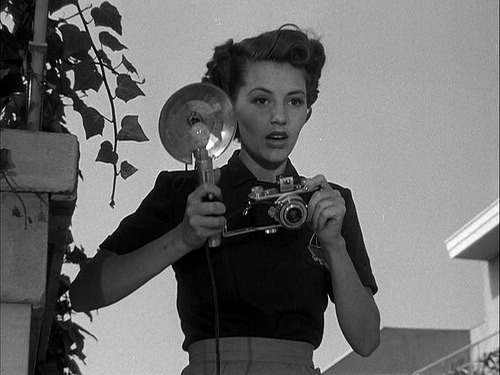
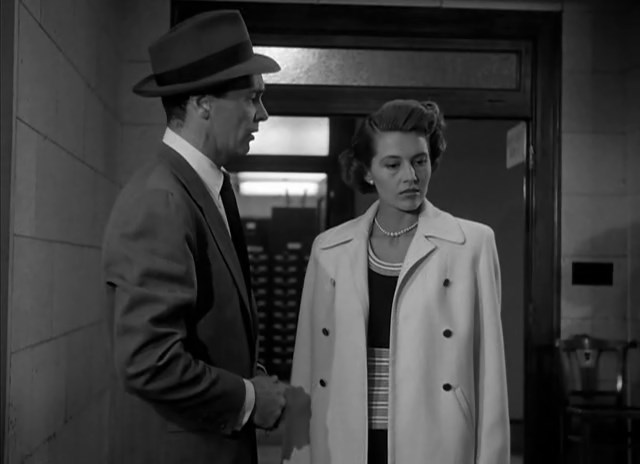
Como Paul, ele arranja outra morada, e no novo conjunto de apartamentos ele conhece a fotógrafa amadora Mary Chanler (Cyd Charisse) e se apaixona por ela. Agora com uma nova garota em sua vida e sabendo que, se ele conseguisse Claire de volta, ela o deixaria novamente, Warren / Paul decide não prosseguir com seu plano... mas Barney Deager ainda assim é assassinado.

As Paul, he goes to live somewhere else, and in the new apartment block he meets cashier and amateur photographer Mary Chanler (Cyd Charisse) and falls in love with her. Now with a new girl in his life and knowing if he got Claire back she’d leave him again, Warren / Paul decides not to go on with his plan… but Barney Deager is murdered anyway.


O que se segue é uma investigação intensa, com o tenente Collier tencionando todos os envolvidos até que alguém confesse. Obviamente, já que se trata de um filme noir, podemos esperar muitas reviravoltas, e no final veremos mais uma vez que não existe crime perfeito.

What follows is an intense investigation, with Lt. Collier tensioning all the people involved until someone confesses. Of course, since it’s noir, we can expect many twists to happen, and in the end once again we’ll see there is no perfect crime.


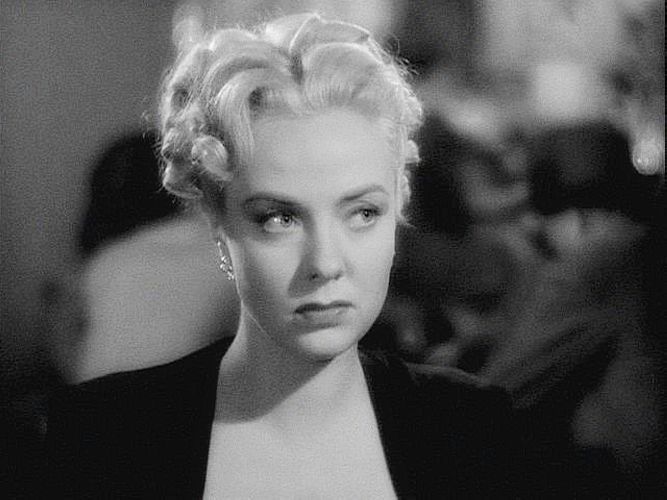
Audrey Totter está completamente brilhante como a femme fatale Claire. Ela só pensa em si mesma, brinca com os sentimentos alheios e é mais durona do que alguns dos mais durões detetives do noir.

Audrey Totter is completely brilliant as the femme fatale Claire. She thinks only of herself, plays with other people’s feelings and is tougher then some of the toughest noir detectives.


Muito jovem e com óculos de aro Redondo, Richard Basehart consegue se parecer ao mesmo tempo com um cara comum e com o galã Richard Gere. Quando ele tira os óculos e começa a usar lentes de contato, seu novo alter ego nasce.

Very young and with round glasses, Richard Basehart manages to look at the same time pretty ordinary and a lot with heartthrob Richard Gere. When he takes off his glasses and starts using contact lenses, his new alter ego is born.


Cyd Charisse já havia feito vários filmes antes de “tensão”, a maioria musicais. Como Mary, seu trabalho é ser acolhedora e doce, e por vezes parecer surpresa. Mary não é uma mulher apaixonada e estúpida, mas ela está apaixonada, e nada que alguém diga poderá fazê-la parar de acreditar em Paul / Warren.

Cyd Charisse had already been in several films before “Tension”, most of them musicals. As Mary, her job is to be warm and sweet, and sometimes surprised. Mary is not a dumb woman in love, but she is in love, and nothing that anyone can say will make her stop believing in Paul / Warren.


Quanto aos elementos do filme noir em “Tensão”, podemos destacar, além da femme fatale e do detetive durão, as sombras nas cenas (nem todas elas criadas intencionalmente), as fontes de luz como abajures sendo mostrados proeminentemente e as venezianas das janelas que se parecem com barras de prisão horizontais no apartamento de Paul Sothern. A ideia da imagem também é importante, pois Mary é fotógrafa e tira uma foto de Warren-como-Paul – e os detetives levam algum tempo para perceber que se trata do mesmo homem, só que sem os óculos!

As for noir elements in “Tension”, we can point, besides the femme fatale and the hard-boiled detective, the shadows in the scenes (not all of them created intentionally), the sources of light like lamps being shown prominently and the window shields that look like horizontal prison bars in Paul Sothern’s apartment. The idea of the image is also important, as Mary is a photographer and takes a picture of Warren-as-Paul – and the detectives take some time to recognize it’s the same man but without glasses!


“Tensão” é um grande filme noir da MGM feito pelo diretor de filmes B John Berry – que caiu na lista negra e trabalhou mais na França do que em Hollywood – mas o nome que chama atenção nos créditos é o do diretor de arte Cedric Gibbons, que criou o visual icônico de mais de mil filmes, incluindo “O Mágico de Oz” (1939). Obviamente, a atmosfera de “Tensão” é muito diferente da de Oz, e todos os cenários são bem pensados – como o já citado apartamento de Paul Sothern – e a farmácia é muito parecida com o que eram as farmácias na época – um local para as pessoas comprarem cigarros, vitrolas, revistas, tomar café, comer sanduíches e, talvez, comprar algum remédio.

“Tension” is a great MGM noir made by B-movie director John Berry – a blacklisted director who worked more in France than in Hollywood – but the name that calls attention to our eyes in the credits is art director Cedric Gibbons, who gave the iconic looks to more than a thousand movies, including “The Wizard of Oz” (1939). Of course, the atmosphere of “Tension” is very far away from Oz, and all the sets are well-thought – like the aforementioned Paul Sothern’s apartment – and the drugstore is very true to what one drugstore was back then – a place for people to buy cigarettes, phonographs, magazines, drink coffee, eat sandwiches and, maybe, buy some medicines.


Infelizmente, e emocionante filme “Tensão” foi um fracasso de bilheteria e também foi o último filme noir feito por Audrey Totter. Não importa o prejuízo financeiro, o filme merece ser visto, e Totter como Claire estará para sempre entre as grandes femme fatales loiras – ao lado de mulheres como Gloria Grahame e Lizabeth Scott.

Unfortunately, the thrilling “Tension” was a box-office failure, and it was also the last noir made by Audrey Totter. No matter the poor box-office, the film deserves to be seen, and Totter as Claire will be forever among the great blonde femme fatales – alongside ladies like Gloria Grahame and Lizabeth Scott.

This is my contribution to The Noirathon, hosted by Maddy at Maddy Loves Her Classic Films.

Related Posts Plugin for WordPress, Blogger...