} Crítica Retrô: 1956

Tradutor / Translator / Traductor / Übersetzer / Traduttore / Traducteur / 翻訳者 / переводчик

Showing posts with label 1956. Show all posts

Thursday, January 30, 2025

A Quadrilha dos Honestos (1956) / The Band of Honest Men (1956) / La Banda degli Onesti (1956)


No mês de novembro passado, tive a chance de participar de um Festival de Cinema Italiano online. Havia uma seleção “moderna” e uma de “clássicos”, e obviamente eu foquei nesta última. Assim, pude conhecer o “Príncipe da Risada”, o comediante Totò. Este post é uma continuação do meu novembro bastante italiano: um delicioso reencontro com Totò em “A Quadrilha dos Honestos”.

Last November, I had the chance to attend an online Italian Film Festival. There was a “modern” selection and a “classics” one, and of course I focused on the latter. This way, I got to know the “Prince of Laughter”, the comedian Totò. This post is a follow-up to my very Italian November: a delightful re-encounter with Totò in “The Band of Honest Men” (1956).

Com seu inconfundível queixo quadrado, Totè aqui interpreta Antonio Bonocore, porteiro de um complexo de apartamentos. Logo antes de morrer, um vizinho revela a Antonio que ele possui os moldes e materiais para produzir notas de 10 mil liras, a moeda italiana na época. Quando Antonio descobre que está prestes a perder o emprego, graças ao novo administrador Casoria (Luigi Pavese), ele decide não mais jogar fora os materiais para fazer dinheiro, e sim guardá-los consigo.

With his unmistakable square chin, Totò here plays Antonio Bonocore, concierge in an apartment complex. Right before dying, a neighbor reveals to Antonio that he has the mold and the material to produce notes of 10,000 lire, the Italian currency of the time. When Antonio finds out that he’s about to lose his job, thanks to the new administrator Casoria (Luigi Pavese), he decides not to throw the money-making materials away, but keep them for himself.

Antonio se junta ao tipógrafo Lo Turco (Peppino De Filippo) e o pintor Cardone (Giacomo Furia) para imprimir dinheiro, mas não sem antes passar por uma crise de consciência. Porém há obstáculos: o filho mais velho de Antonio, Michele (Gabriele Tinti), está trabalhando no combate às falsificações!

Antonio teams up with typographer Lo Turco (Peppino De Filippo) and the painter Cardone (Giacomo Furia) to print money, not without a conscience crisis before. But there are obstacles: Antonio’s oldest son Michele (Gabriele Tinti) is working combating falsifications!

Há sequências sem diálogos, nas quais podemos adivinhar o contexto pela mímica. Isso ocorre quando Antonio conta seu segredo paraa Lo Turco e quando o trio passa de amigos para literais parceiros no crime, assim como na sequência que mostra como os três homens estão exibindo sua nova riqueza.

There are sequences without dialogue, when we can guess the context through mime. This includes when Antonio tells his secret to Lo Turco and when the trio agrees to become literal partners in crime, as well as when the three men show off their newfound richness.

Algumas cenas acontecem numa gráfica, semelhante à que meu bisavô tinha na época em que o filme foi feito. Eu só ouvi histórias da minha avó sobre o negócio, por isso a imagem que eu tinha dele era repleta de imaginação jovial. Por isso foi ótimo ver as máquinas trabalhando no filme, com o destaque para a “pedalina” que fazia 100 cópias por minuto.  

Some action happens in a printing house, similar to the one my great-grandfather had at the same time the movie was made. I only hear stories from my grandma about the business, so the image I had of it was pregnant with youthful imagination. That’s why it was a treat to see the machines working in the movie, with the highlight being the “pedalina” that makes 100 copies in one minute.

Totò nasceu como Antonio de Curtis em 1898 e faleceu em 1967. Filho de um nobre empobrecido, por usa nobreza lhe foi dado em 1946 o nome Antonio Grifo Focas Flavio Ducas Comneno Porfirogenito Gagliardi De Curtis di Bisanzio. Ele também foi um famoso poeta e compositor, além de ter feito mais de 100 filmes entre 1937 e 1968. A maior parte do humor de Totò que não se perde na tradução em “A Quadrilha dos Honestos” advém da incapacidade de seu personagem de se lembrar do nome de Lo Turco.

Totò was born Antonio de Curtis in 1898 and died in 1967. The son of an impoverished noble, for his nobility he was given in 1946 the name Antonio Grifo Focas Flavio Ducas Comneno Porfirogenito Gagliardi De Curtis di Bisanzio. He was also an accomplished poet and songwriter, besides appearing in over 100 films between 1937 and 1968. Most of Totò’s humor that is not lost in translation in “The Band of Honest Men” comes from his character’s inability to remember Lo Turco’s name.

Inteligente, com um plot twist e extremamente divertida, “A Quadrilha dos Honestos” pode não ser tão conhecida como merecia fora da Itália, mas é um exemplo perfeito do charme e humor do maior comediante italiano, o inesquecível Totò.

Clever, with a plot twist and extremely enjoyable, “The Band of Honest Men” might not be as known as it should outside of Italy, but is a perfect example of the charms and the humor of the greatest Italian comedian, the unforgettable Totò.


“A Quadrilha dos Honestos” está disponível com legendas no YouTube.

                                                
“The Band of Honest Men” is available with subtitles on YouTube.


This is my contribution to the Journey to Italy blogathon, hosted by Jill and Kristina at RealWeegieMidget Reviews and Speakeasy.


Sunday, August 25, 2019

Renúncia ao Ódio (1956) / The Bottom of the Bottle (1956)


“Renúncia ao Ódio” se passa em um rancho, mas não é exatamente um faroeste. O filme também trata de uma fuga da prisão, mas não é um filme sobre prisioneiros. E ele tem tons noir, mas não é completamente noir. Felizmente, “Renúncia ao Ódio” é difícil de definir, mas fácil de gostar.

“The Bottom of the Bottle” is set on a ranch, but it's not exactly a western. The film is also about escaping from prison, but it's not a prison movie. And it has noir overtones, but it's not fully noir. Luckily, “The Bottom of the Bottle” is hard to define, but easy to enjoy.


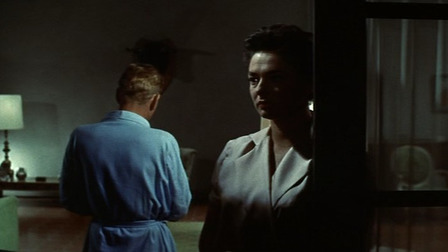
Numa noite, Pat ‘P.M.’ Martin (Joseph Cotten) cruza a fronteira com o México. Quando ele volta, uma tempestade está caindo, o rio próximo à casa dele transbordou e ele tem um convidado inesperado em casa: seu irmão mais novo Donald Martin (Van Johnson), que acabou de fugir da prisão e quer que Pat o ajude a cruzar a fronteira.

One night, Pat 'P.M.' Martin (Joseph Cotten) crosses the border to Mexico. When he comes back, it's raining a lot, the river near his house has overflowed and he has an unexpected guest at home: his younger brother Donald Martin (Van Johnson), who has just escaped from prison and wants Pat to drive him past the border.


A esposa de Pat, Nora (Ruth Roman), nunca ouviu falar de Donald, por isso Pat o apresenta como Eric Bell, um velho amigo que ele encontrou por acaso. Além de ter problemas com a lei, Donald / Eric também tem problemas com o álcool, e para completar o cenário caótico ele não pode atravessar a fronteira por causa do rio que transbordou.

Pat's wife, Nora (Ruth Roman), has never heard of Donald, so Pat introduces him as Eric Bell, an old friend he ran into. Besides having a problem with the law, Donald / Eric also has a drinking problem, and to complete the chaotic scenario he can't cross the border because of the overflowed river.


Todos têm pelo menos um problema neste filme: Nora tem um casamento problemático com Pat, Pat mente para esconder a verdadeira identidade de Donald dos seus amigos ricos, e Donald não pode sucumbir à tentação e voltar a beber. Já se passou mais de uma década desde “Farrapo Humano” (1945), e agora o cinema trata o alcoolismo como assunto sério. Com tantos problemas, você pode esperar alguns confrontos homéricos.

Everybody has at least an issue in this movie: Nora has a troubled marriage with Pat, Pat lies to hide Donald’s real identity to his wealthy friends, and Donald must not succumb to temptation and start drinking again. It’s been more than a decade since “The Lost Weekend” (1945), and now cinema treats alcoholism as a serious subject. With so many issues, you can expect a few Homeric confrontations.


A performance de Van Johnson é muito boa, em especial em algumas cenas: quando ele recebe uma ligação na casa de Lil e começa a ficar nervoso, atraindo a atenção de todos; e quando ele conversa com sua esposa e filhos pelo telefone, à beira das lágrimas. Na verdade, esta é a melhor atuação de Van Johnson que eu vi até agora.

Van Johnson's performance is very good, in special in a few particular scenes: when he receives a call at Lil's house and starts becoming nervous, attracting everyone's attention, and when he talks to his wife and children on the phone, on the verge of tears. In fact, this is the best performance by Van Johnson I have seen so far.


Joseph Cotten podia fazer qualquer papel, de herói a vilão perturbador – como em “A Sombra de uma Dúvida” (1943), de Hitchcock. Aqui ele é um herói perturbado que precisa fazer as pazes com seu irmão e com seu passado. Van Johnson tem o papel mais desafiador, e Cotten faz bem o seu papel. E ele e Johnson de fato parecem ser irmãos!

Joseph Cotten had a huge acting range, from hero to chilling villain – like in Hitchcock's “Shadow of a Doubt” (1943). Here he is a troubled hero who has to make peace with his brother and with his past. Van Johnson has the meatier role, and Cotten does the best with what he's given. And he and Johnson sure look like brothers!


Ruth Roman está muito bem como uma mulher vivendo um casamento em crise permanente. Pat se preocupa mais com sua reputação do que com sua esposa, e não quer aquilo que ela mais deseja: filhos. O papel mais famoso de Ruth Roman foi Anne em “Pacto Sinistro” (1951), e ela também é conhecida por ter sido sobrevivente do naufrágio do SS Andrea Doria.

Ruth Roman is very well as a woman in a marriage going through a permanent crisis. Pat worries more about his reputation than about his wife, and he doesn't want what she longs for the most: children. Ruth Roman’s most famous role was Anne in “Strangers on a Train” (1951), and she is also known for being a survivor at the sinking of the SS Andrea Doria.


“Renúncia ao Ódio” é baseado em um romance autobiográfico de Georges Simenon. Simenon era como Pat: ele viveu em Nogales, Arizona, próximo à fronteira com o México e estava bem de vida, enquanto seu irmão Christian se metia em problemas. Até hoje, foram feitas mais de 170 adaptações da obra de Simenon para a TV e o cinema, a maioria delas filmada na França – sendo “Renúncia ao Ódio”, obviamente, uma exceção.

“The Bottom of the Bottle” is based on an autobiographical novel by Georges Simenon. Simenon was like Pat: he lived in Nogales, Arizona, by the Mexican border and was doing well in life, while his brother Christian got in trouble. So far, there are over 170 film and TV adaptations of Simenon’s work, most of them made in his homeland, France – being “The Bottom of the Bottle”, of course, an exception.
 
Georges Simenon
Henry Hathaway é um diretor que não recebe o crédito que merece. Ele trabalhou como ator apenas uma vez, em 1917, e em 1919 começou a trabalhar com objetos de cena. Ele se tornou diretor assistente em 1924 e diretor em 1930. Ele dirigiu muitos faroestes de sucesso e também “Torrentes de Paixão” (1953), um filme que, assim como “Renúncia ao Ódio”, também é protagonizado por Joseph Cotten, tem elementos noir e envolve uma sequência-chave em um rio.

Henry Hathaway is a director that is not as praised as he should be. He worked as an actor only once, in 1917, and in 1919 started working with props. He graduated to assistant director in 1924 and to director in 1930. He directed many successful westerns and also “Niagara” (1953), a film that, like “The Bottom of the Bottle”, stars Joseph Cotten, has noir elements and involves a key sequence in a river.


Com apenas 85 minutos, “Renúncia ao Ódio” não foi, infelizmente, um sucesso de bilheteria. Ele tem, entretanto, o melhor de muitos mundos e traz seus protagonistas na melhor forma. Para uma distração rápida e emocionante, “Renúncia ao Ódio” é uma boa ideia – a ser consumida sem moderação.

With only 85 minutes, “The Bottom of the Bottle” wasn’t, unfortunately, a box-office hit. It has, however, the best of many worlds and it presents its leads at their best. For a quick and thrilling entertainment, “The Bottom of the Bottle” is a good idea – to not be consumed moderately.

This is my contribution to the Third Van Johnson Blogathon, hosted by Michaela at Love Letters to Old Hollywood.

Thursday, January 31, 2019

Idílio Proibido (1956) / Hilda Crane (1956)


Nos anos 50, a sociedade norte-americana estava prestes a passar por grandes mudanças, mas ainda era muito conservadora. Mesmo assim, o divórcio começava a se tornar mais comum, em especial após a Segunda Guerra Mundial - como você pode ver AQUI. O embate entre a nova liberdade de escolher ficar ou não casada e as expectativas que a sociedade e a família colocavam sobre as mulheres é o tema principal de “Idílio Proibido” (1956), um filme interessante e obscuro.

In the 1950s, the American society was about to undergo big changes, it is still was very conservative. Yet, divorce was starting to become more common, in special after World War II - as you can see HERE. The clashes between a newfound freedom to choose to remain married or not and the expectations society and family put upon women are the main themes in “Hilda Crane” (1956), an interesting obscure movie.


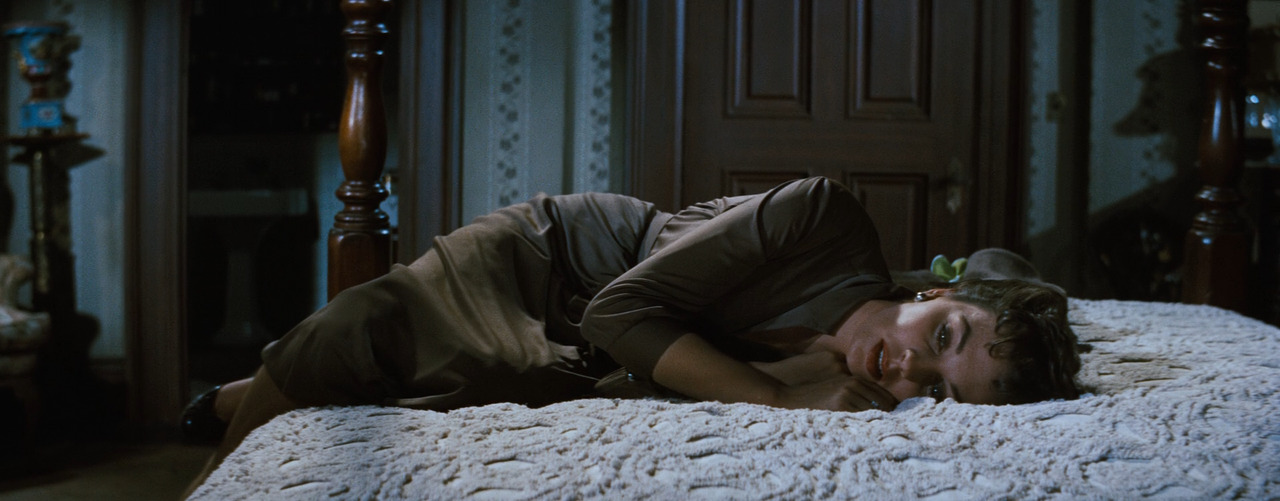
Hilda Crane (Jean Simmons) volta para casa depois de terminar um relacionamento e ser demitida. De repente, a mulher forte e independente se vê vivendo novamente com a mãe. Mais do que isso: Hilda já se divorciou duas vezes, e a sociedade a julga por isso.

Hilda Crane (Jean Simmons) has just returned home after ending a relationship and being fired from her latest job. All of a sudden a strong, independent woman sees herself living once again with her mother. More than that: Hilda has been married and divorced twice, and society judges her for that.


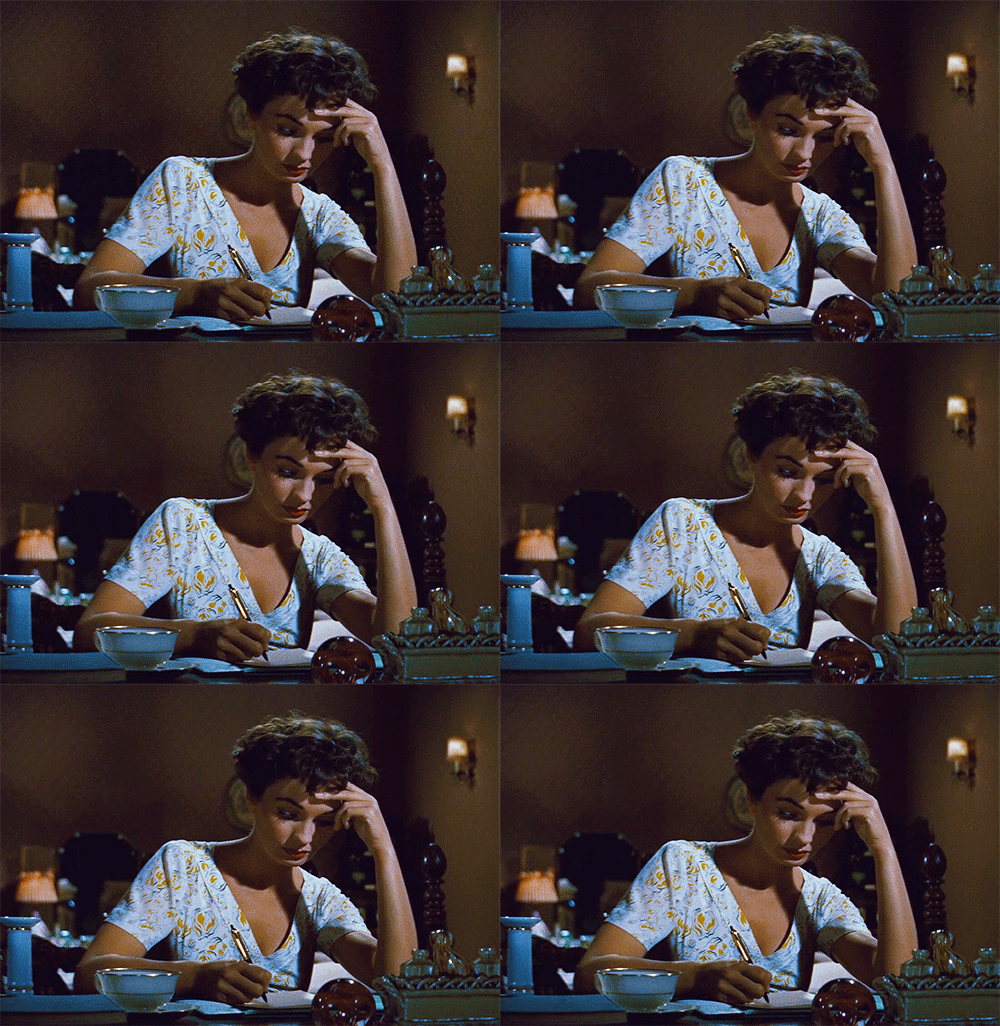
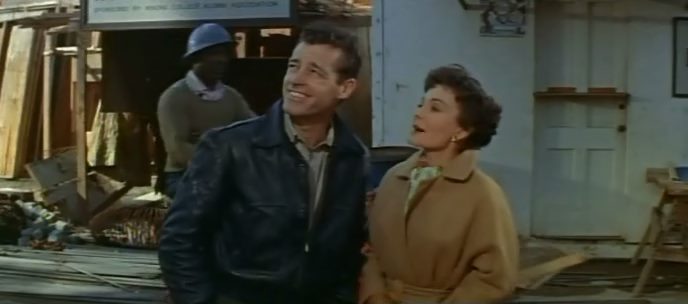
Demora pouco para que Hilda receba um pedido de casamento de Russell Burns (Guy Madison) - e é um pedido feito por carta! A mãe de Russell, a senhora Burns (Evelyn Varden) não gostou da ideia do filho. De maneira mal-educada, ela pergunta a Hilda e à mãe dela sobre os bens da família e os interesses que elas podem ter pelo casamento com Russell.

Soon Hilda receives a wedding proposal from Russell Burns (Guy Madison) - and the proposal comes through a letter! Russell’s mother, Mrs Burns (Evelyn Varden) is less than thrilled with her son’s move. In an impolite way, she asks Hilda and her mother about their possessions and their interests on Russell.


Ainda sem se decidir sobre Russell, Hilda aceita sair com o velho amigo de escola Jacques (Jean-Pierre Aumont). Ele ainda está ressentido porque o breve caso que eles tiveram não deu em nada e, mais do que isso, ele acredita que, por ela ser divorciada duas vezes, ela é agora uma mulher mais promíscua.

Still unsure about Russell, Hilda accepts to go out with a school friend and old flame, Jacques (Jean-Pierre Aumont). He is still bitter because the brief affair they had five years prior didn’t end well, and, moreover, he believes that, because she is twice divorced, she is more promiscuous.


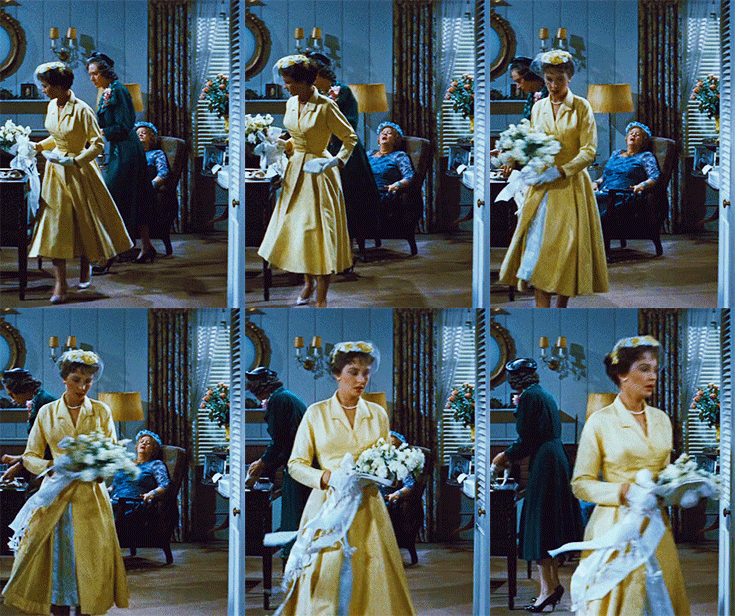
Frustrado com seu encontro com Jacques, Hilda aceita o pedido de Russell. Obviamente, ela enfrentará muitos desafios: primeiro, ela não o ama, segundo, a mãe dele é uma forte candidata ao título de pior sogra do cinema, terceiro, Jacques ainda mexe com os sentimentos dela. Hilda está tão desanimada com o casamento que deixa que a mãe, Stella (Judith Evelyn), cuide de todos os preparativos.

Frustrated after her date with Jacques, Hilda accepts Russell’s proposal. Of course, she will face many challenges: first, she doesn’t love him, second, his mother is a strong contender for the title of worst mother-in-law of all movies, third, Jacques still confuses her feelings. Hilda is so not invested in the wedding planning that she lets her mother, Stella (Judith Evelyn), decide everything.


Hilda diz a Jacques que ela quer felicidade, filhos, e envelhecer ao lado de um marido que a ame. E ela quer tudo isso. Ela não se contenta só com uma dessas coisas. Ela não aceitará viver em um casamento infeliz com alguém que ela não ama só para ter filhos - como muitas mulheres faziam e ainda fazem. Ela não aceitará infelicidade para manter as aparências. Ela quer o pacote completo.

As Hilda tells Jacques, she wants happiness, children, and growing old with a husband that loves her. And she wants all that. She won’t settle for only one of those things. She won’t accept to live an unhappy marriage with someone she doesn’t love just in order to have children - like so many women did and still do. She won’t accept unhappiness to keep up appearances. She wants the whole package.


Este não conformismo peculiar mostra que Hilda é uma mulher moderna. Ela pode ter sonhos antiquados, mas não está disposta a sacrificar sua felicidade para consegui-los. Ela também diz que, na faculdade, queria viver a vida como um homem. Bem, já foi provado que a maioria dos pedidos de divórcio é feita pelos homens, e esse foi provavelmente o caso de Hilda.

This weird way of non-conformity shows that Hilda is a modern woman. She may have old-fashioned dreams, but she won’t sacrifice her own happiness to achieve them. She also says that, in college, she wanted to live life like a man. Well, it’s been proved that women file for divorce more often, and it was probably the case with Hilda.


Não é somente a sogra de Hilda que a vê com maus olhos - a mãe dela também tem vergonha do passado da filha e faz de tudo para manter as aparências, incluindo mentir e manipular. Hipocrisia também é um tema importante no filme.

Not only her mother-in-law sees Hilda through bad lenses - her mother is also ashamed of her daughter’s past and does anything to keep up appearances, including lying and manipulating her own daughter. Hypocrisy is another important theme in the film.


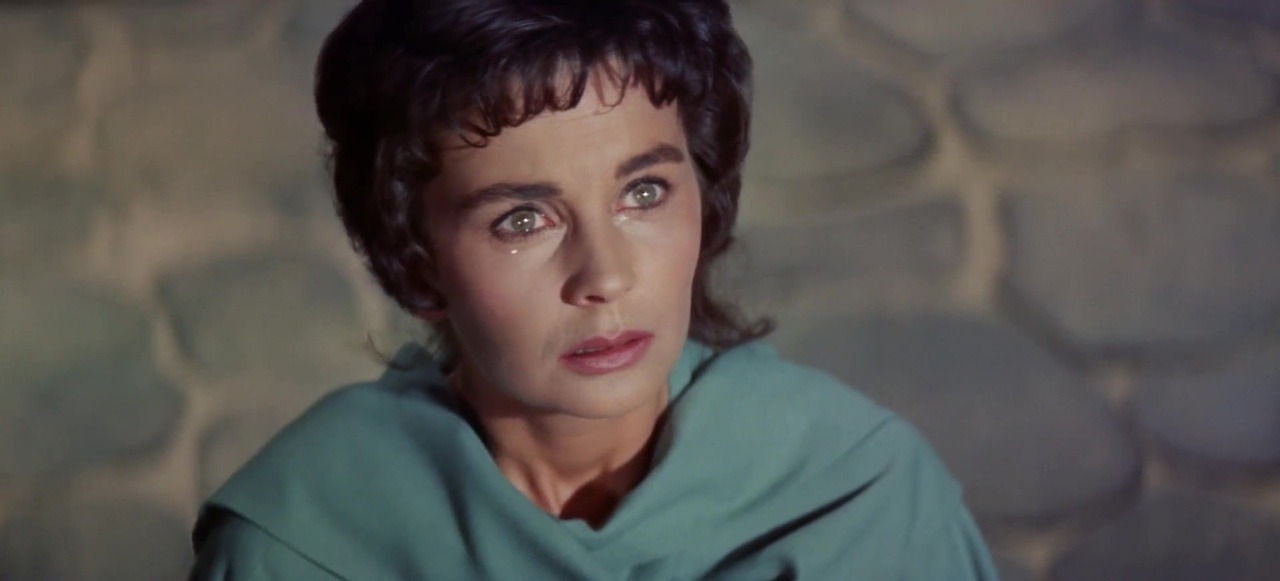
Jean Simmons é uma atriz pouco lembrada hoje, mas não deveria ser assim. Ela era linda e muito talentosa. Em “Idílio Proibido”, ela apresenta um corte de cabelo simples mas fabuloso, usa belas roupas e mostra seus grandes olhos brilhantes. Seus momentos de rebeldia são épicos, e é excitante quando ela desafia a mãe e a sogra. Jean Simmons merece mais reconhecimento não apenas por seus esforços em “Idílio Proibido”, mas também por ótimas atuações em filmes como “Hamlet” (1948) e “Spartacus” (1960).

Jean Simmons is often an overlooked actress, but she shouldn’t be. She was gorgeous and immensely talented. In “Hilda Crane”, she has a fabulous yet simple hairstyle, beautiful outfits and her eyes simply sparkle. Her rebellious bouts are epic, and it’s exciting whenever she confronts her mother or her mother-in-law. Jean Simmons deserves more recognition not only for her efforts in “Hilda Crane”, but also for the great performances she delivered in films like “Hamlet” (1948) and “Spartacus” (1960).

Jean Simmons as Varinia in "Spartacus"
O imenso peso de manter as aparências em geral cai apenas nos ombros das mulheres. A reputação de um homem é praticamente indestrutível, porém um passo em falso ou mesmo um boato são capazes de destruir a reputação de uma mulher e fazer com que os outros a chamem de vadia. E, para manter as aparências, algumas mulheres fazem de tudo, inclusive ferir os sentimentos das pessoas que amam. Esta é a lição de “Idílio Proibido” por que insistir para as mulheres manterem as aparências se o preço a pagar por “ser respeitável” é tão alto?

The huge weight of keeping up appearances falls usually only in the women’s backs. Men’s reputations are almost indestructible, while a misstep or even a gossip can destroy a woman’s reputation and make others see her as a tramp. And, in order to keep up appearances, some women can do anything, even hurting the ones they love. This is the lesson in “Hilda Crane”: why to insist that women keep up appearances when the price to pay for respectability is so high?

This is my contribution to the 90 Years of Jean Simmons blogathon, hosted by Virginie and Laura at The Wonderful World of Cinema and Phyllis Loves Classic Movies.


Wednesday, July 19, 2017

Julie (1956)

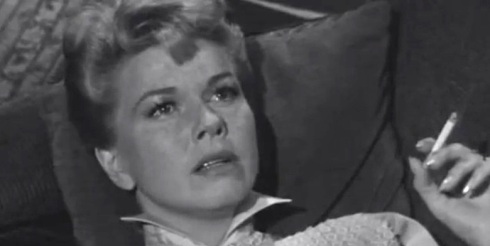
Nós estamos acostumados a ver Doris Day feliz – e às vezes um pouco irritada com Rock Hudson. Por isso, a maioria das pessoas nunca imaginaria que ela fez um filme noir – mas ela fez, e em sua própria produtora. Com orçamento apertado, mas grande impacto, “Julie” é um filme em que, assim como em “A Teia de Renda Negra” (1960), Doris está em perigo, e o perigo está mais próximo do que ela imagina.

We're used to seeing Doris Day happy – and sometimes playfully angry with Rock Hudson. So, most people would never imagine that she did a noir – but she did, and in her own production company. Made cheaply but with a good impact, “Julie” was a film in which, just like in “Midnight Lace” (1960), Doris is in danger and the danger is nearer than she thought.
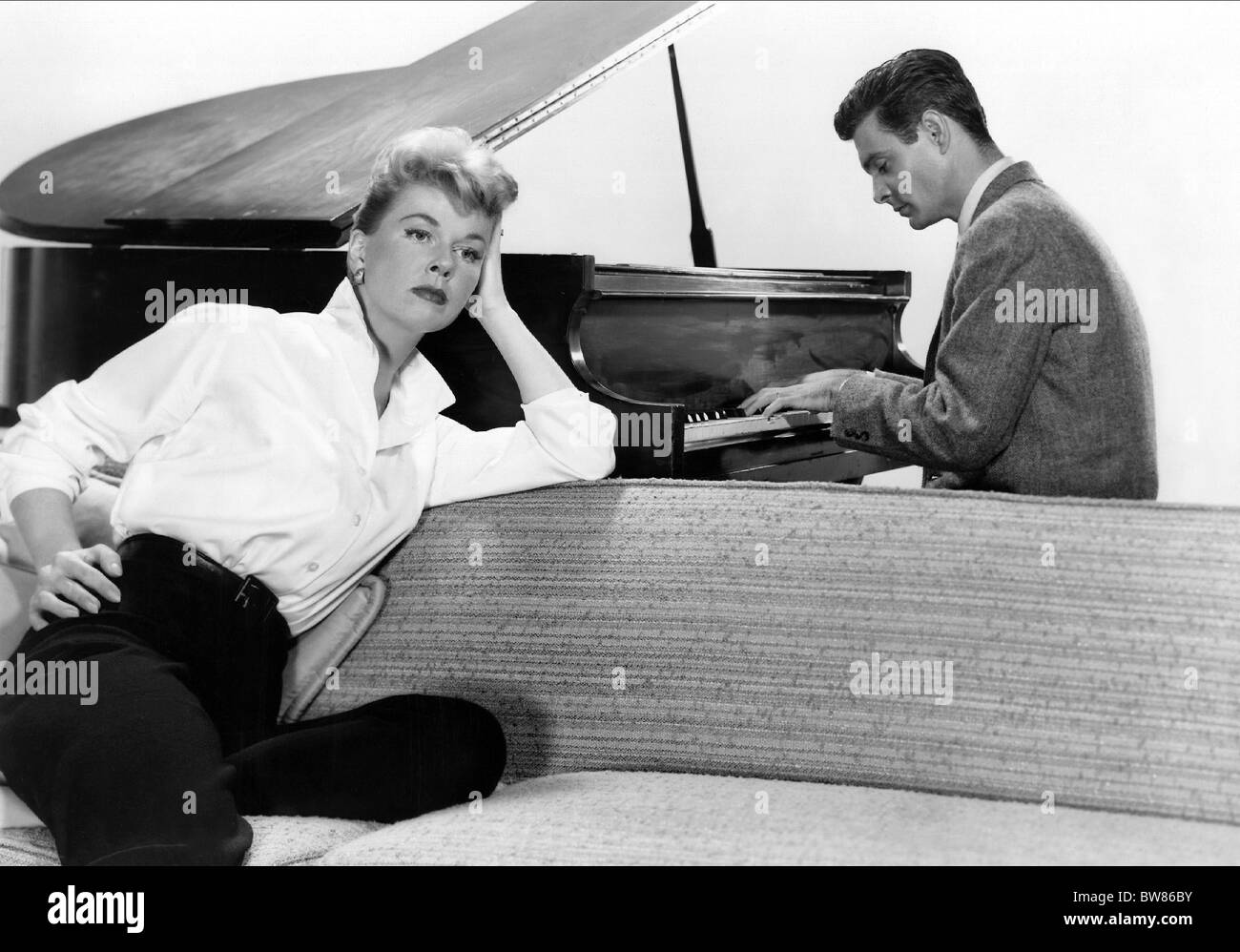
Você sabe que um relacionamento é tóxico ao passar dois minutes com o casal e ver a mulher reclamando que o homem fica com ciúmes quando ela conversa com outros homens, e a reação dele é pisar no acelerador e fazer com que o carro que ela dirija dispara em alta velocidade pela estrada. Ele toma o volante, para o carro, ela sai correndo, ele corre atrás dela e diz que sente muito. Eles se beijam. E é assim que somos apresentados a Julie (Doris Day) e Lyle Benton (Louis Jourdan).

You know a relationship is toxic when, spending two minutes with the couple, you see the woman complaining that the man is jealous because she was talking to other men, and his reaction is to step in the accelerator and make the car she is driving go dangerously fast through the road. He grabs the wheel, stops the car, she runs, he runs after her and says he's awfully sorry. They kiss. This is how we're introduced to Julie (Doris Day) and Lyle Benton (Louis Jourdan). 
Julie é viúva. Seu primeiro marido, Bob, cometeu suicídio por causa de problemas financeiros. Mas o amigo de Julie, Cliff Henderson (Barry Sullivan) acredita que o corpo de Bob tenha sido movido para criar uma cena de suicídio – ele pode ter sido estrangulado e só então uma corda foi colocada em seu pescoço.

Julie is a widow. Her first husband, Bob, killed himself because of financial troubles. But her friend, Cliff Henderson (Barry Sullivan) believes Bob's death may have been staged to look like a suicide – he could have been strangled and then a rope was put in his neck. 

De maneira cínica, Lyle confessa durante a noite que matou Bob, e que não pensaria duas vezes para matar Julie. Ela foge na manhã seguinte, e chega a uma delegacia em uma cidade vizinha – porque o casal Benton vive à beira-mar. Lá, os policiais dizem que uma esposa não pode testemunhar contra o marido – uma lei bizarra que ainda existe hoje nos EUA –, que se todas as ameaças que os maridos fazem às esposas fossem considerados crimes, as cadeias teriam de ser gigantescas, e ainda dizem a Julie e Cliff que acreditam que Julie é apenas uma esposa histérica em busca de vingança, sem evidências para o que acusa. São todas falas machistas, mas que infelizmente ainda hoje são repetidas.

In a cynical way, Lyle confesses during the night that he killed Bob, and he wouldn’t think twice to kill Julie. She runs away the next morning, and arrives to a police station in a neighboring town – because the Bentons live by the seashore. There, the policemen remind her that a wife can't testify against her husband – which is still a thing in 2017 –, that if all threats against wives were considered crimes, the prisons would have to be huge, and tell Julie and Cliff that they believe Julie is just a hysterical wife looking for revenge without evidences. All very sexist statements, but unfortunately they are still repeated today.
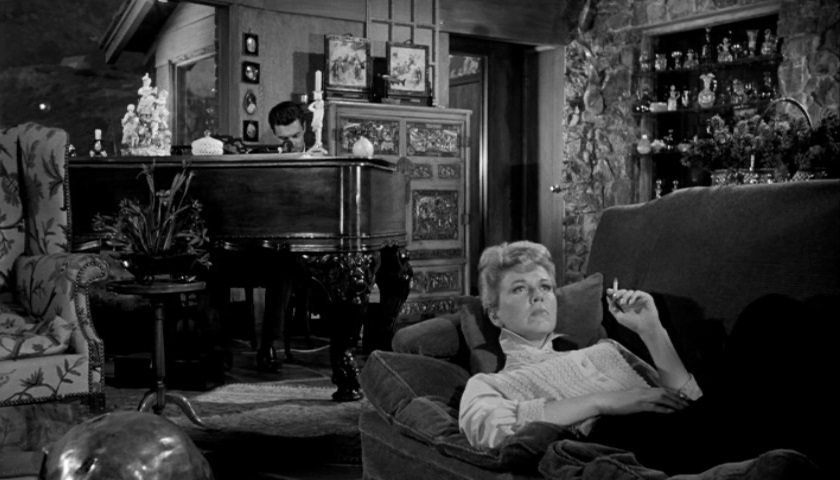
Ninguém pode negar que Louis Jourdan é charmoso – mas com seus olhos sem vida e parados no filme, ele é sinistro. Um motif recorrente é a música que Lyle toca ao piano. Depois de sua discussão com Julie, a música se torna mais macabra e é tocada com mais força. Mais tarde, ele grava a música para atormentar Julie.

Nobody can deny that Louis Jourdan is handsome – but with his lifeless, crazy eyes in this film, he is more of a creeper. One recurring motif is the piano music Lyle plays. After his first argument with Julie, his music becomes more macabre and it’s played with more strength. Later, he records the song in order to torment her.
O filme grita noir. Nós temos a fotografia em preto e branco, cheia de sombras e contrastes e a narração  - desta vez feita pela própria Julie, e devemos nos lembrar de que mulheres como narradoras no noir era coisa rara.

This film screams noir. We have the shadowy black and white photography and the voiceover narration – this time by Julie herself, and we must remember that women as noir narrators were the exception.
Nos primeiros minutes, o filme me fez lembrar “Rebecca – A mulher inesquecível” (1940). “Julie” também tem um casal problemático vivendo em uma mansão isolada, e o primeiro marido Bob é como a primeira esposa Rebecca – sempre mencionado, nunca visto, e fundamental para a trama. A única diferença é que Bob é uma figura menos sinistra e enigmática que Rebecca.

In the first few minutes, this film reminded me of “Rebecca” (1940). “Julie” also has a problematic couple in a far-away mansion, and first husband Bob is like first wife Rebecca – always mentioned, never seen, and fundamental to the plot. The only difference is that Bob is a less sinister and enigmatic figure. 
O filme espelhava um pouco a vida de Doris Day. Ela estava reticente em aceitar o papel porque Lyle a lembrava de seus dois primeiros maridos. O problema é que seu terceiro marido, Martin Melcher, que também co-produziu o filme, mostrou o mesmo ciúme quando Doris conversava com Louis Jourdan nos intervalos das gravações. Além disso, ele não se importou com a saúde de Doris e, seguindo a doutrina da ciência cristã, disse para ela “ter fé” para ser curada de um mal-estar que depois foi descoberto ser um tumor maligno. 

The film mirrored Doris's real life a bit. She was reticent about accepting the part because Lyle reminded her of her two first husbands. The problem was that her third husband, Martin Melcher, who also co-produced the film, behaved with the same jealousy when Doris got along well with Louis Jourdan during shooting. Besides that, he didn't care for her sickness and, in Christian Science fashion, told her to “have faith” to be cured of an ailment that was later discovered to be a cancerous tumor.
Com toda a perseguição acontecendo na tela, há chances de que você não tenha visto o nome ‘Mae Marsh’, o último na lista de créditos iniciais. A donzela do cinema mudo Mae Marsh tem a honra de interpretar a ‘passageira histérica’ em “Julie”. Ela foi figurante em diversos filmes dos anos 40 e 50, e encontrá-la na tela se tornou um passatempo para mim.

With all the cat and mouse game going on onscreen, there are chances you missed the name ‘Mae Marsh’, the last one in the credits. Silent screen damsel Mae Marsh had the honor to play the “’hysterical passenger’ in “Julie”. She was an extra in several talkies from the 1940s and 1950s, and spotting her has become a favorite game of mine.
Julie” é um filme tenso, embora longo demais, e os últimos 15 minutos são um pouco chatos – ou assustadores, dependendo da sua experiência com aviões. Eu diria que os últimos 15 minutos são desnecessários, mas o filme é interessante e pode ser considerado um noir singular.

Julie” is a very tense film, although it is a bit too long and the final 15 minutes are kinda boring – or terrifying, depending on your experience with airplanes. I’d just say that the last 15 minutes are unnecessary, but the film is enjoyable as a singular noir.

This is my contribution to the ‘Till Death Us Do Part blogathon, hosted by Theresa at CineMaven’s Essays from the Couch.

Wednesday, July 6, 2016

Helena de Troia / Helen of Troy (1956)

Páris (Jacques Sernas) é um sujeito orgulhoso. Ele tem a missão de fazer um acordo para que não haja exploração econômica entre Esparta e Troia. Além disso, ele diz não adorar nenhum deus (apenas “admira” Afrodite), mesmo vivendo dentro de uma cultura politeísta, e acredita que mulher alguma será capaz de interferir em seu destino. Só sua predileção por Afrodite mostra que Páris prefere o romance à razão, e logo todas as suas convicções serão destruídas.

Paris (Jacques Sernas) is a proud guy. He has the mission to make an economical agreement between Sparta and Troy. Besides that, he has the petulancy to not adore any god (he only “admires” Aphrodite), even though he lives in a polytheistic society, and he also believes that no woman can interfere in his destiny. His love of Aphrodite alone shows that Paris prefers heart to brains, and soon all his convictions will be destroyed.
Páris é atingido por um raio durante uma tempestade e, desacordado vai parar em uma praia. Lá ele é resgatado por Helena (Rossana Podestà), que ele logo associa à figura de Afrodite. Helena se apaixona à primeira vista, mas mente, dizendo que é uma escrava e não a rainha de Esparta. Ela aconselha Páris a voltar para Troia, mas ele está decidido a ir ao palácio.

Paris is struck by lightning during a thunderstorm and, unconscious, he goes on to wake up in an island. There he is greeted by Helen (Rossana Podestà), who he thinks not only resembles Aphrodite, but is the goddess herself. It’s love at first sight for Helen, but she lies saying she is a slave, and not the queen of Sparta. She tells Paris to go back to Troy, but he is affirmative about talking to the king at the palace.
Páris se torna prisioneiro no palácio, e consegue escapar com a ajuda de Helena e da escrava dela, Andraste (Brigitte Bardot).  Mas Páris não volta sozinho para Troia: apaixonada, Helena o acompanha. E o marido de Helena, o rei Menelau (Niall MacGinnis), se revolta ao saber que a esposa foi “levada” pelo troiano, e declara guerra à Troia.

Paris becomes prisoner at the palace, and manages to escape with the help of Helen and her slave, Andraste (Brigitte Bardot). But Paris doesn’t return alone to Troy: infatuated, Helen joins him. And Helen’s husband, king Menelaus (Niall MacGinnis), becomes mad when he finds out that his wife was “taken” by the Trojan, and then the war is declared.
É a história da guerra de Troia, que talvez você já conheça bem por ter estudado na escola ou, se for mais maluco (tipo eu), por ter lido a Ilíada. Mas o mais interessante é o foco nos perdedores, algo que quase nunca acontece nos filmes de guerra. Ora, a própria história normalmente se encarrega de apagar e menosprezar os perdedores das guerras, então por que um filme vai focar no ponto de vista deles?

It is the story of the Trojan War, one that you might already know well because you studied about it at school or, if you were a bit crazier (like me), because you read The Iliad. But the most interesting point is the focus on the losers, something that almost never happens in war movies. Well, history itself manages to erase and underestimate the ones who lose the war, so why would a movie focus on a loser point of view?
Simples: porque o filme é sobre Helena de Troia, a mulher que causou uma guerra apenas porque teve vontade própria e abandonou seu marido para fugir com Páris. Em momento algum perguntaram para Helena se ela foi raptada ou acompanhou Páris de livre e espontânea vontade. E, por acreditarem que uma mulher não deve ter vontade própria, milhares de vidas foram perdidas, incluindo a do herói Aquiles (Stanley Baker).

Simple: because the film is about Helen of Troy, the woman who caused a war just because she had her own will and left her husband to run away with Paris. Nobody asked Helen if she was kidnapped or if she went with Paris because she just wanted to. And, because it was believed that a woman couldn’t have desires or opinions, thousands of lives were lost, including the hero Achilles (Stanley Baker).
Sem o apelo de outros épicos, o filme ainda consegue ser interessante e tem breves, mas grandiosas, cenas de batalha. Ajudando Robert Wise na direção estavam Raoul Walsh e um jovem italiano chamado... Sergio Leone. Versátil, Wise já havia editado “Cidadão Kane” (1941) e ficaria mais conhecido por dirigir “Amor, Sublime Amor” (1961) e “A Noviça Rebelde” (1965).

Without the appeal of other epic movies, this one still can be interesting and has brief, yet huge, battle scenes. Helping Robert Wise direct were Raoul Walsh and a young Italian man called… Sergio Leone. The versatile Wise had already been the editor in “Citizen Kane” (1941), but would be better remembered for directing “West Side Story” (1961) and “The Sound of Music” (1965).
Hoje, é estranho imaginar que não seja a estonteante Brigitte Bardot a interpretar Helena de Troia. O diretor Robert Wise considerou diversas belas atrizes, incluindo Ava Gardner, mas escolheu a italiana Rossana Podestà, relativamente desconhecida em Hollywood. Rossana é linda e exibe belas tranças ao longo do filme. Brigitte, no mesmo ano, seria revelada para o mundo com o filme “E Deus Criou a Mulher”, também sobre uma moça cheia de vontade própria.

Today, it’s hard to believe that gorgeous Brigitte Bardot didn’t play the leading role. Director Robert Wise considered several beautiful actresses for the role, including Ava Gardner, but he at last chose the relatively unknown (at least in Hollywood) Italian actress Rossana Podestà. Rossana is gorgeous and has a strong braid game throughout the movie. In the same year, Brigitte would be revealed to the world with the movie “And God Created Woman”, also about a lady who has her own free will.
No começo do filme, a irmã sacerdotisa de Páris, Cassandra (Janette Scott), o aconselha a não fazer a viagem para Esparta. Ninguém acredita na visão dela, e ela é tomada como louca. Mais tarde no filme, ela aconselha os troianos a não aceitarem o grande cavalo de madeira deixado pelos espartanos. Eles novamente a ignoram – e você já sabe o que acontece. Se há uma coisa que aprendemos com “Helena de Troia”, é “nunca subestime as mulheres”.

At the beginning of the movie, Paris’s sister, Cassandra (Janette Scott), advises him not to travel to Sparta. Nobody believes that she had foreseen something bad, and she is considered crazy. Later in the movie, she advises the Trojans to not bring inside the city the huge wooden horse left by the Spartans. They once again ignore her – and you already know what happens. If there is one lesson we learn from “Helen of Troy”, it is “never underestimate women”.

This is my contribution to The Sword and Sandal blogathon, hosted by Debra at Moon in Gemini.
Related Posts Plugin for WordPress, Blogger...