} Crítica Retrô: feminismo

Tradutor / Translator / Traductor / Übersetzer / Traduttore / Traducteur / 翻訳者 / переводчик

Showing posts with label feminismo. Show all posts

Saturday, February 10, 2024

Uma Canta, a Outra Não (1977) / One Sings, the Other Doesn't (1977)


Em novembro de 2023 a versão em inglês do Dossiê Agnès Varda foi publicada. Em janeiro de 2024, depois de uma treta com a Amazon, a versão em português do mesmo e-book foi disponibilizada. Nós do Cine Suffragette organizamos o material mandado para nós por 11 mulheres da crítica. Uma delas foi a Marianne do blog Make Mine Film Noir. Ela, mais tarde, me indicou para um desafio: escrever sobre meu filme favorito da Varda. Isso é realmente desafiador, pois considero meu filme favorito da Varda sempre o último dela que vi – porque todos são muito bons! Dito isto, meu atual filme favorito da Varda é “Uma Canta, a Outra Não” (1977). Aqui está a crítica bilíngue do filme, que você encontrará, junto a outros ótimos textos, no e-book que pode ser comprado AQUI.


In November of 2023 the English version of The Agnès Varda Files was published. In January of 2024, after a kerfuffle with Amazon, the Portuguese language version of the same e-book was made available. We at Cine Suffragette organized the material sent to us from 11 female writers. One of them was Marianne from the blog Make Mine Film Noir. She later tagged me in a challenge: to write about my favorite Varda film. This is truly challenging, as I consider my favorite Varda film always the last one I watched – they all are so very good! That being said, my current favorite Varda film is “One Sings, the Other Doesn’t” (1977). Here’s the bilingual review of the film, something that you will find, alongside other great texts, in the e-book that can be bought HERE.


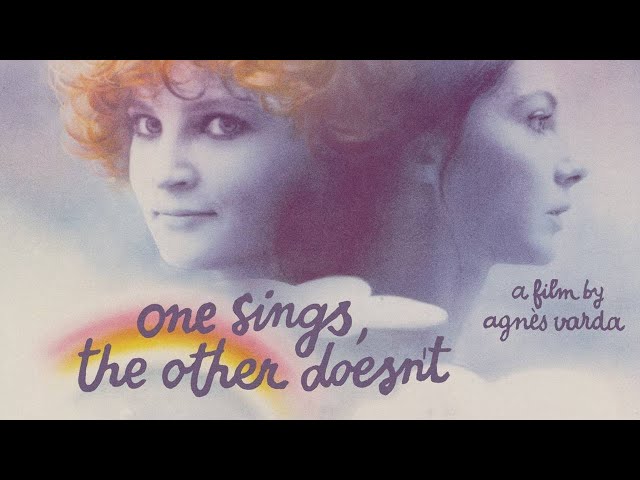
Diretora, atriz, roteirista, produtora e letrista: estes são os muitos papéis que Agnès Varda teve no cinema. Letrista pode vir como uma surpresa, mas desde “Lola” (1961) de Jacques Demy, Varda escreveu as letras de músicas de filmes dela própria e de outras pessoas. Ela escreveu as letras – “paroles” como diz o crédito – das canções em seu mais icônico filme musical, “Uma Canta, a Outra Não” (1977), uma ode à sororidade e à amizade entre mulheres.

Director, actress, screenwriter, producer and lyricist: these are the many roles Agnès Varda had in filmmaking. Lyricist may come as a surprise, but since Jacques Demy’s “Lola” (1961), Varda wrote lyrics for music in her films and films of others. She wrote the lyrics- “paroles” as the credits say - for the songs in her most iconic musical film, “One Sings, the Other Doesn’t” (1977), an ode to sorority and female friendship.
Pauline (Valérie Mairesse) é uma garota moderna. Quando seu pai diz que, para garotas sem estudo, o que resta é “o casamento ou a prostituição”, ela retruca: dá na mesma. Pauline volta a ter contato com uma antiga vizinha, Suzanne (Thérèse Liotard), que está grávida de seu terceiro filho com seu amante, o fotógrafo Jérôme (Robert Dadiès). Incapaz de ter outro filho, Suzanne faz um aborto, seguindo o conselho de Pauline e pegando dinheiro emprestado com ela para ir até a Suíça – afinal, é 1962 e o aborto só seria legalizado na França em 1975.

Pauline (Valérie Mairesse) is a modern girl. When her father tells her that, for girls who don’t have a degree, what is left is “marriage or prostitution”, she answers: “that’s the same”. Pauline regains acquaintance with an old neighbor, Suzanne (Thérèse Liotard), who is pregnant with her third child with her lover, the photographer Jérôme (Robert Dadiès). Unable to have another kid, Suzanne has an abortion, following Pauline’s advice and borrowing money from her to go to Switzerland - after all, it’s 1962 and abortion would only be legalized in France in 1975.

E é em 1972, durante o julgamento que iniciou a mudança, que Pauline e Suzanne se reencontram, dez anos após a tragédia do suicídio de Jérôme que as afastou, com Suzanne tendo ido morar novamente com os pais. Pauline, agora chamada de Pomme pelos amigos, também fez um aborto antes da legalização: ela teve de ir até Amsterdã e lá conheceu seu atual namorado, o iraniano Darius (Ali Rafie). Dali em diante, as duas trocam cartões-postais falando sobre si mesmas, e Varda como narradora nos informa que elas pensam uma na outra constantemente, em uma “inexplicável amizade entre duas mulheres muito diferentes”.

And it is in 1972, during the judgment that started the change, that Pauline and Suzanne meet again, ten years after the tragedy of Jérôme’s suicide drew them apart, with Suzanne having to go back to her parents’ house. Pauline, now called Pomme by her friends, also had an abortion before the legalization: she had to go to Amsterdam and there she met her current boyfriend, the Iranian Darius (Ali Rafie). From them on, the two exchange postcards talking about themselves, and Varda as the narrator lets us know that they think of each other constantly, in an “inexplicable friendship between two very different women”.
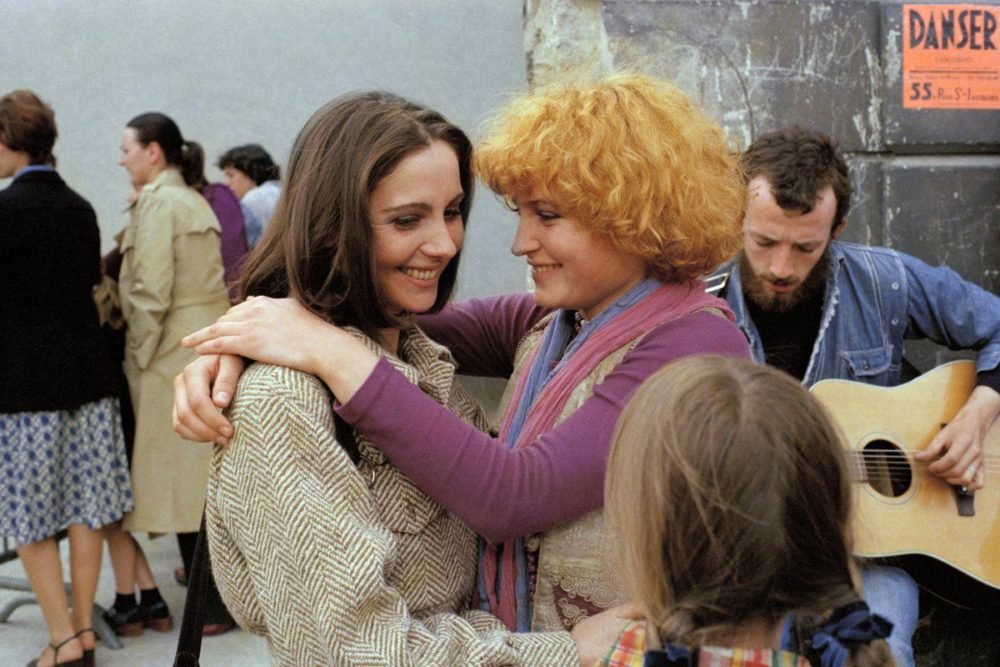
É entre mulheres que ambas, Pomme e Suzanne, encontram consolo e alívio. Pomme se sentiu aliviada, ao se submeter ao aborto, ao ver tantas mulheres diferentes na mesma situação, literalmente no mesmo barco que as levava para a clínica. Suzanne se sentiu aceita numa família pela primeira vez quando ela conheceu as outras mulheres que trabalhavam na fábrica, onde ela conquistou independência financeira. Agora Suzanne trabalha em uma clínica de planejamento familiar onde, entre outras coisas, briga com católicas que não querem tomar a pílula que lhes foi prescrita.

It is among women that both Pomme and Suzanne find solace. Pomme felt relieved to go through an abortion seeing so many different women at the same situation, sharing a both ride to and from the clinic. Suzanne felt accepted in a family for the first time when she met the other women who worked in the factory, where she found financial independence. Now Suzanne works in a family planning clinic where, among other things, argues with Catholics who don’t want to take the prescribed pill.

O filme toma ares exóticos quando Pomme e Darius vão para o Irã. O filme estreou um ano antes da Revolução Iraniana, que tentou – e em alguns casos falhou, graças à resistência das mulheres – remover direitos das mulheres e afastá-las da força de trabalho. No filme, Pomme menciona que sente que há uma separação no Irã entre o mundo feminino, nos banhos turcos e mercados, e o mundo masculino, nas ruas e cafés. É também no Irã que Pomme percebe Darius se transformando, de um cara liberal e feminista, em um marido tradicional. Pomme, que só queria romance num local exótico, começa a se sentir presa.

The film takes an exotic turn when Pomme and Darius go to Iran. The film was released one year before the Iranian Revolution, that tried - and in some extent failed, thanks to women’s resistance - to remove women’s rights and send them away from the workforce. In the movie, Pomme mentions feeling that there is a separation in Iran between the female world, in Turkish baths and markets, and the male world, in the streets and cafés. It’s also in Iran that Pomme notices Darius morphing from a liberal, feminist dude into a traditional husband. Pomme, who only wanted romance in an exotic location, is feeling trapped instead.

Agnès Varda assinou o “Manifesto das 343”, um abaixo-assinado assinado por 343 mulheres francesas, algumas delas notórias, que fizeram aborto. Ele foi assinado em 1971 e inspirou outro abaixo-assinado, este de 331 médicos que pediam pela legalização do aborto. É por isso que Varda trata aborto e gravidez como iguais, como escolhas – como sempre deveria ser.

Agnès Varda signed the “Manifeste des 343”, a manifest signed by 343 notorious French women who had had abortions. It was signed in 1971 and inspired a follow-up petition signed by 331 doctors asking for the legalization of abortion. That’s why Varda treats abortion and pregnancy as equals, as choices - as it should always be.
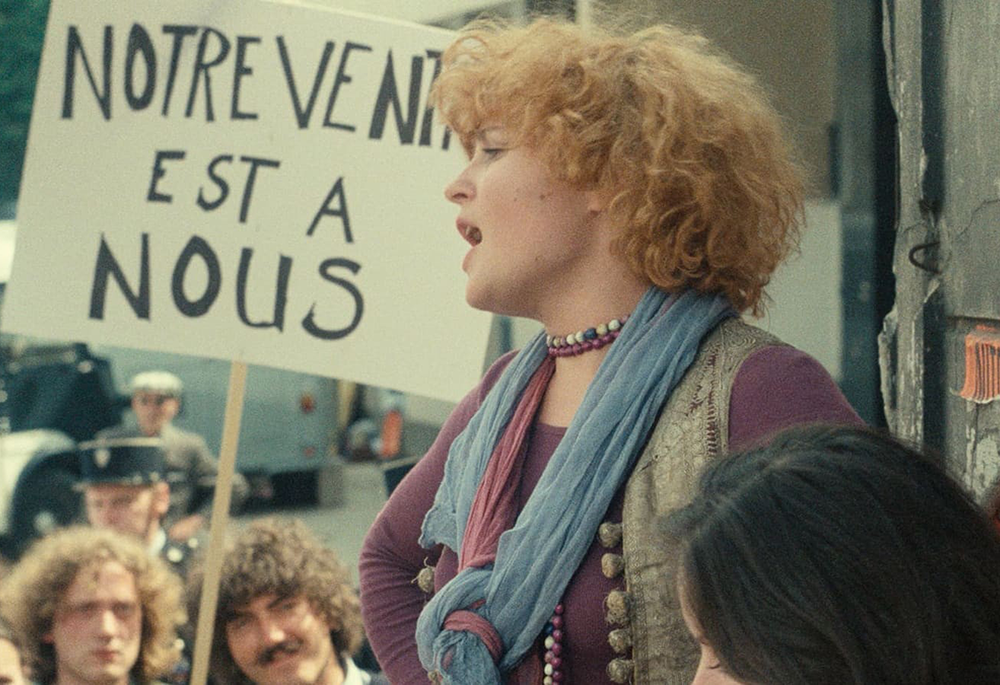
É dito no filme que todas as canções são de autoria de Pomme. Estas músicas são sobre sororidade, sentimentos durante a gravidez, a jornada dupla que as mulheres enfrentam, o fato de que “meu corpo é meu” e muitos outros assuntos feministas. As músicas não são chiclete, mas são ao mesmo tempo inspiradas e inspiradoras. No IMDb, Varda não é creditada pelas letras das músicas, mas mesmo sem este crédito no filme podemos perceber que as letras são dela, pois Varda era uma “feminista raivosa”, como ela mesma se definia: uma vez disse que queria ser uma feminista alegre, mas estava com muita raiva de como as coisas estavam. Então ela lutou para mudar as coisas, com a arma que dominava: o cinema.

It’s said in the film that all songs are by Pomme. These songs are about sorority, feelings during pregnancy, the double journey women face, the fact that “my body is mine” and many other feminist issues. The songs are not catchy, but are both inspired and inspiring. On IMDb, Varda is not credited for the lyrics of the songs, but even without the credits in the film we can see they are hers, as Varda was the staunch angry feminist she called herself, as she once said that she wanted to be a joyful feminist, but was too angry with the way things were. So she fought to change things, with the weapon she dominated: cinema.

A filha de Suzanne, Marie, repete um discurso feminista para um namorado, que a zomba. Na verdade, o filme termina com a câmera em Marie, com a narradora dizendo que as coisas provavelmente seriam mais fáceis e mais claras para Marie e as garotas da geração dela, porque mulheres como Suzanne e Pomme lutaram por elas. Não é uma escolha sem significado: Marie aqui, aos 17 anos, é interpretada pela filha de Varda, Rosalie, para quem o filme é dedicado. Com “Uma Canta, a Outra Não”, Varda estava criando um futuro para Rosalie, e nos contando com todos os detalhes que tipo de futuro era este. Porque é isso que nós mulheres fazemos juntas: criamos futuros.

Suzanne’s daughter Marie repeats a feminist speech for a boyfriend, who mocks her. Actually, the film ends with the camera on Marie, with the narrator saying that things would probably be easier and clearer for Marie and the girls form her generation, because women like Suzanne and Pomme fought for them. It’s not a meaningless choice: Marie here, at age 17, is played by Varda’s daughter Rosalie, to whom the movie is dedicated. With “One Sings, the Other Doesn’t”, Varda was creating a future for Rosalie, and telling us with all details which kind of future it was. Because it’s this that us women do together: we create futures.

Monday, December 30, 2019

Kitty Foyle (1940)


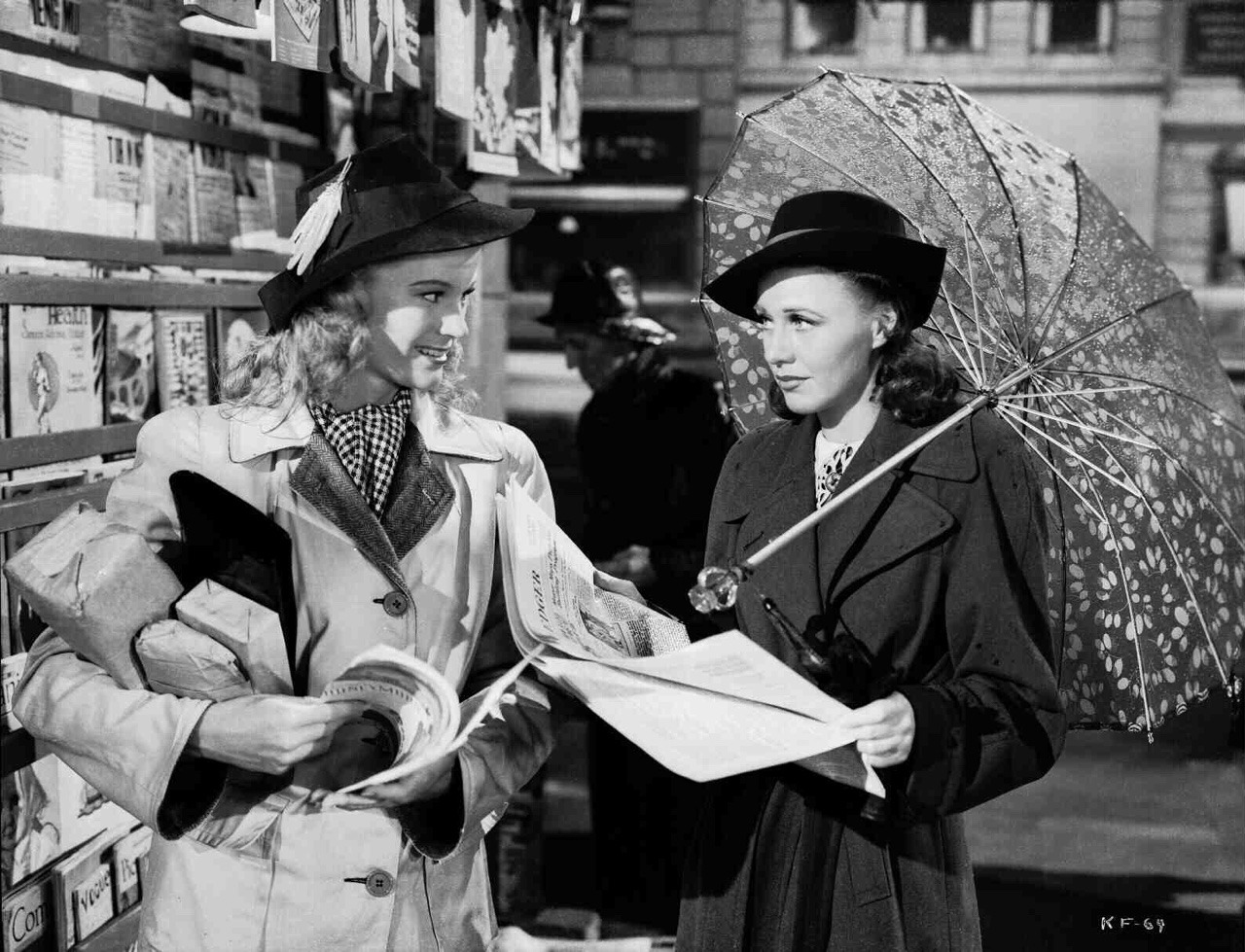
O que te faz querer ver um filme? É o elenco, o diretor ou a sinopse? Você tem uma lista de filmes para assistir? Você se planeja com antecedência ou assiste a qualquer coisa que encontrar na TV ou no streaming? Você se importa com os prêmios que um filme ganhou ou isso é irrelevante? Estou perguntando porque há muitos, muitos filmes para ver, e algum critério deve ser aplicado para que possamos escolher quais filmes ver e quais deixar passar. “Kitty Foyle”, de 1940, por exemplo, parecia digno de ser visto por ter trazido a única indicação ao Oscar de Ginger Rogers... e ela ganhou o Oscar! E, de fato, “Kitty Foyle” me fez refletir bastante.

What makes you want to watch a movie? Is it the cast, the director or the synopsis? Do you have a watch list? Do you plan ahead or do you watch whatever is on TV or streaming? Do you care if a film has won awards or isn’t it relevant for you? I’m asking because there are many, many movies to see, and some criteria must be applied for us to choose which ones to check and which ones to ignore. “Kitty Foyle”, from 1940, for instance, seemed worth checking out because it brings Ginger Roger’s only Oscar nomination… and she won that Oscar! And, indeed, “Kitty Foyle” made me think a lot.


O começo do filme é de doer: em uma breve sequência ambientada no começo do século XX, o filme mostra uma jovem vivendo uma vida perfeita, completa com marido e filhos. A mulher decide “descer de seu pedestal” e perder “privilégios” para conseguir direitos iguais – isto é, poder votar e trabalhar fora de casa. Já dá para perceber que o livro “Kitty Foyle” e o roteiro do filme foram escritos por homens?

The beginning of the film is cringe worthy: in a brief sequence set in the 1900s, the film shows a girl living the perfect life, complete with husband and kids. The woman decided to “climb down her pedestal” and lose her “privileges” in order to achieve equal rights – that is, to be able to vote and join the workforce. Can you see that the novel “Kitty Foyle” was written by a man, and so was the screenplay?


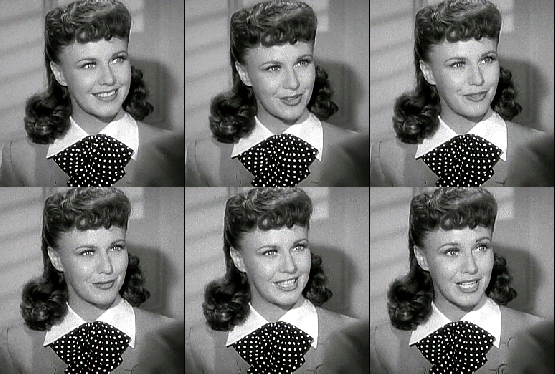
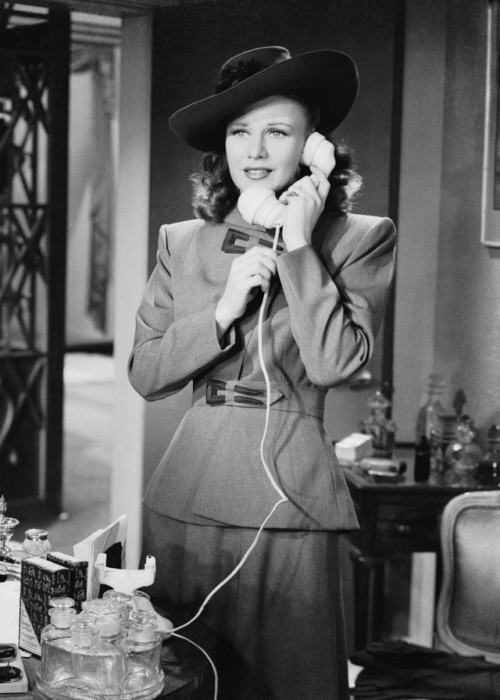
Kitty (uma Ginger Rogers morena) é uma jovem trabalhadora dos anos 40 tendo que escolher entre dois pretendentes. Uma noite, após sair do trabalho, ela acompanha seu namorado médico Mark (James Craig) até a casa de uma paciente. Lá ele ajuda no parto de um bebê e, quando Kitty o ajuda e segura o bebê, ele a pede em casamento. Ela aceita e ainda diz que se sente “tão completa” segurando aquele bebê. Eles planejam se casar naquela mesma noite, mas quando Kitty chega à pensão onde vive, ela encontra seu outro pretendente, Wyn (Dennis Morgan). Só há um problema: Wyn quer ficar com ela, mas se recusa a se divorciar de sua esposa.

Kitty (a brunette Ginger Rogers) is a 1940s “white-collar girl” having to choose between two beaus. One night, after leaving her work, she accompanies her doctor boyfriend Mark (James Craig) to a patient's house. There he helps deliver a baby and, when Kitty helps him and holds the baby, he proposes to her. She says yes, and also says that she feels “so right” holding that baby. They plan to get married that same night, but when Kitty arrives at the boarding house she lives in, she finds her other beau, Wyn (Dennis Morgan). There is only a problem: Wyn wants to be with her, but he won't divorce his wife.


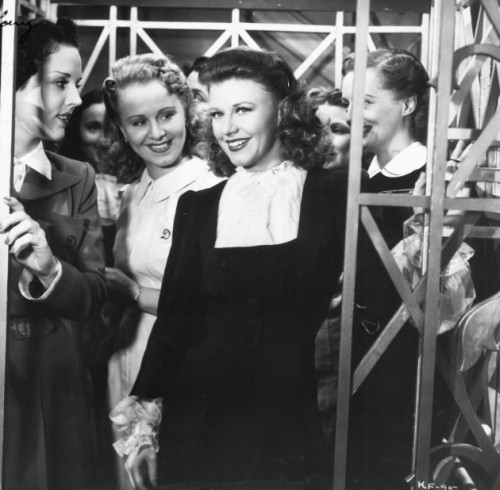
Uma sequência em flashback nos mostra que Kitty havia trabalhado para Wyn como datilógrafa. Em um gesto que deveria ser romântico, mas que se parece mais com assédio no trabalho, ele confessa seu amor por ela. E ela não conhece Mark em circunstâncias mais convenientes: ele a ajuda quando ela acidentalmente dispara o alarme da loja em que havia sido recém-contratada, e ele a chantageia para que ela aceite sair com ele.

A flashback sequence shows us that Kitty had worked for Wyn as a typist. In a move that should be romantic but looks more like workplace harassment, he confesses he loves her. And she doesn't meet Mark in more convenient circumstances either: he helps her when she accidentally sounds the alarm from the store she has just started working in and he humorously blackmails her to go on a date with him.


Há momentos mais progressistas no filme. Em um deles, Kitty enfrenta a família rica de Wyn, quando descobre que ele só poderia usar o dinheiro de sua herança se ele e ela vivessem na casa da família. Quando ela protesta por “gente morta poder ditar como Wyn vive sua vida”, nós quase nos esquecemos do discurso datado do começo.

There are more progressive moments in the film. In one of them, Kitty faces Wyn's rich family, when learning that he would only use his inheritance money if he and she lived in the family property. As she protests about how “dead people can say how Wyn must live his life”, we almost forget about the dated speech from the beginning.


O filme também lida com gravidez fora do casamento, mas encontra uma maneira muito convencional de rapidamente se livrar do assunto. Curiosamente, o livro era muito mais controverso – ele era vendido como “a novela mais ousada sobre uma mulher a ser escrita por um homem” – mas quase todos os temas controversos foram excluídos do roteiro por causa do Código Hays. Mais uma vez, o Código arruinou um filme – afinal, não podemos nos esquecer de que, na época, até a palavra “grávida” era proibida no cinema.

The film also deals with pregnancy out of wedlock, but it finds a very conventional way to quickly erase the subject. Interestingly, the novel was much more controversial – it was marketed as “the most daring novel ever written by a man about a woman” – but nearly all controversial themes had to be excluded from the screenplay due to the Hays Code. Once again, the Code has ruined a movie – after all, let’s not forget that back in the day even the word “pregnant” was forbidden in a film.


O título completo do filme é: “Kitty Foyle – A história natural de uma mulher”.  Isto é revelador, como se contentar-se com menos, com o mais conveniente, fosse o destino de todas as mulheres. Eu costumo dizer que se a poligamia fosse normalizada, 90% de todas as tramas de filmes perderiam o sentido. Isso aconteceria aqui, onde Kitty tem de escolher entre um homem que ela ama demais, mas com quem seu futuro é incerto, e um homem que ela não aprecia muito, mas com quem seu futuro será seguro.

The full title of the film is: “Kitty Foyle – The natural history of a woman”. This is revealing, as if settling for less, for the most convenient, was the fate of all women. I usually say that if polygamy was normalized, 90% of all film plots would stop working. This would happen here, where Kitty needs to choose between a man she loves deeply, but with whom her future is uncertain, and a man that she doesn’t like so much, but with whom her future will be safe.


Gostar de coisas antigas não significa ter valores antiquados. Eu não gostaria de ter nascido nos anos 1930. Eu sei que, se eu tivesse nascido naquela época, minha chance de ser uma mulher comum, dona de casa e mãe, seria muito maior do que minha chance de ter sido uma mulher trabalhadora e independente. Eu acredito que meu ponto de vista feminista é algo único que eu trago para minhas críticas, e tenho de apontar detalhes antiquados em filmes como “Kitty Foyle” para que possamos parar de romantizar a Era de Ouro do cinema como uma época melhor. Ela certamente não foi melhor para todos – talvez apenas para os homens brancos e heterossexuais, e é ótimo que nós, como sociedade, estejamos mudando isso.

Liking vintage things does not mean having vintage values. I don't wish I was born in the 1930s. I know that, if I was born back then, my chance of being a common woman, housewife and mother, would be much bigger than my chance of being an independent career woman. I believe that my feminist point of view is something unique I add to my reviews, and I have to point out those dated details in films like “Kitty Foyle” for us to sometimes stop romanticizing the Golden Age of Film as a better time. It certainly wasn’t better for all – maybe only for straight white man, and it’s so good that we, as a society, are changing this.


O roteiro foi escrito por Dalton Trumbo, com ajuda de Donald Ogden Stewart, mas ele pouco se parece com os melhores trabalhos destes grandes escritores. A história é romântica e por vezes engraçada, mas não tem o charme de “A Princesa e o Plebeu” (1953) de Trumbo e de “Núpcias de Escândalo” (1940) de Stewart.

The screenplay was written by Dalton Trumbo with help from Donald Ogden Stewart, but it hardly looks like the best works by those great writers. The story is romantic and sometimes funny, but lacks the charm of Trumbo’s “Roman Holiday” (1953) and Stewart’s “The Philadelphia Story” (1940).


Aliás, Ginger ganhou o Oscar derrotando Katharine Hepburn, de “Núpcias de Escândalo” – que havia se recusado a fazer “Kitty Foyle” – e outras indicadas cujas performances parecem ter merecido mais o prêmio do que ela: Joan Fontaine em “Rebecca” (1940) e a melhor de todas as indicadas, Bette Davis em “A Carta” (1940). Ah, e devemos nos lembrar de que Vivien Leigh sequer foi indicada por sua performance arrebatadora em “A Ponte de Waterloo” (1940)!

By the way, Ginger won her Oscar over Katharine Hepburn, from “The Philadelphia Story” – who had refused to star in “Kitty Foyle” – and other nominees whose performances seem more deserving than hers: Joan Fontaine in “Rebecca” (1940) and, the best of the bunch, Bette Davis in “The Letter”. Oh, and we must remember that Vivien Leigh wasn’t even nominated for her heartbreaking performance in “Waterloo Bridge” (1940)!


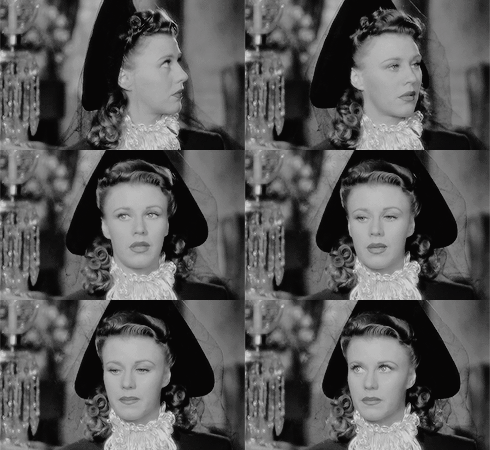
Ginger também lançou moda dentro e for a do filme. Do filme veio o “vestido Kitty Foyle”, um vestido escuro com colarinho e abotoadura brancos. Fora do filme, no Oscar, Ginger usou um vestido que causou frisson: com a parte de cima parecendo uma lingerie, o vestido de seda cinza foi considerado ousado demais. Mesmo que Ginger tenha seguido a sugestão de usar “tons sérios” por causa da guerra que estava em curso, foi a transparência do vestido que gerou críticas.

Ginger also created fashion trends in and outside the film. From the film came the “Kitty Foyle dress”, a dark dress with white collar and cuffs. Outside the film, at the Academy Awards, Ginger wore a dress that caused a stir: with the top part looking like a negligee, the grey silk dress was considered too daring. Although Ginger kept with the suggestion of wearing “muted tones” because of the ongoing war, it was the transparency of her dress that brought criticism.


“Kitty Foyle” é ruim? Não. É datado? Sim. Com um discurso de que o destino da mulher trabalhadora ainda é o casamento, o filme tem as qualidades e os defeitos que também encontramos nos melodramas de Douglas Srik, e nos anos 1950 Sirk provavelmente teria remodelado a história para torná-la mais interessante. Afinal, se havia alguém na Velha Hollywood que conhecia a “história natural de uma mulher”, este alguém era Sirk.

Is “Kitty Foyle” bad? No. Is it dated? Yes. With the speech about how the fate of the “white-collar girl” is still marriage, it has the positive and negative characteristics we also find in Douglas Sirk’s melodramas, and in the 1950s Sirk would probably have revamped the story to make it more interesting. After all, if there was someone in the Old Hollywood who knew about “the natural history of a woman”, this someone was Sirk.

This is my contribution to the Second Fred Astaire and Ginger Rogers blogathon, hosted by Michaela and Crystal at Love Letters to Old Hollywood and In the Good Old Days of Classic Hollywood.

Wednesday, February 13, 2019

Um Domingo em Nova York (1963) / Sunday in New York (1963)


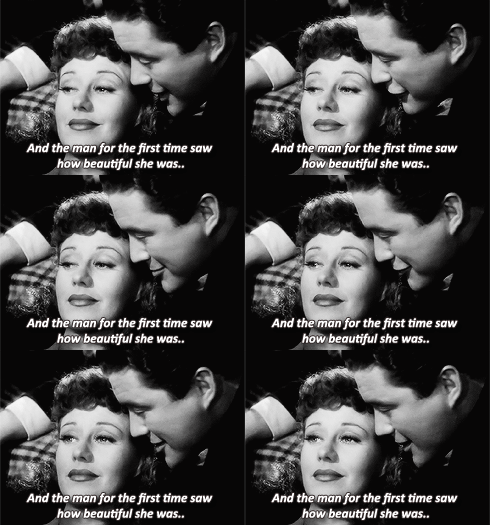
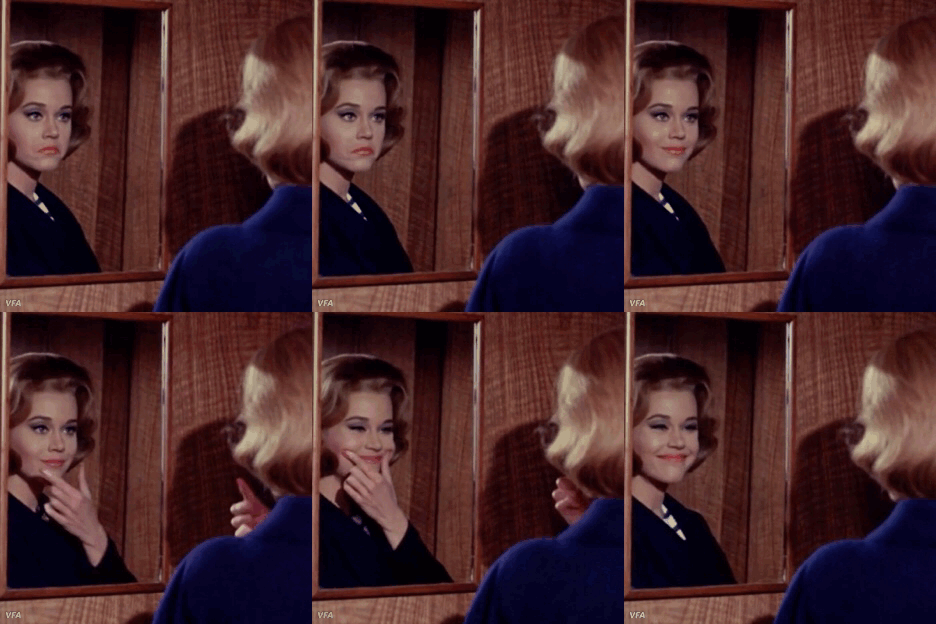
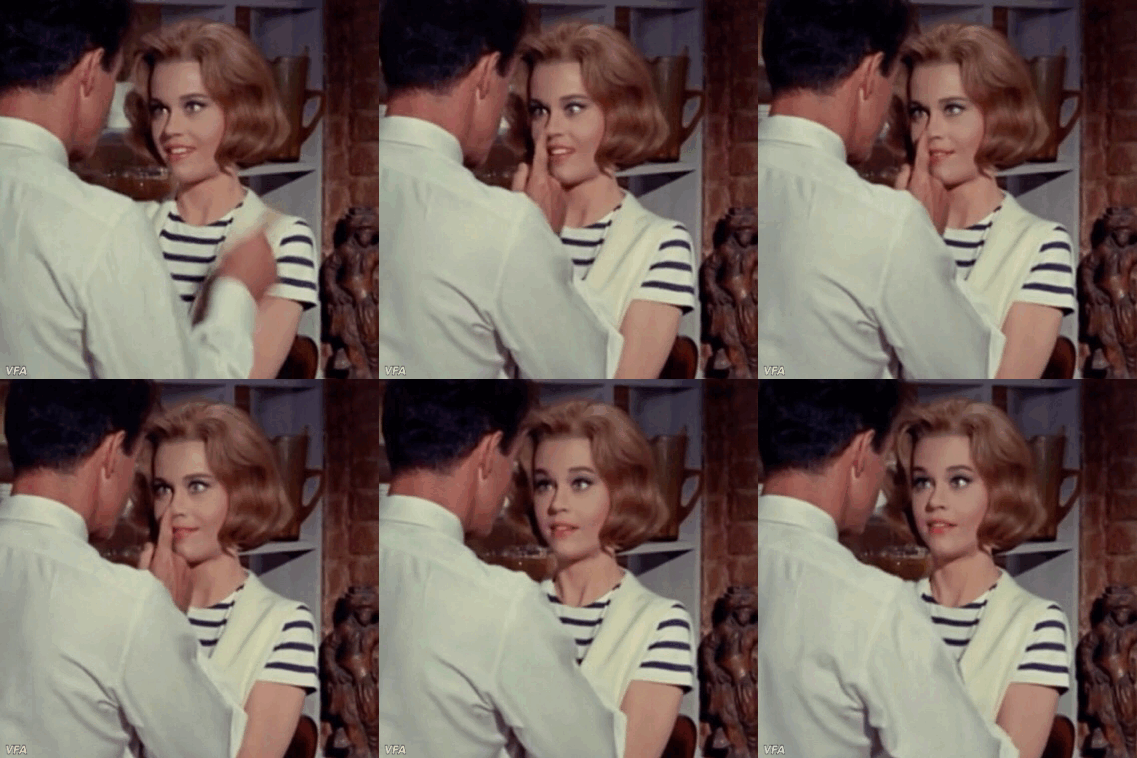
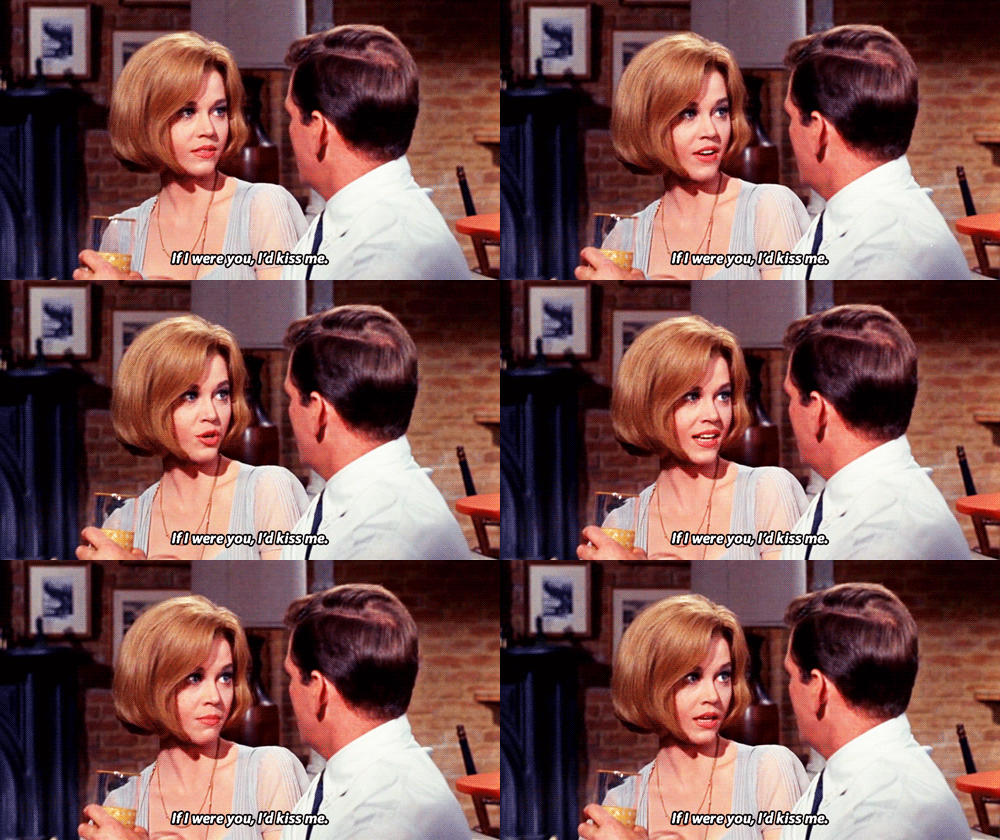
“Um Domingo em Nova York” é uma comédia romântica que se passa na Big Apple. Também é um filme com um dos melhores meet-cutes – aqueles momentos fofos em que um casal se vê pela primeira vez – de todos os tempos. É uma comédia hilária, um filme com ótimos cenários e figurinos, e também um filme que pode ser usado para refletirmos sobre feminismo, moral e dois pesos e duas medidas na sociedade. De fato, qualquer coisa pode acontecer em um único domingo em Nova York!

“Sunday in New York” is a romantic comedy set in the Big Apple. It’s also a film with one of the cutest meet-cutes – when a couple meets for the first time in a movie – of all time. It’s a hilarious comedy, a film with great sets and costumes, and also a film to reflect upon feminism, morality and double standards in society. Indeed, anything can happen in a single Sunday in New York!


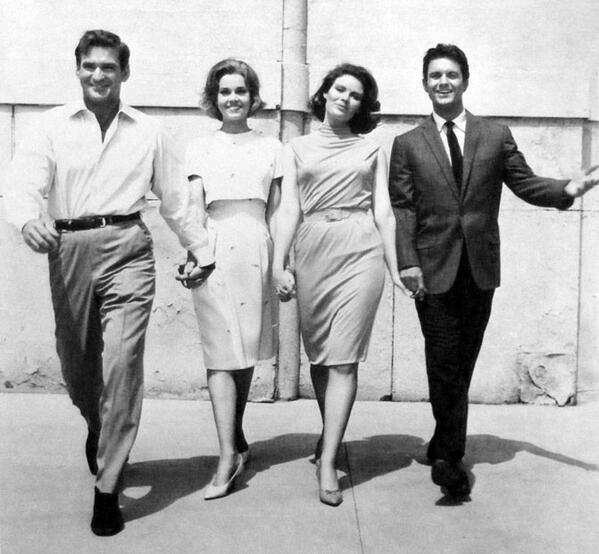
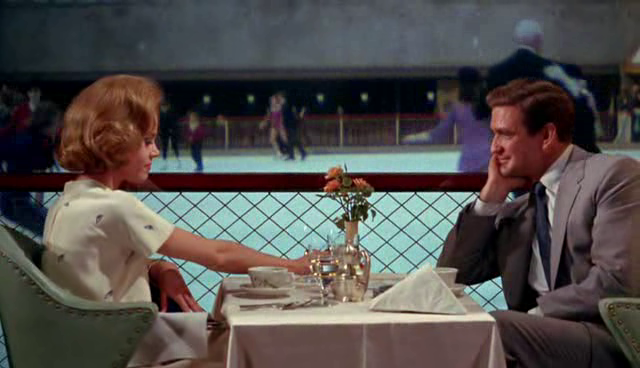
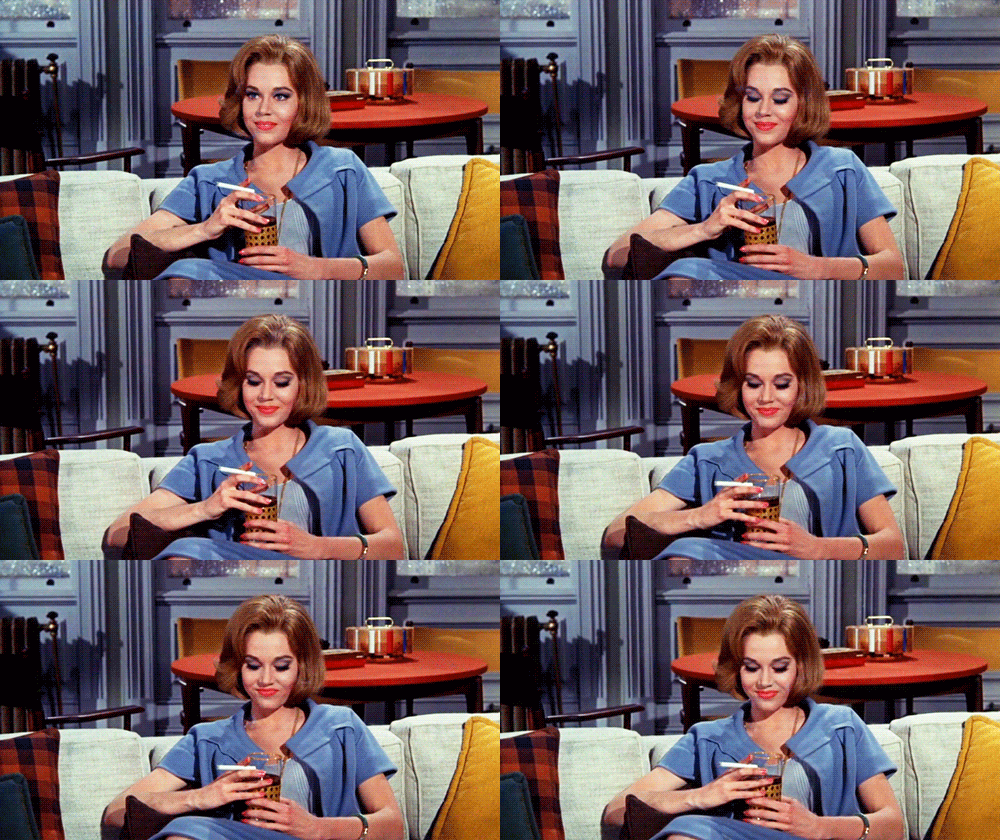
Eileen (Jane Fonda) acabou um relacionamento recente, e, para se recuperar, ela decide passar alguns dias no apartamento de seu irmão, Adam (Cliff Robertson), em Nova York. Eles conversam sobre sexo e comportamento logo que ela chega e, para não ser um mau exemplo e contradizer seu conselho, Adam leva a namorada, Mona (Jo Morrow), para o Rockefeller Center para patinar no gelo – o plano inicial era transar com ela no apartamento.

Eileen (Jane Fonda) has just been through a break-up, so, in order to recover, she decides to spend a few days in her brother Adam's (Cliff Robertson) apartment in New York. They talk about sex and behavior when she arrives and, in order not to be a bad example and contradict his advice, Adam takes his girlfriend, Mona (Jo Morrow), to the Rockefeller Center to go ice-skating – his initial plan was to have sex with her in his apartment.


Adam é piloto de avião, e seu chefe liga para seu apartamento. Eileen decide dizer a Adam que seu chefe ligou e vai até o Rockefeller Center. No ônibus ela conhece Mike (Rod Taylor), que decide acompanhá-la até que ela encontre o irmão. Em um café, depois de uma piada ruim e a sensação de que não estão agradando um ao outro, tanto Eileen quanto Mike tentam escapar, mas eles acabam se encontrando novamente dentro de outro ônibus e, dessa vez, eles se dão muito bem. Enquanto isso, Adam tem de voltar ao trabalho, mas faz de tudo para conseguir manter seu encontro com Mona.

Adam is an airline pilot, and his boss calls the apartment. Eileen decides to tell Adam the boss called and goes to the Rockefeller Center. In the bus she meets Mike (Rod Taylor), who decides to accompany her until she finds her brother. At a café, after a bad joke and the feeling that this wouldn't work, they both try to escape, only to meet again at another bus and, this time, they really hit if off. Meanwhile, Adam has to go back to work, but he tries everything to keep his engagement with Mona.


O primeiro encontro de Eileen com Mike é charmoso e engraçado: o broche dela fica preso no terno dele, e eles têm de descer do ônibus juntos, como se estivessem grudados. Esta situação se repete em outro ônibus, e me fez pensar em como preciso ficar longe das pessoas quando uso broches.

Eileen's first meeting with Mike is a charming, funny one: her brooch gets stuck in his suit, and they have to exit the bus together, like if they were glued. This situation happens twice in a bus, and made me more aware of the need of keeping distance of other people whenever I wear a brooch.


Quando Eileen percebe que seu irmão de fato transa com sua namorada, ela decide que pode fazer o mesmo e começa a flertar com Mike, em uma sequência hilária. Eles estão no apartamento de Adam, e de repente surge Russ (Robert Culp), o homem por quem Eileen está apaixonada. Mike acaba tendo de fingir que é o irmão de Eileen para Russ, que repentinamente parece muito apaixonado.

When Eileen realizes her brother actually has sex with his girlfriend, she decides she can do it too and becomes all flirty with Mike, in a hilarious sequence. They are in Adam’s apartment, and all of a sudden there appears Russ (Robert Culp), the man who Eileen is in love with. Mike ends up having to pretend to be Adam for a suddenly very much in love Russ.


Eileen tem dúvidas sobre assuntos como sexo antes do casamento – algo que sequer podia ser mencionado em um filme 10 anos antes de “Um Domingo em Nova York”. Quando seu irmão diz que os homens se casam com garotas decentes, ela diz que o problema está na palavra “decente”: ela carrega uma conotação de comparação entre as mulheres. Eileen é um ícone feminista!

Eileen has doubts about issues like pre-marital sex – something that couldn't be mentioned in a movie some 10 years before “Sunday in New York” was made. As her brother says that men marry decent girls, she says that the problem lies in the word “decent”: it carries a connotation of comparison between girls. Eileen is a feminist icon!


Mike fica desconfortável porque Eileen deu o primeiro passo na paquera, e menciona que o conceito de moral é diferente para homens e mulheres. Temas sobre como dois pesos e duas medidas são usados para julgar o comportamento de homens e mulheres começaram a ser discutidos no cinema nos anos 60, mas a mudança ainda não se completou, e até hoje precisamos discutir e apontar quão hipócrita é considerar que mulheres liberais são vagabundas, enquanto um homem pode fazer praticamente qualquer coisa e nunca ser rotulado e criticado.

Mike gets uncomfortable because Eileen took the first step in courting him, and mentions that morality is different for men and women. Themes like the double standard used to judge the morals of men and women started being discussed in film in the 1960s, but the change has not been completely made, and until today we must discuss how hypocritical it is to consider liberated women whores, while a man can do virtually anything he wants to and not be called names.


Todos os atores estão muito bem. Jane Fonda mencionou que “Um Domingo em Nova York” foi o primeiro filme em que ela se considerou de fato boa. Além de sua atuação, seu figurino é também divino. Eu com certeza usaria qualquer uma de suas roupas, desenhadas por Orry-Kelly. Eu também com certeza viveria no apartamento anguloso e charmoso em que Adam vive.

All the actors are very good. Jane Fonda mentioned that “Sunday in New York” was the first film in which she felt she was any good at. Besides her acting, her wardrobe is also divine. I’d totally wear any of her outfits, designed by Orry-Kelly. I’d also totally live in the angular and charming apartment Adam lives in.  


“Um Domingo em Nova York” é um filme que faz você se sentir bem, e também faz você pensar. Porque até mesmo o filme mais simples pode gerar discussões interessantes e atuais se estivermos dispostos a olhar além deles e refletir sobre seus temas.

“Sunday in New York” is a feel-good movie and also a movie that makes you think.  Because even the simplest movie can sparkle interesting and timely discussions if we’re willing to look beyond them and reflect upon their themes.

This is my contribution to the First Annual Valentine’s Day Meet-Cute Blogathon, hosted by Laura at Phyllis Loves Classic Movies.


Thursday, January 31, 2019

Idílio Proibido (1956) / Hilda Crane (1956)


Nos anos 50, a sociedade norte-americana estava prestes a passar por grandes mudanças, mas ainda era muito conservadora. Mesmo assim, o divórcio começava a se tornar mais comum, em especial após a Segunda Guerra Mundial - como você pode ver AQUI. O embate entre a nova liberdade de escolher ficar ou não casada e as expectativas que a sociedade e a família colocavam sobre as mulheres é o tema principal de “Idílio Proibido” (1956), um filme interessante e obscuro.

In the 1950s, the American society was about to undergo big changes, it is still was very conservative. Yet, divorce was starting to become more common, in special after World War II - as you can see HERE. The clashes between a newfound freedom to choose to remain married or not and the expectations society and family put upon women are the main themes in “Hilda Crane” (1956), an interesting obscure movie.


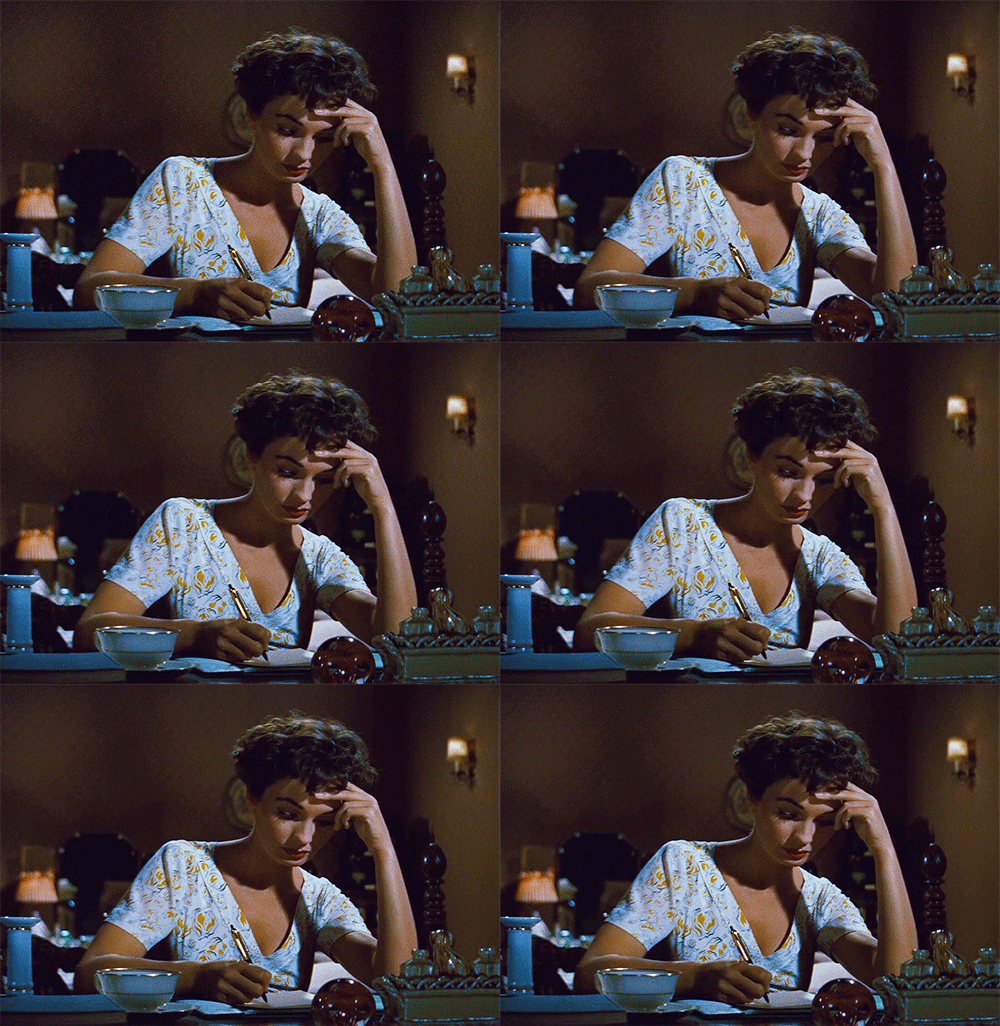
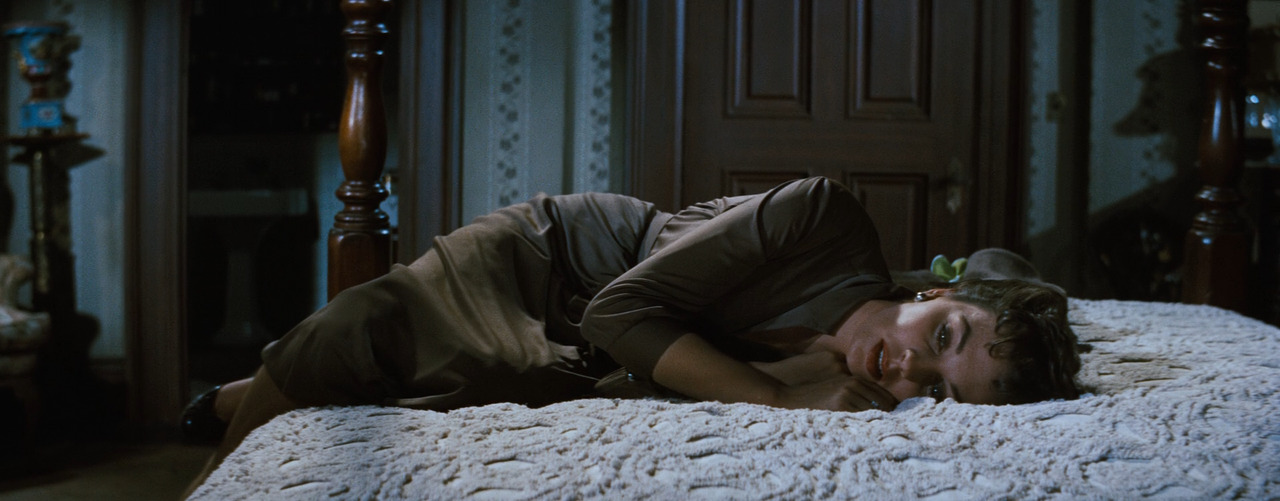
Hilda Crane (Jean Simmons) volta para casa depois de terminar um relacionamento e ser demitida. De repente, a mulher forte e independente se vê vivendo novamente com a mãe. Mais do que isso: Hilda já se divorciou duas vezes, e a sociedade a julga por isso.

Hilda Crane (Jean Simmons) has just returned home after ending a relationship and being fired from her latest job. All of a sudden a strong, independent woman sees herself living once again with her mother. More than that: Hilda has been married and divorced twice, and society judges her for that.


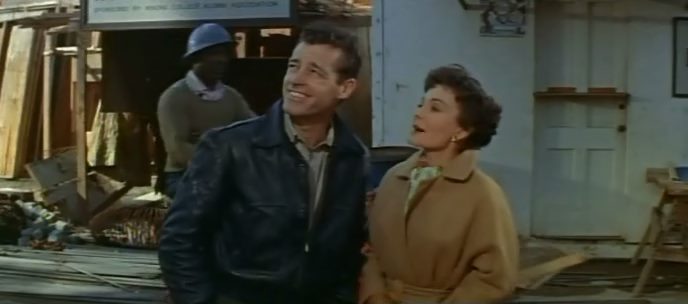
Demora pouco para que Hilda receba um pedido de casamento de Russell Burns (Guy Madison) - e é um pedido feito por carta! A mãe de Russell, a senhora Burns (Evelyn Varden) não gostou da ideia do filho. De maneira mal-educada, ela pergunta a Hilda e à mãe dela sobre os bens da família e os interesses que elas podem ter pelo casamento com Russell.

Soon Hilda receives a wedding proposal from Russell Burns (Guy Madison) - and the proposal comes through a letter! Russell’s mother, Mrs Burns (Evelyn Varden) is less than thrilled with her son’s move. In an impolite way, she asks Hilda and her mother about their possessions and their interests on Russell.


Ainda sem se decidir sobre Russell, Hilda aceita sair com o velho amigo de escola Jacques (Jean-Pierre Aumont). Ele ainda está ressentido porque o breve caso que eles tiveram não deu em nada e, mais do que isso, ele acredita que, por ela ser divorciada duas vezes, ela é agora uma mulher mais promíscua.

Still unsure about Russell, Hilda accepts to go out with a school friend and old flame, Jacques (Jean-Pierre Aumont). He is still bitter because the brief affair they had five years prior didn’t end well, and, moreover, he believes that, because she is twice divorced, she is more promiscuous.


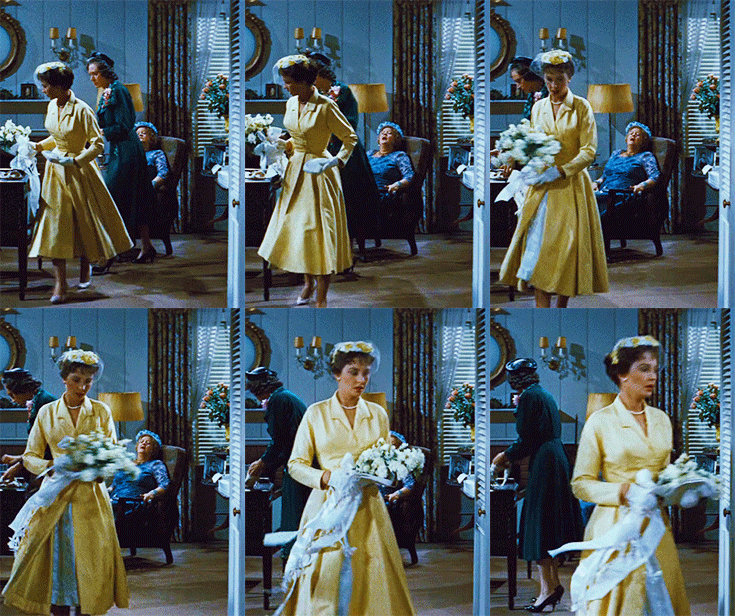
Frustrado com seu encontro com Jacques, Hilda aceita o pedido de Russell. Obviamente, ela enfrentará muitos desafios: primeiro, ela não o ama, segundo, a mãe dele é uma forte candidata ao título de pior sogra do cinema, terceiro, Jacques ainda mexe com os sentimentos dela. Hilda está tão desanimada com o casamento que deixa que a mãe, Stella (Judith Evelyn), cuide de todos os preparativos.

Frustrated after her date with Jacques, Hilda accepts Russell’s proposal. Of course, she will face many challenges: first, she doesn’t love him, second, his mother is a strong contender for the title of worst mother-in-law of all movies, third, Jacques still confuses her feelings. Hilda is so not invested in the wedding planning that she lets her mother, Stella (Judith Evelyn), decide everything.


Hilda diz a Jacques que ela quer felicidade, filhos, e envelhecer ao lado de um marido que a ame. E ela quer tudo isso. Ela não se contenta só com uma dessas coisas. Ela não aceitará viver em um casamento infeliz com alguém que ela não ama só para ter filhos - como muitas mulheres faziam e ainda fazem. Ela não aceitará infelicidade para manter as aparências. Ela quer o pacote completo.

As Hilda tells Jacques, she wants happiness, children, and growing old with a husband that loves her. And she wants all that. She won’t settle for only one of those things. She won’t accept to live an unhappy marriage with someone she doesn’t love just in order to have children - like so many women did and still do. She won’t accept unhappiness to keep up appearances. She wants the whole package.


Este não conformismo peculiar mostra que Hilda é uma mulher moderna. Ela pode ter sonhos antiquados, mas não está disposta a sacrificar sua felicidade para consegui-los. Ela também diz que, na faculdade, queria viver a vida como um homem. Bem, já foi provado que a maioria dos pedidos de divórcio é feita pelos homens, e esse foi provavelmente o caso de Hilda.

This weird way of non-conformity shows that Hilda is a modern woman. She may have old-fashioned dreams, but she won’t sacrifice her own happiness to achieve them. She also says that, in college, she wanted to live life like a man. Well, it’s been proved that women file for divorce more often, and it was probably the case with Hilda.


Não é somente a sogra de Hilda que a vê com maus olhos - a mãe dela também tem vergonha do passado da filha e faz de tudo para manter as aparências, incluindo mentir e manipular. Hipocrisia também é um tema importante no filme.

Not only her mother-in-law sees Hilda through bad lenses - her mother is also ashamed of her daughter’s past and does anything to keep up appearances, including lying and manipulating her own daughter. Hypocrisy is another important theme in the film.


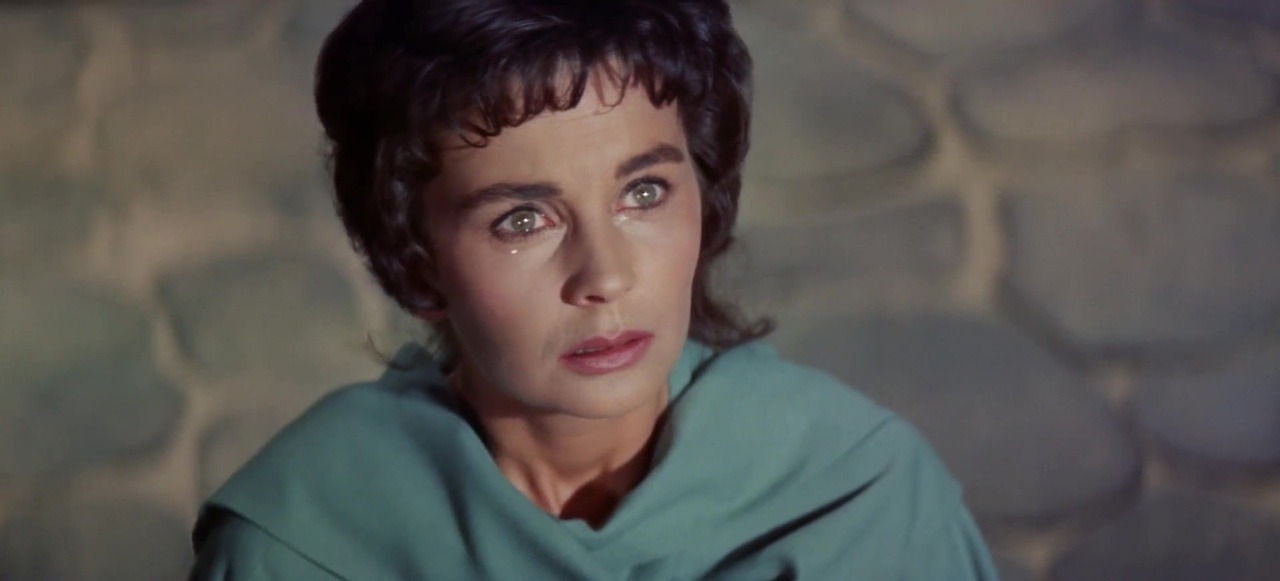
Jean Simmons é uma atriz pouco lembrada hoje, mas não deveria ser assim. Ela era linda e muito talentosa. Em “Idílio Proibido”, ela apresenta um corte de cabelo simples mas fabuloso, usa belas roupas e mostra seus grandes olhos brilhantes. Seus momentos de rebeldia são épicos, e é excitante quando ela desafia a mãe e a sogra. Jean Simmons merece mais reconhecimento não apenas por seus esforços em “Idílio Proibido”, mas também por ótimas atuações em filmes como “Hamlet” (1948) e “Spartacus” (1960).

Jean Simmons is often an overlooked actress, but she shouldn’t be. She was gorgeous and immensely talented. In “Hilda Crane”, she has a fabulous yet simple hairstyle, beautiful outfits and her eyes simply sparkle. Her rebellious bouts are epic, and it’s exciting whenever she confronts her mother or her mother-in-law. Jean Simmons deserves more recognition not only for her efforts in “Hilda Crane”, but also for the great performances she delivered in films like “Hamlet” (1948) and “Spartacus” (1960).

Jean Simmons as Varinia in "Spartacus"
O imenso peso de manter as aparências em geral cai apenas nos ombros das mulheres. A reputação de um homem é praticamente indestrutível, porém um passo em falso ou mesmo um boato são capazes de destruir a reputação de uma mulher e fazer com que os outros a chamem de vadia. E, para manter as aparências, algumas mulheres fazem de tudo, inclusive ferir os sentimentos das pessoas que amam. Esta é a lição de “Idílio Proibido” por que insistir para as mulheres manterem as aparências se o preço a pagar por “ser respeitável” é tão alto?

The huge weight of keeping up appearances falls usually only in the women’s backs. Men’s reputations are almost indestructible, while a misstep or even a gossip can destroy a woman’s reputation and make others see her as a tramp. And, in order to keep up appearances, some women can do anything, even hurting the ones they love. This is the lesson in “Hilda Crane”: why to insist that women keep up appearances when the price to pay for respectability is so high?

This is my contribution to the 90 Years of Jean Simmons blogathon, hosted by Virginie and Laura at The Wonderful World of Cinema and Phyllis Loves Classic Movies.


Related Posts Plugin for WordPress, Blogger...