} Crítica Retrô: Ginger Rogers

Tradutor / Translator / Traductor / Übersetzer / Traduttore / Traducteur / 翻訳者 / переводчик

Showing posts with label Ginger Rogers. Show all posts

Monday, December 30, 2019

Kitty Foyle (1940)


O que te faz querer ver um filme? É o elenco, o diretor ou a sinopse? Você tem uma lista de filmes para assistir? Você se planeja com antecedência ou assiste a qualquer coisa que encontrar na TV ou no streaming? Você se importa com os prêmios que um filme ganhou ou isso é irrelevante? Estou perguntando porque há muitos, muitos filmes para ver, e algum critério deve ser aplicado para que possamos escolher quais filmes ver e quais deixar passar. “Kitty Foyle”, de 1940, por exemplo, parecia digno de ser visto por ter trazido a única indicação ao Oscar de Ginger Rogers... e ela ganhou o Oscar! E, de fato, “Kitty Foyle” me fez refletir bastante.

What makes you want to watch a movie? Is it the cast, the director or the synopsis? Do you have a watch list? Do you plan ahead or do you watch whatever is on TV or streaming? Do you care if a film has won awards or isn’t it relevant for you? I’m asking because there are many, many movies to see, and some criteria must be applied for us to choose which ones to check and which ones to ignore. “Kitty Foyle”, from 1940, for instance, seemed worth checking out because it brings Ginger Roger’s only Oscar nomination… and she won that Oscar! And, indeed, “Kitty Foyle” made me think a lot.

O começo do filme é de doer: em uma breve sequência ambientada no começo do século XX, o filme mostra uma jovem vivendo uma vida perfeita, completa com marido e filhos. A mulher decide “descer de seu pedestal” e perder “privilégios” para conseguir direitos iguais – isto é, poder votar e trabalhar fora de casa. Já dá para perceber que o livro “Kitty Foyle” e o roteiro do filme foram escritos por homens?

The beginning of the film is cringe worthy: in a brief sequence set in the 1900s, the film shows a girl living the perfect life, complete with husband and kids. The woman decided to “climb down her pedestal” and lose her “privileges” in order to achieve equal rights – that is, to be able to vote and join the workforce. Can you see that the novel “Kitty Foyle” was written by a man, and so was the screenplay?


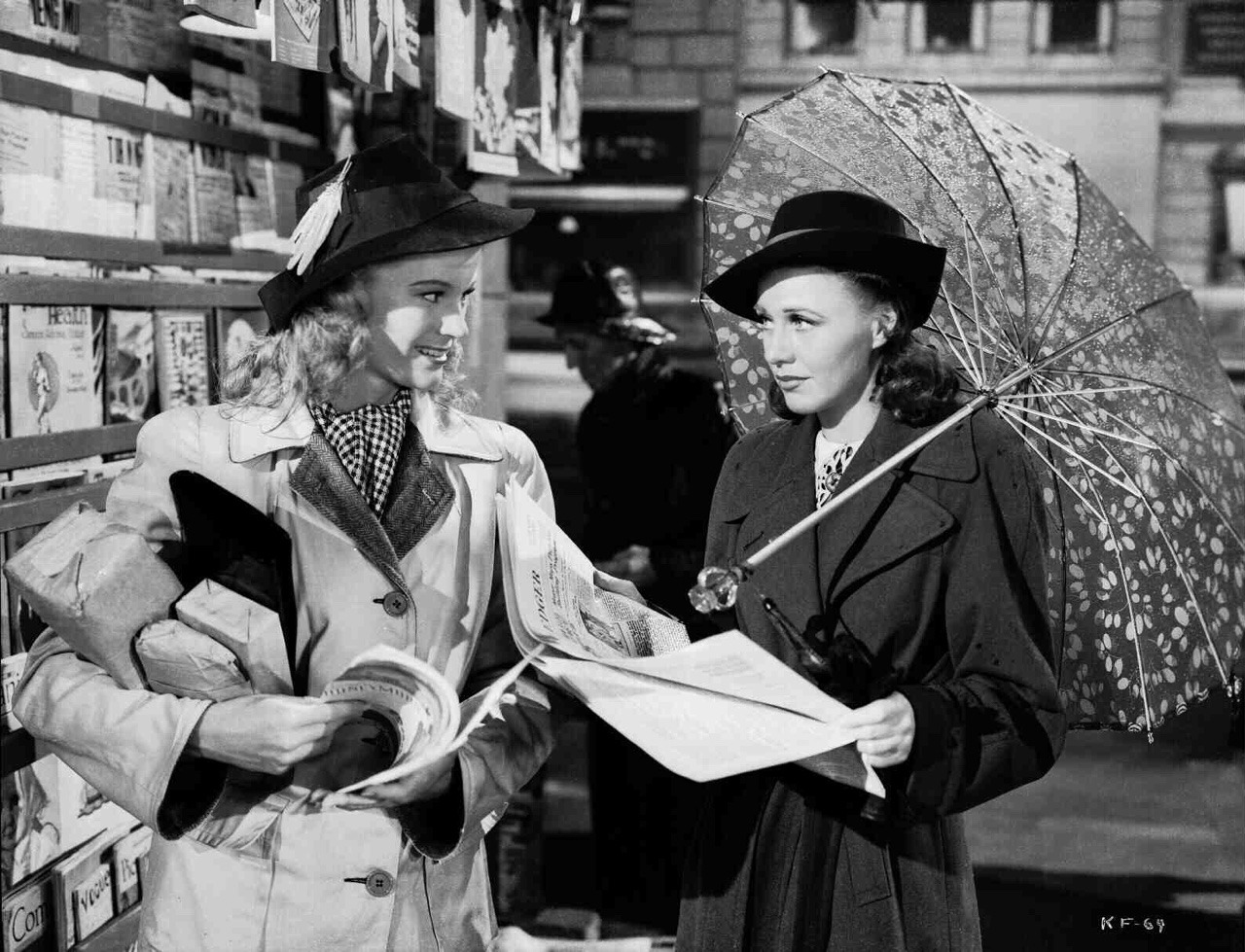
Kitty (uma Ginger Rogers morena) é uma jovem trabalhadora dos anos 40 tendo que escolher entre dois pretendentes. Uma noite, após sair do trabalho, ela acompanha seu namorado médico Mark (James Craig) até a casa de uma paciente. Lá ele ajuda no parto de um bebê e, quando Kitty o ajuda e segura o bebê, ele a pede em casamento. Ela aceita e ainda diz que se sente “tão completa” segurando aquele bebê. Eles planejam se casar naquela mesma noite, mas quando Kitty chega à pensão onde vive, ela encontra seu outro pretendente, Wyn (Dennis Morgan). Só há um problema: Wyn quer ficar com ela, mas se recusa a se divorciar de sua esposa.

Kitty (a brunette Ginger Rogers) is a 1940s “white-collar girl” having to choose between two beaus. One night, after leaving her work, she accompanies her doctor boyfriend Mark (James Craig) to a patient's house. There he helps deliver a baby and, when Kitty helps him and holds the baby, he proposes to her. She says yes, and also says that she feels “so right” holding that baby. They plan to get married that same night, but when Kitty arrives at the boarding house she lives in, she finds her other beau, Wyn (Dennis Morgan). There is only a problem: Wyn wants to be with her, but he won't divorce his wife.


Uma sequência em flashback nos mostra que Kitty havia trabalhado para Wyn como datilógrafa. Em um gesto que deveria ser romântico, mas que se parece mais com assédio no trabalho, ele confessa seu amor por ela. E ela não conhece Mark em circunstâncias mais convenientes: ele a ajuda quando ela acidentalmente dispara o alarme da loja em que havia sido recém-contratada, e ele a chantageia para que ela aceite sair com ele.

A flashback sequence shows us that Kitty had worked for Wyn as a typist. In a move that should be romantic but looks more like workplace harassment, he confesses he loves her. And she doesn't meet Mark in more convenient circumstances either: he helps her when she accidentally sounds the alarm from the store she has just started working in and he humorously blackmails her to go on a date with him.
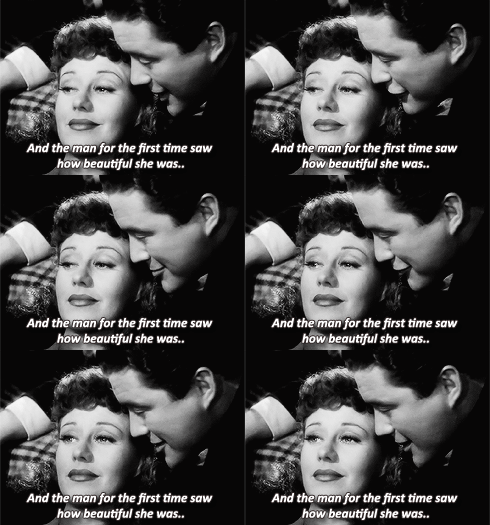

Há momentos mais progressistas no filme. Em um deles, Kitty enfrenta a família rica de Wyn, quando descobre que ele só poderia usar o dinheiro de sua herança se ele e ela vivessem na casa da família. Quando ela protesta por “gente morta poder ditar como Wyn vive sua vida”, nós quase nos esquecemos do discurso datado do começo.

There are more progressive moments in the film. In one of them, Kitty faces Wyn's rich family, when learning that he would only use his inheritance money if he and she lived in the family property. As she protests about how “dead people can say how Wyn must live his life”, we almost forget about the dated speech from the beginning.
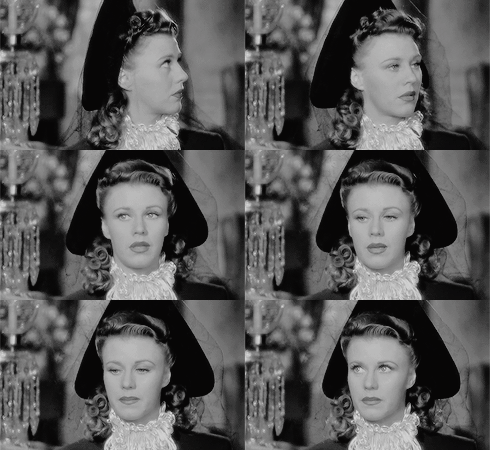

O filme também lida com gravidez fora do casamento, mas encontra uma maneira muito convencional de rapidamente se livrar do assunto. Curiosamente, o livro era muito mais controverso – ele era vendido como “a novela mais ousada sobre uma mulher a ser escrita por um homem” – mas quase todos os temas controversos foram excluídos do roteiro por causa do Código Hays. Mais uma vez, o Código arruinou um filme – afinal, não podemos nos esquecer de que, na época, até a palavra “grávida” era proibida no cinema.

The film also deals with pregnancy out of wedlock, but it finds a very conventional way to quickly erase the subject. Interestingly, the novel was much more controversial – it was marketed as “the most daring novel ever written by a man about a woman” – but nearly all controversial themes had to be excluded from the screenplay due to the Hays Code. Once again, the Code has ruined a movie – after all, let’s not forget that back in the day even the word “pregnant” was forbidden in a film.
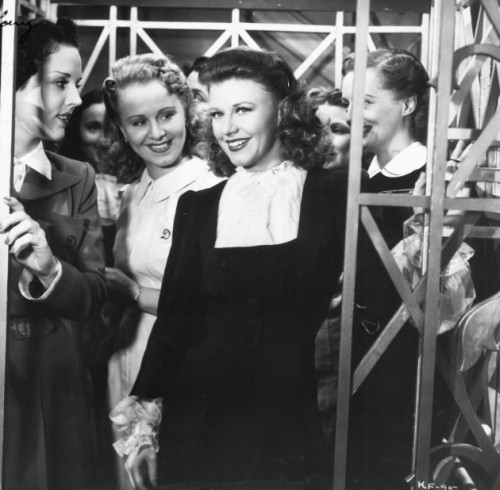

O título completo do filme é: “Kitty Foyle – A história natural de uma mulher”.  Isto é revelador, como se contentar-se com menos, com o mais conveniente, fosse o destino de todas as mulheres. Eu costumo dizer que se a poligamia fosse normalizada, 90% de todas as tramas de filmes perderiam o sentido. Isso aconteceria aqui, onde Kitty tem de escolher entre um homem que ela ama demais, mas com quem seu futuro é incerto, e um homem que ela não aprecia muito, mas com quem seu futuro será seguro.

The full title of the film is: “Kitty Foyle – The natural history of a woman”. This is revealing, as if settling for less, for the most convenient, was the fate of all women. I usually say that if polygamy was normalized, 90% of all film plots would stop working. This would happen here, where Kitty needs to choose between a man she loves deeply, but with whom her future is uncertain, and a man that she doesn’t like so much, but with whom her future will be safe.


Gostar de coisas antigas não significa ter valores antiquados. Eu não gostaria de ter nascido nos anos 1930. Eu sei que, se eu tivesse nascido naquela época, minha chance de ser uma mulher comum, dona de casa e mãe, seria muito maior do que minha chance de ter sido uma mulher trabalhadora e independente. Eu acredito que meu ponto de vista feminista é algo único que eu trago para minhas críticas, e tenho de apontar detalhes antiquados em filmes como “Kitty Foyle” para que possamos parar de romantizar a Era de Ouro do cinema como uma época melhor. Ela certamente não foi melhor para todos – talvez apenas para os homens brancos e heterossexuais, e é ótimo que nós, como sociedade, estejamos mudando isso.

Liking vintage things does not mean having vintage values. I don't wish I was born in the 1930s. I know that, if I was born back then, my chance of being a common woman, housewife and mother, would be much bigger than my chance of being an independent career woman. I believe that my feminist point of view is something unique I add to my reviews, and I have to point out those dated details in films like “Kitty Foyle” for us to sometimes stop romanticizing the Golden Age of Film as a better time. It certainly wasn’t better for all – maybe only for straight white man, and it’s so good that we, as a society, are changing this.


O roteiro foi escrito por Dalton Trumbo, com ajuda de Donald Ogden Stewart, mas ele pouco se parece com os melhores trabalhos destes grandes escritores. A história é romântica e por vezes engraçada, mas não tem o charme de “A Princesa e o Plebeu” (1953) de Trumbo e de “Núpcias de Escândalo” (1940) de Stewart.

The screenplay was written by Dalton Trumbo with help from Donald Ogden Stewart, but it hardly looks like the best works by those great writers. The story is romantic and sometimes funny, but lacks the charm of Trumbo’s “Roman Holiday” (1953) and Stewart’s “The Philadelphia Story” (1940).
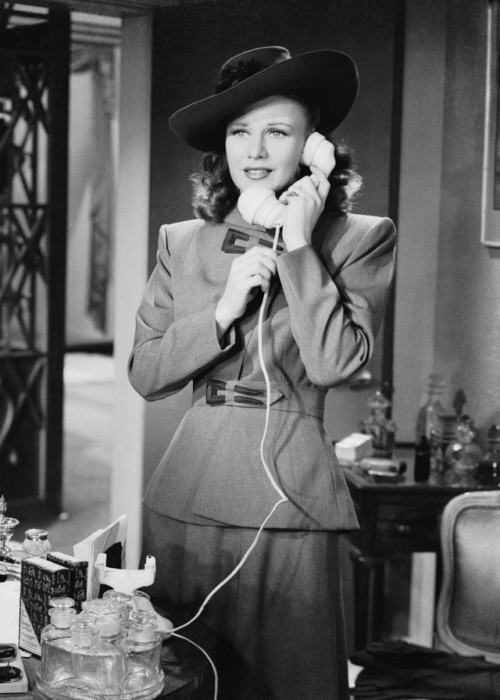

Aliás, Ginger ganhou o Oscar derrotando Katharine Hepburn, de “Núpcias de Escândalo” – que havia se recusado a fazer “Kitty Foyle” – e outras indicadas cujas performances parecem ter merecido mais o prêmio do que ela: Joan Fontaine em “Rebecca” (1940) e a melhor de todas as indicadas, Bette Davis em “A Carta” (1940). Ah, e devemos nos lembrar de que Vivien Leigh sequer foi indicada por sua performance arrebatadora em “A Ponte de Waterloo” (1940)!

By the way, Ginger won her Oscar over Katharine Hepburn, from “The Philadelphia Story” – who had refused to star in “Kitty Foyle” – and other nominees whose performances seem more deserving than hers: Joan Fontaine in “Rebecca” (1940) and, the best of the bunch, Bette Davis in “The Letter”. Oh, and we must remember that Vivien Leigh wasn’t even nominated for her heartbreaking performance in “Waterloo Bridge” (1940)!


Ginger também lançou moda dentro e for a do filme. Do filme veio o “vestido Kitty Foyle”, um vestido escuro com colarinho e abotoadura brancos. Fora do filme, no Oscar, Ginger usou um vestido que causou frisson: com a parte de cima parecendo uma lingerie, o vestido de seda cinza foi considerado ousado demais. Mesmo que Ginger tenha seguido a sugestão de usar “tons sérios” por causa da guerra que estava em curso, foi a transparência do vestido que gerou críticas.

Ginger also created fashion trends in and outside the film. From the film came the “Kitty Foyle dress”, a dark dress with white collar and cuffs. Outside the film, at the Academy Awards, Ginger wore a dress that caused a stir: with the top part looking like a negligee, the grey silk dress was considered too daring. Although Ginger kept with the suggestion of wearing “muted tones” because of the ongoing war, it was the transparency of her dress that brought criticism.


“Kitty Foyle” é ruim? Não. É datado? Sim. Com um discurso de que o destino da mulher trabalhadora ainda é o casamento, o filme tem as qualidades e os defeitos que também encontramos nos melodramas de Douglas Srik, e nos anos 1950 Sirk provavelmente teria remodelado a história para torná-la mais interessante. Afinal, se havia alguém na Velha Hollywood que conhecia a “história natural de uma mulher”, este alguém era Sirk.

Is “Kitty Foyle” bad? No. Is it dated? Yes. With the speech about how the fate of the “white-collar girl” is still marriage, it has the positive and negative characteristics we also find in Douglas Sirk’s melodramas, and in the 1950s Sirk would probably have revamped the story to make it more interesting. After all, if there was someone in the Old Hollywood who knew about “the natural history of a woman”, this someone was Sirk.

This is my contribution to the Second Fred Astaire and Ginger Rogers blogathon, hosted by Michaela and Crystal at Love Letters to Old Hollywood and In the Good Old Days of Classic Hollywood.
Friday, September 7, 2018

Ver-te-ei Outra Vez (1944) / I'll Be Seeing You (1944)

Uma das verdades da vida é que todas as pessoas que conhecemos estão vivendo batalhas internas que mal podemos imaginar. Olhos plácidos podem esconder o tormento da alma e pessoas com mentes agitadas podem esconder a ansiedade com gestos calmos. De vez em quando, esta verdade é explorada no cinema. Um dos filmes que tratam disso é “Ver-te-ei Outra Vez”, um filme de Natal que não se parece em nada com outros filmes de Nata, e um filme feito durante a guerra com um soldado protagonista, mas não da maneira que era esperada.

One of the truths in life is that all the people we meet are going through inner battles we can't see or guess. Placid eyes can hide turmoil and people with agitated minds can disguise the anxiety with calm manners. Every now and then, this truth is explored by films. One of those films was “I’ll Be Seeing You”, a Christmas movie that looks nothing like a Christmas movie, and a film made during the war and featuring a soldier, but not the way we expected him to be.


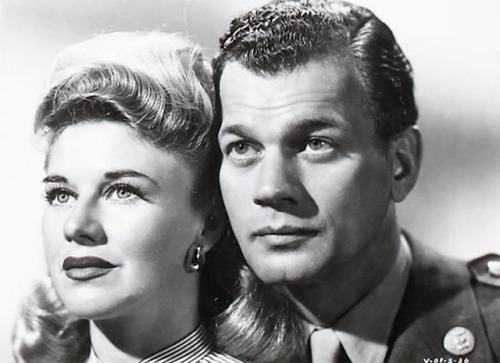
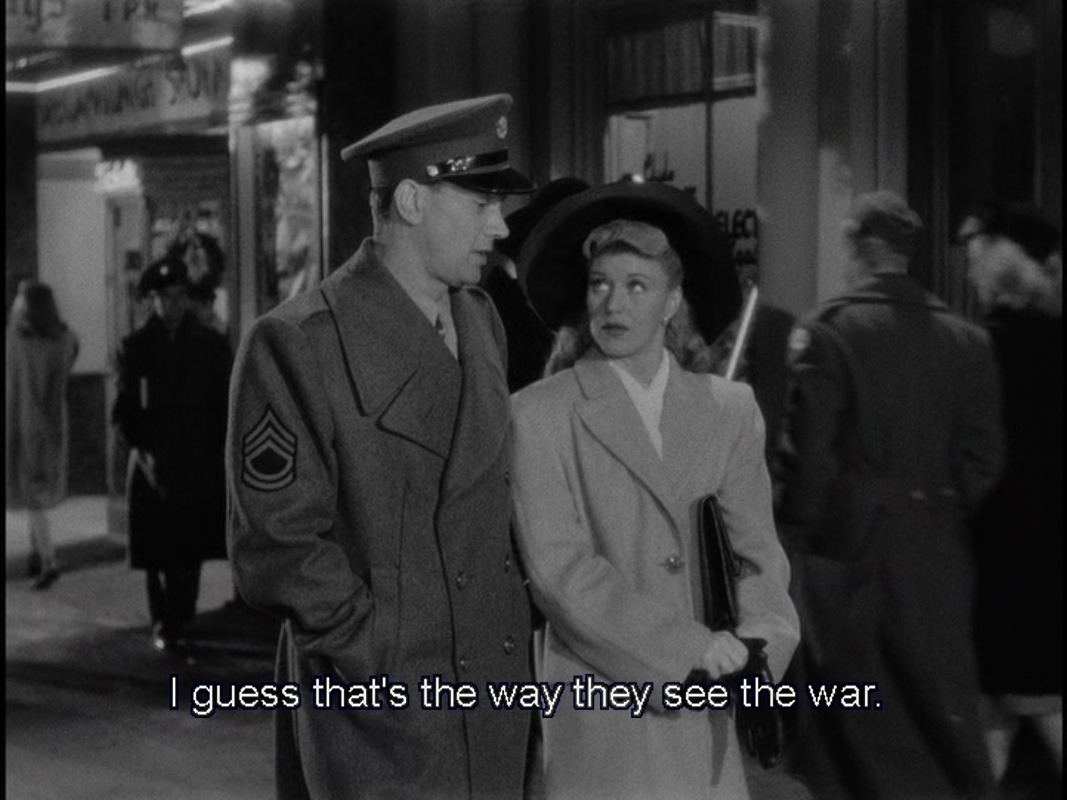
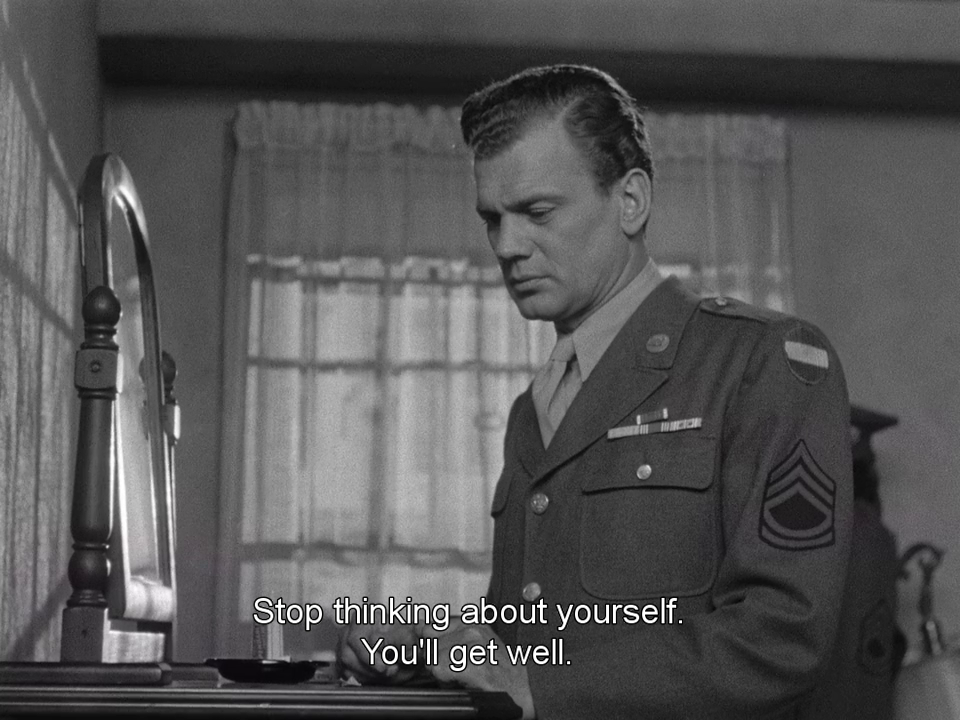
Duas pessoas se conhecem em um trem. Elas são a “vendedora” Mary Marshall (Ginger Rogers) e o soldado Zachary Morgan (Joseph Cotten). Quando eles ficam a sós no trem barulhento, começam a conversar e se conhecem melhor – partilhando apenas informações básicas, claro. Mary diz que vai visitar seu tio em uma cidade chamada Pinehill. Zack então decide também descer em Pinehill e ir atrás de Mary.

Two people meet on the train. They are “saleslady” Mary Marshall (Ginger Rogers) and soldier Zachary Morgan (Joseph Cotten). When they have some time alone in the noisy train, they chat and get to know each other – only the basic information, of course. Mary says she will visit her uncle in a town named Pinehill. Zack then decides to also stay in Pinehill and go after Mary.


Mas ambos escondem algo. Mary esteve na cadeia e foi apenas liberada para passar o Natal com sua família devido ao seu bom comportamento. Zack esteve no hospital e acabou de receber dispensa para passar o Natal longe da internação e tentar viver com seu trauma sob controle.

But they both hide something. Mary was in jail, and is now on probation spending Christmas vacation with her family due to good behavior. Zack was in the hospital and has just received a brief leave to experience Christmas outside and try to live with his PTSD under control.


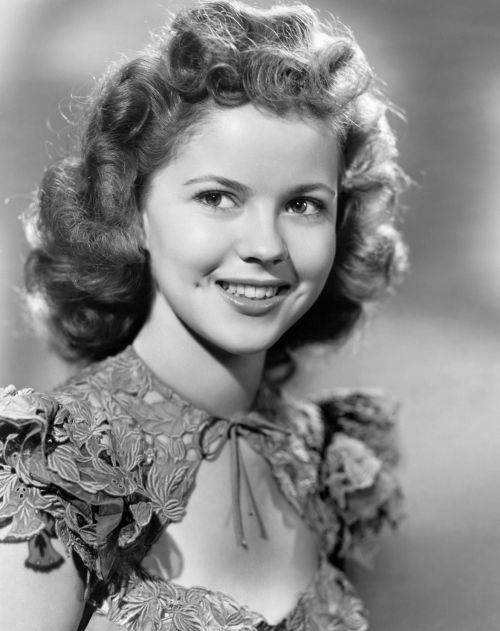
Mary fica na casa de seus tios. A tia Sarah (Spring Byington) é cheia de boas intenções, assim como o tio Henry (Tom Tully). Eles têm uma filha, a curiosa adolescente Barbara (Shirley Temple). Mas estas boas intenções escondem o preconceito deles. Por exemplo, Barbara arruma coisas separadas só para Mary – como sabonetes e toalhas – como se ela fosse contaminar a família se eles usassem os mesmos produtos. Além disso, ria Sarah pensa que Mary não deveria contar para Zack que ela esteve na cadeia, porque isso o assustaria.
  
Mary stays in her aunt’s and uncle’s house. Aunt Sarah (Spring Byington) is full of good intentions, as well as uncle Henry (Tom Tully). They have a daughter, curious teenager Barbara (Shirley Temple). But these good intentions hide prejudice. For instance, Barbara has separate things just for Mary - like soaps and towels - as if she could contaminate the family if they shared those products. Besides that, aunt Sarah thinks Mary shouldn’t tell Zack she has been in jail, because it would scare him.


Zack conta para Mary sobre seu trauma de guerra, mas ela não pode contar para ele sobre a prisão – mesmo que ela tenha cometido o crime para se defender. É uma mulher se autossacrificando e sacrificando a verdade para um homem emocionalmente instável. A tia Sarah diz que talvez Zack não seja forte o suficiente para lidar com a verdade. É a lógica da guerra: as mulheres têm de fazer sacrifícios para que os homens possam ir para a guerra e depois se recuperar dela. É como diz a música “No Love, No Nothin’” do filme “Entre a Loura e a Morena” (1943): “no love, no nothing, until my baby comes home”.

Zack tells Mary about his PTSD, but she can’t tell him about being in prison - even if the crime she committed as self-defense. It’s a woman sacrificing herself and the truth for a man that is emotionally unstable. Aunt Sarah says Zack may not be strong enough to handle the truth. It’s the war logic: women must make sacrifices so men can serve the military and later recover from their war traumas. Like what is told by the song “No Love, No Nothin’” from the movie “The Gang’s All Here” (1943): “no love, no nothing, until my baby comes home”.


“Ver-te-ei Outra Vez” pode ser descrito como um filme sobre gatilhos. Se você tem algum trauma, qualquer tipo de trauma, você sabe que um gatilho pode trazer todas as memórias de volta – e Hollywood estava começando a perceber que isso era verdade também para os soldados traumatizados. O gatilho de Mary é ouvir alguém falar sobre celas ou prisões, ainda que metaforicamente. O grande gatilho de Zack é o ataque de um cachorro, depois do qual ele tem um ataque de ansiedade e pânico fechado no quarto, algo muito poderoso e também uma sequência que mostra o talento de Joseph Cotten – não há dúvidas de que Cotten tem a melhor atuação do filme.

“I’ll Be Seeing You” can be described as a movie about triggers. If you have some trauma, any kind of trauma, you know how a trigger can bring all the memories back – and Hollywood was starting to realize this was true about shell-shocked soldiers, too. Mary is triggered whenever someone mentions prisons or cells, even metaphorically. Zack is especially triggered after a dog attacks him, and in his room he has a complete panic attack, something extremely powerful and also a sequence that showcases Joseph Cotten’s talent – there is no doubt Cotton delivers the best performance in the movie.


Eu fiquei esperando que muitas coisas acontecessem. Primeiro eu pensei que Shirley Temple, Joseph Cotten e Ginger Rogers formariam um triângulo amoroso. Mas É ÓBVIO que Hollywood não faria isso com a pequena Shirley, a menina de ouro. Hollywood não era capaz de colocá-la para disputar Cotten com Ginger Rogers, por isso sua personagem Barbara é importante, mas não atrapalha ninguém – pelo menos não de propósito.

I was expecting many things to happen. At first I thought Shirley Temple, Joseph Cotten and Ginger Rogers would be in a love triangle. But OF COURSE Hollywood wouldn’t do it to little Shirley, its youngest moneymaker. Hollywood just couldn’t make her dispute Cotten with Ginger Rogers, so her character Barbara is important, but not a troublemaker – at least not intentionally.


Nós temos muitos filmes nos anos 40 sobre pessoas que encontram o verdadeiro amor durante as férias de Natal. Um dos mais emblemáticos – e também aquele que mais tem a ver com “Ver-te-ei Outra Vez” – é “Lembra-se Daquela Noite?” (1940). Nele, Barbara Stanwyck é uma mulher que deve ser presa por roubo, mas como todas as pessoas já haviam saído de férias, ela precisa ficar com o advogado de acusação, interpretado por Fred MacMurray. Eles acabam passando o Natal juntos na casa da família dele. “Amor de Natal” nos anos 40 era o equivalente ao “amor de verão” sobre o qual Travolta e Olivia Newton-John cantaram em “Grease”.

We have many movies about people finding true love during Christmastime made during the 1940s. One of the most emblematic ones – and the one that share themes with “I’ll Be Seeing You” – is “Remember the Night” (1940). In “Remember the Night”, Barbara Stanwyck plays a woman who must go to jail after a robbery, but since everybody had already left for Christmas, she has to stay with her prosecutor, played by Fred MacMurray. They end up spending Christmas at his family’s home. “Christmas love” in the 1940s was the equivalent to the “Summer love” Travolta and Newton-John sang in “Grease”.


“Ver-te-ei Outra Vez” é um pequeno filme agridoce, assim como outros que David O. Selznick produziu. Sua icônica produtora, simbolizada por uma placa em frente a uma casa branca, nos legou muitos pequenos tesouros feitos nas décadas de 1930 e 1940. “Ver-te-ei Outra Vez” é mais um destes pequenos tesouros.

“I’ll Be Seeing You” is a bittersweet little film, like some David O. Selznick produced. His iconic production company, symbolized by a plaque in front of a white house, gave us many great little gems during the 1930s and 1940s. “I’ll Be Seeing You” is another of those great little gems.

This is my contribution to the Joseph Cotten blogathon, hosted by Crystal from In the Good Old Days of Classic Hollywood and Maddy at Maddy Loves her Classic Movies.


Sunday, July 22, 2018

Dance Comigo (1938) / Carefree (1938)

Fred Astaire e Ginger Rogers podem fazem algum filme ruim? Talvez. No final dos anos 30, Fred foi uma das várias estrelas de cinema chamadas de “veneno de bilheteria”, após o fracasso de alguns de seus filmes. “Dance Comigo” foi um destes filmes que deu prejuízo. Mas seria “Dance Comigo” tão ruim assim? Só há uma maneira de descobrir: assistindo-o!

Can Fred Astaire and Ginger Rogers do wrong? Maybe. In the late 1930s, Fred was one of the several film stars labeled “box office poison” after some of his films flopped at the box office. “Carefree” was one of those movies that lost money. But is “Carefree” so bad? There is only one way to find out: watching it! 

Você pode imaginar Fred Astaire como um psicanalista? Ele certamente seria um psicanalista pouco convencional. E é exatamente esta a profissão de seu personagem, doutor Tony Flagg, em “Dance Comigo”: um psicanalista tão peculiar que sua estratégia é fazer um paciente andar em círculos até ficar tonto para curar uma ressaca, enquanto o doutor Flagg toca “Jingle Bells” em uma gaita. O paciente é Stephen (Ralph Bellamy), desolado porque sua noiva rompeu o noivado – pela terceira vez!

Can you imagine Fred Astaire as a psychoanalyst? He certainly would have been a very unconventional one. And that’s exactly what his character, doctor Tony Flagg, is in “Carefree”: a psychoanalyst so peculiar that he makes a patient go around a bed several times until he gets dizzy, in order to cure his hangover, while Dr. Flagg plays “Jingle Bells” in a harmonica. The patient is Stephen (Ralph Bellamy), depressed because his fiancée called the engagement off – for the third time!


Para ajudar Stephen, o doutor Flagg decide fazer análise com a n0iva, Amanda Cooper (Ginger Rogers). Ele quer analisar especificamente os sonhos dela e, uma vez que ela não sonha, ele quer incitá-la a sonhar. O problema é que, quando ela finalmente consegue sonhar, ela percebe que o homem que ela ama não é Stephen. Você já deve estar imaginando o que acontece a seguir – porque Stephen é interpretado pela eterna segunda opção, Ralph Bellamy.

To help Stephen, Dr. Flagg decides to psychoanalyze the fiancée, Amanda Cooper (Ginger Rogers). He wants to analyze specifically her dreams and, since she says she can’t dream, he wants to provoke dreams in her. The problem is, when she dreams again, she realizes Stephen isn’t the man she loves. You can imagine what happens next – because, well, Stephen is played by the eternal second choice, Ralph Bellamy.


Este é um dos vários filmes sobre psicanálise, algo novo e na moda na época – Freud ainda estava vivo quando “Dance Comigo” foi feito. O filme é menos didático que a mais conhecida produção sobre o tema, “Quando Fala o Coração” (1945). Aqui, coisas como hipnose, anestésicos, sonhos e subconsciente são fonte de risadas.

This is one of many films that dealt with psychoanalysis, a brand new trend back then – Freud was still alive when “Carefree” was made. It is less didatical than the best remembered film about the theme, “Spellbound” (1945). Here, things like hypnosis, anesthesics, dreaming and subconscious are the source of laughs. 


O filme é muito divertido. As risadas começam logo na primeira sequência, quando um homem bêbado procura pelo doutor Flagg. Ginger tem duas sequências particularmente engraçadas para mostrar todo o seu talento como comediante: sua personagem é sedada pelo doutor Flagg com um gás, mas Stephen a acorda e a manda ir para a rádio trabalhar; e mais tarde, ela é hipnotizada e começa a andar pelo country club. Estes momentos me lembraram de outro filme em que Ginger Rogers precisa fazer este tipo de comédia: “O Inventor da Mocidade” (1952). Além de Ginger, temos Luella Gear como tia Cora e Jack Carson como Connors – dois personagens essencialmente cômicos.

The film is a very funny one. The laughs start in the first sequence, when a drunken man looks for doctor Tony Flagg. Ginger has two particularly funny sequences to show her skills as a comedienne: her character is sedated by doctor Flagg with a gas, but Stephen wakes her up and tells her to go work in the radio quickly or she’ll be late; and later, in another sequence, she is hypnotized and starts wandering a country club. These moments reminded me of another film in which Ginger has to act carefree: “”Monkey Business”, from 1952. Besides Ginger, we have Luella Gear as aunt Cora and Jack Carson as Connors – both essentially comic characters.


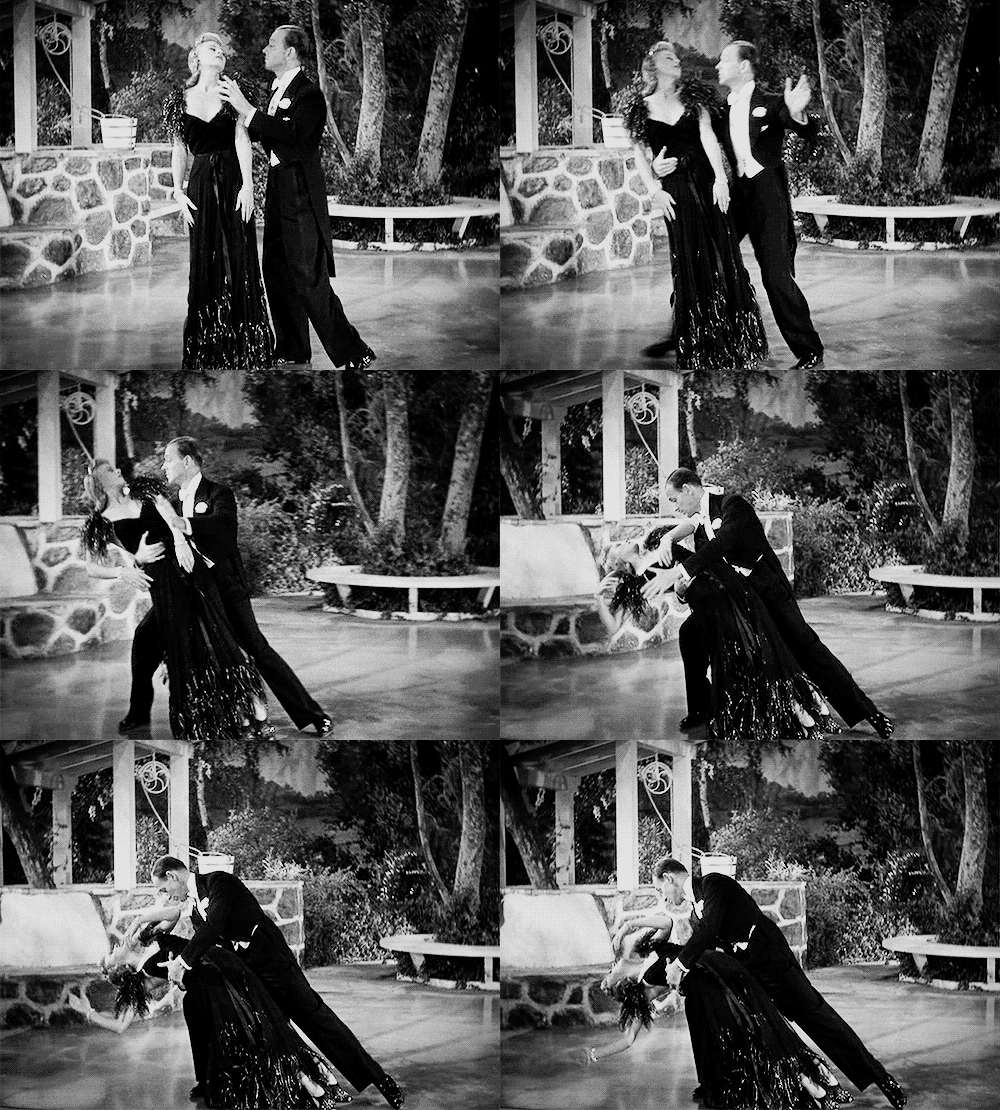
Já que “Dance Comigo” é um musical, você deve estar perguntando: como são os números de canto e dança? Bem, você tem Irving Berlin, Fred e Ginger, RKO: claro que os números são ótimos! Há um incrível momento em que Fred Astaire dança e joga golfe e também temos Fred e Ginger dançando em câmera lenta em cima de uma vitória-régia. Isso só é aceitável porque é uma sequência de sonho, OK?

Since “Carefree” is a musical, you might be asking: how is the music and dance? Well, it’s Irving Berlin, Fred and Ginger, RKO: of course it’s top notch! There is a great moment with Astaire tap dancing while golfing (the Putin puppet could never) and also Fred and Ginger dancing in slow motion on a Victoria amazonica (or vitória-régia in Portuguese), a huge plant from the Amazon rainforest. I can accept that because it was a dream sequence, OK?


De volta à questão inicial. Fred Astaire e Ginger Rogers podem fazem algum filme ruim? Não. Mas eles podiam fazer um filme “não tão brilhante”. Se você quiser assistir a algo maravilhoso, talvez seja melhor rever “O Picolino” (1935) ou “Ritmo Louco” (1936). Mas, se um pouco de besteiras não te incomodam, “Dance Comigo” é uma ótima opção.

Back at the initial question. Can Fred and Ginger do wrong? No. But they could do “less than right”. If you want to watch something amazing, maybe it's better to rewatch “Top Hat” (1935) or “Swing Time” (1936). But if some silliness doesn't bother you, “Carefree” is a very good choice.

This is my contribution to the Fred Astaire and Ginger Rogers blogathon, hosted by Michaela and Crystal at Love Letters to Old Hollywood and In the Good Old Days of Classic Hollywood

Sunday, December 3, 2017

No Teatro da Vida (1937) / Stage Door (1937)

Sair de casa para ir em busca dos seus sonhos nunca é fácil. Nçao que eu já tenha feito isso – embora já tenha chegado perto – mas os filmes me fazem pensar que não é fácil. E “No Teatro da Vida”, em particular, me causou esta impressão.

Leaving home in order to pursue your dreams in never easy. Not that I have done this myself – I only came close – but movies make me think that it is not easy. And “Stage Door” in particular gives me this feeling.
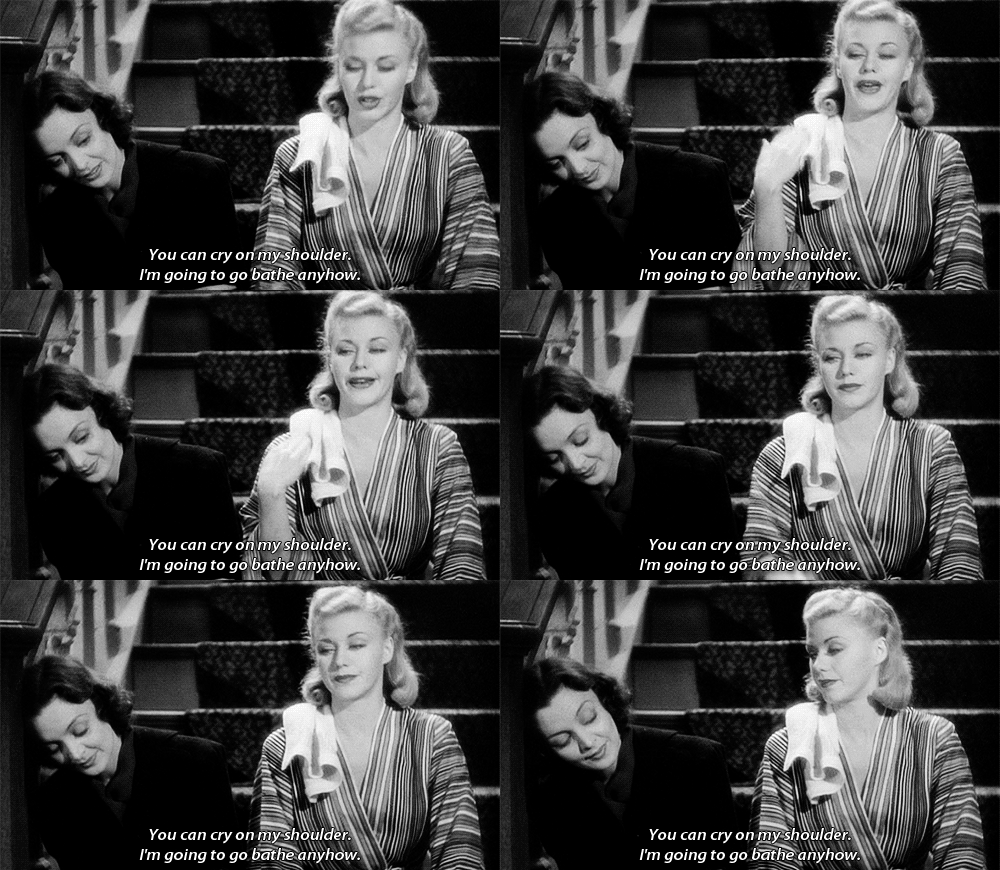
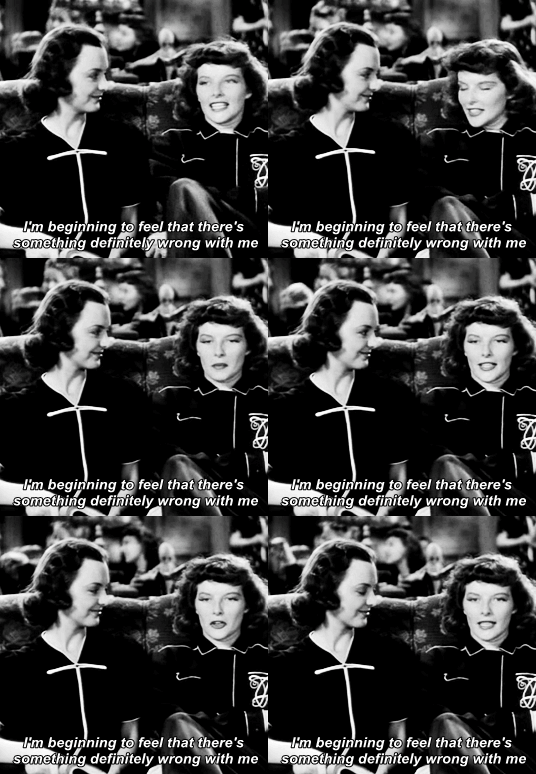
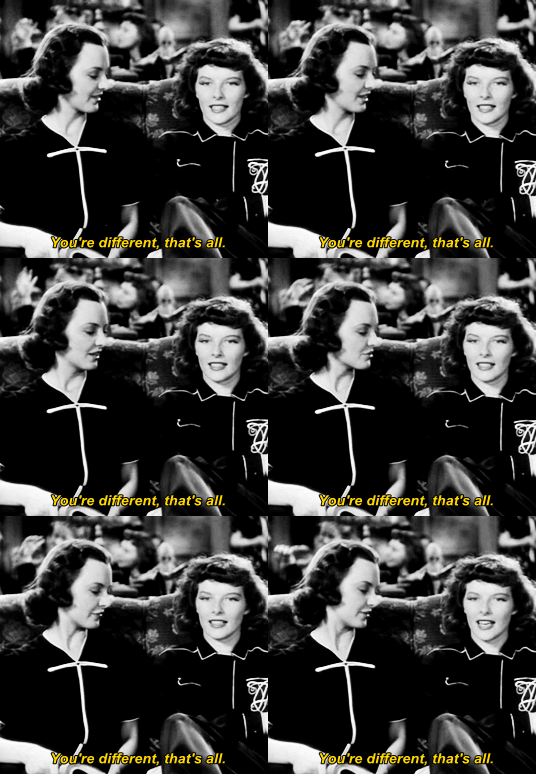
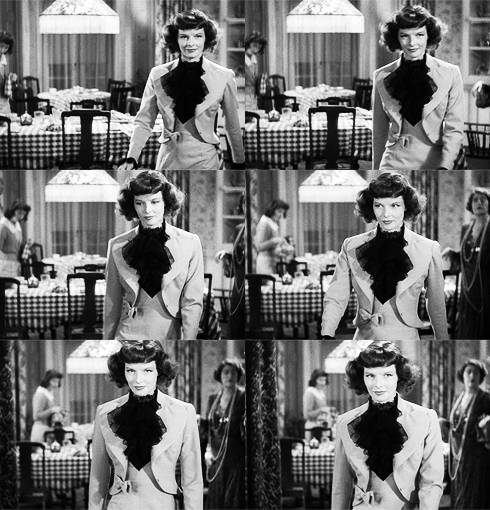
A mais nova moradora do pensionato da Sra. Orcutt é Terry Randall (Katharine Hepburn), uma moça elegante e educada. Isso nçao significa que ela não saiba se defender das outras moças, todas muito diferentes dela. Tery é fluente em sarcasmo, e o usa com perfeição em uma batalha de boas tiradas contra sua nova colega de quarto, Jean Maitland (Ginger Rogers).

The newest arrival in Mrs. Orcutt's boarding house for young and aspiring actresses is Terry Randall (Katharine Hepburn), a fancy and polite lady. This doesn't mean that she can't defend herself against the other girls, who are very different from her. Terry is fluent in sarcasm, and uses it perfectly in a battle of wits with her new roommate, Jean Maitland (Ginger Rogers).
Jean também não se dá bem com a esnobe Linda Shaw (Gail Patrick), que está saindo com o empresário Anthony Powell (Adolphe Menjou). Powell é a última esperança para outra garota do pensionato, Kay Hamilton (Andrea Leeds, em uma ótima performance), que não consegue trabalho há mais de um ano e está passando fome para ter dinheiro para pagar o aluguel.

Jean is also not very friendly with snobbish Linda Shaw (Gail Patrick), who is going out with manager Anthony Powell (Adolphe Menjou). Powell is the last hope for another girl in the boarding house, Kay Hamilton (Andrea Leeds, in a great performance), who hasn't worked in over a year and has been starving in order to be able to pay the rent.
As garotas dependem da vontade de um homem para se tornarem estrelas e continuarem no topo. Devemos perceber os paralelos do filme com o recente caso Weinstein, que sacudiu Hollywood. No entretenimento, as mulheres ainda são reféns das vontades – e dos desejos sexuais – dos homens para alcançarem a fama. O show business é o mesmo, 80 anos depois.

The girls rely on a man's wish to become stars and maintain their fame. We must see the parallel between this and the recent Weinstein case – Weinsteingate, maybe? - that shrieked Hollywood. In entertainment, women are still held hostage of man's wishes – often sexual wishes – if they want to have a career. Show business is the same, 80 years later.
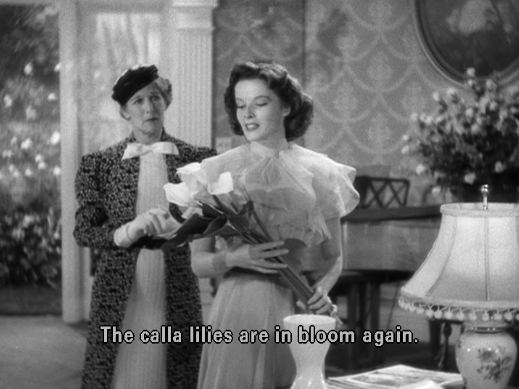
Quando Terry entra no escritório de Powell para confrontá-lo – logo depois de Kay ter desmaiado ao ser informada de que Powell não a receberia – ele diz muitas, muitas coisas sexistas para ela, como “a maioria das mulheres deveria ir lavar a louça e cuidar das crianças em vez de tentar uma carreira no teatro”. É enfurecedor. E é ainda pior se nos lembrarmos de que, mesmo sendo chique e popular, o ator Adolphe Menjou era assim na vida real: um conservador feroz que foi como VOLUNTÁRIO depor - e destruir algumas vidas - no Comitê de Atividades Antiamericanas.

When Terry enters Powell's office to confront him – right after Kay fainted outside the office when she was told that Powell wouldn't see her – he says many, many sexist things to her, like “most women should wash dishes and have a family instead of trying a career at the theatre”. It's infuriating. And it's even worse if we remember that, even being popular and dapper, actor Adolphe Menjou was like this in real life: a staunch conservative who appeared in the HUAC hearing VOLUNTARILY to name names and destroy lives..
Claro, sendo assim, Powell nunca fica muito tempo com a mesma garota. Ele troca Linda por Jean, e no primeiro encontro na casa dele Jean fica bêbada e emotiva, acreditando em todas as suas mentiras. Depois de Jean, é a vez de Terry visitar Powell, e ela faz isso de maneira bárbara: ela o confronta e não aceita seus elogios e hipocrisias. Terry está ali para fazer negócios de igual para igual, não para se submeter a um empresário.

Of course, being this way, Powell never keeps a girl for too long. He trades Linda for Jean, and in their first date in his house Jean gets drunk and emotional, believing all his lies. After Jean, it's Terry's time to visit Powell, and she does it in a badass way: she confronts him and doesn't accept his compliments or hypocrisies. Terry is there to make business between equals, not to submit herself to a manager.
#badass
Também temos no pensionato Eve Arden como Eve, a dona de um gato, uma Ann Miller muito jovem, Constance Collier como uma mentora obcecada pelas glórias do passado e Lucille Ball como Judith, a amiga cínica e sarcástica de que todas as atrizes precisavam – um papel semelhante ao que ela interpretou em “A Vida é uma Dança” (1940). De certa maneira, este é um papel semelhante aos que Joan Blondell interpretou em muitos pre-Codes. É bacana ver Lucy, de cabelo escuro e com apenas 26 anos, sendo um pouco pessimista e tendo frases de efeito.

We also have in the boarding house Eve Arden as Eve, the lanky owner of a cat, a very young Ann Miller, Constance Collier as an older mentor obsessed with her bygone fame, and Lucille Ball as Judith, the street-wise, cynical and sarcastic friend all theater girls need – a role similar to the one she played in “Dance, Girl, Dance” (1940). In a sense, this is a role similar to those Joan Blondell played many times in pre-Codes. It's nice to see Lucy, with darker hair and at only 26 years old, being a little pessimistic and delivering one-liners. 
Eu entendo que as garotas que vivem no pensionato são jovens, no final da adolescência ou com vinte e poucos anos, mas elas estão quase sempre discutindo e implicando umas com as outras. OK, Kay é amada por todas, e ama todas também, mas as outras garotas ainda têm “panelinhas” como em uma escola infestada de bullying. É mais um filme que quer provar que não há amizade entre as mulheres sem que haja muita rivalidade antes.

I understand all the girls living in the boarding house are young, in their late teens or early twenties, but they are usually bickering and discussing. All right, Kay is loved by them all, and loves them all, but all the other girls still have their “cliques” like in a bullying-full high school. It's another film that wants to prove that there can't be friendship among females if there is not rivalry before.  
No Teatro da Vida” foi uma peça de sucesso escrita por Edna Ferber. Para a adaptação para o cinema, muito foi alterado e o roteiro parece às vezes demasiado difuso – e comete o crime de criar o personagem do empresário, que não existia na peça, para ser o centro do filme e da discussão, como você deve ter percebido nesta crítica. No final das contas, “No Teatro da Vida” é um filme com falhas, mas que mostra que a vida no show business é, acima de tudo, um implacável ciclo.

Stage Door” was a successful stage play written by Edna Ferber. For the movie version, a lot was altered and  the screenplay seems too diffuse at times – and it commits the crime to create a male manager character, who didn't exist in the play, that becomes the center of the movie and the discussion, as you may have noticed in this review. In the end, “Stage Door” is a film with flaws, but one that shows how life in the show business is, above all, a ruthless cycle.


This is my contribution to the Lucy & Desi blogathon, hosted by Michaela at Love Letters to Old Hollywood.

Sunday, November 20, 2016

Chicago (1927)

O tema era amizade. Dezenas de filmes passaram pela minha cabeça. Todos com algo em comum: eram sobre amizade entre homens. Há muitos filmes sobre “bromances”, camaradas, grupos de homens cultivando a amizade. E há poucos clássicos sobre amizade entre mulheres, sendo “Os Homens Preferem as Loiras” (1953) o mais conhecido deles. Quando duas mulheres são colocadas lado a lado, com a mesma importância, em geral elas são rivais no amor, e não amigas.  Será que só Lorelei e Dorothy conseguiram ser amigas num filme clássico?

The subject was friendship. I could think of dozens of movies. All of them with one thing in common: they were about friendship between men. There are a lot of films about bromances, camaraderie, groups of men who are good friends. And there are few classic films about friendship between women, and “Gentlemen Prefers Blondes” (1953) is the best known of them all. When two women are put side by side, with the same importance, in general they are rivals, not friends. Were Lorelei and Dorothy the only two girl pals in classic film?


Havia muitas duplas ou trios de amigas na era pre-Code, mas uma sempre se sobressaía e a outra ficava como alívio cômico, de lado, às vezes até esquecida ao longo do filme. É isso que acontece, por exemplo, em “Três... Ainda é Bom” (1932), com a personagem de Ann Dvorak ganhando destaque em detrimento das amigas Bette Davis, a moça simples, e Joan Blondell, a amiga bem-humorada.

There were a lot of female duos and trios in the pre-Code era, but one of them was the lead and the other was only comic relief and could be forgotten as the movie progressed. This happens, for instance, in“ Three on a Match” (1932), with Ann Dvorak’s character being the lead and his other two girl friends, Bette Davis, the simple girl, and Joan Blondell, the wisecrack friend, being left behind.


Não há poucos filmes sobre amizade feminina porque não havia amizades femininas inspiradoras na Old Hollywood. Podemos citar, por exemplo, as amigas Joan Crawford e Barbara Stanwyck, e também Bette Davis e Olivia de Havilland. Aparentemente, as rivalidades inspiravam muito mais que as amizades.
We can’t blame the lack of films about female friendship on the inexistence of real inspiring female friendships in Old Hollywood. We can cite BFFs Joan Crawford and Barbara Stanwyck, and also Bette Davis and Olivia de Havilland. But, apparently, rivalries were much more inspiring than friendships.
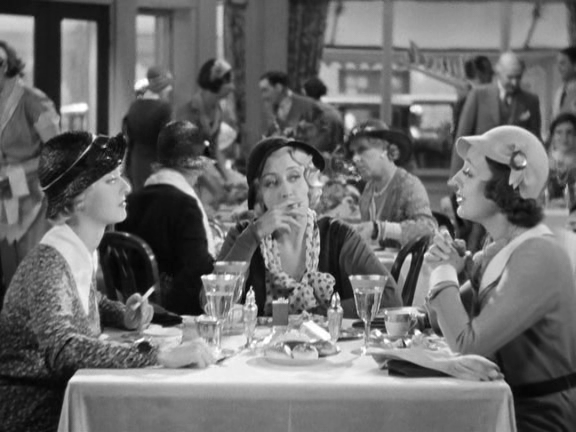

E é por isso que a minoria das produções mais famosas da Old Hollywood passam no teste de Bechdel. Poucas mulheres protagonistas, ou mesmo relevantes na história. A maioria das personagens femininas só existiam porque gravitavam ao redor de um homem, e duas personagens importantes femininas em um mesmo filme só podiam estar lá para disputar o personagem masculino. Mas vamos ao nosso filme.

And that’s why few Old Hollywood productions pass the Bechdel Test. Few female leads, or even few females with an important role. Most female characters existed because they gravitated around a man, and two important female characters in the same film could only be there to fight for the male character. But let’s see our film of choice.

O nome “Chicago” deve lembrar para você aquele musical que ganhou o Oscar de Melhor Filme em 2003 – tirando o prêmio merecido de “Gangues de Nova York” do deus Scorsese. Não é coincidência que o filme de 1927 tenha o mesmo título: é (quase) a mesma história.

The name “Chicago” may remind you of that musical that won the Best Picture Oscar in 2003 – stealing the deserved prize from “Gangs of New York”, directed my Our Lord Scorsese. It is not a coincidence that the 1927 film has the same title: it is (almost) the same story.


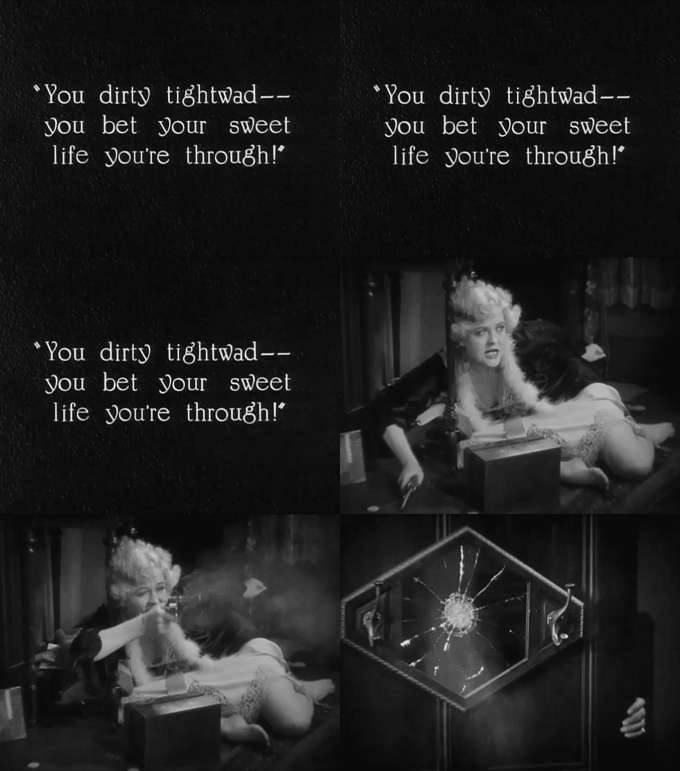
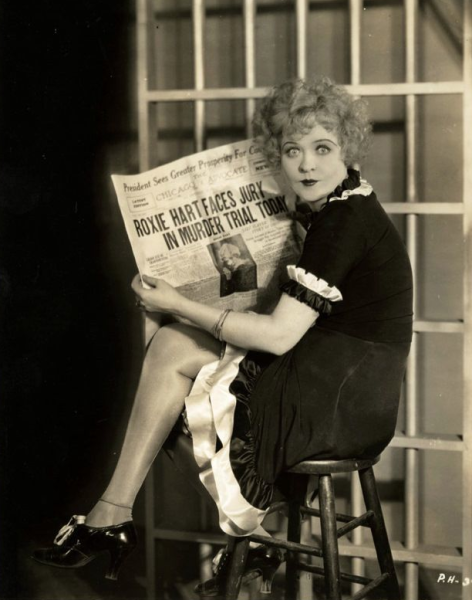
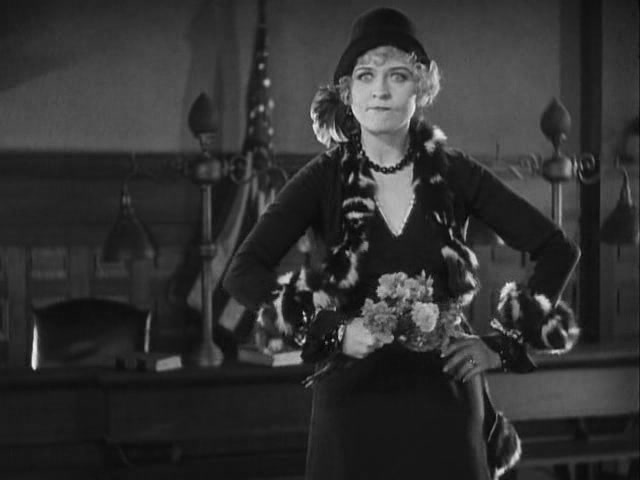
Amos Hart (Victor Varconi) é o marido perfeito, mas isso não impede sua esposa Roxie (Phyllis Haver) de ter um amante, Casely (Eugene Pallette). Após uma discussão sobre dinheiro, Casely anuncia que vai embora e Roxie, irada, atira nele. Desesperada por tê-lo matado, ela liga para Amos, que está disposto a assumir o crime mesmo depois de descobrir que Roxie o traía.

Amos Hart (Victor Varconi) is the perfect husband, but this doesn’t stop his wife Roxie (Phyllis Haver) from having a lover, Casely (Eugene Pallette). After an argument about money, Casely says he’ll leave Roxie and she, full of rage, shoots him. Desperate, she calls Amos, who is willing to confess the crime even after he finds out that Roxie was cheating on him.


Mas uma jogada de um investigador faz Roxie confessar, sem querer, que foi ela que deu o tiro, e ela vai para uma cadeia feminina. Amos precisa de cinco mil dólares para pagar um advogado para defendê-la no tribunal. Roxie vê tudo isso como um jeito ótimo de se tornar famosa.

But an investigator’s move leads Roxie to confess that she was the one who shot Casely, and she goes to an all-female prison. Amos needs five thousand dollars to pay a lawyer to defend her at the court. Roxie sees the entire situation as a great way to become famous.


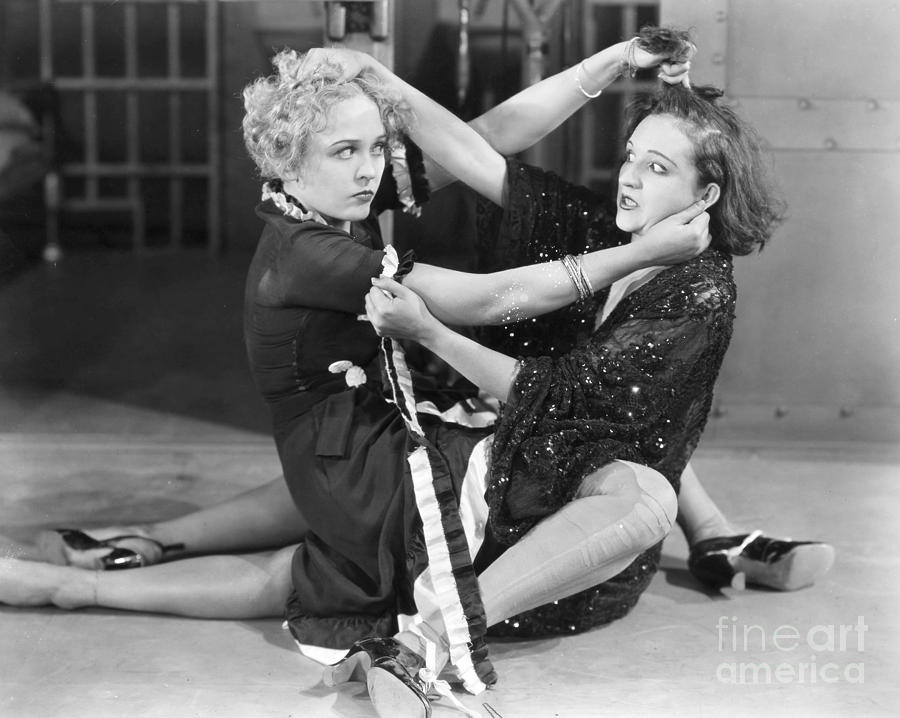
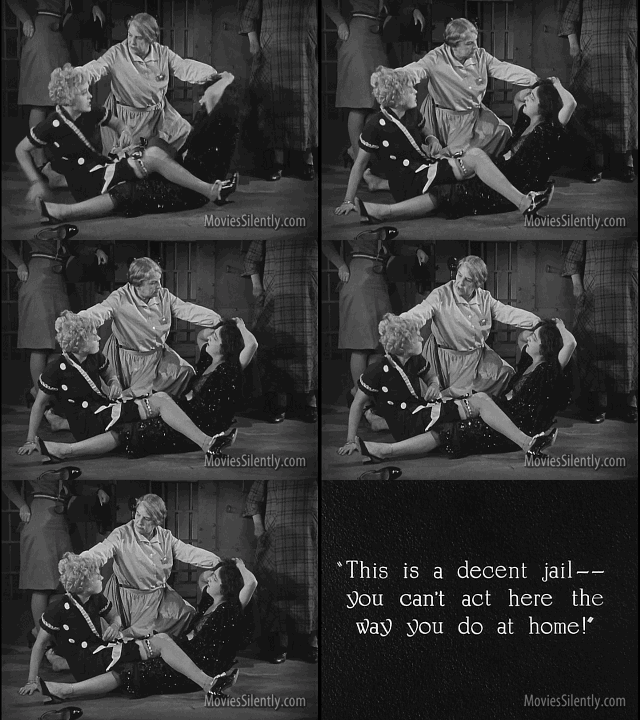
Onde entra a amizade na história? Este é o problema: ela não entra. Minha intenção era ver como a relação de frenemies de Roxie Hart e Velma Kelly foi mostrada no filme de 1927, mas Velma, interpretada por Julia Faye, tem apenas uma cena, na qual provoca Roxie e as duas acabam brigando na cadeia.

Where is friendship in our story? That’s the question: it isn’t there. My intention was to see how the frenemies relationship between Roxie Hart and Velma Kelly was portrayed in the 1927 film. However, Velma, played by Julia Faye, has only a scene, in which she teases Roxie and the two end up fighting in jail.

GIF via Movies, Silently

A história voltou às telas como comédia em 1942, sob o título “Roxie Hart”. Ginger Rogers vive Roxie no filme, e mais uma vez Velma aparece apenas para brigar com nossa protagonista por causa de popularidade.

The story went back to the screen as a comedy in 1942, under the title “Roxie Hart”. Ginger Rogers plays Roxie in the movie, and once again Velma is there only to fight with our lead because of popularity.


A peça de teatro foi escrita por uma mulher. A história foi adaptada para as telas em 1927 por uma mulher. Mas a peça de teatro não é igual ao musical conhecido: ele veio bem depois. A dramaturga, repórter e roteirista Maurine Dallas Watkins faleceu em 1969, e pouco depois os direitos de sua peça foram vendidos para Bob Fosse, que idealizou o musical como o conhecemos – e que serviu de base para o filme de 2002.

The theater play was written by a woman. The story was adapted to the screen in 1927 by a woman. But the theater play is not the same as the well-known musical: it came years later. The play writer, reporter and screenwriter Maurine Dallas Watkins died in 1969, and soon the rights for her play were sold to Bob Fosse, who idealized the musical as we know it – the one that was the basis for the 2002 film.

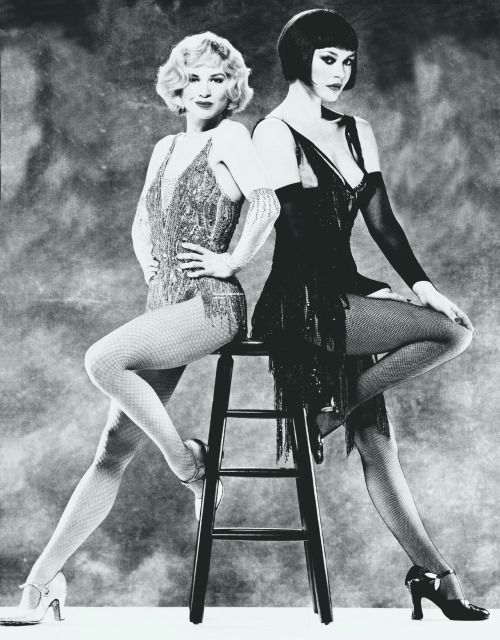
Neste filme, Roxie (Renée Zellweger) e Velma (Catherine Zeta-Jones) têm uma relação conturbada. Velma é o ídolo de Roxie, Roxie tenta ser amiga dela ao chegar à prisão, mas é esnobada. A partir de então elas começam uma disputa por espaço na mídia, mas ao final se tornam amigas.

In this film, Roxie (Renée Zellweger) and Velma (Catherine Zeta-Jones) have a difficult relationship. Velma is Roxie’s idol, Roxie attempts to become friends with her when she arrives in the prison, but she is snobbish. From then on they start a dispute for media space, but in the end they become friends. 


O filme de 1927 foca no sacrifício dramático de Amos, interpretado pelo belo húngaro Victor Varconi, e deixa Roxie como personagem cômica, sendo a excelente Phyllis Haver o destaque do filme. Em 1942, Ginger Rogers e Adolphe Menjou, que interpreta o advogado Billy Flynn, são os melhores em cena. Em 2002, é inegável a presença luminosa de Catherine Zeta-Jones como Velma.

The 1927 film focuses on the dramatic sacrifice of Amos, played by the handsome Hungarian Victor Varconi, and leaves Roxie as a comic character, being the excellent Phyllis Haver simply outstanding. In 1942, Ginger Rogers and Adolphe Menjou, who plays the lawyer Billy Flynn, are the best in scene. In 2002, Catherine Zeta-Jones’s luminous presence as Velma is undeniable.


Todas as versões da história são igualmente interessantes, e o recém-restaurado filme de 1927 vale muito a pena ser visto. É uma pena que existam tão poucos filmes clássicos sobre amizade entre mulheres, mas isto prova algo: amizade feminina é complexa, imprevisível e com muitos altos e baixos.

All the versions of the story are equally interesting, and the recently restored 1927 film is worth watching. It’s a pity that there are so very few classic films about female friendship, but this proves a point: female friendship is complex, unpredictable and with lots of ups and downs.

This is my contribution to the You Gotta Have Friends Blogathon, hosted by Debbie at Moon in Gemini.

Related Posts Plugin for WordPress, Blogger...