Sair de casa para ir em busca dos seus sonhos
nunca é fácil. Nçao que eu já tenha feito isso – embora já tenha chegado perto
– mas os filmes me fazem pensar que não é fácil. E “No Teatro da Vida”, em
particular, me causou esta impressão.
Leaving home in order to
pursue your dreams in never easy. Not that I have done this myself – I only
came close – but movies make me think that it is not easy. And “Stage Door” in
particular gives me this feeling.

A mais nova moradora do
pensionato da Sra. Orcutt é Terry Randall (Katharine Hepburn), uma moça
elegante e educada. Isso nçao significa
que ela não saiba se defender das outras moças, todas muito diferentes dela.
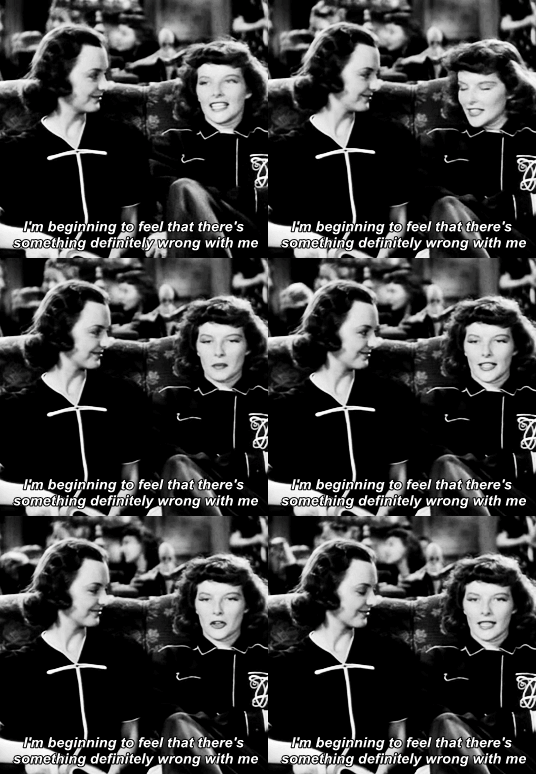
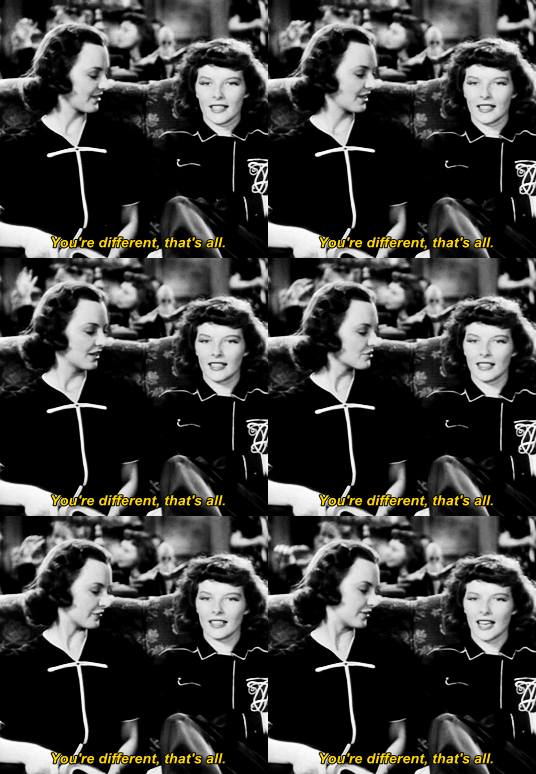
Tery é fluente em sarcasmo, e o usa com perfeição em uma batalha de boas
tiradas contra sua nova colega de quarto, Jean Maitland (Ginger Rogers).
The newest arrival in
Mrs. Orcutt's boarding house for young and aspiring actresses is Terry Randall
(Katharine Hepburn), a fancy and polite lady. This doesn't mean that she can't
defend herself against the other girls, who are very different from her. Terry
is fluent in sarcasm, and uses it perfectly in a battle of wits with her new
roommate, Jean Maitland (Ginger Rogers).

Jean também não se dá bem com a esnobe Linda Shaw
(Gail Patrick), que está saindo com o empresário Anthony Powell (Adolphe
Menjou). Powell é a última esperança para outra garota do pensionato, Kay
Hamilton (Andrea Leeds, em uma ótima performance), que não consegue trabalho há
mais de um ano e está passando fome para ter dinheiro para pagar o aluguel.
Jean is also not very
friendly with snobbish Linda Shaw (Gail Patrick), who is going out with manager
Anthony Powell (Adolphe Menjou). Powell is the last hope for another girl in
the boarding house, Kay Hamilton (Andrea Leeds, in a great performance), who
hasn't worked in over a year and has been starving in order to be able to pay
the rent.
As garotas dependem da vontade de um homem para
se tornarem estrelas e continuarem no topo. Devemos perceber os paralelos do
filme com o recente caso Weinstein, que sacudiu Hollywood. No entretenimento,
as mulheres ainda são reféns das vontades – e dos desejos sexuais – dos homens
para alcançarem a fama. O show business é o mesmo, 80 anos depois.
The girls rely on a man's
wish to become stars and maintain their fame. We must see the parallel between
this and the recent Weinstein case – Weinsteingate, maybe? - that shrieked
Hollywood. In entertainment, women are still held hostage of man's wishes –
often sexual wishes – if they want to have a career. Show business is the same, 80 years later.

Quando Terry entra no escritório de Powell para
confrontá-lo – logo depois de Kay ter desmaiado ao ser informada de que Powell
não a receberia – ele diz muitas, muitas coisas sexistas para ela, como “a
maioria das mulheres deveria ir lavar a louça e cuidar das crianças em vez de
tentar uma carreira no teatro”. É enfurecedor. E é ainda pior se nos lembrarmos
de que, mesmo sendo chique e popular, o ator Adolphe Menjou era assim na vida
real: um conservador feroz que foi como VOLUNTÁRIO depor - e destruir algumas
vidas - no Comitê de Atividades Antiamericanas.
When Terry enters
Powell's office to confront him – right after Kay fainted outside the office
when she was told that Powell wouldn't see her – he says many, many sexist
things to her, like “most women should wash dishes and have a family instead of
trying a career at the theatre”. It's infuriating. And it's even worse if we
remember that, even being popular and dapper, actor Adolphe Menjou was like
this in real life: a staunch conservative who appeared in the HUAC hearing
VOLUNTARILY to name names and destroy lives..
Claro, sendo assim, Powell nunca fica muito tempo
com a mesma garota. Ele troca Linda por Jean, e no primeiro encontro na casa
dele Jean fica bêbada e emotiva, acreditando em todas as suas mentiras. Depois
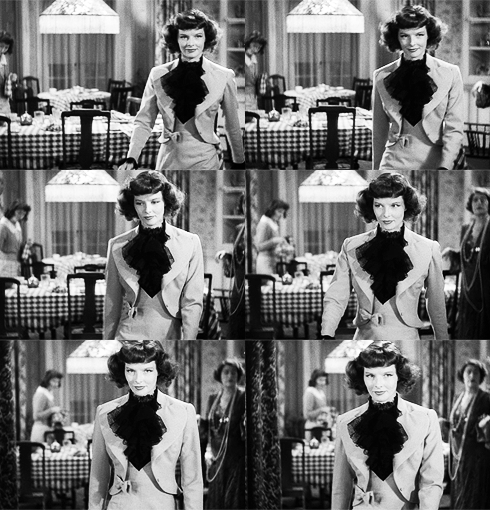
de Jean, é a vez de Terry visitar Powell, e ela faz isso de maneira bárbara:
ela o confronta e não aceita seus elogios e hipocrisias. Terry está ali para
fazer negócios de igual para igual, não para se submeter a um empresário.
Of course, being this
way, Powell never keeps a girl for too long. He trades Linda for Jean, and in
their first date in his house Jean gets drunk and emotional, believing all his
lies. After Jean, it's Terry's time to visit Powell, and she does it in a
badass way: she confronts him and doesn't accept his compliments or
hypocrisies. Terry is there to make business between equals, not to submit
herself to a manager.
 |
| #badass |
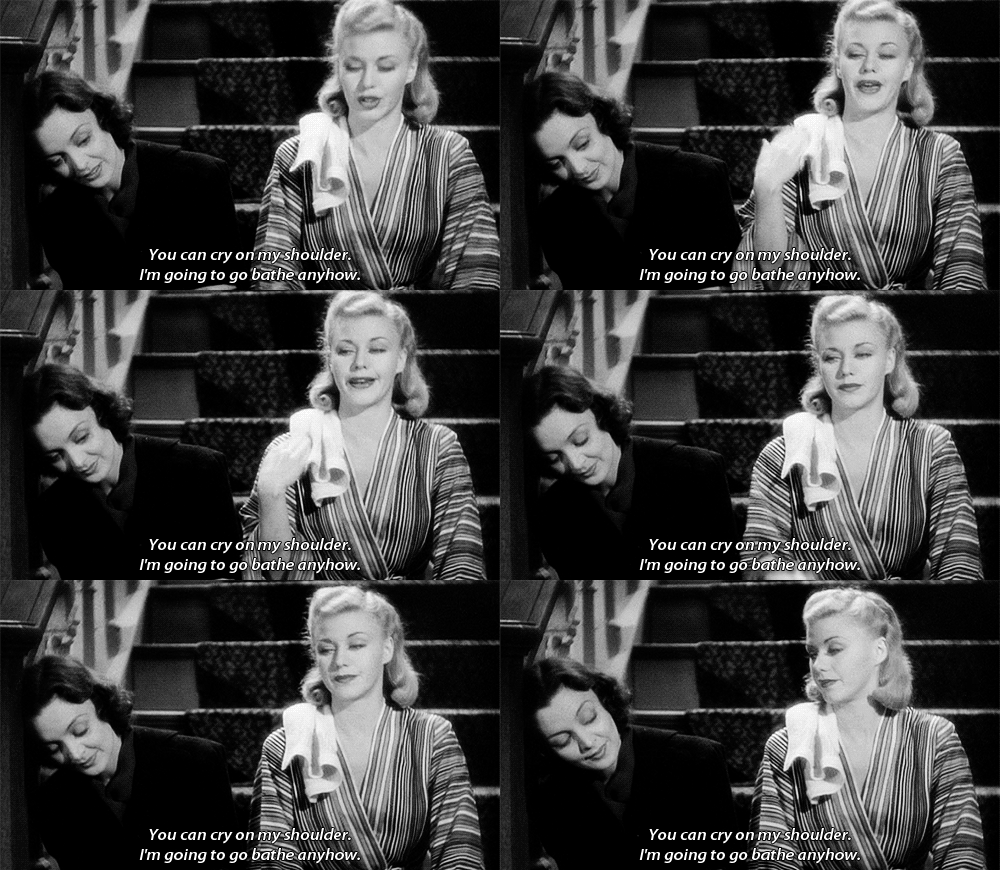
Também temos no pensionato Eve Arden como Eve, a
dona de um gato, uma Ann Miller muito jovem, Constance Collier como uma mentora
obcecada pelas glórias do passado e Lucille Ball como Judith, a amiga cínica e
sarcástica de que todas as atrizes precisavam – um papel semelhante ao que ela
interpretou em “A Vida é uma Dança” (1940). De certa maneira, este é um papel
semelhante aos que Joan Blondell interpretou em muitos pre-Codes. É bacana ver
Lucy, de cabelo escuro e com apenas 26 anos, sendo um pouco pessimista e tendo
frases de efeito.
We also have in the
boarding house Eve Arden as Eve, the lanky owner of a cat, a very young Ann
Miller, Constance Collier as an older mentor obsessed with her bygone fame, and
Lucille Ball as Judith, the street-wise, cynical and sarcastic friend all
theater girls need – a role similar to the one she played in “Dance, Girl,
Dance” (1940). In a sense, this is a role similar to those Joan Blondell played
many times in pre-Codes. It's nice to see Lucy, with darker hair and at only 26
years old, being a little pessimistic and delivering one-liners.


Eu entendo que as garotas que vivem no pensionato
são jovens, no final da adolescência ou com vinte e poucos anos, mas elas estão
quase sempre discutindo e implicando umas com as outras. OK, Kay é amada por
todas, e ama todas também, mas as outras garotas ainda têm “panelinhas” como em
uma escola infestada de bullying. É mais um filme que quer provar que não há
amizade entre as mulheres sem que haja muita rivalidade antes.
I understand all the
girls living in the boarding house are young, in their late teens or early
twenties, but they are usually bickering and discussing. All right, Kay is
loved by them all, and loves them all, but all the other girls still have their
“cliques” like in a bullying-full high school. It's another film that wants to
prove that there can't be friendship among females if there is not rivalry
before.

“No Teatro da Vida” foi uma peça de sucesso
escrita por Edna Ferber. Para a adaptação para o cinema, muito foi alterado e o
roteiro parece às vezes demasiado difuso – e comete o crime de criar o
personagem do empresário, que não existia na peça, para ser o centro do filme e
da discussão, como você deve ter percebido nesta crítica. No final das contas,
“No Teatro da Vida” é um filme com falhas, mas que mostra que a vida no show
business é, acima de tudo, um implacável ciclo.
“Stage Door” was a successful stage play written by Edna Ferber. For the
movie version, a lot was altered and the
screenplay seems too diffuse at times – and it commits the crime to create a
male manager character, who didn't exist in the play, that becomes the center
of the movie and the discussion, as you may have noticed in this review. In the
end, “Stage Door” is a film with flaws, but one that shows how life in the show
business is, above all, a ruthless cycle.
This is my contribution to the Lucy & Desi blogathon, hosted by Michaela at Love Letters to Old Hollywood.