} Crítica Retrô: 1963

Tradutor / Translator / Traductor / Übersetzer / Traduttore / Traducteur / 翻訳者 / переводчик

Showing posts with label 1963. Show all posts

Saturday, July 20, 2024

Tempero do Amor (1963) / The Thrill of It All (1963)


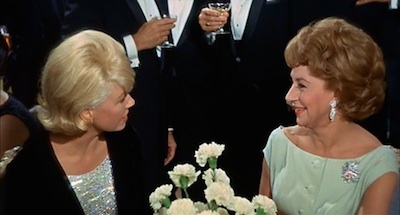
No começo do filme, uma mulher em êxtase faz todas as pessoas dentro de um elevador rirem histericamente. Ela tem motivos para rir: depois de vinte anos tentando, ela finalmente engravidou! Esta mulher é a senhora Fraleigh (Arlene Francis), e ela não teria engravidado sem a ajuda de seu obstetra, Gerald Boyer (James Garner). Para comemorar, a senhora Fraleigh convida o doutor e a esposa Beverly (Doris Day) para jantar.

In the beginning of the film, an ecstatic woman makes everybody in an elevator laugh histerically. She has reasons to laugh: after twenty years trying, she finally got pregnant! This woman is Mrs Fraleigh (Arlene Francis), and she couldn’t have become pregnant without the help of her obstetrician, Gerald Boyer (James Garner). To celebrate, Mrs Fraleigh invites the doctor and his wife Beverly (Doris Day) over for dinner.

No jantar os Boyers conhecem o sogro da senhora Fraleigh, Tom (Reginald Owen), um homem de negócios. Beverly conta que ela está usando o produto que ele vende, o sabão Happy. Tom convida Beverly a fazer uma propaganda do sabão. A experiência é um desastre, mas os consumidores amam Beverly, que é então convidada para ser garota-propaganda do sabão.

At the dinner party the Boyers meet Mrs Fraleigh’s father-in-law, Tom (Reginald Owen), a businessman. Beverly tells she’s using the product he sells, Happy Soap. Tom invites Beverly to appear in an advertisement for the soap. The experience is a disaster, but consumers love Beverly, who is then invited to be the spokeswoman for Happy Soap.

Estamos na época da televisão ao vivo. As atrações, como peças, eram encenadas ao vivo em frente às câmeras e transmitidas para todos os aparelhos de TV. E assim eram também feitos os comerciais: ao vivo, sem segunda chance. Há uma piada no filme, sobre as histórias das peças para TV serem todas iguais, de modo que até uma criança poderia apontar a semelhança entre os programas. A TV e o cinema tinham, ainda naquele tempo, uma rivalidade, e, ao contrário do que é mostrado no filme, a minoria das casas tinha TV a cores.

This was the time of live television. The plays were acted out live in front of the cameras and broadcasted to all the TV sets. So were the commercials made: live, without a second chance. There is a joke in the movie, about the plots of these TV plays being always the same, so similar that even a child could tell the similarities. TV and the movies had, at the time still, a rivalry, and, contrary to what is shown in the film, most houses didn’t have color TVs.

Numa cena Beverly lê numa revista que, em alguns casos, tarefas domésticas não são suficiente para uma mulher se sentir realizada, não sendo elas gratificantes o bastante. Ela usa isso para convencer o marido, que não quer que ela tenha uma carreira paralela, que está tudo bem se ela trabalhar com propaganda. Ela pode ter hobbies como ir a reuniões na escola e fazer seu próprio ketchup, mas ela quer mais.

In a scene Beverly reads from a magazine that, in some cases, household chores are not enough for a woman to fill fulfilled, they’re simply not gratifying enough. She uses this to convince her husband, who doesn’t want her to have a parallel career, that it’s OK if she works in advertisement. She may have hobbies such as PTA meetings and making her own ketchup, but she wants more.

O horário de trabalho do doutor Gerald é confuso porque bebês nem sempre nascem na data calculada. Ele frequentemente tem de sair de casa no meio da noite para ajudar num parto, algo que hoje não é tão comum por causa das desastrosas cesáreas agendadas, que são boas para os médicos, mas péssimas para os bebês e as mães. Com Beverly fazendo os comerciais à noite, Gerald e ela mal se veem dentro de casa.

Dr Gerald’s work schedule is hectic because babies aren’t always born on their due dates. He often has to leave house in the middle of the night to deliver a baby, something that is not so common anymore because the unfortunate advent of the scheduled C-sections, that are good for doctors, but awful for babies and mothers. With Beverly doing the commercials at night, Gerald and her often don’t meet in their house.

Gerald se enfurece não somente porque não encontra Beverly em casa. Ele fica bravo quando ela é reconhecida num restaurante e ele é ignorado. Ele até mesmo diz que o fato de que ela está ganhando seu próprio dinheiro “sufoca seus direitos de homem”. E então ele luta com a única arma que ele acha que Beverly vai entender: o ciúme.

Gerald gets bitter not only because he and Beverly don’t see each other often at home. He becomes angry when she’s recognized in a restaurant and he’s ignored. He even says that the fact that she’s earning her own money “suffocates his rights as a man”. Then he starts fighting with the only weapon he thinks Beverly cares about: jealousy.

Foi arriscado explorar a condição da senhora Fraleigh no film, pois o Código Hays proibia que o cinema tratasse de gravidez e parto, mas esta proibição já estava mais relaxada em 1963. Não era somente proibido: era pouco elegante mostrar uma mulher grávida, por isso elas escondiam a barriga em roupas bastante largas.

It was tricky to explore Mrs Fraleigh’s condition in this film, as the Hays Code prohibited to talk about pregnancy and childbirth on film, but it was already weaker in the early 1960s. It wasn’t only prohibited: it wasn’t fashionable to show that a woman was pregnant, so she hid her bump in oversized clothes.
Como Olivia, empregada dos Boyer, temos ZaSu Pitts. Seu papel é mais uma participação de luxo, pois Olivia tem duas ou três cenas antes de ir embora no meio do filme. Pitts faleceu seis semanas antes da estreia de “Tempero do Amor”. O IMDb lista 223 créditos para a atriz tanto no cinema quanto na televisão, começando em 1917. Como ela costumava roubar as cenas, em muitas ocasiões suas cenas eram cortadas, o que levou o diretor Alfred E. Green a declarar que o rosto dela “esteve em mais chãos de salas de edição do que qualquer outra atriz”.

As the Boyers’ maid Olivia we have ZaSu Pitts. Her role is more like a deluxe cameo, as Olivia has two or three scenes before going away in the middle of the film. Pitts died six weeks before “The Thrill of It All” was released. IMDb gives her 223 credits on both film and TV, starting in 1917. Because she was a great scene-stealer, in many occasions her scenes ended up being cut, which led director Alfred E. Green to say that her face “has been in more cutting-room floors than any other actress”.

Indicado a sete Oscars, o diretor Norman Jewison começou sua carreira na televisão em 1952. “Tempero do Amor” foi apenas seu segundo longa-metragem. Jewison foi duramente criticado pelo crítico de cinema britânico Richard Whitehall, que odiou o filme e disse que Jewison tinha de ser um “gênio pervertido” para transformar uma ideia engraçada em um filme tão sem graça. Nós discordamos.

Seven-time Academy Award nominee, director Norman Jewison had started his career in 1952 on television. “The Thrill of It All” was only his second feature. Jewison was heavily criticized by the British film critic Richard Whitehall, who hated the movie and said that Jewison had to be “a perverted genius” to transform a funny idea into this unfunny movie. We disagree.

A moral do filme ainda é antiquada: “não há nada mais recompensador na vida do que ter um bebê”. É impossível não sorrir com Doris Day, mesmo como a atrapalhada dona de casa que virou uma estrela, mas o charme da conclusão só é parcialmente agradável. Não podemos esperar modernidade de um filme feito há mais de 60 anos, mas este aponta que os tempos e as coisas estavam mudando em 1963.

The moral of the movie is still old-fashioned: “there is nothing more fulfilling in life than having a baby”. It’s impossible not to smile with Doris Day, even as the clumsy housewife-turned-star, but the charm in the conclusion is only partially pleasant. We cannot expect modernity from a film that is over 60 years old, but this one points that times and things were changing in 1963.


This is my contribution to the Norman Jewison blogathon, hosted by Rebecca at Taking Up Room.


Wednesday, February 13, 2019

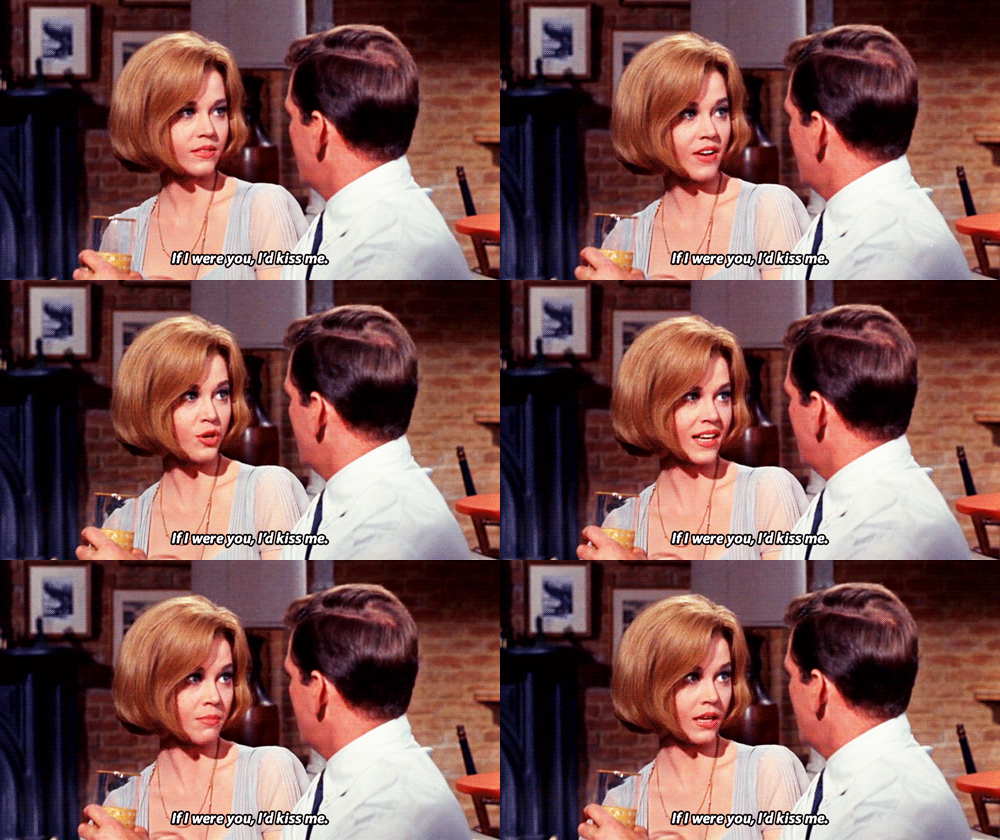
Um Domingo em Nova York (1963) / Sunday in New York (1963)


“Um Domingo em Nova York” é uma comédia romântica que se passa na Big Apple. Também é um filme com um dos melhores meet-cutes – aqueles momentos fofos em que um casal se vê pela primeira vez – de todos os tempos. É uma comédia hilária, um filme com ótimos cenários e figurinos, e também um filme que pode ser usado para refletirmos sobre feminismo, moral e dois pesos e duas medidas na sociedade. De fato, qualquer coisa pode acontecer em um único domingo em Nova York!

“Sunday in New York” is a romantic comedy set in the Big Apple. It’s also a film with one of the cutest meet-cutes – when a couple meets for the first time in a movie – of all time. It’s a hilarious comedy, a film with great sets and costumes, and also a film to reflect upon feminism, morality and double standards in society. Indeed, anything can happen in a single Sunday in New York!


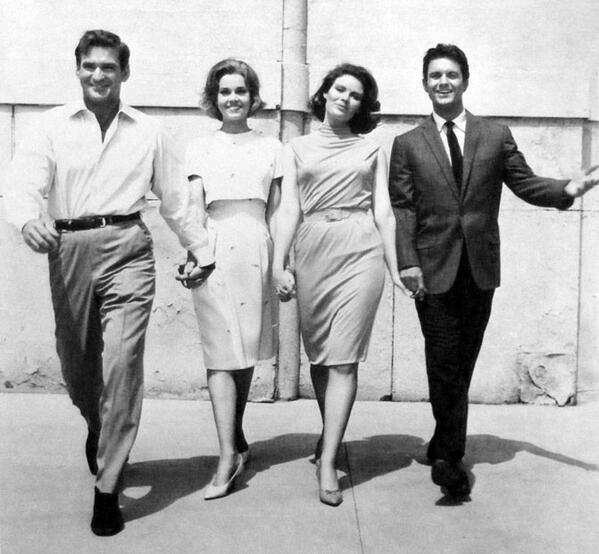
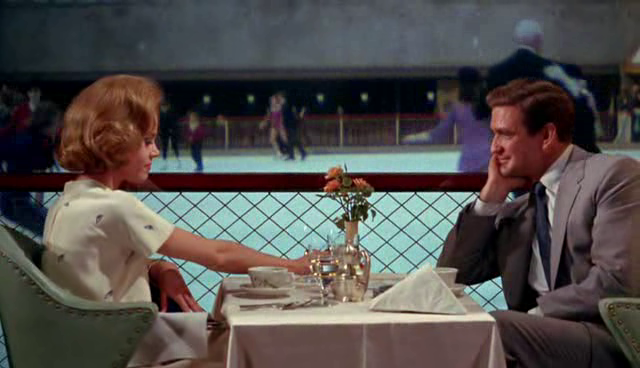
Eileen (Jane Fonda) acabou um relacionamento recente, e, para se recuperar, ela decide passar alguns dias no apartamento de seu irmão, Adam (Cliff Robertson), em Nova York. Eles conversam sobre sexo e comportamento logo que ela chega e, para não ser um mau exemplo e contradizer seu conselho, Adam leva a namorada, Mona (Jo Morrow), para o Rockefeller Center para patinar no gelo – o plano inicial era transar com ela no apartamento.

Eileen (Jane Fonda) has just been through a break-up, so, in order to recover, she decides to spend a few days in her brother Adam's (Cliff Robertson) apartment in New York. They talk about sex and behavior when she arrives and, in order not to be a bad example and contradict his advice, Adam takes his girlfriend, Mona (Jo Morrow), to the Rockefeller Center to go ice-skating – his initial plan was to have sex with her in his apartment.


Adam é piloto de avião, e seu chefe liga para seu apartamento. Eileen decide dizer a Adam que seu chefe ligou e vai até o Rockefeller Center. No ônibus ela conhece Mike (Rod Taylor), que decide acompanhá-la até que ela encontre o irmão. Em um café, depois de uma piada ruim e a sensação de que não estão agradando um ao outro, tanto Eileen quanto Mike tentam escapar, mas eles acabam se encontrando novamente dentro de outro ônibus e, dessa vez, eles se dão muito bem. Enquanto isso, Adam tem de voltar ao trabalho, mas faz de tudo para conseguir manter seu encontro com Mona.

Adam is an airline pilot, and his boss calls the apartment. Eileen decides to tell Adam the boss called and goes to the Rockefeller Center. In the bus she meets Mike (Rod Taylor), who decides to accompany her until she finds her brother. At a café, after a bad joke and the feeling that this wouldn't work, they both try to escape, only to meet again at another bus and, this time, they really hit if off. Meanwhile, Adam has to go back to work, but he tries everything to keep his engagement with Mona.


O primeiro encontro de Eileen com Mike é charmoso e engraçado: o broche dela fica preso no terno dele, e eles têm de descer do ônibus juntos, como se estivessem grudados. Esta situação se repete em outro ônibus, e me fez pensar em como preciso ficar longe das pessoas quando uso broches.

Eileen's first meeting with Mike is a charming, funny one: her brooch gets stuck in his suit, and they have to exit the bus together, like if they were glued. This situation happens twice in a bus, and made me more aware of the need of keeping distance of other people whenever I wear a brooch.


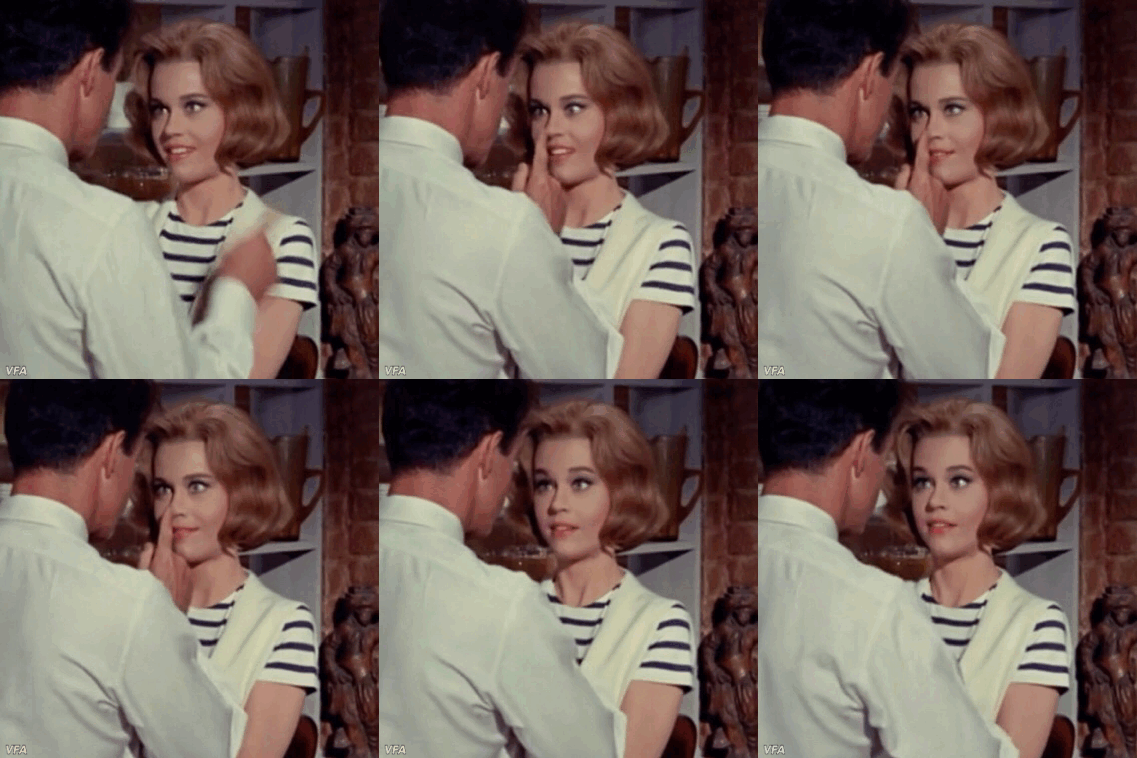
Quando Eileen percebe que seu irmão de fato transa com sua namorada, ela decide que pode fazer o mesmo e começa a flertar com Mike, em uma sequência hilária. Eles estão no apartamento de Adam, e de repente surge Russ (Robert Culp), o homem por quem Eileen está apaixonada. Mike acaba tendo de fingir que é o irmão de Eileen para Russ, que repentinamente parece muito apaixonado.

When Eileen realizes her brother actually has sex with his girlfriend, she decides she can do it too and becomes all flirty with Mike, in a hilarious sequence. They are in Adam’s apartment, and all of a sudden there appears Russ (Robert Culp), the man who Eileen is in love with. Mike ends up having to pretend to be Adam for a suddenly very much in love Russ.


Eileen tem dúvidas sobre assuntos como sexo antes do casamento – algo que sequer podia ser mencionado em um filme 10 anos antes de “Um Domingo em Nova York”. Quando seu irmão diz que os homens se casam com garotas decentes, ela diz que o problema está na palavra “decente”: ela carrega uma conotação de comparação entre as mulheres. Eileen é um ícone feminista!

Eileen has doubts about issues like pre-marital sex – something that couldn't be mentioned in a movie some 10 years before “Sunday in New York” was made. As her brother says that men marry decent girls, she says that the problem lies in the word “decent”: it carries a connotation of comparison between girls. Eileen is a feminist icon!


Mike fica desconfortável porque Eileen deu o primeiro passo na paquera, e menciona que o conceito de moral é diferente para homens e mulheres. Temas sobre como dois pesos e duas medidas são usados para julgar o comportamento de homens e mulheres começaram a ser discutidos no cinema nos anos 60, mas a mudança ainda não se completou, e até hoje precisamos discutir e apontar quão hipócrita é considerar que mulheres liberais são vagabundas, enquanto um homem pode fazer praticamente qualquer coisa e nunca ser rotulado e criticado.

Mike gets uncomfortable because Eileen took the first step in courting him, and mentions that morality is different for men and women. Themes like the double standard used to judge the morals of men and women started being discussed in film in the 1960s, but the change has not been completely made, and until today we must discuss how hypocritical it is to consider liberated women whores, while a man can do virtually anything he wants to and not be called names.


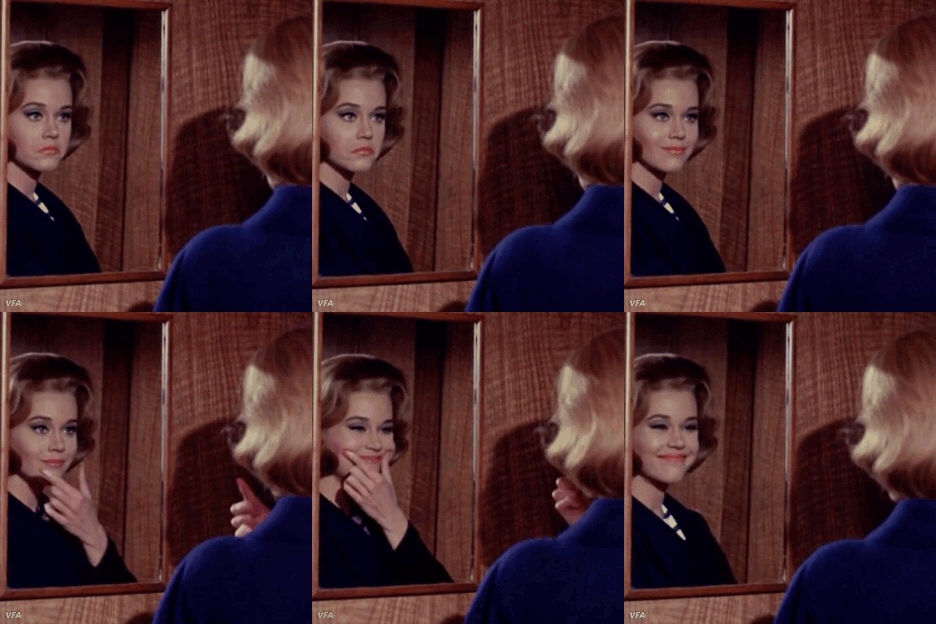
Todos os atores estão muito bem. Jane Fonda mencionou que “Um Domingo em Nova York” foi o primeiro filme em que ela se considerou de fato boa. Além de sua atuação, seu figurino é também divino. Eu com certeza usaria qualquer uma de suas roupas, desenhadas por Orry-Kelly. Eu também com certeza viveria no apartamento anguloso e charmoso em que Adam vive.

All the actors are very good. Jane Fonda mentioned that “Sunday in New York” was the first film in which she felt she was any good at. Besides her acting, her wardrobe is also divine. I’d totally wear any of her outfits, designed by Orry-Kelly. I’d also totally live in the angular and charming apartment Adam lives in.  


“Um Domingo em Nova York” é um filme que faz você se sentir bem, e também faz você pensar. Porque até mesmo o filme mais simples pode gerar discussões interessantes e atuais se estivermos dispostos a olhar além deles e refletir sobre seus temas.

“Sunday in New York” is a feel-good movie and also a movie that makes you think.  Because even the simplest movie can sparkle interesting and timely discussions if we’re willing to look beyond them and reflect upon their themes.

This is my contribution to the First Annual Valentine’s Day Meet-Cute Blogathon, hosted by Laura at Phyllis Loves Classic Movies.


Saturday, August 25, 2018

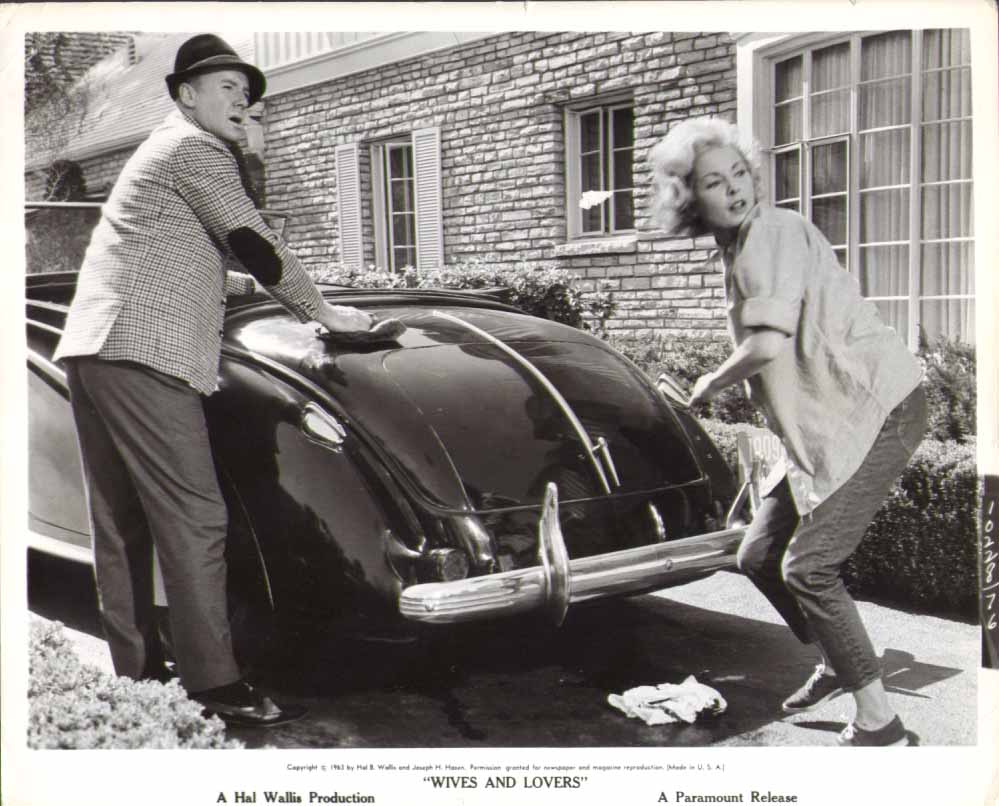
Esposas e Amantes (1963) / Wives and Lovers (1963)


Ah, os anos 60! A época da revolução sexual, da segunda onda do feminismo, da extinção do ridículo Código Hays... e Hollywood tinha de lidar com todos eles. De repente, temas mais polêmicos poderiam ser retratados em filmes... não, eles deveriam aparecer, porque a sociedade queria vê-los no cinema e porque eles faziam parte da realidade. De repente, um infiel não tinha de sofrer e ser condenado... e até uma comédia poderia ser feita com o tema infidelidade.

Oh, the 1960s! Time of the sexual revolution, of the second wave of feminism, of the end of the ridiculous Hays Code... And Hollywod had to deal with them all. Suddenly, more risky themes could appear in movies... no, they should appear, because society wanted them and because they mirrored the reality. Suddenly, a cheater didn't have to suffer and be condemned... and even a comedy could be made about cheating.


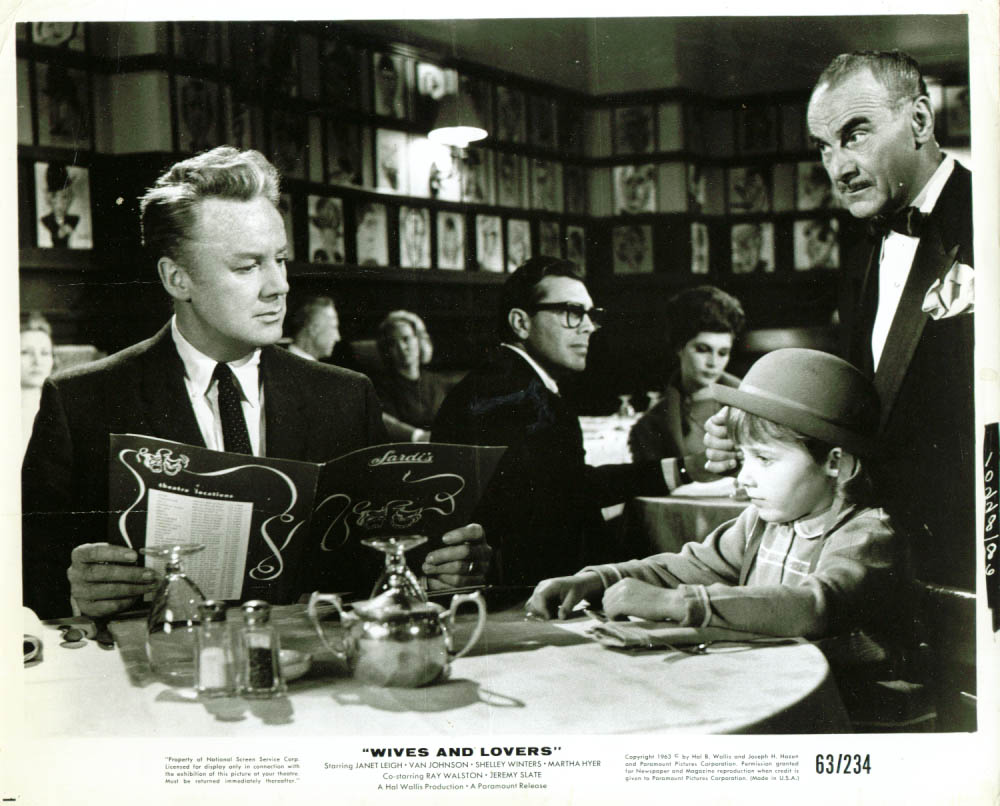
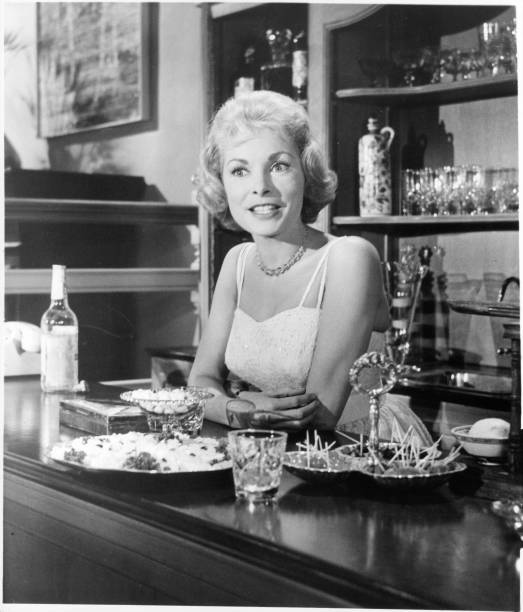
No começo, William ‘Bill’ Austin (Van Johnson) é um aspirante a escritor, que atualmente escreve um livro de receitas. Sua esposa Bertie (Janet Leigh) é quem traz dinheiro para casa, e ela trabalha em um consultório de dentista. Eles têm uma filha, uma peculiar garotinha de sete anos e ¾ de idade, Julie (Claire Wilcox). O ego masculino e frágil de Bill está machucado porque sua esposa trabalha fora e ele não, mas logo uma grande mudança acontece: a agente literária de Bill, Lucinda Ford (Martha Hyer) vende os direitos do romance de Bill para um clube de leitura e para uma peça.

At first, William 'Bill' Austin (Van Johnson) is a struggling writer, currently writing a cookbook. His wife Bertie (Janet Leigh) is the breadwinner of the house, and she works in a dentist's office. They have a daughter, the quirky seven and ¾ year-old Julie (Claire Wilcox). Bill's fragile male ego was hurt because his wife was working and he wasn't, until a big change happens: Bill's literary agent Lucinda Ford (Martha Hyer) sells Bill's novel's rights for a book club and a play.


A vida da família muda completamente. Bill insiste para que eles se mudem do pequeno apartamento em Nova York para uma casa elegante em Connecticut. Lá eles conhecem os enxeridos vizinhos Fran (Shelley Winters) e Wylie (Ray Walston). Fran é divorciada – seu ex-marido é ator – e Wylie é um designer de interiores que vive na casa dos fundos de Fran. Eles são incríveis!

Their life changes completely. Per Bill's insistence, they move from a small New York apartment to a fancy house in Connecticut. There they meet nosy neighbors Fran (Shelley Winters) and Wylie (Ray Walston). Fran is divorced – her ex-husband is an actor – and Wylie is an interior decorator who lives in the smaller house on the back of Fran's home. They're a riot!
 
Nouveau riches
Bill começa a sair com Lucinda para aparecer em eventos sociais, deixando sua família de lado. Mas coisas só dão errado de fato quando Bill e Bertie oferecem um jantar em casa e convidam Fran, Wylie, Lucinda e o ator Gar Aldrich (Jeremy Slate), a estrela da peça que Bill está escrevendo. Quando Lucinda começa a paquerar Bill, Gar, que já havia namorado Lucinda, passa a paquerar Bertie.

Bill starts to go out with Lucinda to social gatherings, leaving his family behind. But things go really wrong when Bill and Bertie host a dinner party in their house, and the guests are Fran, Wylie, Lucinda and actor Gar Aldrich (Jeremy Slate), the star of the play Bill is writing. As Lucinda starts flirting with Bill, Gar, who used to date Lucinda, flirts with Bertie.


Era óbvio que o novo estilo de vida prejudicaria o casal. É possível ver isso em uma poderosa metáfora visual: depois de receber a notícia de que os direitos do romance haviam sido vendidos, Bill imediatamente compra para Bertie o casaco chique que Lucinda estava usando. Bertie é deixada na cozinha, e coloca um avental por cima do casaco chique – a nova vida e a velha vida entram em confronto em uma imagem.

It was obvious that the new lifestyle would harm the Austins. You can see this in a powerful visual metaphor: after receiving the news that his novel's rights were sold, Bill buys Bertie the fancy coat Lucinda is wearing and goes out to celebrate. Bertie is left in the kitchen, and puts an apron over the fancy coat – it's the old life and the new life clashing in one image.


Todos os atores estão muito bem em cena. “Esposas e Amantes” é uma comédia romântica sobre sexo, como aquelas estreladas por Doris Day e Rock Hudson, e temos algumas gags divertidas, como o aparelho de som sofisticado de Bill, que ele não consegue ligar, mas todos os outros conseguem.  Também gostei de quando Wylie fabricou um móvel antigo artificialmente. Julie é provavelmente a fonte da maioria das piadas. Suas perguntas de criança são engraçadas, mas para mim o mais engraçado é seu hábito de só comer se os alimentos não estiverem tocando uns aos outros – isto é, ela come um sanduíche só se os ingredientes vierem em pratos separados.

Everybody delivers very good performances. “Wives and Lovers” is a sex comedy, like the ones with Doris Day and Rock Hudson, and we have some funny gags, like Bill's fancy sound stereo that he apparently can't turn on, but almost everybody else can. I also enjoyed when Wylie fabricated an antique piece of furniture artificially. Julie is probably the source of the most jokes. Her childish questions are funny, but for me the funniest thing is her habit of only eating when her food is not touching each other on the plate – that means, she eats a sandwich only if the ingredients come in separate plates.


Van Johnson é um charme como Bill. Janet Leigh brilha como Bertie. É interessante notar que ela menciona que a sociedade queria que ela se sentisse como “pão mofado”, como uma mulher que não podia mais ser desejada – e Leigh tinha apenas 36 anos quando o filme foi feito! De fato, o interesse de Gar é um obstáculo na relação do casal Austin, mas também é uma oportunidade para Bertie perceber que ela é uma mulher linda e desejável. Aliás, a química de Leigh e Johnson não é surpresa: eles eram bons amigos, e foi o próprio Van Johnson que sugeriu a Jeanette Helen Morrison o nome artístico de Janet Leigh em 1947, quando ela fazia com ele seu primeiro filme, “Reconcilização”.

Van Johnson is charming as Bill. Janet Leigh shines as Bertie. It's interesting to notice that she mentions that society wanted her to feel like if she was “like molded bread”, like a woman that couldn't be desired anymore – and Leigh was only 36 when the film was made! Indeed, Gar's courtship is an obstacle in the Austin's relationship, but it is also an opportunity for Bertie to realize that she is a gorgeous, desirable woman. By the way, the chemistry between Leigh and Johnson is no surprise, since they were god friends, and it was Johnson himself who suggested for Jeanette Helen Morrison the screen name Janet Leigh in 1947, when she was making her first film, “The Romance of Rosy Ridge”.
 
1947
1963
“Esposas e Amantes” é cheia de altos e baixos. Eu gostei do fato de que tanto o marido quanto a esposa são tentados a trair, por isso não há julgamento, falso moralismo ou outras bobagens. Eu não gostei do fato de que alguns personagens masculinos, em especial Wylie, têm de ser rudes e tratar as mulheres mal para serem levados a sério por elas. Eu realmente detestei alguns momentos sexistas, como esta horrível “piada” dita por Shelley Winters: “Estuprada e desmembrada. Por que não se pode ter um sem o outro?”

“Wives and Lovers” is a series of hits and misses. I liked the fact that both the husband and wife are tempted to cheat, so there is no judgment, fake morals or other bullshit. I disliked the fact that some male characters, in special Wylie, had to be rude and mistreat women in order to be taken seriously by then. I completely disliked some sexist moments like the horrible joke uttered by Shelley Winters: “Raped and dismembered. Why can't you have one without the other?”
 
Director John Rich with Johson, Slate and Leigh
Você deve conhecer a música “Wives and Lovers”, que foi gravada pela primeira vez no mesmo ano em que o filme estreou. A música de Burt Bacharach e Hal David foi, na verdade, inspirada pelo filme! Foi uma “exploitation song”, uma canção composta para ajudar na divulgação do filme, mas sem fazer parte de sua trilha sonora. Hoje, a música é bem mais conhecida que o filme, mas eu não acredito que sua letra expresse a mesma complexidade das relações como o filme faz.

You may be familiar with the song “Wives and Lovers”, that came out the same year the film did. The song by Burth Bacharach and Hal David was actually inspired by the movie! It was an exploitation song, a song composed to help promote a film, but not appearing on it. Today, the song is much better known if compared to the film, but yet I don't think the lyrics express the same complexity of relationships as the movie does.


“Esposas e Amantes” deveria ser mais conhecido. Porque todos precisam de uma amiga como a personagem de Shelley Winters. Porque a ausência de julgamento moral em um filme dos anos 60 é algo raro. Porque é melhor que outras comédias românticas sobre sexo da época – estou falando da terrível “Amor Daquele Jeito”, também de 1963, que desperdiça Paul Newman e Joanne Woodward. Porque o trailer de “Esposas e Amantes” nos engana e promete bem mais conteúdo sexual do que realmente entrega. E porque todos precisamos dar risada de vez em quando.

“Wives and Lovers” should be better known. Because everybody needs a friend like Shelley Winter's character. Because no moral judgment in a 1960s movie is something rare. Because it is better than other sex comedies of the time – I'm thinking about the awful “A New Kind of Love”, also from 1963, a film that wastes Paul Newman and Joanne Woodward. Because the trailer for “Wives and Lovers” is deceiving and promises a sexual feast that doesn't happen. And because we all need a laugh once in a while.

This is my contribution to the Second Van Johnson blogathon, hosted by Michaela at Love Letters to Old Hollywood.

Saturday, July 14, 2018

Luz de Inverno (1963) / Winter Light (1963)


Às vezes, em situações deprimentes, nos questionamos sobre Deus. Frente a injustiças, desgraças, perdas e até tormentos geopolíticos, nós nos perguntamos se existe realmente Deus, e por que ele não interfere para que nós ou outras pessoas paremos de sofrer tanto. Este mesmo questionamento foi feito por um pastor em uma pequena cidade sueca, no filme de Bergman “Luz de Inverno”, de 1963.

Sometimes, in very sad situations, we ask ourselves about God. In the face of injustices, disgraces, loss and even geopolitical turmoil, we wonder if there is really a God, and why he isn’t interfering to make us or other people from suffering. This same question was made by a pastor in a small Swedish city in 1963, in Bergman’s “Winter Light”.

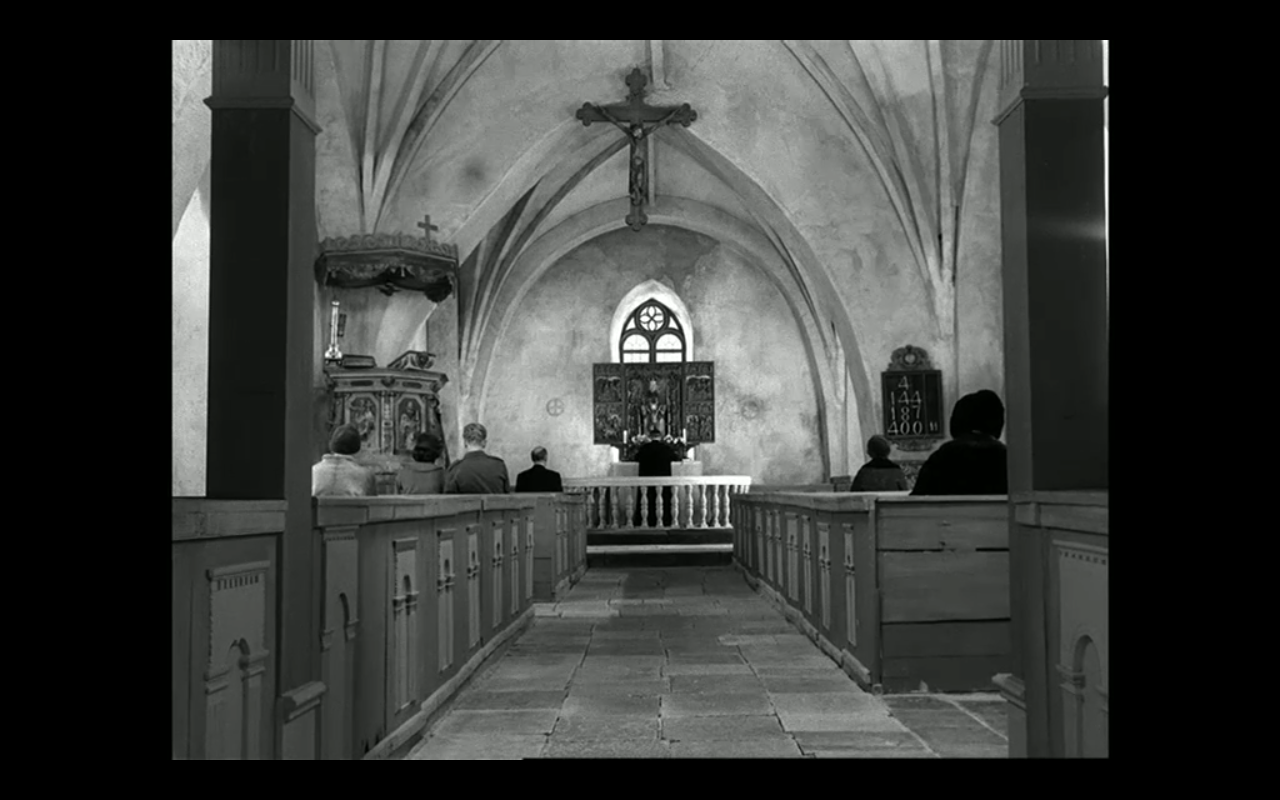
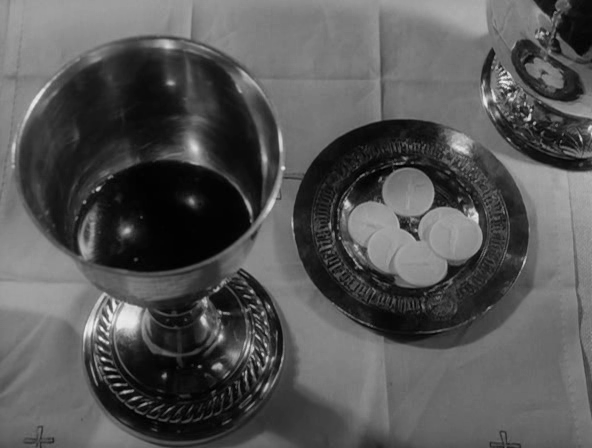
O filme é relativamente curto - 81 minutos - e os primeiros doze minutos são gastos com o sacramento católico da comunhão / eucaristia durante uma missa. Há uma razão para isso: o título original em sueco, que é muito difícil de pronunciar, pode ser traduzido como “Luz de Inverno” e também como “os Comunicantes” - ou seja, as pessoas que tomam parte na Comunhão.

The film is relatively short - 81 minutes - and the first twelve are spent with the Christian ritual of communion / Eucharist during a mass. This has a reason: the hard to pronounce original title in Swedish can be translated as both “Winter Light” and “the Communicants” - that is, the people who take part in the Communion.

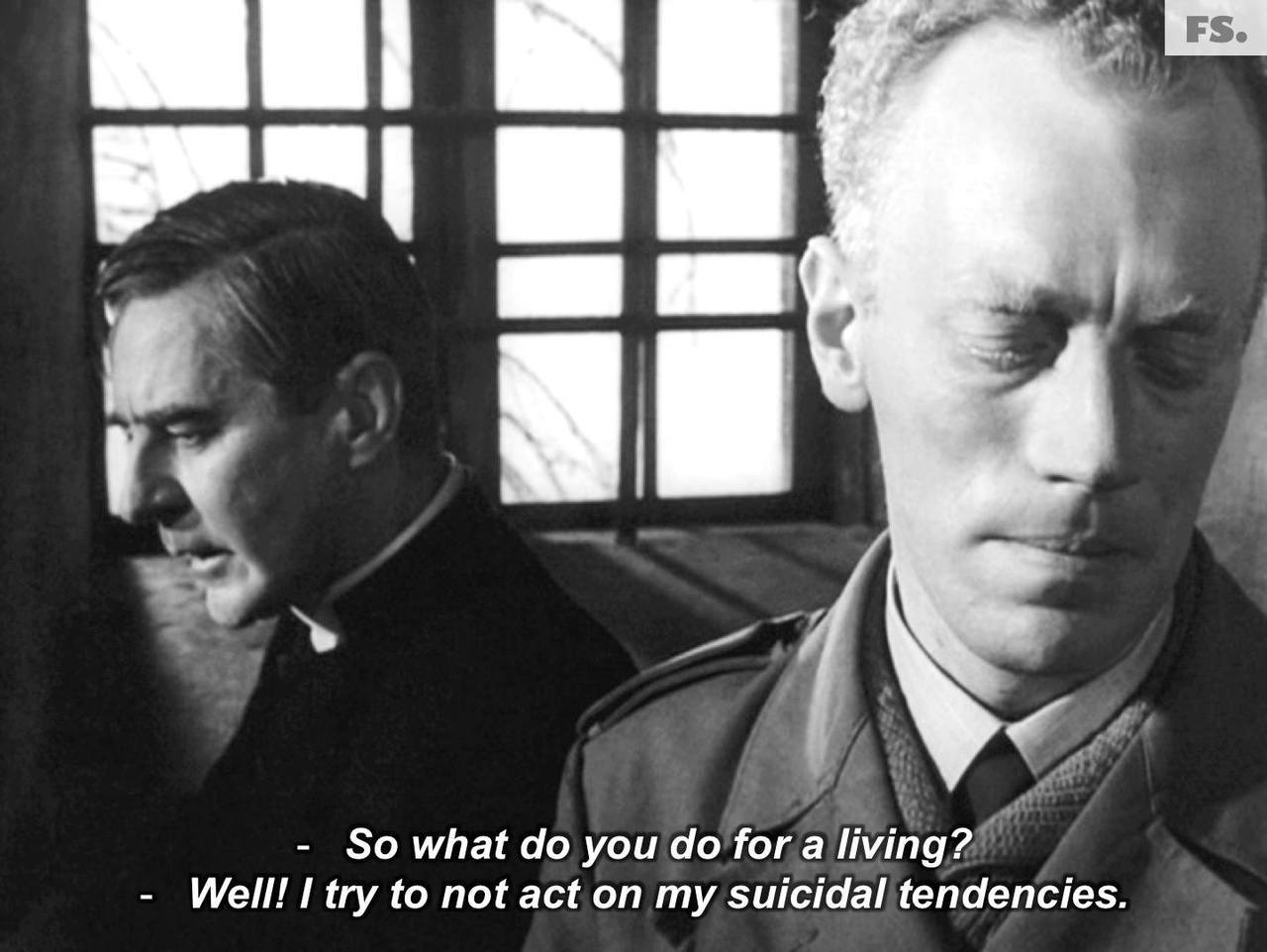
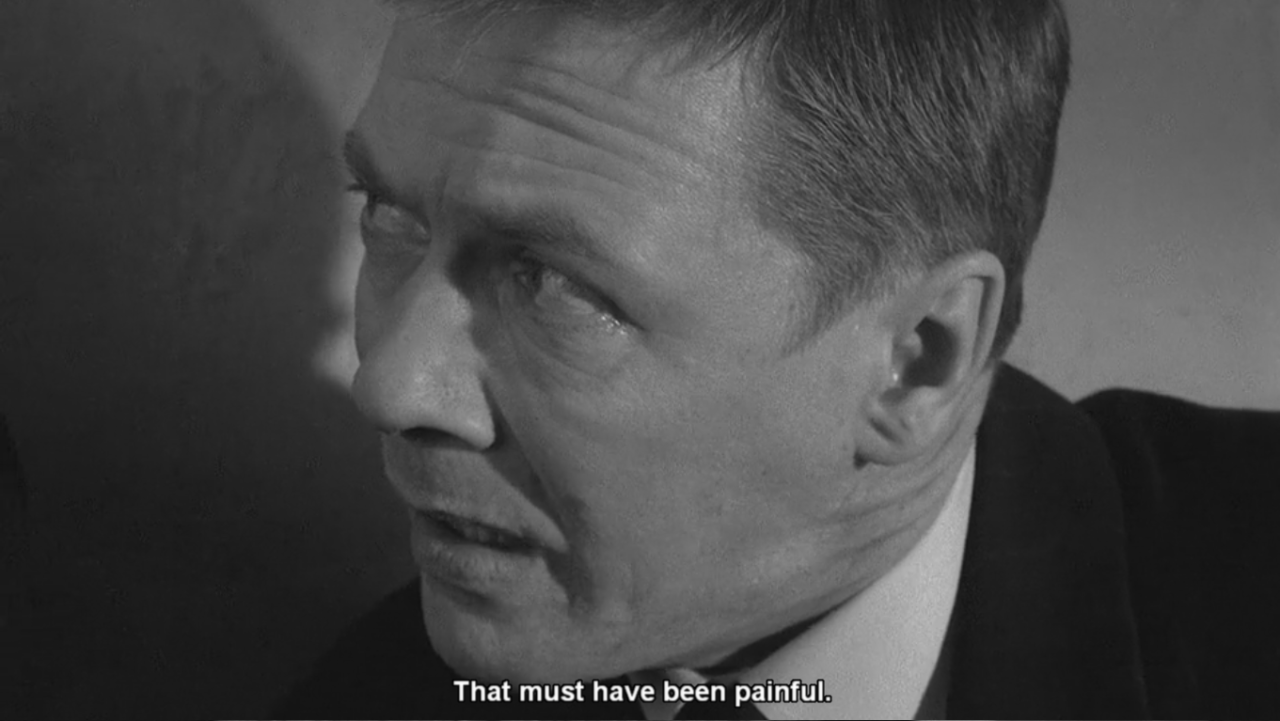
Estes Comunicantes procuram pelo pastor Tomas Ericsson (Gunnar Björnstrand) para que ele os ajude após a missa. Karin Persson (Gunnel Lindblom) pede que o pastor converse com seu marido com tendências suicidas, Jonas (Max von Sydow). Jonas é um pescador com uma grande família, mas após ouvir sobre o desenvolvimento de bombas atômicas na China, ele passa a se questionar o significado da vida e sobre a existência de Deus.

Those Communicants look for pastor Tomas Ericsson (Gunnar Björnstrand) for help after the mass. Karin Persson (Gunnel Lindblom) asks the pastor to have a talk with her suicidal husband, Jonas (Max von Sydow). Jonas is a fisherman with a large family, but since hearing about the development of atomic bombs in China, he is questioning the meaning of life and the existence of God.

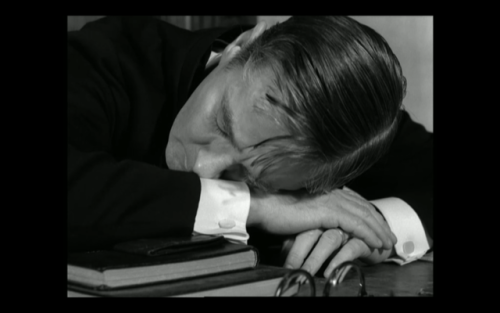
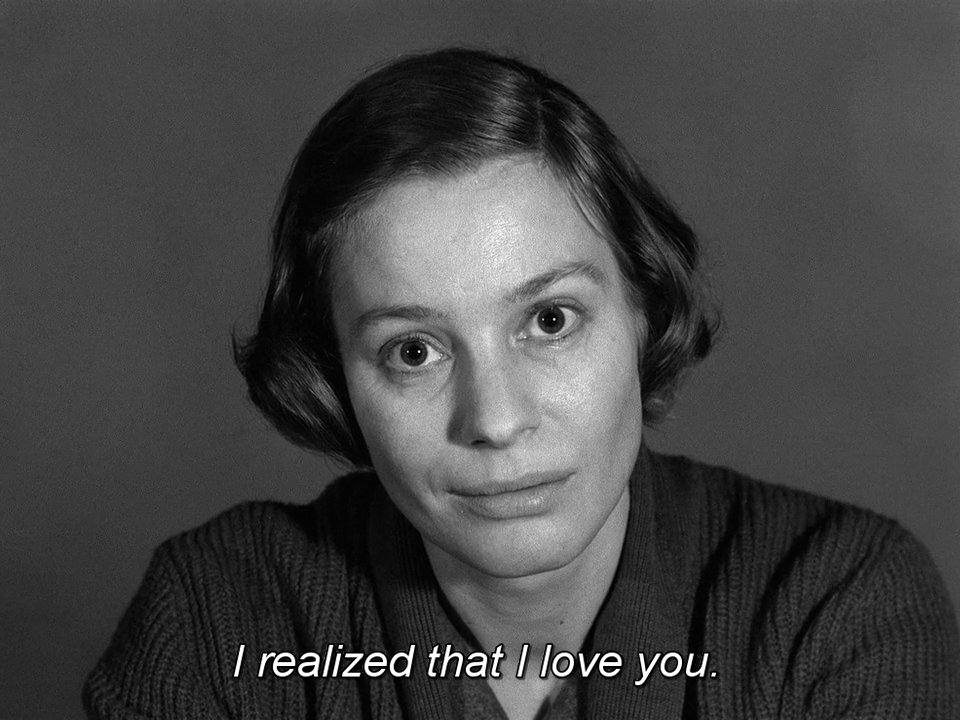
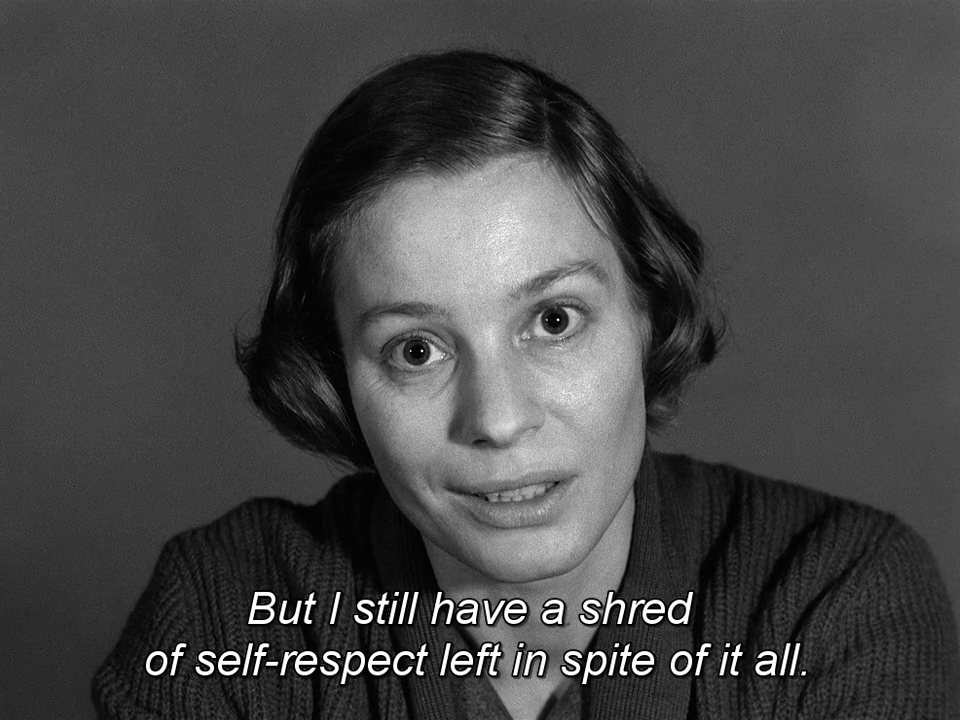
O problema é que o pastor Tomas pode não ser a pessoa ideal para dar conselhos espirituais para Jonas. Tomas também está questionando sua fé, e ainda tem de lidar com a atenção não requisitada da professora e ajudante Märta Lundberg (Ingrid Thulin). Ela não foi conversar com ele depois da missa, mas deixou uma carta. Em uma escolha muito sábia de Bergman, o conteúdo da carta é lido não por Ingrid em voiceover, mas por Ingrid em close-up, como um testemunho - um testemunho do qual não podemos tirar os olhos.

The problem is that pastor Tomas may not be the ideal person to give Jonas spiritual advice. Tomas is also questioning his faith, and also has to deal with the unrequited attention from the teacher and helper Märta Lundberg (Ingrid Thulin). She didn’t talk to him after the mass, but left him a letter. In a very wise choice from Bergman, the content of the letter is read not by Ingrid in voiceover, but by Ingrid in a close-up, like a testimony - one we can’t take our eyes off.

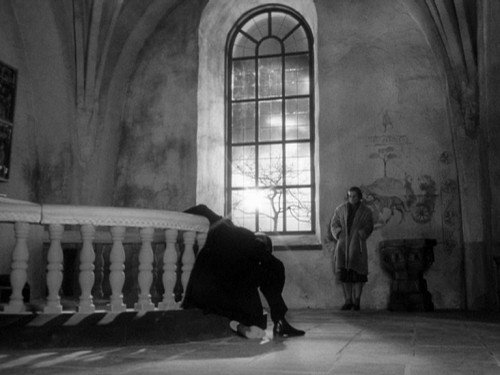
Outra escolha sábia se dá quando vemos a luz de Inverno pra valer: é óbvio que há uma mudança na iluminação quando, depois de conversar com Jonas, Tomas pergunta: “Deus, por que me abandonaste?”. E, se você tem familiaridade com a doutrina cristã, aqui está a chave para interpretar o filme: talvez, no final das contas, o pastor Tomas não acredite naquilo que prega.

Another wise choice is when we really see a winter light: it’s obvious the change of lighting that happens when, after talking to Jonas, Tomas asks: “God, why have you forsaken me?”. And, if you are familiar with the Christian doctrine, here you have the key to interpret the movie: maybe, after all, pastor Tomas isn’t a true believer.

Obviamente, Bergman é um cineasta que faz filmes complexos. As pessoas podem ter diferentes interpretações de sua obra - e eu penso que isto é fascinante. Na minha opinião, quando o ajudante deficiente da igreja Frövik (Allan Edwall) fala sobre a paixão de Cristo, ele não mostra apenas que ele é o único cristão de verdade naquela igreja, mas também revela todos nós temos nossas paixões para enfrentar.

Of course, Bergman is a filmmaker who makes complex movies. People can have several interpretations of his work - and I find it fascinating. In my opinion, when the handicap church helper Frövik (Allan Edwall) talks about Jesus’ passion, he does not only show how he is the only truly believer in that church, but he also reveals that we all have our passions to go through. 

“Luz de Inverno” é a história de muitas paixões: a de Tomas, a de Jonas, a de Märta. Nós podemos não saber se nossa paixão já aconteceu no passado ou se estamos prestes a enfrentá-la, mas todos nós temos um momento crucial na vida em que também perguntamos: “Deus, por que me abandonaste?”.

“Winter Light” is the story of many passions: Tomas’s, Jonas’s, Märta’s. We may not know if our passion already happened in the past or if we are about to face it, but we all have one crucial moment in life when we too ask: “God, why have you forsaken me?”.

This is my contribution to the Winter in July blogathon, hosted by Debbie at Moon in Gemini.

Monday, April 24, 2017

Sombras do Terror / The Terror (1963)

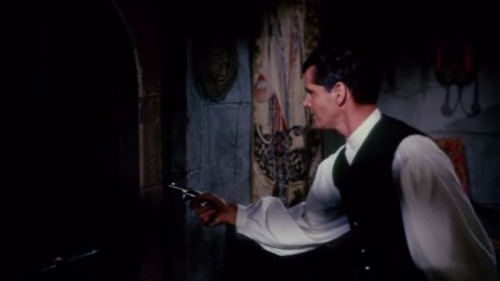
O que é um pontinho de uniforme, em cima de um cavalo, à beira-mar e completamente perdido? É o jovem Jack Nicholson no início de “Sombras do Terror” (1963). Ele está prestes a viver uma experiência que vai lhe dar pesadelos para o resto da vida.

What is a little man in uniform, riding a horse by the sea, completely lost? It's young Jack Nicholson in the beginning of “The Terror” (1963). He's about to live an experience that will be the souce of nightmares for the rest of his life.
O tenente Andre Duvalier (Nicholson) se perdeu de seu regimento. Ele está vagando na praia, com sede e sem rumo, quando ele vê uma bela jovem (Sandra Knight). Ela lhe dá água fresca e então desaparece.

Lieutenant Andre Duvalier (Nicholson) has lost his regiment. He's wandering around the beach, thirsty and hopeless, when he sees a beautiful young woman (Sandra Knight). She gives him fresh water and then disappears.
Quando ele é resgatado por Gustav (Jonathan Haze), um morador local, ele comenta sobre a jovem que viu perto ao mar, mas a velha que está cuidando dele, Katrina (Dorothy Neumann), diz que não há nenhuma jovem vivendo ali perto. Entretanto, Gustav conta a Andre que a jovem realmente exista, está precisando de ajuda e pode ser encontrada no castelo do Barão Victor Von Leppe (Boris Karloff).

When he is rescued by Gustav (Jonathan Haze), a local man, he talks about the woman he has seen by the sea, and the woman who is looking after him in her house, Katrina (Dorothy Neumann), tells there is no young woman anywhere nearby. But Gustav tells Andre thay the young woman indeed exists, needs help and can be found in the castle that belongs to the Baron Victor Von Leppe (Boris Karloff).
Andre vai ao castelo e descobre que a mulher que ele pensou ter visto morreu 20 anos antes. No entanto, algo no comportamento do Barão e de seu mordomo (Dick Miller) o faz ficar no castelo e investigar melhor o assunto.

Andre goes to the castle only to find out that the woman he thought he has seen has been dead for 20 years. However, something in the behavior of the Baron and his butler (Dick Miller) make him stay in the castle and investigate the issue further.
Eu acabei de mencionar todos do elenco nos últimos três parágrafos. Sim, é um elenco formado por apenas seis pessoas. Na verdade, havia mais diretores que atores no filme: Roger Corman foi o diretor principal, e o único creditado, mas seis outros dirigiram pequenas sequências, incluindo o novato Francis Ford Coppola e o próprio Nicholson. Corman filmou tudo em apenas quatro dias, e a pós-produção durou nove meses.

I just mentioned everybody in the cast in the last three paragraphs. Yes, it's a cast made of only six people. Actually, there were more director than actors in the film: Roger Corman was the main director, and the only one credited, but six others directed little sequences of the film, including newcomer Francis Ford Coppola and Nicholson himself. Corman shot the film in only four days, and went on to post-produce it for nine months.
Jack Nicholson, então com 26 anos, havia feito televisão e participado de dois outros filmes de Corman, incluindo “A Pequena Loja de Horrores” (1961). Ele e Corman haviam acabado de filmar “O Corvo” (1963) e o sempre econômico diretor decidiu usar os mesmos dois protagonistas e o mesmo set para “Sombras do Terror”.

Jack Nicholson, then 26, had appeared on television and in two other Corman films, including “The Little Shop of Horrors” (1961). He and Corman had just finished “The Raven” (1963) and the always cheap director decided to use the same two leads and locations for “The Terror”.
A protagonista Sandra Knight era na época casada com Nicholson, e estava grávida durante as filmagens. Eles foram casados de 1962 a 1968. Sandra então mudou-se para o Havaí e se casou novamente. Embora tenha tido outros relacionamentos, Jack nunca mais se casou.

Leading lady Sandra Knight was by then married to Nicholson, and was pregnant during the shooting. They remained married from 1962 until 1968. Sandra then moved to Hawaii and remarried. Although he had other relationships, Jack never remarried.
O filme usa a música muito bem. A trilha sonora é sinistra desde o começo. A cena em que Andre está seguindo a moça só nos dá arrepios por causa da música de fundo – se fosse uma cena silenciosa, ou com uma melodia diferente, nossa reação seria muito distinta.

This film uses the music very well. The soundtrack is eerie since the beginning. The scene in which Andre is following the woman only gives us goosebumps because of the music playing – if it was a silent scene, or with a different music, the feeling would be very different.
O uso das cores também é um destaque. É “color by Pathé” e de fato nos faz lembrar um pouco de Pathécolor – ou Pathéchrome – uma técnica completamente distinta usada entre 1904 e o fim dos anos 20 em filmes mudos. Obviamente “Sombras do Terror” não foi colorido manualmente – mas tem um esquema de cores interessante e uma divisão angular marcda entre áreas de sombra e de luz.

The color is also a thing to observe. It's “color by Pathé” and it does indeed remind us a little of Pathécolor – or Pathéchrome – a completely unrelated technique used from 1904 until the late 1920s tint silent films. Or course “The Terror” was not colored manually – but it has an interesting color scheme and a very angular division between shadows and color.
Não é uma adaptação de Edgar Allan Poe como as muitas que Corman dirigiu – embora ele considerasse este filme uma “adição honorária” em seu ciclo de Poe. Não é um filme tão ruim quanto os primeiros minutos nos fazem imaginar. “Sombras do Terror” é um bom filme de horror com um imenso plot twist. Vale a pena vê-lo – e é um filme para ser visto com as luzes acesas!

It’s not an Edgar Allan Poe adaptation as many Corman directed – even though he considered it an “honorary entry” on his Poe cycle. It’s not nearly as bad a movie as it looks in its first minutes. “The Terror” is a nice horror movie with a huge plot twist. It’s worth your time – and it’s a film to be seen with the lights on!

“The Terror” is on public domain, available at YouTube and Internet Archive.


This is my contribution to the Here’s Jack blogathon, hosted by Gill at Realweegiemidget Reviews. Happy 80th birthday, Mr Nicholson!
Related Posts Plugin for WordPress, Blogger...